

Effects of age on H1N1-specific serum IgG1 and IgG3 levels evaluated during the 2011–2012 influenza vaccine season
Open accessThe DOI matches its Crossref record; 43 of the 44 references it cites were found in a registry or an index.
Abstract
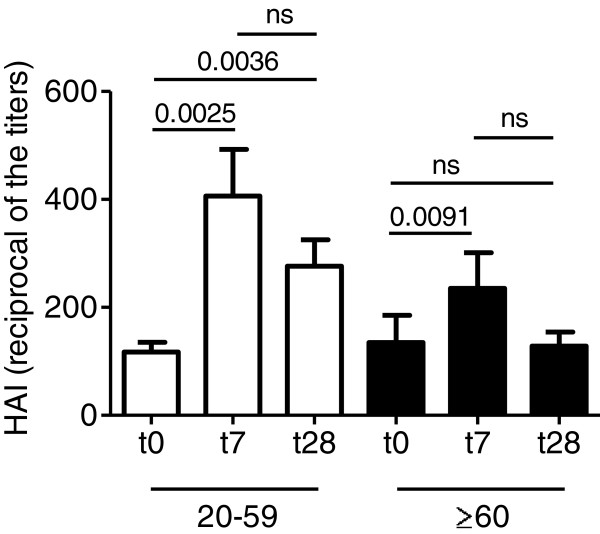
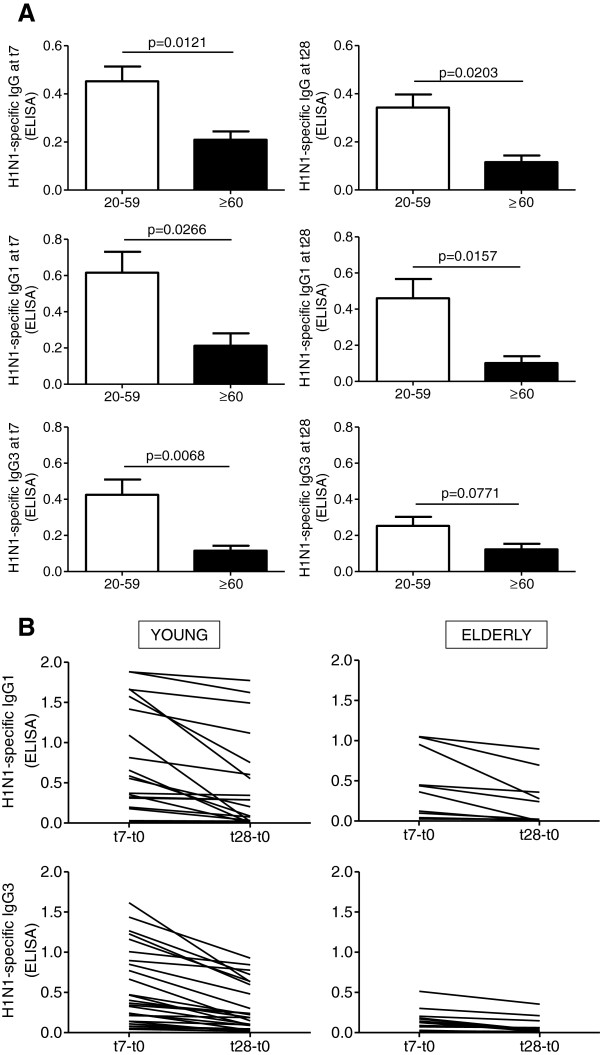
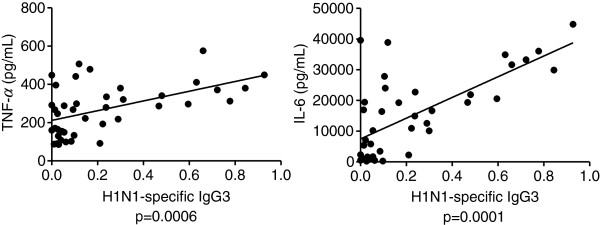
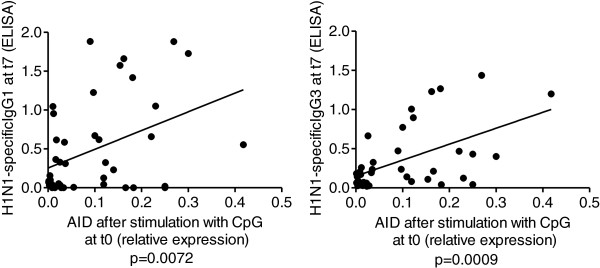
BACKGROUND: We have previously reported an age-related impairment in the serum antibody response to pandemic (p)2009 H1N1, measured by hemagglutination inhibition assay and ELISA. The present study extends these observations and evaluates IgG subclass distribution in healthy individuals of different ages vaccinated during the 2011-2012 season. RESULTS: The 2011-2012 vaccination season was characterized by a vaccine containing the pandemic (p)2009 H1N1 strain for the third consecutive year. All of our subjects were previously immunized, and therefore seroprotected at t0. Nevertheless, aging impaired the serum antibody response to H1N1, as antibody titers increased after vaccination in young and less in elderly individuals. The peak of the response was at day 7 (t7), in contrast with what is usually seen at day 21-28, suggesting a memory response characterized by the induction of an IgG subclass with a shorter half-life. We hypothesized that the IgG3 response, with its much shorter half-life, might be more represented. Antibodies were predominantly of the IgG1 subclass in both age groups, although a robust IgG3 response was also induced and accounted for a significant proportion of the overall response. IgG2 and IgG4 antibodies were at indiscernible levels. We showed a much higher percentage of IgG3 (40-50%) than previously in the literature (less than 10%). To explain if this was associated with a particular cytokine profile, we measured H1N1-induced T cell cytokines in vitro and found that IgG3 levels were positively correlated with TNF-α and IL-6. Moreover, activation-induced cytidine deaminase (AID) mRNA expression, a predictive biomarker of optimal in vivo vaccine response, was found to significantly correlate with IgG3 and also with IgG1 similar to what we have shown previously for total IgG. CONCLUSIONS: In the 2011-2012 season, the pandemic (p)2009 H1N1 strain was present in the vaccine for the third consecutive year and therefore each individual was seroprotected at t0. The peak of the response was at t7, suggesting a memory response characterized by a robust induction of IgG3, which was associated with TNF-α and IL-6 production. Both IgG1 and IgG3 responses were decreased by age. AID was confirmed to be a predictive biomarker of optimal vaccine responses.
Overview
The claims and statistics of this paper haven’t been checked yet.
Free: it reads the open-access text and checks the first 5 claims that cite a source we can check. Create a free account to check every claim.
Integrity signals
Registry
Cites
Statistics
Figures
Verification
Claims the paper makes
The claims and statistics of this paper haven’t been checked yet.
Free: it reads the open-access text and checks the first 5 claims that cite a source we can check. Create a free account to check every claim.
Claims other papers make about this one
Each is checked against this paper’s own text: does it say what the citing paper says it does?
The claim comes from somewhere else, not from this source.
In the citing paper
“and include decreases in expression and function of the key transcription factor E47 (see below), along with a reduction in activation-induced cytidine deaminase (AID), the enzyme of class switch recombination and somatic hypermutation.”
From Aging of the immune system: Focus on inflammation and vaccination (2016) · cites this paper as [123]
Checked by a reasoning model — may be wrong.
Experimental — accuracy not yet measuredThe source backs part of the claim, not all of it — or backs it for a different population, condition or comparison.
In the citing paper
“Age-related intrinsic B-cell defects, responsible for sub-optimal antibody responses in elderly individuals to infections and vaccines have been identified [95, 121–123]”
From Aging of the immune system: Focus on inflammation and vaccination (2016) · cites this paper as [123]
Experimental — accuracy not yet measuredThe check wasn’t confident either way, so it gives no verdict — never disputed.
In the citing paper
“and include decreases in expression and function of the key transcription factor E47 (see below), along with a reduction in activation-induced cytidine deaminase (AID), the enzyme of class switch recombination and somatic hypermutation.”
From Aging of the immune system: Focus on inflammation and vaccination (2016) · cites this paper as [123]
Experimental — accuracy not yet measured
Self-check
Percentages, sums and reported differences re-computed from the paper’s own numbers.
The self-check needs the paper’s full text.
Citations
Cites
(2001) · PsycEXTRA Dataset · doi:10.1037/e548312006-001 · Cited by 5,011
Fiore, A. E., Uyeki, T. M., Broder, K. R., Finelli, L., Euler, G. L., Singleton, J. A., Iskander, J. K., Wortley, P. M., Shay, D. K., Bresee, J., et al. (2009) · PubMed · Cited by 2,098
Muramatsu, M., Sankaranand, V. S., Anant, S., Sugai, M., Kinoshita, K., Davidson, N. O., & Honjo, T. (1999) · Journal of Biological Chemistry · doi:10.1074/jbc.274.26.18470 · Cited by 1,176 · cited 1×
“response, as AID is exclusively expressed in B cells [42] and we have previously established that purified B cells give similar results as do PBMC to evaluate effects of aging on the vaccine response [34].”
ResultMechanism and Regulation of Class Switch Recombination
Stavnezer, J., Guikema, J. E. J., & Schrader, C. E. (2008) · Annual Review of Immunology · doi:10.1146/annurev.immunol.26.021607.090248 · Cited by 1,132 · cited 1×
“CSR and SHM occur in germinal center B cells in response to both T-dependent and T-independent stimuli [31,32].”
BackgroundThe Efficacy of Influenza Vaccine in Elderly Persons: A Meta-Analysis and Review of the Literature
Gross, P. A., Hermogenes, A. W., Sacks, H. S., Lau, J., & Levandowski, R. A. (1995) · Annals of Internal Medicine · doi:10.7326/0003-4819-123-7-199510010-00008 · Cited by 1,100 · cited 1×
“There is evidence that elderly individuals who have routinely received the vaccine can still contract the infection, with secondary complications leading to hospitalization, physical debilitation, exacerbation of underlying medical conditions and death [11-13].”
BackgroundAntibody response to influenza vaccination in the elderly: A quantitative review
GOODWIN, K., VIBOUD, C., & SIMONSEN, L. (2006) · Vaccine · doi:10.1016/j.vaccine.2005.08.105 · Cited by 1,064 · cited 1×
“The effects of influenza vaccination are different in individuals of different ages [6-8].”
BackgroundPandemic versus Epidemic Influenza Mortality: A Pattern of Changing Age Distribution
Simonsen, L., Clarke, M. J., Schonberger, L. B., Arden, N. H., Cox, N. J., & Fukuda, K. (1998) · Journal of Infectious Diseases · doi:10.1086/515616 · Cited by 704 · cited 1×
“There is evidence that elderly individuals who have routinely received the vaccine can still contract the infection, with secondary complications leading to hospitalization, physical debilitation, exacerbation of underlying medical conditions and death [11-13].”
BackgroundAging of the innate immune system
Shaw, A. C., Joshi, S., Greenwood, H., Panda, A., & Lord, J. M. (2010) · Current Opinion in Immunology · doi:10.1016/j.coi.2010.05.003 · Cited by 647 · cited 1×
“Changes in cytokine profile during senescence have been reported and attributed to changes in both the innate and the adaptive immune systems [25-28], which may cause parallel changes in the relative amounts of the different IgG subclasses produced in response to the influenza vaccine.”
BackgroundMortality benefits of influenza vaccination in elderly people: an ongoing controversy
Simonsen, L., Taylor, R. J., Viboud, C., Miller, M. A., & Jackson, L. A. (2007) · The Lancet Infectious Diseases · doi:10.1016/s1473-3099(07)70236-0 · Cited by 520 · cited 1×
“The effects of influenza vaccination are different in individuals of different ages [6-8].”
BackgroundYount, W. J., Dorner, M. M., Kunkel, H. G., & Kabat, E. A. (1968) · The Journal of Experimental Medicine · doi:10.1084/jem.127.3.633 · Cited by 429
Vu, T., Farish, S., Jenkins, M., & Kelly, H. (2002) · Vaccine · doi:10.1016/s0264-410x(02)00041-5 · Cited by 376
AID Enzyme-Induced Hypermutation in an Actively Transcribed Gene in Fibroblasts
Yoshikawa, K., Okazaki, I.-M., Eto, T., Kinoshita, K., Muramatsu, M., Nagaoka, H., & Honjo, T. (2002) · Science · doi:10.1126/science.1071556 · Cited by 373 · cited 1×
“AID is essential for DNA cleavage required for class switch recombination (CSR) and somatic hypermutation (SHM) which are crucial for the generation of high affinity antibodies and robust humoral immunity [29,30].”
BackgroundThe network and the remodeling theories of aging: historical background and new perspectives
Franceschi, C., Valensin, S., Bonafè, M., Paolisso, G., Yashin, A. I., Monti, D., & De Benedictis, G. (2000) · Experimental Gerontology · doi:10.1016/s0531-5565(00)00172-8 · Cited by 335 · cited 2×
“Immunosenescence is associated with a low grade chronic pro-inflammatory status called inflammaging [27].”
BackgroundFrasca, D., Landin, A. M., Lechner, S. C., Ryan, J. G., Schwartz, R., Riley, R. L., & Blomberg, B. B. (2008) · The Journal of Immunology · doi:10.4049/jimmunol.180.8.5283 · Cited by 333
Self-citationFerrucci, L. (1997) · JAMA: The Journal of the American Medical Association · doi:10.1001/jama.1997.03540330050034 · Cited by 282 · cited 1×
“These complications may include secondary bacterial infections, exacerbations of pre-existing medical conditions [1,2] and hospitalization which significantly contributes to the development of disability in the elderly [3] and represent a significant economic burden [4].”
BackgroundIto, T., Suzuki, Y., Mitnaul, L., Vines, A., Kida, H., & Kawaoka, Y. (1997) · Virology · doi:10.1006/viro.1996.8323 · Cited by 264 · cited 2×
“Serum inhibiting titers of 1/40 or greater are the defined positive measure of seroprotection against infection, whereas a four-fold rise in the reciprocal of the titer from t0 to t28 indicates a positive response to the vaccine and indicates seroconversion [34,35,40,41].”
BackgroundMethodThe AID enzyme induces class switch recombination in fibroblasts
Okazaki, I.-M., Kinoshita, K., Muramatsu, M., Yoshikawa, K., & Honjo, T. (2002) · Nature · doi:10.1038/nature727 · Cited by 260 · cited 1×
“AID is essential for DNA cleavage required for class switch recombination (CSR) and somatic hypermutation (SHM) which are crucial for the generation of high affinity antibodies and robust humoral immunity [29,30].”
BackgroundMurasko, D. (2002) · Experimental Gerontology · doi:10.1016/s0531-5565(01)00210-8 · Cited by 248 · cited 1×
“Serum inhibiting titers of 1/40 or greater are the defined positive measure of seroprotection against infection, whereas a four-fold rise in the reciprocal of the titer from t0 to t28 indicates a positive response to the vaccine and indicates seroconversion [34,35,40,41].”
BackgroundReduction in mortality associated with influenza vaccine during 1989-90 epidemic
Ahmed, A. H., Nicholson, K. G., & Nguyen-Van-Tam, J. S. (1995) · The Lancet · doi:10.1016/s0140-6736(95)91434-x · Cited by 215 · cited 1×
“Successive annual vaccinations increase protection against influenza [9,10].”
BackgroundDelaRosa, O., Pawelec, G., Peralbo, E., Wikby, A., Mariani, E., Mocchegiani, E., Tarazona, R., & Solana, R. (2006) · Biogerontology · doi:10.1007/s10522-006-9062-6 · Cited by 172 · cited 1×
“Changes in cytokine profile during senescence have been reported and attributed to changes in both the innate and the adaptive immune systems [25-28], which may cause parallel changes in the relative amounts of the different IgG subclasses produced in response to the influenza vaccine.”
BackgroundPone, E. J., Zan, H., Zhang, J., Al-Qahtani, A. A., Xu, Z., & Casali, P. (2010) · Critical Reviews in Immunology · doi:10.1615/critrevimmunol.v30.i1.10 · Cited by 160 · cited 1×
“CSR and SHM occur in germinal center B cells in response to both T-dependent and T-independent stimuli [31,32].”
BackgroundInfluenza vaccine responses in older adults
McElhaney, J. E. (2011) · Ageing Research Reviews · doi:10.1016/j.arr.2010.10.008 · Cited by 155 · cited 1×
“The effects of influenza vaccination are different in individuals of different ages [6-8].”
BackgroundEFFICACY OF SEQUENTIAL ANNUAL VACCINATION WITH INACTIVATED INFLUENZA VIRUS VACCINE1
KEITEL, W. A., CATE, T. R., & COUCH, R. B. (1988) · American Journal of Epidemiology · doi:10.1093/oxfordjournals.aje.a114809 · Cited by 149 · cited 1×
“Successive annual vaccinations increase protection against influenza [9,10].”
BackgroundDiscovery of Activation‐Induced Cytidine Deaminase, the Engraver of Antibody Memory
Muramatsu, M., Nagaoka, H., Shinkura, R., Begum, N. A., & Honjo, T. (2007) · Advances in immunology · doi:10.1016/s0065-2776(06)94001-2 · Cited by 144 · cited 1×
“AID triggers CSR and SHM by deaminating cytosines in the variable and switch regions of the Ig locus, converting them to uracils, and the resulting mismatches are recognized by specific enzymes and excised, leading to DNA double strand breaks [33].”
BackgroundIntrinsic defects in B cell response to seasonal influenza vaccination in elderly humans
Frasca, D., Diaz, A., Romero, M., Landin, A. M., Phillips, M., Lechner, S. C., Ryan, J. G., & Blomberg, B. B. (2010) · Vaccine · doi:10.1016/j.vaccine.2010.10.023 · Cited by 143 · cited 5×
“RNA extraction and quantitative (q)PCR mRNA was extracted from stimulated PBMC (10(6) cells), using the μMACS mRNA isolation kit (Miltenyi Biotec) and qPCR performed as described [34,35].”
BackgroundMethodResultInfluentialSelf-citationInfluenza control in the 21st century: Optimizing protection of older adults
Monto, A. S., Ansaldi, F., Aspinall, R., McElhaney, J. E., Montaño, L. F., Nichol, K. L., Puig‐Barberà, J., Schmitt, J., & Stephenson, I. (2009) · Vaccine · doi:10.1016/j.vaccine.2009.06.032 · Cited by 138 · cited 1×
“These complications may include secondary bacterial infections, exacerbations of pre-existing medical conditions [1,2] and hospitalization which significantly contributes to the development of disability in the elderly [3] and represent a significant economic burden [4].”
BackgroundBanerjee, K., Klasse, P. J., Sanders, R. W., Pereyra, F., Michael, E., Lu, M., Walker, B. D., & Moore, J. P. (2010) · AIDS Research and Human Retroviruses · doi:10.1089/aid.2009.0223 · Cited by 103 · cited 1×
“In general, IgG1 is associated with a Th2 profile and the other subclasses are mainly associated with a Th1 profile [23].”
BackgroundUnique biomarkers for B-cell function predict the serum response to pandemic H1N1 influenza vaccine
Frasca, D., Diaz, A., Romero, M., Phillips, M., Mendez, N. V., Landin, A. M., & Blomberg, B. B. (2012) · International Immunology · doi:10.1093/intimm/dxr123 · Cited by 86
Self-citationKhurana, S., Frasca, D., Blomberg, B., & Golding, H. (2012) · PLoS Pathogens · doi:10.1371/journal.ppat.1002920 · Cited by 85 · cited 2×
“We previously reported that individuals of this age may be categorized in the “elderly/affected” group [34,35,38,39], as B cell numbers and functions (antibody production and affinity maturation) are significantly decreased.”
BackgroundSelf-citationGenetic alterations in the ageing immune system: impact on infection and cancer
Effros, R. B. (2003) · Mechanisms of Ageing and Development · doi:10.1016/s0047-6374(02)00171-9 · Cited by 74 · cited 1×
“Changes in cytokine profile during senescence have been reported and attributed to changes in both the innate and the adaptive immune systems [25-28], which may cause parallel changes in the relative amounts of the different IgG subclasses produced in response to the influenza vaccine.”
BackgroundBassett, E. W., Tanenbaum, S. W., Pryzwansky, K. B., Beiser, S. M., & Kabat, E. A. (1965) · The Journal of Experimental Medicine · doi:10.1084/jem.122.2.251 · Cited by 74
Chen, W. H., Cross, A. S., Edelman, R., Sztein, M. B., Blackwelder, W. C., & Pasetti, M. F. (2011) · Vaccine · doi:10.1016/j.vaccine.2011.02.017 · Cited by 67 · cited 4×
“Previous studies have shown that the major subclass of IgG detected in serum after influenza infection or vaccination is IgG1 and then IgG2 [15] or IgG3 [16-20] , but in much lower amounts.”
BackgroundInfluentialPowers, D. C. (1994) · Journal of Medical Virology · doi:10.1002/jmv.1890430111 · Cited by 59 · cited 4×
“Previous studies have shown that the major subclass of IgG detected in serum after influenza infection or vaccination is IgG1 and then IgG2 [15] or IgG3 [16-20] , but in much lower amounts.”
BackgroundResultInfluentialEl‐Madhun, A. S., Cox, R. J., & Haaheim, L. R. (1999) · The Journal of Infectious Diseases · doi:10.1086/315003 · Cited by 55 · cited 2×
“Previous studies have shown that the major subclass of IgG detected in serum after influenza infection or vaccination is IgG1 and then IgG2 [15] or IgG3 [16-20] , but in much lower amounts.”
ResultIgG subclass changes in response to vaccination.
Hammarström, L. L. G., & Smith, C. I. (1986) · PubMed · Cited by 55
Stepanova, L. A., Naykhin, A., Kolmskog, C., Jonson, G., Barantceva, I., Александровна, Б. М., Kubar, O. I., & Linde, A. (2002) · Journal of Clinical Virology · doi:10.1016/s1386-6532(01)00246-3 · Cited by 51 · cited 1×
“Other reports showed no IgG3 response to the vaccine in either young or elderly [15,24].”
BackgroundPrevalence of high-risk indications for influenza vaccine varies by age, race, and income
Zimmerman, R. K., Lauderdale, D. S., Tan, S. M., & Wagener, D. K. (2010) · Vaccine · doi:10.1016/j.vaccine.2010.07.037 · Cited by 49
Influenza vaccination coverage among high-risk groups in 11 European countries
Loerbroks, A., Stock, C., Bosch, J. A., Litaker, D. G., & Apfelbacher, C. J. (2012) · European Journal of Public Health · doi:10.1093/eurpub/ckr094 · Cited by 47 · cited 2×
“These complications may include secondary bacterial infections, exacerbations of pre-existing medical conditions [1,2] and hospitalization which significantly contributes to the development of disability in the elderly [3] and represent a significant economic burden [4].”
BackgroundJulkunen, I., Hovi, T., Seppälä, I., & Mäkelä, O. (1985) · PubMed Central · Cited by 34
Hocart, M. J., Mackenzie, J. S., & Stewart, G. A. (1990) · Journal of Medical Virology · doi:10.1002/jmv.1890300203 · Cited by 24 · cited 3×
“Previous studies have shown that the major subclass of IgG detected in serum after influenza infection or vaccination is IgG1 and then IgG2 [15] or IgG3 [16-20] , but in much lower amounts.”
BackgroundResultSummary of a clinical trial with liposome-adjuvanted influenza A virus vaccine in elderly adults
Powers, D. C. (1997) · Mechanisms of Ageing and Development · doi:10.1016/s0047-6374(96)01809-x · Cited by 20 · cited 1×
“This result is different from what we and others have previously shown, where the optimal response to vaccination in both young and elderly individuals was at t28 and was sustained until 12 weeks post-vaccination [35,36].”
ResultCrum‐Cianflone, N. F., Collins, G., Defang, G. N., Iverson, E. R., Eberly, L. E., Duplessis, C. A., Maguire, J. D., Ganesan, A., Agan, B. K., Lalani, T., et al. (2011) · Clinical & Experimental Immunology · doi:10.1111/j.1365-2249.2011.04550.x · Cited by 18 · cited 1×
“Immunoglobulin (Ig) G levels are important for antibody vaccine responses and the subclass distribution may be clinically relevant, as suggested by the evidence that IgG subclass deficiencies are associated with severe influenza infections in immunocompromised patients [14].”
BackgroundGarçon, N., Groothuis, J. R., Brown, S., Lauer, B. A., Pietrobon, P. J. F., & Six, H. R. (1990) · Antiviral Research · doi:10.1016/0166-3542(90)90048-c · Cited by 13 · cited 2×
“Previous studies have shown that the major subclass of IgG detected in serum after influenza infection or vaccination is IgG1 and then IgG2 [15] or IgG3 [16-20] , but in much lower amounts.”
Result
Cited by
The human antibody response to influenza A virus infection and vaccination
Krammer, F. (2019) · Nature Reviews Immunology · doi:10.1038/s41577-019-0143-6 · Cited by 796
Antibiotics-Driven Gut Microbiome Perturbation Alters Immunity to Vaccines in Humans
Hagan, T., Cortese, M., Rouphael, N., Boudreau, C., Linde, C., Maddur, M. S., Das, J., Wang, H., Guthmiller, J., Zheng, N.-Y., et al. (2019) · Cell · doi:10.1016/j.cell.2019.08.010 · Cited by 572
Aging of the immune system: Focus on inflammation and vaccination
Pinti, M., Appay, V., Campisi, J., Frasca, D., Fülöp, T., Sauce, D., Larbi, A., Weinberger, B., & Cossarizza, A. (2016) · European Journal of Immunology · doi:10.1002/eji.201546178 · Cited by 439
Self-citationObesity decreases B cell responses in young and elderly individuals
Frasca, D., Ferracci, F., Diaz, A., Romero, M., Lechner, S., & Blomberg, B. B. (2016) · Obesity · doi:10.1002/oby.21383 · Cited by 228
Self-citationFrasca, D., Diaz, A., Romero, M., Garcia, D., & Blomberg, B. B. (2020) · Annual Review of Cell and Developmental Biology · doi:10.1146/annurev-cellbio-011620-034148 · Cited by 225
“Influenza vaccine–specific antibody responses are reduced in the elderly in part due to decreased generation of specific serum antibodies (Frasca et al. 2010, 2012, 2013b; McElhaney et al. 2013), switched memory B cells (Amanna et al. 2007; Frasca et al. 2010, 2012, 2013c; Sasaki et al. 2008), and…”
BackgroundInfluentialSelf-citation
Metadata
- Authors
- Frasca, D., Diaz, A., Romero, M., Mendez, N. V., Landin, A. M., & Blomberg, B. B.
- Affiliations
- University of Miami (US)
- Corresponding author
- Frasca, Daniela
- Venue
- Immunity & Ageing
- Published
- 2013-04-22
- Volume
- 10
- Issue
- 1
- Pages
- 14-14
- ISSN
- 1742-4933 (ISSN-L)
- PMC
- PMC3639840
- OpenAlex
- W2027764272
- Cited by
- 77
- References
- 44
- Citations by year
- 2026: 4 · 2025: 6 · 2024: 5 · 2023: 7 · 2022: 3 · 2021: 10 · 2020: 10 · 2019: 7 · 2018: 3 · 2017: 3 · 2016: 10 · 2015: 3 · 2014: 4 · 2013: 2
- FWCI
- 4.62
- Type
- journal article
- Language
- en
- Open access
- gold
- doi.org
- Licence
- cc-by
- creativecommons.org/licenses/by/2.0 (tdm)
- Locations
- Immunity & Ageing (publishedVersion, cc-by)
- Europe PMC (PubMed Central) (publishedVersion, cc-by)
- PubMed Central (publishedVersion, cc-by)
- PubMed (publishedVersion)
- Funders
- University of Miami
- Sylvester Comprehensive Cancer Center, University of Miami Health Systems
- National Institutes of Health (AG-32576)
- Leonard M. Miller School of Medicine
- National Institute on Aging (R01AG032576)
- National Institute of Allergy and Infectious Diseases (R21AI096446)
- Topics
- Health Sciences › Medicine › Epidemiology › Influenza Virus Research Studies
- Life Sciences › Immunology and Microbiology › Immunology › Immune responses and vaccinations
- Life Sciences › Immunology and Microbiology › Microbiology › Bacterial Infections and Vaccines
- Keywords
- aging, age-related antibody response, 2009 H1N1 pandemic, influenza vaccination, IgG subclasses, IgG3, IgG1, memory B cells, T cell cytokines, TNF-α, interleukin-6, activation-induced cytidine deaminase, seroprotection
About these checks
Registry, retraction, Cites and statistics results are computed, not judged, with one exception: a printed reference that no index lists is read once by a model before it counts as a citation error. Claims are extracted by a model and kept only when their quote appears verbatim in the text; each cited source is then checked, with a model’s help, for whether it says what the claim relies on. Those verdicts can be wrong — read the claim’s quote and the cited source before relying on one.
Statistics and arithmetic are recomputed, not judged.
Confidence bands are shown only for fields calibrated on our annotated test set. None is calibrated yet, so no band is shown.
What counts as a claim ›How we measure confidence ›How we check this ›
Are you an author, or do you see a problem with this page? Request a review
Data sources
Bibliographic data: Semantic Scholar, OpenAlex, Crossref.
Contains information from the Semantic Scholar Academic Graph Datasets, made available under the ODC Attribution License (ODC-BY 1.0).
Semantic Scholar’s data is described in: Kinney, R., et al. (2023). The Semantic Scholar Open Data Platform. arXiv:2301.10140.
