

Effects of age on H1N1-specific serum IgG1 and IgG3 levels evaluated during the 2011–2012 influenza vaccine season
Open accessThe DOI matches its Crossref record; 43 of the 44 references it cites were found in a registry or an index.
Abstract
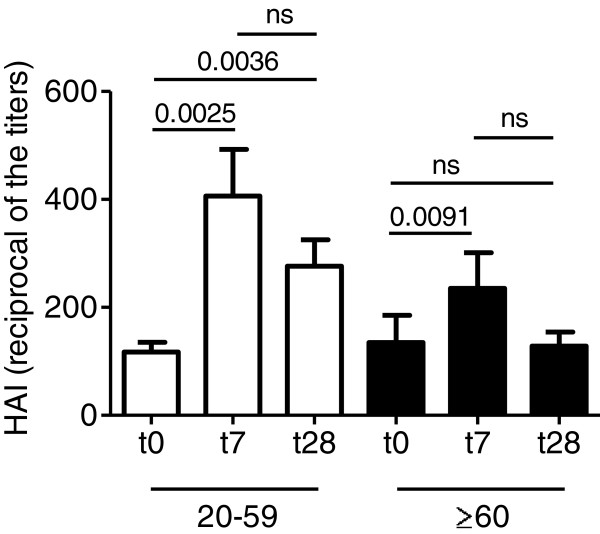
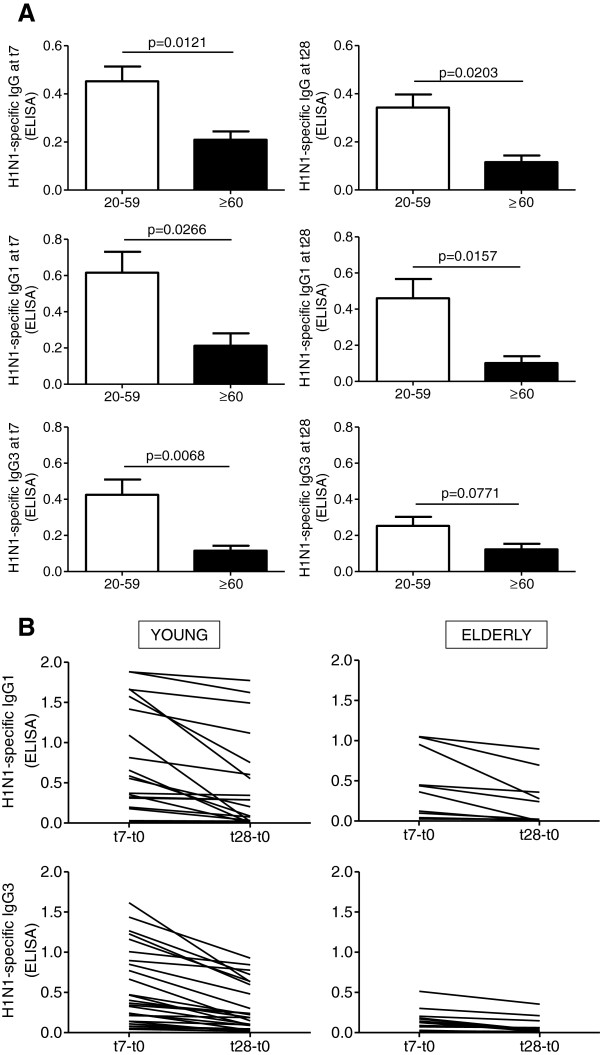
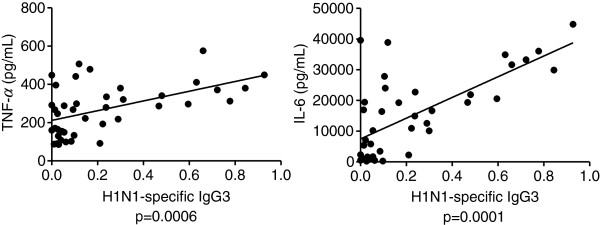
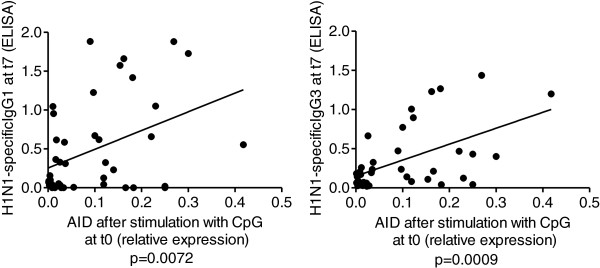
BACKGROUND: We have previously reported an age-related impairment in the serum antibody response to pandemic (p)2009 H1N1, measured by hemagglutination inhibition assay and ELISA. The present study extends these observations and evaluates IgG subclass distribution in healthy individuals of different ages vaccinated during the 2011-2012 season. RESULTS: The 2011-2012 vaccination season was characterized by a vaccine containing the pandemic (p)2009 H1N1 strain for the third consecutive year. All of our subjects were previously immunized, and therefore seroprotected at t0. Nevertheless, aging impaired the serum antibody response to H1N1, as antibody titers increased after vaccination in young and less in elderly individuals. The peak of the response was at day 7 (t7), in contrast with what is usually seen at day 21-28, suggesting a memory response characterized by the induction of an IgG subclass with a shorter half-life. We hypothesized that the IgG3 response, with its much shorter half-life, might be more represented. Antibodies were predominantly of the IgG1 subclass in both age groups, although a robust IgG3 response was also induced and accounted for a significant proportion of the overall response. IgG2 and IgG4 antibodies were at indiscernible levels. We showed a much higher percentage of IgG3 (40-50%) than previously in the literature (less than 10%). To explain if this was associated with a particular cytokine profile, we measured H1N1-induced T cell cytokines in vitro and found that IgG3 levels were positively correlated with TNF-α and IL-6. Moreover, activation-induced cytidine deaminase (AID) mRNA expression, a predictive biomarker of optimal in vivo vaccine response, was found to significantly correlate with IgG3 and also with IgG1 similar to what we have shown previously for total IgG. CONCLUSIONS: In the 2011-2012 season, the pandemic (p)2009 H1N1 strain was present in the vaccine for the third consecutive year and therefore each individual was seroprotected at t0. The peak of the response was at t7, suggesting a memory response characterized by a robust induction of IgG3, which was associated with TNF-α and IL-6 production. Both IgG1 and IgG3 responses were decreased by age. AID was confirmed to be a predictive biomarker of optimal vaccine responses.
Overview
The claims and statistics of this paper haven’t been checked yet.
Free: it reads the open-access text and checks the first 5 claims that cite a source we can check. Create a free account to check every claim.
Integrity signals
Registry
Cites
Statistics
Figures
Verification
Claims the paper makes
The claims and statistics of this paper haven’t been checked yet.
Free: it reads the open-access text and checks the first 5 claims that cite a source we can check. Create a free account to check every claim.
Claims other papers make about this one
Each is checked against this paper’s own text: does it say what the citing paper says it does?
The claim comes from somewhere else, not from this source.
In the citing paper
“and include decreases in expression and function of the key transcription factor E47 (see below), along with a reduction in activation-induced cytidine deaminase (AID), the enzyme of class switch recombination and somatic hypermutation.”
From Aging of the immune system: Focus on inflammation and vaccination (2016) · cites this paper as [123]
Checked by a reasoning model — may be wrong.
Experimental — accuracy not yet measuredThe source backs part of the claim, not all of it — or backs it for a different population, condition or comparison.
In the citing paper
“Age-related intrinsic B-cell defects, responsible for sub-optimal antibody responses in elderly individuals to infections and vaccines have been identified [95, 121–123]”
From Aging of the immune system: Focus on inflammation and vaccination (2016) · cites this paper as [123]
Experimental — accuracy not yet measuredThe check wasn’t confident either way, so it gives no verdict — never disputed.
In the citing paper
“and include decreases in expression and function of the key transcription factor E47 (see below), along with a reduction in activation-induced cytidine deaminase (AID), the enzyme of class switch recombination and somatic hypermutation.”
From Aging of the immune system: Focus on inflammation and vaccination (2016) · cites this paper as [123]
Experimental — accuracy not yet measured
Self-check
Percentages, sums and reported differences re-computed from the paper’s own numbers.
The self-check needs the paper’s full text.
Citations
Cites
(2001) · PsycEXTRA Dataset · doi:10.1037/e548312006-001 · Cited by 5,011
Fiore, A. E., Uyeki, T. M., Broder, K. R., Finelli, L., Euler, G. L., Singleton, J. A., Iskander, J. K., Wortley, P. M., Shay, D. K., Bresee, J., et al. (2009) · PubMed · Cited by 2,098
Muramatsu, M., Sankaranand, V. S., Anant, S., Sugai, M., Kinoshita, K., Davidson, N. O., & Honjo, T. (1999) · Journal of Biological Chemistry · doi:10.1074/jbc.274.26.18470 · Cited by 1,176 · cited 1×
“response, as AID is exclusively expressed in B cells [42] and we have previously established that purified B cells give similar results as do PBMC to evaluate effects of aging on the vaccine response [34].”
ResultMechanism and Regulation of Class Switch Recombination
Stavnezer, J., Guikema, J. E. J., & Schrader, C. E. (2008) · Annual Review of Immunology · doi:10.1146/annurev.immunol.26.021607.090248 · Cited by 1,132 · cited 1×
“CSR and SHM occur in germinal center B cells in response to both T-dependent and T-independent stimuli [31,32].”
BackgroundThe Efficacy of Influenza Vaccine in Elderly Persons: A Meta-Analysis and Review of the Literature
Gross, P. A., Hermogenes, A. W., Sacks, H. S., Lau, J., & Levandowski, R. A. (1995) · Annals of Internal Medicine · doi:10.7326/0003-4819-123-7-199510010-00008 · Cited by 1,100 · cited 1×
“There is evidence that elderly individuals who have routinely received the vaccine can still contract the infection, with secondary complications leading to hospitalization, physical debilitation, exacerbation of underlying medical conditions and death [11-13].”
BackgroundAntibody response to influenza vaccination in the elderly: A quantitative review
GOODWIN, K., VIBOUD, C., & SIMONSEN, L. (2006) · Vaccine · doi:10.1016/j.vaccine.2005.08.105 · Cited by 1,064 · cited 1×
“The effects of influenza vaccination are different in individuals of different ages [6-8].”
BackgroundPandemic versus Epidemic Influenza Mortality: A Pattern of Changing Age Distribution
Simonsen, L., Clarke, M. J., Schonberger, L. B., Arden, N. H., Cox, N. J., & Fukuda, K. (1998) · Journal of Infectious Diseases · doi:10.1086/515616 · Cited by 704 · cited 1×
“There is evidence that elderly individuals who have routinely received the vaccine can still contract the infection, with secondary complications leading to hospitalization, physical debilitation, exacerbation of underlying medical conditions and death [11-13].”
BackgroundAging of the innate immune system
Shaw, A. C., Joshi, S., Greenwood, H., Panda, A., & Lord, J. M. (2010) · Current Opinion in Immunology · doi:10.1016/j.coi.2010.05.003 · Cited by 647 · cited 1×
“Changes in cytokine profile during senescence have been reported and attributed to changes in both the innate and the adaptive immune systems [25-28], which may cause parallel changes in the relative amounts of the different IgG subclasses produced in response to the influenza vaccine.”
BackgroundMortality benefits of influenza vaccination in elderly people: an ongoing controversy
Simonsen, L., Taylor, R. J., Viboud, C., Miller, M. A., & Jackson, L. A. (2007) · The Lancet Infectious Diseases · doi:10.1016/s1473-3099(07)70236-0 · Cited by 520 · cited 1×
“The effects of influenza vaccination are different in individuals of different ages [6-8].”
BackgroundYount, W. J., Dorner, M. M., Kunkel, H. G., & Kabat, E. A. (1968) · The Journal of Experimental Medicine · doi:10.1084/jem.127.3.633 · Cited by 429
Cited by
The human antibody response to influenza A virus infection and vaccination
Krammer, F. (2019) · Nature Reviews Immunology · doi:10.1038/s41577-019-0143-6 · Cited by 796
Antibiotics-Driven Gut Microbiome Perturbation Alters Immunity to Vaccines in Humans
Hagan, T., Cortese, M., Rouphael, N., Boudreau, C., Linde, C., Maddur, M. S., Das, J., Wang, H., Guthmiller, J., Zheng, N.-Y., et al. (2019) · Cell · doi:10.1016/j.cell.2019.08.010 · Cited by 572
Aging of the immune system: Focus on inflammation and vaccination
Pinti, M., Appay, V., Campisi, J., Frasca, D., Fülöp, T., Sauce, D., Larbi, A., Weinberger, B., & Cossarizza, A. (2016) · European Journal of Immunology · doi:10.1002/eji.201546178 · Cited by 439
Self-citationObesity decreases B cell responses in young and elderly individuals
Frasca, D., Ferracci, F., Diaz, A., Romero, M., Lechner, S., & Blomberg, B. B. (2016) · Obesity · doi:10.1002/oby.21383 · Cited by 228
Self-citationFrasca, D., Diaz, A., Romero, M., Garcia, D., & Blomberg, B. B. (2020) · Annual Review of Cell and Developmental Biology · doi:10.1146/annurev-cellbio-011620-034148 · Cited by 225
“Influenza vaccine–specific antibody responses are reduced in the elderly in part due to decreased generation of specific serum antibodies (Frasca et al. 2010, 2012, 2013b; McElhaney et al. 2013), switched memory B cells (Amanna et al. 2007; Frasca et al. 2010, 2012, 2013c; Sasaki et al. 2008), and…”
BackgroundInfluentialSelf-citationFrasca, D., Diaz, A., Romero, M., & Blomberg, B. B. (2017) · Experimental Gerontology · doi:10.1016/j.exger.2016.12.001 · Cited by 160
Self-citationPascoe, A. R., Fiatarone Singh, M. A., & Edwards, K. M. (2014) · Brain, Behavior, and Immunity · doi:10.1016/j.bbi.2013.10.003 · Cited by 149
“For example, there is significant variation in the response to influenza vaccinations, where clinical vaccine efficacy is estimated to be 70–90% in young adults, whereas the corresponding efficacy in the elderly is only 17–53% (Goodwin et al., 2006).”
BackgroundFrasca, D., Diaz, A., Romero, M., & Blomberg, B. B. (2016) · Vaccine · doi:10.1016/j.vaccine.2016.04.023 · Cited by 144
Self-citationMa, C., Li, Y., Wang, L., Zhao, G., Tao, X., Tseng, C.-T. K., Zhou, Y., Du, L., & Jiang, S. (2014) · Vaccine · doi:10.1016/j.vaccine.2014.02.004 · Cited by 142
Abu-Raya, B., Maertens, K., Edwards, K. M., Omer, S. B., Englund, J. A., Flanagan, K. L., Snape, M. D., Amirthalingam, G., Leuridan, E. E., Damme, P. V., et al. (2020) · Frontiers in Immunology · doi:10.3389/fimmu.2020.01282 · Cited by 144
Aging induces B cell defects and decreased antibody responses to influenza infection and vaccination
Frasca, D., & Blomberg, B. B. (2020) · Immunity & Ageing · doi:10.1186/s12979-020-00210-z · Cited by 130
Self-citationCytomegalovirus (CMV) seropositivity decreases B cell responses to the influenza vaccine
Frasca, D., Diaz, A., Romero, M., Landin, A. M., & Blomberg, B. B. (2015) · Vaccine · doi:10.1016/j.vaccine.2015.01.071 · Cited by 116
Self-citationBulati, M., Caruso, C., & Colonna‐Romano, G. (2017) · Ageing Research Reviews · doi:10.1016/j.arr.2017.04.001 · Cited by 123
“In particular, it has been demonstrated a pivotal role of the age-related intrinsic defects as the cause of the impaired ability of elderly people to respond to new infections or vaccines (Frasca et al., 2013, 2014, 2015a,b).”
BackgroundExtra-Neutralizing FcR-Mediated Antibody Functions for a Universal Influenza Vaccine
Boudreau, C. M., & Alter, G. (2019) · Frontiers in Immunology · doi:10.3389/fimmu.2019.00440 · Cited by 99
Mazzini, L., Martinuzzi, D., Hyseni, I., Benincasa, L., Molesti, E., Casa, E., Lapini, G., Piu, P., Trombetta, C. M., Marchi, S., et al. (2020) · Journal of Immunological Methods · doi:10.1016/j.jim.2020.112937 · Cited by 83
Coming together at the hinges: Therapeutic prospects of IgG3
Chu, T. H., Patz, E. F., & Ackerman, M. E. (2021) · mAbs · doi:10.1080/19420862.2021.1882028 · Cited by 78
Leptin induces immunosenescence in human B cells
Frasca, D., Diaz, A., Romero, M., & Blomberg, B. B. (2019) · Cellular Immunology · doi:10.1016/j.cellimm.2019.103994 · Cited by 81
Self-citationNunes, M. C., Cutland, C., Dighero, B., Bate, J., Jones, S., Hugo, A., van Niekerk, N., Kuwanda, L., Izu, A., Weinberg, A., et al. (2015) · The Journal of Infectious Diseases · doi:10.1093/infdis/jiv339 · Cited by 77
“The response to influenza vaccine in immunocompetent adults is predominantly immunoglobulin G1 (IgG1), with a half-life of 21 days, and a smaller IgG3 component, with a half-life of 7 days [35].”
BackgroundDiaz, A., Romero, M., Vazquez, T., Lechner, S. C., Blomberg, B. B., & Frasca, D. (2017) · Vaccine · doi:10.1016/j.vaccine.2017.03.078 · Cited by 77
Self-citationAssessment of avidity related to IgG subclasses in SARS-CoV-2 Brazilian infected patients
Moura, A. D., da Costa, H. H. M., Correa, V. A., Lima, A. K. D. S., Lindoso, J. Â. L., Gaspari, E. D., Hong, M. A., Cunha-Junior, J. P., & Prudêncio, C. R. (2021) · Scientific Reports · doi:10.1038/s41598-021-95045-z · Cited by 83
Adipose Tissue Inflammation Induces B Cell Inflammation and Decreases B Cell Function in Aging
Frasca, D., & Blomberg, B. B. (2017) · Frontiers in Immunology · doi:10.3389/fimmu.2017.01003 · Cited by 66
Self-citationGalson, J. D., Trück, J., Kelly, D. F., & van der Most, R. (2016) · Scientific Reports · doi:10.1038/srep37229 · Cited by 61
“It may be that the Fc receptor of IgG3 is more effective at neutralizing influenza than other subclasses 37 , or that the subclass switching is just a proxy for AID production, and it is the AID mediated lineage diversification which improves the neutralizing ability of the antibodies.”
InfluentialVanderven, H. A., & Kent, S. J. (2020) · Immunology and Cell Biology · doi:10.1111/imcb.12312 · Cited by 66
The human thymus perivascular space is a functional niche for viral-specific plasma cells
Núñez, S., Moore, C., Gao, B., Rogers, K., Hidalgo, Y., del Nido, P. J., Restaino, S. W., Naka, Y., Bhagat, G., Madsen, J. C., et al. (2016) · Science Immunology · doi:10.1126/sciimmunol.aah4447 · Cited by 68
Role of the humoral immune response during COVID-19: guilty or not guilty?
Yaugel-Novoa, M., Bourlet, T., & Paul, S. (2022) · Mucosal Immunology · doi:10.1038/s41385-022-00569-w · Cited by 66
Frasca, D., Diaz, A., Romero, M., & Blomberg, B. B. (2021) · Frontiers in Aging · doi:10.3389/fragi.2021.715981 · Cited by 49
Self-citationAgeing and obesity similarly impair antibody responses
Frasca, D., Diaz, A., Romero, M., & Blomberg, B. B. (2016) · Clinical & Experimental Immunology · doi:10.1111/cei.12824 · Cited by 47
Self-citationAge‐related factors that affect B cell responses to vaccination in mice and humans
Frasca, D., Blomberg, B. B., Garcia, D., Keilich, S. R., & Haynes, L. (2020) · Immunological Reviews · doi:10.1111/imr.12864 · Cited by 47
Self-citationZinc deficiency as possible link between immunosenescence and age-related diseases
Schulz, M. T., & Rink, L. (2025) · Immunity & Ageing · doi:10.1186/s12979-025-00511-1 · Cited by 56
“For example, people over the age of 65 represented more than 68% of new cancer cases in 2019 [402], and the incidence of Clostridium difficile infections was more than threefold higher among elderly individuals compared to younger adults [403].”
Sakem, B., Nock, C., Stanga, Z. G., Medina, P., Nydegger, U. E., Risch, M., & Risch, L. (2013) · BMC Medicine · doi:10.1186/1741-7015-11-176 · Cited by 40
Convergent antibody evolution and clonotype expansion following influenza virus vaccination
Forgacs, D., Abreu, R. B., Sautto, G. A., Kirchenbaum, G. A., Drábek, E. F., Williamson, K. S., Kim, D., Emerling, D. E., & Ross, T. M. (2021) · PLoS ONE · doi:10.1371/journal.pone.0247253 · Cited by 35
Immune response to vaccination in adults with mental disorders: A systematic review
Xiao, K., Gillissie, E. S., Lui, L. M. W., Ceban, F., Teopiz, K. M., Gill, H., Cao, B., Ho, R., Rosenblat, J. D., & McIntyre, R. S. (2022) · Journal of Affective Disorders · doi:10.1016/j.jad.2022.02.025 · Cited by 32
Manenti, A., Tete, S. M., Mohn, K. G.-I., Jul‐Larsen, Å., Gianchecchi, E., Montomoli, E., Brokstad, K. A., & Cox, R. J. (2016) · Vaccine · doi:10.1016/j.vaccine.2016.10.024 · Cited by 31
van Twillert, I., den Brink, J. A. M. V. G.-V., Poelen, M. C. M., Helm, K., Kuipers, B., Schipper, M., Boog, C. J. P., Verheij, T. J., Versteegh, F. G. A., & van Els, C. A. C. M. (2014) · PLoS ONE · doi:10.1371/journal.pone.0085227 · Cited by 29
Waning and aging of cellular immunity toB. pertussis
van Twillert, I., Han, W. G. H., & van Els, C. A. C. M. (2015) · Pathogens and Disease · doi:10.1093/femspd/ftv071 · Cited by 37
“The ability to generate high-affinity antibodies and IgG1 and IgG3 responses is reduced in elderly, as was shown for influenza A hemagglutinin antibody responses (Khurana et al. 2012; Frasca et al. 2013).”
BackgroundDavydov, A. N., Obraztsova, A., Lebedin, M. Y., Turchaninova, M. A., Staroverov, D. B., Merzlyak, E. M., Sharonov, G. V., Кладова, О. В., Shugay, M., Britanova, O. V., et al. (2018) · Frontiers in Immunology · doi:10.3389/fimmu.2018.02309 · Cited by 33
Li, C., To, K. K., Zhang, J., Lee, A. C.-Y., Zhu, H., Mak, W. W. N., Hung, I. F., & Yuen, K. (2018) · Frontiers in Immunology · doi:10.3389/fimmu.2018.02370 · Cited by 26
Targeting immunosenescence for improved tumor immunotherapy
Liu, Z., Zuo, L., Zhou, Z., Liu, S., Ba, Y., Zuo, A., Ren, Y., Zhang, C., Chen, Y., Ma, H., et al. (2024) · MedComm · doi:10.1002/mco2.777 · Cited by 29
“116,117 It is confirmed that capacity to elicit vaccine-specific antibody responses is inversely related to serum TNF-α level.”
BackgroundBolton, M. J., Santos, J. J. D. S., Arevalo, C. P., Griesman, T., Watson, M., Li, S. H., Bates, P. F., Ramage, H. R., Wilson, P. C., & Hensley, S. E. (2023) · Proceedings of the National Academy of Sciences · doi:10.1073/pnas.2216521120 · Cited by 24
Arsenović-Ranin, N., Petrović, R., Zivkovic, I. P., Bufan, B., Stoiljković, V., & Leposavić, G. (2019) · Biogerontology · doi:10.1007/s10522-019-09811-8 · Cited by 22
Gadush, M., Sautto, G. A., Chandrasekaran, H., Bensussan, A., Ross, T. M., Ippolito, G. C., & Person, M. D. (2022) · Journal of Proteome Research · doi:10.1021/acs.jproteome.1c00913 · Cited by 27
Hartley, G. E., Edwards, E. S. J., Bosco, J. J., Ojaimi, S., Stirling, R. G., Cameron, P. U., Flanagan, K. L., Plebanski, M., Hogarth, P. M., O’Hehir, R. E., et al. (2020) · Clinical & Translational Immunology · doi:10.1002/cti2.1199 · Cited by 20
Thymus Gland: A Double Edge Sword for Coronaviruses
Al-Suhaimi, E. A., Aljafary, M. A., Alkhulaifi, F. M., Al-Dossary, H. A., AlShammari, T. M., Al‐Qaaneh, A. M., Aldahhan, R., Alkhalifah, Z., Gaymalov, Z. Z., Shehzad, A., et al. (2021) · Vaccines · doi:10.3390/vaccines9101119 · Cited by 17
Polyfunctional antibodies: a path towards precision vaccines for vulnerable populations
Purcell, R. A., Theisen, R. M., Arnold, K. B., Chung, A. W., & Selva, K. J. (2023) · Frontiers in Immunology · doi:10.3389/fimmu.2023.1183727 · Cited by 18
CD83 expression regulates antibody production in response to influenza A virus infection
Akauliya, M., Gautam, A., Maharjan, S., Park, B. K., Kim, J.-S., & Kwon, H. (2020) · Virology Journal · doi:10.1186/s12985-020-01465-0 · Cited by 13
Kang, M., Lin, F., Jiang, Z., Tan, X., Lin, X., Liang, Z., Xiao, C., Xia, Y., Guan, W., Yang, Z., et al. (2023) · Influenza and Other Respiratory Viruses · doi:10.1111/irv.13172 · Cited by 12
Characterizing the dynamics of BCR repertoire from repeated influenza vaccination
Mai, G., Zhang, C., Lan, C., Zhang, J., Wang, Y.-Y., Tang, K. L., Tang, J. Y., Zeng, J., Chen, Y., Cheng, P., et al. (2023) · Emerging Microbes & Infections · doi:10.1080/22221751.2023.2245931 · Cited by 14
Hensen, L., Nguyen, T. H. O., Rowntree, L. C., Damelang, T., Koutsakos, M., Aban, M., Hurt, A. C., Harland, K. L., Auladell, M. A., van de Sandt, C. E., et al. (2021) · Proceedings of the National Academy of Sciences · doi:10.1073/pnas.2109388118 · Cited by 11
“S5A), supporting a previous 2011 to 2012 vaccine study (29).”
BackgroundDoes SARS-CoV-2 Induce IgG4 Synthesis to Evade the Immune System?
Rubio‐Casillas, A., Redwan, E. M. M. M., & Uversky, V. N. (2023) · Biomolecules · doi:10.3390/biom13091338 · Cited by 12
“Principal antibody responses to many viral illnesses are mainly represented by the IgG1 and IgG3 subclasses [28,29].”
The role of age-associated B cells in systemic lupus erythematosus
Su, Q. Y., Zheng, X., Han, X.-T., Li, Q., Gao, Y.-R., Zhang, S., & Li, X.-F. (2025) · Journal of Autoimmunity · doi:10.1016/j.jaut.2025.103433 · Cited by 14
Manenti, A., Macioła, A. K., Trombetta, C. M., Kistner, O., Casa, E., Hyseni, I., Razzano, I., Torelli, A., & Montomoli, E. (2020) · Vaccines · doi:10.3390/vaccines8010043 · Cited by 9
Duda-Madej, A., Łabaz, J. P., Topola, E., Bazan, H., & Viscardi, S. (2025) · International Journal of Molecular Sciences · doi:10.3390/ijms26199607 · Cited by 14
“The difficulty in producing high-affinity antibodies (e.g., IgG1) against bacterial antigens such as FHA in older patients remains a problem [192].”
Zhang, W., Rowntree, L. C., Muttucumaru, R., Damelang, T., Aban, M., Hurt, A. C., Auladell, M. A., Esterbauer, R., Wines, B. D., Hogarth, P. M., et al. (2023) · Clinical & Translational Immunology · doi:10.1002/cti2.1456 · Cited by 9
van der Heiden, M., Berbers, G. A. M., Fuentes, S., van Zelm, M. C., Boots, A. M. H., & Buisman, A. (2018) · Frontiers in Immunology · doi:10.3389/fimmu.2017.01962 · Cited by 9
Kumagai, T., Nakayama, T., Okuno, Y., Kase, T., Nishimura, N., Ozaki, T., Miyata, A., Suzuki, E., Okafuji, T., Okafuji, T., et al. (2014) · Viral Immunology · doi:10.1089/vim.2014.0010 · Cited by 7
Vaccine responses in ageing and chronic viral infection
Rees-Spear, C., & McCoy, L. E. (2021) · Oxford Open Immunology · doi:10.1093/oxfimm/iqab007 · Cited by 11
Frasca, D., & Blomberg, B. B. (2016) · Critical Reviews in Immunology · doi:10.1615/critrevimmunol.2017020113 · Cited by 6
Self-citationRaju, N., Kramer, K. J., Cavallaro, M., Diotti, R. A., Shiakolas, A. R., Mota, Y. C., Richardson, R. A., Scheibe, I., Ross, T. M., Georgiev, I. S., et al. (2024) · The Journal of Immunology · doi:10.4049/jimmunol.2400326 · Cited by 6
Ge, P., & Ross, T. M. (2023) · Viruses · doi:10.3390/v15010203 · Cited by 5
Panza, F., Pratesi, F., VALORIANI, D., & Migliorini, P. (2014) · The Journal of Rheumatology · doi:10.3899/jrheum.130795 · Cited by 5
de Armas, L. R., George, V., Filali-Mouhim, A., Steel, C., Parmigiani, A., Cunningham, C. K., Weinberg, A., Trautmann, L., Sékaly, R., Cameron, M. J., et al. (2021) · Frontiers in Immunology · doi:10.3389/fimmu.2021.639358 · Cited by 6
“The Centers for Disease Control recommends seasonal influenza vaccination for all persons above six months of age (3), but seasonal vaccines have shown modest efficacy (4) and low antibody titers are generated in the elderly (over age 60 years) (5, 6) and in PWH (7).”
BackgroundMoura, A., da Costa, H. H. M., Correa, V. A., Lima, A. K. S., Lindoso, J. Â. L., Gaspari, E. D., Hong, M. A., Cunha-Junior, J. P., & Prudêncio, C. R. (2021) · Research Square · doi:10.21203/rs.3.rs-131195/v1 · Cited by 5
Padilla-Bórquez, D. L., Matuz-Flores, M. G., Hernández-Bello, J., Rosas-Rodríguez, J., Turrubiates-Hernández, F. J., García-Arellano, S., González-Estévez, G., Ceja-Gálvez, H. R., Oregón-Romero, E., López-Reyes, A., et al. (2024) · Human Vaccines & Immunotherapeutics · doi:10.1080/21645515.2024.2394265 · Cited by 3
“35 Supporting this, our findings indicated increased IgG1 and IgG3 levels above average values, although no statistically significant differences were observed between groups.”
Does SARS-CoV-2 Possess “Allergen-Like” Epitopes?
Rubio‐Casillas, A., Cowley, D., Uversky, V. N., Redwan, E. M. M. M., Brogna, C., & Piscopo, M. (2025) · COVID · doi:10.3390/covid5040055 · Cited by 3
“It is supposed that, upon contact with a virus, the immune system would produce only IgG1 and IgG3, which are the main antiviral antibodies [64–67].”
Kwon, J., Senevirathne, A., & Lee, J. H. (2025) · Materials Today Bio · doi:10.1016/j.mtbio.2025.102224 · Cited by 3
“Previous studies described the various roles of IgG subtypes in antigen recognition and viral infection stages [34,42 – 44].”
Shen, P., Cui, W., Lin, J., Wang, Z., Li, Z., & Liu, B. (2026) · Frontiers in Immunology · doi:10.3389/fimmu.2025.1716230 · Cited by 2
Can human IgG subclasses distinguish between confirmed and unconfirmed SARS-CoV-2 infections?
Bahgat, M. M., Nasraa, M. H., Nadeem, R., Amer, K., Hassan, W. A., El-Raouf, A. A., & Abd‐Elshafy, D. N. (2024) · Journal of Genetic Engineering and Biotechnology · doi:10.1016/j.jgeb.2024.100399 · Cited by 1
Vasileva, A. A., Krivitskaya, V. Z., Vojcekhovskaya, E. M., Вакин, В. С., Kuznecova, E. V., Petrova, E. R., Go, A. A., Lvov, N. I., & Соминина, А. А. (2016) · Epidemiology and Vaccinal Prevention · doi:10.31631/2073-3046-2016-15-2-77-84
Will Influenza Vaccination Protect Obese Adults?
Neidich, S. D. (2016) · Carolina Digital Repository (University of North Carolina at Chapel Hill) · doi:10.17615/cx6d-z419
Influenza Vaccination in Older Adults
McElhaney, J. E., & Frasca, D. (2021) · Springer eBooks · doi:10.1007/978-3-030-22009-9_69
Self-citationInfluenza Vaccination in Older Adults
McElhaney, J. E., & Frasca, D. (2019) · Springer eBooks · doi:10.1007/978-3-319-69892-2_69-1
Self-citationPawelec, G. (2020) · Faculty Opinions – Post-Publication Peer Review of the Biomedical Literature · doi:10.3410/f.736551116.793573749
Kumar, S., & Verma, M. (2024) · MGM Journal of Medical Sciences · doi:10.4103/mgmj.mgmj_30_24 · Cited by 2
Transcriptomic and miRNA Signatures of ChAdOx1 nCoV-19 Vaccine Response Using Machine Learning
Lin, J., Ma, Q., Chen, L., Guo, W., Feng, K., Huang, T., & Cai, Y. (2025) · Life · doi:10.3390/life15060981 · Cited by 1
Stabilized mosaic hemagglutinin immunogens as novel universal influenza virus vaccines
Mishra, M., Puente‐Massaguer, E., Jones, A., Martínez-Guevara, J. L., Lai, T. Y., Abdeljawad, A., Ding, K., Zheng, N., Bournazos, S., Ravetch, J. V., et al. (2026) · Molecular Therapy · doi:10.1016/j.ymthe.2026.03.021 · Cited by 2
“31 Although, a general IgG1-skewed immune response was observed in both vaccinations, which could be attributed to the use of AddaVax adjuvant.”
Anti-Aging the Immune System: Hype or Hope? A Mechanistic Review
Ilyas, A. (2026) · Premier Journal of Immunology · doi:10.70389/pji.100011 · Cited by 1
Riley, D. V., Baracco, L., Das, S., Tenaglia, B. M., Speed, S., Dillen, C., Hayes, J., Veliz, S. D., Nijhuis, H., Sage, V. L., et al. (2026) · mSphere · doi:10.1128/msphere.00171-26
“With repeated vaccination, immune boosting effects occur with each dose as memory B cells recall previous exposures; however, after initial vaccination, older adults generally produce only modest levels of antibodies (19–21).”
Ross, T. (2024) · ImmPort · doi:10.21430/m3gor4vh6z
Responses to Inactivated Influenza Vaccine (IIV) in adults with or without antibiotics
Rouphael, N., Mulligan, M., Mehta, A., Edugupanti, S., Kelley, C., Kabbani, S., & Beck, A. (2019) · ImmPort · doi:10.21430/m3geiupy7r
Sequencing of SARS-CoV-2 and Influenza Monoclonal Antibodies
Provided, N. P. N. (2026) · ImmPort · doi:10.21430/m3r4bhisfy
Metadata
- Authors
- Frasca, D., Diaz, A., Romero, M., Mendez, N. V., Landin, A. M., & Blomberg, B. B.
- Affiliations
- University of Miami (US)
- Corresponding author
- Frasca, Daniela
- Venue
- Immunity & Ageing
- Published
- 2013-04-22
- Volume
- 10
- Issue
- 1
- Pages
- 14-14
- ISSN
- 1742-4933 (ISSN-L)
- PMC
- PMC3639840
- OpenAlex
- W2027764272
- Cited by
- 77
- References
- 44
- Citations by year
- 2026: 4 · 2025: 6 · 2024: 5 · 2023: 7 · 2022: 3 · 2021: 10 · 2020: 10 · 2019: 7 · 2018: 3 · 2017: 3 · 2016: 10 · 2015: 3 · 2014: 4 · 2013: 2
- FWCI
- 4.62
- Type
- journal article
- Language
- en
- Open access
- gold
- doi.org
- Licence
- cc-by
- creativecommons.org/licenses/by/2.0 (tdm)
- Locations
- Immunity & Ageing (publishedVersion, cc-by)
- Europe PMC (PubMed Central) (publishedVersion, cc-by)
- PubMed Central (publishedVersion, cc-by)
- PubMed (publishedVersion)
- Funders
- University of Miami
- Sylvester Comprehensive Cancer Center, University of Miami Health Systems
- National Institutes of Health (AG-32576)
- Leonard M. Miller School of Medicine
- National Institute on Aging (R01AG032576)
- National Institute of Allergy and Infectious Diseases (R21AI096446)
- Topics
- Health Sciences › Medicine › Epidemiology › Influenza Virus Research Studies
- Life Sciences › Immunology and Microbiology › Immunology › Immune responses and vaccinations
- Life Sciences › Immunology and Microbiology › Microbiology › Bacterial Infections and Vaccines
- Keywords
- aging, age-related antibody response, 2009 H1N1 pandemic, influenza vaccination, IgG subclasses, IgG3, IgG1, memory B cells, T cell cytokines, TNF-α, interleukin-6, activation-induced cytidine deaminase, seroprotection
About these checks
Registry, retraction, Cites and statistics results are computed, not judged, with one exception: a printed reference that no index lists is read once by a model before it counts as a citation error. Claims are extracted by a model and kept only when their quote appears verbatim in the text; each cited source is then checked, with a model’s help, for whether it says what the claim relies on. Those verdicts can be wrong — read the claim’s quote and the cited source before relying on one.
Statistics and arithmetic are recomputed, not judged.
Confidence bands are shown only for fields calibrated on our annotated test set. None is calibrated yet, so no band is shown.
What counts as a claim ›How we measure confidence ›How we check this ›
Are you an author, or do you see a problem with this page? Request a review
Data sources
Bibliographic data: Semantic Scholar, OpenAlex, Crossref.
Contains information from the Semantic Scholar Academic Graph Datasets, made available under the ODC Attribution License (ODC-BY 1.0).
Semantic Scholar’s data is described in: Kinney, R., et al. (2023). The Semantic Scholar Open Data Platform. arXiv:2301.10140.
