

Thoracic and respirable particle definitions for human health risk assessment
Open accessThe DOI matches its Crossref record; 25 of the 25 references it cites were found in a registry or an index.
Abstract
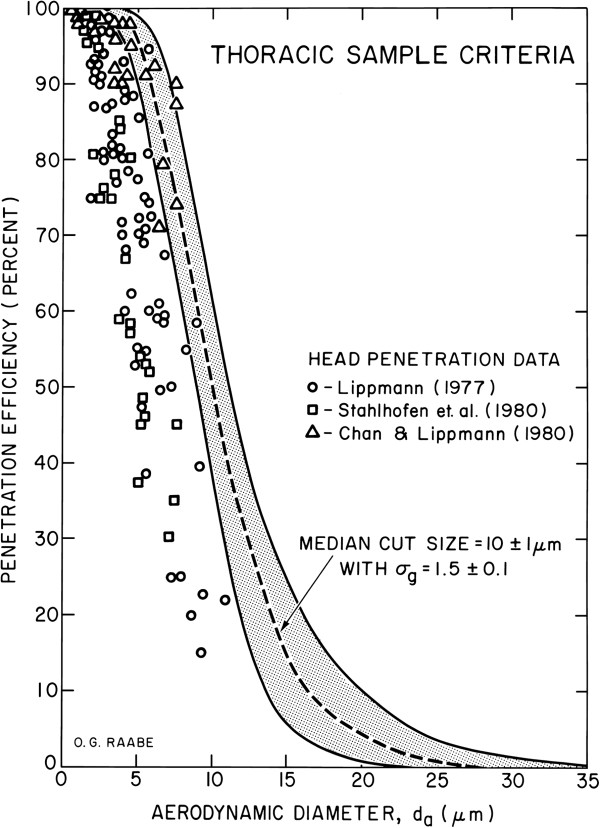
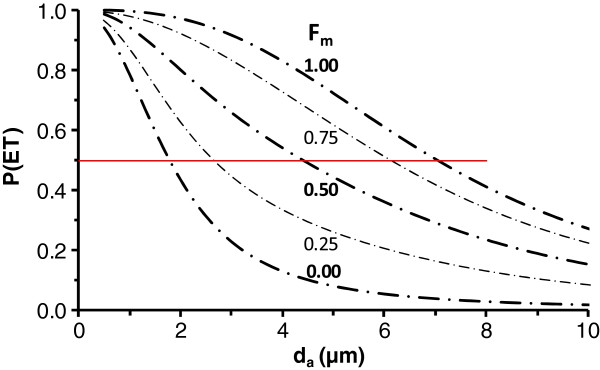
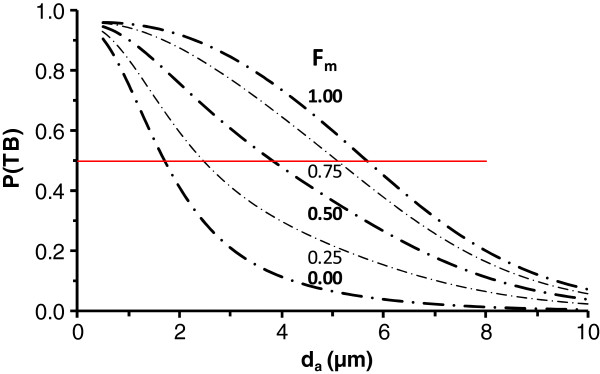
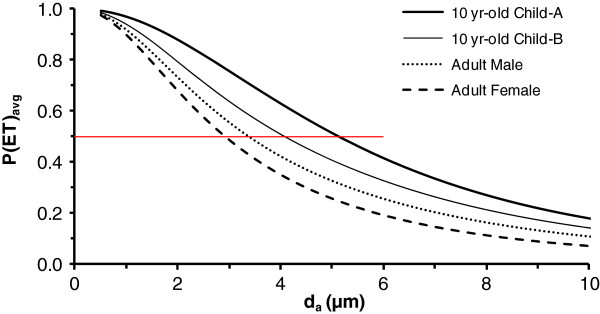
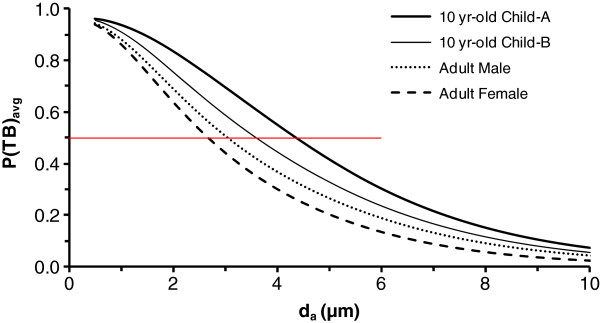
BACKGROUND: Particle size-selective sampling refers to the collection of particles of varying sizes that potentially reach and adversely affect specific regions of the respiratory tract. Thoracic and respirable fractions are defined as the fraction of inhaled particles capable of passing beyond the larynx and ciliated airways, respectively, during inhalation. In an attempt to afford greater protection to exposed individuals, current size-selective sampling criteria overestimate the population means of particle penetration into regions of the lower respiratory tract. The purpose of our analyses was to provide estimates of the thoracic and respirable fractions for adults and children during typical activities with both nasal and oral inhalation, that may be used in the design of experimental studies and interpretation of health effects evidence. METHODS: We estimated the fraction of inhaled particles (0.5-20 μm aerodynamic diameter) penetrating beyond the larynx (based on experimental data) and ciliated airways (based on a mathematical model) for an adult male, adult female, and a 10 yr old child during typical daily activities and breathing patterns. RESULTS: Our estimates show less penetration of coarse particulate matter into the thoracic and gas exchange regions of the respiratory tract than current size-selective criteria. Of the parameters we evaluated, particle penetration into the lower respiratory tract was most dependent on route of breathing. For typical activity levels and breathing habits, we estimated a 50% cut-size for the thoracic fraction at an aerodynamic diameter of around 3 μm in adults and 5 μm in children, whereas current ambient and occupational criteria suggest a 50% cut-size of 10 μm. CONCLUSIONS: By design, current size-selective sample criteria overestimate the mass of particles generally expected to penetrate into the lower respiratory tract to provide protection for individuals who may breathe orally. We provide estimates of thoracic and respirable fractions for a variety of breathing habits and activities that may benefit the design of experimental studies and interpretation of particle size-specific health effects.
Overview
The claims and statistics of this paper haven’t been checked yet.
Free: it reads the open-access text and checks the first 5 claims that cite a source we can check. Create a free account to check every claim.
Integrity signals
Registry
Cites
Statistics
Figures
Verification
Claims the paper makes
The claims and statistics of this paper haven’t been checked yet.
Free: it reads the open-access text and checks the first 5 claims that cite a source we can check. Create a free account to check every claim.
Self-check
Percentages, sums and reported differences re-computed from the paper’s own numbers.
The self-check needs the paper’s full text.
Citations
Cites
Models of human lung airways and their application to inhaled particle deposition
Yeh, H.-C., & Schum, G. M. (1980) · Bulletin of Mathematical Biology · doi:10.1007/bf02460796 · Cited by 717
A Multiple-Path Model of Particle Deposition in the Rat Lung
Anjilvel, S. (1995) · Fundamental and Applied Toxicology · doi:10.1006/faat.1995.1144 · Cited by 498 · cited 3×
“Millage KK, Bergman J, Asgharian B, McClellan G: A review of inhalability fraction models: discussion and recommendations.”
MethodInfluentialStahlhofen, W., Gebhart, J., & Heyder, J. (1980) · American Industrial Hygiene Association Journal · doi:10.1080/15298668091424933 · Cited by 444 · cited 1×
“, light exercise [5-7].”
CHAN, T. L., & LIPPMANN, M. (1980) · American Industrial Hygiene Association Journal · doi:10.1080/15298668091424942 · Cited by 402 · cited 1×
“, light exercise [5-7].”
Oronasal distribution of respiratory airflow
Niinimaa, V., Cole, P., & Shephard, R. J. (1981) · Respiration Physiology · doi:10.1016/0034-5687(81)90089-x · Cited by 184 · cited 4×
“[17], who examined the route of breathing as a function of activity in healthy adults (14 males, 16 females).”
BackgroundMethodInfluentialRegional Deposition of Particles in the Human Respiratory Tract
Lippmann, M. (1977) · Comprehensive Physiology · doi:10.1002/cphy.cp090114 · Cited by 177
Size Considerations for Establishing a Standard for Inhalable Particles
Miller, F. J., Gardner, D. E., Graham, J. A., Lee, R. E., Wilson, W. E., & Bachmann, J. D. (1979) · Journal of the Air Pollution Control Association · doi:10.1080/00022470.1979.10470831 · Cited by 175 · cited 1×
“[10] also specifically recommended a particle size cut-point of ≤ 2.”
BackgroundLong-term clearance from small airways decreases with age
Svartengren, M., Falk, R., & Philipson, K. (2005) · European Respiratory Journal · doi:10.1183/09031936.05.00002105 · Cited by 144
Air Sampling Instruments for Evaluation of Atmospheric Contaminants
Mccammon, C., & Cohen, B. S. (1995) · Cited by 129
Research works printed but not linked: 3
- American Conference of Governmental Industrial Hygienis (ACGIH) TLVs and BEIs: Based on the documentation of the threshold limit values for chemical substances and physical agents and biological exposure indices 2005 Cincinnati, OH: ACGIH
- American Conference of Governmental Industrial Hygienis (ACGIH) Particle size-selective sampling in the workplace. Report of the ACGIH Technical Committee on Air Sampling Procedures 1985 Cincinnati, OH: ACGIH
- International Organization for Standardization (ISO) Air quality – Sampling conventions for airborne particle deposition in the human respiratory system 2012 Geneva, Switzerland: ISO 13138, First edition
Cited by
Items 201–300 of 475
Characterization of indoor diesel exhaust emissions from the parking garage of a school
Debia, M., Trachy-Bourget, M.-C., Beaudry, C., Neesham-Grenon, E., Perron, S., & Lapointe, C. (2016) · Environmental Science and Pollution Research · doi:10.1007/s11356-016-8129-4 · Cited by 15
“The respirable fraction, commonly monitored in industrial hygiene surveys, is defined as those particles that can reach the alveolar region (Ruzer and Harley 2012; Brown et al. 2013; CEN 1993; ACGIH 2016).”
BackgroundWagner, J., Macher, J. M., Chen, W., & Kumagai, K. (2022) · International Journal of Environmental Research and Public Health · doi:10.3390/ijerph192315555 · Cited by 14
TITANIUM POWDERS USED IN POWDER BED FUSION: THEIR RELEVANCE TO RESPIRATORY HEALTH
du Preez, S., de Beer, D. J., & du Plessis, J. (2018) · The South African Journal of Industrial Engineering · doi:10.7166/29-4-1975 · Cited by 14
“Thoracic particles (50% penetration of particles with an aerodynamic diameter of 10 μm) can penetrate beyond the larynx, while respirable particles (50% penetration of particles with an aerodynamic diameter of 4 μm) can penetrate the unciliated airways and be deposited in the alveolar region of the lungs [17-19].”
BackgroundSekar, A., Varghese, G. K., & Varma, M. K. R. (2021) · International Archives of Occupational and Environmental Health · doi:10.1007/s00420-021-01713-y · Cited by 14
Eychenne, J., Gurioli, L., Damby, D. E., Belville, C., Schiavi, F., Marceau, G., Szczepaniak, C., Blavignac, C., Laumonier, M., Gardès, E., et al. (2022) · GeoHealth · doi:10.1029/2022gh000680 · Cited by 16
Madl, A. K., & O’Neill, H. C. (2022) · Critical Reviews in Toxicology · doi:10.1080/10408444.2022.2154636 · Cited by 17
Association Between Ambient Air Pollution Exposure and Spontaneous Pneumothorax Occurrence
Han, C., Lim, Y.-H., Jung, K., & Hong, Y. (2019) · Epidemiology · doi:10.1097/ede.0000000000001013 · Cited by 15
Chaudhary, A., Prakash, C., Sharma, S. K., Mor, S., Ravindra, K., & Krishnan, P. (2023) · Environmental Monitoring and Assessment · doi:10.1007/s10661-023-11826-1 · Cited by 18
“PM 10 is hazardous as it can permeate into the respiratory system of humans, whereas PM 2.5 can infiltrate the lung’s airways (Brown et al., 2013).”
BackgroundInfluentialOduber, F., Castro, A., Calvo, A., Blanco‐Alegre, C., Alonso‐Blanco, E., Belmonte, P., & Fraile, R. (2018) · Air Quality Atmosphere & Health · doi:10.1007/s11869-018-0556-6 · Cited by 13
“Besides, Brown et al. (2013) provided estimates of thoracic and respirable fractions for a variety of activities and breathing habits useful for other experimental studies, as well as in the search for relationships between particle size and their impact on respiratory health.”
BackgroundTherapeutic peptides for the treatment of cystic fibrosis: Challenges and perspectives
Sala, V., Cnudde, S., Murabito, A., Massarotti, A., Hirsch, E., & Ghigo, A. (2021) · European Journal of Medicinal Chemistry · doi:10.1016/j.ejmech.2021.113191 · Cited by 14
Zhuang, J., Bai, H., Sun, J., Zhang, T., Li, J., Chen, Y., Zhang, H., & Sun, Q. (2021) · Environmental Science and Pollution Research · doi:10.1007/s11356-021-15102-y · Cited by 14
Jakovljević, I., Smoljo, I., Štrukil, Z. S., & Pehnec, G. (2023) · Toxics · doi:10.3390/toxics11030228 · Cited by 13
Lee, B., Choi, S., Shin, B., Kim, S.-J., Lee, S.-J., Kim, D.-G., Lee, G., Kang, H., Kim, H., & Park, D.-Y. (2023) · Asian Journal of Atmospheric Environment · doi:10.1007/s44273-023-00003-y · Cited by 14
“…National Institute of Environmental Research, Incheon, Republic of Korea can carry more toxic or hazardous air pollutants (Apte et al., 2015; Brown et al., 2013; EEA, 2014; Lelieveld et al., 2015), such as heavy metals and polychlorinated dibenzo-p-dioxins/furans, which can trigger…”
BackgroundLung cancer risk and do-it-yourself activities. A neglected risk factor for lung cancer
Lorenzo-González, M., Ruano‐Raviña, A., Torres‐Durán, M., Provencio, M., Kelsey, K. T., Parente-Lamelas, I., Vidal-García, I., Leiro‐Fernández, V., Martínez, C., Hernández, J. H., et al. (2019) · Environmental Research · doi:10.1016/j.envres.2019.108812 · Cited by 13
Ferreira, A. B., Ribeiro, A. P., Ferreira, M. L., Kniess, C. T., Quaresma, C. C., Lafortezza, R., dos Santos, J. O., Saiki, M., & Saldiva, P. H. N. (2017) · Frontiers in Plant Science · doi:10.3389/fpls.2017.01575 · Cited by 14
“The size of the PM is the main factor responsible to the intensity of the health problem, although the exposure effectiveness to PM also depends on the physical characteristics of each individual (Brown et al., 2013).”
BackgroundXu, Z., Zhu, H.-B., Shu, L.-Y., Lai, X.-X., Lu, W., Fu, L., Jiang, B., He, T., Wang, F.-P., & Li, Q.-S. (2022) · Environmental Pollution · doi:10.1016/j.envpol.2022.119623 · Cited by 12
Xi, J., Kim, J., Si, X. A., Su, W. C., & Zhou, Y. (2014) · Inhalation Toxicology · doi:10.3109/08958378.2014.925992 · Cited by 12
“In contrast, the amount of particles inhaled in vivo differs from the ambient concentration because large particles may impact upon the external face or settle before being inhaled (Brown et al., 2013).”
BackgroundViegas, C. S. B., Monteiro, A., Carolino, E., & Viegas, S. (2018) · Archives of Industrial Hygiene and Toxicology · doi:10.2478/aiht-2018-69-3116 · Cited by 12
“Beside having more workers and raw materials out in the open (21, 22), this workplace has been reported for the highest particulate matter concentrations (23, 24), and particles are known bioburden carriers (25, 26).”
BackgroundIwata, A., Fujioka, K., Yonemichi, T., Fukagata, K., Kurosawa, K., Tabata, R., Kitagawa, M., Takashima, T., & Okuda, T. (2019) · Atmospheric Environment · doi:10.1016/j.atmosenv.2019.01.040 · Cited by 12
Zhang, Y., Liu, M., Fan, R., Zhou, Q., Yang, J.-P., Yang, S., Wang, C., & Kou, J. (2019) · RSC Advances · doi:10.1039/c9ra06002b · Cited by 12
Predescu, L., & Dunea, D. (2021) · International Journal of Environmental Research and Public Health · doi:10.3390/ijerph18147363 · Cited by 12
“When they are inhaled in various microenvironments, they penetrate deep into the lungs, having the direct effect of increasing morbidity in the exposed individuals [2].”
BackgroundEulerian-Lagrangian CFD modelling of pesticide dust emissions from maize planters
Devarrewaere, W., Foqué, D., Nicolaï, B. M., Nuyttens, D. R. E., & Verboven, P. (2018) · Atmospheric Environment · doi:10.1016/j.atmosenv.2018.04.051 · Cited by 12
da Silva, K. K., Duarte, F. T., Matias, J. N. R., Dias, S. A. M. M., Duarte, E. D. S. F., Soares, C. G. C. D. S., Hoelzemann, J. J., & Galvão, M. F. D. O. (2018) · Atmospheric Pollution Research · doi:10.1016/j.apr.2018.11.001 · Cited by 14
Particle size distribution in the evaluation of the inhalation toxicity of cosmetic spray products
Berrada-Gomez, M.-P., Bui, B., Bondarenko, H., & Ferret, P. (2023) · Regulatory Toxicology and Pharmacology · doi:10.1016/j.yrtph.2023.105359 · Cited by 11
Madureira, E., Aboelezz, A., Su, W., & Roghanchi, P. (2023) · Minerals · doi:10.3390/min13101311 · Cited by 15
“The inhalation of dust particles in underground coal mines poses a series of complications, primarily affecting the small airways in miners’ lungs exposed to such environments [2].”
BackgroundAn, M., Oh, M., Park, K.-T., Seon, K. H., Jo, J. E., Lee, S. K., Kim, J.-K., Shin, K. S., Koh, J., & Lim, Y. (2021) · Food Science and Biotechnology · doi:10.1007/s10068-021-00955-3 · Cited by 13
“Fine dust, also known as particulate matter, is a mixture of particles and droplets with a diameter between 2.5 and 10 lm (Brown et al., 2013) and is considered a global health issue.”
BackgroundInfluentialKolli, A. R., Semren, T. Ž., Bovard, D., Majeed, S., van der Toorn, M., Scheuner, S., Guy, P. A., Kuczaj, A. K., Mazurov, A. A., Frentzel, S., et al. (2022) · The AAPS Journal · doi:10.1208/s12248-021-00666-x · Cited by 11
“Such an approach under controlled thermal conditions allows the generation of micrometer and even submicrometer aerosol particles that are easily inhalable and reach the deep lungs [58].”
Pellecchia, M., Papa, G., Barbato, M., Capitani, G., & Negri, I. (2023) · Environmental Pollution · doi:10.1016/j.envpol.2023.121885 · Cited by 13
Research on chromium and arsenic speciation in atmospheric particulate matter: short review
Nocoń, K., Rogula–Kozłowska, W., & Widziewicz-Rzońca, K. (2018) · E3S Web of Conferences · doi:10.1051/e3sconf/20182801026 · Cited by 13
Huttunen, K. (2018) · Springer eBooks · doi:10.1007/978-3-319-62731-1_7 · Cited by 20
Research is in the air in Valle del Serchio
Marchi, B. D., Ficorilli, A., & Biggeri, A. (2022) · Futures · doi:10.1016/j.futures.2022.102906 · Cited by 11
Viegas, C. S. B., Faria, T., Pacífico, C., Santos, M. D., Monteiro, A., Lança, C., Carolino, E., Viegas, S., & Verde, S. C. (2017) · Healthcare · doi:10.3390/healthcare5020024 · Cited by 12
Balachandar, R., Viramgami, A., Singh, D. P., Kulkarni, N., Chudasama, B., Sivaperumal, P., & Upadhyay, K. D. (2025) · BMC Public Health · doi:10.1186/s12889-025-22641-3 · Cited by 12
“Once in the CNS, these OM cause oxidative stress, inflammation, mitochondrial dysfunction, microglial activation, disturbance of protein homeostasis, leading to neuronal injury and ultimately its death [5].”
Auyang, E., Ouyang, M., Laycock, A., Blake, H., Tetley, T. D., Gant, T. W., Willis, A. E., & Wright, S. (2025) · Particle and Fibre Toxicology · doi:10.1186/s12989-025-00641-w · Cited by 10
“This approach is advantageous for its scalability and applicability to diverse polymer feedstocks, allowing for the generation of particle morphologies that mimic those found in environmental samples [21, 22].”
Eskanlou, A., & Arnold, B. J. (2026) · International Journal of Coal Science & Technology · doi:10.1007/s40789-025-00841-x · Cited by 13
“Respirable dust refers to the fraction of airborne particles with diameter less than 10 μm, which are small enough to penetrate to terminal bronchioles and the lung gas-exchange regions (Brown et al. 2013).”
Atmospheric plastics- a potential airborne fomite with an emerging climate signature
VishnuRadhan, R., Thresyamma, D. D., Eldho, T. I., & Bhagat, J. (2021) · The Journal of Climate Change and Health · doi:10.1016/j.joclim.2021.100037 · Cited by 12
Cooking with biomass fuels and mortality among Chinese elderly people: A prospective cohort study
Xu, M., Pan, K., Wang, C., Di, H., Meng, X., Xia, W., Gan, Y., He, Y. L., Tian, Q., Jiang, H., et al. (2021) · Indoor Air · doi:10.1111/ina.12954 · Cited by 11
Efficacy of dental evacuation systems for aerosol exposure mitigation in dental clinic settings
Hawley, B., Anderson, K. R., Panagakos, F. S., Chipps, T., & Virji, M. A. (2022) · Journal of Occupational and Environmental Hygiene · doi:10.1080/15459624.2022.2053140 · Cited by 12
“Respirable (PM4) aerosol is of particular concern due to increased (1) ability to remain suspended in the air for hours to days, (2) likelihood of escaping past personal protective equipment like face shields, and (3) ability to reach and deposit in the unciliated lower airways including the gas-exchange region of the…”
BackgroundInfluentialGuo, L., Zhao, D., Zhao, B., Ma, S., Liu, X., Li, M., Liu, X., & 3. China Architecture Design Group, B. 1. (2020) · International journal of agricultural and biological engineering · doi:10.25165/j.ijabe.20201303.5111 · Cited by 10
“5 μm and 10 μm or less, respectively) as well as for TSP (total suspended particulate)([23]).”
BackgroundHoff, B. W., Cohick, Z. W., Tilley, B. S., Luginsland, J. W., Revelli, D., Cox, J. M., Irshad, H., Snider, A. M., Arndt, A., Ibey, B. L., et al. (2022) · IEEE Transactions on Biomedical Engineering · doi:10.1109/tbme.2022.3199333 · Cited by 11
Liu, Q., Pan, L., Yang, T., Ou, Q., Sun, Z., He, H., Hu, Y., Tu, J., Lin, B., Lao, M., et al. (2023) · Frontiers in Public Health · doi:10.3389/fpubh.2023.1170584 · Cited by 10
“The effect of PM on pulmonary function is associated with size because finer PM is more likely to reach the terminal bronchi (12, 13).”
BackgroundFu, C. Y., Wang, Q., Chen, Y., & Zhang, Y. (2024) · PLoS ONE · doi:10.1371/journal.pone.0300066 · Cited by 10
Karg, E. W., FERRON, G. A., Bauer, S., Bucchianico, S. D., & Zimmermann, R. (2020) · Aerosol Science and Technology · doi:10.1080/02786826.2020.1724868 · Cited by 10
“Human inhalability follows the ICRP convention (Brown et al. 2013).”
BackgroundMethodEffects of microenvironmental factors on assessing nanoparticle toxicity
Seo, S., Lee, J. E., Lee, K., & Kim, H. N. (2022) · Environmental Science Nano · doi:10.1039/d1en00925g · Cited by 10
Current Evidence for the Association between Air Pollution and Parkinson's Disease
Saitoh, Y., & Mizusawa, H. (2022) · Annals of Indian Academy of Neurology · doi:10.4103/aian.aian_62_22 · Cited by 10
“physiological effects, and smaller particles can penetrate the respiratory tract deeply.[7] Coarse particles have a diameter of 2.”
BackgroundBegou, P., & Kassomenos, P. A. (2022) · Atmosphere · doi:10.3390/atmos13122026 · Cited by 14
Pulmonary function and serum pneumoproteins in professional ski waxers
Freberg, B. I., Olsen, R., Thorud, S., Daae, H. L., Hersson, M., Molander, P., Barregård, L., & Ellingsen, D. G. (2016) · Inhalation Toxicology · doi:10.3109/08958378.2015.1123333 · Cited by 10
“The aerodynamic particle size having 50% penetration in the respirable aerosol fraction is 4 mm (Brown et al., 2013).”
BackgroundPathak, B., Borah, D., Khataniar, A., Bhuyan, P. K., & Buragohain, A. K. (2020) · Journal of Earth System Science · doi:10.1007/s12040-020-01406-z · Cited by 10
Evaluation of accumulated particulate matter on roadside tree leaves and its metal content
Kwon, S.-J., Cha, S.-J., Lee, J.-K., & Park, J. H. (2020) · Journal of Applied Biological Chemistry · doi:10.3839/jabc.2020.022 · Cited by 10
“PM이 건강에 미치는 영향은 흡입한 입자의 크기에 따라 달라진다[4].”
Impact of altitude on the dosage of indoor particulates entering an individual’s small airways
Li, Y.-F., Frandsen, K. M., Guo, W., Lu, Y., Hvelplund, M. H., Suolang, B., Xi, Z., Duan, M., & Liu, L. (2024) · Journal of Hazardous Materials · doi:10.1016/j.jhazmat.2024.133856 · Cited by 9
Ramkissoon, C., Pavan, C., Petriglieri, J. R., Fimiani, M., Pisaniello, D., Gaskin, S. E., & Turci, F. (2025) · Scientific Reports · doi:10.1038/s41598-025-10460-w · Cited by 9
“It is important to note that 90% of the particles (%volume) explored in this study had particle size larger than the respirable fraction (4.0 μm aerodynamic diameter) 70 .”
InfluentialThe Micronanoplastics-immune axis across organ systems: towards a research agenda
Кайдашев, І. П., & Rybalchenko, Y. (2025) · Discover Medicine · doi:10.1007/s44337-025-00528-x · Cited by 9
Particulate matter emissions of different brands of mentholated cigarettes
Gerharz, J., Bendels, M. H. K., Braun, M., Klingelhöfer, D., Groneberg, D. A., & Mueller, R. (2018) · Journal of the Air & Waste Management Association · doi:10.1080/10962247.2017.1417184 · Cited by 9
“The particle size determines which part of the respiratory system can be reached by inhaled PM (Brown et al. 2013; Brunekreef and Forsberg 2005; Gupta and Elumalai 2017; Umweltbundesamt [UBA] 2008).”
BackgroundWallinder, I. O., Brookman-Amissah, M. G., Stábile, F., Ekvall, M. T., Herting, G., Bermeo, M., Messing, M. E., Sturve, J., Hansson, L., Isaxon, C., et al. (2023) · ACS Environmental Au · doi:10.1021/acsenvironau.3c00034 · Cited by 9
Beard, J. D., Collingwood, S. C., LeCheminant, J. D., Peterson, N. E., Reynolds, P. R., Arroyo, J. A., South, A. J., Farnsworth, C. B., Fong, G., Cisneros, T., et al. (2024) · Journal of Occupational and Environmental Hygiene · doi:10.1080/15459624.2024.2311873 · Cited by 9
“Respirable dust includes airborne particles that can be inhaled through the nose or mouth and subsequently penetrate to the unciliated airways in the pulmonary region of the lungs (Brown et al. 2013; Bustamante-Marin and Ostrowski 2017).”
BackgroundInfluentialLiu, W., Salmond, J., Allen, K., & Tadaki, M. (2024) · Environmental Science & Policy · doi:10.1016/j.envsci.2024.103715 · Cited by 11
Lewinski, N. A., Secondo, L. E., & Ferri, J. K. (2019) · Process Safety Progress · doi:10.1002/prs.12030 · Cited by 9
Solademi, F., & Thompson, S. (2020) · Journal of Geoscience and Environment Protection · doi:10.4236/gep.2020.85023 · Cited by 9
Guo, J., Zheng, X., Qin, T., Lv, M. Y., Zhang, W., Song, X., Qiu, H., Hu, L., Zhang, L., Zhou, D., et al. (2022) · Scientific Reports · doi:10.1038/s41598-022-08718-8 · Cited by 11
DeWitt, J. C., Buck, B. J., Goossens, D., Teng, Y., Pollard, J., McLaurin, B. T., Gerads, R., & Keil, D. E. (2016) · Toxicology Reports · doi:10.1016/j.toxrep.2016.12.002 · Cited by 10
“[4] that for typical activity levels and breathing habits, a 50% cut-size for the thoracic fraction at an aerodynamic diameter of around 3 m was estimated for adults whereas current ambient and occupational criteria suggest a 50% cut-size of 10 m.”
BackgroundSoto-Jiménez, M. F., Roos-Muñoz, S., Soto-Morales, S., Gómez-Lizárraga, L. E., & Bucio-Galindo, L. (2023) · Scientific Reports · doi:10.1038/s41598-023-48593-5 · Cited by 8
Dana, P. A., Gaga, E. O., Gedik, K., Dıkmen, G., & Koyuncu, O. (2025) · Water Air & Soil Pollution · doi:10.1007/s11270-025-08218-1 · Cited by 8
“According to the results of the literature review regarding the human respiratory system, particles with diameters equal to or greater than 10 μm tend to settle in the nasopharyngeal airway (Brown et al., 2013).”
The impact of environmental factors on bovine respiratory disease complex in dairy calves - a review
Sáfár, J., Hejel, P., Vass-Bognár, B., Kiss, L., Seregi, B., & Könyves, L. P. (2023) · Acta Veterinaria Brno · doi:10.2754/avb202392030213 · Cited by 9
Crosby, L. M., Yücesoy, B., Leggett, C. S., Tu, Z., Belinsky, S. A., McDonald, J. D., Leng, S., Wu, G., Irshad, H., Valerio, L. G., et al. (2020) · Toxicological Sciences · doi:10.1093/toxsci/kfaa155 · Cited by 8
der Walt, S. V., du Preez, S., & du Plessis, J. (2022) · Hygiene and Environmental Health Advances · doi:10.1016/j.heha.2022.100033 · Cited by 8
Leclerc, L., Prévôt, N., Hodin, S., Delavenne, X., Mentzel, H., Schuschnig, U., & Pourchez, J. (2023) · Pharmaceuticals · doi:10.3390/ph16020135 · Cited by 8
“The thoracic fraction corresponds to “the fraction of inhaled particles penetrating beyond the larynx” [31].”
BackgroundMuresan, B., & François, D. (2018) · Transportation Research Part D Transport and Environment · doi:10.1016/j.trd.2018.09.005 · Cited by 10
Stach, R., Barone, T. L., Cauda, E. G., & Mizaikoff, B. (2020) · Applied Spectroscopy · doi:10.1177/0003702820968062 · Cited by 8
Bennouna, Y., Cachorro, V. E., Burgos, M. A., Toledano, C., Torres, B., & de Frutos, A. (2014) · doi:10.5194/amtd-7-5829-2014 · Cited by 8
“5 With this respect, PM10 also often called “inhalable particles” (Brown et al., 2013), refers to particle fraction with aerodynamic diameters less than 10 μm.”
BackgroundMethodPavan, C., Bianco, P., Tammaro, O., Castellino, M., Marocco, A., Petriglieri, J. R., Tomatis, M., Pansini, M., Esposito, S., & Turci, F. (2025) · Journal of Hazardous Materials · doi:10.1016/j.jhazmat.2025.138096 · Cited by 8
Microfibres and health: State of the evidence and research gaps
Taptiklis, P., Boulic, M., Phipps, R., Heerden, V., & Shaw, C. (2025) · Journal of Hazardous Materials Advances · doi:10.1016/j.hazadv.2025.100766 · Cited by 12
Dhiman, R., Prakash, A., Saroj, S., Sahoo, P., Ambekar, A., Kore, S. D., Thajudeen, T., & Guttikunda, S. (2025) · Environmental Science Advances · doi:10.1039/d5va00142k · Cited by 7
Sipich, J., L’Orange, C., Volckens, J., & Yalin, A. P. (2022) · Applied Spectroscopy · doi:10.1177/00037028221146804 · Cited by 7
Shi, D., Chen, Y., Liu, J., Zhao, G., Xu, L., Jia, B., & Cheng, P. (2023) · Atmospheric Environment · doi:10.1016/j.atmosenv.2023.119907 · Cited by 7
Lung cell toxicological effects of 3D printer aerosolized filament byproducts
Beard, J. M., Royer, B. M., Hesita, J. M., Byrley, P., Lewis, A., Hadynski, J., Matheson, J. M., Al‐Abed, S. R., & Sayes, C. M. (2025) · Environmental Science and Pollution Research · doi:10.1007/s11356-025-36006-1 · Cited by 9
“…of aerosols is partially influenced by the primary particle size (measured in aerodynamic diameter), whereby smaller particles can penetrate deeper into the pulmonary region and have the potential to translocate from the lungs to the circulatory system (Brown et al. 2013; Hamanaka and Mutlu 2018).”
Ramírez-Martínez, A., Granda-Torres, P., Wesolek, N., Ficheux, A., & Roudot, A. (2015) · Archives of Environmental & Occupational Health · doi:10.1080/19338244.2015.1024390 · Cited by 7
“The respirable fraction is defined as the fraction of inhaled chemical capable of passing beyond ciliated airways.(39) The effective breathing space represents the volume immediately surrounding a person in which the chemical is most concentrated.”
BackgroundA Clean Air Journey Planner for pedestrians using high resolution near real time air quality data
Nurminen, A., Malhi, A. K., Johansson, L., & Främling, K. (2020) · International Conference on Intelligent Environments (IE) · doi:10.1109/ie49459.2020.9155068 · Cited by 8
“5μm for children [9].”
Ciani, F., Chiarantini, L., Costagliola, P., & Rimondi, V. (2021) · Toxics · doi:10.3390/toxics9060141 · Cited by 8
“The inhaled fraction is especially harmful to human health, as it can penetrate almost completely into the deepest parts of the respiratory tract, at the gas-exchange region [41].”
BackgroundLee, S.-H., Lee, S., Jho, E. H., Shin, S., & Park, C. M. (2021) · Chemosphere · doi:10.1016/j.chemosphere.2021.132608 · Cited by 7
Transmissão da COVID-19: um breve reexame das vias de transmissão por gotículas e aerossóis
Reinhardt, É. L. (2022) · Revista Brasileira de Saúde Ocupacional · doi:10.1590/2317-6369000000221 · Cited by 29
Kwon, H.-B., Kim, H.-L., Hong, U.-S., Yoo, S.-J., Kim, K., Han, J., Kim, M.-K., Hwang, J., & Kim, Y. J. (2018) · Lab on a Chip · doi:10.1039/c8lc00429c · Cited by 7
Jolin, W. C., Oster, C., & Kaminski, M. D. (2019) · Chemosphere · doi:10.1016/j.chemosphere.2019.01.104 · Cited by 7
Air Pollution of Nature Reserves near Cities in Russia
Холодов, А. С., & Golokhvast, K. S. (2020) · Scientifica · doi:10.1155/2020/9148416 · Cited by 7
Kumbhakar, S. C., An, J., Rashidghalam, M., & Heshmati, A. (2021) · Environmental Science and Pollution Research · doi:10.1007/s11356-020-12122-y · Cited by 8
Seasonal Variability of Large-Sized Particulate Matter Concentrations
Dimou, V., Binopoulou, E., & Malesios, C. (2022) · Water Air & Soil Pollution · doi:10.1007/s11270-022-05881-6 · Cited by 6
Optimization of Sawtooth Electrode for Improving Collection Efficiency of Electrostatic Precipitator
Hwang, S.-J., Hwang, S.-Y., Kim, H., & Yook, S. (2022) · IEEE Transactions on Industry Applications · doi:10.1109/tia.2022.3214804 · Cited by 6
Release of Chemical Compounds and Particulate Matter
Salthammer, T., Gu, J., Gunschera, J., & Schieweck, A. (2023) · Springer handbooks · doi:10.1007/978-3-030-81315-4_37 · Cited by 6
Menegaki, S., Kelepertzis, E., Kypritidou, Z., Lampropoulou, A., Chrastný, V., Aidona, E., Bourliva, A., & Komárek, M. (2024) · Environmental Geochemistry and Health · doi:10.1007/s10653-024-02009-z · Cited by 6
“In addition to PM, soil particles up to 100 μm can be inhaled via nose or mouth (Brown et al., 2013).”
Patnana, D. P., & Chandra, B. P. (2024) · Environmental Science Atmospheres · doi:10.1039/d4ea00047a · Cited by 10
Liu, X., Rua, D., Wokovich, A. M., Guo, C., & Keire, D. A. (2018) · Journal of Pharmaceutical Sciences · doi:10.1016/j.xphs.2018.10.066 · Cited by 6
Ladics, G. S., Price, O. T., Kelkar, S., Herkimer, S., & Anderson, S. (2021) · Chemical Research in Toxicology · doi:10.1021/acs.chemrestox.0c00301 · Cited by 6
Self-citationDec, P., & Wysocki, J. (2022) · Energies · doi:10.3390/en15041347 · Cited by 4
“5 and PM10, discharged into the atmosphere as a result of production processes and combustion of solid fuels by industrial plants and households affects human health; and in the long run, it may have consequences for the smooth functioning of the global economy [42,43].”
BackgroundOhlsson, L., Isaxon, C., Wrighton, S., Ouahidi, W. E., Fornell, L., Uller, L., Ansar, S., & Voss, U. (2022) · Physiological Reports · doi:10.14814/phy2.15249 · Cited by 7
“Particle size largely determines whether particles are able to reach airways, for a particle to be respirable and pass the larynx it needs a diameter of 10 μm or less (Brown et al., 2013).”
BackgroundA review of the mineralogical and chemical composition of nanoparticles associated with coal fires
Silva, L. F. O., Schindler, M., Alavijeh, M. A., Finkelman, R. B., & Oliveira, M. L. S. (2022) · Journal of Environmental Quality · doi:10.1002/jeq2.20409 · Cited by 6
Habib, M. R., Baticados, E. J. N., & Capareda, S. C. (2022) · International Journal of Environmental Research and Public Health · doi:10.3390/ijerph192114090 · Cited by 8
“Adverse health effects can be rendered by these particles, especially with the finer sizes that can be inhaled directly into the alveoli of the lung [8].”
BackgroundThe effect of activity and face masks on exhaled particles in children
Moschovis, P. P., Lombay, J., Rooney, J. L., Schenkel, S. R., Singh, D., Rezaei, S. J., Salo, N., Gong, A., Yonker, L. M., Shah, J., et al. (2023) · Pediatric Investigation · doi:10.1002/ped4.12376 · Cited by 8
ISS Ambient Air Quality: Updated Inventory of Known Aerosol Sources
Meyer, M. E. (2014) · NASA STI Repository (National Aeronautics and Space Administration) · Cited by 6
Environmental and Health Risk Assessment of Particulate Matter Associated with Dusty Football Field
Seiyaboh, E. I., Angaye, T., & Ogidi, O. I. (2019) · Journal of Experimental and Clinical Toxicology · doi:10.14302/issn.2641-7669.ject-19-2595 · Cited by 9
Nair, H. R. C. R., Govardhan, G., Manoj, M. R., Sarma, A. N., Kannan, K., Satheesh, S. K., & Moorthy, K. K. (2018) · doi:10.5194/acp-2018-745 · Cited by 6
Simultaneous control of carbon dioxide and particulate matter inside a car cabin
Mohan, P., & Varghese, G. K. (2024) · Transportation Research Part D Transport and Environment · doi:10.1016/j.trd.2024.104301 · Cited by 5
Metadata
- Authors
- Brown, J. S., Gordon, T., Price, O., & Asgharian, B.
- Affiliations
- Environmental Protection Agency (US)
- NYU Langone Health (US)
- Applied Research Associates (United States) (US)
- Corresponding author
- Brown, James S
- Venue
- Particle and Fibre Toxicology
- Published
- 2013
- Volume
- 10
- Issue
- 1
- Pages
- 12
- ISSN
- 1743-8977 (ISSN-L)
- PMC
- PMC3640939
- OpenAlex
- W2137087705
- Cited by
- 474
- References
- 24
- Citations by year
- 2026: 32 · 2025: 41 · 2024: 37 · 2023: 51 · 2022: 66 · 2021: 64 · 2020: 39 · 2019: 37 · 2018: 39 · 2017: 30 · 2016: 15 · 2015: 13 · 2014: 9 · 2013: 1
- FWCI
- 9.31
- Type
- journal article
- Language
- en
- Open access
- gold
- doi.org
- Licence
- cc-by
- Locations
- Particle and Fibre Toxicology (publishedVersion, cc-by)
- Europe PMC (PubMed Central) (publishedVersion, cc-by)
- PubMed Central (publishedVersion, cc-by)
- PubMed (publishedVersion)
- Funders
- U.S. Environmental Protection Agency
- Oak Ridge Institute for Science and Education
- National Center For Environmental Assessment
- National Institute for Occupational Safety and Health
- Topics
- Physical Sciences › Environmental Science › Health, Toxicology and Mutagenesis › Air Quality and Health Impacts
- Health Sciences › Medicine › Pulmonary and Respiratory Medicine › Inhalation and Respiratory Drug Delivery
- Physical Sciences › Environmental Science › Health, Toxicology and Mutagenesis › Indoor Air Quality and Microbial Exposure
- Keywords
- respirable fraction, particle penetration, respiratory tract deposition, cut size, oral inhalation, nasal inhalation, breathing pattern, children, coarse particles, human health risk assessment
- MeSH terms
- Activities of Daily Living, Adult, Aerosols, Age Factors, Air Pollutants, Body Burden, Child, Female, Humans, Male, Models, Biological, Terminology as Topic, Particle Size, Respiration, Respiratory System, Risk Factors, Sex Factors, Toxicology, Linear Models, Risk Assessment, Inhalation Exposure, Young Adult
About these checks
Registry, retraction, Cites and statistics results are computed, not judged, with one exception: a printed reference that no index lists is read once by a model before it counts as a citation error. Claims are extracted by a model and kept only when their quote appears verbatim in the text; each cited source is then checked, with a model’s help, for whether it says what the claim relies on. Those verdicts can be wrong — read the claim’s quote and the cited source before relying on one.
Statistics and arithmetic are recomputed, not judged.
Confidence bands are shown only for fields calibrated on our annotated test set. None is calibrated yet, so no band is shown.
What counts as a claim ›How we measure confidence ›How we check this ›
Are you an author, or do you see a problem with this page? Request a review
Data sources
Bibliographic data: Semantic Scholar, OpenAlex, Crossref.
Contains information from the Semantic Scholar Academic Graph Datasets, made available under the ODC Attribution License (ODC-BY 1.0).
Semantic Scholar’s data is described in: Kinney, R., et al. (2023). The Semantic Scholar Open Data Platform. arXiv:2301.10140.
