

Thoracic and respirable particle definitions for human health risk assessment
Open accessThe DOI matches its Crossref record; 25 of the 25 references it cites were found in a registry or an index.
Abstract
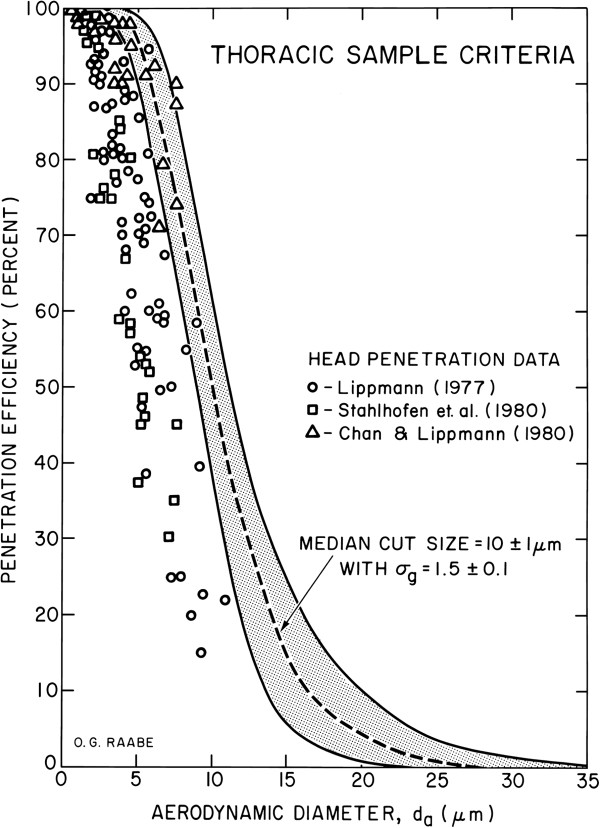
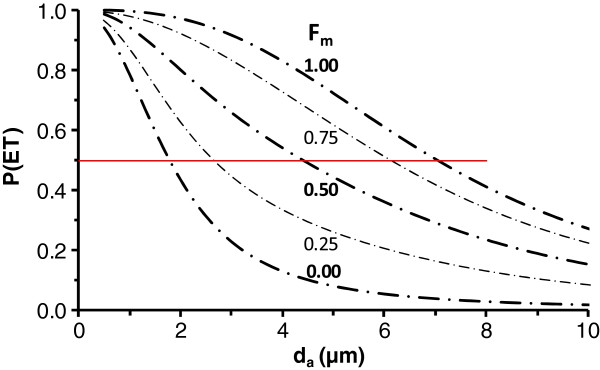
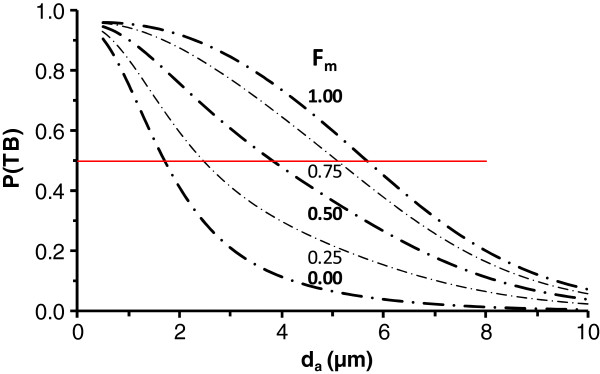
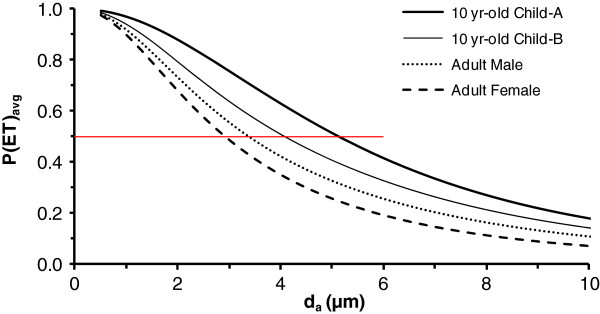
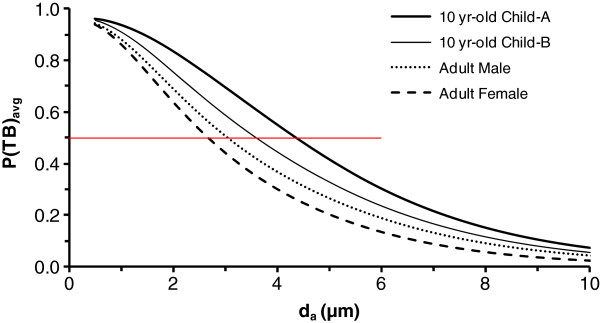
BACKGROUND: Particle size-selective sampling refers to the collection of particles of varying sizes that potentially reach and adversely affect specific regions of the respiratory tract. Thoracic and respirable fractions are defined as the fraction of inhaled particles capable of passing beyond the larynx and ciliated airways, respectively, during inhalation. In an attempt to afford greater protection to exposed individuals, current size-selective sampling criteria overestimate the population means of particle penetration into regions of the lower respiratory tract. The purpose of our analyses was to provide estimates of the thoracic and respirable fractions for adults and children during typical activities with both nasal and oral inhalation, that may be used in the design of experimental studies and interpretation of health effects evidence. METHODS: We estimated the fraction of inhaled particles (0.5-20 μm aerodynamic diameter) penetrating beyond the larynx (based on experimental data) and ciliated airways (based on a mathematical model) for an adult male, adult female, and a 10 yr old child during typical daily activities and breathing patterns. RESULTS: Our estimates show less penetration of coarse particulate matter into the thoracic and gas exchange regions of the respiratory tract than current size-selective criteria. Of the parameters we evaluated, particle penetration into the lower respiratory tract was most dependent on route of breathing. For typical activity levels and breathing habits, we estimated a 50% cut-size for the thoracic fraction at an aerodynamic diameter of around 3 μm in adults and 5 μm in children, whereas current ambient and occupational criteria suggest a 50% cut-size of 10 μm. CONCLUSIONS: By design, current size-selective sample criteria overestimate the mass of particles generally expected to penetrate into the lower respiratory tract to provide protection for individuals who may breathe orally. We provide estimates of thoracic and respirable fractions for a variety of breathing habits and activities that may benefit the design of experimental studies and interpretation of particle size-specific health effects.
Overview
The claims and statistics of this paper haven’t been checked yet.
Free: it reads the open-access text and checks the first 5 claims that cite a source we can check. Create a free account to check every claim.
Integrity signals
Registry
Cites
Statistics
Figures
Verification
Claims the paper makes
The claims and statistics of this paper haven’t been checked yet.
Free: it reads the open-access text and checks the first 5 claims that cite a source we can check. Create a free account to check every claim.
Self-check
Percentages, sums and reported differences re-computed from the paper’s own numbers.
The self-check needs the paper’s full text.
Citations
Cites
Models of human lung airways and their application to inhaled particle deposition
Yeh, H.-C., & Schum, G. M. (1980) · Bulletin of Mathematical Biology · doi:10.1007/bf02460796 · Cited by 717
A Multiple-Path Model of Particle Deposition in the Rat Lung
Anjilvel, S. (1995) · Fundamental and Applied Toxicology · doi:10.1006/faat.1995.1144 · Cited by 498 · cited 3×
“Millage KK, Bergman J, Asgharian B, McClellan G: A review of inhalability fraction models: discussion and recommendations.”
MethodInfluentialStahlhofen, W., Gebhart, J., & Heyder, J. (1980) · American Industrial Hygiene Association Journal · doi:10.1080/15298668091424933 · Cited by 444 · cited 1×
“, light exercise [5-7].”
CHAN, T. L., & LIPPMANN, M. (1980) · American Industrial Hygiene Association Journal · doi:10.1080/15298668091424942 · Cited by 402 · cited 1×
“, light exercise [5-7].”
Oronasal distribution of respiratory airflow
Niinimaa, V., Cole, P., & Shephard, R. J. (1981) · Respiration Physiology · doi:10.1016/0034-5687(81)90089-x · Cited by 184 · cited 4×
“[17], who examined the route of breathing as a function of activity in healthy adults (14 males, 16 females).”
BackgroundMethodInfluentialRegional Deposition of Particles in the Human Respiratory Tract
Lippmann, M. (1977) · Comprehensive Physiology · doi:10.1002/cphy.cp090114 · Cited by 177
Size Considerations for Establishing a Standard for Inhalable Particles
Miller, F. J., Gardner, D. E., Graham, J. A., Lee, R. E., Wilson, W. E., & Bachmann, J. D. (1979) · Journal of the Air Pollution Control Association · doi:10.1080/00022470.1979.10470831 · Cited by 175 · cited 1×
“[10] also specifically recommended a particle size cut-point of ≤ 2.”
BackgroundLong-term clearance from small airways decreases with age
Svartengren, M., Falk, R., & Philipson, K. (2005) · European Respiratory Journal · doi:10.1183/09031936.05.00002105 · Cited by 144
Air Sampling Instruments for Evaluation of Atmospheric Contaminants
Mccammon, C., & Cohen, B. S. (1995) · Cited by 129
Research works printed but not linked: 3
- American Conference of Governmental Industrial Hygienis (ACGIH) TLVs and BEIs: Based on the documentation of the threshold limit values for chemical substances and physical agents and biological exposure indices 2005 Cincinnati, OH: ACGIH
- American Conference of Governmental Industrial Hygienis (ACGIH) Particle size-selective sampling in the workplace. Report of the ACGIH Technical Committee on Air Sampling Procedures 1985 Cincinnati, OH: ACGIH
- International Organization for Standardization (ISO) Air quality – Sampling conventions for airborne particle deposition in the human respiratory system 2012 Geneva, Switzerland: ISO 13138, First edition
Cited by
Items 401–475 of 475
Particulate vaccines against SARS-CoV-2
García-Soto, M. J., Farfán-Castro, S., Wong-Arce, A., Romero‐Maldonado, A., González‐Ortega, O., & Rosales‐Mendoza, S. (2021) · Elsevier eBooks · doi:10.1016/b978-0-323-90248-9.00009-7 · Cited by 2
Burgos, M. A. (2016) · UVaDOC UVaDOC University of Valladolid Documentary Repository (University of Valladolid) · doi:10.35376/10324/23046 · Cited by 5
Three-Dimensional Modelling of Particulate Deposition in the Human Respiratory Tract
Islam, M. S. (2018) · Queensland University of Technology · doi:10.5204/thesis.eprints.115472 · Cited by 2
Rutherford, J. W. (2019) · ResearchWorks at the University of Washington (University of Washington) · Cited by 2
Exploring the short-term role of particulate matter in the COVID-19 outbreak in USA citiesPreprint
Kamigauti, L. Y., Perez, G. M. P., Souto‐Oliveira, C. E., Cowdery, E. M., Saldiva, P. H. N., & Andrade, M. D. F. (2021) · medRxiv · doi:10.1101/2021.03.09.21253212 · Cited by 1
Viegas, S., Faria, T., Carolino, E., & Viegas, C. S. B. (2016) · Portuguese National Funding Agency for Science, Research and Technology (RCAAP Project by FCT) · doi:10.13140/rg.2.2.22201.98408
Fine Particulate Matter and Urology: Emphasis on the Lower Urinary Tract
Kim, J. W. (2017) · International Neurourology Journal · doi:10.5213/inj.1720edi006
“Particulates, usually referred to as particulate matter (PM) or atmospheric PM, are microscopic solid or liquid matter suspended in the atmosphere [1].”
BackgroundBoyajian, B., & Meyer, M. E. (2018) · NASA STI Repository (National Aeronautics and Space Administration) · doi:10.13140/rg.2.2.10796.72329
Poerna, S. O., Hadi, P. S., & Haryono, S. H. (2018) · E3S Web of Conferences · doi:10.1051/e3sconf/20187305024
Airborne occupational exposures and risk of developing rheumatoid arthritis
Ilar, A. (2019) · Figshare
Bieri, R., Borek-Donten, J., Bürgi, T., Cattaneo, S., & Zijlstra, B. (2017) · TechConnect Briefs
ДОСЛІДЖЕННЯ ДИСПЕРСНОГО СКЛАДУ ПИЛУ ПРИ ВИРОБНИЦТВІ ТЕПЛОІЗОЛЯЦІИНИХ МАТЕРІАЛІВ
Назімович, Г. Е. (2019) · World Science · doi:10.31435/rsglobal_ws/28022019/6348
Acosta, M. F. (2019) · UA Campus Repository (The University of Arizona)
Pérez, F. I. O. (2020) · Buleria (Universidad de León) · doi:10.18002/10612/12514 · Cited by 2
Aerosol Dosimetry and Human-Relevant Exposure
Kuczaj, A. K., Lucci, F., Kolli, A. R., Schlage, W. K., Vanscheeuwijck, P., & Hoeng, J. (2021) · Elsevier eBooks · doi:10.1016/b978-0-12-820490-0.00002-x
A porous hybrid material for air particulate matter reduction
Zanoletti, A., Carnevale, C., & Bontempi, E. (2021) · Elsevier eBooks · doi:10.1016/b978-0-12-820042-1.00012-2
Health Risk of Particulate Matter on Primary School Students in West Jakarta
Lailatul Qomariyah1, B. W. (2020) · Indian Journal of Public Health Research & Development · doi:10.37506/ijphrd.v11i6.9983
Pfeiffer, J. A. (2021) · ThinkIR: The University of Louisville's Institutional Repository (University of Louisville) · doi:10.18297/etd/3639
Francis, A., Chee, F. P., Sentian, J., & Hian, J. (2020) · ASM Science Journal · doi:10.32802/asmscj.2020.sm26(2.9
Advancement in Airborne Particulate Estimation Using Machine Learning
Wijeratne, L. O. H., Zewdie, G. K., Kiv, D., Aker, A., Lary, D. J., Talebi, S., Yu, X., & Levetin, E. (2021) · Springer eBooks · doi:10.1007/978-3-030-71377-5_13
Fang, G., Zhuang, Y.-J., Huang, L.-C., Shang, S.-F., Siao, P.-S., & Luo, X.-T. (2022) · Environmental Forensics · doi:10.1080/15275922.2022.2125115
“This was widely discussed in previous studies (e.g. Brown et al., 2013; Kim et al., 2015).”
Hoopdeo, S. (2022) · DUT Open Scholar (Durban University of Technology) · doi:10.51415/10321/4502
An Approach to Monitoring Particulate Matter Based Pollution Using Low-Cost Sensing
Kirk, N., Santos, J., Rafferty, J., Nicholl, P., & Campbell, C. (2022) · Lecture notes in networks and systems · doi:10.1007/978-3-031-21333-5_66
Trends and Advancements in Drug Delivery: What is the "perfect" method of drug delivery?
Shrewsbury, S. B. (2022) · Medical Research Archives · doi:10.18103/mra.v10i10.3218
Impacts of Air Pollution on the Respiratory System of Adults in Relation to Socioeconomic Status
Strobl, K., Irfan, S. A., Shrikanth, S., & Halwagi, L. (2022) · Sciential - McMaster Undergraduate Science Journal · doi:10.15173/sciential.v1i9.3200 · Cited by 1
Journal, S. (2022) · Sciential - McMaster Undergraduate Science Journal · doi:10.15173/sciential.v1i9.3313 · Cited by 1
Assessment of indoor air quality and urban air pollution
Szigeti, T. (2016) · Eötvös Loránd Tudományegyetem · doi:10.15476/elte.2016.068
Yamamoto, N. (2023) · Elsevier eBooks · doi:10.1016/b978-0-12-824411-1.00003-x
International Symposium on Occupational Safety and Hygiene: Proceedings Book of the SHO2018
Arezes, P., Baptista, J., Barroso, M. B. B., Carneiro, P., Cordeiro, P., Costa, N., Melo, R. B. M. M., Miguel, A., & Perestrelo, G. (2018) · doi:10.24840/978-989-98203-8-8
Rosales, C. M. F., Cayetano, M. G., & Saghir, S. A. (2023) · Wiley eBooks · doi:10.1002/0471125474.tox169
Холодов, А. С., Ветошкина, А. В., Тарасенко, И. А., Алтаев, А. А., Tretyakova, M., & Golokhvast, K. S. (2023) · AIP conference proceedings · doi:10.1063/5.0166554
Ardit, M., Baroni, T., Capacci, F., Arcangeli, G., Romanelli, M., Zoleo, A., Capella, S., Belluso, E., Gabellini, P., Cioni, R., et al. (2023) · Hygiene and Environmental Health Advances · doi:10.1016/j.heha.2023.100083
“6 μ m and hence a high possibility to penetrate deeply into regions of the respiratory tract ( e.g. , Brown et al., 2013).”
InfluentialSarin, H. (2023) · IntechOpen eBooks · doi:10.5772/intechopen.112595
Zendehdel, R., Hahad, O., & Panjali, Z. (2023) · International Journal of Environmental Health Research · doi:10.1080/09603123.2023.2298248
“According to the European Committee for Standardization (CEN), particles with a cut-point of 4 μm are considered respirable dust (Brown et al. 2013).”
Air Pollution as a Risk Factor Affecting Human Health and Economic Costs
(2024) · Frontiers research topics · doi:10.3389/978-2-8325-4914-8
Chandía-Poblete, D. (2024) · Queensland University of Technology · doi:10.5204/thesis.eprints.249198
Mineralogical Characteristics and Risk Assessment of Elongate Mineral Particles (EMPs)
Wylie, A. G. (2024) · Wiley eBooks · doi:10.1002/9781119438397.ch1
Scopetti, M., Fazio, N. D., Padovano, M., Delogu, G., Morena, D., Frati, P., Protano, C., Vitali, M., & Fineschi, V. (2024) · Egyptian Journal of Forensic Sciences · doi:10.1186/s41935-024-00406-0
“Surveys included five types of particle size fractions (Brown et al. 2013; Pluim et al. 2018): – total suspended particles (TSP) (according to the American Conference of Governmental Industrial Hygienists, ACGIH); – PM10 (chest fraction according to ACGIH); – PM4 (breathable fraction according to…”
BackgroundHorwell, C. J., Emerson, H. M., Ashwell, P. A., Damby, D. E., Self, S., Nattrass, C., Carey, R., & Houghton, B. F. (2025) · Journal of Volcanology and Geothermal Research · doi:10.1016/j.jvolgeores.2025.108309 · Cited by 1
Predicting Particulate Matter Values in Metropolitan Areas Using Machine Learning
Leiva-Araos, A., Vemuri, T., Mena, D., & Liu, X. (2024) · International Conference on Machine Learning and Applications · doi:10.1109/icmla61862.2024.00285
“These pollutants are recognized for their detrimental effects on respiratory health [3], [4].”
Onwugbuta, G. C., & Ogono, T. G. (2025) · doi:10.38124/ijisrt/25mar1402
John, G. N. J., Kpaduwa, S., Akpode, A., & Oloche, J. O. J. (2025) · International Journal of Advances in Engineering and Management · doi:10.35629/5252-070412001205
Gregg, D. J., Tompkins, J. T., Cordell, R. L., Brown, A. S., Smallbone, K. L., Hey, J. V., Wyche, K. P., & Monks, P. S. (2025) · Atmospheric Environment · doi:10.1016/j.atmosenv.2025.121668
Zheng, M., Liu, K., Li, L., Feng, C., & Wu, G. (2024) · Figshare · doi:10.6084/m9.figshare.24934429
Societal implications: responsible introduction and use of nanotechnology in agriculture
Morris, J. T. (2025) · Elsevier eBooks · doi:10.1016/b978-0-323-90617-3.00013-1
Chien, C.-H., Zhang, J., Li, W., Melvin, M. S., & Pithawalla, Y. B. (2026) · Aerosol Science and Technology · doi:10.1080/02786826.2026.2613908
“It is important to note that the ACGIH criteria are based on the inhalation patterns of an orally breathing adult male engaged in light exercise (Brown et al. 2013), which involves a higher flow rate than typically observed in smoking or vaping.”
Polycyclic Aromatic Hydrocarbons and Their Derivatives in the Environment
Nagar, H., Raj, J., Kumawat, L. K., Prakash, J., Yadav, S. R., & Kumar, S. (2026) · Emerging contaminants and associated treatment technologies · doi:10.1007/978-3-032-11764-9_5
Andrés Burgos, G., Arenas, J. I. R., Tomás Claramunt, A., Hernán Ahumada, G., Heidi Maennle, T., Loreto Villacura, M., Álvaro Aliaga, C., G., M. A. L., & Richard Toro, A. (2026) · Atmospheric Pollution Research · doi:10.1016/j.apr.2026.102937
Siahidouzazar, S., Vanegas, A. N., Madureira, E., Su, W., Rezaee, M., & Roghanchi, P. (2026) · Journal of Occupational and Environmental Hygiene · doi:10.1080/15459624.2026.2621301
“…deposition of a particle based on its size, the human respiratory system can be simplified into three regions: head region, tracheo-bronchial region (TB), and alveolar region (gas exchange region)(Martonen et al. 2004; Hofmann 2011; Brown et al. 2013; Cheng et al. 2015; Islam et al. 2020).”
Zakariya, A. J. (2025) · IEEE World Forum on Public Safety Technology (WF-PST) · doi:10.1109/wf-pst65083.2025.00006
“Suspended PM, thoracic and respirable particles and inhalable coarse particles with a diameter size of ≤10µm are designated PM 10 [4].”
Lee, K., So, B., Park, J., & Kang, C. (2026) · Asia-pacific Journal of Convergent Research Interchange · doi:10.47116/apjcri.2026.03.57
Korchevskiy, A. A., & Wylie, A. G. (2026) · Critical Reviews in Toxicology · doi:10.1080/10408444.2026.2641747
“For example, using the estimates from Brown et al. (2013), according to the size distribution from our dimensional database described else-where (see Wylie and Korchevskiy 2023; Korchevskiy and Wylie 2025c), and assuming the Timbrell formula for aero-dynamic diameter of elongate particles (Timbrell…”
Rivellini, L.-H. (2017) · theses.fr (ABES) · doi:10.70675/ac736ea1z37acz4feez81fdz8351f716c245
Biofiltration of Bioaerosols Emitted from Organic Waste Management Facilities: A Review
Vélez-Pereira, A. M., Barra, P. B., Caicedo, Y. C., & O’Connor, D. J. (2026) · Microorganisms · doi:10.3390/microorganisms14050963
“Among these characteristics, the aerodynamic diameter is particularly critical (Figure 3), as it determines atmospheric residence time, transport behavior, and the ability of particles to reach the lower respiratory tract, where they can cause more severe health outcomes [44,47,48].”
Indu, G., & Nagendra, S. M. S. (2026) · Environmental Pollution · doi:10.1016/j.envpol.2026.128318
Pecquet, A. M., Huffman, C., Jackson, B. L., Yan, J., & Ramanarayanan, T. S. (2026) · Inhalation Toxicology · doi:10.1080/08958378.2026.2674277
Andersson, L., Alijagić, A., Johansson, A., Engwall, M., Särndahl, E., & Hedbrant, A. (2026) · Annals of Work Exposures and Health · doi:10.1093/annweh/wxag040
“Fine and ultrafine particles can easily become aerosolized, with inhalable ( < 100 µm), thoracic ( < 10 µm), and respirable ( < 4 µm) fractions posing potential health risks during various L-PBF operations (Brown et al. 2013).”
Investigating Fine Dust Dynamics: FDS Modelling Aspects
Patsekha, A., & Weiß, C. (2026) · Modelling and Simulation in Engineering · doi:10.1155/mse/5445555
Resuspension Emissions based on Vehicle and Roadway CharacteristicsPreprint
Young, C., Paglioni, V. P., Gallegos, E. E., & Coburn, T. (2026) · SSRN Electronic Journal · doi:10.2139/ssrn.6883200
Resuspension Emissions based on Vehicle and Roadway CharacteristicsPreprint
Young, C., Paglioni, V. P., Gallegos, E. E., & Coburn, T. (2026) · SSRN Electronic Journal · doi:10.2139/ssrn.6883202
Existence of an optimum face velocity for non-woven fibrous air filter media
Bhardwaj, U., Suligavi, S. P., Das, D., Ray, B., Das, A., & Prakash, K. A. (2026) · Chemical Engineering Science · doi:10.1016/j.ces.2026.124422
Beauchemin, S., Levesque, C., Casey, K., Rasmussen, P. E., & Avramescu, M. (2026) · Environmental Advances · doi:10.1016/j.envadv.2026.100725
Lu, X., Chen, Z.-Y., Gao, S., Wei, Y.-L., Zhang, Y. X., & Wang, S. (2026) · Energy · doi:10.1016/j.energy.2026.142002
Paulo, M. S., Martins, C., Riesenberger, B., Cervantes, R., Palmont, P., Bhoonah, R., Ndaw, S., & Viegas, S. (2026) · International Journal of Hygiene and Environmental Health · doi:10.1016/j.ijheh.2026.114929
Zhang, Q., 赵欢欢, Shi, Z., Hu, M., Liu, L., Maher, B. A., Fu, S., Liu, G., Wang, S., Yang, Y., et al. (2026) · Environmental Science & Technology · doi:10.1021/acs.est.6c08602
Luna, L. A. V., Tesfaigzi, Y., Xiao, S., Gaskins, A., Jude, J. A., Panettieri, R. A., Laurent, J. G. C., & Demokritou, P. (2026) · Journal of Hazardous Materials · doi:10.1016/j.jhazmat.2026.143985
Openshaw, B., Call, W. A., Willis, P. D., Owens, C., Snow, G. L., Sanjel, S., LeCheminant, J. D., Peterson, N. E., South, A. J., Farnsworth, C. B., et al. (2026) · Occupational Health · doi:10.3390/occuphealth1040048
Eds-based characterization of inhalable metal aerosols in occupational environments
Mićunović, M. I., Kosec, B., Čepić, Z. M., Jovanović, S., & Agarski, B. (2026) · doi:10.5937/iizs26498i
CHARACTERISTICS OF NANOPARTICLE EMISSIONS FROM AN AGED DIESEL VEHICLE FUELLED WITH BIODIESEL B7
Uthaiphetra, T., Sukjit, E., Musigapong, P., Suebyat, K., & Batsungnoen, K. (2026) · Suranaree Journal of Science and Technology · doi:10.55766/sujst13042
Metadata
- Authors
- Brown, J. S., Gordon, T., Price, O., & Asgharian, B.
- Affiliations
- Environmental Protection Agency (US)
- NYU Langone Health (US)
- Applied Research Associates (United States) (US)
- Corresponding author
- Brown, James S
- Venue
- Particle and Fibre Toxicology
- Published
- 2013
- Volume
- 10
- Issue
- 1
- Pages
- 12
- ISSN
- 1743-8977 (ISSN-L)
- PMC
- PMC3640939
- OpenAlex
- W2137087705
- Cited by
- 474
- References
- 24
- Citations by year
- 2026: 32 · 2025: 41 · 2024: 37 · 2023: 51 · 2022: 66 · 2021: 64 · 2020: 39 · 2019: 37 · 2018: 39 · 2017: 30 · 2016: 15 · 2015: 13 · 2014: 9 · 2013: 1
- FWCI
- 9.31
- Type
- journal article
- Language
- en
- Open access
- gold
- doi.org
- Licence
- cc-by
- Locations
- Particle and Fibre Toxicology (publishedVersion, cc-by)
- Europe PMC (PubMed Central) (publishedVersion, cc-by)
- PubMed Central (publishedVersion, cc-by)
- PubMed (publishedVersion)
- Funders
- U.S. Environmental Protection Agency
- Oak Ridge Institute for Science and Education
- National Center For Environmental Assessment
- National Institute for Occupational Safety and Health
- Topics
- Physical Sciences › Environmental Science › Health, Toxicology and Mutagenesis › Air Quality and Health Impacts
- Health Sciences › Medicine › Pulmonary and Respiratory Medicine › Inhalation and Respiratory Drug Delivery
- Physical Sciences › Environmental Science › Health, Toxicology and Mutagenesis › Indoor Air Quality and Microbial Exposure
- Keywords
- respirable fraction, particle penetration, respiratory tract deposition, cut size, oral inhalation, nasal inhalation, breathing pattern, children, coarse particles, human health risk assessment
- MeSH terms
- Activities of Daily Living, Adult, Aerosols, Age Factors, Air Pollutants, Body Burden, Child, Female, Humans, Male, Models, Biological, Terminology as Topic, Particle Size, Respiration, Respiratory System, Risk Factors, Sex Factors, Toxicology, Linear Models, Risk Assessment, Inhalation Exposure, Young Adult
About these checks
Registry, retraction, Cites and statistics results are computed, not judged, with one exception: a printed reference that no index lists is read once by a model before it counts as a citation error. Claims are extracted by a model and kept only when their quote appears verbatim in the text; each cited source is then checked, with a model’s help, for whether it says what the claim relies on. Those verdicts can be wrong — read the claim’s quote and the cited source before relying on one.
Statistics and arithmetic are recomputed, not judged.
Confidence bands are shown only for fields calibrated on our annotated test set. None is calibrated yet, so no band is shown.
What counts as a claim ›How we measure confidence ›How we check this ›
Are you an author, or do you see a problem with this page? Request a review
Data sources
Bibliographic data: Semantic Scholar, OpenAlex, Crossref.
Contains information from the Semantic Scholar Academic Graph Datasets, made available under the ODC Attribution License (ODC-BY 1.0).
Semantic Scholar’s data is described in: Kinney, R., et al. (2023). The Semantic Scholar Open Data Platform. arXiv:2301.10140.
