

Thoracic and respirable particle definitions for human health risk assessment
Open accessThe DOI matches its Crossref record; 25 of the 25 references it cites were found in a registry or an index.
Abstract
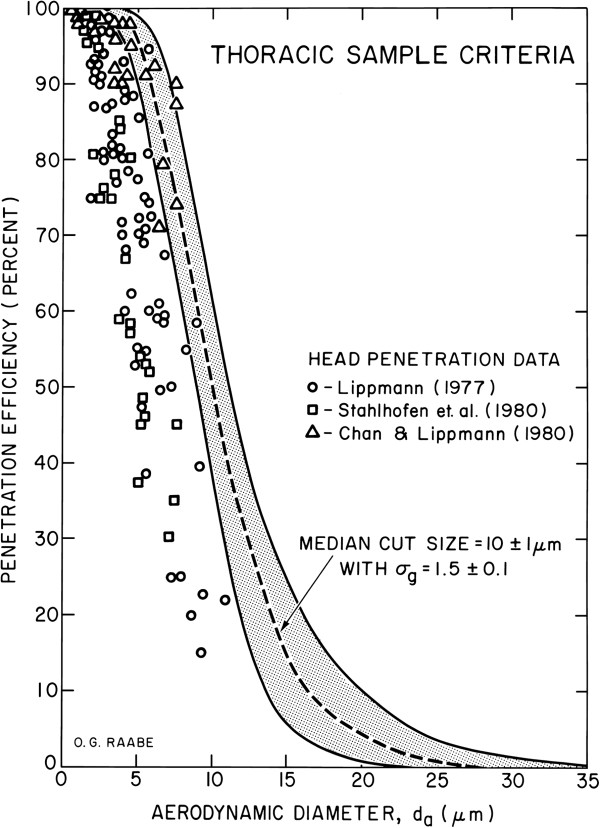
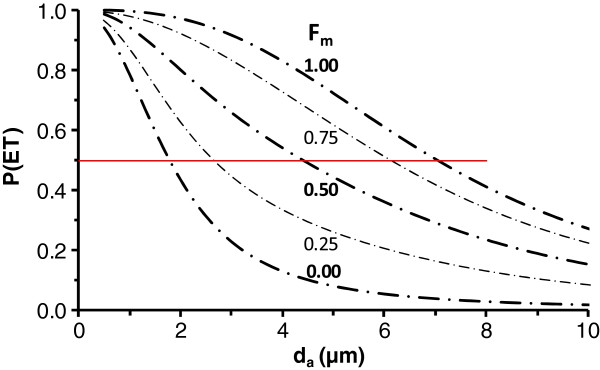
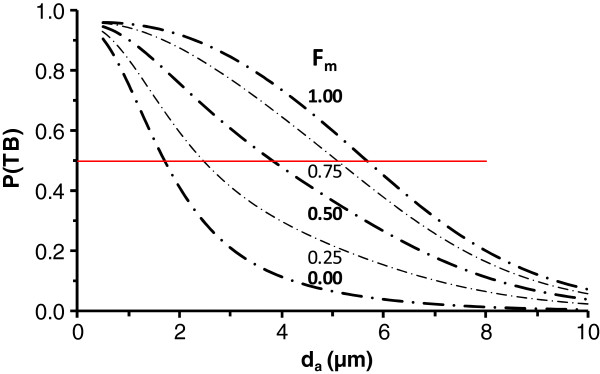
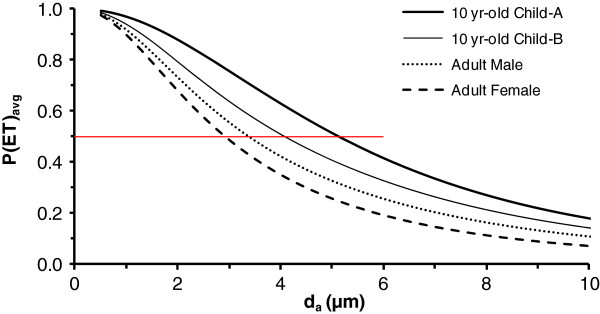
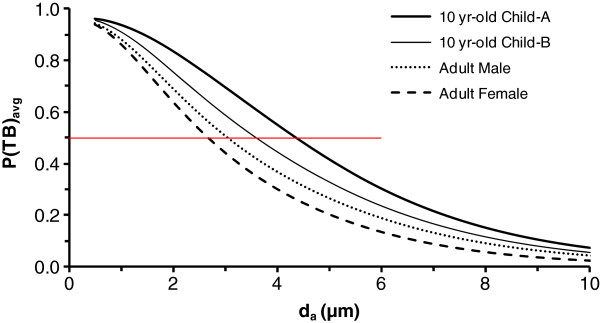
BACKGROUND: Particle size-selective sampling refers to the collection of particles of varying sizes that potentially reach and adversely affect specific regions of the respiratory tract. Thoracic and respirable fractions are defined as the fraction of inhaled particles capable of passing beyond the larynx and ciliated airways, respectively, during inhalation. In an attempt to afford greater protection to exposed individuals, current size-selective sampling criteria overestimate the population means of particle penetration into regions of the lower respiratory tract. The purpose of our analyses was to provide estimates of the thoracic and respirable fractions for adults and children during typical activities with both nasal and oral inhalation, that may be used in the design of experimental studies and interpretation of health effects evidence. METHODS: We estimated the fraction of inhaled particles (0.5-20 μm aerodynamic diameter) penetrating beyond the larynx (based on experimental data) and ciliated airways (based on a mathematical model) for an adult male, adult female, and a 10 yr old child during typical daily activities and breathing patterns. RESULTS: Our estimates show less penetration of coarse particulate matter into the thoracic and gas exchange regions of the respiratory tract than current size-selective criteria. Of the parameters we evaluated, particle penetration into the lower respiratory tract was most dependent on route of breathing. For typical activity levels and breathing habits, we estimated a 50% cut-size for the thoracic fraction at an aerodynamic diameter of around 3 μm in adults and 5 μm in children, whereas current ambient and occupational criteria suggest a 50% cut-size of 10 μm. CONCLUSIONS: By design, current size-selective sample criteria overestimate the mass of particles generally expected to penetrate into the lower respiratory tract to provide protection for individuals who may breathe orally. We provide estimates of thoracic and respirable fractions for a variety of breathing habits and activities that may benefit the design of experimental studies and interpretation of particle size-specific health effects.
Overview
The claims and statistics of this paper haven’t been checked yet.
Free: it reads the open-access text and checks the first 5 claims that cite a source we can check. Create a free account to check every claim.
Integrity signals
Registry
Cites
Statistics
Figures
Verification
Claims the paper makes
The claims and statistics of this paper haven’t been checked yet.
Free: it reads the open-access text and checks the first 5 claims that cite a source we can check. Create a free account to check every claim.
Self-check
Percentages, sums and reported differences re-computed from the paper’s own numbers.
The self-check needs the paper’s full text.
Citations
Cites
Models of human lung airways and their application to inhaled particle deposition
Yeh, H.-C., & Schum, G. M. (1980) · Bulletin of Mathematical Biology · doi:10.1007/bf02460796 · Cited by 717
A Multiple-Path Model of Particle Deposition in the Rat Lung
Anjilvel, S. (1995) · Fundamental and Applied Toxicology · doi:10.1006/faat.1995.1144 · Cited by 498 · cited 3×
“Millage KK, Bergman J, Asgharian B, McClellan G: A review of inhalability fraction models: discussion and recommendations.”
MethodInfluentialStahlhofen, W., Gebhart, J., & Heyder, J. (1980) · American Industrial Hygiene Association Journal · doi:10.1080/15298668091424933 · Cited by 444 · cited 1×
“, light exercise [5-7].”
CHAN, T. L., & LIPPMANN, M. (1980) · American Industrial Hygiene Association Journal · doi:10.1080/15298668091424942 · Cited by 402 · cited 1×
“, light exercise [5-7].”
Oronasal distribution of respiratory airflow
Niinimaa, V., Cole, P., & Shephard, R. J. (1981) · Respiration Physiology · doi:10.1016/0034-5687(81)90089-x · Cited by 184 · cited 4×
“[17], who examined the route of breathing as a function of activity in healthy adults (14 males, 16 females).”
BackgroundMethodInfluentialRegional Deposition of Particles in the Human Respiratory Tract
Lippmann, M. (1977) · Comprehensive Physiology · doi:10.1002/cphy.cp090114 · Cited by 177
Size Considerations for Establishing a Standard for Inhalable Particles
Miller, F. J., Gardner, D. E., Graham, J. A., Lee, R. E., Wilson, W. E., & Bachmann, J. D. (1979) · Journal of the Air Pollution Control Association · doi:10.1080/00022470.1979.10470831 · Cited by 175 · cited 1×
“[10] also specifically recommended a particle size cut-point of ≤ 2.”
BackgroundLong-term clearance from small airways decreases with age
Svartengren, M., Falk, R., & Philipson, K. (2005) · European Respiratory Journal · doi:10.1183/09031936.05.00002105 · Cited by 144
Air Sampling Instruments for Evaluation of Atmospheric Contaminants
Mccammon, C., & Cohen, B. S. (1995) · Cited by 129
Research works printed but not linked: 3
- American Conference of Governmental Industrial Hygienis (ACGIH) TLVs and BEIs: Based on the documentation of the threshold limit values for chemical substances and physical agents and biological exposure indices 2005 Cincinnati, OH: ACGIH
- American Conference of Governmental Industrial Hygienis (ACGIH) Particle size-selective sampling in the workplace. Report of the ACGIH Technical Committee on Air Sampling Procedures 1985 Cincinnati, OH: ACGIH
- International Organization for Standardization (ISO) Air quality – Sampling conventions for airborne particle deposition in the human respiratory system 2012 Geneva, Switzerland: ISO 13138, First edition
Cited by
Items 301–400 of 475
Koornneef, S., Horne, F. J., Thio, H. B., Mastrangeli, M., Rottier, R. J., Dik, W. A., & de Geus, E. D. (2025) · Environmental Research · doi:10.1016/j.envres.2025.122289 · Cited by 7
Charged Particle Dynamics in Dry Powder Inhalers
Williamson, C., Baptiste, J., Hamilton, M., Pang, C., Prime, D., Stace, A. J., & Besley, E. (2025) · Molecular Pharmaceutics · doi:10.1021/acs.molpharmaceut.5c00485 · Cited by 5
Impact of smoking on the complement system: a narrative review
Alarabi, A. B., Alshbool, F. Z., & Khasawneh, F. T. (2025) · Frontiers in Immunology · doi:10.3389/fimmu.2025.1619835 · Cited by 8
Recent progress in wearable extractive sampling technology
Kahremanoğlu, K., Kurtalan, H. T., Eroğlu, A. E., & Boyacı, E. (2022) · TrAC Trends in Analytical Chemistry · doi:10.1016/j.trac.2022.116740 · Cited by 5
Buhr, T. L., Borgers-Klonkowski, E., Gutting, B. W., Hammer, E. E., Hamilton, S. M., Huhman, B. M., Jackson, S. L., Kennihan, N. L., Lilly, S. D., Little, J. D., et al. (2022) · Frontiers in Bioengineering and Biotechnology · doi:10.3389/fbioe.2022.875817 · Cited by 5
“Particles >10 um do not go past the larynx, and particles <1 um have lower probabilities of deposition (Brown et al., 2013; Hofer et al., 2021).”
BackgroundSeo, S., Ruzycki, C. A., Finlay, W. H., Romanyk, D. L., & Martin, A. R. (2023) · American Journal of Infection Control · doi:10.1016/j.ajic.2023.01.010 · Cited by 7
Cui, Y., Fan, C., Zhou, X., & Li, L. (2024) · Indoor and Built Environment · doi:10.1177/1420326x241232116 · Cited by 5
“60 Moreover, the table also shows that the human body has the highest risk of exposure to each pollutant in the 16 – 21 age group at different exercise intensities.”
BackgroundOlfactory tract/bulb metal concentration in Manganese-exposed mineworkers
Gonzalez‐Cuyar, L. F., Nelson, G., Nielsen, S. S., Dlamini, W. W., Keyser‐Gibson, A., Keene, C. D., Paulsen, M., Criswell, S. R., Senini, N., Sheppard, L. A., et al. (2024) · NeuroToxicology · doi:10.1016/j.neuro.2024.04.001 · Cited by 5
Zhao, Z., Liang, N., Shimizu, T., Shingubara, S., & Ito, T. (2024) · Environmental Science Nano · doi:10.1039/d4en00152d · Cited by 5
A full-face mask for protection against respiratory infections
Weng, C.-H., Kao, C., Chiu, P., Huang, S.-P., Kuo, Y.-S., Lin, Y.-Y., Lin, I.-C., Chang, H., Lu, C.-H., & Lin, C. (2022) · BioMedical Engineering OnLine · doi:10.1186/s12938-022-01027-1 · Cited by 5
“Aerosol transmission is achieved by smaller respirable droplets and particles containing virus that can travel easily, be inhaled, and reach the lower respiratory tract [4, 5].”
BackgroundRodríguez, A. H., Cabrera, M., Reyes, L. F., Bodí, M. A., Trefler, S., Canadell, L., Barahona, D., Ehrmann, S., Martín‐Loeches, I., Restrepo, M. I., et al. (2017) · Expert Opinion on Drug Delivery · doi:10.1080/17425247.2017.1393411 · Cited by 5
“The inhalable mass is defined as the drug mass, in the form of an aerosol, produced by the nebulizer that reaches the patient’s mouth [41].”
BackgroundOccupational exposure to Mount Etna's basaltic dust: Assessment of mutagenic and cytotoxic effects
Ledda, C., Cocuzza, S. G., Salerno, M., Senia, P., Matera, S., Rapisarda, V., & Loreto, C. (2017) · Molecular Medicine Reports · doi:10.3892/mmr.2017.6380 · Cited by 6
“These materials have always been exploited without taking into due account the possible risks for the workers' health as well as for the people actually living in these houses (3,9,11).”
InfluentialCurrent intelligence bulletin 69: NIOSH practices in occupational risk assessment.
Daniels, R., Gilbert, S., Kuppusamy, S., Kuempel, E., Park, R., Pandalai, S. P., Smith, R. J., Wheeler, M., Whittaker, C., & Schulte, P. (2020) · doi:10.26616/nioshpub2020106 · Cited by 10
“The respirable fraction is the mass fraction of inhaled particles that is capable of reaching and depositing in the gas-exchange region of the lungs [Brown et al. 2013].”
BackgroundScheinherr, A. (2015) · theses.fr (ABES) · doi:10.70675/39fb3617ze5b6z4eccz89dfz876a07f0c820 · Cited by 9
“10) [Brown et al., 2013]: • Extrathoracic fraction: the mass fraction of inhaled particles failing to penetrate beyond the larynx.”
Letsoalo, M., Masekameni, M. D., Andraos, C., & Gulumian, M. (2025) · Occupational Health Southern Africa · doi:10.62380/ohsa.2025.31.1.2 · Cited by 4
Application of machine learning algorithms in predicting indoor residential PM2.5 concentrations
Camilleri, R., Harrison, R. M., & Aquilina, N. J. (2025) · Atmospheric Pollution Research · doi:10.1016/j.apr.2025.102609 · Cited by 4
Huneau‐Salaün, A., Puterflam, J., Balaine, L., Galliot, P., & Bouquin, S. L. (2019) · British Poultry Science · doi:10.1080/00071668.2019.1614529 · Cited by 4
“Inhalable dust is defined as the mass fraction of total airborne particles which are inhaled through the nose and mouth while respirable dust is the fraction which penetrates to the thoracic and alveolar regions (Brown et al. 2013).”
BackgroundUse of a Negative Pressure Containment Pod Within Ambulance-Workspace During Pandemic Response
Peña, M., Neu, D. T., Feng, H. A., Hammond, D. R., Mead, K. R., & Banerjee, R. K. (2023) · Journal of Medical Devices · doi:10.1115/1.4056694 · Cited by 4
Donado, E. B., Alavijeh, M. A., Romero, D. B., Silva, L. F. O., Oliveira, M. L. S., & Schindler, M. (2023) · Air Quality Atmosphere & Health · doi:10.1007/s11869-023-01342-z · Cited by 5
“Larger inhaled particles are cleared by the mucociliary escalator, swallowed, and transported into the gastrointestinal tract (Boisa et al. 2014; Brown et al. 2013; Kastury et al. 2017).”
BackgroundHalbach, J. H., Cottam, C. M., & Tyler, R. (2025) · ACS Chemical Health & Safety · doi:10.1021/acs.chas.5c00048 · Cited by 4
Gualtieri, A. F., Glossop, L., Malferrari, D., Castellini, E., Gualtieri, M. L., Hanuskovà, M., Nodari, L., Ogor, J., & Fantini, R. (2025) · Applied Clay Science · doi:10.1016/j.clay.2025.107917 · Cited by 4
Voss, U., Uller, L., Ansar, S., Persson, I. M., Akbarshahi, H., Cerps, S., Isaxon, C., & Ohlsson, L. (2022) · Environmental Advances · doi:10.1016/j.envadv.2022.100184 · Cited by 4
Tajuelo, M., Rodríguez, A., Aranda, A., Díaz-de-Mera, Y., Tucceri, M. E., & Rodríguez, D. (2022) · Atmospheric Environment · doi:10.1016/j.atmosenv.2022.119051 · Cited by 6
Nachtnebel, M., Führer, B., Ettenberger-Bornberg, G., Mertl, J., Kaufmann, L., Schroettner, H., & Rattenberger, J. (2022) · Journal of Allergy and Clinical Immunology Global · doi:10.1016/j.jacig.2022.05.009 · Cited by 4
Rathipe, M., & Raphela, S. F. (2022) · Annals of Agricultural and Environmental Medicine · doi:10.26444/aaem/152745 · Cited by 4
“Inhalable dust is the fraction of a dust cloud that can be breathed into the nose or mouth, and can be deposited anywhere in the upper respiratory tract, while respirable dust (particulate matter) is the fraction of inhaled dust that can penetrate beyond the terminal bronchioles into the gaseous exchange region of the…”
BackgroundMethodHuman health risk assessment of trace elements in PM10 for industrial areas in Gujarat
Nihalani, S. A., Jariwala, N., & Khambete, A. K. (2023) · Journal of Air Pollution and Health · doi:10.18502/japh.v8i2.12913 · Cited by 4
International Symposium on Occupational Safety and Hygiene: Proceedings Book of the SHO2017
Arezes, P., Baptista, J., Barroso, M., Carneiro, P., Cordeiro, P., Costa, N., Melo, R. B. M. M., Miguel, A., & Perestrelo, G. (2017) · doi:10.24840/978-989-98203-7-1 · Cited by 4
Scientific Rationale for Determining the Bioequivalence of Inhaled Drugs
Usmani, O. S., Molimard, M., Gaur, V., Gogtay, J. A., Singh, G. J. P., Malhotra, G., & Derom, E. (2017) · Clinical Pharmacokinetics · doi:10.1007/s40262-017-0524-6 · Cited by 4
van Boven, F. E., de Jong, N. W., Loomans, M. G. L. C., Braunstahl, G., van Wijk, R. G., & Arends, L. R. (2020) · Scientific Reports · doi:10.1038/s41598-020-73839-x · Cited by 4
Raz-Maman, C., Carel, R. S., Borochov-Greenberg, N., Zack, O., & Portnov, B. A. (2021) · Air Quality Atmosphere & Health · doi:10.1007/s11869-021-01128-1 · Cited by 6
Performance characteristics of respirable parallel particle impactors (PPI)
Mainelis, G., & Han, T. (2025) · Journal of Occupational and Environmental Hygiene · doi:10.1080/15459624.2025.2518071 · Cited by 3
“…inhaled particles that reach the tracheobronchial region of the respiratory tract, the res-pirable particle fraction (less than 15 m m in size, with d 50 ¼ 4 m m) consists of even smaller particles that can penetrate the alveolar region, posing a greater potential health risk (Brown et al. 2013).”
The Combined Role of Silanols and Oxidative Stress in Determining Engineered Stone Dust Toxicity
Pavan, C., Fimiani, M., Cananà, S., Diana, A., Marafante, M., Bertinetti, S., Casado, G. E., Mino, L., Pisaniello, D., Leinardi, R., et al. (2025) · ACS Organic & Inorganic Au · doi:10.1021/acsorginorgau.5c00089 · Cited by 3
Occupational Exposures in the Culinary Underbelly: Air Pollution in Restaurants
Saporito, A. F., Hashmi, M., Yu, W., Michanowicz, D. R., Lebel, E. D., Lucha, N., Huang, G., Finnegan, C. J., Albergamo, V., Lyu, W., et al. (2026) · Environmental Science & Technology · doi:10.1021/acs.est.5c18025 · Cited by 3
Self-citationWłodek, F., Kulig, W., & Stachowicz‐Kuśnierz, A. (2024) · Biochimica et Biophysica Acta (BBA) - Biomembranes · doi:10.1016/j.bbamem.2024.184327 · Cited by 3
Antimoniosis: Radiological Insights into a Rare Pneumoconiosis in Miners
Pazarlı, A. C., Kızıloğlu, H. A., & Köseoğlu, H. İ. (2024) · International Journal of General Medicine · doi:10.2147/ijgm.s472755 · Cited by 3
Griffiths, S. D., King, H., Wilkinson, J., Kelly, F. J., Entwistle, J., & Deary, M. E. (2025) · Journal of Hazardous Materials · doi:10.1016/j.jhazmat.2025.137455 · Cited by 5
Rybalchenko, Y., Kabaliei, A., Palchyk, V., Shynkevych, V. І., & Кайдашев, І. П. (2025) · The Medical and Ecological Problems · doi:10.31718/mep.2025.29.2.04 · Cited by 3
Korchevskiy, A. A., Attanoos, R. L., & Wylie, A. G. (2025) · Frontiers in Public Health · doi:10.3389/fpubh.2025.1646016 · Cited by 3
“Also, as can be seen from Figure 4, the majority of non-asbestiform particles in our analysis have aerodynamic diameter > 4 μ m, above the respirability cutpoint, and the majority of asbestiform particles are respirable, to the contrary (32).”
Particulate matter emissions during autopsies: a method to reduce exposure
Dröge, J., Moussaoui, I. E., Klingelhöfer, D., Held, H., Groneberg, D. A., Verhoff, M. A., & Plenzig, S. (2022) · Environmental Science and Pollution Research · doi:10.1007/s11356-022-20021-7 · Cited by 3
“They usually deposit in the upper respiratory tract and can be eliminated by the mucociliary system (Brown et al. 2013; Darquenne 2012).”
BackgroundThe impact of puff frequency on respirable particulate matter in mainstream cigarette smoke
Maiyo, A. K., Korir, B. K., & Kibet, J. K. (2023) · The Clinical Respiratory Journal · doi:10.1111/crj.13592 · Cited by 3
“Accordingly, the smaller the particles, the deeper they penetrate the lung microphages and the bloodstream, causing severe etiological risks.(16) Furthermore, smaller particles have a higher ability to adsorb toxic organic molecules and inorganic metal particulates that can penetrate through the blood and the nervous…”
BackgroundDiscriminant analysis of amphiboles: Additional considerations
Orden, D. R. V. (2023) · Environmental Research · doi:10.1016/j.envres.2022.114579 · Cited by 3
Pogner, C., Graf, E., Niederberger, E., & Gorfer, M. (2024) · Aerosol Science and Technology · doi:10.1080/02786826.2024.2338544 · Cited by 3
“The size categories were chosen to match the ranges important for penetration of the regions of the human lung, where over 20 m m are not inhalable and 20 m m to 1 m m are inhalable (Brown et al. 2013).”
BackgroundCharacterization of particle exposure during tunnel excavation by tunnel boring machines
Ervik, T. K., Leite, M., Weinbruch, S., Nordby, K.-C., Ellingsen, D. G., Ulvestad, B., Dahl, K., Berlinger, B., & Skaugset, N. P. (2024) · Annals of Work Exposures and Health · doi:10.1093/annweh/wxae041 · Cited by 3
The smoking of heat-not-burn (HNB) cigarette products and its effects on indoor air quality
Lee, Y.-S., Lim, D.-H., Maitlo, H. A., & Kim, K. (2025) · Journal of Hazardous Materials · doi:10.1016/j.jhazmat.2025.138790 · Cited by 3
Toxicological Studies and Regulatory Aspects of Nanobased Foods
Kalaiselvi, A., Rathna, R., & Nakkeeran, E. (2018) · Springer eBooks · doi:10.1007/978-3-319-74210-6_12 · Cited by 4
Krampah, F., Amegbey, N., & Ndur, S. A. (2021) · Ghana Mining Journal · doi:10.4314/gm.v21i1.6 · Cited by 3
“Inhalable fractions, according to Brown et al., 2013, represent the mass fraction of airborne particles which is inhaled through the nose.”
BackgroundA direct-reading particle sizer with elemental composition analysis for large inhalable particles
Sipich, J., L’Orange, C., Anderson, K. R., Limbach, C., Volckens, J., & Yalin, A. P. (2021) · Aerosol Science and Technology · doi:10.1080/02786826.2021.2002255 · Cited by 3
“Few particles larger than 20mm will penetrate further than the larynx and tend to deposit in the upper respiratory system due to their high inertia (Brown et al. 2013; Cheng, Zhou, and Chen 1999).”
BackgroundVork, K. L., BROWN, J. P., & Carlisle, J. C. (2022) · Journal of Occupational and Environmental Hygiene · doi:10.1080/15459624.2022.2150767 · Cited by 3
“This is similar to BR values of 17.48m3/day for the average sedentary worker BR (Brown et al. 2013) assuming one-half of 24 hr-s BR occurs at work where (17.48m3/day/ 2¼ 8.75m3 in an 8-hr workday according to methods used by OEHHA (2008, 2012, 2015) for occupational exposures.”
BackgroundMethodInfluentialSelf-citationCaldwell, J. C., Serdyuk, A., Turos, O. I., Petrosian, A. A., Kartavtsev, O., Леванович, А. С., Golub, A., Борисовна, С. Е., & Brody, M. S. (2013) · Journal of Environmental Protection · doi:10.4236/jep.2013.412169 · Cited by 3
“5 (a more respirable and potentially toxic particle size) [11,12].”
BackgroundZimmerman, J. R. (2014) · Scholarworks (University of Massachusetts Amherst) · doi:10.7275/5458715 · Cited by 3
“However, Bueter et al. (2011) found that chitin does not elicit an immune response at all; rather chitosan (a deacetylated form of chitin) is responsible for eliciting a Th1 response. Yet experiments by Da Silva et al. (2008b) indicated that a Th17 pathway may be involved and that the response is independent of phagoc…”
BackgroundResultInfluentialFernandez, G., Giaccio, B., Monaco, L., Tomatis, M., Pacella, A., Palladino, D. M., Sulpizio, R., Turci, F., Zanchetta, G., Ballirano, P., et al. (2023) · Journal of Volcanology and Geothermal Research · doi:10.1016/j.jvolgeores.2023.107826 · Cited by 3
Chemical alteration of UO2 micro-particles in model lung systems
Khng, Y. C., Vettese, G. F., Utsunomiya, S., Ang, J. W. L., Walker, J. M., Parker, J. E., Neill, T. S., Morris, K., Abrahamsen-Mills, L. G., Sarparanta, M. P., et al. (2025) · Journal of Hazardous Materials · doi:10.1016/j.jhazmat.2025.139670 · Cited by 2
Tanner, D., White, L. T., Noi, D. D. T., & Gopaldasani, V. (2025) · Next research. · doi:10.1016/j.nexres.2025.101276 · Cited by 2
Immune profiling of human blood cells after indirect exposure to crystalline silica particles
Kummari, E., Kristoffersen, A. B., Bhandari, S., Hjertholm, H., Dirven, H. A. A. M., Josefsson, S. E., Huaux, F., Leinardi, R., Pavan, C., Ghosh, M., et al. (2025) · Environmental Research · doi:10.1016/j.envres.2025.123661 · Cited by 3
“Respirable particles are defined as the mass fraction of inhaled particles that penetrate to the unciliated airways (Brown et al., 2013), generally considered to be particles with a mass median aero-dynamic diameter (MMAD) of 4 μ m or below (Jrc, 2002).”
Nasreddine, R., Ayyıldız, G., HAMMAR, T. E., Amangeldı, Z., Jeni, R. E., KEÇE, A. F. Ç., Fillaudeau, L., & Stephan, D. (2026) · Journal of Invertebrate Pathology · doi:10.1016/j.jip.2026.108547 · Cited by 2
A quantitative definition for poorly soluble particles
Ma‐Hock, L., Stratmann, H., Hufnagel, M., Bowden, A. M., Ramón, B. S., Warheit, D. B., Battersby, R. V., Krieger, S. M., Kellert, M., Krueger, N., et al. (2026) · Particle and Fibre Toxicology · doi:10.1186/s12989-026-00670-z · Cited by 2
“As only respirable particles deposit in the deep lung [8], particle size distribution determines their ability to reach this region and influences the daily mass deposition rate, while agglomerate density controls the volume-based lung burden.”
van Kesteren, P. C. E., van Berlo, D., Bard, D., Butler, O. T., Dekkers, S., Hadrup, N., Lovén, K., Riediker, M., Schins, R. P. F., van Thriel, C., et al. (2026) · NanoImpact · doi:10.1016/j.impact.2026.100621 · Cited by 2
Zhu, H., Shan, X., Tang, X., Pang, L., Pan, Z., Li, Z., Wang, Y., Wang, Q., Huang, K., Guan, T., et al. (2026) · Journal of Hazardous Materials · doi:10.1016/j.jhazmat.2026.141982 · Cited by 3
Dosimetry and Toxicology of Nanosized Particles and Fibres
Cassee, F. R., Kreyling, W. G., Aitken, R. A., & Poland, C. A. (2015) · The handbook of environmental chemistry · doi:10.1007/698_2015_415 · Cited by 2
“0 μm [12], it seems unlikely that a particle of >5 μm could be respirable let alone a fibre reaching upwards of 50 μm, yet such fibres do reach the alveolar region of the lung due to a peculiarity of fibre aerodynamics.”
BackgroundClassification of ultra-fine adhesive particles at fine cohesive powders
Marnani, A. K., Idowu, R., Bück, A., Antonyuk, S. I., Thévenin, D., & Tomas, J. (2016) · Cited by 2
Human-Associated Potential Risk of Metal-Bound Fine Particulate Matter
Pipal, A. S., Rajouriya, K., & Taneja, A. (2021) · Springer atmospheric sciences · doi:10.1007/978-3-030-70509-1_6 · Cited by 2
Zhu, Y. (2022) · Academic Journal of Science and Technology · doi:10.54097/ajst.v2i3.1531 · Cited by 3
Han, S., Lee, J., & Baek, C. (2022) · Applied Sciences · doi:10.3390/app13010323 · Cited by 2
Confocal microscopy 3D imaging and bioreactivity of La Palma volcanic ash particles
Wertheim, D. F., Coldwell, B. C., Miyashita, L., Gill, I., Crust, S., Giddens, R., Pérez, N. M., Petford, N., & Grigg, J. (2023) · The Science of The Total Environment · doi:10.1016/j.scitotenv.2023.165647 · Cited by 3
Júda, M., Kminiak, R., Pędzik, M., & Rogoziński, T. (2023) · Annals of WULS Forestry and Wood Technology · doi:10.5604/01.3001.0053.8641 · Cited by 2
Matlhatsi, N. L., du Preez, S., Merwe, C. J. V. D., & Linde, S. J. L. (2025) · Annals of Work Exposures and Health · doi:10.1093/annweh/wxaf010 · Cited by 2
Respiratory System, Part One: Basic Mechanisms
Poland, C. A., & Donaldson, K. (2017) · Elsevier eBooks · doi:10.1016/b978-0-12-809199-9.00009-4 · Cited by 3
Wood Dust in Furniture Manufacturing: An Exposure Determinant Study in Ağrı City
BAYKAN, P., & Ünal, E. S. (2021) · Gümüşhane Üniversitesi Sağlık Bilimleri Dergisi · doi:10.37989/gumussagbil.958563 · Cited by 2
Optimization of Sawtooth Electrode for Improving Collection Efficiency of Electrostatic Precipitator
Hwang, S.-J., Hwang, S.-Y., Kim, H., & Yook, S. (2021) · IEEE Industry Applications Society Annual Meeting (IAS) · doi:10.1109/ias48185.2021.9677040 · Cited by 3
Multiple Path Particle Dosimetry (MPPD) Model Total Dust Among Mineral Ore Processing Workers
Susanto, A., Yudhiantara, M. R., Putro, E. K., Kara, P., Manuel, A. A., & Hidayah, N. (2025) · Media Kesehatan Masyarakat Indonesia · doi:10.30597/mkmi.v21i1.42224 · Cited by 2
“31”
Szewczyńska, M., Pośniak, M., & Kowalska, J. (2015) · Medycyna Pracy · doi:10.13075/mp.5893.00074 · Cited by 2
Angaye, T. (2018) · MOJ Toxicology · doi:10.15406/mojt.2018.04.00141 · Cited by 2
Numerical Simulation of Transport and Deposition of Dust Particles in Human Tracheobronchial Airways
Tsega, E. G., KATIYAR, V. K., & Gupta, P. (2019) · International Journal of Biomedical Science and Engineering · doi:10.11648/j.ijbse.20190701.12 · Cited by 2
“Particulate matter of aerodynamics diameter less than 10 μm can pass through larynx and penetrate into the tracheobronchial airways [22-24].”
BackgroundYang, Z., Evans, M. N., Buser, M. D., Hapeman, C. J., Torrents, A., & Whitelock, D. P. (2022) · Journal of Environmental Sciences · doi:10.1016/j.jes.2022.03.048 · Cited by 4
Developing Surrogate Far-Field Nuclear Fallout and its Rapid Decontamination from Aircraft Surfaces
Jolin, W. C., & Kaminski, M. D. (2019) · doi:10.2172/1543295 · Cited by 2
Lantz, C., & Vera, J. C. (2017) · Elsevier eBooks · doi:10.1016/b978-0-12-801238-3.95658-7 · Cited by 1
Lee, H., Lee, G. H., & Ahn, K. (2019) · Aerosol Science and Technology · doi:10.1080/02786826.2019.1701625 · Cited by 1
“The deposition behaviors of airborne particles are mostly defined by their sizes in respiratory systems, which have been directly associated with health problems (Brown et al. 2013).”
BackgroundUzoekwe, S. A., & Iniaghe, P. O. (2024) · Journal of applied science and environmental management · doi:10.4314/jasem.v28i3.32 · Cited by 3
“Atmospheric particulate matter is one of the several air contaminants identified to significantly cause air pollution (Brown et al., 2013).”
TBHQ Alleviates Particulate Matter-Induced Pyroptosis in Human Nasal Epithelial Cells
Kim, J., Choi, H., Oh, J., Kim, S. W., Kim, S. W., Kim, B. G., Cho, J. H., Lee, J., & Lee, D. C. (2024) · Toxics · doi:10.3390/toxics12060407 · Cited by 1
“In human nasal epithelial cells, PM-induced pyroptosis occurs via the NLRP3 inflammasome. tBHQ might have potential as a therapeutic agent for PM-induced sinonasal diseases due to its ability to regulate ROS levels and inhibit NLRP3 inflammasome activation through the Nrf2 pathway.”
Bataduwaarachchi, V. R., LG, D. C., Brown, T., & Chauhan, A. (2025) · Journal of Breath Research · doi:10.1088/1752-7163/ae1862 · Cited by 1
“If the particles are polar, they are likely to harm the upper airways, whereas non-polar particles may affect the lower airways [72, 73].”
Dai, G., Quan, L., Jiang, X., Lu, X., & Wang, X. (2025) · ACS Environmental Au · doi:10.1021/acsenvironau.5c00173 · Cited by 1
Albuquerque, Y. R., Correia, R. D. O., Feitosa, K. A., Fattori, A. C. M., de Godoy, K. F., Rodolpho, J. M. D. A., Brassolatti, P., Rosolem, M. C., de Castro, C. A., Speglich, C., et al. (2026) · Journal of Toxicology and Environmental Health · doi:10.1080/15287394.2025.2607462 · Cited by 2
“According to Brown et al. (2013), the respirable fraction corresponds to aerodynamic diameters of approximately 4 µm or less, whereas particles up to 10 µm fall within the thoracic fraction; however, these particles may also reach the alveolar region and thus be considered respirable.”
Analysis of respirable dust exposure data collected at a Zambian copper mine between 2017 and 2022
Sifanu, M., Kalebaila, K. K., Hayumbu, P., Nabiwa, L., & Linde, S. J. L. (2024) · Frontiers in Public Health · doi:10.3389/fpubh.2023.1288485 · Cited by 1
Minahan, N. T., Chen, C., Chuang, Y.-C., & Guo, Y. L. (2025) · The Science of The Total Environment · doi:10.1016/j.scitotenv.2025.179951 · Cited by 1
Kılcan, C. Ö., Reigo, U. A., & Tkaczyk, A. H. (2025) · Recycling · doi:10.3390/recycling10050195 · Cited by 1
“Regardless of their radioactivity properties, several studies have addressed the particulate matter inhalation issue [11,43–46].”
Susanto, A., Hidayah, N., Budi, S. C., & Setyana, L. D. (2025) · Jurnal kesehatan komunitas (Journal of community health) · doi:10.25311/keskom.vol11.iss3.2374 · Cited by 1
Hydrodynamic elements of aerosol flows for targeted drug delivery into the respiratory tract
Антонов, Д. В., Kerimbekova, S. A., Nagatkina, O. V., & Suvorova, O. (2026) · Journal of Aerosol Science · doi:10.1016/j.jaerosci.2026.106762 · Cited by 1
Nandy, L., Bahde, R. J., & Liu, X. (2026) · Journal of Aerosol Science · doi:10.1016/j.jaerosci.2026.106761 · Cited by 1
Fry, B. G., Johnstone, K. R., & Pizzino, S. E. (2026) · Toxics · doi:10.3390/toxics14050379 · Cited by 2
“Excavation, probing, shovelling, and spoil handling create mechanically generated dust that spans a wide size distribution, and the health-relevant fraction is the respirable component because it can penetrate beyond the ciliated airways into the gas-exchange region of the lung [255].”
Li, X. Q., Sun, Q., Jiang, L., Ma, J., Xu, R., Fan, J., Li, J., He, X., Fang, X., Shang, Y., et al. (2026) · Journal of Hazardous Materials · doi:10.1016/j.jhazmat.2026.142637 · Cited by 1
Water and Soil Pollution from Rail Transportation: State of Knowledge and Environmental Concerns
Maršálek, J., Blecken, G., & Viklander, M. (2026) · Water Air & Soil Pollution · doi:10.1007/s11270-026-09771-z · Cited by 1
Dat, N. D., Hau, L. Q., My, T. T. A., Tekasakul, P., Dejchanchaiwong, R., Furuuchi, M., Tsai, C., & Nguyen, L. S. P. (2026) · Atmospheric Pollution Research · doi:10.1016/j.apr.2026.103188 · Cited by 2
Kobza, J., Grajek, M. K., Geremek, M., & Działach, E. (2023) · Journal of Education Health and Sport · doi:10.12775/jehs.2023.13.05.011 · Cited by 1
CHART: a novel system for detector evaluation against toxic chemical aerosols
Jiménez, D. D., Venema, T., de Bruin-Hoegée, M., Alkema, D. P. W., Busker, R. W., & van Wuijckhuijse, A. L. (2024) · Scientific Reports · doi:10.1038/s41598-023-50718-9 · Cited by 1
Júda, M., Rogoziński, T., Kminiak, R., & Šustek, J. (2024) · Global Forest Journal · doi:10.32734/gfj.v2i02.16735 · Cited by 1
Perspective on using non-human primates in Exposome research
Tu, Q., Liu, G.-J., Liu, X., Zhang, J., Xiao, W., Lv, L., & Zhao, B. (2024) · Ecotoxicology and Environmental Safety · doi:10.1016/j.ecoenv.2024.117199 · Cited by 1
Sabadash, S., Savchenko-Pererva, M. Y., Radchuk, O., Rozhkova, L., Kazakov, D., & Zahorulko, A. (2019) · Technology audit and production reserves · doi:10.15587/2312-8372.2019.191071 · Cited by 1
“There are several methods for determining the dispersed composition [10, 11]: sieve analysis, sedimentation analysis, hydrodynamic methods,”
MethodIto, F., Hisashi, H., & Toyokuni, S. (2018) · PubMed Central · doi:10.18999/nagjms.80.4.597 · Cited by 2
Malekian, S., Heidarilalabadi, S., Malekian, N., Moghadasi, H., & Bidabadi, M. (2020) · Heat Transfer · doi:10.1002/htj.21914 · Cited by 1
ROHADI, S. A., Jaafar, I., Ismail, I., & Ibrahim, T. A. E. (2022) · Universiti Malaysia Terengganu Journal of Undergraduate Research · doi:10.46754/umtjur.v2i2.145 · Cited by 1
“Studies have shown that different size of particles with different deposition may induced different diseases (Morgan, 1978; Brown et al., 2013).”
Background
Metadata
- Authors
- Brown, J. S., Gordon, T., Price, O., & Asgharian, B.
- Affiliations
- Environmental Protection Agency (US)
- NYU Langone Health (US)
- Applied Research Associates (United States) (US)
- Corresponding author
- Brown, James S
- Venue
- Particle and Fibre Toxicology
- Published
- 2013
- Volume
- 10
- Issue
- 1
- Pages
- 12
- ISSN
- 1743-8977 (ISSN-L)
- PMC
- PMC3640939
- OpenAlex
- W2137087705
- Cited by
- 474
- References
- 24
- Citations by year
- 2026: 32 · 2025: 41 · 2024: 37 · 2023: 51 · 2022: 66 · 2021: 64 · 2020: 39 · 2019: 37 · 2018: 39 · 2017: 30 · 2016: 15 · 2015: 13 · 2014: 9 · 2013: 1
- FWCI
- 9.31
- Type
- journal article
- Language
- en
- Open access
- gold
- doi.org
- Licence
- cc-by
- Locations
- Particle and Fibre Toxicology (publishedVersion, cc-by)
- Europe PMC (PubMed Central) (publishedVersion, cc-by)
- PubMed Central (publishedVersion, cc-by)
- PubMed (publishedVersion)
- Funders
- U.S. Environmental Protection Agency
- Oak Ridge Institute for Science and Education
- National Center For Environmental Assessment
- National Institute for Occupational Safety and Health
- Topics
- Physical Sciences › Environmental Science › Health, Toxicology and Mutagenesis › Air Quality and Health Impacts
- Health Sciences › Medicine › Pulmonary and Respiratory Medicine › Inhalation and Respiratory Drug Delivery
- Physical Sciences › Environmental Science › Health, Toxicology and Mutagenesis › Indoor Air Quality and Microbial Exposure
- Keywords
- respirable fraction, particle penetration, respiratory tract deposition, cut size, oral inhalation, nasal inhalation, breathing pattern, children, coarse particles, human health risk assessment
- MeSH terms
- Activities of Daily Living, Adult, Aerosols, Age Factors, Air Pollutants, Body Burden, Child, Female, Humans, Male, Models, Biological, Terminology as Topic, Particle Size, Respiration, Respiratory System, Risk Factors, Sex Factors, Toxicology, Linear Models, Risk Assessment, Inhalation Exposure, Young Adult
About these checks
Registry, retraction, Cites and statistics results are computed, not judged, with one exception: a printed reference that no index lists is read once by a model before it counts as a citation error. Claims are extracted by a model and kept only when their quote appears verbatim in the text; each cited source is then checked, with a model’s help, for whether it says what the claim relies on. Those verdicts can be wrong — read the claim’s quote and the cited source before relying on one.
Statistics and arithmetic are recomputed, not judged.
Confidence bands are shown only for fields calibrated on our annotated test set. None is calibrated yet, so no band is shown.
What counts as a claim ›How we measure confidence ›How we check this ›
Are you an author, or do you see a problem with this page? Request a review
Data sources
Bibliographic data: Semantic Scholar, OpenAlex, Crossref.
Contains information from the Semantic Scholar Academic Graph Datasets, made available under the ODC Attribution License (ODC-BY 1.0).
Semantic Scholar’s data is described in: Kinney, R., et al. (2023). The Semantic Scholar Open Data Platform. arXiv:2301.10140.
