

Titanium dioxide nanoparticles induce oxidative stress and DNA-adduct formation but not DNA-breakage in human lung cells
Open accessThe DOI matches its Crossref record; 29 of the 29 references it cites were found in a registry or an index.
Abstract
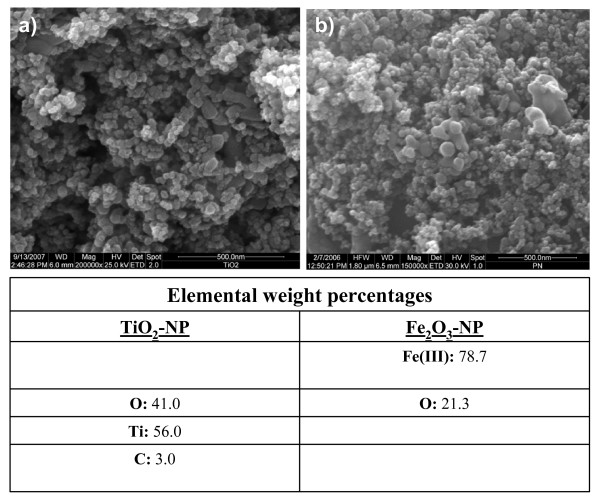
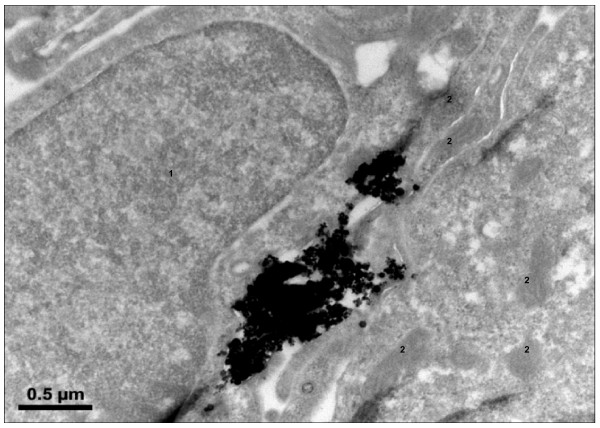
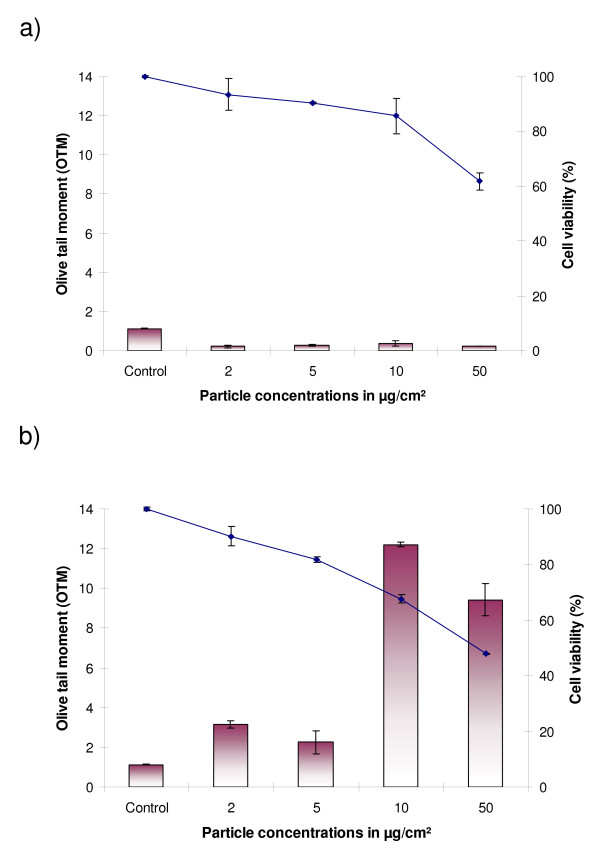
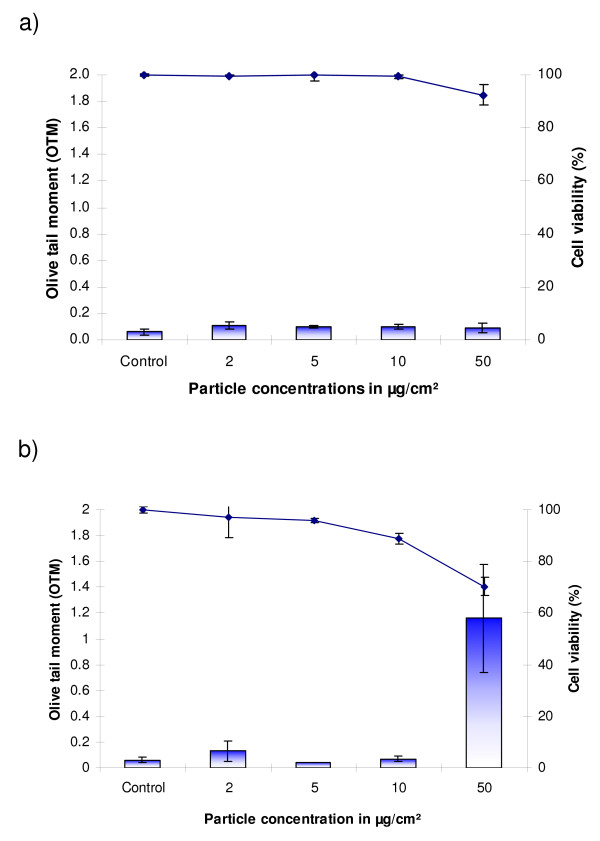
Titanium dioxide (TiO 2), also known as titanium (IV) oxide or anatase, is the naturally occurring oxide of titanium. It is also one of the most commercially used form. To date, no parameter has been set for the average ambient air concentration of TiO 2 nanoparticles (NP) by any regulatory agency. Previously conducted studies had established these nanoparticles to be mainly non-cyto- and -genotoxic, although they had been found to generate free radicals both acellularly (specially through photocatalytic activity) and intracellularly. The present study determines the role of TiO 2-NP (anatase, ∅ < 100 nm) using several parameters such as cyto- and genotoxicity, DNA-adduct formation and generation of free radicals following its uptake by human lung cells in vitro. For comparison, iron containing nanoparticles (hematite, Fe 2 O 3, ∅ < 100 nm) were used. The results of this study showed that both types of NP were located in the cytosol near the nucleus. No particles were found inside the nucleus, in mitochondria or ribosomes. Human lung fibroblasts (IMR-90) were more sensitive regarding cyto- and genotoxic effects caused by the NP than human bronchial epithelial cells (BEAS-2B). In contrast to hematite NP, TiO 2-NP did not induce DNA-breakage measured by the Comet-assay in both cell types. Generation of reactive oxygen species (ROS) was measured acellularly (without any photocatalytic activity) as well as intracellularly for both types of particles, however, the iron-containing NP needed special reducing conditions before pronounced radical generation. A high level of DNA adduct formation (8-OHdG) was observed in IMR-90 cells exposed to TiO 2-NP, but not in cells exposed to hematite NP. Our study demonstrates different modes of action for TiO 2- and Fe 2 O 3-NP. Whereas TiO 2-NP were able to generate elevated amounts of free radicals, which induced indirect genotoxicity mainly by DNA-adduct formation, Fe 2 O 3-NP were clastogenic (induction of DNA-breakage) and required reducing conditions for radical formation.
Overview
The claims and statistics of this paper haven’t been checked yet.
Free: it reads the open-access text and checks the first 5 claims that cite a source we can check. Create a free account to check every claim.
Integrity signals
Registry
Cites
Statistics
Figures
Verification
Claims the paper makes
The claims and statistics of this paper haven’t been checked yet.
Free: it reads the open-access text and checks the first 5 claims that cite a source we can check. Create a free account to check every claim.
Claims other papers make about this one
Each is checked against this paper’s own text: does it say what the citing paper says it does?
The cited source says what the claim attributes to it.
In the citing paper
“Afterwards several studies on different cells types showed that Fe2O3 nanoparticles may induce oxidative stress 31 , 32 and DNA breakage 32 , may reduce cell viability 32 and may increase the nitric oxide levels 33 .”
The cited source says what the claim attributes to it.
In the citing paper
“while a 24 h incubation with 10 and 50 µg/cm 2 nanoparticles was able to induce DNA breakage (measured with comet assay) respectively in human lung fibroblasts and human bronchial epithelial cells 32 .”
In the citing paper
“The cytotoxicity was related to iron release in solution 46 or to induction of oxidative stress via antioxidant enzyme consumption 64 or to free radical generation 32 .”
In the citing paper
“Oxidative DNA lesions were not observed following hematite nanoparticles exposure 32 , 66 .”
Self-check
Percentages, sums and reported differences re-computed from the paper’s own numbers.
The self-check needs the paper’s full text.
Citations
Cites
Lodish, H. F. (1986) · Cited by 5,650
Ultrafine particulate pollutants induce oxidative stress and mitochondrial damage
Li, N., Sioutas, C., Cho, A., Schmitz, D., Misra, C., Sempf, J., Wang, M., Oberley, T., Froines, J., & Nel, A. (2003) · Environmental Health Perspectives · doi:10.1289/ehp.6000 · Cited by 2,097
Lewin, M., Carlesso, N., Tung, C.-H., Tang, X.-W., Cory, D., Scadden, D. T., & Weissleder, R. (2000) · Nature Biotechnology · doi:10.1038/74464 · Cited by 1,716 · cited 1×
“Recently, Fe2O3-NP have been used for drug targeting cancer cells [4] and for labelling and tracking target cells using imaging techniques like magnetic resonance [5].”
MethodThe potential risks of nanomaterials: a review carried out for ECETOC.
Borm, P. J. A., Robbins, D. J., Haubold, S., Kuhlbusch, T. A. J., Fissan, H. J., Donaldson, K., Schins, R. P. F., Stone, V., Kreyling, W. G., Lademann, J. M., et al. (2006) · Particle and Fibre Toxicology · doi:10.1186/1743-8977-3-11 · Cited by 1,604
Self-citationGurr, J.-R., Wang, A. S. S., Chen, C.-H., & Jan, K.-Y. (2005) · Toxicology · doi:10.1016/j.tox.2005.05.007 · Cited by 1,022 · cited 1×
“[24] have shown that TiO2 -NP induce mainly generation of hydrogen peroxide and nitric oxide leading to lipid peroxidation and oxidative DNA damage in lung epithelial cells.”
BackgroundHelbock, H. J., Beckman, K. B., Shigenaga, M. K., Walter, P. B., Woodall, A. A., Yeo, H. C., & Ames, B. N. (1998) · Proceedings of the National Academy of Sciences · doi:10.1073/pnas.95.1.288 · Cited by 692 · cited 1×
“The protocol used for the isolation of DNA from the IMR-90 cells without the formation of 8-OHdG adducts was adopted from the work of Helbock et al. [ 30 ].”
Method(1987) · General Pharmacology: The Vascular System · doi:10.1016/0306-3623(87)90055-3 · Cited by 640
Oxidative stress induced by cerium oxide nanoparticles in cultured BEAS-2B cells
Park, E.-J., Choi, J., Park, Y.-K., & Park, K. (2008) · Toxicology · doi:10.1016/j.tox.2007.12.022 · Cited by 565 · cited 1×
“[13] had demonstrated the translocation of cerium oxide nanoparticles to the peri-nuclear region as agglomerated particles followed by their penetration into the cytoplasm directly and within vesicles.”
BackgroundCHEN, M., & VONMIKECZ, A. (2005) · Experimental Cell Research · doi:10.1016/j.yexcr.2004.12.021 · Cited by 493 · cited 1×
“Unlike the finding of Chen and von Mikecz [ 14 ] and Li et al. [15] demonstrating penetration of nucleus and mitochondria by SiO 2 and ambient air nanoparticles, we found no nanoparticle penetrating these organelles in our study.”
ResultKinetic stability of hematite nanoparticles: the effect of particle sizes
He, Y. T., Wan, J., & Tokunaga, T. (2008) · Journal of Nanoparticle Research · doi:10.1007/s11051-007-9255-1 · Cited by 395 · cited 2×
“He et al. [ 23 ] have demonstrated that smaller particles in the nanosize range tend to agglomerate when suspended in a low pH liquid.”
BackgroundAir Pollution, Ultrafine and Nanoparticle Toxicology: Cellular and Molecular Interactions
Stone, V., Johnston, H., & Clift, M. J. D. (2007) · IEEE Transactions on NanoBioscience · doi:10.1109/tnb.2007.909005 · Cited by 364 · cited 2×
“In such studies the NPs generate reactive oxygen species (ROS) to a greater extent than larger particles leading to increased transcription of pro-inflammatory mediators via intracellular signaling pathways including calcium disturbances and oxidative stress [7] To date, only limited NP compositions and structures hav…”
BackgroundTitanium dioxide nanoparticles trigger p53‐mediated damage response in peripheral blood lymphocytes
Kang, S. J., Kim, B. M., Lee, Y. J., & Chung, H. W. (2008) · Environmental and Molecular Mutagenesis · doi:10.1002/em.20399 · Cited by 361 · cited 1×
“[25] had observed an activation of DNA damage check-points and an up-regulation of P53 along with DNA damages caused by ROS generation by these nanoparticles in peripheral blood lymphocytes.”
BackgroundDNA Ligase III as a Candidate Component of Backup Pathways of Nonhomologous End Joining
Wang, H., Rosidi, B., Perrault, R., Wang, M., Zhang, L., Windhofer, F., & Iliakis, G. (2005) · Cancer Research · doi:10.1158/0008-5472.can-04-3055 · Cited by 334 · cited 1×
“Treatment of particles with whole cell extract (WCE) and H 2 O 2 The WCE was prepared with BEAS-2B cells grown in 175 cm2 flask following the protocol of Wang et al. [ 28 ].”
MethodBiochemical evidence for Ku-independent backup pathways of NHEJ
Wang, H. (2003) · Nucleic Acids Research · doi:10.1093/nar/gkg728 · Cited by 260 · cited 1×
“Previously, 8OHdG DNA adduct formation by hematite particles was only observed when the particles were coated with B(a)P [26].”
BackgroundEndocytosis of Ultrafine Particles by A549 Cells
Stearns, R. C., Paulauskis, J. D., & Godleski, J. J. (2001) · American Journal of Respiratory Cell and Molecular Biology · doi:10.1165/ajrcmb.24.2.4081 · Cited by 248 · cited 1×
“[12] demonstrated the uptake of TiO2 nanoparticles in clusters by lung epithelial cells (A549) using transmission electron microscopy.”
MethodFilopodia act as phagocytic tentacles and pull with discrete steps and a load-dependent velocity
Kress, H., Stelzer, E. H. K., Holzer, D., Buss, F., Griffiths, G., & Rohrbach, A. (2007) · Proceedings of the National Academy of Sciences · doi:10.1073/pnas.0702449104 · Cited by 228
Surface chemistry influences cancer killing effect of TiO2 nanoparticles
Thevenot, P., Cho, J., Wavhal, D., Timmons, R. B., & Tang, L. (2008) · Nanomedicine: Nanotechnology, Biology and Medicine · doi:10.1016/j.nano.2008.04.001 · Cited by 223 · cited 1×
“[18] had also demonstrated that the surface chemistry of the TiO2 nanoparticles play a major role in increasing or decreasing its toxicity.”
BackgroundTitanium Dioxide: Inhalation Toxicology and Epidemiology
(2005) · The Annals of Occupational Hygiene · doi:10.1093/annhyg/mei012 · Cited by 166 · cited 1×
“Occupational exposure to TiO2 nanoparticles can occur during manufacturing/use of these particles as pigments for paints, varnishes, enamels, lacquers and paper coatings to impart whiteness, opacity and brightness [2].”
BackgroundSurface States of Titanium Dioxide Nanoparticles Modified with Enediol Ligands
de la Garza, L., Šaponjić, Z. V., Dimitrijević, N. M., Thurnauer, M. C., & Rajh, T. (2005) · The Journal of Physical Chemistry B · doi:10.1021/jp054128k · Cited by 115 · cited 1×
“Similar studies with same observations were carried out by de la Garza et al. [ 8 ] and Wang et al. [9].”
ResultWang, Y., Wang, X., Luo, G., & Dai, Y. (2007) · Bioresource Technology · doi:10.1016/j.biortech.2007.08.017 · Cited by 111 · cited 1×
“Similar studies with same observations were carried out by de la Garza et al. [8] and Wang et al. [ 9 ].”
ResultDevelopment of hyaluronic acid–Fe2O3 hybrid magnetic nanoparticles for targeted delivery of peptides
Kumar, A. B., Sahoo, B., Montpetit, A. J., Behera, S., Lockey, R. F., & Mohapatra, S. S. (2007) · Nanomedicine Nanotechnology Biology and Medicine · doi:10.1016/j.nano.2007.03.001 · Cited by 104
Yamamoto, F., Kasai, H., Bessho, T., Chung, M., Inoue, H., Ohtsuka, E., Hori, T., & Nishimura, S. (1992) · Japanese Journal of Cancer Research · doi:10.1111/j.1349-7006.1992.tb00114.x · Cited by 83 · cited 1×
“Of these, 8-OHdG with a hydroxyl group at the eight position of guanine is formed easily and abundantly by oxidative stress [ 29 ].”
BackgroundA 1,10—Phenanthroline Method for the Determination of Iron in Powdered Milk
Pyenson, H., & Tracy, P. H. (1945) · Journal of Dairy Science · doi:10.3168/jds.s0022-0302(45)95191-5 · Cited by 69 · cited 1×
“Determination of the trace iron elements present on the particles was done using 1,10 phenanthroline chloride dye and spectrophotometric technique following the protocol described by Pyenson and Tracy [27] with minor modifications specified by German Industrial norms (DIN: 38 406).”
MethodTürkez, H., & Geyikoğlu, F. (2007) · Toxicology and Industrial Health · doi:10.1177/0748233707076764 · Cited by 56 · cited 1×
“In contrast to our study Turkez et al. [ 17 ] demonstrated that TiO2 nanoparticles were capable of causing genotoxicity by inducing sister chromatid exchange and micronucleus formation in human white blood cells.”
ResultBhattacharya, K., Cramer, H., Albrecht, C., Schins, R. P. F., Rahman, Q., Zimmermann, U., & Dopp, E. (2008) · Journal of Toxicology and Environmental Health · doi:10.1080/15287390801989218 · Cited by 34 · cited 1×
“Previously, we had found that the native titanium dioxide (anatase) nanoparticles were non-cyto- and -genotoxic in V79 cells (Chinese hamster lung fibroblasts) [16].”
BackgroundSelf-citationHematite (Fe2O3) acts by oxydative stress and potentiates benzo[a]pyrene genotoxicity
Garry, S., Nesslany, F., Aliouat, E. M., Haguenoer, J., & Marzin, D. R. (2004) · Mutation Research/Genetic Toxicology and Environmental Mutagenesis · doi:10.1016/j.mrgentox.2004.06.012 · Cited by 18
Biochemical studies on the toxicity of hematite dust
Das, B., Khatoon, N., Srivastava, R. C., Viswanathan, P. N., & Rahman, Q. (1983) · Environmental Research · doi:10.1016/0013-9351(83)90119-6 · Cited by 9
Garry, S. (2003) · Mutagenesis · doi:10.1093/mutage/geg016 · Cited by 8 · cited 1×
“Earlier research done with hematite fine particles demonstrated them to be non-genotoxic in different cell lines and reacted intracellularly only by enhancing the effects of other toxic substances such as benzo [a]pyrene [19,20].”
BackgroundBhattacharya, K. (2009) · DuEPublico (University of Duisburg-Essen) · Cited by 4
Self-citation
Research works printed but not linked: 2
- American Conference of Governmental industrial hygienists TLVs. Threshold limit values and biological exposure indices for 1992 – 1993 Cincinnati, OH 1992
- Braydich-Stolle LK Murdock RC Szczublewski K Schlager JJ Jiang J Biswas P Hussain SM The effect of titanium dioxide nanoparticles on mouse keratinocytes (HEL-30 cells) International Congress of Nanobiotechnology & Nanomedicine San Francisco; USA 2007
Cited by
Titanium dioxide nanoparticles: a review of current toxicological data
Shi, H., Magaye, R., Castranova, V., & Zhao, J. (2013) · Particle and Fibre Toxicology · doi:10.1186/1743-8977-10-15 · Cited by 1,498
“Some of the studies cited previously have reported the involvement of free radicals in DNA damage [28,157], ROS-induced activation of p53mediated DNA damage check point signals [164], increased intracellular ROS leading to increased G2M cell cycle arrest or delay [156,171], cell-derived oxidants involved in induction…”
BackgroundToxicity of Nanoparticles and an Overview of Current Experimental Models.
Bahadar, H., Maqbool, F., Niaz, K., & Abdollahi, M. R. (2016) · PubMed · doi:10.7508/ibj.2016.01.001 · Cited by 643
Mechanisms of genotoxicity. A review of in vitro and in vivo studies with engineered nanoparticles
Magdolenova, Z., Collins, A., Kumar, A., Dhawan, A., Stone, V., & Dusinska, M. (2014) · Nanotoxicology · doi:10.3109/17435390.2013.773464 · Cited by 616
Nanotoxicity: An Interplay of Oxidative Stress, Inflammation and Cell Death
Khanna, P., Ong, C., Bay, B., & Baeg, G. (2015) · Nanomaterials · doi:10.3390/nano5031163 · Cited by 580
“Various studies have also confirmed the occurrence of DNA fragmentation and formation of oxidation-induced DNA adducts on exposure to metal oxide nanoparticles [74–76].”
BackgroundRisk assessment of engineered nanomaterials and nanotechnologies—A review
Savolainen, K., Alenius, H., Norppa, H., Pylkkänen, L., Tuomi, T., & Kasper, G. (2010) · Toxicology · doi:10.1016/j.tox.2010.01.013 · Cited by 380
“…and variable assay conditions compliates the comparison of the existing studies (see Falck et al., 2009). gy 269 (2010) 92–104 There is some indication that especially anatase phase TiO2 has genotoxic potential in vitro (Bhattacharya et al., 2009; Falck et al., 2009; Karlsson et al., 2009).”
Metadata
- Authors
- Bhattacharya, K., Davoren, M., Boertz, J., Schins, R. P., Hoffmann, E., & Dopp, E.
- Affiliations
- Dublin Institute of Technology (IE)
- University of Duisburg-Essen (DE)
- Heinrich Heine University Düsseldorf (DE)
- European Molecular Biology Laboratory (DE)
- Corresponding author
- Dopp, Elke
- Venue
- Particle and Fibre Toxicology
- Published
- 2009-06-21
- Volume
- 6
- Issue
- 1
- Pages
- 17-17
- ISSN
- 1743-8977 (ISSN-L)
- PMC
- PMC2711958
- OpenAlex
- W2029533392
- Cited by
- 348
- References
- 29
- Citations by year
- 2026: 11 · 2025: 8 · 2024: 12 · 2023: 14 · 2022: 14 · 2021: 22 · 2020: 23 · 2019: 19 · 2018: 26 · 2017: 16 · 2016: 21 · 2015: 23 · 2014: 46 · 2013: 23 · 2012: 23
- FWCI
- 7.81
- Type
- journal article
- Language
- en
- Open access
- gold
- doi.org
- Licence
- cc-by
- Locations
- Particle and Fibre Toxicology (publishedVersion, cc-by)
- PubMed Central (publishedVersion, cc-by)
- PubMed (publishedVersion)
- Arrow - TU Dublin (Technological University Dublin) (submittedVersion, cc-by-nc-sa)
- DOAJ (DOAJ: Directory of Open Access Journals) (submittedVersion, cc-by-sa)
- Funders
- Universität Duisburg-Essen
- Technological University Dublin
- Topics
- Life Sciences › Biochemistry, Genetics and Molecular Biology › Cancer Research › Carcinogens and Genotoxicity Assessment
- Physical Sciences › Materials Science › Materials Chemistry › Nanoparticles: synthesis and applications
- Health Sciences › Medicine › Pulmonary and Respiratory Medicine › Occupational and environmental lung diseases
- Keywords
- titanium dioxide nanoparticles, hematite nanoparticles, oxidative stress, DNA adducts, DNA strand breaks, genotoxicity, cytotoxicity, reactive oxygen species, free radicals, 8-hydroxydeoxyguanine, human lung fibroblasts, bronchial epithelial cells, nanoparticle uptake, photocatalytic activity
About these checks
Registry, retraction, Cites and statistics results are computed, not judged, with one exception: a printed reference that no index lists is read once by a model before it counts as a citation error. Claims are extracted by a model and kept only when their quote appears verbatim in the text; each cited source is then checked, with a model’s help, for whether it says what the claim relies on. Those verdicts can be wrong — read the claim’s quote and the cited source before relying on one.
Statistics and arithmetic are recomputed, not judged.
Confidence bands are shown only for fields calibrated on our annotated test set. None is calibrated yet, so no band is shown.
What counts as a claim ›How we measure confidence ›How we check this ›
Are you an author, or do you see a problem with this page? Request a review
Data sources
Bibliographic data: Semantic Scholar, OpenAlex, Crossref.
Contains information from the Semantic Scholar Academic Graph Datasets, made available under the ODC Attribution License (ODC-BY 1.0).
Semantic Scholar’s data is described in: Kinney, R., et al. (2023). The Semantic Scholar Open Data Platform. arXiv:2301.10140.
