

The DOI matches its Crossref record; 227 of the 228 references it cites were found in a registry or an index.
The Last Universal Common Ancestor: emergence, constitution and genetic legacy of an elusive forerunner
Open accessAbstract
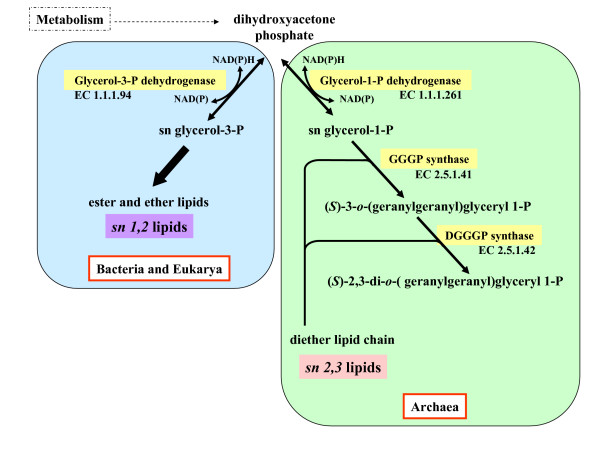
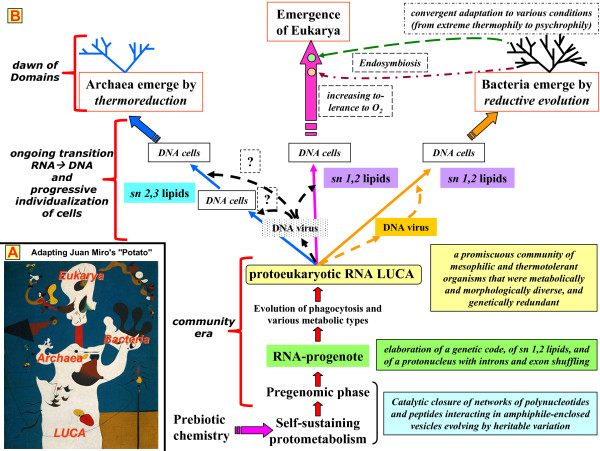
Background: Since the reclassification of all life forms in three Domains (Archaea, Bacteria, Eukarya), the identity of their alleged forerunner (Last Universal Common Ancestor or LUCA) has been the subject of extensive controversies: progenote or already complex organism, prokaryote or protoeukaryote, thermophile or mesophile, product of a protracted progression from simple replicators to complex cells or born in the cradle of "catalytically closed" entities? We present a critical survey of the topic and suggest a scenario. Results: LUCA does not appear to have been a simple, primitive, hyperthermophilic prokaryote but rather a complex community of protoeukaryotes with a RNA genome, adapted to a broad range of moderate temperatures, genetically redundant, morphologically and metabolically diverse. LUCA's genetic redundancy predicts loss of paralogous gene copies in divergent lineages to be a significant source of phylogenetic anomalies, i.e. instances where a protein tree departs from the SSU-rRNA genealogy; consequently, horizontal gene transfer may not have the rampant character assumed by many. Examining membrane lipids suggest LUCA had sn1,2 ester fatty acid lipids from which Archaea emerged from the outset as thermophilic by "thermoreduction," with a new type of membrane, composed of sn2,3 ether isoprenoid lipids; this occurred without major enzymatic reconversion. Bacteria emerged by reductive evolution from LUCA and some lineages further acquired extreme thermophily by convergent evolution. This scenario is compatible with the hypothesis that the RNA to DNA transition resulted from different viral invasions as proposed by Forterre. Beyond the controversy opposing "replication first" to metabolism first", the predictive arguments of theories on "catalytic closure" or "compositional heredity" heavily weigh in favour of LUCA's ancestors having emerged as complex, self-replicating entities from which a genetic code arose under natural selection. Conclusion: Life was born complex and the LUCA displayed that heritage. It had the "body "of a mesophilic eukaryote well before maturing by endosymbiosis into an organism adapted to an atmosphere rich in oxygen. Abundant indications suggest reductive evolution of this complex and heterogeneous entity towards the "prokaryotic" Domains Archaea and Bacteria. The word "prokaryote" should be abandoned because epistemologically unsound. Reviewers: This article was reviewed by Anthony Poole, Patrick Forterre, and Nicolas Galtier.
Overview
The claims and statistics of this paper haven’t been checked yet.
Run the check — free, no account needed. It reads the open-access text and checks the sources it cites.
Integrity signals
Registry
Cites
Statistics
Figures
Verification
Claims the paper makes
The claims and statistics of this paper haven’t been checked yet.
Run the check — free, no account needed. It reads the open-access text and checks the sources it cites.
Claims other papers make about this one
Each is checked against this paper’s own text: does it say what the citing paper says it does?
The check wasn’t confident either way, so it gives no verdict — never disputed.
In the citing paper
“LUCA is estimated to have lived 3.8–3.5 billion years ago (Glansdorff et al., 2008).”
From The Astrobiology Primer v2.0 (2016) · cites this paper as Glansdorff et al., 2008
Experimental — accuracy not yet measured
Self-check
Percentages, sums and reported differences re-computed from the paper’s own numbers.
The self-check needs the paper’s full text.
Citations
Cites
The Origins of Order: Self-Organization and Selection in Evolution
Kauffman, S. A. (1993) · doi:10.1093/oso/9780195079517.001.0001 · Cited by 7,855
Towards a natural system of organisms: proposal for the domains Archaea, Bacteria, and Eucarya.
Woese, C. R., Kandler, O., & Wheelis, M. L. (1990) · Proceedings of the National Academy of Sciences · doi:10.1073/pnas.87.12.4576 · Cited by 6,128
Phylogenetic structure of the prokaryotic domain: The primary kingdoms
Woese, C. R., & Fox, G. E. (1977) · Proceedings of the National Academy of Sciences · doi:10.1073/pnas.74.11.5088 · Cited by 4,131
Darwin's dangerous idea : evolution and the meanings of life
Dennett, D. C. (1995) · DigitalGeorgetown (Georgetown University Library) · Cited by 1,998
Phylogenetic Classification and the Universal Tree
Doolittle, W. F. (1999) · Science · doi:10.1126/science.284.5423.2124 · Cited by 1,888
Toward Automatic Reconstruction of a Highly Resolved Tree of Life
Ciccarelli, F. D., Doerks, T., von Mering, C., Creevey, C. J., Snel, B., & Bork, P. (2006) · Science · doi:10.1126/science.1123061 · Cited by 1,663
Deciphering the evolution and metabolism of an anammox bacterium from a community genome
Strous, M., Pelletier, É., Mangenot, S., Rattei, T., Lehner, A., Taylor, M. W., Horn, M., Daims, H., Mavel, D., Wincker, P., et al. (2006) · Nature · doi:10.1038/nature04647 · Cited by 1,357
A Serpentinite-Hosted Ecosystem: The Lost City Hydrothermal Field
Kelley, D. S., Karson, J. A., Früh-Green, G. L., Yoerger, D. R., Shank, T. M., Butterfield, D. A., Hayes, J. M., Schrenk, M. O., Olson, E. J., Proskurowski, G., et al. (2005) · Science · doi:10.1126/science.1102556 · Cited by 1,288
The Hydrogen Hypothesis for the First Eukaryote
Martin, W., & Müller, M. (1998) · Nature · doi:10.1038/32096 · Cited by 1,282
Archean Molecular Fossils and the Early Rise of Eukaryotes
Brocks, J. J., Logan, G. A., Buick, R., & Summons, R. E. (1999) · Science · doi:10.1126/science.285.5430.1033 · Cited by 1,275
Research works printed but not linked: 9
- Forterre P, Philippe H: Where is the root of the universal tree of life?. Bioessays. 1999, 21: 871-879. 10.1002/(SICI)1521-1878(199910)21:10<871::AID-BIES10>3.0.CO;2-Q. · DOI
- Glansdorff N, Xu Y: Phylogeny of extremophiles. Extremophilies in Encyclopedia of Life Support Systems (EOLSS). Edited by: Gerday C, Glansdorff N. 2004, Developed under the Auspicies of the UNESCO, Eolss Publishers, Oxford, UK, [http://www.eolss.net]
- Kandler O: The early diversification of life. Nobel Symposium No 84, Early Life on Earth. 1994, Columbia University Press, New York NY, 152-160.
- Forterre P: Strategies of extremophily in nucleic acids adaptation to high temperature. Extremophilies in Encyclopedia of Life Support Systems (EOLSS). Edited by: Gerday C, Glansdorff N. 2004, Developed under the auspicies of the UNESCO, Eolss Publishers, Oxford, UK, [http://www.eolss.net]
- Glansdorff N, Xu Y: Microbial life at low temperatures: mechanisms of adaptation and extreme biotopes. Implications for exobiology and the origin of life. Recent Res Devel Microbiol. 2002, 6: 1-21.
- Sakmann E: Physikalische Grundlagen der molekularen Organisation und Dynamik von Membranen. Biophysik. Edited by: Hoppe W, Lohmann W, Markl H, Ziegler H. 1982, Springer, Berlin, Germany, 439-471. 2
- Jensen RA: Evolution of metabolic pathways in enteric bacteria. Escherichia coli and Salmonella: Cellular and Molecular Biology. Edited by: Neidhardt DCFC. Washington: American Society for Microbiology press, 2649-2662.
- de Duve C: Blueprint for a Cell. Neil Patterson, Burlington. 1991
- Wachtershauser G: Before enzymes and templates. Microbiol Rev. 1988, 52: 452-484. · DOI · Paper page
Cited by
Sorted by citations
Global Organization and Proposed Megataxonomy of the Virus World
Koonin, E. V., Dolja, V. V., Krupovìč, M., Varsani, A., Wolf, Y. I., Yutin, N., Júnior, F. M. Z., & Kuhn, J. H. (2020) · Microbiology and Molecular Biology Reviews · doi:10.1128/mmbr.00061-19 · Cited by 609
ViralZone: a knowledge resource to understand virus diversity
Hulo, C., de Castro, E., Masson, P., Bougueleret, L., Bairoch, A., Xenarios, I., & Le Mercier, P. (2011) · Nucleic Acids Research · doi:10.1093/nar/gkq901 · Cited by 452
Engineering genetic circuit interactions within and between synthetic minimal cells
Adamala, K. P., Martin-Alarcon, D. A., Guthrie-Honea, K. R., & Boyden, E. S. (2016) · Nature Chemistry · doi:10.1038/nchem.2644 · Cited by 361
Nonenzymatic Metabolic Reactions and Life’s Origins
Muchowska, K. B., Varma, S. J., & Moran, J. (2020) · Chemical Reviews · doi:10.1021/acs.chemrev.0c00191 · Cited by 317
Darwinian evolution in the light of genomics
Koonin, E. V. (2008) · Nucleic Acids Research · doi:10.1093/nar/gkp089 · Cited by 264
A vocabulary of ancient peptides at the origin of folded proteins
Alva, V., Söding, J., & Lupas, A. N. (2015) · eLife · doi:10.7554/elife.09410 · Cited by 235
Some Structural Aspects of Language Are More Stable than Others: A Comparison of Seven Methods
Dediu, D., & Cysouw, M. (2013) · PLoS ONE · doi:10.1371/journal.pone.0055009 · Cited by 224
Root of the Tree: The Significance, Evolution, and Origins of the Ribosome
Bowman, J. C., Petrov, A. S., Frenkel-Pinter, M., Penev, P. I., & Williams, L. D. (2020) · Chemical Reviews · doi:10.1021/acs.chemrev.9b00742 · Cited by 197
Evolutionary Implications of Horizontal Gene Transfer
Syvanen, M. (2012) · Annual Review of Genetics · doi:10.1146/annurev-genet-110711-155529 · Cited by 206
Archaea — timeline of the third domain
Cavicchioli, R. (2010) · Nature Reviews Microbiology · doi:10.1038/nrmicro2482 · Cited by 213
The origin, evolution and structure of the protein world
Caetano‐Anollés, G., Wang, M., Caetano-Anollés, D., & Mittenthal, J. E. (2009) · Biochemical Journal · doi:10.1042/bj20082063 · Cited by 195
The universal tree of life: an update
Forterre, P. (2015) · Frontiers in Microbiology · doi:10.3389/fmicb.2015.00717 · Cited by 199
Co-evolution of primordial membranes and membrane proteins
Mulkidjanian, A. Y., Galperin, M. Y., & Koonin, E. V. (2009) · Trends in Biochemical Sciences · doi:10.1016/j.tibs.2009.01.005 · Cited by 169
Evolution of circadian rhythms: from bacteria to human
Bhadra, U., Thakkar, N., Das, P., & Pal Bhadra, M. (2017) · Sleep Medicine · doi:10.1016/j.sleep.2017.04.008 · Cited by 167
Regulation of Redox Signaling by Selenoproteins
Hawkes, W. C., & Alkan, Z. (2010) · Biological Trace Element Research · doi:10.1007/s12011-010-8656-7 · Cited by 151
Isoprenoid biosynthesis in Archaea – Biochemical and evolutionary implications
Matsumi, R., Atomi, H., Driessen, A. J. M., & John van der, O. O. S. T. (2010) · Research in Microbiology · doi:10.1016/j.resmic.2010.10.003 · Cited by 143
Ancient micronauts: interplanetary transport of microbes by cosmic impacts
Nicholson, W. L. (2009) · Trends in Microbiology · doi:10.1016/j.tim.2009.03.004 · Cited by 140
Domagal-Goldman, S. D., Wright, K. E., Domagal-Goldman, S. D., Wright, K. E., Adamala, K., Arina de la Rubia, L., Bond, J., Dartnell, L. R., Goldman, A. D., Lynch, K., et al. (2016) · Astrobiology · doi:10.1089/ast.2015.1460 · Cited by 136
“LUCA is estimated to have lived 3.8–3.5 billion years ago (Glansdorff et al., 2008).”
InfluentialDid life originate from a global chemical reactor?
Stüeken, E. E., Anderson, R. E., Bowman, J. S., Brazelton, W. J., Colangelo-Lillis, J. R., Goldman, A. D., Som, S. M., & Baross, J. A. (2013) · Geobiology · doi:10.1111/gbi.12025 · Cited by 139
Mulkidjanian, A. Y., & Galperin, M. Y. (2009) · Biology Direct · doi:10.1186/1745-6150-4-27 · Cited by 133
Forterre, P., & Prangishvili, D. A. (2009) · Research in Microbiology · doi:10.1016/j.resmic.2009.07.008 · Cited by 137
On the Origin of Cells and Viruses
Koonin, E. V. (2009) · Annals of the New York Academy of Sciences · doi:10.1111/j.1749-6632.2009.04992.x · Cited by 127
From DNA damage to mutations: All roads lead to aging
Vijg, J. (2021) · Ageing Research Reviews · doi:10.1016/j.arr.2021.101316 · Cited by 133
Early Evolution of Membrane Lipids: How did the Lipid Divide Occur?
Koga, Y. (2011) · Journal of Molecular Evolution · doi:10.1007/s00239-011-9428-5 · Cited by 117
The Common Ancestor of Archaea and Eukarya Was Not an Archaeon
Forterre, P. (2013) · Archaea · doi:10.1155/2013/372396 · Cited by 119
The LUCA and its complex virome
Krupovìč, M., Dolja, V. V., & Koonin, E. V. (2020) · Nature Reviews Microbiology · doi:10.1038/s41579-020-0408-x · Cited by 110
Forterre, P. (2010) · Research in Microbiology · doi:10.1016/j.resmic.2010.10.005 · Cited by 110
Klotz, M. G. (2010) · Frontiers in Microbiology · doi:10.3389/fmicb.2010.00001 · Cited by 105
Getting a better picture of microbial evolution en route to a network of genomes
Dagan, T., & Martin, W. F. (2009) · Philosophical Transactions of the Royal Society B Biological Sciences · doi:10.1098/rstb.2009.0040 · Cited by 105
The proteomic complexity and rise of the primordial ancestor of diversified life
Kim, K. M., & Caetano‐Anollés, G. (2011) · BMC Evolutionary Biology · doi:10.1186/1471-2148-11-140 · Cited by 97
Chisholm, R. H., Lorenzi, T., & Clairambault, J. (2016) · Biochimica et Biophysica Acta (BBA) - General Subjects · doi:10.1016/j.bbagen.2016.06.009 · Cited by 99
Baluška, F., Miller, W. B., & Reber, A. S. (2022) · Biological Journal of the Linnean Society · doi:10.1093/biolinnean/blac005 · Cited by 101
Concepts of the last eukaryotic common ancestor
O’Malley, M. A., Leger, M. M., Wideman, J. G., & Ruiz‐Trillo, I. (2019) · Nature Ecology & Evolution · doi:10.1038/s41559-019-0796-3 · Cited by 98
Exploring the emergence of complexity using synthetic replicators
Kosikova, T., & Philp, D. (2017) · Chemical Society Reviews · doi:10.1039/c7cs00123a · Cited by 96
Archaeal diversity and community development in deep-sea hydrothermal vents
Takai, K., & Nakamura, K. (2011) · Current Opinion in Microbiology · doi:10.1016/j.mib.2011.04.013 · Cited by 102
Archaeology of Eukaryotic DNA Replication
Makarova, K. S., & Koonin, E. V. (2013) · Cold Spring Harbor Perspectives in Biology · doi:10.1101/cshperspect.a012963 · Cited by 87
Contrasting theories of life: Historical context, current theories. In search of an ideal theory
Cornish-Bowden, A. J., & Cárdenas, M. L. (2019) · Biosystems · doi:10.1016/j.biosystems.2019.104063 · Cited by 94
The Origin at 150: is a new evolutionary synthesis in sight?
Koonin, E. V. (2009) · Trends in Genetics · doi:10.1016/j.tig.2009.09.007 · Cited by 80
Gene similarity networks provide tools for understanding eukaryote origins and evolution
Alvarez‐Ponce, D., Lopez, P., Bapteste, E. P., & McInerney, J. O. (2013) · Proceedings of the National Academy of Sciences · doi:10.1073/pnas.1211371110 · Cited by 78
The fundamental units, processes and patterns of evolution, and the Tree of Life conundrum
Koonin, E. V., & Wolf, Y. I. (2009) · Biology Direct · doi:10.1186/1745-6150-4-33 · Cited by 74
Thermodynamics of evolution and the origin of life
Vanchurin, V., Wolf, Y. I., Koonin, E. V., & Katsnelson, M. I. (2022) · Proceedings of the National Academy of Sciences · doi:10.1073/pnas.2120042119 · Cited by 72
Viruses and cells intertwined since the dawn of evolution
Durzyńska, J., & Goździcka‐Józefiak, A. (2015) · Virology Journal · doi:10.1186/s12985-015-0400-7 · Cited by 75
Michaelian, K., & Simeonov, A. (2015) · Biogeosciences · doi:10.5194/bg-12-4913-2015 · Cited by 74
Evolution of replication machines
Yao, N. Y., & O’Donnell, M. E. (2015) · Critical Reviews in Biochemistry and Molecular Biology · doi:10.3109/10409238.2015.1125845 · Cited by 68
The Last Universal Common Ancestor (LUCA) and the Ancestors of Archaea and Bacteria were Progenotes
Giulio, M. D. (2010) · Journal of Molecular Evolution · doi:10.1007/s00239-010-9407-2 · Cited by 63
The first eukaryote cell: an unfinished history of contestation
O’Malley, M. A. (2010) · Studies in History and Philosophy of Science Part C Studies in History and Philosophy of Biological and Biomedical Sciences · doi:10.1016/j.shpsc.2010.07.010 · Cited by 64
Deep Phylogeny--How a Tree Can Help Characterize Early Life on Earth
Gaucher, E. A., Kratzer, J. T., & Randall, R. N. (2010) · Cold Spring Harbor Perspectives in Biology · doi:10.1101/cshperspect.a002238 · Cited by 62
The Evolutionary History of the Structure of 5S Ribosomal RNA
Sun, F.-J., & Caetano‐Anollés, G. (2009) · Journal of Molecular Evolution · doi:10.1007/s00239-009-9264-z · Cited by 56
Reconstructing ancestral gene content by coevolutionPreprint
Tuller, T., Birin, H., Gophna, U., Kupiec, M., & Ruppin, E. (2009) · Genome Research · doi:10.1101/gr.096115.109 · Cited by 56
Cornish-Bowden, A. J., & Cárdenas, M. L. (2017) · Journal of Theoretical Biology · doi:10.1016/j.jtbi.2017.05.023 · Cited by 55
Innovation in gene regulation: The case of chromatin computation
Prohaska, S. J., Stadler, P. F., & Krakauer, D. C. (2010) · Journal of Theoretical Biology · doi:10.1016/j.jtbi.2010.03.011 · Cited by 54
Guldan, H., Matysik, F., Bocola, M., Sterner, R., & Babinger, P. (2011) · Angewandte Chemie International Edition · doi:10.1002/anie.201101832 · Cited by 54
Barrangou, R., & John van der, O. O. S. T. (2012) · Springer eBooks · doi:10.1007/978-3-642-34657-6 · Cited by 59
Insights into metazoan evolution from alvinella pompejana cDNAs
Gagnière, N., Jollivet, D., Boutet, I., Brélivet, Y., Busso, D., Silva, C. D., Gaill, F., Higuet, D., Hourdez, S., Knoops, B., et al. (2010) · BMC Genomics · doi:10.1186/1471-2164-11-634 · Cited by 52
Cryosphere and Psychrophiles: Insights into a Cold Origin of Life?
Feller, G. (2017) · Life · doi:10.3390/life7020025 · Cited by 51
Protein Thermodynamics Can Be Predicted Directly from Biological Growth Rates
Corkrey, R., McMeekin, T. A., Bowman, J. P., Ratkowsky, D. A., Olley, J. N., & Ross, T. (2014) · PLoS ONE · doi:10.1371/journal.pone.0096100 · Cited by 49
Rissanen, I., Grimes, J. M., Pawlowski, A., Mäntynen, S., Harlos, K., Bamford, J. K. H., & Stuart, D. I. (2013) · Structure · doi:10.1016/j.str.2013.02.026 · Cited by 47
Transitional forms between the three domains of life and evolutionary implications
Reynaud, E. G., & Devos, D. P. (2011) · Proceedings of the Royal Society B Biological Sciences · doi:10.1098/rspb.2011.1581 · Cited by 47
Revising the Taxonomic Distribution, Origin and Evolution of Ribosome Inactivating Protein Genes
Lapadula, W. J., Sanchez-Puerta, M. V., & Ayub, M. J. (2013) · PLoS ONE · doi:10.1371/journal.pone.0072825 · Cited by 46
Evidence for the Existence of Elaborate Enzyme Complexes in the Paleoarchean Era
Reisinger, B., Sperl, J., Holinski, A., Schmid, V., Rajendran, C., Carstensen, L., Schlee, S., Blanquart, S., Merkl, R., & Sterner, R. (2013) · Journal of the American Chemical Society · doi:10.1021/ja4115677 · Cited by 45
Siliceous Hot Spring Deposits: Why They Remain Key Astrobiological Targets
Cady, S. L., Skok, J. R., Gulick, V. G., Berger, J. A., & Hinman, N. W. (2018) · Elsevier eBooks · doi:10.1016/b978-0-12-809935-3.00007-4 · Cited by 44
A Tale of Two Concepts: Harmonizing the Free Radical and Antagonistic Pleiotropy Theories of Aging
Golubev, A. G., Hanson, A. D., & Gladyshev, V. N. (2017) · Antioxidants and Redox Signaling · doi:10.1089/ars.2017.7105 · Cited by 43
Merhej, V., & Raoult, D. (2012) · Frontiers in Cellular and Infection Microbiology · doi:10.3389/fcimb.2012.00113 · Cited by 42
Malik, S. A. (2021) · Routledge eBooks · doi:10.4324/9780429345753 · Cited by 42
Lusk, B. G. (2019) · Frontiers in Microbiology · doi:10.3389/fmicb.2019.00818 · Cited by 41
Egel, R. (2009) · BioEssays · doi:10.1002/bies.200800226 · Cited by 39
Horikoshi, K., & Bull, A. T. (2010) · Springer eBooks · doi:10.1007/978-4-431-53898-1_1 · Cited by 39
Schoenfeld, T. W., Murugapiran, S. K., Dodsworth, J. A., Floyd, S., Lodes, M. J., Mead, D. A., & Hedlund, B. P. (2013) · Molecular Biology and Evolution · doi:10.1093/molbev/mst078 · Cited by 38
Vinçon‐Laugier, A., Grossi, V., Pacton, M., Escarguel, G., & Cravo‐Laureau, C. (2016) · Organic Geochemistry · doi:10.1016/j.orggeochem.2016.05.015 · Cited by 38
Ślesak, I., Kula-Maximenko, M., Ślesak, H., Miszalski, Z., & Strzałka, K. (2019) · Free Radical Biology and Medicine · doi:10.1016/j.freeradbiomed.2019.03.004 · Cited by 41
Sharov, A. A., & Gordon, R. (2018) · Elsevier eBooks · doi:10.1016/b978-0-12-811940-2.00011-3 · Cited by 38
Evolution of Genes and Organisms
Olendzenski, L., & Gogarten, J. P. (2009) · Annals of the New York Academy of Sciences · doi:10.1111/j.1749-6632.2009.04998.x · Cited by 38
Koonin, E. V. (2014) · Antonie van Leeuwenhoek · doi:10.1007/s10482-014-0169-5 · Cited by 34
Knappenberger, A. J., Reiss, C. W., & Strobel, S. A. (2018) · eLife · doi:10.7554/elife.36381 · Cited by 33
The enigmatic genome of Chara australis virus
Gibbs, A. J., Torronen, M., Mackenzie, A. M., Wood, J. T., Armstrong, J. S., Kondō, H., TAMADA, T., & Keese, P. (2011) · Journal of General Virology · doi:10.1099/vir.0.033852-0 · Cited by 33
Peterhoff, D., Beer, B., Rajendran, C., Kumpula, E., Kapetaniou, E. G., Guldan, H., Wierenga, R. K., Sterner, R., & Babinger, P. (2014) · Molecular Microbiology · doi:10.1111/mmi.12596 · Cited by 33
Physiology, phylogeny, and LUCA
Martin, W. F., Weiss, M. C., Neukirchen, S., Sathi, S. N., & Sousa, F. L. (2016) · Microbial Cell · doi:10.15698/mic2016.12.545 · Cited by 31
Fiore, M., Chieffo, C., Lopez, A., Fayolle, D., Ruiz, J., Soulère, L., Oger, P., Altamura, E., Popowycz, F., & Buchet, R. (2022) · Astrobiology · doi:10.1089/ast.2021.0059 · Cited by 36
Eukaryotes first: how could that be?
Mariscal, C., & Doolittle, W. F. (2015) · Philosophical Transactions of the Royal Society B Biological Sciences · doi:10.1098/rstb.2014.0322 · Cited by 31
Close Encounters of the Third Domain: The Emerging Genomic View of Archaeal Diversity and Evolution
Spang, A., Martijn, J., Saw, J. H. W., Lind, A. E., Guy, L., & Ettema, T. J. G. (2013) · Archaea · doi:10.1155/2013/202358 · Cited by 31
Structural analysis of polarizing indels: an emerging consensus on the root of the tree of life
Valas, R. E., & Bourne, P. E. (2009) · Biology Direct · doi:10.1186/1745-6150-4-30 · Cited by 28
The Phylogenetic Forest and the Quest for the Elusive Tree of LifePreprint
Koonin, E. V., Wolf, Y. I., & Puigbò, P. (2009) · Cold Spring Harbor Symposia on Quantitative Biology · doi:10.1101/sqb.2009.74.006 · Cited by 28
Koonin, E. V., & Wolf, Y. I. (2010) · Biology Direct · doi:10.1186/1745-6150-5-64 · Cited by 28
“However, formal demonstration of UCA, independent of the assumption that universally conserved orthologous proteins with highly similar sequences actually originate from common ancestral forms, remains elusive and might not be feasible in principle.”
BackgroundInfluentialVera, J.-P. P. D., Dulái, S., Keresztúri, Á., Koncz, L., Lorek, A., Möhlmann, D. T. F., Marschall, M., & Pócs, T. (2013) · International Journal of Astrobiology · doi:10.1017/s1473550413000323 · Cited by 27
The Origin(s) of Cell(s): Pre-Darwinian Evolution from FUCAs to LUCA
Tang, S. (2021) · Journal of Molecular Evolution · doi:10.1007/s00239-021-10014-4 · Cited by 26
Koç, İ., & Caetano‐Anollés, G. (2017) · PLoS ONE · doi:10.1371/journal.pone.0176129 · Cited by 28
On the need for widespread horizontal gene transfers under genome size constraint
Isambert, H., & Stein, R. R. (2009) · Biology Direct · doi:10.1186/1745-6150-4-28 · Cited by 26
Ribozyme Chemistry: To Be or Not To Be under High Pressure
Maurel, M., Leclerc, F., & Hervé, G. (2019) · Chemical Reviews · doi:10.1021/acs.chemrev.9b00457 · Cited by 28
The Last Universal Common Ancestor of Ribosome-Encoding Organisms: Portrait of LUCA
Forterre, P. (2024) · Journal of Molecular Evolution · doi:10.1007/s00239-024-10186-9 · Cited by 27
The origin of life and the last universal common ancestor: do we need a change of perspective?
Glansdorff, N., Xu, Y., & Labedan, B. (2009) · Research in Microbiology · doi:10.1016/j.resmic.2009.05.003 · Cited by 27
Self-citationThe Case for an Early Biological Origin of DNA
Poole, A. M., Horinouchi, N., Catchpole, R. J., Si, D., Hibi, M., Tanaka, K., & Ogawa, J. (2014) · Journal of Molecular Evolution · doi:10.1007/s00239-014-9656-6 · Cited by 26
A proposal of the proteome before the last universal common ancestor (LUCA)
de Farías, S. T., do Rego, T. G., & José, M. V. (2015) · International Journal of Astrobiology · doi:10.1017/s1473550415000464 · Cited by 20
Cofactors as Molecular Fossils To Trace the Origin and Evolution of Proteins
Chu, X., & Zhang, H. (2020) · ChemBioChem · doi:10.1002/cbic.202000027 · Cited by 26
A public goods approach to major evolutionary innovations
Erwin, D. H. (2015) · Geobiology · doi:10.1111/gbi.12137 · Cited by 21
Primal Eukaryogenesis: On the Communal Nature of Precellular States, Ancestral to Modern Life
Egel, R. (2012) · Life · doi:10.3390/life2010170 · Cited by 21
Host genetics is associated with the gut microbial community membership rather than the structure
Zhao, P., Irwin, D. M., & Dong, D. (2016) · Molecular BioSystems · doi:10.1039/c5mb00850f · Cited by 21
The Non-Biological Meaning of the Term “Prokaryote” and Its Implications
Giulio, M. D. (2014) · Journal of Molecular Evolution · doi:10.1007/s00239-014-9662-8 · Cited by 20
The falsifiability of the models for the origin of eukaryotes
Vesteg, M., & Krajčovič, J. (2011) · Current Genetics · doi:10.1007/s00294-011-0357-z · Cited by 20
Eukaryogenesis: The Rise of an Emergent Superorganism
Bell, P. (2022) · Frontiers in Microbiology · doi:10.3389/fmicb.2022.858064 · Cited by 18
Characterizing Bacterial Gene Expression in Nitrogen Cycle Metabolism with RT-qPCR
Graham, J. E., Wantland, N. B., Campbell, M., & Klotz, M. G. (2011) · Methods in enzymology on CD-ROM/Methods in enzymology · doi:10.1016/b978-0-12-386489-5.00014-2 · Cited by 18
Metadata
- Authors
- Glansdorff, N., Xu, Y., & Labedan, B.
- Affiliations
- Vrije Universiteit Brussel (BE)
- Université Paris-Sud (FR)
- Corresponding author
- Labedan, Bernard
- Venue
- Biology Direct
- Published
- 2008-07-09
- Volume
- 3
- Issue
- 1
- Pages
- 29-29
- ISSN
- 1745-6150 (ISSN-L)
- PMC
- PMC2478661
- OpenAlex
- W2116103056
- Cited by
- 264
- References
- 228
- Citations by year
- 2026: 2 · 2025: 7 · 2024: 10 · 2023: 8 · 2022: 15 · 2021: 17 · 2020: 12 · 2019: 22 · 2018: 12 · 2017: 17 · 2016: 11 · 2015: 16 · 2014: 11 · 2013: 23 · 2012: 10
- FWCI
- 2.73
- Type
- journal article
- Language
- en
- Open access
- gold
- doi.org
- Licence
- cc-by
- Locations
- Biology Direct (publishedVersion, cc-by)
- Europe PMC (PubMed Central) (publishedVersion, cc-by)
- PubMed Central (publishedVersion, cc-by)
- PubMed (publishedVersion)
- HAL (submittedVersion)
- DOAJ (DOAJ: Directory of Open Access Journals) (submittedVersion, cc-by-sa)
- VUBIR (Vrije Universiteit Brussel) (submittedVersion)
- Funders
- Agence Nationale de la Recherche (ANR-05)
- Centre National de la Recherche Scientifique
- Fondation des Treilles
- Topics
- Physical Sciences › Physics and Astronomy › Astronomy and Astrophysics › Origins and Evolution of Life
- Life Sciences › Agricultural and Biological Sciences › Ecology, Evolution, Behavior and Systematics › Protist diversity and phylogeny
- Life Sciences › Biochemistry, Genetics and Molecular Biology › Molecular Biology › Genomics and Phylogenetic Studies
- Keywords
- last universal common ancestor, origin of life, RNA genome, gene redundancy, horizontal gene transfer, membrane lipids, ether lipids, RNA to DNA transition, viral entry, metabolism-first hypothesis, origin of the genetic code
- MeSH terms
- Archaea, Bacteria, Eukaryotic Cells, Biological Evolution, Phylogeny, Prokaryotic Cells
About these checks
Registry, retraction, Cites and statistics results are computed, not judged, with one exception: a printed reference that no index lists is read once by a model before it counts as a citation error. Claims are extracted by a model and kept only when their quote appears verbatim in the text; each cited source is then checked, with a model’s help, for whether it says what the claim relies on. Those verdicts can be wrong — read the claim’s quote and the cited source before relying on one.
Statistics and arithmetic are recomputed, not judged.
Confidence bands are shown only for fields calibrated on our annotated test set. None is calibrated yet, so no band is shown.
What counts as a claim ›How we measure confidence ›How we check this ›
Are you an author, or do you see a problem with this page? Request a review
