

A four-column theory for the origin of the genetic code: tracing the evolutionary pathways that gave rise to an optimized code
Open accessThe DOI matches its Crossref record; 68 of the 68 references it cites were found in a registry or an index.
Abstract
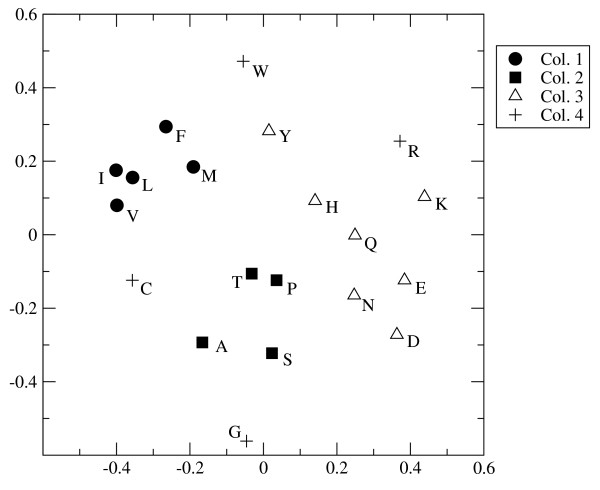
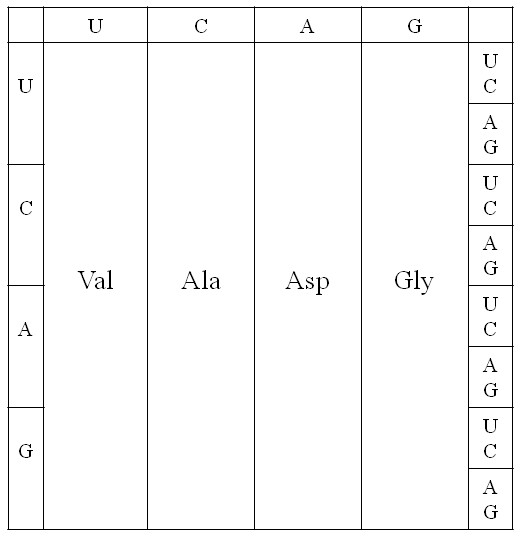
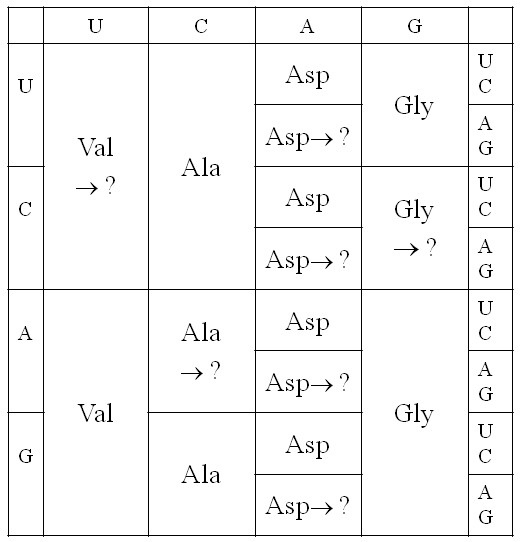
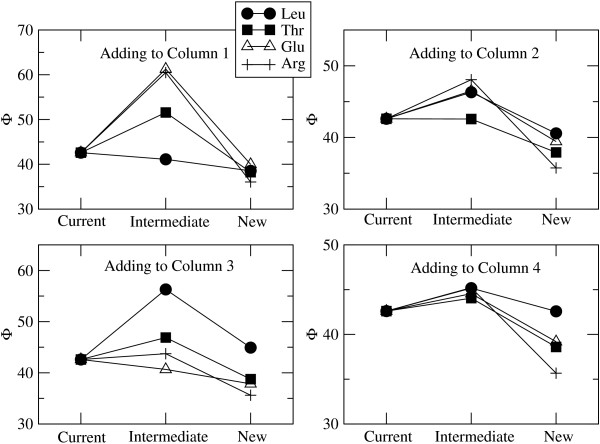
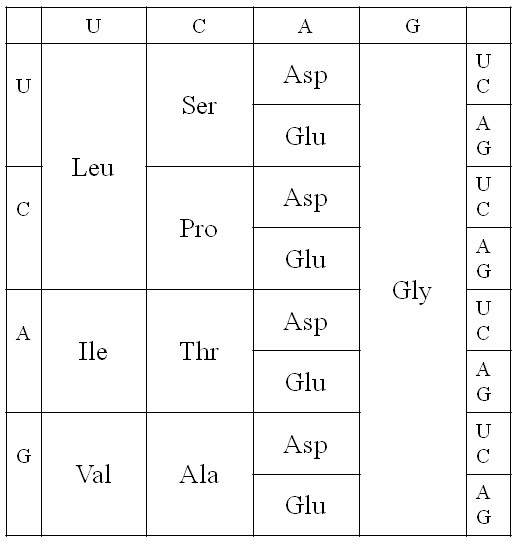
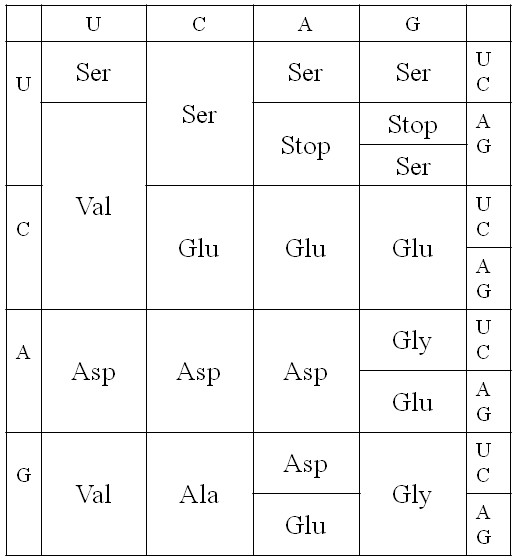
BACKGROUND: The arrangement of the amino acids in the genetic code is such that neighbouring codons are assigned to amino acids with similar physical properties. Hence, the effects of translational error are minimized with respect to randomly reshuffled codes. Further inspection reveals that it is amino acids in the same column of the code (i.e. same second base) that are similar, whereas those in the same row show no particular similarity. We propose a 'four-column' theory for the origin of the code that explains how the action of selection during the build-up of the code leads to a final code that has the observed properties. RESULTS: The theory makes the following propositions. (i) The earliest amino acids in the code were those that are easiest to synthesize non-biologically, namely Gly, Ala, Asp, Glu and Val. (ii) These amino acids are assigned to codons with G at first position. Therefore the first code may have used only these codons. (iii) The code rapidly developed into a four-column code where all codons in the same column coded for the same amino acid: NUN = Val, NCN = Ala, NAN = Asp and/or Glu, and NGN = Gly. (iv) Later amino acids were added sequentially to the code by a process of subdivision of codon blocks in which a subset of the codons assigned to an early amino acid were reassigned to a later amino acid. (v) Later amino acids were added into positions formerly occupied by amino acids with similar properties because this can occur with minimal disruption to the proteins already encoded by the earlier code. As a result, the properties of the amino acids in the final code retain a four-column pattern that is a relic of the earliest stages of code evolution. CONCLUSION: The driving force during this process is not the minimization of translational error, but positive selection for the increased diversity and functionality of the proteins that can be made with a larger amino acid alphabet. Nevertheless, the code that results is one in which translational error is minimized. We define a cost function with which we can compare the fitness of codes with varying numbers of amino acids, and a barrier function, which measures the change in cost immediately after addition of a new amino acid. We show that the barrier is positive if an amino acid is added into a column with dissimilar properties, but negative if an amino acid is added into a column with similar physical properties. Thus, natural selection favours the assignment of amino acids to the positions that they occupy in the final code.
Overview
The claims and statistics of this paper haven’t been checked yet.
Free: it reads the open-access text and checks the first 5 claims that cite a source we can check. Create a free account to check every claim.
Integrity signals
Registry
Cites
Statistics
Figures
Verification
Claims the paper makes
The claims and statistics of this paper haven’t been checked yet.
Free: it reads the open-access text and checks the first 5 claims that cite a source we can check. Create a free account to check every claim.
Claims other papers make about this one
Each is checked against this paper’s own text: does it say what the citing paper says it does?
The source backs part of the claim, not all of it — or backs it for a different population, condition or comparison.
In the citing paper
“Thus, robustness of the code to errors appears to be intrinsically coupled with enhancement of protein evolvability as previously suggested by some theoretical analyses (24, 32).”
From Origin and Evolution of the Universal Genetic Code (2017) · cites this paper as [32]
Experimental — accuracy not yet measuredThe source backs part of the claim, not all of it — or backs it for a different population, condition or comparison.
In the citing paper
“In contrast, the coevolution model, although producing some level of error minimization, was found to be inferior to the other scenarios; this was also demonstrated in an earlier analysis by Higgs (32).”
From Origin and Evolution of the Universal Genetic Code (2017) · cites this paper as [32]
Experimental — accuracy not yet measuredThe source backs part of the claim, not all of it — or backs it for a different population, condition or comparison.
In the citing paper
“In contrast, the coevolution model, although producing some level of error minimization, was substantially inferior to the other scenarios, as also demonstrated in an earlier analysis by Higgs [79].”
From Frozen Accident Pushing 50: Stereochemistry, Expansion, and Chance in the Evolution of the Genetic Code (2017) · cites this paper as [79]
Experimental — accuracy not yet measuredThe cited source says what the claim attributes to it.
In the citing paper
“Massey explored three distinct scenarios of the code expansion: the “2-1-3” model [78], which is similar to expansion schemes independently proposed by Higgs [79] and Francis [80], the ambiguity reduction model [81] and precursor-product scenario specified by the coevolution theory [57,59].”
From Frozen Accident Pushing 50: Stereochemistry, Expansion, and Chance in the Evolution of the Genetic Code (2017) · cites this paper as [79]
In the citing paper
“The 2-1-3 model and similar schemes posit that the code started from an ancestral stage, in which only the second base of the codon was informative, and expanded by assigning specificity to the first, and then, in some codon series, the third bases”
From Frozen Accident Pushing 50: Stereochemistry, Expansion, and Chance in the Evolution of the Genetic Code (2017) · cites this paper as [79]
Self-check
Percentages, sums and reported differences re-computed from the paper’s own numbers.
The self-check needs the paper’s full text.
Citations
Cites
A simple method for displaying the hydropathic character of a protein
Kyte, J., & Doolittle, R. F. (1982) · Journal of Molecular Biology · doi:10.1016/0022-2836(82)90515-0 · Cited by 22,843 · cited 1×
“Higgs and Attwood [31] defined a distance based on 8 properties from the protein folding literature (listed in columns 1–8 of Table 1, and see [32-37]).”
BackgroundProteins: Structures and Molecular Properties
Creighton, T. E. (1986) · Medical Entomology and Zoology · Cited by 2,645
The origin of the genetic code
Crick, F. H. C. (1968) · Journal of Molecular Biology · doi:10.1016/0022-2836(68)90392-6 · Cited by 2,320
King, J. L., & Jukes, T. H. (1969) · Science · doi:10.1126/science.164.3881.788 · Cited by 1,768
IDENTIFYING NONPOLAR TRANSBILAYER HELICES IN AMINO ACID SEQUENCES OF MEMBRANE PROTEINS
Engelman, D. M., Steitz, T. A., & Goldman, A. (1986) · Annual Review of Biophysics and Biophysical Chemistry · doi:10.1146/annurev.bb.15.060186.001541 · Cited by 1,504 · cited 1×
“Higgs and Attwood [31] defined a distance based on 8 properties from the protein folding literature (listed in columns 1–8 of Table 1, and see [32-37]).”
BackgroundProteins. Structures and molecular properties
(1984) · Analytical Biochemistry · doi:10.1016/0003-2697(84)90583-9 · Cited by 1,301 · cited 1×
“Higgs and Attwood [31] defined a distance based on 8 properties from the protein folding literature (listed in columns 1–8 of Table 1, and see [32-37]).”
BackgroundHydrophobicity of Amino Acid Residues in Globular Proteins
Rose, G. D., Geselowitz, A. R., Lesser, G. J., Lee, R. H., & Zehfus, M. H. (1985) · Science · doi:10.1126/science.4023714 · Cited by 1,175 · cited 2×
“Higgs and Attwood [31] defined a distance based on 8 properties from the protein folding literature (listed in columns 1–8 of Table 1, and see [32-37]).”
BackgroundInterior and surface of monomeric proteins
Miller, S., Janin, J., Lesk, A. M., & Chothia, C. (1987) · Journal of Molecular Biology · doi:10.1016/0022-2836(87)90038-6 · Cited by 949 · cited 2×
“Higgs and Attwood [31] defined a distance based on 8 properties from the protein folding literature (listed in columns 1–8 of Table 1, and see [32-37]).”
BackgroundA co-evolution theory of the genetic code
Wong, J. T.-F. (1975) · Proceedings of the National Academy of Sciences · doi:10.1073/pnas.72.5.1909 · Cited by 649 · cited 5×
“We agree with proponents of the coevolution theory of the code [19-22] that the evolution of biochemical synthesis pathways alongside the development of the code is important.”
BackgroundInfluentialThe genetic code is one in a million
Freeland, S. J., & Hurst, L. D. (1998) · Journal of Molecular Evolution · doi:10.1007/pl00006381 · Cited by 563 · cited 5×
“Following Freeland & Hurst [2], we will use a form of the error probability matrix that makes transition errors more frequent than transversion errors and makes -0.”
BackgroundMethodInfluentialThe characterization of amino acid sequences in proteins by statistical methods
Zimmerman, J. M., Eliezer, N., & Simha, R. (1968) · Journal of Theoretical Biology · doi:10.1016/0022-5193(68)90069-6 · Cited by 552 · cited 3×
“Polarity – a measure of the electric field strength around the molecule [33].”
BackgroundOn the evolution of the genetic code.
Woese, C. R. (1965) · Proceedings of the National Academy of Sciences · doi:10.1073/pnas.54.6.1546 · Cited by 487
Kramer, E. B., & Farabaugh, P. J. (2007) · RNA · doi:10.1261/rna.294907 · Cited by 443 · cited 1×
“This is a view that has come under direct, empirical assault with new and improved techniques for measuring mistranslation in vivo (Kramer and Farabaugh [61]).”
BackgroundRewiring the keyboard: evolvability of the genetic code
Knight, R. D., Freeland, S. J., & Landweber, L. F. (2001) · Nature Reviews Genetics · doi:10.1038/35047500 · Cited by 435 · cited 1×
“However, many alternative codes exist in modern organisms in which one or more codons have been reassigned from their meaning in the standard code [9-11].”
BackgroundCollective evolution and the genetic code
Vetsigian, K., Woese, C., & Goldenfeld, N. (2006) · Proceedings of the National Academy of Sciences · doi:10.1073/pnas.0603780103 · Cited by 379 · cited 1×
“The models in [25-29] are somewhat abstract, in that they do not consider specific amino acids or try to predict the specific layout of the real code.”
BackgroundMARCK, C., & GROSJEAN, H. (2002) · RNA · doi:10.1017/s1355838202022021 · Cited by 376
A quantitative measure of error minimization in the genetic code
Haig, D., & Hurst, L. D. (1991) · Journal of Molecular Evolution · doi:10.1007/bf02103132 · Cited by 337
Consensus temporal order of amino acids and evolution of the triplet code
Trifonov, E. N. (2000) · Gene · doi:10.1016/s0378-1119(00)00476-5 · Cited by 327 · cited 2×
“Trifonov [43] assembled many papers in which a huge variety of criteria had been used to predict the order of addition of amino acids to the code, and used these to obtain a consensus rank order.”
MethodResultCodon reassignment (codon capture) in evolution
Osawa, S., & Jukes, T. H. (1989) · Journal of Molecular Evolution · doi:10.1007/bf02103422 · Cited by 289
RNA secondary structure: physical and computational aspects
Higgs, P. G. (2000) · Quarterly Reviews of Biophysics · doi:10.1017/s0033583500003620 · Cited by 287 · cited 1×
“For this reason, single base pairs are unstable in the standard set of energy rules used for RNA secondary structure prediction (see [51] and references therein).”
BackgroundSelf-citationOn the fundamental nature and evolution of the genetic code
Woese, C. R., Dugre, D. H., Dugre, S. A., Kondo, M., & Saxinger, W. C. (1966) · Cold Spring Harbor Symposia on Quantitative Biology · doi:10.1101/sqb.1966.031.01.093 · Cited by 274 · cited 1×
“In particular, the difference in the polar requirement (PR) scale [30] is often used (this is listed in column 9 of Table 1).”
BackgroundReasons for the occurrence of the twenty coded protein amino acids
Weber, A. L., & Miller, S. L. (1981) · Journal of Molecular Evolution · doi:10.1007/bf01795749 · Cited by 255 · cited 1×
“It has been noted that there is a strong correspondence between the amino acids found in meteorites and Miller-Urey experiments [41,42] and it has been suggested that the amino acids that are found in these situations are the ones most likely to have been early additions to the genetic code [19,20].”
BackgroundEarly Fixation of an Optimal Genetic Code
Freeland, S. J., Knight, R. D., Landweber, L. F., & Hurst, L. D. (2000) · Molecular Biology and Evolution · doi:10.1093/oxfordjournals.molbev.a026331 · Cited by 241
Wolf, Y. I., & Koonin, E. V. (2007) · Biology Direct · doi:10.1186/1745-6150-2-14 · Cited by 235 · cited 1×
“Finally, I would note that this careful and interesting study, as well as other studies of the code evolution conducted in the same tradition, by virtue of their design, does not address the central question: how did the coding principle itself evolve? This is a huge problem that can be reasonably approached only in c…”
BackgroundEnergetics of Amino Acid Synthesis in Hydrothermal Ecosystems
Amend, J. P., & Shock, E. L. (1998) · Science · doi:10.1126/science.281.5383.1659 · Cited by 225 · cited 1×
“Specifically, he refers to an (excellent) meta-analysis [23,24] which shows that many, varied estimates of prebiotic plausibility/quantity combine into an index that shows a surprisingly strong correlation with independently made, theoretical thermodynamic calculations for free energy of formation by Amend and Shock […”
BackgroundTrifonov, E. N. (1987) · Journal of Molecular Biology · doi:10.1016/0022-2836(87)90241-5 · Cited by 222
Coevolution theory of the genetic code at age thirty
Wong, J. T.-F. (2005) · BioEssays · doi:10.1002/bies.20208 · Cited by 219 · cited 6×
“We agree with proponents of the coevolution theory of the code [19-22] that the evolution of biochemical synthesis pathways alongside the development of the code is important.”
BackgroundInfluentialA Thermodynamic Basis for Prebiotic Amino Acid Synthesis and the Nature of the First Genetic Code
Higgs, P. G., & Pudritz, R. E. (2009) · Astrobiology · doi:10.1089/ast.2008.0280 · Cited by 218
Self-citationOptimality of the genetic code with respect to protein stability and amino-acid frequencies
Gilis, D., Massar, S., Cerf, N. J., & Rooman, M. (2001) · Genome Biology · doi:10.1186/gb-2001-2-11-research0049 · Cited by 216 · cited 4×
“The frequencies column shows the mean percentage of each amino acid in the protein sequences of modern organisms [6].”
BackgroundMethodInfluentialTaylor, F. J. R., & Coates, D. (1989) · Biosystems · doi:10.1016/0303-2647(89)90059-2 · Cited by 207 · cited 3×
“The strongest non-random pattern in the standard code is that amino acids in the same column have similar physical properties, which has been noted by many authors [15-18,3].”
BackgroundA Quantitative Measure of Error Minimization in the Genetic Code
Haig, D., & Hurst, L. (1999) · Journal of Molecular Evolution · doi:10.1007/pl00006591 · Cited by 201 · cited 2×
“These conclusions are reached by studies that compare the standard code with large numbers of randomly reshuffled codes [1-8].”
BackgroundORIGINS OF THE GENETIC CODE: The Escaped Triplet Theory
Yarus, M., Caporaso, J. G., & Knight, R. (2005) · Annual Review of Biochemistry · doi:10.1146/annurev.biochem.74.082803.133119 · Cited by 166 · cited 1×
“Statistical tests indicate that amino acid binding sites in the aptamers seem to contain either codon or anticodon triplets for the corresponding amino acid more frequently than by chance [53-55].”
BackgroundThe Case for an Error Minimizing Standard Genetic Code
Freeland, S. J., Wu, T., & Keulmann, N. (2003) · Origins of life and evolution of the biosphere · doi:10.1023/a:1025771327614 · Cited by 164 · cited 1×
“These conclusions are reached by studies that compare the standard code with large numbers of randomly reshuffled codes [1-8].”
BackgroundWoese, C. R. (1965) · Proceedings of the National Academy of Sciences · doi:10.1073/pnas.54.1.71 · Cited by 158 · cited 2×
“The strongest non-random pattern in the standard code is that amino acids in the same column have similar physical properties, which has been noted by many authors [15-18,3].”
BackgroundAn extension of the coevolution theory of the origin of the genetic code
Di Giulio, M. (2008) · Biology Direct · doi:10.1186/1745-6150-3-37 · Cited by 158 · cited 11×
“The recent extension of the coevolution theory [22] also proposes that the earliest amino acids were synthesized on tRNAs and that these were derived from the central metabolic pathways of glycolysis and the citric acid cycle.”
BackgroundInfluentialThe origin of the genetic code: Theories and their relationships, a review
Giulio, M. D. (2005) · Biosystems · doi:10.1016/j.biosystems.2004.11.005 · Cited by 157
Stable Versions of Transient Push-Pull Carbenes: Extending Lifetimes from Nanoseconds to Weeks
Buron, C., Gornitzka, H., Romanenko, V. D., & Bertrand, G. (2000) · Science · doi:10.1126/science.288.5467.834 · Cited by 145
Developmental stability and human violence
Furlow, B., Gangestad, S. W., & Armijo-Prewitt, T. (1998) · Proceedings of the Royal Society of London. Series B: Biological Sciences · doi:10.1098/rspb.1998.0255 · Cited by 136
Novozhilov, A. S., Wolf, Y. I., & Koonin, E. V. (2007) · Biology Direct · doi:10.1186/1745-6150-2-24 · Cited by 122 · cited 3×
“Dynamical models have also been studied [12,13] in which the code changes by swapping the amino acids assigned to two codon blocks.”
BackgroundMethodThe evolution of a universal genetic code
Wong, J. T.-F. (1976) · Proceedings of the National Academy of Sciences · doi:10.1073/pnas.73.7.2336 · Cited by 121 · cited 2×
“This theory owes a debt to the coevolution theory for the origin of the genetic code developed by Wong [19,20] and Di Giulio [21,22], and shares several important features with it.”
BackgroundThe mechanisms of codon reassignments in mitochondrial genetic codes
Sengupta, S., Yang, X., & Higgs, P. G. (2007) · Journal of Molecular Evolution · doi:10.1007/s00239-006-0284-7 · Cited by 121 · cited 6×
“We have shown that the codon disappearance mechanism is a good explanation of some (but by no means all) the codon reassignments that occur in mitochondrial genomes [11].”
BackgroundInfluentialSelf-citationBioinformatics and Molecular Evolution
Higgs, P. G., & Attwood, T. K. (2004) · Wiley eBooks · doi:10.1002/9781118697078 · Cited by 104
Self-citationThe Coevolution of Genes and Genetic Codes: Crick’s Frozen Accident Revisited
Sella, G., & Ardell, D. H. (2006) · Journal of Molecular Evolution · doi:10.1007/s00239-004-0176-7 · Cited by 86 · cited 3×
“This theory also owes a debt to the models for code evolution of Ardell and Sella [25-28].”
BackgroundMethodThe origins of the genetic code
Dillon, L. S. (1973) · The Botanical Review · doi:10.1007/bf02859159 · Cited by 82
Inadequacy of prebiotic synthesis as origin of proteinous amino acids
Wong, J. T.-F., & Bronskill, P. M. (1979) · Journal of Molecular Evolution · doi:10.1007/bf01732867 · Cited by 81 · cited 2×
“[ 41 ,42]). Specifically, he refers to an (excellent) meta-analysis [23,24] which shows that many, varied estimates of prebiotic plausibility/quantity combine into an index that shows a surprisingly strong correlation with independently made, theoretical thermodynamic calculations for free energy of formation by Amend…”
BackgroundResultSpeculations on the origin of the genetic code
Hartman, H. (1995) · Journal of Molecular Evolution · doi:10.1007/bf00166623 · Cited by 80 · cited 2×
“This same early stage of the code is also proposed in a recent version of the coevolution theory [22], and this also forms the starting point for several much earlier treatments of genetic code evolution [17,44-47].”
BackgroundGiulio, M. D., & Medugno, M. (1999) · Journal of Molecular Evolution · doi:10.1007/pl00006522 · Cited by 75 · cited 7×
“Therefore we will leave the stop codons as they are in [56].”
BackgroundMethodInfluentialOn the Evolution of Redundancy in Genetic Codes
Ardell, D. H., & Sella, G. (2001) · Journal of Molecular Evolution · doi:10.1007/s002390010217 · Cited by 75 · cited 3×
“This theory also owes a debt to the models for code evolution of Ardell and Sella [25-28].”
BackgroundMethodArginine as an evolutionary intruder into protein synthesis
Jukes, T. H. (1973) · Biochemical and Biophysical Research Communications · doi:10.1016/0006-291x(73)90151-4 · Cited by 69 · cited 1×
“In particular, Jukes [62] has argued that Arginine might have been preceded by its biosynthetic precursor Ornithine.”
BackgroundLoad minimization of the genetic code: history does not explain the pattern
Freeland, S. J., & Hurst, L. D. (1998) · Proceedings of the Royal Society of London. Series B: Biological Sciences · doi:10.1098/rspb.1998.0547 · Cited by 59
No accident: genetic codes freeze in error–correcting patterns of the standard genetic code
Ardell, D. H., & Sella, G. (2002) · Philosophical Transactions of the Royal Society of London. Series B: Biological Sciences · doi:10.1098/rstb.2002.1071 · Cited by 56 · cited 8×
“Several aspects of the above theory are similar to that of Ardell and Sella [26].”
BackgroundMethodResultInfluentialOn the optimality of the genetic code, with the consideration of termination codons
Goodarzi, H., Nejad, H. A., & Torabi, N. (2004) · Biosystems · doi:10.1016/j.biosystems.2004.05.031 · Cited by 55 · cited 2×
“These conclusions are reached by studies that compare the standard code with large numbers of randomly reshuffled codes [1-8].”
BackgroundMethodA unified model of codon reassignment in alternative genetic codes
Sengupta, S., & Higgs, P. G. (2005) · Genetics · doi:10.1534/genetics.104.037887 · Cited by 53 · cited 3×
“In the modern reassignments, it is usually the tRNA that changes by an anticodon mutation or a base modification so that it gains the ability to pair with a new codon [10,11].”
BackgroundSelf-citationThe Impact of Message Mutation on the Fitness of a Genetic Code
Sella, G., & Ardell, D. H. (2002) · Journal of Molecular Evolution · doi:10.1007/s00239-001-0060-7 · Cited by 51 · cited 5×
“In Ardell and Sella's models, the code is presumed to begin in an ambiguous state where codons are assigned to groups of amino acids.”
BackgroundMethodInfluentialIdentifying Nonpolar Transbilayer Helices in Amino Acid Sequences of Membrane Proteins
Engelman, D. M. (1986) · Annual Review of Biophysics and Biomolecular Structure · doi:10.1146/annurev.biophys.15.1.321 · Cited by 50
Guilt by association: The arginine case revisited
KNIGHT, R. D., & LANDWEBER, L. F. (2000) · RNA · doi:10.1017/s1355838200000145 · Cited by 43 · cited 1×
“Statistical tests indicate that amino acid binding sites in the aptamers seem to contain either codon or anticodon triplets for the corresponding amino acid more frequently than by chance [53-55].”
BackgroundAnticodon and wobble evolution
Tong, K.-L., & Wong, J. T.-F. (2004) · Gene · doi:10.1016/j.gene.2004.02.028 · Cited by 39 · cited 1×
“and a tRNA with U (or modified U) at the wobble position pairs with codons ending A and G [49,50].”
BackgroundCaporaso, J. G., Yarus, M., & Knight, R. D. (2005) · Journal of Molecular Evolution · doi:10.1007/s00239-004-0314-2 · Cited by 38 · cited 1×
“Statistical tests indicate that amino acid binding sites in the aptamers seem to contain either codon or anticodon triplets for the corresponding amino acid more frequently than by chance [53-55].”
BackgroundThe Level and Landscape of Optimization in the Origin of the Genetic Code
Giulio, M. D., & Medugno, M. (2001) · Journal of Molecular Evolution · doi:10.1007/s002390010167 · Cited by 36 · cited 2×
“Dynamical models have also been studied [12,13] in which the code changes by swapping the amino acids assigned to two codon blocks.”
BackgroundPlanetary Systems and the Origins of Life
Pudritz, R. E., Higgs, P. G., & Stone, J. (2007) · Cambridge University Press eBooks · doi:10.1017/cbo9780511536120 · Cited by 34
Urbina, D., Tang, B., & Higgs, P. G. (2006) · Journal of Molecular Evolution · doi:10.1007/s00239-005-0051-1 · Cited by 24 · cited 4×
“[18] showed that several aspects of protein sequence evolution can be understood from this distance matrix.”
BackgroundInfluentialSelf-citationIdentification of Conflicting Selective Effects on Highly Expressed Genes
Higgs, P. G., Hao, W., & Golding, G. B. (2007) · Evolutionary Bioinformatics · doi:10.1177/117693430700300015 · Cited by 24
Self-citationGoodarzi, H., Najafabadi, H. S., Hassani, K., Nejad, H. A., & Torabi, N. (2005) · Journal of Theoretical Biology · doi:10.1016/j.jtbi.2005.01.012 · Cited by 23 · cited 3×
“These conclusions are reached by studies that compare the standard code with large numbers of randomly reshuffled codes [1-8].”
BackgroundMethodThe role of protein associated amino acid precursor molecules in the organization of genetic codons.
Miseta, A. (1989) · PubMed · Cited by 21
From protoplanetary disks to prebiotic amino acids and the origin of the genetic code
Higgs, P. G., & Pudritz, R. E. (2007) · Cambridge University Press eBooks · doi:10.1017/cbo9780511536120.005 · Cited by 19
Self-citationBrooks, D. J., & Fresco, J. R. (2003) · Gene · doi:10.1016/s0378-1119(02)01176-9 · Cited by 17 · cited 2×
“This same early stage of the code is also proposed in a recent version of the coevolution theory [22], and this also forms the starting point for several much earlier treatments of genetic code evolution [17,44-47].”
BackgroundYokobori, S., Ueda, T., & Watanabe, K. (2010) · Wiley eBooks · doi:10.1002/9780470015902.a0000548.pub2 · Cited by 3
Protein Evolution in Microbial Extremophiles
Waglechner, N. (2008) · MacSphere (McMaster University) · doi:10.71548/4991 · Cited by 1
Cited by
Grosjean, H., de Crécy-Lagard, V., & Marck, C. (2010) · FEBS Letters · doi:10.1016/j.febslet.2009.11.052 · Cited by 298
“extant domains of life (see for examples [114–116]).”
BackgroundOrigin and Evolution of the Universal Genetic Code
Koonin, E. V., & Novozhilov, A. S. (2017) · Annual Review of Genetics · doi:10.1146/annurev-genet-120116-024713 · Cited by 200
A Thermodynamic Basis for Prebiotic Amino Acid Synthesis and the Nature of the First Genetic Code
Higgs, P. G., & Pudritz, R. E. (2009) · Astrobiology · doi:10.1089/ast.2008.0280 · Cited by 218
“…to physicochemical properties, so that hydrophobic amino acids end up in the Val column, hydrophilic amino acids end up in the Asp = Glu column, etc. Higgs (2008) considered the way selection would favor the pathways of code evolution from the four-column code to the current standard code.”
InfluentialSelf-citationEffect of Correlated tRNA Abundances on Translation Errors and Evolution of Codon Usage Bias
Shah, P., & Gilchrist, M. A. (2010) · PLoS Genetics · doi:10.1371/journal.pgen.1001128 · Cited by 113
“Because amino acids with similar properties are clustered within the genetic code [16–19], the genetic code is generally considered to be adapted to minimize the phenotypic effects of point mutations and missense errors.”
Pathways and Organisms Involved in Ammonia Oxidation and Nitrous Oxide Emission
Guo, J., Peng, Y., Wang, S., Ma, B., Ge, S., Wang, Z., Huang, H., Zhang, J., & Zhang, L. (2013) · Critical Reviews in Environmental Science and Technology · doi:10.1080/10643389.2012.672072 · Cited by 103
Metadata
- Authors
- Higgs, P. G.
- Affiliations
- McMaster University (CA)
- Corresponding author
- Higgs, Paul G
- ORCID
- Higgs, Paul G
- Venue
- Biology Direct
- Published
- 2009
- Volume
- 4
- Issue
- 1
- Pages
- 16
- ISSN
- 1745-6150 (ISSN-L)
- PMC
- PMC2689856
- OpenAlex
- W2140139413
- Cited by
- 137
- References
- 68
- Citations by year
- 2026: 5 · 2025: 5 · 2024: 4 · 2023: 9 · 2022: 6 · 2021: 12 · 2020: 9 · 2019: 7 · 2018: 14 · 2017: 7 · 2016: 12 · 2015: 11 · 2014: 5 · 2013: 10 · 2012: 3
- FWCI
- 2.82
- Type
- journal article
- Language
- en
- Open access
- gold
- doi.org
- Licence
- cc-by
- Locations
- Biology Direct (publishedVersion, cc-by)
- PubMed Central (publishedVersion, cc-by)
- PubMed (publishedVersion)
- DOAJ (DOAJ: Directory of Open Access Journals) (submittedVersion)
- Funders
- Aspen Center for Physics
- Canada Research Chairs
- Topics
- Life Sciences › Biochemistry, Genetics and Molecular Biology › Molecular Biology › RNA and protein synthesis mechanisms
- Physical Sciences › Physics and Astronomy › Astronomy and Astrophysics › Origins and Evolution of Life
- Life Sciences › Biochemistry, Genetics and Molecular Biology › Genetics › Evolution and Genetic Dynamics
- Keywords
- origin of the genetic code, codon assignment, amino acid physicochemical properties, translational errors, code evolution, amino acid addition, code expansion, cost function, barrier function, natural selection, protein diversity
- MeSH terms
- Amino Acids, Codon, Genetic Code, Models, Genetic, Selection, Genetic, Evolution, Molecular, Amino Acid Substitution
About these checks
Registry, retraction, Cites and statistics results are computed, not judged, with one exception: a printed reference that no index lists is read once by a model before it counts as a citation error. Claims are extracted by a model and kept only when their quote appears verbatim in the text; each cited source is then checked, with a model’s help, for whether it says what the claim relies on. Those verdicts can be wrong — read the claim’s quote and the cited source before relying on one.
Statistics and arithmetic are recomputed, not judged.
Confidence bands are shown only for fields calibrated on our annotated test set. None is calibrated yet, so no band is shown.
What counts as a claim ›How we measure confidence ›How we check this ›
Are you an author, or do you see a problem with this page? Request a review
Data sources
Bibliographic data: Semantic Scholar, OpenAlex, Crossref.
Contains information from the Semantic Scholar Academic Graph Datasets, made available under the ODC Attribution License (ODC-BY 1.0).
Semantic Scholar’s data is described in: Kinney, R., et al. (2023). The Semantic Scholar Open Data Platform. arXiv:2301.10140.
