

A systematic review of the psychometric properties of self-report research utilization measures used in healthcare
Open accessThe DOI matches its Crossref record; 148 of the 151 references it cites were found in a registry or an index.
Abstract
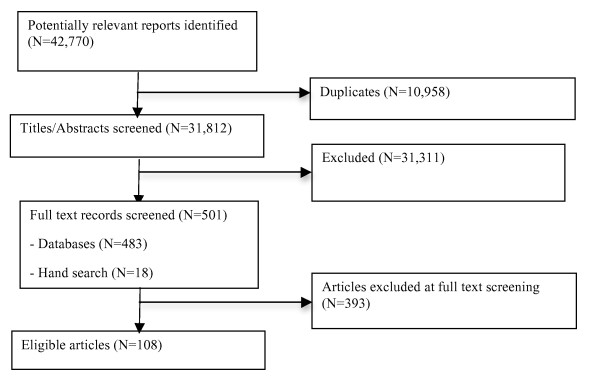
BACKGROUND: In healthcare, a gap exists between what is known from research and what is practiced. Understanding this gap depends upon our ability to robustly measure research utilization. OBJECTIVES: The objectives of this systematic review were: to identify self-report measures of research utilization used in healthcare, and to assess the psychometric properties (acceptability, reliability, and validity) of these measures. METHODS: We conducted a systematic review of literature reporting use or development of self-report research utilization measures. Our search included: multiple databases, ancestry searches, and a hand search. Acceptability was assessed by examining time to complete the measure and missing data rates. Our approach to reliability and validity assessment followed that outlined in the Standards for Educational and Psychological Testing. RESULTS: Of 42,770 titles screened, 97 original studies (108 articles) were included in this review. The 97 studies reported on the use or development of 60 unique self-report research utilization measures. Seven of the measures were assessed in more than one study. Study samples consisted of healthcare providers (92 studies) and healthcare decision makers (5 studies). No studies reported data on acceptability of the measures. Reliability was reported in 32 (33%) of the studies, representing 13 of the 60 measures. Internal consistency (Cronbach's Alpha) reliability was reported in 31 studies; values exceeded 0.70 in 29 studies. Test-retest reliability was reported in 3 studies with Pearson's r coefficients > 0.80. No validity information was reported for 12 of the 60 measures. The remaining 48 measures were classified into a three-level validity hierarchy according to the number of validity sources reported in 50% or more of the studies using the measure. Level one measures (n = 6) reported evidence from any three (out of four possible) Standards validity sources (which, in the case of single item measures, was all applicable validity sources). Level two measures (n = 16) had evidence from any two validity sources, and level three measures (n = 26) from only one validity source. CONCLUSIONS: This review reveals significant underdevelopment in the measurement of research utilization. Substantial methodological advances with respect to construct clarity, use of research utilization and related theory, use of measurement theory, and psychometric assessment are required. Also needed are improved reporting practices and the adoption of a more contemporary view of validity (i.e., the Standards) in future research utilization measurement studies.
Overview
The claims and statistics of this paper haven’t been checked yet.
Free: it reads the open-access text and checks the first 5 claims that cite a source we can check. Create a free account to check every claim.
Integrity signals
Registry
Cites
Statistics
Figures
Verification
Claims the paper makes
The claims and statistics of this paper haven’t been checked yet.
Free: it reads the open-access text and checks the first 5 claims that cite a source we can check. Create a free account to check every claim.
Claims other papers make about this one
Each is checked against this paper’s own text: does it say what the citing paper says it does?
The cited source says what the claim attributes to it.
In the citing paper
“And, the measures used to assess these constructs are frequently developed without direct connection to substantive theory or guiding frameworks and with minimal analysis of psychometric properties, such as internal reliability and construct validity [12].”
The cited source says what the claim attributes to it.
In the citing paper
“As Squires et al.[12] recently discussed in their review of measures assessing research utilization, a large majority of these existing measures demonstrate weak psychometric properties.”
In the citing paper
“At present, constructs that have been hypothesized to affect implementation outcomes are often poorly defined within studies [11,12].”
In the citing paper
“Finally, it is important to note that other previous reviews have focused on the conceptualization [6] and evaluation [12] of implementation outcomes, including the psychometric properties of research utilization measures [12].”
Self-check
Percentages, sums and reported differences re-computed from the paper’s own numbers.
The self-check needs the paper’s full text.
Citations
Cites
Rogers, E. M., Singhal, A., & Quinlan, M. M. (2019) · An Integrated Approach to Communication Theory and Research · doi:10.4324/9780203710753-35 · Cited by 37,322
The Structure of Scientific Revolutions
Kuhn, T. S., & Schlegel, R. (1963) · Physics Today · doi:10.1063/1.3050879 · Cited by 35,538
Construct validity in psychological tests.
Cronbach, L. J., & Meehl, P. E. (1955) · Psychological Bulletin · doi:10.1037/h0040957 · Cited by 11,195 · cited 1×
“According to Cronbach and Meehl [113], construct validity rests in a nomological network that generates testable propositions that relate scores obtained with self-report measures (as representations of a construct) to other constructs, in order to better understand the nature of the construct being measured [113].”
BackgroundHealth Measurement Scales: A Practical Guide to Their Development and Use
Streiner, D. L., Norman, G. R., & Cairney, J. (1989) · Cited by 9,595
The Structure of Scientific Revolutions.
Bohm, D., & Kuhn, T. S. (1964) · The Philosophical Quarterly · doi:10.2307/2217783 · Cited by 9,130
Bulletin of the World Health Organization
van der Sande, M. A. B., Walraven, G. E. L., Milligan, P. J., BANYA, W. A. S., CEESAY, S. M., Nyan, O. A., & McAdam, K. P. W. J. (2001) · Bulletin of the World Health Organization · Cited by 7,097
The diffusion of innovations: Some examples of finnish civil servant's professional tours in Europe
Hietala, M. (1983) · Scandinavian Journal of History · doi:10.1080/03468758308579015 · Cited by 6,162
Fundamentals of item response theory
(1992) · Choice Reviews Online · doi:10.5860/choice.29-4185 · Cited by 3,414
(2019) · doi:10.1188/19.onf · Cited by 3,217
Gluesing, J. C. (2012) · Leadership in Science and Technology: A Reference Handbook · doi:10.4135/9781412994231.n14 · Cited by 3,210
Research works printed but not linked: 14
- Nunnally J Bernstein I Psychometric Theory 1994 3 New York: McGraw-Hill
- Thompson CJ Extent and factors influencing research utilization among critical care nurses Thesis 1997 Texas Woman's University, College of Nursing
- Stiefel KA Career commitment, nursing unit culture, and nursing research utilization Thesis 1996 University of South Carolina
- Kelly KA Translating research into practice: The physicians' perspective Thesis 2008 State University of New York at Albany
- Linde BJ The effectiveness of three interventions to increase research utilization among practicing nurses Thesis 1989 The University of Michigan
- Connor N The relationship between organizational culture and research utilization practices among nursing home departmental staff Thesis 2007 Dalhousie University
- McCloskey DJ The relationship between organizational factors and nurse factors affecting the conduct and utilization of nursing research Thesis 2005 George Mason University
- Nash MA Research utilization among Idaho nurses Thesis 2005 Gonzaga University
- Rogers EM Diffusion of Innovations 1983 3 New York: The Free Press
- Rardin DK The Mesh of research Tand practice: The effect of cognitive style on the use of research in practice of psychotherapy Thesis 1986 University of Maryland College Park
- Pain K Hagler P Warren S Development of an instrument to evaluate the research orientation of clinical professionals Canadian Journal of Rehabilitation 1996 9 2 93 100
- Aron J The utilization of psychotherapy research on depression by clinical psychologists Thesis 1990 Auburn University
- Miller JP Speech-language pathologists' use of evidence-based practice in assessing children and adolescents with cognitive-communicative disabilities: a survey Thesis 2007 Eastern Washington University
- Wood CK Adoption of innovations in a medical community: The case of evidence-based medicine Thesis 1996 University of Hawaii
Cited by
Knowledge translation of research findings
Grimshaw, J. M., Eccles, M. P., Lavis, J. N., Hill, S. J., & Squires, J. E. (2012) · Implementation Science · doi:10.1186/1748-5908-7-50 · Cited by 2,407
“For example, knowledge translation targeting policy makers and c onsumers should ensure that consideration of research evidence is a key component of their decision making, but recognize that there are other legitimate factors (for example, the policy context for policy makers, values and preferences of individual pat…”
BackgroundSelf-citationChaudoir, S. R., Dugan, A. G., & Barr, C. H. (2013) · Implementation Science · doi:10.1186/1748-5908-8-22 · Cited by 800
Finch, T. L., Girling, M., May, C. R., Mair, F. S., Murray, E., Treweek, S., McColl, E., Steen, I. N., Cook, C., Vernazza, C. R., et al. (2018) · BMC Medical Research Methodology · doi:10.1186/s12874-018-0591-x · Cited by 337
Rudman, A., & Gustavsson, J. P. (2012) · International Journal of Nursing Studies · doi:10.1016/j.ijnurstu.2012.03.010 · Cited by 268
“According to a recent meta-analysis n measurement properties of research utilization instruents (Squires et al., 2011), the Kinds of Research Use strument has been tested for content validity, response rocess validity and shown significant relationships with ariables that theoretically or…”
MethodSelf-citationRapley, T., Girling, M., Mair, F. S., Murray, E., Treweek, S., McColl, E., Steen, I. N., May, C. R., & Finch, T. L. (2018) · BMC Medical Research Methodology · doi:10.1186/s12874-018-0590-y · Cited by 193
Brennan, S. E., McKenzie, J. E., Turner, T., Redman, S., Makkar, S., Williamson, A., Haynes, A., & Green, S. E. (2017) · Health Research Policy and Systems · doi:10.1186/s12961-016-0162-8 · Cited by 149
“[29], and more recent examples [30]), the content of these is tailored for health professionals and the measures have not been validated with policymakers.”
BackgroundLeung, K., Trevena, L. J., & Waters, D. (2014) · Journal of Advanced Nursing · doi:10.1111/jan.12454 · Cited by 165
Estabrooks, C. A., Squires, J. E., Hayduk, L. A., Cummings, G. G., & Norton, P. (2011) · BMC Medical Research Methodology · doi:10.1186/1471-2288-11-107 · Cited by 122
Self-citationIdentifying the domains of context important to implementation science: a study protocol
Squires, J. E., Graham, I. D., Hutchinson, A. M., Michie, S., Francis, J. J., Sales, A., Brehaut, J., Curran, J., Ivers, N., Lavis, J., et al. (2015) · Implementation Science · doi:10.1186/s13012-015-0325-y · Cited by 101
“Rogers’ Diffusion of Innovations [27] is the most frequently used theory in studies of implementation in clinical practice [28].”
BackgroundSelf-citationEstabrooks, C. A., Squires, J. E., Hayduk, L., Morgan, D., Cummings, G. G., Ginsburg, L., Stewart, N., McGilton, K., Kang, S. H., & Norton, P. G. (2015) · Journal of the American Medical Directors Association · doi:10.1016/j.jamda.2015.03.009 · Cited by 78
Self-citationStandardizing Assessment of Spoken Discourse in Aphasia: A Working Group With Deliverables
Stark, B. C., Dutta, M., Murray, L. L., Bryant, L., Fromm, D., MacWhinney, B., Ramage, A. E., Roberts, A., den Ouden, D., Brock, K. L., et al. (2020) · American Journal of Speech-Language Pathology · doi:10.1044/2020_ajslp-19-00093 · Cited by 84
Indicators and Measurement Tools for Health Systems Integration: A Knowledge Synthesis
Suter, E., Oelke, N. D., Lima, M. A. D. D. S., Stiphout, M., Janke, R., Witt, R. R., Vliet-Brown, C. V., Schill, K., Rostami, M., Hepp, S. L., et al. (2017) · International Journal of Integrated Care · doi:10.5334/ijic.3931 · Cited by 88
Park, J. S., Moore, J. E., Sayal, R., Holmes, B. J., Scarrow, G., Graham, I. D., Jeffs, L. P., Timmings, C., Rashid, S., Johnson, A. M., et al. (2018) · Implementation Science · doi:10.1186/s13012-018-0755-4 · Cited by 78
“Self-reported research utilization and comfort with evidence were each measured with a single validated item that asked participants whether they have applied research in their practice and if they were comfortable with using evidence, respectively [17].”
MethodUnderstanding context: A concept analysis
Squires, J. E., Graham, I. D., Bashir, K., Penno, L. N., Lavis, J. N., Francis, J., Curran, J., Grimshaw, J., Brehaut, J., Ivers, N. M., et al. (2019) · Journal of Advanced Nursing · doi:10.1111/jan.14165 · Cited by 83
“…Macfarlane, Bate, & Kyriakidou, 2004c; Kimberly & Cook, 2008; Landry, Amara, & Lamari, 2001; Mitton, Adair, McKenzie, Patten, & Perry, 2007; Rich & Oh, 1994; Squires et al., 2011; Squires et al., 2013; Squires, Sullivan, Eccles, A cc ep te d A rt ic le This article is protected by copyright.”
BackgroundSelf-citationWhat Promotes Surgeon Practice Change? A Scoping Review of Innovation Adoption in Surgical Practice
Arroyo, N., Gessert, T. G., Hitchcock, M., Tao, M., Smith, C. D., Greenberg, C., Fernandes‐Taylor, S., & Francis, D. O. (2020) · Annals of Surgery · doi:10.1097/sla.0000000000004355 · Cited by 63
Belita, E., Squires, J. E., Yost, J., Ganann, R., Burnett, T., & Dobbins, M. (2020) · BMC Nursing · doi:10.1186/s12912-020-00436-8 · Cited by 58
“[29] in which no studies reported acceptability data.”
BackgroundMethodResultInfluentialSelf-citationWallin, L., Boström, A., & Gustavsson, P. J. (2012) · Worldviews on Evidence-Based Nursing · doi:10.1111/j.1741-6787.2012.00248.x · Cited by 64
“…self-reported use of research was assessed using three items measuring instrumental (direct), conceptual (indirect), and symbolic (persuasive) research use (Estabrooks 1999) referred to as “kinds of research use” in a recent systematic review of measures of research use (Squires et al. 2011b).”
MethodSelf-citationMakkar, S. R., Brennan, S., Turner, T., Williamson, A. B., Redman, S., & Green, S. (2016) · Research Evaluation · doi:10.1093/reseval/rvv044 · Cited by 50
Squires, J. E., Hutchinson, A. M., Coughlin, M., Bashir, K., Curran, J., Grimshaw, J., Dorrance, K., Aloisio, L. D., Brehaut, J., Francis, J., et al. (2021) · International Journal of Health Policy and Management · doi:10.34172/ijhpm.2021.32 · Cited by 58
Self-citationMakkar, S. R., Turner, T., Williamson, A. B., Louviere, J. J., Redman, S., Haynes, A. S., Green, S., & Brennan, S. (2015) · Health Research Policy and Systems · doi:10.1186/s12961-015-0069-9 · Cited by 48
“Such measures are necessary to enable agencies to understand whether there are opportunities for increasing their use of evidence, where these opportunities for improvement exist within the agency, what particular strategies could be implemented to improve the capacity of staff to better engage with and use research e…”
BackgroundUnderstanding context in knowledge translation: a concept analysis study protocol
Squires, J. E., Graham, I. D., Hutchinson, A. M., Linklater, S., Brehaut, J. C., Curran, J., Ivers, N., Lavis, J. N., Michie, S., Sales, A. E., et al. (2015) · Journal of Advanced Nursing · doi:10.1111/jan.12574 · Cited by 45
“Some of these ‘context’ features (e.g. role, education) are also identified as individual (not context) features important to knowledge translation in other nursing reviews (Estabrooks et al. 2003, Squires et al. 2011c).”
BackgroundSelf-citationSquires, J. E., Hayduk, L. A., Hutchinson, A. M., Mallick, R., Norton, P., Cummings, G. G., & Estabrooks, C. A. (2015) · PLoS ONE · doi:10.1371/journal.pone.0127405 · Cited by 49
“, registered/licensed) nurses who completed the ACT, questions on demographic variables, and the Estabrooks measure of either instrumental and/or conceptual research utilization [25].”
BackgroundSelf-citationForsman, H., Wallin, L., Gustavsson, P. J., & Rudman, A. (2012) · International Journal of Nursing Studies · doi:10.1016/j.ijnurstu.2012.04.002 · Cited by 48
Self-citationDent, E., Grande, E. D., Price, K., & Taylor, A. W. (2017) · Maturitas · doi:10.1016/j.maturitas.2017.07.003 · Cited by 43
Forsman, H., Rudman, A., Gustavsson, P. J., Ehrenberg, A., & Wallin, L. (2012) · Implementation Science · doi:10.1186/1748-5908-7-46 · Cited by 47
“According to a recent systematic review on instruments for RU measurement [41], Estabrooks’s instrument has repeatedly shown validity evidence related to content as well as the response process and in relation to other variables.”
Self-citationDeveloping leadership in postdoctoral nurses: A longitudinal mixed-methods study
van Dongen, L. J. C., Cardiff, S., Kluijtmans, M., Schoonhoven, L., Hamers, J. P. H., Schuurmans, M. J., & Hafsteinsdøttir, T. B. (2021) · Nursing Outlook · doi:10.1016/j.outlook.2021.01.014 · Cited by 36
Bourgault, A. M., Heath, J., Hooper, V. D., Sole, M. L., Waller, J. L., & NeSmith, E. G. (2014) · American Journal of Critical Care · doi:10.4037/ajcc2014558 · Cited by 26
Wallin, L., Gustavsson, P. J., Ehrenberg, A., & Rudman, A. (2012) · Implementation Science · doi:10.1186/1748-5908-7-19 · Cited by 36
“In a recent systematic review of instruments for measuring research use, Estabrooks’ operationalization of instrumental, conceptual, and persuasive use is called ‘kinds of research use’ [17].”
BackgroundMethodInfluentialSelf-citationMakkar, S. R., Williamson, A. B., Turner, T., Redman, S., & Louviere, J. J. (2015) · Health Research Policy and Systems · doi:10.1186/s12961-015-0013-z · Cited by 26
“Unfortunately, no comprehensive measures of research engagement actions are currently available [33].”
BackgroundHamzeh, J., Pluye, P., Bush, P. L., Ruchon, C., Vedel, I., & Hudon, C. (2018) · Evaluation and Program Planning · doi:10.1016/j.evalprogplan.2018.12.003 · Cited by 27
McGilton, K. S., Höbler, F., Campos, J. L., Dupuis, K., Labreche, T., Guthrie, D. M., Jarry, J., Singh, G., & Wittich, W. (2016) · BMJ Open · doi:10.1136/bmjopen-2016-011945 · Cited by 25
Hoben, M., Mahler, C., Bär, M., Berger, S. J., Squires, J. E., Estabrooks, C. A., & Behrens, J. (2013) · BMC Health Services Research · doi:10.1186/1472-6963-13-478 · Cited by 25
“[59] identified 10 articles assessing psychometric properties, providing evidence for content and response process validity.”
BackgroundSelf-citationGervais, M.-J., Marion, C., Dagenais, C., Chiocchio, F., & Houlfort, N. (2015) · Research Evaluation · doi:10.1093/reseval/rvv034 · Cited by 27
Strandberg, E., Eldh, A. C., Forsman, H., Rudman, A., Gustavsson, P. J., & Wallin, L. (2013) · Worldviews on Evidence-Based Nursing · doi:10.1111/wvn.12013 · Cited by 22
“Hence, Estabrooks (1999) developed a measure with single items for IRU, CRU, and PRU, which is one of the more frequently used instruments within health care and the only instrument covering the different kinds of RU (Squires et al., 2011a).”
BackgroundMethodResultInfluentialSelf-citationEvaluating hearing aid handling skills: A systematic and descriptive review
Bennett, R. J., Schmulian, D., Brennan‐Jones, C. G., Tegg‐Quinn, S., & Eikelboom, R. H. (2015) · International Journal of Audiology · doi:10.3109/14992027.2015.1052104 · Cited by 22
The development and validation of the Evidence‐Based Practice Questionnaire: Japanese version
Tomotaki, A., Fukahori, H., Sakai, I., & Kurokohchi, K. (2018) · International Journal of Nursing Practice · doi:10.1111/ijn.12617 · Cited by 22
Makkar, S. R., Williamson, A. B., Turner, T., Redman, S., & Louviere, J. J. (2015) · Health Research Policy and Systems · doi:10.1186/s12961-015-0022-y · Cited by 22
“Despite these potential benefits, few measures of research use in health policy are available [19,31-37].”
BackgroundMcBeath, B., Jolles, M. P., Carnochan, S., & Austin, M. J. (2015) · Human Services Organizations Management Leadership & Governance · doi:10.1080/23303131.2015.1044588 · Cited by 22
Hoben, M., Estabrooks, C. A., Squires, J. E., & Behrens, J. (2016) · Frontiers in Psychology · doi:10.3389/fpsyg.2016.01339 · Cited by 19
Self-citationEvidenzbasierte Pflegepraxis–Diskussionsbeitrag zum Status quo
Meyer, G., Balzer, K., & Köpke, S. (2013) · Zeitschrift für Evidenz Fortbildung und Qualität im Gesundheitswesen · doi:10.1016/j.zefq.2012.12.001 · Cited by 18
Rocha‐Filho, P. A. S., & Hershey, A. D. (2017) · Headache The Journal of Head and Face Pain · doi:10.1111/head.13159 · Cited by 18
“70.(17) BP-PedMIDAS had a Cronbach’s coefficient a value of 0.”
Mehta, P., Claydon, L. S., Hendrick, P. A., Cook, C. E., & Baxter, D. G. (2015) · Pain Practice · doi:10.1111/papr.12293 · Cited by 17
“Individual assessment of psychometric properties of available outcome measures is important.(7,8) As part of this, in reviewing the evidence on available outcome measures, it is important to assess the methodological quality of those studies that investigated psychometric properties.”
BackgroundHoben, M., Bär, M., Mahler, C., Berger, S. J., Squires, J. E., Estabrooks, C. A., Kruse, A., & Behrens, J. (2014) · BMC Research Notes · doi:10.1186/1756-0500-7-67 · Cited by 17
“See [36] for the ACT pediatric acute care version, based on RN responses; [20] for the ACT residential LTC version, based on health care aide (HCA) responses; [35] for an overview of studies assessing the psychometric properties of the Estabrooks’ Kinds of RU items; and [33] for the CRU Scale, based on HCA responses.”
MethodSelf-citationMcGuire, A. B., White, D. A., Bartholomew, T., Flanagan, M., McGrew, J. H., Rollins, A. L., Mueser, K. T., & Salyers, M. P. (2015) · Administration and Policy in Mental Health and Mental Health Services Research · doi:10.1007/s10488-015-0701-6 · Cited by 20
Monitoring knowledge use and evaluating outcomes
Straus, S. E., Tetroe, J., Bhattacharyya, O. K., Zwarenstein, M., & Graham, I. D. (2013) · Wiley eBooks · doi:10.1002/9781118413555.ch22 · Cited by 21
Dorsey, C. N., Mettert, K. D., Puspitasari, A. J., Damschroder, L. J., & Lewis, C. C. (2021) · Implementation Research and Practice · doi:10.1177/26334895211002474 · Cited by 15
“At least 10 (Chaudoir et al., 2013; Chor et al., 2015; Emmons et al., 2012; Hrisos et al., 2009; Ibrahim & Sidani, 2015; King & Byers, 2007; Lewis et al., 2015; T. Scott et al., 2003; Squires et al., 2011; Weiner et al., 2008) recent implementation science and quality improvement (QI) measurement-focused reviews revea…”
BackgroundKoch, S., Drache, D., Frenzel, J., Männling, W., Seeger, S., Thomas, M., & Broda, A. (2018) · Notfall + Rettungsmedizin · doi:10.1007/s10049-018-0489-5 · Cited by 15
McNamara, L., Scott, K. M., Boyd, R. N., Farmer, E. S., Webb, A., Bosanquet, M., Nguyen, K., & Novak, I. (2022) · BMJ Open · doi:10.1136/bmjopen-2022-063558 · Cited by 14
Abuadas, M. H. (2021) · Belitung Nursing Journal · doi:10.33546/bnj.1803 · Cited by 13
“The importance and cost-effectiveness of evidence-based practice have been extensively discussed in the nursing literature since it has an immediate impact on patients, nurses, and the health care system (Squires et al., 2011; Williams et al., 2015; Cheng, Feng, et al., 2017).”
BackgroundMethodWressle, E., & Samuelsson, K. (2014) · Scandinavian Journal of Occupational Therapy · doi:10.3109/11038128.2014.992951 · Cited by 15
“(6), in a systematic literature review of 108 articles on psychometric properties, identified 60 different RU measures, although they reported a need for substantial methodological advances regarding construct clarity and psychometric assessment.”
BackgroundLee, R. E., Parker, N. H., Hallett, A. M., Kao, D., Modelska, M. J., Rifai, H. S., Soltero, E. G., & O’Connor, D. P. (2020) · Translational Behavioral Medicine · doi:10.1093/tbm/ibaa058 · Cited by 13
Donnelly, C. A., Shulha, L. M., Klinger, D. A., & Letts, L. J. (2016) · BMC Family Practice · doi:10.1186/s12875-016-0538-4 · Cited by 17
“89) and content and concurrent validity in rehabilitation, nursing and general hospital settings [30].”
BackgroundMertens, A., Overberg, J., Röbken, H., Deppermann, J., Gockel, J., Heckroth, A., Schnittger, T., Wiedermann, F., & Kadmon, M. (2018) · Pflege · doi:10.1024/1012-5302/a000650 · Cited by 10
A Systematic Review of Reporting of Psychometric Properties in Educational Research
Ntumi, S., & Antwi-Agyakwa, K. T. (2022) · Mediterranean Journal of Social & Behavioral Research · doi:10.30935/mjosbr/11912 · Cited by 10
“In furtherance to the above, the results from this study concur with the work of Squires et al. (2011) who found in their study that reliability was least reported (33%) in many studies.”
BackgroundResultHoben, M., Berendonk, C., Buscher, I., Quasdorf, T., Riesner, C., Wilborn, D., & Behrens, J. (2014) · International Journal of Health Professions · doi:10.2478/ijhp-2014-0002 · Cited by 15
“All three tools have been used and described in detail in previous systematic reviews (e.g. Estabrooks et al., 2003; Estabrooks et al., 2009; Squires et al., 2011a; Squires et al., 2011c; Squires et al., submitted).”
MethodJust Google it: measuring schools’ use of research evidence with internet search results
Neal, Z. P., Lawlor, J., Neal, J. W., Mills, K. J., & McAlindon, K. (2018) · Evidence & Policy · doi:10.1332/174426418x15172392413087 · Cited by 10
Brimblecombe, N., Quist, H., & Nolan, F. (2019) · Journal of Psychiatric and Mental Health Nursing · doi:10.1111/jpm.12511 · Cited by 10
Belita, E., Yost, J., Squires, J. E., Ganann, R., Burnett, T., & Dobbins, M. (2018) · Systematic Reviews · doi:10.1186/s13643-018-0849-8 · Cited by 11
Self-citationZaman, A., Setton, R., Catmur, C., & Russell, C. (2024) · Cognition · doi:10.1016/j.cognition.2024.105934 · Cited by 12
An overview of quantitative instruments and measures for impact in coproduction
MacGregor, S. (2020) · Journal of Professional Capital and Community · doi:10.1108/jpcc-06-2020-0042 · Cited by 12
Rachmawati, K., Schultz, T., & Cusack, L. (2016) · Nursing Open · doi:10.1002/nop2.72 · Cited by 9
“Most of these studies have been conducted in hospital settings (Nilsson Kajermo, Alinaghizadeh, Falk, Wandell & Tornkvist, 2013) and in developed countries (Squires et al., 2011).”
BackgroundAbuadas, M. H., Albikawi, Z. F., & Abuadas, F. H. A. (2021) · Journal of Nursing Measurement · doi:10.1891/jnm-d-20-00085 · Cited by 8
Development and validation of a survey to measure features of clinical networks
Brown, B. B., Haines, M., Middleton, S., Paul, C. L., D’Este, C. A., Klineberg, E., & Elliott, E. J. (2016) · BMC Health Services Research · doi:10.1186/s12913-016-1800-0 · Cited by 8
Kang, J., Hu, J., Yan, C., Xing, X., Tu, S., & Zhou, F. (2022) · BMJ Open · doi:10.1136/bmjopen-2022-065519 · Cited by 7
“29 Descriptive analysis will be conducted to assess the reporting bias of the included studies.”
MethodNilsson, K., Brulin, C., Grankvist, K., & Juthberg, C. (2017) · Nurse Education in Practice · doi:10.1016/j.nepr.2017.02.002 · Cited by 7
Long, E. C., Smith, R. L., Scott, T., Gay, B., Giray, C., Storace, R., Guillot-Wright, S. P., & Crowley, D. M. (2021) · Evidence & Policy · doi:10.1332/174426421x16134931606126 · Cited by 7
Chang, M., Yeh, C., Lue, J., & Liao, M. (2024) · Clinical Anatomy · doi:10.1002/ca.24202 · Cited by 5
“The value of Cronbach's alpha >0.7 represents acceptable reliability (Squires et al., 2011).”
InfluentialJones, J., Kane, P., Polson, R., Leslie, S. J., Hulbert-Williams, N., Simard, S., Özakinci, G., & Hubbard, G. (2015) · Systematic Reviews · doi:10.1186/2046-4053-4-10 · Cited by 5
Nursing assistants' use of best practices and pain in older adults living in nursing homes
Song, Y., Bolt, S., Thorne, T. E., Norton, P., Poss, J. W., Fu, F., Squires, J. E., Cummings, G. G., & Estabrooks, C. A. (2023) · Journal of the American Geriatrics Society · doi:10.1111/jgs.18527 · Cited by 5
“17,28 The IRU item was originally developed among registered nurses in acute care settings and later adapted for nursing assistants in nursing homes 29,30 ; the CRU scale was developed and validated among nursing assistants in nursing homes.”
MethodSelf-citationLee, R. E., Kao, D., Parker, N. H., Hallett, A. M., Kochi, C., Modelska, M. J., Rifai, H. S., & O’Connor, D. P. (2020) · Archives of Public Health · doi:10.1186/s13690-020-0397-2 · Cited by 6
Chechulina, V., Chu, A., Lam, Q. H., Kabir-Bahk, C., & Ali, S. (2025) · Value in Health · doi:10.1016/j.jval.2025.11.002 · Cited by 6
Bjuresäter, K., Sebastian, S. T., Kulkarni, B., & Athlin, E. E. (2018) · Journal of Nursing Education and Practice · doi:10.5430/jnep.v8n9p87 · Cited by 4
“[53] The RUQ has been used in several studies and found to have good psychometric properties, but a Squires et al.[53] showed in a review that its content validity and internal structure were poorly described in the 16 articles that reported its use.”
MethodResultInfluentialWang, B., STANTON, B. F., Lunn, S., Patel, P., Koci, V., & Deveaux, L. (2016) · Health Education & Behavior · doi:10.1177/1090198116639242 · Cited by 4
“Moreover, the psychometric properties of such instruments frequently have not been assessed and/or are weak (Chaudoir, Dugan, & Barr, 2013; Squires et al., 2011).”
Moscoso, S. C., Anguera, M. T., Sanduvete‐Chaves, S., & Lozano-Lozano, J. A. (2023) · Frontiers in Psychology · doi:10.3389/fpsyg.2023.1247577 · Cited by 6
Determinants of research engagement in academic obstetrics and gynaecology
Fernandez, A., Sadownik, L. A., Lisonkova, S., Cundiff, G. W., & Joseph, K. S. (2016) · BMC Medical Education · doi:10.1186/s12909-016-0640-2 · Cited by 3
Evidence-Based Practice in Practice : Exploring Conditions for Using Research in Physiotherapy
Dannapfel, P. (2015) · Linköping University medical dissertations · doi:10.3384/diss.diva-122172 · Cited by 2
“Nursing researchers borrowed many concepts from the knowledge utilization field to investigate the extent to which nurses used research in routine practice and influences on their research use (Estabrooks et al., 2006; Squires et al., 2011).”
BackgroundLundberg, V., Boström, A., & Malinowsky, C. W. (2017) · Scandinavian Journal of Caring Sciences · doi:10.1111/scs.12482 · Cited by 2
Walker, S. C., Vick, K., Gubner, N. R., Herting, J. R., & Palinkas, L. A. (2021) · Implementation Science Communications · doi:10.1186/s43058-021-00112-1 · Cited by 3
“Use of research measurement has a long tradition within Implementation Science, with conceptual frameworks and measures developed for policy formation [24, 25], public health decision-making [26–28], and direct service implementation of best practice guides and protocols [29].”
BackgroundMethodTomotaki, A., Morioka, N., & Yasunobu, T. (2022) · International Journal of Nursing Practice · doi:10.1111/ijn.13086 · Cited by 2
McNamara, L., Scott, K., Boyd, R. N., Farmer, E., Webb, A., & Новак, І. В. (2023) · BMC Medical Education · doi:10.1186/s12909-023-04631-4 · Cited by 2
“Testing and evaluating theories that underpin intervention development and evaluation is fundamental to implementation science [9–14], however there is little application of validity theory [15–17] to evaluation instruments [17, 18].”
BackgroundXiang, L., Kikuchi, H., Yang, J., & Kikuchi, H. (2025) · Lecture notes in computer science · doi:10.1007/978-981-96-3519-1_12 · Cited by 2
The Effectiveness of Knowledge Translation Strategies in Public Health
LaRocca, R. L. (2011) · MacSphere (McMaster University) · doi:10.71548/10664 · Cited by 2
REGISTERED NURSES' RESEARCH USE
Forsman, H. (2011) · Figshare · Cited by 3
McNeil, R., McGrath, R. L., Ackland, K., Oates, R.-K., Woodhart, L., & Wright, K. (2025) · BMJ Open · doi:10.1136/bmjopen-2025-105353 · Cited by 1
Bennett‐Weston, A., Ward, A. C., Burnett, D., Hogg, J., Knight, R., & Howick, J. (2026) · BMJ Open Quality · doi:10.1136/bmjoq-2025-004013 · Cited by 1
Learning Challenges Associated with Evidence-Based Practice in Rheumatology
Neher, M. (2016) · Linköping University medical dissertations · doi:10.3384/diss.diva-127495 · Cited by 1
Fares, M. O. A., Perracini, M. R., Rosa, M. A. B. M. V., Cunha, A. I. L., de Souza, M. A., & Ricci, N. A. (2022) · International Journal of Older People Nursing · doi:10.1111/opn.12494 · Cited by 1
Knowledge transfer interventions on cancer in Africa and Asia: a scoping review
Robin, J., Schantz, C., Ly, M., Traoré, B. A., Faye, K., Dancoisne, A., Ridde, V., & the Senovie group (2025) · BMC Cancer · doi:10.1186/s12885-025-14061-8 · Cited by 1
“However, the goal is not to assert a normative definition of the concept but to emphasise the need for research teams and authors to clarify their perspectives on KT and its application [45].”
Nilsson, K. (2016) · DiVA at Umeå University (Umeå University) · Cited by 3
Light and shade behind the opt-out system for the HIV screening
Ma, R. (2015) · The Lancet HIV · doi:10.1016/s2352-3018(15)00136-8
Poole, R. (2014) · ORCA Online Research @Cardiff (Cardiff University)
Fennel, V. M. (2013) · Mercer University Libraries (Mercer University) · Cited by 2
Backman, C., & Squires, J. E. (2019) · BMJ Open · doi:10.1136/bmjopen-2018-027720
Self-citationRachmawati, K. (2016) · Adelaide Research & Scholarship (AR&S) (University of Adelaide) · doi:10.4225/55/58361e171da6d
Buckley, K., Subedi, S., Krachman, S. B., & Atwood, J. R. (2018) · Cited by 4
(2012) · Journal of Primary Health Care · doi:10.1071/hc12349
Field Test, Plan Evaluation, and Prepare to Launch
BN, M. M. B. H., & Graham, F. I. D. (2021) · Wiley eBooks · doi:10.1002/9781119123316.ch12
McNamara, L., Scott, K., Boyd, R., Farmer, E., Webb, A., & Novak, I. (2023) · Figshare · doi:10.6084/m9.figshare.24143781
McNamara, L., Scott, K., Boyd, R., Farmer, E., Webb, A., & Novak, I. (2023) · Figshare · doi:10.6084/m9.figshare.24143787
McNamara, L., Scott, K., Boyd, R., Farmer, E., Webb, A., & Novak, I. (2023) · Figshare · doi:10.6084/m9.figshare.24143784
Metadata
- Authors
- Squires, J. E., Estabrooks, C. A., O'Rourke, H. M., Gustavsson, P., Newburn-Cook, C. V., & Wallin, L.
- Affiliations
- Ottawa Hospital Research Institute (CA)
- University of Alberta (CA)
- Karolinska Institutet (SE)
- Corresponding author
- Squires, Janet E
- Venue
- Implementation Science
- Published
- 2011-07-27
- Volume
- 6
- Issue
- 1
- Pages
- 83-83
- ISSN
- 1748-5908 (ISSN-L)
- PMC
- PMC3169486
- OpenAlex
- W2145549051
- Cited by
- 101
- References
- 151
- Citations by year
- 2026: 3 · 2025: 3 · 2024: 3 · 2023: 8 · 2022: 5 · 2021: 7 · 2020: 6 · 2019: 3 · 2018: 11 · 2017: 6 · 2016: 11 · 2015: 14 · 2014: 7 · 2013: 5 · 2012: 7
- FWCI
- 1.11
- Type
- journal article
- Language
- en
- Open access
- gold
- doi.org
- Licence
- Locations
- Implementation Science (publishedVersion, cc-by)
- PubMed Central (publishedVersion, cc-by)
- PubMed (publishedVersion)
- Adelaide Research & Scholarship (AR&S) (University of Adelaide) (submittedVersion, cc-by)
- DOAJ (DOAJ: Directory of Open Access Journals) (submittedVersion, cc-by-sa)
- uO Research (University of Ottawa) (submittedVersion, public-domain)
- Funders
- Canadian Institutes of Health Research (86255_1)
- Topics
- Health Sciences › Health Professions › General Health Professions › Health Sciences Research and Education
- Health Sciences › Nursing › Research and Theory › Health Education and Validation
- Health Sciences › Health Professions › General Health Professions › Health Policy Implementation Science
- Keywords
- research utilization, self-report measures, psychometric properties, reliability statistics, validity, internal consistency, test-retest reliability, healthcare workers, healthcare decision-makers, research-practice gap, measurement theory, construct clarity, Standards for Educational and Psychological Testing
- MeSH terms
- Health Services Research, Humans, Psychometrics, Global Health, Reproducibility of Results, Evidence-Based Medicine, Self Report
About these checks
Registry, retraction, Cites and statistics results are computed, not judged, with one exception: a printed reference that no index lists is read once by a model before it counts as a citation error. Claims are extracted by a model and kept only when their quote appears verbatim in the text; each cited source is then checked, with a model’s help, for whether it says what the claim relies on. Those verdicts can be wrong — read the claim’s quote and the cited source before relying on one.
Statistics and arithmetic are recomputed, not judged.
Confidence bands are shown only for fields calibrated on our annotated test set. None is calibrated yet, so no band is shown.
What counts as a claim ›How we measure confidence ›How we check this ›
Are you an author, or do you see a problem with this page? Request a review
Data sources
Bibliographic data: Semantic Scholar, OpenAlex, Crossref.
Contains information from the Semantic Scholar Academic Graph Datasets, made available under the ODC Attribution License (ODC-BY 1.0).
Semantic Scholar’s data is described in: Kinney, R., et al. (2023). The Semantic Scholar Open Data Platform. arXiv:2301.10140.
