

Validation of the theoretical domains framework for use in behaviour change and implementation research
Open accessThe DOI matches its Crossref record; 59 of the 61 references it cites were found in a registry or an index; 12 of the 35 sources its claims cite were checked for support.
Abstract
BACKGROUND: An integrative theoretical framework, developed for cross-disciplinary implementation and other behaviour change research, has been applied across a wide range of clinical situations. This study tests the validity of this framework. METHODS: Validity was investigated by behavioural experts sorting 112 unique theoretical constructs using closed and open sort tasks. The extent of replication was tested by Discriminant Content Validation and Fuzzy Cluster Analysis. RESULTS: There was good support for a refinement of the framework comprising 14 domains of theoretical constructs (average silhouette value 0.29): 'Knowledge', 'Skills', 'Social/Professional Role and Identity', 'Beliefs about Capabilities', 'Optimism', 'Beliefs about Consequences', 'Reinforcement', 'Intentions', 'Goals', 'Memory, Attention and Decision Processes', 'Environmental Context and Resources', 'Social Influences', 'Emotions', and 'Behavioural Regulation'. CONCLUSIONS: The refined Theoretical Domains Framework has a strengthened empirical base and provides a method for theoretically assessing implementation problems, as well as professional and other health-related behaviours as a basis for intervention development.
Overview
CoChat Summary
TL;DR
This validation study used open and closed card-sort tasks with behaviour-change experts to test the Theoretical Domains Framework, yielding a refined 14-domain, 84-construct framework. It supports the TDF’s structure while dropping “Nature of the Behaviours” and splitting or adding domains such as Optimism, Reinforcement, Intentions, and Goals.
Key findings
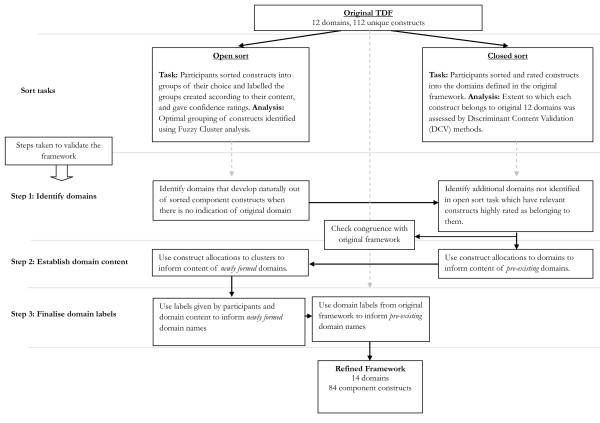
- The refined framework contains 14 domains and 84 component constructs: Knowledge, Skills, Social/Professional Role and Identity, Beliefs about Capabilities, Optimism, Beliefs about Consequences, Reinforcement, Intentions, Goals, Memory/Attention and Decision Processes, Environmental Context and Resources, Social Influences, Emotions, and Behavioural Regulation.
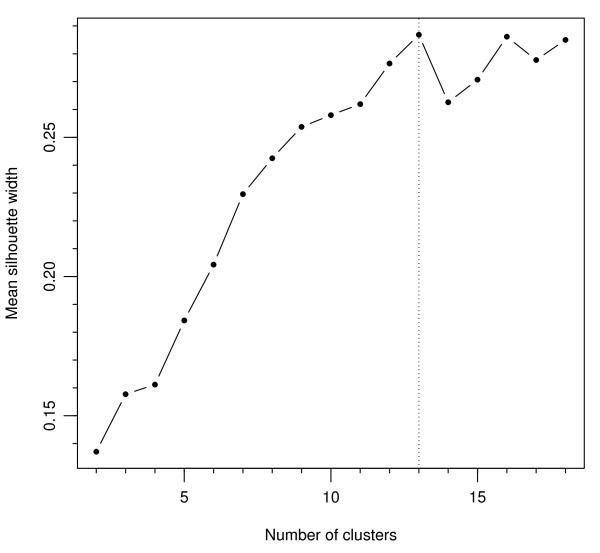
- The open sort produced a 13-cluster solution with the highest overall average silhouette value of 0.29; after removing low-silhouette constructs, 10 clusters had average silhouette values greater than 0.25, with an average of 0.47 across those 10 domains.
- Of the original 112 unique constructs, 34 were removed, leaving 84; “Nature of the Behaviours” was dropped because it was not represented by a single open-sort cluster and had only one construct assigned in the closed sort.
- Closed-sort congruence was >69% for Emotion, Skills, Motivation and Goals, Social/Professional Role and Identity, Beliefs about Capabilities, and Memory/Attention and Decision Processes, with fair ICCs (0.31–0.40); lower congruence was found for Knowledge, Environmental Context and Resources, and Social Influences (27%–50%), and for Behavioural Regulation, Nature of the Behaviours, and Beliefs about Consequences (<27%).
Methods
- Cross-sectional validation design. Eligible participants had a good understanding of behaviour change theory and were unaware of the original framework; 37 completed the tasks (18 closed sort, 19 open sort), mean age 36.54 years, 27 women and 10 men, mostly from the UK.
- Participants sorted 112 unique theoretical constructs after 12 duplicates were removed. The open sort asked participants to create and label their own groups (up to 24); the closed sort asked them to assign constructs to the original 12 labelled domains and rate confidence from 1 to 10.
- Analysis used Fuzzy Cluster Analysis with silhouette values for the open sort, Mantel correlations and Kendall’s W for sorting concordance, Discriminant Content Validation with one-sample t-tests against zero and Hochberg correction, and intraclass correlation coefficients for closed-sort agreement.
Limitations
- The paper states that two domains showed weak clustering: “Environmental Context and Resources” and “Behavioural Regulation.” It also states that the refined framework is limited to constructs identified in the original framework and does not cover all theories of behaviour change.
- Evident from the text: the sample was small and self-selected (37 completers; 18 closed, 19 open), mostly UK-based, and open-sort concordance was low (W = 0.22, p = 0.01). Several clusters had low silhouette values (<0.25) before construct removal, and “Knowledge” had no open-sort cluster, being retained based on closed-sort confidence ratings.
Model-written summary. Check it against the paper before relying on it.
Integrity signals
Registry
Cites
Statistics
Figures
Verification
Claims the paper makes
8 Valid · 2 Not valid · 7 Not checked · 74 Own results and interpretations
The cited sources support only part of this claim — read each source’s verdict below.
In the paper
“In a review of 235 guideline development and implementation studies, only 22.5% were judged to have used theories of behaviour change”
§ Validation of the theoretical domains framework for use in behaviour change and implementation research > Background
What the sources say
- Partly supportedcites [10] Davies P Walker AE Grimshaw J A systematic review of the use of theory in the design and implementation strategies and interpretation of the results of rigorous evaluations Implement Sci 2010 5 1 6 10.1186/1748-5908-5-1 20181130 PMC2832624 sourceExperimental — accuracy not yet measured
The Results report that 53 of 235 studies (22.5%) were judged to have employed theories of behaviour or behaviour change. The Abstract Methods identifies the studies as rigorous evaluations of guideline dissemination and implementation, not guideline development and implementation. (LLM, conf=0.86)
plain- Asserted: passes — The authors put it forward as true.
- Checkable: passes — It can be checked against evidence.
- Load-bearing: passes — The paper’s conclusions depend on it.
- Based: passes — The paper gives a reason why it holds.
- Partly supported
The cited sources support only part of this claim — read each source’s verdict below.
In the paper
“Research using the TDF has identified lack of knowledge as a potential barrier to a number of professional health behaviours, including hand hygiene [17], changing transfusion practice [19], and the adoption of tobacco use cessation counseling in dental practices [21].”
§ Validation of the theoretical domains framework for use in behaviour change and implementation research > Discussion
What the sources say
- Not checked — no full text of the sourcecites [17] Dyson J Lawton R Jackson C Cheater F Does the use of a theoretical approach tell us more about hand hygiene behaviour? The barriers and levers to hand hygiene J Infection Prev 2010 12 17 source
- Partly supportedcites [19] Francis J Tinmouth A Stanworth SJ Using theories of behaviour change to understand transfusion prescribing three clinical contexts in two countries: development work for and implementation trial Implement Sci 2009 4 70 10.1186/1748-5908-4-70 19852832 PMC2777847 sourceExperimental — accuracy not yet measured
The Abstract (Methods) and Methods (Interview study) say the planned TDF-based interviews will examine knowledge as a possible influence on transfusion decisions. The Background (UK and Canadian blood services) says factors hindering change in these clinical contexts had not yet been investigated. This paper therefore does not report that lack of knowledge was identified as a barrier to changing transfusion practice; the other behaviours have separate citations in the citing sentence. (LLM, conf=0.86)
- Partly supportedcites [21] Amemori M Korhonen T Kinnunen T Michie S Murtomaa H Enhancing implementation of tobacco use prevention and cessation counselling guideline among dental providers: a cluster randomised controlled trial Implement Sci 2011 6 13 10.1186/1748-5908-6-13 21320312 PMC3055178 sourceExperimental — accuracy not yet measured
The Background section lists knowledge as a domain in the theoretical-domains framework, and the Methods section says the authors planned to use that framework to assess difficulties with tobacco-cessation counselling in dental practices. But this paper does not report that it identified a lack of knowledge as a barrier; it says the assessment results will be reported elsewhere. This verdict addresses only the dental-practice clause attached to this citation. (LLM, conf=0.83)
hedgedstates an association- Asserted: passes — The authors put it forward as true.
- Checkable: passes — It can be checked against evidence.
- Load-bearing: passes — The paper’s conclusions depend on it.
- Based: passes — The paper gives a reason why it holds.
The cited sources that could be checked couldn’t confirm or dispute this claim.
In the paper
“Furthermore, where the domain has been used, in relation to changing transfusion practice, it was noted that when participants were asked questions relating to the ‘Nature of the Behaviours’ domain they often repeated answers that were previously given in response to questions relating to the ‘Behavioural Regulation’ domain [19]”
§ Validation of the theoretical domains framework for use in behaviour change and implementation research > Discussion
What the sources say
- Could not verifycites [19] Francis J Tinmouth A Stanworth SJ Using theories of behaviour change to understand transfusion prescribing three clinical contexts in two countries: development work for and implementation trial Implement Sci 2009 4 70 10.1186/1748-5908-4-70 19852832 PMC2777847 sourceExperimental — accuracy not yet measured
Split into 2 atoms — 0 confirmed, 0 partially supported, 0 disputed, 0 misattributed, 2 unverifiable. Expand the claim to see per-atom verdicts.
plainstates an association- Asserted: passes — The authors put it forward as true.
- Checkable: passes — It can be checked against evidence.
- Load-bearing: passes — The paper’s conclusions depend on it.
- Based: passes — The paper gives a reason why it holds.
- Could not verify
A result the paper reports from its own data — it cites no other source for it, so there is none to check. The quote shows it is in the paper.
In the paper
“This revealed that the majority of constructs (74/112) were strongly associated with only one cluster (i.e., showed membership values over 80% to one specific cluster, see Additional file 5).”
§ Validation of the theoretical domains framework for use in behaviour change and implementation research > Results > Sample size suitability and open sort pattern concordance
plainstates an association- Asserted: passes — The authors put it forward as true.
- Checkable: passes — It can be checked against evidence.
- Load-bearing: passes — The paper’s conclusions depend on it.
- Based: passes — The paper gives a reason why it holds.
A result the paper reports from its own data — it cites no other source for it, so there is none to check. The quote shows it is in the paper.
In the paper
“However, none of the multiple memberships indicated in the open sort results were replicated in the closed sort task where three different constructs, ‘Professional confidence’, ‘Beliefs’, and ‘Group identity’, were allocated to multiple domains.”
§ Validation of the theoretical domains framework for use in behaviour change and implementation research > Results > Sample size suitability and open sort pattern concordance
plain- Asserted: passes — The authors put it forward as true.
- Checkable: passes — It can be checked against evidence.
- Load-bearing: passes — The paper’s conclusions depend on it.
- Based: passes — The paper gives a reason why it holds.
35 more claims
Create a free account to see all 91 claims and to verify the 1 reference still open.
- Probably not a substantial claim. 29
- It may state two separate claims as one. 31
- The quote only partly states this claim. 2
Claims other papers make about this one
Each is checked against this paper’s own text: does it say what the citing paper says it does?
The source backs part of the claim, not all of it — or backs it for a different population, condition or comparison.
In the citing paper
“Theoretical Domains Framework represents another approach to developing determinant frameworks. It was constructed on the basis of a synthesis of 128 constructs related to behaviour change found in 33 behaviour change theories, including many social cognitive theories [10]. The constructs are sorted into 14 theoretical domains (originally 12 domains), e.g. knowledge, skills, intentions, goals,”
From Making sense of implementation theories, models and frameworks (2015) · cites this paper as [10]
Experimental — accuracy not yet measuredThe source backs part of the claim, not all of it — or backs it for a different population, condition or comparison.
In the citing paper
“Overarching change domains were chosen from the Theoretical Domains Framework (TDF) (68), an integrative framework that provides intervention developers with a possible selection of 14 change domains e.g., behavioral regulation and 84 change mechanisms e.g., self-monitoring from evidence-based behavior change theories.”
From Developing a mechanism-based therapy for acute psychiatric inpatients with psychotic symptoms: an Intervention Mapping approach (2023) · cites this paper as [68]
Experimental — accuracy not yet measuredThe source backs part of the claim, not all of it — or backs it for a different population, condition or comparison.
In the citing paper
“It has been increasingly acknowledged that consideration of patient acceptability using theories of behaviour change are key to effective evaluation, design and implementation of healthcare interventions [23–25] .”
From 'I didn't know what to expect': Exploring patient perspectives to identify targets for change to improve telephone-delivered psychological interventions (2020) · cites this paper as [25]
Experimental — accuracy not yet measuredThe source backs part of the claim, not all of it — or backs it for a different population, condition or comparison.
In the citing paper
“the TDF is a theoretical framework rather than a theory; it does not propose testable relationships between elements but provides a theoretical lens through which to view the cognitive, affective, social and environmental influences on behaviour.”
From A guide to using the Theoretical Domains Framework of behaviour change to investigate implementation problems (2017) · cites this paper as [16]
Experimental — accuracy not yet measuredThe source backs part of the claim, not all of it — or backs it for a different population, condition or comparison.
In the citing paper
“The central tenet of this model is that capability, opportunity and motivation interact to produce behaviour.”
From A guide to using the Theoretical Domains Framework of behaviour change to investigate implementation problems (2017) · cites this paper as [16]
Experimental — accuracy not yet measured
28 more claims about this paper
Create a free account to see every claim other papers make about this one.
Self-check
Percentages, sums and reported differences re-computed from the paper’s own numbers.
Each contradiction between two passages listed here was confirmed by an independent check.
Rated minor: it would not touch a result — a value no result rests on, a p-value that stays on the same side of the significance level, or a conflict that is clerical, resolved elsewhere in the paper, or outside its own findings.
In the paper
“This revealed that the majority of constructs (74/112) were strongly associated with only one cluster (i.e., showed membership values over 80% to one specific cluster, see Additional file 5). A further 32 constructs showed moderately high associations with one cluster (memberships values between 28% to 79%), with the remaining proportion of memberships for these constructs spread over other clusters. Only eight constructs”
§ Validation of the theoretical domains framework for use in behaviour change and implementation research > Results > Sample size suitability and open sort pattern concordance
Reported 112 · recomputed 114
Rated minor: it would not touch a result — a value no result rests on, a p-value that stays on the same side of the significance level, or a conflict that is clerical, resolved elsewhere in the paper, or outside its own findings.
In the paper
§ Validation of the theoretical domains framework for use in behaviour change and implementation research > Discussion
“Second, the ‘Nature of the Behaviours’ domain was dropped in the new framework, because its original component constructs were not assigned to the domain in the closed sort, and there was no cluster representing the ‘Nature of the Behaviours’ in the open sort.”
§ Validation of the theoretical domains framework for use in behaviour change and implementation research > Results > Sample size suitability and open sort pattern concordance
“‘Nature of the Behaviours’ only had one construct (Routine/automatic/habit) included from the original six constructs.”
Rated minor: it would not touch a result — a value no result rests on, a p-value that stays on the same side of the significance level, or a conflict that is clerical, resolved elsewhere in the paper, or outside its own findings.
In the paper
§ Validation of the theoretical domains framework for use in behaviour change and implementation research > Discussion
“Two domains showed weak clustering: ‘Environmental Context and Resources’ and ‘Behavioural Regulation’.”
§ Validation of the theoretical domains framework for use in behaviour change and implementation research > Results > Sample size suitability and open sort pattern concordance
“Three clusters remained with silhouettes below 0.25, ‘Environmental Context and Resources’, ‘Memory, Attention, and Decision Processes’, and ‘Behavioural Regulation’.”
Citations
Cites
The theory of planned behavior
Ajzen, I. (1991) · Organizational Behavior and Human Decision Processes · doi:10.1016/0749-5978(91)90020-t · Cited by 90,587
The Measurement of Observer Agreement for Categorical Data
Landis, J. R., & Koch, G. G. (1977) · Biometrics · doi:10.2307/2529310 · Cited by 81,148 · cited 1×
“61 as good to excellent agreement [44].”
Silhouettes: A graphical aid to the interpretation and validation of cluster analysis
Rousseeuw, P. J. (1987) · Journal of Computational and Applied Mathematics · doi:10.1016/0377-0427(87)90125-7 · Cited by 21,392 · cited 2×
“Silhouette values are calculated for each construct and range from +1, indicating strong association with a cluster and distance from neighboring clusters, through 0, indicating no distinct association with clusters, to −1, indicating that a construct is probably assigned to the wrong cluster and should be considered…”
BackgroundMethodMichie, S., van Stralen, M. M., & West, R. (2011) · Implementation Science · doi:10.1186/1748-5908-6-42 · Cited by 13,697 · cited 4×
“In designing interventions, the TDF fits well with the Behaviour Change Wheel (BCW) [46] referred to above.”
BackgroundMethodInfluentialSelf-citationFinding groups in data: an introduction to cluster analysis
(1991) · Choice Reviews Online · doi:10.5860/choice.28-4558 · Cited by 10,474
Finding Groups in Data: An Introduction to Cluster Analysis
Kaufman, L., & Rousseeuw, P. J. (1990) · Wiley Series in Probability and Statistics · doi:10.1002/9780470316801 · Cited by 7,344
Forming inferences about some intraclass correlation coefficients.
McGraw, K. O., & Wong, S. P. (1996) · Psychological Methods · doi:10.1037/1082-989x.1.1.30 · Cited by 6,903 · cited 1×
“To examine the agreement of these construct x domain ratings and construct assignment across participants, two-way intraclass correlation coefficient (ICC) measures of consistency were used within each domain [43].”
MethodDetermination and Quantification Of Content Validity
LYNN, M. R. (1986) · Nursing Research · doi:10.1097/00006199-198611000-00017 · Cited by 6,775 · cited 1×
“For contentvalidation tasks, such as those proposed in the closed sort task, two to 24 participants have been shown to be sufficient [29-32], with more than five participants reducing the influence of rater outliers [33].”
MethodReliability and Validity Assessment
Carmines, E., & Zeller, R. (1979) · doi:10.4135/9781412985642 · Cited by 5,884 · cited 1×
“For contentvalidation tasks, such as those proposed in the closed sort task, two to 24 participants have been shown to be sufficient [29-32], with more than five participants reducing the influence of rater outliers [33].”
MethodReliability and Validity Assessment
(2011) · The Encyclopedia of Political Science · doi:10.4135/9781608712434.n1341 · Cited by 5,040
Research works printed but not linked: 6
- Clinical Effectiveness Research Agenda Group (CERAG) An Implementation Research Agenda: A report prepared for the High Level Group on Clinical Effectiveness 2008 CERAG, London
- Paul CL A modified approach to a new card sorting methodology J Usability Stud 2008 4 7 30
- Taylor SE Health Psychology (5th Edition) 2003 MacGraw-Hill, Boston
- Oxford English Dictionary Online www.oed.com
- Ogden J Health Psychology: a textbook (2nd Edition) 2000 Open University Press, Buckingham
- Forsyth DR Group Dynamics (5th Edition) 2006 Wadsworth, Cengage Learning
Cited by
Items 4,501–4,600 of 4,858
Hernández-Negrín, H., Catena-Granados, N., Gómez-Huelgas, R., et al. (2026) · Reumatología Clínica (English Edition) · doi:10.1016/j.reumae.2026.502037
Theoretical evaluation of mental health first aid using the behavioural change wheel (BCW)
Atanda, O., Wood, K. V., Callaghan, P., Reavey, P., & Vangeli, E. (2026) · Health Psychology and Behavioral Medicine · doi:10.1080/21642850.2026.2623324
“…theoretical domains framework (TDF) allows a more comprehensive behavioural analysis that maps onto the COM-B model and consists of 14 theoretical domains of explanatory constructs, identified from a synthesis of 33 behaviour change theories developed using a consensus approach (Cane et al., 2012).”
El-Komy, F., O’Driscoll, M., Byrne, S., Bermingham, M., & Sahm, L. J. (2026) · Pharmacy · doi:10.3390/pharmacy14010023
“…Knowledge; Skills; Social/Professional Role and Identity; Beliefs About Capa-bilities; Optimism; Beliefs About Consequences; Reinforcement; Intentions; Goals; Memory, Attention and Decision; Environmental Context and Resources; Social Influences; Emotion; and Behavioural Regulation [24,25].”
Olson, J. L., Corace, K., Dowson, M., Hutton, B., Thavorn, K., & Presseau, J. (2026) · Journal of Military Veteran and Family Health · doi:10.3138/jmvfh-2025-1107 · Cited by 1
Borges, D. D. S., Mello, A. T., Nascimento, G. M., de Lima, L. P., de Camargo, A. M., Fiates, G. M. R., & Trindade, E. B. S. D. M. (2026) · Royal Society Open Science · doi:10.1098/rsos.251476
Chan, S. H., Hui, R., Haq, Z., & Cheston, R. (2026) · Healthcare · doi:10.3390/healthcare14030383
“To identify determinants influencing these behaviours, data from Stage 1 and work-shop activities were analysed using the COM-B model, with further categorisation informed by the Theoretical Domains Framework (TDF v2) [37].”
Philippot, A., Coppens, M., Damme, T. V., Sluys, C., Francaux, M., Dubois, V., & Vancampfort, D. (2026) · Mental health and physical activity · doi:10.1016/j.mhpa.2026.100758 · Cited by 2
Mental Distress at Heritage Places: A Behavioural Science-Based Approach to Wellbeing Inequality
Sayer, F., Sayer, R., Pickel, M., & Henry, L. (2026) · The Historic Environment Policy & Practice · doi:10.1080/17567505.2026.2620984
Wang, N., Zhang, J., Fei, C., Sun, Z., Duan, P., & Yang, L. (2026) · BMC Nursing · doi:10.1186/s12912-026-04400-w
“To address this gap, we adopted the Theoretical Domains Framework (TDF), which synthesises constructs from multiple behaviour change theories into 14 domains and is widely used in implementation research to diagnose why evidence-based practices are not consistently enacted [16–18].”
Bringing the Theoretical Domains Framework into Applied Linguistics: A worked examplePreprint
McKinley, J., Harada, T., Nakatsuhara, F., et al. (2026) · SSRN Electronic Journal · doi:10.2139/ssrn.6189649
Desens, L., Walling, B. M., O’Neill, R., Howard, V., Giammarino, M., Scannell, D., Kemble, A., Wilkerson, T. H., Nhial, N., Elson, S. B., et al. (2026) · Frontiers in Artificial Intelligence · doi:10.3389/frai.2026.1719703 · Cited by 1
“A third consideration is to build autonomous population agents employing a weighted decision-making framework that uses 14 evidence-based behavioral factors drawn from recent behavioral science research (Cane et al., 2012; Zhou et al., 2024).”
Shimizu, N., Ishigaki, T., Ogawa, T., Kimura, Y., Kinoshita, A., Kubo, H., Ikeda, K., Ashizawa, R., Masuda, Y., Yanagida, H., et al. (2026) · Research Square · doi:10.21203/rs.3.rs-8556119/v1
Skidmore, A. G., MacDonald, A., Herbert, A. J., Lewis, K., & Gough, L. A. (2026) · Healthcare · doi:10.3390/healthcare14040440
Rodriguez, T., Gonzalez, A., & Rode, J. (2026) · SSRN Electronic Journal · doi:10.2139/ssrn.6215039
Jin, L., Wang, R., Hong, Q., & Zhang, N. (2026) · Patient Education and Counseling · doi:10.1016/j.pec.2026.109544
Ambike, V., Ebner, P., Mosimann, S., Ouk, K., & Bello, N. M. (2026) · Journal of Agricultural Biological and Environmental Statistics · doi:10.1007/s13253-026-00725-w
Lever, G., Dowding, D., Jeyasingham, D., & Armitage, C. J. (2026) · NIHR Open Research · doi:10.3310/nihropenres.14109.1
Ezaydi, N., Kurien, M., Allchin, O., Biggs, K., Chowdhury, N., Humes, D. J., Kellar, I., Shanbhag, S., & Brown, J. (2026) · BMJ Open · doi:10.1136/bmjopen-2025-109663
“27 Concurrently, qualitative findings will be cross-mapped to the TFA to examine intervention acceptability.”
Booth, G., D’Lima, D., Bearne, L., & USSHER, M. H. (2026) · Journal of Pain · doi:10.1016/j.jpain.2026.106235
Davison, N., Waddell, A., Ivaturi, A., Chandrasekara, D., Tran, T. D., Kirkman, M., Hammarberg, K., Nimesh, S., Lowthian, J. A., Olivier, P. L., et al. (2026) · BMC Health Services Research · doi:10.1186/s12913-026-14129-6 · Cited by 1
“The TDF [29] is a behaviour change framework with 14 domains for organising the factors (at the individual, organisational, and system levels) that influence behaviour and inform behaviour-change interventions.”
The CoDe/ETHIC-Talk: A theory-informed intervention to support ethical deprescribing in hospice care
Alwidyan, T., Shamieh, O., Al-Talla, B., Parsons, C., Alarjeh, G., Tayyem, M., & Alwidyan, T. (2026) · Research in Social and Administrative Pharmacy · doi:10.1016/j.sapharm.2026.02.007
Zúñiga, F., Saringer-Hamiti, L., Siqeca, F., Holzer, S., Guerbaaï, R.-A., Brunkert, T., Islam, F., Bartáková, J., Orschulko, A., Staudacher, S., et al. (2026) · Implementation Science · doi:10.1186/s13012-026-01489-0
Talbot, R., Harris, C., Cable, E., Whiten, B., Warren, J. D., Varley, R. A., & Volkmer, A. (2026) · Dementia · doi:10.1177/14713012261425555 · Cited by 3
El-Kotob, R., Cadel, L., Crawshaw, J., Farzeen, S., Ahmad, A., McCarthy, L. M., McCarthy, L. M., Hitzig, S. L., Zidarov, D., MacKay, C., et al. (2026) · PLoS ONE · doi:10.1371/journal.pone.0356476
“The interview guide was informed by domains from the Theoretical Domains Framework (TDF) to explore experiences with medications and implementation considerations for reporting medication-related experiences [19,28,29].”
Tieu, L., Khoong, E. C., Shah, N. D., Gosdin, M., Wang, S. J., Sharma, A. E., Abtahi, N., Stern, R. J., Zhou, C., Sarkar, U., et al. (2026) · Translational Behavioral Medicine · doi:10.1093/tbm/ibaf094
“Finally, within this first step, we used the theoretical domains framework to synthesize our data collection and map our findings to target specific theoretical behavioral domains [60].”
Dentists' choice of treatment for root caries – a qualitative study
Götze, N., Sommerfeldt, W., Gellert, P. R., Müller, A., & Göstemeyer, G. (2026) · Journal of Dentistry · doi:10.1016/j.jdent.2026.106585
Shafi, H., Armitage, C. J., Verstappen, S. M. M., Barton, A. C., Lee, R. R., & Bluett, J. (2026) · Patient Preference and Adherence · doi:10.2147/ppa.s548188 · Cited by 1
“16,20 The interview topic guide covered the patients’ understanding of MTX, general perceptions towards adherence and feedback around biochemical adherence.”
Shen, M., Shi, Z., Shen, Y., et al. (2026) · BMC Nursing · doi:10.1186/s12912-026-04492-4
“The Capability–Opportunity–Motivation Behavior (COM-B) model, proposed by Michie et al. [12], offers such a framework.”
Stierman, E. K., Calhoun, B., Mitra, S., Pereira, S. K., Vance, M. R., Bruce, T. M., Mullen, D., Minihane, M., Bower, K. M., Creanga, A. A., et al. (2026) · Women s Health · doi:10.1177/17455057261425021 · Cited by 1
Roach, P., Zaretsky, L., Ody, M., Hoeber, M., Montesanti, S. R., Henderson, R., Oster, R. T., Regehr, S. M., Bablitz, C., Barnabe, C. C. M., et al. (2026) · Health Informatics Journal · doi:10.1177/14604582261431586 · Cited by 1
“The advisory group was essential in guiding the domain mapping decisions by ensuring important concepts such as relationality and cultural safety were represented despite not being explicitly included in the TDF.”
InfluentialSkene, I., Bloom, B., Bassi, J., Simoni, A. D., Pike, K. C., Griffiths, C. J., Pfeffer, P., & Steed, L. (2026) · medRxiv · doi:10.64898/2026.02.25.26346779
Jessiman, L. J., Naydani, C. J., Rutherford, K., & Turner, S. P. (2026) · Animal Welfare · doi:10.1017/awf.2026.10072 · Cited by 1
“This domain pertains to conditions in a situation or an environment that facilitate or hinder the occurrence of a behaviour (Cane et al. 2012).”
Arieli, M., Maeir, A., & Rotenberg, S. (2026) · OTJR Occupational Therapy Journal of Research · doi:10.1177/15394492261420786
Bell, Z., Holland, P., Morris, A. S., Porcellato, L. A., Moran, P., & Graves, L. (2026) · International Journal of Workplace Health Management · doi:10.1108/ijwhm-05-2025-0094
Nilsen, P. (2026) · Frontiers in Health Services · doi:10.3389/frhs.2026.1755950 · Cited by 1
Pembroke, L., Sherman, K. A., Dhillon, H. M., Francis, H., Gillatt, D. A., & Gurney, H. (2026) · Neuropsychological Rehabilitation · doi:10.1080/09602011.2026.2637569
A Scoping Review on Factors Influencing Parental Involvement in Healthy Newborns’ Pain Management
de Cândido, L. K., Forgeron, P. A., Pope, N., Bancroft, X., Squires, J. E., Peterson, W. E., & Harrison, D. M. (2026) · Clinical Journal of Pain · doi:10.1097/ajp.0000000000001370
Holm, T. F., Barington, P. F., Kronborg, T., Jensen, M. H., & Hangaard, S. (2026) · International Journal of Medical Informatics · doi:10.1016/j.ijmedinf.2026.106381 · Cited by 1
A pilot randomized clinical trial of gamification to increase medication adherence
Fanaroff, A. C., Clark, K., Reid-Bey, L., Rareshide, C. A. L., Zhu, J., Norton, L. A., & Volpp, K. G. M. (2026) · American Heart Journal · doi:10.1016/j.ahj.2026.107419
Mitchell, L. E., Phillips, E. C., Jennett, C. J., Bavor, C., Saunders, T., Nightingale, C. E., Smith, M. A., Whop, L. J., & on behalf of Screen Your Way Investigator Team (2026) · PLoS ONE · doi:10.1371/journal.pone.0326551 · Cited by 2
“Questions were informed by the COM-B system for behaviour change [19] and Theoretical Domains Framework [20].”
Ryan, T., Daly, E., & Ryan, L. (2026) · Sports · doi:10.3390/sports14030109
“This framework consists of 33 theories of behaviour and behaviour change which have been clustered into 14 (originally 12) domains (see Table S2 in the Supplementary Material for examples of TDF domains and their constructs) [25,26].”
Duarte-Anselmi, G., Sanduvete‐Chaves, S., López-Arenas, D., & Moscoso, S. C. (2026) · BMC Public Health · doi:10.1186/s12889-026-26934-z
“The COM-B model [7] and the Theoretical Domains Framework (TDF) [8, 9] are among the most widely applied frameworks in behavioral and implementation research.”
Sisay, G., Estifanos, M. B., & Tebeje, T. M. (2026) · BMC Pregnancy and Childbirth · doi:10.1186/s12884-026-08943-3 · Cited by 2
“The possible justification for this might be that nutrition health education and counseling can help women in understanding the importance of a varied diet during pregnancy and inspire continuous efforts to keep-up on a wide diet [30].”
Cunningham, B., Hepnar, L., Lamont, R. M., Brauer, S., O’Sullivan, J. D., Adam, R. J., Katz, M., Upadhyay, S., Oliveira, J. D., & Window, P. (2026) · Disability and Rehabilitation · doi:10.1080/09638288.2026.2636395
“Identified barriers and enablers were then preliminarily mapped by authors BC and LH to the Theoretical Domain Framework (TDF) [30] and the Capability Opportunity Motivation Behaviour Change (COM-B) Framework [31] to identify final themes and possible interventions and implementation strategies.”
Alhage, M., Arutkin, M., Ceccaldi, P., Josseran, L., Ayoubi, J. M., & Vallée, A. (2026) · Women s Health · doi:10.1177/17455057261427550
“13 16 While previous qualitative studies have primarily examined individual beliefs or counseling attitudes, fewer have focused on how institutional organization, care pathways, and local resources shape midwives’ ability to implement smoking cessation support in routine maternity care.”
Liu, Z., Yang, Y., Chen, J., Zhang, S.-H., Zhang, X.-R., Zhuang, Y.-X., & Hu, R.-Z. (2026) · Systematic Reviews · doi:10.1186/s13643-026-03154-5 · Cited by 2
“Specifically, we will identify the potential mediators from a comprehensive pool of the 26 theory-and evidence-based Mechanisms of Action commonly used in behavioral medicine [23, 26, 27].”
Hart, K. M., Kumaran, S. E., Carnt, N. A., Stapleton, F. J., & Jaworski, A. (2026) · Ophthalmic and Physiological Optics · doi:10.1007/s44402-026-00055-x
“Stakeholder engagement remains essential for identifying target behaviours and the barriers and enablers to their adoption [50].”
Spencer, L. P., Perkins, N., Flynn, D., Henderson, E. J., Maniatopoulos, G., Wood, M., Woodley, H., & Newham, J. J. (2026) · Health Education Journal · doi:10.1177/00178969261427923
“The TDF domains were mapped onto of the COM-B (Capability, Opportunity, Motivation) model of behaviour change (Atkins et al., 2017; Cane et al., 2012) (see Figure 1), providing a pragmatic organisational and translational framework with which to structure findings for policy and practice…”
Tang, Y., Ying, X., Dong, P., Xu, X., Chen, M., & Jin, Y. (2026) · BMC Women s Health · doi:10.1186/s12905-026-04405-2 · Cited by 1
“…to familiarize themselves with the data, then openly coded barriers and facilitators of HPBs. Initial codes were cross-verified through consensus discussions; (2) deductive phase: codes were grouped into themes, which were mapped to the COM-B model and TDF domains [26, 27] during team meetings.”
Whitaker, S., McKinlay, A. R., & Chater, A. (2026) · Psychology and Health · doi:10.1080/08870446.2026.2642422
Wemyss, D. (2026) · Energy Research & Social Science · doi:10.1016/j.erss.2026.104659
Saunders, R. P., Wilcox, S., Rudisill, A. C., Kaczynski, A. T., & Parker-Brown, J. (2026) · Implementation Science Communications · doi:10.1186/s43058-026-00903-4
Ashworth, J., Cornwall, N., Harrisson, S. A., Woodcock, C., Nicholls, E. E., Hughes, G., Marshall, E., Lawton, S., Wathall, S., Helliwell, T., et al. (2026) · NIHR Open Research · doi:10.3310/nihropenres.13961.2 · Cited by 1
A Provisional Theory of Change and Basic Logic Model for Intensive Comprehensive Aphasia Programs
Monnelly, K., Marshall, J., Dipper, L. T., & Cruice, M. N. (2026) · Journal of Speech Language and Hearing Research · doi:10.1044/2025_jslhr-25-00519 · Cited by 1
Chen, Y., Tower, M., Zimmerman, P. A., et al. (2026) · Disaster Medicine and Public Health Preparedness · doi:10.1017/dmp.2026.10326
Wong, A. K. C., Chen, S.-C., Wong, F. K. Y., Liang, J., Tong, D. W. K., Liu, L. Z., Chan, M. L., Wong, M. K., Wong, B. C., Hui, V. C. C., et al. (2026) · npj Digital Medicine · doi:10.1038/s41746-026-02424-9
“Second, a deductive framework analysis was employed using the TheoreticalDomainsFramework(TDF)basedontheresultsofthethematic analysis(SupplementalTable2) 45 .”
Wemyss, D. (2026) · Zürcher Hochschule für Angewandte Wissenschaften digital collection (Zurich University of Applied Sciences) · doi:10.21256/zhaw-36116
Complexities of shared decision-making in home-care physical therapy: a mixed methods study
Moore, C. L., Parrott, J. S., Sibley, K. M., & Kaplan, S. L. (2026) · Physical Therapy · doi:10.1093/ptj/pzag028
Lim, J. H., Yeap, L., Saw, P. S., Ng, K. Y., & Wong, Y. J. (2026) · Preventive Medicine · doi:10.1016/j.ypmed.2026.108564 · Cited by 2
From Frameworks to Action: How an AI Search Bot Makes Behaviour Change Science AccessiblePreprint
Kartashov, O. (2026) · SSRN Electronic Journal · doi:10.2139/ssrn.6341738
Embedding onsite pharmacists in nursing home practice: qualitative findings from a pilot study
Damiaens, A., Frisson, A., & Foulon, V. (2026) · International Journal of Clinical Pharmacy · doi:10.1007/s11096-026-02123-1
“Providing a course that covers all necessary topics, thereby taking into account stakeholders’ needs, would ensure that pharmacists feel empowered in their competence, knowledge, and skills, and would maximize their potential with regard to the quality use of medicines in NHs [27, 28].”
Egelfeld, J., Gray, C. P., Lerner, B., et al. (2026) · Journal of the American Pharmacists Association · doi:10.1016/j.japh.2026.103105
Digital Episodic Future Thinking Intervention (Luminaut): Co-Design and Iterative Development Study
Kakoschke, N., Howlett, C. A., Little, K., Gwilt, I., Rebuli, M. A., Brooker, P. G., & Davis, A. (2026) · JMIR Human Factors · doi:10.2196/74099
“Future research should aim to map these suggested improvements onto the taxonomy of BCTs based on relevant health behavior change theories and a theoretical framework known as the Theoretical Domains Framework [98,99], which was developed by behavioral scientists and implementation researchers.”
Moore, S. A., Calder, J., Folorunsho, J., & Potthoff, S. (2026) · Disability and Rehabilitation · doi:10.1080/09638288.2026.2649043 · Cited by 1
“Deductive analysis was then undertaken using Version 2 of the Theoretical Domains Framework (TDF) [21].”
Shankar, R., Bundele, A., Low, J., & Hong, W.-Z. (2026) · Systematic Reviews · doi:10.1186/s13643-026-03080-6
“The Theoretical Domains Framework (TDF) is a comprehensive framework that synthesizes a wide range of behavior change theories into a single framework [9].”
Taylor, R., Burrows, T. L., Bone, E. E., Asher, R. C., & Collins, C. E. (2026) · Nutrition Reviews · doi:10.1093/nutrit/nuag033
Baker, K., Ruth, A., Rodriguez, G. C., Zhang, A. W., de Bruin, W. B., & de la Haye, K. (2026) · Frontiers in Public Health · doi:10.3389/fpubh.2026.1741901
“The capability, opportunity, motivation and behavior (COM-B) model identifies domains that are established predictors of behavior change (44).”
InfluentialPerson-centred sedation in intensive care
Henricson, M., & Tingsvik, C. (2026) · Intensive and Critical Care Nursing · doi:10.1016/j.iccn.2026.104395
Korkis, L., Phan, S., & Moreno, J. (2026) · Journal for Nurses in Professional Development · doi:10.1097/nnd.0000000000001246
Leclercq, A., Eerdenbrugh, S. V., Vanderauwera, J., & D’haenens, W. (2026) · American Journal of Speech-Language Pathology · doi:10.1044/2026_ajslp-25-00044
Harnett, A., Murphy, C., Sahm, L. J., et al. (2026) · International Journal of Clinical Pharmacy · doi:10.1007/s11096-026-02129-9
“The TDF is an integrative framework of behavioural change theories with 14 core domains which facilitates identification of barriers and facilitators to implementation of best practice [19, 20].”
Nichol, B., Rodrigues, A., Tang, M. Y., Haste, A., Audsley, S., Robson, C. N., Harland, J., & Haighton, C. (2026) · International Journal of Behavioral Medicine · doi:10.1007/s12529-026-10444-8 · Cited by 3
Johnson, D., Tripathee, S., Cooper, D., Constable, L., Omar, M. I., MacLennan, S., Cotton, S. C., Dimitropoulos, K., Evans, S., Hashim, H., et al. (2026) · Health Technology Assessment · doi:10.3310/gjma0724
Mortazhejri, S., Greenaway, C., Cooper, C., Pakhale, S. S., Presseau, J., Grimshaw, J., & Patey, A. M. (2026) · Canadian Liver Journal · doi:10.3138/canlivj-2025-0045 · Cited by 1
Hill, R. A., Maden, M., Duarte, R. V., Eldabe, S. S., Golder, S., Chaplin, M., Shaw, B., Sutcliffe, K., Todd, A., Bresnahan, R., et al. (2026) · Health Technology Assessment · doi:10.3310/gdwp3572
Caro, J. C., Galgano, G., Muñoz, M., Díaz-Ramírez, J., & Maluenda, J. (2026) · Applied Sciences · doi:10.3390/app16073463
King, K., Norton, C. S., Jammeh, A., Chalder, T., & Czuber‐Dochan, W. (2026) · Patient Preference and Adherence · doi:10.2147/ppa.s569308
“49 The TPB 23 also has limitations; its linear structure does not fully capture the dynamic nature of adherence, where intention does not always translate into behavior, highlighting an intention–behavior gap.”
Analyse psychosociale de la radioprotection en mammographie de dépistage : Perspectives pour l'IRSN
Britel, M. (2020) · theses.fr (ABES) · doi:10.70675/ee143bdcz481fz4b3eza378zd446f4806440 · Cited by 2
Cunnington, P., Buchanan, H., & Asimakopoulou, K. G. (2026) · BMC Oral Health · doi:10.1186/s12903-026-08288-5
“The TDF consists of 14 domains which cover a comprehensive range of factors influencing healthcare professionals’ behaviour [27], including factors that influence the implementation of evidence-based recommendations [28].”
InfluentialBodelet, C. (2021) · theses.fr (ABES) · doi:10.70675/fb3436cfzca21z4977z87a7z57aa56528db3
Wang, Y., & Ma, X. (2026) · Healthcare · doi:10.3390/healthcare14070964 · Cited by 1
Roslyakova, T. (2022) · theses.fr (ABES) · doi:10.70675/46498d5fz4600z4bf6z8fdez062f5cc9232a
Ekstrom, V. S. M. (2026) · JMIR Infodemiology · doi:10.2196/86489 · Cited by 2
“This reconceptualization is firmly grounded in the COM-B model described above [23, 30].”
Ye, L., Wang, F., Li, L. J., Liao, Y., & Shang, X. (2026) · BMC Public Health · doi:10.1186/s12889-026-26418-0 · Cited by 1
“The TDF elaborates on and refines the COM-B model into 14 domains and 84 constructs (e.g., Knowledge, Skills, Social Influences, Environmental Context) [23].”
The use and implementation of sensory approaches in acute mental health units
Wright, L. (2026) · Elsevier eBooks · doi:10.1016/b978-0-443-40596-9.00005-1
Al‐Rasadi, K., & Mehta, A. (2026) · American Journal of Preventive Cardiology · doi:10.1016/j.ajpc.2026.101469
Crawshaw, J., El-Kotob, R., Cadel, L., McCarthy, L. M., Dolovich, L., Hitzig, S. L., Zidarov, D., MacKay, C., Cimino, S. R., Milligan, J., et al. (2026) · Research in Social and Administrative Pharmacy · doi:10.1016/j.sapharm.2026.04.004 · Cited by 1
Supervised toothbrushing programmes and at home brushing behaviour: a rapid review of evidence
Kitsaras, G., Yousfi, S. E., Gray‐Burrows, K. A., Day, P. F., & Marshman, Z. (2026) · Evidence-Based Dentistry · doi:10.1038/s41432-026-01218-y
“The TDF is an integrative framework that synthesises key constructs from multiple behaviour change theories into a set of domains (such as knowledge, beliefs, social in fl uences, and environmental context) to understand the determinants of behaviour.”
InfluentialMutic, A., Tan, R. Z., Tan, E., Fahey, M. C., Callander, E. J., Haskell, L., George, S., Borland, M. L., Loftus, N., Furyk, J. S., et al. (2026) · Pediatric Emergency Care · doi:10.1097/pec.0000000000003601
“16, 17 This framework has had previous successes in understanding clinician behavior and guiding the development of evidence-informed implementation interventions across diverse acute care settings, including management of concussion 18 and low-value care in bronchiolitis.”
Implementation Science in Pharmacy Practice Research
Iqbal, A., Michel, D. E., & Gülpınar, G. (2026) · Elsevier eBooks · doi:10.1016/b978-0-443-26472-6.00084-x
Zimmermann, K., Desloge, A., Haen, L. S., & Orr, E. (2026) · Preventive Medicine Reports · doi:10.1016/j.pmedr.2026.103471
“…to support intervention development, we chose it as a framework for our codebook along with constructs from SEM and an intersectional perspective to recognize the diversity of those living in rural communities (Cane et al., 2012; Etherington et al., 2020; McLeroy et al., 1988; Michie et al., 2011).”
Walls, S., Yeterian, J. D., Orazietti, S. A., Presseau, C., & Portnoy, G. A. (2026) · JMIR Formative Research · doi:10.2196/81651
“Semistructured interviews were developed using the Theoretical Domains Framework [39] and the COM-B (Capability, Opportunity, and Motivation framework of Behavior change) [40], implementation science theories and frameworks that propose specific determinants of or essential conditions for behavior…”
Zimmer, R. P., Abdelfattah, L., Shenberger, D., Crotts, C. I., Birken, S. A., & Hanchate, A. D. (2026) · Journal of General Internal Medicine · doi:10.1007/s11606-026-10390-x · Cited by 4
Obstacles and ethical boundaries to evidence-based medicine in Oral surgery
Fistes, E. M., Destruhaut, F., & Hamel, O. (2026) · Ethics Medicine and Public Health · doi:10.1016/j.jemep.2026.101291
Kenny, E., McEvoy, J. W., McSharry, J., Doyle, J., Giggins, O. M., Hynes, L., Murphy, A. W., Taylor, R. S., & Byrne, M. (2026) · JMIR Formative Research · doi:10.2196/77742
“The model is based on the Capability, Opportunity, Motivation, and Behavior (COM-B) model [10] and the Theoretical Domains Framework (TDF) [11,12], and was developed through a synthesis of evidence from a systematic review of digital CR interventions [13], a qualitative study with patients who…”
Alanazi, F., Alsulami, S., Georgopoulos, V., Abbott-Fleming, V., & Blake, H. (2026) · doi:10.2196/preprints.96709
Fahim, C., Grubac, V., Odunuga, T., Huyer, L. D., Lee, T., Boyd, J. M., & Straus, S. E. (2026) · BMC Geriatrics · doi:10.1186/s12877-026-07445-3
“We developed a semi-structured interview guide (Supplementary File 2) which included 14 questions rooted in the TDF domains [20].”
InfluentialEzeokoli, O., Tsocheva, I., Randhawa, G., & Hewson, D. J. (2026) · BMC Geriatrics · doi:10.1186/s12877-026-07453-3
“The COM-B model [14], and TDF [15], together, offer a comprehensive, structural approach to understanding health behaviour, and evidence translation to facilitate intervention design.”
Collinson, A., Tomlinson, S., Shearman, H., Moya, S. J., & Brennan, M. L. (2026) · Preventive Veterinary Medicine · doi:10.1016/j.prevetmed.2026.106890 · Cited by 1
Metadata
- Authors
- Cane, J., O’Connor, D., & Michie, S.
- Affiliations
- University of Kent (GB)
- Monash University (AU)
- University College London (GB)
- Corresponding author
- Michie, Susan
- Venue
- Implementation Science
- Published
- 2012-04-24
- Volume
- 7
- Issue
- 1
- Pages
- 37-37
- ISSN
- 1748-5908 (ISSN-L)
- PMC
- PMC3483008
- OpenAlex
- W2077109464
- Semantic Scholar
- 6d95ed679dcdd72dec679184e21654702ce8f33d
- Cited by
- 4,888
- References
- 61
- Citations by year
- 2026: 531 · 2025: 566 · 2024: 568 · 2023: 504 · 2022: 575 · 2021: 597 · 2020: 496 · 2019: 294 · 2018: 237 · 2017: 167 · 2016: 135 · 2015: 108 · 2014: 62 · 2013: 39 · 2012: 6
- FWCI
- 122.09
- Type
- journal article
- Language
- en
- Open access
- gold
- doi.org
- Licence
- cc-by
- creativecommons.org/licenses/by/2.0/ (tdm)
- creativecommons.org/licenses/by/2.0/ (vor)
- Locations
- Implementation Science (publishedVersion, cc-by)
- Europe PMC (PubMed Central) (publishedVersion, cc-by)
- PubMed Central (publishedVersion, cc-by)
- PubMed (publishedVersion)
- Create (Canterbury Christ Church University) (acceptedVersion)
- Kent Academic Repository (University of Kent) (acceptedVersion)
- DOAJ (DOAJ: Directory of Open Access Journals) (submittedVersion)
- UCL Discovery (University College London) (submittedVersion)
- Funders
- University College London
- University of Aberdeen
- Medical Research Council
- National Health and Medical Research Council
- Topics
- Health Sciences › Health Professions › General Health Professions › Health Policy Implementation Science
- Social Sciences › Psychology › Applied Psychology › Behavioral Health and Interventions
- Health Sciences › Nursing › Research and Theory › Health Education and Validation
- Keywords
- Theoretical Domains Framework, behaviour change interventions, implementation research, theoretical constructs, construct validity, fuzzy clustering, health professionals' practices, intervention development, behavioral regulation, social influence
- MeSH terms
- Adult, Behavior Therapy, Cross-Sectional Studies, Female, Humans, Male, Middle Aged, Reproducibility of Results, Behavior Control, Young Adult
About these checks
Registry, retraction, Cites and statistics results are computed, not judged, with one exception: a printed reference that no index lists is read once by a model before it counts as a citation error. Claims are extracted by a model and kept only when their quote appears verbatim in the text; each cited source is then checked, with a model’s help, for whether it says what the claim relies on. Those verdicts can be wrong — read the claim’s quote and the cited source before relying on one.
The claim verdicts this report counts are experimental: their accuracy is not yet measured.
A language model drew the claims from the paper on 2026-10-10, under version 3 of the claim definition (model deepseek-v4.1-flash, prompt extract-v3).
A second model labelled each claim on 2026-10-10 (model jev-1.13-20260917, definition revision gold-guideline-v0.2).
Cited sources are checked with a language model’s help (gpt-6-sol).
Statistics and arithmetic are recomputed, not judged.
Confidence bands are shown only for fields calibrated on our annotated test set. None is calibrated yet, so no band is shown.
What counts as a claim ›How we measure confidence ›How we check this ›
Are you an author, or do you see a problem with this page? Request a review
Data sources
Bibliographic data: Semantic Scholar, OpenAlex, Crossref.
Contains information from the Semantic Scholar Academic Graph Datasets, made available under the ODC Attribution License (ODC-BY 1.0).
Semantic Scholar’s data is described in: Kinney, R., et al. (2023). The Semantic Scholar Open Data Platform. arXiv:2301.10140.
