

Validation of the theoretical domains framework for use in behaviour change and implementation research
Open accessThe DOI matches its Crossref record; 59 of the 61 references it cites were found in a registry or an index; 12 of the 35 sources its claims cite were checked for support.
Abstract
BACKGROUND: An integrative theoretical framework, developed for cross-disciplinary implementation and other behaviour change research, has been applied across a wide range of clinical situations. This study tests the validity of this framework. METHODS: Validity was investigated by behavioural experts sorting 112 unique theoretical constructs using closed and open sort tasks. The extent of replication was tested by Discriminant Content Validation and Fuzzy Cluster Analysis. RESULTS: There was good support for a refinement of the framework comprising 14 domains of theoretical constructs (average silhouette value 0.29): 'Knowledge', 'Skills', 'Social/Professional Role and Identity', 'Beliefs about Capabilities', 'Optimism', 'Beliefs about Consequences', 'Reinforcement', 'Intentions', 'Goals', 'Memory, Attention and Decision Processes', 'Environmental Context and Resources', 'Social Influences', 'Emotions', and 'Behavioural Regulation'. CONCLUSIONS: The refined Theoretical Domains Framework has a strengthened empirical base and provides a method for theoretically assessing implementation problems, as well as professional and other health-related behaviours as a basis for intervention development.
Overview
CoChat Summary
TL;DR
This validation study used open and closed card-sort tasks with behaviour-change experts to test the Theoretical Domains Framework, yielding a refined 14-domain, 84-construct framework. It supports the TDF’s structure while dropping “Nature of the Behaviours” and splitting or adding domains such as Optimism, Reinforcement, Intentions, and Goals.
Key findings
- The refined framework contains 14 domains and 84 component constructs: Knowledge, Skills, Social/Professional Role and Identity, Beliefs about Capabilities, Optimism, Beliefs about Consequences, Reinforcement, Intentions, Goals, Memory/Attention and Decision Processes, Environmental Context and Resources, Social Influences, Emotions, and Behavioural Regulation.
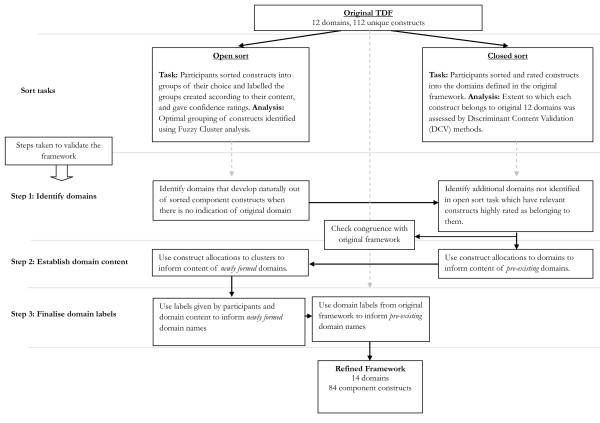
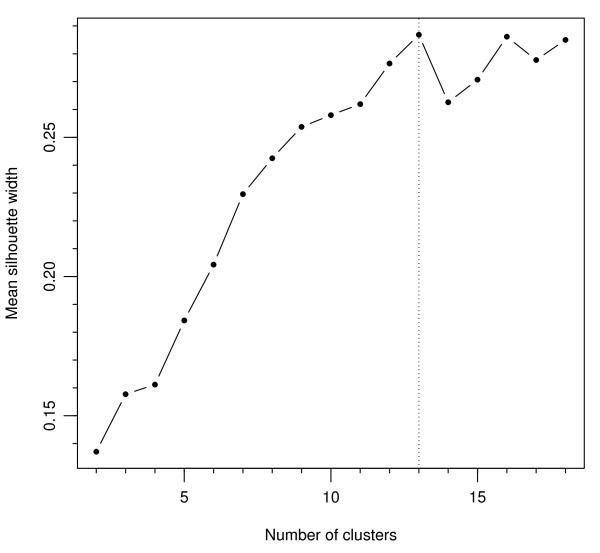
- The open sort produced a 13-cluster solution with the highest overall average silhouette value of 0.29; after removing low-silhouette constructs, 10 clusters had average silhouette values greater than 0.25, with an average of 0.47 across those 10 domains.
- Of the original 112 unique constructs, 34 were removed, leaving 84; “Nature of the Behaviours” was dropped because it was not represented by a single open-sort cluster and had only one construct assigned in the closed sort.
- Closed-sort congruence was >69% for Emotion, Skills, Motivation and Goals, Social/Professional Role and Identity, Beliefs about Capabilities, and Memory/Attention and Decision Processes, with fair ICCs (0.31–0.40); lower congruence was found for Knowledge, Environmental Context and Resources, and Social Influences (27%–50%), and for Behavioural Regulation, Nature of the Behaviours, and Beliefs about Consequences (<27%).
Methods
- Cross-sectional validation design. Eligible participants had a good understanding of behaviour change theory and were unaware of the original framework; 37 completed the tasks (18 closed sort, 19 open sort), mean age 36.54 years, 27 women and 10 men, mostly from the UK.
- Participants sorted 112 unique theoretical constructs after 12 duplicates were removed. The open sort asked participants to create and label their own groups (up to 24); the closed sort asked them to assign constructs to the original 12 labelled domains and rate confidence from 1 to 10.
- Analysis used Fuzzy Cluster Analysis with silhouette values for the open sort, Mantel correlations and Kendall’s W for sorting concordance, Discriminant Content Validation with one-sample t-tests against zero and Hochberg correction, and intraclass correlation coefficients for closed-sort agreement.
Limitations
- The paper states that two domains showed weak clustering: “Environmental Context and Resources” and “Behavioural Regulation.” It also states that the refined framework is limited to constructs identified in the original framework and does not cover all theories of behaviour change.
- Evident from the text: the sample was small and self-selected (37 completers; 18 closed, 19 open), mostly UK-based, and open-sort concordance was low (W = 0.22, p = 0.01). Several clusters had low silhouette values (<0.25) before construct removal, and “Knowledge” had no open-sort cluster, being retained based on closed-sort confidence ratings.
Model-written summary. Check it against the paper before relying on it.
Integrity signals
Registry
Cites
Statistics
Figures
Verification
Claims the paper makes
8 Valid · 2 Not valid · 7 Not checked · 74 Own results and interpretations
The cited sources support only part of this claim — read each source’s verdict below.
In the paper
“In a review of 235 guideline development and implementation studies, only 22.5% were judged to have used theories of behaviour change”
§ Validation of the theoretical domains framework for use in behaviour change and implementation research > Background
What the sources say
- Partly supportedcites [10] Davies P Walker AE Grimshaw J A systematic review of the use of theory in the design and implementation strategies and interpretation of the results of rigorous evaluations Implement Sci 2010 5 1 6 10.1186/1748-5908-5-1 20181130 PMC2832624 sourceExperimental — accuracy not yet measured
The Results report that 53 of 235 studies (22.5%) were judged to have employed theories of behaviour or behaviour change. The Abstract Methods identifies the studies as rigorous evaluations of guideline dissemination and implementation, not guideline development and implementation. (LLM, conf=0.86)
plain- Asserted: passes — The authors put it forward as true.
- Checkable: passes — It can be checked against evidence.
- Load-bearing: passes — The paper’s conclusions depend on it.
- Based: passes — The paper gives a reason why it holds.
- Partly supported
The cited sources support only part of this claim — read each source’s verdict below.
In the paper
“Research using the TDF has identified lack of knowledge as a potential barrier to a number of professional health behaviours, including hand hygiene [17], changing transfusion practice [19], and the adoption of tobacco use cessation counseling in dental practices [21].”
§ Validation of the theoretical domains framework for use in behaviour change and implementation research > Discussion
What the sources say
- Not checked — no full text of the sourcecites [17] Dyson J Lawton R Jackson C Cheater F Does the use of a theoretical approach tell us more about hand hygiene behaviour? The barriers and levers to hand hygiene J Infection Prev 2010 12 17 source
- Partly supportedcites [19] Francis J Tinmouth A Stanworth SJ Using theories of behaviour change to understand transfusion prescribing three clinical contexts in two countries: development work for and implementation trial Implement Sci 2009 4 70 10.1186/1748-5908-4-70 19852832 PMC2777847 sourceExperimental — accuracy not yet measured
The Abstract (Methods) and Methods (Interview study) say the planned TDF-based interviews will examine knowledge as a possible influence on transfusion decisions. The Background (UK and Canadian blood services) says factors hindering change in these clinical contexts had not yet been investigated. This paper therefore does not report that lack of knowledge was identified as a barrier to changing transfusion practice; the other behaviours have separate citations in the citing sentence. (LLM, conf=0.86)
- Partly supportedcites [21] Amemori M Korhonen T Kinnunen T Michie S Murtomaa H Enhancing implementation of tobacco use prevention and cessation counselling guideline among dental providers: a cluster randomised controlled trial Implement Sci 2011 6 13 10.1186/1748-5908-6-13 21320312 PMC3055178 sourceExperimental — accuracy not yet measured
The Background section lists knowledge as a domain in the theoretical-domains framework, and the Methods section says the authors planned to use that framework to assess difficulties with tobacco-cessation counselling in dental practices. But this paper does not report that it identified a lack of knowledge as a barrier; it says the assessment results will be reported elsewhere. This verdict addresses only the dental-practice clause attached to this citation. (LLM, conf=0.83)
hedgedstates an association- Asserted: passes — The authors put it forward as true.
- Checkable: passes — It can be checked against evidence.
- Load-bearing: passes — The paper’s conclusions depend on it.
- Based: passes — The paper gives a reason why it holds.
The cited sources that could be checked couldn’t confirm or dispute this claim.
In the paper
“Furthermore, where the domain has been used, in relation to changing transfusion practice, it was noted that when participants were asked questions relating to the ‘Nature of the Behaviours’ domain they often repeated answers that were previously given in response to questions relating to the ‘Behavioural Regulation’ domain [19]”
§ Validation of the theoretical domains framework for use in behaviour change and implementation research > Discussion
What the sources say
- Could not verifycites [19] Francis J Tinmouth A Stanworth SJ Using theories of behaviour change to understand transfusion prescribing three clinical contexts in two countries: development work for and implementation trial Implement Sci 2009 4 70 10.1186/1748-5908-4-70 19852832 PMC2777847 sourceExperimental — accuracy not yet measured
Split into 2 atoms — 0 confirmed, 0 partially supported, 0 disputed, 0 misattributed, 2 unverifiable. Expand the claim to see per-atom verdicts.
plainstates an association- Asserted: passes — The authors put it forward as true.
- Checkable: passes — It can be checked against evidence.
- Load-bearing: passes — The paper’s conclusions depend on it.
- Based: passes — The paper gives a reason why it holds.
- Could not verify
A result the paper reports from its own data — it cites no other source for it, so there is none to check. The quote shows it is in the paper.
In the paper
“This revealed that the majority of constructs (74/112) were strongly associated with only one cluster (i.e., showed membership values over 80% to one specific cluster, see Additional file 5).”
§ Validation of the theoretical domains framework for use in behaviour change and implementation research > Results > Sample size suitability and open sort pattern concordance
plainstates an association- Asserted: passes — The authors put it forward as true.
- Checkable: passes — It can be checked against evidence.
- Load-bearing: passes — The paper’s conclusions depend on it.
- Based: passes — The paper gives a reason why it holds.
A result the paper reports from its own data — it cites no other source for it, so there is none to check. The quote shows it is in the paper.
In the paper
“However, none of the multiple memberships indicated in the open sort results were replicated in the closed sort task where three different constructs, ‘Professional confidence’, ‘Beliefs’, and ‘Group identity’, were allocated to multiple domains.”
§ Validation of the theoretical domains framework for use in behaviour change and implementation research > Results > Sample size suitability and open sort pattern concordance
plain- Asserted: passes — The authors put it forward as true.
- Checkable: passes — It can be checked against evidence.
- Load-bearing: passes — The paper’s conclusions depend on it.
- Based: passes — The paper gives a reason why it holds.
35 more claims
Create a free account to see all 91 claims and to verify the 1 reference still open.
- Probably not a substantial claim. 29
- It may state two separate claims as one. 31
- The quote only partly states this claim. 2
Claims other papers make about this one
Each is checked against this paper’s own text: does it say what the citing paper says it does?
The source backs part of the claim, not all of it — or backs it for a different population, condition or comparison.
In the citing paper
“Theoretical Domains Framework represents another approach to developing determinant frameworks. It was constructed on the basis of a synthesis of 128 constructs related to behaviour change found in 33 behaviour change theories, including many social cognitive theories [10]. The constructs are sorted into 14 theoretical domains (originally 12 domains), e.g. knowledge, skills, intentions, goals,”
From Making sense of implementation theories, models and frameworks (2015) · cites this paper as [10]
Experimental — accuracy not yet measuredThe source backs part of the claim, not all of it — or backs it for a different population, condition or comparison.
In the citing paper
“Overarching change domains were chosen from the Theoretical Domains Framework (TDF) (68), an integrative framework that provides intervention developers with a possible selection of 14 change domains e.g., behavioral regulation and 84 change mechanisms e.g., self-monitoring from evidence-based behavior change theories.”
From Developing a mechanism-based therapy for acute psychiatric inpatients with psychotic symptoms: an Intervention Mapping approach (2023) · cites this paper as [68]
Experimental — accuracy not yet measuredThe source backs part of the claim, not all of it — or backs it for a different population, condition or comparison.
In the citing paper
“It has been increasingly acknowledged that consideration of patient acceptability using theories of behaviour change are key to effective evaluation, design and implementation of healthcare interventions [23–25] .”
From 'I didn't know what to expect': Exploring patient perspectives to identify targets for change to improve telephone-delivered psychological interventions (2020) · cites this paper as [25]
Experimental — accuracy not yet measuredThe source backs part of the claim, not all of it — or backs it for a different population, condition or comparison.
In the citing paper
“the TDF is a theoretical framework rather than a theory; it does not propose testable relationships between elements but provides a theoretical lens through which to view the cognitive, affective, social and environmental influences on behaviour.”
From A guide to using the Theoretical Domains Framework of behaviour change to investigate implementation problems (2017) · cites this paper as [16]
Experimental — accuracy not yet measuredThe source backs part of the claim, not all of it — or backs it for a different population, condition or comparison.
In the citing paper
“The central tenet of this model is that capability, opportunity and motivation interact to produce behaviour.”
From A guide to using the Theoretical Domains Framework of behaviour change to investigate implementation problems (2017) · cites this paper as [16]
Experimental — accuracy not yet measured
28 more claims about this paper
Create a free account to see every claim other papers make about this one.
Self-check
Percentages, sums and reported differences re-computed from the paper’s own numbers.
Each contradiction between two passages listed here was confirmed by an independent check.
Rated minor: it would not touch a result — a value no result rests on, a p-value that stays on the same side of the significance level, or a conflict that is clerical, resolved elsewhere in the paper, or outside its own findings.
In the paper
“This revealed that the majority of constructs (74/112) were strongly associated with only one cluster (i.e., showed membership values over 80% to one specific cluster, see Additional file 5). A further 32 constructs showed moderately high associations with one cluster (memberships values between 28% to 79%), with the remaining proportion of memberships for these constructs spread over other clusters. Only eight constructs”
§ Validation of the theoretical domains framework for use in behaviour change and implementation research > Results > Sample size suitability and open sort pattern concordance
Reported 112 · recomputed 114
Rated minor: it would not touch a result — a value no result rests on, a p-value that stays on the same side of the significance level, or a conflict that is clerical, resolved elsewhere in the paper, or outside its own findings.
In the paper
§ Validation of the theoretical domains framework for use in behaviour change and implementation research > Discussion
“Second, the ‘Nature of the Behaviours’ domain was dropped in the new framework, because its original component constructs were not assigned to the domain in the closed sort, and there was no cluster representing the ‘Nature of the Behaviours’ in the open sort.”
§ Validation of the theoretical domains framework for use in behaviour change and implementation research > Results > Sample size suitability and open sort pattern concordance
“‘Nature of the Behaviours’ only had one construct (Routine/automatic/habit) included from the original six constructs.”
Rated minor: it would not touch a result — a value no result rests on, a p-value that stays on the same side of the significance level, or a conflict that is clerical, resolved elsewhere in the paper, or outside its own findings.
In the paper
§ Validation of the theoretical domains framework for use in behaviour change and implementation research > Discussion
“Two domains showed weak clustering: ‘Environmental Context and Resources’ and ‘Behavioural Regulation’.”
§ Validation of the theoretical domains framework for use in behaviour change and implementation research > Results > Sample size suitability and open sort pattern concordance
“Three clusters remained with silhouettes below 0.25, ‘Environmental Context and Resources’, ‘Memory, Attention, and Decision Processes’, and ‘Behavioural Regulation’.”
Citations
Cites
The theory of planned behavior
Ajzen, I. (1991) · Organizational Behavior and Human Decision Processes · doi:10.1016/0749-5978(91)90020-t · Cited by 90,587
The Measurement of Observer Agreement for Categorical Data
Landis, J. R., & Koch, G. G. (1977) · Biometrics · doi:10.2307/2529310 · Cited by 81,148 · cited 1×
“61 as good to excellent agreement [44].”
Silhouettes: A graphical aid to the interpretation and validation of cluster analysis
Rousseeuw, P. J. (1987) · Journal of Computational and Applied Mathematics · doi:10.1016/0377-0427(87)90125-7 · Cited by 21,392 · cited 2×
“Silhouette values are calculated for each construct and range from +1, indicating strong association with a cluster and distance from neighboring clusters, through 0, indicating no distinct association with clusters, to −1, indicating that a construct is probably assigned to the wrong cluster and should be considered…”
BackgroundMethodMichie, S., van Stralen, M. M., & West, R. (2011) · Implementation Science · doi:10.1186/1748-5908-6-42 · Cited by 13,697 · cited 4×
“In designing interventions, the TDF fits well with the Behaviour Change Wheel (BCW) [46] referred to above.”
BackgroundMethodInfluentialSelf-citationFinding groups in data: an introduction to cluster analysis
(1991) · Choice Reviews Online · doi:10.5860/choice.28-4558 · Cited by 10,474
Finding Groups in Data: An Introduction to Cluster Analysis
Kaufman, L., & Rousseeuw, P. J. (1990) · Wiley Series in Probability and Statistics · doi:10.1002/9780470316801 · Cited by 7,344
Forming inferences about some intraclass correlation coefficients.
McGraw, K. O., & Wong, S. P. (1996) · Psychological Methods · doi:10.1037/1082-989x.1.1.30 · Cited by 6,903 · cited 1×
“To examine the agreement of these construct x domain ratings and construct assignment across participants, two-way intraclass correlation coefficient (ICC) measures of consistency were used within each domain [43].”
MethodDetermination and Quantification Of Content Validity
LYNN, M. R. (1986) · Nursing Research · doi:10.1097/00006199-198611000-00017 · Cited by 6,775 · cited 1×
“For contentvalidation tasks, such as those proposed in the closed sort task, two to 24 participants have been shown to be sufficient [29-32], with more than five participants reducing the influence of rater outliers [33].”
MethodReliability and Validity Assessment
Carmines, E., & Zeller, R. (1979) · doi:10.4135/9781412985642 · Cited by 5,884 · cited 1×
“For contentvalidation tasks, such as those proposed in the closed sort task, two to 24 participants have been shown to be sufficient [29-32], with more than five participants reducing the influence of rater outliers [33].”
MethodReliability and Validity Assessment
(2011) · The Encyclopedia of Political Science · doi:10.4135/9781608712434.n1341 · Cited by 5,040
Research works printed but not linked: 6
- Clinical Effectiveness Research Agenda Group (CERAG) An Implementation Research Agenda: A report prepared for the High Level Group on Clinical Effectiveness 2008 CERAG, London
- Paul CL A modified approach to a new card sorting methodology J Usability Stud 2008 4 7 30
- Taylor SE Health Psychology (5th Edition) 2003 MacGraw-Hill, Boston
- Oxford English Dictionary Online www.oed.com
- Ogden J Health Psychology: a textbook (2nd Edition) 2000 Open University Press, Buckingham
- Forsyth DR Group Dynamics (5th Edition) 2006 Wadsworth, Cengage Learning
Cited by
Items 4,601–4,700 of 4,858
Okuyan, B., Tunçay, E., Tanrıöver, Ö., et al. (2026) · BMC Medical Education · doi:10.1186/s12909-026-09268-7
“Free-text responses regarding willingness and unwill-ingness to participate in IPE were analyzed using the Theoretical Domains Framework (TDF-14, version 2) to identify potential barriers and facilitators [18, 19].”
Haverhals, L. M., Magid, K. H., Kononowech, J., Beltran, J., Lane, A., & Levy, C. R. (2026) · Global Implementation Research and Applications · doi:10.1007/s43477-026-00228-3
Mahler, J. L., Krebs, J., Wunderlin, C., et al. (2026) · Disability and Rehabilitation · doi:10.1080/09638288.2026.2657789
Pandemic fatigue and associated factors: a meta-analysis using the COM-B model
Zhao, J., Wang, J., Jiang, L., Li, F., Ji, L., & Jin, H. (2026) · Frontiers in Psychology · doi:10.3389/fpsyg.2026.1765375
“The findings related to the facilitating factors and barriers outlined in the TDF and those identified in the study were coded independently by two authors, with the final code reviewed by a senior author (Michie et al., 2005; Cane et al., 2012).”
Wen, Y., Lin, S., Yang, X., Xie, S.-Q., Zhou, J.-R., & Chen, J.-L. (2026) · Frontiers in Medicine · doi:10.3389/fmed.2026.1782833
Sarant, J. Z., Kiley, E., Sloan, E., Timmer, B. H. B., & Peters, S. (2026) · International Journal of Audiology · doi:10.1080/14992027.2026.2643448
Nichol, B., Rodrigues, A. M., Audsley, S., Haste, A., Tang, M. Y., Robson, C. N., Harland, J., & Haighton, C. (2026) · British Journal of Health Psychology · doi:10.1111/bjhp.70076 · Cited by 2
“Namely, themes were formed deductively using the TDF domains (Cane et al., 2012); however, within each domain, inductive analysis was applied whereby codes were built into sub-themes.”
InfluentialThornton, A., Horrocks, M., Blake, H., et al. (2026) · doi:10.2196/preprints.97602
Brooks, D., Shrubsole, K., Sriram, D., Yang, J., Mitchell, L. K., Worthy, P., Lobo, E. H., Pourzinal, D., & Dissanayaka, N. N. (2026) · Journal of Parkinson s Disease · doi:10.1177/1877718x261440707 · Cited by 2
Calabrò, R. S., & Calderone, A. (2026) · Frontiers in Health Services · doi:10.3389/frhs.2026.1810720
Barriers and facilitators to fruit and vegetable consumption: A TDF-based analysis in Bulgaria
Hristova, V. (2026) · Journal of Health Psychology · doi:10.1177/13591053261444563
Nissa, C., Hanna, L., & Bauer, J. D. (2026) · Frontiers in Nutrition · doi:10.3389/fnut.2026.1756083
“The Theoretical Domains Framework (TDF), developed through a synthesis of multiple behavior change theories, presents a systematic method for identifying a wide range of behavioral determinants over 14 domains (18).”
InfluentialImprovement of pain management in burn patients: a best practice implementation project
Shahsavarinia, K., Ahmadi, S., Milanchian, N., et al. (2026) · International Journal of Evidence-Based Healthcare · doi:10.1097/xeb.0000000000000571
Shah, F. I., Lee, R., Reich, K. M., Crowder, K., VandenBerg, S., Schonnop, R., Ismail, Z., Lang, E., Holroyd-Leduc, J., Lee, J. S., et al. (2026) · Journal of Emergency Medicine · doi:10.1016/j.jemermed.2026.04.022
Devine, L. D., Elliott, P. S., Gibney, E. R., & O’Sullivan, A. M. (2026) · Appetite · doi:10.1016/j.appet.2026.108580
Reminder Strategies to Improve Meal-Logging Adherence: Protocol for a Microrandomized Trial
Fuchs, M., Brügger, V., Jin, Q., Wirth, B., Bilz, S., von Wangenheim, F., Brändle, M., Kowatsch, T., & Jovanova, M. (2026) · JMIR Research Protocols · doi:10.2196/100239 · Cited by 1
“This approach is intended to increase the salience of meal logging under conditions of low intrinsic motivation [18,22].”
InfluentialLuther, E., Hong, P., Khan, U., Bohm, L. A., Graham, M. E., Meister, K. D., Shin, J. J., & Cassidy, C. E. (2026) · Otolaryngology · doi:10.1002/ohn.70267
“18 Used in tandem with the Behaviour Change Wheel, barriers and facilitators associated with TDF domains may be grouped into capability, motivation and opportunity factors.”
Kyeremaa, E. A. A., Alorabi, M., Lawthom, C., Scott, S., Smith, C., Stewart, A., & Wright, D. J. (2026) · BMJ Paediatrics Open · doi:10.1136/bmjpo-2026-004519 · Cited by 2
“16 It consists of 14 domains that represent determinants of behaviour.”
Ascenção, R. M. S. E. S., Costa, J., & Broeiro, P. (2026) · Primary Health Care Research & Development · doi:10.1017/s1463423626101200
“The TDF identifies factors influencing health professionals ’ behaviours regarding evidence-based recommendations across 14 domains, recognizing cognitive, emotional, social, and environmental influences (Cane et al ., 2012; Atkins et al ., 2017).”
Poß-Doering, R., Fleischhauer, T., Sander, N., Laux, G., Wensing, M., Szécsényi, J., & Senft, J. D. (2026) · BMC Health Services Research · doi:10.1186/s12913-026-14674-0
Jiang, W., Li, X., Cao, L., Zhang, Y., Zhou, P., Song, C., Chen, X., Xie, Y., & Tang, J. (2026) · Frontiers in Public Health · doi:10.3389/fpubh.2026.1755052
Thomsen, T., Kirk, J. W., Aadahl, M., Frengler, C. S., Røgind, H., Poulsen, A. R., & Esbensen, B. A. (2026) · EULAR Rheumatology Open · doi:10.1016/j.ero.2026.100186 · Cited by 1
“The TDF was considered suitable due to its integration of constructs from multiple behavioural theories into a practical framework for developing targeted strategies [24,43].”
Kelly, A., Walker, S. C., Carney, G., Levu, K., Horn, C., Jenkins, M. A., Taylor, N., & Feletto, E. (2026) · Journal of Public Health Management and Practice · doi:10.1097/phh.0000000000002367 · Cited by 1
“25 One implementation science framework (Theoretical Do-mains Framework [TDF] 26 ) and 2 taxonomies (Behaviour Change Techniques [BCT] 17 and Expert Recommendations for Implementing Change [ERIC] 27 ) were used.”
Cheung, C. K., Gupta, N., Lee, H., Parsons, S. K., Griffith, W., Betz, G., Gianelle, M., Nayak, A., Lu, S. C., Thomas, B. N., et al. (2026) · Cancer Control · doi:10.1177/10732748261450729
Carroll, Á. M., Barry, S., & O’Donnell, D. (2026) · Journal of Integrated Care · doi:10.1108/jica-11-2025-0112
Ribeiro, F. J., de Moura, H. P., & Luna, A. J. H. D. O. (2026) · Anais Estendidos do Simpósio Brasileiro de Sistemas de Informação (SBSI) · doi:10.5753/sbsi_estendido.2026.249110
“…Scale-up, Spread, and Sustainability (NASSS) [Greenhalgh et al. 2017], Normalization Process Theory (NPT) [May and Finch 2009], Behaviour Change Wheel (BCW) [Cane et al. 2012], além de abordagens sociotécnicas, como o Modelo de Markus [1983] e a Sociotechnical Systems Theory (STS) Cherns [1987].”
Agarwal, A., Valente, J., Buenrostro, K., Macholl, K., Mehta, J., Reddy, K., Manayan, K., Parang, K., Sparks, A., Li, K., et al. (2026) · Journal of Medical Internet Research · doi:10.2196/75867 · Cited by 3
“First, the Behavior Change Wheel (BCW) theoretical model was used to specify the target behavior, identify the barriers and enablers of the behavior, and select the means by which the intervention can change behaviors [32,33].”
Credible messengers and messages in firearm harm prevention: A systematic review
Walsh, C. S., Collins, C., Bond, A. E., Gastineau, K. A. B., & O’Connor, K. E. (2026) · Preventive Medicine · doi:10.1016/j.ypmed.2026.108601
Gao, H., Chen, H., Chen, X., Lu, X., Bai, D., Yuan, Y., Hou, C., & Gao, J. (2026) · Health Psychology Review · doi:10.1080/17437199.2026.2667533
Oladipo, O. E., & Adewuya, A. O. (2026) · SSM - Mental Health · doi:10.1016/j.ssmmh.2026.100653
Piazzon, N., Vérot, E., Gérard, A., Baudot, A., Carrouel, F., & Cortet, M. (2026) · BMJ Open Sport & Exercise Medicine · doi:10.1136/bmjsem-2025-003179
“25 Each domain was explored through open-ended questions, supplemented by follow-up prompts as needed to elicit detailed responses.”
Stahn, M., Roemhild, M., Kopkow, C., & Rausch, A.-K. (2026) · Zürcher Hochschule für Angewandte Wissenschaften digital collection (Zurich University of Applied Sciences) · doi:10.21256/zhaw-36608
Gala, B., MacPherson, M., Braaten, K., Craven, S. A., & Jung, M. (2026) · Canadian Journal of Diabetes · doi:10.1016/j.jcjd.2026.05.003
El-Awaisi, A., Abdelkader, N. N., O’Hara, L., Jaam, M., Thistlethwaite, J., El Hajj, M. S., & Stewart, D. (2026) · Teaching and Learning in Medicine · doi:10.1080/10401334.2026.2666149
McSween, M., Dignam, J. K., Shrubsole, K., Levine, R., Power, E., Lannin, N. A., Wallace, S. J., Cadilhac, D. A.-M., Kilkenny, M. F., Hill, A. J., et al. (2026) · BMJ Open · doi:10.1136/bmjopen-2026-117575
“53 Process and outcome data will be triangulated across qualitative and quantitative data sources.”
Moucheraud, C., Phiri, S., Phiri, K., Kalande, P., Makwaya, A., Kamtsendero, L., Chimbaka, H., Gürpınar, N. G., Hagström, C., van Oosterhout, J. J., et al. (2026) · PLOS Global Public Health · doi:10.1371/journal.pgph.0006508
“Informed by the Capabilities-Opportunity-Motivation-Behavior (COM-B) framework [20–23], we designed three specific implementation strategies to target factors hypothesized to be associated with whether a health worker recommends the HPV vaccine to their clients: their knowledge about the HPV…”
Zhang, C., Li, S., Liu, J., Fu, Z., Chen, X., Zhang, Y., Xu, K., & Xie, J. (2026) · Supportive Care in Cancer · doi:10.1007/s00520-026-10804-w
“B model, has been updated by scholars and can subdivide the determinants of behavior into 14 domains [23].”
Sánchez, Á., Pijoán, J. I., de Rozas, R. S., Lekue, I., Vicente, R. S., Quindimil, J. A., del Campo, R. R., Etxeberría, A., Mozo, C., Martínez‐Cengotitabengoa, M., et al. (2026) · Implementation Science Communications · doi:10.1186/s43058-026-00968-1
“In this sense, the Theoretical Domains Framework and the Behavior Change Wheel have been used to both identify determinants of low-value care and guide the design and implementation of successful strategies [17, 42, 43].”
Priede, A., Mariño, R., Darby, I. B., & Lau, P. M.-Y. (2026) · Endocrines · doi:10.3390/endocrines7020023
“…role and identity’, ‘beliefs about capabilities’, ‘optimism’, ‘beliefs about consequences’, ‘reinforcement’, ‘intentions’, ‘goals’, ‘memory, attention and decision processes’, ‘environmental context and resources’, ‘social influences’, ‘emotions’ and ‘behavioural regulation’ [30].”
Updating the critical steps of the quality implementation framework: an umbrella review of reviews
Hald, K., Ording, A. G., Jorsal, M., Midtgaard, J., Ellis, L. A., Spanos, S., Pagano, L., Fisher, G., Wandersman, A., Braithwaite, J., et al. (2026) · Implementation Science Communications · doi:10.1186/s43058-026-00954-7 · Cited by 1
Zhang, Y., Dong, Y., Wang, H., Zhou, H., Li, G., Dong, Z., Jiao, J., Wu, Y., Qi, S., Yu, Z., et al. (2026) · JMIR Research Protocols · doi:10.2196/89106
“We have used the Theoretical Domains Framework [27] to explain implementation problems and inform implementation interventions [26].”
Lavoie, P., Tassel, J. V., Silva, K. B. D., Quesnel, É., Desnoyers, M.-A., Cossette, M., & Mailhot, T. (2026) · Journal of the American Association of Nurse Practitioners · doi:10.1097/jxx.0000000000001293
Do We Need Motivation to Sit Less? Thoughts on a Psychology of Sedentary Lifestyles
Biddle, S. (2020) · Emerald Group Publishing Limited eBooks · doi:10.1108/978-1-64802-264-720251006
Wittesaele, C., Mangqalaza, H., Toska, E., Cluver, L. D., Weiss, H. A., & Doyle, A. M. (2026) · BMC Public Health · doi:10.1186/s12889-026-27326-z · Cited by 1
Youdom, S. W., & Mbougua, J. B. T. (2026) · Journal of Data Analysis and Information Processing · doi:10.4236/jdaip.2026.142013
Cha, E., Ji, M., Dawkins, C. R., Qi, X., Jang, H., & Faulkner, M. S. (2026) · Digital Health · doi:10.1177/20552076261443759 · Cited by 1
“19,20 Clinical interventions, however, have traditionally emphasized cognitive capability, offering robust conceptual frameworks for understanding intentional and conscious health-related actions.”
Applications of Implementation Science in Graduate Surgical Education: A Scoping Review
Cohen, I., Madkins, K., Scott, K., Reasner, E., Hu, C., Little, J., Hinchcliff, E., & Williams-Karnesky, R. L. (2026) · Journal of surgical education · doi:10.1016/j.jsurg.2026.104013
Dickson, C., de Zoete, R. M. J., Berryman, C., Weinstein, P., Didyk, C., Chen, K. K., & Rothmore, P. (2026) · Disability and Rehabilitation · doi:10.1080/09638288.2026.2661156
Walji, S., Kukan, S., Terry, A. L., Brown, J. B., & Carroll, J. C. (2026) · Genetics in Medicine Open · doi:10.1016/j.gimo.2026.104411
Maltinsky, W., Taylor, A., Henton, S., Handley, A., Boiskin, D., & Preece, S. J. (2026) · doi:10.2196/preprints.101992
Hiratsuka, V. Y., King, D. K., Day, G. M., Koller, K., Takeno, T., Stillwater, B. J., & Beans, J. A. (2026) · BMC Health Services Research · doi:10.1186/s12913-026-14902-7
“We used the Consoli-dated Framework for Implementation Research (CFIR) and Theoretical Domains Framework (TDF) to provide theoretical guidance in the examination of barriers and facilitators to the innovation [13–15].”
ATAOĞLU, B. N., Okuyan, B., Şahin, R. Y., Koçak, B., Denizli, A., Anli, A. S., & Ay, P. (2026) · BMC Health Services Research · doi:10.1186/s12913-026-14803-9
“Following Following the vignettes, a semi-structured interview guide based on the TDF was used to frame the interview questions [5].”
South, A., Taheri, S., Asamoah, G. D., & Morris, T. P. (2026) · Research Methods in Medicine & Health Sciences · doi:10.1177/26320843261459862
Norris, P., Gow, J., Arthur, T., Rodda, D., Coory, J. A., Oprescu, F., Neville, S. J., & Ralph, N. (2026) · ANZ Journal of Surgery · doi:10.1111/ans.70786
Tredget, G., Milenova, M., Parkash, R., McGrath, R., Edwards, M. J., Gee, S., Pigg, W., Karwacki, D., Costa, C., Shafique, S., et al. (2026) · medRxiv · doi:10.64898/2026.06.08.26355143 · Cited by 1
Madrid‐Cagigal, A., Ryan, L., Kealy, C., McNulty, J., Mulvenna, M. D., Byrne, M., Barry, M. M., & Donohoe, G. J. (2026) · Behaviour and Information Technology · doi:10.1080/0144929x.2026.2675626 · Cited by 1
Afzal, A., Stanworth, S. J., & Crawshaw, J. (2026) · Journal of Thrombosis and Haemostasis · doi:10.1016/j.jtha.2026.06.004
Greenwood, K. L., Stabell, T. J., Müller, D., Borup, I. P., Guldager, L., & Benthien, K. S. (2026) · International Journal of Nursing Studies · doi:10.1016/j.ijnurstu.2026.105617 · Cited by 1
From Guideline to Gameplay: A Pilot Study on AI Simulation in Medical and Physiotherapy Training
Paukkunen, M., Rintamäki, E., Sinivuori, K., et al. (2026) · Communications in computer and information science · doi:10.1007/978-3-032-28819-6_42
Krysa, P., Szwed, A., Borzęcka, K. A., Polewczak-Karp, E. M., Warzocha-Żurek, D. A., Andryszko, K., Soltys, A., Dymon, M., Wawrzonek, K., & Ziemba-Furgała, N. M. (2026) · International Journal of Innovative Technologies in Social Science · doi:10.31435/ijitss.2(50).2026.5431
“The TDF, in turn, expands these concepts with 14 specific psychological domains, enabling researchers to precisely identify specific implementation barriers and facilitators in the target population (Cane et al., 2012).”
Roga, E. Y., Moti, G., Chaka, E. E., Gabriel, L., Creedy, D. K., & Hastie, C. R. (2026) · Women s Health · doi:10.1177/17455057261450176 · Cited by 1
“27,28 Although other frameworks such as the Theoretical Domains Framework (TDF) 29 and Normalisation Process Theory (NPT) 30 could be used to explore drivers of RMC, they have limitations.”
Osthoff, A.-K. R., Vlieland, T. P. M. V., Ferreira, R. J. O., Amarnani, R., Battista, S., Orlinov, D., Boyadzhieva, V. V., Brodin, N., Cox, A., Davergne, T., et al. (2026) · Zürcher Hochschule für Angewandte Wissenschaften digital collection (Zurich University of Applied Sciences) · doi:10.21256/zhaw-36528
Novel approach to the codesign of a tailored intervention bundle: applying theory with pragmatism
Pokharel, S., Omodon, O., Woodhouse, D., Ferrie, L., Duncan, D., Mehta, A., & Ambasta, A. (2026) · BMJ Open Quality · doi:10.1136/bmjoq-2025-003861
Dillane, K. E., Ritter, M., Lehman, E., et al. (2026) · American Journal of Infection Control · doi:10.1016/j.ajic.2026.06.014
Kyomya, J., Najjuma, J. N., Atwiine, F., Lukyamuzi, E. J., Musinguzi, P., Maleka, E., Maling, S., Muhindo, R., & Wonde, S. G. (2026) · BMC Medical Education · doi:10.1186/s12909-026-09769-5
Social psychological dimensions of physical activity: a state-of-the-art review of reviews
Rhodes, R. E., McKinnon, K., Barton, J., & Beauchamp, M. R. (2026) · Health Psychology Review · doi:10.1080/17437199.2026.2681583 · Cited by 1
Godoy, P. B. G., Windlin, I. C., Cardoso, L. M. D. S., Yoshida, J., Lopes, D. C. P., Arruda, K. D. S., Junior, P. C. P. D. O., de Aquino, I. F., Alves, R. P., Constancio, T. N., et al. (2026) · medRxiv · doi:10.64898/2026.06.18.26355880
Do, T. T., Dawson-McClaren, B., Gaff, C., & Martyn, M. M. (2026) · Implementation Science Communications · doi:10.1186/s43058-026-01026-6
“The COM-B and TDF are commonly used to explore influences on behaviour in a wide range of settings, including healthcare [33, 34].”
Sen, A., Dutta, P., Bose, R., & Ghosh, M. (2026) · Journal of integrative nursing and palliative care · doi:10.51847/cphcyblt6f
Knudsen, É. N. A., Jamison, D. J., Jonaitis, E., & Cho, H. (2026) · BMC Nursing · doi:10.1186/s12912-026-04900-9
“…and communication have been identified as two contextual determinants that impact implementation within established implementation models and frameworks, such as the Consolidated Framework for Implementation Research [16] and Theoretical Domains Framework [17], and synthesized knowledge [14, 18].”
Dhingra, A., Knight, H., Guha, N., & Morling, J. R. (2026) · International Journal of Evidence-Based Healthcare · doi:10.1097/xeb.0000000000000624
Zhong, D., Aarons, G. A., Chen, Y., Yang, N., He, W., Wang, R., Tang, J., Wu, Y., Huang, Z., & Xu, D. R. (2026) · Implementation Science · doi:10.1186/s13012-026-01506-2
Nurse practitioners’ participation in voluntary assisted dying in Australia: A mixed methods study
Hewitt, J. E., Berquier, I. R., Rennie, C., Bloomer, M. J., Wardrop, R., Carlini, J., O’Connor, M., & Bonner, A. (2026) · Collegian Journal of the Royal College of Nursing Australia · doi:10.1016/j.colegn.2026.05.006
Zou, A., Wong, T. Y., Turner, J., Tang, D., Meldrum, D., Davies, E., Sheng, K., O'Toole, S. J., Lee, J., Gill, L., et al. (2026) · Frontiers in Digital Health · doi:10.3389/fdgth.2026.1692717
“The qualitative data were deductively analysed under the Theoretical Domains Framework (TDF) to identify opportunities for behaviour change interventions that could improve access to and engagement with hearing healthcare through an online resource such as Hear4Health (23).”
Costa, J. F., Armayones, M., & Bourdin, P. (2026) · Journal of Medical Internet Research · doi:10.2196/89801 · Cited by 2
“Behavioral models such as COM-B and the theoretical domains framework [18, 28] clarify capability, opportunity, and motivation, but do not engage with the sensory, ergonomic, or embodied features that shape XR use [4-9 , 23].”
A scoping review of opioid agonist treatment in Australian general practice
Jennings, W., Panahi, I., Piatkowski, T. M., Wirtz, C., Ting, D., & Spurling, G. (2026) · Australian Journal of Primary Health · doi:10.1071/py25274 · Cited by 1
Barasoain, M., Vélez-del-Burgo, A., Astigarraga, I., Haug, S., Kiselev, N., Koutra, K., Kilintzis, V., Krini, M., Pampaka, T., Hudders, L., et al. (2026) · BMC Public Health · doi:10.1186/s12889-026-28185-4
“COM-B is closely aligned with the Theoretical Domains Framework (TDF), which has been empirically validated for use in behaviour change and implementation research and enables a systematic assessment of barriers and facilitators to behaviour change across individual and contextual levels [16, 17].”
Davergne, T., Öztürk, Ö., Saadi, M., Ueckert, D., van Bodegom‐Vos, L., van Weely, S. F. E., Feyzioğlu, Ö., Niedermann, K., & Osthoff, A.-K. R. (2026) · EULAR Rheumatology Open · doi:10.1016/j.ero.2026.100200
Yoong, S. L., Chapman, A., Anderson, A., Wright, C., Crawford-Williams, F. M., Shee, A. W., Short, C. E., Perry, R., de Wet, C., Jongebloed, H., et al. (2026) · Research Square · doi:10.21203/rs.3.rs-9603804/v1
Conversion cascades for sensory and oral capability in primary care and community settings
Huang, X., Chia, A. C. K., Low, L. L., & Straus, S. E. (2026) · The Lancet Healthy Longevity · doi:10.1016/j.lanhl.2026.100864 · Cited by 1
Misquitta, P., Thorneloe, R. J., Arden, M. A., Tkacova, D., & Millings, A. (2026) · doi:10.2196/preprints.105464
Households actively try to reduce food waste – but they don’t know how to do it effectivelyPreprint
Ran, Y., Lambe, F., Halvarsson, R., Fransson, A., & Malefors, C. (2026) · SSRN Electronic Journal · doi:10.2139/ssrn.7008249
Izadi, R., Zare, Z., Jalili, N., & Khosravi, M. (2026) · SAGE Open · doi:10.1177/21582440261463352
“However, a subsequent validation and refinement study resulted in a revised version of the TDF, comprising 14 domains and 84 constructs (Cane et al., 2012).”
Wilson, A. C., Noble, H. R., & Doherty, J. (2026) · Considerations in Medicine · doi:10.1136/conmed-2026-000074 · Cited by 2
“44 The interview schedule was guided by the TDF domains of behaviour, which include factors such as knowledge, motivation and capability.”
InfluentialCox, E., Tsoukalas, T. H., Parada, S. I., Dennis, S. M., Walker, P., Meyerowitz‐Katz, G., Silvestro, V., Colagiuri, S., & Gibson, A. A. (2026) · Public Health Research & Practice · doi:10.1071/pu25083
Bansal, N., Armitage, C. J., Hawkes, R. E., et al. (2026) · BMJ Open · doi:10.1136/bmjopen-2025-110623
Hempenstall, P., Hayes, G., Woods, C. B., McDonough, S., Stephenson, A., & Toomey, C. (2026) · Rheumatology International · doi:10.1007/s00296-026-06230-0
Wong, E., Aradhye, S., & Innes, S. I. (2026) · Australasian Psychiatry · doi:10.1177/10398562261463146
Davergne, T., Öztürk, Ö., Saadi, M., et al. (2026) · Zürcher Hochschule für Angewandte Wissenschaften digital collection (Zurich University of Applied Sciences) · doi:10.21256/zhaw-36864
Arfan, R., Widayanti, A. W., & Syahlani, S. P. (2026) · Journal of Pharmaceutical And Sciences · doi:10.36490/journal-jps.com.v9i2.1595
Papafoti, L., Avendaño, M. A. P., Kontaxi, A., et al. (2026) · Traffic Injury Prevention · doi:10.1080/15389588.2026.2688905
Carolan, S. J., & McBrien, B. (2026) · Learning Disability Practice · doi:10.7748/ldp.2026.e2303
Cadel, L., El-Kotob, R., Crawshaw, J., McCarthy, L. M., Dolovich, L., Hitzig, S. L., Zidarov, D., MacKay, C., Cimino, S. R., Milligan, J., et al. (2026) · SSM - Health Systems · doi:10.1016/j.ssmhs.2026.100268
Etherington, C., Upreti, A., Brehaut, A., Bennett, M., Labrecque, M., Rubini, K. A., Gibson, E., Maharshi, M. T., Palumbo, A., Meyer, S. B., et al. (2026) · Vox Sanguinis · doi:10.1111/vox.70312
“TDF integrates constructs from 33 behaviour-change theories into 14 domains encompassing cognitive, emotional, social and environmental influences on behaviour and has associated tools that link to theory-informed intervention development [20, 21].”
What are behavioral sciences? Epistemic boundaries and paradigms from a Delphi study
Leme, G. A., Alves, D. D. S., & Serafim, M. P. (2026) · Social Science Information · doi:10.1177/05390184261461510 · Cited by 1
“…nature, brings together behavioral change frameworks and instruments developed by Susan Michie and collaborators (Atkins et al., 2017; Cane et al., 2012; Davis et al., 2014; Michie et al.,2005, 2013, 2011) integrating theoretical and methodological approaches applied to…”
Wennberg, P., Eriksson, K., Neher, M., Broström, A., Granath, A., & Wikström, L. (2026) · Journal of research in nursing · doi:10.1177/17449871261456609
“The TDF has synthesised several theories into 14 domains, found in the subcomponents of COM-B (Atkins et al., 2016, 2017; Cane et al., 2012).”
Leow, M. Q. H., Zheng, L. F., Lim, Y. F. C., et al. (2026) · Journal of Primary Care & Community Health · doi:10.1177/21501319261425784
Deepti, K. C., Smith, J., & Ness, V. (2026) · Journal of Hospital Infection · doi:10.1016/j.jhin.2026.06.030
Pittaccio, K., Easton, I., Andrews, L., & Jones, B. (2026) · BMJ Open · doi:10.1136/bmjopen-2025-115519
Application Progress of the COM-B Model in Nurses’ Clinical Decision-Making Behavior
何, 莉. (2026) · Advances in Clinical Medicine · doi:10.12677/acm.2026.1672554
Metadata
- Authors
- Cane, J., O’Connor, D., & Michie, S.
- Affiliations
- University of Kent (GB)
- Monash University (AU)
- University College London (GB)
- Corresponding author
- Michie, Susan
- Venue
- Implementation Science
- Published
- 2012-04-24
- Volume
- 7
- Issue
- 1
- Pages
- 37-37
- ISSN
- 1748-5908 (ISSN-L)
- PMC
- PMC3483008
- OpenAlex
- W2077109464
- Semantic Scholar
- 6d95ed679dcdd72dec679184e21654702ce8f33d
- Cited by
- 4,888
- References
- 61
- Citations by year
- 2026: 531 · 2025: 566 · 2024: 568 · 2023: 504 · 2022: 575 · 2021: 597 · 2020: 496 · 2019: 294 · 2018: 237 · 2017: 167 · 2016: 135 · 2015: 108 · 2014: 62 · 2013: 39 · 2012: 6
- FWCI
- 122.09
- Type
- journal article
- Language
- en
- Open access
- gold
- doi.org
- Licence
- cc-by
- creativecommons.org/licenses/by/2.0/ (tdm)
- creativecommons.org/licenses/by/2.0/ (vor)
- Locations
- Implementation Science (publishedVersion, cc-by)
- Europe PMC (PubMed Central) (publishedVersion, cc-by)
- PubMed Central (publishedVersion, cc-by)
- PubMed (publishedVersion)
- Create (Canterbury Christ Church University) (acceptedVersion)
- Kent Academic Repository (University of Kent) (acceptedVersion)
- DOAJ (DOAJ: Directory of Open Access Journals) (submittedVersion)
- UCL Discovery (University College London) (submittedVersion)
- Funders
- University College London
- University of Aberdeen
- Medical Research Council
- National Health and Medical Research Council
- Topics
- Health Sciences › Health Professions › General Health Professions › Health Policy Implementation Science
- Social Sciences › Psychology › Applied Psychology › Behavioral Health and Interventions
- Health Sciences › Nursing › Research and Theory › Health Education and Validation
- Keywords
- Theoretical Domains Framework, behaviour change interventions, implementation research, theoretical constructs, construct validity, fuzzy clustering, health professionals' practices, intervention development, behavioral regulation, social influence
- MeSH terms
- Adult, Behavior Therapy, Cross-Sectional Studies, Female, Humans, Male, Middle Aged, Reproducibility of Results, Behavior Control, Young Adult
About these checks
Registry, retraction, Cites and statistics results are computed, not judged, with one exception: a printed reference that no index lists is read once by a model before it counts as a citation error. Claims are extracted by a model and kept only when their quote appears verbatim in the text; each cited source is then checked, with a model’s help, for whether it says what the claim relies on. Those verdicts can be wrong — read the claim’s quote and the cited source before relying on one.
The claim verdicts this report counts are experimental: their accuracy is not yet measured.
A language model drew the claims from the paper on 2026-10-10, under version 3 of the claim definition (model deepseek-v4.1-flash, prompt extract-v3).
A second model labelled each claim on 2026-10-10 (model jev-1.13-20260917, definition revision gold-guideline-v0.2).
Cited sources are checked with a language model’s help (gpt-6-sol).
Statistics and arithmetic are recomputed, not judged.
Confidence bands are shown only for fields calibrated on our annotated test set. None is calibrated yet, so no band is shown.
What counts as a claim ›How we measure confidence ›How we check this ›
Are you an author, or do you see a problem with this page? Request a review
Data sources
Bibliographic data: Semantic Scholar, OpenAlex, Crossref.
Contains information from the Semantic Scholar Academic Graph Datasets, made available under the ODC Attribution License (ODC-BY 1.0).
Semantic Scholar’s data is described in: Kinney, R., et al. (2023). The Semantic Scholar Open Data Platform. arXiv:2301.10140.
