

Adaptive design methods in clinical trials–a review
Open accessThe DOI matches its Crossref record; 59 of the 60 references it cites were found in a registry or an index.
Abstract
In recent years, the use of adaptive design methods in clinical research and development based on accrued data has become very popular due to its flexibility and efficiency. Based on adaptations applied, adaptive designs can be classified into three categories: prospective, concurrent (ad hoc), and retrospective adaptive designs. An adaptive design allows modifications made to trial and/or statistical procedures of ongoing clinical trials. However, it is a concern that the actual patient population after the adaptations could deviate from the originally target patient population and consequently the overall type I error (to erroneously claim efficacy for an infective drug) rate may not be controlled. In addition, major adaptations of trial and/or statistical procedures of on-going trials may result in a totally different trial that is unable to address the scientific/medical questions the trial intends to answer. In this article, several commonly considered adaptive designs in clinical trials are reviewed. Impacts of ad hoc adaptations (protocol amendments), challenges in by design (prospective) adaptations, and obstacles of retrospective adaptations are described. Strategies for the use of adaptive design in clinical development of rare diseases are discussed. Some examples concerning the development of Velcade intended for multiple myeloma and non-Hodgkin's lymphoma are given. Practical issues that are commonly encountered when implementing adaptive design methods in clinical trials are also discussed.
Overview
The claims and statistics of this paper haven’t been checked yet.
Free: it reads the open-access text and checks the first 5 claims that cite a source we can check. Create a free account to check every claim.
Integrity signals
Registry
Cites
Statistics
Figures
Verification
Claims the paper makes
The claims and statistics of this paper haven’t been checked yet.
Free: it reads the open-access text and checks the first 5 claims that cite a source we can check. Create a free account to check every claim.
Claims other papers make about this one
Each is checked against this paper’s own text: does it say what the citing paper says it does?
The cited source says what the claim attributes to it.
In the citing paper
“This flexibility can improve the efficiency of trials, potentially saving time and resources, and can lead to more ethical studies by minimizing patient exposure to less effective treatments [23].”
From The Work-life Check-ins randomized controlled trial: a leader-based adaptive, semi-structured burnout intervention in primary care clinics (2024) · cites this paper as [23]
Self-check
Percentages, sums and reported differences re-computed from the paper’s own numbers.
The self-check needs the paper’s full text.
Citations
Cites
Continual Reassessment Method: A Practical Design for Phase 1 Clinical Trials in Cancer
O'Quigley, J., Pepe, M., & Fisher, L. (1990) · Biometrics · doi:10.2307/2531628 · Cited by 1,577 · cited 1×
“For adaptive dose finding design, the method of continual re-assessment method (CRM) in conjunction with Bayesian approach is usually considered [34-36].”
Group Sequential Methods with Applications to Clinical Trials
Jennison, C., & Turnbull, B. W. (1999) · Chapman & Hall/CRC eBooks · doi:10.1201/9780367805326 · Cited by 1,336 · cited 3×
“Various stopping boundaries based on different boundary functions for controlling an overall type I error rate are available in the literature (see, e.g., Lan and DeMets, 1987; Wang and Tsiatis, 1987; Rosenberger et al., 2001; Jennison and Turnbull, 2000, 2005; Chow and Chang, 2006).”
Forcing a sequential experiment to be balanced
EFRON, B. (1971) · Biometrika · doi:10.1093/biomet/58.3.403 · Cited by 873 · cited 2×
“Commonly applied adaptive randomization procedures include treatment-adaptive randomization [3,4], covariate-adaptive randomization, and response-adaptive randomization [5,6].”
Adaptive Sample Size Calculations in Group Sequential Trials
Lehmacher, W., & Wassmer, G. (1999) · Biometrics · doi:10.1111/j.0006-341x.1999.01286.x · Cited by 598 · cited 2×
“In recent years, the concept of two-stage adaptive design has led to the development of the adaptive group sequential design (e.g., Cui, Hung, and Wang, 1999; Posch and Bauer, 1999; Lehmacher and Wassmer, 1999; Liu, Proschan, and Pledger, 2002).”
Modification of Sample Size in Group Sequential Clinical Trials
Cui, L., Hung, H. M. J., & Wang, S. (1999) · Biometrics · doi:10.1111/j.0006-341x.1999.00853.x · Cited by 574
Designed Extension of Studies Based on Conditional Power
Proschan, M. A., & Hunsberger, S. A. (1995) · Biometrics · doi:10.2307/2533262 · Cited by 534
Continual Reassessment Method: A Likelihood Approach
O'Quigley, J., & Shen, L. Z. (1996) · Biometrics · doi:10.2307/2532905 · Cited by 382 · cited 1×
“For adaptive dose finding design, the method of continual re-assessment method (CRM) in conjunction with Bayesian approach is usually considered [34-36].”
Approximately Optimal One-Parameter Boundaries for Group Sequential Trials
Wang, S. K., & Tsiatis, A. A. (1987) · Biometrics · doi:10.2307/2531959 · Cited by 341 · cited 1×
“Various stopping boundaries based on different boundary functions for controlling an overall type I error rate are available in the literature (see, e.g., Lan and DeMets, 1987; Wang and Tsiatis, 1987; Rosenberger et al., 2001; Jennison and Turnbull, 2000, 2005; Chow and Chang, 2006).”
Adaptive Designs in Clinical Drug Development—An Executive Summary of the PhRMA Working Group
Gallo, P., Chuang-Stein, C., Dragalin, V., Gaydos, B., Krams, M., & Pinheiro, J. (2006) · Journal of Biopharmaceutical Statistics · doi:10.1080/10543400600614742 · Cited by 323
The Evaluation of Surrogate Endpoints
(2005) · Statistics for Biology and Health · doi:10.1007/b138566 · Cited by 310
Combining different phases in the development of medical treatments within a single trial
Bauer, P., & Kieser, M. (1999) · Statistics in Medicine · doi:10.1002/(sici)1097-0258(19990730)18:14<1833::aid-sim221>3.0.co;2-3 · Cited by 287
Optimal Adaptive Designs for Binary Response Trials
Rosenberger, W. F., Stallard, N., Ivanova, A., Harper, C. N., & Ricks, M. L. (2001) · Biometrics · doi:10.1111/j.0006-341x.2001.00909.x · Cited by 270 · cited 1×
“Various stopping boundaries based on different boundary functions for controlling an overall type I error rate are available in the literature (see, e.g., Lan and DeMets, 1987; Wang and Tsiatis, 1987; Rosenberger et al., 2001; Jennison and Turnbull, 2000, 2005; Chow and Chang, 2006).”
Data Monitoring Committees in Clinical Trials
Ellenberg, S. S., Fleming, T. R., & DeMets, D. L. (2002) · Wiley eBooks · doi:10.1002/0470854162 · Cited by 268
Approaches to evaluation of treatment effect in randomized clinical trials with genomic subset
Wang, S., O'Neill, R. T., & Hung, H. M. J. (2007) · Pharmaceutical Statistics · doi:10.1002/pst.300 · Cited by 263 · cited 2×
“In addition, it is also a concern that the use of adaptive design methods in a clinical trial may lead to a totally different trial that is unable to address scientific/ medical questions that the trial is intended to answer [ 17 ,18].”
Testing and estimation in flexible group sequential designs with adaptive treatment selection
Posch, M., Koenig, F., Branson, M., Brannath, W., Dunger‐Baldauf, C., & Bauer, P. (2005) · Statistics in Medicine · doi:10.1002/sim.2389 · Cited by 243 · cited 1×
“A drop-the-losers design is useful in phase II clinical development especially when there are uncertainties regarding the dose levels [ 27- 30 ].”
On the inefficiency of the adaptive design for monitoring clinical trials
Tsiatis, A. A. (2003) · Biometrika · doi:10.1093/biomet/90.2.367 · Cited by 233 · cited 3×
“Its validity and efficiency, however, has been challenged [44].”
InfluentialThe Adaptive Biased Coin Design for Sequential Experiments
Wei, L. J. (1978) · The Annals of Statistics · doi:10.1214/aos/1176344068 · Cited by 204 · cited 1×
“The concept of adaptive design can be traced back to 1970s when the adaptive randomization and a class of designs for sequential clinical trials were introduced [2].”
Statistical properties of randomization in clinical trials
Lachin, J. M. (1988) · Controlled Clinical Trials · doi:10.1016/0197-2456(88)90045-1 · Cited by 200 · cited 2×
“Commonly applied adaptive randomization procedures include treatment-adaptive randomization [3,4], covariate-adaptive randomization, and response-adaptive randomization [5,6].”
Journal of Biopharmaceutical Statistics
Peace, K. E., & Chow, S. (2005) · Encyclopedia of Biostatistics · doi:10.1002/0470011815.b2a17077 · Cited by 192
Self-citationAn adaptive dose-finding design incorporating both toxicity and efficacy
Zhang, W., Sargent, D. J., & Mandrekar, S. (2006) · Statistics in Medicine · doi:10.1002/sim.2325 · Cited by 173 · cited 1×
“, escalation) design is often used in early phase clinical development to identify the minimum effective dose (MED) and/or the maximum tolerable dose (MTD), which is used to determine the dose level for the next phase clinical trials [31-33].”
Adaptive Modifications of Hypotheses After an Interim Analysis
Hommel, G. (2001) · Biometrical Journal · doi:10.1002/1521-4036(200109)43:5<581::aid-bimj581>3.0.co;2-j · Cited by 170
Group sequential procedures: Calendar versus information time
Lan, K. K. G., & Demets, D. L. (1989) · Statistics in Medicine · doi:10.1002/sim.4780081003 · Cited by 168 · cited 2×
“Various stopping boundaries based on different boundary functions for controlling an overall type I error rate are available in the literature (see, e.g., Lan and DeMets, 1987; Wang and Tsiatis, 1987; Rosenberger et al., 2001; Jennison and Turnbull, 2000, 2005; Chow and Chang, 2006).”
When (Not) to Stop a Clinical Trial for Benefit
Pocock, S. J. (2005) · JAMA · doi:10.1001/jama.294.17.2228 · Cited by 163 · cited 1×
“There are common issues that affect a DMC's decision, such as short-term versus long-term treatment effects, early termination philosophies, response to early beneficial trends, response to early unfavorable trends, and response where there are no apparent trends [52,53].”
Adaptive Design Methods in Clinical Trials
Chow, S.-C., & Pong, A. (2010) · Encyclopedia of Biopharmaceutical Statistics · doi:10.3109/9781439822463.003 · Cited by 161
Self-citationAdaptive Two Stage Designs and the Conditional Error Function
Posch, M., & Bauer, P. (1999) · Biometrical Journal · doi:10.1002/(sici)1521-4036(199910)41:6<689::aid-bimj689>3.0.co;2-p · Cited by 153
Adaptive Seamless Phase II/III Designs—Background, Operational Aspects, and Examples
Maca, J., Bhattacharya, S., Dragalin, V., Gallo, P. P., & Krams, M. (2006) · Drug Information Journal · doi:10.1177/216847900604000412 · Cited by 143 · cited 1×
“An adaptive seamless phase II/III design (Figure 3) is an adaptive seamless phase II/III trial design that would use data from patients enrolled before and after the adaptation in the final analysis [42,43].”
Statistical Consideration of Adaptive Methods in Clinical Development
Chow, S.-C., Chang, M., & Pong, A. (2005) · Journal of Biopharmaceutical Statistics · doi:10.1081/bip-200062277 · Cited by 136 · cited 1×
“Thus, an adaptive design is defined as a design that allows adaptations to trial and/or statistical procedures of the trial after its initiation without undermining the validity and integrity of the trial [21].”
Self-citationA Unified Theory of Two-Stage Adaptive Designs
Liu, Q., Proschan, M. A., & Pledger, G. W. (2002) · Journal of the American Statistical Association · doi:10.1198/016214502388618852 · Cited by 126 · cited 2×
“In recent years, the concept of two-stage adaptive design has led to the development of the adaptive group sequential design (e.g., Cui, Hung, and Wang, 1999; Posch and Bauer, 1999; Lehmacher and Wassmer, 1999; Liu, Proschan, and Pledger, 2002).”
Estimating a treatment effect in survival studies in which patients switch treatment
Branson, M., & Whitehead, J. (2002) · Statistics in Medicine · doi:10.1002/sim.1219 · Cited by 120 · cited 1×
“there is evidence of lack of efficacy or safety of the initial treatment (see, e.g., [36] and [ 40 ]).”
On Sample Size and Inference for Two‐Stage Adaptive Designs
Liu, Q., & Chi, G. Y. H. (2001) · Biometrics · doi:10.1111/j.0006-341x.2001.00172.x · Cited by 109
Adaptive Design Methods in Clinical Trials
Chow, S.-C., & Chang, M. (2006) · Chapman & Hall/CRC eBooks · doi:10.1201/9781584887775 · Cited by 108 · cited 5×
“For a comprehensive summarization of the issues and recommendations for the use of adaptive design methods, readers many consult with [18] and [20].”
InfluentialSelf-citationSample Size Reestimation: A Review and Recommendations
Chuang‐Stein, C., Anderson, K. M., Gallo, P. P., & Collins, S. H. (2006) · Drug Information Journal · doi:10.1177/216847900604000413 · Cited by 107 · cited 1×
“As a result, most adaptive design methods in clinical research are referred to as adaptive randomization [3-6], group sequential designs with the flexibility for stopping a trial early due to safety, futility and/or efficacy [7-13], and sample size re-estimation at interim for achieving the desired statistical power […”
Nonparametric Estimation of a Delay Distribution Based on Left‐Censored and Right‐Truncated Data
Cui, J. (1999) · Biometrics · doi:10.1111/j.0006-341x.1999.00345.x · Cited by 105
Drop-the-Losers Design: Normal Case
Sampson, A. R., & Sill, M. W. (2005) · Biometrical Journal · doi:10.1002/bimj.200410119 · Cited by 104
An adaptive method for establishing a dose‐response relationship
Bauer, P., & Röhmel, J. (1995) · Statistics in Medicine · doi:10.1002/sim.4780141410 · Cited by 96 · cited 1×
“, escalation) design is often used in early phase clinical development to identify the minimum effective dose (MED) and/or the maximum tolerable dose (MTD), which is used to determine the dose level for the next phase clinical trials [31-33].”
Two-Stage Sample Size Re-Estimation Based on a Nuisance Parameter: A Review
Proschan, M. A. (2005) · Journal of Biopharmaceutical Statistics · doi:10.1081/bip-200062852 · Cited by 90
Adaptive Design Theory and Implementation Using SAS and R
Chang, M. (2014) · Chapman & Hall/CRC eBooks · doi:10.1201/b17761 · Cited by 85
Self-citationOptimum biased-coin designs for sequential treatment allocation with covariate information
Atkinson, A. C. (1999) · Statistics in Medicine · doi:10.1002/(sici)1097-0258(19990730)18:14<1741::aid-sim210>3.0.co;2-f · Cited by 85
Implementing Adaptive Designs: Logistical and Operational Considerations
Quinlan, J., & Krams, M. (2006) · Drug Information Journal · doi:10.1177/216847900604000409 · Cited by 84 · cited 3×
“One of the drawbacks of adaptive designs is that interpretation of trial results is difficult, such as the clinically meaningful effect size for the treatments under study [46].”
Kelly, P. J., Stallard, N., & Todd, S. (2005) · Journal of Biopharmaceutical Statistics · doi:10.1081/bip-200062857 · Cited by 84 · cited 1×
“An adaptive seamless phase II/III design (Figure 3) is an adaptive seamless phase II/III trial design that would use data from patients enrolled before and after the adaptation in the final analysis [42,43].”
Millennium Pharmaceuticals, Inc.
(2004) · Personalized Medicine · doi:10.1517/17410541.1.1.131 · Cited by 75
Adapting the sample size planning of a phase III trial based on phase II data
Wang, S., Hung, H., & O’Neill, R. T. (2006) · Pharmaceutical Statistics · doi:10.1002/pst.217 · Cited by 74
Sample size recalculation for binary data in internal pilot study designs
Friede, T., & Kieser, M. (2004) · Pharmaceutical Statistics · doi:10.1002/pst.140 · Cited by 62
Inference for Clinical Trials with Some Protocol Amendments
Chow, S., & Shao, J. (2005) · Journal of Biopharmaceutical Statistics · doi:10.1081/bip-200062286 · Cited by 48 · cited 2×
“As indicated in [18], the impact of protocol amendments on statistical inference due to shift in target patient population (moving target patient population) can be studied through a model that link the moving population means with some covariates [47].”
Self-citationShih, W. J. (2005) · Statistics in Medicine · doi:10.1002/sim.2252 · Cited by 45 · cited 1×
“As a result, most adaptive design methods in clinical research are referred to as adaptive randomization [3-6], group sequential designs with the flexibility for stopping a trial early due to safety, futility and/or efficacy [7-13], and sample size re-estimation at interim for achieving the desired statistical power […”
Adaptive Design Theory and Implementation Using SAS and R
Chang, M. (2012) · Chapman & Hall/CRC eBooks · doi:10.1201/9781584889632 · Cited by 40
Self-citationMeta-Analyses and Adaptive Group Sequential Designs in the Clinical Development Process
Jennison, C., & Turnbull, B. W. (2005) · Journal of Biopharmaceutical Statistics · doi:10.1081/bip-200062273 · Cited by 38 · cited 2×
“Various stopping boundaries based on different boundary functions for controlling an overall type I error rate are available in the literature (see, e.g., Lan and DeMets, 1987; Wang and Tsiatis, 1987; Rosenberger et al., 2001; Jennison and Turnbull, 2000, 2005; Chow and Chang, 2006).”
Adaptive design method based on sum of p‐values
Chang, M. (2006) · Statistics in Medicine · doi:10.1002/sim.2755 · Cited by 38 · cited 1×
“For a two-stage adaptive design, the above described method by Chang (2007b) can be applied [49].”
Self-citationFDA introductory comments: clinical studies design and evaluation issues
Woodcock, J. (2005) · Clinical Trials · doi:10.1191/1740774505cn096oa · Cited by 35 · cited 2×
“Woodcock (2005) indicated that the low success rate of pharmaceutical development could be due to (i) a diminished margin for improvement that escalates the level of difficulty in proving drug benefits, (ii) genomics and other new science have not yet reached their full potential, (iii) mergers and other business arra…”
Hardwick, J. P., & Stout, Q. F. (2002) · Journal of Statistical Planning and Inference · doi:10.1016/s0378-3758(01)00242-7 · Cited by 33
Statistical Analysis for Two-Stage Seamless Design with Different Study Endpoints
Chow, S., Lu, Q., & Tse, S. (2007) · Journal of Biopharmaceutical Statistics · doi:10.1080/10543400701645249 · Cited by 28
Self-citationImproved Repeated Confidence Bounds in Trials with a Maximal Goal
Brannath, W., König, F., & Bauer, P. (2003) · Biometrical Journal · doi:10.1002/bimj.200390014 · Cited by 28 · cited 1×
“A drop-the-losers design is useful in phase II clinical development especially when there are uncertainties regarding the dose levels [ 27- 30 ].”
A Hybrid Bayesian Adaptive Design for Dose Response Trials
Chang, M., & Chow, S. (2005) · Journal of Biopharmaceutical Statistics · doi:10.1081/bip-200062288 · Cited by 24 · cited 2×
“In addition, since the treatment arms are often correlated, the information such as dose limiting toxicity (DLT) from different arms can be synchronized using methods such as Bayesian model [36].”
Self-citationHung, H., Cui, L., Wang, S., & Lawrence, J. (2005) · Journal of Biopharmaceutical Statistics · doi:10.1081/bip-200062855 · Cited by 21
Adaptive Group Sequential Test for Clinical Trials with Changing Patient Population
Feng, H., Shao, J., & Chow, S. (2007) · Journal of Biopharmaceutical Statistics · doi:10.1080/10543400701645512 · Cited by 20
Self-citationSelf-Designing Trial Combined with Classical Group Sequential Monitoring
Yin, G., & Shen, Y. (2005) · Journal of Biopharmaceutical Statistics · doi:10.1081/bip-200062850 · Cited by 12
Adaptive urn designs for estimating several percentiles of a dose–response curve
Mugno, R. A., Zhus, W., & Rosenberger, W. F. (2004) · Statistics in Medicine · doi:10.1002/sim.1808 · Cited by 12 · cited 2×
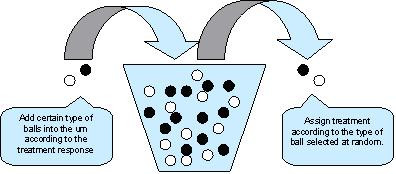
“Mugno et al. (2004) introduced a nonparametric adaptive urn design approach for estimating a dose-response curve [ 37 ].”
Regulatory Aspects in Using Surrogate Markers in Clinical Trials
Chakravarty, A. G. (2005) · Statistics in the health sciences · doi:10.1007/0-387-27080-9_3 · Cited by 11
Hardwick, J. P., & Stout, Q. F. (2003) · Cited by 10
Research works printed but not linked: 2
- Whitehead J Bayesian decision procedures with application to dose-finding studies International Journal of Pharmaceutical Medicine 1997 11 201 208
- Wang SJ Regulatory experience of adaptive designs in well-controlled clinical trials Presented at Adaptive Designs: Opportunities, Challenges and Scope in Drug Development, Washington, DC 2006
Cited by
A tutorial on pilot studies: the what, why and how
Thabane, L., Ma, J., Chu, R., Cheng, J., Ismaila, A., Rios, L. P., Robson, R., Thabane, M., Giangregorio, L., & Goldsmith, C. H. (2010) · BMC Medical Research Methodology · doi:10.1186/1471-2288-10-1 · Cited by 3,384
Best care at lower cost: the path to continuously learning health care in America
(2014) · Choice Reviews Online · doi:10.5860/choice.51-3277 · Cited by 1,363
“Advanced statistical methods, including Bayesian analysis, allow for adaptive research designs that can learn as a study advances, making studies more flexible (Chow and Chang, 2008).”
MethodAdaptive designs in clinical trials: why use them, and how to run and report them
Pallmann, P., Bedding, A. W., Choodari-Oskooei, B., Dimairo, M., Flight, L., Hampson, L. V., Holmes, J., Mander, A. P., Odondi, L., Sydes, M. R., et al. (2018) · BMC Medicine · doi:10.1186/s12916-018-1017-7 · Cited by 829
Introduction to Multi-Armed Bandits
Slivkins, A. (2019) · Foundations and Trends® in Machine Learning · doi:10.1561/2200000068 · Cited by 780
The n-of-1 clinical trial: the ultimate strategy for individualizing medicine?
Lillie, E. O., Patay, B., Diamant, J., Issell, B., Topol, E. J., & Schork, N. J. (2011) · Personalized Medicine · doi:10.2217/pme.11.7 · Cited by 706
Metadata
- Authors
- Chow, S.-C., & Chang, M.
- Affiliations
- Duke University (US)
- Takeda Oncology (United States) (US)
- Corresponding author
- Chow, Shein-Chung
- Venue
- Orphanet Journal of Rare Diseases
- Published
- 2008-05-02
- Volume
- 3
- Issue
- 1
- Pages
- 11-11
- ISSN
- 1750-1172 (ISSN-L)
- PMC
- PMC2422839
- OpenAlex
- W2044439361
- Cited by
- 482
- References
- 60
- Citations by year
- 2026: 20 · 2025: 21 · 2024: 25 · 2023: 26 · 2022: 27 · 2021: 27 · 2020: 38 · 2019: 25 · 2018: 26 · 2017: 35 · 2016: 30 · 2015: 34 · 2014: 32 · 2013: 36 · 2012: 36
- FWCI
- 2.11
- Type
- journal article
- Language
- en
- Open access
- gold
- doi.org
- Licence
- cc-by
- creativecommons.org/licenses/by/2.0 (tdm)
- Locations
- Orphanet Journal of Rare Diseases (publishedVersion, cc-by)
- PubMed Central (publishedVersion, cc-by)
- PubMed (publishedVersion)
- National University of Singapore (submittedVersion, cc-by)
- DOAJ (DOAJ: Directory of Open Access Journals) (submittedVersion)
- Funders
- School of Medicine, Duke University
- Takeda Oncology
- Topics
- Physical Sciences › Mathematics › Statistics and Probability › Statistical Methods in Clinical Trials
- Health Sciences › Medicine › Pediatrics, Perinatology and Child Health › Pharmaceutical studies and practices
- Physical Sciences › Mathematics › Statistics and Probability › Statistical Methods and Bayesian Inference
- Keywords
- adaptive trial design, protocol modification, type I error control, rare disease drug development, bortezomib, multiple myeloma, non-Hodgkin lymphoma
- MeSH terms
- Clinical Trials as Topic, Humans, Random Allocation, Research Design, Statistics as Topic, Clinical Trials, Phase II as Topic, Clinical Trials, Phase III as Topic, Rare Diseases
About these checks
Registry, retraction, Cites and statistics results are computed, not judged, with one exception: a printed reference that no index lists is read once by a model before it counts as a citation error. Claims are extracted by a model and kept only when their quote appears verbatim in the text; each cited source is then checked, with a model’s help, for whether it says what the claim relies on. Those verdicts can be wrong — read the claim’s quote and the cited source before relying on one.
Statistics and arithmetic are recomputed, not judged.
Confidence bands are shown only for fields calibrated on our annotated test set. None is calibrated yet, so no band is shown.
What counts as a claim ›How we measure confidence ›How we check this ›
Are you an author, or do you see a problem with this page? Request a review
Data sources
Bibliographic data: Semantic Scholar, OpenAlex, Crossref.
Contains information from the Semantic Scholar Academic Graph Datasets, made available under the ODC Attribution License (ODC-BY 1.0).
Semantic Scholar’s data is described in: Kinney, R., et al. (2023). The Semantic Scholar Open Data Platform. arXiv:2301.10140.
