

Structure-Function Analysis of Diacylglycerol Acyltransferase Sequences from 70 Organisms
Open accessThe DOI matches its Crossref record; 51 of the 52 references it cites were found in a registry or an index.
Abstract
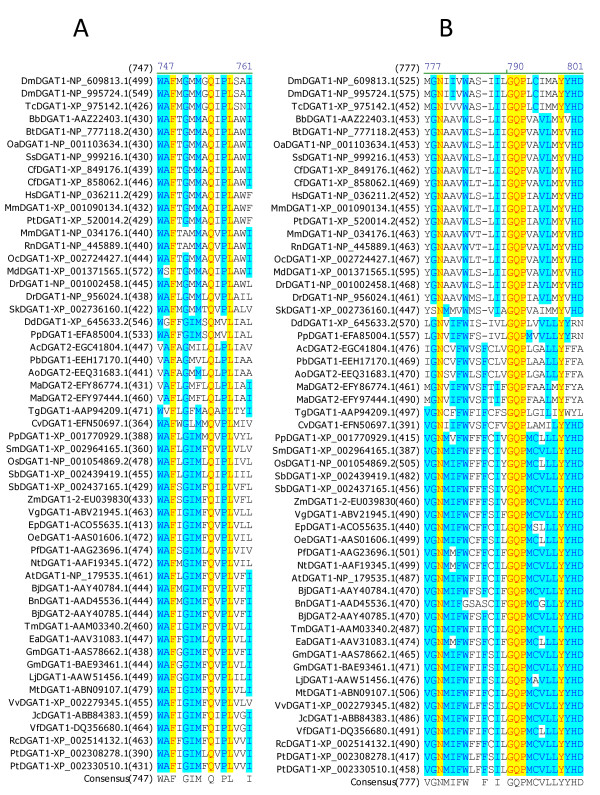
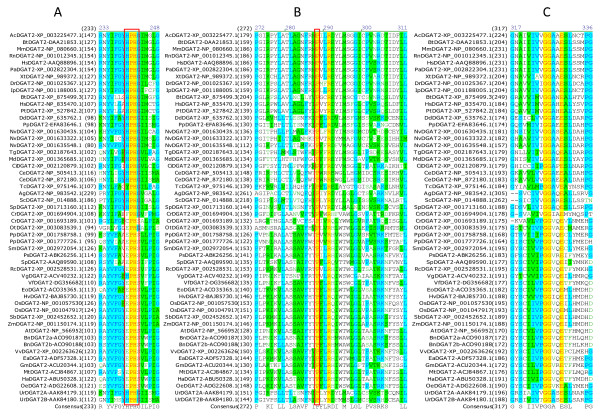
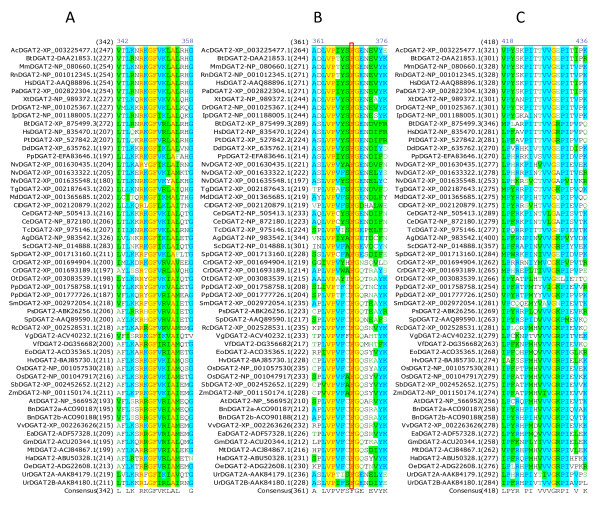
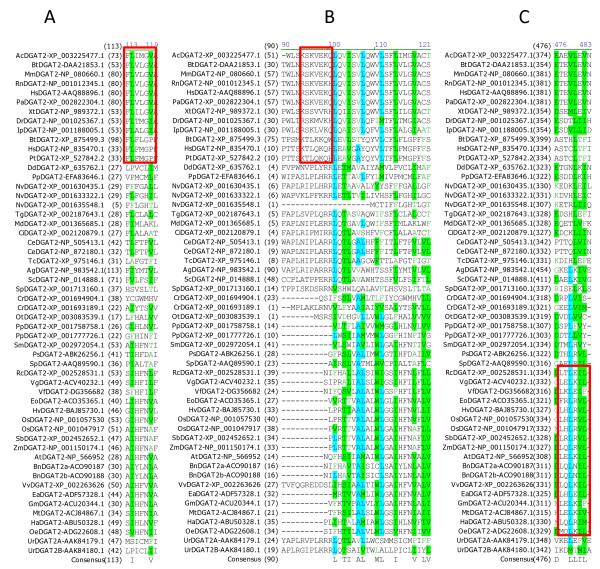
BACKGROUND: Diacylglycerol acyltransferase families (DGATs) catalyze the final and rate-limiting step of triacylglycerol (TAG) biosynthesis in eukaryotic organisms. Understanding the roles of DGATs will help to create transgenic plants with value-added properties and provide clues for therapeutic intervention for obesity and related diseases. The objective of this analysis was to identify conserved sequence motifs and amino acid residues for better understanding of the structure-function relationship of these important enzymes. RESULTS: 117 DGAT sequences from 70 organisms including plants, animals, fungi and human are obtained from database search using tung tree DGATs. Phylogenetic analysis separates these proteins into DGAT1 and DGAT2 subfamilies. These DGATs are integral membrane proteins with more than 40% of the total amino acid residues being hydrophobic. They have similar properties and amino acid composition except that DGAT1s are approximately 20 kDa larger than DGAT2s. DGAT1s and DGAT2s have 41 and 16 completely conserved amino acid residues, respectively, although only two of them are shared by all DGATs. These residues are distributed in 7 and 6 sequence blocks for DGAT1s and DGAT2s, respectively, and located at the carboxyl termini, suggesting the location of the catalytic domains. These conserved sequence blocks do not contain the putative neutral lipid-binding domain, mitochondrial targeting signal, or ER retrieval motif. The importance of conserved residues has been demonstrated by site-directed and natural mutants. CONCLUSIONS: This study has identified conserved sequence motifs and amino acid residues in all 117 DGATs and the two subfamilies. None of the completely conserved residues in DGAT1s and DGAT2s is present in recently reported isoforms in the multiple sequences alignment, raising an important question how proteins with completely different amino acid sequences could perform the same biochemical reaction. The sequence analysis should facilitate studying the structure-function relationship of DGATs with the ultimate goal to identify critical amino acid residues for engineering superb enzymes in metabolic engineering and selecting enzyme inhibitors in therapeutic application for obesity and related diseases.
Overview
The claims and statistics of this paper haven’t been checked yet.
Free: it reads the open-access text and checks the first 5 claims that cite a source we can check. Create a free account to check every claim.
Integrity signals
Registry
Cites
Statistics
Figures
Verification
Claims the paper makes
The claims and statistics of this paper haven’t been checked yet.
Free: it reads the open-access text and checks the first 5 claims that cite a source we can check. Create a free account to check every claim.
Claims other papers make about this one
Each is checked against this paper’s own text: does it say what the citing paper says it does?
The cited source says what the claim attributes to it.
In the citing paper
“Additionally, Glu243 and His163 are conserved across species50, supporting this hypothesized catalytic geometry.”
From Highly accurate protein structure prediction for the human proteome (2021) · cites this paper as [50]
Self-check
Percentages, sums and reported differences re-computed from the paper’s own numbers.
The self-check needs the paper’s full text.
Citations
Cites
Basic local alignment search tool
Altschul, S. F., Gish, W., Miller, W., Myers, E. W., & Lipman, D. J. (1990) · Journal of Molecular Biology · doi:10.1006/jmbi.1990.9999 · Cited by 98,669 · cited 1×
“DGAT sequences were obtained from Blastp search [47,48] using tung tree (Vernicia fordii) DGAT sequences [GenBank:DQ356680.”
Thompson, J. D., Higgins, D. G., & Gibson, T. J. (1994) · Nucleic Acids Research · doi:10.1093/nar/22.22.4673 · Cited by 64,617 · cited 1×
“ClustalW algorithm [51,52] of the AlignX program of the”
The neighbor-joining method: a new method for reconstructing phylogenetic trees.
(1987) · Molecular Biology and Evolution · doi:10.1093/oxfordjournals.molbev.a040454 · Cited by 59,715 · cited 1×
“This analysis was performed using the Vector NTI software (Invitrogen) based on the Neighbor-Joining method of Saitou and Nei [ 50 ].”
Clustal W and Clustal X version 2.0
Larkin, M. A., Blackshields, G., Brown, N. P., Chenna, R., McGettigan, P. A., McWilliam, H., Valentin, F., Wallace, I. M., Wilm, A., Lopez, R., et al. (2007) · Bioinformatics · doi:10.1093/bioinformatics/btm404 · Cited by 28,358
Cases, S., Smith, S. J., Zheng, Y.-W., Myers, H. M., Lear, S. R., Sande, E., Novak, S., Collins, C., Welch, C. B., Lusis, A. J., et al. (1998) · Proceedings of the National Academy of Sciences · doi:10.1073/pnas.95.22.13018 · Cited by 1,123 · cited 1×
“of DGATs are present in mammals [10,11] and plants”
Obesity resistance and multiple mechanisms of triglyceride synthesis in mice lacking Dgat
Smith, S. J., Cases, S., Jensen, D. R., Chen, H. C., Sande, E., Tow, B., Sanan, D. A., Raber, J., Eckel, R. H., & Farese, R. V. (2000) · Nature Genetics · doi:10.1038/75651 · Cited by 896 · cited 2×
“TAG, and are resistant to diet-induced obesity [18,32].”
Cloning of DGAT2, a Second Mammalian Diacylglycerol Acyltransferase, and Related Family Members
Cases, S., Stone, S. J., Zhou, P., Yen, E., Tow, B., Lardizabal, K. D., Voelker, T., & Farese, R. V. (2001) · Journal of Biological Chemistry · doi:10.1074/jbc.m106219200 · Cited by 818 · cited 1×
“of DGATs are present in mammals [10,11] and plants”
Lipopenia and Skin Barrier Abnormalities in DGAT2-deficient Mice
Stone, S. J., Myers, H. M., Watkins, S. M., Brown, B. E., Feingold, K. R., Elias, P. M., & Farese, R. V. (2004) · Journal of Biological Chemistry · doi:10.1074/jbc.m311000200 · Cited by 598 · cited 3×
“Plants and animals deficient in DGATs accumulate less TAG [ 17-19 ].”
Shockey, J. M., Gidda, S. K., Chapital, D. C., Kuan, J.-C., Dhanoa, P. K., Bland, J. M., Rothstein, S. J., Mullen, R. T., & Dyer, J. M. (2006) · The Plant Cell · doi:10.1105/tpc.106.043695 · Cited by 585 · cited 7×
“This sequence analysis also shows that the pentapeptide (LKLEI) ER-retrieval motif identified at the extreme carboxyl terminus of tung DGAT2 [13] is only modestly conserved in plant DGAT2s but not in animal or fungus”
InfluentialThe characterization of amino acid sequences in proteins by statistical methods
Zimmerman, J. M., Eliezer, N., & Simha, R. (1968) · Journal of Theoretical Biology · doi:10.1016/0022-5193(68)90069-6 · Cited by 552 · cited 1×
“The properties and amino acid compositions of DGATs were analyzed using Vector NTI software (Invitrogen) [ 49 ].”
Jako, C., Kumar, A., Wei, Y., Zou, J., Barton, D. L., Giblin, E. M., Covello, P. S., & Taylor, D. C. (2001) · Plant Physiology · doi:10.1104/pp.126.2.861 · Cited by 538 · cited 1×
“enzymes increases TAG content in plants [14,21-26],”
Protein database searches for multiple alignments.
Altschul, S. F., & Lipman, D. J. (1990) · Proceedings of the National Academy of Sciences · doi:10.1073/pnas.87.14.5509 · Cited by 483 · cited 1×
“DGAT sequences were obtained from Blastp search [47,48] using tung tree (Vernicia fordii) DGAT sequences [GenBank:DQ356680.”
A phenylalanine in DGAT is a key determinant of oil content and composition in maize
Zheng, P., Allen, W. B., Roesler, K., Williams, M. E., Zhang, S., Li, J., Glassman, K., Ranch, J., Nubel, D., Solawetz, W., et al. (2008) · Nature Genetics · doi:10.1038/ng.85 · Cited by 453 · cited 2×
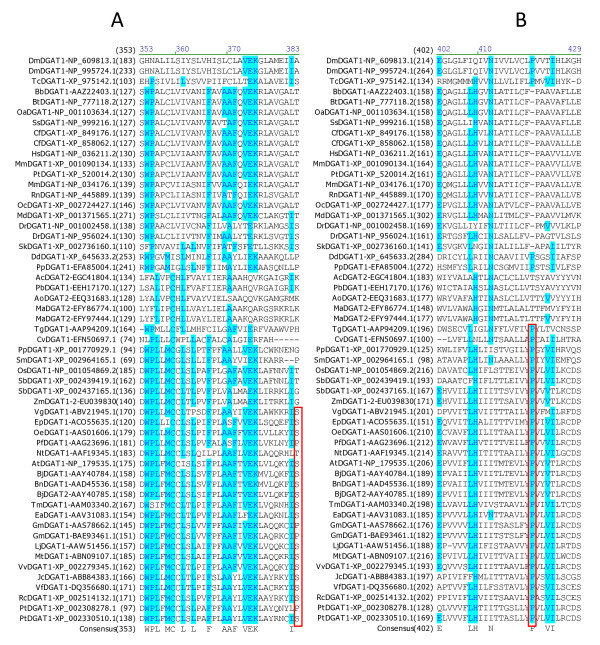
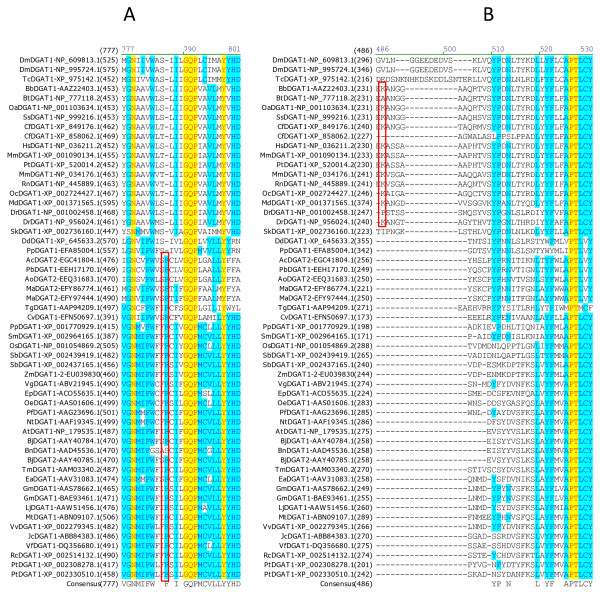
“ZmDGAT1-2EU039830 [Zea mays] 1 MAPPPSMPAA SDRAGPGRDA GDSSSLRLRR APSADAGDLA GDSSGGLREN GEPQSPTNPP PQEQQQHEML 71 YYRASAPAHR RVKESPLSSD AIFRQSHAGL LNLCIVVLIA VNSRLIIENL MKYGLLIRAG FWFSARSLGD 141 WPLLMCCLTL PVFPLVALMA EKLITRKLIG EHVVILLHII ITTSAIVYPV VVTLKCDSAV LSGFVLMFLA 211 SIMWMKLVSY AHTNYDIRVL SKSTEKGAAY GNYVDPENMK DP…”
Grisart, B., Farnir, F., Karim, L., Cambisano, N., Kim, J.-J., Kvasz, A., Mni, M., Simon, P., Frère, J.-M., Coppieters, W., et al. (2004) · Proceedings of the National Academy of Sciences · doi:10.1073/pnas.0308518100 · Cited by 447 · cited 1×
“The K allele, causing an increase in milk fat percentage in the live animal, is characterized by a higher Vmax in producing triglycerides than the A allele [ 46 ].”
Imaging of Lipid Biosynthesis: How a Neutral Lipid Enters Lipid Droplets
Kuerschner, L., Moessinger, C., & Thiele, C. (2008) · Traffic · doi:10.1111/j.1600-0854.2007.00689.x · Cited by 411 · cited 1×
“domains [13,33,34], localized to endoplasmic reticulum of plant and animal cells [13,34], and associated with mitochondria in COS-7 cells [35,42] and lipid bodies in 3T3L1 adipocytes [42].”
Winter, A., Krämer, W., Werner, F. A. O., Kollers, S., Kata, S., Durstewitz, G., Buitkamp, J., Womack, J. E., Thaller, G., & Fries, R. (2002) · Proceedings of the National Academy of Sciences · doi:10.1073/pnas.142293799 · Cited by 403 · cited 2×
“the lysine-encoding allele being associated with higher milk fat content [41].”
Stone, S. J., Levin, M. C., Zhou, P., Han, J., Walther, T. C., & Farese, R. V. (2009) · Journal of Biological Chemistry · doi:10.1074/jbc.m805768200 · Cited by 390 · cited 5×
“geting signal (RXKXXK in mouse DGAT2) [ 35 ] and ER retrieval motif (LKLEI in tung DGAT2) [13].”
InfluentialThe Arabidopsis thaliana TAG1 mutant has a mutation in a diacylglycerol acyltransferase gene
Zou, J., Wei, Y., Jako, C., Kumar, A., Selvaraj, G., & Taylor, D. C. (1999) · The Plant Journal · doi:10.1046/j.1365-313x.1999.00555.x · Cited by 376 · cited 1×
“Plants and animals deficient in DGATs accumulate less TAG [ 17-19 ].”
DGAT2 Is a New Diacylglycerol Acyltransferase Gene Family
Lardizabal, K. D., Mai, J. T., Wagner, N. W., Wyrick, A., Voelker, T., & Hawkins, D. J. (2001) · Journal of Biological Chemistry · doi:10.1074/jbc.m106168200 · Cited by 371 · cited 1×
“[12,13] with additional forms reported in burning bush (Euonymus alatus) [14], peanut [15] and Arabidopsis”
Liu, L., Zhang, Y., Chen, N., Shi, X., Tsang, B., & Yu, Y.-H. (2007) · Journal of Clinical Investigation · doi:10.1172/jci30565 · Cited by 356
Saha, S., Enugutti, B., Rajakumari, S., & Rajasekharan, R. (2006) · Plant Physiology · doi:10.1104/pp.106.082198 · Cited by 339 · cited 1×
“[12,13] with additional forms reported in burning bush (Euonymus alatus) [14], peanut [15] and Arabidopsis”
Burgal, J., Shockey, J., Lu, C., Dyer, J., Larson, T., Graham, I., & Browse, J. (2008) · Plant Biotechnology Journal · doi:10.1111/j.1467-7652.2008.00361.x · Cited by 327 · cited 1×
“enzymes increases TAG content in plants [14,21-26],”
Increased insulin and leptin sensitivity in mice lacking acyl CoA:diacylglycerol acyltransferase 1
Chen, H. C., Smith, S. J., Ladha, Z., Jensen, D. R., Ferreira, L. D., Pulawa, L. K., McGuire, J. G., Pitas, R. E., Eckel, R. H., & Farese, R. V. (2002) · Journal of Clinical Investigation · doi:10.1172/jci0214672 · Cited by 266 · cited 1×
“TAG, and are resistant to diet-induced obesity [18,32].”
Andrianov, V., Borisjuk, N., Pogrebnyak, N., Brinker, A., Dixon, J., Spitsin, S., Flynn, J., Matyszczuk, P., Andryszak, K., Laurelli, M., et al. (2010) · Plant Biotechnology Journal · doi:10.1111/j.1467-7652.2009.00458.x · Cited by 262 · cited 1×
“enzymes increases TAG content in plants [14,21-26],”
Expression in yeast and tobacco of plant cDNAs encoding acyl CoA:diacylglycerol acyltransferase
Bouvier‐Navé, P., Benveniste, P., Oelkers, P., Sturley, S. L., & Schaller, H. (2000) · European Journal of Biochemistry · doi:10.1046/j.1432-1327.2000.00961.x · Cited by 259 · cited 1×
“enzymes increases TAG content in plants [14,21-26],”
Expression of Umbelopsis ramanniana DGAT2A in Seed Increases Oil in Soybean
Lardizabal, K., Effertz, R., Levering, C., Mai, J., Pedroso, M. C., Jury, T., Aasen, E., Gruys, K., & Bennett, K. (2008) · Plant Physiology · doi:10.1104/pp.108.123042 · Cited by 244 · cited 1×
“enzymes increases TAG content in plants [14,21-26],”
DGAT1 Expression Increases Heart Triglyceride Content but Ameliorates Lipotoxicity
Liu, L., Shi, X., Bharadwaj, K. G., Ikeda, S., Yamashita, H., Yagyu, H., Schaffer, J. E., Yu, Y.-H., & Goldberg, I. J. (2009) · Journal of Biological Chemistry · doi:10.1074/jbc.m109.049817 · Cited by 239
Stone, S. J., Levin, M. C., & Farese, R. V. (2006) · Journal of Biological Chemistry · doi:10.1074/jbc.m607986200 · Cited by 227 · cited 9×
“Mutations at F80/L81/L83 in mouse DGAT2 [34] and”
InfluentialShannon, J. C., Pien, F.-M., Cao, H., & Liu, K.-C. (1998) · Plant Physiology · doi:10.1104/pp.117.4.1235 · Cited by 214 · cited 1×
“adenylate translocators [5], starch/glycogen synthases Correspondence: Heping.”
Self-citationXu, J., Francis, T., Mietkiewska, E., Giblin, E. M., Barton, D. L., Zhang, Y., Zhang, M., & Taylor, D. C. (2008) · Plant Biotechnology Journal · doi:10.1111/j.1467-7652.2008.00358.x · Cited by 182
Identification of the Soluble Starch Synthase Activities of Maize Endosperm1
Cao, H., Imparl-Radosevich, J., Guan, H., Keeling, P. L., James, M. G., & Myers, A. M. (1999) · Plant Physiology · doi:10.1104/pp.120.1.205 · Cited by 170 · cited 2×
“sequence motifs in the different isoforms from diverse organisms [6,9].”
Self-citationMcFie, P. J., Stone, S. L., Banman, S. L., & Stone, S. J. (2010) · Journal of Biological Chemistry · doi:10.1074/jbc.m110.163691 · Cited by 150 · cited 3×
“required for the catalytic activity of DGAT1 but may be involved in regulating enzyme activity and dimer/tetramer formation [45].”
BackgroundInfluentialDurrett, T. P., McClosky, D. D., Tumaney, A. W., Elzinga, D. A., Ohlrogge, J. B., & Pollard, M. (2010) · Proceedings of the National Academy of Sciences · doi:10.1073/pnas.1001707107 · Cited by 141 · cited 3×
“enzymes increases TAG content in plants [14,21-26],”
Kamisaka, Y., Tomita, N., Kimura, K., Kainou, K., & Uemura, H. (2007) · Biochemical Journal · doi:10.1042/bj20070449 · Cited by 114 · cited 1×
“Over-expression of DGAT enzymes increases TAG content in plants [14,21-26], animals [27-30] and yeast [ 31 ].”
Beatty, M. K., Rahman, A., Cao, H., Woodman, W. L., Lee, M., Myers, A. M., & James, M. G. (1999) · PLANT PHYSIOLOGY · doi:10.1104/pp.119.1.255 · Cited by 106 · cited 2×
“sequence motifs in the different isoforms from diverse organisms [6,9].”
Self-citationLiu, Q., Siloto, R. M. P., Snyder, C. L., & Weselake, R. J. (2011) · Journal of Biological Chemistry · doi:10.1074/jbc.m110.204412 · Cited by 105 · cited 7×
“domains [13,33,34], localized to endoplasmic reticulum of plant and animal cells [13,34], and associated with mitochondria in COS-7 cells [35,42] and lipid bodies in 3T3L1 adipocytes [42].”
InfluentialO’Quin, J. B., Bourassa, L., Zhang, D., Shockey, J. M., Gidda, S. K., Fosnot, S., Chapman, K. D., Mullen, R. T., & Dyer, J. M. (2010) · Journal of Biological Chemistry · doi:10.1074/jbc.m110.135236 · Cited by 104 · cited 1×
“Many endogenous proteins occur in extremely low abundance (such as the anti-inflammatory protein tristetraprolin/zinc-finger protein 36, TTP/ZFP36) [1] and are labile (such as omega-3 fatty-acid desaturase, FAD3) [ 2 ], which complicates characterization of those proteins.”
Cao, H., Tuttle, J. S., & Blackshear, P. J. (2004) · Journal of Biological Chemistry · doi:10.1074/jbc.m400900200 · Cited by 103 · cited 1×
“Many endogenous proteins occur in extremely low abundance (such as the anti-inflammatory protein tristetraprolin/zinc-finger protein 36, TTP/ZFP36) [ 1 ] and are labile (such as omega-3 fatty-acid desaturase, FAD3) [2], which complicates characterization of those proteins.”
Self-citationNykiforuk, C. L. (2002) · Biochimica et Biophysica Acta (BBA) - Molecular and Cell Biology of Lipids · doi:10.1016/s1388-1981(01)00200-1 · Cited by 103 · cited 1×
“Since this gene is isolated from suspension cultures of Brassica napus [39] and the native form is not available, it is not known”
Sapa, H., Krishna, T. H. A., Saha, S., Negi, A. S., & Rajasekharan, R. (2010) · Journal of Biological Chemistry · doi:10.1074/jbc.m110.133116 · Cited by 84
Cao, H., Deterding, L. J., Venable, J. D., Kennington, E. A., Yates, J. R., Tomer, K. B., & Blackshear, P. J. (2006) · Biochemical Journal · doi:10.1042/bj20051316 · Cited by 82 · cited 1×
“The protein sequences we analyzed previously include the TTP/ZFP36 family involved in mRNA binding and destabilization [3,4],”
Self-citationChen, H. C., Rao, M., Sajan, M. P., Standaert, M., Kanoh, Y., Miura, A., Farese, R. V., & Farese, R. V. (2004) · Diabetes · doi:10.2337/diabetes.53.6.1445 · Cited by 58 · cited 1×
“are resistant to diet-induced obesity [18,20] and lack”
BackgroundCao, H., Deterding, L. J., & Blackshear, P. J. (2007) · Expert Review of Proteomics · doi:10.1586/14789450.4.6.711 · Cited by 55 · cited 1×
“The protein sequences we analyzed previously include the TTP/ZFP36 family involved in mRNA binding and destabilization [3,4],”
Self-citationRoorda, B. D., Hesselink, M. K. C., Schaart, G., Moonen-Kornips, E., Martínez-Martínez, P., Losen, M., De Baets, M. H., Mensink, R. P., & Schrauwen, P. (2005) · Journal of Lipid Research · doi:10.1194/jlr.m400416-jlr200 · Cited by 45
Evidence for essential arginine residues at the active sites of maize branching enzymes
Cao, H., & Preiss, J. (1996) · Journal of Protein Chemistry · doi:10.1007/bf01887118 · Cited by 29 · cited 1×
“[6], starch/glycogen branching enzymes [7,8], and”
Self-citationKamisaka, Y., Kimura, K., Uemura, H., & Shibakami, M. (2010) · Applied Microbiology and Biotechnology · doi:10.1007/s00253-010-2725-x · Cited by 29
Alam, M., Gilham, D., Vance, D. E., & Lehner, R. S. (2005) · Journal of Lipid Research · doi:10.1194/jlr.m500344-jlr200 · Cited by 23 · cited 2×
“[34] which was shown to be present in proteins that either bind to or metabolize neutral lipids [36].”
Expression of tung tree diacylglycerol acyltransferase 1 in E. coli
Cao, H., Chapital, D. C., Shockey, J. M., & Klasson, K. T. (2011) · BMC Biotechnology · doi:10.1186/1472-6750-11-73 · Cited by 21 · cited 1×
“teins presents extra huddle to purification of recombinant DGATs from any source [43,44].”
Self-citationLiu, Q., Siloto, R. M. P., & Weselake, R. J. (2010) · Biochemistry · doi:10.1021/bi9020499 · Cited by 19 · cited 2×
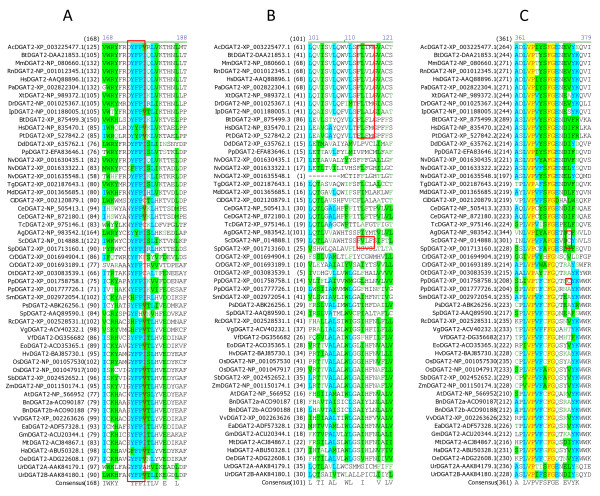
“1 [Saccharomyces cerevisiae] 1 MSGTFNDIRR RKKEEGSPTA GITERHENKS LSSIDKREQT LKPQLESCCP LATPFERRLQ TLAVAWHTSS 71 FVLFSIFTLF AISTPALWVL AIPYMIYFFF DRSPATGEVV NRYSLRFRSL PIWKWYCDYF PISLIKTVNL 141 KPTFTLSKNK RVNEKNYKIR LWPTKYSINL KSNSTIDYRN QECTGPTYLF GYHPHGIGAL GAFGAFATEG 211 CNYSKIFPGI PISLMTLVTQ FHIPLYRDYL LALGISSVSR KN…”
Cao, H., & Shannon, J. C. (1996) · Physiologia Plantarum · doi:10.1111/j.1399-3054.1996.tb00530.x · Cited by 11 · cited 1×
“if this replacement was caused by mutations due to cell culture conditions, considering that cell culture could cause significant changes in gene expression [40].”
Self-citationCao, H., & Preiss, J. (1999) · Journal of Protein Chemistry · doi:10.1023/a:1021003915810 · Cited by 5 · cited 1×
“[6], starch/glycogen branching enzymes [7,8], and”
Self-citation
Research works printed but not linked: 1
- Cao H Chapital DC Howard OD Jiang XN Shockey JM Klasson KT Purification of recombinant tung tree diacylglycerol acyltransferases from E. coli FASEB J 2011 25 765.8
Cited by
Highly accurate protein structure prediction for the human proteome
Tunyasuvunakool, K., Adler, J., Wu, Z., Green, T., Zielinski, M., Žídek, A., Bridgland, A., Cowie, A., Meyer, C., Laydon, A., et al. (2021) · Nature · doi:10.1038/s41586-021-03828-1 · Cited by 3,025
Acyl-CoA:diacylglycerol acyltransferase: Molecular biology, biochemistry and biotechnology
Liu, Q., Siloto, R. M. P., Lehner, R., Stone, S. J., & Weselake, R. J. (2012) · Progress in Lipid Research · doi:10.1016/j.plipres.2012.06.001 · Cited by 374
“These conserved motifs discussed above have also been identified by Cao [155] using a large number of DGAT2 polypeptides (Fig.”
BackgroundInfluentialZienkiewicz, K., Du, Z.-Y., Ma, W., Vollheyde, K., & Benning, C. (2016) · Biochimica et Biophysica Acta (BBA) - Molecular and Cell Biology of Lipids · doi:10.1016/j.bbalip.2016.02.008 · Cited by 225
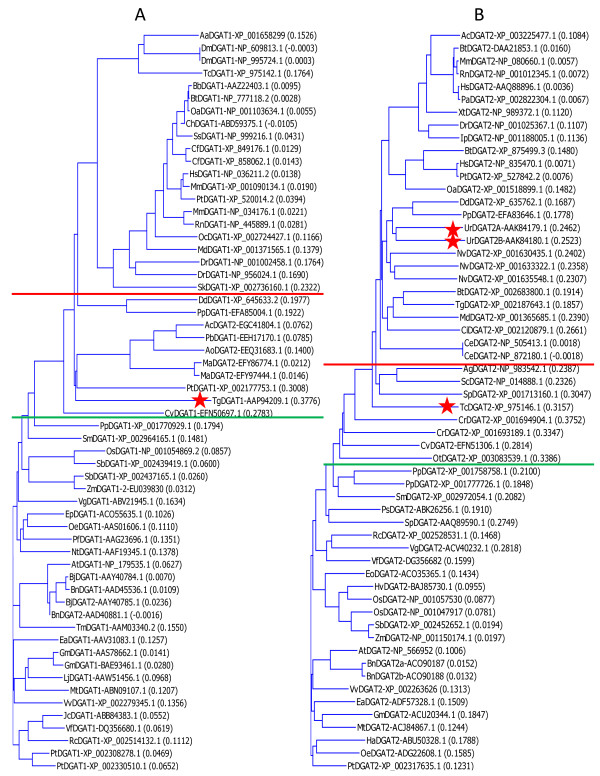
“Previous phylogenetic analyses of 117 DGATs from 70 organisms [46] comparing the”
BackgroundMethodRole of DGAT enzymes in triacylglycerol metabolism
Bhatt-Wessel, B., Jordan, T. W., Miller, J. H., & Peng, L. (2018) · Archives of Biochemistry and Biophysics · doi:10.1016/j.abb.2018.08.001 · Cited by 203
Liu, J., Han, D., Yoon, K., Hu, Q., & Li, Y. (2016) · The Plant Journal · doi:10.1111/tpj.13143 · Cited by 155
“Bioinformatics analysis revealed the presence of multiple conserved motifs, including the YFP and HPHG motifs (Stone et al., 2006; Liu et al., 2011), in the DGAT2 family (Cao, 2011; Chen and Smith, 2012).”
Background
Metadata
- Authors
- Cao, H.
- Affiliations
- Agricultural Research Service (US)
- Corresponding author
- Cao, Heping
- ORCID
- Cao, Heping
- Venue
- BMC Research Notes
- Published
- 2011-07-21
- Volume
- 4
- Issue
- 1
- Pages
- 249-249
- ISSN
- 1756-0500 (ISSN-L)
- PMC
- PMC3157451
- OpenAlex
- W2163357966
- Cited by
- 122
- References
- 52
- Citations by year
- 2026: 2 · 2025: 2 · 2024: 6 · 2023: 8 · 2022: 9 · 2021: 19 · 2020: 6 · 2019: 8 · 2018: 7 · 2017: 14 · 2016: 10 · 2015: 9 · 2014: 7 · 2013: 9 · 2012: 6
- FWCI
- 3.01
- Type
- journal article
- Language
- en
- Open access
- gold
- doi.org
- Licence
- cc-by
- creativecommons.org/licenses/by/2.0 (tdm)
- Locations
- BMC Research Notes (publishedVersion, cc-by)
- PubMed Central (publishedVersion, cc-by)
- PubMed (publishedVersion)
- DOAJ (DOAJ: Directory of Open Access Journals) (submittedVersion)
- Funders
- U.S. Department of Agriculture
- Agricultural Research Service
- Topics
- Life Sciences › Biochemistry, Genetics and Molecular Biology › Biochemistry › Lipid metabolism and biosynthesis
- Health Sciences › Medicine › Cardiology and Cardiovascular Medicine › Lipid metabolism and disorders
- Life Sciences › Biochemistry, Genetics and Molecular Biology › Molecular Biology › Enzyme Catalysis and Immobilization
- Keywords
- diacylglycerol acyltransferase, DGAT1, DGAT2, triglyceride synthesis, conserved motifs, conserved residues, structure-function relationship, phylogenetic analysis, integral membrane proteins, catalytic domain, site-directed mutants, obesity treatment, metabolic engineering
About these checks
Registry, retraction, Cites and statistics results are computed, not judged, with one exception: a printed reference that no index lists is read once by a model before it counts as a citation error. Claims are extracted by a model and kept only when their quote appears verbatim in the text; each cited source is then checked, with a model’s help, for whether it says what the claim relies on. Those verdicts can be wrong — read the claim’s quote and the cited source before relying on one.
Statistics and arithmetic are recomputed, not judged.
Confidence bands are shown only for fields calibrated on our annotated test set. None is calibrated yet, so no band is shown.
What counts as a claim ›How we measure confidence ›How we check this ›
Are you an author, or do you see a problem with this page? Request a review
Data sources
Bibliographic data: Semantic Scholar, OpenAlex, Crossref.
Contains information from the Semantic Scholar Academic Graph Datasets, made available under the ODC Attribution License (ODC-BY 1.0).
Semantic Scholar’s data is described in: Kinney, R., et al. (2023). The Semantic Scholar Open Data Platform. arXiv:2301.10140.
