

Canine and feline cardiopulmonary parasitic nematodes in Europe: emerging and underestimated
Open accessThe DOI matches its Crossref record; 149 of the 159 references it cites were found in a registry or an index; none of the 209 sources its claims cite is checked for support yet.
Abstract
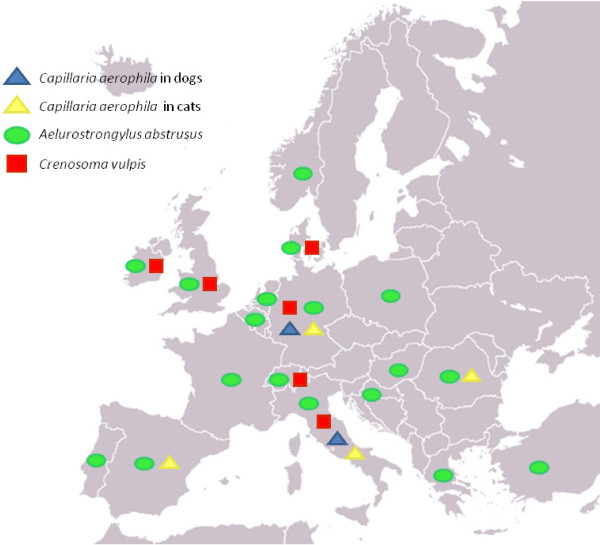
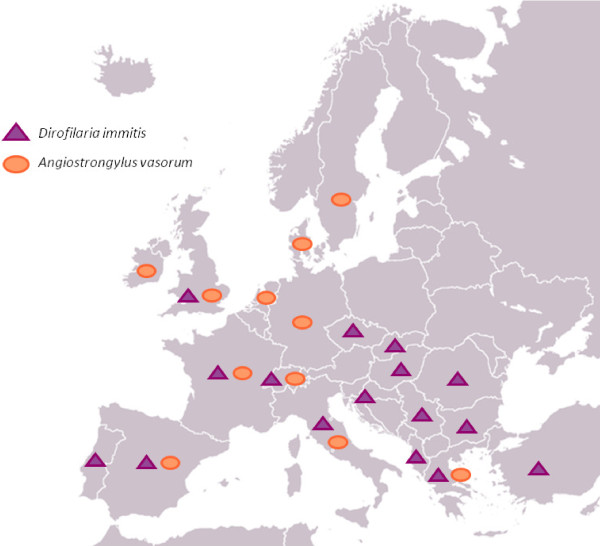
Cardiopulmonary nematodes of dogs and cats cause parasitic diseases of central relevance in current veterinary practice. In the recent past the distribution of canine and feline heartworms and lungworms has increased in various geographical areas, including Europe. This is true especially for the metastrongyloids Aelurostrongylus abstrusus, Angiostrongylus vasorum and Crenosoma vulpis, the filarioid Dirofilaria immitis and the trichuroid Eucoleus aerophilus (syn. Capillaria aerophila). The reasons of this emergence are little known but many drivers such as global warming, changes in vector epidemiology and movements in animal populations, may be taken into account. The purpose of this article is to review the knowledge of the most important heartworm and lungworm infections of dogs and cats in Europe. In particular recent advances in epidemiology, clinical and control are described and discussed.
Overview
CoChat Summary
TL;DR
This narrative review summarizes the emergence and spread of canine and feline cardiopulmonary nematodes in Europe, focusing on *Aelurostrongylus abstrusus*, *Angiostrongylus vasorum*, *Crenosoma vulpis*, *Dirofilaria immitis*, and *Eucoleus aerophilus*. It argues these infections are underestimated, diagnostically challenging, and increasingly reported in previously non-endemic areas, with climate, vector, and animal-movement drivers implicated.
Key findings
- *D. immitis* and *A. vasorum* show geographic spread into previously free areas, with new foci such as *D. immitis* in south and central Italy and *A. vasorum* in Germany and The Netherlands; *A. abstrusus* prevalence is reported as ~20% in endemic areas of Portugal and Italy.
- The Baermann method remains the gold standard for diagnosing *A. vasorum*, *C. vulpis*, and *A. abstrusus*, but it is time-consuming (12–48 hrs) and can produce false negatives due to prepatent infections and intermittent larval shedding; zinc sulphate flotation may miss 40–90% of positive animals.
- Molecular and serological diagnostics show higher performance: a nested PCR for *A. abstrusus* had ~100% specificity and 97% sensitivity; a real-time PCR for *A. vasorum* detected a single L1 in 200 μl blood and 200 mg faeces; a sandwich-ELISA for *A. vasorum* antigen had 92% sensitivity and 100% specificity.
- Treatment evidence includes fenbendazole at 20 mg/kg daily for 5 days or 50 mg/kg for 15 days for feline aelurostrongylosis; imidacloprid 10%/moxidectin 2.5% spot-on had 85.2% efficacy against canine angiostrongylosis versus 91.3% for fenbendazole, and 100% efficacy against *C. vulpis*; milbemycin oxime had 98–99% efficacy against *C. vulpis*.
Methods
- Narrative review of current knowledge on the most important heartworm and lungworm infections of dogs and cats in Europe, covering epidemiology, clinical and pathological significance, diagnosis, and control.
- No primary sample or new data collection is described; the paper synthesizes published literature, with Tables 1–2 and Figures 1–2 reporting prevalence or single descriptions and distribution based on refs [14,15,18-27,37,46-89].
- Main analysis is qualitative synthesis and discussion of recent advances, diagnostic challenges, and treatment/control options.
Limitations
- The paper states that the reasons for emergence are little known; detailed information on key biological features of *A. vasorum* is lacking; epidemiological data for *E. aerophilus* in Europe are fragmentary; and treatment protocols have mostly been anecdotal and empirically derived.
- The paper notes diagnostic limitations: Baermann examination is time-consuming and can yield false negatives; microfilaria detection lacks sensitivity because up to 20–30% of *D. immitis*-infected dogs are not microfilaremic; and antigen tests have limitations in cats.
- Evident from the text: as a narrative review, it does not describe a systematic search strategy, formal quality assessment, or quantitative meta-analysis.
Model-written summary. Check it against the paper before relying on it.
Integrity signals
Registry
Cites
Statistics
Figures
Verification
Claims the paper makes
0 Valid · 3 Not valid · 98 Not checked · 38 Own results and interpretations
None of the sources cited for this claim could be matched to a paper, so there is nothing to check it against.
In the paper
“As a likely consequence of these factors, the most recent papers report a trend in the geographic spread of both of the heartworms, D. immitis and A. vasorum, into previously free areas [5-9].”
§ Canine and feline cardiopulmonary parasitic nematodes in Europe: emerging and underestimated > Distribution in Europe: changing patterns, certainties and dilemmas
What the sources say
- Not matchedcites [5]
The reference list we hold has no entry [5].
- Not matchedcites [6]
The reference list we hold has no entry [6].
- Not matchedcites [7]
The reference list we hold has no entry [7].
- Not matchedcites [8]
The reference list we hold has no entry [8].
- Not matchedcites [9]
The reference list we hold has no entry [9].
hedgedstates an association- Asserted: passes — The authors put it forward as true.
- Checkable: passes — It can be checked against evidence.
- Load-bearing: passes — The paper’s conclusions depend on it.
- Based: passes — The paper gives a reason why it holds.
- Not matched
None of the sources cited for this claim could be matched to a paper, so there is nothing to check it against.
In the paper
“Human infection with D. immitis has been mostly reported from USA and Far East especially where the parasite is endemic in the dog population [92,116].”
§ Canine and feline cardiopulmonary parasitic nematodes in Europe: emerging and underestimated > Pathological significance
What the sources say
- Not matchedcites [92]
The reference list we hold has no entry [92].
- Not matchedcites [116]
The reference list we hold has no entry [116].
plainstates an association- Asserted: passes — The authors put it forward as true.
- Checkable: passes — It can be checked against evidence.
- Load-bearing: unclear — It is unclear whether the paper’s conclusions depend on it.
- Based: passes — The paper gives a reason why it holds.
- Not matched
None of the sources cited for this claim could be matched to a paper, so there is nothing to check it against.
In the paper
“Respiratory signs, e.g. mild to intense cough, sneezing, mucopurulent nasal discharge, dyspnoea, open-mouthed abdominal breathing, and even death, are most often observed in young, debilitated and/or immunosuppressed animals [48,101-103].”
§ Canine and feline cardiopulmonary parasitic nematodes in Europe: emerging and underestimated > Pathological significance
What the sources say
- Not matchedcites [48]
The reference list we hold has no entry [48].
- Not matchedcites [101]
The reference list we hold has no entry [101].
- Not matchedcites [102]
The reference list we hold has no entry [102].
- Not matchedcites [103]
The reference list we hold has no entry [103].
plainstates an association- Asserted: passes — The authors put it forward as true.
- Checkable: passes — It can be checked against evidence.
- Load-bearing: unclear — It is unclear whether the paper’s conclusions depend on it.
- Based: passes — The paper gives a reason why it holds.
- Not matched
In the paper
“The last described report was a cryptic case of infection in a woman from Serbia that resembled a bronchial carcinoma [36].”
§ Canine and feline cardiopulmonary parasitic nematodes in Europe: emerging and underestimated > Pathological significance
What the sources say
- Not matchedcites [36]
The reference list we hold has no entry [36].
plainSingle case- Asserted: passes — The authors put it forward as true.
- Checkable: passes — It can be checked against evidence.
- Load-bearing: unclear — It is unclear whether the paper’s conclusions depend on it.
- Based: passes — The paper gives a reason why it holds.
- Not matched
None of the sources cited for this claim could be matched to a paper, so there is nothing to check it against.
In the paper
“A distinctive clinical sign for A. vasorum infection is the presence of bleeding disorders and coagulopathies, likely due to disseminated intravascular coagulation [9,94,95].”
§ Canine and feline cardiopulmonary parasitic nematodes in Europe: emerging and underestimated > Pathological significance
What the sources say
- Not matchedcites [9]
The reference list we hold has no entry [9].
- Not matchedcites [94]
The reference list we hold has no entry [94].
- Not matchedcites [95]
The reference list we hold has no entry [95].
hedgedstates a possible cause- Asserted: passes — The authors put it forward as true.
- Checkable: passes — It can be checked against evidence.
- Load-bearing: unclear — It is unclear whether the paper’s conclusions depend on it.
- Based: passes — The paper gives a reason why it holds.
- Not matched
74 more claims
Create a free account to see all 139 claims and every source verdict.
- It may state two separate claims as one. 44
- Probably not a substantial claim. 20
Claims other papers make about this one
Each is checked against this paper’s own text: does it say what the citing paper says it does?
The source backs part of the claim, not all of it — or backs it for a different population, condition or comparison.
In the citing paper
“Additionally, the epidemiology of vector-borne parasites is associated with vector phenology and biology, movements of goods and animals, globalization, increase of wildlife in peri-urban and urban areas, and climate changes [2,3,51].”
From Fleas infesting pets in the era of emerging extra-intestinal nematodes (2013) · cites this paper as [3]
Experimental — accuracy not yet measuredThe source backs part of the claim, not all of it — or backs it for a different population, condition or comparison.
In the citing paper
“Considering that in Italy, and possibly in other countries, intermediate and paratenic hosts of heartworms and lungworms can be present throughout the year [2,3], the opportunity of all-year-round controls should be taken into account.”
From Fleas infesting pets in the era of emerging extra-intestinal nematodes (2013) · cites this paper as [3]
Experimental — accuracy not yet measuredThe source backs part of the claim, not all of it — or backs it for a different population, condition or comparison.
In the citing paper
“Indeed, global climate change is influencing the ecology of helminths with multiple hosts and different transmission routes.”
From Pet roundworms and hookworms: A continuing need for global worming (2012) · cites this paper as [3]
Experimental — accuracy not yet measuredThe source backs part of the claim, not all of it — or backs it for a different population, condition or comparison.
In the citing paper
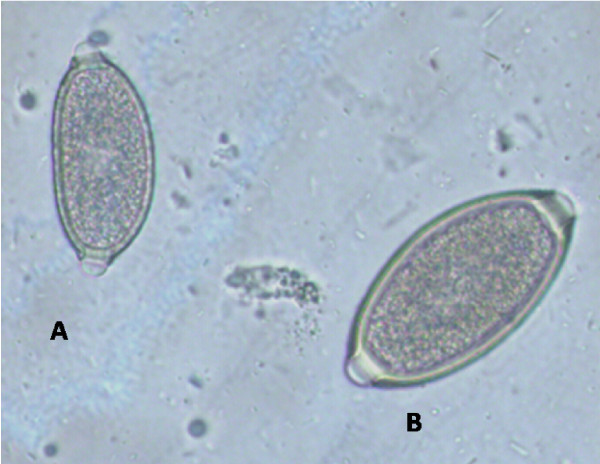
“Eggs of E. aerophilus have asymmetrical bipolar plugs [3,12,66,67].”
From Are we paying too much attention to cardio-pulmonary nematodes and neglecting old-fashioned worms like Trichuris vulpis? (2011) · cites this paper as [12]
Experimental — accuracy not yet measuredThe source backs part of the claim, not all of it — or backs it for a different population, condition or comparison.
In the citing paper
“A key example for Europe is Italy, where D. immitis is not only stable in hyper-endemic areas (i.e. Northern regions) where T. vulpis has been recently reported in both dogs and in the environment [54,56-58], but also in new autochthonous foci in the south and the center of the Country [12,77,83].”
From Are we paying too much attention to cardio-pulmonary nematodes and neglecting old-fashioned worms like Trichuris vulpis? (2011) · cites this paper as [12]
Experimental — accuracy not yet measured
18 more claims about this paper
Create a free account to see every claim other papers make about this one.
Citations
Cites
Effects of environmental change on emerging parasitic diseases
Patz, J. A., Graczyk, T. K., Geller, N., & Vittor, A. Y. (2000) · International Journal for Parasitology · doi:10.1016/s0020-7519(00)00141-7 · Cited by 1,206
Veterinary Clinical Parasitology
Benbrook, E., & Sloss, M. (1955) · Iowa State University Press eBooks · doi:10.31274/isudp.1955.76 · Cited by 1,087
Bowman, D. D., Hendrix, C. M., Lindsay, D. S., & Barr, S. C. (2002) · doi:10.1002/9780470376805 · Cited by 638
Chapter 4 Heartworm Disease in Animals and Humans
McCall, J. W., Genchi, C., Kramer, L. H., Guerrero, J., & Venco, L. (2008) · Advances in Parasitology · doi:10.1016/s0065-308x(08)00204-2 · Cited by 609 · cited 9×
“Such pre-treatment results in the reduction of adult worm mass and allows any immature worms present to fully mature at which time they are optimally susceptible to adulticide [92,157].”
BackgroundInfluentialHuman behaviour and the epidemiology of parasitic zoonoses
Macpherson, C. N. L. (2005) · International Journal for Parasitology · doi:10.1016/j.ijpara.2005.06.004 · Cited by 431 · cited 1×
“Nonetheless, for gastropod-transmitted parasitoses, the geographic spread of slugs and snails driven by conditions of global warming may play a role in the incidence and distribution of these parasites [28-31].”
BackgroundWolbachia.Bacterial Endosymbionts of Filarial Nematodes
Taylor, M. J., Bandi, C., & Hoerauf, A. (2005) · Advances in Parasitology · doi:10.1016/s0065-308x(05)60004-8 · Cited by 425
Global Warming and Infectious Disease
Khasnis, A. A., & Nettleman, M. D. (2005) · Archives of Medical Research · doi:10.1016/j.arcmed.2005.03.041 · Cited by 364
Climate Change and Vector-Borne Diseases
Rogers, D. J., & Randolph, S. E. (2006) · Advances in Parasitology · doi:10.1016/s0065-308x(05)62010-6 · Cited by 362
Climate and Dirofilaria infection in Europe
Genchi, C., Rinaldi, L., Mortarino, M., Genchi, M., & Cringoli, G. (2009) · Veterinary parasitology · doi:10.1016/j.vetpar.2009.03.026 · Cited by 349 · cited 5×
“vasorum, into previously free areas [5-9].”
BackgroundInfluentialDiscrimination between six species of canine microfilariae by a single polymerase chain reaction
Rishniw, M., Barr, S. C., Simpson, K. W., Frongillo, M. F., Franz, M., & Dominguez Alpizar, J. L. (2006) · Veterinary Parasitology · doi:10.1016/j.vetpar.2005.10.013 · Cited by 307 · cited 1×
“RFLP, PCR amplifications with species-specific primers or with universal primers yielding species-specific amplicons [132,133].”
Background
Research works printed but not linked: 13
- Rinaldi L Musella V Marzatico G Genchi C Cringoli G Claerebout E, Vercruysse J Geographical information systems in health application: experience on filariosis and other vector-borne diseases Proceedings of the WAAVP Congress: 19-23 August 2007; Gent, Belgium 2007 165
- Di Cesare A Meloni S Milillo P Castagna G Otranto D Paoletti B Bartolini R Avolio S Traversa D Feline and canine cardio-pulmonary nematodes in central and southern Italy Proceedings of the XXVI SoIPa Congress: 22-25 June 2010; Perugia, Italy 307
- Madeira de Carvalho LM Pereira da Fonseca LM Gomes L Meireles JM Bayer Animal Health GmbH Lungworms in domestic and wild carnivores in Portugal: rare parasites or rarely diagnosed? Proceedings of the Bayer Angiostrongylosis Forum, 19th Annual Congress of the European College of Veterinary Internal Medicine - Companion Animals: 9 September 2009; Porto, Portugal 2009 28
- Prociv P Carlisle MS The spread of Angiostrongylus cantonensis in Australia Southeast Asian J Trop Med Public Health 2001 32 126 128 12041575
- Bourdeau P Laboure L Bayer Animal Health GmbH Current situation of canine angiostrongylosis in France: result from a national survey with veterinary clinics Proceedings of the Bayer Angiostrongylosis Forum, 19th Annual Congress of the European College of Veterinary Internal Medicine - Companion Animals: 9 September 2009; Porto, Portugal 2009 30
- Olteanu G Parassitologia Dirofilariosis in man and animals in Romania Proceedings of VII European Multicolloquium of Parasitology: 2-6 September 1996; Parma, Italy 1996 38 360
- Reilly GAC McGarry JW Martin M Belford C Crenosoma vulpis, the fox lungworm, in a dog in Ireland Vet Rec 2000 146 764 765 10909912
- Stephen HG Stephen HG, Richard DP Migrating worms "Principle and Practice of Clinical Parasitology" 2001 John Wiley and Sons, Chichester, UK 535 551
- Conboy G Schenker R Strehlau G Efficacy of Milbemax (milbemycin/praziquantel) for the treatment and prevention of Angiostrongylus vasorum infection in dogs Proceedings of the Joint 49th Annual Meeting of the American Association of Veterinary Parasitologists/79th Meeting of the American Society of Parasitologists. 24-28 July 2004; Philadelphia 2006 92
- Conboy G Bourque A Miller L Seewald W Schenker R Efficacy of milbemycin oxime in the treatment of dogs experimentally infected with Crenosoma vulpis Proceedings of the 52nd Annual Meeting of the American Association of Veterinary Parasitologists. Washington, DC 2007 74
- McCall JW Guerrero J Roberts RE Supakorndej N Mansour AE Dzimianski MT McCall SD Further evidence of clinical prophylactic (reach-back) and adulticidal activity of monthly administration of ivermectin and pyrantel pamoate (Heartgard Plus) in dogs experimentally infected with heartworms Proceedings of the "Recent Advances in Heartworm Disease, Symposium 2001" American Heartworm Society: 20-22 April 2001; Batavia, Illinois 2001 189 200
- Goodman DA Evaluation of a single dose of melarsomine dihydrochloride for adulticidal activity against Dirofilaria immitis in cats MS thesis 1996 University of Georgia, Athens, Georgia 95
- McLeroy LW Evaluation of melarsomine dihydrochloride for adulticidal activity against Dirofilaria immitis in cats with intravenously transplanted adult heartworms MS thesis 1998 University of Georgia, Athens, Georgia 95
Cited by
Items 301–353 of 353
Contents lists available at SciVerse ScienceDirect
Latrofa, M. S., Weigl, S., Dantas‐Torres, F., Annoscia, G., Traversa, D., Brianti, E., & Otranto, D. (2012)
Self-citationEucoleosis por Eucoleus boehmi en un canino con elevadas cargas parasitarias
Fariña, F. A., Pasqualetti, M. I., Ercole, M. E., Bessi, C., & Ribicich, M. (2021) · Revista de Investigaciones Veterinarias del Perú · doi:10.15381/rivep.v32i3.18340
Feline pulmonary nematodes; new challenges for veterinary practitioners
MIZERA, K. (2021) · Medycyna Weterynaryjna · doi:10.21521/mw.6613
Bauerfeind, R., von Graevenitz, A., Kimmig, P., Schiefer, H. G., Schwarz, T. F., Slenczka, W., & Zahner, H. (2015) · ASM Press eBooks · doi:10.1128/9781555819262.ch4
O BEM ESTAR DO FELINO DOMÉSTICO – REVISÃO DE LITERATURA
Barros, T. A. (2022) · Editora In Vivo eBooks · doi:10.47242/978-65-87959-05-4-11
Gadelha, N. C., Mouta, A. N., da Silva, D. F., Honorato, R. D. A., Venuto, A. M., Silva, R. A., Fonsêca, A. D. V., Viana, G. A., Soares, M. J. C., do Oriente, V. N., et al. (2022) · Editora In Vivo eBooks · doi:10.47242/978-65-87959-05-4-5
de Paiva, K. A. R., Batista, T. M. A., Salatino, A., Negri, G., Jara, C. E. P., Viana, G. A., Costa, K. M. D. F. M., Teófilo, T. D. S., Coelho, W. A. C., Costa, W. P., et al. (2022) · Editora In Vivo eBooks · doi:10.47242/978-65-87959-05-4-4
DETECÇÃO DE BRUCELLA SP POR PCR MULTIPLEX EM SUÍNOS ABATIDOS NO CEARÁ, BRASIL
Cortez, A. A., Almeida, A. P., Silva, M. C. E., da Silva, I. N. G., Santiago, S. L. T., Terazaki, M. H. F., Júnior, J. A. D. S., dos Santos, E. A., & Toniolli, R. (2022) · Editora In Vivo eBooks · doi:10.47242/978-65-87959-05-4-6
Atualidades na saúde e bem-estar animal, volume 5
Rodrigues, V. H. V., Lima, G. R. F., Batista, T. M. A., & Bezerra, L. S. (2022) · Editora In Vivo eBooks · doi:10.47242/978-65-87959-05-4
TÉCNICAS PARA ANÁLISE FOLICULAR ANTES E APÓS O CULTIVO IN VITRO
Lima, I. M. T., de Araújo, R. R. M., Batista, T. M. A., Bezerra, L. S., & Rodrigues, V. H. V. (2022) · Editora In Vivo eBooks · doi:10.47242/978-65-87959-05-4-9
UTILIZAÇÃO DA TRANSGENIA EM CAPRINOS E SEU BEM-ESTAR
Rodrigues, V. H. V., Tavares, D. R. P., Carvalho, Y. S., Lima, I. M. T., & de Araújo, R. R. M. (2022) · Editora In Vivo eBooks · doi:10.47242/978-65-87959-05-4-10
Mangolin, L. F., Cavalcanti, F. B. P., Santos, J. F. D. S., da Silva, T. R., Toledo, L. H., Cadioli, F. A., & Pinoti, L. D. R. (2022) · Editora In Vivo eBooks · doi:10.47242/978-65-87959-05-4-2
CAPILARIOSE EM VESÍCULA URINÁRIA DE FELINO
Linhares, J. B., Lima, G. R. F., Mendes, A. L. D. S., Rodrigues, D. Q., Guimarães, G. K. S., de Souza, J. V. R., Pinheiro, V. C., Costa, V. M., & Rodrigues, V. H. V. (2022) · Editora In Vivo eBooks · doi:10.47242/978-65-87959-05-4-7
DESENVOLVIMENTO IN VITRO DE FOLÍCULOS PRÉANTRAIS EM ANIMAIS
Lima, I. M. T., Rodrigues, V. H. V., Tavares, D. R. P., Carvalho, Y. S., & de Araújo, R. R. M. (2022) · Editora In Vivo eBooks · doi:10.47242/978-65-87959-05-4-8
PARVOVIROSE CANINA: REVISÃO DE LITERATURA
de Carvalho, C. C. C., Valentim, D. C., de Oliveira, F. J. F., Saldanha, M. E. P., & Rodrigues, V. H. V. (2022) · Editora In Vivo eBooks · doi:10.47242/978-65-87959-05-4-3
OBESIDADE ASSOCIADA A HIPERLIPIDEMIA E SUAS CONSEQUÊNCIAS EM CÃES – REVISÃO DE LITERATURA
Oprime, L., Carvalho, M. N., Batista, T. M. A., Lima, G. R. F., ANGELINO, J. M. C., Bezerra, L. S., & Rodrigues, V. H. V. (2022) · Editora In Vivo eBooks · doi:10.47242/978-65-87959-05-4-14
An Overview on Under Researched and Neglected Emerging Parasitic Zoonosis
Yadav, A., Rafiqi, S. I., Yadav, V., Godara, R., & Katoch, R. (2021) · Journal of Immunology and Immunopathology · doi:10.5958/0973-9149.2021.00015.0
Mehlhorn, H. (2016) · Springer eBooks · doi:10.1007/978-3-662-43978-4_503
Mehlhorn, H. (2015) · Springer eBooks · doi:10.1007/978-3-642-27769-6_503-2
The Prevalence of Endoparasites in Slovakian Household Dogs and CatsPreprint
Šmigová, J., Papajová, I., Šoltýs, J., Pipiková, J., Šmiga, Ľ., Šnábel, V., Takáčová, J., & Takáč, L. (2021) · Research Square · doi:10.21203/rs.3.rs-280776/v1
Mehlhorn, H. (2016) · Springer eBooks · doi:10.1007/978-3-662-43978-4_3911
Galietta, V., Eleni, C., Raso, C., Cocumelli, C., Friedrich, K. G., Cerbo, P. D., Iurescia, M., Diaconu, E. L., Alba, P., & Liberato, C. D. (2022) · Pathogens · doi:10.3390/pathogens11090965 · Cited by 2
The occurrence of Dirofilaria repens in dogs in the southern Transdanubia
Török, H. K., Turgyán, Á., Szentpáli, F., Nagy, G., & Csivincsik, Á. (2022) · Acta Agraria Kaposváriensis · doi:10.31914/aak.3005 · Cited by 1
Presencia de resistencia mixta en una majada de ovejas de la provincia de Salta, Argentina
Agropecuaria, I. N. D. T., Olmos, L. H., Argentina, Avellaneda-Cáceres, A., Argentina, I. N. D. T. A., Avellaneda-Cáceres, A., Argentina, U. C. D. S., Avellaneda-Cáceres, A., Argentina, C. N. D. I. C. Y. T., Díaz, J. P., et al. (2023) · Ciencia Veterinaria · doi:10.19137/cienvet202325105 · Cited by 3
Nematode Infections of the Respiratory Tract
Conboy, G. A., & Sykes, J. E. (2021) · Elsevier eBooks · doi:10.1016/b978-0-323-50934-3.00117-8 · Cited by 4
Self-citationElsemore, D. A., & Ketzis, J. K. (2021) · Elsevier eBooks · doi:10.1016/b978-0-323-50934-3.00114-2 · Cited by 2
Tsvetkov, I. N., Tsvetkova, K. N., & Павлович, К. Н. (2023) · Russian Journal of Parasitology · doi:10.31016/1998-8435-2023-17-1-43-56
Robleto-Quesada, J., Benavides, G., Solano-Barquero, A., Montenegro, V. M., Eriksson, C. E., Allen, J. M., Levi, T., & Rojas, A. (2023) · SSRN Electronic Journal · doi:10.2139/ssrn.4493751
Ist da der Wurm drin? Lungenwürmer & Co. bei Hund und Katze
Gentil, M., & Falkner, L. (2023) · kleintier konkret · doi:10.1055/a-2110-4968
Übersicht über die eosinophilen Lungen- und Bronchialerkrankungen des Hundes
Meindl, C., Ritz, S., & Jurina, K. (2024) · Tierärztliche Praxis Ausgabe K Kleintiere / Heimtiere · doi:10.1055/a-2241-5804
Chiarlone, S. A., Garcia‐Vozmediano, A., Ebani, V. V., Pussini, N., Dellepiane, M., Guardone, L., & Razzuoli, E. (2024) · Animals · doi:10.3390/ani14233539 · Cited by 2
Brustenga, L., Rigamonti, G., Moretta, I., et al. (2025) · Acta Parasitologica · doi:10.1007/s11686-025-01009-y
Gilot‐Fromont, E., Villena, I., Bonnaud, E., Fischer, C., Giraud, É., Linden, A. S., Meurens, F., Paraud, C., Raoul, F., Richomme, C., et al. (2025) · Food Risk Assess Europe · doi:10.2903/fr.efsa.2025.fr-0062
Mitrea, I. B., Cibulka, P., Ionică, A. M., et al. (2025) · Veterinary Parasitology Regional Studies and Reports · doi:10.1016/j.vprsr.2025.101302
Eucoleus boehmi in dogs: Anthelmintic treatment challenges and impact on olfactory capacity
Mitchell, N. D., Balk, J. D., Hughes, J., Nauto, P. S., Rossi, J., Sobotyk, C., Valeris-Chacin, R. J., & Ramírez, R. (2025) · Veterinary Parasitology · doi:10.1016/j.vetpar.2025.110534 · Cited by 1
Reid, L., Heaver, J. P., Baird, R., et al. (2026) · Journal of Wildlife Diseases · doi:10.7589/jwd-d-25-00129
Teixeira, R., Valério-Bolas, A., Flor, I., Pinto, C., de Carvalho, L. M., & Pomba, M. C. (2025) · Molecular and Biochemical Parasitology · doi:10.1016/j.molbiopara.2025.111721
Borrás, P., Pérez, M. G., Repetto, S. A., Barrera, J. P., Risso, M. G., Montoya, A., Miró, G., Fernández, F., Telesca, L., Britton, C., et al. (2024) · Figshare · doi:10.6084/m9.figshare.26633034
Bourgoin, G., Callait‐Cardinal, M., Bouhsira, É., Polack, B., Bourdeau, P. J., Roussel Ariza, C., Carassou, L., Lienard, E., & Drake, J. (2022) · Figshare · doi:10.6084/m9.figshare.21018730
Borrás, P., Pérez, M. G., Repetto, S. A., Barrera, J. P., Risso, M. G., Montoya, A., Miró, G., Fernández, F., Telesca, L., Britton, C., et al. (2024) · Figshare · doi:10.6084/m9.figshare.26633037
Millán, J., Marco, J., Rodríguez‐Pastor, R., Urra, F., Castillo, J. A., Villanúa, D., & Peris, M. P. (2025) · Parasitology Research · doi:10.1007/s00436-025-08612-y
Shadloo, S., Wilson, A., & Auger‐Méthé, M. (2026) · bioRxiv (Cold Spring Harbor Laboratory) · doi:10.64898/2026.01.08.698262
Arcenillas‐Hernández, I., Català-Barrasetas, M., Pérez-Cutillas, P., de Ybáñez, M. D. R. D. R., & Martínez-Carrasco, C. (2026) · Research in Veterinary Science · doi:10.1016/j.rvsc.2026.106064
Teixeira, R., Lozano, J., Flor, I., Pinto, C., Pomba, C., & de Carvalho, L. M. (2026) · Veterinary Parasitology Regional Studies and Reports · doi:10.1016/j.vprsr.2026.101434
Tan, J., Weber, S., Zuber, R., Kummrow, M., & Schnyder, M. (2026) · International Journal for Parasitology Parasites and Wildlife · doi:10.1016/j.ijppaw.2026.101199
Jańczak, D., Moroz, A., Radziejewska, K., et al. (2026) · Animals · doi:10.3390/ani16040622
Challenges in diagnosing respiratory capillarioses in dogs and cats
Lallone, I., Morelli, S., & Traversa, D. (2026) · Companion animal · doi:10.12968/coan.2025.0025
Self-citationAguilar-Elena, R., Rodríguez-Escolar, I., Collado-Cuadrado, M., González-Mohino, E. I., la Puente, A. B., Gil-Abad, A., & Morchón, R. (2026) · Animals · doi:10.3390/ani16060988
Dembowski, M., Pütsch, K., Delling, C., Bauer, C., Kalenyak, K., & Hansmann, F. (2026) · BMC Veterinary Research · doi:10.1186/s12917-026-05574-w
Saavedra, J., Gómez, M. A., Munoz˜, P., Bernal, V., Aburto-Valdebenito, P., Raffo, E., Aristizábal, B., Moroni, M., Paredes, G., Monterroza, A., et al. (2026) · Pathogens · doi:10.3390/pathogens15070757
A nationwide epidemiological update on respiratory and intestinal nematodes in at-risk dogs in Italy
Morelli, S., Diaferia, M., Veronesi, F., Damiani, D., di Regalbono, A. F., Ferroglio, E., Humak, F., Kramer, L. H., Allievi, C., Barlaam, A., et al. (2026) · Veterinary Parasitology · doi:10.1016/j.vetpar.2026.110922
Self-citationScreening of Respiratory Tract–Associated Nematodes in Moroccan Dogs: Focus on Eucoleus boehmi
Idrissi, H., Khatat, S. E. H., Duchateau, L., Daminet, S., Tazi, N., Fettach, I., Kachani, M., & Sahibi, H. (2026) · Veterinary Medicine International · doi:10.1155/vmi/7573637
Pinto, I. F. T. (2013) · Repository of UTAD (Universidad De Tras-os Montes e Alto Douro)
Metadata
- Authors
- Traversa, D., Di Cesare, A., & Conboy, G.
- Affiliations
- University of Teramo (IT)
- Corresponding author
- Traversa, Donato
- ORCID
- Traversa, Donato
- Venue
- Parasites & Vectors
- Published
- 2010
- Volume
- 3
- Issue
- 1
- Pages
- 62
- ISSN
- 1756-3305 (ISSN-L)
- PMC
- PMC2923136
- OpenAlex
- W2022054382
- Cited by
- 351
- References
- 159
- Citations by year
- 2026: 12 · 2025: 10 · 2024: 19 · 2023: 13 · 2022: 35 · 2021: 29 · 2020: 25 · 2019: 25 · 2018: 24 · 2017: 16 · 2016: 25 · 2015: 31 · 2014: 28 · 2013: 29 · 2012: 21
- FWCI
- 29.61
- Type
- journal article
- Language
- en
- Open access
- gold
- doi.org
- Licence
- cc-by
- Locations
- Parasites & Vectors (publishedVersion, cc-by)
- PubMed Central (publishedVersion, cc-by)
- PubMed (publishedVersion)
- DOAJ (DOAJ: Directory of Open Access Journals) (submittedVersion)
- UniTERAMO Research Catalog (University of Teramo) (submittedVersion)
- Topics
- Life Sciences › Immunology and Microbiology › Parasitology › Helminth infection and control
- Life Sciences › Agricultural and Biological Sciences › Animal Science and Zoology › Mollusks and Parasites Studies
- Health Sciences › Medicine › Infectious Diseases › Parasitic Diseases Research and Treatment
- Keywords
- canine heartworm disease, lungworm, Aelurostrongylus abstrusus, Angiostrongylus vasorum, Crenosoma vulpis, Dirofilaria immitis, Eucoleus aerophilus, Capillaria aerophila, filarioid nematodes, emerging parasitic disease, global warming, vector epidemiology, parasite control
About these checks
Registry, retraction, Cites and statistics results are computed, not judged, with one exception: a printed reference that no index lists is read once by a model before it counts as a citation error. Claims are extracted by a model and kept only when their quote appears verbatim in the text; each cited source is then checked, with a model’s help, for whether it says what the claim relies on. Those verdicts can be wrong — read the claim’s quote and the cited source before relying on one.
A language model drew the claims from the paper on 2026-10-10, under version 3 of the claim definition (model deepseek-v4.1-flash, prompt extract-v3).
A second model labelled each claim on 2026-10-10 (model jev-1.13-20260917, definition revision gold-guideline-v0.2).
Statistics and arithmetic are recomputed, not judged.
Confidence bands are shown only for fields calibrated on our annotated test set. None is calibrated yet, so no band is shown.
What counts as a claim ›How we measure confidence ›How we check this ›
Are you an author, or do you see a problem with this page? Request a review
Data sources
Bibliographic data: Semantic Scholar, OpenAlex, Crossref.
Contains information from the Semantic Scholar Academic Graph Datasets, made available under the ODC Attribution License (ODC-BY 1.0).
Semantic Scholar’s data is described in: Kinney, R., et al. (2023). The Semantic Scholar Open Data Platform. arXiv:2301.10140.
