

Canine and feline cardiopulmonary parasitic nematodes in Europe: emerging and underestimated
Open accessThe DOI matches its Crossref record; 149 of the 159 references it cites were found in a registry or an index; none of the 209 sources its claims cite is checked for support yet.
Abstract
Cardiopulmonary nematodes of dogs and cats cause parasitic diseases of central relevance in current veterinary practice. In the recent past the distribution of canine and feline heartworms and lungworms has increased in various geographical areas, including Europe. This is true especially for the metastrongyloids Aelurostrongylus abstrusus, Angiostrongylus vasorum and Crenosoma vulpis, the filarioid Dirofilaria immitis and the trichuroid Eucoleus aerophilus (syn. Capillaria aerophila). The reasons of this emergence are little known but many drivers such as global warming, changes in vector epidemiology and movements in animal populations, may be taken into account. The purpose of this article is to review the knowledge of the most important heartworm and lungworm infections of dogs and cats in Europe. In particular recent advances in epidemiology, clinical and control are described and discussed.
Overview
CoChat Summary
TL;DR
This narrative review summarizes the emergence and spread of canine and feline cardiopulmonary nematodes in Europe, focusing on *Aelurostrongylus abstrusus*, *Angiostrongylus vasorum*, *Crenosoma vulpis*, *Dirofilaria immitis*, and *Eucoleus aerophilus*. It argues these infections are underestimated, diagnostically challenging, and increasingly reported in previously non-endemic areas, with climate, vector, and animal-movement drivers implicated.
Key findings
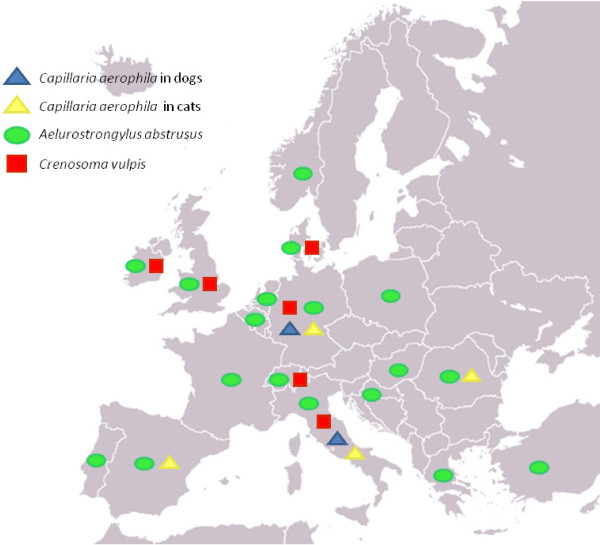
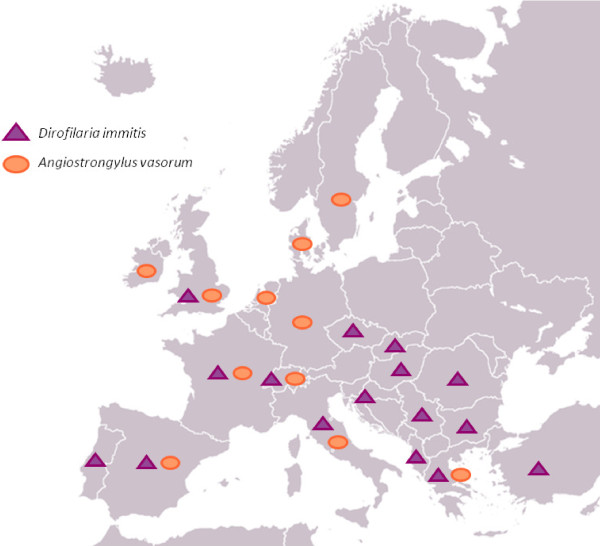
- *D. immitis* and *A. vasorum* show geographic spread into previously free areas, with new foci such as *D. immitis* in south and central Italy and *A. vasorum* in Germany and The Netherlands; *A. abstrusus* prevalence is reported as ~20% in endemic areas of Portugal and Italy.
- The Baermann method remains the gold standard for diagnosing *A. vasorum*, *C. vulpis*, and *A. abstrusus*, but it is time-consuming (12–48 hrs) and can produce false negatives due to prepatent infections and intermittent larval shedding; zinc sulphate flotation may miss 40–90% of positive animals.
- Molecular and serological diagnostics show higher performance: a nested PCR for *A. abstrusus* had ~100% specificity and 97% sensitivity; a real-time PCR for *A. vasorum* detected a single L1 in 200 μl blood and 200 mg faeces; a sandwich-ELISA for *A. vasorum* antigen had 92% sensitivity and 100% specificity.
- Treatment evidence includes fenbendazole at 20 mg/kg daily for 5 days or 50 mg/kg for 15 days for feline aelurostrongylosis; imidacloprid 10%/moxidectin 2.5% spot-on had 85.2% efficacy against canine angiostrongylosis versus 91.3% for fenbendazole, and 100% efficacy against *C. vulpis*; milbemycin oxime had 98–99% efficacy against *C. vulpis*.
Methods
- Narrative review of current knowledge on the most important heartworm and lungworm infections of dogs and cats in Europe, covering epidemiology, clinical and pathological significance, diagnosis, and control.
- No primary sample or new data collection is described; the paper synthesizes published literature, with Tables 1–2 and Figures 1–2 reporting prevalence or single descriptions and distribution based on refs [14,15,18-27,37,46-89].
- Main analysis is qualitative synthesis and discussion of recent advances, diagnostic challenges, and treatment/control options.
Limitations
- The paper states that the reasons for emergence are little known; detailed information on key biological features of *A. vasorum* is lacking; epidemiological data for *E. aerophilus* in Europe are fragmentary; and treatment protocols have mostly been anecdotal and empirically derived.
- The paper notes diagnostic limitations: Baermann examination is time-consuming and can yield false negatives; microfilaria detection lacks sensitivity because up to 20–30% of *D. immitis*-infected dogs are not microfilaremic; and antigen tests have limitations in cats.
- Evident from the text: as a narrative review, it does not describe a systematic search strategy, formal quality assessment, or quantitative meta-analysis.
Model-written summary. Check it against the paper before relying on it.
Integrity signals
Registry
Cites
Statistics
Figures
Verification
Claims the paper makes
0 Valid · 3 Not valid · 98 Not checked · 38 Own results and interpretations
None of the sources cited for this claim could be matched to a paper, so there is nothing to check it against.
In the paper
“As a likely consequence of these factors, the most recent papers report a trend in the geographic spread of both of the heartworms, D. immitis and A. vasorum, into previously free areas [5-9].”
§ Canine and feline cardiopulmonary parasitic nematodes in Europe: emerging and underestimated > Distribution in Europe: changing patterns, certainties and dilemmas
What the sources say
- Not matchedcites [5]
The reference list we hold has no entry [5].
- Not matchedcites [6]
The reference list we hold has no entry [6].
- Not matchedcites [7]
The reference list we hold has no entry [7].
- Not matchedcites [8]
The reference list we hold has no entry [8].
- Not matchedcites [9]
The reference list we hold has no entry [9].
hedgedstates an association- Asserted: passes — The authors put it forward as true.
- Checkable: passes — It can be checked against evidence.
- Load-bearing: passes — The paper’s conclusions depend on it.
- Based: passes — The paper gives a reason why it holds.
- Not matched
None of the sources cited for this claim could be matched to a paper, so there is nothing to check it against.
In the paper
“Human infection with D. immitis has been mostly reported from USA and Far East especially where the parasite is endemic in the dog population [92,116].”
§ Canine and feline cardiopulmonary parasitic nematodes in Europe: emerging and underestimated > Pathological significance
What the sources say
- Not matchedcites [92]
The reference list we hold has no entry [92].
- Not matchedcites [116]
The reference list we hold has no entry [116].
plainstates an association- Asserted: passes — The authors put it forward as true.
- Checkable: passes — It can be checked against evidence.
- Load-bearing: unclear — It is unclear whether the paper’s conclusions depend on it.
- Based: passes — The paper gives a reason why it holds.
- Not matched
None of the sources cited for this claim could be matched to a paper, so there is nothing to check it against.
In the paper
“Respiratory signs, e.g. mild to intense cough, sneezing, mucopurulent nasal discharge, dyspnoea, open-mouthed abdominal breathing, and even death, are most often observed in young, debilitated and/or immunosuppressed animals [48,101-103].”
§ Canine and feline cardiopulmonary parasitic nematodes in Europe: emerging and underestimated > Pathological significance
What the sources say
- Not matchedcites [48]
The reference list we hold has no entry [48].
- Not matchedcites [101]
The reference list we hold has no entry [101].
- Not matchedcites [102]
The reference list we hold has no entry [102].
- Not matchedcites [103]
The reference list we hold has no entry [103].
plainstates an association- Asserted: passes — The authors put it forward as true.
- Checkable: passes — It can be checked against evidence.
- Load-bearing: unclear — It is unclear whether the paper’s conclusions depend on it.
- Based: passes — The paper gives a reason why it holds.
- Not matched
In the paper
“The last described report was a cryptic case of infection in a woman from Serbia that resembled a bronchial carcinoma [36].”
§ Canine and feline cardiopulmonary parasitic nematodes in Europe: emerging and underestimated > Pathological significance
What the sources say
- Not matchedcites [36]
The reference list we hold has no entry [36].
plainSingle case- Asserted: passes — The authors put it forward as true.
- Checkable: passes — It can be checked against evidence.
- Load-bearing: unclear — It is unclear whether the paper’s conclusions depend on it.
- Based: passes — The paper gives a reason why it holds.
- Not matched
None of the sources cited for this claim could be matched to a paper, so there is nothing to check it against.
In the paper
“A distinctive clinical sign for A. vasorum infection is the presence of bleeding disorders and coagulopathies, likely due to disseminated intravascular coagulation [9,94,95].”
§ Canine and feline cardiopulmonary parasitic nematodes in Europe: emerging and underestimated > Pathological significance
What the sources say
- Not matchedcites [9]
The reference list we hold has no entry [9].
- Not matchedcites [94]
The reference list we hold has no entry [94].
- Not matchedcites [95]
The reference list we hold has no entry [95].
hedgedstates a possible cause- Asserted: passes — The authors put it forward as true.
- Checkable: passes — It can be checked against evidence.
- Load-bearing: unclear — It is unclear whether the paper’s conclusions depend on it.
- Based: passes — The paper gives a reason why it holds.
- Not matched
74 more claims
Create a free account to see all 139 claims and every source verdict.
- It may state two separate claims as one. 44
- Probably not a substantial claim. 20
Claims other papers make about this one
Each is checked against this paper’s own text: does it say what the citing paper says it does?
The source backs part of the claim, not all of it — or backs it for a different population, condition or comparison.
In the citing paper
“Additionally, the epidemiology of vector-borne parasites is associated with vector phenology and biology, movements of goods and animals, globalization, increase of wildlife in peri-urban and urban areas, and climate changes [2,3,51].”
From Fleas infesting pets in the era of emerging extra-intestinal nematodes (2013) · cites this paper as [3]
Experimental — accuracy not yet measuredThe source backs part of the claim, not all of it — or backs it for a different population, condition or comparison.
In the citing paper
“Considering that in Italy, and possibly in other countries, intermediate and paratenic hosts of heartworms and lungworms can be present throughout the year [2,3], the opportunity of all-year-round controls should be taken into account.”
From Fleas infesting pets in the era of emerging extra-intestinal nematodes (2013) · cites this paper as [3]
Experimental — accuracy not yet measuredThe source backs part of the claim, not all of it — or backs it for a different population, condition or comparison.
In the citing paper
“Indeed, global climate change is influencing the ecology of helminths with multiple hosts and different transmission routes.”
From Pet roundworms and hookworms: A continuing need for global worming (2012) · cites this paper as [3]
Experimental — accuracy not yet measuredThe source backs part of the claim, not all of it — or backs it for a different population, condition or comparison.
In the citing paper
“Eggs of E. aerophilus have asymmetrical bipolar plugs [3,12,66,67].”
From Are we paying too much attention to cardio-pulmonary nematodes and neglecting old-fashioned worms like Trichuris vulpis? (2011) · cites this paper as [12]
Experimental — accuracy not yet measuredThe source backs part of the claim, not all of it — or backs it for a different population, condition or comparison.
In the citing paper
“A key example for Europe is Italy, where D. immitis is not only stable in hyper-endemic areas (i.e. Northern regions) where T. vulpis has been recently reported in both dogs and in the environment [54,56-58], but also in new autochthonous foci in the south and the center of the Country [12,77,83].”
From Are we paying too much attention to cardio-pulmonary nematodes and neglecting old-fashioned worms like Trichuris vulpis? (2011) · cites this paper as [12]
Experimental — accuracy not yet measured
18 more claims about this paper
Create a free account to see every claim other papers make about this one.
Citations
Cites
Effects of environmental change on emerging parasitic diseases
Patz, J. A., Graczyk, T. K., Geller, N., & Vittor, A. Y. (2000) · International Journal for Parasitology · doi:10.1016/s0020-7519(00)00141-7 · Cited by 1,206
Veterinary Clinical Parasitology
Benbrook, E., & Sloss, M. (1955) · Iowa State University Press eBooks · doi:10.31274/isudp.1955.76 · Cited by 1,087
Bowman, D. D., Hendrix, C. M., Lindsay, D. S., & Barr, S. C. (2002) · doi:10.1002/9780470376805 · Cited by 638
Chapter 4 Heartworm Disease in Animals and Humans
McCall, J. W., Genchi, C., Kramer, L. H., Guerrero, J., & Venco, L. (2008) · Advances in Parasitology · doi:10.1016/s0065-308x(08)00204-2 · Cited by 609 · cited 9×
“Such pre-treatment results in the reduction of adult worm mass and allows any immature worms present to fully mature at which time they are optimally susceptible to adulticide [92,157].”
BackgroundInfluentialHuman behaviour and the epidemiology of parasitic zoonoses
Macpherson, C. N. L. (2005) · International Journal for Parasitology · doi:10.1016/j.ijpara.2005.06.004 · Cited by 431 · cited 1×
“Nonetheless, for gastropod-transmitted parasitoses, the geographic spread of slugs and snails driven by conditions of global warming may play a role in the incidence and distribution of these parasites [28-31].”
BackgroundWolbachia.Bacterial Endosymbionts of Filarial Nematodes
Taylor, M. J., Bandi, C., & Hoerauf, A. (2005) · Advances in Parasitology · doi:10.1016/s0065-308x(05)60004-8 · Cited by 425
Global Warming and Infectious Disease
Khasnis, A. A., & Nettleman, M. D. (2005) · Archives of Medical Research · doi:10.1016/j.arcmed.2005.03.041 · Cited by 364
Climate Change and Vector-Borne Diseases
Rogers, D. J., & Randolph, S. E. (2006) · Advances in Parasitology · doi:10.1016/s0065-308x(05)62010-6 · Cited by 362
Climate and Dirofilaria infection in Europe
Genchi, C., Rinaldi, L., Mortarino, M., Genchi, M., & Cringoli, G. (2009) · Veterinary parasitology · doi:10.1016/j.vetpar.2009.03.026 · Cited by 349 · cited 5×
“vasorum, into previously free areas [5-9].”
BackgroundInfluentialDiscrimination between six species of canine microfilariae by a single polymerase chain reaction
Rishniw, M., Barr, S. C., Simpson, K. W., Frongillo, M. F., Franz, M., & Dominguez Alpizar, J. L. (2006) · Veterinary Parasitology · doi:10.1016/j.vetpar.2005.10.013 · Cited by 307 · cited 1×
“RFLP, PCR amplifications with species-specific primers or with universal primers yielding species-specific amplicons [132,133].”
Background
Research works printed but not linked: 13
- Rinaldi L Musella V Marzatico G Genchi C Cringoli G Claerebout E, Vercruysse J Geographical information systems in health application: experience on filariosis and other vector-borne diseases Proceedings of the WAAVP Congress: 19-23 August 2007; Gent, Belgium 2007 165
- Di Cesare A Meloni S Milillo P Castagna G Otranto D Paoletti B Bartolini R Avolio S Traversa D Feline and canine cardio-pulmonary nematodes in central and southern Italy Proceedings of the XXVI SoIPa Congress: 22-25 June 2010; Perugia, Italy 307
- Madeira de Carvalho LM Pereira da Fonseca LM Gomes L Meireles JM Bayer Animal Health GmbH Lungworms in domestic and wild carnivores in Portugal: rare parasites or rarely diagnosed? Proceedings of the Bayer Angiostrongylosis Forum, 19th Annual Congress of the European College of Veterinary Internal Medicine - Companion Animals: 9 September 2009; Porto, Portugal 2009 28
- Prociv P Carlisle MS The spread of Angiostrongylus cantonensis in Australia Southeast Asian J Trop Med Public Health 2001 32 126 128 12041575
- Bourdeau P Laboure L Bayer Animal Health GmbH Current situation of canine angiostrongylosis in France: result from a national survey with veterinary clinics Proceedings of the Bayer Angiostrongylosis Forum, 19th Annual Congress of the European College of Veterinary Internal Medicine - Companion Animals: 9 September 2009; Porto, Portugal 2009 30
- Olteanu G Parassitologia Dirofilariosis in man and animals in Romania Proceedings of VII European Multicolloquium of Parasitology: 2-6 September 1996; Parma, Italy 1996 38 360
- Reilly GAC McGarry JW Martin M Belford C Crenosoma vulpis, the fox lungworm, in a dog in Ireland Vet Rec 2000 146 764 765 10909912
- Stephen HG Stephen HG, Richard DP Migrating worms "Principle and Practice of Clinical Parasitology" 2001 John Wiley and Sons, Chichester, UK 535 551
- Conboy G Schenker R Strehlau G Efficacy of Milbemax (milbemycin/praziquantel) for the treatment and prevention of Angiostrongylus vasorum infection in dogs Proceedings of the Joint 49th Annual Meeting of the American Association of Veterinary Parasitologists/79th Meeting of the American Society of Parasitologists. 24-28 July 2004; Philadelphia 2006 92
- Conboy G Bourque A Miller L Seewald W Schenker R Efficacy of milbemycin oxime in the treatment of dogs experimentally infected with Crenosoma vulpis Proceedings of the 52nd Annual Meeting of the American Association of Veterinary Parasitologists. Washington, DC 2007 74
- McCall JW Guerrero J Roberts RE Supakorndej N Mansour AE Dzimianski MT McCall SD Further evidence of clinical prophylactic (reach-back) and adulticidal activity of monthly administration of ivermectin and pyrantel pamoate (Heartgard Plus) in dogs experimentally infected with heartworms Proceedings of the "Recent Advances in Heartworm Disease, Symposium 2001" American Heartworm Society: 20-22 April 2001; Batavia, Illinois 2001 189 200
- Goodman DA Evaluation of a single dose of melarsomine dihydrochloride for adulticidal activity against Dirofilaria immitis in cats MS thesis 1996 University of Georgia, Athens, Georgia 95
- McLeroy LW Evaluation of melarsomine dihydrochloride for adulticidal activity against Dirofilaria immitis in cats with intravenously transplanted adult heartworms MS thesis 1998 University of Georgia, Athens, Georgia 95
Cited by
Human and animal dirofilariasis: The emergence of a zoonotic mosaic
Simón, F., Siles-Lucas, M., Morchón, R., González-Miguel, J., Mellado, I., Carretón, E., & Montoya-Alonso, J. A. (2012) · Clinical Microbiology Reviews · doi:10.1128/cmr.00012-12 · Cited by 834
“repens in the central regions (426), and an increase in their prevalence in regions that previously experienced only sporadic cases (137, 149, 376).”
BackgroundHeartworm Disease (Dirofilaria immitis) and Their Vectors in Europe – New Distribution Trends
Morchón, R., Carretón, E., González-Miguel, J., & Mellado-Hernández, I. (2012) · Frontiers in Physiology · doi:10.3389/fphys.2012.00196 · Cited by 255
“…Italy and has now spread all over the country, which shows a current change of distribution of this parasite throughout the Italian territory while canine and feline heartworm infection is more frequently diagnosed in southern regions of Italy (Otranto et al., 2009; Traversa et al., 2010a).”
BackgroundInfluentialPet roundworms and hookworms: A continuing need for global worming
Traversa, D. (2012) · Parasites & Vectors · doi:10.1186/1756-3305-5-91 · Cited by 221
Self-citationParasites of domestic owned cats in Europe: co-infestations and risk factors
Beugnet, F., Bourdeau, P., Chalvet-Monfray, K., Cozma, V., Farkas, R., Guillot, J., Halos, L., Joachim, A., Losson, B., Miró, G., et al. (2014) · Parasites & Vectors · doi:10.1186/1756-3305-7-291 · Cited by 198
“However, according to recent works, Italy would be an endemic area with prevalence rates reaching 20% [34,35] and high rates were also reported recently for Romania (5.”
BackgroundOtranto, D., Cantacessi, C., Dantas-Torres, F., Brianti, E., Pfeffer, M., Genchi, C., Guberti, V., Capelli, G., & Deplazes, P. (2015) · Veterinary Parasitology · doi:10.1016/j.vetpar.2015.04.020 · Cited by 182
“Thus far, only two cases, namely in northwestern Spain (Segovia et al., 2001) and central Italy (E eni et al., 2014), have been described in wolves from areas where canine and fox angiostrongyl sis is endemic (Traversa et al., 2010).”
BackgroundMagnis, J., Lorentz, S., Guardone, L., Grimm, F., Magi, M., Naucke, T. J., & Deplazes, P. (2013) · Parasites & Vectors · doi:10.1186/1756-3305-6-48 · Cited by 168
“However, the discrimination between different species can be challenging in cases of mixed infections [17,24] or in cases with low parasitaemia.”
BackgroundIntestinal and lung parasites in owned dogs and cats from central Italy
Riggio, F., Mannella, R., Ariti, G., & Perrucci, S. (2013) · Veterinary Parasitology · doi:10.1016/j.vetpar.2012.11.026 · Cited by 162
The genome of the heartworm, Dirofilaria immitis , reveals drug and vaccine targets
Godel, C., Kumar, S., Koutsovoulos, G., Ludin, P., Nilsson, D., Comandatore, F., Wrobel, N., Thompson, M., Schmid, C. D., Goto, S., et al. (2012) · The FASEB Journal · doi:10.1096/fj.12-205096 · Cited by 173
Lungworms and gastrointestinal parasites of domestic cats: a European perspective
Giannelli, A., Capelli, G., Joachim, A., Hinney, B., Losson, B., Kirkova, Z., René‐Martellet, M., Papadopoulos, E., Farkas, R., Napoli, E., et al. (2017) · International Journal for Parasitology · doi:10.1016/j.ijpara.2017.02.003 · Cited by 163
Traversa, D. (2011) · Parasites & Vectors · doi:10.1186/1756-3305-4-32 · Cited by 148
“Eucoleus aerophilus) and Eucoleus boehmi [12,63,65,66].”
BackgroundInfluentialSelf-citationBrianti, E., Gaglio, G., Giannetto, S., Annoscia, G., Latrofa, M. S., Dantas‐Torres, F., Traversa, D., & Otranto, D. (2012) · Parasites & Vectors · doi:10.1186/1756-3305-5-178 · Cited by 122
Self-citationFeline lungworms: what a dilemma
Traversa, D., & Cesare, A. D. (2013) · Trends in Parasitology · doi:10.1016/j.pt.2013.07.004 · Cited by 112
Self-citationTraversa, D., Cesare, A. D., Lia, R. P., Castagna, G., Meloni, S., Heine, J., Strube, K., Milillo, P., Otranto, D., Meckes, O., et al. (2011) · Parasitology Research · doi:10.1007/s00436-011-2406-4 · Cited by 120
Self-citationDiagnosis and management of lungworm infections in cats: Cornerstones, dilemmas and new avenues
Traversa, D., & Cesare, A. D. (2016) · Journal of Feline Medicine and Surgery · doi:10.1177/1098612x15623113 · Cited by 112
Self-citationElsheikha, H. M., Holmes, S. A., Wright, I., Morgan, E. R., & Lacher, D. W. (2014) · Veterinary Research · doi:10.1186/s13567-014-0092-9 · Cited by 92
Fifth European Dirofilaria and Angiostrongylus Days (FiEDAD) 2016: Vienna, Austria. 11–13 July 2016
Simón, F., Kartashev, V., González-Miguel, J., Rivera, A., Diosdado, A., Gómez, P. J., Morchón, R., Siles-Lucas, M., Kartashev, V., Bastrikov, N., et al. (2017) · Parasites & Vectors · doi:10.1186/s13071-016-1902-x · Cited by 85
Self-citationCanine and Feline Infections by Cardiopulmonary Nematodes in Central and Southern Italy
Di Cesare, A., Castagna, G., Meloni, S., Milillo, P., Latrofa, S., Otranto, D., & Traversa, D. (2011) · Parasitology Research · doi:10.1007/s00436-011-2405-5 · Cited by 82
“Eucoleus aerophilus), which may parasitise both animal species ( Conboy 2009; Traversa et al. 2010b ).”
BackgroundMethodResultInfluentialSelf-citationSchnyder, M., & Deplazes, P. (2012) · Parasites & Vectors · doi:10.1186/1756-3305-5-258 · Cited by 80
“© 2012 Schnyder and Deplazes; licensee BioM Creative Commons Attribution License (http:/ distribution, and reproduction in any medium time in France in 1913 [3], but it is only recently that this parasite has regained attention within the veterinary community [4,5].”
BackgroundLatrofa, M. S., Montarsi, F., Ciocchetta, S., Annoscia, G., Dantas-Torres, F., Ravagnan, S., Capelli, G., & Otranto, D. (2012) · Parasites & Vectors · doi:10.1186/1756-3305-5-76 · Cited by 77
“is challenging and requires specialised parasitological skills, impairing a reliable, prompt diagnosis [10,25].”
BackgroundTAYLOR, C. S., GATO, R. G., Learmount, J., Aziz, N. A. A., Montgomery, C., Vineer, H. R., COULTHWAITE, C. L., McGarry, J. W., Forman, D. W., ALLEN, S., et al. (2015) · Parasitology · doi:10.1017/s0031182015000463 · Cited by 85
The Complexity of Zoonotic Filariasis Episystem and Its Consequences: A Multidisciplinary View
Simón, F., González-Miguel, J., Diosdado, A., Gómez, P. J., Morchón, R., & Kartashev, V. (2017) · BioMed Research International · doi:10.1155/2017/6436130 · Cited by 76
“D . immitis has been found in feline populations in Portugal, Spain, and Italy, with prevalence rates between 3 and 27%, and there have been frequent reports in France [50–52].”
Updates on feline aelurostrongylosis and research priorities for the next decade
Elsheikha, H. M., Schnyder, M., Traversa, D., Cesare, A. D., Wright, I., & Lacher, D. W. (2016) · Parasites & Vectors · doi:10.1186/s13071-016-1671-6 · Cited by 85
Self-citationLunn, J. A., Lee, R. P., Smaller, J., MACKAY, B., King, T., Hunt, G. B., MARTIN, P. A., Krockenberger, M. B., Spielman, D., & Malík, R. (2012) · Parasites & Vectors · doi:10.1186/1756-3305-5-70 · Cited by 81
A multiplex PCR for the simultaneous detection of species of filarioids infesting dogs
Latrofa, M. S., Weigl, S., Dantas-Torres, F., Annoscia, G., Traversa, D., Brianti, E., & Otranto, D. (2012) · Acta Tropica · doi:10.1016/j.actatropica.2012.01.006 · Cited by 70
Self-citationCesare, A. D., di Regalbono, A. F., Tessarin, C., Seghetti, M., Iorio, R., Simonato, G., & Traversa, D. (2013) · Parasitology Research · doi:10.1007/s00436-013-3690-y · Cited by 74
Self-citationParasite communities in stray cat populations from Lisbon, Portugal
Waap, H., Gomes, J. P., & Nunes, T. P. (2013) · Journal of Helminthology · doi:10.1017/s0022149x1300031x · Cited by 71
Mixed trichuroid infestation in a dog from Italy
Cesare, A. D., Castagna, G., Meloni, S., Otranto, D., & Traversa, D. (2012) · Parasites & Vectors · doi:10.1186/1756-3305-5-128 · Cited by 69
Self-citationCanine and Feline Parasitology: Analogies, Differences, and Relevance for Human Health
Morelli, S., Diakou, A., Cesare, A. D., Colombo, M., & Traversa, D. (2021) · Clinical Microbiology Reviews · doi:10.1128/cmr.00266-20 · Cited by 85
Self-citationMolecular Detection of Capillaria aerophila, an Agent of Canine and Feline Pulmonary Capillariosis
Di Cesare, A., Castagna, G., Otranto, D., Meloni, S., Milillo, P., Latrofa, M. S., Paoletti, B., Bartolini, R., & Traversa, D. (2012) · Journal of Clinical Microbiology · doi:10.1128/jcm.00103-12 · Cited by 64
Self-citationSchnyder, M., Cesare, A. D., Basso, W., Guscetti, F., Riond, B., Glaus, T. M., Crisi, P. E., & Deplazes, P. (2014) · Parasitology Research · doi:10.1007/s00436-014-3783-2 · Cited by 68
Self-citationKnaus, M., Kusi, I., Rapti, D., Xhaxhiu, D., Winter, R., Visser, M., & Rehbein, S. (2011) · Wiener klinische Wochenschrift · doi:10.1007/s00508-011-1588-1 · Cited by 66
Lange, M. K., Penagos-Tabares, F., Muñoz-Caro, T., Gärtner, U., Mejer, H., Schaper, R., Hermosilla, C. R., & Taubert, A. (2017) · Parasites & Vectors · doi:10.1186/s13071-016-1961-z · Cited by 69
Crisi, P. E., Aste, G., Traversa, D., Cesare, A. D., Febo, E., Vignoli, M., Santori, D., Luciani, A., & Boari, A. (2016) · Journal of Feline Medicine and Surgery · doi:10.1177/1098612x16670563 · Cited by 70
Self-citationFirst molecular identification of mosquito vectors of Dirofilaria immitis in continental Portugal
Ferreira, C. A. C., de Pinho Mixão, V., Novo, M. T. L. M., Calado, M. M. P., Gonçalves, L. A. P., Belo, S. M. D., & de Almeida, A. P. G. (2015) · Parasites & Vectors · doi:10.1186/s13071-015-0760-2 · Cited by 61
“The study was approved by the Commission on Ethics of the Instituto de Higiene e Medicina Tropical, Universidade Nova de Lisboa with reference 21-2013-TM, and all procedures were performed according to national and European legislation.”
BackgroundInfluentialPenagos-Tabares, F., Lange, M. K., Chaparro-Gutiérrez, J. J., Taubert, A., & Hermosilla, C. R. (2018) · Parasites & Vectors · doi:10.1186/s13071-018-2765-0 · Cited by 72
Larval development of the feline lungworm Aelurostrongylus abstrusus in Helix aspersa
Cesare, A. D., Crisi, P. E., Giulio, E. D., Veronesi, F., di Regalbono, A. F., Talone, T., & Traversa, D. (2013) · Parasitology Research · doi:10.1007/s00436-013-3484-2 · Cited by 63
Self-citationOccurrence of canine and feline extra-intestinal nematodes in key endemic regions of Italy
Traversa, D., Morelli, S., Cassini, R., Crisi, P. E., Russi, I., Grillotti, E., Manzocchi, S., Simonato, G., Beraldo, P., Viglietti, A., et al. (2019) · Acta Tropica · doi:10.1016/j.actatropica.2019.03.009 · Cited by 67
Self-citationHigh infection rate of zoonotic Eucoleus aerophilus infection in foxes from Serbia
Lalošević, V., Lalošević, D., Čapo, I., Simin, V., Galfi, A., & Traversa, D. (2013) · Parasite · doi:10.1051/parasite/2012003 · Cited by 59
Self-citationTolnai, Z., Széll, Z., & Sréter, T. (2014) · Veterinary Parasitology · doi:10.1016/j.vetpar.2014.12.008 · Cited by 65
OCCURRENCE OF LUNGWORMS IN EUROPEAN WILDCATS (FELIS SILVESTRIS SILVESTRIS) OF CENTRAL ITALY
Veronesi, F., Traversa, D., Lepri, E., Morganti, G., Vercillo, F., Grelli, D., Cassini, R., Marangi, M., Iorio, R., Ragni, B., et al. (2016) · Journal of Wildlife Diseases · doi:10.7589/2015-07-187 · Cited by 56
Self-citationSurvey of helminth parasites of cats from the metropolitan area of Cuiabá, Mato Grosso, Brazil
Ramos, D. G. D. S., Scheremeta, R. G. A. D. C., de Oliveira, A. C. S., Sinkoc, A. L., & Pacheco, R. D. C. (2013) · Revista Brasileira de Parasitologia Veterinária/Brazilian Journal of Veterinary Parasitology · doi:10.1590/s1984-29612013000200040 · Cited by 76
Dennler, M., Bass, D., Gutiérrez‐Crespo, B., Schnyder, M., Guscetti, F., Cesare, A. D., Deplazes, P., Kircher, P. R., & Glaus, T. M. (2013) · Veterinary Radiology & Ultrasound · doi:10.1111/vru.12044 · Cited by 60
Self-citationFeline gastrointestinal parasitism in Greece: emergent zoonotic species and associated risk factors
Symeonidou, I., Gelasakis, A. Ι., Arsenopoulos, K. V., Angelou, A., Beugnet, F., & Papadopoulos, E. (2018) · Parasites & Vectors · doi:10.1186/s13071-018-2812-x · Cited by 66
Fleas infesting pets in the era of emerging extra-intestinal nematodes
Traversa, D. (2013) · Parasites & Vectors · doi:10.1186/1756-3305-6-59 · Cited by 53
“Petrić D, Zgomba M, Bellini R, Becker N: Surveillance of Mosquito Populations: A Key Element to Understanding the Spread of Invasive Vector Species and Vector-Borne Diseases in Europe.”
BackgroundInfluentialSelf-citationTraversa, D., & Cesare, A. D. (2014) · Frontiers in Veterinary Science · doi:10.3389/fvets.2014.00011 · Cited by 55
Self-citationPenagos-Tabares, F., Lange, M. K., Vélez, J., Hirzmann, J., Gutiérrez-Arboleda, J., Taubert, A., Hermosilla, C. R., & Chaparro-Gutiérrez, J. J. (2019) · PLoS neglected tropical diseases · doi:10.1371/journal.pntd.0007277 · Cited by 53
Sauda, F., Malandrucco, L., Macrì, G., Scarpulla, M., De Liberato, C., Terracciano, G., Fichi, G., Berrilli, F., & Perrucci, S. (2018) · Parasite · doi:10.1051/parasite/2018001 · Cited by 52
Morelli, S., Diakou, Α., Colombo, M., Cesare, A. D., Barlaam, A., Dimzas, D., & Traversa, D. (2021) · Pathogens · doi:10.3390/pathogens10040454 · Cited by 60
Self-citationVeronesi, F., Deak, G., & Diakou, Α. (2023) · Pathogens · doi:10.3390/pathogens12020178 · Cited by 60
Genchi, M., Ferrari, N., Fonti, P., Francesco, I. D., Piazza, C., & Viglietti, A. (2014) · Veterinary Parasitology · doi:10.1016/j.vetpar.2014.10.030 · Cited by 59
Hodžić, A., Alić, A., Klebic, I., Kadrić, M., Brianti, E., & Duscher, G. G. (2016) · Veterinary Parasitology · doi:10.1016/j.vetpar.2016.04.016 · Cited by 55
Traversa, D., Di Cesare, A., Meloni, S., Frangipane di Regalbono, A., Milillo, P., Pampurini, F., & Venco, L. (2013) · Parasitology Research · doi:10.1007/s00436-013-3412-5 · Cited by 50
“In Italy, angiostrongylosis was firstly found more than 20 years ago in red foxes, while in dogs, it has been described only in the past decade, with an increasing trend in clinical reports (Traversa et al. 2008a, 2010a).”
BackgroundMethodInfluentialSelf-citationTraversa, D., Lepri, E., Veronesi, F., Paoletti, B., Simonato, G., Diaferia, M., & Cesare, A. D. (2015) · International Journal for Parasitology · doi:10.1016/j.ijpara.2015.05.005 · Cited by 49
Self-citationLange, M. K., Penagos-Tabares, F., Hirzmann, J., Failing, K., Schaper, R., Bourgonie, Y. R. V., Backeljau, T., Hermosilla, C. R., & Taubert, A. (2018) · Veterinary Parasitology · doi:10.1016/j.vetpar.2018.03.011 · Cited by 62
Schug, K., Krämer, F., Schaper, R., Hirzmann, J., Failing, K., Hermosilla, C. R., & Taubert, A. (2018) · Parasites & Vectors · doi:10.1186/s13071-018-2672-4 · Cited by 53
New insights on metastrongyloid lungworms infecting cats of Sardinia, Italy
Tamponi, C., Varcasia, A., Brianti, E., Pipia, A. P., Frau, V., Parpaglia, M. L. P., Sanna, G., Garippa, G., Otranto, D., & Scala, A. (2014) · Veterinary Parasitology · doi:10.1016/j.vetpar.2014.04.001 · Cited by 49
Latrofa, M. S., Dantas-Torres, F., Annoscia, G., Genchi, M., Traversa, D., & Otranto, D. (2012) · Veterinary Parasitology · doi:10.1016/j.vetpar.2011.10.038 · Cited by 47
Self-citationCrenosoma vulpis in wild and domestic carnivores from Italy: a morphological and molecular study
Latrofa, M. S., Lia, R. P., Giannelli, A., Colella, V., Santoro, M., D’Alessio, N., Campbell, B. E., Parisi, A., Dantas‐Torres, F., Mutafchiev, Y., et al. (2015) · Parasitology Research · doi:10.1007/s00436-015-4583-z · Cited by 55
Genetic variability of Eucoleus aerophilus from domestic and wild hosts
Cesare, A. D., Otranto, D., Latrofa, M. S., Veronesi, F., Perrucci, S., Lalošević, D., Gherman, C. M., & Traversa, D. (2014) · Research in Veterinary Science · doi:10.1016/j.rvsc.2014.03.018 · Cited by 55
Self-citationAngiostrongylus chabaudi Biocca, 1957: a new parasite for domestic cats?
Varcasia, A., Tamponi, C., Brianti, E., Cabras, P. A., Boi, R., Pipia, A. P., Giannelli, A., Otranto, D., & Scala, A. (2014) · Parasites & Vectors · doi:10.1186/s13071-014-0588-1 · Cited by 46
Bourgoin, G., Callait‐Cardinal, M., Bouhsira, É., Polack, B., Bourdeau, P. J., Ariza, C. R., Carassou, L., Liénard, E., & Drake, J. (2022) · Parasites & Vectors · doi:10.1186/s13071-022-05368-7 · Cited by 79
Environmental and Intrinsic Correlates of Stress in Free-Ranging Wolves
Molnar, B., Fattebert, J., Palme, R., Ciucci, P., Betschart, B., Smith, D. W., & Diehl, P.-A. (2015) · PLoS ONE · doi:10.1371/journal.pone.0137378 · Cited by 53
Canine angiostrongylosis: recent advances in diagnosis, prevention, and treatment
Traversa, D., & Cesare, A. D. (2014) · Veterinary Medicine Research and Reports · doi:10.2147/vmrr.s53641 · Cited by 57
Self-citationLungworm disease in cats: ABCD guidelines on prevention and management
Pennisi, M. G., Hartmann, K., Addie, D., Boucraut‐Baralon, C., Egberink, H. F., Frymus, T., Gruffydd-Jones, T., Horzinek, M. C., Hosie, M. J., Lloret, A., et al. (2015) · Journal of Feline Medicine and Surgery · doi:10.1177/1098612x15588455 · Cited by 56
Respiratory nematodes in cat populations of Italy
Cesare, A. D., Veronesi, F., Grillotti, E., Manzocchi, S., Perrucci, S., Beraldo, P., Cazzin, S., Liberato, C. D., Barros, L. A., Simonato, G., et al. (2015) · Parasitology Research · doi:10.1007/s00436-015-4687-5 · Cited by 49
Self-citationSchnyder, M., Schaper, R., Pantchev, N., Kowalska, D., Szwedko, A., & Deplazes, P. (2013) · Parasitology Research · doi:10.1007/s00436-013-3285-7 · Cited by 42
Knaus, M., Chester, S. T., Rosentel, J. K., Kühnert, A., & Rehbein, S. (2014) · Veterinary Parasitology · doi:10.1016/j.vetpar.2014.02.042 · Cited by 45
Parasites in stray dogs from Italy: prevalence, risk factors and management concerns
Liberato, C. D., Berrilli, F., Odorizi, L., Scarcella, R., Barni, M., Amoruso, C., Scarito, A., Filippo, M. M. D., Carvelli, A., Iacoponi, F., et al. (2018) · Acta Parasitologica · doi:10.1515/ap-2018-0003 · Cited by 51
Felid Lungworms and Heartworms in Italy: More Questions than Answers?
Cesare, A. D., Veronesi, F., & Traversa, D. (2015) · Trends in Parasitology · doi:10.1016/j.pt.2015.07.001 · Cited by 38
Self-citationEndoparasites of Wild Mammals Sheltered in Wildlife Hospitals and Rehabilitation Centres in Greece
Liatis, T., Monastiridis, A. A., Birlis, P., Prousali, S. P., & Diakou, Α. (2017) · Frontiers in Veterinary Science · doi:10.3389/fvets.2017.00220 · Cited by 47
First autochthonous case of canine Angiostrongylus vasorum in Slovakia
Hurníková, Z., Miterpáková, M., & Mandelík, R. (2013) · Parasitology Research · doi:10.1007/s00436-013-3532-y · Cited by 45
Aziz, N. A. A., Daly, E., Allen, S., Rowson, B., Greig, C., Forman, D. W., & Morgan, E. R. (2016) · Parasites & Vectors · doi:10.1186/s13071-016-1338-3 · Cited by 40
Traversa, D., Romanucci, M., Cesare, A. D., Malatesta, D., Cassini, R., Iorio, R., Seghetti, M., & Salda, L. D. (2014) · Veterinary Parasitology · doi:10.1016/j.vetpar.2014.01.020 · Cited by 37
Self-citationDiakou, Α., Sofroniou, D., Cesare, A. D., Kokkinos, P., & Traversa, D. (2017) · Parasitology Research · doi:10.1007/s00436-017-5651-3 · Cited by 36
Self-citationPrevalence of zoonotic intestinal helminths in pet dogs and cats in the Belgrade area
Ilić, T., Kulišić, Z., Antić, N., Nenadović, K., & Dimitrijević, S. (2016) · Journal of Applied Animal Research · doi:10.1080/09712119.2016.1141779 · Cited by 44
Diakou, Α., Dimzas, D., Astaras, C., Savvas, I., Cesare, A. D., Morelli, S., Neofitos, Κ., Migli, D., & Traversa, D. (2019) · Veterinary Parasitology Regional Studies and Reports · doi:10.1016/j.vprsr.2019.100357 · Cited by 35
Self-citationRehbein, S., Capári, B., Duscher, G. G., Keidāne, D., Kirkova, Z., Petkevičius, S., Rapti, D., Wagner, A., Wagner, T., Chester, S. T., et al. (2014) · Veterinary Parasitology · doi:10.1016/j.vetpar.2014.02.032 · Cited by 40
Cesare, A. D., Francesco, G. D., di Regalbono, A. F., Eleni, C., Liberato, C. D., Marruchella, G., Iorio, R., Malatesta, D., Romanucci, M., Bongiovanni, L., et al. (2014) · The Veterinary Journal · doi:10.1016/j.tvjl.2014.12.010 · Cited by 40
Self-citationGueldner, E. K., Gilli, U., Strübe, C., & Schnyder, M. (2019) · Veterinary Parasitology · doi:10.1016/j.vetpar.2018.12.013 · Cited by 33
Remesar, S., García‐Dios, D., Martínez‐Calabuig, N., Prieto, A., Cao, J. M. D., López‐Lorenzo, G., López, C. M., Fernández, G., Morrondo, P., Fontán, R. P., et al. (2022) · Transboundary and Emerging Diseases · doi:10.1111/tbed.14670 · Cited by 35
Ciucă, L., Musella, V., Miron, L. D., Maurelli, M. P., Cringoli, G., Bosco, A., & Rinaldi, L. (2016) · Geospatial Health · doi:10.4081/gh.2016.499 · Cited by 35
Papajová, I., Pipiková, J., Papaj, J., & Čižmár, A. (2014) · Helminthologia · doi:10.2478/s11687-014-0241-8 · Cited by 38
Helm, J. R., Roberts, L. B., Jefferies, R., Shaw, S. E., & Morgan, E. R. (2015) · Veterinary Record · doi:10.1136/vr.103006 · Cited by 39
Böhm, C., Wolken, S., Schnyder, M., Basso, W., Deplazes, P., Cesare, A. D., Deuster, K., & Schaper, R. (2015) · Parasitology Research · doi:10.1007/s00436-015-4521-0 · Cited by 35
Self-citationMicrofilarial periodicity of Dirofilaria repens in naturally infested dogs
Cesare, A. D., Otranto, D., Giulio, E. D., Simonato, G., Latrofa, M. S., Torre, F. L., Coccia, G., & Traversa, D. (2013) · Parasitology Research · doi:10.1007/s00436-013-3619-5 · Cited by 39
Self-citationLemming, L., Jørgensen, A. C., Nielsen, L. B., Nielsen, S. T., Mejer, H., Chriél, M., & Petersen, H. H. (2020) · International Journal for Parasitology Parasites and Wildlife · doi:10.1016/j.ijppaw.2020.08.001 · Cited by 39
Nasal eucoleosis in a symptomatic dog from Italy
Veronesi, F., Lepri, E., Morganti, G., Palma, S. D., Mechelli, L., Moretti, A., & Traversa, D. (2013) · Veterinary Parasitology · doi:10.1016/j.vetpar.2013.01.022 · Cited by 38
Self-citationCesare, A. D., Iorio, R., Crisi, P. E., Paoletti, B., Costanzo, R. D., Dimitri, C. F., & Traversa, D. (2014) · Journal of Feline Medicine and Surgery · doi:10.1177/1098612x14533552 · Cited by 35
Self-citationTraversa, D., Di Cesare, A., Di Giulio, E., Castagna, G., Schaper, R., Braun, G., Lohr, B., Pampurini, F., Milillo, P., & Strube, K. (2012) · Parasitology Research · doi:10.1007/s00436-012-3025-4 · Cited by 33
Self-citationLacava, G., Zini, E., Marchesotti, F., Domenech, O., Romano, F., Manzocchi, S., Venco, L., & Auriemma, E. (2016) · Journal of Feline Medicine and Surgery · doi:10.1177/1098612x16636419 · Cited by 38
Elusive Angiostrongylus vasorum infections
Cesare, A. D., Traversa, D., Manzocchi, S., Meloni, S., Grillotti, E., Auriemma, E., Pampurini, F., Garofani, C., Ibba, F., & Venco, L. (2015) · Parasites & Vectors · doi:10.1186/s13071-015-1047-3 · Cited by 37
Self-citationSimultaneous infection by four feline lungworm species and implications for the diagnosis
Varcasia, A., Brianti, E., Tamponi, C., Pipia, A. P., Cabras, P., Mereu, M., Dantas‐Torres, F., Scala, A., & Otranto, D. (2014) · Parasitology Research · doi:10.1007/s00436-014-4207-z · Cited by 31
Ogawa, G. M., da Cruz, E. N., Cunha, P. N. A., & Camargo, L. M. A. (2013) · Revista Brasileira de Parasitologia Veterinária/Brazilian Journal of Veterinary Parasitology · doi:10.1590/s1984-29612013000400017 · Cited by 33
Aelurostrongylus abstrusus in wild felids of South Africa
(2016) · doi:10.1007/s00436-016-5134-y · Cited by 31
Self-citationA review of the pathology and treatment of canine respiratory infections
LeRoith, T., Vieson, & Piñeyro (2012) · Veterinary Medicine Research and Reports · doi:10.2147/vmrr.s25021 · Cited by 35
Eucoleus boehmi infection in red fox (Vulpes vulpes) from Italy
Veronesi, F., Morganti, G., Cesare, A. D., Lepri, E., Cassini, R., Zanet, S., Deni, D., Chiari, M., & Ferroglio, E. (2014) · Veterinary Parasitology · doi:10.1016/j.vetpar.2014.10.001 · Cited by 32
Self-citationAngiostrongylus vasorum in wolves in Italy
Eleni, C., Liberato, C. D., Azam, D., Morgan, E. R., & Traversa, D. (2013) · International Journal for Parasitology Parasites and Wildlife · doi:10.1016/j.ijppaw.2013.10.003 · Cited by 38
Self-citationEvaluation of alternative reagents on the performance of the modified Knott’s test
Genchi, M., Ciucă, L., Vismarra, A., Ciccone, E., Cringoli, G., Kramer, L. H., & Rinaldi, L. (2021) · Veterinary Parasitology · doi:10.1016/j.vetpar.2021.109555 · Cited by 34
Metadata
- Authors
- Traversa, D., Di Cesare, A., & Conboy, G.
- Affiliations
- University of Teramo (IT)
- Corresponding author
- Traversa, Donato
- ORCID
- Traversa, Donato
- Venue
- Parasites & Vectors
- Published
- 2010
- Volume
- 3
- Issue
- 1
- Pages
- 62
- ISSN
- 1756-3305 (ISSN-L)
- PMC
- PMC2923136
- OpenAlex
- W2022054382
- Cited by
- 351
- References
- 159
- Citations by year
- 2026: 12 · 2025: 10 · 2024: 19 · 2023: 13 · 2022: 35 · 2021: 29 · 2020: 25 · 2019: 25 · 2018: 24 · 2017: 16 · 2016: 25 · 2015: 31 · 2014: 28 · 2013: 29 · 2012: 21
- FWCI
- 29.61
- Type
- journal article
- Language
- en
- Open access
- gold
- doi.org
- Licence
- cc-by
- Locations
- Parasites & Vectors (publishedVersion, cc-by)
- PubMed Central (publishedVersion, cc-by)
- PubMed (publishedVersion)
- DOAJ (DOAJ: Directory of Open Access Journals) (submittedVersion)
- UniTERAMO Research Catalog (University of Teramo) (submittedVersion)
- Topics
- Life Sciences › Immunology and Microbiology › Parasitology › Helminth infection and control
- Life Sciences › Agricultural and Biological Sciences › Animal Science and Zoology › Mollusks and Parasites Studies
- Health Sciences › Medicine › Infectious Diseases › Parasitic Diseases Research and Treatment
- Keywords
- canine heartworm disease, lungworm, Aelurostrongylus abstrusus, Angiostrongylus vasorum, Crenosoma vulpis, Dirofilaria immitis, Eucoleus aerophilus, Capillaria aerophila, filarioid nematodes, emerging parasitic disease, global warming, vector epidemiology, parasite control
About these checks
Registry, retraction, Cites and statistics results are computed, not judged, with one exception: a printed reference that no index lists is read once by a model before it counts as a citation error. Claims are extracted by a model and kept only when their quote appears verbatim in the text; each cited source is then checked, with a model’s help, for whether it says what the claim relies on. Those verdicts can be wrong — read the claim’s quote and the cited source before relying on one.
A language model drew the claims from the paper on 2026-10-10, under version 3 of the claim definition (model deepseek-v4.1-flash, prompt extract-v3).
A second model labelled each claim on 2026-10-10 (model jev-1.13-20260917, definition revision gold-guideline-v0.2).
Statistics and arithmetic are recomputed, not judged.
Confidence bands are shown only for fields calibrated on our annotated test set. None is calibrated yet, so no band is shown.
What counts as a claim ›How we measure confidence ›How we check this ›
Are you an author, or do you see a problem with this page? Request a review
Data sources
Bibliographic data: Semantic Scholar, OpenAlex, Crossref.
Contains information from the Semantic Scholar Academic Graph Datasets, made available under the ODC Attribution License (ODC-BY 1.0).
Semantic Scholar’s data is described in: Kinney, R., et al. (2023). The Semantic Scholar Open Data Platform. arXiv:2301.10140.
