

EEG hyper-connectivity in high-risk infants is associated with later autism
Open accessThe DOI matches its Crossref record; 79 of the 79 references it cites were found in a registry or an index.
Abstract
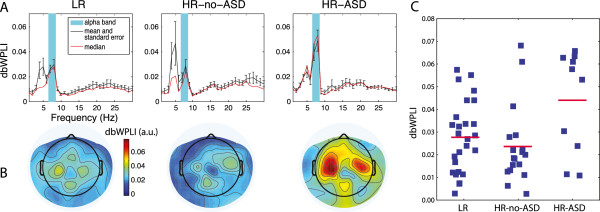
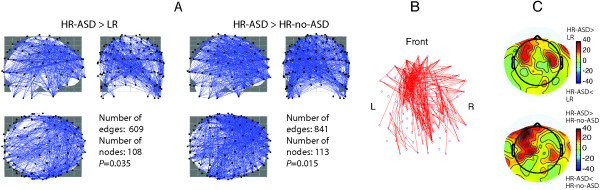
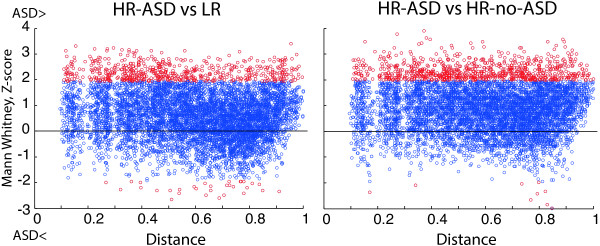
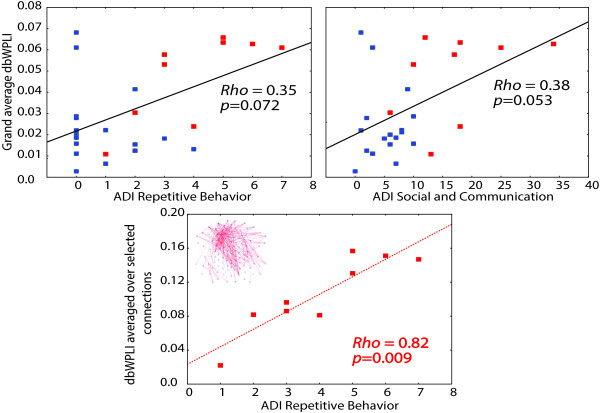
BACKGROUND: It has been previously reported that structural and functional brain connectivity in individuals with autism spectrum disorders (ASD) is atypical and may vary with age. However, to date, no measures of functional connectivity measured within the first 2 years have specifically associated with a later ASD diagnosis. METHODS: In the present study, we analyzed functional brain connectivity in 14-month-old infants at high and low familial risk for ASD using electroencephalography (EEG). EEG was recorded while infants attended to videos. Connectivity was assessed using debiased weighted phase lag index (dbWPLI). At 36 months, the high-risk infants were assessed for symptoms of ASD. RESULTS: As a group, high-risk infants who were later diagnosed with ASD demonstrated elevated phase-lagged alpha-range connectivity as compared to both low-risk infants and high-risk infants who did not go on to ASD. Hyper-connectivity was most prominent over frontal and central areas. The degree of hyper-connectivity at 14 months strongly correlated with the severity of restricted and repetitive behaviors in participants with ASD at 3 years. These effects were not attributable to differences in behavior during the EEG session or to differences in spectral power. CONCLUSIONS: The results suggest that early hyper-connectivity in the alpha frequency range is an important feature of the ASD neurophysiological phenotype.
Overview
The claims and statistics of this paper haven’t been checked yet.
Free: it reads the open-access text and checks the first 5 claims that cite a source we can check. Create a free account to check every claim.
Integrity signals
Registry
Cites
Statistics
Figures
Verification
Claims the paper makes
The claims and statistics of this paper haven’t been checked yet.
Free: it reads the open-access text and checks the first 5 claims that cite a source we can check. Create a free account to check every claim.
Claims other papers make about this one
Each is checked against this paper’s own text: does it say what the citing paper says it does?
The source backs part of the claim, not all of it — or backs it for a different population, condition or comparison.
In the citing paper
“our findings corroborate evidence for atypical oculomotor behavior [14] and increased frontal-occipital functional connectivity [17] during the first year of life of those infants that later develop autism symptoms, by suggesting that perturbations in general processes, such as perception or attention, are more important than previously believed in the developmental pathway to this disorder [18].”
From Enhanced Visual Search in Infancy Predicts Emerging Autism Symptoms (2015) · cites this paper as [17]
Experimental — accuracy not yet measured
Self-check
Percentages, sums and reported differences re-computed from the paper’s own numbers.
The self-check needs the paper’s full text.
Citations
Cites
Diagnostic and Statistical Manual of Mental Disorders
American Psychiatric Association (2013) · doi:10.1176/appi.books.9780890425596 · Cited by 116,369
Power, J. D., Barnes, K. A., Snyder, A. Z., Schlaggar, B. L., & Petersen, S. E. (2012) · NeuroImage · doi:10.1016/j.neuroimage.2011.10.018 · Cited by 7,429
EEG alpha oscillations: The inhibition–timing hypothesis
Klimesch, W., Sauseng, P., & Hanslmayr, S. (2007) · Brain Research Reviews · doi:10.1016/j.brainresrev.2006.06.003 · Cited by 3,891
Network-based statistic: identifying differences in brain networks
Zalesky, A., Fornito, A., & Bullmore, E. T. (2010) · NeuroImage · doi:10.1016/j.neuroimage.2010.06.041 · Cited by 2,750
Neocortical excitation/inhibition balance in information processing and social dysfunction
Yizhar, O., Fenno, L. E., Prigge, M., Schneider, F., Davidson, T. J., O’Shea, D. J., Sohal, V. S., Goshen, I., Finkelstein, J., Paz, J. T., et al. (2011) · Nature · doi:10.1038/nature10360 · Cited by 2,454
Stam, C. J., Nolte, G., & Daffertshofer, A. (2007) · Human Brain Mapping · doi:10.1002/hbm.20346 · Cited by 2,018
Identifying true brain interaction from EEG data using the imaginary part of coherency
Nolte, G., Bai, O., Wheaton, L., Mari, Z., Vorbach, S., & Hallett, M. (2004) · Clinical Neurophysiology · doi:10.1016/j.clinph.2004.04.029 · Cited by 1,756
Vinck, M., Oostenveld, R., van Wingerden, M., Battaglia, F., & Pennartz, C. M. A. (2011) · NeuroImage · doi:10.1016/j.neuroimage.2011.01.055 · Cited by 1,753
Just, M. A. (2004) · Brain · doi:10.1093/brain/awh199 · Cited by 1,589
New vistas for α-frequency band oscillations
Palva, S., & Palva, J. M. (2007) · Trends in Neurosciences · doi:10.1016/j.tins.2007.02.001 · Cited by 1,336
Cited by
Is functional brain connectivity atypical in autism? A systematic review of EEG and MEG studies
O’Reilly, C., Lewis, J. D., & Elsabbagh, M. (2017) · PLOS ONE · doi:10.1371/journal.pone.0175870 · Cited by 381
Self-citationSzatmari, P., Chawarska, K., Dawson, G., Georgiades, S., Landa, R., Lord, C., Messinger, D. S., Thurm, A., & Halladay, A. (2016) · Journal of the American Academy of Child & Adolescent Psychiatry · doi:10.1016/j.jaac.2015.12.014 · Cited by 250
Self-citationTime-frequency analysis methods and their application in developmental EEG data
Morales, S., & Bowers, M. E. (2022) · Developmental Cognitive Neuroscience · doi:10.1016/j.dcn.2022.101067 · Cited by 220
“…relation to parenting quality (Perone and Gartstein, 2019), physical growth (Xie et al., 2019), cognitive development (Xie et al., 2019), and neurodevelopmental disorders like autism (Haartsen et al., 2019; Orekhova et al., 2014) and attention deficit hyperactivity disorder (Debnath et al., 2021).”
The Maryland analysis of developmental EEG (MADE) pipeline
Debnath, R., Buzzell, G. A., Morales, S., Bowers, M. E., Leach, S. C., & Fox, N. A. (2020) · Psychophysiology · doi:10.1111/psyp.13580 · Cited by 216
Longitudinal EEG power in the first postnatal year differentiates autism outcomes
Gabard-Durnam, L. J., Wilkinson, C., Kapur, K., Tager-Flusberg, H., Levin, A. R., & Nelson, C. A. (2019) · Nature Communications · doi:10.1038/s41467-019-12202-9 · Cited by 179
Wang, J., Ethridge, L. E., Mosconi, M. W., White, S. P., Binder, D. K., Pedapati, E. V., Erickson, C. A., Byerly, M. J., & Sweeney, J. A. (2017) · Journal of Neurodevelopmental Disorders · doi:10.1186/s11689-017-9191-z · Cited by 176
“done to facilitate cooperation in the FXS patients as in previous studies [29].”
ResultJones, E. J. H., Venema, K., Earl, R., Lowy, R., Barnes, K., Estes, A., Dawson, G., & Webb, S. J. (2016) · Journal of Neurodevelopmental Disorders · doi:10.1186/s11689-016-9139-8 · Cited by 164
“For example, long-range underconnectivity has been observed in children with ASD [83], while others have found overconnectivity in high-risk infants [84] and infants with later ASD [85, 86].”
BackgroundSelf-citationEnhanced Visual Search in Infancy Predicts Emerging Autism Symptoms
Gliga, T., Bedford, R., Charman, T., Johnson, M. H., Baron-Cohen, S., Bolton, P., Cheung, C., Davies, K., Liew, M., Fernandes, J., et al. (2015) · Current Biology · doi:10.1016/j.cub.2015.05.011 · Cited by 163
Self-citationToward a conceptual framework for early brain and behavior development in autism
Piven, J., Elison, J. T., & Zylka, M. J. (2017) · Molecular Psychiatry · doi:10.1038/mp.2017.131 · Cited by 163
Brain connectivity in autism spectrum disorder
Mohammad-Rezazadeh, I., Frohlich, J., Loo, S. K., & Jeste, S. S. (2016) · Current Opinion in Neurology · doi:10.1097/wco.0000000000000301 · Cited by 157
Prediction of autism in infants: progress and challenges
Dawson, G., Rieder, A. D., & Johnson, M. H. (2022) · The Lancet Neurology · doi:10.1016/s1474-4422(22)00407-0 · Cited by 152
Self-citationIppolito, G., Bertaccini, R., Tarasi, L., Gregorio, F. D., Trajkovic, J., Battaglia, S., & Romei, V. (2022) · Biomedicines · doi:10.3390/biomedicines10123189 · Cited by 152
Autism and the Social Brain: The First-Year Puzzle
Elsabbagh, M., & Johnson, M. H. (2016) · Biological Psychiatry · doi:10.1016/j.biopsych.2016.02.019 · Cited by 136
Self-citationDevelopmental changes in infant brain activity during naturalistic social experiences
Jones, E. J. H., Venema, K., Lowy, R., Earl, R. K., & Webb, S. J. (2015) · Developmental Psychobiology · doi:10.1002/dev.21336 · Cited by 109
“Several recent such studies have revealed that infants with later ASD show remarkably typical patterns of looking at social stimuli in early infancy (e.g. Ozonoff et al., 2010; Elsabbagh et al., 2013).”
BackgroundResultInfluentialSelf-citationBuckley, A. W., & Holmes, G. L. (2016) · Cold Spring Harbor Perspectives in Medicine · doi:10.1101/cshperspect.a022749 · Cited by 106
Haartsen, R., Jones, E. J. H., Orekhova, E. V., Charman, T., Johnson, M. H., The BASIS team, Baron‐Cohen, S., Bedford, R., Blasi, A., Bolton, P., et al. (2019) · Translational Psychiatry · doi:10.1038/s41398-019-0380-2 · Cited by 106
Self-citationHuman brain development over the early years
Haartsen, R., Jones, E. J. H., & Johnson, M. H. (2016) · Current Opinion in Behavioral Sciences · doi:10.1016/j.cobeha.2016.05.015 · Cited by 99
Self-citationLinking risk factors and outcomes in autism spectrum disorder: is there evidence for resilience?
Elsabbagh, M. (2020) · BMJ · doi:10.1136/bmj.l6880 · Cited by 98
Self-citationVarcin, K. J., & Jeste, S. (2016) · Current Opinion in Psychiatry · doi:10.1097/yco.0000000000000312 · Cited by 99
Neonatal brain resting-state functional connectivity imaging modalities
Mohammadi‐Nejad, A., Mahmoudzadeh, M., Hassanpour, M. S., Wallois, F., Muzik, O., Papadelis, C. L., Hansen, A. R., Soltanian-Zadeh, H., Gelovani, J. G., & Avanaki, K. (2018) · Photoacoustics · doi:10.1016/j.pacs.2018.01.003 · Cited by 94
Pierce, K., Courchesne, E., & Bacon, E. (2016) · The Journal of Pediatrics · doi:10.1016/j.jpeds.2016.06.004 · Cited by 91
Resting state EEG power spectrum and functional connectivity in autism: a cross-sectional analysis
Garcés, P., Baumeister, S., Mason, L., Chatham, C. H., Holiga, Š., Dukart, J., Jones, E. J. H., Banaschewski, T., Baron‐Cohen, S., Bölte, S., et al. (2022) · Molecular Autism · doi:10.1186/s13229-022-00500-x · Cited by 92
Self-citationJohnson, M. H., Charman, T., Pickles, A. R., & Jones, E. J. H. (2021) · Journal of Child Psychology and Psychiatry · doi:10.1111/jcpp.13372 · Cited by 88
Self-citationWhole-brain functional hypoconnectivity as an endophenotype of autism in adolescents
Moseley, R. L., Ypma, R. J. F., Holt, R. J., Floris, D., Chura, L. R., Spencer, M. D., Baron-Cohen, S., Suckling, J., Bullmore, E., & Rubinov, M. (2015) · NeuroImage: Clinical · doi:10.1016/j.nicl.2015.07.015 · Cited by 84
Xie, W., Jensen, S. K. G., Wade, M., Kumar, S., Westerlund, A., Kakon, S. H., Haque, R., Petri, W. A., & Nelson, C. A. (2019) · BMC Medicine · doi:10.1186/s12916-019-1431-5 · Cited by 83
Attitudes of the autism community to early autism research
Fletcher-Watson, S., Apicella, F., Auyeung, B., Beranova, S., Bonnet-Brilhault, F., Canal-Bedia, R., Charman, T., Chericoni, N., Conceição, I. C., Davies, K., et al. (2017) · Autism · doi:10.1177/1362361315626577 · Cited by 79
Self-citationGurau, O., Bosl, W. J., & Newton, C. R. J. C. (2017) · Frontiers in Psychiatry · doi:10.3389/fpsyt.2017.00121 · Cited by 79
Infant EEG theta modulation predicts childhood intelligence
Jones, E. J. H., Goodwin, A., Orekhova, E. V., Charman, T., Dawson, G., Webb, S. J., & Johnson, M. H. (2020) · Scientific Reports · doi:10.1038/s41598-020-67687-y · Cited by 76
Self-citationIncreased cortical reactivity to repeated tones at 8 months in infants with later ASD
Kolesnik, A., Begum Ali, J., Gliga, T., Guiraud, J., Charman, T., Johnson, M. H., Jones, E. J. H., & The BASIS Team (2019) · Translational Psychiatry · doi:10.1038/s41398-019-0393-x · Cited by 75
Self-citationElectroencephalogram Coherence Patterns in Autism: An Updated Review
Schwartz, S., Kessler, R., Gaughan, T., & Buckley, A. W. (2016) · Pediatric Neurology · doi:10.1016/j.pediatrneurol.2016.10.018 · Cited by 77
Automatic classification of ICA components from infant EEG using MARA
Haresign, I. M., Phillips, E., Whitehorn, M., Noreika, V., Jones, E. J. H., Leong, V., & Wass, S. V. (2021) · Developmental Cognitive Neuroscience · doi:10.1016/j.dcn.2021.101024 · Cited by 69
Self-citationAutismo: Construção de um Protocolo de Avaliação do Comportamento da Criança – Protea‑R
Bosa, C. A., Zanon, R. B., & Backes, B. (2016) · Psicologia - Teoria e Prática · doi:10.15348/1980-6906/psicologia.v18n1p194-205 · Cited by 67
Mamashli, F., Khan, S., Bharadwaj, H. M., Michmizos, K. P., Ganesan, S., Garel, K., Hashmi, J., Herbert, M., Hämäläinen, M., & Kenet, T. (2016) · Autism Research · doi:10.1002/aur.1714 · Cited by 59
Sex differences in resting EEG power in Fragile X Syndrome
Smith, E. G., Pedapati, E. V., Liu, R., Schmitt, L., Dominick, K. C., Shaffer, R. C., Sweeney, J. A., & Erickson, C. A. (2021) · Journal of Psychiatric Research · doi:10.1016/j.jpsychires.2021.03.057 · Cited by 64
The first 1000 days of the autistic brain: a systematic review of diffusion imaging studies
Conti, E., Calderoni, S., Marchi, V., Muratori, F., Cioni, G., & Guzzetta, A. (2015) · Frontiers in Human Neuroscience · doi:10.3389/fnhum.2015.00159 · Cited by 63
Georgieva, S., Lester, S., Noreika, V., Yilmaz, M. N., Wass, S. V., & Leong, V. (2020) · Frontiers in Neuroscience · doi:10.3389/fnins.2020.00352 · Cited by 60
Heffler, K. F., & Oestreicher, L. M. (2016) · Medical Hypotheses · doi:10.1016/j.mehy.2015.06.019 · Cited by 59
“Dawson et al. were able to show not only gains in language and adaptive behavior after early intervention for ASD, but also documented normalized EEG activity when viewing faces, indicative of improved social neural pathways [114].”
BackgroundPetanjek, Z., Sedmak, D., Džaja, D., Hladnik, A., Rašin, M. R., & Jovanov-Milosevic, N. (2019) · Frontiers in Psychiatry · doi:10.3389/fpsyt.2019.00122 · Cited by 59
Ribeiro, L. B., & Filho, M. D. S. (2023) · Neuropsychiatric Disease and Treatment · doi:10.2147/ndt.s394363 · Cited by 59
Eurosibs: Towards robust measurement of infant neurocognitive predictors of autism across Europe
Jones, E. J. H., Mason, L., Ali, J. B., van den Boomen, C., Braukmann, R., Cauvet, É., Demurie, E., Hessels, R. S., Ward, E. K., Hunnius, S., et al. (2019) · Infant Behavior and Development · doi:10.1016/j.infbeh.2019.03.007 · Cited by 59
Self-citationComplex network analysis of MCI-AD EEG signals under cognitive and resting state
Das, S. S., & Puthankattil, S. D. (2020) · Brain Research · doi:10.1016/j.brainres.2020.146743 · Cited by 58
Using multiple short epochs optimises the stability of infant EEG connectivity parameters
Haartsen, R., van der Velde, B., Jones, E. J. H., Johnson, M. H., & Kemner, C. (2020) · Scientific Reports · doi:10.1038/s41598-020-68981-5 · Cited by 56
Self-citationEEG signatures of cognitive and social development of preschool children–a systematic review
Bhavnani, S., Estrin, G. L., Haartsen, R., Jensen, S. K. G., Gliga, T., Patel, V., & Johnson, M. H. (2021) · PLoS ONE · doi:10.1371/journal.pone.0247223 · Cited by 57
Self-citationEarly alterations of social brain networks in young children with autism
Sperdin, H. F., Coito, A. L., Kojovic, N., Rihs, T. A., Jan, R. K., Franchini, M., Plomp, G., Vulliémoz, S., Eliez, S., Michel, C. M., et al. (2018) · eLife · doi:10.7554/elife.31670 · Cited by 55
Peck, F. C., Gabard-Durnam, L. J., Wilkinson, C. L., Bosl, W. J., Tager-Flusberg, H. B., & Nelson, C. A. (2021) · Journal of Neurodevelopmental Disorders · doi:10.1186/s11689-021-09405-x · Cited by 55
Challenges and new perspectives of developmental cognitive EEG studies
Hervé, E., Mento, G., Desnous, B., & Clément, F. (2022) · NeuroImage · doi:10.1016/j.neuroimage.2022.119508 · Cited by 53
Aydın, S., Çetin, F. H., Uytun, M. Ç., Babadağı, Z., Güven, A. S., & Işık, Y. (2022) · Biomedical Signal Processing and Control · doi:10.1016/j.bspc.2022.103626 · Cited by 51
Energy-Efficient EEG-Based Scheme for Autism Spectrum Disorder Detection Using Wearable Sensors
Alhassan, S., Soudani, A., & AlMusallam, M. (2023) · Sensors · doi:10.3390/s23042228 · Cited by 50
Rogala, J., Żygierewicz, J., Malinowska, U., Cygan, H. B., Stawicka, E., Kobus, A., & Vanrumste, B. (2023) · Scientific Reports · doi:10.1038/s41598-023-49048-7 · Cited by 51
Limiting data loss in infant EEG: putting hunches to the test
van der Velde, B., & Junge, C. (2020) · Developmental Cognitive Neuroscience · doi:10.1016/j.dcn.2020.100809 · Cited by 51
Wu, S., Zhan, P., Wang, G., Yu, X., Liu, H., & Wang, W. (2024) · BMC Neuroscience · doi:10.1186/s12868-024-00877-w · Cited by 50
Interhemispheric alpha-band hypoconnectivity in children with autism spectrum disorder
Dickinson, A. H., DiStefano, C., Lin, Y.-Y., Scheffler, A. W., Şentürk, D., & Jeste, S. (2018) · Behavioural Brain Research · doi:10.1016/j.bbr.2018.04.026 · Cited by 50
Erratum: Toward a conceptual framework for early brain and behavior development in autism
Piven, J., Elison, J. T., & Zylka, M. J. (2017) · Molecular Psychiatry · doi:10.1038/mp.2017.212 · Cited by 51
Bulgarelli, C., Blasi, A., Arridge, S., Powell, S., de Klerk, C. C. J. M., Southgate, V., Brigadoi, S., Penny, W. D., Tak, S., & Hamilton, A. F. D. C. (2018) · NeuroImage · doi:10.1016/j.neuroimage.2018.04.022 · Cited by 49
Bach, A., Xie, W., Piazzoli, L., Jensen, S. K. G., Afreen, S., Haque, R., Petri, W. A., & Nelson, C. A. (2021) · Developmental Cognitive Neuroscience · doi:10.1016/j.dcn.2021.101041 · Cited by 48
Safar, K., Wong, S. M., Leung, R. C., Dunkley, B. T., & Taylor, M. J. (2018) · Frontiers in Human Neuroscience · doi:10.3389/fnhum.2018.00408 · Cited by 50
Test‐retest reliability of EEG network characteristics in infants
van der Velde, B., Haartsen, R., & Kemner, C. (2019) · Brain and Behavior · doi:10.1002/brb3.1269 · Cited by 48
Aperiodic electrophysiological activity in preterm infants is linked to subsequent autism risk
Shuffrey, L. C., Pini, N., Potter, M., Springer, P. E., Lucchini, M., Rayport, Y. K., Sania, A., Firestein, M. R., Brink, L. T., Isler, J. R., et al. (2022) · Developmental Psychobiology · doi:10.1002/dev.22271 · Cited by 47
Medical Therapies for Children With Autism Spectrum Disorder—An Update
Edwin Williamson, M. D., Sathe, N. A., & Andrews, J. C. (2017) · doi:10.23970/ahrqepccer189 · Cited by 50
Clairmont, C. D., Wang, J., Tariq, S., Sherman, H. T., Zhao, M., & Kong, X. (2022) · Frontiers in Neuroscience · doi:10.3389/fnins.2021.812946 · Cited by 47
Autism Spectrum Disorder in Children: Early Signs and Therapeutic Interventions
Abualait, T., Alabbad, M., Kaleem, I., Imran, H., Khan, H. R., Kiyani, M. M., & Bashir, S. (2024) · Children · doi:10.3390/children11111311 · Cited by 47
Relations between dynamics of parent-infant interactions and baseline EEG functional connectivity
Perone, S., & Gartstein, M. A. (2019) · Infant Behavior and Development · doi:10.1016/j.infbeh.2019.101344 · Cited by 44
Huberty, S., Leno, V. C., van Noordt, S. J. R., Bedford, R., Pickles, A. R., Desjardins, J. A., Webb, S. J., The BASIS Team, & Elsabbagh, M. (2021) · Autism Research · doi:10.1002/aur.2518 · Cited by 44
Self-citationShephard, E., Tye, C., Ashwood, K. L., Azadi, B., Johnson, M. H., Charman, T., Asherson, P. J., McLoughlin, G., & Bolton, P. (2019) · Cortex · doi:10.1016/j.cortex.2019.03.005 · Cited by 43
Self-citationShuffrey, L. C., Myers, M. M., Isler, J. R., Lucchini, M., Sania, A., Pini, N., Nugent, J. D., Condon, C. G., Ochoa, T. N., Brink, L. T., et al. (2020) · JAMA Network Open · doi:10.1001/jamanetworkopen.2020.4714 · Cited by 43
Buckley, A. W., Scott, R. C., Tyler, A. L., Mahoney, J. M., Thurm, A. E., Farmer, C., Swedo, S. E., Burroughs, S. A., & Holmes, G. L. (2015) · EBioMedicine · doi:10.1016/j.ebiom.2015.11.004 · Cited by 42
Dickinson, A. H., Varcin, K. J., Şahin, M., Nelson, C. A., & Jeste, S. (2019) · Autism Research · doi:10.1002/aur.2193 · Cited by 44
Wantzen, P., Clochon, P., Doidy, F., Wallois, F., Mahmoudzadeh, M., Desaunay, P., Christian, M., Guilé, J.-M., Guenolé, F., Eustache, F., et al. (2022) · Journal of Neurodevelopmental Disorders · doi:10.1186/s11689-022-09456-8 · Cited by 42
Simon, D. M., Damiano, C. R., Woynaroski, T. G., Ibañez, L. V., Murias, M., Stone, W. L., Wallace, M. T., & Cascio, C. J. (2017) · Journal of Autism and Developmental Disorders · doi:10.1007/s10803-017-3191-4 · Cited by 40
Lateralization of ERPs to speech and handedness in the early development of Autism Spectrum Disorder
Finch, K. H., Seery, A. M., Talbott, M. R., Nelson, C. A., & Tager-Flusberg, H. B. (2017) · Journal of Neurodevelopmental Disorders · doi:10.1186/s11689-017-9185-x · Cited by 40
Murias, M., Major, S. T., Compton, S. N., Buttinger, J. N., Sun, J. M., Kurtzberg, J., & Dawson, G. (2018) · Stem Cells Translational Medicine · doi:10.1002/sctm.18-0090 · Cited by 40
Self-citationAyoub, M. J., Keegan, L., Tager-Flusberg, H. B., & Gill, S. V. (2022) · Brain Sciences · doi:10.3390/brainsci12050602 · Cited by 38
Gkintoni, E., Panagioti, M., Vassilopoulos, S. P., Νικολάου, Γ., Boutsinas, B., & Vantarakis, A. (2025) · Healthcare · doi:10.3390/healthcare13151776 · Cited by 37
Jia, W., Wang, X., Wang, X., Zhang, H., Zhou, Y. F., Chen, L., Li, Y., & Wu, L. (2020) · Brain and Behavior · doi:10.1002/brb3.1796 · Cited by 37
The emergence of a theta social brain network during infancy
van der Velde, B., White, T. J. H., & Kemner, C. (2021) · NeuroImage · doi:10.1016/j.neuroimage.2021.118298 · Cited by 37
Abnormal functional connectivity of high-frequency rhythms in drug-naïve schizophrenia
Takahashi, T., Goto, T., Nobukawa, S., Tanaka, Y., Kikuchi, M., Higashima, M., & Wada, Y. (2017) · Clinical Neurophysiology · doi:10.1016/j.clinph.2017.11.004 · Cited by 36
Shephard, E., Fatori, D., Mauro, L. R., Filho, M. V. D. M., Hoexter, M. Q., Chiesa, A. M., Fracolli, L. A., Brentani, H., Ferraro, A. A., Nelson, C. A., et al. (2019) · Biological Psychiatry Cognitive Neuroscience and Neuroimaging · doi:10.1016/j.bpsc.2019.05.009 · Cited by 35
The Cambridge Handbook of Infant Development: Brain, Behavior, and Cultural Context
Lockman, J. J., & Tamis-LeMonda, C. S. (2020) · Cambridge University Press eBooks · doi:10.1017/9781108351959 · Cited by 35
Cao, J. H., Grajcar, K., Shan, X., Zhao, Y., Zou, J., Chen, L., Li, Z., Grünewald, R. A., Zis, P., Marco, M. D., et al. (2021) · Biomedical Signal Processing and Control · doi:10.1016/j.bspc.2021.102554 · Cited by 34
Faja, S., & Dawson, G. (2017) · Wiley eBooks · doi:10.1002/9781394258932.ch22 · Cited by 34
Self-citationA hybrid method for artifact removal of visual evoked EEG
Sheela, P., & Puthankattil, S. D. (2020) · Journal of Neuroscience Methods · doi:10.1016/j.jneumeth.2020.108638 · Cited by 33
Neuroimaging Markers of Risk and Pathways to Resilience in Autism Spectrum Disorder
Molnar-Szakacs, I., Kupis, L. B., & Uddin, L. Q. (2020) · Biological Psychiatry Cognitive Neuroscience and Neuroimaging · doi:10.1016/j.bpsc.2020.06.017 · Cited by 31
An Updated Review of Tuberous Sclerosis Complex-Associated Autism Spectrum Disorder
Samanta, D. (2020) · Pediatric Neurology · doi:10.1016/j.pediatrneurol.2020.03.008 · Cited by 31
van Noordt, S. J. R., Desjardins, J. A., Huberty, S., Abou-Abbas, L., Webb, S. J., Levin, A. R., Segalowitz, S. J., Evans, A. C., & Elsabbagh, M. (2020) · Molecular Medicine · doi:10.1186/s10020-020-00149-3 · Cited by 31
Self-citationBahrick, L. E., Lickliter, R., & Todd, J. T. T. (2020) · Cambridge University Press eBooks · doi:10.1017/9781108351959.011 · Cited by 31
Huang, T., Hsu, T., Lin, M.-H., Chuang, H., Hu, H., Sun, C., Tao, M., Lin, J. Y., & Hsueh, Y. (2019) · Cell Reports · doi:10.1016/j.celrep.2019.08.082 · Cited by 27
Tenev, A., Markovska-Simoska, S., Müller, A. F., & Mishkovski, I. (2025) · Frontiers in Psychiatry · doi:10.3389/fpsyt.2025.1505297 · Cited by 26
Isaev, D., Major, S. T., Murias, M., Carpenter, K. L. H., Carlson, D., Sapiro, G., & Dawson, G. (2020) · Scientific Reports · doi:10.1038/s41598-020-57902-1 · Cited by 25
Self-citationSun, B., Wang, B. K., Wei, Z., Feng, Z., Wu, Z.-L., Yassin, W., Stone, W. S., Lin, Y., & Kong, X. (2023) · Frontiers in Neuroscience · doi:10.3389/fnins.2023.1236637 · Cited by 24
Tran, X. A., McDonald, N. M., Dickinson, A. H., Scheffler, A., Frohlich, J., Marin, A., Liu, C. K., Nosco, E., Şentürk, D., Dapretto, M., et al. (2020) · European Journal of Neuroscience · doi:10.1111/ejn.15005 · Cited by 24
Das, S. S., & Puthankattil, S. D. (2022) · Frontiers in Computational Neuroscience · doi:10.3389/fncom.2022.877912 · Cited by 22
High Phase Synchronization in Alpha Band Activity in Older Subjects With High Creativity
Nobukawa, S., Yamanishi, T., Ueno, K., Mizukami, K., Nishimura, H., & Takahashi, T. (2020) · Frontiers in Human Neuroscience · doi:10.3389/fnhum.2020.583049 · Cited by 22
Neural mechanisms of language development in infancy
Huberty, S., O’Reilly, C., Leno, V. C., Steiman, M., Webb, S. J., Elsabbagh, M., & The BASIS Team (2023) · Infancy · doi:10.1111/infa.12540 · Cited by 20
Self-citationElectrophysiological Correlates of Lucid Dreaming: Sensor and Source Level Signatures
Demirel, Ç., Gott, J., Appel, K., Lüth, K., Fischer, C., Raffaelli, C., Westner, B. U., Wang, X., Zavecz, Z., Steiger, A., et al. (2025) · Journal of Neuroscience · doi:10.1523/jneurosci.2237-24.2025 · Cited by 19
A network neuroscience of neurofeedback for clinical translation
Murphy, A. C., & Bassett, D. S. (2017) · Current Opinion in Biomedical Engineering · doi:10.1016/j.cobme.2017.03.003 · Cited by 19
Brain Development in Infants: Structure and Experience
Richards, J. E., & Conte, S. (2020) · Cambridge University Press eBooks · doi:10.1017/9781108351959.004 · Cited by 18
Geng, X., Kang, X., & Wong, P. C. M. (2020) · Progress in molecular biology and translational science · doi:10.1016/bs.pmbts.2020.04.015 · Cited by 18
Infant Emotion Development and Temperament
Aktar, E., & Pérez‐Edgar, K. E. (2020) · Cambridge University Press eBooks · doi:10.1017/9781108351959.026 · Cited by 18
Broomell, A. P. R., Savla, J. T., & Bell, M. A. (2018) · Infancy · doi:10.1111/infa.12273 · Cited by 17
Action in Development: Plasticity, Variability, and Flexibility
Rachwani, J., Hoch, J. E., & Adolph, K. E. (2020) · Cambridge University Press eBooks · doi:10.1017/9781108351959.017 · Cited by 17
Metadata
- Authors
- The BASIS Team, Orekhova, E. V., Elsabbagh, M., Jones, E. J., Dawson, G., Charman, T., & Johnson, M. H.
- Affiliations
- Birkbeck, University of London (GB)
- McGill University (CA)
- Duke University (US)
- King's College London (GB)
- Corresponding author
- Orekhova, Elena V
- Venue
- Journal of Neurodevelopmental Disorders
- Published
- 2014-11-07
- Volume
- 6
- Issue
- 1
- Pages
- 40-40
- ISSN
- 1866-1947 (ISSN-L)
- 1866-1955
- PMC
- PMC4232695
- OpenAlex
- W2154205996
- Cited by
- 210
- References
- 79
- Citations by year
- 2026: 10 · 2025: 22 · 2024: 12 · 2023: 17 · 2022: 22 · 2021: 17 · 2020: 51 · 2019: 16 · 2018: 9 · 2017: 11 · 2016: 16 · 2015: 7
- FWCI
- 6.32
- Type
- journal article
- Language
- en
- Open access
- gold
- doi.org
- Licence
- cc-by
- Locations
- Journal of Neurodevelopmental Disorders (publishedVersion, cc-by)
- Europe PMC (PubMed Central) (publishedVersion, cc-by)
- PubMed Central (publishedVersion, cc-by)
- PubMed (publishedVersion)
- Research Explorer (The University of Manchester) (publishedVersion)
- BIROn (Birkbeck, University of London) (acceptedVersion)
- Research Portal (King's College London) (submittedVersion, public-domain)
- Funders
- Autism Speaks
- European Federation of Pharmaceutical Industries and Associations (FP7/20072013)
- National Institute for Health and Care Research (NF-SI-0510-10268)
- European Commission (2007–2013, FP7 2007-2013, 115300, FP7/2007)
- Innovative Medicines Initiative (FP7/2007‐2013, 115300)
- Medical Research Council (115300, MR/K021389/1, G0701484)
- Topics
- Life Sciences › Neuroscience › Cognitive Neuroscience › Autism Spectrum Disorder Research
- Life Sciences › Neuroscience › Cognitive Neuroscience › Functional Brain Connectivity Studies
- Life Sciences › Biochemistry, Genetics and Molecular Biology › Genetics › Genetics and Neurodevelopmental Disorders
- Keywords
- autism spectrum disorder, brain functional connectivity, familial risk, infants, restricted and repetitive behaviors, early biomarkers
About these checks
Registry, retraction, Cites and statistics results are computed, not judged, with one exception: a printed reference that no index lists is read once by a model before it counts as a citation error. Claims are extracted by a model and kept only when their quote appears verbatim in the text; each cited source is then checked, with a model’s help, for whether it says what the claim relies on. Those verdicts can be wrong — read the claim’s quote and the cited source before relying on one.
Statistics and arithmetic are recomputed, not judged.
Confidence bands are shown only for fields calibrated on our annotated test set. None is calibrated yet, so no band is shown.
What counts as a claim ›How we measure confidence ›How we check this ›
Are you an author, or do you see a problem with this page? Request a review
Data sources
Bibliographic data: Semantic Scholar, OpenAlex, Crossref.
Contains information from the Semantic Scholar Academic Graph Datasets, made available under the ODC Attribution License (ODC-BY 1.0).
Semantic Scholar’s data is described in: Kinney, R., et al. (2023). The Semantic Scholar Open Data Platform. arXiv:2301.10140.
