

Antipurinergic therapy corrects the autism-like features in the Fragile X (Fmr1 knockout) mouse model
Open accessThe DOI matches its Crossref record; 123 of the 123 references it cites were found in a registry or an index.
Abstract
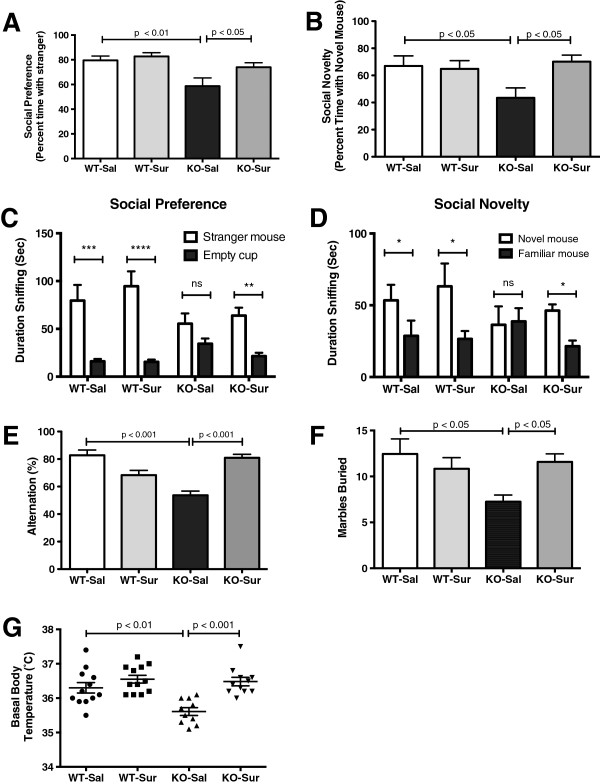
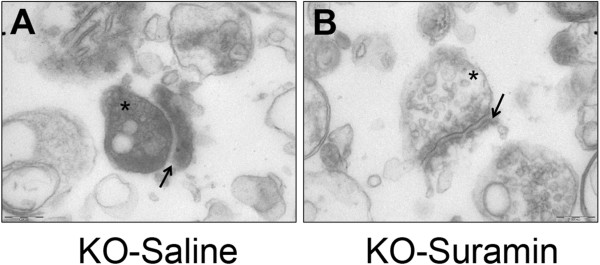
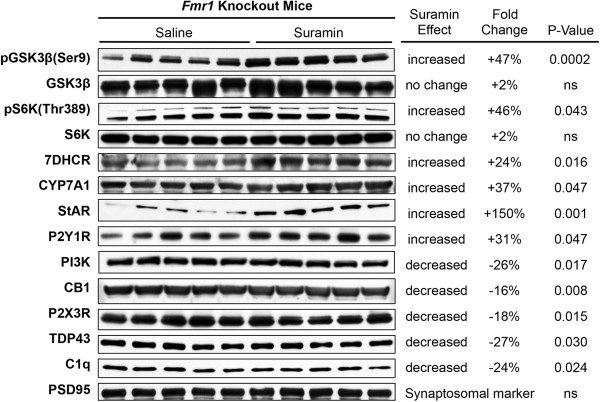
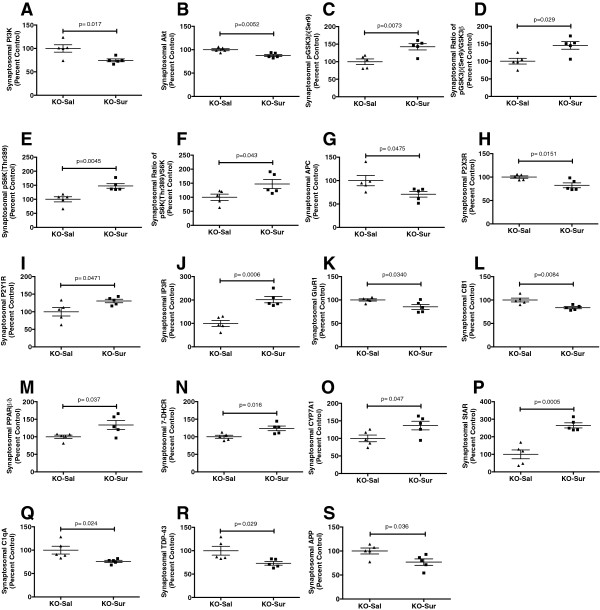
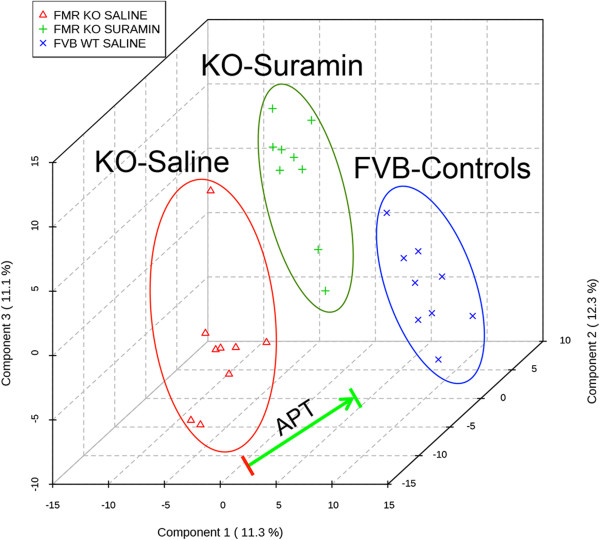
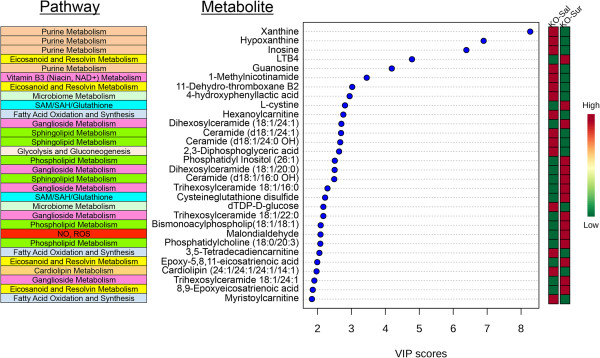
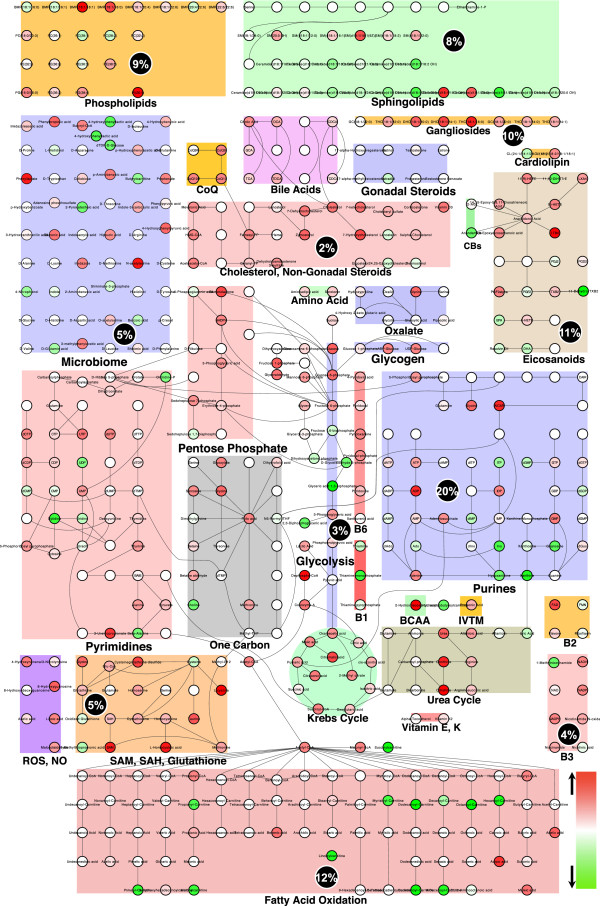
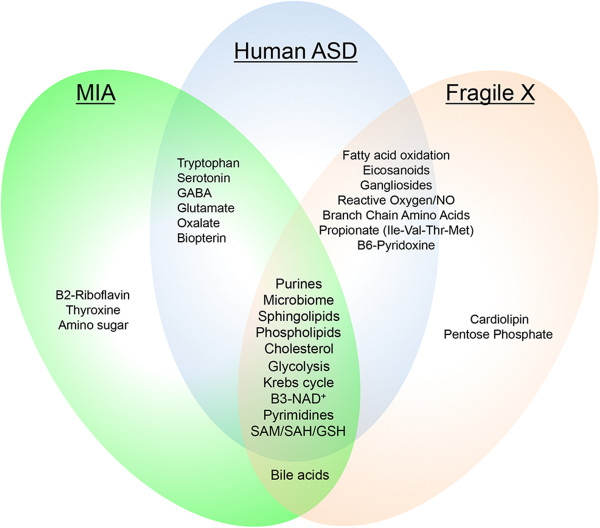
BACKGROUND: This study was designed to test a new approach to drug treatment of autism spectrum disorders (ASDs) in the Fragile X (Fmr1) knockout mouse model. METHODS: We used behavioral analysis, mass spectrometry, metabolomics, electron microscopy, and western analysis to test the hypothesis that the disturbances in social behavior, novelty preference, metabolism, and synapse structure are treatable with antipurinergic therapy (APT). RESULTS: Weekly treatment with the purinergic antagonist suramin (20 mg/kg intraperitoneally), started at 9 weeks of age, restored normal social behavior, and improved metabolism, and brain synaptosomal structure. Abnormalities in synaptosomal glutamate, endocannabinoid, purinergic, and IP3 receptor expression, complement C1q, TDP43, and amyloid β precursor protein (APP) were corrected. Comprehensive metabolomic analysis identified 20 biochemical pathways associated with symptom improvements. Seventeen pathways were shared with human ASD, and 11 were shared with the maternal immune activation (MIA) model of ASD. These metabolic pathways were previously identified as functionally related mediators of the evolutionarily conserved cell danger response (CDR). CONCLUSIONS: The data show that antipurinergic therapy improves the multisystem, ASD-like features of both the environmental MIA, and the genetic Fragile X models. These abnormalities appeared to be traceable to mitochondria and regulated by purinergic signaling.
Overview
The claims and statistics of this paper haven’t been checked yet.
Free: it reads the open-access text and checks the first 5 claims that cite a source we can check. Create a free account to check every claim.
Integrity signals
Registry
Cites
Statistics
Figures
Verification
Claims the paper makes
The claims and statistics of this paper haven’t been checked yet.
Free: it reads the open-access text and checks the first 5 claims that cite a source we can check. Create a free account to check every claim.
Claims other papers make about this one
Each is checked against this paper’s own text: does it say what the citing paper says it does?
The source backs part of the claim, not all of it — or backs it for a different population, condition or comparison.
In the citing paper
“several studies suggest that fever temporarily corrects chronic mitochondrial dysfunction — a frequently observed co-morbidity seen in ASD — through alterations in purinergic signalling247,248.”
From Immune mediators in the brain and peripheral tissues in autism spectrum disorder (2015) · cites this paper as [248]
Experimental — accuracy not yet measuredThe check wasn’t confident either way, so it gives no verdict — never disputed.
In the citing paper
“On the AQ, all but 6 participants scored ≥ 26, a cut-off which correctly categorises 83% of autistic individuals [70]; on average, autistic individuals tend to receive scores of approximately 35 [56], consistent with our groups.”
From A 'choice', an 'addiction', a way 'out of the lost': Exploring self-injury in autistic people without intellectual disability (2019) · cites this paper as [56]
Experimental — accuracy not yet measuredIn the citing paper
“A related concept here could also be to link such phenomena with what Naviaux et al.55, 94, 95 refer to as MIA eliciting a ‘cell danger response’.”
From Maternal immune activation dysregulation of the fetal brain transcriptome and relevance to the pathophysiology of autism spectrum disorder (2018) · cites this paper as [94]
Self-check
Percentages, sums and reported differences re-computed from the paper’s own numbers.
The self-check needs the paper’s full text.
Citations
Cites
Baio, J., Wiggins, L., Christensen, D. L., Maenner, M. J., Daniels, J., Warren, Z., Kurzius-Spencer, M., Zahorodny, W., Robinson, C., Rosenberg, et al. (2018) · MMWR. Surveillance Summaries · doi:10.15585/mmwr.ss6706a1 · Cited by 6,078
Neuroglial activation and neuroinflammation in the brain of patients with autism
Vargas, D. L., Nascimbene, C., Krishnan, C., Zimmerman, A. W., & Pardo, C. A. (2005) · Annals of Neurology · doi:10.1002/ana.20315 · Cited by 2,149 · cited 1×
“Activated complement proteins have also been found in the brains of children with autism [47].”
BackgroundFunctional impact of global rare copy number variation in autism spectrum disorders
Pinto, D., Pagnamenta, A. T., Klei, L., Anney, R., Merico, D., Regan, R., Conroy, J., Magalhaes, T. R., Correia, C., Abrahams, B. S., et al. (2010) · Nature · doi:10.1038/nature09146 · Cited by 2,013 · cited 1×
“Genetic [2-4], environmental [5,6], and metabolic [7] factors can contribute to the risk of ASD to different extents in each affected child.”
BackgroundGenetic Heritability and Shared Environmental Factors Among Twin Pairs With Autism
Hallmayer, J. (2011) · Archives of General Psychiatry · doi:10.1001/archgenpsychiatry.2011.76 · Cited by 1,970 · cited 1×
“Genetic [2-4], environmental [5,6], and metabolic [7] factors can contribute to the risk of ASD to different extents in each affected child.”
BackgroundMetaboAnalyst 2.0--a comprehensive server for metabolomic data analysis
Xia, J., Mandal, R., Sinelnikov, I. V., Broadhurst, D., & Wishart, D. S. (2012) · Nucleic Acids Research · doi:10.1093/nar/gks374 · Cited by 1,150 · cited 2×
“Xia J, Mandal R, Sinelnikov IV, Broadhurst D, Wishart DS. MetaboAnalyst 2.0–a comprehensive server for metabolomic data analysis.”
MethodInfluentialThe Complement System: An Unexpected Role in Synaptic Pruning During Development and Disease
Stephan, A. H., Barres, B. A., & Stevens, B. (2012) · Annual Review of Neuroscience · doi:10.1146/annurev-neuro-061010-113810 · Cited by 1,113 · cited 1×
“Recent studies have revealed an important role for complement proteins in tagging synapses during inflammation and remodeling [46].”
BackgroundFmr1 knockout mice: A model to study fragile X mental retardation
THEDUTCHBELGIANFRAGILEXCONSOR (1994) · Cell · doi:10.1016/0092-8674(94)90569-x · Cited by 1,035
Mouse behavioral tasks relevant to autism: Phenotypes of 10 inbred strains
MOY, S., NADLER, J., YOUNG, N., PEREZ, A., HOLLOWAY, L., BARBARO, R., BARBARO, J., WILSON, L., THREADGILL, D., & LAUDER, J. (2007) · Behavioural Brain Research · doi:10.1016/j.bbr.2006.07.030 · Cited by 776
Marble burying reflects a repetitive and perseverative behavior more than novelty-induced anxiety
Thomas, A., Burant, A., Bui, N., Graham, D., Yuva-Paylor, L. A., & Paylor, R. (2009) · Psychopharmacology · doi:10.1007/s00213-009-1466-y · Cited by 698 · cited 1×
“Marble burying has sometimes been considered a measure of anxiety, however, comprehensive genetic and behavioral studies have shown that marble burying is a normal mouse behavior that is genetically determined [20].”
Background
Cited by
Items 201–288 of 288
Yazd, H. S., Rubio, V. Y., Chamberlain, C. A., Yost, R. A., & Garrett, T. J. (2021) · Journal of Mass Spectrometry and Advances in the Clinical Lab · doi:10.1016/j.jmsacl.2021.05.002 · Cited by 11
“Suramin was shown to alter 20 out of 60 metabolic pathways investigated, indicating the broad scope of off-target effects a drug can have on metabolic pathways (pharmacometabolism) [10].”
Backgroundde Lima, A. M. O., Medeiros, M. R. D. A., Costa, P. D. P., & Azoni, C. A. S. (2019) · Revista CEFAC · doi:10.1590/1982-02162019/21112318 · Cited by 11
Hough, D., Mao, A. R., Aman, M. G., Lozano, R., Smith‐Hicks, C. L., Martínez‐Cerdeño, V., Derby, M., Rome, Z., Malan, N., & Findling, R. L. (2023) · Annals of General Psychiatry · doi:10.1186/s12991-023-00477-8 · Cited by 11
“Purine receptor antagonists produce symptomatic improvements in the core symptoms of autism in fragile X messenger ribonucleo-protein 1 (FMR1) knock-out mouse models [23].”
BackgroundCulibrk, R. A., Ebbert, K. A., Yeisley, D. J., Chen, R., Qureshi, F. A., Hahn, J., & Hahn, M. S. (2024) · Journal of Alzheimer s Disease · doi:10.3233/jad-230600 · Cited by 11
Magliaro, C., Cocito, C., Bagatella, S., Merighi, A., Ahluwalia, A. D., & Lossi, L. (2016) · Annals of Anatomy - Anatomischer Anzeiger · doi:10.1016/j.aanat.2016.02.009 · Cited by 11
Thermoregulation, energetics, and behavior.
Harshaw, C., BLUMBERG, M. S., & Alberts, J. R. (2017) · American Psychological Association eBooks · doi:10.1037/0000011-045 · Cited by 14
“Mechanistic understanding of these questions will thus require careful comparative work and animal modeling (e.g., Naviaux et al., 2015), with close attention paid to species-, age- and contextspecific differences in thermoregulatory and metabolic phenotypes.”
BackgroundPattern glare sensitivity distinguishes subclinical autism and schizotypy
Torrens, W., Pablo, J. N., Berryhill, M. E., & Haigh, S. M. (2024) · Cognitive Neuropsychiatry · doi:10.1080/13546805.2024.2335103 · Cited by 10
Leth‐Steensen, C., Gallitto, E., Mintah, K., & Parlow, S. E. (2021) · Journal of Autism and Developmental Disorders · doi:10.1007/s10803-020-04823-7 · Cited by 10
Applying whole exome sequencing in a consanguineous population with autism spectrum disorder
Al‐Mamari, W., Idris, A. B., Al‐Thihli, K., Abdulrahim, R., Jalees, S., Al-Jabri, M., Gabr, A. A., Murshedi, F. A., Kindy, A. A., Al-Hadabi, I., et al. (2021) · International Journal of Developmental Disabilities · doi:10.1080/20473869.2021.1937000 · Cited by 12
Does stereopsis account for the link between motor and social skills in adults?
Smith, D., Ropar, D., & Allen, H. A. (2018) · Molecular Autism · doi:10.1186/s13229-018-0234-4 · Cited by 14
Brief Report: Pupillometry, Visual Perception, and ASD Features in a Task-Switching Paradigm
DiCriscio, A. S., Hu, Y., & Troiani, V. (2019) · Journal of Autism and Developmental Disorders · doi:10.1007/s10803-019-04213-8 · Cited by 9
The Autism Palette: Combinations of Impairments Explain the Heterogeneity in ASD
Fóthi, Á., Lörincz, A., & Soorya, L. V. (2020) · Frontiers in Psychiatry · doi:10.3389/fpsyt.2020.503462 · Cited by 10
A relationship between Autism-Spectrum Quotient and face viewing behavior in 98 participants
Wegner‐Clemens, K., Rennig, J., & Beauchamp, M. S. (2020) · PLoS ONE · doi:10.1371/journal.pone.0230866 · Cited by 10
Immune Modulatory Treatments for Autism Spectrum Disorder
Thom, R. P., & McDougle, C. J. (2020) · Seminars in Pediatric Neurology · doi:10.1016/j.spen.2020.100836 · Cited by 12
Kwiatkowski, M. A., Roberts, B. Z., van Enkhuizen, J., Ji, B., Zhou, X., & Young, J. W. (2020) · European Neuropsychopharmacology · doi:10.1016/j.euroneuro.2020.11.004 · Cited by 9
Folz, J., Nikolić, M., & Kret, M. E. (2024) · Scientific Reports · doi:10.1038/s41598-024-70299-5 · Cited by 11
Tan, D. W., Maybery, M. T., Ewing, L., Tay, J., Eastwood, P. R., & Whitehouse, A. (2019) · British Journal of Psychology · doi:10.1111/bjop.12436 · Cited by 10
Galigani, M., Fossataro, C., Gindri, P., Conson, M., & Garbarini, F. (2021) · Journal of Autism and Developmental Disorders · doi:10.1007/s10803-021-05299-9 · Cited by 10
Autistic traits and alcohol use in adolescents within the general population
Pijnenburg, L. J., Kaplun, A., de Haan, L., Janecka, M., Smith, L., Reichenberg, A., Banaschewski, T., Bokde, A. L. W., Quinlan, E. B., Desrivières, S., et al. (2022) · European Child & Adolescent Psychiatry · doi:10.1007/s00787-022-01970-3 · Cited by 10
Babiec, L., Wilkaniec, A., & Adamczyk, A. (2022) · Folia Neuropathologica · doi:10.5114/fn.2022.123999 · Cited by 8
Sperandio, I., Unwin, K. L., Landry, O., & Chouinard, P. A. (2016) · Journal of Autism and Developmental Disorders · doi:10.1007/s10803-016-2971-6 · Cited by 8
Aubineau, M., Blicharska, T., & Kalubi, J.-C. (2017) · Neuropsychiatrie de l Enfance et de l Adolescence · doi:10.1016/j.neurenf.2017.09.007 · Cited by 8
A rapid and reliable chromosome analysis method for products of conception using interphase nuclei
Babu, R., V, Dyke, D. L. V., Bhattacharya, S. K., Dev, V. G., Liu, M., Kwon, M., Gu, G., Koduru, P. R. K., Rao, N. P., Williamson, C. M., et al. (2018) · Molecular Genetics & Genomic Medicine · doi:10.1002/mgg3.381 · Cited by 9
Suramin is a novel competitive antagonist selective to α1β2γ2 GABAA over ρ1 GABAC receptors
Luo, H. B., Wood, K., Shi, F., Gao, F., & Chang, Y. (2018) · Neuropharmacology · doi:10.1016/j.neuropharm.2018.08.036 · Cited by 8
Mahmuda, N. A., Yokoyama, S., Munesue, T., Hayashi, K., Yagi, K., Tsuji, C., & Higashida, H. (2020) · Diseases · doi:10.3390/diseases8010004 · Cited by 8
Feng, J., Xu, H., Cai, J., Chang, Y., Zhang, D., Du, S., & Wang, J. (2025) · Lecture notes in computer science · doi:10.1007/978-3-032-05162-2_24 · Cited by 13
Grant, A., Williams, G., Axbey, H., Wilkins, A., Firth, E., Lim, H., Cave, H., Williams, K., Ribbons, K., Sinfield, M., et al. (2024) · BMJ Open · doi:10.1136/bmjopen-2024-088343 · Cited by 9
Self-citationEngstrand, R. Z., Klang, N., Hirvikoski, T., Allodi, M. W., & Roll‐Pettersson, L. (2018) · Review Journal of Autism and Developmental Disorders · doi:10.1007/s40489-018-0147-3 · Cited by 8
Bosacki, S., Sitnik, V., Moreira, F. P., & Talwar, V. (2021) · European Journal of Developmental Psychology · doi:10.1080/17405629.2021.1937993 · Cited by 7
Antón-Galindo, E., Adel, M. R., García‐González, J., Leggieri, A., López-Blanch, L., Irimia, M., Norton, W., Brennan, C. H., Fernàndez‐Castillo, N., & Cormand, B. (2024) · Translational Psychiatry · doi:10.1038/s41398-024-02801-6 · Cited by 8
Antipurinergic Therapy with Suramin as a Treatment for Autism Spectrum Disorder
Hamidpour, R., & Hamidpour, S. (2016) · Journal of Biomedical Sciencies · doi:10.4172/2254-609x.100028 · Cited by 7
“P2X and P2Y are subsets of purinergic receptors that help regulate a spectrum of biological behaviors and mannerisms that impact known genetic dispositions of autism, including taste and senses related to taste [3-6], food allergies [3,7], proper food absorption and proper function of the gastrointestinal tract [2,15-…”
BackgroundMethodResultInfluentialBuilding a theoretical framework for autism spectrum disorders screening instruments in Europe
Magán‐Maganto, M., Jonsdottir, S. L., García, A. B. S., Primo, P. G., Hellendoorn, A., Charman, T., Roeyers, H., Dereu, M., Moilanen, I. K., Muratori, F., et al. (2017) · Child and Adolescent Mental Health · doi:10.1111/camh.12256 · Cited by 8
People with higher autistic traits show stronger binding for color–shape associations
Chen, N., Watanabe, K., Spence, C. J., & Wada, M. (2023) · Scientific Reports · doi:10.1038/s41598-023-36666-4 · Cited by 9
Ahire, C. G., & Kaur, G. (2025) · Brain Behavior & Immunity - Health · doi:10.1016/j.bbih.2025.101037 · Cited by 9
“…particular, the non-selective P2X/P2Y receptor antagonist suramin showed outstanding efficacy in correcting multiple systemic abnormalities when administered to pregnant rodents, including the amelioration of core social deficits and disturbances in sensorimotor coordination (Naviaux et al., 2015).”
Gao, L., Zhang, T., Zhang, Y., Liu, J., & Guo, X. (2024) · Journal of Autism and Developmental Disorders · doi:10.1007/s10803-024-06696-6 · Cited by 8
Tierney, S., & Burns, J. (2017) · Principles of Gender-Specific Medicine · doi:10.1016/b978-0-12-803506-1.00004-8 · Cited by 6
Gonzaga, C. N., Valente, H. B., Ricci‐Vitor, A. L., Laurino, M. J. L., Santos, L. A., Stoco-Oliveira, M. C., Rodrigues, M. V., Ribeiro, A. A., Bofi, T. C., de Carvalho, A. C., et al. (2021) · Research in Developmental Disabilities · doi:10.1016/j.ridd.2021.104034 · Cited by 6
Infant quantitative risk for autism spectrum disorder predicts executive function in early childhood
Stephens, R. L., Watson, L. R., Crais, E. R., & Reznick, J. S. (2018) · Autism Research · doi:10.1002/aur.2024 · Cited by 7
The Generalized Adaptation Account of Autism
Gernert, C. C., Falkai, P., & Falter, C. M. (2020) · Frontiers in Neuroscience · doi:10.3389/fnins.2020.534218 · Cited by 7
Emotional Cognition, Theory of Mind, and Face Recognition in Individuals with Autism and PDDs
May, K. E., Martino, M. A., & Kana, R. K. (2022) · Autism and child psychopathology series · doi:10.1007/978-3-030-88538-0_5 · Cited by 6
Kanari, K., & Kikuchi-Ito, M. (2021) · Heliyon · doi:10.1016/j.heliyon.2021.e07751 · Cited by 5
Pannexin 1 regulates spiny protrusion dynamics in cortical neuronsPreprint
Sanchez-Arias, J. C., Candlish, R. C., & Swayne, L. A. (2020) · bioRxiv (Cold Spring Harbor Laboratory) · doi:10.1101/2020.03.02.973917 · Cited by 5
“Crmp2 auto-antibodies have been implicated in ASD (Braunschweig et al., 2013), while suramin treatment corrected synaptic and behavioural phenotypes in the Fragile X mouse model (J. C. Naviaux et al., 2015; R. K. Naviaux et al., 2013, 2017).”
BackgroundNovel therapeutics in autism spectrum disorder
Kevelson, S. D., Elmaghraby, R., Patel, F., Brown, H. R., Gorenstein, M., Bain, J., Grinspan, Z. M., Pedapati, E. V., Veenstra-VanderWeele, J. M., & Vandana, P. (2026) · Neurotherapeutics · doi:10.1016/j.neurot.2026.e00857 · Cited by 8
“In preclinical models — including maternal immune activation and valproic acid exposure — single doses of suramin have been reported to change social behavior and some synaptic, metabolic, and immune markers [154 – 156].”
Hickson, R., Hebron, L., Müller‐Oehring, E. M., Cheu, A., Hernández, A., Kiss, O., Gombert, M., Baker, F. C., & Schulte, T. (2024) · Frontiers in Child and Adolescent Psychiatry · doi:10.3389/frcha.2024.1481957 · Cited by 5
Lemes, V. B., Gaya, A. R., Mota, J. A. P. S., & Brand, C. (2025) · BMC Psychiatry · doi:10.1186/s12888-024-06440-5 · Cited by 4
Impact of Youth with Intellectual and Developmental Disabilities on Families: Balancing Perspectives
Bolourian, Y., & Blacher, J. (2016) · Current Developmental Disorders Reports · doi:10.1007/s40474-016-0087-5 · Cited by 6
Effects of spatial consistency and individual difference on touch-induced visual suppression effect
Hidaka, S., Suzuishi, Y., Ide, M., & Wada, M. (2018) · Scientific Reports · doi:10.1038/s41598-018-35302-w · Cited by 5
From the Profound to the Mundane: Questionnaires as Emerging Technologies in Autism Genetics
Hollin, G. J. S. (2019) · Science Technology & Human Values · doi:10.1177/0162243919841691 · Cited by 4
Newman, S. D., & Newman, M. M. (2023) · Current Psychology · doi:10.1007/s12144-023-04851-3 · Cited by 3
A 3-hit metabolic signaling model for the core symptoms of autism spectrum disorder
Naviaux, R. K. (2025) · Mitochondrion · doi:10.1016/j.mito.2025.102096 · Cited by 4
Self-citationSharma, O., Grewal, A. K., Kumar, A., Khan, H., Singh, V., Singh, T. G., Singh, T., Ahmad, S. F., & Al‐Mazroua, H. A. (2025) · Scientific Reports · doi:10.1038/s41598-025-27660-z · Cited by 6
“Notably, Suramin has also been reported to ameliorate behavioral deficits in rodent models of autism and neuroinflammation 30 , further supporting its capacity to modulate neuroimmune interactions.”
Thomas, S., Fayet, O., Truffault, F., Fadel, É., Provost, B., Hamza, A., Berrih‐Aknin, S., Bonnefont, J., & Panse, R. L. (2021) · Journal of Neuroinflammation · doi:10.1186/s12974-021-02311-y · Cited by 3
The Neurobiological Basis for Social Affiliation in Autism Spectrum Disorder and Schizophrenia
Crider, A., & Pillai, A. (2016) · Current Behavioral Neuroscience Reports · doi:10.1007/s40473-016-0079-0 · Cited by 3
Boldt, M. C., Oliveira, L. C., Kretzschmar, G. C., Meissner, C. G., Mallmann, M. B., da Silveira, J. M., Lopes, F. L., & Boldt, A. B. W. (2020) · Journal of Immigrant and Minority Health · doi:10.1007/s10903-020-01046-x · Cited by 3
Role of AMP-activated protein kinase and sirtuins as antiaging proteins
Ramu, M., Vishal, S. S., & Gogia, N. (2022) · Elsevier eBooks · doi:10.1016/b978-0-323-90235-9.00015-x · Cited by 4
From bedside to bench and back: Translating ASD models
Drozd, H. P., Karathanasis, S. F., Molosh, A. I., Lukkes, J. L., Clapp, D. W., & Shekhar, A. (2018) · Progress in brain research · doi:10.1016/bs.pbr.2018.10.003 · Cited by 4
Capturing individual differences in social motivation using a novel interactive task
Pluymen, P., Pequet, A., Thomas, H. F., & Warnell, K. R. (2021) · Personality and Individual Differences · doi:10.1016/j.paid.2021.110725 · Cited by 4
Effects of Stromal Cell Conditioned Medium and Antipurinergic Treatment on Macrophage Phenotype
Arabiyat, A. S., Yeisley, D. J., Güiza-Argüello, V. R., Qureshi, F. A., Culibrk, R. A., Hahn, J., & Hahn, M. S. (2022) · Tissue Engineering Part C Methods · doi:10.1089/ten.tec.2022.0123 · Cited by 2
“23,24 32 Introducing elements that regulate purinergic signaling may therefore be a promising strategy to further tailor the immunomodulatory properties of MSC CM. 35 Macrophages are commonly employed to assess MSC-based innate immunomodulation 36–40 due to their roles as communicators of…”
Babiec, L., Wilkaniec, A., Gawinek, E., Hilgier, W., & Adamczyk, A. (2024) · Research in Autism · doi:10.1016/j.rasd.2024.102353 · Cited by 2
Pannexin1 Mediates Early-Life Seizure-Induced Social Behavior Deficits
Obot, P., Cibelli, A., Pan, J. G., Velíšek, L., Velíšková, J., & Scemes, E. (2024) · ASN NEURO · doi:10.1080/17590914.2024.2371164 · Cited by 2
“In addition to being a major player in seizure pathology (Cie � slak et al., 2017); reviewed in Wong and Engel (2023), purinergic signaling has also been proposed to contribute to pathophysiology of ASD phenotype (Hirsch et al., 2020; Naviaux et al., 2014, 2015, 2017).”
BackgroundStructural Brain Imaging Biomarkers of Autism Spectrum Disorder
Amaral, D. G., Andrews, D. S., & Nordahl, C. W. (2024) · Advances in neurobiology · doi:10.1007/978-3-031-69491-2_17 · Cited by 2
Ye, K., Guo, Y., Chang, N., Xu, J., Qin, Q., Yang, X. Y., Huang, Y., Ge, Q., Meng, D., & Zhao, X. (2025) · Analytical Methods · doi:10.1039/d5ay00277j · Cited by 2
Is Metabolic Screening Necessary in Children with Autism Spectrum Disorder? A Mini Review
Γώγου, Μ., & Evangeliou, A. (2018) · Journal of Pediatric Neurology · doi:10.1055/s-0038-1676633 · Cited by 2
Robertson, N., Qureshi, A., & Monk, R. L. (2021) · Advances in Autism · doi:10.1108/aia-10-2020-0058 · Cited by 2
Brittenham, C., DiCriscio, A. S., Troiani, V., Hu, Y., & Wagner, J. (2025) · Scientific Reports · doi:10.1038/s41598-025-92904-x · Cited by 1
Ebbert, K. A., Chen, R., Culibrk, R. A., Yeisley, D. J., & Hahn, M. S. (2025) · Biotechnology and Bioengineering · doi:10.1002/bit.70082 · Cited by 1
“Although suramin is most widely known for its effects on purinergic signaling, it also impacts Akt/mTOR/GSK signaling, in part through modulating the activity of p70SK6 — a downstream effector of the Akt/mTOR segment of the Akt/ mTOR/GSK pathway (Culibrk et al. 2024; Naviaux et al. 2015).”
Ketogenic Diet, Social Behavior, and Autism: Insights from Animal Models
Cheng, N., Masino, S. A., & Rho, J. M. (2022) · Oxford University Press eBooks · doi:10.1093/med/9780197501207.003.0016 · Cited by 1
Cancer in Patients with Autism Spectrum Disorder: Risk and Challenges
Kazemzadeh, K., & Rezaei, N. (2023) · Interdisciplinary cancer research · doi:10.1007/16833_2023_200 · Cited by 1
Efficacy of Vitamin Supplements in Autism Spectrum Disorder
Adıgüzel, E. (2024) · Springer eBooks · doi:10.1007/978-3-031-40858-8_76-1 · Cited by 1
Inflammation and immune-mediated neurobehavioral alterations : a critical role for microglia
Lacabanne, C. (2018) · theses.fr (ABES) · doi:10.70675/41a4e2a3zdbb7z4aa0z899dz9553bb07954b · Cited by 1
Chandrasekaran, S., Rajarajan, P., Akbarian, S., & Brennand, K. (2018) · Wiley eBooks · doi:10.1002/9781119283249.ch6
Kawa, R. (2018) · Wydawnictwa Uniwersytetu Warszawskiego eBooks · doi:10.31338/uw.9788323535478.pp.125-140
Zolkipli‐Cunningham, Z., Naviaux, J. C., Nakayama, T., Hirsch, C. M., Monk, J. M., Li, K., Wang, L., Le, T. P., Meinardi, S., Blake, D. R., et al. (2020) · Research Square · doi:10.21203/rs.3.rs-63567/v1
“A nal common path appears to be the activation of purinergic signaling and the cell danger response (CDR) [1-4].”
BackgroundMethodResultSelf-citationMetabolic Therapy for Autism Spectrum Disorder and Comorbidities
Cheng, N., Masino, S. A., & Rho, J. M. (2016) · Oxford University Press eBooks · doi:10.1093/med/9780190497996.003.0014
Ben‐Ari, Y. (2019) · Faculty Opinions – Post-Publication Peer Review of the Biomedical Literature · doi:10.3410/f.733499087.793568939
From replicability to generalizability: how research practice can shape scientific results
Arroyo-Araujo, M. (2022) · University of Groningen research database (University of Groningen / Centre for Information Technology) · doi:10.33612/diss.325014460
Wout, F. V. ‘., & Jarrold, C. (2023) · Journal of Autism and Developmental Disorders · doi:10.1007/s10803-022-05843-1
Purinergic Signaling in Autism Spectrum Disorder
Deckmann, I., Santos‐Terra, J., & Gottfried, C. (2023) · Springer eBooks · doi:10.1007/978-3-031-26945-5_6
Fetit, R., Pratt, T., & Price, D. J. (2023) · Springer eBooks · doi:10.1007/978-3-031-42383-3_17
Investigating the effects of prednisolone on behavior in mouse models of Duchenne muscular dystrophyPreprint
Verhaeg, M. A. T., van de Vijver, D., Winter, C. L. T.-D., van der Pijl, E. M., Mastenbroek, L., Leka, U., Stan, T. L., & van Putten, M. (2024) · bioRxiv (Cold Spring Harbor Laboratory) · doi:10.1101/2024.10.29.620838
A pregnant woman’s immune response could lead to brain disorders in her kids
Estes, M. L. (2016) · The Conversation · doi:10.64628/aai.pexda6rqt
Janickova, L., Rechberger, K. F., Wey, L., & Schwaller, B. (2020) · Figshare · doi:10.6084/m9.figshare.12456866
Extracellular ATP in psychiatric disorders
von Mücke-Heim, I.-A., & Deussing, J. M. (2026) · Elsevier eBooks · doi:10.1016/b978-0-443-30250-3.00015-1
Ujic, D. (2023) · TSpace (University of Toronto)
Structural processing of visual narratives in autism
Coderre, E. L., Pellegrino-Wood, J., O'Donnell, E. G., & Cohn, N. (2026) · Discourse Processes · doi:10.1080/0163853x.2026.2627175
Mysliveček, J., Bačová, Z., Janisova, K., & Bakoš, J. (2026) · Reviews in the Neurosciences · doi:10.1515/revneuro-2026-0039
“…multiple ankyrin repeat domains 3 ( Shank3 )-de fi cient mice, as well as Contactin-associated protein-like 2 ( Cntnap2 )-de fi cient mice (see Figure 1), in which autistic-like symptoms have been consistently and reliably demonstrated (Bukatova et al. 2021; Jang et al. 2025; Naviaux et al. 2015).”
Ünsel‐Bolat, G., & Bolat, H. (2026) · Human Mutation · doi:10.1155/humu/5522396
“Similarly, stimulation of the P2X7 receptor contributes to blood–brain barrier disruption [5], as-trogliosis [6], apoptosis [7], and exacerbated lesion progression [8], underscoring its pivotal role in neuroinflammatory processes [9].”
Metadata
- Authors
- Naviaux, J. C., Wang, L., Li, K., Bright, A., Alaynick, W. A., Williams, K. R., Powell, S. B., & Naviaux, R. K.
- Affiliations
- University of California San Diego (US)
- Corresponding author
- Naviaux, Jane C
- Wang, Lin
- Li, Kefeng
- Bright, A
- Alaynick, William A
- Williams, Kenneth R
- Powell, Susan B
- Naviaux, Robert K
- Venue
- Molecular Autism
- Published
- 2015
- Volume
- 6
- Issue
- 1
- Pages
- 1
- ISSN
- 2040-2392 (ISSN-L)
- PMC
- PMC4334917
- OpenAlex
- W2124120525
- Cited by
- 285
- References
- 123
- Citations by year
- 2026: 5 · 2025: 8 · 2024: 18 · 2023: 17 · 2022: 10 · 2021: 36 · 2020: 24 · 2019: 29 · 2018: 35 · 2017: 51 · 2016: 40 · 2015: 11
- FWCI
- 31.39
- Type
- journal article
- Language
- en
- Open access
- gold
- doi.org
- Locations
- Molecular Autism (publishedVersion)
- Europe PMC (PubMed Central) (publishedVersion, cc-by)
- PubMed Central (publishedVersion, cc-by)
- PubMed (publishedVersion)
- Funders
- Wright Family Foundation
- University of California, San Diego
- Topics
- Life Sciences › Biochemistry, Genetics and Molecular Biology › Genetics › Genetics and Neurodevelopmental Disorders
- Life Sciences › Neuroscience › Cognitive Neuroscience › Autism Spectrum Disorder Research
- Life Sciences › Neuroscience › Cellular and Molecular Neuroscience › Neuroscience and Neuropharmacology Research
- Keywords
- autism spectrum disorder, fragile X syndrome, Fmr1 knockout mice, suramin, purinergic signaling, social behavior, novelty preference, synaptic structure, metabolomics, maternal immune activation, mitochondria, endocannabinoid system, IP3 receptor, TDP-43, amyloid precursor protein, C1q, glutamate
About these checks
Registry, retraction, Cites and statistics results are computed, not judged, with one exception: a printed reference that no index lists is read once by a model before it counts as a citation error. Claims are extracted by a model and kept only when their quote appears verbatim in the text; each cited source is then checked, with a model’s help, for whether it says what the claim relies on. Those verdicts can be wrong — read the claim’s quote and the cited source before relying on one.
Statistics and arithmetic are recomputed, not judged.
Confidence bands are shown only for fields calibrated on our annotated test set. None is calibrated yet, so no band is shown.
What counts as a claim ›How we measure confidence ›How we check this ›
Are you an author, or do you see a problem with this page? Request a review
Data sources
Bibliographic data: Semantic Scholar, OpenAlex, Crossref.
Contains information from the Semantic Scholar Academic Graph Datasets, made available under the ODC Attribution License (ODC-BY 1.0).
Semantic Scholar’s data is described in: Kinney, R., et al. (2023). The Semantic Scholar Open Data Platform. arXiv:2301.10140.
