

Antipurinergic therapy corrects the autism-like features in the Fragile X (Fmr1 knockout) mouse model
Open accessThe DOI matches its Crossref record; 123 of the 123 references it cites were found in a registry or an index.
Abstract
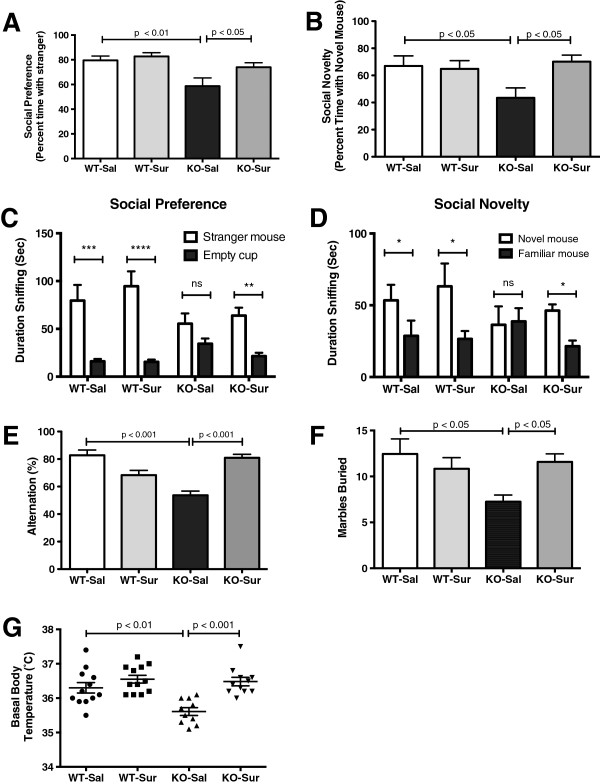
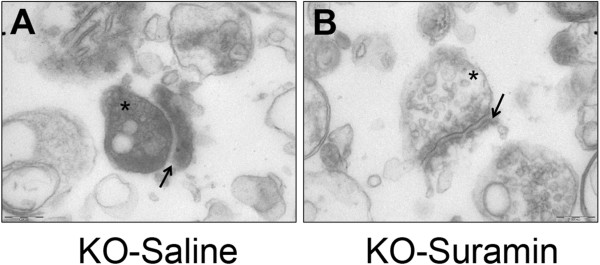
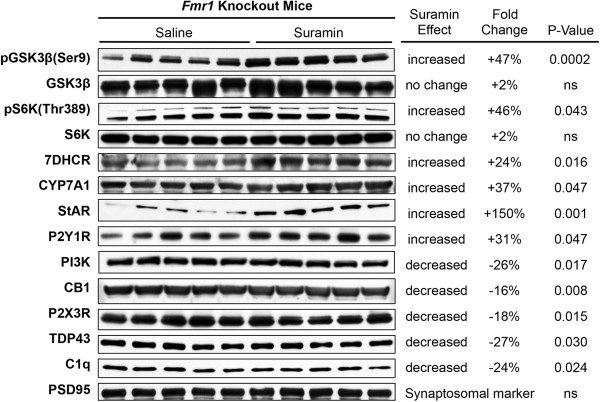
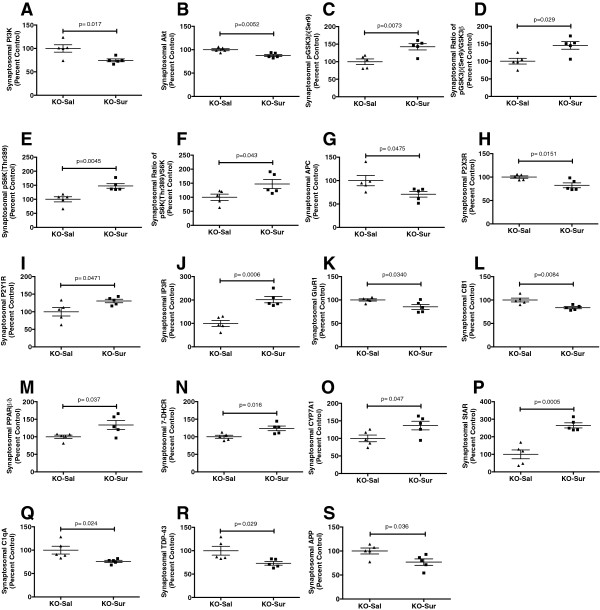
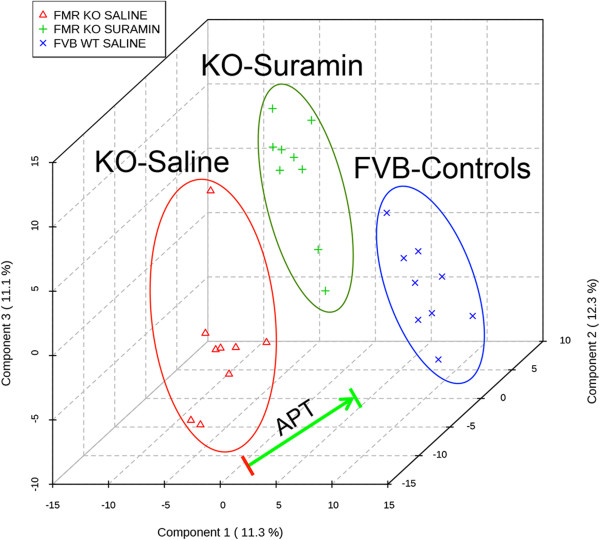
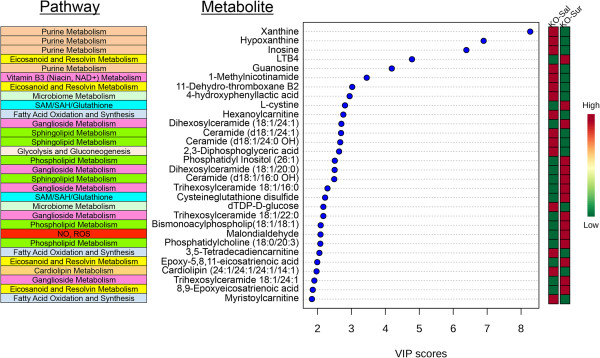
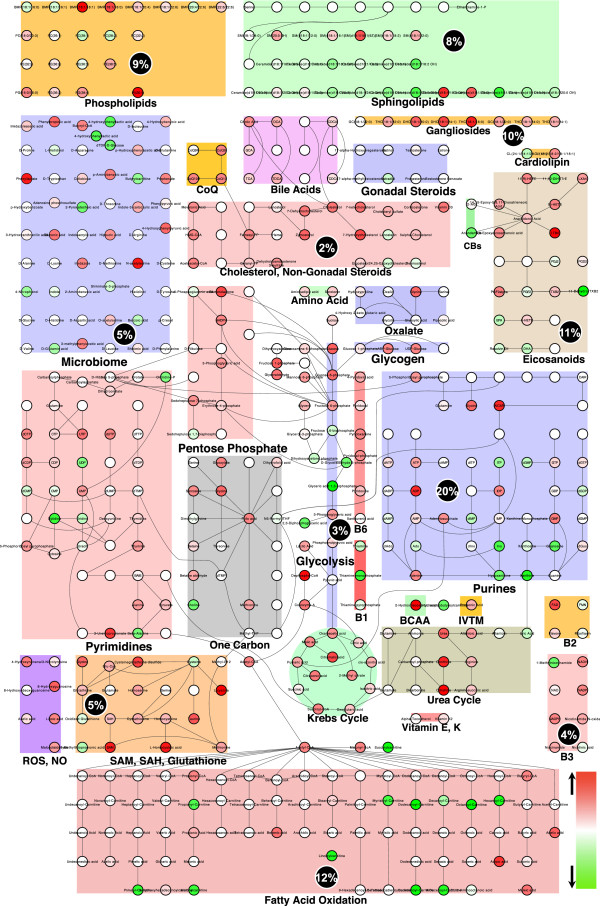
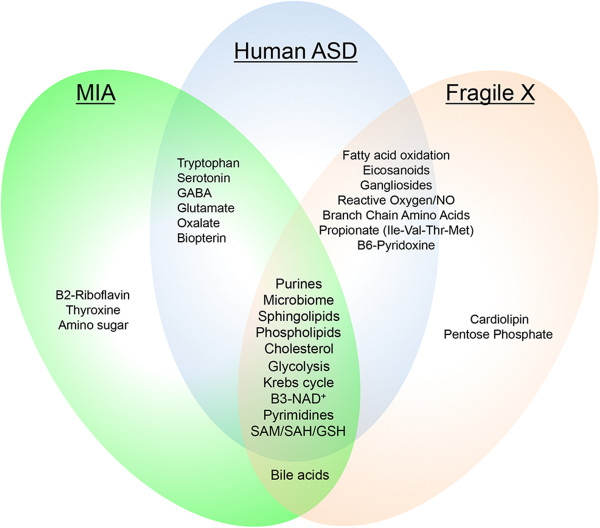
BACKGROUND: This study was designed to test a new approach to drug treatment of autism spectrum disorders (ASDs) in the Fragile X (Fmr1) knockout mouse model. METHODS: We used behavioral analysis, mass spectrometry, metabolomics, electron microscopy, and western analysis to test the hypothesis that the disturbances in social behavior, novelty preference, metabolism, and synapse structure are treatable with antipurinergic therapy (APT). RESULTS: Weekly treatment with the purinergic antagonist suramin (20 mg/kg intraperitoneally), started at 9 weeks of age, restored normal social behavior, and improved metabolism, and brain synaptosomal structure. Abnormalities in synaptosomal glutamate, endocannabinoid, purinergic, and IP3 receptor expression, complement C1q, TDP43, and amyloid β precursor protein (APP) were corrected. Comprehensive metabolomic analysis identified 20 biochemical pathways associated with symptom improvements. Seventeen pathways were shared with human ASD, and 11 were shared with the maternal immune activation (MIA) model of ASD. These metabolic pathways were previously identified as functionally related mediators of the evolutionarily conserved cell danger response (CDR). CONCLUSIONS: The data show that antipurinergic therapy improves the multisystem, ASD-like features of both the environmental MIA, and the genetic Fragile X models. These abnormalities appeared to be traceable to mitochondria and regulated by purinergic signaling.
Overview
The claims and statistics of this paper haven’t been checked yet.
Free: it reads the open-access text and checks the first 5 claims that cite a source we can check. Create a free account to check every claim.
Integrity signals
Registry
Cites
Statistics
Figures
Verification
Claims the paper makes
The claims and statistics of this paper haven’t been checked yet.
Free: it reads the open-access text and checks the first 5 claims that cite a source we can check. Create a free account to check every claim.
Claims other papers make about this one
Each is checked against this paper’s own text: does it say what the citing paper says it does?
The source backs part of the claim, not all of it — or backs it for a different population, condition or comparison.
In the citing paper
“several studies suggest that fever temporarily corrects chronic mitochondrial dysfunction — a frequently observed co-morbidity seen in ASD — through alterations in purinergic signalling247,248.”
From Immune mediators in the brain and peripheral tissues in autism spectrum disorder (2015) · cites this paper as [248]
Experimental — accuracy not yet measuredThe check wasn’t confident either way, so it gives no verdict — never disputed.
In the citing paper
“On the AQ, all but 6 participants scored ≥ 26, a cut-off which correctly categorises 83% of autistic individuals [70]; on average, autistic individuals tend to receive scores of approximately 35 [56], consistent with our groups.”
From A 'choice', an 'addiction', a way 'out of the lost': Exploring self-injury in autistic people without intellectual disability (2019) · cites this paper as [56]
Experimental — accuracy not yet measuredIn the citing paper
“A related concept here could also be to link such phenomena with what Naviaux et al.55, 94, 95 refer to as MIA eliciting a ‘cell danger response’.”
From Maternal immune activation dysregulation of the fetal brain transcriptome and relevance to the pathophysiology of autism spectrum disorder (2018) · cites this paper as [94]
Self-check
Percentages, sums and reported differences re-computed from the paper’s own numbers.
The self-check needs the paper’s full text.
Citations
Cites
Baio, J., Wiggins, L., Christensen, D. L., Maenner, M. J., Daniels, J., Warren, Z., Kurzius-Spencer, M., Zahorodny, W., Robinson, C., Rosenberg, et al. (2018) · MMWR. Surveillance Summaries · doi:10.15585/mmwr.ss6706a1 · Cited by 6,078
Neuroglial activation and neuroinflammation in the brain of patients with autism
Vargas, D. L., Nascimbene, C., Krishnan, C., Zimmerman, A. W., & Pardo, C. A. (2005) · Annals of Neurology · doi:10.1002/ana.20315 · Cited by 2,149 · cited 1×
“Activated complement proteins have also been found in the brains of children with autism [47].”
BackgroundFunctional impact of global rare copy number variation in autism spectrum disorders
Pinto, D., Pagnamenta, A. T., Klei, L., Anney, R., Merico, D., Regan, R., Conroy, J., Magalhaes, T. R., Correia, C., Abrahams, B. S., et al. (2010) · Nature · doi:10.1038/nature09146 · Cited by 2,013 · cited 1×
“Genetic [2-4], environmental [5,6], and metabolic [7] factors can contribute to the risk of ASD to different extents in each affected child.”
BackgroundGenetic Heritability and Shared Environmental Factors Among Twin Pairs With Autism
Hallmayer, J. (2011) · Archives of General Psychiatry · doi:10.1001/archgenpsychiatry.2011.76 · Cited by 1,970 · cited 1×
“Genetic [2-4], environmental [5,6], and metabolic [7] factors can contribute to the risk of ASD to different extents in each affected child.”
BackgroundMetaboAnalyst 2.0--a comprehensive server for metabolomic data analysis
Xia, J., Mandal, R., Sinelnikov, I. V., Broadhurst, D., & Wishart, D. S. (2012) · Nucleic Acids Research · doi:10.1093/nar/gks374 · Cited by 1,150 · cited 2×
“Xia J, Mandal R, Sinelnikov IV, Broadhurst D, Wishart DS. MetaboAnalyst 2.0–a comprehensive server for metabolomic data analysis.”
MethodInfluentialThe Complement System: An Unexpected Role in Synaptic Pruning During Development and Disease
Stephan, A. H., Barres, B. A., & Stevens, B. (2012) · Annual Review of Neuroscience · doi:10.1146/annurev-neuro-061010-113810 · Cited by 1,113 · cited 1×
“Recent studies have revealed an important role for complement proteins in tagging synapses during inflammation and remodeling [46].”
BackgroundFmr1 knockout mice: A model to study fragile X mental retardation
THEDUTCHBELGIANFRAGILEXCONSOR (1994) · Cell · doi:10.1016/0092-8674(94)90569-x · Cited by 1,035
Mouse behavioral tasks relevant to autism: Phenotypes of 10 inbred strains
MOY, S., NADLER, J., YOUNG, N., PEREZ, A., HOLLOWAY, L., BARBARO, R., BARBARO, J., WILSON, L., THREADGILL, D., & LAUDER, J. (2007) · Behavioural Brain Research · doi:10.1016/j.bbr.2006.07.030 · Cited by 776
Marble burying reflects a repetitive and perseverative behavior more than novelty-induced anxiety
Thomas, A., Burant, A., Bui, N., Graham, D., Yuva-Paylor, L. A., & Paylor, R. (2009) · Psychopharmacology · doi:10.1007/s00213-009-1466-y · Cited by 698 · cited 1×
“Marble burying has sometimes been considered a measure of anxiety, however, comprehensive genetic and behavioral studies have shown that marble burying is a normal mouse behavior that is genetically determined [20].”
Background
Cited by
Adults with Autism Spectrum Disorders
Howlin, P., & Moss, P. (2012) · The Canadian Journal of Psychiatry · doi:10.1177/070674371205700502 · Cited by 559
Neurodiversity at work: a biopsychosocial model and the impact on working adults
Doyle, N. (2020) · British Medical Bulletin · doi:10.1093/bmb/ldaa021 · Cited by 527
Immune mediators in the brain and peripheral tissues in autism spectrum disorder
Estes, M. L., & McAllister, A. K. (2015) · Nature Reviews Neuroscience · doi:10.1038/nrn3978 · Cited by 514
Autism spectrum disorder: outcomes in adulthood
Howlin, P., & Magiati, I. (2017) · Current Opinion in Psychiatry · doi:10.1097/yco.0000000000000308 · Cited by 457
Purinergic Signalling: Therapeutic Developments
Burnstock, G. (2017) · Frontiers in Pharmacology · doi:10.3389/fphar.2017.00661 · Cited by 398
“Adenosine in addition to suramin, a non-selective ATP antagonist, are reported to improve behaviour in autistic individuals (Masino et al., 2013; Naviaux et al., 2014, 2015; Hamidpour et al., 2016).”
BackgroundMetabolic features of chronic fatigue syndrome
Naviaux, R. K., Naviaux, J. C., Li, K., Bright, A. T., Alaynick, W. A., Wang, L., Baxter, A., Nathan, N., Anderson, W., & Gordon, E. (2016) · Proceedings of the National Academy of Sciences · doi:10.1073/pnas.1607571113 · Cited by 391
“Targeted, broad-spectrum, chemometric analysis of 612 metabolites from 63 biochemical pathways was performed as described (55) with minor modifications.”
BackgroundSelf-citationThe ASD Living Biology: from cell proliferation to clinical phenotype
Courchesne, E., Pramparo, T., Gazestani, V. H., Lombardo, M. V., Pierce, K., & Lewis, N. E. (2019) · Molecular Psychiatry · doi:10.1038/s41380-018-0056-y · Cited by 333
“Other studies have used mesenchymal stem cells 163 or pharmacological treatment to block or antagonize the effect of MIA on purinergic 164 or inflammatory pathways 141, 165, 166 .”
Alexithymia, not autism, is associated with impaired interoception
Shah, P., Hall, R., Catmur, C., & Bird, G. (2016) · Cortex · doi:10.1016/j.cortex.2016.03.021 · Cited by 326
Adams, J., Audhya, T., Geis, E., Gehn, E., Fimbres, V., Pollard, E., Mitchell, J., Ingram, J., Hellmers, R., Laake, D., et al. (2018) · Nutrients · doi:10.3390/nu10030369 · Cited by 267
“Vitamins and carnitine were measured at UC-San Diego by some of our team using liquid chromatography tandem mass spectrometry (LC-MS/MS) (SCIEX, Redwood City, CA, USA) as previously described with modifications [73] (PMID 25705365).”
MethodSelf-citationGevi, F., Zolla, L., Gabriele, S., & Persico, A. M. (2016) · Molecular Autism · doi:10.1186/s13229-016-0109-5 · Cited by 251
“This pattern bears an interesting resemblance to the excess of urinary inosine and hypoxanthine detected in Fmr1 knock-out mice, an animal model of fragile-X syndrome [35].”
ResultA Mixed Methods Study of Barriers to Formal Diagnosis of Autism Spectrum Disorder in Adults
Lewis, L. F. (2017) · Journal of Autism and Developmental Disorders · doi:10.1007/s10803-017-3168-3 · Cited by 206
Lombardo, M. V., Moon, H. M., Su, J., Palmer, T. D., Courchesne, E., & Pramparo, T. (2018) · Molecular Psychiatry · doi:10.1038/mp.2017.15 · Cited by 201
“94–96 Another future extension of this work is to examine whether the type of immunogen inducing MIA response (i.e. poly(I:C) vs LPS) has similar or different effects on gene expression.”
Baron-Cohen, S., Tsompanidis, A., Auyeung, B., Nørgaard-Pedersen, B., Hougaard, D. M., Abdallah, M., Cohen, A., & Pohl, A. (2020) · Molecular Psychiatry · doi:10.1038/s41380-019-0454-9 · Cited by 200
The origins of belonging: social motivation in infants and young children
Over, H. (2016) · Philosophical Transactions of the Royal Society B: Biological Sciences · doi:10.1098/rstb.2015.0072 · Cited by 167
Zhang, Y., Li, N., Li, C., Zhang, Z., Teng, H., Wang, Y., Zhao, T., Shi, L., Zhang, K., Xia, K., et al. (2020) · Translational Psychiatry · doi:10.1038/s41398-020-0699-8 · Cited by 177
GABAergic inhibitory neurons as therapeutic targets for cognitive impairment in schizophrenia
Xu, M.-Y., & Wong, A. H. C. (2018) · Acta Pharmacologica Sinica · doi:10.1038/aps.2017.172 · Cited by 160
Metabolic Dysfunction Underlying Autism Spectrum Disorder and Potential Treatment Approaches
Cheng, N., Rho, J. M., & Masino, S. A. (2017) · Frontiers in Molecular Neuroscience · doi:10.3389/fnmol.2017.00034 · Cited by 145
“Naviaux et al., 2013, 2014, 2015 Anti-purinergic therapy improved autism-like features in the maternal immune activation mouse model and the Fragile X mouse model.”
BackgroundUllrich (2018) · doi:10.1038/mp.2017.188 · Cited by 145
Pelton, M. K., & Cassidy, S. A. (2017) · Autism Research · doi:10.1002/aur.1828 · Cited by 135
Subthreshold autism spectrum disorder in patients with eating disorders
Dell'Osso, L., Carpita, B., Gesi, C., Cremone, I. M., Corsi, M., Massimetti, E., Muti, D., Calderani, E., Castellini, G., Luciano, M., et al. (2018) · Comprehensive Psychiatry · doi:10.1016/j.comppsych.2017.11.007 · Cited by 123
Developmental regulation of RNA processing by Rbfox proteins
Conboy, J. G. (2016) · Wiley Interdisciplinary Reviews - RNA · doi:10.1002/wrna.1398 · Cited by 144
Conner, C. M., Golt, J., Shaffer, R., Righi, G., Siegel, M., & Mazefsky, C. A. (2021) · Autism Research · doi:10.1002/aur.2450 · Cited by 130
Empathy in autism Spectrum disorder
Harmsen, I. E. (2019) · Journal of Autism and Developmental Disorders · doi:10.1007/s10803-019-04087-w · Cited by 129
Fumagalli, M., Lecca, D., Abbracchio, M. P., & Ceruti, S. (2017) · Frontiers in Pharmacology · doi:10.3389/fphar.2017.00941 · Cited by 130
“…with suramin has been reported to correct the autism spectrum disorder-like phenotype and to restore normal social behavior in a maternal immune activation murine model of autismlike behaviors using polyI:C exposure, and in the Fragile X (Fmr1 knockout) model (Naviaux et al., 2013, 2015; Table 2).”
BackgroundMasi, A., Breen, E. J., Alvares, G. A., Glozier, N., Hickie, I. B., Hunt, A., Hui, J., Beilby, J., Ravine, D., Wray, J., et al. (2017) · Molecular Autism · doi:10.1186/s13229-017-0176-2 · Cited by 111
Barahona-Corrêa, B., Velosa, A., Chainho, A., Lopes, R., & Oliveira-Maia, A. J. (2018) · Frontiers in Integrative Neuroscience · doi:10.3389/fnint.2018.00027 · Cited by 127
Purinergic mechanisms in neuroinflammation: An update from molecules to behavior
Beamer, E., Gölöncsér, F., Horváth, G., Bekő, K., Otrokocsi, L., Koványi, B., & Sperlágh, B. (2016) · Neuropharmacology · doi:10.1016/j.neuropharm.2015.09.019 · Cited by 101
“…found that suramin, a broad spectrum purinergic antagonist, attenuates the whole variety of neurobiological and phenotypic alterations in different animals models of autism spectrum disorder, including the poly(I:C) model representing maternal immune activation (Naviaux et al., 2014, 2015, 2013).”
BackgroundLow‐dose suramin in autism spectrum disorder: a small, phase I/II, randomized clinical trial
Naviaux, R. K., Curtis, B., Li, K., Naviaux, J. C., Bright, A. T., Reiner, G., Westerfield, M., Goh, S., Alaynick, W. A., Wang, L., et al. (2017) · Annals of Clinical and Translational Neurology · doi:10.1002/acn3.424 · Cited by 123
“Consistent with our previously published work using mouse models, the metabolic effects of suramin resulted in a decrease of the cell danger response(8) and restored more normal metabolism.(12,13) Purine metabolism was the single most changed pathway (Table 3, Table S2).”
BackgroundResultSelf-citationEnhanced Social Attention in Female Infant Siblings at Risk for Autism
Chawarska, K., Macari, S., Powell, K., DiNicola, L., & Shic, F. (2016) · Journal of the American Academy of Child & Adolescent Psychiatry · doi:10.1016/j.jaac.2015.11.016 · Cited by 94
Mayer, J. (2016) · Journal of Autism and Developmental Disorders · doi:10.1007/s10803-016-2948-5 · Cited by 122
Whole brain white matter connectivity analysis using machine learning: An application to autism
Zhang, F., Savadjiev, P., Cai, W., Song, Y., Rathi, Y., Tunç, B., Parker, D., Kapur, T., Schultz, R. T., Makris, N., et al. (2018) · NeuroImage · doi:10.1016/j.neuroimage.2017.10.029 · Cited by 105
A Comparative Review of microRNA Expression Patterns in Autism Spectrum Disorder
Hicks, S. D., & Middleton, F. A. (2016) · Frontiers in Psychiatry · doi:10.3389/fpsyt.2016.00176 · Cited by 103
Tchanturia, K., Smith, K., Glennon, D., & Burhouse, A. (2020) · Frontiers in Psychiatry · doi:10.3389/fpsyt.2020.00640 · Cited by 90
Moseley, R. L., Gregory, N. J., Smith, P., Allison, C., & Baron-Cohen, S. (2019) · Molecular Autism · doi:10.1186/s13229-019-0267-3 · Cited by 97
Walsh, M. J. M., Wallace, G. L., Gallegos, S. M., & Braden, B. B. (2021) · NeuroImage: Clinical · doi:10.1016/j.nicl.2021.102719 · Cited by 97
Chen, J., Xin, K., Wei, J., Zhang, K., & Xiao, H. (2016) · Journal of Psychosomatic Research · doi:10.1016/j.jpsychores.2016.08.013 · Cited by 106
Neural Mechanisms Underlying Repetitive Behaviors in Rodent Models of Autism Spectrum Disorders
Gandhi, T., & Lee, C. C. (2021) · Frontiers in Cellular Neuroscience · doi:10.3389/fncel.2020.592710 · Cited by 88
“Application of brain-derived neurotrophic factor (BDNF), mGluR5 antagonists, anti-purinergic therapy (suramin), minocycline, phosphodiesterase-4D negative allosteric modulator (BPN14770) and PI3K antagonist [GSK2702926A (GSK6A)] attenuates dendritic spine development aberrations, LTP impairments, and behavioral abnorm…”
BackgroundDevelopmental vitamin D deficiency and autism: Putative pathogenic mechanisms
Ali, A. A., Cui, X., & Eyles, D. W. (2016) · The Journal of Steroid Biochemistry and Molecular Biology · doi:10.1016/j.jsbmb.2016.12.018 · Cited by 100
Male-specific deficits in natural reward learning in a mouse model of neurodevelopmental disorders
Grissom, N. M., McKee, S. E., Schoch, H., Bowman, N., Havekes, R., O'Brien, W. T., Mahrt, E., Siegel, S., Commons, K., Portfors, C., et al. (2018) · Molecular Psychiatry · doi:10.1038/mp.2017.184 · Cited by 92
Alvares, G. A., Quintana, D. S., & Whitehouse, A. J. O. (2017) · Autism Research · doi:10.1002/aur.1692 · Cited by 91
Characterising the Sexuality and Sexual Experiences of Autistic Females
Pecora, L. A., Hancock, G. I., Mesibov, G. B., & Stokes, M. A. (2019) · Journal of Autism and Developmental Disorders · doi:10.1007/s10803-019-04204-9 · Cited by 85
Cortico-Cerebellar Connectivity in Autism Spectrum Disorder: What Do We Know So Far?
Crippa, A., Vecchio, G. D., Ceccarelli, S. B., Nobile, M., Arrigoni, F., & Brambilla, P. (2016) · Frontiers in Psychiatry · doi:10.3389/fpsyt.2016.00020 · Cited by 103
The effect of omega-3 fatty acids on aggression: A meta-analysis
Gajos, J. M., & Beaver, K. M. (2016) · Neuroscience & Biobehavioral Reviews · doi:10.1016/j.neubiorev.2016.07.017 · Cited by 97
Jung, M., Tu, Y., Lang, C., Ortiz, A., Park, J., Jorgenson, K., Kong, X.-J., & Kong, J. (2017) · NeuroImage · doi:10.1016/j.neuroimage.2017.09.031 · Cited by 91
Autism Spectrum Disorder in an Unselected Cohort of Children with Neurofibromatosis Type 1 (NF1)
Eijk, S. H., Mous, S. E., Dieleman, G. C., Dierckx, B., Rietman, A. B., de Nijs, P. F. A., ten Hoopen, L. W., van Minkelen, R., Elgersma, Y., Catsman‐Berrevoets, C. E., et al. (2018) · Journal of Autism and Developmental Disorders · doi:10.1007/s10803-018-3478-0 · Cited by 95
Are endocrine disrupting compounds environmental risk factors for autism spectrum disorder?
Moosa, A., Shu, H., Sarachana, T., & Hu, V. W. (2018) · Hormones and Behavior · doi:10.1016/j.yhbeh.2017.10.003 · Cited by 87
Seeing More Than Human: Autism and Anthropomorphic Theory of Mind
Atherton, G., & Cross, L. (2018) · Frontiers in Psychology · doi:10.3389/fpsyg.2018.00528 · Cited by 99
Garrido, D., Petrova, D., Watson, L. R., García‐Retamero, R., & Carballo, G. (2017) · Autism Research · doi:10.1002/aur.1829 · Cited by 92
Protective Effect or Missed Diagnosis? Females with Autism Spectrum Disorder
Hull, L., & Mandy, W. (2017) · Future Neurology · doi:10.2217/fnl-2017-0006 · Cited by 73
Atypical developmental trajectory of local spontaneous brain activity in autism spectrum disorder
Guo, X., Chen, H., Long, Z., Duan, X., Zhang, Y., & Chen, H. (2017) · Scientific Reports · doi:10.1038/srep39822 · Cited by 89
Sex and STEM Occupation Predict Autism-Spectrum Quotient (AQ) Scores in Half a Million People
Ruzich, E., Allison, C., Chakrabarti, B., Smith, P., Musto, H., Ring, H., & Baron-Cohen, S. (2015) · PLOS ONE · doi:10.1371/journal.pone.0141229 · Cited by 79
Dyspraxia and autistic traits in adults with and without autism spectrum conditions
Cassidy, S., Hannant, P., Tavassoli, T., Allison, C. L., Smith, P. L., & Baron‐Cohen, S. (2016) · Molecular Autism · doi:10.1186/s13229-016-0112-x · Cited by 84
Sex differences in the association between infant markers and later autistic traits
Bedford, R., Jones, E. J. H., Johnson, M. H., Pickles, A. R., Charman, T., & Gliga, T. (2016) · Molecular Autism · doi:10.1186/s13229-016-0081-0 · Cited by 85
Yin, J., & Schaaf, C. P. (2016) · Prenatal Diagnosis · doi:10.1002/pd.4942 · Cited by 81
Pearson, N., Charman, T., Happé, F., Bolton, P. F., & McEwen, F. S. (2018) · Autism Research · doi:10.1002/aur.2035 · Cited by 75
Emerging Roles of Complement Protein C1q in Neurodegeneration
Cho, K. (2019) · Aging and disease · doi:10.14336/ad.2019.0118 · Cited by 72
“functions of the classical complement pathway during normal brain development and aging process [10, 35-37].”
BackgroundRoberts, T. P. L., Matsuzaki, J., Blaskey, L., Bloy, L., Edgar, J. C., Kim, M., Ku, M., Kuschner, E. S., & Embick, D. (2019) · Molecular Autism · doi:10.1186/s13229-019-0283-3 · Cited by 73
Naviaux, R. K. (2018) · Mitochondrion · doi:10.1016/j.mito.2018.08.001 · Cited by 80
Self-citationThe Role of Vitamins in Autism Spectrum Disorder: What Do We Know?
Bjørklund, G., Waly, M. I., Al-Farsi, Y. M., Saad, K., Dadar, M., Rahman, M. M., Elhoufey, A. A., Chirumbolo, S., Jóźwik-Pruska, J., & Kałużna‐Czaplińska, J. (2019) · Journal of Molecular Neuroscience · doi:10.1007/s12031-018-1237-5 · Cited by 81
TDP-43 and Inflammation: Implications for Amyotrophic Lateral Sclerosis and Frontotemporal Dementia
Bright, F., Chan, G., van Hummel, A., Ittner, L. M., & Ke, Y. D. (2021) · International Journal of Molecular Sciences · doi:10.3390/ijms22157781 · Cited by 71
Gouder, L., Vitrac, A., Goubran-Botros, H., Danckaert, A., Tinevez, J.-Y., André-Leroux, G., Atanasova, E., Lemière, N., Biton, A., Leblond, C. S., et al. (2019) · Scientific Reports · doi:10.1038/s41598-018-36993-x · Cited by 65
Sunk Cost Effect in Individuals with Autism Spectrum Disorder
Fujino, J., Tei, S., Itahashi, T., Aoki, Y. Y., Ohta, H., Kanai, C., Kubota, M., Hashimoto, R., Nakamura, M., Kato, N., et al. (2018) · Journal of Autism and Developmental Disorders · doi:10.1007/s10803-018-3679-6 · Cited by 71
Subgrouping siblings of people with autism: Identifying the broader autism phenotype
Ruzich, E., Allison, C., Smith, P., Watson, P., Auyeung, B., Ring, H., & Baron‐Cohen, S. (2016) · Autism Research · doi:10.1002/aur.1544 · Cited by 67
Liu, T., Liu, X., Yi, L., Zhu, C., Markey, P. S., & Pelowski, M. J. (2017) · NeuroImage · doi:10.1016/j.neuroimage.2017.09.044 · Cited by 74
An autism-linked missense mutation in SHANK3 reveals the modularity of Shank3 function
Wang, L., Pang, K., Han, K., Adamski, C. J., Wang, W., He, L., Lai, J. K., Bondar, V. V., Duman, J. G., Richman, R., et al. (2020) · Molecular Psychiatry · doi:10.1038/s41380-018-0324-x · Cited by 65
Self-citationLovelace, T. S., Comis, M., Tabb, J., & Oshokoya, O. (2021) · Behavior Analysis in Practice · doi:10.1007/s40617-021-00654-9 · Cited by 74
A Systematic Review of Passing as Non-autistic in Autism Spectrum Disorder
Libsack, E. J., Keenan, E. G., Freden, C. E., Mirmina, J., Iskhakov, N., Krishnathasan, D., & Lerner, M. D. (2021) · Clinical Child and Family Psychology Review · doi:10.1007/s10567-021-00365-1 · Cited by 68
Berman, J. I., Edgar, J. C., Blaskey, L., Kuschner, E. S., Levy, S. E., Ku, M., Dell, J., & Roberts, T. P. L. (2016) · Frontiers in Neuroanatomy · doi:10.3389/fnana.2016.00030 · Cited by 68
Self-reported sex differences in high-functioning adults with autism: a meta-analysis
Moseley, R. L., Hitchiner, R., & Kirkby, J. A. (2018) · Molecular Autism · doi:10.1186/s13229-018-0216-6 · Cited by 56
Parent Expectations and Preparatory Activities as Adolescents with ASD Transition to Adulthood
Holmes, L. G., Kirby, A. V., Strassberg, D. S., & Himle, M. B. (2018) · Journal of Autism and Developmental Disorders · doi:10.1007/s10803-018-3545-6 · Cited by 66
Attitudes toward risk and ambiguity in patients with autism spectrum disorder
Fujino, J., Tei, S., Hashimoto, R., Itahashi, T., Ohta, H., Kanai, C., Okada, R., Kubota, M., Nakamura, M., Kato, N., et al. (2017) · Molecular Autism · doi:10.1186/s13229-017-0162-8 · Cited by 67
A Longitudinal Study of Local Gyrification Index in Young Boys With Autism Spectrum Disorder.
Libero, L. E., Schaer, M., Li, D. D., Amaral, D., & Nordahl, C. (2019) · Cerebral Cortex · doi:10.1093/cercor/bhy126 · Cited by 57
Polar lipidomic profile shows Chlorococcum amblystomatis as a promising source of value-added lipids
Conde, T. A., Couto, D., Melo, T., Costa, M., Silva, J., Domingues, M. R., & Domingues, P. (2021) · Scientific Reports · doi:10.1038/s41598-021-83455-y · Cited by 58
Common and unique multimodal covarying patterns in autism spectrum disorder subtypes
Qi, S., Morris, R., Turner, J. A., Fu, Z., Jiang, R., Deramus, T. P., Zhi, D., Calhoun, V. D., & Sui, J. (2020) · Molecular Autism · doi:10.1186/s13229-020-00397-4 · Cited by 58
Simcoe, S. M., Brownlow, C., Garnett, M. S., Rynkiewicz, A., & Attwood, T. (2018) · Journal of Autism and Developmental Disorders · doi:10.1007/s10803-017-3324-9 · Cited by 56
Autism spectrum disorders: Integration of the genome, transcriptome and the environment
Vijayakumar, N. T., & Judy, M. V. (2016) · Journal of the Neurological Sciences · doi:10.1016/j.jns.2016.03.026 · Cited by 64
Fingher, N., Dinstein, I., Ben‐Shachar, M., Haar, S., Dale, A. M., Eyler, L. T., Pierce, K., & Courchesne, E. (2017) · Cortex · doi:10.1016/j.cortex.2016.12.024 · Cited by 61
Profiles of urine and blood metabolomics in autism spectrum disorders
Likhitweerawong, N., Thonusin, C., Boonchooduang, N., Louthrenoo, O., Nookaew, I., Chattipakorn, N., & Chattipakorn, S. C. (2021) · Metabolic Brain Disease · doi:10.1007/s11011-021-00788-3 · Cited by 60
Kawa, R., Sæmundsen, E., Jonsdottir, S. L., Hellendoorn, A., Lemcke, S., Canal‐Bedia, R., Primo, P. G., & Moilanen, I. K. (2016) · European Journal of Public Health · doi:10.1093/eurpub/ckw206 · Cited by 74
Brief Report: Intuitive and Reflective Reasoning in Autism Spectrum Disorder
Brosnan, M., Ashwin, C., & Lewton, M. (2017) · Journal of Autism and Developmental Disorders · doi:10.1007/s10803-017-3131-3 · Cited by 59
Wilson, J. E., Trumbo, M., Wilson, J. K., & Tesche, C. D. (2018) · Journal of Neural Transmission · doi:10.1007/s00702-018-1938-5 · Cited by 62
Systematic review and meta-analysis of genetic studies of late-life depression
Tsang, R. S. M., Mather, K. A., Sachdev, P. S., & Reppermund, S. (2017) · Neuroscience & Biobehavioral Reviews · doi:10.1016/j.neubiorev.2017.01.028 · Cited by 54
Ferreira, J. P., Toscano, C. V. A., Machado‐Rodrigues, A. M., Furtado, G. E., de Barros, M. V. G., Júnior, R. D. S. W., & Carvalho, H. M. (2018) · Frontiers in Public Health · doi:10.3389/fpubh.2018.00047 · Cited by 66
Autism Spectrum Disorder (ASD) Prevalence in Somali and Non-Somali Children
Hewitt, A. S., Hall‐Lande, J., Hamre, K., Esler, A., Punyko, J. A., Reichle, J. E., & Gulaid, A. A. (2016) · Journal of Autism and Developmental Disorders · doi:10.1007/s10803-016-2793-6 · Cited by 63
McVey, A. J., Schiltz, H., Haendel, A., Dolan, B. K., Willar, K. S., Pleiss, S., Karst, J. S., Carson, A. M., Caiozzo, C., Vogt, E., et al. (2017) · Journal of Autism and Developmental Disorders · doi:10.1007/s10803-017-3121-5 · Cited by 46
Wang, J., Fu, K., Chen, L., Duan, X., Guo, X., Chen, H., Wu, Q., Xia, W., Wu, L., & Chen, H. (2017) · Frontiers in Physiology · doi:10.3389/fphys.2017.00588 · Cited by 57
Targeting TDP‐43 proteinopathy with drugs and drug‐like small molecules
Buratti, E. (2020) · British Journal of Pharmacology · doi:10.1111/bph.15148 · Cited by 51
“It has been reported that a fragile X (Fmr1) mice models treated with suramin displayed a significant decrease in TDP-43 expression in their synaptosomes (Naviaux et al., 2015).”
BackgroundWidespread White Matter Differences in Children and Adolescents with Autism Spectrum Disorder
Vogan, V. M., Morgan, B. R., Leung, R. C., Anagnostou, E. A., Doyle‐Thomas, K. A. R., & Taylor, M. J. (2016) · Journal of Autism and Developmental Disorders · doi:10.1007/s10803-016-2744-2 · Cited by 58
Family Sexuality Communication for Adolescent Girls on the Autism Spectrum
Holmes, L. G., Strassberg, D. S., & Himle, M. B. (2019) · Journal of Autism and Developmental Disorders · doi:10.1007/s10803-019-03904-6 · Cited by 50
Parenting an Autistic Child: Experiences of Parents with Significant Autistic Traits
Marriott, E., Stacey, J., Hewitt, O. M., & Verkuijl, N. (2021) · Journal of Autism and Developmental Disorders · doi:10.1007/s10803-021-05182-7 · Cited by 52
Alexithymia may explain the relationship between autistic traits and eating disorder psychopathology
Vuillier, L., Carter, Z., Teixeira, A. R., & Moseley, R. L. (2020) · Molecular Autism · doi:10.1186/s13229-020-00364-z · Cited by 48
Keating, C. T., Fraser, D. S., Sowden, S., & Cook, J. L. (2021) · Journal of Autism and Developmental Disorders · doi:10.1007/s10803-021-05083-9 · Cited by 50
Efficient Shapley Explanation for Features Importance Estimation Under Uncertainty
Li, X., Zhou, Y., Dvornek, N. C., Gu, Y., Ventola, P., & Duncan, J. S. (2020) · Lecture Notes in Computer Science · doi:10.1007/978-3-030-59710-8_77 · Cited by 45
Sex differences in frontal lobe connectivity in adults with autism spectrum conditions
Zeestraten, E. A., Gudbrandsen, M. C., Daly, E., de Schotten, M. T., Catani, M., Dell'Acqua, F., Lai, M.-C., Ruigrok, A. N. V., Lombardo, M. V., Chakrabarti, B., et al. (2017) · Translational Psychiatry · doi:10.1038/tp.2017.9 · Cited by 47
Kat, R., Arroyo-Araujo, M., de Vries, R. B. M., Koopmans, M. A., de Boer, S. F., & Kas, M. J. (2022) · Neuroscience & Biobehavioral Reviews · doi:10.1016/j.neubiorev.2022.104722 · Cited by 49
Powell, S. B., & Swerdlow, N. R. (2023) · Schizophrenia Bulletin · doi:10.1093/schbul/sbad098 · Cited by 49
Self-citationMetabolic features of treatment-refractory major depressive disorder with suicidal ideation
Pan, L. A., Naviaux, J. C., Wang, L., Li, K., Monk, J. M., Lingampelly, S. S., Segreti, A. M., Bloom, K., Vockley, J., Tarnopolsky, M. A., et al. (2023) · Translational Psychiatry · doi:10.1038/s41398-023-02696-9 · Cited by 46
“The study did not include drug-naïve patients, treatment-responsive MDD patients, or patients with refractory MDD without suicidal ideation.”
BackgroundSelf-citationZhong, J., Amina, S., Liang, M., Akther, S., Yuhi, T., Nishimura, T., Tsuji, C., Tsuji, T., Liu, H.-X., Hashii, M., et al. (2016) · Frontiers in Neuroscience · doi:10.3389/fnins.2016.00304 · Cited by 42
Antipurinergic therapy for autism—An in-depth review
Naviaux, R. K. (2017) · Mitochondrion · doi:10.1016/j.mito.2017.12.007 · Cited by 43
“Could therapy directed at the CDR be effective in Fragile X, and other genetic causes of ASD? Antipurinergic therapy (APT) directed at the CDR has already proven effective in correcting ASD-like behaviors in the Fragile X mouse model (Naviaux et al., 2015).”
BackgroundSelf-citationCircumscribed interests in autism: are there sex differences?
Nowell, S. W., Jones, D. R., & Harrop, C. (2019) · Advances in Autism · doi:10.1108/aia-09-2018-0032 · Cited by 43
Metadata
- Authors
- Naviaux, J. C., Wang, L., Li, K., Bright, A., Alaynick, W. A., Williams, K. R., Powell, S. B., & Naviaux, R. K.
- Affiliations
- University of California San Diego (US)
- Corresponding author
- Naviaux, Jane C
- Wang, Lin
- Li, Kefeng
- Bright, A
- Alaynick, William A
- Williams, Kenneth R
- Powell, Susan B
- Naviaux, Robert K
- Venue
- Molecular Autism
- Published
- 2015
- Volume
- 6
- Issue
- 1
- Pages
- 1
- ISSN
- 2040-2392 (ISSN-L)
- PMC
- PMC4334917
- OpenAlex
- W2124120525
- Cited by
- 285
- References
- 123
- Citations by year
- 2026: 5 · 2025: 8 · 2024: 18 · 2023: 17 · 2022: 10 · 2021: 36 · 2020: 24 · 2019: 29 · 2018: 35 · 2017: 51 · 2016: 40 · 2015: 11
- FWCI
- 31.39
- Type
- journal article
- Language
- en
- Open access
- gold
- doi.org
- Locations
- Molecular Autism (publishedVersion)
- Europe PMC (PubMed Central) (publishedVersion, cc-by)
- PubMed Central (publishedVersion, cc-by)
- PubMed (publishedVersion)
- Funders
- Wright Family Foundation
- University of California, San Diego
- Topics
- Life Sciences › Biochemistry, Genetics and Molecular Biology › Genetics › Genetics and Neurodevelopmental Disorders
- Life Sciences › Neuroscience › Cognitive Neuroscience › Autism Spectrum Disorder Research
- Life Sciences › Neuroscience › Cellular and Molecular Neuroscience › Neuroscience and Neuropharmacology Research
- Keywords
- autism spectrum disorder, fragile X syndrome, Fmr1 knockout mice, suramin, purinergic signaling, social behavior, novelty preference, synaptic structure, metabolomics, maternal immune activation, mitochondria, endocannabinoid system, IP3 receptor, TDP-43, amyloid precursor protein, C1q, glutamate
About these checks
Registry, retraction, Cites and statistics results are computed, not judged, with one exception: a printed reference that no index lists is read once by a model before it counts as a citation error. Claims are extracted by a model and kept only when their quote appears verbatim in the text; each cited source is then checked, with a model’s help, for whether it says what the claim relies on. Those verdicts can be wrong — read the claim’s quote and the cited source before relying on one.
Statistics and arithmetic are recomputed, not judged.
Confidence bands are shown only for fields calibrated on our annotated test set. None is calibrated yet, so no band is shown.
What counts as a claim ›How we measure confidence ›How we check this ›
Are you an author, or do you see a problem with this page? Request a review
Data sources
Bibliographic data: Semantic Scholar, OpenAlex, Crossref.
Contains information from the Semantic Scholar Academic Graph Datasets, made available under the ODC Attribution License (ODC-BY 1.0).
Semantic Scholar’s data is described in: Kinney, R., et al. (2023). The Semantic Scholar Open Data Platform. arXiv:2301.10140.
