

Antipurinergic therapy corrects the autism-like features in the Fragile X (Fmr1 knockout) mouse model
Open accessThe DOI matches its Crossref record; 123 of the 123 references it cites were found in a registry or an index.
Abstract
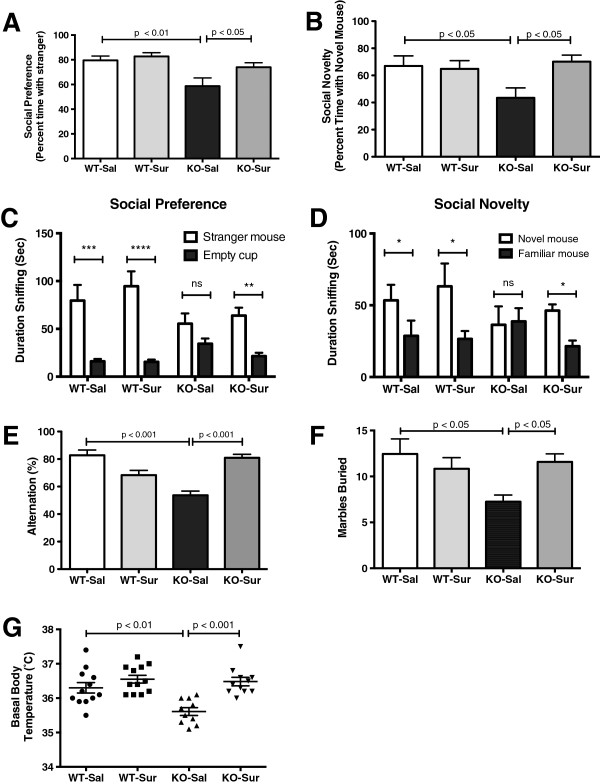
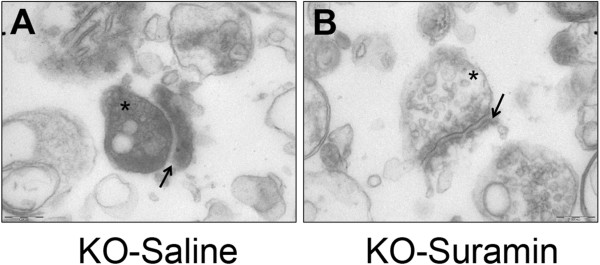
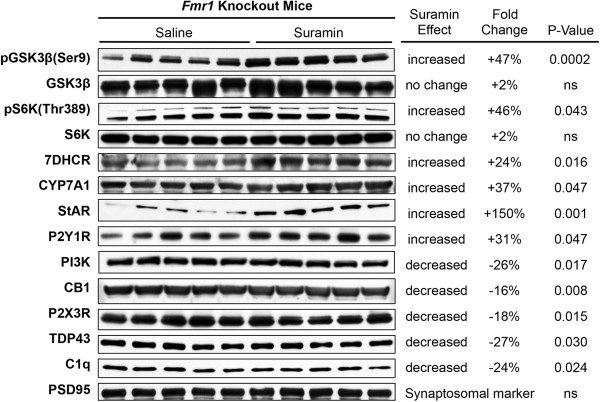
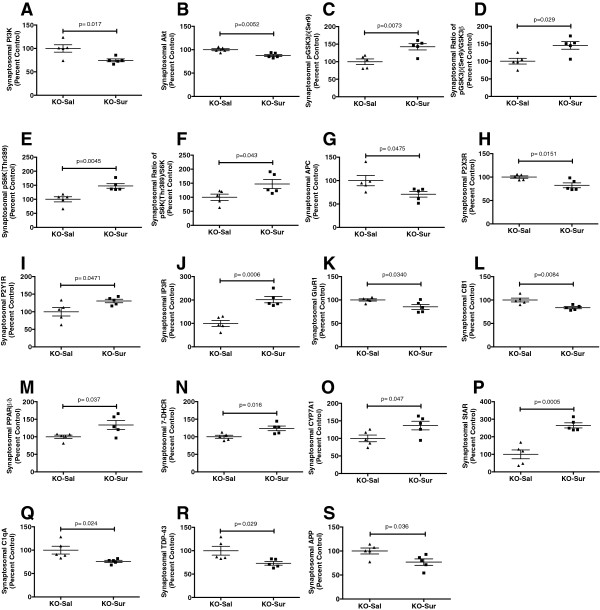
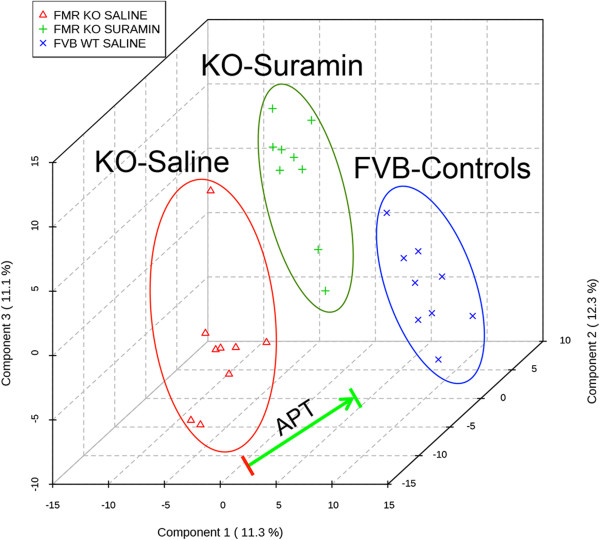
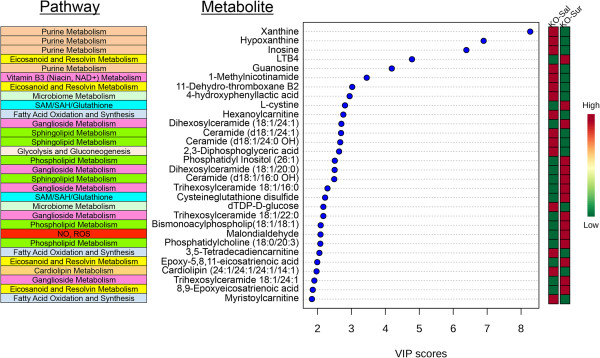
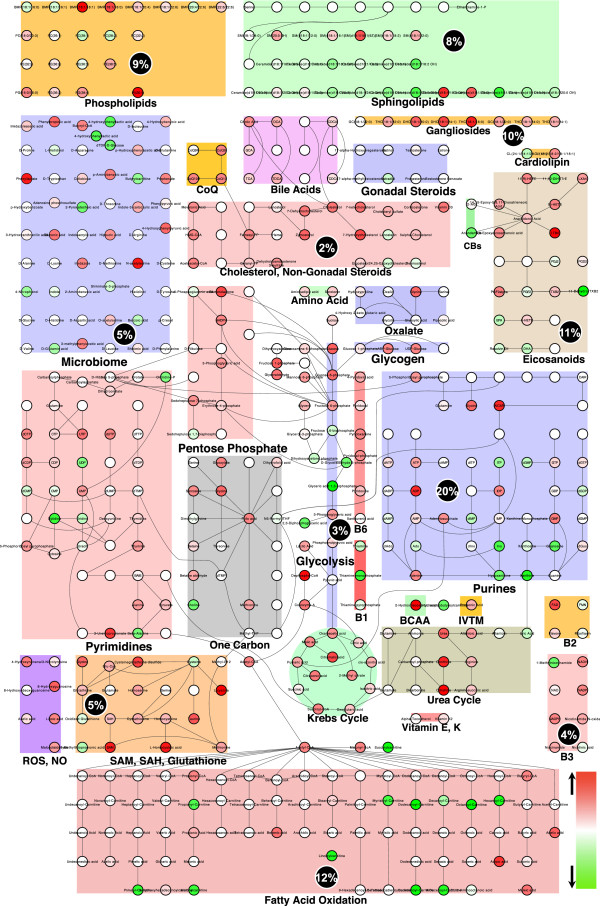
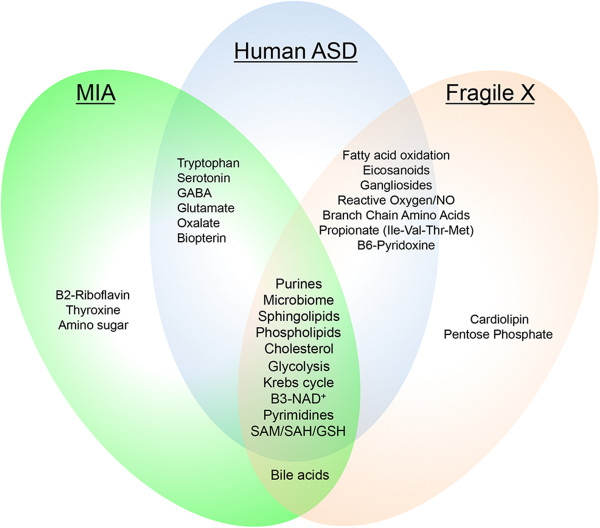
BACKGROUND: This study was designed to test a new approach to drug treatment of autism spectrum disorders (ASDs) in the Fragile X (Fmr1) knockout mouse model. METHODS: We used behavioral analysis, mass spectrometry, metabolomics, electron microscopy, and western analysis to test the hypothesis that the disturbances in social behavior, novelty preference, metabolism, and synapse structure are treatable with antipurinergic therapy (APT). RESULTS: Weekly treatment with the purinergic antagonist suramin (20 mg/kg intraperitoneally), started at 9 weeks of age, restored normal social behavior, and improved metabolism, and brain synaptosomal structure. Abnormalities in synaptosomal glutamate, endocannabinoid, purinergic, and IP3 receptor expression, complement C1q, TDP43, and amyloid β precursor protein (APP) were corrected. Comprehensive metabolomic analysis identified 20 biochemical pathways associated with symptom improvements. Seventeen pathways were shared with human ASD, and 11 were shared with the maternal immune activation (MIA) model of ASD. These metabolic pathways were previously identified as functionally related mediators of the evolutionarily conserved cell danger response (CDR). CONCLUSIONS: The data show that antipurinergic therapy improves the multisystem, ASD-like features of both the environmental MIA, and the genetic Fragile X models. These abnormalities appeared to be traceable to mitochondria and regulated by purinergic signaling.
Overview
The claims and statistics of this paper haven’t been checked yet.
Free: it reads the open-access text and checks the first 5 claims that cite a source we can check. Create a free account to check every claim.
Integrity signals
Registry
Cites
Statistics
Figures
Verification
Claims the paper makes
The claims and statistics of this paper haven’t been checked yet.
Free: it reads the open-access text and checks the first 5 claims that cite a source we can check. Create a free account to check every claim.
Claims other papers make about this one
Each is checked against this paper’s own text: does it say what the citing paper says it does?
The source backs part of the claim, not all of it — or backs it for a different population, condition or comparison.
In the citing paper
“several studies suggest that fever temporarily corrects chronic mitochondrial dysfunction — a frequently observed co-morbidity seen in ASD — through alterations in purinergic signalling247,248.”
From Immune mediators in the brain and peripheral tissues in autism spectrum disorder (2015) · cites this paper as [248]
Experimental — accuracy not yet measuredThe check wasn’t confident either way, so it gives no verdict — never disputed.
In the citing paper
“On the AQ, all but 6 participants scored ≥ 26, a cut-off which correctly categorises 83% of autistic individuals [70]; on average, autistic individuals tend to receive scores of approximately 35 [56], consistent with our groups.”
From A 'choice', an 'addiction', a way 'out of the lost': Exploring self-injury in autistic people without intellectual disability (2019) · cites this paper as [56]
Experimental — accuracy not yet measuredIn the citing paper
“A related concept here could also be to link such phenomena with what Naviaux et al.55, 94, 95 refer to as MIA eliciting a ‘cell danger response’.”
From Maternal immune activation dysregulation of the fetal brain transcriptome and relevance to the pathophysiology of autism spectrum disorder (2018) · cites this paper as [94]
Self-check
Percentages, sums and reported differences re-computed from the paper’s own numbers.
The self-check needs the paper’s full text.
Citations
Cites
Baio, J., Wiggins, L., Christensen, D. L., Maenner, M. J., Daniels, J., Warren, Z., Kurzius-Spencer, M., Zahorodny, W., Robinson, C., Rosenberg, et al. (2018) · MMWR. Surveillance Summaries · doi:10.15585/mmwr.ss6706a1 · Cited by 6,078
Neuroglial activation and neuroinflammation in the brain of patients with autism
Vargas, D. L., Nascimbene, C., Krishnan, C., Zimmerman, A. W., & Pardo, C. A. (2005) · Annals of Neurology · doi:10.1002/ana.20315 · Cited by 2,149 · cited 1×
“Activated complement proteins have also been found in the brains of children with autism [47].”
BackgroundFunctional impact of global rare copy number variation in autism spectrum disorders
Pinto, D., Pagnamenta, A. T., Klei, L., Anney, R., Merico, D., Regan, R., Conroy, J., Magalhaes, T. R., Correia, C., Abrahams, B. S., et al. (2010) · Nature · doi:10.1038/nature09146 · Cited by 2,013 · cited 1×
“Genetic [2-4], environmental [5,6], and metabolic [7] factors can contribute to the risk of ASD to different extents in each affected child.”
BackgroundGenetic Heritability and Shared Environmental Factors Among Twin Pairs With Autism
Hallmayer, J. (2011) · Archives of General Psychiatry · doi:10.1001/archgenpsychiatry.2011.76 · Cited by 1,970 · cited 1×
“Genetic [2-4], environmental [5,6], and metabolic [7] factors can contribute to the risk of ASD to different extents in each affected child.”
BackgroundMetaboAnalyst 2.0--a comprehensive server for metabolomic data analysis
Xia, J., Mandal, R., Sinelnikov, I. V., Broadhurst, D., & Wishart, D. S. (2012) · Nucleic Acids Research · doi:10.1093/nar/gks374 · Cited by 1,150 · cited 2×
“Xia J, Mandal R, Sinelnikov IV, Broadhurst D, Wishart DS. MetaboAnalyst 2.0–a comprehensive server for metabolomic data analysis.”
MethodInfluentialThe Complement System: An Unexpected Role in Synaptic Pruning During Development and Disease
Stephan, A. H., Barres, B. A., & Stevens, B. (2012) · Annual Review of Neuroscience · doi:10.1146/annurev-neuro-061010-113810 · Cited by 1,113 · cited 1×
“Recent studies have revealed an important role for complement proteins in tagging synapses during inflammation and remodeling [46].”
BackgroundFmr1 knockout mice: A model to study fragile X mental retardation
THEDUTCHBELGIANFRAGILEXCONSOR (1994) · Cell · doi:10.1016/0092-8674(94)90569-x · Cited by 1,035
Mouse behavioral tasks relevant to autism: Phenotypes of 10 inbred strains
MOY, S., NADLER, J., YOUNG, N., PEREZ, A., HOLLOWAY, L., BARBARO, R., BARBARO, J., WILSON, L., THREADGILL, D., & LAUDER, J. (2007) · Behavioural Brain Research · doi:10.1016/j.bbr.2006.07.030 · Cited by 776
Marble burying reflects a repetitive and perseverative behavior more than novelty-induced anxiety
Thomas, A., Burant, A., Bui, N., Graham, D., Yuva-Paylor, L. A., & Paylor, R. (2009) · Psychopharmacology · doi:10.1007/s00213-009-1466-y · Cited by 698 · cited 1×
“Marble burying has sometimes been considered a measure of anxiety, however, comprehensive genetic and behavioral studies have shown that marble burying is a normal mouse behavior that is genetically determined [20].”
Background
Cited by
Items 101–200 of 288
Martin, G. E., Barstein, J., Hornickel, J., Matherly, S., Durante, G., & Losh, M. C. (2017) · Journal of Communication Disorders · doi:10.1016/j.jcomdis.2017.01.003 · Cited by 43
Gaining Insights into Aggressive Behaviour in Autism Spectrum Disorder Using Latent Profile Analysis
Sullivan, M. O., Gallagher, L., & Heron, E. A. (2019) · Journal of Autism and Developmental Disorders · doi:10.1007/s10803-019-04129-3 · Cited by 48
Olfactory stem cells reveal MOCOS as a new player in autism spectrum disorders
Feron, F. P., Gepner, B., Lacassagne, E., Stephan, D., Mesnage, B., Blanchard, M.-P., Boulanger, N., Tardif, C., Devèze, A., Rousseau, S., et al. (2015) · Molecular Psychiatry · doi:10.1038/mp.2015.106 · Cited by 44
Pupil adaptation corresponds to quantitative measures of autism traits in children
DiCriscio, A. S., & Troiani, V. (2017) · Scientific Reports · doi:10.1038/s41598-017-06829-1 · Cited by 41
The EASE Team, Nyström, P., Bölte, S., & Falck‐Ytter, T. (2017) · Journal of Autism and Developmental Disorders · doi:10.1007/s10803-017-3253-7 · Cited by 43
Grković, I., Drakulić, D., Martinović, J., & Mitrović, N. (2017) · Current Neuropharmacology · doi:10.2174/1570159x15666170518151541 · Cited by 39
Charlton, C. T., Kellems, R. O., Black, B., Bussey, H. C., Ferguson, R., Gonçalves, B. F., Jensen, M., & Vallejo, S. (2019) · Research in Autism · doi:10.1016/j.rasd.2019.101494 · Cited by 38
Richard, A., Scheffer, I. E., & Wilson, S. J. (2017) · Neuroscience & Biobehavioral Reviews · doi:10.1016/j.neubiorev.2016.12.036 · Cited by 39
Medical Therapies for Children With Autism Spectrum Disorder—An Update
Edwin Williamson, M. D., Sathe, N. A., & Andrews, J. C. (2017) · doi:10.23970/ahrqepccer189 · Cited by 50
Sex-specific microglia state in the Neuroligin-4 knock-out mouse model of autism spectrum disorder
Güneykaya, D., Ugursu, B., Logiacco, F., Popp, O., Feiks, M. A., Meyer, N., Wendt, S., Semtner, M., Cherif, F., Gauthier, C. D., et al. (2023) · Brain Behavior and Immunity · doi:10.1016/j.bbi.2023.03.023 · Cited by 36
“It is worth mentioning that in another ASD animal model (Fmr1 knockout), a therapy targeting purinergic signaling restored the microglia-enriched proteins such as C1q and TDP43, and a clinical trial using this therapeutic concept has recently begun (Naviaux et al., 2015; Naviaux, 2018).”
Sexual and Reproductive Health Service Utilization and Sexuality for Teens on the Autism Spectrum
Holmes, L. G., Shattuck, P. T., Nilssen, A. R., Strassberg, D. S., & Himle, M. B. (2020) · Journal of Developmental & Behavioral Pediatrics · doi:10.1097/dbp.0000000000000838 · Cited by 38
Others’ emotions teach, but not in autism: an eye-tracking pupillometry study
Nuske, H. J., Vivanti, G., & Dissanayake, C. (2016) · Molecular Autism · doi:10.1186/s13229-016-0098-4 · Cited by 43
Kim, J. W., Hong, J. Y., & Bae, S. M. (2018) · Clinical Psychopharmacology and Neuroscience · doi:10.9758/cpn.2018.16.3.246 · Cited by 39
van Laarhoven, T., Stekelenburg, J. J., & Vroomen, J. (2019) · Scientific Reports · doi:10.1038/s41598-019-46084-0 · Cited by 38
Role of P2 receptors in normal brain development and in neurodevelopmental psychiatric disorders
Huang, L., Otrokocsi, L., & Sperlágh, B. (2019) · Brain Research Bulletin · doi:10.1016/j.brainresbull.2019.01.030 · Cited by 37
Jyonouchi, H., Geng, L., Rose, S., Bennuri, S. C., & Frye, R. E. (2019) · Frontiers in Psychiatry · doi:10.3389/fpsyt.2019.00071 · Cited by 39
Gallardo-Carrasco, M. C., Jiménez‐Barbero, J. A., Bravo, M. D. M. P., Martín-Castillo, D., & Sánchez-Muñoz, M. (2021) · Journal of Autism and Developmental Disorders · doi:10.1007/s10803-021-05335-8 · Cited by 34
Tripathi, M. K., Ojha, S. K., Kartawy, M., Khaliulin, I., Hamoudi, W., & Amal, H. (2024) · Scientific Reports · doi:10.1038/s41598-023-50248-4 · Cited by 35
Webster, P. J., Wang, S., & Li, X. (2021) · Frontiers in Psychology · doi:10.3389/fpsyg.2021.653112 · Cited by 40
Decreased reward value of biological motion among individuals with autistic traits
Williams, E. H., & Cross, E. S. (2017) · Cognition · doi:10.1016/j.cognition.2017.10.017 · Cited by 37
Identification of Autism Spectrum Disorder using Deep Neural Network
Mohanty, A. S., Parida, P., & Patra, K. C. (2021) · Journal of Physics Conference Series · doi:10.1088/1742-6596/1921/1/012006 · Cited by 43
Parent-Endorsed Sex Differences in Toddlers with and Without ASD: Utilizing the M-CHAT
Øien, R. A., Hart, L., Schjølberg, S., Wall, C. A., Kim, E. S., Nordahl-Hansen, A., Eisemann, M. R., Chawarska, K., Volkmar, F. R., & Shic, F. (2017) · Journal of Autism and Developmental Disorders · doi:10.1007/s10803-016-2945-8 · Cited by 31
Wilson, J. E., Quinn, D. K., Wilson, J. K., Garcia, C. M., & Tesche, C. D. (2017) · Journal of Ect · doi:10.1097/yct.0000000000000445 · Cited by 35
Empathy and face processing in adults with and without autism spectrum disorder
Rigby, S. N., Stoesz, B. M., & Jakobson, L. S. (2018) · Autism Research · doi:10.1002/aur.1948 · Cited by 36
Autonomic dysfunction in autism: the roles of anxiety, depression, and stress
Taylor, E. C., Livingston, L. A., Callan, M. J., Ashwin, C., & Shah, P. (2021) · Autism · doi:10.1177/1362361320985658 · Cited by 30
Janickova, L., Rechberger, K. F., Wey, L., & Schwaller, B. (2020) · Molecular Autism · doi:10.1186/s13229-020-00323-8 · Cited by 32
Mouse models of fragile X-related disorders
Willemsen, R., & Kooy, R. F. (2023) · Disease Models & Mechanisms · doi:10.1242/dmm.049485 · Cited by 31
Zheng, L., Jiao, Y., Zhong, H., Tan, Y., Yin, Y., Liu, Y., Liu, D., Wu, M., Wang, G., Huang, J., et al. (2024) · mSystems · doi:10.1128/msystems.00257-24 · Cited by 34
“In our study, plasma metabolomics analysis revealed a distinct acylcarnitine profile in the BTBR+Saline group, suggesting impaired fatty acid β-oxidation and mitochondrial dysfunction (94, 95) in the ASD model (96, 97).”
BackgroundLassalle, A., Pigat, D., O’Reilly, H., Berggen, S., Fridenson-Hayo, S., Tal, S., Elfström, S., Råde, A., Golan, O., Bölte, S., et al. (2018) · Behavior Research Methods · doi:10.3758/s13428-018-1048-1 · Cited by 34
Measuring social motivation using signal detection and reward responsiveness
Chevallier, C., Tonge, N., Safra, L., Kahn, D., Kohls, G., Miller, J., & Schultz, R. T. (2016) · PLoS ONE · doi:10.1371/journal.pone.0167024 · Cited by 29
Rachubinski, A. L., Hepburn, S., Elias, E. R., Gardiner, K., & Shaikh, T. H. (2016) · Prenatal Diagnosis · doi:10.1002/pd.4957 · Cited by 30
Metabolic network analysis of pre-ASD newborns and 5-year-old children with autism spectrum disorder
Lingampelly, S. S., Naviaux, J. C., Heuer, L. S., Monk, J. M., Li, K., Wang, L., Haapanen, L. A. D., Kelland, C., de Water, J. V., & Naviaux, R. K. (2024) · Communications Biology · doi:10.1038/s42003-024-06102-y · Cited by 36
“…of developmental arrest of the purine network creates a strong biological foundation for the increasing number of pre-clinical studies 34,36,78 – 80 and randomized clinical trials 81,82 that have shown safety and ef fi cacy of low-dose suramin, a non-selective purinergic antagonist that…”
Self-citationAltered inflammatory response in FMRP-deficient microglia
Parrott, J. M., Oster, T., & Lee, H. Y. (2021) · iScience · doi:10.1016/j.isci.2021.103293 · Cited by 33
The Autism‐Spectrum Quotient in Siblings of People With Autism
Ruzich, E., Allison, C. L., Smith, P. L., RING, H. A., Auyeung, B., & Baron‐Cohen, S. (2016) · Autism Research · doi:10.1002/aur.1651 · Cited by 31
Mason, R. A., Gregori, E. V., Wills, H. P., Kamps, D. M., & Huffman, J. M. (2019) · Journal of Developmental and Physical Disabilities · doi:10.1007/s10882-019-09684-2 · Cited by 28
Gev, T., Rosenan, R., & Golan, O. (2016) · Autism Research · doi:10.1002/aur.1717 · Cited by 30
Higashida, H., Yuhi, T., Akther, S., Amina, S., Zhong, J., Liang, M., Nishimura, T., Liu, H.-X., & Lopatina, O. L. (2017) · Neurochemistry International · doi:10.1016/j.neuint.2017.07.009 · Cited by 28
Grissom, N. M., George, R., & Reyes, T. M. (2015) · Neuroscience · doi:10.1016/j.neuroscience.2015.07.022 · Cited by 31
Ribeiro, R., Nicoli, J. R., Santos, G., & dos Santos, J. L. (2019) · Nutritional Neuroscience · doi:10.1080/1028415x.2019.1660485 · Cited by 22
Zolkipli‐Cunningham, Z., Naviaux, J. C., Nakayama, T., Hirsch, C. M., Monk, J. M., Li, K., Wang, L., Le, T. P., Meinardi, S., Blake, D. R., et al. (2021) · PLoS ONE · doi:10.1371/journal.pone.0248771 · Cited by 27
“That study found the top metabolic pathway that changed in association with the correction of ASD-like behaviors was purines [1].”
BackgroundMethodInfluentialSelf-citationRodgers, J. D., Lodi‐Smith, J., Hill, P. L., Spain, S. M., Lopata, C. J., & Thomeer, M. L. (2017) · Journal of Autism and Developmental Disorders · doi:10.1007/s10803-017-3290-2 · Cited by 27
NADPH-oxidases as potential pharmacological targets for thrombosis and depression comorbidity
Amadio, P., Sandrini, L., Zarà, M., Barbieri, S. S., & Ieraci, A. (2024) · Redox Biology · doi:10.1016/j.redox.2024.103060 · Cited by 29
“However, suramin improved social behavior and memory performance [279,280], two features common in depressed patients.”
BackgroundGilani, S. Z., Tan, D. W., Russell-Smith, S. N., Maybery, M. T., Mian, A. S., Eastwood, P. R., Shafait, F., Goonewardene, M. S., & Whitehouse, A. (2015) · Journal of Neurodevelopmental Disorders · doi:10.1186/s11689-015-9109-6 · Cited by 30
Effects of advanced paternal age on trajectories of social behavior in offspring
Janecka, M., Manduca, A., Servadio, M., Trezza, V., Smith, R. G., Mill, J. S., Schalkwyk, L. C., Reichenberg, A., & Fernandes, C. (2015) · Genes Brain & Behavior · doi:10.1111/gbb.12227 · Cited by 26
Development and Disease in a Dish: The Epigenetics of Neurodevelopmental Disorders
Lewis, E. M. A., & Kroll, K. L. (2018) · Epigenomics · doi:10.2217/epi-2017-0113 · Cited by 26
Resting-state brain activity in Chinese boys with low functioning autism spectrum disorder
Li, G., Rossbach, K., Jiang, W., & Du, Y. (2018) · Annals of General Psychiatry · doi:10.1186/s12991-018-0217-z · Cited by 26
Adenosine triphosphate inhibits melatonin synthesis in the rat pineal gland
Souza‐Teodoro, L. H., D'Argenio-Garcia, L., Petrilli, C. L., de Souza, E. D. S., Fernandes, P. A. C. M., Markus, R. P., & Ferreira, Z. S. (2016) · Journal of Pineal Research · doi:10.1111/jpi.12309 · Cited by 28
Gudenas, B. L., & Wang, L. (2015) · Bioinformatics and Biology Insights · doi:10.4137/bbi.s29435 · Cited by 27
Self-citationYang, J., & Lee, J. (2016) · Autism · doi:10.1177/1362361316667056 · Cited by 27
Goddard, L., O’Dowda, H., & Pring, L. (2017) · Research in Autism · doi:10.1016/j.rasd.2017.02.002 · Cited by 24
Qiu, N., Tang, C., Zhai, M., Huang, W., Weng, J., Li, C., Xiao, X., Fu, J., Zhang, L., Xiao, T., et al. (2020) · Frontiers in Pediatrics · doi:10.3389/fped.2020.00290 · Cited by 23
Wallace, G. L., Dudley, K. M., Anthony, L. G., Pugliese, C. E., Orionzi, B., CLASEN, L. S., Lee, N., Giedd, J. N., Martin, A. D., Raznahan, A., et al. (2016) · Journal of Autism and Developmental Disorders · doi:10.1007/s10803-016-2972-5 · Cited by 24
Threatening faces fail to guide attention for adults with autistic‐like traits
English, M. C. W., Maybery, M. T., & Visser, T. A. W. (2016) · Autism Research · doi:10.1002/aur.1658 · Cited by 22
Psychosis in Parkinson's disease: From the soft signs to the hard science
Lenka, A., Herath, P., Christopher, R., & Pal, P. K. (2017) · Journal of the Neurological Sciences · doi:10.1016/j.jns.2017.06.011 · Cited by 22
Slattery, J., MacFabe, D., Kahler, S., & Frye, R. (2016) · Current Pharmaceutical Design · doi:10.2174/1381612822666160905123953 · Cited by 20
“It is significant to note that a single dose of suramin also resolved autistic-like behaviors in an adult mouse model of ASD, which may mean that, at least in rodents, if the underlying core biological process can be addressed, then timing related to when the intervention is given may not matter [82]; this challenges…”
BackgroundInfluentialFerguson, B. J., Dovgan, K., Severns, D., Martin, S., Marler, S., Gross Margolis, K., Bauman, M. L., Veenstra-VanderWeele, J., Sohl, K., & Beversdorf, D. Q. (2019) · Frontiers in Psychiatry · doi:10.3389/fpsyt.2019.00528 · Cited by 20
Tang, Y., Illes, P., Zhang, Y., Yin, H.-Y., & Rubini, P. (2022) · Current Neuropharmacology · doi:10.2174/1570159x20666220302152400 · Cited by 20
Atherton, G., & Cross, L. (2021) · Psychological Reports · doi:10.1177/0033294120988135 · Cited by 20
Nicotine withdrawal-induced inattention is absent in alpha7 nAChR knockout mice
Higa, K. K., Grim, A., Kamenski, M. E., van Enkhuizen, J., Zhou, X., Li, K., Naviaux, J. C., Wang, L., Naviaux, R. K., Geyer, M. A., et al. (2017) · Psychopharmacology · doi:10.1007/s00213-017-4572-2 · Cited by 20
“Synaptosomal isolation and western blots were performed as previously described (Naviaux et al. 2013, 2015).”
Self-citationBunik, V. I., & Aleshin, V. A. (2017) · Studies in natural products chemistry · doi:10.1016/b978-0-444-63930-1.00011-9 · Cited by 23
Profiles of public and private autism-specific schools in Gauteng
Erasmus, S., Kritzinger, A., & van der Linde, J. (2019) · South African Journal of Childhood Education · doi:10.4102/sajce.v9i1.691 · Cited by 22
Palmisano, A., Bossi, F., Barlabà, C., Febbraio, F., Loconte, R., Lupo, A., Nitsche, M. A., & Rivolta, D. (2021) · Heliyon · doi:10.1016/j.heliyon.2021.e08267 · Cited by 18
Auditory preference of children with autism spectrum disorders
Gilbertson, L. R., Lutfi, R. A., & Weismer, S. E. (2016) · Cognitive Processing · doi:10.1007/s10339-016-0787-0 · Cited by 19
O’Rourke, E., & Coderre, E. L. (2021) · Journal of Autism and Developmental Disorders · doi:10.1007/s10803-020-04736-5 · Cited by 20
Language Matters: The Autism-Spectrum Quotient in English, Mandarin and Bahasa Malaysia
Chee, Z. J., & de Vries, M. (2021) · Journal of Autism and Developmental Disorders · doi:10.1007/s10803-021-05253-9 · Cited by 19
Guns, L.-A., Monteagudo, S., Kvasnytsia, M., Kerckhofs, G., Vandooren, J., Opdenakker, G., Lories, R. J. U., & Cailotto, F. (2017) · RMD Open · doi:10.1136/rmdopen-2017-000604 · Cited by 18
West, M. J., Copland, D. A., Arnott, W. L., Nelson, N. L., & Angwin, A. J. (2018) · Journal of Autism and Developmental Disorders · doi:10.1007/s10803-018-3522-0 · Cited by 18
Zukerman, G., Yahav, G., & Ben‐Itzchak, E. (2019) · Autism Research · doi:10.1002/aur.2129 · Cited by 17
Géryk, J., Krsička, D., Vlčková, M., Havlovičová, M., Maçek, M., & Pourová, R. K. (2020) · Metabolites · doi:10.3390/metabo10050184 · Cited by 19
Paulson, C. N., John, K., Baxley, R. M., Kurniawan, F., Orellana, K., Francis, R., Sobeck, A., Eichman, B. F., Chazin, W., Aihara, H., et al. (2019) · Open Biology · doi:10.1098/rsob.190117 · Cited by 17
Genetic Counseling for Autism Spectrum Disorder in an Evolving Theoretical Landscape
Finucane, B. M., & Myers, S. M. (2016) · Current Genetic Medicine Reports · doi:10.1007/s40142-016-0099-9 · Cited by 18
Malleability of the self: electrophysiological correlates of the enfacement illusion
Bufalari, I., Sforza, A. L., Russo, F. D., Mannetti, L., & Aglioti, S. M. (2019) · Scientific Reports · doi:10.1038/s41598-018-38213-y · Cited by 20
An RCT study showing few weeks of music lessons enhance audio-visual temporal processing
Che, Y., Jicol, C., Ashwin, C., & Petrini, K. (2022) · Scientific Reports · doi:10.1038/s41598-022-23340-4 · Cited by 18
Mut-Arbona, P., & Sperlágh, B. (2023) · Neuropharmacology · doi:10.1016/j.neuropharm.2023.109541 · Cited by 18
Pannexin 1 Regulates Dendritic Protrusion Dynamics in Immature Cortical Neurons
Sanchez‐Arias, J. C., Candlish, R. C., van der Slagt, E., & Swayne, L. A. (2020) · eNeuro · doi:10.1523/eneuro.0079-20.2020 · Cited by 16
“…(Braunschweig et al., 2013), and brain-specific deletion of the gene encoding for CRMP2 resulted in decreased dendritic spine density and reduced LTP (Zhang et al., 2016), while suramin treatment corrected synaptic and behavioral phenotypes in the Fmr1 KOmouse (Naviaux et al., 2013, 2015, 2017).”
BackgroundKaplan‐Kahn, E. A., Park, A., & Russo, N. N. (2021) · Neuropsychologia · doi:10.1016/j.neuropsychologia.2021.108065 · Cited by 15
Comprehensive Assessment of Visual Perceptual Skills in Autism Spectrum Disorder
DiCriscio, A. S., Smith, J., & Troiani, V. (2021) · Frontiers in Psychology · doi:10.3389/fpsyg.2021.662808 · Cited by 17
Retinal GABAergic Alterations in Adults with Autism Spectrum Disorder
Huang, Q., Ellis, C. L., Leo, S. M., Velthuis, H., Pereira, A. C., Dimitrov, M., Ponteduro, F. M., Wong, N. M. L., Daly, E., Murphy, D., et al. (2024) · Journal of Neuroscience · doi:10.1523/jneurosci.1218-23.2024 · Cited by 19
Wiggins, L. D., Rubenstein, E., Windham, G. C., Barger, B. D., Croen, L., Dowling, N. F., Giarelli, E., Levy, S. E., Moody, E. J., Soke, G. N., et al. (2021) · Research in Developmental Disabilities · doi:10.1016/j.ridd.2021.103897 · Cited by 16
The rubber hand illusion in children: What are we measuring?
Lee, L., Ma, W., & Kammers, M. P. M. (2021) · Behavior Research Methods · doi:10.3758/s13428-021-01600-x · Cited by 15
Verbal behaviors during employment interviews of college students with and without ASD
Bublitz, D., Fitzgerald, K. L., Alarcón, M. G. C., D’Onofrio, J., & Gillespie‐Lynch, K. (2017) · Journal of Vocational Rehabilitation · doi:10.3233/jvr-170884 · Cited by 16
Alexithymic But Not Autistic Traits Impair Prosocial Behavior
Lischke, A., Freyberger, H. J., Grabe, H. J., Mau‐Moeller, A., & Pahnke, R. (2021) · Journal of Autism and Developmental Disorders · doi:10.1007/s10803-021-05154-x · Cited by 14
Altered Purinergic Signaling in Neurodevelopmental Disorders: Focus on P2 Receptors
Boccazzi, M., Raffaele, S., Zanettin, T., Abbracchio, M. P., & Fumagalli, M. (2023) · Biomolecules · doi:10.3390/biom13050856 · Cited by 13
Svedholm‐Häkkinen, A. M., Halme, S., & Lindeman, M. (2017) · International Journal of Clinical and Health Psychology · doi:10.1016/j.ijchp.2017.11.001 · Cited by 16
Goh, D. A., Gan, D. Z. Q., Kung, J., Baron‐Cohen, S., Allison, C. L., Chen, H., Saw, S., Chong, Y. S., Rajadurai, V. S., Tan, K. H., et al. (2018) · Journal of Autism and Developmental Disorders · doi:10.1007/s10803-018-3471-7 · Cited by 17
Retinoic Acid Supplementation Rescues the Social Deficits in Fmr1 Knockout Mice
Yang, L., Xia, Z., Feng, J., Zhang, M., Miao, P., Nie, Y., Zhang, X., Hao, Z., & Hu, R. (2022) · Frontiers in Genetics · doi:10.3389/fgene.2022.928393 · Cited by 16
“Weekly treatment with purinergic antagonist suramin restored the social behaviors by regulating purinergic signaling (Naviaux et al., 2015).”
BackgroundExamining the Temporal Limits of Enhanced Visual Feature Detection in Children With Autism
Kopec, J., Hagmann, C. E., Shea, N., Prawl, A., Batkin, D., & Russo, N. N. (2020) · Autism Research · doi:10.1002/aur.2361 · Cited by 18
Cognitive profile in adult women with turner syndrome: IQ split and associations with ADHD and ASD
Avdic, H. B., Kleberg, J. L., van der Poll, M., Frisén, L., Hutley, M., Sarjanen, M., Nordgren, I., Ekholm, K., Hirschberg, A. L., Nordgren, A., et al. (2023) · Cognitive Neuropsychiatry · doi:10.1080/13546805.2023.2209312 · Cited by 13
Babiec, L., Wilkaniec, A., Matuszewska, M., Pałasz, E., Cieślik, M., & Adamczyk, A. (2023) · Brain Sciences · doi:10.3390/brainsci13071088 · Cited by 13
“This is especially pertinent since a few previous studies showed a certain effectiveness of purinergic receptor inhibition on motor coordination and social impairments in animal ASD models [62,63,65], the genetic Fragile X model [64], as well as in autistic children [145].”
ResultBrief Report: The Development of Compliance in Toddlers at-Risk for Autism Spectrum Disorder
Ekas, N. V., McDonald, N. M., Pruitt, M. M., & Messinger, D. S. (2017) · Journal of Autism and Developmental Disorders · doi:10.1007/s10803-016-2984-1 · Cited by 14
Zhao, D., Lin, M., Pedrosa, E., Lachman, H. M., & Zheng, D. (2017) · BMC Genomics · doi:10.1186/s12864-017-4261-x · Cited by 15
Tan, D. W., Maybery, M. T., Clarke, M. W., Lorenzo, R. D., Evans, M. O., Mancinone, M., Panos, C., & Whitehouse, A. (2018) · PLoS ONE · doi:10.1371/journal.pone.0198779 · Cited by 14
Social Abilities and Visual-Spatial Perspective-Taking Skill: Deaf Signers and Hearing Nonsigners
Secora, K., & Emmorey, K. D. (2019) · The Journal of Deaf Studies and Deaf Education · doi:10.1093/deafed/enz006 · Cited by 14
The appraisal of roadway environment and infrastructure by drivers with autism: A qualitative study
Dirix, H., Ross, V., Brijs, K., Vermeiren, E., Timmermans, C., Alhajyaseen, W., Brijs, T., Wets, G., & Spooren, A. I. F. (2021) · Transportation Research Part F Traffic Psychology and Behaviour · doi:10.1016/j.trf.2021.01.016 · Cited by 12
Gao, M., Shi, H., Yan, H.-J., & Long, Y. (2023) · Journal of Proteomics · doi:10.1016/j.jprot.2023.104822 · Cited by 12
Kang, N., Sargsyan, S., Chough, I., Petrick, L. M., Liao, J., Wu, C., Pavlovic, N., Lurmann, F., Martinez, M. P., McConnell, R., et al. (2024) · Environmental Pollution · doi:10.1016/j.envpol.2024.124729 · Cited by 13
Persico, A. M., Asta, L., Chehbani, F., Mirabelli, S., Parlatini, V., Cortese, S., Arango, C., & Vitiello, B. (2024) · Progress in Neuro-Psychopharmacology and Biological Psychiatry · doi:10.1016/j.pnpbp.2024.111176 · Cited by 16
Effects of a social stimulus on gene expression in a mouse model of fragile X syndrome
Rogers, T. D., Anacker, A. M. J., Kerr, T. M., Forsberg, C. G., Wang, J., Zhang, B., & Veenstra-VanderWeele, J. M. (2017) · Molecular Autism · doi:10.1186/s13229-017-0148-6 · Cited by 11
Carpente, J., & Gattino, G. (2018) · Nordic Journal of Music Therapy · doi:10.1080/08098131.2018.1456480 · Cited by 13
Nguyen, T. H., Miguel, H. O., Condy, E. E., Park, S., & Gandjbakhche, A. (2021) · Brain Sciences · doi:10.3390/brainsci11030397 · Cited by 12
Metadata
- Authors
- Naviaux, J. C., Wang, L., Li, K., Bright, A., Alaynick, W. A., Williams, K. R., Powell, S. B., & Naviaux, R. K.
- Affiliations
- University of California San Diego (US)
- Corresponding author
- Naviaux, Jane C
- Wang, Lin
- Li, Kefeng
- Bright, A
- Alaynick, William A
- Williams, Kenneth R
- Powell, Susan B
- Naviaux, Robert K
- Venue
- Molecular Autism
- Published
- 2015
- Volume
- 6
- Issue
- 1
- Pages
- 1
- ISSN
- 2040-2392 (ISSN-L)
- PMC
- PMC4334917
- OpenAlex
- W2124120525
- Cited by
- 285
- References
- 123
- Citations by year
- 2026: 5 · 2025: 8 · 2024: 18 · 2023: 17 · 2022: 10 · 2021: 36 · 2020: 24 · 2019: 29 · 2018: 35 · 2017: 51 · 2016: 40 · 2015: 11
- FWCI
- 31.39
- Type
- journal article
- Language
- en
- Open access
- gold
- doi.org
- Locations
- Molecular Autism (publishedVersion)
- Europe PMC (PubMed Central) (publishedVersion, cc-by)
- PubMed Central (publishedVersion, cc-by)
- PubMed (publishedVersion)
- Funders
- Wright Family Foundation
- University of California, San Diego
- Topics
- Life Sciences › Biochemistry, Genetics and Molecular Biology › Genetics › Genetics and Neurodevelopmental Disorders
- Life Sciences › Neuroscience › Cognitive Neuroscience › Autism Spectrum Disorder Research
- Life Sciences › Neuroscience › Cellular and Molecular Neuroscience › Neuroscience and Neuropharmacology Research
- Keywords
- autism spectrum disorder, fragile X syndrome, Fmr1 knockout mice, suramin, purinergic signaling, social behavior, novelty preference, synaptic structure, metabolomics, maternal immune activation, mitochondria, endocannabinoid system, IP3 receptor, TDP-43, amyloid precursor protein, C1q, glutamate
About these checks
Registry, retraction, Cites and statistics results are computed, not judged, with one exception: a printed reference that no index lists is read once by a model before it counts as a citation error. Claims are extracted by a model and kept only when their quote appears verbatim in the text; each cited source is then checked, with a model’s help, for whether it says what the claim relies on. Those verdicts can be wrong — read the claim’s quote and the cited source before relying on one.
Statistics and arithmetic are recomputed, not judged.
Confidence bands are shown only for fields calibrated on our annotated test set. None is calibrated yet, so no band is shown.
What counts as a claim ›How we measure confidence ›How we check this ›
Are you an author, or do you see a problem with this page? Request a review
Data sources
Bibliographic data: Semantic Scholar, OpenAlex, Crossref.
Contains information from the Semantic Scholar Academic Graph Datasets, made available under the ODC Attribution License (ODC-BY 1.0).
Semantic Scholar’s data is described in: Kinney, R., et al. (2023). The Semantic Scholar Open Data Platform. arXiv:2301.10140.
