

Auto-titrating versus fixed continuous positive airway pressure for the treatment of obstructive sleep apnea: a systematic review with meta-analyses
Open accessThe DOI matches its Crossref record; 37 of the 38 references it cites were found in a registry or an index.
Abstract
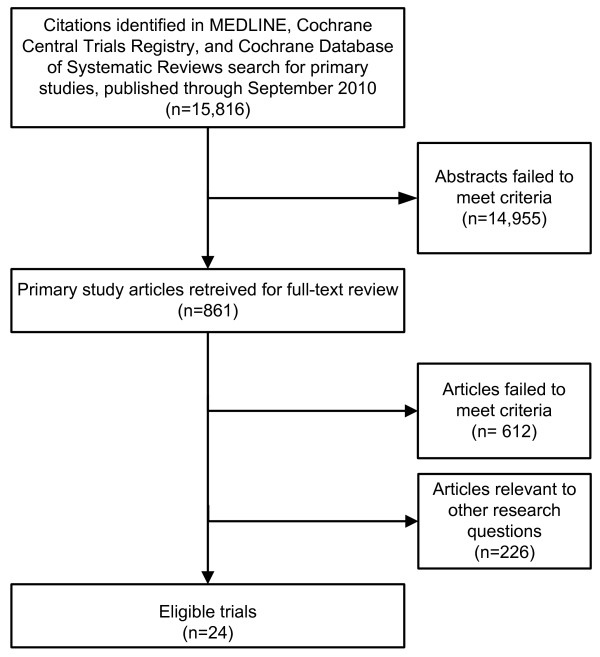
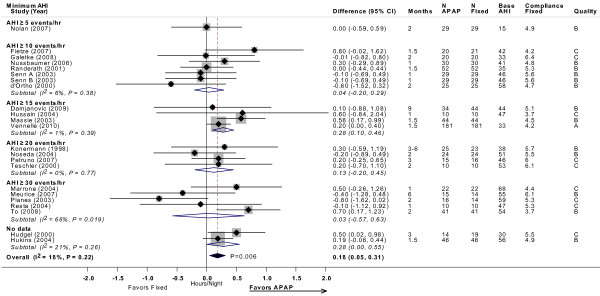
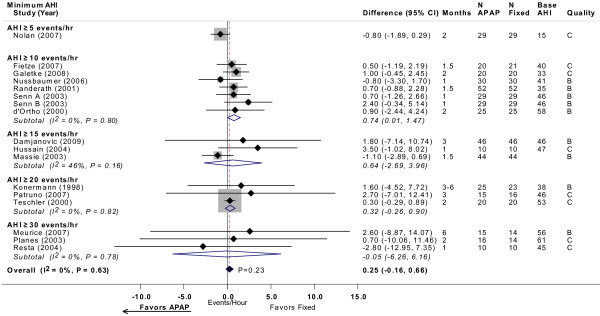
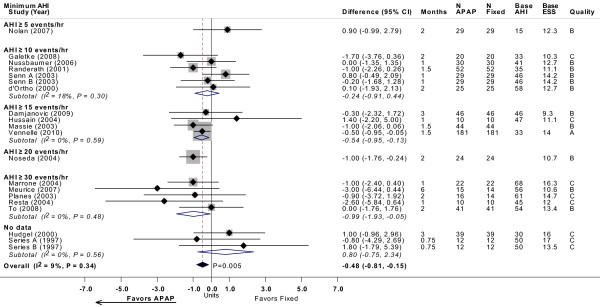
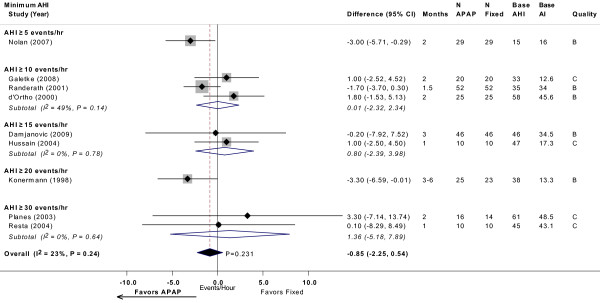
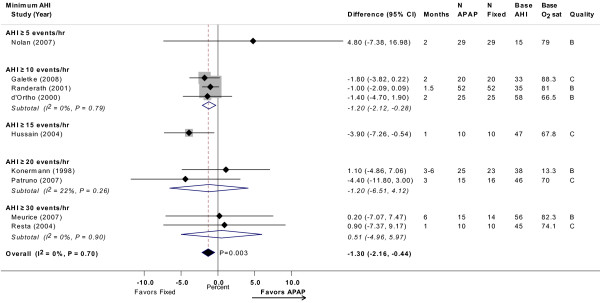
Background: Obstructive sleep apnea is a relatively common disorder that can lead to lost productivity and cardiovascular disease. The form of positive airway treatment that should be offered is unclear. Methods: MEDLINE and the Cochrane Central Trials registry were searched for English language randomized controlled trials comparing auto-titrating positive airway pressure (APAP) with continuous positive airway pressure (CPAP) in adults with obstructive sleep apnea (inception through 9/2010). Six researchers extracted information on study design, potential bias, patient characteristics, interventions and outcomes. Data for each study were extracted by one reviewer and confirmed by another. Random effects model meta-analyses were performed for selected outcomes. Results: Twenty-four randomized controlled trials met the inclusion criteria. In individual studies, APAP and fixed CPAP resulted in similar changes from baseline in the apnea-hypopnea index, most other sleep study measures and quality of life. By meta-analysis, APAP improved compliance by 11 minutes per night (95% CI, 3 to 19 minutes) and reduced sleepiness as measured by the Epworth Sleepiness Scale by 0.5 points (95% CI, 0.8 to 0.2 point reduction) compared with fixed CPAP. Fixed CPAP improved minimum oxygen saturation by 1.3% more than APAP (95% CI, 0.4 to 2.2%). Studies had relatively short follow-up and generally excluded patients with significant comorbidities. No study reported on objective clinical outcomes. Conclusions: Statistically significant differences were found but clinical importance is unclear. Because the treatment effects are similar between APAP and CPAP, the therapy of choice may depend on other factors such as patient preference, specific reasons for non-compliance and cost.
Overview
The claims and statistics of this paper haven’t been checked yet.
Free: it reads the open-access text and checks the first 5 claims that cite a source we can check. Create a free account to check every claim.
Integrity signals
Registry
Cites
Statistics
Figures
Verification
Claims the paper makes
The claims and statistics of this paper haven’t been checked yet.
Free: it reads the open-access text and checks the first 5 claims that cite a source we can check. Create a free account to check every claim.
Claims other papers make about this one
Each is checked against this paper’s own text: does it say what the citing paper says it does?
The source backs part of the claim, not all of it — or backs it for a different population, condition or comparison.
In the citing paper
“Two SRs39,1035 evaluated the differences between APAP and CPAP devices. Both modalities resulted in a clinically significant reduction of the AHI, sleepiness as measured by the ESS, and QOL. There was no significant difference between the two treatment modalities.”
From International Consensus Statement on Obstructive Sleep Apnea (2023) · cites this paper as [1035]
Experimental — accuracy not yet measuredThe source backs part of the claim, not all of it — or backs it for a different population, condition or comparison.
In the citing paper
“The large meta review performed by Ip et al.1035 included three RCTs that evaluated the effect of APAP and CPAP on BP and found that there was no significant difference between the two modalities.”
From International Consensus Statement on Obstructive Sleep Apnea (2023) · cites this paper as [1035]
Experimental — accuracy not yet measuredThe cited source says what the claim attributes to it.
In the citing paper
“The systemic review by Ip et al.1035 demonstrated that APAP reduced ESS score by 0.5 points when compared to CPAP, though this increased benefit is likely not clinically relevant.”
From International Consensus Statement on Obstructive Sleep Apnea (2023) · cites this paper as [1035]
The cited source says what the claim attributes to it.
In the citing paper
“APAP was shown to have no added benefit in BP reduction when compared to CPAP.”
From International Consensus Statement on Obstructive Sleep Apnea (2023) · cites this paper as [1035]
The cited source says what the claim attributes to it.
In the citing paper
“While the SR by Ip et al.1035 did show an 11-min increase in PAP usage per day with APAP therapy, this is likely to be clinically insignificant.”
From International Consensus Statement on Obstructive Sleep Apnea (2023) · cites this paper as [1035]
Self-check
Percentages, sums and reported differences re-computed from the paper’s own numbers.
The self-check needs the paper’s full text.
Citations
Cites
Measuring inconsistency in meta-analyses
Higgins, J. P. T., Thompson, S. G., Deeks, J. J., & Altman, D. G. (2003) · BMJ · doi:10.1136/bmj.327.7414.557 · Cited by 63,139 · cited 1×
“An I(2) index ≥50% was used to indicate medium-to-high heterogeneity [9].”
MethodMeta-analysis in clinical trials
DerSimonian, R., & Laird, N. (1986) · Controlled Clinical Trials · doi:10.1016/0197-2456(86)90046-2 · Cited by 39,552 · cited 1×
“We performed random effects model meta-analyses of differences of selected continuous variables between interventions where there were at least three unique similar studies [8].”
MethodThe International Classification of Sleep Disorders: Diagnostic and Coding Manual
Daroff, R. B. (1991) · Neurology · doi:10.1212/wnl.41.1.160 · Cited by 5,014
Sleep Disordered Breathing and Mortality: Eighteen-Year Follow-up of the Wisconsin Sleep Cohort
(2008) · Sleep · doi:10.5665/sleep/31.8.1071 · Cited by 1,853
Sleep-Disordered Breathing and Mortality: A Prospective Cohort Study
Punjabi, N. M., Caffo, B. S., Goodwin, J. L., Gottlieb, D. J., Newman, A. B., O'Connor, G. T., Rapoport, D. M., Redline, S., Resnick, H. E., Robbins, J. A., et al. (2009) · PLoS Medicine · doi:10.1371/journal.pmed.1000132 · Cited by 1,482 · cited 1×
“Higher AHI is used as a marker for more severe disease [35] and is associated with greater mortality [1,36-38]; however, our power to find any differences based on baseline AHI was low, particularly since the study eligibility categories overlapped.”
BackgroundPrevalence of Symptoms and Risk of Sleep Apnea in the US Population
Hiestand, D. M., Britz, P., Goldman, M., & Phillips, B. (2006) · Chest · doi:10.1378/chest.130.3.780 · Cited by 451
Mortality in Sleep Apnea Patients: A Multivariate Analysis of Risk Factors
Lavie, P., Herer, P., Peled, R., Berger, I., Yoffe, N., Zomer, J., & Rubin, A.-H. E. (1995) · Sleep · doi:10.1093/sleep/18.3.149 · Cited by 396 · cited 1×
“Higher AHI is used as a marker for more severe disease [35] and is associated with greater mortality [1,36-38]; however, our power to find any differences based on baseline AHI was low, particularly since the study eligibility categories overlapped.”
BackgroundSemi-automated screening of biomedical citations for systematic reviews
Wallace, B. C., Trikalinos, T. A., Lau, J., Brodley, C., & Schmid, C. H. (2010) · BMC Bioinformatics · doi:10.1186/1471-2105-11-55 · Cited by 351 · cited 1×
“We used a computerized screening program, abstrackr, to automate the screening of abstracts for the selection of eligible articles for full-text screening [7].”
MethodIncreasing Sleep Duration for a Healthier (and Less Obese?) Population Tomorrow
Young, T. (2008) · Sleep · doi:10.1093/sleep/31.5.593 · Cited by 327
All-cause mortality in males with sleep apnoea syndrome: declining mortality rates with age
Lavie, P., Lavie, L., & Herer, P. (2005) · European Respiratory Journal · doi:10.1183/09031936.05.00051504 · Cited by 319 · cited 1×
“Higher AHI is used as a marker for more severe disease [35] and is associated with greater mortality [1,36-38]; however, our power to find any differences based on baseline AHI was low, particularly since the study eligibility categories overlapped.”
Background
Research works printed but not linked: 1
- 6. Balk EM, Moorthy D, Obadan NO, Patel K, Ip S, Chung M, Bannuru RR, Kitsios GD, Sen S, Iovin RC, Gaylor JM, D'Ambrosio C, Lau J: Diagnosis and treatment of obstructive sleep apnea in adults. AHRQ Comparative Effectiveness Reviews Rockville, MD: Agency for Healthcare Research and Quality; 2011, Report No.: 11-EHC052.
Cited by
Adult obstructive sleep apnoea
Jordan, A. S., McSharry, D. G., & Malhotra, A. (2014) · The Lancet · doi:10.1016/s0140-6736(13)60734-5 · Cited by 1,735
Qaseem, A., Dallas, P., Owens, D. K., Starkey, M., Holty, J.-E. C., Shekelle, P., & for the Clinical Guidelines Committee of the American College of Physicians* (2014) · Annals of Internal Medicine · doi:10.7326/m12-3187 · Cited by 516
International Consensus Statement on Obstructive Sleep Apnea
Chang, J. L., Goldberg, A. N., Alt, J. A., Mohammed, A., Ashbrook, L., Auckley, D., Ayappa, I., Bakhtiar, H., Barrera, J. E., Bartley, B. L., et al. (2023) · International Forum of Allergy & Rhinology · doi:10.1002/alr.23079 · Cited by 350
Obstructive sleep apnoea syndrome and its management
Spicuzza, L., Caruso, D., & Di Maria, G. (2015) · Therapeutic Advances in Chronic Disease · doi:10.1177/2040622315590318 · Cited by 328
“com with Auto-CPAP is slightly higher compared with fixed CPAP [Smith and Lasserson, 2009], whereas the two modalities produce similar benefits in terms of diurnal symptoms and sleep measures [Stanley et al. 2012].”
MethodQaseem, A., Holty, J.-E. C., Owens, D. K., Dallas, P., Starkey, M., & Shekelle, P. (2013) · Annals of Internal Medicine · doi:10.7326/0003-4819-159-7-201310010-00704 · Cited by 305
“The authors of the original evidence review published an updated review that included 3 additional studies and reported similar findings, concluding that the 2 treatments are similarly effective (79).”
BackgroundQuan, S. F., Budhiraja, R., Clarke, D. P., Goodwin, J. L., Gottlieb, D. J., Nichols, D. A., Simon, R., Smith, T. W., Walsh, J. K., & Kushida, C. A. (2013) · Journal of Clinical Sleep Medicine · doi:10.5664/jcsm.3064 · Cited by 133
Integrating psychology and medicine in CPAP adherence – New concepts?
Crawford, M., Espie, C. A., Bartlett, D. J., & Grunstein, R. R. (2013) · Sleep Medicine Reviews · doi:10.1016/j.smrv.2013.03.002 · Cited by 120
Kitsios, G. D., Mascari, P., Ettunsi, R., & Gray, A. W. (2013) · Journal of Critical Care · doi:10.1016/j.jcrc.2013.10.004 · Cited by 119
“When such net differences were not directly reported, we calculated these values and estimated their 95% CI from the standard errors of the final values [6].”
MethodSelf-citationObstructive Sleep Apnoea: Children are not little Adults
Alsubie, H. S., & BaHammam, A. S. (2016) · Paediatric Respiratory Reviews · doi:10.1016/j.prrv.2016.02.003 · Cited by 119
Sleep Apnea Syndrome (SAS) Clinical Practice Guidelines 2020
Akashiba, T., Inoue, Y., Uchimura, N., Ohi, M., Kasai, T., Kawana, F., Sakurai, S., Takegami, M., Tachikawa, R., Tanigawa, T., et al. (2022) · Respiratory Investigation · doi:10.1016/j.resinv.2021.08.010 · Cited by 97
Complementary roles of gasotransmitters CO and H 2 S in sleep apnea
Peng, Y., Zhang, X., Gridina, A., Chupikova, I., McCormick, D. L., THOMAS, R. J., Scammell, T. E., Kim, G. H., Vasavda, C., Nanduri, J., et al. (2017) · Proceedings of the National Academy of Sciences · doi:10.1073/pnas.1620717114 · Cited by 83
Remmers, J. E. (1984) · American Review of Respiratory Disease · doi:10.1164/arrd.1984.130.2.153 · Cited by 82
New developments in the use of positive airway pressure for obstructive sleep apnea.
Donovan, L. M., BOEDER, S. C., Malhotra, A., & Patel, S. R. (2015) · PubMed Central · doi:10.3978/j.issn.2072-1439.2015.07.30 · Cited by 95
“In contrast, evidence suggests that fixed CPAP level may be superior to APAP in blood pressure reduction and other cardiometabolic outcomes (85).”
BackgroundMaximizing Positive Airway Pressure Adherence in Adults
Wickwire, E. M., Lettieri, C. J., Cairns, A., & Collop, N. A. (2013) · CHEST Journal · doi:10.1378/chest.12-2681 · Cited by 71
Auto-adjusting Positive Airway Pressure Treatment for Sleep Apnea Diagnosed by Home Sleep Testing
Berry, R. B., & Sriram, P. (2014) · Journal of Clinical Sleep Medicine · doi:10.5664/jcsm.4272 · Cited by 64
Sleep apnea: a review of diagnostic sensors, algorithms, and therapies
Shokoueinejad, M., Fernandez, C., Carroll, E., Wang, F., Levin, J., Rusk, S., Glattard, N., Mulchrone, A., Zhang, X., Xie, A., et al. (2017) · Physiological Measurement · doi:10.1088/1361-6579/aa6ec6 · Cited by 64
Pépin, J. L., Tamisier, R., Baguet, J. P., Lepaulle, B., Arbib, F., Arnol, N., Timsit, J. F., & Lévy, P. (2016) · Thorax · doi:10.1136/thoraxjnl-2015-207700 · Cited by 63
Sleep-Disordered Breathing and Excessive Daytime Sleepiness
He, K., & Kapur, V. K. (2017) · Sleep Medicine Clinics · doi:10.1016/j.jsmc.2017.03.010 · Cited by 71
Factors Contributing to Unintentional Leak During CPAP Treatment
Lebret, M., Martinot, J., Arnol, N., Zerillo, D., Tamisier, R., Pépin, J., & Borel, J. (2016) · CHEST Journal · doi:10.1016/j.chest.2016.11.049 · Cited by 69
Non-surgical treatment of obstructive sleep apnea syndrome
Tingting, X., You, D., & Chen, X. (2017) · European Archives of Oto-Rhino-Laryngology · doi:10.1007/s00405-017-4818-y · Cited by 69
“Ip and colleagues [44] conducted a meta-analysis, comparing the therapeutic efficacy and compliance of APAP and CPAP.”
MethodCamacho, M., Riaz, M., Tahoori, A., Certal, V., & Kushida, C. A. (2015) · Sleep Disorders · doi:10.1155/2015/293868 · Cited by 48
Kennedy, B., Lasserson, T. J., Wozniak, D. R., & Smith, I. (2019) · Cochrane Database of Systematic Reviews · doi:10.1002/14651858.cd003531.pub4 · Cited by 47
Thomas, J. (2013) · OA Evidence-Based Medicine · doi:10.13172/2053-2636-1-2-1109 · Cited by 44
Patruno, V., Tobaldini, E., Bianchi, A. M., Méndez, M. O., Coletti, O., Costantino, G., & Montano, N. (2013) · European Journal of Internal Medicine · doi:10.1016/j.ejim.2013.11.009 · Cited by 40
“The use of autoadjusting-CPAP (APAP) is growing, due to its efficacy in reducing sleep respiratory disorder (mainly apnea–hypopnea index, AHI) and diurnal hyper-somnolence [14], associated with a reduction of the costs of titration [15].”
BackgroundBloch, K. E., Huber, F., Furian, M., Latshang, T. D., Lo Cascio, C. M., Nussbaumer-Ochsner, Y., Senn, O., Russi, E. W., Kohler, M., Schoch, O. D., et al. (2018) · Thorax · doi:10.1136/thoraxjnl-2016-209699 · Cited by 35
Auto-titrating CPAP for the treatment of obstructive sleep apnea in children
Khaytin, I., Tapia, I. E., Xanthopoulos, M. S., Cielo︎, C. M., Kim, J. Y., Smith, J. R., MATTHEWS, E. C., & Beck, S. E. (2020) · Journal of Clinical Sleep Medicine · doi:10.5664/jcsm.8348 · Cited by 36
“In adults, autoCPAP is widely used in place of in-laboratory titration and is similar to CPAP in reducing symptoms of OSA.(9) However, it is not known whether autoCPAP provides similar pressure to”
InfluentialA surveillance system to assess the need for updating systematic reviews
Ahmadzai, N., Newberry, S. J., Maglione, M. A., Tsertsvadze, A., Ansari, M. T., Hempel, S., Motala, A., Tsouros, S., Schneider Chafen, J. J., Shanman, R., et al. (2013) · Systematic Reviews · doi:10.1186/2046-4053-2-104 · Cited by 33
“44 (KQ1); 1 (KQ2); 2 (KQ3); 11 (KQ4); 173 (KQ5); 6 (KQ6); 18 (KQ7) (Systematic review: auto-titrating versus fixed continuous positive airway pressure for the treatment of obstructive sleep apnea: a systematic review with meta-analyses) [41] 11 months 19 months”
BackgroundGagnadoux, F., Pevernagie, D., Jennum, P., Løn, N., Loiodice, C., Tamisier, R., van Mierlo, P., Trzépizur, W., Neddermann, M., Machleit-Ebner, A., et al. (2017) · Journal of Clinical Sleep Medicine · doi:10.5664/jcsm.6464 · Cited by 37
“10 However, bench studies clearly demonstrated that specific APAP devices respond quite differently to the same condition and display considerable differences in pressure profiles, as also observed in clini - cal trials.”
InfluentialSleep Apnea Syndrome (SAS) Clinical Practice Guidelines 2020
Akashiba, T., Inoue, Y., Uchimura, N., Ohi, M., Kasai, T., Kawana, F., Sakurai, S., Takegami, M., Tachikawa, R., Tanigawa, T., et al. (2022) · Sleep and Biological Rhythms · doi:10.1007/s41105-021-00353-6 · Cited by 37
BaHammam, A. S., Alassiri, S. S., Aladab, A., Alsadhan, I., Altheyab, A. M., Alrayes, A. H., Alkhawajah, M. M., & Olaish, A. H. (2015) · Saudi Medical Journal · doi:10.15537/smj.2015.8.11716 · Cited by 31
Kunisaki, K. M., Greer, N. L., Khalil, W., Koffel, E., Koeller, E., MacDonald, R. H., & Wilt, T. J. (2018) · Annals of Internal Medicine · doi:10.7326/m17-2511 · Cited by 30
“New OSA care models have been proposed and implemented, including home sleep testing for diagnostic purposes (15, 16), followed by treatment with an autotitrating CPAP device (17), which has internal algorithms that adjust pressure to keep the airway open during sleep.”
MethodSoudorn, C., Muntham, D., Reutrakul, S., & Chirakalwasan, N. (2016) · Respiratory Care · doi:10.4187/respcare.04536 · Cited by 26
Kasai, T., Kohno, T., Shimizu, W., Ando, S., Joho, S., Osada, N., Kato, M., Kario, K., Shiina, K., Tamura, A., et al. (2024) · Circulation Journal · doi:10.1253/circj.cj-23-0489 · Cited by 28
Comparative assessment of several automatic CPAP devices' responses: a bench test study
Isetta, V., Navajas, D., Montserrat, J. M., & Farré, R. (2015) · ERJ Open Research · doi:10.1183/23120541.00031-2015 · Cited by 30
Luo, J., Xiao, S., Qiu, Z., Song, N., & Luo, Y. (2012) · Respirology · doi:10.1111/resp.12014 · Cited by 27
Factors associated with treatment adherence to mandibular advancement devices: a scoping review
van der Hoek, L. H., Rosenmöller, B. R. A. M., van de Rijt, L. J. M., de Vries, R., Aarab, G., & Lobbezoo, F. (2023) · Sleep And Breathing · doi:10.1007/s11325-023-02862-9 · Cited by 27
“Looking at pressure delivery, some studies reported no significant difference between auto-CPAP and conventional CPAP in adherence [27, 28, 41], while others showed better results for auto-CPAP [26, 29, 42, 97].”
ResultTovichien, P., Kulbun, A., & Udomittipong, K. (2022) · Frontiers in Pediatrics · doi:10.3389/fped.2022.841705 · Cited by 23
Positive Airway Pressure Therapy for Obstructive Sleep Apnea
Weiss, P. G., & Kryger, M. H. (2016) · Otolaryngologic Clinics of North America · doi:10.1016/j.otc.2016.07.004 · Cited by 27
Zhu, D., Wu, M., Cao, Y., Lin, S., Xuan, N., Zhu, C., Li, W., & Shen, H. (2018) · PLOS ONE · doi:10.1371/journal.pone.0207994 · Cited by 18
Brown, J. P., Bauman, K. A., Kurili, A., Rodriguez, G. M., Chiodo, A. E., Sitrin, R. G., & Schotland, H. M. (2018) · Spinal Cord · doi:10.1038/s41393-018-0077-z · Cited by 20
Treatment of Obstructive Sleep Apnea
Freedman, N. S. (2017) · Sleep Medicine Clinics · doi:10.1016/j.jsmc.2017.07.003 · Cited by 19
Leclerc, G., Lacasse, Y., Pagé, D., & Sériès, F. (2014) · Canadian Respiratory Journal · doi:10.1155/2014/681952 · Cited by 17
“In fact, results of a recent meta-analysis (15) suggest that both treatment strategies similarly improve sleep-disordered breathing, sleep fragmentation and QoL.”
BackgroundBalk, E. M., Adam, G. P., Cao, W., Bhuma, M. R., D’Ambrosio, C., & Trikalinos, T. A. (2024) · Journal of Clinical Sleep Medicine · doi:10.5664/jcsm.11030 · Cited by 16
Self-citationShirlaw, T., Hanssen, K., Duce, B., & Hukins, C. (2017) · Journal of Clinical Sleep Medicine · doi:10.5664/jcsm.6658 · Cited by 16
Status of the practice of sleep medicine in India during the COVID-19 pandemic
Kanchan, S., Saini, L. K., Daga, R., Arora, P. K., & Gupta, R. M. (2021) · Journal of Clinical Sleep Medicine · doi:10.5664/jcsm.9172 · Cited by 15
Lebret, M., Rotty, M.-C., Argento, C., Pepin, J.-L., Tamisier, R., Arbib, F., Jaffuel, D., Molinari, N., & Borel, J.-C. (2019) · Canadian Respiratory Journal · doi:10.1155/2019/6310956 · Cited by 13
“Auto-CPAP has a similar level of effectiveness as fixed-CPAP in terms of normalization of the apnea-hypopnea index (AHI), with a significantly lower mean pressure applied during the night and a slightly higher rate of compliance [11].”
BackgroundFasquel, L., Yazdani, P., Zaugg, C., Barras, A., Michotte, J.-B., Correvon, N., & Contal, O. (2022) · Respiratory Care · doi:10.4187/respcare.10065 · Cited by 15
“Some studies have shown that APAP performance might be altered by unintentional air leak.(11,12) Several bench studies have compared APAP performance among different manufacturers.”
Rizzo, L., Barbetta, E., Ruberti, F., Petz, M., Tornesello, M., Deolmi, M., Fainardi, V., & Esposito, S. (2024) · Journal of Clinical Medicine · doi:10.3390/jcm13072108 · Cited by 15
“These devices adjust the delivered pressure based on various parameters detected by the device itself [77].”
BackgroundAuto-adjusting positive airway pressure: the fine line between engineering and medicine
Messineo, L., White, D. P., Hete, B., Knepper, M., Berry, R. B., & Noah, W. H. (2025) · Sleep And Breathing · doi:10.1007/s11325-025-03409-w · Cited by 13
Paediatric CPAP in the digital age
Mulholland, A., Mihai, R., Ellis, K., Davey, M. J., & Nixon, G. M. (2021) · Sleep Medicine · doi:10.1016/j.sleep.2021.06.006 · Cited by 14
Mangado, N. G., Egea, C., Vives, E. C., & Mediano, O. (2020) · Open Respiratory Archives · doi:10.1016/j.opresp.2020.03.008 · Cited by 22
Obstructive Sleep Apnea: A Syndrome from Childhood to Old-Age
Bseikri, M., Lo, L., & Guilleminault, C. (2015) · Pulmonary Therapy · doi:10.1007/s41030-015-0005-8 · Cited by 13
Therapeutic Targeting of the Carotid Body for Treating Sleep Apnea in a Pre-clinical Mouse Model
Peng, Y., Zhang, X., Nanduri, J., & Prabhakar, N. R. (2018) · Advances in experimental medicine and biology · doi:10.1007/978-3-319-91137-3_14 · Cited by 11
The Impact of Device Modifications and Pressure Delivery on Adherence
Killick, R., & Marshall, N. S. (2020) · Sleep Medicine Clinics · doi:10.1016/j.jsmc.2020.10.008 · Cited by 11
Transition from APAP to CPAP may be a cost-effective health intervention in OSA patients
Alves, A., Gigante, A. R., Machado, D., Sanches, I., Marçôa, R., Franco, I., Monteiro, R., Nogueira, C., & Ferreira1, D. (2021) · Jornal Brasileiro de Pneumologia · doi:10.36416/1806-3756/e20210286 · Cited by 11
Kimoff, R. J. (2015) · Elsevier eBooks · doi:10.1016/b978-1-4557-3383-5.00088-9 · Cited by 13
Bironneau, V., Ingrand, P., Pontier, S., Iamandi, C., Portel, L., Martin, F., Mallart, A., Lerousseau, L., Alfandary, D., Levrat, V., et al. (2023) · Respirology · doi:10.1111/resp.14569 · Cited by 12
“The reduction in nocturnal respiratory disturbances was similar with auto CPAP as with constant CPAP whatever the mode of determination of Peff level, and the compliance was superimposable in both modes.(11) The improvement in daytime somnolence and comfort(9,12,13) was more marked under autoCPAP with a better complia…”
New and Unconventional Treatments for Obstructive Sleep Apnea
Dios, J. A. D., & Brass, S. D. (2012) · Neurotherapeutics · doi:10.1007/s13311-012-0146-5 · Cited by 15
“Although with APAP the meta-analysis did show the statistically significant reductions in the sleepiness and improved compliance, the clinical significance of this difference was questioned, and the recommendation was that the choice of therapy between APAP and CPAP should depend on patient preference and cost in view…”
BackgroundTreatment of Obstructive Sleep Apnea
Freedman, N. S. (2020) · Sleep Medicine Clinics · doi:10.1016/j.jsmc.2020.02.007 · Cited by 12
Sleep Disorders in Spinal Cord Injury
Castriotta, R. J., Wilde, M. C., & Sahay, S. (2012) · Sleep Medicine Clinics · doi:10.1016/j.jsmc.2012.10.005 · Cited by 13
Sangal, R. B., & Sudan, N. (2019) · Clinical EEG and Neuroscience · doi:10.1177/1550059419892759 · Cited by 9
“5 points.(3) However, this was largely driven by the results of one large study with a sample size of 181, more than triple the sample size of the next largest study.”
ResultRahman, Z., Nazim, A., Mroke, P., Ali, K., Allam, M. P., Mahato, A., Maheshwari, M., Cruz, C. S., Baig, I., & Martinez, E. C. (2024) · Medical Sciences · doi:10.3390/medsci13010004 · Cited by 14
“While CPAP machines deliver constant pressure, APAP can precisely adjust air pressure levels in response to apneic or hypopnea episodes [90].”
Positive Airway Pressure Treatment for Obstructive Sleep Apnea
Freedman, N. S. (2016) · Elsevier eBooks · doi:10.1016/b978-0-323-24288-2.00115-x · Cited by 11
Konsensuspapier zur Diagnostik und Therapie schlafbezogener Atmungsstörungen bei Erwachsenen
Randerath, W. J., Hein, H., Arzt, M. E., Galetke, W., Nilius, G., Penzel, T., Rasche, K., Rühle, K.-H., & Mayer, G. (2014) · Somnologie - Schlafforschung und Schlafmedizin · doi:10.1007/s11818-013-0649-2 · Cited by 10
“Mit diesen Therapieformen konnte eine Überlegenheit gegenüber der nasalen kontinuierlichen Positivdrucktherapie („continuous positive airway pressure“ CPAP) oder anderen Behandlungsformen wie der Sauerstoffapplikation nachgewiesen werden [8, 9, 10].”
BackgroundHigh Priority Future Research Needs for Obstructive Sleep Apnea Diagnosis and Treatment
Patel, K., Moorthy, D., Chan, J., Concannon, T. W., Ratichek, S. J., Chung, M., & Balk, E. M. (2013) · Journal of Clinical Sleep Medicine · doi:10.5664/jcsm.2600 · Cited by 7
Self-citationElshahaat, H. A., Mahfouz, T. A. E.-H., Elshora, A. E., & Shaker, A. (2021) · International Journal of General Medicine · doi:10.2147/ijgm.s344217 · Cited by 8
Syndrome d’apnées obstructives du sommeil : le traitement par pression positive continue
Meurice, J. C., Antone, E., Gilbert, M., Watrin, A., & Bironneau, V. (2017) · La Presse Médicale · doi:10.1016/j.lpm.2017.03.011 · Cited by 7
Overview of Treatment for Obstructive Sleep Apnea in Adults
Sunwoo, J., & Yang, K. I. (2017) · Journal of Sleep Medicine · doi:10.13078/jsm.17001 · Cited by 5
“하지만 연구 질 평 가에서 A에 해당하는 두 연구에서는 순응도 및 주간졸림 개 선에서 두 군 간의 차이를 보이지는 않았다.(40) 이 메타분석에 서 분석한 연구들 역시 짧은 기간 관찰 연구였으며, 순응도 내지 주간졸림의 개선이 통계적으로 유의한 차이는 보였더 라도 임상적 유용성은 명확하지 않았다.”
Randomised short-term trial of high-span versus low-span APAP for treating sleep apnoea
Bastos, H. N., Cardoso, A. V., Castro, A. S., Gomes, R., Pinto, T., Marinho, A., Sucena, M., Almeida, J., Drummond, M., & Winck, J. C. (2015) · Sleep And Breathing · doi:10.1007/s11325-015-1203-1 · Cited by 7
“fectiveness in reducing the apnoea-hypopnoea index (AHI) and symptoms appears to be similar to that of fixed-pressure CPAP therapy [16, 17].”
BackgroundLess may be more: CPAP vs. APAP in the treatment of obstructive sleep apnea
Perin, C., & Genta, P. R. (2021) · Jornal Brasileiro de Pneumologia · doi:10.36416/1806-3756/e20210455 · Cited by 5
“APAP is as effective as CPAP in terms of normalization of the apnea-hypopnea index (AHI) and improvement in sleepiness, quality of life, and neurocognitive function, with the advantage of significantly lower mean pressure applied during the night.(3) This could theoretically improve patient comfort with the device, th…”
BackgroundMultidimensional prediction of continuous positive airway pressure adherence
Hamada, E., Yamauchi, M., Fujita, Y., Nishijima, T., Ikegami, A., Takaoka, T., Shirahama, R., Strohl, K. P., & Muro, S. (2024) · Sleep Medicine · doi:10.1016/j.sleep.2024.08.018 · Cited by 5
Optimizing CPAP Treatment for Obstructive Sleep Apnea
Hiensch, R., Nandedkar, D. S., & Feinsilver, S. H. (2016) · Current Sleep Medicine Reports · doi:10.1007/s40675-016-0044-1 · Cited by 4
Shaarawy, H. M., & Gharraf, H. S. (2018) · Egyptian Journal of Chest Diseases and Tuberculosis · doi:10.4103/ejcdt.ejcdt_20_18 · Cited by 5
Sleep-Related Breathing Disorders
Espiritu, J. R. D. (2015) · Springer eBooks · doi:10.1007/978-3-319-18054-0_3 · Cited by 3
Miličević, T., Katić, J., Milovac, S. N., Matetić, A., Aljinović, J., Đogaš, Z., & Gunjača, G. (2020) · Physiological Measurement · doi:10.1088/1361-6579/abcdf5 · Cited by 3
Current Medical Treatment of Obstructive Sleep Apnoea: A Narrative Review
Swain, S. K. (2024) · Apollo Medicine · doi:10.1177/09760016241252317 · Cited by 3
“[16]”
Adherence to and Complications of CPAP in Obstructive Sleep Apnea: Key Determinants
BaHammam, A. S., Hussain, A., & Alasmri, M. (2015) · Springer eBooks · doi:10.1007/978-3-319-21653-9_82 · Cited by 3
Kermelly, S. B., Lajoie, A. C., Boucher, M., & Sériès, F. (2021) · Journal of Sleep Research · doi:10.1111/jsr.13288 · Cited by 4
Real-time prediction of disordered breathing events in people with obstructive sleep apnea
Waxman, J., Graupe, D., & Carley, D. W. (2014) · Sleep And Breathing · doi:10.1007/s11325-014-0993-x · Cited by 4
Advanced Positive Airway Pressure Modalities
Bierer, G. B., Ryden, A., & Aysola, R. (2015) · Current Sleep Medicine Reports · doi:10.1007/s40675-015-0031-y · Cited by 3
“consistently shown small but usually statistically significant differences in adherence of 11–14 min per night favoring APAP [21–24].”
BackgroundWon, C. H. J. (2017) · Journal of Clinical Sleep Medicine · doi:10.5664/jcsm.6436 · Cited by 3
Diagnostic et prise en charge péri-opératoire des syndromes d’apnée du sommeil
Carbonniere, M., Debes, C., Nguyên, X.-L., & Beaussier, M. (2017) · Le Praticien en Anesthésie Réanimation · doi:10.1016/j.pratan.2017.01.006 · Cited by 2
Clinical Parameters Related to the Duration of Automatic Positive Airway Pressure Titration
Kim, J., Kang, Y. J., Park, C., Hwang, J. H., & Kim, Y. J. (2020) · Sleep Medicine Research · doi:10.17241/smr.2020.00521 · Cited by 2
Halder, A. K., & Halder, A. C. (2021) · Indian Journal of Sleep Medicine · doi:10.5005/jp-journals-10069-0076 · Cited by 2
Terapias ventilatorias domiciliarias en el síndrome de apnea-hipopnea del sueño
Mangado, N. G., Acevedo, M. F. T., & García, T. G. (2014) · Archivos de Bronconeumología · doi:10.1016/j.arbres.2014.06.003 · Cited by 2
Vats, M. G. (2017) · InTech eBooks · doi:10.5772/62967 · Cited by 2
Advancements of CPAP Therapy for Obstructive Sleep Apnea
Chen, N. (2017) · Advances in oto-rhino-laryngology · doi:10.1159/000470895 · Cited by 2
Testing the Performance of Positive Airway Pressure Generators
Zhu, K., Francs, C. C. D., Sagniez, A., & Escourrou, P. (2017) · Sleep Medicine Clinics · doi:10.1016/j.jsmc.2017.07.002 · Cited by 3
“A recent metaanalysis showed that the symptomatic effects of treatment are similar between APAP and CPAP.(55) Meurice and colleagues,(50) in 2007, were the first to compare APAP and CPAP devices in a long-term protocol in 83 patients with severe sleep apnea–hypopnea syndrome.”
BackgroundBadria, F. A.-E., & Elgazar, A. A. (2024) · Clinical Phytoscience · doi:10.1186/s40816-024-00375-w · Cited by 2
“So, modified devices were developed to overcome these issues, such as Auto-titrating continuous positive airway pressure(ACPAP) [8, 9], Palatal implant system [10], Nasal valve dilators [11], Nasal expiratory resistor [12, 13], Oral pressure therapy [14, 15].”
MethodHome Ventilation Therapy in Obstructive Sleep Apnea–Hypopnea Syndrome
Mangado, N. G., Acevedo, M. F. T., & García, T. G. (2014) · Archivos de Bronconeumología · doi:10.1016/j.arbr.2014.10.010 · Cited by 2
Chang, E., Shen, Y., & Wang, H.-M. (2015) · Tzu Chi Medical Journal · doi:10.1016/j.tcmj.2015.06.006 · Cited by 3
“In the meta-analysis [6], there were no significant differences in quality of life measures between APAP and CPAP treatment.”
BackgroundMethodInfluentialQuality of Life in Obstructive Sleep Apnea-hypopnea Syndrome
Caro, G. L. C. (2018) · Universitas Médica · doi:10.11144/javeriana.umed59-2.apne · Cited by 3
Auto-CPAP (APAP): What Do We Know About This Technology?
Singh, T. D., & Gupta, R. M. (2023) · Sleep and Vigilance · doi:10.1007/s41782-023-00234-7 · Cited by 2
To Auto-titrate or not Auto-titrate: Is the Question Answered?
Batool‐Anwar, S., & Quan, S. F. (2014) · Journal of Clinical Sleep Medicine · doi:10.5664/jcsm.4274 · Cited by 1
“11 In this issue Berry and Sriram 12 prospectively compared the effectiveness of APAP treatment after patients are diagnosed with OSA by a home sleep study (HST) to fi xed pressure CPAP after an in-laboratory titration.”
Treatment options for obstructive sleep apnea: general and perioperative
Hillman, D. R. (2022) · International Anesthesiology Clinics · doi:10.1097/aia.0000000000000354 · Cited by 3
Association between the Monthly Visit Behavior and CPAP Adherence in OSAS Patients
Sumi, K., Tsuboi, T., Chihara, Y., Okagaki, N., Maeda, K., Abe, M., Fukuda, O., Nishida, K., & Sato, A. (2024) · Internal Medicine · doi:10.2169/internalmedicine.4626-24 · Cited by 1
Haldar, A. K., Dhar, R., Maity, S., Krishnan, S., Bhattacharya, A., & Sovani, M. P. (2025) · Lung India · doi:10.4103/lungindia.lungindia_572_24 · Cited by 1
“[4] One paediatric study was done with 27 patients with 1 year of follow-up comparing adherence between CPAP and APAP and found no difference.”
Bivolaru, S., & Constantin, A.-A. (2025) · Life · doi:10.3390/life15060969 · Cited by 2
Chinese Guidelines for the Diagnosis and Surgical Treatment of Adult Obstructive Sleep Apnea (2024)
Working Group of Guideline for the Diagnosis and Surgical Treatment of Adult OSA, & Editorial Board of Chinese Journal of Otorhinolaryngology Head and Neck Surgery (2026) · World Journal of Otorhinolaryngology - Head and Neck Surgery · doi:10.1002/wjo2.70070 · Cited by 3
Obstructive Sleep Apnea and Snoring: Diagnosis, Treatments, and Prognosis
Duenas, S. M., Quintero, L., Iakovou, A., & Greenberg, H. E. (2026) · Medical Clinics of North America · doi:10.1016/j.mcna.2025.12.011 · Cited by 1
Metadata
- Authors
- Ip, S., D'Ambrosio, C., Patel, K., Obadan, N., Kitsios, G. D., Chung, M., & Balk, E. M.
- Affiliations
- Tufts University (US)
- Corresponding author
- Balk, Ethan M
- Venue
- Systematic Reviews
- Published
- 2012-03-08
- Volume
- 1
- Issue
- 1
- Pages
- 20-20
- ISSN
- 2046-4053 (ISSN-L)
- PMC
- PMC3351715
- OpenAlex
- W2129453959
- Cited by
- 148
- References
- 38
- Citations by year
- 2026: 4 · 2025: 8 · 2024: 10 · 2023: 9 · 2022: 10 · 2021: 10 · 2020: 7 · 2019: 7 · 2018: 8 · 2017: 18 · 2016: 11 · 2015: 16 · 2014: 13 · 2013: 13 · 2012: 3
- FWCI
- 1.55
- Type
- journal article
- Language
- en
- Open access
- gold
- doi.org
- Licence
- Locations
- Systematic Reviews (publishedVersion, cc-by)
- PubMed Central (publishedVersion, cc-by)
- PubMed (publishedVersion)
- DOAJ (DOAJ: Directory of Open Access Journals) (submittedVersion)
- Funders
- U.S. Department of Health and Human Services
- Agency for Healthcare Research and Quality
- U.S. Public Health Service (290 2007 1055 L)
- Topics
- Health Sciences › Medicine › Physiology (medical) › Obstructive Sleep Apnea Research
- Social Sciences › Psychology › Experimental and Cognitive Psychology › Sleep and related disorders
- Health Sciences › Medicine › Pulmonary and Respiratory Medicine › Respiratory Support and Mechanisms
- Keywords
- obstructive sleep apnea, auto-titrating CPAP, continuous positive airway pressure, CPAP adherence, sleepiness, Epworth Sleepiness Scale, oxygen saturation, apnea-hypopnea index, quality of life, CPAP titration
- MeSH terms
- Adult, Humans, Positive-Pressure Respiration, Randomized Controlled Trials as Topic, Sleep Apnea, Obstructive, Continuous Positive Airway Pressure
About these checks
Registry, retraction, Cites and statistics results are computed, not judged, with one exception: a printed reference that no index lists is read once by a model before it counts as a citation error. Claims are extracted by a model and kept only when their quote appears verbatim in the text; each cited source is then checked, with a model’s help, for whether it says what the claim relies on. Those verdicts can be wrong — read the claim’s quote and the cited source before relying on one.
Statistics and arithmetic are recomputed, not judged.
Confidence bands are shown only for fields calibrated on our annotated test set. None is calibrated yet, so no band is shown.
What counts as a claim ›How we measure confidence ›How we check this ›
Are you an author, or do you see a problem with this page? Request a review
Data sources
Bibliographic data: Semantic Scholar, OpenAlex, Crossref.
Contains information from the Semantic Scholar Academic Graph Datasets, made available under the ODC Attribution License (ODC-BY 1.0).
Semantic Scholar’s data is described in: Kinney, R., et al. (2023). The Semantic Scholar Open Data Platform. arXiv:2301.10140.
