

Enrichment of lung microbiome with supraglottic taxa is associated with increased pulmonary inflammation
Open accessThe DOI matches its Crossref record; 55 of the 55 references it cites were found in a registry or an index.
Abstract
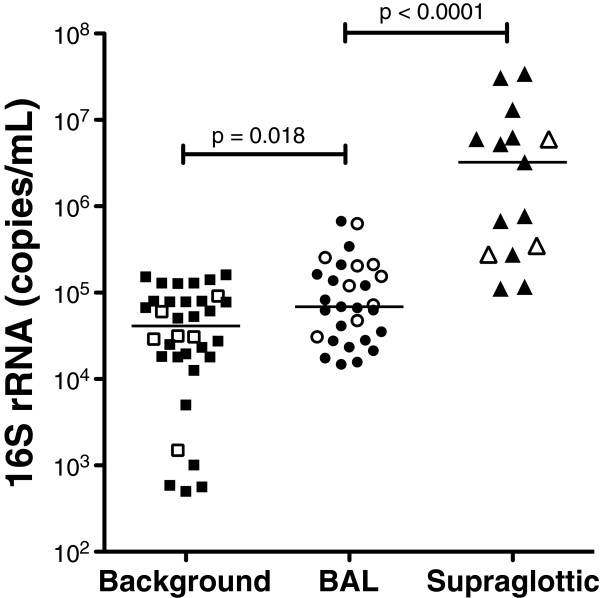
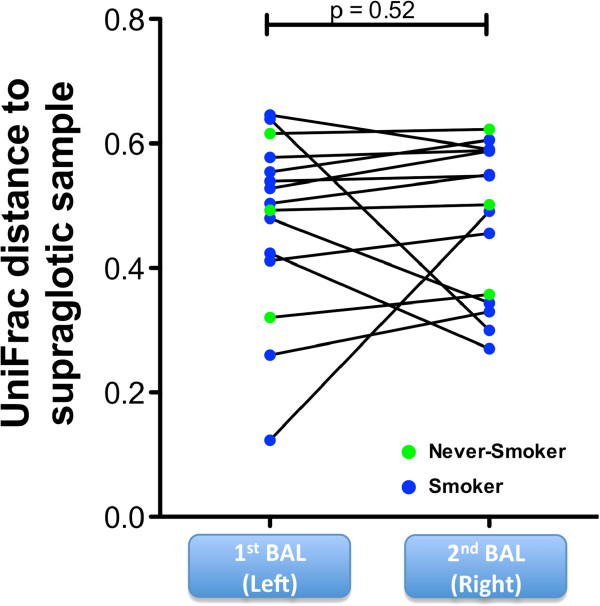
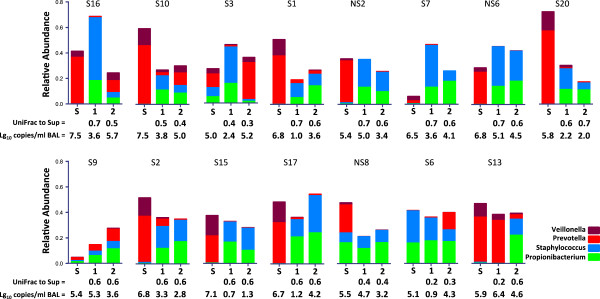
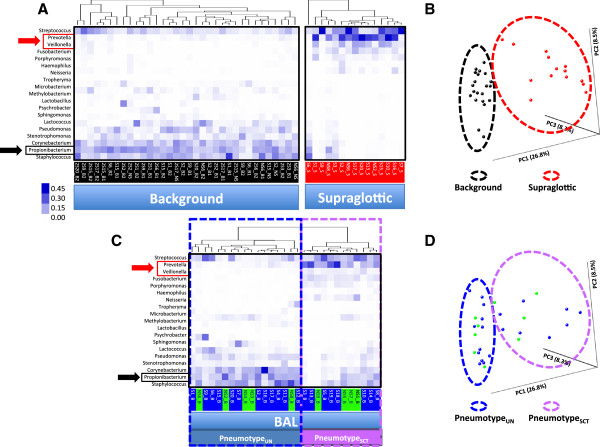
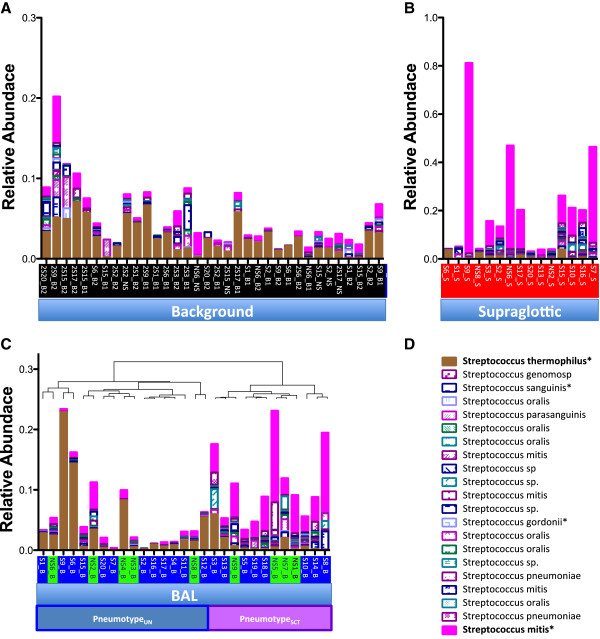
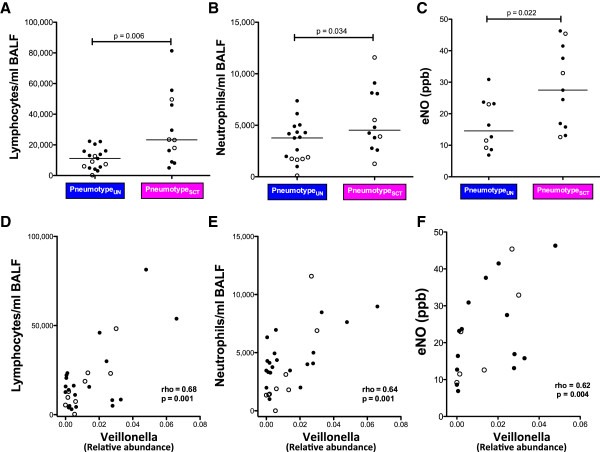
BACKGROUND: The lung microbiome of healthy individuals frequently harbors oral organisms. Despite evidence that microaspiration is commonly associated with smoking-related lung diseases, the effects of lung microbiome enrichment with upper airway taxa on inflammation has not been studied. We hypothesize that the presence of oral microorganisms in the lung microbiome is associated with enhanced pulmonary inflammation. To test this, we sampled bronchoalveolar lavage (BAL) from the lower airways of 29 asymptomatic subjects (nine never-smokers, 14 former-smokers, and six current-smokers). We quantified, amplified, and sequenced 16S rRNA genes from BAL samples by qPCR and 454 sequencing. Pulmonary inflammation was assessed by exhaled nitric oxide (eNO), BAL lymphocytes, and neutrophils. RESULTS: BAL had lower total 16S than supraglottic samples and higher than saline background. Bacterial communities in the lower airway clustered in two distinct groups that we designated as pneumotypes. The rRNA gene concentration and microbial community of the first pneumotype was similar to that of the saline background. The second pneumotype had higher rRNA gene concentration and higher relative abundance of supraglottic-characteristic taxa (SCT), such as Veillonella and Prevotella, and we called it pneumotypeSCT. Smoking had no effect on pneumotype allocation, α, or β diversity. PneumotypeSCT was associated with higher BAL lymphocyte-count (P= 0.007), BAL neutrophil-count (P= 0.034), and eNO (P= 0.022). CONCLUSION: A pneumotype with high relative abundance of supraglottic-characteristic taxa is associated with enhanced subclinical lung inflammation.
Overview
The claims and statistics of this paper haven’t been checked yet.
Free: it reads the open-access text and checks the first 5 claims that cite a source we can check. Create a free account to check every claim.
Integrity signals
Registry
Cites
Statistics
Figures
Verification
Claims the paper makes
The claims and statistics of this paper haven’t been checked yet.
Free: it reads the open-access text and checks the first 5 claims that cite a source we can check. Create a free account to check every claim.
Claims other papers make about this one
Each is checked against this paper’s own text: does it say what the citing paper says it does?
The source backs part of the claim, not all of it — or backs it for a different population, condition or comparison.
In the citing paper
“Culture-independent microbiota studies have confirmed that the lung microbiota largely resembles the URT microbiota when studied in healthy individuals74,75,76.”
From The microbiota of the respiratory tract: gatekeeper to respiratory health (2017) · cites this paper as [75]
Experimental — accuracy not yet measuredThe source backs part of the claim, not all of it — or backs it for a different population, condition or comparison.
In the citing paper
“Interestingly, Tropheryma whipplei seems enriched only in the LRT, which suggests that this might be one of the few bacterial species that is not derived through dispersal from the URT42,75,80.”
From The microbiota of the respiratory tract: gatekeeper to respiratory health (2017) · cites this paper as [75]
Experimental — accuracy not yet measuredThe source backs part of the claim, not all of it — or backs it for a different population, condition or comparison.
In the citing paper
“The adult lung microbiota seems to be dominated by genera in the phyla Firmicutes (including Streptococcus spp. and Veillonella spp.) and Bacteroidetes (including Prevotella spp.)42,75,80.”
From The microbiota of the respiratory tract: gatekeeper to respiratory health (2017) · cites this paper as [75]
Experimental — accuracy not yet measuredThe source backs part of the claim, not all of it — or backs it for a different population, condition or comparison.
In the citing paper
“Although there are subtle regional variations of physiological parameters in the lungs (for example, of oxygen tension, pH and temperature), which, in theory, could affect microbial selection and growth, spatial microbial diversity in the lungs of healthy individuals seems almost absent75,80,86.”
From The microbiota of the respiratory tract: gatekeeper to respiratory health (2017) · cites this paper as [75]
Experimental — accuracy not yet measuredIn the citing paper
“Multiple studies have shown that lung microbiota are more similar to those in the oropharynx, than those in the air, nasopharynx or lower digestive tract (Segal et al., 2013; Venkataraman et al., 2015).”
From Oral Microbiome and SARS-CoV-2: Beware of Lung Co-infection (2020) · cites this paper as Segal et al., 2013
1 more claim about this paper
Create a free account to see every claim other papers make about this one.
Self-check
Percentages, sums and reported differences re-computed from the paper’s own numbers.
The self-check needs the paper’s full text.
Citations
Cites
QIIME allows analysis of high-throughput community sequencing data
Caporaso, J. G., Kuczynski, J., Stombaugh, J., Bittinger, K., Bushman, F. D., Costello, E. K., Fierer, N., Peña, A. G., Goodrich, J. K., Gordon, J. I., et al. (2010) · Nature Methods · doi:10.1038/nmeth.f.303 · Cited by 34,887 · cited 1×
“The obtained 16S rRNA sequences were analyzed using the Quantitative Insights into Microbial Ecology (QIIME) pipeline for analysis of community sequence data [29].”
MethodSearch and clustering orders of magnitude faster than BLAST
Edgar, R. C. (2010) · Bioinformatics · doi:10.1093/bioinformatics/btq461 · Cited by 20,826
Naïve Bayesian Classifier for Rapid Assignment of rRNA Sequences into the New Bacterial Taxonomy
Wang, Q., Garrity, G. M., Tiedje, J. M., & Cole, J. R. (2007) · Applied and Environmental Microbiology · doi:10.1128/aem.00062-07 · Cited by 19,885 · cited 2×
“of each OTU by running the RDP Classifier [31] at 80% bootstrap confidence on a selected representative sequence from each OTU; (4) alignment of representative sequences using PyNAST [32] with the Greengenes core-set alignment template; (5) phylogenetic tree reconstruction from the representative sequences for each OT…”
MethodFastTree 2 – Approximately Maximum-Likelihood Trees for Large Alignments
Price, M. N., Dehal, P. S., & Arkin, A. P. (2010) · PLoS ONE · doi:10.1371/journal.pone.0009490 · Cited by 14,894 · cited 1×
“of each OTU by running the RDP Classifier [31] at 80% bootstrap confidence on a selected representative sequence from each OTU; (4) alignment of representative sequences using PyNAST [32] with the Greengenes core-set alignment template; (5) phylogenetic tree reconstruction from the representative sequences for each OT…”
MethodUniFrac: a New Phylogenetic Method for Comparing Microbial Communities
Lozupone, C., & Knight, R. (2005) · Applied and Environmental Microbiology · doi:10.1128/aem.71.12.8228-8235.2005 · Cited by 8,227 · cited 1×
“Weighted UniFrac was used to measure β diversity of bacterial communities and to perform principal coordinate analysis (PCoA) [36].”
MethodThe ade4 Package: Implementing the Duality Diagram for Ecologists
Dray, S., & Dufour, A.-B. (2007) · Journal of Statistical Software · doi:10.18637/jss.v022.i04 · Cited by 6,211 · cited 1×
“We used the ade4 package in R to PCoA on weighted Unifrac distances [37].”
MethodPyNAST: a flexible tool for aligning sequences to a template alignment
Caporaso, J. G., Bittinger, K., Bushman, F. D., DeSantis, T. Z., Andersen, G. L., & Knight, R. (2010) · Bioinformatics · doi:10.1093/bioinformatics/btp636 · Cited by 3,396 · cited 3×
“Caporaso JG, Bittinger K, Bushman FD, DeSantis TZ, Andersen GL, Knight R: PyNAST: a flexible tool for aligning sequences to a template alignment.”
Method(2005) · American Journal of Respiratory and Critical Care Medicine · doi:10.1164/rccm.200406-710st · Cited by 3,203
UniFrac: an effective distance metric for microbial community comparison
Lozupone, C., Lladser, M. E., Knights, D., Stombaugh, J., & Knight, R. (2011) · The ISME Journal · doi:10.1038/ismej.2010.133 · Cited by 2,825 · cited 1×
“of each OTU by running the RDP Classifier [31] at 80% bootstrap confidence on a selected representative sequence from each OTU; (4) alignment of representative sequences using PyNAST [32] with the Greengenes core-set alignment template; (5) phylogenetic tree reconstruction from the representative sequences for each OT…”
MethodThe ecodist Package for Dissimilarity-based Analysis of Ecological Data
Goslee, S. C., & Urban, D. L. (2007) · Journal of Statistical Software · doi:10.18637/jss.v022.i07 · Cited by 2,429
Cited by
Items 101–200 of 483
Role of Lung Microbiome in Innate Immune Response Associated With Chronic Lung Diseases
Paudel, K. R., Dharwal, V., Patel, V. K., Galvão, I., Wadhwa, R., Malyla, V., Shen, S., Budden, K. F., Hansbro, N. G., Vaughan, A., et al. (2020) · Frontiers in Medicine · doi:10.3389/fmed.2020.00554 · Cited by 84
“Studies have shown that microaspiration of oral taxa (particularly Veillonella and Prevotellla) is associated with elevated Th17 lymphocytes in lungs (115, 121).”
BackgroundRespiratory microbiome in mechanically ventilated patients: a narrative review
Fromentin, M., Ricard, J.-D., & Roux, D. (2021) · Intensive Care Medicine · doi:10.1007/s00134-020-06338-2 · Cited by 81
Das, S., Bernasconi, E., Koutsokera, A., Wurlod, D.-A., Tripathi, V., Bonilla‐Rosso, G., Aubert, J., Derkenne, M.-F., Mercier, L., Pattaroni, C., et al. (2021) · Nature Communications · doi:10.1038/s41467-021-22344-4 · Cited by 79
Household air pollution and the lung microbiome of healthy adults in Malawi: a cross-sectional study
Rylance, J., Kankwatira, A., Nelson, D. E., Toh, E. C., Day, R. B., Lin, H., Gao, X., Dong, Q., Sodergren, E. J., Weinstock, G. M., et al. (2016) · BMC Microbiology · doi:10.1186/s12866-016-0803-7 · Cited by 77
Understanding COPD-overlap syndromes
Poh, T. Y., Aogáin, M. M., Chan, A., Yii, A. C. A., Yong, V. F. L., Tiew, P. Y., Koh, M. S., & Chotirmall, S. H. (2017) · Expert Review of Respiratory Medicine · doi:10.1080/17476348.2017.1305895 · Cited by 76
Neutral Models of Microbiome Evolution
Zeng, Q., Sukumaran, J., Wu, S., & Rodrigo, A. G. (2015) · PLoS Computational Biology · doi:10.1371/journal.pcbi.1004365 · Cited by 68
Microbiota dysbiosis in lung cancer: evidence of association and potential mechanisms
Xu, N., Wang, L., Li, C., Ding, C., Li, C., Fan, W., Chen, C., & Gu, B. (2020) · Translational Lung Cancer Research · doi:10.21037/tlcr-20-156 · Cited by 76
Lung microbiota associations with clinical features of COPD in the SPIROMICS cohort
Opron, K., Begley, L., Erb‐Downward, J. R., Freeman, C. M., Madapoosi, S., Alexis, N. E., Barjaktarević, I., Barr, R. G., Bleecker, E. R., Bowler, R. P., et al. (2021) · npj Biofilms and Microbiomes · doi:10.1038/s41522-021-00185-9 · Cited by 78
Merenstein, C., Bushman, F. D., & Collman, R. G. (2022) · Microbiome · doi:10.1186/s40168-022-01342-8 · Cited by 68
“In health, the lung immune tone is regulated by the physiological microbiome acquired through upper respiratory microaspiration [22, 23], and dysbiosis in the airway is associated with increased inflammation, for example, in asthma or exposure to cigarette smoke [13, 24].”
BackgroundThe Microbiome and the Pathophysiology of Asthma
Sullivan, A., Hunt, E. B., MacSharry, J. A., & Murphy, D. M. (2016) · Respiratory Research · doi:10.1186/s12931-016-0479-4 · Cited by 83
“Thanks to culture independent techniques low levels of oral bacteria such as Prevotella and Veillonella have been discovered in the lower airways of healthy individuals [15] [16] [17] .”
BackgroundThe lung microbiome: clinical and therapeutic implications
Fabbrizzi, A., Amedei, A., Lavorini, F., Renda, T., & Fontana, G. A. (2019) · Internal and Emergency Medicine · doi:10.1007/s11739-019-02208-y · Cited by 73
“The gut microbiota contains a plethora of bacteria, with most of them being obligate anaerobes from the phyla Actinobacteria, Verrucomicrobia, Firmicutes, Fusobacteria, Proteobacteria, and Bacteroidetes, Firmicutes, and Bacteroidetes represent about 90% of the gut microbiota [26].”
BackgroundInfluentialBingula, R., Filaire, E., Molnar, I., Delmas, E., Berthon, J., Vasson, M., Bernalier‐Donadille, A., & Filaire, M. (2020) · Respiratory Research · doi:10.1186/s12931-020-01392-2 · Cited by 74
Airway Microbiota and the Implications of Dysbiosis in Asthma
Durack, J., Boushey, H. A., & Lynch, S. V. (2016) · Current Allergy and Asthma Reports · doi:10.1007/s11882-016-0631-8 · Cited by 68
Past, Present, and Future Research on the Lung Microbiome in Inflammatory Airway Disease
Caverly, L. J., Huang, Y. J., & Sze, M. A. (2019) · CHEST Journal · doi:10.1016/j.chest.2019.05.011 · Cited by 69
“org associating Prevotella species and Veillonella species with lung inflammation in healthy adults.(11,12)”
BackgroundInfluentialHérivaux, A., Willis, J. R., Mercier, T., Lagrou, K., Gonçalves, S. M., Gonçales, R. A., Maertens, J. A., Carvalho, A., Gabaldón, T., & Cunha, C. (2021) · Thorax · doi:10.1136/thoraxjnl-2020-216179 · Cited by 68
Nasal Microbiota, Olfactory Health, Neurological Disorders and Aging—A Review
Thangaleela, S., Sivamaruthi, B. S., Kesika, P., Bharathi, M., & Chaiyasut, C. (2022) · Microorganisms · doi:10.3390/microorganisms10071405 · Cited by 67
“16S rRNA gene sequencing Propionibacterium, Staphylococcus, Corynebacterium, Stenotrophomonas, Pseudomonas, Prevotella, Veillonella, Streptococcus, Fusobacterium, Porphyromonas, Sphingomonas, Tropheryma, Acidovorax, and Asticcacaulis [66]”
Role of the Lung Microbiome in the Pathogenesis of Chronic Obstructive Pulmonary Disease
Wang, L., Hao, K., Yang, T., & Wang, C. (2017) · Chinese Medical Journal · doi:10.4103/0366-6999.211452 · Cited by 66
“neutrophils, lymphocytes, and exhaled nitric oxide [eNO]) in relatively healthy individuals,[29] and microbiomes”
Dahlberg, J., Sun, L., Waller, K. P., Östensson, K., McGuire, M. A., Agenäs, S., & Dicksved, J. (2019) · PLoS ONE · doi:10.1371/journal.pone.0218257 · Cited by 64
The Microbiota, Chemical Symbiosis, and Human Disease
Redinbo, M. R. (2014) · Journal of Molecular Biology · doi:10.1016/j.jmb.2014.09.011 · Cited by 59
Variability of the Sheep Lung Microbiota
Glendinning, L., Wright, S. H., Pollock, J., Tennant, P. A., Collie, D., & McLachlan, G. (2016) · Applied and Environmental Microbiology · doi:10.1128/aem.00540-16 · Cited by 66
SARS-CoV-2 infection reduces human nasopharyngeal commensal microbiome with inclusion of pathobionts
Hoque, M. N., Sarkar, M. M. H., Rahman, M. S., Akter, S., Banu, T. A., Goswami, B., Jahan, I., Hossain, M. S., Shamsuzzaman, A. K. M., Nafisa, T., et al. (2021) · Scientific Reports · doi:10.1038/s41598-021-03245-4 · Cited by 59
Gut-Lung Microbiota in Chronic Pulmonary Diseases: Evolution, Pathogenesis, and Therapeutics
Shi, C. Y., Yu, C.-H., Yu, W. Y., & Ying, H. (2021) · Canadian Journal of Infectious Diseases and Medical Microbiology · doi:10.1155/2021/9278441 · Cited by 65
“It has been proven that the lung-based microorganisms play the biologic roles primarily through regulation of the immune system [10, 30, 31].”
BackgroundPulmonary Immune Dysregulation and Viral Persistence During HIV Infection
Alexandrova, Y., Costiniuk, C. T., & Jenabian, M.-A. (2022) · Frontiers in Immunology · doi:10.3389/fimmu.2021.808722 · Cited by 66
The microbiome at the pulmonary alveolar niche and its role in Mycobacterium tuberculosis infection
Adami, A. J., & Cervantes, J. (2015) · Tuberculosis · doi:10.1016/j.tube.2015.07.004 · Cited by 62
“Similarly to sputum, BAL cannot completely sample the deepest airways of the lung, potentially biasing any analyses in favor of the microbiome of the more proximal lower airways.”
BackgroundInfluentialShi, T., Wang, J., Dong, J., Hu, P., & Guo, Q. (2023) · Pathogens · doi:10.3390/pathogens12091110 · Cited by 62
The human laryngeal microbiome: effects of cigarette smoke and reflux
Jetté, M. E., Dill‐McFarland, K. A., Hanshew, A. S., Suen, G., & Thibeault, S. L. (2016) · Scientific Reports · doi:10.1038/srep35882 · Cited by 61
Lung Microbiota and Its Impact on the Mucosal Immune Phenotype
Wu, B. G., & Segal, L. N. (2017) · Microbiology Spectrum · doi:10.1128/microbiolspec.bad-0005-2016 · Cited by 61
“Neisseria , Porphyromonas , and Gemella were depleted in the oral washes of the former set of subjects (85).”
InfluentialSelf-citationCamelo-Castillo, A. J., Henares, D., Brotons, P., Galiana, A., Rodríguez, J. C., Mira, Á., & Muñoz‐Almagro, C. (2019) · Frontiers in Microbiology · doi:10.3389/fmicb.2019.00011 · Cited by 58
“In adults, bronchoalveolar lavage samples showed two distinct pneumotypes, one of which was enriched with oral microorganisms (particularly Prevotella and Veillonella) and appeared to be associated with higher inflammatory markers (Segal et al., 2013).”
BackgroundDoes the buck stop with the bugs?: an overview of microbial dysbiosis in rheumatoid arthritis
Sandhya, P., Danda, D., Sharma, D., & Scaria, V. (2015) · International Journal of Rheumatic Diseases · doi:10.1111/1756-185x.12728 · Cited by 62
The bacterial microbiota in inflammatory lung diseases
Huffnagle, G. B., & Dickson, R. P. (2015) · Clinical Immunology · doi:10.1016/j.clim.2015.05.022 · Cited by 61
“Segal and colleagues, using serial bronchoscopy, also concluded that bronchoscopy is a viable option for accurately sampling the lung microbiome [33].”
Einarsson, G. G., Zhao, J., LiPuma, J. J., Downey, D. G., Tunney, M. M., & Elborn, J. S. (2019) · ERJ Open Research · doi:10.1183/23120541.00128-2017 · Cited by 58
Lung Microbiome Is Influenced by the Environment and Asthmatic Status in an Equine Model of Asthma
Fillion-Bertrand, G., Dickson, R. P., Boivin, R., Lavoie, J., Huffnagle, G. B., & Leclère, M. (2019) · American Journal of Respiratory Cell and Molecular Biology · doi:10.1165/rcmb.2017-0228oc · Cited by 63
Baker, J. M., Hinkle, K. J., McDonald, R. A., Brown, C. A., Falkowski, N. R., Huffnagle, G. B., & Dickson, R. P. (2021) · Microbiome · doi:10.1186/s40168-021-01055-4 · Cited by 58
“Whereas early findings related to the purported placenta microbiome have subsequently been attributed to contamination [4, 5], the lung microbiome field has flourished with robust, validated findings: lung microbiota are detectable in health [6–13], correlated with lung immunity both in health [7, 8, 14, 15] and disea…”
BackgroundMethodThe respiratory microbiome and innate immunity in asthma
Huang, Y. J. (2014) · Current Opinion in Pulmonary Medicine · doi:10.1097/mcp.0000000000000124 · Cited by 54
Kitsios, G. D., Sayed, K., Fitch, A. C., Yang, H., Britton, N., Shah, F. A., Bain, W., Evankovich, J. W., Qin, S., Wang, X., et al. (2024) · Nature Communications · doi:10.1038/s41467-024-48819-8 · Cited by 61
Dima, E., Kyriakoudi, A., Kaponi, M., Vasileiadis, I., Stamou, P., Koutsoukou, A., Koulouris, N. G., & Rovina, N. (2019) · Respiratory Medicine · doi:10.1016/j.rmed.2019.08.012 · Cited by 59
How low can we go? The implications of low bacterial load in respiratory microbiota studies
Marsh, R. L., Nelson, M. T., Pope, C. E., Leach, A. J., Hoffman, L. R., Chang, A. B., & Smith‐Vaughan, H. (2018) · Pneumonia · doi:10.1186/s41479-018-0051-8 · Cited by 56
“Abbreviations BAL: Bronchoalveolar lavage; FISH: Fluorescent in situ hybridization; OTUs: Operational taxonomic units; PCR: Polymerase chain reaction; qPCR: quantitative PCR Funding This work was supported by the Australian National Health and Medical Research Council (NHMRC) Centre for Research Excellence (CRE) in Re…”
BackgroundMethodInfluentialAtto, B., Eapen, M. S., Sharma, P. K., Frey, U., Ammit, A. J., Markos, J., Chia, C., Larby, J., Haug, G., Weber, H. C., et al. (2019) · Clinical Science · doi:10.1042/cs20181009 · Cited by 50
Sulaiman, I., Wu, B. G., Chung, M. C., Isaacs, B., Tsay, J.-C. J., Holub, M., Barnett, C. R., Kwok, B., Kugler, M. C., Natalini, J. G., et al. (2023) · American Journal of Respiratory and Critical Care Medicine · doi:10.1164/rccm.202210-1865oc · Cited by 60
Self-citationShankar, J., Nguyen, M. H., Crespo, M. M., Kwak, E. J., Lucas, S. K., McHugh, K. J., Mounaud, S. H., Alcorn, J. F., Pilewski, J. M., Shigemura, N., et al. (2015) · American Journal of Transplantation · doi:10.1111/ajt.13676 · Cited by 51
Species-level evaluation of the human respiratory microbiome
Ibironke, O. A., McGuinness, L. R., Lu, S., Wang, Y., Hussain, S., Weisel, C. P., & Kerkhof, L. J. (2020) · GigaScience · doi:10.1093/gigascience/giaa038 · Cited by 49
The Human Microbiome in the Fight Against Tuberculosis
Wood, M., Yu, E. A., & Mehta, S. (2017) · American Journal of Tropical Medicine and Hygiene · doi:10.4269/ajtmh.16-0581 · Cited by 53
Thorsen, J., Stokholm, J., Rasmussen, M. A., Mortensen, M. S., Brejnrod, A., Hjelmsø, M. H., Shah, S. A., Chawes, B., Bønnelykke, K., Sørensen, S. J., et al. (2021) · American Journal of Respiratory and Critical Care Medicine · doi:10.1164/rccm.202008-3226oc · Cited by 50
Bertelsen, A. K., Elborn, J. S., & Schock, B. C. (2021) · Journal of Cystic Fibrosis · doi:10.1016/j.jcf.2021.04.012 · Cited by 53
Insights into the role of the respiratory tract microbiome in defense against bacterial pneumonia
Drigot, Z., & Clark, S. E. (2024) · Current Opinion in Microbiology · doi:10.1016/j.mib.2024.102428 · Cited by 55
The microbiome of the human lower airways: a next generation sequencing perspective
Aho, V. T. E., Pereira, P. A. B., Haahtela, T., Pawankar, R., Auvinen, P., & Koskinen, K. (2015) · World Allergy Organization Journal · doi:10.1186/s40413-015-0074-z · Cited by 47
“Chronic obstructive pulmonary disease and smoking Chronic obstructive pulmonary disease (COPD) is a progressive lung disease that is mainly defined by irreversible airflow limitation, small airway fibrosis, mucus hypersecretion, and tissue destruction [61–63].”
ResultInfluentialRespiratory microbiota and lower respiratory tract disease
Lanaspa, M., Bassat, Q., Medeiros, M. M., & Muñoz‐Almagro, C. (2017) · Expert Review of Anti-infective Therapy · doi:10.1080/14787210.2017.1349609 · Cited by 54
“one enriched with bacteria from the upper respiratory tract and present in around 45%of participants, and the other enrichedwith background bacteria [43,44].”
BackgroundPezzulo, A. A., Kelly, P. H., Nassar, B. S., Rutland, C. J., Gansemer, N. D., Dohrn, C. L., Costello, A. J., Stoltz, D. A., & Zabner, J. (2013) · Applied and Environmental Microbiology · doi:10.1128/aem.01752-13 · Cited by 46
“Alternatively, focusing on the immune response to the lung microbiome would overcome some of these limitations (39, 40).”
BackgroundProtected sampling is preferable in bronchoscopic studies of the airway microbiome
Grønseth, R., Drengenes, C., Wiker, H. G., Tangedal, S., Xue, Y., Husebø, G. R., Svanes, Ø., Lehmann, S., Aardal, M. E., Hoang, T., et al. (2017) · ERJ Open Research · doi:10.1183/23120541.00019-2017 · Cited by 48
Smoking is associated with quantifiable differences in the human lung DNA virome and metabolome
Gregory, A. C., Sullivan, M. B., Segal, L. N., & Keller, B. C. (2018) · Respiratory Research · doi:10.1186/s12931-018-0878-9 · Cited by 46
“bacteria were previously noted in these samples when 16S rRNA gene sequencing was performed with 454 sequencing of the V1-V2 region [29], but not with Illumina MiSeq sequencing of the V4 region [30], indicating that bacteriome comparisons Gregory et al.”
BackgroundMethodResultInfluentialSelf-citationBingula, R., Filaire, M., Radosevic‐Robin, N., Berthon, J., Bernalier‐Donadille, A., Vasson, M., Thivat, É., Kwiatkowski, F., & Filaire, E. (2018) · Medicine · doi:10.1097/md.0000000000013676 · Cited by 49
Metagenome and Metatranscriptome Profiling of Moderate and Severe COPD Sputum in Taiwanese Han Males
Lee, S., Kuan, C.-S., Wu, L. S., & Weng, J. T.-Y. (2016) · PLoS ONE · doi:10.1371/journal.pone.0159066 · Cited by 61
Zhang, J., Wu, Y., Liu, J., Yang, Y., Li, H., Wu, X., Zheng, X., Liang, Y., Tu, C., Chen, M., et al. (2022) · Advanced Science · doi:10.1002/advs.202203115 · Cited by 55
Does lung microbiome play a causal or casual role in asthma?
Cicco, M. D., Pistello, M., Jacinto, T., Ragazzo, V., Piras, M., Freer, G., Pifferi, M., & Peroni, D. G. (2018) · Pediatric Pulmonology · doi:10.1002/ppul.24086 · Cited by 57
“It is therefore possible that bacteria reach the lower airways through repeated microaspirations of oropharyngeal secretions and, to a lesser extent, through diffusion from the mucosa or by direct inhalation.(9) In children, microaspirations also involve secretions from the nasopharynx,(14) that are facilitated by the…”
BackgroundHjelmsø, M. H., Shah, S. A., Thorsen, J., Rasmussen, M. A., Vestergaard, G., Mortensen, M. S., Brejnrod, A., Brix, S., Chawes, B., Bønnelykke, K., et al. (2020) · Nature Communications · doi:10.1038/s41467-020-14308-x · Cited by 53
Microbiome in the pathogenesis of cystic fibrosis and lung transplant-related disease
Cribbs, S. K., & Beck, J. M. (2016) · Translational research · doi:10.1016/j.trsl.2016.07.022 · Cited by 53
Kotlyarov, S. N., & Котлярова, А. А. (2021) · International Journal of Molecular Sciences · doi:10.3390/ijms22147634 · Cited by 57
The Lung Microbiota and Lung Cancer: A Growing Relationship
Zerdan, M. B., Kassab, J. T., Meouchy, P., Haroun, E., Nehme, R., Zerdan, M. B., Fahed, G., Petrosino, M., Dutta, D., & Graziano, S. L. (2022) · Cancers · doi:10.3390/cancers14194813 · Cited by 49
“Veillonella [24,25,27,31,38,39] Lung explants, BAL, Brush specimen, lung tissues, saliva Observed in both small cell lung cancer and adenocarcinoma Correlated to an inflammatory phenotype, including an enhanced Th17 lymphocyte and neutrophil response.”
BackgroundChellappan, D. K., Ning, Q. L. S., Min, S. K. S., Bin, S. Y., Pang, J.-C., Shi, T. P., Mei, S. W. E., Yee, T. H., Qi, O. J., Thangavelu, L. P., et al. (2019) · Chemico-Biological Interactions · doi:10.1016/j.cbi.2019.108732 · Cited by 48
Elkrief, A., Montesion, M., Sivakumar, S., Hale, C. R., Bowman, A. S., Bektaş, A. B., Bradić, M., Kang, W., Chan, E., Gogia, P., et al. (2024) · Journal of Clinical Oncology · doi:10.1200/jco.23.01488 · Cited by 46
Microbiome Modulation as a Novel Strategy to Treat and Prevent Respiratory Infections
Mindt, B. C., & DiGiandomenico, A. (2022) · Antibiotics · doi:10.3390/antibiotics11040474 · Cited by 50
“The lung microbiota is transient and maintained by continuous translocation of microorganisms from the URT and subsequent clearance by innate lung immune mechanisms, rather than local expansion of lung-resident bacteria [36,44,46].”
BackgroundWu, Y., Luo, Z., & Liu, C. (2020) · Life Sciences · doi:10.1016/j.lfs.2020.118738 · Cited by 43
Battaglini, D., Robba, C., Fedele, A., Trancă, S., Sukkar, S. G., Pilato, V. D., Bassetti, M., Giacobbe, D. R., Vena, A., Patroniti, N. A., et al. (2021) · Frontiers in Medicine · doi:10.3389/fmed.2021.671714 · Cited by 44
“In contrast, the lung microbiota is enriched in pharyngeal microbes (60, 61), as demonstrated in numerous studies (62, 63).”
BackgroundMicrobiome in Critical Care: An Unconventional and Unknown Ally
Zanza, C., Romenskaya, T., Thangathurai, D., Ojetti, V., Saviano, A., Abenavoli, L., Robba, C., Cammarota, G., Franceschi, F., Piccioni, A., et al. (2021) · Current Medicinal Chemistry · doi:10.2174/0929867328666210915115056 · Cited by 46
The Airway Microbiome-IL-17 Axis: a Critical Regulator of Chronic Inflammatory Disease
Mannion, J. M., McLoughlin, R. M., & Lalor, S. J. (2022) · Clinical Reviews in Allergy & Immunology · doi:10.1007/s12016-022-08928-y · Cited by 43
“This, in turn, is associated with increased subclinical lung inflammation characterised by elevated Th17 responses, neutrophil accumulation and altered TLR4 signalling in alveolar macrophages, together with an increase in exhaled nitric oxide [105, 106].”
BackgroundHow human microbiome talks to health and disease
Cong, J., & Zhang, X. (2018) · European Journal of Clinical Microbiology & Infectious Diseases · doi:10.1007/s10096-018-3263-1 · Cited by 52
Murray, P. E., Coffman, J. A., & García-Godoy, F. (2024) · Pathogens · doi:10.3390/pathogens13121084 · Cited by 56
“A randomized controlled trial found that asthmatic patients had a bronchial micro-biome enriched with periodontal pathogens like Fusobacterium and Porphyromonas [140–143].”
Engel, M., Endesfelder, D., Schloter-Hai, B., Kublik, S., Granitsiotis, M. S., Boschetto, P., Stendardo, M., Barta, I., Döme, B., Deleuze, J., et al. (2017) · PLoS ONE · doi:10.1371/journal.pone.0180859 · Cited by 45
Comparing microbiotas in the upper aerodigestive and lower respiratory tracts of lambs
Glendinning, L., Collie, D., Wright, S. H., Rutherford, K., & McLachlan, G. (2017) · Microbiome · doi:10.1186/s40168-017-0364-5 · Cited by 49
“When microbial communities from healthy human lungs are characterised, they are often found to contain microbes associated with the upper aerodigestive tract [34].”
BackgroundThe Human Respiratory Microbiome: Implications and Impact
Mitchell, A. B., & Glanville, A. R. (2018) · Seminars in Respiratory and Critical Care Medicine · doi:10.1055/s-0037-1617441 · Cited by 43
The Lung Microbiome: A Central Mediator of Host Inflammation and Metabolism in Lung Cancer Patients?
Weinberg, F. D., Dickson, R. P., Nagrath, D., & Ramnath, N. (2020) · Cancers · doi:10.3390/cancers13010013 · Cited by 44
Rabbit microbiota across the whole body revealed by 16S rRNA gene amplicon sequencing
Hu, X., Wang, F., Yang, S., Yuan, X., Yang, T., Zhou, Y., & Li, Y. (2021) · BMC Microbiology · doi:10.1186/s12866-021-02377-x · Cited by 44
“Most studies have focused on local microbes in specific parts, such as gut microbes [16, 20, 31] or respiratory tract microbes [32, 33].”
Smoking related environmental microbes affecting the pulmonary microbiome in Chinese population
Liu, X., Sun, W., Ma, W., Wang, H., Xu, K., Zhao, L., & He, Y. (2022) · The Science of The Total Environment · doi:10.1016/j.scitotenv.2022.154652 · Cited by 37
Bronchiolitis obliterans syndrome susceptibility and the pulmonary microbiome
Schott, C. A., Weigt, S. S., Turturice, B. A., Metwally, A. A., Belperio, J. A., Finn, P. W., & Perkins, D. L. (2018) · The Journal of Heart and Lung Transplantation · doi:10.1016/j.healun.2018.04.007 · Cited by 36
Microbiota analysis optimization for human bronchoalveolar lavage fluid
Schneeberger, P. H. H., Prescod, J., Levy, L., Hwang, D. M., Martinu, T., & Coburn, B. A. (2019) · Microbiome · doi:10.1186/s40168-019-0755-x · Cited by 47
“MC = mock communities; BAL = study subset of BAL samples; [20] = Healthy; [21] = Healthy/COPD/IPF; [22]”
The Precision Medicine Era of Bronchiectasis
Chotirmall, S. H., & Chalmers, J. D. (2024) · American Journal of Respiratory and Critical Care Medicine · doi:10.1164/rccm.202403-0473pp · Cited by 42
The Dynamics of Respiratory Microbiota during Mechanical Ventilation in Patients with Pneumonia
Woo, S., Park, S.-Y., Kim, Y., Jeon, J. P., Lee, J. J., & Hong, J. Y. (2020) · Journal of Clinical Medicine · doi:10.3390/jcm9030638 · Cited by 41
Exploration of lung mycobiome in the patients with non-small-cell lung cancer
Zhao, Y., Yi, J., Xiang, J., Jia, W. P., Chen, A., Chen, L., Zheng, L., Zhou, W. H., Wu, M., Yu, Z., et al. (2023) · BMC Microbiology · doi:10.1186/s12866-023-02790-4 · Cited by 37
Application of “Omics” and Systems Biology to Sarcoidosis Research
Crouser, E. D., Fingerlin, T. E., Yang, I. V., Maier, L. A., Nana-Sinkam, P. S., Collman, R. G., & Kaminski, N. (2017) · Annals of the American Thoracic Society · doi:10.1513/annalsats.201707-567ot · Cited by 37
Pathogenesis of Children’s Allergic Diseases: Refocusing the Role of the Gut Microbiota
Hu, T., Dong, Y., Yang, C., Zhao, M., & He, Q. (2021) · Frontiers in Physiology · doi:10.3389/fphys.2021.749544 · Cited by 39
Santiago, G. L. D. S., Brusselle, G., Dauwe, K., Deschaght, P., Verhofstede, C., Vaneechoutte, D., Deschepper, E., Jordens, P., Joos, G., & Vaneechoutte, M. (2017) · BMC Microbiology · doi:10.1186/s12866-017-1022-6 · Cited by 37
Wang, J., Lesko, M. B., Badri, M. H., Kapoor, B. C., Wu, B. G., Li, Y., Smaldone, G. C., Bonneau, R., Kurtz, Z. D., Condos, R., et al. (2017) · ERJ Open Research · doi:10.1183/23120541.00008-2017 · Cited by 41
Self-citationAtopic asthmatic immune phenotypes associated with airway microbiota and airway obstruction
Turturice, B. A., McGee, H. S., Oliver, B. G. G., Baraket, M., Nguyen, B. T., Ascoli, C., Ranjan, R., Rani, A., Perkins, D. L., & Finn, P. W. (2017) · PLoS ONE · doi:10.1371/journal.pone.0184566 · Cited by 36
Dóra, D., Szőcs, E., Soós, Á., Halasy, V., Somodi, C., Mihucz, A., Rostás, M., Mógor, F., Lohinai, Z., & Nagy, N. (2024) · Frontiers in Immunology · doi:10.3389/fimmu.2024.1434804 · Cited by 35
“Inhalation of small droplets containing oral microbiota into the lungs can alter the pulmonary microbial landscape, impacting the development and progression of chronic respiratory conditions such as chronic obstructive pulmonary disease (COPD) and asthma (230 – 232).”
Human microbiome, infections, and rheumatic disease
Caminer, A. C., Haberman, R. H., & Scher, J. U. (2017) · Clinical Rheumatology · doi:10.1007/s10067-017-3875-3 · Cited by 38
Pathobiology of frailty in lung disease
Koons, B., Greenland, J. R., Diamond, J. M., & Singer, J. P. (2020) · Translational research · doi:10.1016/j.trsl.2020.04.001 · Cited by 36
Dawoodbhoy, F. M., Patel, B. K., Patel, K. H., Bhatia, M., Lee, C. N., & Moochhala, S. (2020) · Shock · doi:10.1097/shk.0000000000001654 · Cited by 40
Protective Role of the Capsule and Impact of Serotype 4 Switching on Streptococcus mitis
Rukke, H. V., Kalluru, R. S., Repnik, U., Gerlini, A., José, R. J., Periselneris, J., Marshall, H., Griffiths, G., Oggioni, M. R., Brown, J. S., et al. (2014) · Infection and Immunity · doi:10.1128/iai.01840-14 · Cited by 33
“mitis is commonly present in BALF as part of the lung microbiome (8).”
BackgroundLung microbiome in human immunodeficiency virus infection
Twigg, H. L., Weinstock, G. M., & Knox, K. S. (2016) · Translational research · doi:10.1016/j.trsl.2016.07.008 · Cited by 39
“Up to now, we have stressed the potential linkage between Prevotella in the HIV lung microbiome and various parameters of lung inflammation.(43) Others have linked bacteria to evidence of activated metabolic pathways in the lower respiratory tract.”
InfluentialThe microbiome-metabolome crosstalk in the pathogenesis of respiratory fungal diseases
Gonçalves, S. M., Lagrou, K., Duarte-Oliveira, C., Maertens, J. A., Cunha, C., & Carvalho, A. (2017) · Virulence · doi:10.1080/21505594.2016.1257458 · Cited by 32
Impact of breastfeeding and other early-life factors on the development of the oral microbiome
Arishi, R. A., Lai, C. T., Geddes, D. T., & Stinson, L. F. (2023) · Frontiers in Microbiology · doi:10.3389/fmicb.2023.1236601 · Cited by 37
“Typical taxa of the respiratory system, such as Haemophilus and Pseudomonas, are regularly identified in the infant oral cavity (Segal et al., 2013).”
BackgroundThe transient but not resident (TBNR) microbiome: a Yin Yang model for lung immune system
Saeedi, P., Salimian, J., Ahmadi, A., & Fooladi, A. A. I. (2015) · Inhalation Toxicology · doi:10.3109/08958378.2015.1070220 · Cited by 32
Mechanisms Underlying HIV-Associated Noninfectious Lung Disease
Presti, R. M., Flores, S. C., Palmer, B. E., Atkinson, J. J., Lesko, C. R., Lau, B. M., Fontenot, A. P., Roman, J., McDyer, J. F., & Twigg, H. L. (2017) · CHEST Journal · doi:10.1016/j.chest.2017.04.154 · Cited by 34
Drengenes, C., Eagan, T., Haaland, I., Wiker, H. G., & Nielsen, R. (2021) · BMC Genomics · doi:10.1186/s12864-020-07252-z · Cited by 38
Li, W., Wang, B., Tan, M. H., Song, X., Xie, S., & Wang, C. (2022) · Respiratory Research · doi:10.1186/s12931-022-02246-9 · Cited by 37
“species were found to have a strong relationship with bronchoalveolar lavage (BAL) lymphocyte counts, BAL neutrophil counts and exhaled nitric oxide of early COPD patients [17].”
BackgroundSaladié, M., Caparros-Martin, J. A., Agudelo‐Romero, P., Wark, P. A. B., Stick, S. M., & O’Gara, F. (2020) · Frontiers in Microbiology · doi:10.3389/fmicb.2020.572504 · Cited by 32
Lung microbiome of stable and exacerbated COPD patients in Tshwane, South Africa
Mahomed, T. G., Peters, R. P. H., Allam, M., Ismail, A., Mtshali, S., Mahomed, A. G., Ueckermann, V., Kock, M. M., & Ehlers, M. M. (2021) · Scientific Reports · doi:10.1038/s41598-021-99127-w · Cited by 35
Lung microbial-host interface through the lens of multi-omics
Singh, S., Natalini, J. G., & Segal, L. N. (2022) · Mucosal Immunology · doi:10.1038/s41385-022-00541-8 · Cited by 32
Self-citationAltered respiratory microbiota composition and functionality associated with asthma early in life
Bataineh, M. T. A., Hamoudi, R., Dash, N. R., Ramakrishnan, R. K., Almasalmeh, M. A., Sharif, H. A., Al‐Hajjaj, M. S., & Hamid, Q. A. (2020) · BMC Infectious Diseases · doi:10.1186/s12879-020-05427-3 · Cited by 37
Álvarez-Santacruz, C., Tyrkalska, S. D., & Candel, S. (2024) · International Journal of Molecular Sciences · doi:10.3390/ijms25021330 · Cited by 37
Metadata
- Authors
- Segal, L. N., Alekseyenko, A. V., Clemente, J. C., Kulkarni, R., Wu, B., Chen, H., Berger, K. I., Goldring, R. M., Rom, W. N., Blaser, M. J., & Weiden, M. D.
- Affiliations
- Bellevue Hospital Center (US)
- New York University (US)
- Corresponding author
- Segal, Leopoldo N
- Weiden, Michael D
- ORCID
- Venue
- Microbiome
- Published
- 2013-07-01
- Volume
- 1
- Issue
- 1
- Pages
- 19-19
- ISSN
- 2049-2618 (ISSN-L)
- PMC
- PMC3971609
- OpenAlex
- W1969359874
- Cited by
- 482
- References
- 55
- Citations by year
- 2026: 25 · 2025: 37 · 2024: 50 · 2023: 35 · 2022: 47 · 2021: 60 · 2020: 42 · 2019: 38 · 2018: 34 · 2017: 35 · 2016: 36 · 2015: 27 · 2014: 13 · 2013: 3
- FWCI
- 32.00
- Type
- journal article
- Language
- en
- Update notices
- erratum (2014-07-02)
- Open access
- gold
- doi.org
- Licence
- cc-by
- creativecommons.org/licenses/by/2.0 (tdm)
- Locations
- Microbiome (publishedVersion, cc-by)
- Europe PMC (PubMed Central) (publishedVersion, cc-by)
- PubMed Central (publishedVersion, cc-by)
- PubMed (publishedVersion)
- Rutgers University Community Repository (Rutgers University) (submittedVersion)
- Funders
- National Institute of Allergy and Infectious Diseases (K23AI102970)
- National Institute of Diabetes and Digestive and Kidney Diseases (R01DK090989)
- Topics
- Health Sciences › Dentistry › Periodontics › Oral microbiology and periodontitis research
- Life Sciences › Biochemistry, Genetics and Molecular Biology › Molecular Biology › Gut microbiota and health
- Health Sciences › Medicine › Pulmonary and Respiratory Medicine › Chronic Obstructive Pulmonary Disease (COPD) Research
- Keywords
- lung microbiome, oral microorganisms, lung inflammation, smoking, bronchoalveolar lavage, exhaled nitric oxide, neutrophils, lymphocytes, Veillonella, Prevotella
About these checks
Registry, retraction, Cites and statistics results are computed, not judged, with one exception: a printed reference that no index lists is read once by a model before it counts as a citation error. Claims are extracted by a model and kept only when their quote appears verbatim in the text; each cited source is then checked, with a model’s help, for whether it says what the claim relies on. Those verdicts can be wrong — read the claim’s quote and the cited source before relying on one.
Statistics and arithmetic are recomputed, not judged.
Confidence bands are shown only for fields calibrated on our annotated test set. None is calibrated yet, so no band is shown.
What counts as a claim ›How we measure confidence ›How we check this ›
Are you an author, or do you see a problem with this page? Request a review
Data sources
Bibliographic data: Semantic Scholar, OpenAlex, Crossref.
Contains information from the Semantic Scholar Academic Graph Datasets, made available under the ODC Attribution License (ODC-BY 1.0).
Semantic Scholar’s data is described in: Kinney, R., et al. (2023). The Semantic Scholar Open Data Platform. arXiv:2301.10140.
