

Enrichment of lung microbiome with supraglottic taxa is associated with increased pulmonary inflammation
Open accessThe DOI matches its Crossref record; 55 of the 55 references it cites were found in a registry or an index.
Abstract
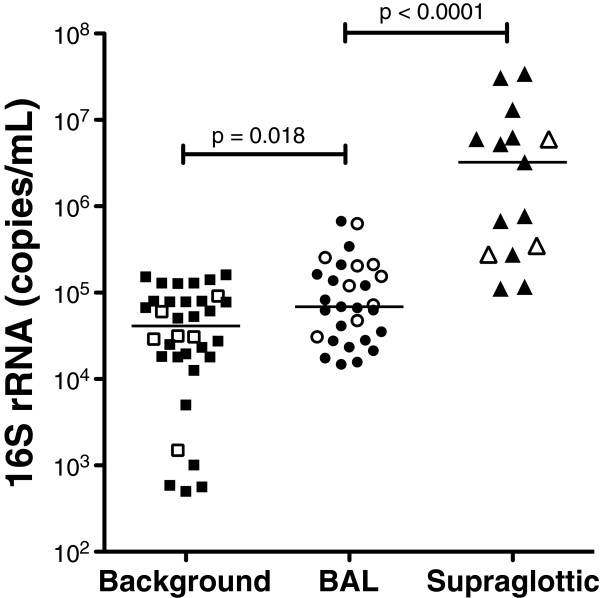
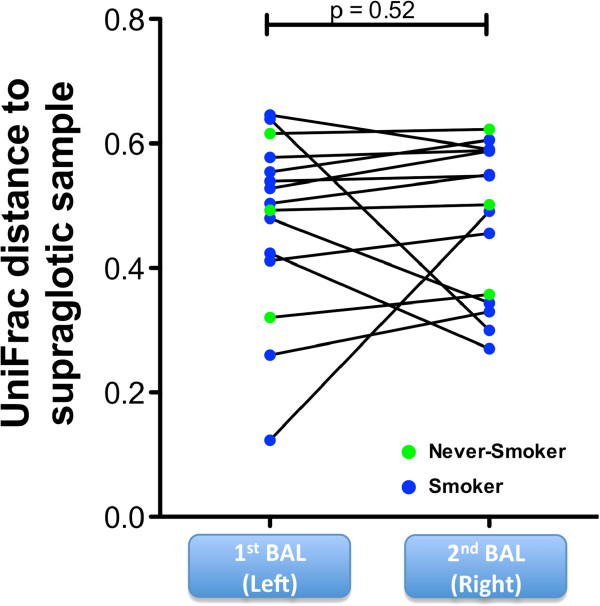
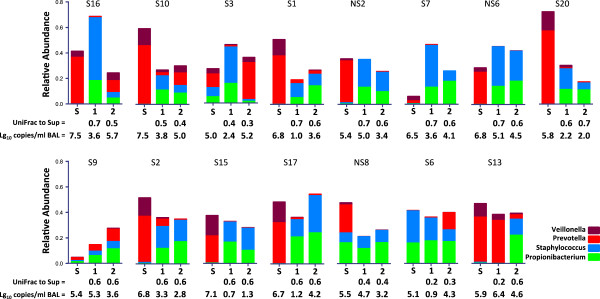
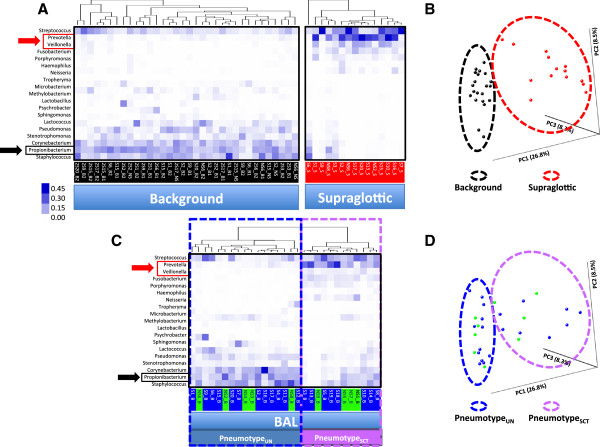
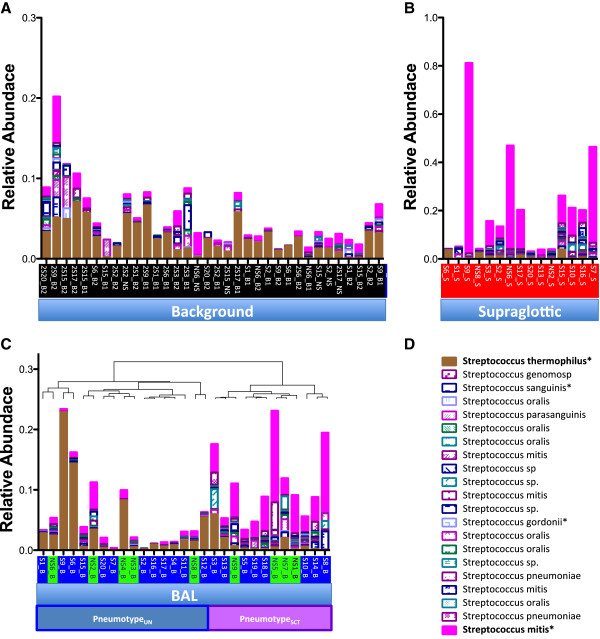
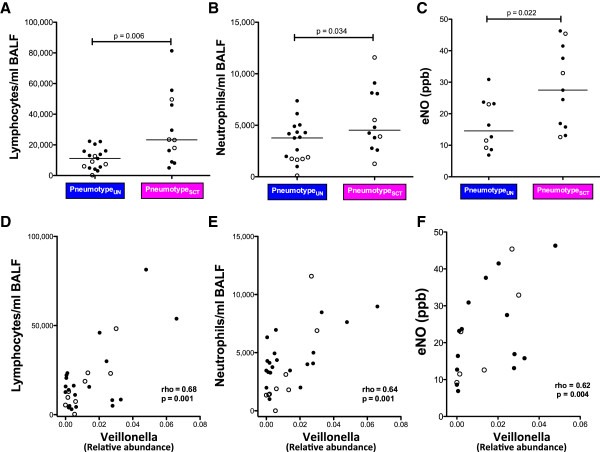
BACKGROUND: The lung microbiome of healthy individuals frequently harbors oral organisms. Despite evidence that microaspiration is commonly associated with smoking-related lung diseases, the effects of lung microbiome enrichment with upper airway taxa on inflammation has not been studied. We hypothesize that the presence of oral microorganisms in the lung microbiome is associated with enhanced pulmonary inflammation. To test this, we sampled bronchoalveolar lavage (BAL) from the lower airways of 29 asymptomatic subjects (nine never-smokers, 14 former-smokers, and six current-smokers). We quantified, amplified, and sequenced 16S rRNA genes from BAL samples by qPCR and 454 sequencing. Pulmonary inflammation was assessed by exhaled nitric oxide (eNO), BAL lymphocytes, and neutrophils. RESULTS: BAL had lower total 16S than supraglottic samples and higher than saline background. Bacterial communities in the lower airway clustered in two distinct groups that we designated as pneumotypes. The rRNA gene concentration and microbial community of the first pneumotype was similar to that of the saline background. The second pneumotype had higher rRNA gene concentration and higher relative abundance of supraglottic-characteristic taxa (SCT), such as Veillonella and Prevotella, and we called it pneumotypeSCT. Smoking had no effect on pneumotype allocation, α, or β diversity. PneumotypeSCT was associated with higher BAL lymphocyte-count (P= 0.007), BAL neutrophil-count (P= 0.034), and eNO (P= 0.022). CONCLUSION: A pneumotype with high relative abundance of supraglottic-characteristic taxa is associated with enhanced subclinical lung inflammation.
Overview
The claims and statistics of this paper haven’t been checked yet.
Free: it reads the open-access text and checks the first 5 claims that cite a source we can check. Create a free account to check every claim.
Integrity signals
Registry
Cites
Statistics
Figures
Verification
Claims the paper makes
The claims and statistics of this paper haven’t been checked yet.
Free: it reads the open-access text and checks the first 5 claims that cite a source we can check. Create a free account to check every claim.
Claims other papers make about this one
Each is checked against this paper’s own text: does it say what the citing paper says it does?
The source backs part of the claim, not all of it — or backs it for a different population, condition or comparison.
In the citing paper
“Culture-independent microbiota studies have confirmed that the lung microbiota largely resembles the URT microbiota when studied in healthy individuals74,75,76.”
From The microbiota of the respiratory tract: gatekeeper to respiratory health (2017) · cites this paper as [75]
Experimental — accuracy not yet measuredThe source backs part of the claim, not all of it — or backs it for a different population, condition or comparison.
In the citing paper
“Interestingly, Tropheryma whipplei seems enriched only in the LRT, which suggests that this might be one of the few bacterial species that is not derived through dispersal from the URT42,75,80.”
From The microbiota of the respiratory tract: gatekeeper to respiratory health (2017) · cites this paper as [75]
Experimental — accuracy not yet measuredThe source backs part of the claim, not all of it — or backs it for a different population, condition or comparison.
In the citing paper
“The adult lung microbiota seems to be dominated by genera in the phyla Firmicutes (including Streptococcus spp. and Veillonella spp.) and Bacteroidetes (including Prevotella spp.)42,75,80.”
From The microbiota of the respiratory tract: gatekeeper to respiratory health (2017) · cites this paper as [75]
Experimental — accuracy not yet measuredThe source backs part of the claim, not all of it — or backs it for a different population, condition or comparison.
In the citing paper
“Although there are subtle regional variations of physiological parameters in the lungs (for example, of oxygen tension, pH and temperature), which, in theory, could affect microbial selection and growth, spatial microbial diversity in the lungs of healthy individuals seems almost absent75,80,86.”
From The microbiota of the respiratory tract: gatekeeper to respiratory health (2017) · cites this paper as [75]
Experimental — accuracy not yet measuredIn the citing paper
“Multiple studies have shown that lung microbiota are more similar to those in the oropharynx, than those in the air, nasopharynx or lower digestive tract (Segal et al., 2013; Venkataraman et al., 2015).”
From Oral Microbiome and SARS-CoV-2: Beware of Lung Co-infection (2020) · cites this paper as Segal et al., 2013
1 more claim about this paper
Create a free account to see every claim other papers make about this one.
Self-check
Percentages, sums and reported differences re-computed from the paper’s own numbers.
The self-check needs the paper’s full text.
Citations
Cites
QIIME allows analysis of high-throughput community sequencing data
Caporaso, J. G., Kuczynski, J., Stombaugh, J., Bittinger, K., Bushman, F. D., Costello, E. K., Fierer, N., Peña, A. G., Goodrich, J. K., Gordon, J. I., et al. (2010) · Nature Methods · doi:10.1038/nmeth.f.303 · Cited by 34,887 · cited 1×
“The obtained 16S rRNA sequences were analyzed using the Quantitative Insights into Microbial Ecology (QIIME) pipeline for analysis of community sequence data [29].”
MethodSearch and clustering orders of magnitude faster than BLAST
Edgar, R. C. (2010) · Bioinformatics · doi:10.1093/bioinformatics/btq461 · Cited by 20,826
Naïve Bayesian Classifier for Rapid Assignment of rRNA Sequences into the New Bacterial Taxonomy
Wang, Q., Garrity, G. M., Tiedje, J. M., & Cole, J. R. (2007) · Applied and Environmental Microbiology · doi:10.1128/aem.00062-07 · Cited by 19,885 · cited 2×
“of each OTU by running the RDP Classifier [31] at 80% bootstrap confidence on a selected representative sequence from each OTU; (4) alignment of representative sequences using PyNAST [32] with the Greengenes core-set alignment template; (5) phylogenetic tree reconstruction from the representative sequences for each OT…”
MethodFastTree 2 – Approximately Maximum-Likelihood Trees for Large Alignments
Price, M. N., Dehal, P. S., & Arkin, A. P. (2010) · PLoS ONE · doi:10.1371/journal.pone.0009490 · Cited by 14,894 · cited 1×
“of each OTU by running the RDP Classifier [31] at 80% bootstrap confidence on a selected representative sequence from each OTU; (4) alignment of representative sequences using PyNAST [32] with the Greengenes core-set alignment template; (5) phylogenetic tree reconstruction from the representative sequences for each OT…”
MethodUniFrac: a New Phylogenetic Method for Comparing Microbial Communities
Lozupone, C., & Knight, R. (2005) · Applied and Environmental Microbiology · doi:10.1128/aem.71.12.8228-8235.2005 · Cited by 8,227 · cited 1×
“Weighted UniFrac was used to measure β diversity of bacterial communities and to perform principal coordinate analysis (PCoA) [36].”
MethodThe ade4 Package: Implementing the Duality Diagram for Ecologists
Dray, S., & Dufour, A.-B. (2007) · Journal of Statistical Software · doi:10.18637/jss.v022.i04 · Cited by 6,211 · cited 1×
“We used the ade4 package in R to PCoA on weighted Unifrac distances [37].”
MethodPyNAST: a flexible tool for aligning sequences to a template alignment
Caporaso, J. G., Bittinger, K., Bushman, F. D., DeSantis, T. Z., Andersen, G. L., & Knight, R. (2010) · Bioinformatics · doi:10.1093/bioinformatics/btp636 · Cited by 3,396 · cited 3×
“Caporaso JG, Bittinger K, Bushman FD, DeSantis TZ, Andersen GL, Knight R: PyNAST: a flexible tool for aligning sequences to a template alignment.”
Method(2005) · American Journal of Respiratory and Critical Care Medicine · doi:10.1164/rccm.200406-710st · Cited by 3,203
UniFrac: an effective distance metric for microbial community comparison
Lozupone, C., Lladser, M. E., Knights, D., Stombaugh, J., & Knight, R. (2011) · The ISME Journal · doi:10.1038/ismej.2010.133 · Cited by 2,825 · cited 1×
“of each OTU by running the RDP Classifier [31] at 80% bootstrap confidence on a selected representative sequence from each OTU; (4) alignment of representative sequences using PyNAST [32] with the Greengenes core-set alignment template; (5) phylogenetic tree reconstruction from the representative sequences for each OT…”
MethodThe ecodist Package for Dissimilarity-based Analysis of Ecological Data
Goslee, S. C., & Urban, D. L. (2007) · Journal of Statistical Software · doi:10.18637/jss.v022.i07 · Cited by 2,429
Cited by
Items 301–400 of 483
Zhang, Y., & Alekseyenko, A. V. (2017) · PLoS ONE · doi:10.1371/journal.pone.0187940 · Cited by 9
Self-citationEffects of 10-valent pneumococcal conjugate (PCV10) vaccination on the nasopharyngeal microbiome
Salgado, V. R., Fukutani, K. F., Fukutani, E. R., Lima, J. V., Rossi, E. A., Barral, A. M. P., de Oliveira, C. I., Nascimento-Carvalho, C. M., Weyenbergh, J. V., & Queiroz, A. T. L. (2019) · Vaccine · doi:10.1016/j.vaccine.2019.11.079 · Cited by 9
On Bugs and Blowholes: Why Is Aspiration the Rule, Not the Exception?
Aogáin, M. M., Baker, J. M., & Dickson, R. P. (2021) · American Journal of Respiratory and Critical Care Medicine · doi:10.1164/rccm.202011-4257ed · Cited by 9
A Perspective on Lung Cancer and Lung Microbiome: Insight on Immunity
Emadi, R., Saki, S., Yousefi, P., & Tabibzadeh, A. (2025) · Immunity Inflammation and Disease · doi:10.1002/iid3.70145 · Cited by 8
Bacterial contributions to cancer development: mechanisms, dysbiosis, and cross-cancer associations
Ramadan, Y. N., Alatawi, M. N., Albalawi, A. S., & Hetta, H. F. (2026) · Infectious Agents and Cancer · doi:10.1186/s13027-025-00722-7 · Cited by 13
Intratumoral Microbiota: Insights from Anatomical, Molecular, and Clinical Perspectives
Lombardo, C., Fazio, R., Sinagra, M., Gattuso, G., Longo, F., Lombardo, C., Salmeri, M., Zanghì, G., & Loreto, C. (2024) · Journal of Personalized Medicine · doi:10.3390/jpm14111083 · Cited by 8
Role of genetics in infection-associated arthritis
Benham, H., Robinson, P. C., Baillet, A. C., Rehaume, L. M., & Thomas, R. (2015) · Best Practice & Research Clinical Rheumatology · doi:10.1016/j.berh.2015.02.002 · Cited by 8
The Lung Microbiome in Health and Respiratory Diseases
Marimón, J. M. (2018) · Clinical Pulmonary Medicine · doi:10.1097/cpm.0000000000000268 · Cited by 9
A General Perspective of Microbiota in Human Health and Disease
Mutua, P. M., Muya, S. M., & Muita, G. M. (2020) · Archives of Clinical Microbiology · doi:10.36648/1989-8436.11.2.106 · Cited by 7
“In type 2 diabetes, which is principally linked with obesity related insulin resistance, there is low proportion of Firmicutes but a higher proportion of Bacteroidetes compared to normal controls.”
BackgroundInfluentialZhou, J. J., Zhai, J., Zhou, H., Chen, Y., Guerra, S., Robey, I., Weinstock, G. M., Weinstock, E., Dong, Q., Knox, K. S., et al. (2020) · American Journal of Respiratory and Critical Care Medicine · doi:10.1164/rccm.202004-1086le · Cited by 7
AlKhater, S. A. (2020) · Journal of Asthma and Allergy · doi:10.2147/jaa.s272705 · Cited by 8
The Effects of Immunosuppression on the Lung Microbiome and Metabolites in Rats
Dong, H., Tan, R., Chen, Z., Wang, L., Song, Y., Jin, M., Yin, J., Li, H., Lǐ, J., & Yang, D. (2022) · Frontiers in Microbiology · doi:10.3389/fmicb.2022.817159 · Cited by 9
Grünig, G., Baghdassarian, A., Park, S., Pylawka, S., Bleck, B., Reibman, J., Rosenzweig, E. B., & Durmuş, N. (2015) · Biomarker Insights · doi:10.4137/bmi.s29514 · Cited by 7
La BPCO : une maladie qui commence précocement
Margelidon-Cozzolino, V., Chbini, K., Freymond, N., Devouassoux, G., Belaaouaj, A., & Pachéco, Y. (2015) · Revue de Pneumologie Clinique · doi:10.1016/j.pneumo.2015.08.002 · Cited by 9
“[56] a émontré chez des sujets sains avec différents statuts tabaiques, qu’un microbiome enrichi de germes oro-pharyngés st significativement associé avec une inflammation bronhique, mesurée par le NO excrété et la lymphocytose lvéolaire.”
The Microbiome and Pulmonary Immune Function
Baker, J. M., & Dickson, R. P. (2024) · Clinics in Chest Medicine · doi:10.1016/j.ccm.2024.10.006 · Cited by 6
Lung allograft dysbiosis associates with immune response and primary graft dysfunction
Nelson, N. C., Wong, K. K., Mahoney, I. J., Malik, T., Rudym, D., Lesko, M. B., Qayum, S., Lewis, T. C., Chang, S. H., Chan, J. C. Y., et al. (2024) · The Journal of Heart and Lung Transplantation · doi:10.1016/j.healun.2024.11.006 · Cited by 7
Self-citationFan, Y., Meng, S., Song, Y., Zhang, Y., Song, Y., Chen, Z., & Xie, K. (2025) · International Immunopharmacology · doi:10.1016/j.intimp.2025.114222 · Cited by 6
Zhang, H. C., Bao, X., Li, C., Liang, Y., Pan, N., Fu, Y., Ma, B., Wang, T., Chen, J., Zhang, L., et al. (2025) · Microbiome · doi:10.1186/s40168-025-02205-8 · Cited by 7
“While lungs were once thought to be sterile, high-throughput sequencing has revealed a dynamic microbial ecosystem in healthy lungs, closely tied to local immunity [6, 57, 58].”
The lower airway microbiome in paediatric health and chronic disease
Campbell, S., Gerasimidis, K., Milling, S. W. F., Dicker, A., Hansen, R., & Langley, R. (2024) · Paediatric Respiratory Reviews · doi:10.1016/j.prrv.2024.02.001 · Cited by 11
The Role of the Microbiome in Pediatric Respiratory Diseases
Zemanick, E. T., & Rosas‐Salazar, C. (2024) · Clinics in Chest Medicine · doi:10.1016/j.ccm.2024.02.026 · Cited by 8
The Oral–Lung Microbiome Axis in Connective Tissue Disease-Related Interstitial Lung Disease
Bongers, K. S., Massett, A., & O’Dwyer, D. N. (2024) · Seminars in Respiratory and Critical Care Medicine · doi:10.1055/s-0044-1785673 · Cited by 7
The bronchiectasis microbiome: current understanding and treatment implications
Narayana, J. K., Aogáin, M. M., Hansbro, P. M., & Chotirmall, S. H. (2024) · Current Opinion in Pulmonary Medicine · doi:10.1097/mcp.0000000000001131 · Cited by 11
Yang, L. C., Xu, F., Zhao, S., Zeng, Y., Wu, Q., Zhang, L., Shi, S., Zhang, F., Li, J., An, Z., et al. (2024) · Ecotoxicology and Environmental Safety · doi:10.1016/j.ecoenv.2024.117626 · Cited by 8
Liu, Y., Yang, B., Qi, Q., Liu, S., Du, Y., Ye, L., & Zhou, Q. (2025) · Frontiers in Cellular and Infection Microbiology · doi:10.3389/fcimb.2024.1518199 · Cited by 6
“The BALF samples were promptly cryopreserved and submitted for mNGS analysis.”
InfluentialMoore, P. J., Hoffman, K., Ahmed, S., Fletcher, J. R., Wiggen, T. D., Lucas, S. K., Arif, S. J., Gilbertsen, A. J., Kent, L. A., Fiege, J. K., et al. (2025) · mBio · doi:10.1128/mbio.01338-24 · Cited by 5
“…obligate anaerobes —Fusobacterium, Prevotella, Veillonella, Streptococcus spp.—which are present at low densities in the healthy respiratory tract (1, 2), are both prevalent and abundant in chronic obstructive pulmonary disease (COPD), cystic fibrosis (CF), non-CF bronchiecta sis, sinusitis,…”
InfluentialThe importance of obtaining a sputum sample and how it can aid diagnosis and treatment
Blakeborough, L., & Watson, J. (2019) · British Journal of Nursing · doi:10.12968/bjon.2019.28.5.295 · Cited by 5
Potential Biotics for Nutritional Improvement of Health via Microbiome-Gut-Brain Axis
Niazi, M. K., & Hassan, F. (2022) · Advanced Gut & Microbiome Research · doi:10.1155/2022/9976555 · Cited by 7
“[99] found a connection between microbiota in health and diseases and the enrichment of lower airways with oral bacteria Mycoplasma salivarium.”
BackgroundDe- “bug”-ing the microbiome in lung cancer
Birla, P., & Shaikh, F. Y. (2022) · Cancer and Metastasis Reviews · doi:10.1007/s10555-022-10036-4 · Cited by 7
Zhao, M., Tian, J., Hou, W., Yin, L., & Li, W. (2024) · Frontiers in Microbiology · doi:10.3389/fmicb.2024.1416385 · Cited by 6
“Recent advancements in next-generation sequencing (NGS) have debunked the once-held belief that lung tissues are sterile, uncovering a complex microbiome within the lungs (Segal et al., 2013).”
BackgroundBeyond the organ: lung microbiome shapes transplant indications and outcomes
Ponholzer, F., Bogensperger, C., Krendl, F. J., Krapf, C., Dumfarth, J., Schneeberger, S., & Augustin, F. (2024) · European Journal of Cardio-Thoracic Surgery · doi:10.1093/ejcts/ezae338 · Cited by 5
Darawshy, F., Tsay, J.-C. J., Segal, L. N., & Pass, H. I. (2025) · Cancer Biomarkers · doi:10.1177/18758592251322045 · Cited by 5
Self-citationYang, Y., Shen, J., Wei, S., Ye, M., Zhao, X., Zhou, J., Tong, L., Hu, J., Song, Y., Wu, S., et al. (2025) · BMC Microbiology · doi:10.1186/s12866-025-04325-5 · Cited by 6
“…microbiota is known to participate in immune modulation [45], our study revealed Firmicutes dominating healthy controls, mirroring findings from Morris et al. [46] and Segal et al. [47], while significant Proteobacteria enrichment in cancer that parallels the observations of Greathouse et al. [48].”
Jude, M. S., Yang, C., Filho, F. S. L., Cordero, A. I. H., Yang, J., Shaipanich, T., Li, X., Lin, D. T. S., MacIsaac, J. L., Kobor, M. S., et al. (2023) · Respiratory Research · doi:10.1186/s12931-023-02431-4 · Cited by 6
“Certain pathobiontic strains have been implicated as promoters of subclinical inflammation, particularly through increased Th-17 cytokine expression [29].”
BackgroundComparison between upper and lower airway microbiome profiles in chronic rhinosinusitis patients
Hernaiz‐Leonardo, J. C., Ryu, C., Pascual, A., Fan, J., Caray, M., Pezato, R., Yang, J., Sin, D. D., & Thamboo, A. V. (2024) · International Forum of Allergy & Rhinology · doi:10.1002/alr.23335 · Cited by 5
Twigg, H. L., Crystal, R. G., Currier, J. S., Ridker, P. M., Berliner, N., Kiem, H., Rutherford, G. W., Zou, S., Glynn, S. A., Wong, R. P., et al. (2017) · AIDS Research and Human Retroviruses · doi:10.1089/aid.2017.0026 · Cited by 6
“Importantly, some of the bacteria found increased in HIV infection are associated with chronic inflammation.(48) Potentially even more important is the presence of an altered virome,(49,50) since viruses possess the capacity to establish latent infection, resulting in persistent antigenic expression.”
BackgroundBiogeography of the Respiratory Tract Microbiome in Patients With Malignant Tracheal Tumors
Liu, K., Liu, H., Zhang, J., Zhang, N., Zhou, Y., Tao, M., Wang, H., & Qu, J. (2021) · Frontiers in Oncology · doi:10.3389/fonc.2021.758917 · Cited by 4
“classified the microbiota of BALF samples from healthy subjects into two types: a supraglottic predominant taxa (SPT) pneumotype and a background predominant taxa (BPT) pneumotype (42, 43).”
BackgroundBourdiol, A., & Roquilly, A. (2022) · Seminars in Respiratory and Critical Care Medicine · doi:10.1055/s-0041-1740606 · Cited by 6
Culture and Molecular Profiling of the Respiratory Tract Microbiota
Whelan, F., Rossi, L., Stearns, J. C., & Surette, M. G. (2018) · Methods in molecular biology · doi:10.1007/978-1-4939-8728-3_4 · Cited by 5
Dickson, R. P., & Cox, M. J. (2019) · European Respiratory Society eBooks · doi:10.1183/2312508x.10015418 · Cited by 8
The Lung Microbiome in Carcinogenesis and Immunotherapy Treatment
Kennedy, K. J., Khaddour, K., Ramnath, N., & Weinberg, F. D. (2023) · The Cancer Journal · doi:10.1097/ppo.0000000000000644 · Cited by 5
Non-cystic fibrosis bronchiectasis: The long road to multidrug resistant bacteria
Menéndez, R., Sahuquillo-Arce, J. M., Méndez, R., & Hernández-Cabezas, A. (2016) · Community Acquired Infection · doi:10.4103/2225-6482.198491 · Cited by 7
Segal, L. N., Alekseyenko, A. V., Clemente, J. C., Kulkarni, R., Wu, B. G., Gao, Z., Chen, H., Berger, K. I., Goldring, R. M., Rom, W. N., et al. (2014) · Microbiome · doi:10.1186/2049-2618-2-21 · Cited by 5
Self-citationHarnessing the Early-Life Microbiota to Protect Children with Cystic Fibrosis
Segal, L. N., & Blaser, M. J. (2015) · The Journal of Pediatrics · doi:10.1016/j.jpeds.2015.03.055 · Cited by 5
Self-citationMicrobiome-TP53 Gene Interaction in Human Lung CancerPreprint
Greathouse, K. L., White, J. R., Vargas, A. J., Bliskovsky, V. V., Beck, J. A., von Muhlinen, N., Polley, E. C., Bowman, E. D., Ma, K., Robles, A. I., et al. (2018) · bioRxiv (Cold Spring Harbor Laboratory) · doi:10.1101/273524 · Cited by 5
Charting the landscape of intratumoral microbiota in lung cancer: From bench to bedside
Yu, Y., Wu, K., Song, H., & Wang, K. (2025) · Biochimica et Biophysica Acta (BBA) - Reviews on Cancer · doi:10.1016/j.bbcan.2025.189348 · Cited by 4
Khilwani, R., & Singh, S. (2025) · Frontiers in Immunology · doi:10.3389/fimmu.2025.1649517 · Cited by 6
Singh, S., Darawshy, F., Erlandson, K., Narayana, J. K., Li, Q., Li, Y., Atandi, I., Krolikowski, K., Patel, S., Collazo, D., et al. (2026) · American Journal of Respiratory and Critical Care Medicine · doi:10.1093/ajrccm/aamag015 · Cited by 5
Self-citationOh, J. Y., Ko, Y. K., Jeon, M. H., Doo, H. M., Roh, S., & Gim, J. (2025) · Scientific Reports · doi:10.1038/s41598-025-90776-9 · Cited by 4
“This presence is linked to increased inflammation 17 .”
Xue-Meng, C., Liu, G.-W., Xiao-Mei, L., Fan-Fang, Z., & Xiao, J.-F. (2023) · Experimental Lung Research · doi:10.1080/01902148.2023.2264947 · Cited by 5
Impact of Pulmonary microbiota on lung cancer treatment-related pneumonia
Zhao, M., Hou, W., Pu, D., Li, Z., Tu, L., Ow, C. J., Tian, J., & Li, W. (2024) · Journal of Cancer · doi:10.7150/jca.93818 · Cited by 4
“In diseased lungs, the delicate balance between microbial influx and clearance is disrupted, leading to dysbiosis, a phenomenon confirmed in various pulmonary diseases [27].”
BackgroundJian, L., He, X., Yang, K.-L., Zhao, Y., Dai, E., Chen, W.-J., Raj, A. K., Li, D., Zhuang, M., Yin, X., et al. (2024) · Microbiology Spectrum · doi:10.1128/spectrum.00216-24 · Cited by 4
Cobos-Uribe, C., Dhingra, R., Almond, M. A., Alexis, N. E., Peden, D. B., Roach, J. M., & Rebuli, M. E. (2025) · American Journal of Respiratory and Critical Care Medicine · doi:10.1164/rccm.202407-1493oc · Cited by 4
Impact of Human Microbiome on Health
Das, S., Khanna, C., Singh, S., Nandi, S., & Verma, R. (2020) · Springer eBooks · doi:10.1007/978-981-15-4099-8_20 · Cited by 7
“…with the possession of such microbiota have been found to possess stable microbiome community along with better airway health (Morris et al. 2013; Segal et al. 2013) This healthy development is prone to disturbance under certain conditions such as usage of antibiotics, oxygen tension,…”
BackgroundApproaches to Sampling the Respiratory Microbiome
Dickson, R. P. (2022) · Respiratory medicine · doi:10.1007/978-3-030-87104-8_1 · Cited by 7
Microbiota in the pathogenesis of COPD and its impact on the course of the disease
Fedotov, V. D., Zhestkov, A. V., Lyamin, A. V., Zaslavskaya, M. I., Сергеевна, Д. И., & TULICHEV, A. A. (2022) · Clinical Microbiology and Antimicrobial Chemotherapy · doi:10.36488/cmac.2022.3.202-212 · Cited by 5
Microbiome in Chronic Lung Diseases
Mammen, M. J., & Sethi, S. (2017) · Barcelona Respiratory Network · doi:10.24875/brn.m17000010 · Cited by 4
Is the lung microbiome alive? Lessons from Antarctic soil
Baker, J. M., & Dickson, R. P. (2021) · European Respiratory Journal · doi:10.1183/13993003.00321-2021 · Cited by 4
Another piece in the ‘research mosaic’ that describes the role of the lung microbiome in COPD
Huffnagle, G. B. (2016) · Thorax · doi:10.1136/thoraxjnl-2015-207415 · Cited by 4
The Human Microbiome—A Physiologic Perspective
Yang, X. J., Louwies, T., Mars, R. A. T., & Kashyap, P. (2024) · Comprehensive physiology · doi:10.1002/cphy.c230013 · Cited by 15
Zhou, S., Luo, Y., Liu, J., Huang, J., Zhang, X., Jia, Q.-C., Lin, Y., Huang, Z., Zeng, Y., & Cheng, W. (2025) · Frontiers in Microbiology · doi:10.3389/fmicb.2025.1645577 · Cited by 4
Lung microbiome dynamics in health and lung cancer
Kanteres, T., Angelakopoulou, I. M., Angelakopoulou, E. A., Tsolaki, F., Tagarakis, G. I., Manika, Κ., Exindari, M., & Gioula, G. (2025) · Microbial Genomics · doi:10.1099/mgen.0.001509 · Cited by 5
“Interestingly, the latter pneumotype was also associated with increased subclinical lung inflammation [29].”
Goryachok, M., Fairbanks-Mahnke, A., Fulte, S., Tamkin, E., McCarty, A., Larson, E. D., Planet, P. J., & Clark, S. E. (2025) · Journal of Cystic Fibrosis · doi:10.1016/j.jcf.2025.11.002 · Cited by 5
“In people without CF, Prevotella abundance is linked with subclinical inflammation in the lower airway, including increased neutrophil activation [52,53].”
Mu, Z., Zhou, R., Hao, W., Chen, Y., Zhu, X., Gu, L., & Lin, Q. (2026) · Frontiers in Immunology · doi:10.3389/fimmu.2026.1883855 · Cited by 3
“In terms of origin, multiple studies have suggested that the healthy pulmonary bacterial community is more similar to the oropharyngeal microbiota, with subclinical microaspiration and mucociliary clearance shaping its homeostasis (113 – 116).”
Xu, M., Guan, S., Zhong, C., Ma, M., Li, T., & Huang, G. (2025) · iMeta · doi:10.1002/imt2.70081 · Cited by 4
Le poumon est sensible aux effets locaux et à distance des microbiotes
Mathieu, E., Marquant, Q., Descamps, D., Riffault, S., Saint‐Criq, V., & Thomas, M. (2021) · Nutrition Clinique et Métabolisme · doi:10.1016/j.nupar.2021.04.002 · Cited by 6
Tiew, P. Y., & Chotirmall, S. H. (2024) · European Respiratory Society eBooks · doi:10.1183/2312508x.10006823 · Cited by 3
Chen, H., Zeng, Y., Cai, G. X., Gu, W., & Yang, Y. (2024) · Frontiers in Microbiology · doi:10.3389/fmicb.2024.1323842 · Cited by 3
“…Sanchez-Rodriguez et al., 2020), cancer (Kostic et al., 2013; Jin et al., 2019; Sami et al., 2020; Vyhnalova et al., 2021), respiratory diseases (Segal et al., 2013; Bassis et al., 2015; Cait et al., 2018; Sokolowska et al., 2018), diabetes (Larsen et al., 2010; Vatanen et al., 2018; Hou et…”
BackgroundSelf-citation[Progress of Research on the Relationship between Lung Microbiome and Lung Cancer].
Su, Z., Jia, X., Fan, Y., Zhao, F., & Qiao, Y. (2022) · PubMed Central · doi:10.3779/j.issn.1009-3419.2021.102.53 · Cited by 4
Introduction to microbiomes in health and diseases
Agrawal, P., Mendhey, P., Kumar, R., Patel, S., Kaushik, P. K., Dadsena, A., & Kumar, S. (2025) · International review of cytology · doi:10.1016/bs.ircmb.2024.12.010 · Cited by 3
Mo, S., Liu, Z., Wei, W., Zhang, R., & Xu, Y. (2026) · Ecotoxicology and Environmental Safety · doi:10.1016/j.ecoenv.2026.119811 · Cited by 4
Sputum Bacterial Metacommunities in Distinguishing Heterogeneity in Respiratory Health and Disease
Si, J., Choi, Y., Raes, J., Ko, G., & You, H. J. (2022) · Frontiers in Microbiology · doi:10.3389/fmicb.2022.719541 · Cited by 2
“To separate disease-relevant/-specific signals linked to the microbiome from the background noise caused by interindividual variations, attempts have been made to stratify host populations in the gut, vagina, lung, and saliva microbiomes according to community composition (Arumugam et al., 2011; Ravel et al., 2011; Se…”
BackgroundAssociation between the lung microbiome and perioperative prognosis in lung transplant recipients
Wu, Y., Huang, L., Li, M., Cui, X., Zhu, J., Zhan, Q., & Wang, C. (2024) · Journal of Applied Microbiology · doi:10.1093/jambio/lxae089 · Cited by 2
Post-viral lung diseases: the microbiota as a key player
Stadler, S. V., von Garnier, C., & Ubags, N. D. J. (2024) · ERJ Open Research · doi:10.1183/23120541.00560-2024 · Cited by 3
“…in the LRT of healthy subjects has been associated with a subclinical pro-inflammatory state, with increased cytokine levels relevant for Th17 differentiation, including IL-1 β , IL-6 and IL-17, as well as the fraction of exhaled nitric oxide, a marker of Th2 lung inflammation [104, 105].”
Identifications of the potential in-silico biomarkers in lung cancer tissue microbiomes
Ma, Z. S., & Li, L. (2024) · Computers in Biology and Medicine · doi:10.1016/j.compbiomed.2024.109231 · Cited by 3
Pneumocystis Pneumonia Severity Is Associated with Taxonomic Shifts in the Respiratory Microbiota
Prete, V. D., Piazzesi, A., Scanu, M., Toto, F., Pane, S., Berrilli, F., Paterno, G., Putignani, L., & Cave, D. D. (2025) · Pathogens · doi:10.3390/pathogens14010082 · Cited by 2
“In healthy individuals, there are significant differences between the microbial composition of the upper and lower airways, with the upper airways being associated with higher bacterial load and being overpopulated with specific, supraglottic-specific taxa [32].”
InfluentialPECULIARITIES OF DENTAL MICROBIAL COMPOSITION IN PATIENTS WITH A CONFIRMED SARS-COV-2 DIAGNOSIS
Nasibullina, A., & Valishin, D. A. (2022) · The actual problems in dentistry · doi:10.18481/2077-7566-21-17-4-56-61 · Cited by 2
Study of the Lung Microbiome. Have We Reached the End of the Beginning?
Morris, A., & Flores, S. C. (2017) · American Journal of Respiratory and Critical Care Medicine · doi:10.1164/rccm.201608-1635ed · Cited by 2
Microbiome in Chronic Lung Diseases
Mammen, M. J., & Sethi, S. (2017) · Barcelona Respiratory Network · doi:10.23866/brnrev:2017-m0042 · Cited by 5
The early-life microbiome: the key to respiratory health?
de Koff, E. M., Pattaroni, C., Marsland, B. J., & Bogaert, D. (2019) · European Respiratory Society eBooks · doi:10.1183/2312508x.10015818 · Cited by 3
Tarique, A. A. (2018) · Pediatric Pulmonology · doi:10.1002/ppul.24151 · Cited by 1
The Microbiome in Acute Lung Injury and ARDS
Kitsios, G. D., Franz, C. A., & McVerry, B. J. (2022) · Respiratory medicine · doi:10.1007/978-3-030-87104-8_11 · Cited by 1
Clarkson, S. J., Goswami, K., & Parvizi, J. (2022) · Springer eBooks · doi:10.1007/978-3-662-63113-3_10 · Cited by 3
Mu, Y., Chen, W., Hu, S., & Cheng, M. (2020) · doi:10.21203/rs.2.20362/v1 · Cited by 2
“Compared with the upper respiratory tract, the lung has low numbers of bacteria; however, small changes in the number or composition of its microbiota can have dramatic effects on host responses to inflammation [3].”
BackgroundThe Upper Airway Microbiome and Lung Injury in COVID-19
McGinniss, J. E., & Collman, R. G. (2021) · American Journal of Respiratory and Critical Care Medicine · doi:10.1164/rccm.202109-2226ed · Cited by 2
Kitsios, G. D., Sayed, K., Fitch, A. C., Yang, H., Britton, N., Shah, F. A., Bain, W., Evankovich, J. W., Qin, S., Wang, X., et al. (2023) · medRxiv · doi:10.1101/2023.09.25.23296086 · Cited by 2
Microflora of the lungs in health and disease, the impact of vaccination
Zolotov, M. O., Zhestkov, A. V., Lyamin, A. V., & Дмитриевич, Ф. В. (2022) · PULMONOLOGIYA · doi:10.18093/0869-0189-2022-4144 · Cited by 1
Microbiota: its contribution to carcinogenesis and immunity in the lungs
Buslaev, V. Y., Minina, V. I., & Matskova, L. V. (2023) · Bulletin of Siberian Medicine · doi:10.20538/1682-0363-2023-1-103-112 · Cited by 1
Kudryavtseva, L. G., Сергевнин, В. И., Pegushina, О. G., Krasotkin, A. V., & Vorobyova, M. (2023) · Perm Medical Journal · doi:10.17816/pmj40328-35 · Cited by 1
“Вместе с тем параллельные бактерио% логические исследования содержимого по% лости рта и трахеобронхиального дерева проведены в основном у здоровых людей [4] и пациентов с хронической патологией лег% ких [5; 6].”
Pragman, A. A., Hodgson, S. W., Wu, T., Zank, A., Kelly, R. F., Reilly, C. S., & Wendt, C. H. (2024) · Respiratory Research · doi:10.1186/s12931-024-02750-0 · Cited by 1
“The lung microbiome is a key correlate of chronic inflammatory lung disorders, whose characteristics may modulate the local immune tone and affect disease outcomes [9–12].”
BackgroundThe multipotential effect of microbiome in lung cancer development and progression
Karimi, N., Anda, A. B. D., Yang, R., Aksan, E., Grimaldo, M. T., & Moghaddam, S. J. (2025) · International review of cytology · doi:10.1016/bs.ircmb.2024.12.011 · Cited by 1
Microbiota diversity and differences in the respiratory tract of children with pneumonia
Ge, D., Hou, L., Guo, J., Lv, X., & Yang, Y. (2025) · Pediatric Investigation · doi:10.1002/ped4.12466 · Cited by 2
“Segal et al. 40 reported that enrichment of Prevotella in BALF was associated with subclinical inflammation characterized by increased neutrophils and lymphocytes.”
Worldwide Research Trends on Lung Cancer and Microbiota: A Bibliometric and Visualized Analysis
Ren, Y., Tan, S.-Y., Wang, Q., He, J., You, F., Ma, Q., & You, L. (2025) · Journal of Multidisciplinary Healthcare · doi:10.2147/jmdh.s516036 · Cited by 1
Yang, Y., Liu, Y., Wang, R., Liu, J., Cui, M., & Duan, Z. (2025) · Medicine · doi:10.1097/md.0000000000046483 · Cited by 1
Rethinking pneumonia in terms of the lung microbiome
Gordon, N., Segal, L. N., & Wu, B. G. (2026) · Current Opinion in Pulmonary Medicine · doi:10.1097/mcp.0000000000001247 · Cited by 1
Self-citationHarnessing the lung microbiome for precision management of fibrotic lung disease
Leroy, S., Roméo, B., Belaïd, A., Brest, P., Marquette, C., Vouret‐Craviari, V., Hofman, V., Hofman, P. M., & Mograbi, B. (2026) · Trends in Molecular Medicine · doi:10.1016/j.molmed.2026.02.002 · Cited by 3
Stoner, S. N., Larson, E. D., Fulte, S., Shaw, S. C., Fish, E. R., Janoff, E. N., Mack, M., & Clark, S. E. (2026) · Proceedings of the National Academy of Sciences · doi:10.1073/pnas.2623525123 · Cited by 2
“Bronchoalveolar lavage (BAL) samples enriched with Prevotella exhibit increased numbers of activated neutrophils and higher T17 cell frequencies (16, 17), and lung transplant recipients with more diverse microbial profles containing Prevotella have elevated expression of IL - 10 To mechanistically…”
The Microbiome Associated with Lung Cancer
Tsay, J.-C. J., Murthy, V., & Segal, L. N. (2019) · Current cancer research · doi:10.1007/978-3-030-04155-7_8 · Cited by 1
Self-citationLv, G., Wu, X., Wang, Z., Wu, K., Ang, G., Cui, S., Shi, Y., Wang, Y., & Liu, D. (2022) · Frontiers in Oncology · doi:10.3389/fonc.2022.1072474 · Cited by 1
“The microbiota of the upper respiratory tract and the lung are similar in humans (29, 30).”
BackgroundTang, C., Zhang, C., Jiang, Q., Geng, R.-M., Zhai, J., Wang, J., Li, S., & Yang, K. (2023) · Clinical and Translational Medicine · doi:10.1002/ctm2.1355 · Cited by 1
Liu, S., & Zhang, Z. (2025) · Cancer Management and Research · doi:10.2147/cmar.s520098 · Cited by 2
“16 Chronic inflammation stands out as a key risk factor for NSCLC, underscoring the need for detailed mechanistic studies to clarify the microbiota’s role in cancer initiation and progression.”
Metadata
- Authors
- Segal, L. N., Alekseyenko, A. V., Clemente, J. C., Kulkarni, R., Wu, B., Chen, H., Berger, K. I., Goldring, R. M., Rom, W. N., Blaser, M. J., & Weiden, M. D.
- Affiliations
- Bellevue Hospital Center (US)
- New York University (US)
- Corresponding author
- Segal, Leopoldo N
- Weiden, Michael D
- ORCID
- Venue
- Microbiome
- Published
- 2013-07-01
- Volume
- 1
- Issue
- 1
- Pages
- 19-19
- ISSN
- 2049-2618 (ISSN-L)
- PMC
- PMC3971609
- OpenAlex
- W1969359874
- Cited by
- 482
- References
- 55
- Citations by year
- 2026: 25 · 2025: 37 · 2024: 50 · 2023: 35 · 2022: 47 · 2021: 60 · 2020: 42 · 2019: 38 · 2018: 34 · 2017: 35 · 2016: 36 · 2015: 27 · 2014: 13 · 2013: 3
- FWCI
- 32.00
- Type
- journal article
- Language
- en
- Update notices
- erratum (2014-07-02)
- Open access
- gold
- doi.org
- Licence
- cc-by
- creativecommons.org/licenses/by/2.0 (tdm)
- Locations
- Microbiome (publishedVersion, cc-by)
- Europe PMC (PubMed Central) (publishedVersion, cc-by)
- PubMed Central (publishedVersion, cc-by)
- PubMed (publishedVersion)
- Rutgers University Community Repository (Rutgers University) (submittedVersion)
- Funders
- National Institute of Allergy and Infectious Diseases (K23AI102970)
- National Institute of Diabetes and Digestive and Kidney Diseases (R01DK090989)
- Topics
- Health Sciences › Dentistry › Periodontics › Oral microbiology and periodontitis research
- Life Sciences › Biochemistry, Genetics and Molecular Biology › Molecular Biology › Gut microbiota and health
- Health Sciences › Medicine › Pulmonary and Respiratory Medicine › Chronic Obstructive Pulmonary Disease (COPD) Research
- Keywords
- lung microbiome, oral microorganisms, lung inflammation, smoking, bronchoalveolar lavage, exhaled nitric oxide, neutrophils, lymphocytes, Veillonella, Prevotella
About these checks
Registry, retraction, Cites and statistics results are computed, not judged, with one exception: a printed reference that no index lists is read once by a model before it counts as a citation error. Claims are extracted by a model and kept only when their quote appears verbatim in the text; each cited source is then checked, with a model’s help, for whether it says what the claim relies on. Those verdicts can be wrong — read the claim’s quote and the cited source before relying on one.
Statistics and arithmetic are recomputed, not judged.
Confidence bands are shown only for fields calibrated on our annotated test set. None is calibrated yet, so no band is shown.
What counts as a claim ›How we measure confidence ›How we check this ›
Are you an author, or do you see a problem with this page? Request a review
Data sources
Bibliographic data: Semantic Scholar, OpenAlex, Crossref.
Contains information from the Semantic Scholar Academic Graph Datasets, made available under the ODC Attribution License (ODC-BY 1.0).
Semantic Scholar’s data is described in: Kinney, R., et al. (2023). The Semantic Scholar Open Data Platform. arXiv:2301.10140.
