

Enrichment of lung microbiome with supraglottic taxa is associated with increased pulmonary inflammation
Open accessThe DOI matches its Crossref record; 55 of the 55 references it cites were found in a registry or an index.
Abstract
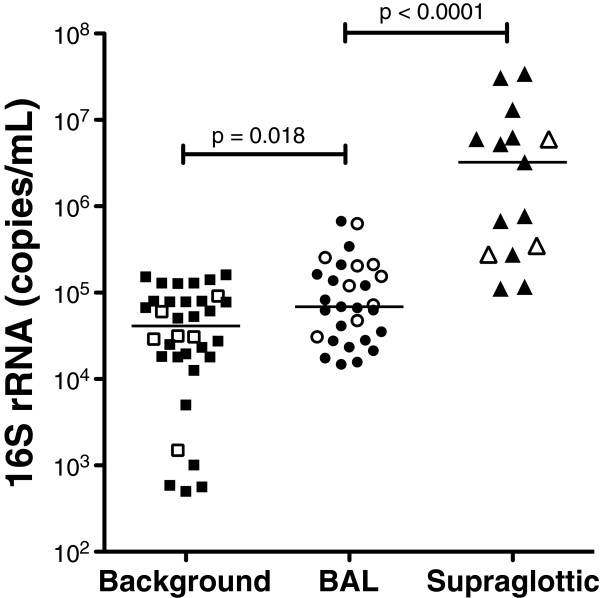
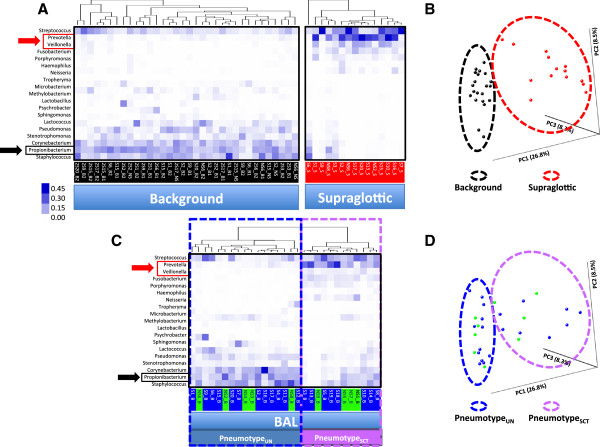
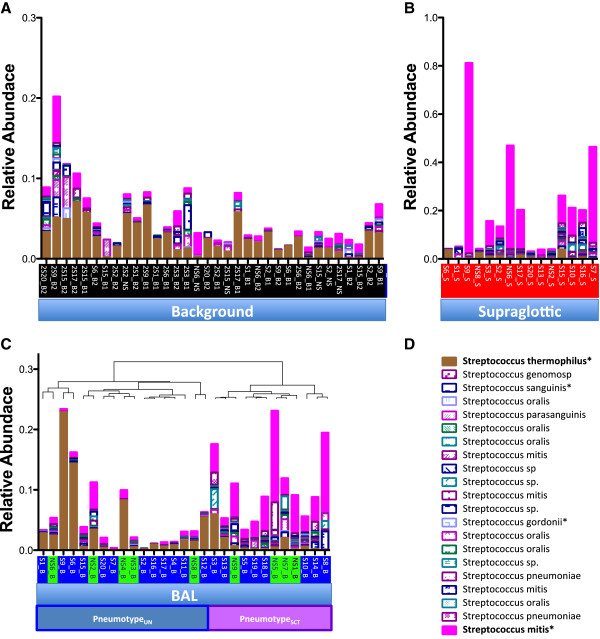
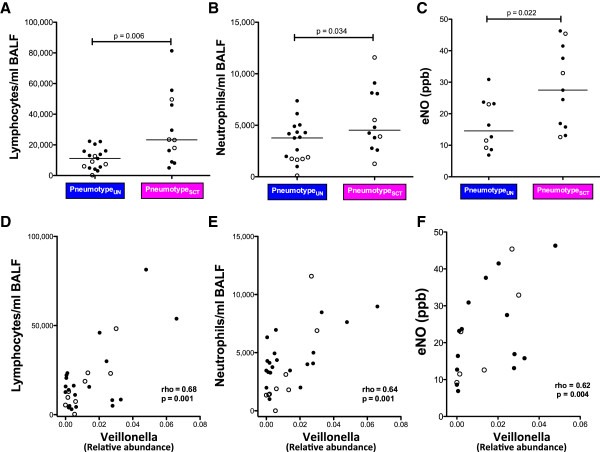
BACKGROUND: The lung microbiome of healthy individuals frequently harbors oral organisms. Despite evidence that microaspiration is commonly associated with smoking-related lung diseases, the effects of lung microbiome enrichment with upper airway taxa on inflammation has not been studied. We hypothesize that the presence of oral microorganisms in the lung microbiome is associated with enhanced pulmonary inflammation. To test this, we sampled bronchoalveolar lavage (BAL) from the lower airways of 29 asymptomatic subjects (nine never-smokers, 14 former-smokers, and six current-smokers). We quantified, amplified, and sequenced 16S rRNA genes from BAL samples by qPCR and 454 sequencing. Pulmonary inflammation was assessed by exhaled nitric oxide (eNO), BAL lymphocytes, and neutrophils. RESULTS: BAL had lower total 16S than supraglottic samples and higher than saline background. Bacterial communities in the lower airway clustered in two distinct groups that we designated as pneumotypes. The rRNA gene concentration and microbial community of the first pneumotype was similar to that of the saline background. The second pneumotype had higher rRNA gene concentration and higher relative abundance of supraglottic-characteristic taxa (SCT), such as Veillonella and Prevotella, and we called it pneumotypeSCT. Smoking had no effect on pneumotype allocation, α, or β diversity. PneumotypeSCT was associated with higher BAL lymphocyte-count (P= 0.007), BAL neutrophil-count (P= 0.034), and eNO (P= 0.022). CONCLUSION: A pneumotype with high relative abundance of supraglottic-characteristic taxa is associated with enhanced subclinical lung inflammation.
Overview
The claims and statistics of this paper haven’t been checked yet.
Free: it reads the open-access text and checks the first 5 claims that cite a source we can check. Create a free account to check every claim.
Integrity signals
Registry
Cites
Statistics
Figures
Verification
Claims the paper makes
The claims and statistics of this paper haven’t been checked yet.
Free: it reads the open-access text and checks the first 5 claims that cite a source we can check. Create a free account to check every claim.
Claims other papers make about this one
Each is checked against this paper’s own text: does it say what the citing paper says it does?
The source backs part of the claim, not all of it — or backs it for a different population, condition or comparison.
In the citing paper
“Culture-independent microbiota studies have confirmed that the lung microbiota largely resembles the URT microbiota when studied in healthy individuals74,75,76.”
From The microbiota of the respiratory tract: gatekeeper to respiratory health (2017) · cites this paper as [75]
Experimental — accuracy not yet measuredThe source backs part of the claim, not all of it — or backs it for a different population, condition or comparison.
In the citing paper
“Interestingly, Tropheryma whipplei seems enriched only in the LRT, which suggests that this might be one of the few bacterial species that is not derived through dispersal from the URT42,75,80.”
From The microbiota of the respiratory tract: gatekeeper to respiratory health (2017) · cites this paper as [75]
Experimental — accuracy not yet measuredThe source backs part of the claim, not all of it — or backs it for a different population, condition or comparison.
In the citing paper
“The adult lung microbiota seems to be dominated by genera in the phyla Firmicutes (including Streptococcus spp. and Veillonella spp.) and Bacteroidetes (including Prevotella spp.)42,75,80.”
From The microbiota of the respiratory tract: gatekeeper to respiratory health (2017) · cites this paper as [75]
Experimental — accuracy not yet measuredThe source backs part of the claim, not all of it — or backs it for a different population, condition or comparison.
In the citing paper
“Although there are subtle regional variations of physiological parameters in the lungs (for example, of oxygen tension, pH and temperature), which, in theory, could affect microbial selection and growth, spatial microbial diversity in the lungs of healthy individuals seems almost absent75,80,86.”
From The microbiota of the respiratory tract: gatekeeper to respiratory health (2017) · cites this paper as [75]
Experimental — accuracy not yet measuredIn the citing paper
“Multiple studies have shown that lung microbiota are more similar to those in the oropharynx, than those in the air, nasopharynx or lower digestive tract (Segal et al., 2013; Venkataraman et al., 2015).”
From Oral Microbiome and SARS-CoV-2: Beware of Lung Co-infection (2020) · cites this paper as Segal et al., 2013
1 more claim about this paper
Create a free account to see every claim other papers make about this one.
Self-check
Percentages, sums and reported differences re-computed from the paper’s own numbers.
The self-check needs the paper’s full text.
Citations
Cites
QIIME allows analysis of high-throughput community sequencing data
Caporaso, J. G., Kuczynski, J., Stombaugh, J., Bittinger, K., Bushman, F. D., Costello, E. K., Fierer, N., Peña, A. G., Goodrich, J. K., Gordon, J. I., et al. (2010) · Nature Methods · doi:10.1038/nmeth.f.303 · Cited by 34,887 · cited 1×
“The obtained 16S rRNA sequences were analyzed using the Quantitative Insights into Microbial Ecology (QIIME) pipeline for analysis of community sequence data [29].”
MethodSearch and clustering orders of magnitude faster than BLAST
Edgar, R. C. (2010) · Bioinformatics · doi:10.1093/bioinformatics/btq461 · Cited by 20,826
Naïve Bayesian Classifier for Rapid Assignment of rRNA Sequences into the New Bacterial Taxonomy
Wang, Q., Garrity, G. M., Tiedje, J. M., & Cole, J. R. (2007) · Applied and Environmental Microbiology · doi:10.1128/aem.00062-07 · Cited by 19,885 · cited 2×
“of each OTU by running the RDP Classifier [31] at 80% bootstrap confidence on a selected representative sequence from each OTU; (4) alignment of representative sequences using PyNAST [32] with the Greengenes core-set alignment template; (5) phylogenetic tree reconstruction from the representative sequences for each OT…”
MethodFastTree 2 – Approximately Maximum-Likelihood Trees for Large Alignments
Price, M. N., Dehal, P. S., & Arkin, A. P. (2010) · PLoS ONE · doi:10.1371/journal.pone.0009490 · Cited by 14,894 · cited 1×
“of each OTU by running the RDP Classifier [31] at 80% bootstrap confidence on a selected representative sequence from each OTU; (4) alignment of representative sequences using PyNAST [32] with the Greengenes core-set alignment template; (5) phylogenetic tree reconstruction from the representative sequences for each OT…”
MethodUniFrac: a New Phylogenetic Method for Comparing Microbial Communities
Lozupone, C., & Knight, R. (2005) · Applied and Environmental Microbiology · doi:10.1128/aem.71.12.8228-8235.2005 · Cited by 8,227 · cited 1×
“Weighted UniFrac was used to measure β diversity of bacterial communities and to perform principal coordinate analysis (PCoA) [36].”
MethodThe ade4 Package: Implementing the Duality Diagram for Ecologists
Dray, S., & Dufour, A.-B. (2007) · Journal of Statistical Software · doi:10.18637/jss.v022.i04 · Cited by 6,211 · cited 1×
“We used the ade4 package in R to PCoA on weighted Unifrac distances [37].”
MethodPyNAST: a flexible tool for aligning sequences to a template alignment
Caporaso, J. G., Bittinger, K., Bushman, F. D., DeSantis, T. Z., Andersen, G. L., & Knight, R. (2010) · Bioinformatics · doi:10.1093/bioinformatics/btp636 · Cited by 3,396 · cited 3×
“Caporaso JG, Bittinger K, Bushman FD, DeSantis TZ, Andersen GL, Knight R: PyNAST: a flexible tool for aligning sequences to a template alignment.”
Method(2005) · American Journal of Respiratory and Critical Care Medicine · doi:10.1164/rccm.200406-710st · Cited by 3,203
UniFrac: an effective distance metric for microbial community comparison
Lozupone, C., Lladser, M. E., Knights, D., Stombaugh, J., & Knight, R. (2011) · The ISME Journal · doi:10.1038/ismej.2010.133 · Cited by 2,825 · cited 1×
“of each OTU by running the RDP Classifier [31] at 80% bootstrap confidence on a selected representative sequence from each OTU; (4) alignment of representative sequences using PyNAST [32] with the Greengenes core-set alignment template; (5) phylogenetic tree reconstruction from the representative sequences for each OT…”
MethodThe ecodist Package for Dissimilarity-based Analysis of Ecological Data
Goslee, S. C., & Urban, D. L. (2007) · Journal of Statistical Software · doi:10.18637/jss.v022.i07 · Cited by 2,429
Cited by
Items 201–300 of 483
The Oral Microbiome and Lung Diseases
Pu, C. Y., Seshadri, M., Manuballa, S., & Yendamuri, S. (2020) · Current Oral Health Reports · doi:10.1007/s40496-020-00259-1 · Cited by 32
Cummings, L. A., Hoogestraat, D. R., Rassoulian-Barrett, S. L., Rosenthal, C. A., Salipante, S. J., Cookson, B. T., & Hoffman, N. G. (2020) · Scientific Reports · doi:10.1038/s41598-020-62424-x · Cited by 33
Yang, X., Jiang, Y., & Wang, C. (2016) · Mediators of Inflammation · doi:10.1155/2016/6470364 · Cited by 28
“When significant quantities of disordered supraglottic bacteria aspirate into the lungs, the normal relative abundance of the lungmicrobiota will change and subclinical lung inflammation increases [44].”
BackgroundThe palatine tonsil bacteriome, but not the mycobiome, is altered in HIV infection
Fukui, Y., Aoki, K., Ishii, Y., & Tateda, K. (2018) · BMC Microbiology · doi:10.1186/s12866-018-1274-9 · Cited by 29
Response of Beef Cattle Fecal Microbiota to Grazing on Toxic Tall Fescue
Mote, R. S., Hill, N. S., Skarlupka, J. H., Turner, Z. B., Sanders, Z. P., Jones, D. P., Suen, G., & Filipov, N. M. (2019) · Applied and Environmental Microbiology · doi:10.1128/aem.00032-19 · Cited by 29
Gut microbiota and protection from pneumococcal pneumonia
Dickson, R. P., & Cox, M. J. (2017) · Gut · doi:10.1136/gutjnl-2016-311823 · Cited by 27
Significance of the Microbiome in Chronic Obstructive Pulmonary Disease
Martínez, F. J., Erb‐Downward, J. R., & Huffnagle, G. B. (2013) · Annals of the American Thoracic Society · doi:10.1513/annalsats.201306-204aw · Cited by 27
Zeng, W., Wang, Y., Wang, Z., Yu, M., Liu, K., Zhao, C., Pan, Y., & Ma, S. (2023) · Discover Oncology · doi:10.1007/s12672-023-00748-6 · Cited by 30
“The lung microbiota in healthy adults mainly comprises Bacteroidetes and Firmicutes (9, 10).”
BackgroundCould Azithromycin Be Part of Pseudomonas aeruginosa Acute Pneumonia Treatment?
Leroy, A., Caillon, J., Caroff, N., Broquet, A. H., Corvec, S., Asehnoune, K., Roquilly, A., & Crémet, L. (2021) · Frontiers in Microbiology · doi:10.3389/fmicb.2021.642541 · Cited by 28
Vientós‐Plotts, A. I., Ericsson, A. C., & Reinero, C. R. (2023) · Journal of Veterinary Internal Medicine · doi:10.1111/jvim.16824 · Cited by 30
The respiratory microbiome of HIV-infected individuals
Lawani, M. B., & Morris, A. (2016) · Expert Review of Anti-infective Therapy · doi:10.1080/14787210.2016.1206469 · Cited by 30
“Prevotella and Veillonella outgrowth has been associated with subclinical inflammation in individuals with stable COPD [54].”
BackgroundMénage à trois: Virus, Host, and Microbiota in Experimental Infection Models
Mazel‐Sanchez, B., Yildiz, S., & Schmolke, M. (2019) · Trends in Microbiology · doi:10.1016/j.tim.2018.12.004 · Cited by 29
“This concept was later expanded to other body niches, such as the lung [39].”
BackgroundThe Complex Role of the Microbiome in Non-Small Cell Lung Cancer Development and Progression
Souza, V. G. P., Forder, A., Pewarchuk, M. E., Telkar, N., de Araújo, R. P., Stewart, G. L., Vieira, J., Reis, P. P., & Lam, W. L. (2023) · Cells · doi:10.3390/cells12242801 · Cited by 31
“…and elimination of microbiomes through aspiration, coughing, or mucociliary clearance [12], studies analyzing the microbial composition of healthy lungs indicate that the core lung microbiota include mainly Actinobacteria , Bacteroidetes , Firmicutes , and Proteobacteria families [13–15].”
BackgroundDietl, B., Henares, D., Boix-Palop, L., Muñoz‐Almagro, C., Garau, J., & Calbo, E. (2021) · Frontiers in Medicine · doi:10.3389/fmed.2021.650271 · Cited by 26
Cheng, J., Zhou, L., & Wang, H. (2024) · Frontiers in Cellular and Infection Microbiology · doi:10.3389/fcimb.2024.1296295 · Cited by 24
Chakraborty, S. (2020) · OSF Preprints (OSF Preprints) · doi:10.31219/osf.io/usztn · Cited by 27
Bano, Y., Shrivastava, A., Shukla, P. K., Chaudhary, A. A., Khan, S.-U.-D., & Khan, S. (2024) · Critical Reviews in Microbiology · doi:10.1080/1040841x.2024.2324864 · Cited by 23
“Furthermore, gastroesophageal contents are allowed to enter the lungs via inhalation (Segal et al. 2013).”
Three distinct pneumotypes characterize the microbiome of the lung in BALB/cJ mice
Scheiermann, J., & Klinman, D. M. (2017) · PLoS ONE · doi:10.1371/journal.pone.0180561 · Cited by 27
Cauwenberghs, E., Boeck, I. D., Spacova, I., Tente, I. V., Bastiaenssen, J., Lammertyn, E. J., Verhulst, S. L., Hoorenbeeck, K. V., & Lebeer, S. (2024) · Cell Reports Medicine · doi:10.1016/j.xcrm.2023.101371 · Cited by 24
Microbiome modulation of tumorigenesis and immune responses
Chen, Y., Fang, Y., Lyu, Z., Tian, Y., Niu, S., Li, Y.-R., & Yang, L. (2026) · Journal of Biomedical Science · doi:10.1186/s12929-025-01208-9 · Cited by 30
“Enrichment of supraglottic taxa in the lung micro-biome has been correlated with heightened pulmonary inflammation, reinforcing a tumor-promoting environment [116].”
The lung, the niche, and the microbe: Exploring the lung microbiome in cancer and immunity
Huynh, M., Crane, M. J., & Jamieson, A. M. (2023) · Frontiers in Immunology · doi:10.3389/fimmu.2022.1094110 · Cited by 25
“In the healthy, steady-state human lung, the most commonly appearing genera in 16S sequencing of BALF included (from most to least abundant) Streptococcus, Prevotella and Veillonella, which have been confirmed across other healthy BALF sequencing analyses (39, 40).”
BackgroundThe human microbiome: A promising target for lung cancer treatment
Sun, Y. H., Wen, M., Liu, Y., Wang, Y., Jing, P., Gu, Z., Jiang, T., & Wang, W. (2023) · Frontiers in Immunology · doi:10.3389/fimmu.2023.1091165 · Cited by 30
“Some studies have shown that the lungs are susceptible to oropharyngeal bacterial colonies (16, 17, 20).”
BackgroundEkanayake, A., Madegedara, D., Chandrasekharan, V., & Magana-Arachchi, D. (2019) · Indian Journal of Microbiology · doi:10.1007/s12088-019-00850-w · Cited by 21
“and neutrophils phagocytose bacteria in the airways [28, 29].”
BackgroundFlynn, S., Reen, F. J., Caparros-Martin, J. A., Woods, D. F., Peplies, J., Ranganathan, S., Stick, S. M., & O’Gara, F. (2020) · Microorganisms · doi:10.3390/microorganisms8111741 · Cited by 23
“Recent evidence suggests that translocation of oral microorganisms into the lower airways through microaspiration triggers pulmonary inflammation [49,50].”
BackgroundResultMicrobiome: A Supportive or a Leading Actor in Lung Cancer?
Martins, D. F., Mendes, F., & Schmitt, F. C. (2020) · Pathobiology · doi:10.1159/000511556 · Cited by 22
Lung Microbiome in Human Health and Diseases
Chauhan, N. S. (2021) · Elsevier eBooks · doi:10.1016/b978-0-12-819265-8.00077-2 · Cited by 26
Kim, G., Park, C.-H., Yoon, Y. K., Park, D., Lee, J. E., Lee, D., Sun, P., Park, S., Yun, C., Kang, D. H., et al. (2024) · Scientific Reports · doi:10.1038/s41598-024-52296-w · Cited by 26
“Firmicutes and Bacteroidetes are the two phyla that are mainly present in healthy lungs 37,38 .”
BackgroundLong-term macrolides in diffuse interstitial lung diseases
Faverio, P., Bini, F., Vaghi, A., & Pesci, A. (2017) · European Respiratory Review · doi:10.1183/16000617.0082-2017 · Cited by 21
Microbial contribution to metabolic niche formation varies across the respiratory tract
Wong, K. K., Wu, B. G., Chung, M. C., Li, Q., Darawshy, F., Tsay, J.-C. J., Holub, M., Barnett, C. R., Kwok, B., Kugler, M. C., et al. (2025) · Cell Host & Microbe · doi:10.1016/j.chom.2025.06.002 · Cited by 21
Self-citationDuvallet, C., Larson, K., Snapper, S. B., Iosim, S., Lee, A., Freer, K., May, K. E., Alm, E. J., & Rosen, R. (2019) · PLoS ONE · doi:10.1371/journal.pone.0216453 · Cited by 20
“However, there is little consensus on whether there exists a distinct or ”core” 52 lung microbiome that is consistent across people [9, 11, 12, 13].”
BackgroundTan, L., Zhong, M., Liu, Q., Chen, Y., Zhao, Y., Zhao, J., Dusenge, M. A., Yao, F., Ye, Q., Hu, J., et al. (2023) · Frontiers in Cellular and Infection Microbiology · doi:10.3389/fcimb.2023.1193340 · Cited by 23
“…that the oral microbiota of COVID-19 patients has a high level of Prevotella and Veillonella, which may stimulate the expression of inflammatory factors such as IL-6, IL-23, and IL-1 (Segal et al., 2013; van den Bogert et al., 2014; Segal et al., 2016; Khan and Khan, 2020; Iebba et al., 2021).”
BackgroundMacrophages and the microbiome in chronic obstructive pulmonary disease
Sandhu, K. K., Scott, A., Tatler, A. L., Belchamber, K. B. R., & Cox, M. J. (2024) · European Respiratory Review · doi:10.1183/16000617.0053-2024 · Cited by 27
“IL: interleukin; MCP: monocyte chemoattractant protein. micro-aspiration from the upper respiratory tract (URT) or through direct inhalation [12].”
The lung microbiome and transplantation
Mitchell, A. B. (2019) · Current Opinion in Organ Transplantation · doi:10.1097/mot.0000000000000631 · Cited by 21
Perspectives in lung microbiome research
Sulaiman, I., Schuster, S., & Segal, L. N. (2020) · Current Opinion in Microbiology · doi:10.1016/j.mib.2020.06.001 · Cited by 19
“Despite these limitations, it is now clear that the lung microbiome affects the host immune tone in the lower airways [41-43].”
BackgroundSelf-citationEarly-life upper airway microbiota are associated with decreased lower respiratory tract infections
Zelasko, S. E., Swaney, M. H., Sandstrom, S., Lee, K. E., Dixon, J., Riley, C., Watson, L., Godfrey, J. J., Ledrowski, N., Rey, F. E., et al. (2024) · Journal of Allergy and Clinical Immunology · doi:10.1016/j.jaci.2024.11.008 · Cited by 20
The Role of the Oral Microbiome and Dental Caries in Respiratory Health: A Systematic Review
Zygmunt, Ł., Kiryk, S., Wesołek, K., Kiryk, J., Nawrot-Hadzik, I., Rybak, Z., Sztyler, K., Małyszek, A., Matys, J., & Dobrzyński, M. (2025) · Journal of Clinical Medicine · doi:10.3390/jcm14217670 · Cited by 21
“Rigorous sampling approaches, including replicate bronchoalveolar lavage (BAL) procedures and source-tracking analyses, are essential to accurately determine the origin, viability, and function of microbial taxa within the lung environment [17,65,66,73].”
Lou, Y., Wei, Q., Fan, B., Zhang, L., Wang, X., Chen, Z., Tan, X., & Zheng, Y. (2021) · FEBS Open Bio · doi:10.1002/2211-5463.13334 · Cited by 18
Zinter, M. S., Versluys, B. A. B., Lindemans, C. A., Mayday, M. Y., Reyes, G. A., Sunshine, S., Chan, M., Fiorino, E. K., Cancio, M., Prevaes, S. M. P. J., et al. (2022) · Science Translational Medicine · doi:10.1126/scitranslmed.abm8646 · Cited by 16
Ma, R., Cheng, L., Song, Y., Sun, Y., Gui, W., Deng, Y. L., Xie, C., & Liu, M. (2022) · Frontiers in Medicine · doi:10.3389/fmed.2022.940784 · Cited by 18
“Bronchoalveolar lavage fluid (BALF) was collected into the sterile tube according to a standardized protocol with minimum oral contamination (43).”
MethodThe Fungal and Bacterial Interface in the Respiratory Mycobiome with a Focus on Aspergillus spp.
Rozaliyani, A., Antariksa, B., Nurwidya, F., Zaini, J., Setianingrum, F., Hasan, F. N., Nugrahapraja, H., Yusva, H., Wibowo, H., Bowolaksono, A., et al. (2023) · Life · doi:10.3390/life13041017 · Cited by 22
Sputum metagenomics in bronchiectasis reveals pan-European variation: an EMBARC-BRIDGE study
Thng, K. X., Tiew, P. Y., Aogáin, M. M., Narayana, J. K., Jaggi, T. K., Ivan, F. X., Shuttleworth, M. K., Long, M. B., Richardson, H., Lind, H., et al. (2025) · European Respiratory Journal · doi:10.1183/13993003.00054-2025 · Cited by 25
“Oral commensals, thought to originate solely from the oropharyngeal compartment, have now been identified in the lower airway, with recent work demonstrating roles in modulating host immune responses [96 – 98].”
The microbiota-related coinfections in COVID-19 patients: a real challenge
Mohapatra, R. K., Dhama, K., Mishra, S., Sarangi, A. K., Kandi, V., Tiwari, R., & Pintilie, L. (2021) · Beni-Suef University Journal of Basic and Applied Sciences · doi:10.1186/s43088-021-00134-7 · Cited by 17
Loss of GD1-positive Lactobacillus correlates with inflammation in human lungs with COPD
Sze, M. A., Utokaparch, S., Elliott, W. M., Hogg, J. C., & Hegele, R. G. (2015) · BMJ Open · doi:10.1136/bmjopen-2014-006677 · Cited by 17
Wu, R., Wang, L., Yao, Y.-F., Sang, T., Wu, Q.-L., Fu, W.-W., Wan, M., & Li, W. (2022) · Biomedicine & Pharmacotherapy · doi:10.1016/j.biopha.2022.113681 · Cited by 17
The association between the respiratory tract microbiome and clinical outcomes in patients with COPD
Yu, S., Zhang, H., Wan, L., Xue, M. F., Zhang, Y., & Gao, X. (2022) · Microbiological Research · doi:10.1016/j.micres.2022.127244 · Cited by 19
Cheng, C., Wang, Z., Ding, C., Liu, P., Xu, X., Li, Y., Yan, Y., Yin, X., Chen, B., & Gu, B. (2024) · Phenomics · doi:10.1007/s43657-023-00135-9 · Cited by 17
“The collection of BALF was carried out by the physicians from the Respiratory Medicine Department of the Affiliated Hospital of Xuzhou Medical University according to the standardized protocol (Segal et al. 2013).”
Impact of the Lung Microbiota on Development and Progression of Lung Cancer
Belaïd, A., Roméo, B., Rignol, G., Benzaquen, J., Audoin, T., Vouret‐Craviari, V., Brest, P., Varraso, R., von Bergen�, M., Marquette, C., et al. (2024) · Cancers · doi:10.3390/cancers16193342 · Cited by 18
The Role of Lower Airway Dysbiosis in Asthma: Dysbiosis and Asthma
Lu, J., Xiong, L., Zhang, X., Liu, Z., Wang, S., Zhang, C., Zheng, J., Wang, G., Zheng, R., Simpson, J. L., et al. (2017) · Mediators of Inflammation · doi:10.1155/2017/3890601 · Cited by 19
“Highthroughput next-generation sequencing techniques have reported that similar to other epithelial surfaces, the lower airways harbor diverse microbial communities [10–13, 22– 24] which exert an effect on the local immunological homeostasis in normal individuals [4, 5].”
Introduction to Techniques and Methodologies for Characterizing the Human Respiratory Virome
Mitchell, A. B., & Glanville, A. R. (2018) · Methods in molecular biology · doi:10.1007/978-1-4939-8682-8_9 · Cited by 17
Microbiome and Long COVID-19: Current Evidence and Insights
Căliman-Sturdza, O. A., Hamamah, S., Iatcu, O. C., Lobiuc, A., Bosancu, A., & Covașă, M. (2025) · International Journal of Molecular Sciences · doi:10.3390/ijms262010120 · Cited by 23
“Additionally, dysbiosis may compromise intestinal barrier integrity, resulting in microbial translocation, commonly referred to as “leaky gut”, where microbial components (e.g., LPS, fungal antigens) enter the bloodstream [40,43,68–70].”
Mapping bacterial diversity and metabolic functionality of the human respiratory tract microbiome
Mancabelli, L., Milani, C., Fontana, F., Lugli, G. A., Tarracchini, C., Turroni, F., van Sinderen, D., & Ventura, M. (2022) · Journal of Oral Microbiology · doi:10.1080/20002297.2022.2051336 · Cited by 14
“Microbiota-based studies targeting healthy individuals based on culture-independent methods has revealed that the LRT microbiota shares microbial colonizers with the URT microbiota [32,33] and that the oropharynx appeared to be the major bacterial source of the whole lung microbiota in adults”
BackgroundDo combined upper airway cultures identify lower airway infections in children with chronic cough?
Hare, K. M., Chang, A. B., Smith‐Vaughan, H., Bauert, P., Spain, B., Beissbarth, J., & Grimwood, K. (2019) · Pediatric Pulmonology · doi:10.1002/ppul.24336 · Cited by 15
“The anatomy of the upper airway in children may facilitate recurrent microaspiration of heavily bacteria‐laden nasal secretions,(8,11) while in adults repeated microaspiration of oropharyngeal secretions is thought to be important.(18,19) Recent studies have also used 16S rRNA gene sequencing to characterize the micro…”
BackgroundResultThe lung microbiome in interstitial lung disease
Mikhail, S. G., & O’Dwyer, D. N. (2025) · Breathe · doi:10.1183/20734735.0167-2024 · Cited by 17
“…that alterations in the lung microbiome may contribute to alveolar epithelial injury, alveolar macrophage responses, promote reprogrammed or aberrant crosstalk among key participating cell types or augment cell production of pro-fibrotic cytokines systems such as interleukin-17 (IL-17) [22 – 25].”
Wang, H., Hu, J., Wu, J., Ji, P., Shang, A., & Li, D. (2022) · Cancers · doi:10.3390/cancers14215394 · Cited by 17
“Prevotella, Streptococcus, Megasphaera, and Veillonella are the most abundant microbiome in the airways, and compPLS analysis revealed that Veillonella and Megasphaera are associated with upregulation of cancer signaling pathways [18].”
BackgroundInfluentialScreening of potential microbial markers for lung cancer using metagenomic sequencing
Chen, Q., Hou, K., Tang, M., Ying, S., Zhao, X., Li, G., Pan, J., He, X., Xia, H., Li, Y., et al. (2022) · Cancer Medicine · doi:10.1002/cam4.5513 · Cited by 21
Lower respiratory tract microbiome composition and community interactions in smokers
Campos, M., Cickovski, T., Fernandez, M., Jaric, M., Wanner, A., Holt, G. E., Donna, E., Mendes, E. S., Silva‐Herzog, E., Schneper, L. M., et al. (2023) · Access Microbiology · doi:10.1099/acmi.0.000497.v3 · Cited by 16
“BAL samples dominated by bacteria typically found in oral microbiomes are associated with an elevation of inflammatory markers [54].”
BackgroundCan probiotics be used in the prevention and treatment of bronchial asthma?
Kleniewska, P., & Pawliczak, R. (2024) · Pharmacological Reports · doi:10.1007/s43440-024-00618-0 · Cited by 20
Seixas, S., Kolbe, A. R., Gomes, S. C. V., Sucena, M., Sousa, C., Rodrigues, L. V., Teixeira, G., Pinto, P., de Abreu, T. T., Bárbara, C., et al. (2021) · Scientific Reports · doi:10.1038/s41598-021-94468-y · Cited by 16
Innovative engineering approaches to model host-microbiome interactions in vitro
Azamar, K. M. M., Sudi, S. D., Mohammadalizadeh, Z., Coffin, C., Parker, I., & Porras, A. M. (2025) · Advanced Drug Delivery Reviews · doi:10.1016/j.addr.2025.115677 · Cited by 15
The role of the host-microbiome and metabolomics in sarcoidosis
Kim, J., Lee, S., Moodley, Y. P., Yagnik, L., Birnie, D. H., & Dwivedi, G. (2023) · American Journal of Physiology-Cell Physiology · doi:10.1152/ajpcell.00316.2023 · Cited by 17
Oğuzülgen, K., Öztürk, A. B., Bacceoğlu, A., Aydın, Ö., Buhari, G. K., Damadoğlu, E., Erkekol, F. Ö., Göksel, Ö., Karakaya, G., Kalyoncu, A. F., et al. (2023) · International Archives of Allergy and Immunology · doi:10.1159/000531866 · Cited by 13
“Segal et al. [15] observed that supraglottic-characteristic bacteria Pre-votella and Veillonella were associated with higher in-fl ammatory markers.”
BackgroundCOPD in People with HIV: Epidemiology, Pathogenesis, Management, and Prevention Strategies
Byanova, K. L., Abelman, R. A., North, C. M., Christenson, S. A., & Huang, L. (2023) · International Journal of COPD · doi:10.2147/copd.s388142 · Cited by 16
Wang, H., Hu, J., Ma, Y., Abulimiti, Y., & Zhou, Y. (2025) · International Journal of Medical Sciences · doi:10.7150/ijms.107026 · Cited by 13
Oriano, M., Zorzetto, L., Guagliano, G., Bertoglio, F., van Uden, S., Visai, L., & Petrini, P. (2020) · Frontiers in Bioengineering and Biotechnology · doi:10.3389/fbioe.2020.539319 · Cited by 13
“Healthy lungs microbiota composition is dynamic and among the multiple bacteria present in the lungs, whose abundance and composition vary in time, bacteroidetes and firmicutes constitute a retained core (Erb-Downward et al., 2011; Morris et al., 2013; Segal et al., 2013).”
BackgroundLongitudinal Lower Airway Microbial Signatures of Acute Cellular Rejection in Lung Transplantation
Natalini, J. G., Wong, K. K., Nelson, N. C., Wu, B. G., Rudym, D., Lesko, M. B., Qayum, S., Lewis, T. C., Wong, A., Chang, S. H., et al. (2024) · American Journal of Respiratory and Critical Care Medicine · doi:10.1164/rccm.202309-1551oc · Cited by 14
Self-citationCommon Lung Microbiome Identified among Mechanically Ventilated Surgical Patients
Smith, A. D., Zhang, Y., Barber, R. C., Minshall, C. T., Huebinger, R. M., & Allen, M. S. (2016) · PLoS ONE · doi:10.1371/journal.pone.0166313 · Cited by 14
Pulmonary Micro-Ecological Changes and Potential Microbial Markers in Lung Cancer Patients
Ran, Z., Liu, J., Wang, F., Xin, C., Xiong, B., & Song, Z. (2021) · Frontiers in Oncology · doi:10.3389/fonc.2020.576855 · Cited by 13
Microbiota and IPF: hidden and detected relationships.
Fabbrizzi, A., Nannini, G., Lavorini, F., Tomassetti, S., & Amedei, A. (2021) · Sarcoidosis vasculitis and diffuse lung diseases · doi:10.36141/svdld.v38i3.11365 · Cited by 17
The respiratory tract microbiome: moving from correlation to causation
Morton, R., & Singanayagam, A. (2022) · European Respiratory Journal · doi:10.1183/13993003.03079-2021 · Cited by 13
Zhou, M., Liu, Y., Yin, X., Gong, J., & Li, J. (2025) · Discover Oncology · doi:10.1007/s12672-025-03440-z · Cited by 16
“…profiling demonstrates reduced α-and β-diversity in non-small cell lung cancer (NSCLC) tumors relative to adjacent normal tissue [2], along with tumor-specific depletion of commensal genera ( Fusobacterium , Streptococcus ) and enrichment of potential pathogens ( Aeromonas , Sphingomonas ) [3].”
Lu, S., Zhou, Y., Hu, Y., Wang, J., Li, H., Lin, Y., Wang, D., Xian, J., Zhao, S., Ma, J., et al. (2023) · Frontiers in Cellular and Infection Microbiology · doi:10.3389/fcimb.2023.1161763 · Cited by 16
“Pulmonary inflammation, which is associated with the accumulation of the pulmonary microbiome with Prevotella (Segal et al., 2013; Yuan et al., 2022), was more severe in infections with SARS-CoV-2 than in infections with other viruses.”
BackgroundBacteria and fungi of the lung: allies or enemies?
Garaci, E., Pariano, M., Nunzi, E., Costantini, C., Bellet, M. M., Antognelli, C., Russo, M. A., & Romani, L. R. (2024) · Frontiers in Pharmacology · doi:10.3389/fphar.2024.1497173 · Cited by 14
Collie, D., Glendinning, L., Govan, J. R. W., Wright, S. H., Thornton, E. M., Tennant, P. A., Doherty, C. J., & McLachlan, G. (2015) · PLoS ONE · doi:10.1371/journal.pone.0142097 · Cited by 18
“Lung microbiota data derived from healthy human subjects is becoming increasingly available [19, 28, 29].”
BackgroundHuman airway and lung microbiome at the crossroad of health and disease (Review)
Raudoniūtė, J., Bironaitė, D., Bagdonas, E., Kulvinskienė, I., Jonaitytė, B., Danila, E., & Aldonytė, R. (2022) · Experimental and Therapeutic Medicine · doi:10.3892/etm.2022.11718 · Cited by 13
“The upper respiratory tract microbiome is replenished from the environmental microorganisms' populations and oral microflora (10).”
BackgroundThe Lung Microbiome in HIV: Getting to the HAART of the Host–Microbe Interface
Segal, L. N., & Dickson, R. P. (2016) · American Journal of Respiratory and Critical Care Medicine · doi:10.1164/rccm.201602-0280ed · Cited by 12
“The composition of the lung microbiome, as detected in acellular BAL fluid, is significantly correlated with important features of the alveolar inflammatory response (7, 8), and in the current study, it is correlated with disease state (HIV) and treatment (HAART) (5).”
BackgroundSelf-citationMicrobes little helpers and suppliers for therapeutic asthma approaches
Reuter, S., Raspe, J., & Taube, C. (2024) · Respiratory Research · doi:10.1186/s12931-023-02660-7 · Cited by 13
“However, almost a decade after initiation of the human microbiome project in 2007 [21], the first studies revealed a microbial microcosm in the healthy lung [22, 23].”
BackgroundEmerging cellular and molecular interactions between the lung microbiota and lung diseases
Li, X., & Meng, X. (2021) · Critical Reviews in Microbiology · doi:10.1080/1040841x.2021.1992345 · Cited by 11
“With advancing age, the microbial diversity, biomass, and complexity of the lung microbiota increase and tend to be in dynamic equilibrium (Hilty et al. 2010; Charlson et al. 2011; ErbDownward et al. 2011; Charlson et al. 2012; Morris et al. 2013; Segal et al. 2013; Dickson et al. 2015; Sze et al. 2015a; Marsh et al.…”
BackgroundInfluentialImpact of HIV on the human gut microbiota: Challenges and perspectives
Dubourg, G. (2016) · Human Microbiome Journal · doi:10.1016/j.humic.2016.10.001 · Cited by 12
Machine learning clustering and classification of human microbiome source body sites
Tan‐Torres, A. L., Brooks, J. P., Singh, B., & Seashols‐Williams, S. J. (2021) · Forensic Science International · doi:10.1016/j.forsciint.2021.111008 · Cited by 10
Gut microbiome metabolites in lung cancer: The emerging importance of short-chain fatty acids
Bishoyi, A. K., Al-Hasnaawei, S., Salem, K. H., Ganesan, S., Shankhyan, A., Nanda, A., Sinha, A., Ray, S., Nathiya, D., & Hammady, F. J. (2025) · International Immunopharmacology · doi:10.1016/j.intimp.2025.115821 · Cited by 13
Zomuansangi, R., Lalbiaktluangi, C., Gupta, V. K., Medders, A. A., Vidal, J. E., Singh, B. P., Song, J., Singh, P. K., Singh, A., Vellingiri, B., et al. (2023) · Atmospheric Pollution Research · doi:10.1016/j.apr.2023.102012 · Cited by 13
Liu, L., Zhao, W., Zhang, H., Shang, Y., Huang, W., & Cheng, Q. (2025) · Frontiers in Microbiology · doi:10.3389/fmicb.2025.1550783 · Cited by 14
“…phyla: Firmicutes (genus Streptococcus ), Proteobacteria (genus Acinetobacter ), and Actinobacteria (genus Corynebacterium ) (Bassis et al., 2015; Segal et al., 2013; Venkataraman et al., 2015), with core genera ( Streptococcus , Veillonella , Prevotella ) maintaining trans-anatomical…”
Fukui, S., Morimoto, S., Ichinose, K., Nakashima, S., Ishimoto, H., Hara, A., Kakugawa, T., Sakamoto, N., Tsuji, Y., Aramaki, T., et al. (2020) · Scientific Reports · doi:10.1038/s41598-020-66178-4 · Cited by 10
Rofael, S., Brown, J., Pickett, E., Johnson, M. A., Hurst, J. R., Spratt, D. A., Lipman, M. C. I., & McHugh, T. D. (2020) · EClinicalMedicine · doi:10.1016/j.eclinm.2020.100427 · Cited by 13
“Sputum samples collected from 64 PLWHIV using ART and 38 HIV negative participants were included (Table 1).”
BackgroundRespiratory Tract Oncobiome in Lung Carcinogenesis: Where Are We Now?
Czarnecka, K. H., Kordiak, J., Brzeziańska‐Lasota, E., & Pastuszak‐Lewandoska, D. (2023) · Cancers · doi:10.3390/cancers15204935 · Cited by 12
“…showed that bacteria from the phyla Bacteroidetes (in particular the genus Prevotella ), Firmicutes (genera Streptococcus , Veillonella ), Proteobacteria (genus Acinetobacter ), and Actinobacteria (genus Corynebacterium ) were most abundant in the lungs of healthy individuals [21,22,25–27].”
BackgroundInfluentialThe Upper Respiratory Tract Microbiome Network Impacted by SARS-CoV-2
Li, W., & Ma, Z. S. (2022) · Microbial Ecology · doi:10.1007/s00248-022-02148-9 · Cited by 9
“URT microbiome, as gatekeeper of the respiratory sys-tem, is one of the most important sources of lower respiratory tract and lung microbiome [2, 32, 35, 45].”
Evidence of persistence of Prevotella spp. in the cystic fibrosis lung
Gilpin, D. F., Nixon, K. A., Bull, M. J., McGrath, S., Sherrard, L. J., Rolain, J., Mahenthiralingam, E., Elborn, J. S., & Tunney, M. M. (2017) · Journal of Medical Microbiology · doi:10.1099/jmm.0.000500 · Cited by 9
Ngunjiri, J. M., Taylor, K. J. M., Ji, H., Abundo, M. C., Ghorbani, A., Mahesh, K. C., & Lee, C.-W. (2021) · PeerJ · doi:10.7717/peerj.11806 · Cited by 10
“This has also been observed with human lung models, in which lung microbiota are more similar to oral cavity or tracheal microbiota than nasal cavitymicrobiota under both healthy and diseased conditions (Bassis et al., 2015; Boutin et al., 2015; Charlson et al., 2011; Segal et al., 2013).”
BackgroundPleural fluid microbiota as a biomarker for malignancy and prognosis
Kwok, B., Wu, B. G., Kocak, I. F., Sulaiman, I., Schluger, R., Li, Y., Anwer, R., Goparaju, C. M. V., Ryan, D., Sagatelian, M., et al. (2023) · Scientific Reports · doi:10.1038/s41598-023-29001-4 · Cited by 14
Self-citationFamily‐based study reveals decreased abundance of sputum Granulicatella in asthmatics
Wang, L., Solá, D. D. Á., Mao, Y., Bielecki, P., Zhu, Y. L., Sun, Z., Shan, L., Flavell, R. A., Bazzy‐Asaad, A., & DeWan, A. T. (2018) · Allergy · doi:10.1111/all.13493 · Cited by 9
COVID-19 and the Microbiome: The Gut-Lung Connection
Aan, F. J., Glibetić, N., Montoya‐Uribe, V., & Matter, M. L. (2021) · Elsevier eBooks · doi:10.1016/b978-0-12-819265-8.00048-6 · Cited by 14
Krishnan, U., Singh, H., Tedla, N. T., Leach, S. T., & Kaakoush, N. O. (2020) · Infection and Immunity · doi:10.1128/iai.00455-20 · Cited by 11
“This increased transfer of oral bacteria to the trachea is of clinical significance given that colonization of the respiratory tract with oral commensals is associated with increased inflammation (14, 15).”
BackgroundTowards airway microbiome engineering for improving respiratory health
Hern, K. E., & Prindle, A. B. (2025) · Advanced Drug Delivery Reviews · doi:10.1016/j.addr.2025.115662 · Cited by 8
Subgingival microbial diversity and respiratory decline: A cross‐sectional study
Winning, L., Moran, G. P., McClory, M., Karim, I. A. E., Lundy, F. T., Patterson, C., Linden, D. A., Cullen, K. M., Kee, F., & Linden, G. J. (2023) · Journal Of Clinical Periodontology · doi:10.1111/jcpe.13819 · Cited by 7
“In a small study involving 29 participants who underwent BAL, Segal and co-workers found increased community abundance of Prevotella and Veillonella (common anaerobic oral commensals) associated with higher levels of lymphocyte and neutrophil inflammation in the lung (Segal et al., 2013).”
BackgroundAirway bacterial microbiome signatures correlate with occupational pneumoconiosis progression
Ma, H., Dong, Z., Zhang, X., Liu, C., Liu, Z., Zhou, X. F., He, J., & Zhang, S. (2024) · Ecotoxicology and Environmental Safety · doi:10.1016/j.ecoenv.2024.116875 · Cited by 9
Rogers, G. B. (2017) · Emerging Topics in Life Sciences · doi:10.1042/etls20170043 · Cited by 10
Aerodigestive dysbiosis in children with chronic cough
Kazachkov, M. Y., Kapoor, B. C., Malecha, P. W., Wu, B. G., Li, Y., Levine, J. J., Erkman, J. L., Fitzgerald, K. C., Moy, L. C., & Segal, L. N. (2018) · Pediatric Pulmonology · doi:10.1002/ppul.24115 · Cited by 11
Self-citationComparison of targeted metagenomics and IS-Pro methods for analysing the lung microbiome
Mahomed, T. G., Peters, R. P. H., Pretorius, G., Mahomed, A. G., Ueckermann, V., Kock, M. M., & Ehlers, M. M. (2021) · BMC Microbiology · doi:10.1186/s12866-021-02288-x · Cited by 8
Alterations of lung microbial communities in obese allergic asthma and metabolic potential
Lee, J., Lee, S., Gu, G., Choi, J. H., Jeong, K.-T., Lee, J., & Kim, S. H. (2021) · PLoS ONE · doi:10.1371/journal.pone.0256848 · Cited by 8
Salivary microbial dysbiosis may predict lung adenocarcinoma
Roy, P. S., Sarma, A., Kataki, A., Kumar, A., & Chattopadhyay, I. (2022) · Indian Journal of Pathology and Microbiology · doi:10.4103/ijpm.ijpm_1111_20 · Cited by 9
Metadata
- Authors
- Segal, L. N., Alekseyenko, A. V., Clemente, J. C., Kulkarni, R., Wu, B., Chen, H., Berger, K. I., Goldring, R. M., Rom, W. N., Blaser, M. J., & Weiden, M. D.
- Affiliations
- Bellevue Hospital Center (US)
- New York University (US)
- Corresponding author
- Segal, Leopoldo N
- Weiden, Michael D
- ORCID
- Venue
- Microbiome
- Published
- 2013-07-01
- Volume
- 1
- Issue
- 1
- Pages
- 19-19
- ISSN
- 2049-2618 (ISSN-L)
- PMC
- PMC3971609
- OpenAlex
- W1969359874
- Cited by
- 482
- References
- 55
- Citations by year
- 2026: 25 · 2025: 37 · 2024: 50 · 2023: 35 · 2022: 47 · 2021: 60 · 2020: 42 · 2019: 38 · 2018: 34 · 2017: 35 · 2016: 36 · 2015: 27 · 2014: 13 · 2013: 3
- FWCI
- 32.00
- Type
- journal article
- Language
- en
- Update notices
- erratum (2014-07-02)
- Open access
- gold
- doi.org
- Licence
- cc-by
- creativecommons.org/licenses/by/2.0 (tdm)
- Locations
- Microbiome (publishedVersion, cc-by)
- Europe PMC (PubMed Central) (publishedVersion, cc-by)
- PubMed Central (publishedVersion, cc-by)
- PubMed (publishedVersion)
- Rutgers University Community Repository (Rutgers University) (submittedVersion)
- Funders
- National Institute of Allergy and Infectious Diseases (K23AI102970)
- National Institute of Diabetes and Digestive and Kidney Diseases (R01DK090989)
- Topics
- Health Sciences › Dentistry › Periodontics › Oral microbiology and periodontitis research
- Life Sciences › Biochemistry, Genetics and Molecular Biology › Molecular Biology › Gut microbiota and health
- Health Sciences › Medicine › Pulmonary and Respiratory Medicine › Chronic Obstructive Pulmonary Disease (COPD) Research
- Keywords
- lung microbiome, oral microorganisms, lung inflammation, smoking, bronchoalveolar lavage, exhaled nitric oxide, neutrophils, lymphocytes, Veillonella, Prevotella
About these checks
Registry, retraction, Cites and statistics results are computed, not judged, with one exception: a printed reference that no index lists is read once by a model before it counts as a citation error. Claims are extracted by a model and kept only when their quote appears verbatim in the text; each cited source is then checked, with a model’s help, for whether it says what the claim relies on. Those verdicts can be wrong — read the claim’s quote and the cited source before relying on one.
Statistics and arithmetic are recomputed, not judged.
Confidence bands are shown only for fields calibrated on our annotated test set. None is calibrated yet, so no band is shown.
What counts as a claim ›How we measure confidence ›How we check this ›
Are you an author, or do you see a problem with this page? Request a review
Data sources
Bibliographic data: Semantic Scholar, OpenAlex, Crossref.
Contains information from the Semantic Scholar Academic Graph Datasets, made available under the ODC Attribution License (ODC-BY 1.0).
Semantic Scholar’s data is described in: Kinney, R., et al. (2023). The Semantic Scholar Open Data Platform. arXiv:2301.10140.
