

The DOI matches its Crossref record; 69 of the 69 references it cites were found in a registry or an index.
Balancing glycolytic flux: the role of 6-phosphofructo-2-kinase/fructose 2,6-bisphosphatases in cancer metabolism
Open accessAbstract
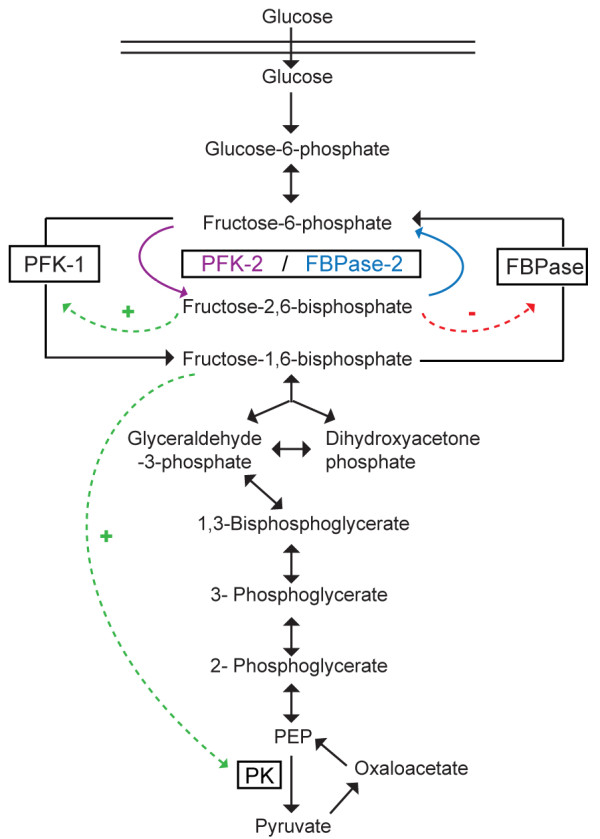
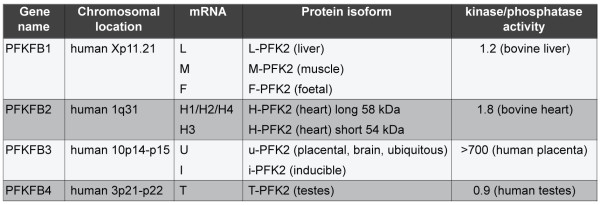
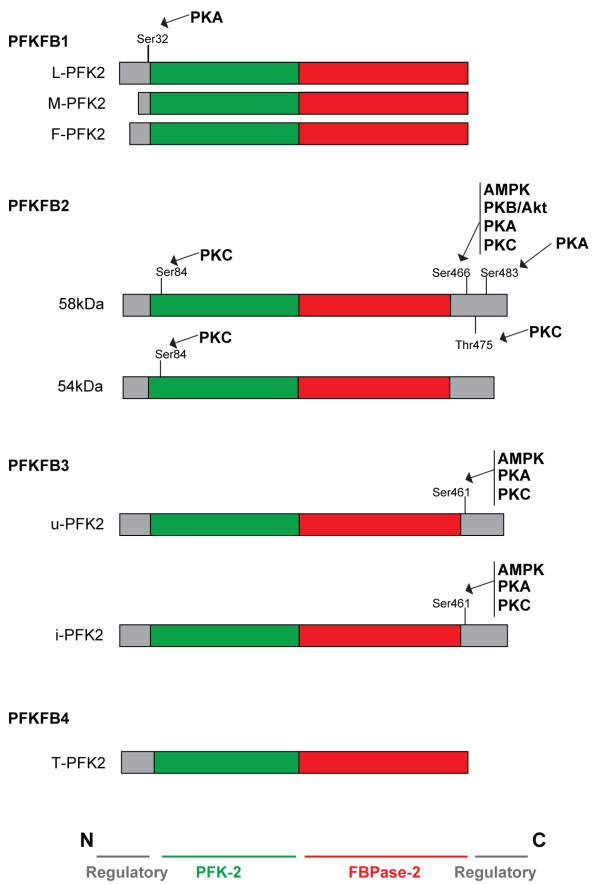
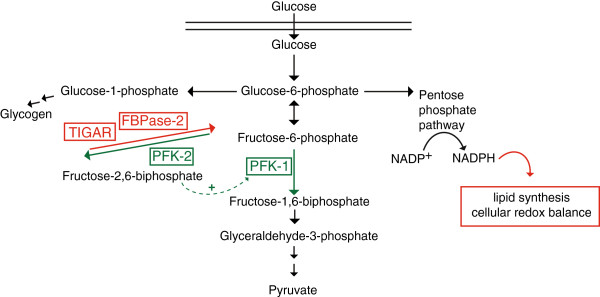
The increased glucose metabolism in cancer cells is required to fulfill their high energetic and biosynthetic demands. Changes in the metabolic activity of cancer cells are caused by the activation of oncogenes or loss of tumor suppressors. They can also be part of the metabolic adaptations to the conditions imposed by the tumor microenvironment, such as the hypoxia response. Among the metabolic enzymes that are modulated by these factors are the 6-phosphofructo-2-kinase/fructose 2,6-bisphosphatases (PFKFBs), a family of bifunctional enzymes that control the levels of fructose 2,6-bisphosphate (Fru-2,6-P2). This metabolite is important for the dynamic regulation of glycolytic flux by allosterically activating the rate-limiting enzyme of glycolysis phosphofructokinase-1 (PFK-1). Therapeutic strategies designed to alter the levels of this metabolite are likely to interfere with the metabolic balance of cancer cells, and could lead to a reduction in cancer cell proliferation, invasiveness and survival. This article will review our current understanding of the role of PFKFB proteins in the control of cancer metabolism and discuss the emerging interest in these enzymes as potential targets for the development of antineoplastic agents.
Overview
The claims and statistics of this paper haven’t been checked yet.
Run the check — free, no account needed. It reads the open-access text and checks the sources it cites.
Integrity signals
Registry
Cites
Statistics
Figures
Verification
Claims the paper makes
The claims and statistics of this paper haven’t been checked yet.
Run the check — free, no account needed. It reads the open-access text and checks the sources it cites.
Claims other papers make about this one
Each is checked against this paper’s own text: does it say what the citing paper says it does?
The source backs part of the claim, not all of it — or backs it for a different population, condition or comparison.
In the citing paper
“The PFK-2/FBPase-2 family comprises several enzyme isoforms, PFKFB1, PFKFB2, PFKFB3 and PFKFB4, all of which are induced by HIF-1 under hypoxic conditions [101].”
From HIF-1-Independent Mechanisms Regulating Metabolic Adaptation in Hypoxic Cancer Cells (2021) · cites this paper as [101]
Experimental — accuracy not yet measured
Self-check
Percentages, sums and reported differences re-computed from the paper’s own numbers.
The self-check needs the paper’s full text.
Citations
Cites
Warburg, O. (1956) · Science · doi:10.1126/science.123.3191.309 · Cited by 13,425
Targeting HIF-1 for cancer therapy
Semenza, G. L. (2003) · Nature Reviews Cancer · doi:10.1038/nrc1187 · Cited by 6,717 · cited 1×
“Adaptation to hypoxic conditions is largely mediated by HIF, a transcription factor that regulates a distinct transcriptional program [40].”
BackgroundThe Biology of Cancer: Metabolic Reprogramming Fuels Cell Growth and Proliferation
DeBerardinis, R. J., Lum, J. J., Hatzivassiliou, G., & Thompson, C. B. (2008) · Cell Metabolism · doi:10.1016/j.cmet.2007.10.002 · Cited by 4,088
TIGAR, a p53-Inducible Regulator of Glycolysis and Apoptosis
Bensaad, K., Tsuruta, A., Selak, M. A., Vidal, M. N. C., Nakano, K., Bartrons, R., Gottlieb, E., & Vousden, K. H. (2006) · Cell · doi:10.1016/j.cell.2006.05.036 · Cited by 2,019
Cancer's Molecular Sweet Tooth and the Warburg Effect
Kim, J., & Dang, C. V. (2006) · Cancer Research · doi:10.1158/0008-5472.can-06-1501 · Cited by 1,233
Oncogenic alterations of metabolism
Dang, C. V., & Semenza, G. L. (1999) · Trends in Biochemical Sciences · doi:10.1016/s0968-0004(98)01344-9 · Cited by 1,106
Deregulation of Glucose Transporter 1 and Glycolytic Gene Expression by c-Myc
Osthus, R. C., Shim, H., Kim, S., Li, Q., Reddy, R., Mukherjee, M., Xu, Y., Wonsey, D. R., Lee, L. A., & Dang, C. V. (2000) · Journal of Biological Chemistry · doi:10.1074/jbc.c000023200 · Cited by 876
Marsin, A.-S., Bertrand, L., Rider, M. H., Deprez, J., Beauloye, C., Vincent, M. F., den Berghe, G. V., Carling, D., & Hue, L. (2000) · Current Biology · doi:10.1016/s0960-9822(00)00742-9 · Cited by 853
p53 regulates biosynthesis through direct inactivation of glucose-6-phosphate dehydrogenase
Jiang, P., Du, W., Wang, X., Mancuso, A., Gao, X., Wu, M., & Yang, X. (2011) · Nature Cell Biology · doi:10.1038/ncb2172 · Cited by 834
Flier, J. S., Mueckler, M., Usher, P., & Lodish, H. F. (1987) · Science · doi:10.1126/science.3103217 · Cited by 783
Cited by
Sorted by citations
Metformin—mode of action and clinical implications for diabetes and cancer
Pernicova, I., & Korbonits, M. (2014) · Nature Reviews Endocrinology · doi:10.1038/nrendo.2013.256 · Cited by 1,393
Reprogramming glucose metabolism in cancer: can it be exploited for cancer therapy?
Hay, N. (2016) · Nature reviews. Cancer · doi:10.1038/nrc.2016.77 · Cited by 1,152
Tumor glycolysis, an essential sweet tooth of tumor cells
Paul, S., Ghosh, S., & Kumar, S. (2022) · Seminars in Cancer Biology · doi:10.1016/j.semcancer.2022.09.007 · Cited by 449
Four Key Steps Control Glycolytic Flux in Mammalian Cells
Tanner, L. B., Goglia, A. G., Wei, M. H., Sehgal, T., Parsons, L. R., Park, J. O., White, E., Toettcher, J. E., & Rabinowitz, J. D. (2018) · Cell Systems · doi:10.1016/j.cels.2018.06.003 · Cited by 383
Endothelial PFKFB3 Plays a Critical Role in Angiogenesis
Xu, Y., An, X., Guo, X., Habtetsion, T. G., Wang, Y., Xu, X., Kandala, S., Li, Q., Li, H., Zhang, C., et al. (2014) · Arteriosclerosis Thrombosis and Vascular Biology · doi:10.1161/atvbaha.113.303041 · Cited by 256
Targeting the Warburg Effect in Cancer: Where Do We Stand?
Barba, I., Carrillo-Bosch, L., & Seoane, J. (2024) · International Journal of Molecular Sciences · doi:10.3390/ijms25063142 · Cited by 276
Lucarelli, G. T., Loizzo, D., Franzin, R., Battaglia, S., Ferro, M., Cantiello, F., Castellano, G., Bettocchi, C., Ditonno, P., & Battaglia, M. (2019) · Expert Review of Molecular Diagnostics · doi:10.1080/14737159.2019.1607729 · Cited by 249
Gaude, E., Schmidt, C., Gammage, P. A., Dugourd, A. J. F., Blacker, T. S., Peak‐Chew, S., Sáez-Rodríguez, J., O'Neill, J. S., Szabadkai, G., Minczuk, M. A., et al. (2018) · Molecular Cell · doi:10.1016/j.molcel.2018.01.034 · Cited by 235
Microglia reprogram metabolic profiles for phenotype and function changes in central nervous system
Yang, S., Qin, C., Hu, Z.-W., Zhou, L.-Q., Yu, H.-H., Chen, M., Bosco, D. B., Wang, W., Wu, L.-J., & Tian, D.-S. (2021) · Neurobiology of Disease · doi:10.1016/j.nbd.2021.105290 · Cited by 232
Inflammatory microglia are glycolytic and iron retentive and typify the microglia in APP/PS1 mice
Holland, R., McIntosh, A. L., Finucane, O. M., Mela, V., Rubio‐Araiz, A., Timmons, G. A., McCarthy, S. A., Gun’ko, Y. K., & Lynch, M. A. (2017) · Brain Behavior and Immunity · doi:10.1016/j.bbi.2017.10.017 · Cited by 221
Regulation of gene expression by glycolytic and gluconeogenic enzymes
Bian, X., Jiang, H., Meng, Y., Li, Y.-P., Fang, J., & Lu, Z. (2022) · Trends in Cell Biology · doi:10.1016/j.tcb.2022.02.003 · Cited by 211
How do glycolytic enzymes favour cancer cell proliferation by nonmetabolic functions?
Lincet, H., & Icard, P. (2014) · Oncogene · doi:10.1038/onc.2014.320 · Cited by 212
New Directions in Therapeutic Angiogenesis and Arteriogenesis in Peripheral Arterial Disease
Annex, B. H., & Cooke, J. P. (2021) · Circulation Research · doi:10.1161/circresaha.121.318266 · Cited by 211
McIntosh, A. L., Mela, V., Harty, C., Minogue, A. M., Costello, D. A., Kerskens, C., & Lynch, M. A. (2019) · Brain Pathology · doi:10.1111/bpa.12704 · Cited by 193
Keerthana, C. K., Rayginia, T. P., Shifana, S. C., Anto, N. P., Kalishwaralal, K., Isakov, N., & Anto, R. J. (2023) · Frontiers in Immunology · doi:10.3389/fimmu.2023.1114582 · Cited by 206
Metabolic and hypoxic adaptation to anti‐angiogenic therapy: a target for induced essentiality
McIntyre, A., & Harris, A. L. (2015) · EMBO Molecular Medicine · doi:10.15252/emmm.201404271 · Cited by 186
The Pentose Phosphate Pathway as a Potential Target for Cancer Therapy
Cho, E. S., Cha, Y. H., Kim, H. S., Kim, N. H., & Yook, J. I. (2017) · Biomolecules & Therapeutics · doi:10.4062/biomolther.2017.179 · Cited by 183
Emerging roles of lactate in acute and chronic inflammation
Fang, Y., Li, Z., Yang, L., Li, W., Wang, Y., Kong, Z., Miao, J., Chen, Y., Bian, Y., & Zeng, L. (2024) · Cell Communication and Signaling · doi:10.1186/s12964-024-01624-8 · Cited by 186
HIF-1-Independent Mechanisms Regulating Metabolic Adaptation in Hypoxic Cancer Cells
Lee, S.-H., Golinska, M., & Griffiths, J. R. (2021) · Cells · doi:10.3390/cells10092371 · Cited by 169
Finucane, O. M., Sugrue, J. A., Rubio‐Araiz, A., Guillot‐Sestier, M., & Lynch, M. A. (2019) · Scientific Reports · doi:10.1038/s41598-019-40619-1 · Cited by 155
Kotowski, K. W., Rosik, J., Machaj, F., Supplitt, S., Wiczew, D., Jabłońska, K., Wiecheć, E., Ghavami, S., & Dzięgiel, P. (2021) · Cancers · doi:10.3390/cancers13040909 · Cited by 153
PFKFB3 in Smooth Muscle Promotes Vascular Remodeling in Pulmonary Arterial Hypertension
Kovács, L., Cao, Y., Han, W., Meadows, L., Kovács‐Kása, A., Kondrikov, D., Verin, A. D., Barman, S. A., Dong, Z., Huo, Y., et al. (2019) · American Journal of Respiratory and Critical Care Medicine · doi:10.1164/rccm.201812-2290oc · Cited by 143
Kouidhi, S., Elgaaïed, A. B., & Chouaïb, S. (2017) · Frontiers in Immunology · doi:10.3389/fimmu.2017.00270 · Cited by 145
Mitochondrial metabolites: undercover signalling molecules
Frezza, C. (2017) · Interface Focus · doi:10.1098/rsfs.2016.0100 · Cited by 136
Xiao, G., Chan, L. N., Klemm, L., Braas, D., Chen, Z., Geng, H., Zhang, Q. C., Aghajanirefah, A., Cosgun, K. N., Sadras, T., et al. (2018) · Cell · doi:10.1016/j.cell.2018.02.048 · Cited by 129
Kühn, K., Obata, T., Feher, K., Bock, R., Fernie, A. R., & Meyer, E. H. (2015) · PLANT PHYSIOLOGY · doi:10.1104/pp.15.00589 · Cited by 121
Targeting PFKFB3 radiosensitizes cancer cells and suppresses homologous recombination
Gustafsson, N., Färnegårdh, K., Bonagas, N., Ninou, A. H., Groth, P., Wiita, E., Jönsson, M., Hallberg, K., Lehto, J., Pennisi, R., et al. (2018) · Nature Communications · doi:10.1038/s41467-018-06287-x · Cited by 128
Organ-Specific Cancer Metabolism and Its Potential for Therapy
Elia, I., Schmieder, R., Christen, S., & Fendt, S. (2015) · Handbook of experimental pharmacology · doi:10.1007/164_2015_10 · Cited by 112
Non-metabolic functions of glycolytic enzymes in tumorigenesis
Yu, X., & Li, S. (2016) · Oncogene · doi:10.1038/onc.2016.410 · Cited by 114
The Metabolic Alterations of Cancer Cells
Sciacovelli, M., Gaude, E., Hilvo, M., & Frezza, C. (2014) · Methods in enzymology on CD-ROM/Methods in enzymology · doi:10.1016/b978-0-12-416618-9.00001-7 · Cited by 108
O’Neal, J., Clem, A. L., Reynolds, L., Dougherty, S. M., Imbert-Fernandez, Y., Telang, S., Chesney, J. A., & Clem, B. F. (2016) · Breast Cancer Research and Treatment · doi:10.1007/s10549-016-3968-8 · Cited by 105
Mela, V., Mota, B. C., Milner, M. T., McGinley, A. M., Mills, K. H. G., Kelly, Á. M., & Lynch, M. A. (2020) · Brain Behavior and Immunity · doi:10.1016/j.bbi.2020.01.012 · Cited by 103
Conde, V. R., Oliveira, P. F., Nunes, A. R., Rocha, C. S. F., Ramalhosa, E., Pereira, J. A., Alves, M. G., & Silva, B. M. (2015) · Experimental Cell Research · doi:10.1016/j.yexcr.2015.04.007 · Cited by 96
Vanherwegen, A.-S., Eelen, G., Ferreira, G. B., Ghesquière, B., Cook, D. P., Nikolic, T., Roep, B. O., Carmeliet, P., Telang, S., Mathieu, C., et al. (2018) · The Journal of Steroid Biochemistry and Molecular Biology · doi:10.1016/j.jsbmb.2018.11.011 · Cited by 93
Glioblastoma Therapy in the Age of Molecular Medicine
Geraldo, L. H., Garcia, C., da Fonseca, A. C. C., Dubois, L. G., Spohr, T. C. L. D. S. E., Matias, D., Magalhães, E. S. D. C., do Amaral, R. F., da Rosa, B. G., Grimaldi, I., et al. (2018) · Trends in cancer · doi:10.1016/j.trecan.2018.11.002 · Cited by 93
6-Phosphofructo-2-kinase/fructose-2,6-biphosphatase 4 is essential for p53-null cancer cells
R�os, S., Flöter, J., Kaymak, I., Costa, C. D., Houddane, A., Dubuis, S., Griffiths, B. L., Mitter, R., Walz, S., Blake, S., et al. (2017) · Oncogene · doi:10.1038/onc.2016.477 · Cited by 96
Self-citationBeyond controlling cell size: functional analyses of S6K in tumorigenesis
Wu, X., Xie, W., Xie, W., Wei, W., & Guo, J. (2022) · Cell Death and Disease · doi:10.1038/s41419-022-05081-4 · Cited by 96
An update on therapeutic opportunities offered by cancer glycolytic metabolism
Granchi, C., Fancelli, D., & Minutolo, F. (2014) · Bioorganic & Medicinal Chemistry Letters · doi:10.1016/j.bmcl.2014.09.041 · Cited by 94
Can the emerging field of immunometabolism provide insights into neuroinflammation?
Lynch, M. A. (2019) · Progress in Neurobiology · doi:10.1016/j.pneurobio.2019.101719 · Cited by 88
Montemurro, C., Nomoto, H., Pei, L., Parekh, V. S., Vongbunyong, K. E., Vadrevu, S., Gurlo, T., Butler, A. E., Subramaniam, R., Ritou, E., et al. (2019) · Nature Communications · doi:10.1038/s41467-019-10444-1 · Cited by 86
Robinson, A. J., Hopkins, G. L., Rastogi, N., Hodges, M., Doyle, M., Davies, S., Hole, P. S., Omidvar, N., Darley, R. L., & Tonks, A. (2019) · Cancer Research · doi:10.1158/0008-5472.can-19-1920 · Cited by 85
Schafer, C. C., Wang, Y., Hough, K. P., Sawant, A., Grant, S. C., Thannickal, V. J., Zmijewski, J. W., Ponnazhagan, S., & Deshane, J. S. (2016) · Oncotarget · doi:10.18632/oncotarget.12249 · Cited by 84
Wang, C., Zhang, T., Liao, Q., Dai, M., Guo, J., Yang, X., Tan, W., Lin, D., Wu, C., & Zhao, Y. (2021) · Protein & Cell · doi:10.1007/s13238-020-00760-4 · Cited by 82
Multiplicity of Steady States in Glycolysis and Shift of Metabolic State in Cultured Mammalian Cells
Mulukutla, B. C., Yongky, A., Grimm, S., Daoutidis, P., & Hu, W.-S. (2015) · PLOS ONE · doi:10.1371/journal.pone.0121561 · Cited by 81
Regulation of Metabolic Activity by p53
Flöter, J., Kaymak, I., & Schulze, A. (2017) · Metabolites · doi:10.3390/metabo7020021 · Cited by 81
Self-citationBistability in Glycolysis Pathway as a Physiological Switch in Energy Metabolism
Mulukutla, B. C., Yongky, A., Daoutidis, P., & Hu, W. (2014) · PLoS ONE · doi:10.1371/journal.pone.0098756 · Cited by 79
Expression of Long Noncoding RNA YIYA Promotes Glycolysis in Breast Cancer
Xing, Z., Zhang, Y., Liang, K., Liang, Y., Xiang, Y., Li, C., Hu, Q., Jin, F., Putluri, V., Putluri, N., et al. (2018) · Cancer Research · doi:10.1158/0008-5472.can-17-0385 · Cited by 79
AMPK–a key factor in crosstalk between tumor cell energy metabolism and immune microenvironment?
Wang, N., Wang, B., Maswikiti, E. P., Yu, Y., Song, K., Ma, C., Han, X., Ma, H., Deng, X., Yu, R., et al. (2024) · Cell Death Discovery · doi:10.1038/s41420-024-02011-5 · Cited by 83
Dueling for dual inhibition: Means to enhance effectiveness of PI3K/Akt/mTOR inhibitors in AML
Herschbein, L., & Liesveld, J. L. (2017) · Blood Reviews · doi:10.1016/j.blre.2017.11.006 · Cited by 76
Glucose addiction in cancer therapy: advances and drawbacks
Granja, S., Pinheiro, C. M., Reis, R. M., Martinho, O., & Baltazar, F. (2015) · Current Drug Metabolism · doi:10.2174/1389200216666150602145145 · Cited by 74
Critical role of mTOR in regulating aerobic glycolysis in carcinogenesis (Review)
Fan, H. J., Wu, Y., Yu, S., Li, X., Wang, A., Wang, S., Chen, W., & Lu, Y. (2020) · International Journal of Oncology · doi:10.3892/ijo.2020.5152 · Cited by 72
A spatiotemporal hypothesis for the regulation, role, and targeting of AMPK in prostate cancer
Khan, A., & Frigo, D. E. (2017) · Nature Reviews Urology · doi:10.1038/nrurol.2016.272 · Cited by 74
mTOR up-regulation of PFKFB3 is essential for acute myeloid leukemia cell survival
Feng, Y., & Wu, L.-S. (2017) · Biochemical and Biophysical Research Communications · doi:10.1016/j.bbrc.2017.01.031 · Cited by 65
Interleukin-6 stimulates aerobic glycolysis by regulating PFKFB3 at early stage of colorectal cancer
HAN, J., Meng, Q., Xi, Q., Zhang, Y., Zhuang, Q., Han, Y., Jiang, Y., Ding, Q., & Wu, G. (2015) · International Journal of Oncology · doi:10.3892/ijo.2015.3225 · Cited by 64
Tumor metabolism regulating chemosensitivity in ovarian cancer
Han, C. Y., Patten, D. A., Richardson, R. B., Harper, M., & Tsang, B. K. (2018) · Genes & Cancer · doi:10.18632/genesandcancer.176 · Cited by 62
Li, M., Lu, H., Wang, X., Duan, C., Zhu, X., Zhang, Y., Ge, X., Ji, F., Wang, X., Su, J., et al. (2021) · Molecular Immunology · doi:10.1016/j.molimm.2021.10.017 · Cited by 60
The roles of glycolysis in osteosarcoma
Feng, Z., Ou, Y., & Hao, L. (2022) · Frontiers in Pharmacology · doi:10.3389/fphar.2022.950886 · Cited by 60
cAMP-dependent Protein Kinase (PKA) Signaling Is Impaired in the Diabetic Heart
Bockus, L. B., & Humphries, K. M. (2015) · Journal of Biological Chemistry · doi:10.1074/jbc.m115.681767 · Cited by 59
Quercetin Impacts Expression of Metabolism- and Obesity-Associated Genes in SGBS Adipocytes
Leiherer, A., Stoemmer, K., Muendlein, A., Saely, C. H., Kinz, E., Brandtner, E. M., Fraunberger, P., & Drexel, H. (2016) · Nutrients · doi:10.3390/nu8050282 · Cited by 63
Hidden features: exploring the non-canonical functions of metabolic enzymes
Huangyang, P., & Simon, M. C. (2018) · Disease Models & Mechanisms · doi:10.1242/dmm.033365 · Cited by 60
Lu, Q., Yan, S., Sun, H., Wang, W., Li, Y., Yang, X., Jiang, X., Che, Y., & Xi, Z. (2015) · Cell Death and Disease · doi:10.1038/cddis.2015.344 · Cited by 59
Yan, S., Zhou, N. Q., Zhang, D., Zhang, K., Zheng, W., Bao, Y., & Yang, W. (2019) · International Journal of Molecular Sciences · doi:10.3390/ijms20215415 · Cited by 58
SUMOylation promotes survival and integration of neural stem cell grafts in ischemic stroke
Bernstock, J. D., Peruzzotti‐Jametti, L., Leonardi, T., Vicario, N., Ye, D. G., Lee, Y.-J., Maric, D., Johnson, K. R., Mou, Y., van den Bosch, A. M. R., et al. (2019) · EBioMedicine · doi:10.1016/j.ebiom.2019.03.035 · Cited by 56
Extracellular GPX4 impairs antitumor immunity via dendritic ZP3 receptors
Liu, J., Cai, X., Lin, J., Zhang, Z., Zhou, Q., Zhang, X., Ma, L., Miao, Y., Zhang, R., Yu, C., et al. (2026) · Cell · doi:10.1016/j.cell.2025.12.002 · Cited by 59
Metabolic gatekeepers to safeguard against autoimmunity and oncogenic B cell transformation
Müschen, M. (2019) · Nature reviews. Immunology · doi:10.1038/s41577-019-0154-3 · Cited by 57
Yu, Q., Guo, M., Zeng, W., Zeng, M., Zhang, X., Zhang, Y., Zhang, W., Jiang, X., & Yu, B. (2021) · Immunity Inflammation and Disease · doi:10.1002/iid3.581 · Cited by 52
The Role of Reprogrammed Glucose Metabolism in Cancer
Ediriweera, M. K., & Jayasena, S. (2023) · Metabolites · doi:10.3390/metabo13030345 · Cited by 55
Strohecker, A. M., Joshi, S., Possemato, R., Abraham, R. T., Sabatini, D. M., & White, E. (2015) · Oncogene · doi:10.1038/onc.2015.23 · Cited by 55
Dirckx, N., Zhang, Q., Chu, E. Y., Tower, R. J., Li, Z., Guo, S., Yuan, S., Khare, P., Zhang, C., Verardo, A., et al. (2022) · Proceedings of the National Academy of Sciences · doi:10.1073/pnas.2212178119 · Cited by 52
Qian, S., Li, J., Hong, M., Zhu, Y., Zhao, H., Xie, Y., Huang, J., Lian, Y., Li, Y., Wang, S., et al. (2016) · Journal of Hematology & Oncology · doi:10.1186/s13045-016-0360-4 · Cited by 52
Cui, J., Liu, Y., Hu, Y., Tong, J., Li, A., Qu, T., Qin, X., & Du, G. (2016) · Journal of Pharmaceutical and Biomedical Analysis · doi:10.1016/j.jpba.2016.09.044 · Cited by 51
Heterogeneity of glycolysis in cancers and therapeutic opportunities
Warmoes, M. O., & Locasale, J. W. (2014) · Biochemical Pharmacology · doi:10.1016/j.bcp.2014.07.019 · Cited by 50
Cardiac Insulin Signaling Regulates Glycolysis Through Phosphofructokinase 2 Content and Activity
Bockus, L. B., Matsuzaki, S., Vadvalkar, S. S., Young, Z. T., Giorgione, J. R., Newhardt, M. F., Kinter, M. T., & Humphries, K. M. (2017) · Journal of the American Heart Association · doi:10.1161/jaha.117.007159 · Cited by 50
CAF cellular glycolysis: linking cancer cells with the microenvironment
Roy, A., & Bera, S. (2016) · Tumor Biology · doi:10.1007/s13277-016-5049-3 · Cited by 47
Aβ and Tau Regulate Microglia Metabolism via Exosomes in Alzheimer’s Disease
Zhao, Y., Liu, B., Wang, J., Xu, L., Yu, S., Fu, J., Yan, X., & Su, J. (2022) · Biomedicines · doi:10.3390/biomedicines10081800 · Cited by 48
Novel Gefitinib Formulation with Improved Oral Bioavailability in Treatment of A431 Skin Carcinoma
Godugu, C., Doddapaneni, R., Patel, A. R., Singh, R. K., Mercer, R. S., & Singh, M. S. (2015) · Pharmaceutical Research · doi:10.1007/s11095-015-1771-6 · Cited by 46
Henke, C., Töllner, K., van Dijk, R. M., Miljanovic, N., Cordes, T., Twele, F., Bröer, S., Vanessa, Z., Rohde, M., Hauck, S. M., et al. (2020) · Neurobiology of Disease · doi:10.1016/j.nbd.2020.105018 · Cited by 46
Curcumin inhibits Ec109 cell growth via an AMPK-mediated metabolic switch
Zhang, F., Zhang, H., Liu, Y., & Huang, Y. (2015) · Life Sciences · doi:10.1016/j.lfs.2015.05.016 · Cited by 46
Energy Metabolism on Mitochondrial Maturation and Its Effects on Cardiomyocyte Cell Fate
Persad, K. L., & Lopaschuk, G. D. (2022) · Frontiers in Cell and Developmental Biology · doi:10.3389/fcell.2022.886393 · Cited by 49
Willmes, D. M., Kurzbach, A., Henke, C., Schumann, T., Zahn, G., Heifetz, A., Jordan, J., Helfand, S. L., & Birkenfeld, A. L. (2017) · Pharmacology & Therapeutics · doi:10.1016/j.pharmthera.2017.10.003 · Cited by 45
Eye on the horizon: The metabolic landscape of the RPE in aging and disease
Hansman, D., Du, J., Casson, R. J., & Peet, D. J. (2024) · Progress in Retinal and Eye Research · doi:10.1016/j.preteyeres.2024.101306 · Cited by 50
Hamanaka, R. B., & Mutlu, G. M. (2017) · Journal of Investigative Dermatology · doi:10.1016/j.jid.2016.12.020 · Cited by 43
Goretzki, A., Lin, Y., & Schülke, S. (2021) · Allergy · doi:10.1111/all.14843 · Cited by 42
Yang, H., Zhang, S., Jiang, Y., Mao, W., Pang, L., Redwood, A. B., Jeter-Jones, S. L., Jennings, N. B., Ornelas, A., Zhou, J., et al. (2019) · Clinical Cancer Research · doi:10.1158/1078-0432.ccr-18-3448 · Cited by 41
Zhang, Y., Sun, T., Wu, T., Li, J., Hu, D., Liu, D., Li, J., & Tian, C. (2023) · Metabolic Engineering · doi:10.1016/j.ymben.2023.06.009 · Cited by 39
Glucose metabolism is inhibited by caspases upon the induction of apoptosis
La, P., Villa, E., Zunino, B., Marchetti, S., & Ricci, J. (2014) · Cell Death and Disease · doi:10.1038/cddis.2014.371 · Cited by 41
Zhang, Y., Ji, X., Ku, T., Li, B., Li, G., & Sang, N. (2019) · Environmental Pollution · doi:10.1016/j.envpol.2019.01.080 · Cited by 40
Immune Metabolism of IL-4-Activated B Cells and Th2 Cells in the Context of Allergic Diseases
Lin, Y., Goretzki, A., & Schülke, S. (2021) · Frontiers in Immunology · doi:10.3389/fimmu.2021.790658 · Cited by 40
Yan, J., Li, A., Chen, X., Cao, K., Song, M., Guo, S., Li, Z., Huang, S., Li, Z., Xu, D., et al. (2022) · Pharmacological Research · doi:10.1016/j.phrs.2022.106208 · Cited by 39
GRIM-19: A master regulator of cytokine induced tumor suppression, metastasis and energy metabolism
Nallar, S. C., & Kalvakolanu, D. V. (2016) · Cytokine & Growth Factor Reviews · doi:10.1016/j.cytogfr.2016.09.001 · Cited by 39
The PCK2-glycolysis axis assists three-dimensional-stiffness maintaining stem cell osteogenesis
Li, Z., Yue, M., Liu, X., Liu, Y., Lv, L., Zhang, P., & Zhou, Y. (2022) · Bioactive Materials · doi:10.1016/j.bioactmat.2022.03.036 · Cited by 39
Targeting Energy Metabolism in Cancer Treatment
Kubik, J., Humeniuk, E., Adamczuk, G., Madej, B., & Korga-Plewko, A. (2022) · International Journal of Molecular Sciences · doi:10.3390/ijms23105572 · Cited by 39
Liu, X., Du, Y., Trakooljul, N., Brand, B., Muráni, E., Krischek, C., Wicke, M., Schwerin, M., Wimmers, K., & Ponsuksili, S. (2015) · International Journal of Biological Sciences · doi:10.7150/ijbs.13132 · Cited by 38
Metabolic Reprogramming during Microglia Activation
Geric, I., Schoors, S., Claes, C., Gressèns, P., Verderio, C., Verfaillie, C. M., Veldhoven, P. P. V., Carmeliet, P., & Baes, M. I. (2019) · Immunometabolism · doi:10.20900/immunometab20190002 · Cited by 38
Hussain, A., Qazi, A. K., Mupparapu, N., Guru, S. K., Kumar, A., Sharma, P. R., Singh, S. K., Singh, P., Dar, M. J., Bharate, S. B., et al. (2016) · Cancer Letters · doi:10.1016/j.canlet.2016.02.030 · Cited by 37
Zhou, Z., Plug, L. G., Patente, T. A., de Jonge‐Muller, E. S. M., Elmagd, A. A., Jong, A. E. V. D. M., Everts, B., Barnhoorn, M. C., & Hawinkels, L. J. A. C. (2022) · Frontiers in Immunology · doi:10.3389/fimmu.2022.966067 · Cited by 38
A Potential Oncogenic Role for PFKFB3 Overexpression in Gastric Cancer Progression
Lan, L., Hong, L., Ling, Z., Zhong, Y., Hu, X., Li, P., & Ling, Z. (2021) · Clinical and Translational Gastroenterology · doi:10.14309/ctg.0000000000000377 · Cited by 36
Snaebjornsson, M. T., Poeller, P., Komkova, D., Röhrig, F., Schlicker, L., Winkelkotte, A. M., Chaves‐Filho, A. B., Al-Shami, K. M., Caballero, C. D., Koltsaki, I., et al. (2025) · Nature Metabolism · doi:10.1038/s42255-024-01201-w · Cited by 37
Self-citationYan, S., Wei, X., Xu, S., Sun, H., Wang, W., Liu, L., Jiang, X., Zhang, Y., & Che, Y. (2017) · Oncotarget · doi:10.18632/oncotarget.20757 · Cited by 36
Neural Metabolic Networks: Key Elements of Healthy Brain Function
Madrer, N., Perera, N. D., Uccelli, N. A., Abbondanza, A., Andersen, J. V., Carsana, E. V., Demmings, M. D., Fernandez, R. F., de Fragas, M. G., Gbadamosi, I., et al. (2025) · Journal of Neurochemistry · doi:10.1111/jnc.70084 · Cited by 37
Metadata
- Authors
- Ros, S., & Schulze, A.
- Affiliations
- Cancer Research UK (GB)
- Corresponding author
- Schulze, Almut
- ORCID
- Schulze, Almut
- Venue
- Cancer & Metabolism
- Published
- 2013-02-04
- Volume
- 1
- Issue
- 1
- Pages
- 8-8
- ISSN
- 2049-3002 (ISSN-L)
- PMC
- PMC4178209
- OpenAlex
- W2106223802
- Cited by
- 269
- References
- 69
- Citations by year
- 2026: 9 · 2025: 21 · 2024: 29 · 2023: 32 · 2022: 31 · 2021: 26 · 2020: 15 · 2019: 20 · 2018: 17 · 2017: 17 · 2016: 19 · 2015: 20 · 2014: 11 · 2013: 2
- FWCI
- 6.22
- Type
- journal article
- Language
- en
- Open access
- gold
- doi.org
- Licence
- Locations
- Cancer & Metabolism (publishedVersion, cc-by)
- PubMed Central (publishedVersion, cc-by)
- PubMed (publishedVersion)
- Apollo (University of Cambridge) (submittedVersion, cc-by)
- Apollo (cc-by)
- Funders
- Cancer Research UK
- Topics
- Life Sciences › Biochemistry, Genetics and Molecular Biology › Cancer Research › Cancer, Hypoxia, and Metabolism
- Life Sciences › Biochemistry, Genetics and Molecular Biology › Molecular Biology › Metabolism, Diabetes, and Cancer
- Life Sciences › Biochemistry, Genetics and Molecular Biology › Molecular Biology › Biochemical and Molecular Research
- Keywords
- 6-phosphofructo-2-kinase/fructose-2,6-bisphosphatase, fructose-2,6-bisphosphate, glycolytic flux, tumor microenvironment, hypoxia response, oncogene activation, tumor suppressor loss
About these checks
Registry, retraction, Cites and statistics results are computed, not judged, with one exception: a printed reference that no index lists is read once by a model before it counts as a citation error. Claims are extracted by a model and kept only when their quote appears verbatim in the text; each cited source is then checked, with a model’s help, for whether it says what the claim relies on. Those verdicts can be wrong — read the claim’s quote and the cited source before relying on one.
Statistics and arithmetic are recomputed, not judged.
Confidence bands are shown only for fields calibrated on our annotated test set. None is calibrated yet, so no band is shown.
What counts as a claim ›How we measure confidence ›How we check this ›
Are you an author, or do you see a problem with this page? Request a review
