

The DOI matches its Crossref record; 69 of the 69 references it cites were found in a registry or an index.
Balancing glycolytic flux: the role of 6-phosphofructo-2-kinase/fructose 2,6-bisphosphatases in cancer metabolism
Open accessAbstract
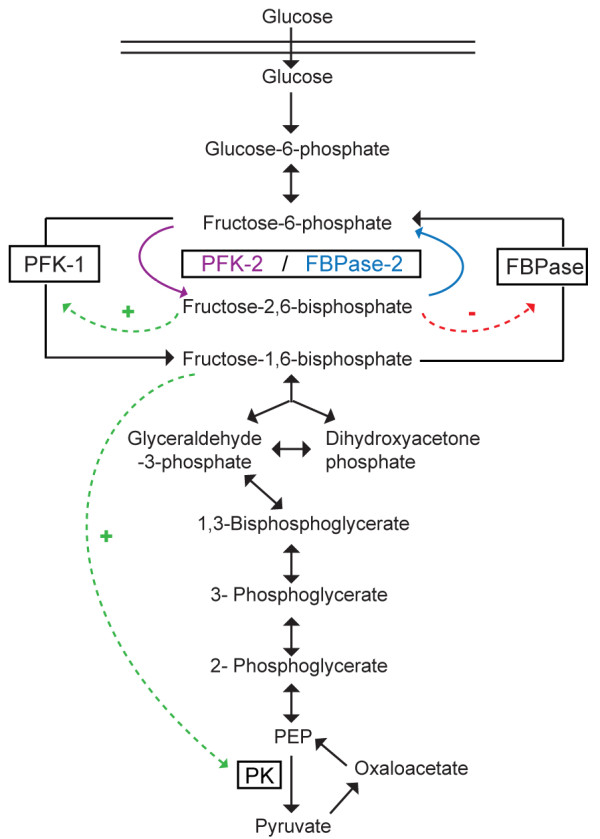
The increased glucose metabolism in cancer cells is required to fulfill their high energetic and biosynthetic demands. Changes in the metabolic activity of cancer cells are caused by the activation of oncogenes or loss of tumor suppressors. They can also be part of the metabolic adaptations to the conditions imposed by the tumor microenvironment, such as the hypoxia response. Among the metabolic enzymes that are modulated by these factors are the 6-phosphofructo-2-kinase/fructose 2,6-bisphosphatases (PFKFBs), a family of bifunctional enzymes that control the levels of fructose 2,6-bisphosphate (Fru-2,6-P2). This metabolite is important for the dynamic regulation of glycolytic flux by allosterically activating the rate-limiting enzyme of glycolysis phosphofructokinase-1 (PFK-1). Therapeutic strategies designed to alter the levels of this metabolite are likely to interfere with the metabolic balance of cancer cells, and could lead to a reduction in cancer cell proliferation, invasiveness and survival. This article will review our current understanding of the role of PFKFB proteins in the control of cancer metabolism and discuss the emerging interest in these enzymes as potential targets for the development of antineoplastic agents.
Overview
The claims and statistics of this paper haven’t been checked yet.
Run the check — free, no account needed. It reads the open-access text and checks the sources it cites.
Integrity signals
Registry
Cites
Statistics
Figures
Verification
Claims the paper makes
The claims and statistics of this paper haven’t been checked yet.
Run the check — free, no account needed. It reads the open-access text and checks the sources it cites.
Claims other papers make about this one
Each is checked against this paper’s own text: does it say what the citing paper says it does?
The source backs part of the claim, not all of it — or backs it for a different population, condition or comparison.
In the citing paper
“The PFK-2/FBPase-2 family comprises several enzyme isoforms, PFKFB1, PFKFB2, PFKFB3 and PFKFB4, all of which are induced by HIF-1 under hypoxic conditions [101].”
From HIF-1-Independent Mechanisms Regulating Metabolic Adaptation in Hypoxic Cancer Cells (2021) · cites this paper as [101]
Experimental — accuracy not yet measured
Self-check
Percentages, sums and reported differences re-computed from the paper’s own numbers.
The self-check needs the paper’s full text.
Citations
Cites
Warburg, O. (1956) · Science · doi:10.1126/science.123.3191.309 · Cited by 13,425
Targeting HIF-1 for cancer therapy
Semenza, G. L. (2003) · Nature Reviews Cancer · doi:10.1038/nrc1187 · Cited by 6,717 · cited 1×
“Adaptation to hypoxic conditions is largely mediated by HIF, a transcription factor that regulates a distinct transcriptional program [40].”
BackgroundThe Biology of Cancer: Metabolic Reprogramming Fuels Cell Growth and Proliferation
DeBerardinis, R. J., Lum, J. J., Hatzivassiliou, G., & Thompson, C. B. (2008) · Cell Metabolism · doi:10.1016/j.cmet.2007.10.002 · Cited by 4,088
TIGAR, a p53-Inducible Regulator of Glycolysis and Apoptosis
Bensaad, K., Tsuruta, A., Selak, M. A., Vidal, M. N. C., Nakano, K., Bartrons, R., Gottlieb, E., & Vousden, K. H. (2006) · Cell · doi:10.1016/j.cell.2006.05.036 · Cited by 2,019
Cancer's Molecular Sweet Tooth and the Warburg Effect
Kim, J., & Dang, C. V. (2006) · Cancer Research · doi:10.1158/0008-5472.can-06-1501 · Cited by 1,233
Oncogenic alterations of metabolism
Dang, C. V., & Semenza, G. L. (1999) · Trends in Biochemical Sciences · doi:10.1016/s0968-0004(98)01344-9 · Cited by 1,106
Deregulation of Glucose Transporter 1 and Glycolytic Gene Expression by c-Myc
Osthus, R. C., Shim, H., Kim, S., Li, Q., Reddy, R., Mukherjee, M., Xu, Y., Wonsey, D. R., Lee, L. A., & Dang, C. V. (2000) · Journal of Biological Chemistry · doi:10.1074/jbc.c000023200 · Cited by 876
Marsin, A.-S., Bertrand, L., Rider, M. H., Deprez, J., Beauloye, C., Vincent, M. F., den Berghe, G. V., Carling, D., & Hue, L. (2000) · Current Biology · doi:10.1016/s0960-9822(00)00742-9 · Cited by 853
p53 regulates biosynthesis through direct inactivation of glucose-6-phosphate dehydrogenase
Jiang, P., Du, W., Wang, X., Mancuso, A., Gao, X., Wu, M., & Yang, X. (2011) · Nature Cell Biology · doi:10.1038/ncb2172 · Cited by 834
Flier, J. S., Mueckler, M., Usher, P., & Lodish, H. F. (1987) · Science · doi:10.1126/science.3103217 · Cited by 783
Cited by
Sorted by citations
Items 101–200 of 270
Gong, L., Liang, J., Xie, L., Zhang, Z., Mei, Z., & Zhang, W. (2024) · Current Neuropharmacology · doi:10.2174/1570159x22666240131121032 · Cited by 36
An engineered photoswitchable mammalian pyruvate kinase
Gehrig, S. M., Macpherson, J. A., Driscoll, P. C., Symon, A., Martin, S. R., MacRae, J. I., Kleinjung, J., Fraternali, F., & Anastasiou, D. (2017) · FEBS Journal · doi:10.1111/febs.14175 · Cited by 33
PFK15, a PFKFB3 antagonist, inhibits autophagy and proliferation in rhabdomyosarcoma cells
Wang, C., Qu, J.-H., Yan, S., Gao, Q., Hao, S., & Zhou, D. (2018) · International Journal of Molecular Medicine · doi:10.3892/ijmm.2018.3599 · Cited by 32
Kam, C. S., Ho, D. W., Ming, V. S., Tian, L., Sze, K. M., Zhang, V. X., Tsui, Y., Husain, A., Lee, J. M., Wong, C. C., et al. (2023) · Cellular and Molecular Gastroenterology and Hepatology · doi:10.1016/j.jcmgh.2023.02.004 · Cited by 31
Tang, N., Huang, W., Li, X., Gao, X., Liu, X., Wang, L., & Xing, W. (2024) · Journal of Cleaner Production · doi:10.1016/j.jclepro.2024.141653 · Cited by 30
Ellis, R., Katerelos, M., Choy, S., Cook, N. E., Lee, M., Paizis, K., Pell, G., Walker, S. P., Power, D. A., & Mount, P. F. (2019) · Journal of Translational Medicine · doi:10.1186/s12967-019-1806-6 · Cited by 30
Campos, M., & Albrecht, L. V. (2023) · Cancers · doi:10.3390/cancers16010016 · Cited by 33
Novel molecular mechanisms involved in hormonal regulation of lactate production in Sertoli cells
Regueira, M., Artagaveytia, S. L., Galardo, M. N., Pellizzari, E. H., Cigorraga, S. B., Meroni, S. B., & Riera, M. F. (2015) · Reproduction · doi:10.1530/rep-15-0093 · Cited by 32
Biological Aspects of mTOR in Leukemia
Mirabilii, S., Ricciardi, M. R., Piedimonte, M., Gianfelici, V., Bianchi, M. P., & Tafuri, A. (2018) · International Journal of Molecular Sciences · doi:10.3390/ijms19082396 · Cited by 29
Novel insights into the interaction between long non-coding RNAs and microRNAs in glioma
Ebrahimpour, A., Sarfi, M., Rezatabar, S., & Tehrani, S. S. (2021) · Molecular and Cellular Biochemistry · doi:10.1007/s11010-021-04080-x · Cited by 29
PET Metabolic Biomarkers for Cancer
Croteau, É., Renaud, J. M., Richard, M. A., Ruddy, T. D., Bénard, F., & deKemp, R. A. (2016) · Biomarkers in Cancer · doi:10.4137/bic.s27483 · Cited by 28
He, X., Cheng, X., Ding, J., Xiong, M., Chen, B., & Cao, G. (2022) · Bioengineered · doi:10.1080/21655979.2022.2026730 · Cited by 27
Role of the AMPK signalling pathway in the aetiopathogenesis of ocular diseases
Shukal, D. K., Malaviya, P. B., & Sharma, T. (2022) · Human & Experimental Toxicology · doi:10.1177/09603271211063165 · Cited by 28
Liu, X., Trakooljul, N., Hadlich, F., Muráni, E., Wimmers, K., & Ponsuksili, S. (2016) · BMC Genomics · doi:10.1186/s12864-016-2850-8 · Cited by 27
Crochet, R. B., Kim, J., Lee, H., Yim, Y., Kim, S., Neau, D. B., & Lee, Y. (2016) · Proteins Structure Function and Bioinformatics · doi:10.1002/prot.25204 · Cited by 26
Klf6 protects β-cells against insulin resistance-induced dedifferentiation
Dumayne, C., Tarussio, D., Sánchez-Archidona, A. R., Picard, A., Basco, D., Berney, X. P., Ibberson, M. R., & Thorens, B. (2020) · Molecular Metabolism · doi:10.1016/j.molmet.2020.02.001 · Cited by 28
PFKFB4 interacts with FBXO28 to promote HIF-1α signaling in glioblastoma
Phillips, E. S., Balß, J., Bethke, F., Pusch, S., Christen, S., Hielscher, T., Schnölzer, M., Fletcher, M. N. C., Habel, A., Tessmer, C., et al. (2022) · Oncogenesis · doi:10.1038/s41389-022-00433-3 · Cited by 26
Mitochondrial signaling pathways and their role in cancer drug resistance
Sharma, A., Virmani, T., Kumar, G., Sharma, A., Virmani, R., Gugulothu, D. B., Singh, K., Misra, S. K., Pathak, K., Chitranshi, N., et al. (2024) · Cellular Signalling · doi:10.1016/j.cellsig.2024.111329 · Cited by 28
Multifaceted roles of aerobic glycolysis and oxidative phosphorylation in hepatocellular carcinoma
Zhang, Y., Li, W., Bian, Y., Li, Y., & Cong, L. (2023) · PeerJ · doi:10.7717/peerj.14797 · Cited by 27
Zaied, A. A., Ushio‐Fukai, M., Fukai, T., Kovács‐Kása, A., Alhusban, S., Varadarajan, S., Ganta, V. C., & Annex, B. H. (2023) · Journal of the American Heart Association · doi:10.1161/jaha.122.027986 · Cited by 24
Stark, H., Fichtner, M., König, R., Lorkowski, S., & Schuster, S. (2015) · Biochimie · doi:10.1016/j.biochi.2015.09.017 · Cited by 23
Zhang, J., Zhang, Y., Wang, J., Zhang, S.-S., Zhao, Y., Ren, H., Chu, Y., Feng, L., & Wang, C. (2019) · Experimental Cell Research · doi:10.1016/j.yexcr.2019.04.022 · Cited by 23
Morris, N. L., Michael, D. N., Crotty, K. M., Chang, S. S., & Yeligar, S. M. (2022) · Frontiers in Immunology · doi:10.3389/fimmu.2022.865492 · Cited by 23
Li, Y., Huang, N., Liu, Q., Sun, Y., Peng, K., Jiang, X., & Yi, Y. (2024) · Foods · doi:10.3390/foods13223543 · Cited by 22
Nissa, M. U., Pinto, N., Ghosh, B., Singh, U., Goswami, M., & Srivastava, S. (2023) · Journal of Proteomics · doi:10.1016/j.jprot.2023.104870 · Cited by 22
The role of PFKFB3 in maintaining colorectal cancer cell proliferation and stemness
Yan, S., Li, Q., Li, S., Ai, Z., & Yuan, D. (2022) · Molecular Biology Reports · doi:10.1007/s11033-022-07513-y · Cited by 21
Trachootham, D., Chingsuwanrote, P., Yoosadiang, P., Mekkriangkrai, D., Ratchawong, T., Buraphacheep, N., Kijanukul, S., Saekhow, S., Pongpitchayadej, O., Vongvachvasin, K., et al. (2017) · Nutrition and Cancer · doi:10.1080/01635581.2017.1339097 · Cited by 20
Yan, S., Li, Q., Zhang, D., Wang, X., Xu, Y., Zhang, C., Guo, D., & Bao, Y. (2021) · PubMed Central · Cited by 20
Sun, F., Li, W., Du, R., Liu, M., Cheng, Y., Ma, J., & Yan, S. (2025) · Cell Communication and Signaling · doi:10.1186/s12964-025-02047-9 · Cited by 23
ALK fusion promotes metabolic reprogramming of cancer cells by transcriptionally upregulating PFKFB3
Hu, M., Bao, R., Lin, M., Han, X., Ai, Y., Gao, Y. L., Guan, K., Xiong, Y., & Yuan, H. (2022) · Oncogene · doi:10.1038/s41388-022-02453-0 · Cited by 20
Endothelial cells and cancer cells
Zecchin, A., Borgers, G., & Carmeliet, P. (2015) · Current Opinion in Hematology · doi:10.1097/moh.0000000000000138 · Cited by 20
Copy Number Alterations in Enzyme-Coding and Cancer-Causing Genes Reprogram Tumor Metabolism
Sharma, A. K., Eils, R., & König, R. (2016) · Cancer Research · doi:10.1158/0008-5472.can-15-2350 · Cited by 19
Abbriano, R. M., Vardar, N., Yee, D. P., & Hildebrand, M. (2018) · Algal Research · doi:10.1016/j.algal.2018.03.018 · Cited by 19
Casillo, S. M., Gatesman, T. A., Chilukuri, A. S. S., Varadharajan, S., Johnson, B. J., Premkumar, D. R., Jane, E. P., Plute, T. J., Koncar, R. F., Stanton, A.-C. J., et al. (2023) · Cell Reports · doi:10.1016/j.celrep.2023.113557 · Cited by 18
Harold, K. M., Matsuzaki, S., Pranay, A., Loveland, B. L., Batushansky, A., Garcia, M. F. M., Eyster, C. A., Stavrakis, S., Chiao, Y. A., Kinter, M. T., et al. (2024) · Journal of the American Heart Association · doi:10.1161/jaha.123.033676 · Cited by 18
Mehari, T. G., Xu, Y., Umer, M. J., Fang, H., Cai, X., Zhou, Z., Hou, Y., Wang, K., Wang, B., & Liu, F. (2022) · Frontiers in Genetics · doi:10.3389/fgene.2022.922024 · Cited by 17
A genome-wide CRISPR screen identifies DPM1 as a modifier of DPAGT1 deficiency and ER stress
Dalton, H. M., Viswanatha, R., Brathwaite, R., Zuno, J. S., Berman, A. R., Rushforth, R., Mohr, S. E., Perrimon, N., & Chow, C. Y. (2022) · PLoS Genetics · doi:10.1371/journal.pgen.1010430 · Cited by 15
Zhang, X., Geng, L., Tang, Y. W., Wang, Y., Zhang, Y., Zhu, C., Lei, H., Xu, H., Zhu, Q., Wu, Y., et al. (2024) · Journal of Translational Medicine · doi:10.1186/s12967-024-04943-z · Cited by 17
Feizi, A., & Bordel, S. (2013) · Scientific Reports · doi:10.1038/srep03041 · Cited by 17
Nair, V. S., Gu, C., Janoshazi, A. K., Jessen, H. J., Wang, H., & Shears, S. B. (2018) · Bioscience Reports · doi:10.1042/bsr20171549 · Cited by 16
Drugging in the absence of p53
Aning, O. A., & Cheok, C. F. (2019) · Journal of Molecular Cell Biology · doi:10.1093/jmcb/mjz012 · Cited by 16
Le, T. N. V., Zoungrana, L. I., Wang, H., Fatmi, M. K., Ren, D., Krause‐Hauch, M., & Li, J. (2022) · Biochemical and Biophysical Research Communications · doi:10.1016/j.bbrc.2022.11.014 · Cited by 17
Impact of Opioids on Cellular Metabolism: Implications for Metabolic Pathways Involved in Cancer
Tarazi, D., & Maynes, J. T. (2023) · Pharmaceutics · doi:10.3390/pharmaceutics15092225 · Cited by 16
Metabolic pathways in cancers: key targets and implications in cancer therapy
Vijayakumar, S. N., Sethuraman, S., & Krishnan, U. M. (2015) · RSC Advances · doi:10.1039/c5ra06505d · Cited by 16
Shikonin, vitamin K3 and vitamin K5 inhibit multiple glycolytic enzymes in MCF-7 cells
Chen, J., Hu, X., & Cui, J. (2018) · Oncology Letters · doi:10.3892/ol.2018.8251 · Cited by 16
Liu, H., Wu, S., Lee, H., Baudo, G., Massaro, M., Zhang, A., Hamilton, D. J., & Blanco, E. (2022) · Advanced Therapeutics · doi:10.1002/adtp.202100232 · Cited by 15
Effects of chronic hyperinsulinemia on metabolic pathways and insulin signaling in the fetal liver
Rozance, P. J., Jones, A. K., Bourque, S. L., D’Alessandro, A., Hay, W. W., Brown, L. D., & Wesolowski, S. R. (2020) · American Journal of Physiology-Endocrinology and Metabolism · doi:10.1152/ajpendo.00323.2020 · Cited by 14
Current Status of the Use of Multifunctional Enzymes as Anti-Cancer Drug Targets
Teixeira, C. S. S., & Sousa, S. F. (2021) · Pharmaceutics · doi:10.3390/pharmaceutics14010010 · Cited by 14
Kocemba‐Pilarczyk, K. A., Dulińska-Litewka, J., Wojdyła, K. L., & Pękala, P. A. (2016) · Postępy Higieny i Medycyny Doświadczalnej · doi:10.5604/17322693.1218187 · Cited by 14
The genetic and dietary landscape of the muscle insulin signalling network
van Gerwen, J., Masson, S. W. C., Cutler, H. B., Díaz‐Vegas, A., Potter, M., Stöckli, J., Madsen, S., Nelson, M. E., Humphrey, S. J., & James, D. E. (2023) · eLife · doi:10.7554/elife.89212 · Cited by 17
Hu, K., Shu, C., Lee, C., Tseng, C., Chou, Y., & Liu, P. (2023) · Cancer Cell International · doi:10.1186/s12935-023-03110-6 · Cited by 14
Overexpression of AMPKγ2 increases AMPK signaling to augment human T cell metabolism and function
Braverman, E. L., McQuaid, M. A., Schuler, H., Qin, M., Hani, S., Hippen, K. L., Monlish, D. A., Dobbs, A. K., Ramsey, M. J., Kemp, F., et al. (2023) · Journal of Biological Chemistry · doi:10.1016/j.jbc.2023.105488 · Cited by 11
Metformin Effects on SHIP2, AMPKs and Gut Microbiota: Recent Updates on Pharmacology
Shivaprakash, P., Beeraka, N. M., Madhunapantula, S. V., Nikolenko, V. N., & Basalingappa, K. M. (2024) · Current Medicinal Chemistry · doi:10.2174/0109298673289342240213040144 · Cited by 14
Simultaneous inhibition of PFKFB3 and GLS1 selectively kills KRAS-transformed pancreatic cells
Özcan, S. C., Mutlu, A., Altunok, T. H., Gurpinar, Y., Bozkurt, A. S., Güler, S., Muchut, R. J., Iglesias, A. Á., Çelikler, S., Campbell, P. M., et al. (2021) · Biochemical and Biophysical Research Communications · doi:10.1016/j.bbrc.2021.07.070 · Cited by 13
IRF8 and BATF3 interaction enhances the cDC1 specific Pfkfb3 gene expression
Chauhan, K. S., Das, A., Jaiswal, H., Saha, I., Kaushik, M., Patel, V. K., & Tailor, P. B. (2021) · Cellular Immunology · doi:10.1016/j.cellimm.2021.104468 · Cited by 13
PFKFB4 interacts with ICMT and activates RAS/AKT signaling-dependent cell migration in melanoma
Sittewelle, M., Kappès, V., Zhou, C., Lécuyer, D., & Monsoro-Burq, A. H. (2022) · Life Science Alliance · doi:10.26508/lsa.202201377 · Cited by 13
Pro-fibrotic effects of PFKFB4-mediated glycolytic reprogramming in fibrous dysplasia
Lee, M., Yoo, C. H., Son, M., Kim, Y., Jeon, H., Chang, J. S., & Cho, Y. S. (2016) · Biomaterials · doi:10.1016/j.biomaterials.2016.08.042 · Cited by 13
Hu, M., & Santin, J. M. (2022) · Proceedings of the Royal Society B Biological Sciences · doi:10.1098/rspb.2022.1131 · Cited by 11
Choi, S. Y. C., Ribeiro, C. F., Wang, Y. Z., Loda, M. F., Plymate, S. R., & Uo, T. (2022) · Biomolecules · doi:10.3390/biom12111590 · Cited by 13
Yan, S., Yuan, D., Li, Q., Li, S., & Zhang, F. (2021) · Medical Oncology · doi:10.1007/s12032-021-01601-y · Cited by 12
Metabolic Rewiring in Adult-Type Diffuse Gliomas
Park, J. (2023) · International Journal of Molecular Sciences · doi:10.3390/ijms24087348 · Cited by 12
microRNA-1 regulates metabolic flexibility by programming adult skeletal muscle pyruvate metabolism
Ismaeel, A., Peck, B. D., Montgomery, M. M., Burke, B. I., Goh, J. Z., Kang, G., Burrows-Franco, A., Xia, Q., Goljanek‐Whysall, K., McDonagh, B., et al. (2025) · Molecular Metabolism · doi:10.1016/j.molmet.2025.102182 · Cited by 13
Polarization and asymmetry in T cell metabolism
Kamiński, M. M., Liedmann, S., Milasta, S., & Green, D. R. (2016) · Seminars in Immunology · doi:10.1016/j.smim.2016.10.002 · Cited by 11
Advances in prognostic models for osteosarcoma risk
Yao, Y., Wang, D., Li, Z., Zhao, J., & Tan, M. (2024) · Heliyon · doi:10.1016/j.heliyon.2024.e28493 · Cited by 11
The Power of Biocatalysts for Highly Selective and Efficient Phosphorylation Reactions
Wohlgemuth, R. (2022) · Catalysts · doi:10.3390/catal12111436 · Cited by 10
Mechanism and effects of fructose diphosphate on anti-hypoxia fatigue and learning memory ability
Liu, C., Shao, C., Du, Q., He, C., Sun, X., Lou, A., Ma, Z., & Yu, J. (2020) · Canadian Journal of Physiology and Pharmacology · doi:10.1139/cjpp-2019-0690 · Cited by 10
Lespay‐Rebolledo, C., Tapia-Bustos, A., Bustamante, D., Morales, P., & Herrera‐Marschitz, M. (2019) · Neurotoxicity Research · doi:10.1007/s12640-019-00064-4 · Cited by 10
Centola, C. L., Dasso, M. E., Soria, J. D., Riera, M. F., Meroni, S. B., & Galardo, M. N. (2023) · Biochimie · doi:10.1016/j.biochi.2023.07.007 · Cited by 9
Elisia, I., Hay, M., Cho, B., Yeung, M., Kowalski, S., Wong, J., Lam, V., Larsen, M., & Krystal, G. (2020) · Carcinogenesis · doi:10.1093/carcin/bgaa028 · Cited by 9
Tran, N. H., Foster, N. R., Mahipal, A., Byrne, T., Hubbard, J. M., Silva, A., Mody, K., Alberts, S. R., & Borad, M. J. (2021) · Investigational New Drugs · doi:10.1007/s10637-021-01090-w · Cited by 9
Metabolic Effects of Hypoxia in Colorectal Cancer by13C NMR Isotopomer Analysis
Abrantes, A. M., Tavares, L. C., Pires, A. S., Casalta‐Lopes, J., Mendes, C., Simões, M., Grazina, M. M., Carvalho, R. A., & Botelho, M. F. (2014) · BioMed Research International · doi:10.1155/2014/759791 · Cited by 16
Wang, K., Li, X., Guo, S., Chen, J., Lv, Y., Guo, Z., & Liu, H. (2025) · Frontiers in Oncology · doi:10.3389/fonc.2025.1545086 · Cited by 11
Liu, F., Wei, X., Chen, Z., Chen, Y., Hu, P., & Jin, Y. (2023) · Journal of Cancer Research and Clinical Oncology · doi:10.1007/s00432-023-04946-1 · Cited by 8
Non-thermal plasma promotes boar sperm quality through increasing AMPK methylation
Li, Y., Wang, Y., An, T., Tang, Y., Shi, M., Zhang, W., Xue, M., Wang, X., & Zhang, J. (2023) · International Journal of Biological Macromolecules · doi:10.1016/j.ijbiomac.2023.128768 · Cited by 8
Chandel, V., Sharma, P. P., Nayar, S. A., Jha, N. K., Jha, S. K., Rathi, B., & Kumar, D. (2021) · 3 Biotech · doi:10.1007/s13205-021-02665-3 · Cited by 8
Pyrkov, T. V., Sevostyanova, I. A., Schmalhausen, E. V., Shkoporov, A. N., Vinnik, A., Muronetz, V. I., Severin, F. F., & Fedichev, P. O. (2013) · ChemMedChem · doi:10.1002/cmdc.201300154 · Cited by 8
Camacho‐Jiménez, L., Félix-Portillo, M., Nuñez-Hernandez, D. M., & Yepiz-Plascencia, G. M. (2019) · Fish & Shellfish Immunology · doi:10.1016/j.fsi.2019.08.003 · Cited by 8
Lee, S., Muralidharan, V., Tebbutt, N. C., Wong, P., Fang, C., Liu, Z.-M., Gan, H. K., Sachinidis, J. I., Pathmaraj, K., Christophi, C., et al. (2020) · European Journal of Nuclear Medicine and Molecular Imaging · doi:10.1007/s00259-020-05074-5 · Cited by 8
Metabolic Crossroad Between Macrophages and Cancer Cells: Overview of Hepatocellular Carcinoma
Santarsiero, A., Convertini, P., Iacobazzi, D., Infantino, V., & Todisco, S. (2024) · Biomedicines · doi:10.3390/biomedicines12122684 · Cited by 7
Cell-intrinsic insulin signaling defects in human iPS cell–derived hepatocytes in type 2 diabetes
Gattu, A. K., Tanzer, M. C., Yaron-Barir, T. M., Johnson, J. L., Jayavelu, A. K., Pan, H., Dreyfuss, J. M., Cantley, L. C., Mann, M., & Kahn, C. R. (2025) · Journal of Clinical Investigation · doi:10.1172/jci183513 · Cited by 7
Glutamine Homeostasis and Its Role in the Adaptive Strategies of the Blind Mole Rat, Spalax
Miskevich, D. A., Chaban, A., Dronina, M. A., Abramovich, I., Gottlieb, E., & Shams, I. (2021) · Metabolites · doi:10.3390/metabo11110755 · Cited by 7
Hawkins, L. J., Wang, X., Xue, X., Wang, H., & Storey, K. B. (2020) · iScience · doi:10.1016/j.isci.2020.101598 · Cited by 7
Ying, M., & Hu, X. (2022) · Seminars in Cancer Biology · doi:10.1016/j.semcancer.2022.10.005 · Cited by 7
Coate, K. C., Ramnanan, C. J., Smith, M., Winnick, J. J., Kraft, G., Irimia-Dominguez, J., Farmer, B., Donahue, E. P., Roach, P. J., Cherrington, A. D., et al. (2024) · American Journal of Physiology-Endocrinology and Metabolism · doi:10.1152/ajpendo.00316.2023 · Cited by 7
Metabolic Biomarkers in Aging and Anti-Aging Research
Guest, P. C. (2019) · Advances in experimental medicine and biology · doi:10.1007/978-3-030-25650-0_13 · Cited by 7
Ghasemishahrestani, Z., Mattos, L. M. M., Tilli, T. M., dos Santos, A. L. S., & Pereira, M. D. (2020) · Current Medicinal Chemistry · doi:10.2174/0929867327999200819123357 · Cited by 6
Johansen, A., Thiede, B., Anonsen, J. H., & Nilsson, G. (2024) · Frontiers in Physiology · doi:10.3389/fphys.2024.1407834 · Cited by 6
Functional consequences of lysine acetylation of phosphofructokinase isozymes
Li, X., Fatema, N., Gan, Q., & Fan, C. (2025) · FEBS Journal · doi:10.1111/febs.70014 · Cited by 6
PFKFB2 Is Pivotal for Metabolic Flexibility and Differential Glucose Utilization
Harold, K. M., Matsuzaki, S., Pranay, A., Zhu, J., Faakye, A., & Humphries, K. M. (2025) · Journal of the American Heart Association · doi:10.1161/jaha.125.043921 · Cited by 7
Lespay‐Rebolledo, C., Tapia-Bustos, A., Pérez-Lobos, R., Vío, V., Casanova-Ortiz, E., Farfán-Troncoso, N., Zamorano-Cataldo, M., Redel, M., Ezquer, F. E., Quintanilla, M. E., et al. (2021) · Antioxidants · doi:10.3390/antiox11010074 · Cited by 5
Hu, D., Zhang, Y., Liu, D., Wang, D., & Tian, C. (2022) · Frontiers in Microbiology · doi:10.3389/fmicb.2022.1056694 · Cited by 6
Brown, G., Marchwicka, A., & Marcinkowska, E. (2024) · Advances in food and nutrition research · doi:10.1016/bs.afnr.2023.12.001 · Cited by 7
Ao, Y., Guo, Y., Zhang, Y., Xie, L., Xia, R., Xu, J., Shi, M., Gao, X., Yu, X., & Chen, Z. (2024) · Advanced Science · doi:10.1002/advs.202403921 · Cited by 6
Stanišić, J., Korićanac, G., Ćulafić, T., Romić, S., Stojiljković, M., Kostić, M., Ivković, T., & Tepavčević, S. (2021) · Journal of Food Biochemistry · doi:10.1111/jfbc.13930 · Cited by 6
Ouma, W. Z., Mejía‐Guerra, M. K., Yılmaz, A., Pareja-Tobes, P., Li, W., Doseff, A. I., & Erich Grotewold, A. (2015) · Scientific Reports · doi:10.1038/srep08635 · Cited by 6
Flores-Sauceda, M. A., Camacho‐Jiménez, L., Peregrino-Uriarte, A. B., Leyva‐Carrillo, L., Arvizu-Flores, A. A., & Yepiz-Plascencia, G. M. (2021) · Comparative Biochemistry and Physiology Part A Molecular & Integrative Physiology · doi:10.1016/j.cbpa.2021.111095 · Cited by 6
Xia, J., Li, X., Yao, J., Song, D., Gu, Z., Zheng, G., & Tu, C. (2025) · Brain Research Bulletin · doi:10.1016/j.brainresbull.2025.111520 · Cited by 5
Gu, S., Lin, P., & Chang, C.-H. (2024) · Journal of Insect Physiology · doi:10.1016/j.jinsphys.2024.104672 · Cited by 5
Disruption of rack1 suppresses SHH‐type medulloblastoma formation in mice
Liu, F., Shao, J., Yang, H., Yang, G., Zhu, Q., Wu, Y., Zhu, L., & Wu, H. (2021) · CNS Neuroscience & Therapeutics · doi:10.1111/cns.13728 · Cited by 5
Fang, B., Zhang, M., Fan, X., & Ren, F. (2016) · Journal of Dairy Science · doi:10.3168/jds.2016-10971 · Cited by 5
Metadata
- Authors
- Ros, S., & Schulze, A.
- Affiliations
- Cancer Research UK (GB)
- Corresponding author
- Schulze, Almut
- ORCID
- Schulze, Almut
- Venue
- Cancer & Metabolism
- Published
- 2013-02-04
- Volume
- 1
- Issue
- 1
- Pages
- 8-8
- ISSN
- 2049-3002 (ISSN-L)
- PMC
- PMC4178209
- OpenAlex
- W2106223802
- Cited by
- 269
- References
- 69
- Citations by year
- 2026: 9 · 2025: 21 · 2024: 29 · 2023: 32 · 2022: 31 · 2021: 26 · 2020: 15 · 2019: 20 · 2018: 17 · 2017: 17 · 2016: 19 · 2015: 20 · 2014: 11 · 2013: 2
- FWCI
- 6.22
- Type
- journal article
- Language
- en
- Open access
- gold
- doi.org
- Licence
- Locations
- Cancer & Metabolism (publishedVersion, cc-by)
- PubMed Central (publishedVersion, cc-by)
- PubMed (publishedVersion)
- Apollo (University of Cambridge) (submittedVersion, cc-by)
- Apollo (cc-by)
- Funders
- Cancer Research UK
- Topics
- Life Sciences › Biochemistry, Genetics and Molecular Biology › Cancer Research › Cancer, Hypoxia, and Metabolism
- Life Sciences › Biochemistry, Genetics and Molecular Biology › Molecular Biology › Metabolism, Diabetes, and Cancer
- Life Sciences › Biochemistry, Genetics and Molecular Biology › Molecular Biology › Biochemical and Molecular Research
- Keywords
- 6-phosphofructo-2-kinase/fructose-2,6-bisphosphatase, fructose-2,6-bisphosphate, glycolytic flux, tumor microenvironment, hypoxia response, oncogene activation, tumor suppressor loss
About these checks
Registry, retraction, Cites and statistics results are computed, not judged, with one exception: a printed reference that no index lists is read once by a model before it counts as a citation error. Claims are extracted by a model and kept only when their quote appears verbatim in the text; each cited source is then checked, with a model’s help, for whether it says what the claim relies on. Those verdicts can be wrong — read the claim’s quote and the cited source before relying on one.
Statistics and arithmetic are recomputed, not judged.
Confidence bands are shown only for fields calibrated on our annotated test set. None is calibrated yet, so no band is shown.
What counts as a claim ›How we measure confidence ›How we check this ›
Are you an author, or do you see a problem with this page? Request a review
