

The DOI matches its Crossref record; 69 of the 69 references it cites were found in a registry or an index.
Balancing glycolytic flux: the role of 6-phosphofructo-2-kinase/fructose 2,6-bisphosphatases in cancer metabolism
Open accessAbstract
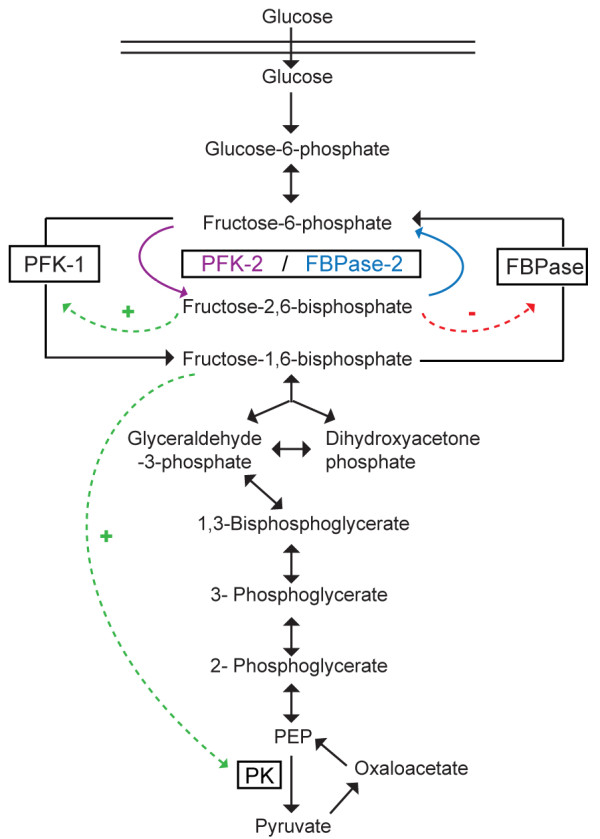
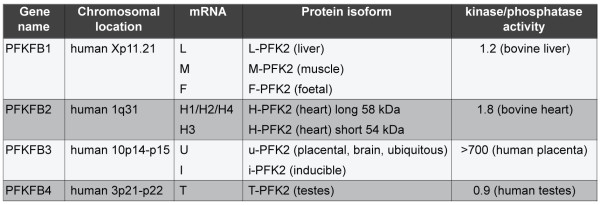
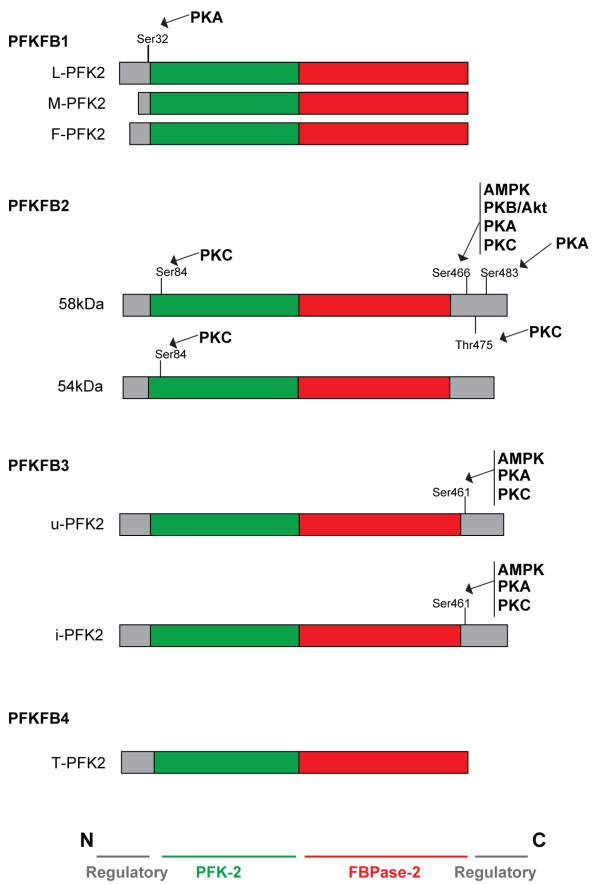
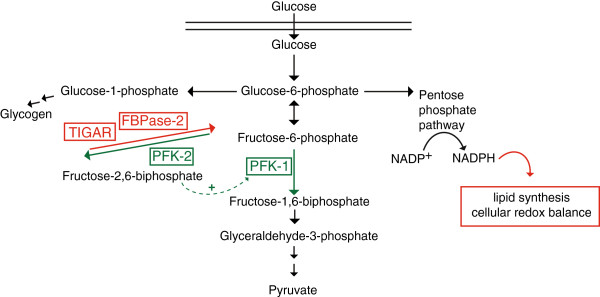
The increased glucose metabolism in cancer cells is required to fulfill their high energetic and biosynthetic demands. Changes in the metabolic activity of cancer cells are caused by the activation of oncogenes or loss of tumor suppressors. They can also be part of the metabolic adaptations to the conditions imposed by the tumor microenvironment, such as the hypoxia response. Among the metabolic enzymes that are modulated by these factors are the 6-phosphofructo-2-kinase/fructose 2,6-bisphosphatases (PFKFBs), a family of bifunctional enzymes that control the levels of fructose 2,6-bisphosphate (Fru-2,6-P2). This metabolite is important for the dynamic regulation of glycolytic flux by allosterically activating the rate-limiting enzyme of glycolysis phosphofructokinase-1 (PFK-1). Therapeutic strategies designed to alter the levels of this metabolite are likely to interfere with the metabolic balance of cancer cells, and could lead to a reduction in cancer cell proliferation, invasiveness and survival. This article will review our current understanding of the role of PFKFB proteins in the control of cancer metabolism and discuss the emerging interest in these enzymes as potential targets for the development of antineoplastic agents.
Overview
The claims and statistics of this paper haven’t been checked yet.
Run the check — free, no account needed. It reads the open-access text and checks the sources it cites.
Integrity signals
Registry
Cites
Statistics
Figures
Verification
Claims the paper makes
The claims and statistics of this paper haven’t been checked yet.
Run the check — free, no account needed. It reads the open-access text and checks the sources it cites.
Claims other papers make about this one
Each is checked against this paper’s own text: does it say what the citing paper says it does?
The source backs part of the claim, not all of it — or backs it for a different population, condition or comparison.
In the citing paper
“The PFK-2/FBPase-2 family comprises several enzyme isoforms, PFKFB1, PFKFB2, PFKFB3 and PFKFB4, all of which are induced by HIF-1 under hypoxic conditions [101].”
From HIF-1-Independent Mechanisms Regulating Metabolic Adaptation in Hypoxic Cancer Cells (2021) · cites this paper as [101]
Experimental — accuracy not yet measured
Self-check
Percentages, sums and reported differences re-computed from the paper’s own numbers.
The self-check needs the paper’s full text.
Citations
Cites
Warburg, O. (1956) · Science · doi:10.1126/science.123.3191.309 · Cited by 13,425
Targeting HIF-1 for cancer therapy
Semenza, G. L. (2003) · Nature Reviews Cancer · doi:10.1038/nrc1187 · Cited by 6,717 · cited 1×
“Adaptation to hypoxic conditions is largely mediated by HIF, a transcription factor that regulates a distinct transcriptional program [40].”
BackgroundThe Biology of Cancer: Metabolic Reprogramming Fuels Cell Growth and Proliferation
DeBerardinis, R. J., Lum, J. J., Hatzivassiliou, G., & Thompson, C. B. (2008) · Cell Metabolism · doi:10.1016/j.cmet.2007.10.002 · Cited by 4,088
TIGAR, a p53-Inducible Regulator of Glycolysis and Apoptosis
Bensaad, K., Tsuruta, A., Selak, M. A., Vidal, M. N. C., Nakano, K., Bartrons, R., Gottlieb, E., & Vousden, K. H. (2006) · Cell · doi:10.1016/j.cell.2006.05.036 · Cited by 2,019
Cancer's Molecular Sweet Tooth and the Warburg Effect
Kim, J., & Dang, C. V. (2006) · Cancer Research · doi:10.1158/0008-5472.can-06-1501 · Cited by 1,233
Oncogenic alterations of metabolism
Dang, C. V., & Semenza, G. L. (1999) · Trends in Biochemical Sciences · doi:10.1016/s0968-0004(98)01344-9 · Cited by 1,106
Deregulation of Glucose Transporter 1 and Glycolytic Gene Expression by c-Myc
Osthus, R. C., Shim, H., Kim, S., Li, Q., Reddy, R., Mukherjee, M., Xu, Y., Wonsey, D. R., Lee, L. A., & Dang, C. V. (2000) · Journal of Biological Chemistry · doi:10.1074/jbc.c000023200 · Cited by 876
Marsin, A.-S., Bertrand, L., Rider, M. H., Deprez, J., Beauloye, C., Vincent, M. F., den Berghe, G. V., Carling, D., & Hue, L. (2000) · Current Biology · doi:10.1016/s0960-9822(00)00742-9 · Cited by 853
p53 regulates biosynthesis through direct inactivation of glucose-6-phosphate dehydrogenase
Jiang, P., Du, W., Wang, X., Mancuso, A., Gao, X., Wu, M., & Yang, X. (2011) · Nature Cell Biology · doi:10.1038/ncb2172 · Cited by 834
Flier, J. S., Mueckler, M., Usher, P., & Lodish, H. F. (1987) · Science · doi:10.1126/science.3103217 · Cited by 783
Cited by
Sorted by citations
Items 201–270 of 270
Silina, M. V., Dzhalilova, D. S., Fokichev, N., & Makarova, O. V. (2025) · Frontiers in Molecular Biosciences · doi:10.3389/fmolb.2025.1674608 · Cited by 5
Oska, N., Eltanani, S., Shawky, M., Naghdi, A., Gregory, A., Yumnamcha, T., & Ibrahim, A. S. (2023) · PLoS ONE · doi:10.1371/journal.pone.0294909 · Cited by 4
Wolfe, H., Hannigan, C., O’Sullivan, M., Barry-Carroll, L., Brennan, S., LAWLOR, B. A., Robertson, I. H., & Lynch, M. A. (2018) · Journal of Neuroimmunology · doi:10.1016/j.jneuroim.2018.02.007 · Cited by 4
Engin, A. B., & Engin, A. (2021) · Advances in experimental medicine and biology · doi:10.1007/978-3-030-49844-3_13 · Cited by 4
Li, Z., Chen, Z.-J., Yan, Y.-Z., Zhong, W.-X., Hao, C.-J., Zhan, A.-Y., & Tian, J.-L. (2025) · Ecotoxicology and Environmental Safety · doi:10.1016/j.ecoenv.2025.119148 · Cited by 3
Slater, P. G., Domínguez-Romero, M. E., Campos, G., Aravena, V., Cavieres-Lepe, J., & Eisner, V. (2025) · Frontiers in Cell and Developmental Biology · doi:10.3389/fcell.2025.1529093 · Cited by 4
Regulatory mechanisms of PFKFB2 in glycolysis and tumor metabolism: implications for cancer therapy
Lou, Q., Chang, J., Pan, Y., Gong, Y., Xu, W., Tong, M., Wang, L., & Jiang, F. (2025) · Carcinogenesis · doi:10.1093/carcin/bgaf022 · Cited by 3
Basehore, S. E., Garcia, J., & Clyne, A. M. (2024) · International Journal of Molecular Sciences · doi:10.3390/ijms25052485 · Cited by 3
Wang, G., Yang, L., Wang, S., & Liu, Y. (2024) · World Journal of Traditional Chinese Medicine · doi:10.4103/wjtcm.wjtcm_48_23 · Cited by 3
Transcriptome Analysis Reveals the Early Development in Subcutaneous Adipose Tissue of Laiwu Piglets
Bian, L., Di, Z., Xu, M., Tao, Y., Yu, F., Jiang, Q., Yin, Y., & Zhang, L. (2024) · Animals · doi:10.3390/ani14202955 · Cited by 3
Trojan, S., Dudzik, P., Totoń‐Żurańska, J., Laidler, P. M., & Kocemba-Pilarczyk, K. A. (2021) · International Journal of Molecular Sciences · doi:10.3390/ijms22168848 · Cited by 3
Relevance of Circadian Rhythm in Cancer
DiTacchio, L., DiTacchio, K. A., & Panda, S. (2015) · Energy balance and cancer · doi:10.1007/978-3-319-16733-6_1 · Cited by 3
Metabolic Reprogramming in Cancer
Prusty, D., & Manna, S. K. (2022) · Wiley eBooks · doi:10.1002/9781119851042.ch25 · Cited by 3
Mohamed, H., Naz, T., Li, S., Wang, X., Saeed, T., Eltoukhy, A., Khalid, H., Ramadan, A. S., Awad, M. F., Liu, Q., et al. (2025) · International Journal of Biological Macromolecules · doi:10.1016/j.ijbiomac.2025.143998 · Cited by 2
Nazneen, F., Neupane, B., Yao, C., Karim, S.-U., You, Z., Cui, W., & Bai, F. (2025) · PLoS Pathogens · doi:10.1371/journal.ppat.1013218 · Cited by 2
Lee, E. B., Yun, H. J., Park, S. H., Ko, E. H., Jung, Y. J., Liu, R. R., Park, Y.-Y., & Lee, J. (2025) · Genes & Genomics · doi:10.1007/s13258-025-01696-x · Cited by 2
Phosphofructokinase in glycolysis: Bridging enzymology and cell biology
Sharma, A., & An, S. (2026) · Experimental Cell Research · doi:10.1016/j.yexcr.2026.114887 · Cited by 3
Vascular mechanobiology and metabolism
Basehore, S. E., Garcia, J., & Clyne, A. M. (2021) · Elsevier eBooks · doi:10.1016/b978-0-12-821070-3.00008-8 · Cited by 2
Metabolic determinants of B-cell selection
Chan, L. N., Aghania, E., Léveillé, E., & Müschen, M. (2021) · Biochemical Society Transactions · doi:10.1042/bst20201316 · Cited by 2
Kinetic‐model‐based pathway optimization with application to reverse glycolysis in mammalian cells
Lu, Y., Brien, C. M. O., Mashek, D. G., Hu, W., & Zhang, Q. (2022) · Biotechnology and Bioengineering · doi:10.1002/bit.28249 · Cited by 2
Ito, R., Shima, H., Masuda, K., Sato, I., Shimada, H., Yokoyama, A., Shirahige, K., Igarashi, K., & Sugawara, A. (2020) · Endocrine Journal · doi:10.1507/endocrj.ej20-0144 · Cited by 2
Bommer, G. T., Baldin, F., & SCHAFTINGEN, E. V. (2016) · Microbial Cell · doi:10.15698/mic2016.10.532 · Cited by 2
Wang, Y., Wang, Q.-T., Wu, X., Dong, Y., Cui, Q., Zhou, Y.-N., Yang, X., Lu, W., Li, W., Wang, H., et al. (2023) · Journal of Thoracic Disease · doi:10.21037/jtd-23-490 · Cited by 2
The genetic and dietary landscape of the muscle insulin signalling networkPreprint
van Gerwen, J., Masson, S. W. C., Cutler, H. B., Díaz‐Vegas, A., Potter, M., Stöckli, J., Madsen, S., Nelson, M. E., Humphrey, S. J., & James, D. E. (2023) · bioRxiv (Cold Spring Harbor Laboratory) · doi:10.1101/2023.06.21.546001 · Cited by 2
Kocemba‐Pilarczyk, K. A., Ostrowska, B., Trojan, S., & Dudzik, P. (2025) · Pharmacological Reports · doi:10.1007/s43440-025-00768-9 · Cited by 2
Chen, Y., Wei, S., Wang, Q., Hameed, M. S., Bao, J., Yan, J., Keserű, G. M., & Han, X. (2025) · European Journal of Medicinal Chemistry · doi:10.1016/j.ejmech.2025.118109 · Cited by 1
ÖZDEMİR, D., & Ağca, C. A. (2025) · Current Issues in Molecular Biology · doi:10.3390/cimb47110892 · Cited by 1
Kumar, D., Gupta, V., Tanwar, R., Jaiswal, N. K., & Gupta, S. (2026) · Springer eBooks · doi:10.1007/978-981-95-5071-5_3 · Cited by 1
Färnegårdh, K., Shoshan, M. C., & Ährlund‐Richter, L. (2014) · Cancer drug discovery and develogment/Cancer drug discovery and development · doi:10.1007/978-1-4614-9545-1_8 · Cited by 1
Aneichyk, T., Schmidt, S., Bindreither, D., Krösbacher, A., Mueller, N. S., Meister, B., Crazzolara, R., Mann, G., Panzer-Gruemayer, R., Kofler, R., et al. (2020) · medRxiv · doi:10.1101/2020.07.11.20148890 · Cited by 1
Enzyme kinetics : 6-phosphofructo-2-kinase/2,6-bisphosphatase.
Clark, J. A. (2014) · doi:10.18297/etd/1720
Insights into the Development of Chemotherapeutics Targeting PFKFB Enzymes
Crochet, R. B. (2015) · Louisiana State University · doi:10.31390/gradschool_dissertations.311
An investigation of metabolic vulnerabilities in chronic myeloid leukaemic stem cells
Kuntz, E. M. (2017) · Enlighten: Theses (The University of Glasgow)
CCL5-CCR5 Interactions in Breast Cancer Regulate Cell Metabolism
Gao, F. (2017) · TSpace (University of Toronto)
Analysis of the regulatory mechanism of deoxynivalenol production using omics
Iwahashi, Y. (2018) · AMB Express · doi:10.1186/s13568-018-0688-y
elfakharany, Y., & El-Nagdy, S. (2019) · Zagazig Journal of Forensic Medicine · doi:10.21608/zjfm.2019.19997.1041
Hawkins, L. J. (2020) · Carleton University's Institutional Repository (MacOdrum Library, Carleton University) · doi:10.22215/etd/2020-14005
Faculty Opinions recommendation of Four key steps control glycolytic flux in mammalian cells.
Kuroda, S., & Ohno, S. (2018) · Faculty Opinions – Post-Publication Peer Review of the Biomedical Literature · doi:10.3410/f.733562817.793549184
Faculty Opinions recommendation of Four key steps control glycolytic flux in mammalian cells.
Olson, A. L. (2020) · Faculty Opinions – Post-Publication Peer Review of the Biomedical Literature · doi:10.3410/f.733562817.793575560
Lan, L., Lan, Y.-Y., Chen, L.-T., & Wu, Z. (2022) · Research Square · doi:10.21203/rs.3.rs-2098322/v1
Goldhardt, T. (2023) · eDiss (Georg-August-Universität Göttingen) · doi:10.53846/goediss-10030
The genetic and dietary landscape of the muscle insulin signalling networkPreprint
van Gerwen, J., Masson, S. W. C., Cutler, H. B., Díaz‐Vegas, A., Potter, M., Stöckli, J., Madsen, S., Nelson, M. E., Humphrey, S. J., & James, D. E. (2023) · eLife · doi:10.7554/elife.89212.1
eLife Assessment: The genetic and dietary landscape of the muscle insulin signalling network
Bennett, A. M. (2023) · eLife · doi:10.7554/elife.89212.1.sa3
Altunok, T. H., Muchut, R. J., Iglesias, A. Á., & Yalçın, A. (2023) · Cell Biochemistry and Function · doi:10.1002/cbf.3856
The genetic and dietary landscape of the muscle insulin signalling networkPreprint
van Gerwen, J., Masson, S. W. C., Cutler, H. B., Díaz‐Vegas, A., Potter, M., Stöckli, J., Madsen, S., Nelson, M. E., Humphrey, S. J., & James, D. E. (2024) · eLife · doi:10.7554/elife.89212.2
Tesena, P., Vinijkumthorn, R., Kingkaw, A., Yanyongsirikarn, P., Phasuk, K., Ploypetch, S., Phaonakrop, N., Roytrakul, S., Vongsangnak, W., & Prapaiwan, N. (2025) · BMC Veterinary Research · doi:10.1186/s12917-025-04956-w
Plesnar‐Bielak, A., Chmielewski, S., Dudek, K., Unnikrishnan, P., Cygnar, G., & Konczal, M. (2025) · Journal of Evolutionary Biology · doi:10.1093/jeb/voaf109
Hu, K.-F., Shu, C.-W., Lee, C.-H., Tseng, C.-J., Chou, Y.-H., & Liu, P.-F. (2024) · Figshare · doi:10.6084/m9.figshare.26634792
Zhang, X., Geng, L., Tang, Y., Wang, Y., Zhang, Y., Zhu, C., Lei, H., Xu, H., Zhu, Q., Wu, Y., et al. (2024) · Figshare · doi:10.6084/m9.figshare.26684649
Zhang, X., Geng, L., Tang, Y., Wang, Y., Zhang, Y., Zhu, C., Lei, H., Xu, H., Zhu, Q., Wu, Y., et al. (2024) · Figshare · doi:10.6084/m9.figshare.26684655
Zhang, X., Geng, L., Tang, Y., Wang, Y., Zhang, Y., Zhu, C., Lei, H., Xu, H., Zhu, Q., Wu, Y., et al. (2024) · Figshare · doi:10.6084/m9.figshare.26684643
Zhang, X., Geng, L., Tang, Y., Wang, Y., Zhang, Y., Zhu, C., Lei, H., Xu, H., Zhu, Q., Wu, Y., et al. (2024) · Figshare · doi:10.6084/m9.figshare.26684658
Zhang, X., Geng, L., Tang, Y., Wang, Y., Zhang, Y., Zhu, C., Lei, H., Xu, H., Zhu, Q., Wu, Y., et al. (2024) · Figshare · doi:10.6084/m9.figshare.26684652
Zhang, X., Geng, L., Tang, Y., Wang, Y., Zhang, Y., Zhu, C., Lei, H., Xu, H., Zhu, Q., Wu, Y., et al. (2024) · Figshare · doi:10.6084/m9.figshare.26684646
Zhao, Q., Su, S., Chen, J., Huayu, M., Nan, X., Li, X., Li, Z., & Lu, D. (2026) · Food & Function · doi:10.1039/d5fo04265h
Yang, S., Yan, X., Jing, Y., Guan, Y., Chen, G., & Li, X. (2026) · Life Sciences · doi:10.1016/j.lfs.2026.124382
Glycolysis and glycolytic enzymes in acute myeloid leukemia: Warburg and beyond
Seiler, K., Mady, Y. H., Torbett, B. E., Sarry, J., & Tschan, M. P. (2026) · Frontiers in Pharmacology · doi:10.3389/fphar.2026.1823211
Harold, K. M., Yoon, W. H., & Humphries, K. M. (2026) · Journal of Biological Chemistry · doi:10.1016/j.jbc.2026.113294
Domínguez-Romero, M. E., Villarreal, M., Cordero‐Véliz, C., Quijada, S., Aguirre, F., Hernandez, C., Torruella-Gonzalez, S., Peñailillo, J., Eisner, V., & Slater, P. G. (2026) · iScience · doi:10.1016/j.isci.2026.116636
Gonzalez‐Ugalde, E., Avendaño, P. M., Quintero‐Galvis, J. F., Pizarro, E. J., Cubillos, F. A., Nespolo, R. F., Miranda, F. L., & Vianna, J. A. (2026) · Ecology and Evolution · doi:10.1002/ece3.74066
BindingDB (2016) · UC San Diego · doi:10.7270/q25q4xv9
Metadata
- Authors
- Ros, S., & Schulze, A.
- Affiliations
- Cancer Research UK (GB)
- Corresponding author
- Schulze, Almut
- ORCID
- Schulze, Almut
- Venue
- Cancer & Metabolism
- Published
- 2013-02-04
- Volume
- 1
- Issue
- 1
- Pages
- 8-8
- ISSN
- 2049-3002 (ISSN-L)
- PMC
- PMC4178209
- OpenAlex
- W2106223802
- Cited by
- 269
- References
- 69
- Citations by year
- 2026: 9 · 2025: 21 · 2024: 29 · 2023: 32 · 2022: 31 · 2021: 26 · 2020: 15 · 2019: 20 · 2018: 17 · 2017: 17 · 2016: 19 · 2015: 20 · 2014: 11 · 2013: 2
- FWCI
- 6.22
- Type
- journal article
- Language
- en
- Open access
- gold
- doi.org
- Licence
- Locations
- Cancer & Metabolism (publishedVersion, cc-by)
- PubMed Central (publishedVersion, cc-by)
- PubMed (publishedVersion)
- Apollo (University of Cambridge) (submittedVersion, cc-by)
- Apollo (cc-by)
- Funders
- Cancer Research UK
- Topics
- Life Sciences › Biochemistry, Genetics and Molecular Biology › Cancer Research › Cancer, Hypoxia, and Metabolism
- Life Sciences › Biochemistry, Genetics and Molecular Biology › Molecular Biology › Metabolism, Diabetes, and Cancer
- Life Sciences › Biochemistry, Genetics and Molecular Biology › Molecular Biology › Biochemical and Molecular Research
- Keywords
- 6-phosphofructo-2-kinase/fructose-2,6-bisphosphatase, fructose-2,6-bisphosphate, glycolytic flux, tumor microenvironment, hypoxia response, oncogene activation, tumor suppressor loss
About these checks
Registry, retraction, Cites and statistics results are computed, not judged, with one exception: a printed reference that no index lists is read once by a model before it counts as a citation error. Claims are extracted by a model and kept only when their quote appears verbatim in the text; each cited source is then checked, with a model’s help, for whether it says what the claim relies on. Those verdicts can be wrong — read the claim’s quote and the cited source before relying on one.
Statistics and arithmetic are recomputed, not judged.
Confidence bands are shown only for fields calibrated on our annotated test set. None is calibrated yet, so no band is shown.
What counts as a claim ›How we measure confidence ›How we check this ›
Are you an author, or do you see a problem with this page? Request a review
