

Mechanism of tumor rejection with doublets of CTLA-4, PD-1/PD-L1, or IDO blockade involves restored IL-2 production and proliferation of CD8(+) T cells directly within the tumor microenvironment
Open accessThe DOI matches its Crossref record; 55 of the 55 references it cites were found in a registry or an index.
Abstract
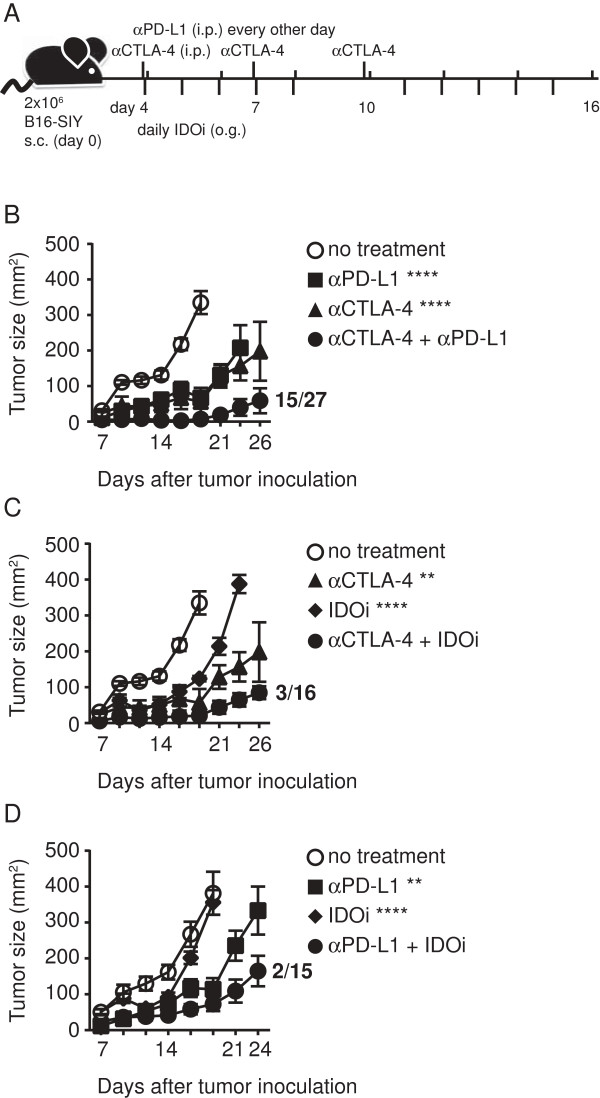
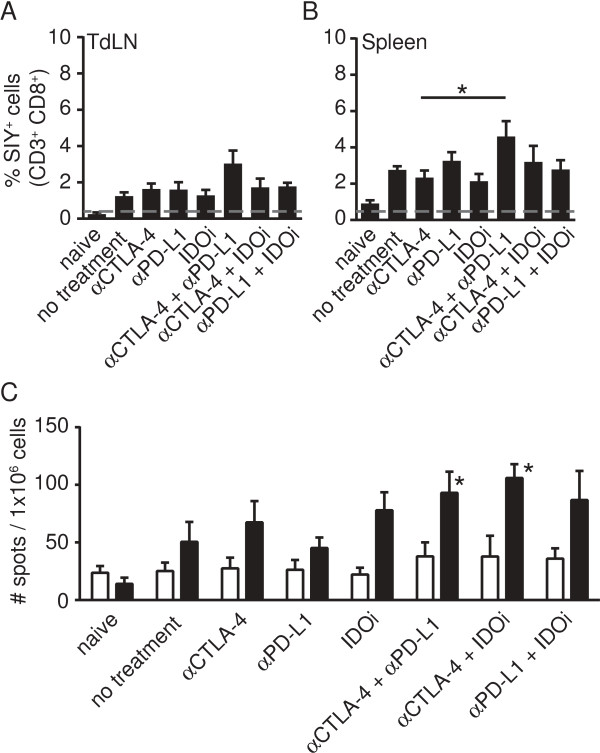
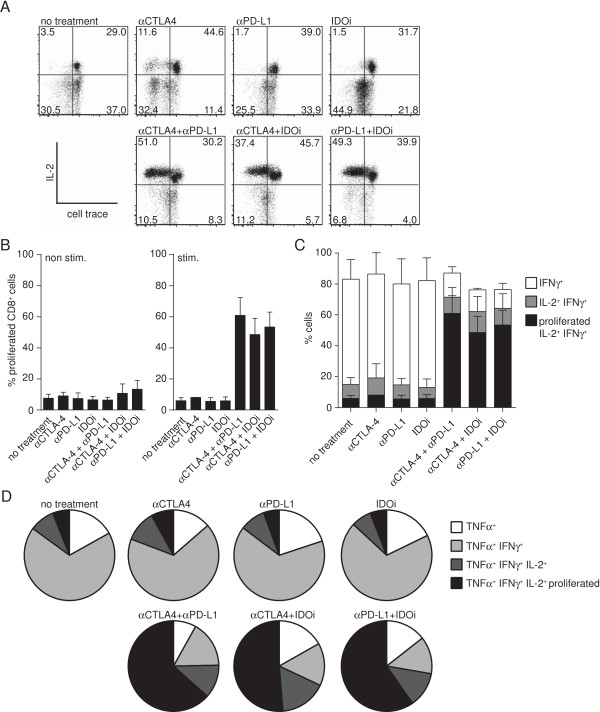
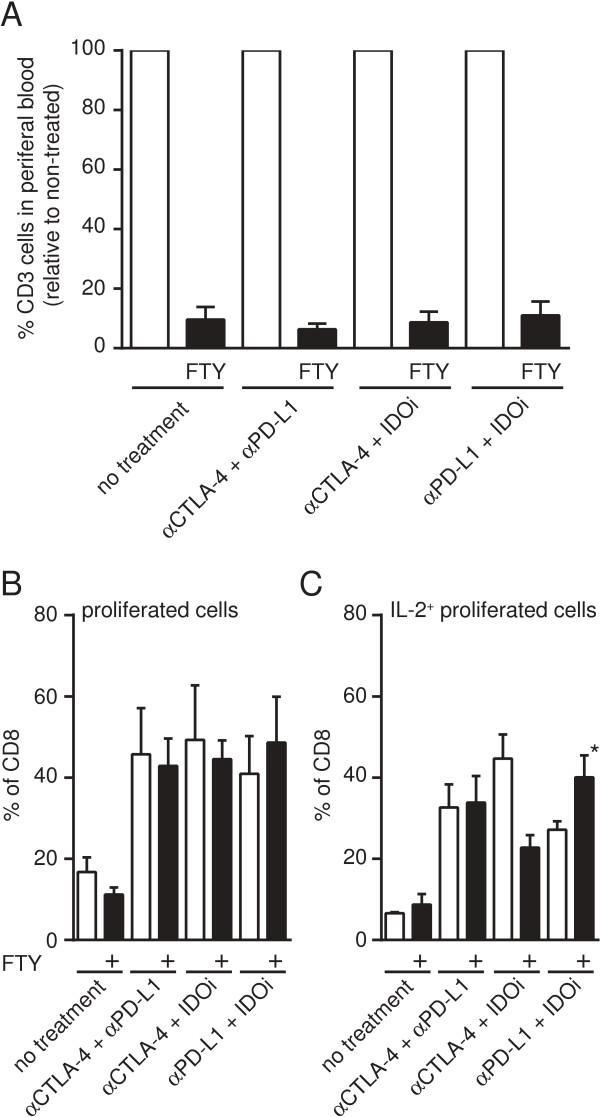
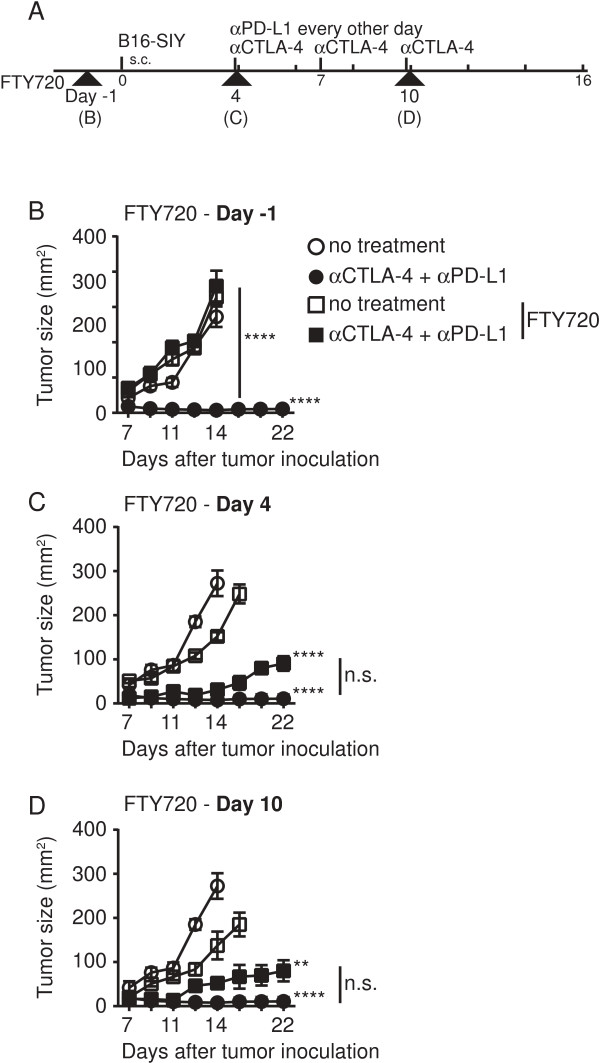
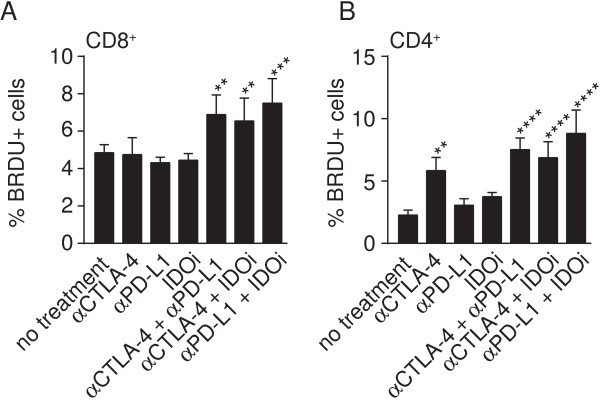
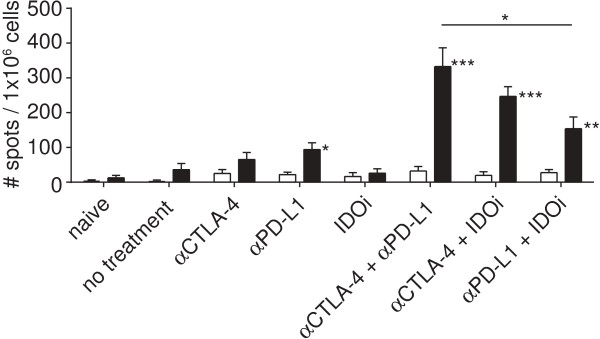
BACKGROUND: Blockade of immune inhibitory pathways is emerging as an important therapeutic modality for the treatment of cancer. Single agent treatments have partial anti-tumor activity in preclinical models and in human cancer patients. Inasmuch as the tumor microenvironment shows evidence of multiple immune inhibitory mechanisms present concurrently, it has been reasoned that combination therapies may be required for optimal therapeutic effect. METHODS: To test this notion, we utilized permutations of anti-CTLA-4 mAb, anti-PD-L1 mAb, and/or the IDO inhibitor INCB23843 in the murine B16.SIY melanoma model. RESULTS: All three combinations showed markedly improved tumor control over single treatments, with many mice achieving complete tumor rejection. This effect was seen in the absence of vaccination or adoptive T cell therapy. The mechanism of synergy was investigated to examine the priming versus effector phase of the anti-tumor immune response. Only a minimal increase in priming of anti-tumor T cells was observed at early time points in the tumor-draining lymph nodes (TdLN). In contrast, as early as three days after therapy initiation, a marked increase in the capacity of tumor-infiltrating CD8(+) T cells to produce IL-2 and to proliferate was found in all groups treated with the effective combinations. Treatment of mice with FTY720 to block new T cell trafficking from secondary lymphoid structures still enabled restoration of IL-2 production and proliferation by intratumoral T cells, and also retained most of the tumor growth control. CONCLUSIONS: Our data suggest that the therapeutic effect of these immunotherapies was mainly mediated through direct reactivation of T cells in situ. These three combinations are attractive to pursue clinically, and the ability of intratumoral CD8(+) T cells to produce IL-2 and to proliferate could be an important biomarker to integrate into clinical studies.
Overview
The claims and statistics of this paper haven’t been checked yet.
Free: it reads the open-access text and checks the first 5 claims that cite a source we can check. Create a free account to check every claim.
Integrity signals
Registry
Cites
Statistics
Figures
Verification
Claims the paper makes
The claims and statistics of this paper haven’t been checked yet.
Free: it reads the open-access text and checks the first 5 claims that cite a source we can check. Create a free account to check every claim.
Claims other papers make about this one
Each is checked against this paper’s own text: does it say what the citing paper says it does?
The source backs part of the claim, not all of it — or backs it for a different population, condition or comparison.
In the citing paper
“the endogenous AhR ligand Kyn displays pro-cancerogenic properties in a model of pre-clinical melanoma59”
From Dietary tryptophan metabolite released by intratumoral Lactobacillus reuteri facilitates immune checkpoint inhibitor treatment (2023) · cites this paper as [59]
Experimental — accuracy not yet measuredThe source backs part of the claim, not all of it — or backs it for a different population, condition or comparison.
In the citing paper
“recent studies demonstrated that DCs can be found in tumors, where they recruit T cells and stimulate tumor-reactive T cell responses locally (Spranger et al., 2014; de Mingo Pulido et al., 2018)”
From Successful Anti-PD-1 Cancer Immunotherapy Requires T Cell-Dendritic Cell Crosstalk Involving the Cytokines IFN-γ and IL-12 (2018) · cites this paper as Spranger et al., 2014
Experimental — accuracy not yet measuredIn the citing paper
“The tryptophan-metabolizing enzyme IDO inhibits T cell function, and combining IDO-blocking agents together with immune checkpoint inhibitors has shown promising results in mice and is also currently undergoing clinical trials in humans (105, 118).”
From Anti-PD-1 and Anti-CTLA-4 Therapies in Cancer: Mechanisms of Action, Efficacy, and Limitations (2018) · cites this paper as [118]
In the citing paper
“The tryptophan-metabolizing enzyme IDO inhibits T cell function, and combining IDO-blocking agents together with immune checkpoint inhibitors has shown promising results in mice and is also currently undergoing clinical trials in humans (105, 118).”
From Anti-PD-1 and Anti-CTLA-4 Therapies in Cancer: Mechanisms of Action, Efficacy, and Limitations (2018) · cites this paper as [118]
Self-check
Percentages, sums and reported differences re-computed from the paper’s own numbers.
The self-check needs the paper’s full text.
Citations
Cites
PD-1 and PD-L1 Immune Checkpoint Blockade to Treat Breast Cancer
Hartkopf, A. D., Taran, F.-A., Wallwiener, M., Walter, C. B., Krämer, B., Grischke, E.-M., & Brucker, S. Y. (2016) · Breast Care · doi:10.1159/000453569 · Cited by 30,845
Adverse Renal Effects of Immune Checkpoint Inhibitors: A Narrative Review
Wanchoo, R., Karam, S., Uppal, N. N., Barta, V. S., Deray, G., Devoe, C., Launay-Vacher, V., Jhaveri, K. D., & on behalf of Cancer and Kidney International Network Workgroup on Immune Checkpoint Inhibitors (2017) · American Journal of Nephrology · doi:10.1159/000455014 · Cited by 15,256
Improved Survival with Ipilimumab in Patients with Metastatic Melanoma
Hodi, F. S., O'Day, S. J., McDermott, D. F., Weber, R. W., Sosman, J. A., Haanen, J. B., Gonzalez, R., Robert, C., Schadendorf, D., Hassel, J. C., et al. (2010) · New England Journal of Medicine · doi:10.1056/nejmoa1003466 · Cited by 15,155 · cited 1×
“The first successful immunotherapy aiming to block a negative regulatory pathway on T cells is the anti-CTLA-4 (Cytotoxic T-Lymphocyte Antigen-4) mAb ipilimumab, which was approved by the FDA (Food and Drug Administration) in 2011 for treatment of patients with advanced melanoma [13].”
BackgroundSafety, activity, and immune correlates of anti–PD-1 antibody in cancer
Topalian, S. L., Hodi, F. S., Brahmer, J. R., Gettinger, S. N., Smith, D. C., McDermott, D. F., Powderly, J. D., Carvajal, R. D., Sosman, J. A., Atkins, M. B., et al. (2012) · New England Journal of Medicine · doi:10.1056/nejmoa1200690 · Cited by 12,628 · cited 1×
“Early clinical results have been reported with anti-PD-1 and anti-PD-L1 mAbs [14], IDO inhibitors [15], and Treg depletion targeting surface CD25 [16,17].”
BackgroundCuriel, T. J., Coukos, G., Zou, L., Alvarez, X., Cheng, P., Mottram, P., Evdemon-Hogan, M., Conejo-Garcia, J. R., Zhang, L., Burow, M., et al. (2004) · Nature Medicine · doi:10.1038/nm1093 · Cited by 5,151 · cited 1×
“These are expression of the ligand PD-L1 (programmed death-ligand 1), which can engage the inhibitory receptor PD-1 (programmed death-receptor 1) on activated T cells; presence of the tryptophan-catabolizing enzyme indoleamine-2,3dioxygenase (IDO), which exploits the exquisite sensitivity of T cells to tryptophan depl…”
BackgroundTumor-associated B7-H1 promotes T-cell apoptosis: A potential mechanism of immune evasion
Dong, H., Strome, S. E., Salomao, D. R., Tamura, H., Hirano, F., Flies, D. B., Roche, P. C., Lu, J., Zhu, G., Tamada, K., et al. (2002) · Nature Medicine · doi:10.1038/nm730 · Cited by 5,025
The immune contexture in human tumours: impact on clinical outcome
Fridman, W. H., Pagès, F., Sautès-Fridman, C., & Galon, J. (2012) · Nature reviews. Cancer · doi:10.1038/nrc3245 · Cited by 4,981 · cited 1×
“While most of these analyses have been carried out on biopsy material from patients with advanced melanoma, similar results are emerging in other solid tumors, including lung cancer, ovarian cancer, colorectal cancer, breast cancer, and head and neck cancer [3-6].”
ResultNivolumab plus Ipilimumab in Advanced Melanoma
Wolchok, J. D., Kluger, H., Callahan, M. K., Postow, M. A., Rizvi, N. A., Lesokhin, A. M., Segal, N. H., Ariyan, C. E., Gordon, R.-A., Reed, K., et al. (2013) · New England Journal of Medicine · doi:10.1056/nejmoa1302369 · Cited by 4,230 · cited 1×
“Phase I clinical trial development of the anti-CTLA-4 + anti-PD-1 combination has already been pursued in advanced melanoma, with profound clinical response rates observed that appear superior to single agent activity based on historical controls [47,49].”
BackgroundInnate and adaptive immune cells in the tumor microenvironment
Gajewski, T. F., Schreiber, H., & Fu, Y.-X. (2013) · Nature Immunology · doi:10.1038/ni.2703 · Cited by 4,148
Self-citationIwai, Y., Ishida, M., Tanaka, Y., Okazaki, T., Honjo, T., & Minato, N. (2002) · Proceedings of the National Academy of Sciences · doi:10.1073/pnas.192461099 · Cited by 3,203 · cited 2×
“yet significant impact on tumor growth kinetics and to improve tumor-specific immune responses in various mouse models in vivo [28-33].”
BackgroundUyttenhove, C., Pilotte, L., Théate, I., Stroobant, V., Colau, D., Parmentier, N., Boon, T., & Van den Eynde, B. J. (2003) · Nature Medicine · doi:10.1038/nm934 · Cited by 2,305 · cited 1×
“Although several previous studies have been conducted to investigate if combining blockade of two inhibitory pathways could act synergistically in retarding the tumor growth in vivo, only limited studies have addressed the mechanism leading to this effect [30,33,42,43].”
BackgroundCTLA-4 can function as a negative regulator of T cell activation
Walunas, T. L., Lenschow, D. J., Bakker, C. Y., Linsley, P. S., Freeman, G. J., Green, J. M., Thompson, C. B., & Bluestone, J. A. (1994) · Immunity · doi:10.1016/1074-7613(94)90071-x · Cited by 2,222 · cited 1×
“The αCTLA-4 mAb (clone: UC10-4F10-11) was given at three single time points [34].”
Spranger, S., Spaapen, R. M., Zha, Y., Williams, J., Meng, Y., Ha, T. T., & Gajewski, T. F. (2013) · Science Translational Medicine · doi:10.1126/scitranslmed.3006504 · Cited by 1,677 · cited 3×
“Recently, we have observed that IFN-γ produced by CD8 T cells is necessary for the induction of the negative regulatory factors PD-L1 and IDO within the tumor microenvironment [12].”
BackgroundMethodSelf-citationWoo, S.-R., Turnis, M. E., Goldberg, M. V., Bankoti, J., Selby, M., Nirschl, C. J., Bettini, M. L., Gravano, D. M., Vogel, P., Liu, C. L., et al. (2012) · Cancer Research · doi:10.1158/0008-5472.can-11-1620 · Cited by 1,647
Simpson, T. R., Li, F., Montalvo-Ortiz, W., Sepulveda, M. A., Bergerhoff, K., Arce, F., Roddie, C., Henry, J. Y., Yagita, H., Wolchok, J. D., et al. (2013) · Journal of Experimental Medicine · doi:10.1084/jem.20130579 · Cited by 1,472 · cited 2×
“Recent studies have focused on the potential Tregdepleting effect of αCTLA-4 antibody therapy [36].”
BackgroundChemokine expression in melanoma metastases associated with CD8+ T-cell recruitment
Harlin, H., Meng, Y., Peterson, A. C., Zha, Y., Tretiakova, M., Slingluff, C., McKee, M., & Gajewski, T. F. (2009) · Cancer Research · doi:10.1158/0008-5472.can-08-2281 · Cited by 1,121 · cited 1×
“Consistent with this observation, human melanoma metastases showing a T cell-infiltrated phenotype usually show expression of IFN-γ-induced target genes and in many cases IFN-γ itself [41].”
BackgroundSelf-citationBlockade of B7-H1 and PD-1 by monoclonal antibodies potentiates cancer therapeutic immunity
Hirano, F., Kaneko, K., Tamura, H., Dong, H., Wang, S., Ichikawa, M., Rietz, C., Flies, D. B., Lau, J. S., Zhu, G., et al. (2005) · Cancer Research · doi:10.1158/0008-5472.1089.65.3 · Cited by 1,018 · cited 2×
“yet significant impact on tumor growth kinetics and to improve tumor-specific immune responses in various mouse models in vivo [28-33].”
BackgroundKrummel, M. F., & Allison, J. P. (1996) · The Journal of experimental medicine · doi:10.1084/jem.183.6.2533 · Cited by 932 · cited 1×
“yet significant impact on tumor growth kinetics and to improve tumor-specific immune responses in various mouse models in vivo [28-33].”
BackgroundCarpenito, C., Milone, M. C., Hassan, R., Simonet, J. C., Lakhal, M., Suhoski, M. M., Varela-Rohena, A., Haines, K. M., Heitjan, D. F., Albelda, S. M., et al. (2009) · Proceedings of the National Academy of Sciences · doi:10.1073/pnas.0813101106 · Cited by 888
Blank, C., Brown, I., Peterson, A. C., Spiotto, M., Iwai, Y., Honjo, T., & Gajewski, T. F. (2004) · Cancer Research · doi:10.1158/0008-5472.can-03-3259 · Cited by 772 · cited 1×
“yet significant impact on tumor growth kinetics and to improve tumor-specific immune responses in various mouse models in vivo [28-33].”
BackgroundSelf-citationDuraiswamy, J., Kaluza, K. M., Freeman, G. J., & Coukos, G. (2013) · Cancer Research · doi:10.1158/0008-5472.can-12-4100 · Cited by 745 · cited 1×
“(αCTLA-4 + IDOi) indicated that proliferation of TIL in combination with increased functional capacity (IFN-γ, granzyme B) were increased with effective combinations [44,45].”
BackgroundJohn, L. B., Devaud, C., Duong, C. P. M., Yong, C. S., Beavis, P. A., Haynes, N. M., Chow, M. T., Smyth, M. J., Kershaw, M. H., & Darcy, P. K. (2013) · Clinical Cancer Research · doi:10.1158/1078-0432.ccr-13-0458 · Cited by 694 · cited 1×
“These include agonistic Abs against 4-1BB, Ox40, ICOS (Inducible T-cell COStimulator), and CD40; blocking Abs against LAG3 (Lymphocyte-activation gene 3), B7-H3, B7-H4, Tim3, and KIRs (killer inhibitory receptors); and the cytokines IL-7, IL-15, and IL-21 [18-26], among others.”
BackgroundPrognostic significance of tumor-infiltrating T cells in ovarian cancer: A meta-analysis
Hwang, W.-T., Adams, S. F., Tahirovic, E., Hagemann, I. S., & Coukos, G. (2012) · Gynecologic Oncology · doi:10.1016/j.ygyno.2011.09.039 · Cited by 661 · cited 1×
“While most of these analyses have been carried out on biopsy material from patients with advanced melanoma, similar results are emerging in other solid tumors, including lung cancer, ovarian cancer, colorectal cancer, breast cancer, and head and neck cancer [3-6].”
ResultHolmgaard, R. B., Zamarin, D., Munn, D. H., Wolchok, J. D., & Allison, J. P. (2013) · Journal of Experimental Medicine · doi:10.1084/jem.20130066 · Cited by 634 · cited 1×
“(αCTLA-4 + IDOi) indicated that proliferation of TIL in combination with increased functional capacity (IFN-γ, granzyme B) were increased with effective combinations [44,45].”
BackgroundReversal of the TCR Stop Signal by CTLA-4
Schneider, H., Downey, J., Smith, A., Zinselmeyer, B. H., Rush, C., Brewer, J. M., Wei, B., Hogg, N., Garside, P., & Rudd, C. E. (2006) · Science · doi:10.1126/science.1131078 · Cited by 621 · cited 1×
“yet significant impact on tumor growth kinetics and to improve tumor-specific immune responses in various mouse models in vivo [28-33].”
BackgroundNgiow, S. F., von Scheidt, B., Akiba, H., Yagita, H., Teng, M. W. L., & Smyth, M. J. (2011) · Cancer Research · doi:10.1158/0008-5472.can-11-0096 · Cited by 574 · cited 1×
“These include agonistic Abs against 4-1BB, Ox40, ICOS (Inducible T-cell COStimulator), and CD40; blocking Abs against LAG3 (Lymphocyte-activation gene 3), B7-H3, B7-H4, Tim3, and KIRs (killer inhibitory receptors); and the cytokines IL-7, IL-15, and IL-21 [18-26], among others.”
BackgroundSelective inhibition of IDO1 effectively regulates mediators of antitumor immunity
Liu, X., Shin, N., Koblish, H. K., Yang, G., Wang, Q., Wang, K., Leffet, L., Hansbury, M. J., Thomas, B., Rupar, M., et al. (2010) · Blood · doi:10.1182/blood-2009-09-246124 · Cited by 548
Self-citationIwai, Y. (2004) · International Immunology · doi:10.1093/intimm/dxh194 · Cited by 527 · cited 1×
“yet significant impact on tumor growth kinetics and to improve tumor-specific immune responses in various mouse models in vivo [28-33].”
BackgroundMellor, A. L., Sivakumar, J., Chandler, P., Smith, K., Molina, H., Mao, D., & Munn, D. H. (2001) · Nature Immunology · doi:10.1038/83183 · Cited by 423 · cited 1×
“These are expression of the ligand PD-L1 (programmed death-ligand 1), which can engage the inhibitory receptor PD-1 (programmed death-receptor 1) on activated T cells; presence of the tryptophan-catabolizing enzyme indoleamine-2,3dioxygenase (IDO), which exploits the exquisite sensitivity of T cells to tryptophan depl…”
BackgroundRosenberg, S. A., & Dudley, M. E. (2004) · Proceedings of the National Academy of Sciences · doi:10.1073/pnas.0405730101 · Cited by 364 · cited 1×
“These T cells also produced TNF-α, indicating a polyfunctional T cell phenotype (Figure 3D) [37-39].”
BackgroundBeatty, G. L., O'Dwyer, P. J., Clark, J., Shi, J. G., Bowman, K. J., Scherle, P. A., Newton, R. C., Schaub, R., Maleski, J., Leopold, L., et al. (2017) · Clinical Cancer Research · doi:10.1158/1078-0432.ccr-16-2272 · Cited by 314
Self-citationNirschl, C. J., & Drake, C. G. (2013) · Clinical Cancer Research · doi:10.1158/1078-0432.ccr-12-1972 · Cited by 306
Development of ipilimumab: a novel immunotherapeutic approach for the treatment of advanced melanoma
Wolchok, J. D., Hodi, F. S., Weber, J. S., Allison, J. P., Urba, W. J., Robert, C., O'Day, S. J., Hoos, A., Humphrey, R., Berman, D. M., et al. (2013) · Annals of the New York Academy of Sciences · doi:10.1111/nyas.12180 · Cited by 303
Rech, A. J., & Vonderheide, R. H. (2009) · Annals of the New York Academy of Sciences · doi:10.1111/j.1749-6632.2009.04939.x · Cited by 289 · cited 2×
“Rech AJ, Vonderheide RH: Clinical use of anti-CD25 antibody daclizumab to enhance immune responses to tumor antigen vaccination by targeting regulatory T cells.”
BackgroundGajewski, T. F., Louahed, J., & Brichard, V. G. (2010) · The Cancer Journal · doi:10.1097/ppo.0b013e3181eacbd8 · Cited by 250 · cited 1×
“This conceptual framework is being integrated into biomarker development as novel immunotherapies are being explored in patients [2].”
BackgroundSelf-citationKoblish, H. K., Hansbury, M. J., Bowman, K. J., Yang, G., Neilan, C. L., Haley, P. J., Burn, T. C., Waeltz, P., Sparks, R. B., Yue, E. W., et al. (2010) · Molecular Cancer Therapeutics · doi:10.1158/1535-7163.mct-09-0628 · Cited by 242 · cited 2×
“5% methylcellulose and administered at 300 mg/kg po QD on a 5 days on/2 days off schedule starting on day 4 [35,51].”
MethodSelf-citationCell intrinsic mechanisms of T‐cell inhibition and application to cancer therapy
Peggs, K. S., Quezada, S. A., & Allison, J. P. (2008) · Immunological Reviews · doi:10.1111/j.1600-065x.2008.00649.x · Cited by 229 · cited 1×
“Although several previous studies have been conducted to investigate if combining blockade of two inhibitory pathways could act synergistically in retarding the tumor growth in vivo, only limited studies have addressed the mechanism leading to this effect [30,33,42,43].”
BackgroundAgonist Antibodies to TNFR Molecules That Costimulate T and NK Cells
Melero, I., Hirschhorn-Cymerman, D., Morales-Kastresana, A., Sanmamed, M. F., & Wolchok, J. D. (2013) · Clinical Cancer Research · doi:10.1158/1078-0432.ccr-12-2065 · Cited by 176 · cited 1×
“These include agonistic Abs against 4-1BB, Ox40, ICOS (Inducible T-cell COStimulator), and CD40; blocking Abs against LAG3 (Lymphocyte-activation gene 3), B7-H3, B7-H4, Tim3, and KIRs (killer inhibitory receptors); and the cytokines IL-7, IL-15, and IL-21 [18-26], among others.”
BackgroundThe TNFRs OX40, 4-1BB, and CD40 as targets for cancer immunotherapy
Moran, A. E., Kovacsovics-Bankowski, M., & Weinberg, A. D. (2013) · Current Opinion in Immunology · doi:10.1016/j.coi.2013.01.004 · Cited by 162 · cited 1×
“These include agonistic Abs against 4-1BB, Ox40, ICOS (Inducible T-cell COStimulator), and CD40; blocking Abs against LAG3 (Lymphocyte-activation gene 3), B7-H3, B7-H4, Tim3, and KIRs (killer inhibitory receptors); and the cytokines IL-7, IL-15, and IL-21 [18-26], among others.”
BackgroundTransient T cell depletion causes regression of melanoma metastases
Rasku, M. A., Clem, A. L., Telang, S., Taft, B., Gettings, K., Gragg, H., Cramer, D., Lear, S. C., McMasters, K. M., Miller, D. M., et al. (2008) · Journal of Translational Medicine · doi:10.1186/1479-5876-6-12 · Cited by 158
Lin, Y.-H., Friederichs, J., Black, M. A., Mages, J., Rosenberg, R., Guilford, P. J., Phillips, V., Thompson-Fawcett, M., Kasabov, N., Toro, T., et al. (2007) · Clinical Cancer Research · doi:10.1158/1078-0432.ccr-05-2734 · Cited by 132
Halin, C., Scimone, M. L., Bonasio, R., Gauguet, J.-M., Mempel, T. R., Quackenbush, E., Proia, R. L., Mandala, S., & von Andrian, U. H. (2005) · Blood · doi:10.1182/blood-2004-09-3687 · Cited by 112
John, L. B., Howland, L. J., Flynn, J. K., West, A. C., Devaud, C., Duong, C. P., Stewart, T. J., Westwood, J. A., Guo, Z. S., Bartlett, D. L., et al. (2012) · Cancer Research · doi:10.1158/0008-5472.can-11-2788 · Cited by 110 · cited 1×
“These include agonistic Abs against 4-1BB, Ox40, ICOS (Inducible T-cell COStimulator), and CD40; blocking Abs against LAG3 (Lymphocyte-activation gene 3), B7-H3, B7-H4, Tim3, and KIRs (killer inhibitory receptors); and the cytokines IL-7, IL-15, and IL-21 [18-26], among others.”
BackgroundAscierto, M., Idowu, M. O., Zhao, Y., Khalak, H., Payne, K. K., Wang, X.-Y., Dumur, C. I., Bedognetti, D., Tomei, S., Ascierto, P. A., et al. (2013) · Journal of Translational Medicine · doi:10.1186/1479-5876-11-145 · Cited by 107 · cited 2×
“While most of these analyses have been carried out on biopsy material from patients with advanced melanoma, similar results are emerging in other solid tumors, including lung cancer, ovarian cancer, colorectal cancer, breast cancer, and head and neck cancer [3-6].”
BackgroundResultZheng, Y., Zha, Y., Driessens, G., Locke, F., & Gajewski, T. F. (2012) · Journal of Experimental Medicine · doi:10.1084/jem.20120342 · Cited by 106 · cited 1×
“These are expression of the ligand PD-L1 (programmed death-ligand 1), which can engage the inhibitory receptor PD-1 (programmed death-receptor 1) on activated T cells; presence of the tryptophan-catabolizing enzyme indoleamine-2,3dioxygenase (IDO), which exploits the exquisite sensitivity of T cells to tryptophan depl…”
BackgroundSelf-citationPerales, M.-A., Yuan, J., Powel, S., Gallardo, H. F., Rasalan, T. S., Gonzalez, C., Manukian, G., Wang, J., Zhang, Y., Chapman, P. B., et al. (2008) · Molecular Therapy · doi:10.1038/mt.2008.196 · Cited by 100 · cited 2×
“preclinical mouse models and also in patients [37,38,46].”
BackgroundImmunomodulatory Cytokines as Therapeutic Agents for Melanoma
Nicholas, C., & Lesinski, G. B. (2011) · Immunotherapy · doi:10.2217/imt.11.45 · Cited by 81 · cited 1×
“These include agonistic Abs against 4-1BB, Ox40, ICOS (Inducible T-cell COStimulator), and CD40; blocking Abs against LAG3 (Lymphocyte-activation gene 3), B7-H3, B7-H4, Tim3, and KIRs (killer inhibitory receptors); and the cytokines IL-7, IL-15, and IL-21 [18-26], among others.”
BackgroundRational combinations of immunotherapeutics that target discrete pathways
Spranger, S., & Gajewski, T. F. (2013) · Journal for ImmunoTherapy of Cancer · doi:10.1186/2051-1426-1-16 · Cited by 80 · cited 1×
“We recently have assembled a framework for logical combination of immunotherapeutic agents based on presumed modes of action [27].”
Self-citationJandus, C., Bioley, G., Speiser, D. E., & Romero, P. J. (2008) · Cancer Immunology Immunotherapy · doi:10.1007/s00262-008-0507-4 · Cited by 76 · cited 1×
“These are expression of the ligand PD-L1 (programmed death-ligand 1), which can engage the inhibitory receptor PD-1 (programmed death-receptor 1) on activated T cells; presence of the tryptophan-catabolizing enzyme indoleamine-2,3dioxygenase (IDO), which exploits the exquisite sensitivity of T cells to tryptophan depl…”
BackgroundImai, N., Ikeda, H., Tawara, I., & Shiku, H. (2009) · European Journal of Immunology · doi:10.1002/eji.200838824 · Cited by 57 · cited 2×
“preclinical mouse models and also in patients [37,38,46].”
BackgroundKline, J. P., Zhang, L., Battaglia, L., Cohen, K. S., & Gajewski, T. F. (2012) · The Journal of Immunology · doi:10.4049/jimmunol.1100845 · Cited by 54
Self-citationMarkiewicz, M. A., Fallarino, F., Ashikari, A. Y., & Gajewski, T. F. (2001) · International Immunology · doi:10.1093/intimm/13.5.625 · Cited by 50 · cited 1×
“However, it is clear that successful immunotherapies trigger tumor cell death, renewed inflammation in the tumor site, antigen cross-presentation, and epitope spreading [48], ultimately leading to increased T cell infiltration in the tumor microenvironment.”
BackgroundSelf-citationBeatty, G. L., O'Dwyer, P. J., Clark, J., Shi, J. G., Newton, R. C., Schaub, R., Maleski, J. E., Leopold, L. H., & Gajewski, T. F. (2013) · Journal of Clinical Oncology · doi:10.1200/jco.2013.31.15_suppl.3025 · Cited by 40 · cited 1×
“Early clinical results have been reported with anti-PD-1 and anti-PD-L1 mAbs [14], IDO inhibitors [15], and Treg depletion targeting surface CD25 [16,17].”
BackgroundSelf-citationCombination antibody‐based cancer immunotherapy
Takeda, K., Okumura, K., & Smyth, M. J. (2007) · Cancer Science · doi:10.1111/j.1349-7006.2007.00529.x · Cited by 22 · cited 1×
“These include agonistic Abs against 4-1BB, Ox40, ICOS (Inducible T-cell COStimulator), and CD40; blocking Abs against LAG3 (Lymphocyte-activation gene 3), B7-H3, B7-H4, Tim3, and KIRs (killer inhibitory receptors); and the cytokines IL-7, IL-15, and IL-21 [18-26], among others.”
BackgroundClinical Cancer Advances 2012 and Neoadjuvant Chemoradiotherapy in Operable Gastroesophageal Cancers
Beatty, P. A., & Laking, G. R. (2013) · Journal of Clinical Oncology · doi:10.1200/jco.2013.48.7744 · Cited by 6
Cited by
Primary, Adaptive, and Acquired Resistance to Cancer Immunotherapy
Sharma, P., Hu-Lieskovan, S., Wargo, J. A., & Ribas, A. (2017) · Cell · doi:10.1016/j.cell.2017.01.017 · Cited by 5,588
“…on anergized tumor-specific T cells has been shown to be more efficacious (Berrien-Elliott et al., 2013; Curran et al., 2010; Redmond et al., 2014; Spranger et al., 2014) and CTLA-4 blockade may itself facilitate the conversion of a tumor Cell 168, February 9, 2017 717 microenvironment from…”
Immune Checkpoint Blockade: A Common Denominator Approach to Cancer Therapy
Topalian, S. L., Drake, C. G., & Pardoll, D. M. (2015) · Cancer Cell · doi:10.1016/j.ccell.2015.03.001 · Cited by 4,229
“Recent evidence has demonstrated anti-tumor effects from CTLA-4 blockade even when S1P inhibitors block lymphocyte egress from lymph nodes (Spranger et al., 2014), indicating that this checkpoint exerts at least some effects directly in the TME as opposed to secondary lymphoid tissues.”
BackgroundMetabolic Competition in the Tumor Microenvironment Is a Driver of Cancer Progression
Chang, C.-H., Qiu, J., O’Sullivan, D., Buck, M. D., Noguchi, T., Curtis, J. D., Chen, Q., Gindin, M., Gubin, M. M., van der Windt, G. J. W., et al. (2015) · Cell · doi:10.1016/j.cell.2015.08.016 · Cited by 3,331
“We also show that checkpoint blockade antibodies against CTLA-4, PD-1, and PD-L1, which are used clinically, restore glucose in tumor microenvironment, permitting T cell glycolysis and IFN-g production.”
BackgroundResultInfluentialMelanoma-intrinsic β-catenin signalling prevents anti-tumour immunity
Spranger, S., Bao, R., & Gajewski, T. F. (2015) · Nature · doi:10.1038/nature14404 · Cited by 2,830
Self-citationTop 10 Challenges in Cancer Immunotherapy
Hegde, P. S., & Chen, D. S. (2020) · Immunity · doi:10.1016/j.immuni.2019.12.011 · Cited by 2,238
Metadata
- Authors
- Spranger, S., Koblish, H. K., Horton, B., Scherle, P. A., Newton, R., & Gajewski, T. F.
- Affiliations
- University of Chicago (US)
- Incyte (United States) (US)
- Corresponding author
- Gajewski, Thomas F
- ORCID
- Venue
- Journal for ImmunoTherapy of Cancer
- Publisher
- BMJ
- Published
- 2014
- Volume
- 2
- Issue
- 1
- Pages
- 3
- ISSN
- 2051-1426 (ISSN-L)
- PMC
- PMC4019906
- OpenAlex
- W2113906692
- Cited by
- 552
- References
- 55
- Citations by year
- 2026: 17 · 2025: 23 · 2024: 32 · 2023: 34 · 2022: 46 · 2021: 63 · 2020: 68 · 2019: 54 · 2018: 64 · 2017: 56 · 2016: 54 · 2015: 33 · 2014: 7
- FWCI
- 24.15
- Type
- journal article
- Language
- en
- Open access
- gold
- doi.org
- Locations
- Journal for ImmunoTherapy of Cancer (publishedVersion)
- Europe PMC (PubMed Central) (publishedVersion, cc-by)
- PubMed Central (publishedVersion, cc-by)
- PubMed (publishedVersion)
- Funders
- Incyte
- Deutsche Forschungsgemeinschaft
- Topics
- Health Sciences › Medicine › Oncology › Cancer Immunotherapy and Biomarkers
- Life Sciences › Immunology and Microbiology › Immunology › Immunotherapy and Immune Responses
- Life Sciences › Immunology and Microbiology › Immunology › T-cell and B-cell Immunology
- Keywords
- tumor rejection, CTLA-4 blockade, PD-1/PD-L1 blockade, IDO inhibition, combination immunotherapy, IL-2 production, CD8+ T cell proliferation, tumor-infiltrating T cells, tumor microenvironment, fingolimod, T cell migration, tumor-draining lymph nodes, antitumor immunity
About these checks
Registry, retraction, Cites and statistics results are computed, not judged, with one exception: a printed reference that no index lists is read once by a model before it counts as a citation error. Claims are extracted by a model and kept only when their quote appears verbatim in the text; each cited source is then checked, with a model’s help, for whether it says what the claim relies on. Those verdicts can be wrong — read the claim’s quote and the cited source before relying on one.
Statistics and arithmetic are recomputed, not judged.
Confidence bands are shown only for fields calibrated on our annotated test set. None is calibrated yet, so no band is shown.
What counts as a claim ›How we measure confidence ›How we check this ›
Are you an author, or do you see a problem with this page? Request a review
Data sources
Bibliographic data: Semantic Scholar, OpenAlex, Crossref.
Contains information from the Semantic Scholar Academic Graph Datasets, made available under the ODC Attribution License (ODC-BY 1.0).
Semantic Scholar’s data is described in: Kinney, R., et al. (2023). The Semantic Scholar Open Data Platform. arXiv:2301.10140.
