

Mechanism of tumor rejection with doublets of CTLA-4, PD-1/PD-L1, or IDO blockade involves restored IL-2 production and proliferation of CD8(+) T cells directly within the tumor microenvironment
Open accessThe DOI matches its Crossref record; 55 of the 55 references it cites were found in a registry or an index.
Abstract
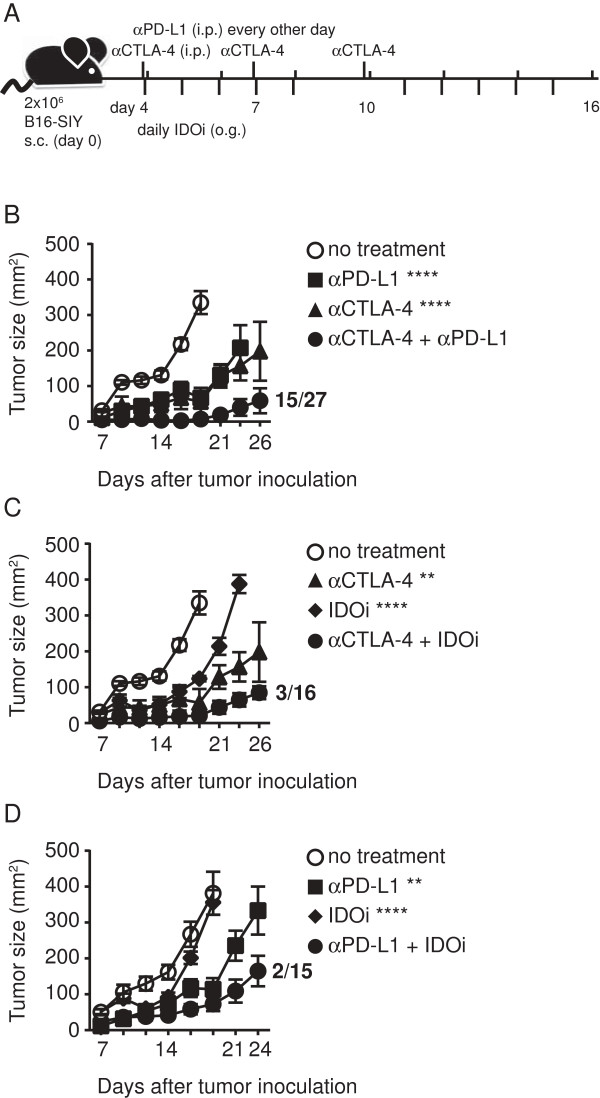
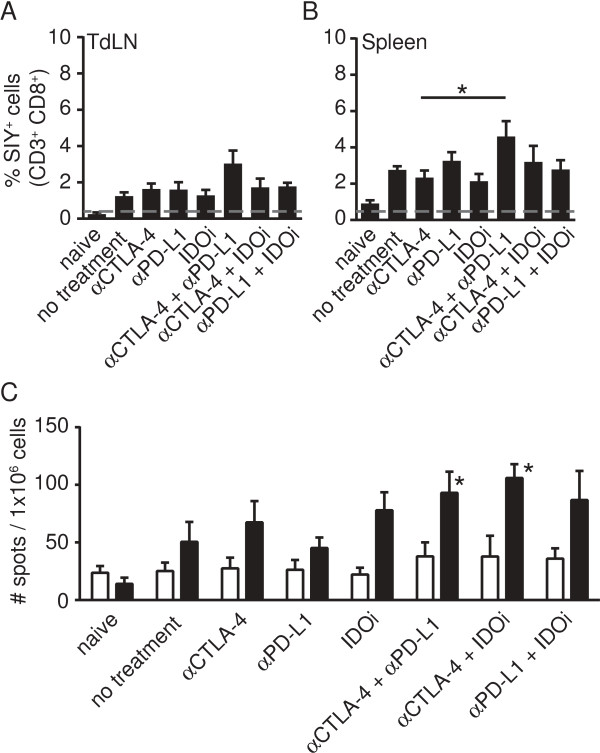
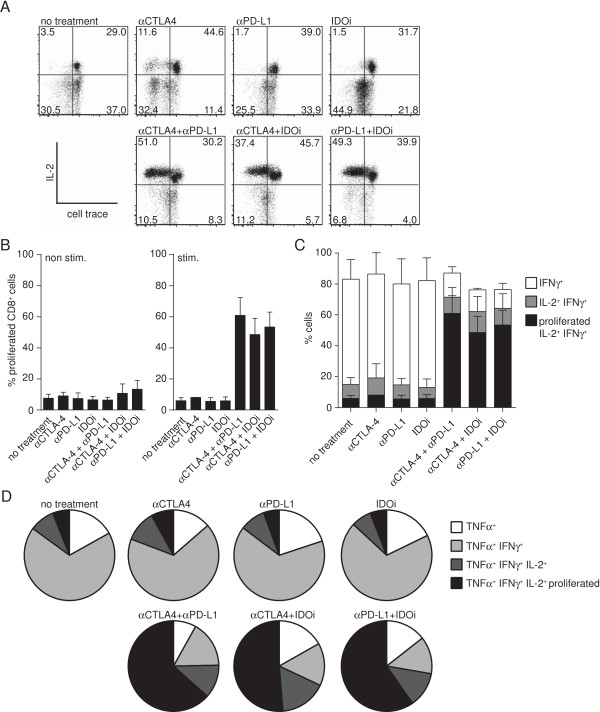
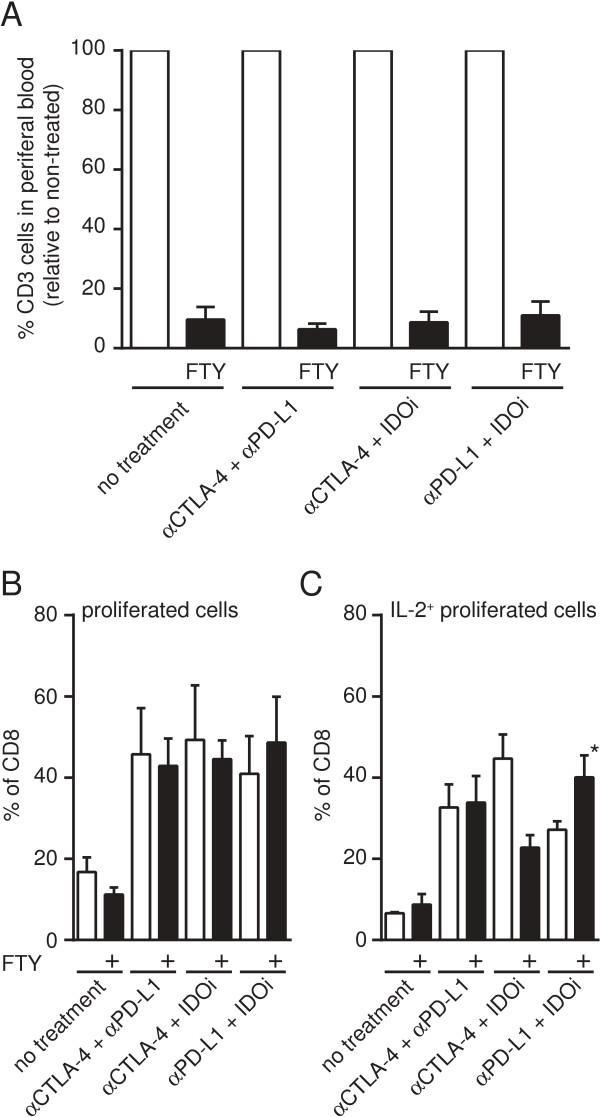
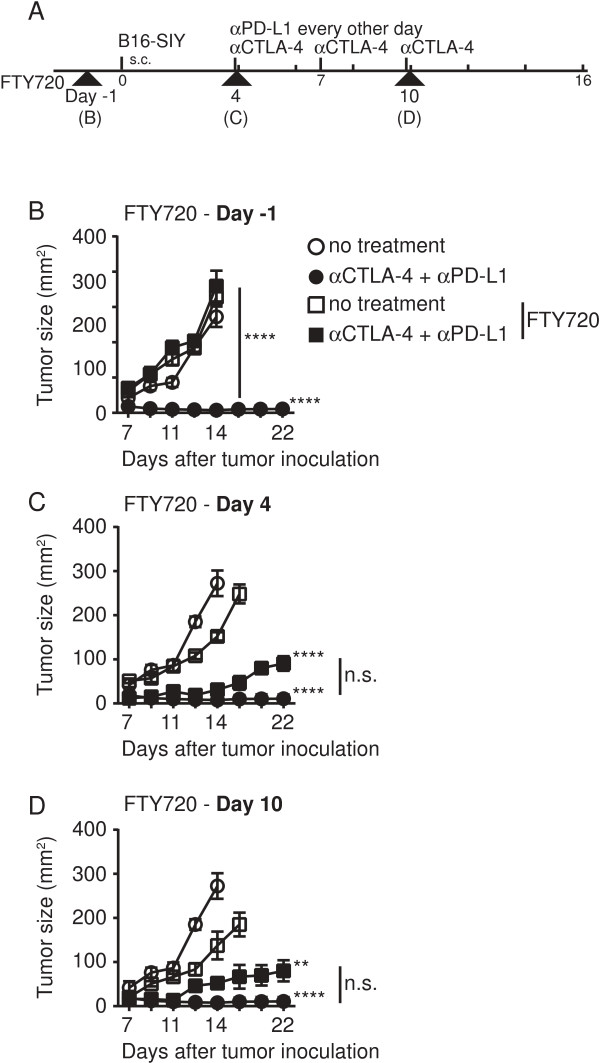
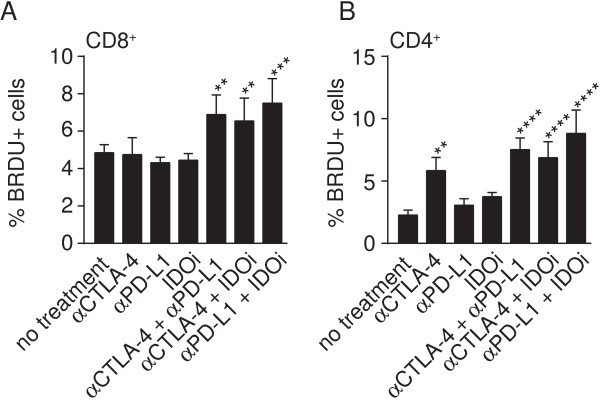
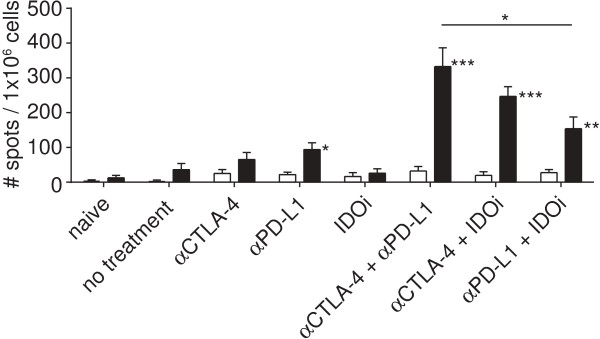
BACKGROUND: Blockade of immune inhibitory pathways is emerging as an important therapeutic modality for the treatment of cancer. Single agent treatments have partial anti-tumor activity in preclinical models and in human cancer patients. Inasmuch as the tumor microenvironment shows evidence of multiple immune inhibitory mechanisms present concurrently, it has been reasoned that combination therapies may be required for optimal therapeutic effect. METHODS: To test this notion, we utilized permutations of anti-CTLA-4 mAb, anti-PD-L1 mAb, and/or the IDO inhibitor INCB23843 in the murine B16.SIY melanoma model. RESULTS: All three combinations showed markedly improved tumor control over single treatments, with many mice achieving complete tumor rejection. This effect was seen in the absence of vaccination or adoptive T cell therapy. The mechanism of synergy was investigated to examine the priming versus effector phase of the anti-tumor immune response. Only a minimal increase in priming of anti-tumor T cells was observed at early time points in the tumor-draining lymph nodes (TdLN). In contrast, as early as three days after therapy initiation, a marked increase in the capacity of tumor-infiltrating CD8(+) T cells to produce IL-2 and to proliferate was found in all groups treated with the effective combinations. Treatment of mice with FTY720 to block new T cell trafficking from secondary lymphoid structures still enabled restoration of IL-2 production and proliferation by intratumoral T cells, and also retained most of the tumor growth control. CONCLUSIONS: Our data suggest that the therapeutic effect of these immunotherapies was mainly mediated through direct reactivation of T cells in situ. These three combinations are attractive to pursue clinically, and the ability of intratumoral CD8(+) T cells to produce IL-2 and to proliferate could be an important biomarker to integrate into clinical studies.
Overview
The claims and statistics of this paper haven’t been checked yet.
Free: it reads the open-access text and checks the first 5 claims that cite a source we can check. Create a free account to check every claim.
Integrity signals
Registry
Cites
Statistics
Figures
Verification
Claims the paper makes
The claims and statistics of this paper haven’t been checked yet.
Free: it reads the open-access text and checks the first 5 claims that cite a source we can check. Create a free account to check every claim.
Claims other papers make about this one
Each is checked against this paper’s own text: does it say what the citing paper says it does?
The source backs part of the claim, not all of it — or backs it for a different population, condition or comparison.
In the citing paper
“the endogenous AhR ligand Kyn displays pro-cancerogenic properties in a model of pre-clinical melanoma59”
From Dietary tryptophan metabolite released by intratumoral Lactobacillus reuteri facilitates immune checkpoint inhibitor treatment (2023) · cites this paper as [59]
Experimental — accuracy not yet measuredThe source backs part of the claim, not all of it — or backs it for a different population, condition or comparison.
In the citing paper
“recent studies demonstrated that DCs can be found in tumors, where they recruit T cells and stimulate tumor-reactive T cell responses locally (Spranger et al., 2014; de Mingo Pulido et al., 2018)”
From Successful Anti-PD-1 Cancer Immunotherapy Requires T Cell-Dendritic Cell Crosstalk Involving the Cytokines IFN-γ and IL-12 (2018) · cites this paper as Spranger et al., 2014
Experimental — accuracy not yet measuredIn the citing paper
“The tryptophan-metabolizing enzyme IDO inhibits T cell function, and combining IDO-blocking agents together with immune checkpoint inhibitors has shown promising results in mice and is also currently undergoing clinical trials in humans (105, 118).”
From Anti-PD-1 and Anti-CTLA-4 Therapies in Cancer: Mechanisms of Action, Efficacy, and Limitations (2018) · cites this paper as [118]
In the citing paper
“The tryptophan-metabolizing enzyme IDO inhibits T cell function, and combining IDO-blocking agents together with immune checkpoint inhibitors has shown promising results in mice and is also currently undergoing clinical trials in humans (105, 118).”
From Anti-PD-1 and Anti-CTLA-4 Therapies in Cancer: Mechanisms of Action, Efficacy, and Limitations (2018) · cites this paper as [118]
Self-check
Percentages, sums and reported differences re-computed from the paper’s own numbers.
The self-check needs the paper’s full text.
Citations
Cites
PD-1 and PD-L1 Immune Checkpoint Blockade to Treat Breast Cancer
Hartkopf, A. D., Taran, F.-A., Wallwiener, M., Walter, C. B., Krämer, B., Grischke, E.-M., & Brucker, S. Y. (2016) · Breast Care · doi:10.1159/000453569 · Cited by 30,845
Adverse Renal Effects of Immune Checkpoint Inhibitors: A Narrative Review
Wanchoo, R., Karam, S., Uppal, N. N., Barta, V. S., Deray, G., Devoe, C., Launay-Vacher, V., Jhaveri, K. D., & on behalf of Cancer and Kidney International Network Workgroup on Immune Checkpoint Inhibitors (2017) · American Journal of Nephrology · doi:10.1159/000455014 · Cited by 15,256
Improved Survival with Ipilimumab in Patients with Metastatic Melanoma
Hodi, F. S., O'Day, S. J., McDermott, D. F., Weber, R. W., Sosman, J. A., Haanen, J. B., Gonzalez, R., Robert, C., Schadendorf, D., Hassel, J. C., et al. (2010) · New England Journal of Medicine · doi:10.1056/nejmoa1003466 · Cited by 15,155 · cited 1×
“The first successful immunotherapy aiming to block a negative regulatory pathway on T cells is the anti-CTLA-4 (Cytotoxic T-Lymphocyte Antigen-4) mAb ipilimumab, which was approved by the FDA (Food and Drug Administration) in 2011 for treatment of patients with advanced melanoma [13].”
BackgroundSafety, activity, and immune correlates of anti–PD-1 antibody in cancer
Topalian, S. L., Hodi, F. S., Brahmer, J. R., Gettinger, S. N., Smith, D. C., McDermott, D. F., Powderly, J. D., Carvajal, R. D., Sosman, J. A., Atkins, M. B., et al. (2012) · New England Journal of Medicine · doi:10.1056/nejmoa1200690 · Cited by 12,628 · cited 1×
“Early clinical results have been reported with anti-PD-1 and anti-PD-L1 mAbs [14], IDO inhibitors [15], and Treg depletion targeting surface CD25 [16,17].”
BackgroundCuriel, T. J., Coukos, G., Zou, L., Alvarez, X., Cheng, P., Mottram, P., Evdemon-Hogan, M., Conejo-Garcia, J. R., Zhang, L., Burow, M., et al. (2004) · Nature Medicine · doi:10.1038/nm1093 · Cited by 5,151 · cited 1×
“These are expression of the ligand PD-L1 (programmed death-ligand 1), which can engage the inhibitory receptor PD-1 (programmed death-receptor 1) on activated T cells; presence of the tryptophan-catabolizing enzyme indoleamine-2,3dioxygenase (IDO), which exploits the exquisite sensitivity of T cells to tryptophan depl…”
BackgroundTumor-associated B7-H1 promotes T-cell apoptosis: A potential mechanism of immune evasion
Dong, H., Strome, S. E., Salomao, D. R., Tamura, H., Hirano, F., Flies, D. B., Roche, P. C., Lu, J., Zhu, G., Tamada, K., et al. (2002) · Nature Medicine · doi:10.1038/nm730 · Cited by 5,025
The immune contexture in human tumours: impact on clinical outcome
Fridman, W. H., Pagès, F., Sautès-Fridman, C., & Galon, J. (2012) · Nature reviews. Cancer · doi:10.1038/nrc3245 · Cited by 4,981 · cited 1×
“While most of these analyses have been carried out on biopsy material from patients with advanced melanoma, similar results are emerging in other solid tumors, including lung cancer, ovarian cancer, colorectal cancer, breast cancer, and head and neck cancer [3-6].”
ResultNivolumab plus Ipilimumab in Advanced Melanoma
Wolchok, J. D., Kluger, H., Callahan, M. K., Postow, M. A., Rizvi, N. A., Lesokhin, A. M., Segal, N. H., Ariyan, C. E., Gordon, R.-A., Reed, K., et al. (2013) · New England Journal of Medicine · doi:10.1056/nejmoa1302369 · Cited by 4,230 · cited 1×
“Phase I clinical trial development of the anti-CTLA-4 + anti-PD-1 combination has already been pursued in advanced melanoma, with profound clinical response rates observed that appear superior to single agent activity based on historical controls [47,49].”
BackgroundInnate and adaptive immune cells in the tumor microenvironment
Gajewski, T. F., Schreiber, H., & Fu, Y.-X. (2013) · Nature Immunology · doi:10.1038/ni.2703 · Cited by 4,148
Self-citationIwai, Y., Ishida, M., Tanaka, Y., Okazaki, T., Honjo, T., & Minato, N. (2002) · Proceedings of the National Academy of Sciences · doi:10.1073/pnas.192461099 · Cited by 3,203 · cited 2×
“yet significant impact on tumor growth kinetics and to improve tumor-specific immune responses in various mouse models in vivo [28-33].”
Background
Cited by
Primary, Adaptive, and Acquired Resistance to Cancer Immunotherapy
Sharma, P., Hu-Lieskovan, S., Wargo, J. A., & Ribas, A. (2017) · Cell · doi:10.1016/j.cell.2017.01.017 · Cited by 5,588
“…on anergized tumor-specific T cells has been shown to be more efficacious (Berrien-Elliott et al., 2013; Curran et al., 2010; Redmond et al., 2014; Spranger et al., 2014) and CTLA-4 blockade may itself facilitate the conversion of a tumor Cell 168, February 9, 2017 717 microenvironment from…”
Immune Checkpoint Blockade: A Common Denominator Approach to Cancer Therapy
Topalian, S. L., Drake, C. G., & Pardoll, D. M. (2015) · Cancer Cell · doi:10.1016/j.ccell.2015.03.001 · Cited by 4,229
“Recent evidence has demonstrated anti-tumor effects from CTLA-4 blockade even when S1P inhibitors block lymphocyte egress from lymph nodes (Spranger et al., 2014), indicating that this checkpoint exerts at least some effects directly in the TME as opposed to secondary lymphoid tissues.”
BackgroundMetabolic Competition in the Tumor Microenvironment Is a Driver of Cancer Progression
Chang, C.-H., Qiu, J., O’Sullivan, D., Buck, M. D., Noguchi, T., Curtis, J. D., Chen, Q., Gindin, M., Gubin, M. M., van der Windt, G. J. W., et al. (2015) · Cell · doi:10.1016/j.cell.2015.08.016 · Cited by 3,331
“We also show that checkpoint blockade antibodies against CTLA-4, PD-1, and PD-L1, which are used clinically, restore glucose in tumor microenvironment, permitting T cell glycolysis and IFN-g production.”
BackgroundResultInfluentialMelanoma-intrinsic β-catenin signalling prevents anti-tumour immunity
Spranger, S., Bao, R., & Gajewski, T. F. (2015) · Nature · doi:10.1038/nature14404 · Cited by 2,830
Self-citationTop 10 Challenges in Cancer Immunotherapy
Hegde, P. S., & Chen, D. S. (2020) · Immunity · doi:10.1016/j.immuni.2019.12.011 · Cited by 2,238
The diverse functions of the PD1 inhibitory pathway
Sharpe, A. H., & Pauken, K. E. (2018) · Nature Reviews Immunology · doi:10.1038/nri.2017.108 · Cited by 1,971
STING-Dependent Cytosolic DNA Sensing Mediates Innate Immune Recognition of Immunogenic Tumors
Woo, S.-R., Fuertes, M. B., Corrales, L., Spranger, S., Furdyna, M. J., Leung, M. Y. K., Duggan, R., Wang, Y., Barber, G. N., Fitzgerald, K. A., et al. (2014) · Immunity · doi:10.1016/j.immuni.2014.10.017 · Cited by 1,917
“To test this notion, we treated tumor-bearing WT or STING-deficient mice with anti-CTLA-4 and anti-PDL1 mAbs, which we have shown to have strong synergistic therapeutic efficacy (Spranger et al., 2014).”
MethodSelf-citationSiddiqui, I., Schaeuble, K., Chennupati, V., Fuertes Marraco, S. A., Calderon-Copete, S., Pais Ferreira, D., Carmona, S. J., Scarpellino, L., Gfeller, D., Pradervand, S., et al. (2019) · Immunity · doi:10.1016/j.immuni.2018.12.021 · Cited by 1,679
Spranger, S., Dai, D., Horton, B., & Gajewski, T. F. (2017) · Cancer Cell · doi:10.1016/j.ccell.2017.04.003 · Cited by 1,441
“Therefore, absence o dominant mechanism of resistance to multiple immunotherap checkpoint blockade can be mediated through reactivation of T cells already in the TME (Spranger et al., 2014).”
BackgroundSelf-citationAnti-PD-1 and Anti-CTLA-4 Therapies in Cancer: Mechanisms of Action, Efficacy, and Limitations
Seidel, J. A., Otsuka, A., & Kabashima, K. (2018) · Frontiers in Oncology · doi:10.3389/fonc.2018.00086 · Cited by 1,360
“The tryptophan-metabolizing enzyme IDO inhibits T cell function, and combining IDO-blocking agents together with immune checkpoint inhibitors has shown promising results in mice and is also currently undergoing clinical trials in humans (105, 118).”
BackgroundPitt, J. M., Marabelle, A., Eggermont, A., Soria, J.-C., Kroemer, G., & Zitvogel, L. (2016) · Annals of Oncology · doi:10.1093/annonc/mdw168 · Cited by 1,338
Salmon, H., Idoyaga, J., Rahman, A., Leboeuf, M., Remark, R., Jordan, S., Casanova-Acebes, M., Khudoynazarova, M., Agudo, J., Tung, N., et al. (2016) · Immunity · doi:10.1016/j.immuni.2016.03.012 · Cited by 1,201
“Consistent with prior results (Spranger et al., 2014), PD-L1 blockade given alone or in combination with BRAF inhibition delayed B16 tumor growth (Figures 2B and 2C).”
IDO in the Tumor Microenvironment: Inflammation, Counter-Regulation, and Tolerance
Munn, D. H., & Mellor, A. L. (2016) · Trends in Immunology · doi:10.1016/j.it.2016.01.002 · Cited by 1,041
“By whatever pathway, if Akt phosphorylation on the activating Ser473 residue is blocked, then the Treg is able to maintain expression of FoxO3a and acquire a highly suppressive phenotype that includes up-regulation of cell-surface PD-1 and the lipid phosphatase PTEN.”
InfluentialLv, M., Chen, M., Zhang, R., Zhang, W., Wang, C., Zhang, Y., Wei, X., Guan, Y., Liu, J., Feng, K., et al. (2020) · Cell Research · doi:10.1038/s41422-020-00395-4 · Cited by 1,040
Pitt, J. M., Vétizou, M., Daillère, R., Roberti, M. P., Yamazaki, T., Routy, B., Lepage, P., Boneca, I. G., Chamaillard, M., Kroemer, G., et al. (2016) · Immunity · doi:10.1016/j.immuni.2016.06.001 · Cited by 1,041
“…thecombinationof IDO inhibitors and ICB therapy has been shown to increase TILs and their functional capacities in the TME and thus mediates rejection of both IDO-expressing and -nonexpressing poorly immunogenic tumors in an experimental setting (Holmgaard et al., 2013; Spranger et al., 2014).”
Targeting neoantigens to augment antitumour immunity
Yarchoan, M., Johnson, B. A., Lutz, E. R., Laheru, D. A., & Jaffee, E. M. (2017) · Nature Reviews Cancer · doi:10.1038/nrc.2016.154 · Cited by 997
Garris, C. S., Arlauckas, S. P., Kohler, R. H., Trefny, M. P., Garren, S., Piot, C., Engblom, C., Pfirschke, C., Siwicki, M., Gungabeesoon, J., et al. (2018) · Immunity · doi:10.1016/j.immuni.2018.09.024 · Cited by 966
“…besides their critical role for priming T cells in lymph nodes (MartIn-Fontecha et al., 2003), recent studies demonstrated that DCs can be found in tumors, where they recruit T cells and stimulate tumor-reactive T cell responses locally (Spranger et al., 2014; de Mingo Pulido et al., 2018).”
InfluentialSystemic Immunity Is Required for Effective Cancer Immunotherapy
Spitzer, M. H., Carmi, Y., Reticker-Flynn, N. E., Kwek, S. S., Madhireddy, D., Martins, M. M., Gherardini, P. F., Prestwood, T. R., Chabon, J., Bendall, S. C., et al. (2017) · Cell · doi:10.1016/j.cell.2016.12.022 · Cited by 963
“This contrasts with results from a B16 melanoma model engineered to express strong model antigens, where intratumoral T cells could mediate rejection when combination immunotherapy was initiated early after tumor implantation (Spranger et al., 2014).”
Long, G. V., Dummer, R., Hamid, O., Gajewski, T. F., Caglevic, C., Dalle, S., Arance, A., Carlino, M. S., Grob, J.-J., Kim, T. M., et al. (2019) · The Lancet Oncology · doi:10.1016/s1470-2045(19)30274-8 · Cited by 960
Self-citationProspects for combining targeted and conventional cancer therapy with immunotherapy
Gotwals, P., Cameron, S., Cipolletta, D., Cremasco, V., Crystal, A., Hewes, B., Mueller, B., Quaratino, S., Sabatos-Peyton, C., Petruzzelli, L., et al. (2017) · Nature Reviews Cancer · doi:10.1038/nrc.2017.17 · Cited by 953
Bender, M. J., McPherson, A. C., Phelps, C. M., Pandey, S. P., Laughlin, C. R., Shapira, J. H., Medina Sanchez, L., Rana, M., Richie, T. G., Mims, T. S., et al. (2023) · Cell · doi:10.1016/j.cell.2023.03.011 · Cited by 732
Chow, M. T., Ozga, A. J., Servis, R. L., Frederick, D. T., Lo, J. A., Fisher, D. E., Freeman, G. J., Boland, G. M., & Luster, A. D. (2019) · Immunity · doi:10.1016/j.immuni.2019.04.010 · Cited by 716
“There is rapid proliferation of CD8+ T cells within tumors after PD-1 blockade (Spranger et al., 2014; Wei et al., 2017), suggesting that the pre-existing tumor-infiltrating CD8+ T cell population is sufficient for eliciting a therapeutic response.”
Impact of oncogenic pathways on evasion of antitumour immune responses
Spranger, S., & Gajewski, T. F. (2018) · Nature Reviews Cancer · doi:10.1038/nrc.2017.117 · Cited by 665
Self-citationImmune escape to PD-L1/PD-1 blockade: seven steps to success (or failure)
Kim, J. M., & Chen, D. S. (2016) · Annals of Oncology · doi:10.1093/annonc/mdw217 · Cited by 648
Fares, C. M., Van Allen, E. M., Drake, C. G., Allison, J. P., & Hu-Lieskovan, S. (2019) · American Society of Clinical Oncology Educational Book · doi:10.1200/edbk_240837 · Cited by 653
Rodig, S. J., Gusenleitner, D., Jackson, D. G., Gjini, E., Giobbie-Hurder, A., Jin, C., Chang, H., Lovitch, S. B., Horak, C., Weber, J. S., et al. (2018) · Science Translational Medicine · doi:10.1126/scitranslmed.aar3342 · Cited by 579
Resistance to PD1/PDL1 checkpoint inhibition
O'Donnell, J. S., Long, G. V., Scolyer, R. A., Teng, M. W. L., & Smyth, M. J. (2017) · Cancer Treatment Reviews · doi:10.1016/j.ctrv.2016.11.007 · Cited by 572
Innate Immune Recognition of Cancer
Woo, S.-R., Corrales, L., & Gajewski, T. F. (2015) · Annual Review of Immunology · doi:10.1146/annurev-immunol-032414-112043 · Cited by 571
Self-citationDiscovery of IDO1 Inhibitors: From Bench to Bedside
Prendergast, G. C., Malachowski, W. P., DuHadaway, J. B., & Muller, A. J. (2017) · Cancer Research · doi:10.1158/0008-5472.can-17-2285 · Cited by 558
“Furthermore, in the B16 melanoma model, epacadostat was found to enhance the antitumor effects of anti-CTLA4 or anti–PD-L1 antibodies, where increased IL2 production and CD8þ T-cell proliferation were suggestive of more pronounced T-cell activity (100).”
Immune suppressive mechanisms in the tumor microenvironment
Munn, D. H., & Bronte, V. (2016) · Current Opinion in Immunology · doi:10.1016/j.coi.2015.10.009 · Cited by 519
PD-L1 on host cells is essential for PD-L1 blockade–mediated tumor regression
Tang, H., Liang, Y., Anders, R. A., Taube, J. M., Qiu, X., Mulgaonkar, A., Liu, X., Harrington, S. M., Guo, J., Xin, Y., et al. (2018) · Journal of Clinical Investigation · doi:10.1172/jci96061 · Cited by 524
“In those cases, blocking T cell trafficking has limited effects (33).”
BackgroundTargeting the IDO1/TDO2–KYN–AhR Pathway for Cancer Immunotherapy – Challenges and Opportunities
Cheong, J. E., & Sun, L. (2018) · Trends in Pharmacological Sciences · doi:10.1016/j.tips.2017.11.007 · Cited by 487
The host STING pathway at the interface of cancer and immunity
Corrales, L., McWhirter, S. M., Dubensky, T. W., & Gajewski, T. F. (2016) · Journal of Clinical Investigation · doi:10.1172/jci86892 · Cited by 487
“Preclinical studies and translational biomarker analyses have suggested that the therapeutic activity of these immunotherapies is associated with reactivation of T cells already within the tumor microenvironment (17, 18).”
BackgroundSelf-citationThe Next Hurdle in Cancer Immunotherapy: Overcoming the Non–T-Cell–Inflamed Tumor Microenvironment
Gajewski, T. F. (2015) · Seminars in Oncology · doi:10.1053/j.seminoncol.2015.05.011 · Cited by 488
“Similar results have been observed in patients treated with high-dose IL-2 (17) and also with the anti-CTLA-4 mAb ipilimumab (18).”
BackgroundResultInfluentialSelf-citationProphylactic TNF blockade uncouples efficacy and toxicity in dual CTLA-4 and PD-1 immunotherapy
Perez-Ruiz, E., Minute, L., Otano, I., Alvarez, M., Ochoa, M. C., Belsue, V., de Andrea, C., Rodriguez-Ruiz, M. E., Perez-Gracia, J. L., Marquez-Rodas, I., et al. (2019) · Nature · doi:10.1038/s41586-019-1162-y · Cited by 480
Facilitating T Cell Infiltration in Tumor Microenvironment Overcomes Resistance to PD-L1 Blockade
Tang, H., Wang, Y., Chlewicki, L. K., Zhang, Y., Guo, J., Liang, W., Wang, J., Wang, X., & Fu, Y.-X. (2016) · Cancer Cell · doi:10.1016/j.ccell.2016.02.004 · Cited by 472
“Specifically, blocking lymphocyte trafficking at a later time point has no effects on the synergy (Spranger et al., 2014).”
Resistance Mechanisms to Anti-PD Cancer Immunotherapy
Vesely, M. D., Zhang, T., & Chen, L. (2022) · Annual Review of Immunology · doi:10.1146/annurev-immunol-070621-030155 · Cited by 468
CD8+ T cells in the cancer-immunity cycle
Giles, J. R., Globig, A.-M., Kaech, S. M., & Wherry, E. J. (2023) · Immunity · doi:10.1016/j.immuni.2023.09.005 · Cited by 449
Reversing T-cell Dysfunction and Exhaustion in Cancer
Zarour, H. M. (2016) · Clinical Cancer Research · doi:10.1158/1078-0432.ccr-15-1849 · Cited by 462
IDO1 in cancer: a Gemini of immune checkpoints
Zhai, L., Ladomersky, E., Lenzen, A., Nguyen, B., Patel, R., Lauing, K. L., Wu, M., & Wainwright, D. A. (2018) · Cellular & Molecular Immunology · doi:10.1038/cmi.2017.143 · Cited by 437
Edwards, J., Wilmott, J. S., Madore, J., Gide, T. N., Quek, C., Tasker, A., Ferguson, A., Chen, J., Hewavisenti, R., Hersey, P., et al. (2018) · Clinical Cancer Research · doi:10.1158/1078-0432.ccr-17-2257 · Cited by 431
Resistance Mechanisms of Anti-PD1/PDL1 Therapy in Solid Tumors
Lei, Q., Wang, D., Sun, K., Wang, L., & Zhang, Y. (2020) · Frontiers in Cell and Developmental Biology · doi:10.3389/fcell.2020.00672 · Cited by 421
“Oncoimmunology 5:e1086862. doi: 10.1080/ 2162402x.2015.1086862 Spranger, S., Koblish, H. K., Horton, B., Scherle, P. A., Newton, R., and Gajewski, T. F. (2014).”
InfluentialChamoto, K., Chowdhury, P. S., Kumar, A., Sonomura, K., Matsuda, F., Fagarasan, S., & Honjo, T. (2017) · Proceedings of the National Academy of Sciences · doi:10.1073/pnas.1620433114 · Cited by 413
“Although preexisting TILs were previously reported to be sufficient for B16 regression in a case of CTLA-4 and PD-1 doubleblocking immunotherapy, the reported system differs from ours in the therapy mAb and timing and route of FTY720 administration (57).”
ResultSpranger, S., Luke, J. J., Bao, R., Zha, Y., Hernandez, K. M., Li, Y., Gajewski, A. P., Andrade, J., & Gajewski, T. F. (2016) · Proceedings of the National Academy of Sciences · doi:10.1073/pnas.1609376113 · Cited by 399
“Anti-PD-1/PD-L1 antibodies are thought to relieve one component of this inhibition, enabling refunctionalization of tumorinfiltrating CD8 T cells and subsequent immune-mediated tumor regression (4, 7).”
BackgroundSelf-citationConnolly, K. A., Kuchroo, M., Venkat, A., Khatun, A., Wang, J., William, I., Hornick, N. I., Fitzgerald, B. L., Damo, M., Kasmani, M. Y., et al. (2021) · Science Immunology · doi:10.1126/sciimmunol.abg7836 · Cited by 402
Mitchell, T. C., Hamid, O., Smith, D. C., Bauer, T. M., Wasser, J. S., Olszanski, A. J., Luke, J. J., Balmanoukian, A. S., Schmidt, E. V., Zhao, Y., et al. (2018) · Journal of Clinical Oncology · doi:10.1200/jco.2018.78.9602 · Cited by 388
“of patients 62 Median age, years (range) 59 (30-88) Sex Male 35 (56) Female 27 (44) Race White 56 (90) Black 3 (5) Asian 2 (3) Hawaiian/Pacific Islander 1 (2) ECOG PS 0 35 (56) 1 27 (44) Tumor type* Melanoma 22 (35) Non–small-cell lung cancer 12 (19) Renal cell cancer 11 (18) Endometrial adenocarcinoma 7 (11) Urotheli…”
Self-citationLessons learned from the blockade of immune checkpoints in cancer immunotherapy
Li, X., Shao, C., Shi, Y., & Han, W. (2018) · Journal of Hematology & Oncology · doi:10.1186/s13045-018-0578-4 · Cited by 381
“lymph nodes was blocked by S1P inhibitors [139], indi-”
BackgroundImmune-checkpoint proteins VISTA and PD-1 nonredundantly regulate murine T-cell responses
Liu, J., Yuan, Y., Chen, W., Putra, J., Suriawinata, A. A., Schenk, A. D., Miller, H. E., Guleria, I., Barth, R. J., Huang, Y. H., et al. (2015) · Proceedings of the National Academy of Sciences · doi:10.1073/pnas.1420370112 · Cited by 374
Gandini, S., Massi, D., & Mandalà, M. (2016) · Critical Reviews in Oncology/Hematology · doi:10.1016/j.critrevonc.2016.02.001 · Cited by 378
“…other anticancer agents such as targeted therapy, radiotherapy, and other immunotherapies, such as the indoleamine 2,3-dioxygenase (IDO) inhibitor (Spranger et al., 2014; Wainwright et al., 2014) and the oncolytic virus talimogene laherparepvec (T-VEC) (Kohlhapp and Kaufman, 2015) with…”
BackgroundIndoleamine 2,3-dioxygenase 1 (IDO1) inhibitors in clinical trials for cancer immunotherapy
Tang, K., Wu, Y.-H., Song, Y., & Yu, B. (2021) · Journal of Hematology & Oncology · doi:10.1186/s13045-021-01080-8 · Cited by 365
Wei, S. C., Anang, N.-A. A. S., Sharma, R., Andrews, M. C., Reuben, A., Levine, J. H., Cogdill, A. P., Mancuso, J. J., Wargo, J. A., Pe’er, D., et al. (2019) · Proceedings of the National Academy of Sciences · doi:10.1073/pnas.1821218116 · Cited by 359
“Notably, however, inhibition of lymphocyte egress attenuates responses to immune checkpoint blockade combination therapies when performed during early phases of responses to therapy but not when performed later (32).”
BackgroundHolmgaard, R. B., Schaer, D. A., Li, Y., Castaneda, S. P., Murphy, M. Y., Xu, X., Inigo, I., Dobkin, J., Manro, J. R., Iversen, P. W., et al. (2018) · Journal for ImmunoTherapy of Cancer · doi:10.1186/s40425-018-0356-4 · Cited by 356
Targeting the indoleamine 2,3-dioxygenase pathway in cancer
Moon, Y. W., Hajjar, J., Hwu, P., & Naing, A. (2015) · Journal for ImmunoTherapy of Cancer · doi:10.1186/s40425-015-0094-9 · Cited by 336
“In fact, combining IDO inhibitors with anti PD1/PD-L1 and anti-CTLA has increased the number of intratumoral CD8 T cells, resulting in restored interleukin (IL)2 production [82, 89].”
BackgroundTumor-draining lymph nodes: At the crossroads of metastasis and immunity
du Bois, H., Heim, T. A., & Lund, A. W. (2021) · Science Immunology · doi:10.1126/sciimmunol.abg3551 · Cited by 323
Ma, W., Gilligan, B. M., Yuan, J., & Li, T. (2016) · Journal of Hematology & Oncology · doi:10.1186/s13045-016-0277-y · Cited by 327
“Preclinical studies have demonstrated that blocking the PD-L1/PD-1 interaction increases the numbers of effector T cells, augments cytolytic activity of tumor-specific T cells, enhances the production of pro-inflammatory cytokines, brings effector T cells to the tumor sites, reduces numbers and suppression of Tregs at…”
BackgroundMolecular Pathways: Targeting IDO1 and Other Tryptophan Dioxygenases for Cancer Immunotherapy
Zhai, L., Spranger, S., Binder, D. C., Gritsina, G., Lauing, K. L., Giles, F. J., & Wainwright, D. A. (2015) · Clinical Cancer Research · doi:10.1158/1078-0432.ccr-15-0420 · Cited by 322
Self-citationTriplett, T. A., Garrison, K. C., Marshall, N., Donkor, M., Blazeck, J., Lamb, C., Qerqez, A., Dekker, J. D., Tanno, Y., Lu, W.-C., et al. (2018) · Nature Biotechnology · doi:10.1038/nbt.4180 · Cited by 321
Tumor microenvironment-mediated immune evasion in hepatocellular carcinoma
Chen, C., Wang, Z., Ding, Y., & Qin, Y. (2023) · Frontiers in Immunology · doi:10.3389/fimmu.2023.1133308 · Cited by 305
Beatty, G. L., O'Dwyer, P. J., Clark, J., Shi, J. G., Bowman, K. J., Scherle, P. A., Newton, R. C., Schaub, R., Maleski, J., Leopold, L., et al. (2017) · Clinical Cancer Research · doi:10.1158/1078-0432.ccr-16-2272 · Cited by 314
“For example, within the TME, the immune responses elicited by PD-L1 blockade might be limited by additional upregulation of IDO1 (34).”
Self-citationMigrating into the tumor: a roadmap for T cells
van der Woude, L. L., Gorris, M. A. J., Halilovic, A., Figdor, C. G., & de Vries, I. J. M. (2017) · Trends in cancer · doi:10.1016/j.trecan.2017.09.006 · Cited by 307
Indoleamine 2,3-dioxygenase (IDO) inhibitors and cancer immunotherapy
Fujiwara, Y., Kato, S., Nesline, M. K., Conroy, J. M., DePietro, P., Pabla, S., & Kurzrock, R. (2022) · Cancer Treatment Reviews · doi:10.1016/j.ctrv.2022.102461 · Cited by 304
“Through these preclinical studies, IDO1 inhibition gradually became an established target combined with other immunotherapeutic strategies [39,40].”
BackgroundImmunotherapy and tumor microenvironment
Tang, H., Qiao, J., & Fu, Y.-X. (2016) · Cancer Letters · doi:10.1016/j.canlet.2015.10.009 · Cited by 308
“The synergistic effects are mainly restricted to the local TME, as blocking lymphocyte trafficking after tumor is established has no effect on the synergy [29].”
Yue, E. W., Sparks, R., Polam, P., Modi, D., Douty, B., Wayland, B., Glass, B., Takvorian, A., Glenn, J., Zhu, W., et al. (2017) · ACS Medicinal Chemistry Letters · doi:10.1021/acsmedchemlett.6b00391 · Cited by 295
Self-citationThe therapeutic potential of targeting tryptophan catabolism in cancer
Opitz, C. A., Somarribas Patterson, L. F., Mohapatra, S. R., Dewi, D. L., Sadik, A., Platten, M., & Trump, S. (2020) · British Journal of Cancer · doi:10.1038/s41416-019-0664-6 · Cited by 300
Spranger, S. (2016) · International Immunology · doi:10.1093/intimm/dxw014 · Cited by 290
Self-citationGajewski, T. F., Corrales, L., Williams, J., Horton, B., Sivan, A., & Spranger, S. (2017) · Advances in Experimental Medicine and Biology · doi:10.1007/978-3-319-67577-0_2 · Cited by 278
“In fact, both restoration of IL-2 production and proliferation of TIL as well as tumor regression were preserved despite FTY720 administration [26], arguing that the immediate Gajewski et al.”
BackgroundSelf-citationImmune control by amino acid catabolism during tumorigenesis and therapy
Lemos, H., Huang, L., Prendergast, G. C., & Mellor, A. L. (2019) · Nature Reviews Cancer · doi:10.1038/s41568-019-0106-z · Cited by 274
Indoleamine 2,3-Dioxygenase and Its Therapeutic Inhibition in Cancer
(2018) · International Review of Cell and Molecular Biology · doi:10.1016/bs.ircmb.2017.07.004 · Cited by 270
“Further, in the B16 melanoma model, epacadostat was found to enhance the antitumor effects of anti-CTLA4 or anti-PDL1 antibodies, where increased IL-2 production and CD8+ T cell proliferation was suggestive of greater pronounced T cell activity than either agent alone (Spranger et al., 2014).”
Self-citationThe STING pathway and the T cell-inflamed tumor microenvironment
Woo, S.-R., Corrales, L., & Gajewski, T. F. (2015) · Trends in Immunology · doi:10.1016/j.it.2015.02.003 · Cited by 271
“Consistent with these clinical observations, mouse model data have indicated that tumor regression upon checkpoint blockade was almost completely mediated by re-activation of CD8+ T cells directly within the tumor site, which was dominated by restoration of IL-2 production and proliferation [42].”
BackgroundSelf-citationBiomarkers for immunotherapy response in head and neck cancer
Gavrielatou, N., Doumas, S., Economopoulou, P., Foukas, P. G., & Psyrri, A. (2020) · Cancer Treatment Reviews · doi:10.1016/j.ctrv.2020.101977 · Cited by 256
Khair, D. O., Bax, H. J., Mele, S., Crescioli, S., Pellizzari, G., Khiabany, A., Nakamura, M., Harris, R. J., French, E., Hoffmann, R. M., et al. (2019) · Frontiers in Immunology · doi:10.3389/fimmu.2019.00453 · Cited by 245
“SIY melanoma mouse model have shown that combinations of CTLA-4 or PD-1/PD-L1 with IDO blockade restored both IL-2 production and CD8+ T cell proliferation within the TME (48), pointing to the potential merits of a combinational targeting approach.”
BackgroundEnhancing CAR-T cell efficacy in solid tumors by targeting the tumor microenvironment
Liu, G., Rui, W., Zhao, X., & Lin, X. (2021) · Cellular & Molecular Immunology · doi:10.1038/s41423-021-00655-2 · Cited by 237
Treg-mediated acquired resistance to immune checkpoint inhibitors
Saleh, R., & Elkord, E. (2019) · Cancer Letters · doi:10.1016/j.canlet.2019.05.003 · Cited by 236
Patel, R. B., Ye, M., Carlson, P. M., Jaquish, A., Zangl, L., Ma, B., Wang, Y., Arthur, I., Xie, R., Brown, R. J., et al. (2019) · Advanced Materials · doi:10.1002/adma.201902626 · Cited by 231
Tryptophan-Degrading Enzymes in Tumoral Immune Resistance
van Baren, N., & Van den Eynde, B. J. (2015) · Frontiers in Immunology · doi:10.3389/fimmu.2015.00034 · Cited by 228
Wang, S., Campos, J., Gallotta, M., Gong, M., Crain, C., Naik, E., Coffman, R. L., & Guiducci, C. (2016) · Proceedings of the National Academy of Sciences · doi:10.1073/pnas.1608555113 · Cited by 231
“To understand whether the antitumor activity of the combined treatment was the result of new T-cell migration from draining lymph nodes or activation of T cells within the tumor, mice were treated with the sphingosine 1-phosphate receptor-1 antagonist, FTY720 (16, 17).”
BackgroundInfluentialMuroyama, Y., Nirschl, T. R., Kochel, C. M., Lopez-Bujanda, Z., Theodros, D., Mao, W., Carrera-Haro, M. A., Ghasemzadeh, A., Marciscano, A. E., Velarde, E., et al. (2017) · Cancer Immunology Research · doi:10.1158/2326-6066.cir-17-0040 · Cited by 215
“16 mice with Fingolimod (FTY720), a blocker of the sphingosine 1-phosphate receptor 1 (SP1); this drug blocks T-cell egress from lymphoid organs(26,38).”
MethodConniot, J., Scomparin, A., Peres, C., Yeini, E., Pozzi, S., Matos, A. I., Kleiner, R., Moura, L. I. F., Zupančič, E., Viana, A. S., et al. (2019) · Nature Nanotechnology · doi:10.1038/s41565-019-0512-0 · Cited by 219
Williams, J. B., Horton, B. L., Zheng, Y., Duan, Y., Powell, J. D., & Gajewski, T. F. (2017) · Journal of Experimental Medicine · doi:10.1084/jem.20160485 · Cited by 210
“We had previously shown that the efficacy of anti-PD-L1-based immunotherapies was preserved in the presence of FTY720, arguing for refunctionalization of TIL as the major mechanism of action (Spranger et al., 2014).”
BackgroundResultInfluentialSelf-citationTaggart, D., Andreou, T., Scott, K. J., Williams, J., Rippaus, N., Brownlie, R. J., Ilett, E. J., Salmond, R. J., Melcher, A., & Lorger, M. (2018) · Proceedings of the National Academy of Sciences · doi:10.1073/pnas.1714089115 · Cited by 211
Willsmore, Z. N., Coumbe, B. G. T., Crescioli, S., Reci, S., Gupta, A., Harris, R. J., Chenoweth, A., Chauhan, J., Bax, H. J., McCraw, A., et al. (2021) · European Journal of Immunology · doi:10.1002/eji.202048747 · Cited by 204
Gianchecchi, E., & Fierabracci, A. (2018) · Frontiers in Immunology · doi:10.3389/fimmu.2018.02374 · Cited by 207
IDO Expression in Cancer: Different Compartment, Different Functionality?
Meireson, A., Devos, M., & Brochez, L. (2020) · Frontiers in Immunology · doi:10.3389/fimmu.2020.531491 · Cited by 205
Challenges in the Discovery of Indoleamine 2,3-Dioxygenase 1 (IDO1) Inhibitors
Röhrig, U. F., Majjigapu, S. R., Vogel, P., Zoete, V., & Michielin, O. (2015) · Journal of Medicinal Chemistry · doi:10.1021/acs.jmedchem.5b00326 · Cited by 204
Roles and molecular mechanisms of physical exercise in cancer prevention and treatment
Wang, Q., & Zhou, W. (2021) · Journal of Sport and Health Science · doi:10.1016/j.jshs.2020.07.008 · Cited by 199
Differential Expression and Significance of PD-L1, IDO-1, and B7-H4 in Human Lung Cancer
Schalper, K. A., Carvajal-Hausdorf, D., McLaughlin, J., Altan, M., Velcheti, V., Gaule, P., Sanmamed, M. F., Chen, L., Herbst, R. S., & Rimm, D. L. (2017) · Clinical Cancer Research · doi:10.1158/1078-0432.ccr-16-0150 · Cited by 202
Prendergast, G. C., Mondal, A., Dey, S., Laury-Kleintop, L. D., & Muller, A. J. (2018) · Trends in Cancer · doi:10.1016/j.trecan.2017.11.005 · Cited by 196
Enhanced T-Cell Immunity to Osteosarcoma Through Antibody Blockade of PD-1/PD-L1 Interactions
Lussier, D. M., O’Neill, L., Nieves, L. M., McAfee, M. S., Holechek, S. A., Collins, A. W., Dickman, P., Jacobsen, J., Hingorani, P., & Blattman, J. N. (2015) · Journal of Immunotherapy · doi:10.1097/cji.0000000000000065 · Cited by 197
Human Anti-tumor Immunity: Insights from Immunotherapy Clinical Trials
Egen, J. G., Ouyang, W., & Wu, L. C. (2020) · Immunity · doi:10.1016/j.immuni.2019.12.010 · Cited by 197
Park, Y.-J., Kuen, D.-S., & Chung, Y. (2018) · Experimental & Molecular Medicine · doi:10.1038/s12276-018-0130-1 · Cited by 194
An immunostimulatory dual-functional nanocarrier that improves cancer immunochemotherapy
Chen, Y., Xia, R., Huang, Y., Zhao, W., Li, J., Zhang, X., Wang, P., Venkataramanan, R., Fan, J., Xie, W., et al. (2016) · Nature Communications · doi:10.1038/ncomms13443 · Cited by 190
“However, the effectiveness of chemotherapy-elicited immune response as well as other types of immunotherapies is limited by various negative feedback mechanisms that are upregulated during tumour development and/or cancer treatment 9,10 .”
Tissue-Resident Memory T Cells in Cancer Immunosurveillance
Park, S. L., Gebhardt, T., & Mackay, L. K. (2019) · Trends in Immunology · doi:10.1016/j.it.2019.06.002 · Cited by 193
McClanahan, F., Hanna, B., Miller, S., Clear, A. J., Lichter, P., Gribben, J. G., & Seiffert, M. (2015) · Blood · doi:10.1182/blood-2015-01-622936 · Cited by 188
Xu, L., Zhang, Y., Tian, K., Chen, X., Zhang, R., Mu, X., Wu, Y., Wang, D., Wang, S., Liu, F., et al. (2018) · Journal of Experimental & Clinical Cancer Research · doi:10.1186/s13046-018-0929-6 · Cited by 177
“PD-L1/PD-1 checkpoint-mediated immune suppression is frequently accompanied with reduced IL-2 production, which is a key cytokine required for the proliferation and survival of activated T cells [41].”
Is There a Clinical Future for IDO1 Inhibitors After the Failure of Epacadostat in Melanoma?
Van den Eynde, B. J., van Baren, N., & Baurain, J.-F. (2020) · Annual Review of Cancer Biology · doi:10.1146/annurev-cancerbio-030419-033635 · Cited by 175
Overcoming Challenges for CD3-Bispecific Antibody Therapy in Solid Tumors
Middelburg, J., Kemper, K., Engelberts, P., Labrijn, A. F., Schuurman, J., & van Hall, T. (2021) · Cancers · doi:10.3390/cancers13020287 · Cited by 170
Hennequart, M., Pilotte, L., Cane, S., Hoffmann, D., Stroobant, V., Plaen, E. D., & Eynde, B. J. V. D. (2017) · Cancer Immunology Research · doi:10.1158/2326-6066.cir-16-0400 · Cited by 171
“In addition, mechanistic studies indicated that the relevant IDO1 for tumor-induced immune suppression was present at the tumor site (18).”
BackgroundDual Targeting Nanoparticle Stimulates the Immune System To Inhibit Tumor Growth
Kosmides, A. K., Sidhom, J.-W., Fraser, A., Bessell, C. A., & Schneck, J. P. (2017) · ACS Nano · doi:10.1021/acsnano.6b08152 · Cited by 170
The emerging role of FTY720 (Fingolimod) in cancer treatment
White, C., Alshaker, H., Cooper, C., Winkler, M., & Pchejetski, D. (2016) · Oncotarget · doi:10.18632/oncotarget.7145 · Cited by 169
Wei, J., Montalvo-Ortiz, W., Yu, L., Krasco, A., Ebstein, S., Cortez, C., Lowy, I., Murphy, A. J., Sleeman, M. A., & Skokos, D. (2021) · Science Immunology · doi:10.1126/sciimmunol.abg0117 · Cited by 169
Metadata
- Authors
- Spranger, S., Koblish, H. K., Horton, B., Scherle, P. A., Newton, R., & Gajewski, T. F.
- Affiliations
- University of Chicago (US)
- Incyte (United States) (US)
- Corresponding author
- Gajewski, Thomas F
- ORCID
- Venue
- Journal for ImmunoTherapy of Cancer
- Publisher
- BMJ
- Published
- 2014
- Volume
- 2
- Issue
- 1
- Pages
- 3
- ISSN
- 2051-1426 (ISSN-L)
- PMC
- PMC4019906
- OpenAlex
- W2113906692
- Cited by
- 552
- References
- 55
- Citations by year
- 2026: 17 · 2025: 23 · 2024: 32 · 2023: 34 · 2022: 46 · 2021: 63 · 2020: 68 · 2019: 54 · 2018: 64 · 2017: 56 · 2016: 54 · 2015: 33 · 2014: 7
- FWCI
- 24.15
- Type
- journal article
- Language
- en
- Open access
- gold
- doi.org
- Locations
- Journal for ImmunoTherapy of Cancer (publishedVersion)
- Europe PMC (PubMed Central) (publishedVersion, cc-by)
- PubMed Central (publishedVersion, cc-by)
- PubMed (publishedVersion)
- Funders
- Incyte
- Deutsche Forschungsgemeinschaft
- Topics
- Health Sciences › Medicine › Oncology › Cancer Immunotherapy and Biomarkers
- Life Sciences › Immunology and Microbiology › Immunology › Immunotherapy and Immune Responses
- Life Sciences › Immunology and Microbiology › Immunology › T-cell and B-cell Immunology
- Keywords
- tumor rejection, CTLA-4 blockade, PD-1/PD-L1 blockade, IDO inhibition, combination immunotherapy, IL-2 production, CD8+ T cell proliferation, tumor-infiltrating T cells, tumor microenvironment, fingolimod, T cell migration, tumor-draining lymph nodes, antitumor immunity
About these checks
Registry, retraction, Cites and statistics results are computed, not judged, with one exception: a printed reference that no index lists is read once by a model before it counts as a citation error. Claims are extracted by a model and kept only when their quote appears verbatim in the text; each cited source is then checked, with a model’s help, for whether it says what the claim relies on. Those verdicts can be wrong — read the claim’s quote and the cited source before relying on one.
Statistics and arithmetic are recomputed, not judged.
Confidence bands are shown only for fields calibrated on our annotated test set. None is calibrated yet, so no band is shown.
What counts as a claim ›How we measure confidence ›How we check this ›
Are you an author, or do you see a problem with this page? Request a review
Data sources
Bibliographic data: Semantic Scholar, OpenAlex, Crossref.
Contains information from the Semantic Scholar Academic Graph Datasets, made available under the ODC Attribution License (ODC-BY 1.0).
Semantic Scholar’s data is described in: Kinney, R., et al. (2023). The Semantic Scholar Open Data Platform. arXiv:2301.10140.
