

The DOI matches its Crossref record; 59 of the 59 references it cites were found in a registry or an index.
The unfolded protein response is activated in disease-affected brain regions in progressive supranuclear palsy and Alzheimer’s disease
Open accessAbstract
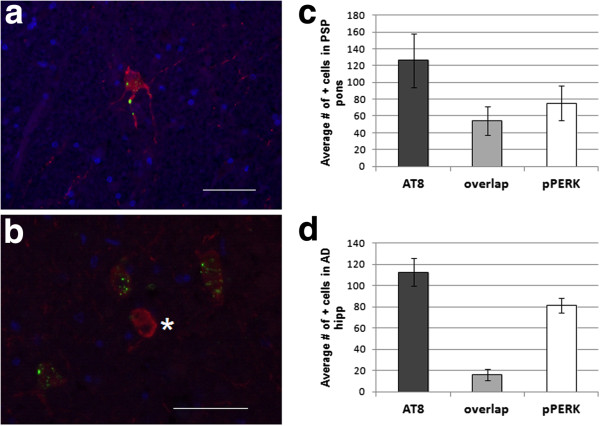
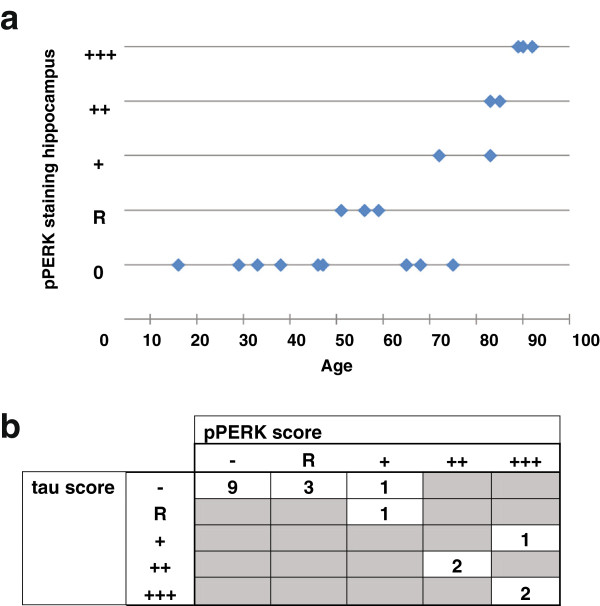
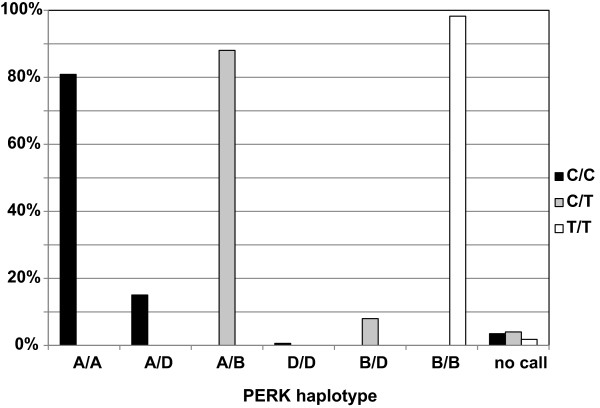
Background: Progressive supranuclear palsy (PSP) is a neurodegenerative disorder pathologically characterized by intracellular tangles of hyperphosphorylated tau protein distributed throughout the neocortex, basal ganglia, and brainstem. A genome-wide association study identified EIF2AK3 as a risk factor for PSP. EIF2AK3 encodes PERK, part of the endoplasmic reticulum’s (ER) unfolded protein response (UPR). PERK is an ER membrane protein that senses unfolded protein accumulation within the ER lumen. Recently, several groups noted UPR activation in Alzheimer’s disease (AD), Parkinson’s disease (PD), amyotrophic lateral sclerosis, multiple system atrophy, and in the hippocampus and substantia nigra of PSP subjects. Here, we evaluate UPR PERK activation in the pons, medulla, midbrain, hippocampus, frontal cortex and cerebellum in subjects with PSP, AD, and in normal controls. Results: We found UPR activation primarily in disease-affected brain regions in both disorders. In PSP, the UPR was primarily activated in the pons and medulla and to a much lesser extent in the hippocampus. In AD, the UPR was extensively activated in the hippocampus. We also observed UPR activation in the hippocampus of some elderly normal controls, severity of which positively correlated with both age and tau pathology but not with Aβ plaque burden. Finally, we evaluated EIF2AK3 coding variants that influence PERK activation. We show that a haplotype associated with increased PERK activation is genetically associated with increased PSP risk. Conclusions: The UPR is activated in disease affected regions in PSP and the genetic evidence shows that this activation increases risk for PSP and is not a protective response.
Overview
The claims and statistics of this paper haven’t been checked yet.
Run the check — free, no account needed. It reads the open-access text and checks the sources it cites.
Integrity signals
Registry
Cites
Statistics
Figures
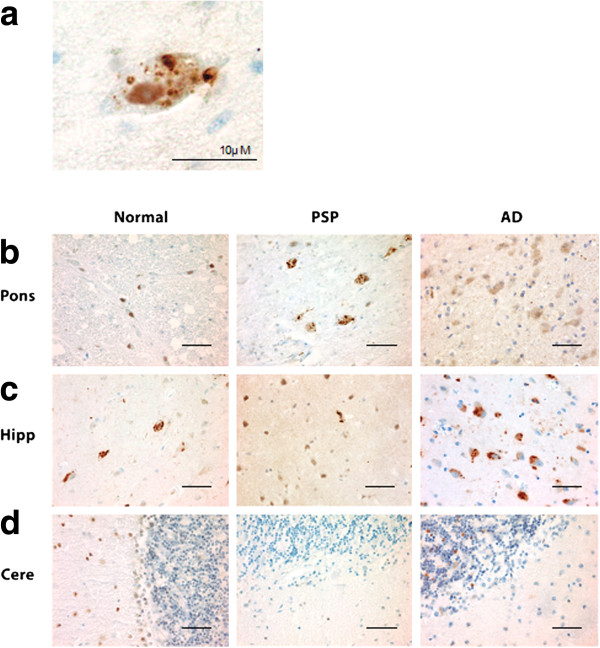
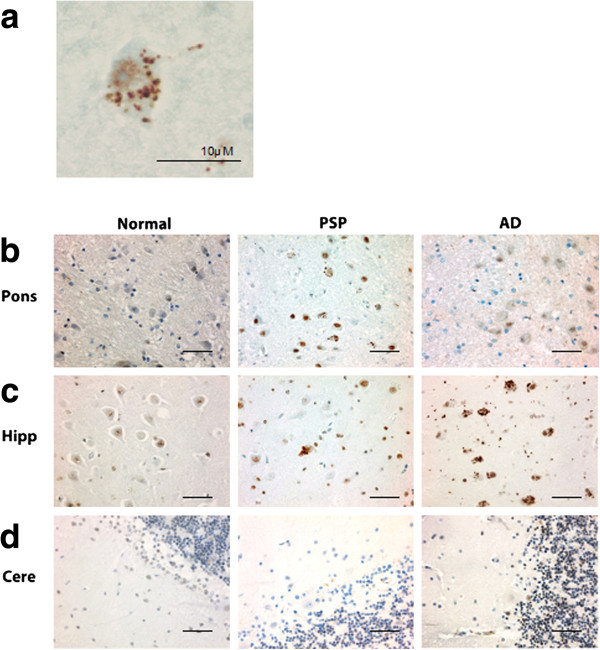
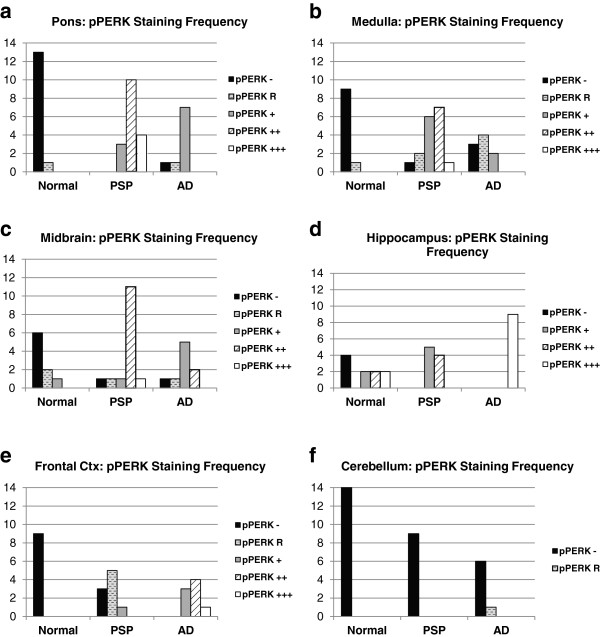
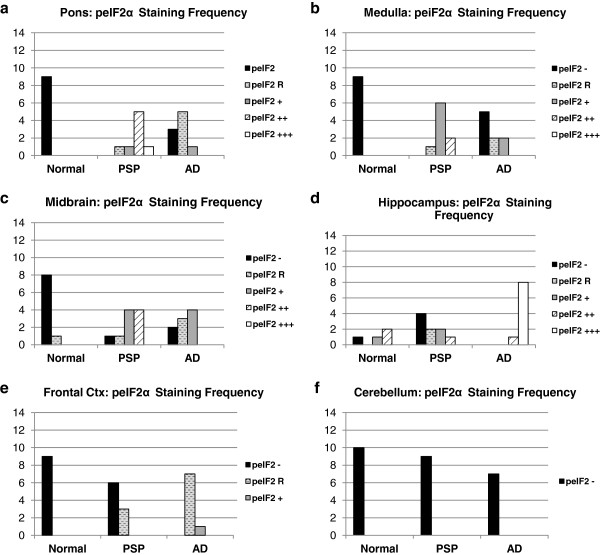
Verification
Claims the paper makes
The claims and statistics of this paper haven’t been checked yet.
Run the check — free, no account needed. It reads the open-access text and checks the sources it cites.
Claims other papers make about this one
Each is checked against this paper’s own text: does it say what the citing paper says it does?
The cited source says what the claim attributes to it.
In the citing paper
“We have previously referred to these topics, but regardless of the disease-specific aggregate, there is evidence of a kind of common final way leading to PERK hyperactivation in disease-affected brain regions [397].”
From GANAB and N-Glycans Substrates Are Relevant in Human Physiology, Polycystic Pathology and Multiple Sclerosis: A Review (2022) · cites this paper as [397]
Self-check
Percentages, sums and reported differences re-computed from the paper’s own numbers.
The self-check needs the paper’s full text.
Citations
Cites
1 retracted
Atkin, J. D., Farg, M. A., Walker, A. K., McLean, C., Tomas, D., & Horne, M. K. (2008) · Neurobiology of Disease · doi:10.1016/j.nbd.2008.02.009 · Cited by 350
RetractedAmyloid oligomers exacerbate tau pathology in a mouse model of tauopathy
Selenica, M.-L. B., Brownlow, M., Jimenez, J. P., Lee, D. C., Pena, G., Dickey, C. A., Gordon, M. N., & Morgan, D. (2013) · Neurodegenerative Diseases · doi:10.1159/000337230 · Cited by 10,359
An integrated map of genetic variation from 1,092 human genomes
The 1000 Genomes Project Consortium (2012) · Nature · doi:10.1038/nature11632 · Cited by 7,711
Signal integration in the endoplasmic reticulum unfolded protein response
Ron, D., & Walter, P. (2007) · Nature Reviews Molecular Cell Biology · doi:10.1038/nrm2199 · Cited by 6,431
The Unfolded Protein Response: From Stress Pathway to Homeostatic Regulation
Walter, P., & Ron, D. (2011) · Science · doi:10.1126/science.1209038 · Cited by 5,897
Mutation of the mouse klotho gene leads to a syndrome resembling ageing
Kuro-o, M., Matsumura, Y., Aizawa, H., Kawaguchi, H., Suga, T., Utsugi, T., Ohyama, Y., Kurabayashi, M., Kaname, T., Kume, E., et al. (1997) · Nature · doi:10.1038/36285 · Cited by 3,837
Neuropathological alterations in Alzheimer disease
Serrano-Pozo, A., Frosch, M. P., Masliah, E., & Hyman, B. T. (2011) · Cold Spring Harbor Perspectives in Medicine · doi:10.1101/cshperspect.a006189 · Cited by 3,345
An Integrated Stress Response Regulates Amino Acid Metabolism and Resistance to Oxidative Stress
Harding, H. P., Zhang, Y., Zeng, H., Novoa, I., Lu, P. D., Calfon, M. A., Sadri, N., Yun, C., Popko, B., Paules, R. S., et al. (2003) · Molecular Cell · doi:10.1016/s1097-2765(03)00105-9 · Cited by 3,336
Braak, H., Alafuzoff, I., Arzberger, T., Kretzschmar, H., & Del Tredici, K. (2006) · Acta Neuropathologica · doi:10.1007/s00401-006-0127-z · Cited by 3,172
Litvan, I., Agid, Y., Calne, D., Campbell, G., Dubois, B., Duvoisin, R. C., Goetz, C. G., Golbe, L. I., Grafman, J., Growdon, J. H., et al. (1996) · Neurology · doi:10.1212/wnl.47.1.1 · Cited by 2,538
Stages of the Pathologic Process in Alzheimer Disease: Age Categories From 1 to 100 Years
Braak, H., Thal, D. R., Ghebremedhin, E., & Del Tredici, K. (2011) · Journal of Neuropathology & Experimental Neurology · doi:10.1097/nen.0b013e318232a379 · Cited by 2,194
Tau-mediated neurodegeneration in Alzheimer’s disease and related disorders
Ballatore, C., Lee, V. M.-Y., & Trojanowski, J. Q. (2007) · Nature Reviews Neuroscience · doi:10.1038/nrn2194 · Cited by 2,174
Self-citationTravers, K. J., Patil, C. K., Wodicka, L. M., Lockhart, D. J., Weissman, J. S., & Walter, P. (2000) · Cell · doi:10.1016/s0092-8674(00)80835-1 · Cited by 1,994
Progressive Supranuclear Palsy
Steele, J. C. (1964) · Archives of Neurology · doi:10.1001/archneur.1964.00460160003001 · Cited by 1,930
HYMAN, B. T., & TROJANOWSKI, J. Q. (1997) · Journal of Neuropathology and Experimental Neurology · doi:10.1097/00005072-199710000-00002 · Cited by 1,542
Self-citationSNAP: a web-based tool for identification and annotation of proxy SNPs using HapMap
Johnson, A. D., Handsaker, R. E., Pulit, S. L., Nizzari, M. M., O’Donnell, C. J., & de Bakker, P. I. W. (2008) · Bioinformatics · doi:10.1093/bioinformatics/btn564 · Cited by 1,339
Kozutsumi, Y., Segal, M. S., Normington, K., Gething, M.-J. H., & Sambrook, J. (1988) · Nature · doi:10.1038/332462a0 · Cited by 1,322
Autophagy Counterbalances Endoplasmic Reticulum Expansion during the Unfolded Protein Response
Bernales, S., McDonald, K. L., & Walter, P. (2006) · PLoS Biology · doi:10.1371/journal.pbio.0040423 · Cited by 1,047
A Comparison of Linkage Disequilibrium Measures for Fine-Scale Mapping
Devlin, B., & RISCH, N. J. (1995) · Genomics · doi:10.1006/geno.1995.9003 · Cited by 1,039
Self-citationConsensus Recommendations for the Postmortem Diagnosis of Alzheimer’s Disease
(1997) · Neurobiology of Aging · doi:10.1016/s0197-4580(97)00057-2 · Cited by 981
Hauw, J., Daniel, S. E., Dickson, D. W., Horoupian, D. S., Jellinger, K. A., Lantos, P. L., McKee, A. C., Tabaton, M., & Litvan, I. (1994) · Neurology · doi:10.1212/wnl.44.11.2015 · Cited by 854
Rutkowski, D. T., Arnold, S. M., Miller, C. N., Wu, J., Li, J., Gunnison, K. M., Mori, K., Akha, A. A. S., Raden, D. L., & Kaufman, R. J. (2006) · PLoS Biology · doi:10.1371/journal.pbio.0040374 · Cited by 833
Rouschop, K. M. A., van den Beucken, T., Dubois, L., Niessen, H., Bussink, J., Savelkouls, K., Keulers, T., Mujcic, H., Landuyt, W., Voncken, J. W., et al. (2010) · Journal of Clinical Investigation · doi:10.1172/jci40027 · Cited by 829
Association of an Extended Haplotype in the Tau Gene with Progressive Supranuclear Palsy
Baker, M., Litvan, I., Houlden, H., Adamson, J., Dickson, D., Perez-Tur, J., Hardy, J., Lynch, T., Bigio, E., & Hutton, M. (1999) · Human Molecular Genetics · doi:10.1093/hmg/8.4.711 · Cited by 781
Sustained translational repression by eIF2α-P mediates prion neurodegeneration
Moreno, J. A., Radford, H. E., Peretti, D., Steinert, J. R., Verity, N., Martin, M. G., Halliday, M., Morgan, J., Dinsdale, D. D., Ortori, C. A., et al. (2012) · Nature · doi:10.1038/nature11058 · Cited by 616
Identification of common variants influencing risk of the tauopathy progressive supranuclear palsy
PSP Genetics Study Group, Höglinger, G. U., Melhem, N. M., Dickson, D. W., Sleiman, P. M. A., Wang, L.-S., Klei, L., Rademakers, R., de Silva, R., Litvan, I., et al. (2011) · Nature Genetics · doi:10.1038/ng.859 · Cited by 603
Self-citationThe Unfolded Protein Response Is Activated in Pretangle Neurons in Alzheimer's Disease Hippocampus
Hoozemans, J. J. M., van Haastert, E. S., Nijholt, D. A. T., Rozemuller, A. J. M., Eikelenboom, P., & Scheper, W. (2009) · The American Journal of Pathology · doi:10.2353/ajpath.2009.080814 · Cited by 600
Activation of the unfolded protein response in Parkinson’s disease
Hoozemans, J. J. M., van Haastert, E. S., Eikelenboom, P., de Vos, R. A. I., Rozemuller, J. M., & Scheper, W. (2007) · Biochemical and Biophysical Research Communications · doi:10.1016/j.bbrc.2007.01.043 · Cited by 525
Litvan, I., Hauw, J., Bartko, J. J., Lantos, P. L., Daniel, S. E., Horoupian, D. S., McKee, A. C., Dickson, D. W., Bancher, C., Tabaton, M., et al. (1996) · Journal of Neuropathology & Experimental Neurology · doi:10.1097/00005072-199601000-00010 · Cited by 474
Endoplasmic Reticulum Stress Is Important for the Manifestations of α-Synucleinopathy In Vivo
Colla, E., Coune, P., Liu, Y., Pletniková, O., Troncoso, J. C., Iwatsubo, T., Schneider, B. L., & Lee, M. K. (2012) · Journal of Neuroscience · doi:10.1523/jneurosci.5367-11.2012 · Cited by 389
Genetic evidence for the involvement of τ in progressive supranuclear palsy
Conrad, C., Andreadis, A., Trojanowski, J. Q., Dickson, D. W., Kang, D. E., Chen, X., Wiederholt, W. C., Hansen, L., Masliah, E., Thal, L. J., et al. (1997) · Annals of Neurology · doi:10.1002/ana.410410222 · Cited by 388
Self-citationColla, E., Jensen, P. H., Pletniková, O., Troncoso, J. C., Glabe, C. G., & Lee, M. K. (2012) · Journal of Neuroscience · doi:10.1523/jneurosci.5368-11.2012 · Cited by 324
Progressive Supranuclear Palsy: Pathology and Genetics
Dickson, D. W., Rademakers, R., & Hutton, M. L. (2007) · Brain Pathology · doi:10.1111/j.1750-3639.2007.00054.x · Cited by 314
Abisambra, J. F., Jinwal, U. K., Blair, L. J., O’Leary, J. C., Li, Q., Brady, S., Wang, L., Guidi, C., Zhang, B., Nordhues, B. A., et al. (2013) · Journal of Neuroscience · doi:10.1523/jneurosci.5397-12.2013 · Cited by 275
Bánhegyi, G., BAUMEISTER, P., Benedetti, A., Dong, D., Fu, Y., Lee, A. S., Li, J., Mao, C., Margittai, É., Ni, M., et al. (2007) · Annals of the New York Academy of Sciences · doi:10.1196/annals.1391.007 · Cited by 268
Stanford, P. M., Halliday, G. M., Brooks, W. S., Kwok, J. B. J., Storey, C. E., Creasey, H., Morris, J. G. L., Fulham, M. J., & Schofield, P. R. (2000) · Brain · doi:10.1093/brain/123.5.880 · Cited by 262
Protein folding stress in neurodegenerative diseases: a glimpse into the ER
Matus, S., Glimcher, L. H., & Hetz, C. A. (2011) · Current Opinion in Cell Biology · doi:10.1016/j.ceb.2011.01.003 · Cited by 233
Olfactory epithelium amyloid‐β and paired helical filament‐tau pathology in Alzheimer disease
Arnold, S. E., Lee, E. B., Moberg, P. J., Stutzbach, L., Kazi, H., Han, L., Lee, V. M. ‐., & Trojanowski, J. Q. (2009) · Annals of Neurology · doi:10.1002/ana.21910 · Cited by 215
Self-citationAn R5L τ mutation in a subject with a progressive supranuclear palsy phenotype
Poorkaj, P., Muma, N. A., Zhukareva, V. A., Cochran, E. J., Shannon, K. M., Hurtig, H. I., Koller, W. C., Bird, T. D., Trojanowski, J. Q., Lee, V. M. ‐., et al. (2002) · Annals of Neurology · doi:10.1002/ana.10340 · Cited by 203
Self-citationNijholt, D. A. T., van Haastert, E. S., Rozemüller, A. J. M., Scheper, W., & Hoozemans, J. J. M. (2011) · The Journal of Pathology · doi:10.1002/path.3969 · Cited by 203
Rademakers, R., Melquist, S., Cruts, M., Theuns, J., Del-Favero, J., Poorkaj, P., Baker, M., Sleegers, K., Crook, R., De Pooter, T., et al. (2005) · Human Molecular Genetics · doi:10.1093/hmg/ddi361 · Cited by 164
Self-citationRomijn, H. J., Uum, J. F. M. V., Breedijk, I., Emmering, J., Radu, I., & Pool, C. W. (1999) · Journal of Histochemistry & Cytochemistry · doi:10.1177/002215549904700211 · Cited by 145
Nijholt, D. A. T., de Graaf, T. R., van Haastert, E. S., Oliveira, A. O., Berkers, C. R., Zwart, R., Ovaa, H., Baas, F., Hoozemans, J. J. M., & Scheper, W. (2011) · Cell Death and Differentiation · doi:10.1038/cdd.2010.176 · Cited by 139
The unfolded protein response in familial amyotrophic lateral sclerosis
Wang, L., Popko, B., & Roos, R. P. (2010) · Human Molecular Genetics · doi:10.1093/hmg/ddq546 · Cited by 132
Age-dependent synuclein pathology following traumatic brain injury in mice.
Uryu, K., Giasson, B. I., Longhi, L., Martinez, D., Murray, I. V. J., Conte, V., Nakamura, M., Saatman, K., Talbot, K., Horiguchi, T., et al. (2003) · Experimental Neurology · doi:10.1016/s0014-4886(03)00245-0 · Cited by 113
Self-citationEvolutionary‐based association analysis using haplotype data
Seltman, H. J., Roeder, K., & Devlin, B. (2003) · Genetic Epidemiology · doi:10.1002/gepi.10246 · Cited by 111
Self-citationA New Mutation of the τ Gene, G303V, in Early-Onset Familial Progressive Supranuclear Palsy
Ros, R., Thobois, S., Streichenberger, N., Kopp, N., Sánchez, M. P., Pérez, M., Hoenicka, J., Ávila, J., Honnorat, J., & de Yébenes, J. G. (2005) · Archives of Neurology · doi:10.1001/archneur.62.9.1444 · Cited by 93
Scheper, W., & Hoozemans, J. J. M. (2009) · Current Medicinal Chemistry · doi:10.2174/092986709787458506 · Cited by 92
Transactive Response DNA-Binding Protein 43 Burden in Familial Alzheimer Disease and Down Syndrome
Lippa, C. F., Rosso, A. L., Stutzbach, L., Neumann, M., Lee, V. M. ‐., & Trojanowski, J. Q. (2009) · Archives of Neurology · doi:10.1001/archneurol.2009.277 · Cited by 83
Self-citationBuilding an integrated neurodegenerative disease database at an academic health center
Xie, S. X., Baek, Y., Grossman, M., Arnold, S. E., Karlawish, J. H., Siderowf, A. D., Hurtig, H. I., Elman, L. B., McCluskey, L. F., Deerlin, V. M. V., et al. (2011) · Alzheimer s & Dementia · doi:10.1016/j.jalz.2010.08.233 · Cited by 83
Self-citationMakioka, K., Yamazaki, T., Fujita, Y., Takatama, M., Nakazato, Y., & Okamoto, K. (2010) · Journal of the Neurological Sciences · doi:10.1016/j.jns.2010.06.019 · Cited by 53
Lajoie, P., & Snapp, E. L. (2011) · Journal of Cell Science · doi:10.1242/jcs.087510 · Cited by 50
APOE E4 is a determinant for Alzheimer type pathology in progressive supranuclear palsy
Tsuboi, Y., Josephs, K. A., Cookson, N., & Dickson, D. W. (2003) · Neurology · doi:10.1212/01.wnl.0000044340.37138.a9 · Cited by 45
Liu, J., Hoppman, N. L., O’Connell, J. R., Wang, H., Streeten, E. A., McLenithan, J. C., Mitchell, B. D., & Shuldiner, A. R. (2011) · Journal of Bone and Mineral Research · doi:10.1002/jbmr.549 · Cited by 42
Rossi, G., Gasparoli, E., Pasquali, C., Fede, G. D., Testa, D., Albanese, A., Bracco, F., & Tagliavini, F. (2004) · Annals of Neurology · doi:10.1002/ana.20006 · Cited by 35
Cruchaga, C., Vidal-Taboada, J. M., Ezquerra, M., Lorenzo, E., Martínez‐Lage, P., Estrada, M. B., TOLOSA, E. S., & Pástor, P. (2008) · Neurobiology of Disease · doi:10.1016/j.nbd.2008.09.027 · Cited by 27
The National Institute of Environmental Health Sciences
Lee, D. H. K. (1970) · American Industrial Hygiene Association Journal · doi:10.1080/0002889708506305 · Cited by 22
Role for peroxisome proliferator-activated receptor-gamma in Alzheimer's disease.
van Geel (2001) · Open Repository and Bibliography (University of Luxembourg) · doi:10.1002/1531-8249(20010201)49:2 · Cited by 7
Cited by
Sorted by citations
The Role of Endoplasmic Reticulum Stress in Human Pathology
Oakes, S. A., & Papa, F. R. (2014) · Annual Review of Pathology Mechanisms of Disease · doi:10.1146/annurev-pathol-012513-104649 · Cited by 1,621
ER stress and the unfolded protein response in neurodegeneration
Hetz, C. A., & Saxena, S. (2017) · Nature Reviews Neurology · doi:10.1038/nrneurol.2017.99 · Cited by 1,006
Endoplasmic Reticulum Stress and Unfolded Protein Response in Neurodegenerative Diseases
Ghemrawi, R., & Khair, M. (2020) · International Journal of Molecular Sciences · doi:10.3390/ijms21176127 · Cited by 415
Halliday, M., Radford, H. E., Sekine, Y., Moreno, J. A., Verity, N., Quesne, J. P. C. L., Ortori, C. A., Barrett, D. A., Fromont, C., Fischer, P. M., et al. (2015) · Cell Death and Disease · doi:10.1038/cddis.2015.49 · Cited by 370
The unfolded protein response in neurodegenerative diseases: a neuropathological perspective
Scheper, W., & Hoozemans, J. J. M. (2015) · Acta Neuropathologica · doi:10.1007/s00401-015-1462-8 · Cited by 383
Metadata
- Authors
- Stutzbach, L. D., Xie, S. X., Naj, A. C., Albin, R., Gilman, S., PSP Genetics Study Group, Lee, V. M. Y., Trojanowski, J. Q., Devlin, B., & Schellenberg, G. D.
- Affiliations
- University of Pennsylvania (US)
- University of Michigan (US)
- University of Pittsburgh (US)
- Corresponding author
- Schellenberg, Gerard D
- ORCID
- Venue
- Acta Neuropathologica Communications
- Published
- 2013-07-06
- Volume
- 1
- Issue
- 1
- Pages
- 31-31
- ISSN
- 2051-5960 (ISSN-L)
- PMC
- PMC3893579
- OpenAlex
- W2106758408
- Cited by
- 197
- References
- 59
- Citations by year
- 2026: 10 · 2025: 9 · 2024: 17 · 2023: 23 · 2022: 20 · 2021: 11 · 2020: 34 · 2019: 14 · 2018: 16 · 2017: 14 · 2016: 10 · 2015: 10 · 2014: 8 · 2013: 1
- FWCI
- 5.61
- Type
- journal article
- Language
- en
- Open access
- gold
- doi.org
- Licence
- cc-by
- Locations
- Acta Neuropathologica Communications (publishedVersion, cc-by)
- Europe PMC (PubMed Central) (publishedVersion, cc-by)
- PubMed Central (publishedVersion, cc-by)
- PubMed (publishedVersion)
- D-Scholarship@Pitt (University of Pittsburgh) (acceptedVersion)
- UCL Discovery (University College London) (submittedVersion)
- Funders
- Michael J. Fox Foundation for Parkinson's Research (U24 NS072026, 05-901, 211002, P30 AG19610)
- University of Michigan
- Arizona Department of Health Services (P30 AG19610, U24 NS072026, 05-901, 211002, Contract 211002)
- National Institute for Health and Care Research (NF-SI-0512-10033)
- Arizona Biomedical Research Commission (P30 AG19610, 05–901, Contracts 4001, 0011, 05‐901 and 1001, U24 NS072026, 4001, 0011, 05-901, and 1001, 211002)
- National Institutes of Health (U24NS07-2026, 05-901, AG 10 124, 1f31ag043254-01, 211002, AG19610, AG017586)
- National Institute on Aging (211002, P30-AG-19610, F31 AG043254, 1F31AG043254, P50AG005131, AG-19610, P30AG010124, P01AG017586, R37AG011762, AG-10124, R37 AG11762, P30AG019610, 05-901, AG-017586, P50AG005134, P30AG062421)
- National Institute of Neurological Disorders and Stroke (NS072026, 211002, U24NS072026, 05-901, P30 AG19610)
- Topics
- Life Sciences › Biochemistry, Genetics and Molecular Biology › Cell Biology › Endoplasmic Reticulum Stress and Disease
- Life Sciences › Neuroscience › Cellular and Molecular Neuroscience › Alzheimer's disease research and treatments
- Health Sciences › Medicine › Clinical Neurology › Parkinson's Disease Mechanisms and Treatments
- Keywords
- unfolded protein response, PERK, progressive supranuclear palsy, Alzheimer's disease, tau pathology, endoplasmic reticulum stress, passive optical networks, medulla, hippocampus, genetic risk, amyloid plaques
- MeSH terms
- Aged, Aging, Alzheimer Disease, Brain, Female, Haplotypes, Humans, Male, Middle Aged, Supranuclear Palsy, Progressive, tau Proteins, eIF-2 Kinase, Genetic Predisposition to Disease, Polymorphism, Single Nucleotide, Unfolded Protein Response
About these checks
Registry, retraction, Cites and statistics results are computed, not judged, with one exception: a printed reference that no index lists is read once by a model before it counts as a citation error. Claims are extracted by a model and kept only when their quote appears verbatim in the text; each cited source is then checked, with a model’s help, for whether it says what the claim relies on. Those verdicts can be wrong — read the claim’s quote and the cited source before relying on one.
Statistics and arithmetic are recomputed, not judged.
Confidence bands are shown only for fields calibrated on our annotated test set. None is calibrated yet, so no band is shown.
What counts as a claim ›How we measure confidence ›How we check this ›
Are you an author, or do you see a problem with this page? Request a review
