

The DOI matches its Crossref record; 22 of the 22 references it cites were found in a registry or an index.
The Mammalian Phenotype Ontology as a tool for annotating, analyzing and comparing phenotypic information
Open accessAbstract
The Mammalian Phenotype (MP) Ontology enables robust annotation of mammalian phenotypes in the context of mutations, quantitative trait loci and strains that are used as models of human biology and disease. The MP Ontology supports different levels and richness of phenotypic knowledge and flexible annotations to individual genotypes. It continues to develop dynamically via collaborative input from research groups, mutagenesis consortia, and biological domain experts. The MP Ontology is currently used by the Mouse Genome Database and Rat Genome Database to represent phenotypic data.
Overview
The claims and statistics of this paper haven’t been checked yet.
Run the check — free, no account needed. It reads the open-access text and checks the sources it cites.
Integrity signals
Registry
Cites
Statistics
Figures
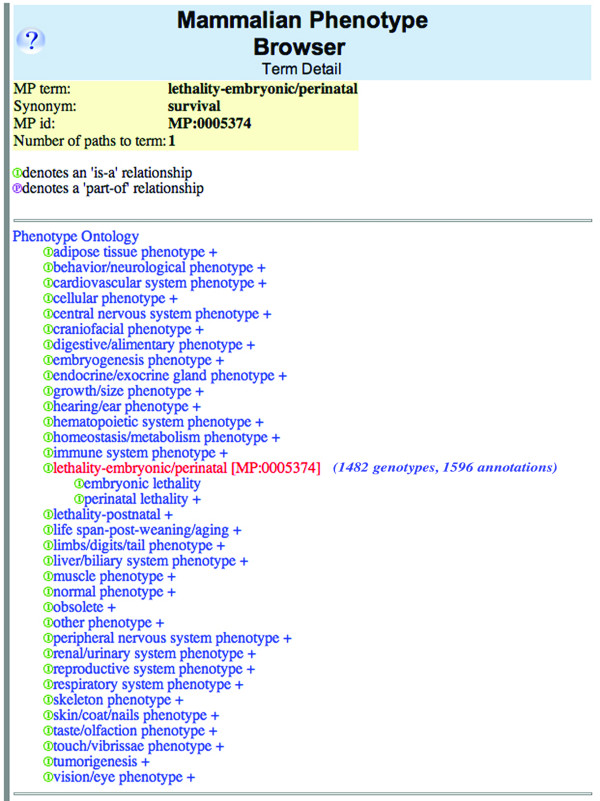
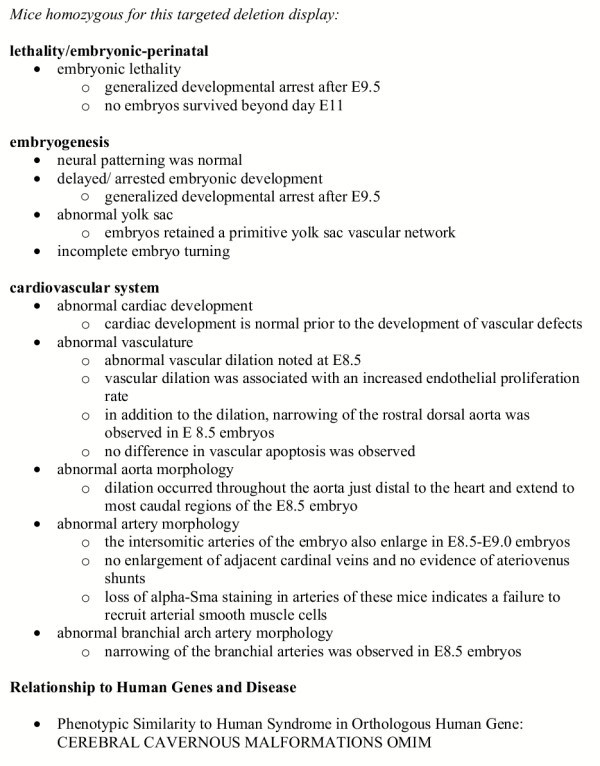
Verification
Claims the paper makes
The claims and statistics of this paper haven’t been checked yet.
Run the check — free, no account needed. It reads the open-access text and checks the sources it cites.
Claims other papers make about this one
Each is checked against this paper’s own text: does it say what the citing paper says it does?
The cited source says what the claim attributes to it.
In the citing paper
“mining genes associated with phenotypes from the Mammalian Phenotype Ontology resource (Smith et al, 2005; Chen et al, 2007) revealed that, albeit less significant when compared to Hep‐ID TFs, Hep‐IDCONNECT TF‐encoding genes are linked to abnormal liver phenotypes and metabolic functions (Fig 2G).”
From An extended transcription factor regulatory network controls hepatocyte identity (2023) · cites this paper as Smith et al, 2005
Self-check
Percentages, sums and reported differences re-computed from the paper’s own numbers.
The self-check needs the paper’s full text.
Citations
Cites
Gene Ontology: tool for the unification of biology
Ashburner, M., Ball, C. A., Blake, J. A., Botstein, D., Butler, H., Cherry, J. M., Davis, A. P., Dolinski, K., Dwight, S. S., Eppig, J. T., et al. (2000) · Nature Genetics · doi:10.1038/75556 · Cited by 43,206
Self-citationThe Gene Ontology (GO) database and informatics resource
Gene Ontology Consortium (2003) · Nucleic Acids Research · doi:10.1093/nar/gkh036 · Cited by 4,596
Mutation nomenclature extensions and suggestions to describe complex mutations: A discussion
den Dunnen, J. T., & Antonarakis, S. E. (2000) · Human Mutation · doi:10.1002/(sici)1098-1004(200001)15:1 · Cited by 1,757
Creating the Gene Ontology Resource: Design and ImplementationPreprint
The Gene Ontology Consortium (2001) · Genome Research · doi:10.1101/gr.180801 · Cited by 957
Online Mendelian Inheritance in Man 'OMIM'.
Amladi, S. (2007) · PubMed · Cited by 871
Creating the gene ontology resource: design and implementation.
Blake, J. A., Corradi, J., Eppig, J. T., Hill, D. P., Richardson, J. E., & Ringwald, M. (2001) · The Mouseion at the JAXlibrary (Jackson Laboratory) · Cited by 826
Self-citationBiology of the Laboratory Mouse
(1941) · JAMA · doi:10.1001/jama.1941.02820440081034 · Cited by 805
The Comprehensive Knockout Mouse Project Consortium (2004) · Nature Genetics · doi:10.1038/ng0904-921 · Cited by 608
Self-citationGene Ontology Consortium. The Gene Ontology (GO) database and informatics resource
Harris, M. A., Clark, J., Ireland, A., Lomax, J., Ashburner, M., Foulger, R. E., Eilbeck, K. L., Lewis, S., Marshall, B., Mungall, C., et al. (2004) · Cited by 295
Self-citationUsing ontologies to describe mouse phenotypes
Gkoutos, G. V., Green, E. C. J., Mallon, A., Hancock, J. M., & Davidson, D. R. (2004) · Genome biology · doi:10.1186/gb-2004-6-1-r8 · Cited by 241
Cited by
Sorted by citations
Items 201–300 of 421
An integrative, translational approach to understanding rare and orphan genetically based diseases
Hoehndorf, R., Schofield, P. N., & Gkoutos, G. V. (2013) · Interface Focus · doi:10.1098/rsfs.2012.0055 · Cited by 17
Masseroli, M. (2007) · IEEE Transactions on Information Technology in Biomedicine · doi:10.1109/titb.2006.884367 · Cited by 17
Exploring Genetic, Genomic, and Phenotypic Data at the Rat Genome Database
Laulederkind, S. J. F., Hayman, G. T., Wang, S., Lowry, T. F., Nigam, R., Petri, V., Smith, J. R., Dwinell, M. R., Jacob, H. J., & Shimoyama, M. E. (2012) · Current Protocols in Bioinformatics · doi:10.1002/0471250953.bi0114s40 · Cited by 16
Osborne, J. D., Lin, S. M., Kibbe, W. A., Danila, M. I., & Rex, L. C. (2006) · Cited by 16
Elmore, S. A., Cardiff, R. D., Cesta, M. F., Gkoutos, G. V., Hoehndorf, R., Keenan, C. M., McKerlie, C., Schofield, P. N., Sundberg, J. P., & Ward, J. M. (2018) · ILAR Journal · doi:10.1093/ilar/ily005 · Cited by 16
Fernando, P. C., Mabee, P., & Zeng, E. (2020) · BMC Bioinformatics · doi:10.1186/s12859-020-03773-2 · Cited by 16
Removing the cloak of invisibility: phenotyping the mouse
Justice, M. J. (2008) · Disease Models & Mechanisms · doi:10.1242/dmm.001057 · Cited by 16
The mouse-human anatomy ontology mapping project
Hayamizu, T. F., de Coronado, S., Fragoso, G., Sioutos, N., Kadin, J. A., & Ringwald, M. (2012) · Database · doi:10.1093/database/bar066 · Cited by 16
Exact score distribution computation for ontological similarity searches
Schulz, M. H., Köhler, S., Bauer, S., & Robinson, P. N. (2011) · BMC Bioinformatics · doi:10.1186/1471-2105-12-441 · Cited by 16
Clare, A. J., Wicky, H. E., Empson, R. M., & Hughes, S. M. (2017) · Frontiers in Molecular Neuroscience · doi:10.3389/fnmol.2017.00283 · Cited by 16
Rat Genome Databases, Repositories, and Tools.
Laulederkind, S., Hayman, G., Wang, S.-J., Hoffman, M., Smith, J. R., Bolton, E. R., Pons, J. D., Tutaj, M. A., Tutaj, M., Thota, J., et al. (2019) · Methods in molecular biology · doi:10.1007/978-1-4939-9581-3_3 · Cited by 14
Berton, M. P., da Silva, R. P., Banchero, G. E., Mourão, G. B., Ferraz, J. B. S., Schenkel, F. S., & Baldi, F. S. (2022) · Journal of Animal Breeding and Genetics · doi:10.1111/jbg.12682 · Cited by 15
Mouse Genome Database: From sequence to phenotypes and disease models
Eppig, J. T., Richardson, J. E., Kadin, J. A., Smith, C. L., Blake, J. A., Bult, C. J., & the MGD Team (2015) · genesis · doi:10.1002/dvg.22874 · Cited by 15
Self-citationRandhawa, V., Sharma, P., Bhushan, S., & Bagler, G. (2013) · OMICS A Journal of Integrative Biology · doi:10.1089/omi.2012.0115 · Cited by 15
A Gene-Phenotype Network for the Laboratory Mouse and Its Implications for Systematic Phenotyping
Espinosa, O., & Hancock, J. M. (2011) · PLoS ONE · doi:10.1371/journal.pone.0019693 · Cited by 15
Nigam, R., Munzenmaier, D. H., Worthey, E. A., Dwinell, M. R., Shimoyama, M. E., & Jacob, H. J. (2013) · Journal of Biomedical Semantics · doi:10.1186/2041-1480-4-36 · Cited by 15
Chua, W. W. K., & Kim, J. (2011) · Journal of Biomedical Informatics · doi:10.1016/j.jbi.2011.11.010 · Cited by 15
Keyser, R. J., Oppon, E., Carr, J. A., & Bardien, S. (2011) · Journal of Neural Transmission · doi:10.1007/s00702-011-0591-z · Cited by 15
Masuya, H., Yoshikawa, S., Heida, N., Toyoda, T., Wakana, S., & Shiroishi, T. (2007) · Journal of Bioinformatics and Computational Biology · doi:10.1142/s0219720007003168 · Cited by 15
Equus in Online Mendelian Inheritance in Animals (OMIA)
Tammen, I., Bailey, E., Mather, M., & Nicholas, F. W. (2024) · Animals · doi:10.3390/ani14142069 · Cited by 14
Improving Phenotype Name Recognition
Khordad, M., Mercer, R. E., & Rogan, P. K. (2011) · Lecture notes in computer science · doi:10.1007/978-3-642-21043-3_30 · Cited by 14
PrismEXP: gene annotation prediction from stratified gene-gene co-expression matrices
Lachmann, A., Rizzo, K., Bartal, A., Jeon, M., Clarke, D. J. B., & Ma’ayan, A. (2023) · PeerJ · doi:10.7717/peerj.14927 · Cited by 14
Bult, C. J. (2006) · Animal Genetics · doi:10.1111/j.1365-2052.2006.01475.x · Cited by 14
Semantically enabling a genome-wide association study database
Beck, T., Free, R. C., Þórisson, G. Á., & Brookes, A. J. (2012) · Journal of Biomedical Semantics · doi:10.1186/2041-1480-3-9 · Cited by 14
An ontology of fungal subcellular traits
Kumar, T. K. A., Crow, J., Wennblom, T. J., Abril, M., Letcher, P. M., Blackwell, M., Roberson, R. W., & McLaughlin, D. J. (2011) · American Journal of Botany · doi:10.3732/ajb.1100047 · Cited by 14
A Primer for the Rat Genome Database (RGD)
Laulederkind, S. J. F., Hayman, G. T., Wang, S., Smith, J. R., Petri, V., Hoffman, M. J., Pons, J. D., Tutaj, M., Ghiasvand, O., Tutaj, M., et al. (2018) · Methods in molecular biology · doi:10.1007/978-1-4939-7737-6_8 · Cited by 13
Prioritizing Pain-Associated Targets with Machine Learning
Jeon, M., Jagodnik, K. M., Kropiwnicki, E., Stein, D. J., & Ma’ayan, A. (2021) · Biochemistry · doi:10.1021/acs.biochem.0c00930 · Cited by 13
Orthology for comparative genomics in the mouse genome database
Dolan, M. E., Baldarelli, R. M., Bello, S. M., Ni, L., McAndrews-Hill, M., Bult, C. J., Kadin, J. A., Richardson, J. E., Ringwald, M., Eppig, J. T., et al. (2015) · Mammalian Genome · doi:10.1007/s00335-015-9588-5 · Cited by 13
Self-citationMUGEN mouse database; Animal models of human immunological diseases
Aidinis, V., Chandras, C., Manoloukos, M., Thanassopoulou, A., Kranidioti, K., Armaka, M., Douni, E. K., Kontoyiannis, D. L., Zouberakis, M., & Kollias, G. A. (2007) · Nucleic Acids Research · doi:10.1093/nar/gkm838 · Cited by 13
An integer programming framework for inferring disease complexes from network data
Mazza, A., Klockmeier, K., Wanker, E. E., & Sharan, R. (2016) · Bioinformatics · doi:10.1093/bioinformatics/btw692 · Cited by 13
Prediction of Protein Functions
Sleator, R. D. (2011) · Methods in molecular biology · doi:10.1007/978-1-61779-424-7_2 · Cited by 13
Clinical Ontologies for Discovery Applications
Lussier, Y. A., & Bodenreider, O. (2007) · Springer eBooks · doi:10.1007/978-0-387-48438-9_6 · Cited by 13
Phenobabelomics--mouse phenotype data resources
Hancock, J. M., & Mallon, A. (2008) · Briefings in Functional Genomics and Proteomics · doi:10.1093/bfgp/elm033 · Cited by 13
Learning to Recognize Phenotype Candidates in the Auto-Immune Literature Using SVM Re-Ranking
Collier, N., Tran, M.-V., Le, H.-Q., Ha, Q.-T., Oellrich, A., & Rebholz‐Schuhmann, D. (2013) · PLoS ONE · doi:10.1371/journal.pone.0072965 · Cited by 12
Wainberg, M., Merico, D., Keller, M. C., Fauman, E. B., & Tripathy, S. J. (2022) · Molecular Psychiatry · doi:10.1038/s41380-022-01542-6 · Cited by 12
Mining Skeletal Phenotype Descriptions from Scientific Literature
Groza, T., Hunter, J., & Zankl, A. (2013) · PLoS ONE · doi:10.1371/journal.pone.0055656 · Cited by 12
Toward knowledge support for analysis and interpretation of complex traits
Collier, N., Oellrich, A., & Groza, T. (2013) · Genome biology · doi:10.1186/gb-2013-14-9-214 · Cited by 12
Uncovering Genes and Regulatory Pathways Related to Urinary Albumin Excretion
Hageman, R. S., Leduc, M. S., Caputo, C. R., Tsaih, S., Churchill, G. A., & Korstanje, R. (2010) · Journal of the American Society of Nephrology · doi:10.1681/asn.2010050561 · Cited by 12
Concept selection for phenotypes and diseases using learn to rank
Collier, N., Oellrich, A., & Groza, T. (2015) · Journal of Biomedical Semantics · doi:10.1186/s13326-015-0019-z · Cited by 12
Rouillard, A. D., Wang, Z., & Ma’ayan, A. (2015) · Computational Biology and Chemistry · doi:10.1016/j.compbiolchem.2015.08.005 · Cited by 12
Open Biomedical Ontology-based Medline exploration
Xuan, W., Dai, M., Mirel, B., Song, J. Y., Athey, B. D., Watson, S. J., & Meng, F. (2009) · BMC Bioinformatics · doi:10.1186/1471-2105-10-s5-s6 · Cited by 12
Phenotype Data: A Neglected Resource in Biomedical Research?
Groth, P., & Weiss, B. (2006) · Current Bioinformatics · doi:10.2174/157489306777828008 · Cited by 12
Reporting phenotypes in mouse models when considering body size as a potential confounder
Oellrich, A., Meehan, T. F., Parkinson, H., Sarntivijai, S., White, J. K., & Karp, N. A. (2016) · Journal of Biomedical Semantics · doi:10.1186/s13326-016-0050-8 · Cited by 12
Wood, Z. T., Wiegardt, A. K., Barton, K. L., Clark, J. D., Homola, J. J., Olsen, B. J., King, B. L., Kovach, A. I., & Kinnison, M. T. (2021) · Evolutionary Applications · doi:10.1111/eva.13264 · Cited by 9
A knowledge based approach to matching human neurodegenerative disease and animal models
Maynard, S. M., Mungall, C., Lewis, S., Imam, F. T., & Martone, M. E. (2013) · Frontiers in Neuroinformatics · doi:10.3389/fninf.2013.00007 · Cited by 11
Analysis of disease-associated objects at the Rat Genome Database
Wang, S., Laulederkind, S. J. F., Hayman, G. T., Smith, J. R., Petri, V., Lowry, T. F., Nigam, R., Dwinell, M. R., Worthey, E. A., Munzenmaier, D. H., et al. (2013) · Database · doi:10.1093/database/bat046 · Cited by 11
Phenotype Mining for Functional Genomics and Gene Discovery
Groth, P., Leser, U., & Weiss, B. (2011) · Methods in molecular biology · doi:10.1007/978-1-61779-176-5_10 · Cited by 11
Li, J., Bi, L., Sun, Y., Lu, Z., Lin, Y., Bai, O., & Shao, H. (2014) · Molecular Biology Reports · doi:10.1007/s11033-014-3705-5 · Cited by 11
RetractedWhere to search top-K biomedical ontologies?
Oliveira, D., Butt, A. S., Armin Haller, A., Rebholz‐Schuhmann, D., & Sahay, R. (2018) · Briefings in Bioinformatics · doi:10.1093/bib/bby015 · Cited by 11
Fisher, M. E., Segerdell, E., Matentzoglu, N., Nenni, M. J., Fortriede, J. D., Chu, S., Pells, T. J., Osumi-Sutherland, D., Chaturvedi, P., James‐Zorn, C., et al. (2022) · BMC Bioinformatics · doi:10.1186/s12859-022-04636-8 · Cited by 11
Open biomedical pluralism: formalising knowledge about breast cancer phenotypes
Šojić, A., & Kutz, O. (2012) · Journal of Biomedical Semantics · doi:10.1186/2041-1480-3-s2-s3 · Cited by 11
Meta-analysis and profiling of cardiac expression modules
Akavia, U. D., & Benayahu, D. (2008) · Physiological Genomics · doi:10.1152/physiolgenomics.90248.2008 · Cited by 11
(1991) · General Pharmacology The Vascular System · doi:10.1016/0306-3623(91)90044-7 · Cited by 11
Dintor: functional annotation of genomic and proteomic data
Weichenberger, C. X., Blankenburg, H., Palermo, A., D’Elia, Y., König, E., Bernstein, E., & Domingues, F. S. (2015) · BMC Genomics · doi:10.1186/s12864-015-2279-5 · Cited by 10
Kim, J., Ekstrom, T. J., Yang, W., Donahue, G., Grygoryev, D., Ngo, T. T. M., Muschler, J. L., Morgan, T. K., & Zaret, K. S. (2021) · Molecular Cancer Research · doi:10.1158/1541-7786.mcr-21-0483 · Cited by 10
Integration of global resources for human genetic variation and disease
Schofield, P. N., & Hancock, J. M. (2012) · Human Mutation · doi:10.1002/humu.22079 · Cited by 10
Two approaches to integrating phenotype and clinical information.
Burgun, A., Fleur Mougin, A., & Bodenreider, O. (2009) · PubMed Central · Cited by 10
Vogt, I., Prinz, J., Worf, K., & Campillos, M. (2014) · Bioinformatics · doi:10.1093/bioinformatics/btu487 · Cited by 11
Building reference alignments for compound matching of multiple ontologies using OBO cross-products
Pesquita, C., Cheatham, M., Faria, D., Barros, J., dos Santos, E. M., & Couto, F. M. (2014) · International Conference on Ontology Matching · Cited by 10
Ontology-based cross-species integration and analysis of Saccharomyces cerevisiae phenotypes
Gkoutos, G. V., & Hoehndorf, R. (2012) · Journal of Biomedical Semantics · doi:10.1186/2041-1480-3-s2-s6 · Cited by 10
A Novel Drug-Mouse Phenotypic Similarity Method Detects Molecular Determinants of Drug Effects
Prinz, J., Vogt, I., Adornetto, G., & Campillos, M. (2016) · PLoS Computational Biology · doi:10.1371/journal.pcbi.1005111 · Cited by 10
Kahanda, I., & Ben‐Hur, A. (2017) · ACM International Conference on Bioinformatics, Computational Biology, and Health Informatics (ACM-BCB) · doi:10.1145/3107411.3107417 · Cited by 11
An advanced strategy for integration of biological measurement data
Masuya, H., Gkoutos, G. V., Tanaka, N., Waki, K., Okuda, Y., Kushida, T., Kobayashi, N., Doi, K., Kozaki, K., & Hoehndorf, R. (2011) · University of Birmingham Research Portal (University of Birmingham) · Cited by 10
Using multiple ontologies to integrate complex biological data
Shimoyama, M. E., Petri, V., Pasko, D., Bromberg, S. K., Wu, W., Chen, J., Nenasheva, N., Kwitek, A. E., Twigger, S. N., & Jacob, H. J. (2005) · Comparative and Functional Genomics · doi:10.1002/cfg.498 · Cited by 10
The Rat Genome Database: Genetic, Genomic, and Phenotypic Data Across Multiple Species
Laulederkind, S. J. F., Hayman, G. T., Wang, S., Kaldunski, M. L., Vedi, M., Demos, W., Tutaj, M., Smith, J. R., Lamers, L., Gibson, A. C., et al. (2023) · Current Protocols · doi:10.1002/cpz1.804 · Cited by 9
Quantitative comparison of mapping methods between Human and Mammalian Phenotype Ontology
Oellrich, A., Gkoutos, G. V., Hoehndorf, R., & Rebholz‐Schuhmann, D. (2012) · Journal of Biomedical Semantics · doi:10.1186/2041-1480-3-s2-s1 · Cited by 9
Malhotra, A. G., Singh, S., Jha, M., & Pandey, K. M. (2018) · IEEE Transactions on Computational Biology and Bioinformatics · doi:10.1109/tcbb.2018.2835459 · Cited by 9
de Evsikova, C. M., Raplee, I., Lockhart, J. H., Jaimes, G., & Evsikov, A. V. (2019) · Journal of Personalized Medicine · doi:10.3390/jpm9020021 · Cited by 10
CASIMIR: Coordination and Sustainability of International Mouse Informatics Resources
Hancock, J. M., Schofield, P. N., Chandras, C., Zouberakis, M., Aidinis, V., Smedley, D. P., Rosenthal, N. A., & Schughart, K. (2008) · IEEE International Conference on Bioinformatics and Bioengineering (BIBE) · doi:10.1109/bibe.2008.4696712 · Cited by 9
A Resource of Quantitative Functional Annotation forHomo sapiensGenes
Taşan, M., Drabkin, H., Beaver, J. E., Chua, H. N., Dunham, J., Tian, W., Blake, J. A., & Roth, F. P. (2012) · G3 Genes Genomes Genetics · doi:10.1534/g3.111.000828 · Cited by 8
Cross Species Integration of Functional Genomics Experiments
Jay, J. J. (2012) · International review of neurobiology · doi:10.1016/b978-0-12-398323-7.00001-x · Cited by 8
Porto, D. S., Dahdul, W., Lapp, H., Balhoff, J. P., Vision, T., Mabee, P., & Uyeda, J. C. (2022) · Systematic Biology · doi:10.1093/sysbio/syac022 · Cited by 8
Ono, T., & Kuhara, S. (2014) · BMC Bioinformatics · doi:10.1186/1471-2105-15-179 · Cited by 8
Contributions to an animal trait ontology1,2
Hulsegge, B., Smits, M. A., PAS, M. F. W. T., & Woelders, H. (2012) · Journal of Animal Science · doi:10.2527/jas.2011-4251 · Cited by 8
Vogt, L. (2021) · Journal of Biomedical Semantics · doi:10.1186/s13326-021-00254-0 · Cited by 11
Natural language processing and visualization in the molecular imaging domain
Tulipano, P. K., Tao, Y., Millar, W. S., ZANZONICO, P. B., Kolbert, K. S., Xu, H., Yu, H. Q., Chen, L., Lussier, Y. A., & Friedman, C. (2006) · Journal of Biomedical Informatics · doi:10.1016/j.jbi.2006.08.002 · Cited by 8
Gamba, A., Salmona, M., & Bazzoni, G. (2020) · Scientific Reports · doi:10.1038/s41598-020-66836-7 · Cited by 8
Yeast Phenomics—Large-scale Mapping of the Genetic Basis for Organismal Traits
(2014) · CRC Press eBooks · doi:10.1201/b16437-11 · Cited by 8
An extended transcription factor regulatory network controls hepatocyte identity
Dubois‐Chevalier, J., Gheeraert, C., Berthier, A., Boulet, C., Dubois, V., Guille, L., Fourcot, M., Marot, G., Gauthier, K., Dubuquoy, L., et al. (2023) · EMBO Reports · doi:10.15252/embr.202357020 · Cited by 6
“…polyploid cells – up to 85% in mice with mainly tetraploid hepatocytes; Dun-can et al , 2010), hepatic TF cistromes can be faithfully inferred from mouse liver ChIP-seq data (Kyrmizi et al , 2006; Schmidt et al , 2010; Dubois-Chevalier et al , 2017a; Sommars et al , 2019; Dubois et al , 2020a).”
Expanding and refining the Mammalian Phenotype Ontology to enhance disease model discovery
Bello, S. M., Anagnostopoulos, A. V., Carmody, L., Matentzoglu, N., & Smith, C. L. (2025) · Disease Models & Mechanisms · doi:10.1242/dmm.052385 · Cited by 6
Self-citationLarge‐scale mouse knockouts and phenotypes
Ramírez‐Solis, R., Ryder, E. J., Houghton, R., White, J. K., & BOTTOMLEY, J. R. (2012) · WIREs Systems Biology and Medicine · doi:10.1002/wsbm.1183 · Cited by 7
Performing Integrative Functional Genomics Analysis in GeneWeaver.org
Jay, J. J., & Chesler, E. J. (2013) · Methods in molecular biology · doi:10.1007/978-1-62703-721-1_2 · Cited by 6
Giant Island Mice Exhibit Widespread Gene Expression Changes in Key Metabolic Organs
Nolte, M. J., Jing, P., Dewey, C. N., & Payseur, B. A. (2020) · Genome Biology and Evolution · doi:10.1093/gbe/evaa118 · Cited by 6
Schofield, P. N., Rozell, B., & Gkoutos, G. V. (2007) · Computational biology · doi:10.1007/978-1-84628-885-2_5 · Cited by 6
Opportunities for Bioinformatics in the Classification of Behavior and Psychiatric Disorders
Chesler, E. J., & Logan, R. W. (2012) · International review of neurobiology · doi:10.1016/b978-0-12-398323-7.00008-2 · Cited by 6
Kelso, J. F., Hoehndorf, R., & Prüfer, K. (2010) · Springer eBooks · doi:10.1007/978-90-481-8847-5_15 · Cited by 6
Information-based methods for predicting gene function from systematic gene knock-downs
Weirauch, M. T., Wong, C. K., Byrne, A. B., & Stuart, J. M. (2008) · BMC Bioinformatics · doi:10.1186/1471-2105-9-463 · Cited by 6
Integrative database management for mouse development: Systems and concepts
Singh, A. V., Rouchka, E. C., Rempala, G. A., Bastian, C. D., & Knudsen, T. B. (2007) · Birth Defects Research Part C Embryo Today Reviews · doi:10.1002/bdrc.20089 · Cited by 6
Integration of Biological Data with Semantic Networks
Hsing, M., & Cherkasov, A. R. (2006) · Current Bioinformatics · doi:10.2174/157489306777827946 · Cited by 6
Automatically transforming pre- to post-composed phenotypes: EQ-lising HPO and MP
Oellrich, A., Grabmüller, C., & Rebholz‐Schuhmann, D. (2013) · Journal of Biomedical Semantics · doi:10.1186/2041-1480-4-29 · Cited by 6
Exact Score Distribution Computation for Similarity Searches in Ontologies
Schulz, M. H., Köhler, S., Bauer, S., Vingron, M., & Robinson, P. N. (2009) · Lecture notes in computer science · doi:10.1007/978-3-642-04241-6_25 · Cited by 6
Compound matching of biomedical ontologies.
Oliveira, D., & Pesquita, C. (2015) · Portuguese National Funding Agency for Science, Research and Technology (RCAAP Project by FCT) · Cited by 6
Biological and Medical Ontologies: Systems Biology Ontology (SBO)
Bernasconi, A., & Masseroli, M. (2017) · Elsevier eBooks · doi:10.1016/b978-0-12-809633-8.20399-3 · Cited by 7
Decomposing Phenotype Descriptions for the Human Skeletal Phenome
Groza, T., Hunter, J., & Zankl, A. (2013) · Biomedical Informatics Insights · doi:10.4137/bii.s10729 · Cited by 5
A biomedical ontology on genetic disease
Iqtidar, A., Muzaffar, A. W., Qamar, U., & Rehman, S. U. (2017) · International Conference on Internet of Things, Data and Cloud Computing (ICC) · doi:10.1145/3018896.3018966 · Cited by 5
Predicting disease‐associated genes: Computational methods, databases, and evaluations
Luo, P., Chen, B., Liao, B., & Wu, F. (2020) · Wiley Interdisciplinary Reviews Data Mining and Knowledge Discovery · doi:10.1002/widm.1383 · Cited by 5
Martinez, K., Agirre, J., Akune, Y., Aoki-Kinoshita, K. F., Arighi, C. N., Axelsen, K. B., Bolton, E., Bordeleau, E., Edwards, N. J., Fadda, E., et al. (2024) · Database · doi:10.1093/database/baae073 · Cited by 5
Wang, J., Yang, J., Mao, S., Chai, X., Hu, Y.-L., Hou, X., Tang, Y., Bi, C., & Li, X. (2014) · PLoS ONE · doi:10.1371/journal.pone.0111187 · Cited by 5
Towards improving phenotype representation in OWL
Loebe, F., Stumpf, F., Hoehndorf, R., & Heinrich Herre, B. (2012) · Journal of Biomedical Semantics · doi:10.1186/2041-1480-3-s2-s5 · Cited by 4
Un langage de référence pour le phénotypage des animaux d’élevage : l’ontologie ATOL
Bail, P. Y. L., Bugeon, J., Dameron, O., Fatet, A., Golik, W., Hocquette, J.-F. J.-F., Hurtaud, C., Hue, I., Jondreville, C., Joret, L., et al. (2014) · INRAE Productions Animales · doi:10.20870/productions-animales.2014.27.3.3067 · Cited by 5
Metadata
- Authors
- Smith, C. L., Goldsmith, C.-A. W., & Eppig, J. T.
- Affiliations
- Jackson Laboratory (US)
- Massachusetts College of Pharmacy and Health Sciences (US)
- Corresponding author
- Eppig, Janan T
- Venue
- Genome Biology
- Published
- 2004-12-15
- Volume
- 6
- Issue
- 1
- Pages
- R7-R7
- ISSN
- 1465-6906 (ISSN-L)
- 1474-760X
- PMC
- PMC549068
- OpenAlex
- W2126434293
- Cited by
- 417
- References
- 22
- Citations by year
- 2026: 6 · 2025: 8 · 2024: 8 · 2023: 8 · 2022: 9 · 2021: 10 · 2020: 17 · 2019: 14 · 2018: 24 · 2017: 14 · 2016: 17 · 2015: 19 · 2014: 30 · 2013: 31 · 2012: 41
- FWCI
- 5.81
- Type
- journal article
- Language
- en
- Open access
- gold
- doi.org
- Locations
- Genome biology (publishedVersion, cc-by)
- Europe PMC (PubMed Central) (publishedVersion)
- PubMed Central (publishedVersion)
- PubMed (publishedVersion)
- The Mouseion at the JAXlibrary (Jackson Laboratory) (submittedVersion)
- Topics
- Health Sciences › Medicine › Health Informatics › Biomedical Text Mining and Ontologies
- Life Sciences › Biochemistry, Genetics and Molecular Biology › Molecular Biology › Bioinformatics and Genomic Networks
- Physical Sciences › Computer Science › Artificial Intelligence › Semantic Web and Ontologies
- Keywords
- Mammalian Phenotype Ontology, phenotype annotation, mouse model, rat model, quantitative trait loci, mutant strain, Mouse Genome Database, Rat Genome Database, disease models
- MeSH terms
- Animals, Genotype, Humans, Mammals, Mutation, Terminology as Topic, Phenotype, Genome, Vocabulary, Controlled, Computational Biology, Databases, Genetic, Quantitative Trait Loci, Mice, Rats
About these checks
Registry, retraction, Cites and statistics results are computed, not judged, with one exception: a printed reference that no index lists is read once by a model before it counts as a citation error. Claims are extracted by a model and kept only when their quote appears verbatim in the text; each cited source is then checked, with a model’s help, for whether it says what the claim relies on. Those verdicts can be wrong — read the claim’s quote and the cited source before relying on one.
Statistics and arithmetic are recomputed, not judged.
Confidence bands are shown only for fields calibrated on our annotated test set. None is calibrated yet, so no band is shown.
What counts as a claim ›How we measure confidence ›How we check this ›
Are you an author, or do you see a problem with this page? Request a review
