

The DOI matches its Crossref record; 22 of the 22 references it cites were found in a registry or an index.
The Mammalian Phenotype Ontology as a tool for annotating, analyzing and comparing phenotypic information
Open accessAbstract
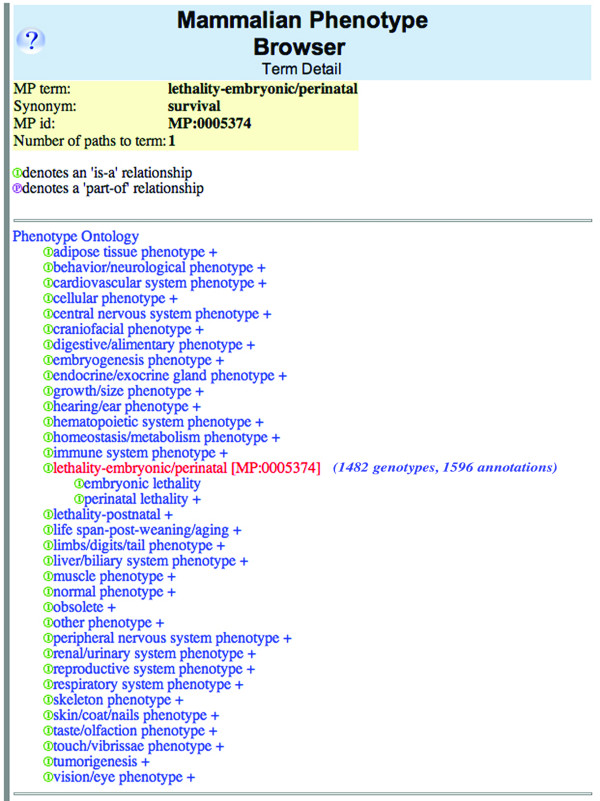
The Mammalian Phenotype (MP) Ontology enables robust annotation of mammalian phenotypes in the context of mutations, quantitative trait loci and strains that are used as models of human biology and disease. The MP Ontology supports different levels and richness of phenotypic knowledge and flexible annotations to individual genotypes. It continues to develop dynamically via collaborative input from research groups, mutagenesis consortia, and biological domain experts. The MP Ontology is currently used by the Mouse Genome Database and Rat Genome Database to represent phenotypic data.
Overview
The claims and statistics of this paper haven’t been checked yet.
Run the check — free, no account needed. It reads the open-access text and checks the sources it cites.
Integrity signals
Registry
Cites
Statistics
Figures
Verification
Claims the paper makes
The claims and statistics of this paper haven’t been checked yet.
Run the check — free, no account needed. It reads the open-access text and checks the sources it cites.
Claims other papers make about this one
Each is checked against this paper’s own text: does it say what the citing paper says it does?
The cited source says what the claim attributes to it.
In the citing paper
“mining genes associated with phenotypes from the Mammalian Phenotype Ontology resource (Smith et al, 2005; Chen et al, 2007) revealed that, albeit less significant when compared to Hep‐ID TFs, Hep‐IDCONNECT TF‐encoding genes are linked to abnormal liver phenotypes and metabolic functions (Fig 2G).”
From An extended transcription factor regulatory network controls hepatocyte identity (2023) · cites this paper as Smith et al, 2005
Self-check
Percentages, sums and reported differences re-computed from the paper’s own numbers.
The self-check needs the paper’s full text.
Citations
Cites
Gene Ontology: tool for the unification of biology
Ashburner, M., Ball, C. A., Blake, J. A., Botstein, D., Butler, H., Cherry, J. M., Davis, A. P., Dolinski, K., Dwight, S. S., Eppig, J. T., et al. (2000) · Nature Genetics · doi:10.1038/75556 · Cited by 43,206
Self-citationThe Gene Ontology (GO) database and informatics resource
Gene Ontology Consortium (2003) · Nucleic Acids Research · doi:10.1093/nar/gkh036 · Cited by 4,596
Mutation nomenclature extensions and suggestions to describe complex mutations: A discussion
den Dunnen, J. T., & Antonarakis, S. E. (2000) · Human Mutation · doi:10.1002/(sici)1098-1004(200001)15:1 · Cited by 1,757
Creating the Gene Ontology Resource: Design and ImplementationPreprint
The Gene Ontology Consortium (2001) · Genome Research · doi:10.1101/gr.180801 · Cited by 957
Online Mendelian Inheritance in Man 'OMIM'.
Amladi, S. (2007) · PubMed · Cited by 871
Creating the gene ontology resource: design and implementation.
Blake, J. A., Corradi, J., Eppig, J. T., Hill, D. P., Richardson, J. E., & Ringwald, M. (2001) · The Mouseion at the JAXlibrary (Jackson Laboratory) · Cited by 826
Self-citationBiology of the Laboratory Mouse
(1941) · JAMA · doi:10.1001/jama.1941.02820440081034 · Cited by 805
The Comprehensive Knockout Mouse Project Consortium (2004) · Nature Genetics · doi:10.1038/ng0904-921 · Cited by 608
Self-citationGene Ontology Consortium. The Gene Ontology (GO) database and informatics resource
Harris, M. A., Clark, J., Ireland, A., Lomax, J., Ashburner, M., Foulger, R. E., Eilbeck, K. L., Lewis, S., Marshall, B., Mungall, C., et al. (2004) · Cited by 295
Self-citationUsing ontologies to describe mouse phenotypes
Gkoutos, G. V., Green, E. C. J., Mallon, A., Hancock, J. M., & Davidson, D. R. (2004) · Genome biology · doi:10.1186/gb-2004-6-1-r8 · Cited by 241
Cited by
Sorted by citations
Items 301–400 of 421
Lin, M., Chou, P., Huang, K.-J., Ting, J., Liu, C., Chou, W., Lin, G.-H., Chang, J., Ikegawa, S., Wang, S., et al. (2022) · Journal of Personalized Medicine · doi:10.3390/jpm13010032 · Cited by 5
Shen, F., & Liu, H. D. (2018) · Europe PMC (PubMed Central) · Cited by 5
BioHackathon 2015: Semantics of data for life sciences and reproducible research
Vos, R. A., Katayama, T., Mishima, H., Kawano, S., Kawashima, S., Kim, J.-D., Moriya, Y., Tokimatsu, T., Yamaguchi, A., Yamamoto, Y., et al. (2020) · F1000Research · doi:10.12688/f1000research.18236.1 · Cited by 5
Hancock, J. M. (2014) · CRC Press eBooks · doi:10.1201/b16437-4 · Cited by 5
Li, J., Bi, L., Sun, Y., Lu, Z., Lin, Y., Bai, O., & Shao, H. (2015) · Molecular Biology Reports · doi:10.1007/s11033-015-3908-4 · Cited by 5
RetractedMPHASYS: a mouse phenotype analysis system
Calder, R. B., Beems, R. B., STEEG, H. V., Mian, S. I., Lohman, P. H. M., & Vijg, J. (2007) · BMC Bioinformatics · doi:10.1186/1471-2105-8-183 · Cited by 5
An analysis and comparison of the statistical sensitivity of semantic similarity metricsPreprint
Manda, P., & Vision, T. (2018) · bioRxiv (Cold Spring Harbor Laboratory) · doi:10.1101/327833 · Cited by 5
Integrating phenotype ontologies with PhenomeNET
García, M. A. R., Gkoutos, G. V., Schofield, P. N., & Hoehndorf, R. (2016) · University of Birmingham Research Portal (University of Birmingham) · Cited by 4
Modelling digital health data: The ExaMode ontology for computational pathology
Menotti, L., Silvello, G., Atzori, M., Boytcheva, S., Ciompi, F., Nunzio, G. M. D., Fraggetta, F., Giachelle, F., Irrera, O., Marchesin, S., et al. (2023) · Journal of Pathology Informatics · doi:10.1016/j.jpi.2023.100332 · Cited by 4
Network Pharmacology to Aid the Drug Discovery Process
Dannenfelser, R., Xu, H., Raimond, C., & Ma’ayan, A. (2012) · Springer eBooks · doi:10.1007/978-94-007-4330-4_9 · Cited by 4
Advances in Modelling of Epithelial to Mesenchymal Transition
Summers, R., Abdulla, T., & Schleich, J.-M. (2013) · World Congress on Medical Physics and Biomedical Engineering, September 7 - 12, 2009, Munich, Germany · doi:10.1007/978-3-319-00846-2_303 · Cited by 4
Integrated curation and data mining for disease and phenotype models at the Rat Genome Database
Wang, S., Laulederkind, S. J. F., Zhao, Y., Hayman, G. T., Smith, J. R., Tutaj, M., Thota, J., Tutaj, M., Hoffman, M. J., Bolton, E. R., et al. (2019) · Database · doi:10.1093/database/baz014 · Cited by 4
Standard genetic nomenclature.
Hu, Z., Reecy, J. M., McCarthy, F., & Park, C. A. (2014) · CABI eBooks · doi:10.1079/9781780642215.0598 · Cited by 4
Multiscale information modelling for heart morphogenesis
Abdulla, T., Imms, R., Schleich, J., & Summers, R. (2010) · Journal of Physics Conference Series · doi:10.1088/1742-6596/238/1/012062 · Cited by 4
Gruenberger, M., Alberts, R., Smedley, D. P., Swertz, M. A., Schofield, P. N., & Schughart, K. (2010) · BMC Research Notes · doi:10.1186/1756-0500-3-16 · Cited by 4
Wang, S., Laulederkind, S. J. F., Hayman, G. T., Petri, V., Smith, J. R., Tutaj, M., Nigam, R., Dwinell, M. R., & Shimoyama, M. E. (2016) · Physiological Genomics · doi:10.1152/physiolgenomics.00046.2016 · Cited by 4
Semantic Technologies in Drug Discovery
Kanza, S., & Frey, J. G. (2020) · Elsevier eBooks · doi:10.1016/b978-0-12-801238-3.11520-x · Cited by 4
(1991) · Comparative Biochemistry and Physiology Part A Physiology · doi:10.1016/0300-9629(91)90285-k · Cited by 4
Word Sense Disambiguation in Biomedical Applications
Schiemann, T., Leser, U., & Hakenberg, J. (2009) · IGI Global eBooks · doi:10.4018/978-1-60566-274-9.ch008 · Cited by 4
Computational approaches for disease gene identification
Yang, P. (2014) · doi:10.32657/10356/59238 · Cited by 4
Phenotypic, functional and taxonomic features predict host-pathogen interactionsPreprint
Liu-Wei, W., Kafkas, Ş., & Hoehndorf, R. (2018) · bioRxiv (Cold Spring Harbor Laboratory) · doi:10.1101/508762 · Cited by 4
GeneSetCluster 2.0: a comprehensive toolset for summarizing and integrating gene-sets analysis
Ortega‐Legarreta, A., Maillo, A., Mouzo, D., López-Pérez, A. R., Kular, L., Kakhki, M. P., Jagodic, M., Tegner, J. N., Lagani, V., Ewing, E., et al. (2025) · BMC Bioinformatics · doi:10.1186/s12859-025-06249-3 · Cited by 3
Multi-view Text Mining for Disease Gene Prioritization and Clustering
Yu, S. Q., Tranchevent, L.-C., Moor, B. D., & Moreau, Y. (2011) · Studies in computational intelligence · doi:10.1007/978-3-642-19406-1_5 · Cited by 3
Groza, T., Hunter, J., & Zankl, A. (2012) · BMC Bioinformatics · doi:10.1186/1471-2105-13-265 · Cited by 3
Progress with a Multiscale Systems Engineering Approach to Cardiac Development
Summers, R., Abdulla, T., Houyel, L., & Schleich, J. (2011) · Automatika · doi:10.1080/00051144.2011.11828403 · Cited by 3
The impact of near domain transfer on biomedical named entity recognition
Collier, N., Tran, M.-V., & Paster, F. (2014) · International Workshop on Health Text Mining and Information Analysis (LOUHI) · doi:10.3115/v1/w14-1103 · Cited by 3
An atlas of evidence-based phenotypic associations across the mouse phenome
Tanaka, N., & Masuya, H. (2020) · Scientific Reports · doi:10.1038/s41598-020-60891-w · Cited by 3
A representation model for biological entities by fusing structured axioms with unstructured texts
Lou, P., Dong, Y., Yepes, A. J., & Li, C. (2020) · Bioinformatics · doi:10.1093/bioinformatics/btaa913 · Cited by 3
Lin, M., Chang, C., Ting, J., Chang, J., Chou, W., Huang, K.-J., Cheng, G. L., Chang, H., & Chang, W. (2022) · Journal of Personalized Medicine · doi:10.3390/jpm12020198 · Cited by 3
Using ontology visualization to facilitate access to knowledge about human disease genes
Dolan, M. E., & Blake, J. A. (2009) · Applied Ontology · doi:10.3233/ao-2009-0064 · Cited by 3
Rouillard, A. D., Wang, Z., & Ma’ayan, A. (2015) · Computational Biology and Chemistry · doi:10.1016/j.compbiolchem.2015.06.003 · Cited by 3
RetractedA Method for Building a Labeled Named Entity Recognition Corpus Using Ontologies
Vu, N. T., Tran, V.-H., Doan, T.-H.-T., Le, H.-Q., & Tran, M.-V. (2015) · Advances in intelligent systems and computing · doi:10.1007/978-3-319-17996-4_13 · Cited by 3
Graph-Based Ontology Construction from Heterogenous Evidences
Böhm, C., Groth, P., & Leser, U. (2009) · Lecture notes in computer science · doi:10.1007/978-3-642-04930-9_6 · Cited by 3
Biological and Medical Ontologies: Human Phenotype Ontology (HPO)
Bernasconi, A., & Masseroli, M. (2017) · Elsevier eBooks · doi:10.1016/b978-0-12-809633-8.20398-1 · Cited by 3
Integrative Literature and Data Mining to Rank Disease Candidate Genes
Wu, C., Zhu, C., & Jegga, A. G. (2014) · Methods in molecular biology · doi:10.1007/978-1-4939-0709-0_12 · Cited by 2
DGH-GO: dissecting the genetic heterogeneity of complex diseases using gene ontology
Asif, M., Martiniano, H., Lamúrias, A., Kausar, S., & Couto, F. M. (2023) · BMC Bioinformatics · doi:10.1186/s12859-023-05290-4 · Cited by 2
Benchmark of computational methods to detect digenism in sequencing data
Ogloblinsky, M. C., Conrad, D. F., Baudot, A., Tournier‐Lasserve, E., Principal Investigators, Génin, E., Campion, D., Dartigues, J., Deleuze, J., Lambert, J., et al. (2025) · European Journal of Human Genetics · doi:10.1038/s41431-025-01834-9 · Cited by 2
Literature mining associations of diseases using gene ontology
Yang, L., Zhou, Y., & Tang, Z. (2013) · International Conference on Computer Science & Education (ICCSE) · doi:10.1109/iccse.2013.6554016 · Cited by 2
Capturing domain knowledge from multiple sources: the rare bone disorders use case
Groza, T., Tudorache, T., Robinson, P. N., & Zankl, A. (2015) · Journal of Biomedical Semantics · doi:10.1186/s13326-015-0008-2 · Cited by 2
Data Integration in the Mouse Genome Informatics (MGI) Database
Qi, D., Blake, J. A., Kadin, J. A., Richardson, J. E., Ringwald, M., Eppig, J. T., & Bult, C. J. (2006) · IEEE Computational Systems Bioinformatics Conference (CSB) · doi:10.1109/csbw.2005.48 · Cited by 2
Self-citationConcept selection for phenotypes and disease-related annota-tions using support vector machines
Collier, N., Oellrich, A., & Groza, T. (2014) · Cited by 2
Cipriani, V., Kalhoro, A., Arno, G., Silva, R. S., Pontikos, N., Puech, V., McClements, M. E., Hunt, D. M., van Heyningen, V., Michaelides, M., et al. (2017) · Ophthalmic Genetics · doi:10.1080/13816810.2017.1289544 · Cited by 2
Roberts, J. J., Power, A., Chandra, S., Chapman, J., & Cozzolino, D. (2018) · Microarrays · doi:10.3390/ht7020016 · Cited by 2
Schofield, P. N., Elmore, S. A., Cardiff, R. D., Cesta, M. F., Gkoutos, G. V., Helton, E. D., Hoehndorf, R., Keenan, C. M., McKerlie, C., & Sundberg, J. P. (2018) · Apollo (University of Cambridge) · doi:10.17863/cam.30296 · Cited by 2
Köhler, S., Doelken, S. C., Ruef, B. J., Bauer, S., Washington, N. L., Westerfield, M., Gkoutos, G., Schofield, P. N., Smedley, D. P., Lewis, S., et al. (2013) · F1000Research · doi:10.3410/f1000research.2-30.v1 · Cited by 2
Hill, D. P., Drabkin, H., Smith, C. L., Auken, K. M. V., & D’Eustachio, P. (2023) · Genetics · doi:10.1093/genetics/iyad152 · Cited by 2
Self-citationStandard genetic nomenclature of the pig, with glossaries.
Hu, Z. L., Park, C. A., & Reecy, J. M. (2011) · CABI eBooks · doi:10.1079/9781845937560.0473 · Cited by 2
Semantic Data Integration for Francisella tularensis novicida Proteomic and Genomic Data.
Anwar, N., Ela Hunt, B., Kölch, W., & Pitt, A. R. (2008) · Cited by 2
Shen, F., Wen, A., & Liu, H. (2020) · Proceedings - IEEE Symposium on Computer-Based Medical Systems · doi:10.1109/cbms49503.2020.00015 · Cited by 2
Using ontology visualization to understand annotations and reason about them
Dolan, M. E., & Blake, J. A. (2006) · Cited by 2
Prediction of Protein-protein Interactions and Essential Genes through Data Integration
Kotlyar, M. (2011) · TSpace (University of Toronto) · Cited by 2
PrismExp: Predicting Human Gene Function by Partitioning Massive RNA-seq Co-expression DataPreprint
Lachmann, A., Rizzo, K., Bartal, A., Jeon, M., Clarke, D. J. B., & Ma’ayan, A. (2021) · bioRxiv (Cold Spring Harbor Laboratory) · doi:10.1101/2021.01.20.427528 · Cited by 2
Peripheral Tolerance of T Cells in the Mouse
Heissmeyer, V., Tanasă, B., & RAO, A. (2007) · Elsevier eBooks · doi:10.1016/b978-012369454-6/50088-1 · Cited by 2
A novel phenotype-guided genome analysis pipeline for variant discovery
Ahmed, L., Tavares, E. S., Li, J. M., Ahmed, K., Mehta, M., Eileen, C., Ah-Sen, G., Osman, R., Green-Sanderson, K., Dvaladze, A., et al. (2026) · npj Genomic Medicine · doi:10.1038/s41525-026-00557-0 · Cited by 1
von Clausbruch, C. A. C., Verheijen, M. C. T., Callegaro, G., Freedman, J. H., Ortega-Vallbona, R., Palomino‐Schätzlein, M., Caiment, F., & Weiß, C. (2026) · International Journal of Molecular Sciences · doi:10.3390/ijms27093825 · Cited by 1
Investigating Genotype-Phenotype relationship extraction from biomedical text
Khordad, M. (2014) · Scholarship@Western (Western University) · Cited by 1
Anagnostopoulos, A. V., Blake, J. A., Bult, C. J., Ringwald, M., Richardson, J. E., Kadin, J. A., & Eppig, J. T. (2008) · IEEE International Conference on Bioinformatics and Bioengineering (BIBE) · doi:10.1109/bibe.2008.4696717 · Cited by 1
Self-citationA translational medicine approach to orphan diseases
Hoehndorf, R., & Gkoutos, G. V. (2012) · Cited by 1
Inferring logical definitions using compound ontology matching.
Oliveira, D., & Pesquita, C. (2015) · ICBO · Cited by 1
The Informatics of High-Throughput Mouse Phenotyping: EUMODIC and Beyond
Hancock, J. M., & Gates, H. (2011) · Springer eBooks · doi:10.1007/978-94-007-0750-4_4 · Cited by 1
Improving the classification of cardinality phenotypes using collections
Alghamdi, S. M., & Hoehndorf, R. (2023) · Journal of Biomedical Semantics · doi:10.1186/s13326-023-00290-y · Cited by 1
Uberon, an integrative multi-species anatomy
Mungall, C., Torniai, C., Gkoutos, G. V., Lewis, S., & Haendel, M. A. (2012) · Cited by 1
Lost and Found in Behavioral Informatics
Haendel, M. A., & Chesler, E. J. (2012) · International review of neurobiology · doi:10.1016/b978-0-12-388408-4.00001-0 · Cited by 1
Slater, L. T., Gkoutos, G. V., Schofield, P. N., & Hoehndorf, R. (2016) · University of Birmingham Research Portal (University of Birmingham) · Cited by 1
LinOu, Y., & Shao, B. (2014) · Cited by 1
Ternary compound ontology matching for cognitive green computing
Zheng, W., Chai, Q.-W., Zhang, J., & Xue, X. (2021) · Mathematical Biosciences & Engineering · doi:10.3934/mbe.2021247 · Cited by 1
Phenotyping of Genetically Modified Mice
Thon, R., Ritskes-Hoitinga, M. J., Gates, H., & Prins, J. (2010) · Wiley eBooks · doi:10.1002/9781444318777.ch5 · Cited by 1
Reddington, F., Ajose-Adeogun, A., & Clark, R. (2007) · Human Mutation · doi:10.1002/humu.20584 · Cited by 1
Additional knowledge-based analysis approaches
Rodriguez‐Esteban, R. (2016) · Cambridge University Press eBooks · doi:10.1017/cbo9780511989421.011 · Cited by 1
Self-normalizing learning on biomedical ontologies using a deep Siamese neural networkPreprint
Smaili, F. Z., Gao, X., & Hoehndorf, R. (2020) · bioRxiv (Cold Spring Harbor Laboratory) · doi:10.1101/2020.04.23.057117 · Cited by 1
(1991) · International Journal of Biochemistry · doi:10.1016/0020-711x(91)90052-o · Cited by 1
SpacGPA: annotating spatial transcriptomes through de novo interpretable gene programsPreprint
Xu, Y., Chen, L., & Ma, S. (2025) · bioRxiv (Cold Spring Harbor Laboratory) · doi:10.1101/2025.10.01.679918 · Cited by 1
Mass spectrometry in clinical protein biomarker discovery
Parviainen, V. (2014) · Työväentutkimus Vuosikirja
Mapping the gap: curation of phenotype-driven gene discovery in congenital heart disease research
Wong, M. G. (2014) · D-Scholarship@Pitt (University of Pittsburgh)
Knowledge Discovery on Incompatibility of Medical Concepts
Grycner, A., Ernst, P. J., Siu, A., & Weikum, G. (2013) · Lecture notes in computer science · doi:10.1007/978-3-642-37247-6_10
Ellis, P. M., Liu, G., Millward, M. J., Perrone, F., Shepherd, F. A., Seymour, L., Sun, S. B., Cho, B. C., Morabito, A., Stockler, M. R., et al. (2014) · Annals of Oncology · doi:10.1093/annonc/mdu349.91
Supporting Information for Proteomics DOI 10.1002/pmic.200700741
Irmler, M., Hartl, D., Schmidt, T., Schuchhardt, J., Lach, C., Meyer, H. E., Klose, J., & Beckers, J. (2008)
Roles and Applications of Biomedical Ontologies in Experimental Animal Science
Masuya, H. (2012) · EXPERIMENTAL ANIMALS · doi:10.1538/expanim.61.365
Continuation-like semantics for modeling structural process anomalies
Grewe, N. (2012) · Journal of Biomedical Semantics · doi:10.1186/2041-1480-3-s2-s8
Investigation of the genetic aetiology of Parkinson's disease in South Africa
Keyser, R. J. (2011) · SUNScholar (Stellenbosch University)
Maretty, L., Sibbesen, J. A., & Krogh, A. (2014)
INRA, Herbivore Research Unit, Muscle Growth and Metabolism Group,
Hocquette, J.-F. J.-F. (2005)
Freckleton, R. E. (2013)
Multiscale information modelling for heart morphogenesis
(7201793), T. A., Imms, R., Schleich, J., & Summers, R. M. (2019) · Loughborough University Research Repository (Loughborough University)
Methodphenotype ontologies across multiple species
Mungall, C., Gkoutos, G. V., Smith, C. L., Haendel, M. A., Lewis, S., & Ashburner, M. (2010)
Self-citationHayamizu, T. F., & Ringwald, M. (2015) · Elsevier eBooks · doi:10.1016/b978-0-12-800043-4.00023-3
Computational Selection and Prioritization of Disease Candidate Genes
Chen, J. (2008) · OhioLink ETD Center (Ohio Library and Information Network)
O’Neill, K. (2007) · ResearchSpace (University of KwaZulu-Natal)
Mining Biomedical Literature to Extract Pharmacokinetic Drug-Drug Interactions
Karnik, S. (2014) · IUScholarWorks (Indiana University) · doi:10.7912/c2/883
An analysis of different ontological approaches to describe renal mutant phenotypes.
Lee, K., & Davidson, D. R. (2008)
Hypothesis building using the Animal Trait Ontology
Hughes, L. M. (2008) · doi:10.31274/rtd-180813-16860
BioGraph: Linking Biological Bases Across Organisms.
Borges, L. L., & Santanchè, A. (2017) · SWAT4LS
SEMANTIC-ENABLED HYBRID GENETIC DISEASE DIAGNOSTICS IN NEXT-GENERATION SEQUENCED DATA
Zawadzka-Gosk, E., & Wołk, K. (2018) · Computer Science · doi:10.7494/csci.2018.19.2.2319
Towards Semantic Big Graph Analytics for Cross-Domain Knowledge DiscoveryPreprint
Shen, F. (2019) · arXiv (Cornell University) · doi:10.48550/arxiv.1902.07688
Gene modules associated with human diseases revealed by network analysisPreprint
Ma, S., Gong, J., Zuo, W., Geng, H., Zhang, Y., Wang, M., Han, E., Peng, J., Wang, Y., Wang, Y., et al. (2019) · bioRxiv (Cold Spring Harbor Laboratory) · doi:10.1101/598151
Semantic Prioritization of Novel Causative Genomic Variants in Mendelian and Oligogenic Diseases
Boudellioua, I. (2019) · King Abdullah University of Science and Technology Repository (King Abdullah University of Science and Technology) · doi:10.25781/kaust-y5g20
Functional Gene Networks and Their Applications
Li, H., & Guan, Y. (2020) · Computational biology · doi:10.1007/978-3-030-51862-2_3
Metadata
- Authors
- Smith, C. L., Goldsmith, C.-A. W., & Eppig, J. T.
- Affiliations
- Jackson Laboratory (US)
- Massachusetts College of Pharmacy and Health Sciences (US)
- Corresponding author
- Eppig, Janan T
- Venue
- Genome Biology
- Published
- 2004-12-15
- Volume
- 6
- Issue
- 1
- Pages
- R7-R7
- ISSN
- 1465-6906 (ISSN-L)
- 1474-760X
- PMC
- PMC549068
- OpenAlex
- W2126434293
- Cited by
- 417
- References
- 22
- Citations by year
- 2026: 6 · 2025: 8 · 2024: 8 · 2023: 8 · 2022: 9 · 2021: 10 · 2020: 17 · 2019: 14 · 2018: 24 · 2017: 14 · 2016: 17 · 2015: 19 · 2014: 30 · 2013: 31 · 2012: 41
- FWCI
- 5.81
- Type
- journal article
- Language
- en
- Open access
- gold
- doi.org
- Locations
- Genome biology (publishedVersion, cc-by)
- Europe PMC (PubMed Central) (publishedVersion)
- PubMed Central (publishedVersion)
- PubMed (publishedVersion)
- The Mouseion at the JAXlibrary (Jackson Laboratory) (submittedVersion)
- Topics
- Health Sciences › Medicine › Health Informatics › Biomedical Text Mining and Ontologies
- Life Sciences › Biochemistry, Genetics and Molecular Biology › Molecular Biology › Bioinformatics and Genomic Networks
- Physical Sciences › Computer Science › Artificial Intelligence › Semantic Web and Ontologies
- Keywords
- Mammalian Phenotype Ontology, phenotype annotation, mouse model, rat model, quantitative trait loci, mutant strain, Mouse Genome Database, Rat Genome Database, disease models
- MeSH terms
- Animals, Genotype, Humans, Mammals, Mutation, Terminology as Topic, Phenotype, Genome, Vocabulary, Controlled, Computational Biology, Databases, Genetic, Quantitative Trait Loci, Mice, Rats
About these checks
Registry, retraction, Cites and statistics results are computed, not judged, with one exception: a printed reference that no index lists is read once by a model before it counts as a citation error. Claims are extracted by a model and kept only when their quote appears verbatim in the text; each cited source is then checked, with a model’s help, for whether it says what the claim relies on. Those verdicts can be wrong — read the claim’s quote and the cited source before relying on one.
Statistics and arithmetic are recomputed, not judged.
Confidence bands are shown only for fields calibrated on our annotated test set. None is calibrated yet, so no band is shown.
What counts as a claim ›How we measure confidence ›How we check this ›
Are you an author, or do you see a problem with this page? Request a review
