

The DOI matches its Crossref record; 22 of the 22 references it cites were found in a registry or an index.
The Mammalian Phenotype Ontology as a tool for annotating, analyzing and comparing phenotypic information
Open accessAbstract
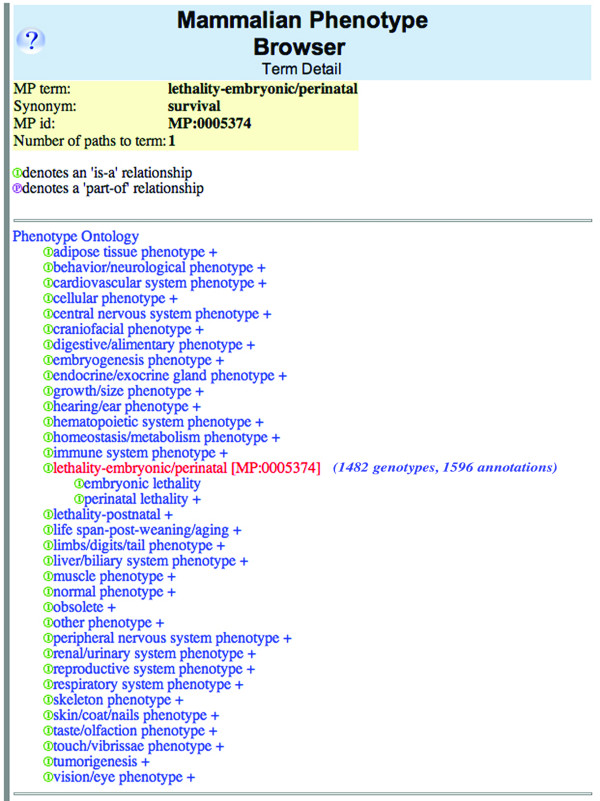
The Mammalian Phenotype (MP) Ontology enables robust annotation of mammalian phenotypes in the context of mutations, quantitative trait loci and strains that are used as models of human biology and disease. The MP Ontology supports different levels and richness of phenotypic knowledge and flexible annotations to individual genotypes. It continues to develop dynamically via collaborative input from research groups, mutagenesis consortia, and biological domain experts. The MP Ontology is currently used by the Mouse Genome Database and Rat Genome Database to represent phenotypic data.
Overview
The claims and statistics of this paper haven’t been checked yet.
Run the check — free, no account needed. It reads the open-access text and checks the sources it cites.
Integrity signals
Registry
Cites
Statistics
Figures
Verification
Claims the paper makes
The claims and statistics of this paper haven’t been checked yet.
Run the check — free, no account needed. It reads the open-access text and checks the sources it cites.
Claims other papers make about this one
Each is checked against this paper’s own text: does it say what the citing paper says it does?
The cited source says what the claim attributes to it.
In the citing paper
“mining genes associated with phenotypes from the Mammalian Phenotype Ontology resource (Smith et al, 2005; Chen et al, 2007) revealed that, albeit less significant when compared to Hep‐ID TFs, Hep‐IDCONNECT TF‐encoding genes are linked to abnormal liver phenotypes and metabolic functions (Fig 2G).”
From An extended transcription factor regulatory network controls hepatocyte identity (2023) · cites this paper as Smith et al, 2005
Self-check
Percentages, sums and reported differences re-computed from the paper’s own numbers.
The self-check needs the paper’s full text.
Citations
Cites
Gene Ontology: tool for the unification of biology
Ashburner, M., Ball, C. A., Blake, J. A., Botstein, D., Butler, H., Cherry, J. M., Davis, A. P., Dolinski, K., Dwight, S. S., Eppig, J. T., et al. (2000) · Nature Genetics · doi:10.1038/75556 · Cited by 43,206
Self-citationThe Gene Ontology (GO) database and informatics resource
Gene Ontology Consortium (2003) · Nucleic Acids Research · doi:10.1093/nar/gkh036 · Cited by 4,596
Mutation nomenclature extensions and suggestions to describe complex mutations: A discussion
den Dunnen, J. T., & Antonarakis, S. E. (2000) · Human Mutation · doi:10.1002/(sici)1098-1004(200001)15:1 · Cited by 1,757
Creating the Gene Ontology Resource: Design and ImplementationPreprint
The Gene Ontology Consortium (2001) · Genome Research · doi:10.1101/gr.180801 · Cited by 957
Online Mendelian Inheritance in Man 'OMIM'.
Amladi, S. (2007) · PubMed · Cited by 871
Creating the gene ontology resource: design and implementation.
Blake, J. A., Corradi, J., Eppig, J. T., Hill, D. P., Richardson, J. E., & Ringwald, M. (2001) · The Mouseion at the JAXlibrary (Jackson Laboratory) · Cited by 826
Self-citationBiology of the Laboratory Mouse
(1941) · JAMA · doi:10.1001/jama.1941.02820440081034 · Cited by 805
The Comprehensive Knockout Mouse Project Consortium (2004) · Nature Genetics · doi:10.1038/ng0904-921 · Cited by 608
Self-citationGene Ontology Consortium. The Gene Ontology (GO) database and informatics resource
Harris, M. A., Clark, J., Ireland, A., Lomax, J., Ashburner, M., Foulger, R. E., Eilbeck, K. L., Lewis, S., Marshall, B., Mungall, C., et al. (2004) · Cited by 295
Self-citationUsing ontologies to describe mouse phenotypes
Gkoutos, G. V., Green, E. C. J., Mallon, A., Hancock, J. M., & Davidson, D. R. (2004) · Genome biology · doi:10.1186/gb-2004-6-1-r8 · Cited by 241
Cited by
Sorted by citations
WEB-based GEne SeT AnaLysis Toolkit (WebGestalt): update 2013
Wang, J., Duncan, D. T., Shi, Z., & Zhang, B. (2013) · Nucleic Acids Research · doi:10.1093/nar/gkt439 · Cited by 1,512
Convergence of genes and cellular pathways dysregulated in autism spectrum disorders
Pinto, D., Delaby, E., Merico, D., Barbosa, M., Merikangas, A., Klei, L., Thiruvahindrapuram, B., Xu, X., Ziman, R., Wang, Z., et al. (2014) · The American Journal of Human Genetics · doi:10.1016/j.ajhg.2014.03.018 · Cited by 969
The human phenotype ontology: a tool for annotating and analyzing human hereditary disease
Robinson, P. N., Köhler, S., Bauer, S., Seelow, D., Horn, D., & Mundlos, S. (2008) · The American Journal of Human Genetics · doi:10.1016/j.ajhg.2008.09.017 · Cited by 1,034
Massive mining of publicly available RNA-seq data from human and mouse
Lachmann, A., Torre, D., Keenan, A. B., Jagodnik, K. M., Lee, H. J., Wang, L., Silverstein, M. C., & Ma’ayan, A. (2018) · Nature Communications · doi:10.1038/s41467-018-03751-6 · Cited by 701
A Single-Cell Atlas of In Vivo Mammalian Chromatin Accessibility
Cusanovich, D. A., Hill, A. J., Aghamirzaie, D., Daza, R. M., Pliner, H. A., Berletch, J. B., Filippova, G. N., Huang, X., Christiansen, L., DeWitt, W. S., et al. (2018) · Cell · doi:10.1016/j.cell.2018.06.052 · Cited by 759
Uberon, an integrative multi-species anatomy ontology
Mungall, C. J., Torniai, C., Gkoutos, G. V., Lewis, S. E., & Haendel, M. A. (2012) · Genome biology · doi:10.1186/gb-2012-13-1-r5 · Cited by 732
“In constructing Uberon, we have revealed inconsistencies in related ontologies such as GO, MPO, CL and others.”
MethodInfluentialExpansion of the Human Phenotype Ontology (HPO) knowledge base and resources
Köhler, S., Carmody, L., Vasilevsky, N., Jacobsen, J. O. B., Danis, D., Gourdine, J.-P., Gargano, M., Harris, N. L., Matentzoglu, N., McMurry, J. A., et al. (2019) · Nucleic Acids Research · doi:10.1093/nar/gky1105 · Cited by 677
Self-citationHuman symptoms–disease network
Zhou, X., Menche, J., Barabási, A.-Ĺ., & Sharma, A. (2014) · Nature Communications · doi:10.1038/ncomms5212 · Cited by 659
Characterization of the proteome, diseases and evolution of the human postsynaptic density
Bayés, À., van de Lagemaat, L. N., Collins, M. O., Croning, M. D. R., Whittle, I. R., Choudhary, J. S., & Grant, S. G. N. (2011) · Nature Neuroscience · doi:10.1038/nn.2719 · Cited by 499
Hunt, S. E., McLaren, W. M., Gil, L., Thormann, A., Schuilenburg, H., Sheppard, D., Parton, A., Armean, I. M., Trevanion, S. J., Flicek, P., et al. (2018) · Database · doi:10.1093/database/bay119 · Cited by 466
The Mouse Genome Database (MGD): mouse biology and model systems
Bult, C. J., Eppig, J. T., Kadin, J. A., Richardson, J. E., Blake, J. A., & the Mouse Genome Database Group (2007) · Nucleic Acids Research · doi:10.1093/nar/gkm961 · Cited by 415
Self-citationImproved exome prioritization of disease genes through cross-species phenotype comparison
Robinson, P. N., Köhler, S., Oellrich, A., Sanger Mouse Genetics Project, Wang, K., Mungall, C. J., Lewis, S. E., Washington, N., Bauer, S., Seelow, D., et al. (2014) · Genome Research · doi:10.1101/gr.160325.113 · Cited by 375
Stavropoulos, D. J., Merico, D., Jobling, R. K., Bowdin, S. C., Monfared, N., Thiruvahindrapuram, B., Nalpathamkalam, T., Pellecchia, G., Yuen, R. K. C., Szego, M. J., et al. (2016) · npj Genomic Medicine · doi:10.1038/npjgenmed.2015.12 · Cited by 366
Robinson, P. N., & Mundlos, S. (2010) · Clinical Genetics · doi:10.1111/j.1399-0004.2010.01436.x · Cited by 357
The mammalian phenotype ontology: enabling robust annotation and comparative analysis
Smith, C. L., & Eppig, J. T. (2009) · WIREs Systems Biology and Medicine · doi:10.1002/wsbm.44 · Cited by 353
Self-citationA new face and new challenges for Online Mendelian Inheritance in Man (OMIM®)
Amberger, J. S., Bocchini, C. A., & Hamosh, A. (2011) · Human Mutation · doi:10.1002/humu.21466 · Cited by 332
Inflammation and Brain Structure in Schizophrenia and Other Neuropsychiatric Disorders
Williams, J. A., Burgess, S., Suckling, J., Lalousis, P. A., Batool, F., Griffiths, S. L., Palmer, E. R., Karwath, A., Barsky, A., Gkoutos, G. V., et al. (2022) · JAMA Psychiatry · doi:10.1001/jamapsychiatry.2022.0407 · Cited by 313
Progress and prospects in rat genetics: a community view
Aitman, T. J., Critser, J. K., Cuppen, E., Dominiczak, A., Fernandez-Suarez, X. M., Flint, J., Gauguier, D., Geurts, A. M., Gould, M., Harris, P. C., et al. (2008) · Nature Genetics · doi:10.1038/ng.147 · Cited by 291
Integrating phenotype ontologies across multiple species
Mungall, C., Gkoutos, G. V., Smith, C. L., Haendel, M. A., Lewis, S. E., & Ashburner, M. (2010) · Genome biology · doi:10.1186/gb-2010-11-1-r2 · Cited by 284
Self-citationImproved human disease candidate gene prioritization using mouse phenotype
Chen, J., Xu, H., Aronow, B. J., & Jegga, A. G. (2007) · BMC Bioinformatics · doi:10.1186/1471-2105-8-392 · Cited by 284
Annotating the human genome with Disease Ontology
Osborne, J. D., Flatow, J., Holko, M., Lin, S. M., Kibbe, W., Zhu, L., Danila, M., Feng, G., & Chisholm, R. (2009) · BMC Genomics · doi:10.1186/1471-2164-10-s1-s6 · Cited by 291
Koscielny, G., Yaikhom, G., Iyer, V., Meehan, T. F., Morgan, H., Atienza-Herrero, J., Blake, A., Chen, C.-K., Easty, R., Fenza, A. D., et al. (2013) · Nucleic Acids Research · doi:10.1093/nar/gkt977 · Cited by 267
Using ontologies to describe mouse phenotypes
Gkoutos, G. V., Green, E. C. J., Mallon, A., Hancock, J. M., & Davidson, D. R. (2004) · Genome biology · doi:10.1186/gb-2004-6-1-r8 · Cited by 241
PhenomeNET: a whole-phenome approach to disease gene discovery
Hoehndorf, R., Schofield, P. N., & Gkoutos, G. V. (2011) · Nucleic Acids Research · doi:10.1093/nar/gkr538 · Cited by 224
Chen, E. S., Hripcsak, G. M., Xu, H., Markatou, M., & Friedman, C. (2007) · Journal of the American Medical Informatics Association · doi:10.1197/jamia.m2401 · Cited by 208
OntoFox: web-based support for ontology reuse
Xiang, Z., Courtot, M., Brinkman, R. R., Ruttenberg, A., & He, Y. O. (2010) · BMC Research Notes · doi:10.1186/1756-0500-3-175 · Cited by 204
The Adult Mouse Anatomical Dictionary: a tool for annotating and integrating data
Hayamizu, T. F., Mangan, M. E., Corradi, J., Kadin, J. A., & Ringwald, M. (2005) · Genome biology · doi:10.1186/gb-2005-6-3-r29 · Cited by 181
Rare structural variation of synapse and neurotransmission genes in autism
Gai, X., Xie, H. M., Perin, J. C., Takahashi, N., Murphy, K., Wenocur, A. S., D'arcy, M., O'Hara, R. J., Goldmuntz, E., Grice, D. E., et al. (2012) · Molecular Psychiatry · doi:10.1038/mp.2011.10 · Cited by 177
Smith, C. L., & Eppig, J. T. (2012) · Mammalian Genome · doi:10.1007/s00335-012-9421-3 · Cited by 173
Self-citationComputational approaches to disease‐gene prediction: rationale, classification and successes
Piro, R. M., & Cunto, F. D. (2012) · FEBS Journal · doi:10.1111/j.1742-4658.2012.08471.x · Cited by 156
Beyond the data deluge: Data integration and bio-ontologies
Blake, J. A., & Bult, C. J. (2006) · Journal of Biomedical Informatics · doi:10.1016/j.jbi.2006.01.003 · Cited by 140
GeneWeaver: a web-based system for integrative functional genomics
Baker, E. J., Jay, J. J., Bubier, J. A., Langston, M. A., & Chesler, E. J. (2011) · Nucleic Acids Research · doi:10.1093/nar/gkr968 · Cited by 140
Xu, H., Baroukh, C., Dannenfelser, R., Chen, E. Y., Tan, C. M., Kou, Y., Kim, Y. E., Lemischka, I. R., & Ma’ayan, A. (2013) · Database · doi:10.1093/database/bat045 · Cited by 138
Wang, Q., Chen, R., Cheng, F., Wei, Q., Ji, Y., Hai, Y., Zhong, X. Y., Tao, R., Wen, Z., Sutcliffe, J. S., et al. (2019) · Nature Neuroscience · doi:10.1038/s41593-019-0382-7 · Cited by 134
The Rat Genome Database, update 2007--Easing the path from disease to data and back again
Twigger, S. N., Shimoyama, M. E., Bromberg, S. K., Kwitek, A. E., Jacob, H. J., & the RGD Team (2006) · Nucleic Acids Research · doi:10.1093/nar/gkl988 · Cited by 132
Substrains matter in phenotyping of C57BL/6 mice
Mekada, K., & Yoshiki, A. (2021) · EXPERIMENTAL ANIMALS · doi:10.1538/expanim.20-0158 · Cited by 131
Improving disease gene prioritization using the semantic similarity of Gene Ontology terms
Schlicker, A., Lengauer, T., & Albrecht, M. (2010) · Bioinformatics · doi:10.1093/bioinformatics/btq384 · Cited by 124
Gaulton, K. J., Willer, C. J., Li, Y., Scott, L. J., Conneely, K. N., Jackson, A., Duren, W. L., Chines, P. S., Narisu, N., Bonnycastle, L. L., et al. (2008) · Diabetes · doi:10.2337/db07-1731 · Cited by 125
Phenotype-driven strategies for exome prioritization of human Mendelian disease genes
Smedley, D. P., & Robinson, P. N. (2015) · Genome Medicine · doi:10.1186/s13073-015-0199-2 · Cited by 112
DEGAS: De Novo Discovery of Dysregulated Pathways in Human Diseases
Ulitsky, I., Krishnamurthy, A., Karp, R. M., & Ron Shamir, A. (2010) · PLoS ONE · doi:10.1371/journal.pone.0013367 · Cited by 116
cAMP Response Element-Binding Protein Is a Primary Hub of Activity-Driven Neuronal Gene Expression
Benito, E., Valor, L. M., Jimenez-Minchan, M., Huber, W. K., & Barco, Á. (2011) · Journal of Neuroscience · doi:10.1523/jneurosci.4554-11.2011 · Cited by 119
European Centre for Ecotoxicology and Toxicology of Chemicals
Carmichael, N. G. (2014) · Elsevier eBooks · doi:10.1016/b978-0-12-386454-3.00505-4 · Cited by 116
The anatomy of phenotype ontologies: principles, properties and applications
Gkoutos, G. V., Schofield, P. N., & Hoehndorf, R. (2017) · Briefings in Bioinformatics · doi:10.1093/bib/bbx035 · Cited by 117
The Mouse Genome Database genotypes::phenotypes
Blake, J. A., Bult, C. J., Eppig, J. T., Kadin, J. A., Richardson, J. E., & the Mouse Genome Database Group (2008) · Nucleic Acids Research · doi:10.1093/nar/gkn886 · Cited by 109
Self-citationAdvances in translational bioinformatics: computational approaches for the hunting of disease genes
Kann, M. G. (2009) · Briefings in Bioinformatics · doi:10.1093/bib/bbp048 · Cited by 102
Hoehndorf, R., Schofield, P. N., & Gkoutos, G. V. (2015) · Scientific Reports · doi:10.1038/srep10888 · Cited by 102
Lausch, A., Borg, E., Bumberger, J., Dietrich, P., Heurich, M., Huth, A., Jung, A., Klenke, R., Knapp, S., Mollenhauer, H., et al. (2018) · Remote Sensing · doi:10.3390/rs10071120 · Cited by 111
Lenffer, J. (2005) · Nucleic Acids Research · doi:10.1093/nar/gkj152 · Cited by 98
Worm Phenotype Ontology: Integrating phenotype data within and beyond the C. elegans community
Schindelman, G., Fernandes, J. S., Bastiani, C. A., Yook, K., & Sternberg, P. W. (2011) · BMC Bioinformatics · doi:10.1186/1471-2105-12-32 · Cited by 94
Kovačević, A., Dehghan, A., Filannino, M., Keane, J. A., & Nenadić, G. (2013) · Journal of the American Medical Informatics Association · doi:10.1136/amiajnl-2013-001625 · Cited by 91
Lean Big Data integration in systems biology and systems pharmacology
Ma’ayan, A., Rouillard, A. D., Clark, N. R., Wang, Z., Duan, Q., & Kou, Y. (2014) · Trends in Pharmacological Sciences · doi:10.1016/j.tips.2014.07.001 · Cited by 90
COnto–Diff: generation of complex evolution mappings for life science ontologies
Hartung, M., Groß, A., & Rahm, E. (2012) · Journal of Biomedical Informatics · doi:10.1016/j.jbi.2012.04.009 · Cited by 89
InfAcrOnt: calculating cross-ontology term similarities using information flow by a random walk
Cheng, L., Jiang, Y., Ju, H., Sun, J., Peng, J., Zhou, M., & Hu, Y. (2018) · BMC Genomics · doi:10.1186/s12864-017-4338-6 · Cited by 89
A computational system to select candidate genes for complex human traits
Gaulton, K. J., Mohlke, K. L., & Vision, T. (2007) · Bioinformatics · doi:10.1093/bioinformatics/btm001 · Cited by 89
Kirsten, T., Groß, A., Hartung, M., & Rahm, E. (2011) · Journal of Biomedical Semantics · doi:10.1186/2041-1480-2-6 · Cited by 87
Entity/quality-based logical definitions for the human skeletal phenome using PATO
Gkoutos, G. V., Mungall, C., Doelken, S. C., Ashburner, M., Lewis, S., Hancock, J. M., Schofield, P. N., Köhler, S., & Robinson, P. N. (2009) · Annual International Conference of the IEEE Engineering in Medicine and Biology Society (EMBC) · doi:10.1109/iembs.2009.5333362 · Cited by 87
Ortutay, C., & Vihinen, M. (2008) · Nucleic Acids Research · doi:10.1093/nar/gkn982 · Cited by 88
Understanding Mammalian Genetic Systems: The Challenge of Phenotyping in the Mouse
Brown, S. D. M., Hancock, J. M., & Gates, H. (2006) · PLoS Genetics · doi:10.1371/journal.pgen.0020118 · Cited by 88
The Mouse Genome Database: enhancements and updates
Bult, C. J., Kadin, J. A., Richardson, J. E., Blake, J. A., Eppig, J. T., & the Mouse Genome Database Group (2009) · Nucleic Acids Research · doi:10.1093/nar/gkp880 · Cited by 84
Self-citationPhen2Gene: rapid phenotype-driven gene prioritization for rare diseases
Zhao, M., Havrilla, J. M., Li, F., Chen, Y., Peng, J. J., Liu, C., Wu, C., Sarmady, M., Botas, P., Isla, J., et al. (2020) · NAR Genomics and Bioinformatics · doi:10.1093/nargab/lqaa032 · Cited by 91
GeneDecks: Paralog Hunting and Gene-Set Distillation with GeneCards Annotation
Stelzer, G., Inger, A., Olender, T., Stein, T. I., Dalah, I., Harel, A., Safran, M., & Lancet, D. (2009) · OMICS A Journal of Integrative Biology · doi:10.1089/omi.2009.0069 · Cited by 80
The Rat Genome Database 2009: variation, ontologies and pathways
Dwinell, M. R., Worthey, E. A., Shimoyama, M. E., Bakır-Güngör, B., DePons, J., Laulederkind, S. J. F., Lowry, T. F., Nigram, R., Petri, V., Smith, J. R., et al. (2008) · Nucleic Acids Research · doi:10.1093/nar/gkn842 · Cited by 80
DeepPVP: phenotype-based prioritization of causative variants using deep learning
Boudellioua, I., Kulmanov, M., Schofield, P. N., Gkoutos, G. V., & Hoehndorf, R. (2019) · BMC Bioinformatics · doi:10.1186/s12859-019-2633-8 · Cited by 79
EuroPhenome and EMPReSS: online mouse phenotyping resource
Mallon, A., Blake, A., & Hancock, J. M. (2007) · Nucleic Acids Research · doi:10.1093/nar/gkm728 · Cited by 78
An overview of in silico protein function prediction
Sleator, R. D., & Walsh, P. (2010) · Archives of Microbiology · doi:10.1007/s00203-010-0549-9 · Cited by 77
Köhler, S., Doelken, S. C., Ruef, B. J., Bauer, S., Washington, N. L., Westerfield, M., Gkoutos, G. V., Schofield, P. N., Smedley, D. P., Lewis, S., et al. (2013) · F1000Research · doi:10.12688/f1000research.2-30.v2 · Cited by 85
EuroPhenome: a repository for high-throughput mouse phenotyping data
Morgan, H., Beck, T., Blake, A., Gates, H., Adams, N. C., Debouzy, G., Leblanc, S., Lengger, C., Maier, H., Melvin, D. G., et al. (2009) · Nucleic Acids Research · doi:10.1093/nar/gkp1007 · Cited by 78
Buxbaum, J. D., Betancur, C., Bozdagi, O., Dorr, N. P., Elder, G. A., & Hof, P. R. (2012) · Molecular Autism · doi:10.1186/2040-2392-3-1 · Cited by 76
PHENOGO: ASSIGNING PHENOTYPIC CONTEXT TO GENE ONTOLOGY ANNOTATIONS WITH NATURAL LANGUAGE PROCESSING
Lussier, Y. A., Borlawsky, T. B., RAPPAPORT, D., LIU, Y., & Friedman, C. (2005) · Pacific Symposium on Biocomputing (PSB) · doi:10.1142/9789812701626_0007 · Cited by 74
The Mouse Tumor Biology database
Krupke, D. M., Begley, D. A., Sundberg, J. P., Bult, C. J., & Eppig, J. T. (2008) · Nature reviews. Cancer · doi:10.1038/nrc2390 · Cited by 72
Self-citationA Tutorial on Hierarchical Classification with Applications in Bioinformatics
Freitas, A. A., & de Carvalho, A. C. P. L. F. (2008) · IGI Global eBooks · doi:10.4018/978-1-59904-941-0.ch006 · Cited by 68
Phenotype Ontologies and Cross-Species Analysis for Translational Research
Robinson, P. N., & Webber, C. (2014) · PLoS Genetics · doi:10.1371/journal.pgen.1004268 · Cited by 67
Chapter 15: Disease Gene Prioritization
Bromberg, Y. (2013) · PLoS Computational Biology · doi:10.1371/journal.pcbi.1002902 · Cited by 69
A call for the creation of personalized medicine databases
Gurwitz, D., Lunshof, J. E., & Altman, R. B. (2005) · Nature Reviews Drug Discovery · doi:10.1038/nrd1931 · Cited by 63
Celsius: a community resource for Affymetrix microarray data
Day, A., Carlson, M. R. J., Dong, J., O’Connor, B. D., & Nelson, S. F. (2007) · Genome biology · doi:10.1186/gb-2007-8-6-r112 · Cited by 63
Alshahrani, M., & Hoehndorf, R. (2018) · Bioinformatics · doi:10.1093/bioinformatics/bty559 · Cited by 61
Pedroso, I., Lourdusamy, A., Rietschel, M., Nöthen, M. M., Cichon, S., McGuffin, P., Al-Chalabi, A., Barnes, M. R., & Breen, G. (2012) · Biological Psychiatry · doi:10.1016/j.biopsych.2011.12.031 · Cited by 59
Three Ontologies to Define Phenotype Measurement Data
Shimoyama, M. E., Nigam, R., McIntosh, L. D., Nagarajan, R., Rice, T., Rao, D. C., & Dwinell, M. R. (2012) · Frontiers in Genetics · doi:10.3389/fgene.2012.00087 · Cited by 60
Hoehndorf, R., Frank Loebe, A., Kelso, J. F., & Heinrich Herre, B. (2007) · BMC Bioinformatics · doi:10.1186/1471-2105-8-377 · Cited by 57
Functional Genomics Complements Quantitative Genetics in Identifying Disease-Gene Associations
Guan, Y., Ackert‐Bicknell, C. L., Kell, B., Troyanskaya, O. G., & Hibbs, M. (2010) · PLoS Computational Biology · doi:10.1371/journal.pcbi.1000991 · Cited by 57
The Functional Annotation of Mammalian Genomes: The Challenge of Phenotyping
Brown, S. D. M., Wurst, W., Kühn, R., & Hancock, J. M. (2009) · Annual Review of Genetics · doi:10.1146/annurev-genet-102108-134143 · Cited by 59
A flexible framework for deriving assertions from electronic medical records
Roberts, K. E., & Harabagiu, S. M. (2011) · Journal of the American Medical Informatics Association · doi:10.1136/amiajnl-2011-000152 · Cited by 60
PhenomicDB: a new cross-species genotype/phenotype resource
Groth, P., Pavlova, N., Kalev, I., Tonov, S., Georgiev, G., Pohlenz, H.-D., & Weiss, B. (2006) · Nucleic Acids Research · doi:10.1093/nar/gkl662 · Cited by 59
Dynamic Retrieval Augmented Generation of Ontologies using Artificial Intelligence (DRAGON-AI)
Toro, S., Anagnostopoulos, A. V., Bello, S. M., Blumberg, K., Cameron, R., Carmody, L., Diehl, A. D., Dooley, D., Duncan, W. D., Fey, P., et al. (2024) · Journal of Biomedical Semantics · doi:10.1186/s13326-024-00320-3 · Cited by 96
Linking genes to diseases: it's all in the data
Tiffin, N., Andrade-Navarro, M. A., & Perez‐Iratxeta, C. (2009) · Genome Medicine · doi:10.1186/gm77 · Cited by 54
Jegga, A. G., Gowrisankar, S., Chen, J., & Aronow, B. J. (2006) · Nucleic Acids Research · doi:10.1093/nar/gkl826 · Cited by 53
EMAP/EMAPA ontology of mouse developmental anatomy: 2013 update
Hayamizu, T. F., Wicks, M. N., Davidson, D. R., Burger, A., Ringwald, M., & Baldock, R. (2013) · Journal of Biomedical Semantics · doi:10.1186/2041-1480-4-15 · Cited by 51
Hughes, L. M., Bao, J., Hu, Z., Honavar, V., & Reecy, J. M. (2008) · Journal of Animal Science · doi:10.2527/jas.2008-0930 · Cited by 51
Interoperability between phenotype and anatomy ontologies
Hoehndorf, R., Oellrich, A., & Rebholz‐Schuhmann, D. (2010) · Bioinformatics · doi:10.1093/bioinformatics/btq578 · Cited by 51
Gkoutos, G. V., Schofield, P. N., & Hoehndorf, R. (2012) · International review of neurobiology · doi:10.1016/b978-0-12-388408-4.00004-6 · Cited by 51
Practical application of ontologies to annotate and analyse large scale raw mouse phenotype data
Beck, T., Morgan, H., Blake, A., Wells, S., Hancock, J. M., & Mallon, A. (2009) · BMC Bioinformatics · doi:10.1186/1471-2105-10-s5-s2 · Cited by 51
Novel skin phenotypes revealed by a genome-wide mouse reverse genetic screen
Liakath‐Ali, K., Vancollie, V. E., Heath, E., Smedley, D. P., Estabel, J., Sunter, D., DiTommaso, T., White, J. K., Ramírez‐Solis, R., Smyth, I., et al. (2014) · Nature Communications · doi:10.1038/ncomms4540 · Cited by 53
New genes in the evolution of the neural crest differentiation program
Martínez‐Morales, J. R., Henrich, T., Ramialison, M., & Wittbrodt, J. (2007) · Genome biology · doi:10.1186/gb-2007-8-3-r36 · Cited by 50
Park, C. A., Bello, S. M., Smith, C. L., Hu, Z., Munzenmaier, D. H., Nigam, R., Smith, J. R., Shimoyama, M. E., Eppig, J. T., & Reecy, J. M. (2013) · Journal of Biomedical Semantics · doi:10.1186/2041-1480-4-13 · Cited by 51
Self-citationMatching disease and phenotype ontologies in the ontology alignment evaluation initiative
Harrow, I., Jiménez-Ruiz, E., Splendiani, A., Romacker, M., Woollard, P. M., Markel, S., Alam-Faruque, Y., Koch, M., MALONE, J. M., & Waaler, A. (2017) · Journal of Biomedical Semantics · doi:10.1186/s13326-017-0162-9 · Cited by 50
Biomedical data, computational methods and tools for evaluating disease–disease associations
Xiang, J., Zhang, J., Zhao, Y., Wu, F.-X., & Li, M. (2022) · Briefings in Bioinformatics · doi:10.1093/bib/bbac006 · Cited by 49
Mouse model phenotypes provide information about human drug targets
Hoehndorf, R., Hiebert, T., Hardy, N. W., Schofield, P. N., Gkoutos, G. V., & Dumontier, M. (2013) · Bioinformatics · doi:10.1093/bioinformatics/btt613 · Cited by 49
Doelken, S. C., Köhler, S., Mungall, C., Gkoutos, G. V., Ruef, B. J., Smith, C. L., Smedley, D. P., Bauer, S., Klopocki, E., Schofield, P. N., et al. (2012) · Disease Models & Mechanisms · doi:10.1242/dmm.010322 · Cited by 47
Self-citationTyler, A. L., Ji, B., Gatti, D. M., Munger, S. C., Churchill, G. A., Svenson, K. L., & Carter, G. W. (2017) · Genetics · doi:10.1534/genetics.116.198051 · Cited by 52
Hoehndorf, R., Alshahrani, M., Gkoutos, G. V., Gosline, G., Groom, Q., Hamann, T. D., Kattge, J., de Oliveira, S. M., Schmidt, M., Sierra, S., et al. (2016) · Journal of Biomedical Semantics · doi:10.1186/s13326-016-0107-8 · Cited by 48
Metadata
- Authors
- Smith, C. L., Goldsmith, C.-A. W., & Eppig, J. T.
- Affiliations
- Jackson Laboratory (US)
- Massachusetts College of Pharmacy and Health Sciences (US)
- Corresponding author
- Eppig, Janan T
- Venue
- Genome Biology
- Published
- 2004-12-15
- Volume
- 6
- Issue
- 1
- Pages
- R7-R7
- ISSN
- 1465-6906 (ISSN-L)
- 1474-760X
- PMC
- PMC549068
- OpenAlex
- W2126434293
- Cited by
- 417
- References
- 22
- Citations by year
- 2026: 6 · 2025: 8 · 2024: 8 · 2023: 8 · 2022: 9 · 2021: 10 · 2020: 17 · 2019: 14 · 2018: 24 · 2017: 14 · 2016: 17 · 2015: 19 · 2014: 30 · 2013: 31 · 2012: 41
- FWCI
- 5.81
- Type
- journal article
- Language
- en
- Open access
- gold
- doi.org
- Locations
- Genome biology (publishedVersion, cc-by)
- Europe PMC (PubMed Central) (publishedVersion)
- PubMed Central (publishedVersion)
- PubMed (publishedVersion)
- The Mouseion at the JAXlibrary (Jackson Laboratory) (submittedVersion)
- Topics
- Health Sciences › Medicine › Health Informatics › Biomedical Text Mining and Ontologies
- Life Sciences › Biochemistry, Genetics and Molecular Biology › Molecular Biology › Bioinformatics and Genomic Networks
- Physical Sciences › Computer Science › Artificial Intelligence › Semantic Web and Ontologies
- Keywords
- Mammalian Phenotype Ontology, phenotype annotation, mouse model, rat model, quantitative trait loci, mutant strain, Mouse Genome Database, Rat Genome Database, disease models
- MeSH terms
- Animals, Genotype, Humans, Mammals, Mutation, Terminology as Topic, Phenotype, Genome, Vocabulary, Controlled, Computational Biology, Databases, Genetic, Quantitative Trait Loci, Mice, Rats
About these checks
Registry, retraction, Cites and statistics results are computed, not judged, with one exception: a printed reference that no index lists is read once by a model before it counts as a citation error. Claims are extracted by a model and kept only when their quote appears verbatim in the text; each cited source is then checked, with a model’s help, for whether it says what the claim relies on. Those verdicts can be wrong — read the claim’s quote and the cited source before relying on one.
Statistics and arithmetic are recomputed, not judged.
Confidence bands are shown only for fields calibrated on our annotated test set. None is calibrated yet, so no band is shown.
What counts as a claim ›How we measure confidence ›How we check this ›
Are you an author, or do you see a problem with this page? Request a review
