

The DOI matches its Crossref record; 22 of the 22 references it cites were found in a registry or an index.
The Mammalian Phenotype Ontology as a tool for annotating, analyzing and comparing phenotypic information
Open accessAbstract
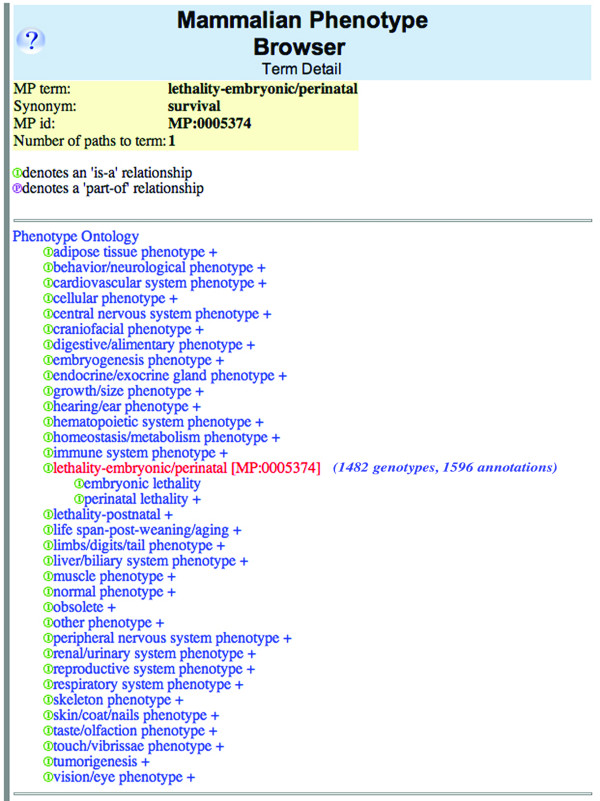
The Mammalian Phenotype (MP) Ontology enables robust annotation of mammalian phenotypes in the context of mutations, quantitative trait loci and strains that are used as models of human biology and disease. The MP Ontology supports different levels and richness of phenotypic knowledge and flexible annotations to individual genotypes. It continues to develop dynamically via collaborative input from research groups, mutagenesis consortia, and biological domain experts. The MP Ontology is currently used by the Mouse Genome Database and Rat Genome Database to represent phenotypic data.
Overview
The claims and statistics of this paper haven’t been checked yet.
Run the check — free, no account needed. It reads the open-access text and checks the sources it cites.
Integrity signals
Registry
Cites
Statistics
Figures
Verification
Claims the paper makes
The claims and statistics of this paper haven’t been checked yet.
Run the check — free, no account needed. It reads the open-access text and checks the sources it cites.
Claims other papers make about this one
Each is checked against this paper’s own text: does it say what the citing paper says it does?
The cited source says what the claim attributes to it.
In the citing paper
“mining genes associated with phenotypes from the Mammalian Phenotype Ontology resource (Smith et al, 2005; Chen et al, 2007) revealed that, albeit less significant when compared to Hep‐ID TFs, Hep‐IDCONNECT TF‐encoding genes are linked to abnormal liver phenotypes and metabolic functions (Fig 2G).”
From An extended transcription factor regulatory network controls hepatocyte identity (2023) · cites this paper as Smith et al, 2005
Self-check
Percentages, sums and reported differences re-computed from the paper’s own numbers.
The self-check needs the paper’s full text.
Citations
Cites
Gene Ontology: tool for the unification of biology
Ashburner, M., Ball, C. A., Blake, J. A., Botstein, D., Butler, H., Cherry, J. M., Davis, A. P., Dolinski, K., Dwight, S. S., Eppig, J. T., et al. (2000) · Nature Genetics · doi:10.1038/75556 · Cited by 43,206
Self-citationThe Gene Ontology (GO) database and informatics resource
Gene Ontology Consortium (2003) · Nucleic Acids Research · doi:10.1093/nar/gkh036 · Cited by 4,596
Mutation nomenclature extensions and suggestions to describe complex mutations: A discussion
den Dunnen, J. T., & Antonarakis, S. E. (2000) · Human Mutation · doi:10.1002/(sici)1098-1004(200001)15:1 · Cited by 1,757
Creating the Gene Ontology Resource: Design and ImplementationPreprint
The Gene Ontology Consortium (2001) · Genome Research · doi:10.1101/gr.180801 · Cited by 957
Online Mendelian Inheritance in Man 'OMIM'.
Amladi, S. (2007) · PubMed · Cited by 871
Creating the gene ontology resource: design and implementation.
Blake, J. A., Corradi, J., Eppig, J. T., Hill, D. P., Richardson, J. E., & Ringwald, M. (2001) · The Mouseion at the JAXlibrary (Jackson Laboratory) · Cited by 826
Self-citationBiology of the Laboratory Mouse
(1941) · JAMA · doi:10.1001/jama.1941.02820440081034 · Cited by 805
The Comprehensive Knockout Mouse Project Consortium (2004) · Nature Genetics · doi:10.1038/ng0904-921 · Cited by 608
Self-citationGene Ontology Consortium. The Gene Ontology (GO) database and informatics resource
Harris, M. A., Clark, J., Ireland, A., Lomax, J., Ashburner, M., Foulger, R. E., Eilbeck, K. L., Lewis, S., Marshall, B., Mungall, C., et al. (2004) · Cited by 295
Self-citationUsing ontologies to describe mouse phenotypes
Gkoutos, G. V., Green, E. C. J., Mallon, A., Hancock, J. M., & Davidson, D. R. (2004) · Genome biology · doi:10.1186/gb-2004-6-1-r8 · Cited by 241
Cited by
Sorted by citations
Items 101–200 of 421
Mouse anatomy ontologies: enhancements and tools for exploring and integrating biomedical data
Hayamizu, T. F., Baldock, R., & Ringwald, M. (2015) · Mammalian Genome · doi:10.1007/s00335-015-9584-9 · Cited by 49
Phenotype ontologies for mouse and man: bridging the semantic gap
Schofield, P. N., Gkoutos, G. V., Gruenberger, M., Sundberg, J. P., & Hancock, J. M. (2010) · Disease Models & Mechanisms · doi:10.1242/dmm.002790 · Cited by 46
Gebreyesus, G., Buitenhuis, B., Poulsen, N. A., Visker, M. H. P. W., Zhang, Q., van Valenberg, H. J. F., Sun, D., & Bovenhuis, H. (2019) · BMC Genomics · doi:10.1186/s12864-019-5573-9 · Cited by 47
An integer programming framework for inferring disease complexes from network data
Mazza, A., Klockmeier, K., Wanker, E. E., & Sharan, R. (2016) · Bioinformatics · doi:10.1093/bioinformatics/btw263 · Cited by 46
EMMA--mouse mutant resources for the international scientific community
Wilkinson, P., Sengerova, J., Matteoni, R., Chen, C.-K., Soulat, G., Ureta‐Vidal, A., Fessele, S., Hagn, M., Massimi, M., Pickford, K., et al. (2009) · Nucleic Acids Research · doi:10.1093/nar/gkp799 · Cited by 46
Integration of mouse phenome data resources
The Mouse Phenotype Database Integration Consortium (2007) · Mammalian Genome · doi:10.1007/s00335-007-9004-x · Cited by 45
A common layer of interoperability for biomedical ontologies based on OWL EL
Hoehndorf, R., Dumontier, M., Oellrich, A., Wimalaratne, S., Rebholz‐Schuhmann, D., Schofield, P. N., & Gkoutos, G. V. (2011) · Bioinformatics · doi:10.1093/bioinformatics/btr058 · Cited by 42
Gene prioritization and clustering by multi-view text mining
Yu, S. Q., Tranchevent, L.-C., Moor, B. D., & Moreau, Y. (2010) · BMC Bioinformatics · doi:10.1186/1471-2105-11-28 · Cited by 45
Hoehndorf, R., Dumontier, M., Oellrich, A., Rebholz‐Schuhmann, D., Schofield, P. N., & Gkoutos, G. V. (2011) · PLoS ONE · doi:10.1371/journal.pone.0022006 · Cited by 44
What everybody should know about the rat genome and its online resources
Twigger, S. N., Pruitt, K. D., Fernández, X. M., Karolchik, D., Worley, K. C., Maglott, D. R., Brown, G., Weinstock, G. M., Gibbs, R. A., Kent, J., et al. (2008) · Nature Genetics · doi:10.1038/ng0508-523 · Cited by 43
Hwang, J., Lee, S., Okada, J., Liu, L. P., Pessin, J. E., Chua, S. C., Schwartz, G. J., & Jo, Y. (2025) · Nature Communications · doi:10.1038/s41467-025-56328-5 · Cited by 51
Requirements and ontology for a G protein-coupled receptor oligomerization knowledge base
Skrabanek, L. A., Murcia, M., Bouvier, M., Devi, L. A., George, S. R., Lohse, M. J., Milligan, G., Neubig, R. R., Palczewski, K., Parmentier, M., et al. (2007) · BMC Bioinformatics · doi:10.1186/1471-2105-8-177 · Cited by 44
The cellular microscopy phenotype ontology
Jupp, S., MALONE, J. M., Burdett, T., Hèriché, J.-K., Williams, E. M., Ellenberg, J., Parkinson, H., & Rustici, G. (2016) · Journal of Biomedical Semantics · doi:10.1186/s13326-016-0074-0 · Cited by 41
Liu, Y., Yeung, W. S. B., Chiu, P. C. N., & Cao, D. (2022) · Frontiers in Genetics · doi:10.3389/fgene.2022.981005 · Cited by 44
Gudivada, R. C., Qu, X. A., Chen, J., Jegga, A. G., Neumann, E., & Aronow, B. J. (2008) · Journal of Biomedical Informatics · doi:10.1016/j.jbi.2008.07.004 · Cited by 40
Improving ontologies by automatic reasoning and evaluation of logical definitions
Köhler, S., Bauer, S., Mungall, C., Carletti, G., Smith, C. L., Schofield, P. N., Gkoutos, G. V., & Robinson, P. N. (2011) · BMC Bioinformatics · doi:10.1186/1471-2105-12-418 · Cited by 39
Self-citationImproving the interoperability of biomedical ontologies with compound alignments
Oliveira, D., & Pesquita, C. (2018) · Journal of Biomedical Semantics · doi:10.1186/s13326-017-0171-8 · Cited by 40
Doğan, T. (2018) · PeerJ · doi:10.7717/peerj.5298 · Cited by 38
Svensson, K., LaBarge, S. A., Sathe, A., Martins, V. F., Tahvilian, S., Cunliffe, J. M., Šášik, R., Mahata, S. K., Meyer, G. A., Philp, A., et al. (2020) · Journal of Cachexia Sarcopenia and Muscle · doi:10.1002/jcsm.12522 · Cited by 38
Shaw, D. (2004) · Current Protocols in Bioinformatics · doi:10.1002/0471250953.bi0107s05 · Cited by 37
Physical Properties of Biological Entities: An Introduction to the Ontology of Physics for Biology
Cook, D. L., Bookstein, F. L., & Gennari, J. H. (2011) · PLoS ONE · doi:10.1371/journal.pone.0028708 · Cited by 37
Sasaki, S., Watanabe, T., Nishimura, S., & Sugimoto, Y. (2016) · BMC Genetics · doi:10.1186/s12863-016-0335-z · Cited by 37
Disease classification: from phenotypic similarity to integrative genomics and beyond
Dozmorov, M. G. (2018) · Briefings in Bioinformatics · doi:10.1093/bib/bby049 · Cited by 36
Supervised learning is an accurate method for network-based gene classification
Liu, R., Mancuso, C. A., Yannakopoulos, A., Johnson, K. A., & Krishnan, A. (2020) · Bioinformatics · doi:10.1093/bioinformatics/btaa150 · Cited by 36
Ontological discovery environment: A system for integrating gene–phenotype associations
Baker, E. J., Jay, J. J., Philip, V. M., Zhang, Y., Li, Z., Kirova, R., Langston, M. A., & Chesler, E. J. (2009) · Genomics · doi:10.1016/j.ygeno.2009.08.016 · Cited by 35
PhenoGO: an integrated resource for the multiscale mining of clinical and biological data
Sam, L. T., Mendonça, E. A., Li, J., Blake, J. A., Friedman, C., & Lussier, Y. A. (2009) · BMC Bioinformatics · doi:10.1186/1471-2105-10-s2-s8 · Cited by 35
Bioinformatics for spermatogenesis: annotation of male reproduction based on proteomics
Zhou, T., Zhou, Z., & Guo, X. (2013) · Asian Journal of Andrology · doi:10.1038/aja.2013.67 · Cited by 34
PhenoMiner: from text to a database of phenotypes associated with OMIM diseases
Collier, N., Groza, T., Smedley, D. P., Robinson, P. N., Oellrich, A., & Rebholz‐Schuhmann, D. (2015) · Database · doi:10.1093/database/bav104 · Cited by 34
Network topology measures for identifying disease-gene association in breast cancer
Ramadan, E., Alinsaif, S., & Hassan, M. R. (2016) · BMC Bioinformatics · doi:10.1186/s12859-016-1095-5 · Cited by 34
Shen, F., Peng, S., Fan, Y., Wen, A., Liu, S., Wang, Y., Wang, L., & Liu, H. (2019) · Journal of Biomedical Informatics · doi:10.1016/j.jbi.2019.103246 · Cited by 36
Integrating phenotype ontologies with PhenomeNET
Rodríguez‐García, M. Á., Gkoutos, G. V., Schofield, P. N., & Hoehndorf, R. (2017) · Journal of Biomedical Semantics · doi:10.1186/s13326-017-0167-4 · Cited by 33
PhenoRank: reducing study bias in gene prioritization through simulation
Cornish, A. J., David, A., & Sternberg, M. J. E. (2018) · Bioinformatics · doi:10.1093/bioinformatics/bty028 · Cited by 33
Text Mining in Cancer Gene and Pathway Prioritization
Luo, Y., Riedlinger, G., & Szolovits, P. (2014) · Cancer Informatics · doi:10.4137/cin.s13874 · Cited by 33
Disease gene prediction for molecularly uncharacterized diseases
Cáceres, J. J., & Paccanaro, A. (2019) · PLoS Computational Biology · doi:10.1371/journal.pcbi.1007078 · Cited by 32
Representing Phenotypes in OWL.
Mungall, C. (2007) · Cited by 30
Raplee, I., Evsikov, A. V., & de Evsikova, C. M. (2019) · Journal of Personalized Medicine · doi:10.3390/jpm9020018 · Cited by 32
Commentary: Mouse Genetic Nomenclature: Standardization of Strain, Gene, and Protein Symbols
Sundberg, J. P., & Schofield, P. N. (2010) · Veterinary Pathology · doi:10.1177/0300985810374837 · Cited by 32
Sousa, A. M., Pereira, M. O., & Lourenço, A. M. G. (2015) · Journal of Biomedical Informatics · doi:10.1016/j.jbi.2015.03.007 · Cited by 32
Matrix Metalloproteinase-28 Is a Key Contributor to Emphysema Pathogenesis
Manicone, A. M., Gharib, S. A., Gong, K.-Q., Eddy, W. E., Long, M. E., Frevert, C. W., Altemeier, W. A., Parks, W. C., & Houghton, A. M. (2017) · American Journal Of Pathology · doi:10.1016/j.ajpath.2017.02.008 · Cited by 31
DiTommaso, T., Jones, L. K., Cottle, D. L., Program, T. W. M. G., Gerdin, A.-K., Vancollie, V. E., Watt, F. M., Ramírez‐Solis, R., Bradley, A., Steel, K. P., et al. (2014) · PLoS Genetics · doi:10.1371/journal.pgen.1004705 · Cited by 31
RelB deficiency causes combined immunodeficiency
Merico, D., Sharfe, N., Hu, P., Herbrick, J.-A., & Roifman, C. M. (2015) · LymphoSign Journal · doi:10.14785/lpsn-2015-0005 · Cited by 36
PhenoMiner: quantitative phenotype curation at the rat genome database
Laulederkind, S. J. F., Liu, W., Smith, J. R., Hayman, G. T., Wang, S., Nigam, R., Petri, V., Lowry, T. F., Pons, J. D., Dwinell, M. R., et al. (2013) · Database · doi:10.1093/database/bat015 · Cited by 30
Sgadó, P., Provenzano, G., Dassi, E., Adami, V., Zunino, G., Genovesi, S., Casarosa, S., & Bozzi, Y. (2013) · Molecular Autism · doi:10.1186/2040-2392-4-51 · Cited by 31
Li, X., Cai, H., Xu, J., Ying, S., & Zhang, Y. (2009) · Amino Acids · doi:10.1007/s00726-009-0335-7 · Cited by 31
Bio-Ontology and text: bridging the modeling gap
Friedman, C., Borlawsky, T. B., Shagina, L., Xing, H., & Lussier, Y. A. (2006) · Bioinformatics · doi:10.1093/bioinformatics/btl405 · Cited by 30
ATOL: The Multi-species Livestock Trait Ontology
Golik, W., Dameron, O., Bugeon, J., Fatet, A., Hue, I., Hurtaud, C., Reichstadt, M., Meunier-Salaün, M.-C., Vernet, J., Joret, L., et al. (2012) · Communications in computer and information science · doi:10.1007/978-3-642-35233-1_28 · Cited by 30
The Disease Portals, disease-gene annotation and the RGD disease ontology at the Rat Genome Database
Hayman, G. T., Laulederkind, S. J. F., Smith, J. R., Wang, S.-J., Petri, V., Nigam, R., Tutaj, M., De Pons, J., Dwinell, M. R., & Shimoyama, M. (2016) · Database · doi:10.1093/database/baw034 · Cited by 27
Dubois-Chevalier, J., Dubois, V., Dehondt, H., Mazrooei, P., Mazuy, C., Sérandour, A. A., Gheeraert, C., Guillaume, P., Baugé, E., Derudas, B., et al. (2017) · Genome Research · doi:10.1101/gr.217075.116 · Cited by 29
Building a developmental toxicity ontology
Baker, N., Boobis, A. R., Burgoon, L. D., Carney, E. W., Currie, R. A., Fritsche, E., Knudsen, T. B., Laffont, M., Piersma, A. H., Poole, A., et al. (2018) · Birth Defects Research · doi:10.1002/bdr2.1189 · Cited by 28
Functional Enrichment Analysis with Structural Variants: Pitfalls and Strategies
Webber, C. (2011) · Cytogenetic and Genome Research · doi:10.1159/000331670 · Cited by 28
Semantic integration of physiology phenotypes with an application to the Cellular Phenotype Ontology
Hoehndorf, R., Harris, M. A., Heinrich Herre, B., Rustici, G., & Gkoutos, G. V. (2012) · Bioinformatics · doi:10.1093/bioinformatics/bts250 · Cited by 28
The RIKEN integrated database of mammals
Masuya, H., Makita, Y., Kobayashi, N., Nishikata, K., Yoshida, Y., Mochizuki, Y., Doi, K., Takatsuki, T., Waki, K., Tanaka, N., et al. (2010) · Nucleic Acids Research · doi:10.1093/nar/gkq1078 · Cited by 28
Rat Genome Database: a unique resource for rat, human, and mouse quantitative trait locus data
Nigam, R., Laulederkind, S. J. F., Hayman, G. T., Smith, J. R., Wang, S., Lowry, T. F., Petri, V., Pons, J. D., Tutaj, M., Liu, W., et al. (2013) · Physiological Genomics · doi:10.1152/physiolgenomics.00065.2013 · Cited by 27
Rummagene: massive mining of gene sets from supporting materials of biomedical research publications
Clarke, D. J. B., Marino, G. B., Deng, E. Z., Xie, Z., Evangelista, J. E., & Ma’ayan, A. (2024) · Communications Biology · doi:10.1038/s42003-024-06177-7 · Cited by 37
Laboratory Mouse Models for the Human Genome-Wide Associations
Kitsios, G. D., Tangri, N., Castaldi, P. J., & Ioannidis, J. P. A. (2010) · PLoS ONE · doi:10.1371/journal.pone.0013782 · Cited by 26
Jegga, A. G., Chen, J., Gowrisankar, S., Deshmukh, M. A., Gudivada, R. C., Kong, S., Kaimal, V., & Aronow, B. J. (2006) · Nucleic Acids Research · doi:10.1093/nar/gkl1011 · Cited by 26
The Rat Genome Database Curators: Who, What, Where, Why
Shimoyama, M. E., Hayman, G. T., Laulederkind, S. J. F., Nigam, R., Lowry, T. F., Petri, V., Smith, J. R., Wang, S., Munzenmaier, D. H., Dwinell, M. R., et al. (2009) · PLoS Computational Biology · doi:10.1371/journal.pcbi.1000582 · Cited by 25
Data management pipeline for plant phenotyping in a multisite project
Billiau, K., Sprenger, H., Schudoma, C., Walther, D., & Köhl, K. I. (2012) · Functional Plant Biology · doi:10.1071/fp12009 · Cited by 25
Ontology-based prediction of cancer driver genes
Althubaiti, S., Karwath, A., Dallol, A., Noor, A., Alkhayyat, S. S., Al‐Wassia, R., Mineta, K., Gojobori, T., Beggs, A. D., Schofield, P. N., et al. (2019) · Scientific Reports · doi:10.1038/s41598-019-53454-1 · Cited by 23
Li, Q., Wang, Z., Zong, L., Ye, L., Ye, J., Ou, H., Jiang, T., Guo, B., Yang, Q., Liang, W., et al. (2021) · Molecular Psychiatry · doi:10.1038/s41380-021-01126-w · Cited by 24
Shaw, D. R. (2009) · Current Protocols in Bioinformatics · doi:10.1002/0471250953.bi0107s25 · Cited by 24
Computational tools for comparative phenomics: the role and promise of ontologies
Gkoutos, G. V., Schofield, P. N., & Hoehndorf, R. (2012) · Mammalian Genome · doi:10.1007/s00335-012-9404-4 · Cited by 24
Measuring the wisdom of the crowds in network-based gene function inference
Verleyen, W., Ballouz, S., & Gillis, J. (2014) · Bioinformatics · doi:10.1093/bioinformatics/btu715 · Cited by 23
Shaikh, T. H., Haldeman‐Englert, C. R., Geiger, E. A., Ponting, C. P., & Webber, C. (2010) · Human Molecular Genetics · doi:10.1093/hmg/ddq527 · Cited by 24
An en masse phenotype and function prediction system for Mus musculus
Taşan, M., Tian, W., Hill, D. P., Gibbons, F. D., Blake, J. A., & Roth, F. P. (2008) · Genome biology · doi:10.1186/gb-2008-9-s1-s8 · Cited by 24
Sarntivijai, S., Zhang, S., Jagannathan, D., Zaman, S., Burkhart, K., Omenn, G. S., He, Y. O., Athey, B. D., & Abernethy, D. R. (2016) · Drug Safety · doi:10.1007/s40264-016-0414-0 · Cited by 24
Hwang, J., Okada, J., Li, L., Pessin, J. E., Schwartz, G. J., & Jo, Y. (2024) · PLoS Biology · doi:10.1371/journal.pbio.3002865 · Cited by 23
Oellrich, A., Hoehndorf, R., Gkoutos, G. V., & Rebholz‐Schuhmann, D. (2012) · PLoS ONE · doi:10.1371/journal.pone.0038937 · Cited by 24
Comparative Genomics for Detecting Human Disease Genes
Moreno, C., Lazar, J., Jacob, H. J., & Kwitek, A. E. (2008) · Advances in genetics · doi:10.1016/s0065-2660(07)00423-3 · Cited by 23
MouseBook: an integrated portal of mouse resources
Blake, A., Pickford, K., Greenaway, S., Thomas, S. W., Pickard, A. R., Williamson, C. M., Adams, N. C., Walling, A., Beck, T., Fray, M., et al. (2009) · Nucleic Acids Research · doi:10.1093/nar/gkp867 · Cited by 22
OLS4: a new Ontology Lookup Service for a growing interdisciplinary knowledge ecosystem
McLaughlin, J. A., Lagrimas, J., Iqbal, H., Parkinson, H., & Harmse, H. (2025) · Bioinformatics · doi:10.1093/bioinformatics/btaf279 · Cited by 22
Phenoclustering: online mining of cross-species phenotypes
Groth, P., Kalev, I., Kirov, I., Traikov, B., Leser, U., & Weiss, B. (2010) · Bioinformatics · doi:10.1093/bioinformatics/btq311 · Cited by 22
Computational Methods for Prediction of Human Protein-Phenotype Associations: A Review
Liu, L., & Zhu, S. (2021) · Phenomics · doi:10.1007/s43657-021-00019-w · Cited by 22
POSTRE: a tool to predict the pathological effects of human structural variants
Sánchez-Gaya, V., & Rada-Iglesias, Á. (2023) · Nucleic Acids Research · doi:10.1093/nar/gkad225 · Cited by 22
Analyzing gene expression data in mice with the Neuro Behavior Ontology
Hoehndorf, R., Hancock, J. M., Hardy, N. W., Mallon, A., Schofield, P. N., & Gkoutos, G. V. (2013) · Mammalian Genome · doi:10.1007/s00335-013-9481-z · Cited by 22
LINKING PHARMGKB TO PHENOTYPE STUDIES AND ANIMAL MODELS OF DISEASE FOR DRUG REPURPOSING
Hoehndorf, R., Oellrich, A., Rebholz‐Schuhmann, D., Schofield, P. N., & Gkoutos, G. V. (2011) · Pacific Symposium on Biocomputing (PSB) · doi:10.1142/9789814366496_0038 · Cited by 22
Accelerated Discovery of Novel Protein Function in Cultured Human Cells
Hodges, E. C., Redelius, J. S., Wu, W., & Höög, C. (2005) · Molecular & Cellular Proteomics · doi:10.1074/mcp.m500117-mcp200 · Cited by 22
Ontology searching and browsing at the Rat Genome Database
Laulederkind, S. J. F., Tutaj, M., Shimoyama, M. E., Hayman, G. T., Lowry, T. F., Nigam, R., Petri, V., Smith, J. R., Wang, S.-J., Pons, J. D., et al. (2012) · Database · doi:10.1093/database/bas016 · Cited by 21
Adamusiak, T., Parkinson, H., Muilu, J., Roos, E. T., van der Velde, K. J., Þórisson, G. Á., Byrne, M., Pang, C., Gollapudi, S., Ferretti, V., et al. (2012) · Human Mutation · doi:10.1002/humu.22070 · Cited by 21
Mouse, man, and meaning: bridging the semantics of mouse phenotype and human disease
Hancock, J. M., Mallon, A., Beck, T., Gkoutos, G. V., Mungall, C., & Schofield, P. N. (2009) · Mammalian Genome · doi:10.1007/s00335-009-9208-3 · Cited by 21
GEN3VA: aggregation and analysis of gene expression signatures from related studies
Gundersen, G. W., Jagodnik, K. M., Woodland, H., Fernandez, N. F., Sani, K., Dohlman, A. B., Ung, P. M. U., Monteiro, C. D., Schlessinger, A., & Ma’ayan, A. (2016) · BMC Bioinformatics · doi:10.1186/s12859-016-1321-1 · Cited by 21
PhenoHM: human–mouse comparative phenome–genome server
Sardana, D., Vasa, S., Vepachedu, N., Chen, J., Gudivada, R. C., Aronow, B. J., & Jegga, A. G. (2010) · Nucleic Acids Research · doi:10.1093/nar/gkq472 · Cited by 20
Schofield, P. N., Sundberg, J. P., Hoehndorf, R., & Gkoutos, G. V. (2011) · Briefings in Functional Genomics · doi:10.1093/bfgp/elr031 · Cited by 21
Annotating the human genome with Disease
Osborne, J. D., Flatow, J. M., & Holko, M. (2009) · Cited by 20
Roberto, C., Yeh, H., & Soo, V. (2011) · InTech eBooks · doi:10.5772/20049 · Cited by 22
Randhawa, V., & Bagler, G. (2012) · OMICS A Journal of Integrative Biology · doi:10.1089/omi.2011.0160 · Cited by 20
Marquet, G., Mosser, J., & Burgun, A. (2007) · International Journal of Medical Informatics · doi:10.1016/j.ijmedinf.2007.03.004 · Cited by 20
Bao, L., Peirce, J. L., Zhou, M., Li, H., Goldowitz, D., Williams, R. W., Lu, L., & Cui, Y. (2007) · Human Molecular Genetics · doi:10.1093/hmg/ddm089 · Cited by 20
Ochs, C., Perl, Y., Geller, J., Haendel, M. A., Brush, M., Arabandi, S., & Tu, S. W. (2015) · Journal of Biomedical Informatics · doi:10.1016/j.jbi.2015.05.018 · Cited by 19
Vashisht, S., & Bagler, G. (2012) · PLoS ONE · doi:10.1371/journal.pone.0049401 · Cited by 19
Looking at Cerebellar Malformations through Text-Mined Interactomes of Mice and Humans
Iossifov, I. H., Rodriguez‐Esteban, R., Mayzus, I., Millen, K. J., & Rzhetsky, A. (2009) · PLoS Computational Biology · doi:10.1371/journal.pcbi.1000559 · Cited by 18
Slater, L. T., Gkoutos, G. V., & Hoehndorf, R. (2020) · BMC Medical Informatics and Decision Making · doi:10.1186/s12911-020-01336-2 · Cited by 20
An ontological modeling approach to cerebrovascular disease studies: The NEUROWEB case
Colombo, G., Merico, D., Boncoraglio, G. B., Paoli, F. D., Ellul, J., Frisoni, G., Nagy, Z., van der Lugt, A., Vassányi, I., & Antoniotti, M. (2010) · Journal of Biomedical Informatics · doi:10.1016/j.jbi.2009.12.005 · Cited by 18
Classification and analysis of a large collection of in vivo bioassay descriptions
Zwierzyna, M., & Overington, J. P. (2017) · PLoS Computational Biology · doi:10.1371/journal.pcbi.1005641 · Cited by 17
Rabinowitz, K. M., Wang, Y., Chen, E. Y., Hovhannisyan, Z., Chiang, D. S., Berin, M. C., Dahan, S., Chaussabel, D., Ma’ayan, A., & Mayer, L. (2012) · Gastroenterology · doi:10.1053/j.gastro.2012.12.001 · Cited by 18
Exploring Phenotypic Data at the Rat Genome Database
Twigger, S. N., Smith, J. R., Zuniga‐Meyer, A., & Bromberg, S. K. (2006) · Current Protocols in Bioinformatics · doi:10.1002/0471250953.bi0114s14 · Cited by 18
RegenBase: a knowledge base of spinal cord injury biology for translational research
Callahan, A., Abeyruwan, S. W., Al‐Ali, H., Sakurai, K., Ferguson, A. R., Popovich, P. G., Shah, N. H., Visser, U., Bixby, J. L., & Lemmon, V. (2016) · Database · doi:10.1093/database/baw040 · Cited by 18
Bao, L., Wei, L., Peirce, J. L., Homayouni, R., Li, H., Zhou, M., Chen, H., Lu, L., Williams, R. W., Pfeffer, L. M., et al. (2006) · Mammalian Genome · doi:10.1007/s00335-005-0172-2 · Cited by 18
Logical Gene Ontology Annotations (GOAL): exploring gene ontology annotations with OWL
Jupp, S., Stevens, R., & Hoehndorf, R. (2012) · Journal of Biomedical Semantics · doi:10.1186/2041-1480-3-s1-s3 · Cited by 17
Sleator, R. D. (2012) · Bioengineered · doi:10.4161/bbug.18303 · Cited by 17
Metadata
- Authors
- Smith, C. L., Goldsmith, C.-A. W., & Eppig, J. T.
- Affiliations
- Jackson Laboratory (US)
- Massachusetts College of Pharmacy and Health Sciences (US)
- Corresponding author
- Eppig, Janan T
- Venue
- Genome Biology
- Published
- 2004-12-15
- Volume
- 6
- Issue
- 1
- Pages
- R7-R7
- ISSN
- 1465-6906 (ISSN-L)
- 1474-760X
- PMC
- PMC549068
- OpenAlex
- W2126434293
- Cited by
- 417
- References
- 22
- Citations by year
- 2026: 6 · 2025: 8 · 2024: 8 · 2023: 8 · 2022: 9 · 2021: 10 · 2020: 17 · 2019: 14 · 2018: 24 · 2017: 14 · 2016: 17 · 2015: 19 · 2014: 30 · 2013: 31 · 2012: 41
- FWCI
- 5.81
- Type
- journal article
- Language
- en
- Open access
- gold
- doi.org
- Locations
- Genome biology (publishedVersion, cc-by)
- Europe PMC (PubMed Central) (publishedVersion)
- PubMed Central (publishedVersion)
- PubMed (publishedVersion)
- The Mouseion at the JAXlibrary (Jackson Laboratory) (submittedVersion)
- Topics
- Health Sciences › Medicine › Health Informatics › Biomedical Text Mining and Ontologies
- Life Sciences › Biochemistry, Genetics and Molecular Biology › Molecular Biology › Bioinformatics and Genomic Networks
- Physical Sciences › Computer Science › Artificial Intelligence › Semantic Web and Ontologies
- Keywords
- Mammalian Phenotype Ontology, phenotype annotation, mouse model, rat model, quantitative trait loci, mutant strain, Mouse Genome Database, Rat Genome Database, disease models
- MeSH terms
- Animals, Genotype, Humans, Mammals, Mutation, Terminology as Topic, Phenotype, Genome, Vocabulary, Controlled, Computational Biology, Databases, Genetic, Quantitative Trait Loci, Mice, Rats
About these checks
Registry, retraction, Cites and statistics results are computed, not judged, with one exception: a printed reference that no index lists is read once by a model before it counts as a citation error. Claims are extracted by a model and kept only when their quote appears verbatim in the text; each cited source is then checked, with a model’s help, for whether it says what the claim relies on. Those verdicts can be wrong — read the claim’s quote and the cited source before relying on one.
Statistics and arithmetic are recomputed, not judged.
Confidence bands are shown only for fields calibrated on our annotated test set. None is calibrated yet, so no band is shown.
What counts as a claim ›How we measure confidence ›How we check this ›
Are you an author, or do you see a problem with this page? Request a review
