

Sequence and structural analysis of BTB domain proteins
Open accessThe DOI matches its Crossref record; 129 of the 131 references it cites were found in a registry or an index.
Abstract
Background: The BTB domain (also known as the POZ domain) is a versatile protein-protein interaction motif that participates in a wide range of cellular functions, including transcriptional regulation, cytoskeleton dynamics, ion channel assembly and gating, and targeting proteins for ubiquitination. Several BTB domain structures have been experimentally determined, revealing a highly conserved core structure. Results: We surveyed the protein architecture, genomic distribution and sequence conservation of BTB domain proteins in 17 fully sequenced eukaryotes. The BTB domain is typically found as a single copy in proteins that contain only one or two other types of domain, and this defines the BTB-zinc finger (BTB-ZF), BTB-BACK-kelch (BBK), voltage-gated potassium channel T1 (T1-Kv), MATH-BTB, BTB-NPH3 and BTB-BACK-PHR (BBP) families of proteins, among others. In contrast, the Skp1 and ElonginC proteins consist almost exclusively of the core BTB fold. There are numerous lineage-specific expansions of BTB proteins, as seen by the relatively large number of BTB-ZF and BBK proteins in vertebrates, MATH-BTB proteins in Caenorhabditis elegans , and BTB-NPH3 proteins in Arabidopsis thaliana . Using the structural homology between Skp1 and the PLZF BTB homodimer, we present a model of a BTB-Cul3 SCF-like E3 ubiquitin ligase complex that shows that the BTB dimer or the T1 tetramer is compatible in this complex. Conclusion: Despite widely divergent sequences, the BTB fold is structurally well conserved. The fold has adapted to several different modes of self-association and interactions with non-BTB proteins.
Overview
The claims and statistics of this paper haven’t been checked yet.
Free: it reads the open-access text and checks the first 5 claims that cite a source we can check. Create a free account to check every claim.
Integrity signals
Registry
Cites
Statistics
Figures
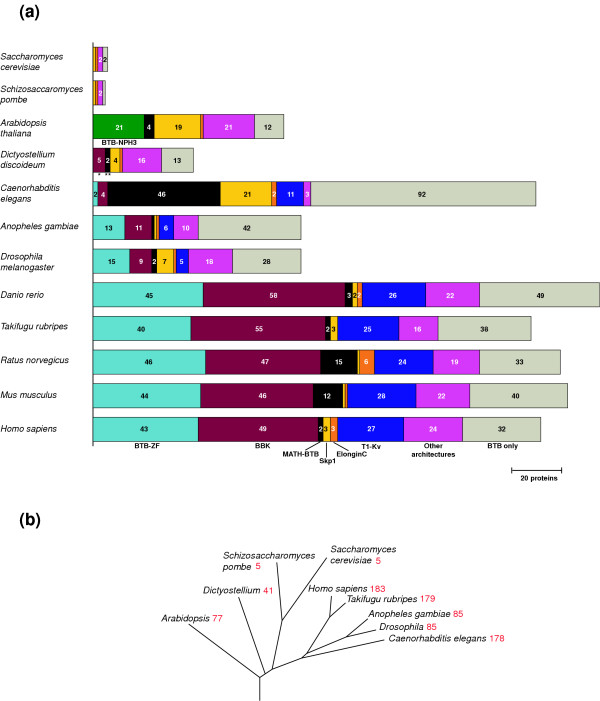
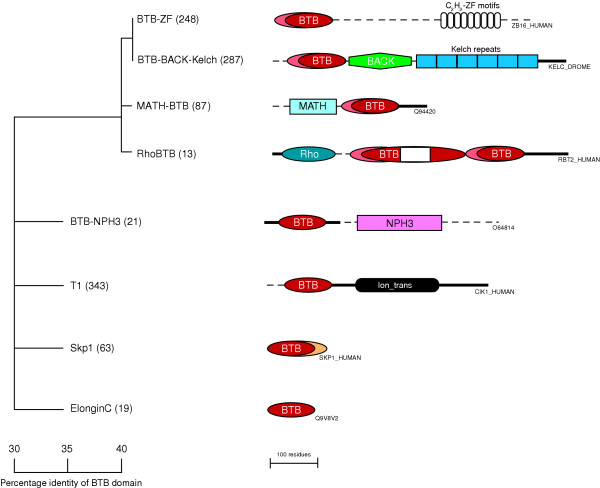
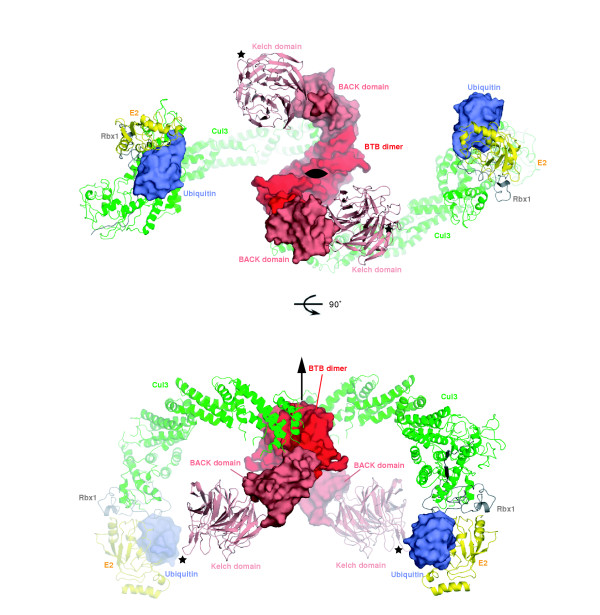
Verification
Claims the paper makes
The claims and statistics of this paper haven’t been checked yet.
Free: it reads the open-access text and checks the first 5 claims that cite a source we can check. Create a free account to check every claim.
Self-check
Percentages, sums and reported differences re-computed from the paper’s own numbers.
The self-check needs the paper’s full text.
Citations
Cites
Gapped BLAST and PSI-BLAST: a new generation of protein database search programs
Altschul, S. (1997) · Nucleic Acids Research · doi:10.1093/nar/25.17.3389 · Cited by 73,302
Berman, H. M. (2000) · Nucleic Acids Research · doi:10.1093/nar/28.1.235 · Cited by 40,196
PHYLIP-Phylogeny inference package (Version 3.2)
Felsenstein, J. (1989) · Cladistics · Cited by 18,906
The PyMOL Molecular Graphics System
DeLano, W. L. (2002) · Medical Entomology and Zoology · Cited by 18,147
The Pfam Protein Families Database
Bateman, A. (2002) · Nucleic Acids Research · doi:10.1093/nar/30.1.276 · Cited by 14,000
SWISS‐MODEL and the Swiss‐Pdb Viewer: An environment for comparative protein modeling
Guex, N., & Peitsch, M. C. (1997) · ELECTROPHORESIS · doi:10.1002/elps.1150181505 · Cited by 11,241
MEGA2: molecular evolutionary genetics analysis software
Kumar, S., Tamura, K., Jakobsen, I. B., & Nei, M. (2001) · Bioinformatics · doi:10.1093/bioinformatics/17.12.1244 · Cited by 6,097
Multiple sequence alignment with the Clustal series of programs
Chenna, R. (2003) · Nucleic Acids Research · doi:10.1093/nar/gkg500 · Cited by 4,875
The PSIPRED protein structure prediction server
McGuffin, L. J., Bryson, K., & Jones, D. T. (2000) · Bioinformatics · doi:10.1093/bioinformatics/16.4.404 · Cited by 3,838
Murzin, A. G., Brenner, S. E., Hubbard, T., & Chothia, C. (1995) · Journal of Molecular Biology · doi:10.1016/s0022-2836(05)80134-2 · Cited by 3,225
Research works printed but not linked: 2
- Swofford D PAUP 1998 Sunderland, MA: Sinauer Associates
- Felsenstein J PHYLIP (Phylogeny Inference Package) version 36 2004 Department of Genome Sciences, University of Washington, Seattle USA
Cited by
Items 301–400 of 696
Crystal structure of the Bach1 BTB domain and its regulation of homodimerization
Ito, N., Watanabe‐Matsui, M., Igarashi, K., & Murayama, K. (2009) · Genes to Cells · doi:10.1111/j.1365-2443.2008.01259.x · Cited by 30
“Depending on the spatial organization of secondary structure elements and the types of protein–protein associations, proteins with the BTB domain are classified into four families, including the BTB-zinc finger (ZF), Skp1, Elongin C and voltage-gated potassium channel T1 (T1-Kv) proteins (Stogios et al. 2005; Perez-To…”
BackgroundThe TAZ domain-containing proteins play important role in the heavy metals stress biology in plants
Shalmani, A., Ullah, U., Muhammad, I., Zhang, D., Sharif, R., Jia, P., Saleem, N., Gul, N., Rakhmanova, A., Tahir, M. M., et al. (2021) · Environmental Research · doi:10.1016/j.envres.2021.111030 · Cited by 28
Wu, X., Yang, Y., Zhong, C., Guo, Y., Li, S., Lin, H., & Liu, X. (2020) · BMC Genomics · doi:10.1186/s12864-020-6477-4 · Cited by 26
Gao, J., Liu, T., & Chen, J. (2013) · Phytopathology · doi:10.1094/phyto-07-13-0190-r · Cited by 25
“It can be combined with other domains to carry out multiple functions (28), such as gene transcriptional regulation pathway, ion channel gating, and protein degradation in various organisms (2,15,25,26,35).”
BackgroundCys2His2 Zinc Finger Methyl-CpG Binding Proteins: Getting a Handle on Methylated DNA
Hodges, A. J., Hudson, N. O., & Buck‐Koehntop, B. A. (2019) · Journal of Molecular Biology · doi:10.1016/j.jmb.2019.09.012 · Cited by 27
The Role of BTBD9 in the Cerebellum, Sleep-like Behaviors and the Restless Legs Syndrome
Lyu, S., Xing, H., DeAndrade, M. P., Pérez, P. D., Yokoi, F., Febo, M., Walters, A. S., & Li, Y. (2020) · Neuroscience · doi:10.1016/j.neuroscience.2020.05.021 · Cited by 27
Ji, X., Li, H., Qiao, Z., Zhang, J.-C., Sun, W.-J., Wang, C., Yang, K., You, C., & Hao, Y. (2020) · Plant Science · doi:10.1016/j.plantsci.2020.110689 · Cited by 25
Ellmeier, W., & Taniuchi, I. (2014) · Current topics in microbiology and immunology · doi:10.1007/82_2014_374 · Cited by 25
“…Sant’Angelo 2011; Lee and Maeda 2012; Siggs and Beutler 2012; Lunardi et al. 2013), the regulation of actin and cytoskeleton dynamics (Perez-Torrado et al. 2006; Albagli et al. 1995), protein targeting for ubiquitination (Pintard et al. 2004; Genschik et al. 2013) and others (Stogios et al. 2005).”
BackgroundInfluentialCullin 5-RING E3 ubiquitin ligases, new therapeutic targets?
Lamsoul, I., Uttenweiler‐Joseph, S., Moog‐Lutz, C., & Lutz, P. G. (2015) · Biochimie · doi:10.1016/j.biochi.2015.08.003 · Cited by 29
Cao-Ehlker, X., Zong, X., Hammelmann, V., Grüner, C., Fenske, S., Michalakis, S., Wahl‐Schott, C., & Biel, M. (2013) · Journal of Biological Chemistry · doi:10.1074/jbc.m112.434803 · Cited by 26
Protein–protein interactions regulate Ubl conjugation
Knipscheer, P., & Sixma, T. K. (2007) · Current Opinion in Structural Biology · doi:10.1016/j.sbi.2007.09.001 · Cited by 27
Proteome-scale induced proximity screens reveal highly potent protein degraders and stabilizersPreprint
Poirson, J., Dhillon, A., Cho, H., Lam, M. H. Y., Alerasool, N., Lacoste, J., Mizan, L., & Taipale, M. (2022) · bioRxiv (Cold Spring Harbor Laboratory) · doi:10.1101/2022.08.15.503206 · Cited by 24
“In contrast, most members of this family regulate protein ubiquitination and proteasome-dependent degradation (Canning et al., 2013; Stogios and Privé, 2004; Stogios et al., 2005).”
BackgroundExploring the Structures and Functions of Macromolecular SLX4-Nuclease Complexes in Genome Stability
Payliss, B. J., Patel, A., Sheppard, A. C., & Wyatt, H. D. M. (2021) · Frontiers in Genetics · doi:10.3389/fgene.2021.784167 · Cited by 25
Garipler, G., Lu, C., Morrissey, A., López-Zepeda, L. S., Pei, Y., Vidal, S. E., Fiore, A. P. Z. P., Aydın, B., Stadtfeld, M., Ohler, U., et al. (2022) · Cell Reports · doi:10.1016/j.celrep.2022.110524 · Cited by 23
“The BTB domain can form homo- and heterodimers (Stogios et al., 2005).”
BackgroundBonchuk, A. N., Boyko, K. M., Nikolaeva, A. Y., Burtseva, A. D., Popov, V. O., & Georgiev, P. G. (2022) · Structure · doi:10.1016/j.str.2022.04.009 · Cited by 24
NuRD complex recruitment to Thpok mediates CD4 + T cell lineage differentiation
Gao, Y., Zamisch, M., Vacchio, M. S., Chopp, L. B., Ciucci, T., Paine, E. L., Lyons, G. C., Nie, J., Xiao, Q., Zvezdova, E., et al. (2022) · Science Immunology · doi:10.1126/sciimmunol.abn5917 · Cited by 26
Birerdinc, A., Nohelty, E., Владимирович, М. А., Manyam, G. C., Panov, I., Coon, S., Nikitin, E. A., Skoblov, M. Y., Chandhoke, V., & Baranova, A. V. (2009) · Tumor Biology · doi:10.1007/s13277-009-0005-0 · Cited by 23
“KCTD family members are similar to Pfam K_tetra consensus (PF02214) rather than that of BTB/POZ [32].”
BackgroundSameshima, T., Yamamoto, T., Sano, O., Sogabe, S., Igaki, S., Sakamoto, K., Ida, K., Gotou, M., Imaeda, Y., Sakamoto, J., et al. (2018) · Biochemistry · doi:10.1021/acs.biochem.7b00732 · Cited by 28
The BTB/kelch protein, KRIP6, modulates the interaction of PICK1 with GluR6 kainate receptors
Laezza, F., Wilding, T. J., Sequeira, S. M., Craig, A. M., & Huettner, J. E. (2008) · Neuropharmacology · doi:10.1016/j.neuropharm.2008.07.021 · Cited by 23
“The BTB/kelch family comprises a large group of highly conserved proteins involved in diverse cellular functions including cytoskeleton interactions, nuclear transcription, and ubiquitination (Stogios et al., 2005; Prag and Adams, 2003).”
BackgroundRole of themod(mdg4)Common Region in Homolog Segregation in Drosophila Male Meiosis
Soltani‐Bejnood, M., Thomas, S. E., Villeneuve, L. M., Schwartz, K. T., Hong, C.-S., & McKee, B. D. (2007) · Genetics · doi:10.1534/genetics.106.063289 · Cited by 25
“BTB/POZ domains are strong protein interaction domains found in many transcriptional regulatory proteins, where they function in mediating homodimerization and multimerization (Bardwell and Treisman 1994; Zollman et al. 1994; Igarishi et al. 1998; Muller et al. 1999; Melnick et al. 2000; Gause et…”
BackgroundThe neuronal ceroid-lipofuscinoses (Batten disease)
Mole, S., Schulz, A., & Haltia, M. (2020) · Elsevier eBooks · doi:10.1016/b978-0-12-813866-3.00004-7 · Cited by 23
Ross, J., Rashkovan, M., Fraszczak, J., Joly-Beauparlant, C., Vadnais, C., Winkler, R., Droit, A., Kosan, C., & Möröy, T. (2019) · Cancer Research · doi:10.1158/0008-5472.can-18-3038 · Cited by 25
A BTB/POZ domain-containing protein negatively regulates plant immunity in Nicotiana benthamiana
Zhao, M., Ge, Y., Xu, Z., Ouyang, X., Jia, Y., Liu, J., Zhang, M., & An, Y. (2022) · Biochemical and Biophysical Research Communications · doi:10.1016/j.bbrc.2022.02.050 · Cited by 34
LZTR1 Mutation Mediates Oncogenesis through Stabilization of EGFR and AXL
Ko, A., Hasanain, M., Oh, Y. T., D’Angelo, F., Sommer, D., Frangaj, B., Tran, S., Bielle, F., Pollo, B., Paterra, R., et al. (2022) · Cancer Discovery · doi:10.1158/2159-8290.cd-22-0376 · Cited by 26
Sloan, D. C., Cryan, C. E., & Muntean, B. S. (2023) · Journal of Biological Chemistry · doi:10.1016/j.jbc.2023.102924 · Cited by 24
“On the other hand, the BTB domain has been implicated in interaction with Cullin3 (17, 44, 45); however, this is thought to be due to the presence of a BTB domain on Cullin3 as well (46).”
BackgroundPolymerization of ZBTB transcription factors regulates chromatin occupancy
Park, P. M. C., Park, J., Brown, J., Hunkeler, M., Roy Burman, S. S., Donovan, K. A., Yoon, H., Nowak, R. P., Słabicki, M., Ebert, B. L., et al. (2024) · Molecular Cell · doi:10.1016/j.molcel.2024.06.010 · Cited by 22
Phylogenetic analysis of the expansion of theMATH-BTBgene family in the grasses
Juranić, M., & Dresselhaus, T. (2014) · Plant Signaling & Behavior · doi:10.4161/psb.28242 · Cited by 22
“Proteins encompassing a MATH (Meprin and TRAF Homology) and a BTB (Bric-A-Brac, Tramtrack, Broad Complex) domain, also known as the POZ (Pox virus and Zinc finger) domain are commonly found in plant and animals, but not in fungi and serve in a wide range of cellular processes to regulate developmental processes and ce…”
BackgroundInteraction of orthopoxviruses with the cellular ubiquitin-ligase system
Shchelkunov, S. N. (2010) · Virus Genes · doi:10.1007/s11262-010-0519-y · Cited by 25
Cul3-KLHL20 ubiquitin ligase: physiological functions, stress responses, and disease implications
Chen, H.-Y., Liu, C.-C., & Chen, R.-H. (2016) · Cell Division · doi:10.1186/s13008-016-0017-2 · Cited by 21
“The human genome contains nearly 200 BTB proteins [8], suggesting the existence of large numbers of distinct Cul3 complexes.”
BackgroundInfluentialChen, Z., Wasney, G. A., Picaud, S., Filippakopoulos, P., Vedadi, M., D’Angiolella, V., & Bullock, A. N. (2020) · Open Biology · doi:10.1098/rsob.200041 · Cited by 22
Abou-Elhamd, A. S., Cooper, O., & Münsterberg, A. (2009) · Mechanisms of Development · doi:10.1016/j.mod.2009.07.006 · Cited by 24
Ishibashi, M., Nakayama, K., Yeasmin, S., Katagiri, A., Iida, K., Nakayama, N., & Miyazaki, K. (2009) · Clinical Cancer Research · doi:10.1158/1078-0432.ccr-08-2134 · Cited by 23
Fuhrmann, D., Mernberger, M., Nist, A., Stiewe, T., & Elsässer, H. (2017) · Journal of Neuroscience · doi:10.1523/jneurosci.0843-17.2017 · Cited by 26
“We propose a model in which the Miz1 tetramer (Stogios et al., 2005; Kosan et al., 2010; Stead and Wright, 2014) represses Kdm8 expression together with a so-far-unknown corepressor (Fig.”
BackgroundZBTB7A suppresses glioblastoma tumorigenesis through the transcriptional repression of EPB41L5
Jeong, J., Park, S., Kim, H., Nam, H. Y., Kim, S.-H., Jeong, M., Kong, M.-J., Son, J., Song, J., Song, J.-H., et al. (2023) · Experimental & Molecular Medicine · doi:10.1038/s12276-022-00908-8 · Cited by 21
Bonchuk, A. N., Balagurov, K. I., Baradaran, R., Boyko, K. M., Sluchanko, N. N., Khrustaleva, A. M., Burtseva, A. D., Arkova, O. V., Khalisova, K. K., Popov, V. O., et al. (2024) · eLife · doi:10.7554/elife.96832 · Cited by 21
“…than 30 crystal structures of non-TTK BTB domains that form stable homodimers ( Ahmad et al., 1998 ; Stogios et al., 2007 ; Stogios et al., 2010 ; Stogios et al., 2005 ; Vogelmann et al., 2014 ), the structures of the TTK-type BTB domains and the structural basis for their multimerization remain…”
BackgroundLeljak-Levanić, D., Juranić, M., & Sprunck, S. (2013) · Plant Reproduction · doi:10.1007/s00497-013-0229-4 · Cited by 21
“The BTB (Bric-à-brac/ Tramtrack/Broad complex) domain interacts with Cullin3 (CUL3), while secondary domains are thought to be responsible for substrate specificity (Gingerich et al. 2005; Stogios et al. 2005).”
BackgroundTobacco TTG2 Quells Resistance to Pathogens by Sequestering NPR1 from Nuclear Localisation
Li, B., Gao, R., Cui, R., Lü, B., Li, X., Zhao, Y., You, Z., Tian, S., & Dong, H. (2012) · Journal of Cell Science · doi:10.1242/jcs.111922 · Cited by 24
“NPR1 contains BTB and IkB domains, which are both binding partners of WD40 (Stogios et al., 2005; Ryals et al., 1997).”
BackgroundInfluentialThe essential player in adipogenesis GRP78 is a novel KCTD15 interactor
Smaldone, G., Pirone, L., Capolupo, A., Vitagliano, L., Monti, M. C., Gaetano, S. D., & Pedone, E. M. (2018) · International Journal of Biological Macromolecules · doi:10.1016/j.ijbiomac.2018.04.078 · Cited by 24
The continuing arc toward phototropic enlightenment
Liscum, E., Nittler, P., & Koskie, K. A. (2020) · Journal of Experimental Botany · doi:10.1093/jxb/eraa005 · Cited by 22
Poxvirus Interactions with the Host Ubiquitin System
Lant, S., & de Motes, C. M. (2021) · Pathogens · doi:10.3390/pathogens10081034 · Cited by 25
“This type of adaptor therefore contains a domain that mediates interaction with Cul-3 known as bric-a-brac, tramtrack, and broad complex transcription (BTB) [86] or poxvirus and zinc finger (POZ) domain [87], and a domain of a different nature where the substrate binding function resides [88], overall yielding a compl…”
BackgroundKlhl31 attenuates β-catenin dependent Wnt signaling and regulates embryo myogenesis
Abou-Elhamd, A. S., Alrefaei, A. F., Mok, G. F., García‐Morales, C., Abu-Elmagd, M. M., Wheeler, G. N., & Münsterberg, A. (2015) · Developmental Biology · doi:10.1016/j.ydbio.2015.02.024 · Cited by 21
“…is presumed to act as a substrate recognition module and the BACK domain is speculated to position the Kelch-motif β-propeller and its substrate in the Cul3 E3 complexes (Furukawa et al., 2003; Geyer et al., 2003; Pintard et al., 2003; Prag and Adams, 2003; Stogios et al., 2005; Xu et al., 2003).”
BackgroundUllah, U., Mao, W., Abbas, W., Alharthi, B., Bhanbhro, N., Xiong, M., Gul, N., & Shalmani, A. (2023) · Functional & Integrative Genomics · doi:10.1007/s10142-023-01061-9 · Cited by 21
Phylogeny and domain architecture of plant ribosome inactivating proteins
Dougherty, K., & Hudak, K. A. (2022) · Phytochemistry · doi:10.1016/j.phytochem.2022.113337 · Cited by 22
Techa, S., Alvarez, J. V., & Chung, J. S. (2014) · General and Comparative Endocrinology · doi:10.1016/j.ygcen.2014.07.017 · Cited by 33
“BTBDPs, with BTB domain for a protein–protein interaction motif, share a function in protein degradation by ubiquitination (Perez-Torrado et al., 2006; Stogios et al., 2005).”
BackgroundJiang, X., Zhang, H., Yin, S., Zhang, Y., Yang, W., Zheng, W., Wang, L., Wang, Z., Bukhari, I., Cooke, H. J., et al. (2014) · Scientific Reports · doi:10.1038/srep07062 · Cited by 20
Sakaue, T., Fujisaki, A., Nakayama, H., Maekawa, M., Hiyoshi, H., Kubota, E., Joh, T., Izutani, H., & Higashiyama, S. (2016) · Cancer Science · doi:10.1111/cas.13133 · Cited by 22
Bauer, N., Škiljaica, A., Malenica, N., Razdorov, G., Klasić, M., Juranić, M., Močibob, M., Sprunck, S., Dresselhaus, T., & Leljak-Levanić, D. (2019) · Frontiers in Plant Science · doi:10.3389/fpls.2019.01469 · Cited by 20
Yu, W., Li, Y., Zhou, X., Deng, Y., Wang, Z., Yuan, W., Li, D., Zhu, C., Zhao, X., Mo, X., et al. (2008) · Molecules and Cells · doi:10.1016/s1016-8478(23)14020-9 · Cited by 24
“, 2000), protein ubiquitination/degradation (Kobayashi et al., 2004; Stogios et al., 2005; Wilkins et al., 2004; Xu et al., 2003), tumorogenesis (Nakayama et al.”
Maksimenko, O. G., Chetverina, D., & Georgiev, P. G. (2006) · Russian Journal of Genetics · doi:10.1134/s1022795406080023 · Cited by 22
“The BTB/POZ domain is responsible for protein–protein interactions and determines homodimerization or, more rarely, heterodimerization of proteins [38].”
BackgroundWang, J., Zhu, Z., Yang, H., Zhang, Y., Zhao, X., Zhang, M., Liu, Y., Xu, Y., & Lei, Q. (2016) · FEBS Journal · doi:10.1111/febs.13759 · Cited by 22
Chutimanukul, P., Saputro, T. B., Mahaprom, P., Plaimas, K., Comai, L., Buaboocha, T., Siangliw, M., Toojinda, T., & Chadchawan, S. (2021) · Frontiers in Plant Science · doi:10.3389/fpls.2021.704549 · Cited by 21
EOR-2 Is an Obligate Binding Partner of the BTB–Zinc Finger Protein EOR-1 in Caenorhabditis elegans
Howell, K., Arur, S., Schedl, T., & Sundaram, M. V. (2010) · Genetics · doi:10.1534/genetics.109.111591 · Cited by 22
Structure of the human Nac1 POZ domain
Stead, M., Carr, S. B., & Wright, S. C. (2009) · Acta Crystallographica Section F Structural Biology and Crystallization Communications · doi:10.1107/s1744309109012214 · Cited by 20
TheBTBD9gene may be associated with antipsychotic‐induced restless legs syndrome in schizophrenia
Kang, S., Lee, H., Park, Y., Yang, H. J., Song, H. M., Lee, Y. J., Cho, S., Cho, S. N., & Kim, L. (2013) · Human Psychopharmacology Clinical and Experimental · doi:10.1002/hup.2287 · Cited by 20
“However, the functions of BTB proteins are thought to include transcription repression, cytoskeleton regulation, tetramerization, and gating of ion channels (Stogios et al., 2005).”
BackgroundMutation Analysis of the ERCC4/FANCQ Gene in Hereditary Breast Cancer
Kohlhase, S., Bogdanova, N. V., Schürmann, P., Bermisheva, M., Хуснутдинова, Э. К., Antonenkova, N., Park‐Simon, T., Hillemanns, P., Meyer, A. A., Christiansen, H., et al. (2014) · PLoS ONE · doi:10.1371/journal.pone.0085334 · Cited by 21
“G700R substitution would reside in the a1 helix that is protruding from the BTB core fold [36].”
BackgroundThe equilibrium of ubiquitination and deubiquitination at PLK1 regulates sister chromatid separation
Liu, J., & Zhang, C. (2017) · Cellular and Molecular Life Sciences · doi:10.1007/s00018-017-2457-5 · Cited by 20
Assimakopoulos, K., Karaivazoglou, K., Σκώκου, Μ., Kalogeropoulou, M., Kolios, P., Gourzis, P., Patrinos, G. P., & Tsermpini, E. E. (2018) · Medicines · doi:10.3390/medicines5020027 · Cited by 21
“However, it is broadly expressed in brain structures [43] and it belongs to a family of proteins which regulate ion channels’ tetramerization and gating [44], potentially being involved in inter- and intra-neuronal signal transduction.”
BackgroundTissue-Specific Trans Regulation of the Mouse Epigenome
Baker, C. L., Walker, M., Arat, S., Ananda, G., Petkova, P., Powers, N. R., Tian, H., Spruce, C. A., Ji, B., Rausch, D. M., et al. (2018) · Genetics · doi:10.1534/genetics.118.301697 · Cited by 18
“2017), and BTB-ZFPs with around 50 identified in both species (Stogios et al. 2005).”
BackgroundDiscovery of a Nitric Oxide-Responsive Protein in Arabidopsis thaliana
Zarban, R. A., Vogler, M., Wong, A., Eppinger, J., Al‐Babili, S., & Gehring, C. (2019) · Molecules · doi:10.3390/molecules24152691 · Cited by 22
Olivieri, D., Paramanathan, S., Bardet, A. F., Heß, D., Smallwood, S. A., Elling, U., & Betschinger, J. (2021) · Journal of Biological Chemistry · doi:10.1016/j.jbc.2021.100947 · Cited by 22
“In human and mouse, the Bach and the Nacc families contain only two members each, and the Zbtb family comprises 49 members.”
BackgroundInfluentialShiraishi, A., Joko, T., Higashiyama, S., & Ohashi, Y. (2007) · Cornea · doi:10.1097/ico.0b013e31812f6b67 · Cited by 19
Pirone, L., Correale, S., de Paola, I., Zaccaro, L., Simone, G. D., Vitagliano, L., Pedone, E. M., & Gaetano, S. D. (2011) · Journal of Peptide Science · doi:10.1002/psc.1366 · Cited by 19
Analysis of the BTBD9 and HTR2C variants in Chinese Han patients with Tourette syndrome
Guo, Y., Su, L., Zhang, J., Lei, J., Deng, X., Xu, H., Yang, Z., Kuang, S.-J., Tang, J., Luo, Z., et al. (2012) · Psychiatric Genetics · doi:10.1097/ypg.0b013e32835862b1 · Cited by 20
“The functions of BTB (POZ) proteins include transcription repression, cytoskeleton regulation, tetramerization, gating of ion channels, as well as ubiquitin-dependent protein degradation (Stogios et al., 2005).”
BackgroundZhou, Y., GuangHua, L., Zhang, L., Xu, J., Hu, L., Jiang, L., & Liu, S. (2019) · Czech Journal of Genetics and Plant Breeding · doi:10.17221/34/2019-cjgpb · Cited by 18
KCTD8 and KCTD12 Facilitate Axonal Expression of GABABReceptors in Habenula Cholinergic Neurons
Ren, Y., Liu, Y., Zheng, S., & Luo, M. (2022) · Journal of Neuroscience · doi:10.1523/jneurosci.1676-21.2021 · Cited by 19
Kucherenko, M. M., & Shcherbata, H. R. (2013) · Fly · doi:10.4161/fly.25241 · Cited by 19
Cheng, D., Qian, W., Meng, M., Wang, Y., Peng, J., & Xia, Q. (2014) · International Journal of Genomics · doi:10.1155/2014/865065 · Cited by 19
“Similar to the findings of a previous study [6], in addition to the typical BTB domain, most of the identified silkworm BTB protein genes also contained other types of functional domains such as zinc finger, BACK, Kelch, ANK, MATH, PHR, and HTH domains.”
InfluentialNAC1 Potentiates Cellular Antiviral Signaling by Bridging MAVS and TBK1
Xia, Z., Xu, G., Nie, L., Liu, L., Peng, N., He, Q., Zuo, Q., Zhou, Y., Cao, Z., Liu, S., et al. (2019) · The Journal of Immunology · doi:10.4049/jimmunol.1801110 · Cited by 18
The Roles of SPOP in DNA Damage Response and DNA Replication
Maekawa, M., & Higashiyama, S. (2020) · International Journal of Molecular Sciences · doi:10.3390/ijms21197293 · Cited by 21
“Speckle-type BTB/POZ protein (SPOP) is one of the BTBPs of the CUL3/RING type E3 complex.”
BackgroundInfluentialLaohakieat, K., Isasawin, S., & Thanaphum, S. (2020) · Scientific Reports · doi:10.1038/s41598-020-74856-6 · Cited by 18
New TFII-I family target genes involved in embryonic development
Makeyev, A. V., & Bayarsaihan, D. (2009) · Biochemical and Biophysical Research Communications · doi:10.1016/j.bbrc.2009.06.045 · Cited by 18
“In some instances, this fold was adapted to several different modes of interactions with non-BTB proteins such as components of the histone deacetylase corepressor or E3 ubiquitin ligase complexes [10].”
BackgroundDimerization of SLX4 contributes to functioning of the SLX4-nuclease complex
Yin, J., Wan, B., Sarkar, J., Horvath, K., Wu, J., Chen, Y., Cheng, G., Wan, K., Chin, P., Lei, M., et al. (2016) · Nucleic Acids Research · doi:10.1093/nar/gkw354 · Cited by 18
“SLX4 also coordinates dispatch and activity of its associated protein partners (8–10), and domains implicated in this include SLX4ZF (ubiquitin-binding zinc finger domain), SLX4SIMs (SUMO-interacting motifs) (11– 13) and SLX4BTB (Bric-a-brac, Tramtrack and Broad complex domain) (14,15).”
BackgroundInfluentialMolecular basis of cullin-3 (Cul3) ubiquitin ligase subversion by vaccinia virus protein A55
Gao, C., Pallett, M. A., Croll, T. I., Smith, G. L., & Graham, S. C. (2019) · Journal of Biological Chemistry · doi:10.1074/jbc.ra118.006561 · Cited by 17
“As a scaffold protein for an E3 ubiquitin ligase complex, Cul3 not only interacts with the BTB–Kelch family of adaptor proteins but also other BTB domain– containing adaptor proteins such as BTB zinc-finger proteins, MATH-BTB proteins (where MATH is Meprin and TRAF homology domain), small RhoBTB GTPases, and KCTD prot…”
BackgroundThe neuronal ceroid-lipofuscinoses (Batten disease)
Mole, S., & Schulz, A. (2024) · Elsevier eBooks · doi:10.1016/b978-0-443-19176-3.00018-2 · Cited by 19
The role of BTBD9 in the cerebral cortex and the pathogenesis of restless legs syndrome
Lyu, S., Xing, H., DeAndrade, M. P., Pérez, P. D., Zhang, K., Liu, Y., Yokoi, F., Febo, M., & Li, Y. (2019) · Experimental Neurology · doi:10.1016/j.expneurol.2019.113111 · Cited by 18
Pathophysiological role of BACH transcription factors in digestive system diseases
Song, Q., Mao, X., Jing, M., Fu, Y., & Yan, W. (2023) · Frontiers in Physiology · doi:10.3389/fphys.2023.1121353 · Cited by 18
OsBBX19-OsBTB97/OsBBX11 module regulates spikelet development and yield production in rice
Shalmani, A., Ullah, U., Li, T., Zhang, R., Jing, X., Muhammad, I., Bhanbhro, N., Liu, W., Li, W., & Chen, K. (2023) · Plant Science · doi:10.1016/j.plantsci.2023.111779 · Cited by 17
Golovnin, A. K., Melnikova, L. S., Babosha, V., Pokholkova, G. V., Slovohotov, I. Y., Umnova, A., Maksimenko, O. G., Zhimulev, I. F., & Georgiev, P. G. (2023) · International Journal of Molecular Sciences · doi:10.3390/ijms242115917 · Cited by 19
“CP190 (1096 aa) contains an N-terminal Broad-complex, Tramtrack, and Bric-à -brac (BTB) domain and a cluster consisting of four C2H2-type zinc-finger domains (C2H2 domains) located in the central part of the protein [28,29].”
BackgroundA conserved N-terminal motif of CUL3 contributes to assembly and E3 ligase activity of CRL3KLHL22
Wang, W., Liang, L., Dai, Z., Zuo, P., Yu, S., Lu, Y., Ding, D., Chen, H., Shan, H., Jin, Y., et al. (2024) · Nature Communications · doi:10.1038/s41467-024-48045-2 · Cited by 17
“Similar dominant-negative effects also exist in the BTB domain-containing protein families 14 .”
Miz1 Is a Critical Repressor of cdkn1a during Skin Tumorigenesis
Hönnemann, J., Sanz‐Moreno, A., Wolf, E., Eilers, M., & Elsässer, H. (2012) · PLoS ONE · doi:10.1371/journal.pone.0034885 · Cited by 26
“POZ domains are found in a variety of different transcription factors and can confer hetero- or homodimerization as well as tetramerisation [3,4].”
BackgroundStankovic‐Valentin, N., Verger, A., Deltour, S., Quinlan, K. G. R., Crossley, M., & Leprince, D. (2006) · FEBS Journal · doi:10.1111/j.1742-4658.2006.05301.x · Cited by 17
Cullin-RING Ligases as Promising Targets for Gastric Carcinoma Treatment
Song, Q., Feng, S., Peng, W., Li, A., Ma, T., Yu, B., & Liu, H. (2021) · Pharmacological Research · doi:10.1016/j.phrs.2021.105493 · Cited by 18
Xenopus BTBD6 and its Drosophila homologue lute are required for neuronal development
Bury, F. J., Moers, V., Yan, J., Souopgui, J., Quan, X., Geest, N. D., Kricha, S., Hassan, B. A., & Bellefroid, E. (2008) · Developmental Dynamics · doi:10.1002/dvdy.21748 · Cited by 17
“Most of these proteins have additional domains for protein– protein interaction domains such as the Kelch or MATH motifs (Stogios et al., 2005).”
BackgroundNuclear localization signal in a cancer-related transcriptional regulator protein NAC1
Okazaki, K., Nakayama, N., Nariai, Y., Nakayama, K., Miyazaki, K., Maruyama, R., Kato, H., Kosugi, S., Urano, T., & Sakashita, G. (2012) · Carcinogenesis · doi:10.1093/carcin/bgs193 · Cited by 19
“The BTB domain comprises a stretch of ~95–125 amino acids and a protein–protein interaction motif that exists in about 183 genes in the human genome (31).”
BackgroundWong, T. C. B., Rebbert, M. L., Wang, C., Chen, X., Heffer, A. M., Zarelli, V. E. P., Dawid, I. B., & Zhao, H. (2016) · The International Journal of Developmental Biology · doi:10.1387/ijdb.160058id · Cited by 16
“BTB domains, also called POZ domains, are widely involved in protein-protein interactions (Perez-Torrado et al., 2006, Stogios et al., 2005), and thus it is not surprising that acting as adapters is perhaps the best-studied molecular function of Kctd proteins.”
IBTK Differently Modulates Gene Expression and RNA Splicing in HeLa and K562 Cells
Fiume, G., Scialdone, A., Rizzo, F. M., Filippo, M. D., Laudanna, C., Albano, F., Golino, G., Vecchio, E., Pontoriero, M., Mimmi, S., et al. (2016) · International Journal of Molecular Sciences · doi:10.3390/ijms17111848 · Cited by 15
“Ankyrins, BTB/POZ and RCC1 domains are present in a wide range of proteins involved in different cellular processes, including gene expression regulation [8,12,13], cytoskeleton organization [14], and protein ubiquitination/degradation [9].”
BackgroundViral Manipulations of the Cullin-RING Ubiquitin Ligases
Liu, Y., & Tan, X. (2020) · Advances in experimental medicine and biology · doi:10.1007/978-981-15-1025-0_7 · Cited by 17
A bivalent molecular glue linking lysine acetyltransferases to oncogene-induced cell death
Nix, M. N., Gourisankar, S. P., Bowman, K., Nettles, S. A., Yang, H. H., Dwyer, B. G., Sarott, R. C., Abuzaid, H. Z., Martinez, M. M., Phillips, N. A., et al. (2026) · Cell · doi:10.1016/j.cell.2026.06.037 · Cited by 19
Xiang, T., He, K., Wang, S., Chen, W., & Li, H. (2020) · Cancer Management and Research · doi:10.2147/cmar.s266529 · Cited by 16
SPOP in Cancer: Phenomena, Mechanisms and Its Role in Therapeutic Implications
Yang, X., & Zhu, Q. (2022) · Genes · doi:10.3390/genes13112051 · Cited by 15
“In the human proteome, only SPOP and its homolog, SPOP-like (SPOPL), have both BTB and MATH domains, despite BTB usually being linked to other interaction domains [44].”
BackgroundSilvani, A., Ghorayeb, I., Manconi, M., Li, Y., & Clemens, S. (2022) · Neurotherapeutics · doi:10.1007/s13311-022-01334-4 · Cited by 19
Novel genes and alleles of the BTB/POZ protein family in Oryza rufipogon
Mandal, S. N., Sanchez, J., Bhowmick, R., Bello, O. R., van Beek, C. R., & Reyes, B. G. D. L. (2023) · Scientific Reports · doi:10.1038/s41598-023-41269-0 · Cited by 19
“The differences in the number of BTB/POZ genes across species appeared to be due to lineage-specific expansion and contraction 39,96 .”
BackgroundA novel factor modulating X chromosome dosage compensation in Anopheles
Krzywińska, E., Ribeca, P., Ferretti, L., Hammond, A., & Krzywinski, J. (2023) · Current Biology · doi:10.1016/j.cub.2023.09.001 · Cited by 19
Oncoprotein SET-associated transcription factor ZBTB11 triggers lung cancer metastasis
Xu, W., Yao, H., Wu, Z., Yan, X., Jiao, Z., Liu, Y., Zhang, M., & Wang, D. (2024) · Nature Communications · doi:10.1038/s41467-024-45585-5 · Cited by 25
“Similar to the majority of the family members, ZBTB11 is characterized as harboring an N-terminal BTB domain and tandem C-terminal zinc fi nger motifs that are responsible for mediating protein – protein interactions and DNA binding, respectively 21,22 .”
BackgroundZhang, Q., Ma, C., Gu, K., Wang, J., Yu, J., Liu, B., Wang, Y., He, J., Hu, D., & Sun, Q. (2024) · The Plant Journal · doi:10.1111/tpj.16761 · Cited by 16
Structure and dynamics of a pentameric KCTD5/CUL3/Gβγ E3 ubiquitin ligase complex
Nguyen, D. M., Rath, D. H., Devost, D., Pétrin, D., Rizk, R., Ji, A. X., Narayanan, N., Yong, D., Zhai, A., Kuntz, D. A., et al. (2024) · Proceedings of the National Academy of Sciences · doi:10.1073/pnas.2315018121 · Cited by 20
“A major component of the primary interface is the α 2/v - loop/ β 3 region from the common BTB/SKP1/ELOC fold (6, 45) ( SI Appendix , Fig.”
Self-citationDynamic BTB-domain filaments promote clustering of ZBTB proteins
Mance, L., Bigot, N., Sánchez, E. Z., Coste, F., Martín-González, N., Zentout, S., Biliškov, M., Pukało, Z., Mishra, A., Chapuis, C., et al. (2024) · Molecular Cell · doi:10.1016/j.molcel.2024.05.029 · Cited by 20
KLHL6 is a tumor suppressor gene in diffuse large B-cell lymphoma
Choi, J., Zhou, N., & Busino, L. (2019) · Cell Cycle · doi:10.1080/15384101.2019.1568765 · Cited by 20
“For the well-characterized example of cullin1, the substrate module includes the adaptor protein SKP1, which in turn recruits one of the numerous substrate receptors’ F-box proteins (FBXs) (Figure 1(b)).”
BackgroundInfluentialThareja, S. K., North, L. M., Stamm, K., Earing, M. G., Frommelt, M. A., Willes, R. J., Tripathi, S., Dsouza, N. R., Zimmermann, M. T., Mahnke, D. K., et al. (2020) · Molecular Genetics & Genomic Medicine · doi:10.1002/mgg3.1152 · Cited by 18
“with the Kelch β-propeller domain being the most common for target recognition (Prag & Adams, 2003; Stogios et al., 2005).”
BackgroundKCTD10 is critical for heart and blood vessel development of zebrafish
Hu, X., Gan, S., Xie, G., Li, L., Chen, C., Ding, X., Han, M., Xiang, S., & Zhang, J. (2014) · Acta Biochimica et Biophysica Sinica · doi:10.1093/abbs/gmu017 · Cited by 17
Metadata
- Authors
- Stogios, P. J., Downs, G. S., Jauhal, J. J., Nandra, S. K., & Privé, G. G.
- Affiliations
- University of Toronto (CA)
- Seneca Polytechnic (CA)
- Corresponding author
- Privé, Gilbert G
- Venue
- Genome Biology
- Published
- 2005-09-15
- Volume
- 6
- Issue
- 10
- Pages
- R82-R82
- ISSN
- 1465-6906 (ISSN-L)
- 1474-760X
- PMC
- PMC1257465
- OpenAlex
- W2159956236
- Semantic Scholar
- d0aaf7b57ff43dccf08b41041b255c60e14bf72d
- Cited by
- 694
- References
- 131
- Citations by year
- 2026: 21 · 2025: 31 · 2024: 48 · 2023: 24 · 2022: 45 · 2021: 27 · 2020: 37 · 2019: 48 · 2018: 37 · 2017: 25 · 2016: 39 · 2015: 25 · 2014: 35 · 2013: 37 · 2012: 42
- FWCI
- 9.82
- Type
- journal article
- Language
- en
- Open access
- gold
- doi.org
- Licence
- cc-by
- creativecommons.org/licenses/by/2.0/ (tdm)
- creativecommons.org/licenses/by/2.0/ (vor)
- Locations
- Genome biology (publishedVersion, cc-by)
- Europe PMC (PubMed Central) (publishedVersion)
- PubMed Central (publishedVersion)
- PubMed (publishedVersion)
- TSpace (University of Toronto) (submittedVersion)
- Topics
- Life Sciences › Biochemistry, Genetics and Molecular Biology › Molecular Biology › Ubiquitin and proteasome pathways
- Life Sciences › Biochemistry, Genetics and Molecular Biology › Molecular Biology › Protein Structure and Dynamics
- Life Sciences › Biochemistry, Genetics and Molecular Biology › Molecular Biology › Genomics and Chromatin Dynamics
- Keywords
- BTB domain, POZ domain, protein-protein interaction motifs, Skp1, SCF ubiquitin ligase, protein domain architecture, sequence conservation, structural conservation
- MeSH terms
- Amino Acid Sequence, Animals, DNA-Binding Proteins, Models, Molecular, Molecular Sequence Data, Phylogeny, Protein Binding, Zinc Fingers, Genome, Sequence Analysis, DNA, Protein Structure, Tertiary, Protein Folding, Sequence Analysis, Protein
About these checks
Registry, retraction, Cites and statistics results are computed, not judged, with one exception: a printed reference that no index lists is read once by a model before it counts as a citation error. Claims are extracted by a model and kept only when their quote appears verbatim in the text; each cited source is then checked, with a model’s help, for whether it says what the claim relies on. Those verdicts can be wrong — read the claim’s quote and the cited source before relying on one.
Statistics and arithmetic are recomputed, not judged.
Confidence bands are shown only for fields calibrated on our annotated test set. None is calibrated yet, so no band is shown.
What counts as a claim ›How we measure confidence ›How we check this ›
Are you an author, or do you see a problem with this page? Request a review
Data sources
Bibliographic data: Semantic Scholar, OpenAlex, Crossref.
Contains information from the Semantic Scholar Academic Graph Datasets, made available under the ODC Attribution License (ODC-BY 1.0).
Semantic Scholar’s data is described in: Kinney, R., et al. (2023). The Semantic Scholar Open Data Platform. arXiv:2301.10140.
