

Sequence and structural analysis of BTB domain proteins
Open accessThe DOI matches its Crossref record; 129 of the 131 references it cites were found in a registry or an index.
Abstract
Background: The BTB domain (also known as the POZ domain) is a versatile protein-protein interaction motif that participates in a wide range of cellular functions, including transcriptional regulation, cytoskeleton dynamics, ion channel assembly and gating, and targeting proteins for ubiquitination. Several BTB domain structures have been experimentally determined, revealing a highly conserved core structure. Results: We surveyed the protein architecture, genomic distribution and sequence conservation of BTB domain proteins in 17 fully sequenced eukaryotes. The BTB domain is typically found as a single copy in proteins that contain only one or two other types of domain, and this defines the BTB-zinc finger (BTB-ZF), BTB-BACK-kelch (BBK), voltage-gated potassium channel T1 (T1-Kv), MATH-BTB, BTB-NPH3 and BTB-BACK-PHR (BBP) families of proteins, among others. In contrast, the Skp1 and ElonginC proteins consist almost exclusively of the core BTB fold. There are numerous lineage-specific expansions of BTB proteins, as seen by the relatively large number of BTB-ZF and BBK proteins in vertebrates, MATH-BTB proteins in Caenorhabditis elegans , and BTB-NPH3 proteins in Arabidopsis thaliana . Using the structural homology between Skp1 and the PLZF BTB homodimer, we present a model of a BTB-Cul3 SCF-like E3 ubiquitin ligase complex that shows that the BTB dimer or the T1 tetramer is compatible in this complex. Conclusion: Despite widely divergent sequences, the BTB fold is structurally well conserved. The fold has adapted to several different modes of self-association and interactions with non-BTB proteins.
Overview
The claims and statistics of this paper haven’t been checked yet.
Free: it reads the open-access text and checks the first 5 claims that cite a source we can check. Create a free account to check every claim.
Integrity signals
Registry
Cites
Statistics
Figures
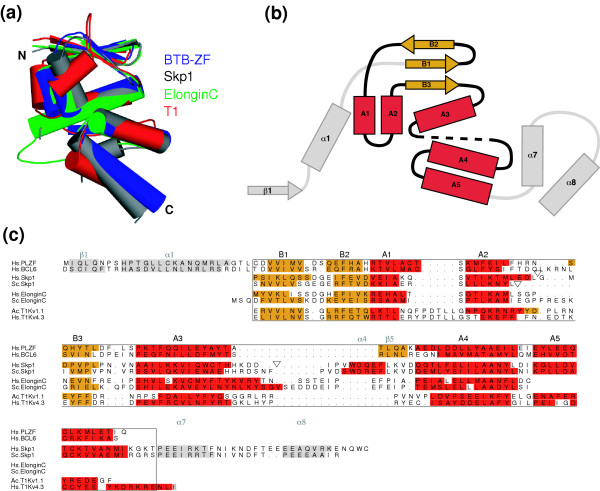
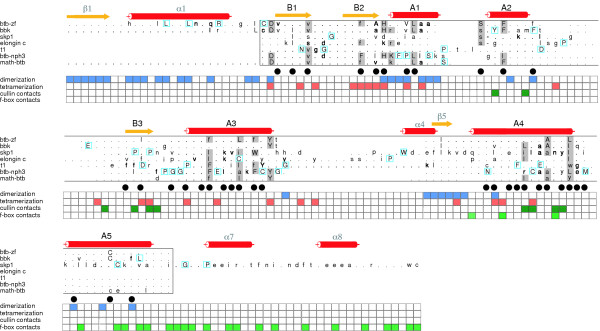
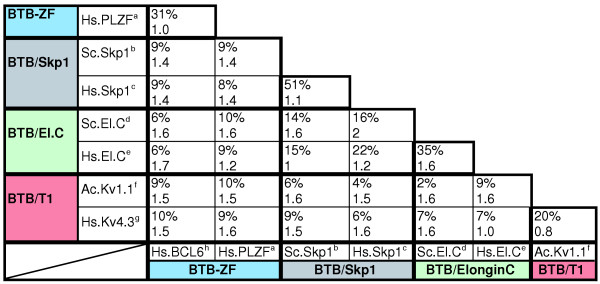
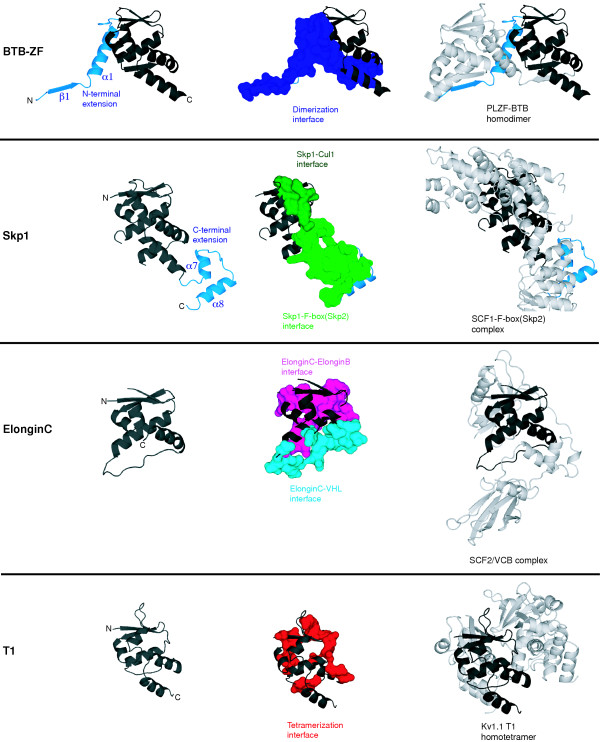
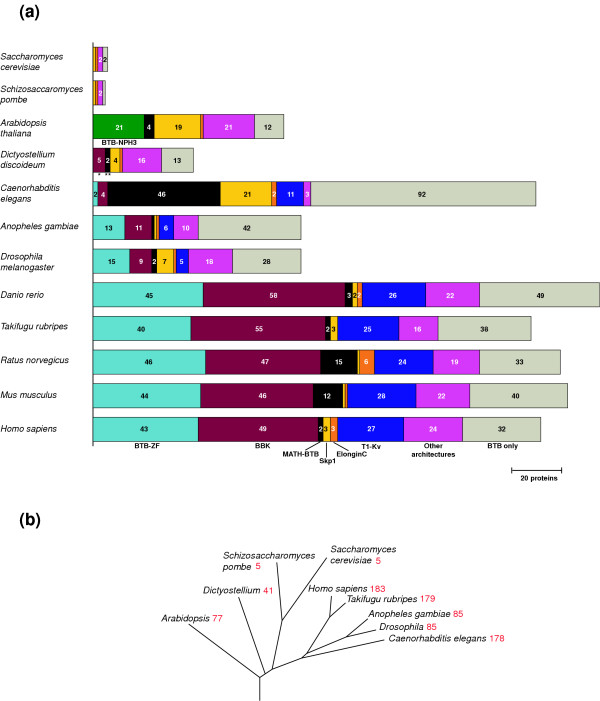
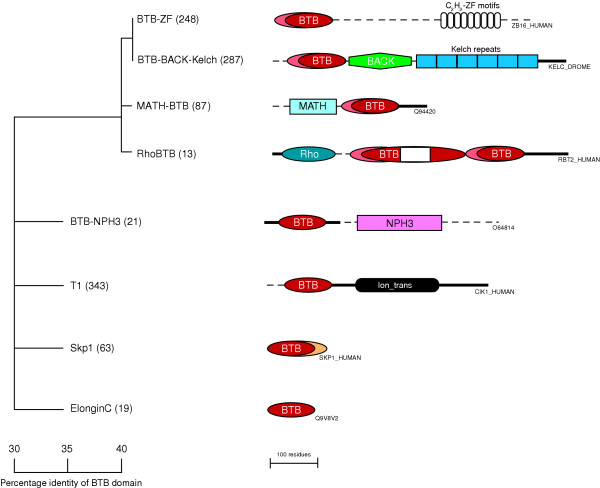
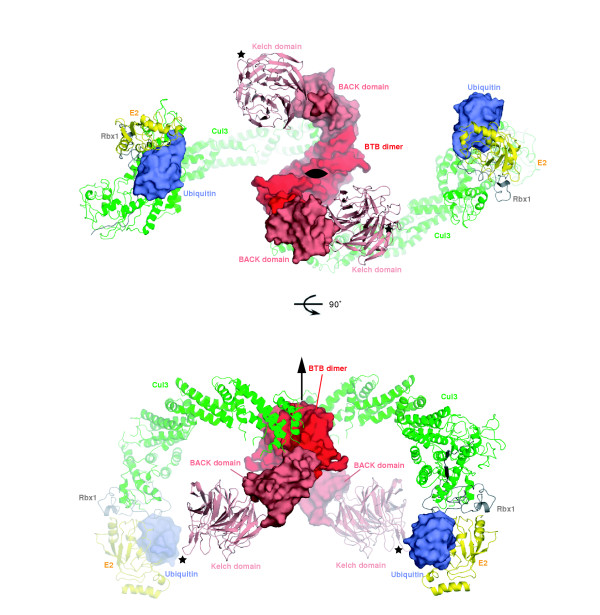
Verification
Claims the paper makes
The claims and statistics of this paper haven’t been checked yet.
Free: it reads the open-access text and checks the first 5 claims that cite a source we can check. Create a free account to check every claim.
Self-check
Percentages, sums and reported differences re-computed from the paper’s own numbers.
The self-check needs the paper’s full text.
Citations
Cites
Gapped BLAST and PSI-BLAST: a new generation of protein database search programs
Altschul, S. (1997) · Nucleic Acids Research · doi:10.1093/nar/25.17.3389 · Cited by 73,302
Berman, H. M. (2000) · Nucleic Acids Research · doi:10.1093/nar/28.1.235 · Cited by 40,196
PHYLIP-Phylogeny inference package (Version 3.2)
Felsenstein, J. (1989) · Cladistics · Cited by 18,906
The PyMOL Molecular Graphics System
DeLano, W. L. (2002) · Medical Entomology and Zoology · Cited by 18,147
The Pfam Protein Families Database
Bateman, A. (2002) · Nucleic Acids Research · doi:10.1093/nar/30.1.276 · Cited by 14,000
SWISS‐MODEL and the Swiss‐Pdb Viewer: An environment for comparative protein modeling
Guex, N., & Peitsch, M. C. (1997) · ELECTROPHORESIS · doi:10.1002/elps.1150181505 · Cited by 11,241
MEGA2: molecular evolutionary genetics analysis software
Kumar, S., Tamura, K., Jakobsen, I. B., & Nei, M. (2001) · Bioinformatics · doi:10.1093/bioinformatics/17.12.1244 · Cited by 6,097
Multiple sequence alignment with the Clustal series of programs
Chenna, R. (2003) · Nucleic Acids Research · doi:10.1093/nar/gkg500 · Cited by 4,875
The PSIPRED protein structure prediction server
McGuffin, L. J., Bryson, K., & Jones, D. T. (2000) · Bioinformatics · doi:10.1093/bioinformatics/16.4.404 · Cited by 3,838
Murzin, A. G., Brenner, S. E., Hubbard, T., & Chothia, C. (1995) · Journal of Molecular Biology · doi:10.1016/s0022-2836(05)80134-2 · Cited by 3,225
Research works printed but not linked: 2
- Swofford D PAUP 1998 Sunderland, MA: Sinauer Associates
- Felsenstein J PHYLIP (Phylogeny Inference Package) version 36 2004 Department of Genome Sciences, University of Washington, Seattle USA
Cited by
Items 501–600 of 696
Lyu, S., Xing, H., Liu, Y., Girdhar, P., Yokoi, F., & Li, Y. (2022) · Neuroscience · doi:10.1016/j.neuroscience.2022.10.008 · Cited by 8
ZBTB7A as a novel vulnerability in neuroendocrine prostate cancer
Bae, S. Y., Bergom, H. E., Day, A., Greene, J. T., Sychev, Z. E., Larson, G., Corey, E., Plymate, S. R., Freedman, T. S., Hwang, J. H., et al. (2023) · Frontiers in Endocrinology · doi:10.3389/fendo.2023.1093332 · Cited by 7
“bind to DNA and recruit various transcription factors (19).”
BackgroundZhu, P., Fan, Y., Xu, P., & Fan, G. (2023) · Plants · doi:10.3390/plants12244144 · Cited by 8
“In Arabidopsis thaliana , BTB proteins can be divided into different subfamilies based on their contained conserved domains other than the BTB domain, including BTB-MATH, BTB-Arm, BTB-only, BTB-TAZ, BTB-BACK, BTB-Ank, TPR, BTB-NPH3, and other [8–13].”
BackgroundZebrafish enhancer trap line showing maternal and neural expression of kctd15a
Gharbi, N., Zhao, X., Ellingsen, S., & Fjose, A. (2012) · Development Growth & Differentiation · doi:10.1111/j.1440-169x.2011.01326.x · Cited by 8
“The potassium channel tetramerization domain (KCTD) protein family belongs to a large superfamily with a common BTB (Bric-a-brac, Tramtrack and Broad Complex) domain of about 95 amino acid residues (Stogios et al. 2005; Dementieva et al. 2009).”
BackgroundThe BTB-Containing Protein Kctd15 Is SUMOylated In Vivo
Zarelli, V. E. P., & Dawid, I. B. (2013) · PLoS ONE · doi:10.1371/journal.pone.0075016 · Cited by 7
“All Kctd proteins harbor a BTB domain that acts as a protein-protein interacting interface [20].”
BackgroundQuijano, J. C., Wisotzkey, R. G., Tran, N., Huang, Y., Stinchfield, M. J., Haerry, T. E., Shimmi, O., & Newfeld, S. J. (2016) · Molecular Biology and Evolution · doi:10.1093/molbev/msw132 · Cited by 7
“BTB proteins are highly diverse with Nand C-terminal extensions containing other domains (Stogios et al. 2005).”
BackgroundChen, F., Yin, Y., Yan, Z., Cao, K., & Zhong, K. (2017) · Oncology Letters · doi:10.3892/ol.2017.7670 · Cited by 7
Kbtbd11 contributes to adipocyte homeostasis through the activation of upstream stimulatory factor 1
Watanabe, K., Yokota, K., Yoshida, K., Matsumoto, A., & Iwamoto, S. (2019) · Heliyon · doi:10.1016/j.heliyon.2019.e02777 · Cited by 8
“The BTB/POZ domain functions as the protein–protein interaction domain to facilitate dimer formation and interaction with nonBTB domain comprising proteins, involving activities such as transcriptional regulation, cytoskeleton dynamics, ion channel assembly and gating, and protein ubiquitination/degradation [1].”
BackgroundDestruction of RhoA CULtivates Actin
Wu, S., & Wolf, D. A. (2009) · Molecular Cell · doi:10.1016/j.molcel.2009.09.012 · Cited by 8
“Although this was not demonstrated in the present report, BTB domains are generally thought to mediate homo- or heterotypic interactions (Stogios et al., 2005).”
BackgroundChromatin regulation and sex determination in Caenorhabditis elegans
Large, E. E., & Mathies, L. D. (2007) · Trends in Genetics · doi:10.1016/j.tig.2007.04.002 · Cited by 7
Li, C., Lu, W., & Zhang, H. (2025) · Biochimica et Biophysica Acta (BBA) - Reviews on Cancer · doi:10.1016/j.bbcan.2025.189325 · Cited by 7
Regulation of Rho GTPases in the Vasculature by Cullin3-Based E3 Ligase Complexes
Podieh, F., & Hordijk, P. L. (2021) · Frontiers in Cell and Developmental Biology · doi:10.3389/fcell.2021.680901 · Cited by 6
“Approximately 200 genes encoding BTB proteins have been identified (Stogios et al., 2005), of which only 38 have been reported to assemble into a Cullin3based E3 ligase complex (Wang et al.”
BackgroundIdentification and Expression Analysis of the BTB/POZ Gene Family in Solanum tuberosum
Feng, H., Lu, Y., Bi, R., Yang, S., Liu, Y., Lu, L., & Li, L. (2024) · Horticulturae · doi:10.3390/horticulturae10060543 · Cited by 7
Critical domains for NACC2-NTRK2 fusion protein activation
Yang, W., Meyer, A. N., Jiang, Z., Jiang, X., & Donoghue, D. J. (2024) · PLoS ONE · doi:10.1371/journal.pone.0301730 · Cited by 6
Paladino, A., D’Angelo, F., Noviello, T., Iavarone, A., & Ceccarelli, M. (2021) · Journal of Chemical Information and Modeling · doi:10.1021/acs.jcim.1c00296 · Cited by 7
“10,11,42 Large amplitude mobility of the LZTR1 adaptor observed in molecular dynamics simulations may support the possibility for BTB-Back domains to self-interact in an intradomain dimerization mechanism as well, carrying delicate implications on Cul3 interaction.”
Nigro, D., Blanco, A., Piarulli, L., Signorile, M. A., Colasuonno, P., Blanco, E., & Simeone, R. (2022) · International Journal of Molecular Sciences · doi:10.3390/ijms232113659 · Cited by 6
“The wide range of sequence and length variation (approximatively 120 amino acids) between orthologs and paralogs suggested their potential involvement in different molecular, biochemical and biological functions [71].”
BackgroundThe Cul3 ubiquitin ligase engages Insomniac as an adaptor to impact sleep and synaptic homeostasis
Li, Q., Lim, K. Y., Altawell, R., Verderose, F., Li, X., Dong, W., Martinez, J. C., Dickman, D. K., & Stavropoulos, N. (2025) · PLoS Genetics · doi:10.1371/journal.pgen.1011574 · Cited by 8
Lu, T., Yang, Y., Yao, B., Liu, S., Zhou, Y., & Zhang, C. (2012) · Protein Science · doi:10.1002/pro.2066 · Cited by 7
“The TFs in TRAF family have a BTB domain, which is also known as the POZ domain and is a versatile domain motif that participates in a wide range of cellular functions.(45) Several BTB domain structures have been experimentally determined, revealing a highly conserved core structure, for example, 3HTM for the speckle-…”
BackgroundBTBD18: A novel MLL partner gene in an infant with acute lymphoblastic leukemia and inv(11)(q13;q23)
Alonso, C. N., Meyer, C., Gallego, M. S., Rossi, J. G., Mansini, A. P., Rubio, P. L., Medina, A., Marschalek, R., & Felice, M. S. (2010) · Leukemia Research · doi:10.1016/j.leukres.2010.06.006 · Cited by 6
Pathophysiology of Parasomnias
Kotagal, S. (2013) · Springer eBooks · doi:10.1007/978-1-4614-7627-6_2 · Cited by 7
“It is involved in repression of transcription, cytoskeleton regulation, gating of ion channels and ubiquitin dependent protein degradation [30].”
BackgroundYoung, M. A., May, S., Damo, A., Yoon, Y. S., Hur, M., Swat, W., & Parry, L. (2018) · Molecular Cancer Research · doi:10.1158/1541-7786.mcr-18-0280 · Cited by 7
“POZ/BTB proteins are a well conserved protein family (9), which have been indicated to play a role in both development and cancer (10, 11).”
BackgroundSequence and structural variations determining the recruitment of WNK kinases to the KLHL3 E3 ligase
Chen, Z., Zhang, J., Murillo‐de‐Ozores, A. R., Castañeda‐Bueno, M., D’Amico, F., Heilig, R., Manning, C. E., Sorrell, F. J., D’Angiolella, V., Fischer, R., et al. (2022) · Biochemical Journal · doi:10.1042/bcj20220019 · Cited by 6
“The BTB domain was fi rst identi-fi ed as a conserved motif in the Drosophila proteins bric-à-brac, tramtrack and broad complex [17].”
Phototropism in land plants: Molecules and mechanism from light perception to response
Morrow, J., Willenburg, K. T., & Liscum, E. (2018) · Frontiers in Biology · doi:10.1007/s11515-018-1518-y · Cited by 7
Kim, K., Moretti, T., Park, S., & Kim, J. (2018) · bioRxiv (Cold Spring Harbor Laboratory) · doi:10.1101/428136 · Cited by 6
“There are 183 BTB-domain genes in the human genome [5].”
BackgroundInfluentialPentameric assembly of the Kv2.1 tetramerization domain
Xu, Z., Khan, S., Schnicker, N., & Baker, S. A. (2022) · Acta Crystallographica Section D Structural Biology · doi:10.1107/s205979832200568x · Cited by 5
Yan, H., Feng, J., & Chen, M. (2022) · Pathogens · doi:10.3390/pathogens11111271 · Cited by 5
“The BTB/POZ motif mediates protein binding and homo-dimerization [39] and is predicted to be involved in binding to cullin 3, the largest family of E3 ubiquitin ligases [40,41], with the downstream Pfk13 domain providing a substrate adaptor [42].”
BackgroundSubcellular localization of Mayven following expression of wild type and mutant EGFP tagged cDNAs
Montague, P., Kennedy, P. G. E., & Barnett, S. C. (2010) · BMC Neuroscience · doi:10.1186/1471-2202-11-63 · Cited by 6
“This actin binding protein [8] belongs to the BTB-BACKKelch family with around 50 members [9].”
BackgroundKCTD10 p.C124W variant contributes to schizophrenia by attenuating LLPS-mediated synapse formation
Mu, C., Liu, P., Liu, L., Wang, Y., Liu, K., Li, X., Li, G., Cheng, J., Bu, M., Chen, H., et al. (2024) · Proceedings of the National Academy of Sciences · doi:10.1073/pnas.2400464121 · Cited by 6
“The KCTD family consists of 25 proteins, each characterized by a conserved Potassium (K + ) Channel Tetramerization Domain, a subtype of the BTB (Bric - a - brac, Tramtrack and Broad Complex) domain at the N terminus and a unique C terminus ( 17 – 19 ).”
Paredes, G. F., Viehboeck, T., Markert, S., Mausz, M. A., Sato, Y., Liebeke, M., König, L., & Bulgheresi, S. (2022) · Scientific Reports · doi:10.1038/s41598-022-13235-9 · Cited by 6
“The former are BTB-domain containing proteins known to interact with E3 enzymes, with kel-8 being involved in the degradation of glutamate neuroreceptors (Schaefer and Rongo 2006; Stogios et al., 2005; Kim et al., 2018).”
Background[Targeting Cullin-RING E3 ligases for anti-cancer therapy: efforts on drug discovery].
Yu, Q., Xiong, X., & Sun, Y. (2020) · PubMed Central · doi:10.3785/j.issn.1008-9292.2020.02.21 · Cited by 8
“[13] STOGIOS P Jꎬ DOWNS G Sꎬ JAUHAL J Jꎬ et al.”
Ikeda, R., Yoshida, K., & Inoue, I. (2006) · Journal of Cellular Biochemistry · doi:10.1002/jcb.21165 · Cited by 5
“Fanconi anemia zinc finger (FAZF), a member of the BTB/POZ family of transcriptional regulator proteins [Stogios et al., 2005], has the highest known degree of homology to the PLZF protein and has been shown tobind to bothPLZFandFanconi anemia complementation groupC (FANCC), theprotein that is…”
BackgroundInfluentialDean, J., Hashimoto, K., Tsuji, T., Gautier, V., Hall, W. W., & Sheehy, N. (2009) · Oncogene · doi:10.1038/onc.2009.230 · Cited by 5
“Having confirmed that BCL6 and Tax 1 interact in vitro and because of the highly conserved nature of the POZ domains of POZ-ZF proteins (Stogios et al., 2005), we examined the possibility that Tax 1 may also Figure 1 In vitro interaction of Tax 1 and the poxvirus and zinc finger (POZ) domains of B-cell lymphoma 6 (BCL…”
BackgroundInfluentialProspects of Modulating Protein–Protein Interactions
Zhong, S., Oashi, T., Yu, W., Shapiro, P., & MacKerell, A. D. (2012) · Wiley eBooks · doi:10.1002/9783527645947.ch15 · Cited by 6
Shen, Y., Wang, Z., Jia, Y., & Liu, X. (2025) · Genes · doi:10.3390/genes16050513 · Cited by 4
“BTB is a conserved domain that mediates protein–protein interactions and participates in diverse cellular functions [39,40].”
Cotton BOP1 mediates SUMOylation of GhBES1 to regulate fibre development and plant architecture
Wang, B., Wang, Z., Tang, Y. H., Zhong, N., & Wu, J. (2024) · Plant Biotechnology Journal · doi:10.1111/pbi.14428 · Cited by 5
“The BOPs contain a conserved subclade featuring BTB/POZ domains and ankyrin repeats, with the BTB domain playing a role in protein interaction and oligomerization (Stogios et al ., 2005).”
Wang, G., Lu, T., Zhang, L., & Ding, J. (2024) · Nature Communications · doi:10.1038/s41467-024-54889-5 · Cited by 4
“ZBTB16 contains a BTB/POZ domain at the N-terminus 15,18 , which is critical for ZBTB16 dimerization and transcriptional regulation, particularly mediating its interactions with its partners such as NCoR, SMRT, and Sin3A 16,18,28 .”
Bora, P., & Tanaka, K. (2025) · Plant and Cell Physiology · doi:10.1093/pcp/pcaf001 · Cited by 4
Sanz‐Moreno, A., Fuhrmann, D., Zankel, A., Reingruber, H., Kern, L., Meijer, D., Niemann, A., & Elsässer, H. (2014) · Journal of Biological Chemistry · doi:10.1074/jbc.m114.605931 · Cited by 5
“DNA binding of a Miz1 tetramer (2, 3) occurs at the initiation region of target genes, and tetramerization depends on the POZ domain (4, 5).”
BackgroundVillegas, S. N., Ferrés-Marcó, D., & Domínguez, M. (2019) · Advances in experimental medicine and biology · doi:10.1007/978-3-030-23629-8_2 · Cited by 5
Regulation of Stem Cells by Cullin-RING Ligase
Fu, L., Cui, C., & Zhang, L. (2020) · Advances in experimental medicine and biology · doi:10.1007/978-981-15-1025-0_6 · Cited by 4
BTB protein family and human breast cancer: signaling pathways and clinical progress
Zhang, H., & Ouyang, C. (2023) · Journal of Cancer Research and Clinical Oncology · doi:10.1007/s00432-023-05314-9 · Cited by 4
Frampton, R. A., Shuey, L. S., David, C., Pringle, G. M., Kalamorz, F., Pegg, G. S., Chagné, D., & Smith, G. R. (2024) · Phytopathology · doi:10.1094/phyto-04-24-0138-r · Cited by 5
Genetics of Sleep and Sleep Disorders in Humans
Faraco, J. H., & Mignot, E. J.-M. (2011) · Elsevier eBooks · doi:10.1016/b978-1-4160-6645-3.00016-5 · Cited by 4
Evolution of C2H2 Zinc‐finger Gene Families in Mammals
Tadepally, H. D., & Aubry, M. (2010) · Encyclopedia of Life Sciences · doi:10.1002/9780470015902.a0021738 · Cited by 4
Choo, K., Hsu, M., Chong, K., & Huang, C.-J. (2006) · Gene · doi:10.1016/j.gene.2006.08.031 · Cited by 4
“On the other hand, POZ/ BTB is a hydrophobic domain originally found at the amino end of many C2H2-type zinc finger proteins (reviewed in Bardwell and Treisman, 1994; Zollman et al., 1994; Collins et al., 2001; Stogios et al., 2005).”
BackgroundDimerization quality control via ubiquitylation
Herhaus, L., & Đikić, I. (2018) · Science · doi:10.1126/science.aav1391 · Cited by 4
Structure and dynamics of a pentameric KCTD5/Cullin3/Gβγ E3 ubiquitin ligase complexPreprint
Nguyen, D. M., Rath, D. H., Devost, D., Pétrin, D., Rizk, R., Ji, A. X., Narayanan, N., Yong, D., Zhai, A., Kuntz, D. A., et al. (2023) · bioRxiv (Cold Spring Harbor Laboratory) · doi:10.1101/2023.09.20.558662 · Cited by 4
“A major component of the primary interface is the α2/v-loop/β3 region from the common BTB/SKP1/ELOC fold (6, 45) (SI Appendix, Fig.”
BackgroundSelf-citationRegulation of carcinogenesis through multiple zinc fingers in ZBTB20
Kim, H., Hwang, Y., Cheong, J. S., & Lee, S. J. (2025) · RSC Chemical Biology · doi:10.1039/d5cb00088b · Cited by 3
Yue, J., Yang, L., Xu, S., Wei, M., & Li, Q. (2025) · Plant Cell & Environment · doi:10.1111/pce.70118 · Cited by 3
“It also mediates protein interactions, forming complexes or recruiting chromatin modifiers to regulate gene expression (Stogios et al. 2005).”
Manishankar, P., Fernandez, A., Rohr, L. R., Yigit, Y. I., Reuter, L., Schmidt, T., Droste-Borel, I., Keicher, J., Bock, A., & Oecking, C. (2026) · The Plant Cell · doi:10.1093/plcell/koag028 · Cited by 7
Xu, P., Zhang, Q., Zhai, J., Chen, P., Deng, X., Miao, L., & Zhang, X. (2024) · Discover Oncology · doi:10.1007/s12672-024-01697-4 · Cited by 4
“The former recognize and bind specific DNA sequences, while the latter mediates homodimerization and/ or heterodimerization and interacts with other proteins [5, 6].”
NACC1 accelerates the progression of AML by regulating the ADAM9/PI3K/AKT axis
Zhang, Y., Zhong, L., Wan, P., Zhao, Y., Wang, M., Zhang, H., Liao, Y., Deng, Y., & Liu, B. (2025) · International Journal of Medical Sciences · doi:10.7150/ijms.102266 · Cited by 4
Jing, R., Liu, X., Li, R., & Du, L. (2025) · Biochemical Genetics · doi:10.1007/s10528-025-11083-6 · Cited by 3
“BTB domain consists structurally of five α-helices, with α-helices A1/2 and A4/5 forming a helical hairpin, and three β-strands forming a β-sheet (Stogios et al. 2005).”
ZBTB17/MIZ1 promotes peroxisome biogenesis by transcriptional regulation of PEX13
Liu, H., Chen, X., Wang, H., Zhuang, G., Zhu, Z., & Zhuang, M. (2025) · The Journal of Cell Biology · doi:10.1083/jcb.202407198 · Cited by 4
“Some BTB domains also bind DNA, as suggested in other BTB domain-containing proteins, such as BCL6 and PLZF (Stogios et al., 2005).”
NAC1/ACOX2 Axis as a Novel Therapeutic Target for Endometriosis-Related Ovarian Neoplasms
Sonia, S. B., Nakayama, K., Razia, S., Nakayama, N., Ishikawa, M., Yamashita, H., Kanno, K., Takeshita, H., Zahan, U. F., Sohel, H. I., et al. (2025) · International Journal of Molecular Sciences · doi:10.3390/ijms26104938 · Cited by 3
“Genes of the BTB/POZ (broad complex, tramtrack, bric-à -brac/poxvirus, and zinc finger) (hereafter abbreviated BTB) family have been known to participate in various cellular functions, including transcription regulation, cellular proliferation, apoptosis, and cell morphology maintenance [12].”
Matthes, M. S., Yun, N., Luichtl, M., Büschges, U., Fiesselmann, B. S., Strickland, B., Lehnardt, M. S., Schneitz, K., Michel, K., & Torres‐Ruiz, R. A. (2025) · PLoS Genetics · doi:10.1371/journal.pgen.1011217 · Cited by 6
“Thus, any replacement of proline should significantly alter the local protein microstructure, which in this case would be the first alpha-helix in ENP (Figs 1A and S1; from aaK44 to aaL48) according to previous structural data [26] and AlphaFold [27].”
InfluentialGlobal evolution and expression analysis of BTB-containing ankyrin repeat genes in plants
Guan, P., Sun, L., Yang, R., Gao, H., Liu, P., Zheng, C., & Zhang, S. (2017) · Archives of Biological Sciences · doi:10.2298/abs170306042g · Cited by 3
“This domain is an evolutionarily conserved protein interaction motif containing approximately 100 amino acid residues that form four α-helices connected by β-folds [15,16].”
BackgroundSha, J., Zhang, M., Feng, J., Shi, T., Li, N., & Jie, Z. (2024) · International Immunopharmacology · doi:10.1016/j.intimp.2024.111670 · Cited by 3
Zhou, J., Zhang, M., Gao, A., Herman, J. G., & Guo, M. (2024) · Epigenomics · doi:10.1080/17501911.2024.2370590 · Cited by 3
KLHL20 and its role in cell homeostasis: A new perspective and therapeutic potential
Ramagoma, R. B., Makgoo, L., & Mbita, Z. (2024) · Life Sciences · doi:10.1016/j.lfs.2024.123041 · Cited by 4
ZBTB7A as a therapeutic target for cancer
Zhou, Y., Chen, X., & Zu, X. (2024) · Biochemical and Biophysical Research Communications · doi:10.1016/j.bbrc.2024.150888 · Cited by 4
Virus Immune Evasion: New Mechanism and Implications in Disease Outcome
Draenert, R., Frater, J., & Prado, J. G. (2012) · Advances in Virology · doi:10.1155/2012/490549 · Cited by 4
Garipler, G., Lu, C., Morrissey, A., López-Zepeda, L. S., Vidal, S. E., Aydın, B., Stadtfeld, M., Ohler, U., Mahony, S., Sanjana, N. E., et al. (2020) · bioRxiv (Cold Spring Harbor Laboratory) · doi:10.1101/2020.11.23.391771 · Cited by 3
“BTB domains participate in homo and heterodimer formation, suggesting these two TFs could coregulate this set of genes (Stogios et al., 2005).”
BackgroundAiana, Katwal, A., Chauhan, H., Upadhyay, S. K., & Singh, K. (2024) · Agriculture · doi:10.3390/agriculture14050771 · Cited by 2
Yuan, Q., Wang, J., Liu, F., Dai, X., Zhu, F., Zou, X., & Xiong, C. (2025) · International Journal of Molecular Sciences · doi:10.3390/ijms26073429 · Cited by 2
“The A1/2 and A4/5 segments form an α -helical hairpin configuration, while the B1/B2/A1/A2/B3 region is connected to the A4/A5 region via helix A3 and a variable linker region [2].”
Dual function of a zinc finger transcription factor PvBr-C in Penaeus vannamei
Shi, Z., Ruan, L., Chen, X., Yang, Z., Huang, Z., Huang, C., & Shi, H. (2025) · Fish & Shellfish Immunology · doi:10.1016/j.fsi.2025.110581 · Cited by 2
Jiao, F., Lan, N., Lu, W., & Wang, F. (2025) · Agronomy · doi:10.3390/agronomy15082002 · Cited by 2
“Studies have shown that the BTB/POZ-MATH protein, as a component of E3 ubiquitin ligase, can mediate the ubiquitination and degradation of specific target proteins [36,37].”
Insight into the Role of the BCL6B Gene in Biological Functions and Disease Progression
Pan, Y., & Li, Y. (2025) · Journal of Cancer · doi:10.7150/jca.116659 · Cited by 2
“Members of the POK/ZBTB family, including BCL6B, can form homo-or heterodimers via their BTB/POZ domains [12, 54].”
Molecular mimicry: HUWE1 binds an atypical site in MIZ1 by adopting a typical BTB fold
Asthana, A., & Rubin, S. M. (2021) · Structure · doi:10.1016/j.str.2021.10.005 · Cited by 2
Melnikova, L. S., Молодина, В. В., Georgiev, P. G., & Golovnin, A. K. (2024) · International Journal of Molecular Sciences · doi:10.3390/ijms25094617 · Cited by 3
“All obtained transgenic lines viable and fertile”
Study of the N-Terminal Domain Homodimerization in Human Proteins with Zinc Finger Clusters
Фурсенко, Д. В., Georgiev, P. G., & Bonchuk, A. N. (2021) · Doklady Biochemistry and Biophysics · doi:10.1134/s1607672921040050 · Cited by 2
d’Água, B. B., Infante, E., Riou, P., Tajadura‐Ortega, V., & Ridley, A. J. (2014) · Springer eBooks · doi:10.1007/978-3-7091-1806-1_15 · Cited by 2
Zhang, F., Shu, R., Wu, X., Zhao, X., Feng, D., Wang, L., Lu, S., Liu, Q., Xiang, Y., Fei, J., et al. (2009) · Toxicology Letters · doi:10.1016/j.toxlet.2009.04.009 · Cited by 2
“009 play important roles in cell proliferation (Kroll et al., 2005; Lycan et al., 1996; Mosavi et al., 2004; Nakayama et al., 2006; Stogios et al., 2005; Xu et al., 2003).”
BackgroundZhang, F., Dang, S., Shu, R., Xiang, Y., Kuang, Y., Fei, J., & Wang, Z. (2015) · International Journal of Toxicology · doi:10.1177/1091581814566472 · Cited by 2
Park, J.-U., Kim, D.-K., Kim, J., Jo, J.-H., Kim, Y.-M., Jung, D.-H., Kim, H., Ok, S.-M., Cho, H. J., Kim, S., et al. (2022) · Biochemical and Biophysical Research Communications · doi:10.1016/j.bbrc.2022.10.108 · Cited by 2
Coppée, R., Jeffares, D. C., Sabbagh, A., & Clain, J. (2018) · bioRxiv (Cold Spring Harbor Laboratory) · doi:10.1101/346668 · Cited by 3
Naa10 regulates hippocampal neurite outgrowth via Btbd3 N-α-acetylation-mediated actin dynamicsPreprint
Chou, C.-T., Kang, M.-L., Lee, C.-C., Hsu, P., & Juan, L. (2024) · bioRxiv (Cold Spring Harbor Laboratory) · doi:10.1101/2024.05.09.583166 · Cited by 1
Ekmekçi, C. G. (2026) · Research Square · doi:10.21203/rs.3.rs-11252849/v1 · Cited by 2
In silico analysis of a Skp1 protein homolog from the human pathogen E. histolytica
Ghosh, R., Biswas, P., Das, M., Pal, S., & Dam, S. (2022) · Journal of Parasitic Diseases · doi:10.1007/s12639-022-01523-0 · Cited by 1
“The BTB domain is a protein–protein interaction motif that participates in many cellular functions, including targeting proteins for ubiquitination (Stogios et al. 2005).”
BackgroundLiu, F., Zhang, T., Sun, X., Liu, Z., Xu, W., Dai, X., & Zhang, X. (2024) · Biochimica et Biophysica Acta (BBA) - Molecular Basis of Disease · doi:10.1016/j.bbadis.2024.167032 · Cited by 3
Advancements in the research of the structure, function, and disease-related roles of ARMC5
Qu, Y., Yang, F., Deng, Y., Li, H., Zhou, Y., & Zhang, X. (2025) · Frontiers of Medicine · doi:10.1007/s11684-024-1108-0 · Cited by 3
Structure–Function Correlations in KCTD1/KCTD15 Proteins
Balasco, N., & Vitagliano, L. (2025) · The 5th International Symposium on Frontiers in Molecular Science · doi:10.3390/blsf2025053002 · Cited by 1
“…family is the presence, in all members, of closely related BTB/POZ (broad-complex, tramtrack, and Bric a brac/poxvirus and zinc finger) domains [14], hereafter denoted as BTB, which share significant sequence similarity with the T1 tetramerization domain of the subfamilies of potassium…”
Zhu, S., Yao, H., Liu, J., Zhao, X., Cheng, J., Wang, C., Xu, W., Li, C. L., & Cheng, Y. (2025) · Plants · doi:10.3390/plants15010068 · Cited by 2
“Conserved BTB/POZ domain mediates dimerization and interactions with diverse proteins, playing key roles in transcriptional regulation, cytoskeletal stability, and ion channel regulation [28,29].”
Zhang, S., Duan, Y., Liu, H., Wang, M., Li, Y., & Chen, X. (2025) · Aquaculture · doi:10.1016/j.aquaculture.2025.743603 · Cited by 1
Ovarian/Primary Peritoneal Carcinoma
Davidson, B. (2011) · Springer eBooks · doi:10.1007/978-0-85729-697-9_3 · Cited by 1
Parasomniasand sleep-related movement disorders
Shaw, P. J., Tafti, M., & Thorpy, M. J. (2013) · Cambridge University Press eBooks · doi:10.1017/cbo9781139649469.034 · Cited by 1
Genome-wide association study (GWAS) with productivity in Romanov sheep breed
Krivoruchko, A., Yatsyk, O. A., Saprikina, T. Y., & Petukhova, D. D. (2021) · Proceedings of the National Academy of Sciences of Belarus Agrarian Series · doi:10.29235/1817-7204-2021-59-1-71-80 · Cited by 1
Human CTCF Interacts with Drosophila CP190, but not with Kaiso
Халисова, К. Ю., Georgiev, P. G., & Bonchuk, A. N. (2021) · Doklady Biochemistry and Biophysics · doi:10.1134/s1607672921020071 · Cited by 1
Melnikova, L. S., Молодина, В. В., Georgiev, P. G., & Golovnin, A. K. (2024) · Doklady Biochemistry and Biophysics · doi:10.1134/s1607672924700820 · Cited by 2
“All Mod(mdg4) isoforms have a TTK (Tramtrack)-like BTB domain at the N-terminus that is capable of forming hexamers [11].”
Li, P., Liu, P., Zang, D., Li, C., Wang, C., Zhu, Y., Liu, M., Lu, L., Wu, X., & Nie, H. (2024) · International Journal of Molecular Sciences · doi:10.3390/ijms251910771 · Cited by 2
“…domain (also known as the POZ domain) was originally identified as present in Drosophila , transcriptional regulators, as well as many poxvirus zinc finger proteins [1,7–9]; the domain core consists of 5 α -helices—A1/2 and A4/5 form 2 α -helical hairpins and 3 β -strands form one β -sheets [6,10].”
InfluentialWieleba, I., Smoleń, P., Czukiewska, E., Szcześniak, D., & Filip, A. A. (2025) · International Journal of Molecular Sciences · doi:10.3390/ijms26146704 · Cited by 1
“Six beta-sheet blades or repeats form Kelch’s domain, which is located on the N-terminus and two BTB-domains separated by BACK domains on C-terminus of LZTR1 [21].”
Zhang, T., Liu, Y., Li, X., Xue, K., Jin, W., & Lyu, J. (2025) · Endocrine · doi:10.1007/s12020-025-04456-9 · Cited by 1
“As a member of the BTB-BACK-Kelch family, KLHL3 functions as a substrate adapter for CUL3-based E3 ubiquitin ligase complexes [20–22].”
Kostyuchenko, M. V., Melnikova, L. S., Georgiev, A. P. G., & Golovnin, A. K. (2019) · Doklady Biochemistry and Biophysics · doi:10.1134/s1607672919030049 · Cited by 1
Regulation of ethylene biosynthesis via ACC synthase protein stability
Hansen, M. (2008) · Carolina Digital Repository (University of North Carolina at Chapel Hill) · doi:10.17615/ywjz-1d51 · Cited by 1
Btbd6-dependent Plzf recruitment to Cul3 E3 ligase complexes through BTB domain heterodimerizationPreprint
Ismail, M., Martin, S. R., Ball, N. J., Taylor, I. A., Howell, S. A., Wilkinson, D. G., & Smerdon, S. J. (2019) · bioRxiv (Cold Spring Harbor Laboratory) · doi:10.1101/575910 · Cited by 1
Blifernez-Klassen, O., Berger, H., Mittmann, B. G. K., Классен, В., Schelletter, L., Buchholz, T., Baier, T., Soleimani, M., Wobbe, L., & Kruse, O. (2020) · bioRxiv (Cold Spring Harbor Laboratory) · doi:10.1101/2020.07.09.195545 · Cited by 1
“In addition to be engaged in homodimerization, BTB/POZ domains were also reported to facilitate heterodimerization, thus expanding the spectrum of recognizable motifs via combining distinct DNA recognition specificities (Kobayashi et al., 2000; Stogios et al., 2005).”
BackgroundCharacterization of Functional Domains of Cul3, an E3 Ubiquitin Ligase, Using Chimeric Analysis
Mitchell, J. (2000) · doi:10.15760/etd.1969 · Cited by 1
“Cul3 recognizes substrates through a single adaptor protein that binds to Cul3 via a BTB domain (Bric a Brac, Tramtrack, and Broad- complex) and recognizes substrates through various protein-protein interaction motifs such as Kelch, Zinc Finger, or MATH domains (Stogios et al., 2005).”
BackgroundE3 Ubiquitin Ligases as Molecular Machines and Platforms for Drug Development
Ioris, R. M., Ferris, K., & D’Angiolella, V. (2022) · Wiley eBooks · doi:10.1002/9783527836208.ch3 · Cited by 1
Deep Learning-based structural and functional annotation of Pandoravirus hypothetical proteinsPreprint
Horder, J. L., Connor, A. J., Duggan, A. L., Hale, J. J., McDermott, F. J., Norris, L. E., Whinney, S. J. D., Mesdaghi, S., Murphy, D., Simpkin, A. J., et al. (2023) · bioRxiv (Cold Spring Harbor Laboratory) · doi:10.1101/2023.12.02.569716 · Cited by 1
Manishankar, P., Reuter, L., Rohr, L., Fernandez, A., Yigit, Y. I., Schmidt, T., Droste-Borel, I., Keicher, J., Bock, A., & Oecking, C. (2024) · bioRxiv (Cold Spring Harbor Laboratory) · doi:10.1101/2024.06.17.598829 · Cited by 1
Metadata
- Authors
- Stogios, P. J., Downs, G. S., Jauhal, J. J., Nandra, S. K., & Privé, G. G.
- Affiliations
- University of Toronto (CA)
- Seneca Polytechnic (CA)
- Corresponding author
- Privé, Gilbert G
- Venue
- Genome Biology
- Published
- 2005-09-15
- Volume
- 6
- Issue
- 10
- Pages
- R82-R82
- ISSN
- 1465-6906 (ISSN-L)
- 1474-760X
- PMC
- PMC1257465
- OpenAlex
- W2159956236
- Semantic Scholar
- d0aaf7b57ff43dccf08b41041b255c60e14bf72d
- Cited by
- 694
- References
- 131
- Citations by year
- 2026: 21 · 2025: 31 · 2024: 48 · 2023: 24 · 2022: 45 · 2021: 27 · 2020: 37 · 2019: 48 · 2018: 37 · 2017: 25 · 2016: 39 · 2015: 25 · 2014: 35 · 2013: 37 · 2012: 42
- FWCI
- 9.82
- Type
- journal article
- Language
- en
- Open access
- gold
- doi.org
- Licence
- cc-by
- creativecommons.org/licenses/by/2.0/ (tdm)
- creativecommons.org/licenses/by/2.0/ (vor)
- Locations
- Genome biology (publishedVersion, cc-by)
- Europe PMC (PubMed Central) (publishedVersion)
- PubMed Central (publishedVersion)
- PubMed (publishedVersion)
- TSpace (University of Toronto) (submittedVersion)
- Topics
- Life Sciences › Biochemistry, Genetics and Molecular Biology › Molecular Biology › Ubiquitin and proteasome pathways
- Life Sciences › Biochemistry, Genetics and Molecular Biology › Molecular Biology › Protein Structure and Dynamics
- Life Sciences › Biochemistry, Genetics and Molecular Biology › Molecular Biology › Genomics and Chromatin Dynamics
- Keywords
- BTB domain, POZ domain, protein-protein interaction motifs, Skp1, SCF ubiquitin ligase, protein domain architecture, sequence conservation, structural conservation
- MeSH terms
- Amino Acid Sequence, Animals, DNA-Binding Proteins, Models, Molecular, Molecular Sequence Data, Phylogeny, Protein Binding, Zinc Fingers, Genome, Sequence Analysis, DNA, Protein Structure, Tertiary, Protein Folding, Sequence Analysis, Protein
About these checks
Registry, retraction, Cites and statistics results are computed, not judged, with one exception: a printed reference that no index lists is read once by a model before it counts as a citation error. Claims are extracted by a model and kept only when their quote appears verbatim in the text; each cited source is then checked, with a model’s help, for whether it says what the claim relies on. Those verdicts can be wrong — read the claim’s quote and the cited source before relying on one.
Statistics and arithmetic are recomputed, not judged.
Confidence bands are shown only for fields calibrated on our annotated test set. None is calibrated yet, so no band is shown.
What counts as a claim ›How we measure confidence ›How we check this ›
Are you an author, or do you see a problem with this page? Request a review
Data sources
Bibliographic data: Semantic Scholar, OpenAlex, Crossref.
Contains information from the Semantic Scholar Academic Graph Datasets, made available under the ODC Attribution License (ODC-BY 1.0).
Semantic Scholar’s data is described in: Kinney, R., et al. (2023). The Semantic Scholar Open Data Platform. arXiv:2301.10140.
