

Sequence and structural analysis of BTB domain proteins
Open accessThe DOI matches its Crossref record; 129 of the 131 references it cites were found in a registry or an index.
Abstract
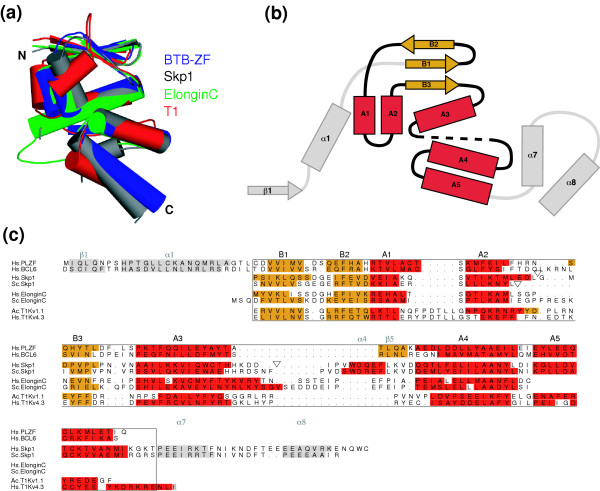
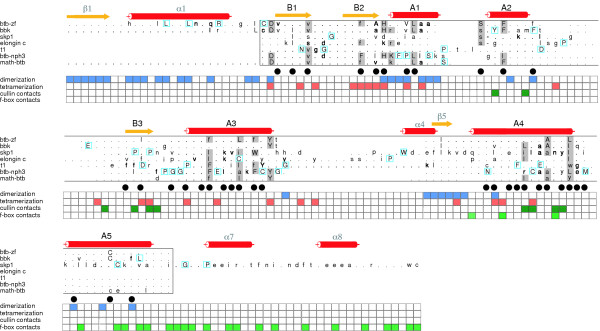
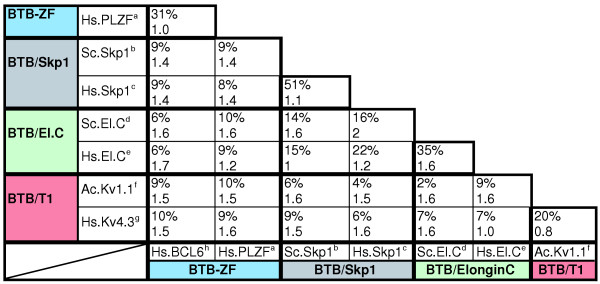
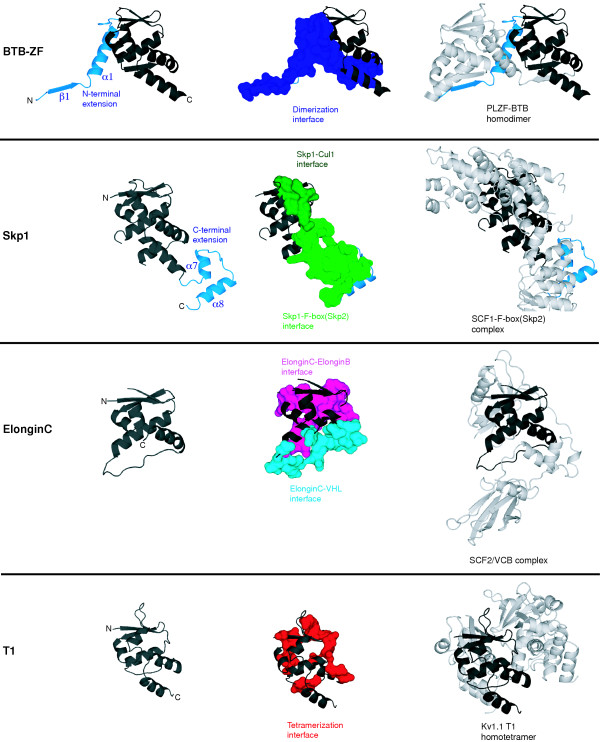
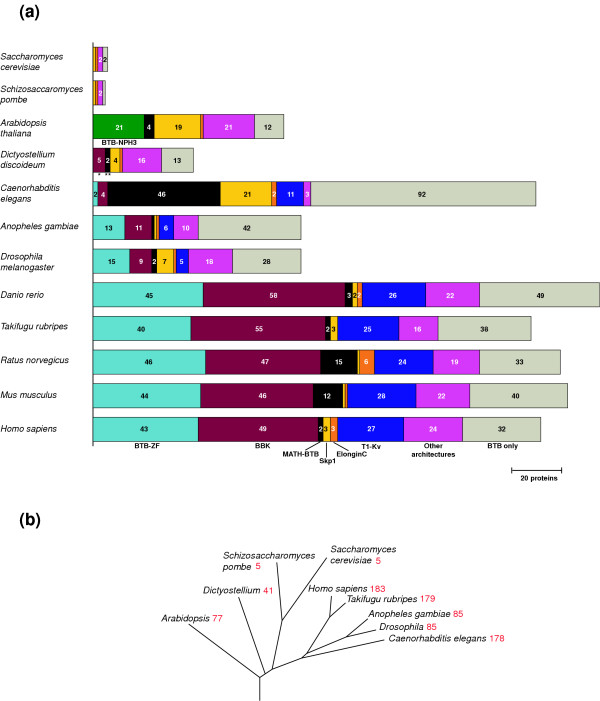
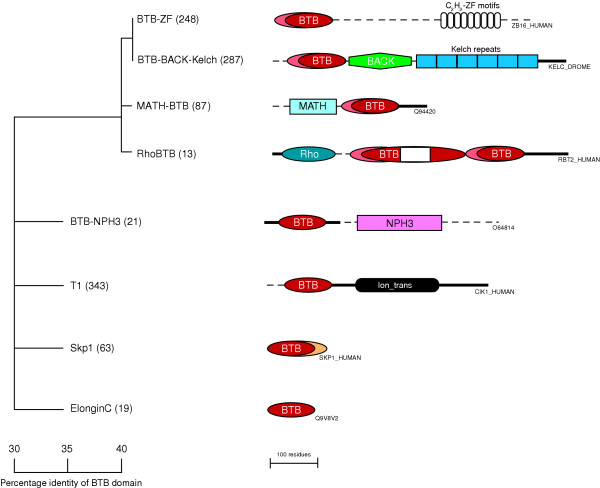
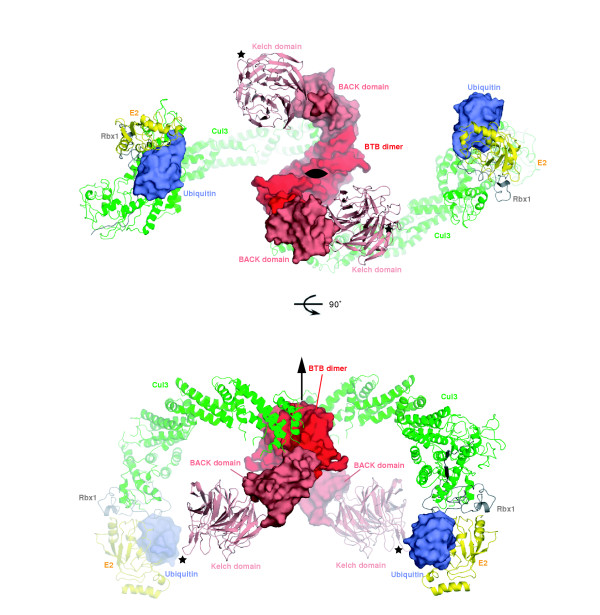
Background: The BTB domain (also known as the POZ domain) is a versatile protein-protein interaction motif that participates in a wide range of cellular functions, including transcriptional regulation, cytoskeleton dynamics, ion channel assembly and gating, and targeting proteins for ubiquitination. Several BTB domain structures have been experimentally determined, revealing a highly conserved core structure. Results: We surveyed the protein architecture, genomic distribution and sequence conservation of BTB domain proteins in 17 fully sequenced eukaryotes. The BTB domain is typically found as a single copy in proteins that contain only one or two other types of domain, and this defines the BTB-zinc finger (BTB-ZF), BTB-BACK-kelch (BBK), voltage-gated potassium channel T1 (T1-Kv), MATH-BTB, BTB-NPH3 and BTB-BACK-PHR (BBP) families of proteins, among others. In contrast, the Skp1 and ElonginC proteins consist almost exclusively of the core BTB fold. There are numerous lineage-specific expansions of BTB proteins, as seen by the relatively large number of BTB-ZF and BBK proteins in vertebrates, MATH-BTB proteins in Caenorhabditis elegans , and BTB-NPH3 proteins in Arabidopsis thaliana . Using the structural homology between Skp1 and the PLZF BTB homodimer, we present a model of a BTB-Cul3 SCF-like E3 ubiquitin ligase complex that shows that the BTB dimer or the T1 tetramer is compatible in this complex. Conclusion: Despite widely divergent sequences, the BTB fold is structurally well conserved. The fold has adapted to several different modes of self-association and interactions with non-BTB proteins.
Overview
The claims and statistics of this paper haven’t been checked yet.
Free: it reads the open-access text and checks the first 5 claims that cite a source we can check. Create a free account to check every claim.
Integrity signals
Registry
Cites
Statistics
Figures
Verification
Claims the paper makes
The claims and statistics of this paper haven’t been checked yet.
Free: it reads the open-access text and checks the first 5 claims that cite a source we can check. Create a free account to check every claim.
Self-check
Percentages, sums and reported differences re-computed from the paper’s own numbers.
The self-check needs the paper’s full text.
Citations
Cites
Gapped BLAST and PSI-BLAST: a new generation of protein database search programs
Altschul, S. (1997) · Nucleic Acids Research · doi:10.1093/nar/25.17.3389 · Cited by 73,302
Berman, H. M. (2000) · Nucleic Acids Research · doi:10.1093/nar/28.1.235 · Cited by 40,196
PHYLIP-Phylogeny inference package (Version 3.2)
Felsenstein, J. (1989) · Cladistics · Cited by 18,906
The PyMOL Molecular Graphics System
DeLano, W. L. (2002) · Medical Entomology and Zoology · Cited by 18,147
The Pfam Protein Families Database
Bateman, A. (2002) · Nucleic Acids Research · doi:10.1093/nar/30.1.276 · Cited by 14,000
SWISS‐MODEL and the Swiss‐Pdb Viewer: An environment for comparative protein modeling
Guex, N., & Peitsch, M. C. (1997) · ELECTROPHORESIS · doi:10.1002/elps.1150181505 · Cited by 11,241
MEGA2: molecular evolutionary genetics analysis software
Kumar, S., Tamura, K., Jakobsen, I. B., & Nei, M. (2001) · Bioinformatics · doi:10.1093/bioinformatics/17.12.1244 · Cited by 6,097
Multiple sequence alignment with the Clustal series of programs
Chenna, R. (2003) · Nucleic Acids Research · doi:10.1093/nar/gkg500 · Cited by 4,875
The PSIPRED protein structure prediction server
McGuffin, L. J., Bryson, K., & Jones, D. T. (2000) · Bioinformatics · doi:10.1093/bioinformatics/16.4.404 · Cited by 3,838
Murzin, A. G., Brenner, S. E., Hubbard, T., & Chothia, C. (1995) · Journal of Molecular Biology · doi:10.1016/s0022-2836(05)80134-2 · Cited by 3,225
Research works printed but not linked: 2
- Swofford D PAUP 1998 Sunderland, MA: Sinauer Associates
- Felsenstein J PHYLIP (Phylogeny Inference Package) version 36 2004 Department of Genome Sciences, University of Washington, Seattle USA
Cited by
Items 401–500 of 696
Nac1 interacts with the POZ-domain transcription factor, Miz1
Stead, M., & Wright, S. C. (2014) · Bioscience Reports · doi:10.1042/bsr20140049 · Cited by 18
Mod(mdg4) participates in hormonally regulated midgut programmed cell death during metamorphosis
Cai, M.-J., Liu, W., He, H.-J., Wang, J.-X., & Zhao, X.-F. (2012) · Apoptosis · doi:10.1007/s10495-012-0761-y · Cited by 15
“The BTB domain is known as a protein–protein interaction motif and is present in various proteins [28, 29].”
BackgroundRegulation of Gonad Morphogenesis in Drosophila melanogaster by BTB Family Transcription Factors
Silva, D., Olsen, K. W., Bednarz, M. N., Andrew, D., Lenkeit, C. P., Chaharbakhshi, E. O., Temple-Wood, E., & Jemc, J. C. (2016) · PLoS ONE · doi:10.1371/journal.pone.0167283 · Cited by 15
KCTD10 Biology: An Adaptor for the Ubiquitin E3 Complex Meets Multiple Substrates
Maekawa, M., & Higashiyama, S. (2020) · BioEssays · doi:10.1002/bies.201900256 · Cited by 16
Neuronal knockdown of Cullin3 as a Drosophila model of autism spectrum disorder
Tener, S. J., Lin, Z., Park, S. J., Oraedu, K., Ulgherait, M., van Beek, E., Martínez-Muñiz, A., Pantalia, M., Gatto, J. A., Volpi, J., et al. (2024) · Scientific Reports · doi:10.1038/s41598-024-51657-9 · Cited by 14
A Comprehensive Analysis of the Structural Recognition between KCTD Proteins and Cullin 3
Balasco, N., Esposito, L., Smaldone, G., Salvatore, M., & Vitagliano, L. (2024) · International Journal of Molecular Sciences · doi:10.3390/ijms25031881 · Cited by 18
“Among others, the BTB domain (also denoted as POZ or T1), which was originally identified in the D. melanogaster Bric-à -Brac, Tramtrack [1], and Broad transcription regulators, deserves a special position as it is widely widespread in most of the metazoan [2,3].”
BackgroundTargeting kelch-like (KLHL) proteins: achievements, challenges and perspectives
Zhou, Y., Zhang, Q., Zhao, Z., Hu, X., You, Q., & Jiang, Z. (2024) · European Journal of Medicinal Chemistry · doi:10.1016/j.ejmech.2024.116270 · Cited by 15
Genome-wide identification, structural and gene expression analysis of BTB gene family in soybean
Elsanosi, H. A., Zhang, J., Mostafa, S., Geng, X., Zhou, G., Awdelseid, A. H. M., & Li, S. (2024) · BMC Plant Biology · doi:10.1186/s12870-024-05365-1 · Cited by 16
“The BTB domain enables the BTB proteins to form protein complexes and interact with other proteins, thereby modulating their functions [5, 6].”
BackgroundMaekawa, M., Hiyoshi, H., Nakayama, J., Kido, K., Sawasaki, T., Semba, K., Kubota, E., Joh, T., & Higashiyama, S. (2019) · Biochemical and Biophysical Research Communications · doi:10.1016/j.bbrc.2019.07.010 · Cited by 16
Pokemon reduces Bcl—2 expression through NF—κ Bp65: a possible mechanism of hepatocellular carcinoma
Zhao, X.-K., Ning, Q.-M., Sun, X., & Tian, D. (2011) · Asian Pacific Journal of Tropical Medicine · doi:10.1016/s1995-7645(11)60133-8 · Cited by 15
Phylogenetic Analysis of Brassica rapa MATH-Domain Proteins
Zhao, L., Huang, Y., Hu, Y., He, X., Shen, W., Liu, C., & Ruan, Y. (2013) · Current Genomics · doi:10.2174/1389202911314030007 · Cited by 17
The structure of the Bach2 POZ-domain dimer reveals an intersubunit disulfide bond
Rosbrook, G. O., Stead, M., Carr, S. B., & Wright, S. C. (2011) · Acta Crystallographica Section D Biological Crystallography · doi:10.1107/s0907444911048335 · Cited by 16
“…domain is a protein–protein interaction domain that is found in approximately 40 mammalian transcription factors (POZ-TFs); POZ domains mediate interactions with transcriptional co-regulators and also direct specific interactions of the POZ-TFs with each other (reviewed in Stogios et al., 2005).”
BackgroundLührig, S., Kolb, S., Mellies, N., & Nolte, J. (2013) · Cell Division · doi:10.1186/1747-1028-8-3 · Cited by 15
Sakaue, T., Maekawa, M., Nakayama, H., & Higashiyama, S. (2017) · The Journal of Biochemistry · doi:10.1093/jb/mvx051 · Cited by 16
Mechanism of Proliferation of Cultured Human Corneal Endothelial Cells
Joko, T., Shiraishi, A., Kobayashi, T., Ohashi, Y., & Higashiyama, S. (2017) · Cornea · doi:10.1097/ico.0000000000001337 · Cited by 15
Gene transcription in the zebrafish embryo: regulators and networks
Ferg, M., Armant, O., Yang, L., Dickmeis, T., Rastegar, S., & Strähle, U. (2013) · Briefings in Functional Genomics · doi:10.1093/bfgp/elt044 · Cited by 18
“(HDAC), N-CoR and SMRT [98–100].”
Sharma, J., Mulherkar, S. A., Chen, U.-I., Xiong, Y., Bajaj, L., Cho, B.-K., Goo, Y. A., Leung, H. E., Tolias, K. F., & Sardiello, M. (2023) · Cell Discovery · doi:10.1038/s41421-023-00533-3 · Cited by 16
Asmar, A. J., Beck, D. B., & Werner, A. A. (2020) · Experimental Cell Research · doi:10.1016/j.yexcr.2020.112300 · Cited by 15
Gal-3BP in Viral Infections: An Emerging Role in Severe Acute Respiratory Syndrome Coronavirus 2
Gallo, V., Arienzo, A., Iacobelli, S., Iacobelli, V., & Antonini, G. (2022) · International Journal of Molecular Sciences · doi:10.3390/ijms23137314 · Cited by 16
“The BTB/POZ domain has been demonstrated to have a role in transcriptional repression, cytoskeleton regulation, in targeting proteins for ubiquitination and degradation [17], and dimerization and oligomerization [18].”
BackgroundPirone, L., Esposito, C., Correale, S., Graziano, G., Gaetano, S. D., Vitagliano, L., & Pedone, E. M. (2013) · BioMed Research International · doi:10.1155/2013/162674 · Cited by 15
“One of the best characterized domains deputed to these roles is the POZ/BTB domain, a motif that is widespread among eukaryotes [3].”
BackgroundStructure of the wild-type human BCL6 POZ domain
Stead, M., Rosbrook, G. O., Hadden, J. M., Trinh, C. H., Carr, S. B., & Wright, S. C. (2008) · Acta Crystallographica Section F Structural Biology and Crystallization Communications · doi:10.1107/s1744309108036063 · Cited by 12
Nic-Matos, G., Narváez, M., Peraza-Echeverría, S., Sáenz-Carbonell, L., & Oropeza, C. (2017) · Genes & Genomics · doi:10.1007/s13258-017-0566-z · Cited by 14
“nucifera possess the basic elements of the BTB/POZ domain topology and that they belong to the “long-form” class of BTB domains, due to the prediction of an additional α-helix in the N-terminal and two α-helixes in the C-terminal regions of the proteins (Stogios et al. 2005).”
BackgroundRutz, N., Heilbronn, R., & Weger, S. (2015) · Biochemical and Biophysical Research Communications · doi:10.1016/j.bbrc.2015.07.069 · Cited by 14
Regulation of Pokemon 1 Activity by Sumoylation
Roh, H.-E., Lee, M.-N., Jeon, B., Choi, W., Kim, Y.-J., Yu, M.-Y., & Hur, M. (2007) · Cellular Physiology and Biochemistry · doi:10.1159/000104164 · Cited by 14
A BTB domain‐containing gene is upregulated by immune challenge
Wang, G., Liu, P., Wang, J., & Zhao, X. (2011) · Archives of Insect Biochemistry and Physiology · doi:10.1002/arch.20421 · Cited by 14
Elmann, A., Sharabi, A., Dayan, M., Zinger, H., Ophir, R., & Mozes, E. (2007) · Arthritis & Rheumatism · doi:10.1002/art.22736 · Cited by 14
KCTD 12 modulation of GABA (B) receptor function
Li, M., Milligan, C. J., Wang, H., Walker, A. W., Churilov, L. P., Lawrence, A. J., Reid, C. A., Hopkins, S. C., & Petrou, S. (2017) · Pharmacology Research & Perspectives · doi:10.1002/prp2.319 · Cited by 16
“These KCTD proteins are characterized by the presence of a conserved T1 domain of the voltage gated potassium channels (Stogios et al. 2005), followed by H1 and H2 domains in the carboxy-terminal for KCTD8 and 16, while KCTD12 lacks the H2 domain (Seddik et al.”
BackgroundQu, N., Gan, W., Bi, D., Xia, S., Li, X., & Zhang, Y. (2010) · Botany · doi:10.1139/b10-067 · Cited by 16
“The BTB domain is a protein–protein interaction motif found throughout eukaryotes (Stogios et al. 2005).”
BackgroundInfluentialProtein complex formation and intranuclear dynamics of NAC1 in cancer cells
Nakayama, N., Kato, H., Sakashita, G., Nariai, Y., Nakayama, K., Kyo, S., & Urano, T. (2016) · Archives of Biochemistry and Biophysics · doi:10.1016/j.abb.2016.07.007 · Cited by 14
Nguantad, S., Chumnanpuen, P., Thancharoen, A., Vongsangnak, W., & Sriboonlert, A. (2020) · Genomics · doi:10.1016/j.ygeno.2020.01.025 · Cited by 13
Distinct Roles and Synergistic Function of FruM Isoforms in Drosophila Olfactory Receptor Neurons
Zhang, Y., Ng, R., Neville, M. C., Goodwin, S. F., & Su, C. (2020) · Cell Reports · doi:10.1016/j.celrep.2020.108516 · Cited by 14
Sun, Y. (2020) · Advances in experimental medicine and biology · doi:10.1007/978-981-15-1025-0_1 · Cited by 14
Blifernez-Klassen, O., Berger, H., Mittmann, B. G. K., Классен, В., Schelletter, L., Buchholz, T., Baier, T., Soleimani, M., Wobbe, L., & Kruse, O. (2021) · The Plant Cell · doi:10.1093/plcell/koab012 · Cited by 14
“domains were also reported to facilitate heterodimerization, thus expanding the range of recognizable motifs by combining distinct DNA recognition specificities (Kobayashi et al., 2000; Stogios et al., 2005).”
BackgroundOrth, B., Sander, B., Möglich, A., Diederichs, K., Eilers, M., & Lorenz, S. (2021) · Structure · doi:10.1016/j.str.2021.06.005 · Cited by 16
“BTB domains in the BTB-ZF, BTB-kelch, andMATH-BTB protein families comprise N-terminal extensions (b1 and/or a1) that drive their dimerization or higher-order self-association (Stogios et al., 2005) and regulate their stability in the cell (Mena et al.”
BackgroundKCTD5 is endowed with large, functionally relevant, interdomain motions
Barone, D., Balasco, N., & Vitagliano, L. (2015) · Journal of Biomolecular Structure and Dynamics · doi:10.1080/07391102.2015.1090343 · Cited by 12
Liang, S. S., Ouyang, H., Liu, J., Chen, B., Nie, Q., & Zhang, X. Q. (2014) · Domestic Animal Endocrinology · doi:10.1016/j.domaniend.2014.09.006 · Cited by 14
Wu, K., & Hoy, M. A. (2015) · PLoS ONE · doi:10.1371/journal.pone.0144291 · Cited by 14
“For example, the kelch and BACK motifs are often found in BTB proteins involved in maintaining the stability and dynamics of actin filaments [5, 8].”
BackgroundInfluentialNrf2-Keap1 Activation, A Promising Strategy in the Prevention of Cancer
Ojo, O. A., Ajiboye, B. O., Fadaka, A. O., Taro, P., & Shariati, M. A. (2016) · Free Radicals and Antioxidants · doi:10.5530/fra.2017.1.1 · Cited by 14
Xie, X., Chang, X.-J., Gao, Y., Li, D., Liu, L.-K., Liu, M.-J., Wang, K., & Liu, H. (2018) · Developmental & Comparative Immunology · doi:10.1016/j.dci.2018.03.001 · Cited by 13
New Fast BiFC Plasmid Assay System for in Vivo Protein-Protein Interactions
Kim, M., Roh, H.-E., Lee, M.-N., & Hur, M. (2007) · Cellular Physiology and Biochemistry · doi:10.1159/000110431 · Cited by 12
BTB protein, dKLHL18/CG3571, serves as an adaptor subunit for a dCul3 ubiquitin ligase complex
Fujiyama, S., Ito, S., Sawatsubashi, S., Yamauchi, Y., Suzuki, E., Tanabe, M., Kimura, S., Murata, T., Isobe, T., Takeyama, K. I., et al. (2009) · Genes to Cells · doi:10.1111/j.1365-2443.2009.01323.x · Cited by 12
“The BTB domain is typically found as a single copy in a given protein and BTB domain proteins are classified according to their associated functional domains, such as BTB-zinc finger, BTB-BACK-kelch, voltage-gated potassium channel T1, MATH (Meprin and TRAF homology) -BTB, Rho-BTB and BTB domain only (Stogios et al. 2…”
BackgroundInfluentialStructural analysis of the PATZ1 BTB domain homodimer
Piepoli, S., Alt, A., Atılgan, C., Mancini, E. J., & Erman, B. (2020) · Acta Crystallographica Section D Structural Biology · doi:10.1107/s2059798320005355 · Cited by 13
Okado, H. (2020) · British Journal of Pharmacology · doi:10.1111/bph.15265 · Cited by 11
Farooq, T., Qi, L., She, X., Chen, T., Li, Z., Yu, L., Lan, G., Tang, Y., & He, Z. (2022) · Frontiers in Plant Science · doi:10.3389/fpls.2022.1040547 · Cited by 13
“Proteins containing BTB/POZ domain are known to be associated with versatile cellular functions including protein-protein interactions (PPIs), cytoskeleton dynamics, transcriptional regulation, ubiquitination of proteins and ion channel assembly/gating (Stogios et al., 2005).”
BackgroundZBTB40 is a telomere-associated protein and protects telomeres in human ALT cells
Zhou, M., Cui, Y., Zuo, S., Peng, Q., Liu, Y., Li, X., Yang, Y., He, Q., Yu, X., Zhou, J., et al. (2023) · Journal of Biological Chemistry · doi:10.1016/j.jbc.2023.105053 · Cited by 10
“the BTB domain of TZAP has been reported to be essential for telomeric recruitment, and the BTB domains from ZBTB family can form the homodimers (12).”
BackgroundLiu, J., & Zhang, H. (2024) · Biomolecules · doi:10.3390/biom14020192 · Cited by 15
“It mediates not only the formation of homodimers, heterodimers, or multimers [12–14], but also the recruitment of transcriptional regulators [15,16], hence allowing for diverse functions, ranging from transcriptional repression [17–19] and cytoskeleton dynamics [20] to protein ubiquitination and…”
BackgroundInfluentialInhibition of angiogenesis by the BTB domain of promyelocytic leukemia zinc finger protein
Rho, S. B., Choi, K., Park, K., & Lee, J. (2010) · Cancer Letters · doi:10.1016/j.canlet.2010.01.021 · Cited by 9
“A three-dimensional superposition showed a common region of approximately 95 amino acids consisting of a cluster of five a-helices made up in part of two a-helical hairpins, and capped at one end by a short solvent-exposed three stranded b-sheet [3,9,33].”
BackgroundKCTD5 Forms Hetero-Oligomeric Complexes with Various Members of the KCTD Protein Family
Liao, Y., Sloan, D. C., Widjaja, J. H., & Muntean, B. S. (2023) · International Journal of Molecular Sciences · doi:10.3390/ijms241814317 · Cited by 15
Transcriptome profiling reveals the role of ZBTB38 knock-down in human neuroblastoma
Chen, J., Xing, C., Yan, L., Wang, Y., Wang, H., Zhang, Z., Yu, D., Li, J., Li, H., Li, J., et al. (2019) · PeerJ · doi:10.7717/peerj.6352 · Cited by 15
“Most members of the family, as transcription factors, bind to specific DNA sequences, and regulate the transcriptional activity of target genes (Sasai et al., 2005; Stogios et al., 2005).”
BackgroundMei, L., Huang, Y., Chen, J., He, X., Lin, S., Liao, L., Wang, X., Huang, X., Sha, Y., Ji, Z., et al. (2019) · Clinica Chimica Acta · doi:10.1016/j.cca.2019.02.028 · Cited by 11
Alevy, J., Burger, C. A., Albrecht, N. E., Jiang, D., & Samuel, M. A. (2019) · Neurochemistry International · doi:10.1016/j.neuint.2019.104486 · Cited by 11
Kabakci, Z., Reichle, H., Lemke, B., Rousová, D., Gupta, S., Weber, J., Schleiffer, A., Weir, J. R., & Lehner, C. F. (2022) · PLoS Genetics · doi:10.1371/journal.pgen.1010547 · Cited by 11
Andérica‐Romero, A. C., Escobar, L. I., Padilla‐Flores, T., & Pedraza‐Chaverrí, J. (2014) · Cellular Signalling · doi:10.1016/j.cellsig.2014.01.032 · Cited by 12
Choi, J., Yang, E. S., Cha, K., Whang, J., Choi, W.-J., Avraham, S., & Kim, T. (2014) · Journal of Cancer Prevention · doi:10.15430/jcp.2014.19.3.187 · Cited by 12
Balasco, N., Smaldone, G., & Vitagliano, L. (2019) · Biomolecules · doi:10.3390/biom9080323 · Cited by 11
“BTB domains, also denoted as POZ domains, are widespread structural modules that are present in a variety of multidomain proteins [18,32,33].”
BackgroundInfluentialUnraveling Isoform Complexity: The Roles of M1 ‐ and M87 ‐Spastin in Spastic Paraplegia 4 ( SPG4 )
Ramakrishnan, S., Mohan, N., Dong, Z., Liu, M., & Qiang, L. (2024) · Movement Disorders · doi:10.1002/mds.30072 · Cited by 10
“55,56 Given that spastin contains nuclear localization NLS and NES, 45,46 it would be intriguing to explore whether M1-spastin, through its BTB domain, may have a potential role in transcription regulation within the nucleus, adding a new layer of complexity to its functional repertoire.”
Zhao, X., Zhang, J., Yang, Y., Liu, W., & Zhang, J. (2019) · International Journal of Biological Macromolecules · doi:10.1016/j.ijbiomac.2019.10.267 · Cited by 10
Vaccinia virus BTB-Kelch proteins C2 and F3 inhibit NF-κB activation
Zhang, R.-Y., Pallett, M. A., French, J., Ren, H., & Smith, G. L. (2022) · Journal of General Virology · doi:10.1099/jgv.0.001786 · Cited by 10
Molecular cloning and characterization of NPR1 gene from Arachis hypogaea
Wu, Q., Wang, X. Z., Tang, Y. Y., Yu, H. T., Ding, Y., Yang, C. D., Cui, F. G., Zhang, J. C., & Wang, C. T. (2014) · Molecular Biology Reports · doi:10.1007/s11033-014-3395-z · Cited by 11
“The conserved histidine of the first a helix has vital function on folding of structure by making hydrogen bonds [14].”
BackgroundWinkelmann, J., & Kimura, M. (2010) · Handbook of clinical neurology · doi:10.1016/b978-0-444-52007-4.00002-3 · Cited by 10
Meyer, S. J., Böser, A., Korn, M. A., Koller, C., Bertocci, B., Reimann, L., Warscheid, B., & Nitschke, L. (2020) · The Journal of Immunology · doi:10.4049/jimmunol.1900925 · Cited by 11
“tein–protein-interaction motifs of BTB/POZ domain proteins are mostly either Kelch, PHR, or zinc finger domains (46).”
BackgroundKCNF1 promotes lung cancer by modulating ITGB4 expression
Chen, C., Wu, P.-Y., Scoyk, M. M. V., Simko, S. A., Chou, C., & Winn, R. A. (2022) · Cancer Gene Therapy · doi:10.1038/s41417-022-00560-4 · Cited by 10
“The N-terminal cytoplasmic tetramerization domain (T1) domain of Kv and KvS α-subunits required for tetramerization is also found in a subset of proteins containing the BTB/POZ domain [34].”
BackgroundNishi, T., Maruyama, R., Urano, T., Nakayama, N., Kawabata, Y., Yano, S., Yoshida, M., Nakayama, K., Miyazaki, K., Takenaga, K., et al. (2012) · Pathology International · doi:10.1111/pin.12020 · Cited by 10
Leljak-Levanić, D., Horvat, T., Martinčić, J., & Bauer, N. (2012) · PLoS ONE · doi:10.1371/journal.pone.0051184 · Cited by 11
“Although a high number of proteins with the Bric-a-Brac, Tramtrack, Broad Complex (BTB) domain have been discovered in plants within the past decade [4,5], little is known about their function.”
BackgroundUbiquitin/Proteasome System in Plant Pathogen Responses
Sorel, M., Mooney, B., de Marchi, R., & Graciet, E. (2019) · Wiley eBooks · doi:10.1002/9781119312994.apr0665 · Cited by 13
KLHL12 can form large COPII structures in the absence of CUL3 neddylation
Moretti, T., Kim, K., Tuladhar, A., & Kim, J. (2023) · Molecular Biology of the Cell · doi:10.1091/mbc.e22-08-0383 · Cited by 12
“For example, CUL3 can possibly work with 183 BTB-domain proteins, including proteins with Kelch domains, to ubiquitylate diverse substrates (Stogios et al. , 2005).”
Verma, K., Singh, Y., Kamaraj, B., Sharma, P., Schneider, K. A., & Bharti, P. K. (2024) · Indian Journal of Medical Microbiology · doi:10.1016/j.ijmmb.2024.100691 · Cited by 9
Balasco, N., Ruggiero, A., Smaldone, G., Pecoraro, G., Coppola, L., Pirone, L., Pedone, E. M., Esposito, L., Berisio, R., & Vitagliano, L. (2024) · International Journal of Biological Macromolecules · doi:10.1016/j.ijbiomac.2024.134390 · Cited by 10
Yue, J., Dai, X., Li, Q., & Wei, M. (2024) · International Journal of Molecular Sciences · doi:10.3390/ijms25169048 · Cited by 9
“BTB–ANK is a key transcriptional co-regulator of immunity and physiology in many plant species [2,3].”
BackgroundHorton, J. R., Yu, M., Zhou, J., Tran, M. L., Anakal, R. R., Lu, Y., Blumenthal, R., Zhang, X., Huang, Y., Zhang, X., et al. (2025) · Nature Communications · doi:10.1038/s41467-025-58998-7 · Cited by 12
“I have a number of questions and comments for the authors For the structure of ZF4-6 bound to a 20mer from the globin locus, are you confident that modules B and C really bind or are these artefacts in the crystal structure.”
Hu, H., Lin, Y.-J., Wang, U.-T. T., Lee, S., Liou, Y.-H., Chen, B., & Hsueh, Y. (2023) · PLoS Biology · doi:10.1371/journal.pbio.3002274 · Cited by 13
The CRL3 gigaxonin ubiquitin ligase–USP15 pathway governs the destruction of neurofilament proteins
Park, H.-M., Le, L., Nguyen, T. T., Nam, K. H., Ordureau, A., Lee, J. E., & Nguyen, T. V. (2023) · Proceedings of the National Academy of Sciences · doi:10.1073/pnas.2306395120 · Cited by 13
“Based on sequence homology (7) and the structural study of CUL3 - GIG BTB homodimer complex (12), GIG (also known as KLHL16) may function as an adaptor in the CUL3 - RBX1 - GIG (known as CRL3 GIG ) E3 ubiquitin ligase complex and regulate diverse substrates.”
BackgroundLiang, J. H., Alevy, J., Akhanov, V., Seo, R., Massey, C. A., Jiang, D., Zhou, J., Sillitoe, R. V., Noebels, J. L., & Samuel, M. A. (2022) · Disease Models & Mechanisms · doi:10.1242/dmm.049642 · Cited by 9
“All members contain the T1 tetramerization domain of voltage-gated potassium channels (Kreusch et al., 1998; Stogios et al., 2005), and KCTD7 has been variably associated with neuronal potassium channel function (Azizieh et al., 2011 (Metz et al., 2018; Staropoli et al., 2012; Liu et al., 2013),…”
Sibling rivalry among the ZBTB transcription factor family: homodimers versus heterodimers
Piepoli, S., Barakat, S., Nogay, L., Şimşek, B., Akköse, Ü., Taskiran, H., Tolay, N., Gezen, M., Yeşilada, C. Y., Tuncay, M., et al. (2022) · Life Science Alliance · doi:10.26508/lsa.202201474 · Cited by 8
“The presence of β1, α1, and β2 is a specific feature of the BTB domain of ZBTB proteins defined by Stogios et al (2005).”
BackgroundBarranger, A., Klopp, C., Bot, B. L., Saramito, G., Dupont, L., Llopis, S., Wiegand, C., & Binet, F. (2022) · Environmental Pollution · doi:10.1016/j.envpol.2022.120945 · Cited by 11
“…was also downregulated, which is a versatile protein-protein interaction motif that participates in a wide range of cellular functions, including transcriptional regulation, cytoskeleton dynamics, ion channel assembly and gating, and targeting proteins for ubiquitination (Stogios et al., 2005).”
BackgroundThe BTBD9 gene polymorphisms in Polish patients with Gilles de la Tourette syndrome
Janik, P., Berdyński, M., Safranow, K., & Żekanowski, C. (2014) · Acta Neurobiologiae Experimentalis · doi:10.55782/ane-2014-1987 · Cited by 9
“Other proteins containing the BTB/ POZ domain function in transcription repression, cytoskeleton regulation, tetramerization, gating of ion channels, and ubiquitin-dependent protein degradation (Stogios et al. 2005).”
BackgroundKumar, S., Rathkolb, B., Sabrautzki, S., Krebs, S., Kemter, E., Becker, L., Beckers, J., Bekeredjian, R., Brommage, R., Calzada‐Wack, J., et al. (2017) · Journal of Biomedical Science · doi:10.1186/s12929-017-0365-5 · Cited by 10
“BTB domains are protein–protein interaction modules that mediate both self-association and interaction with nonBTB partners [9].”
BackgroundKang, Z., Wei, X., Miao, J., Gao, Y., Wang, Z., & Yu, X. (2019) · Neuropathology · doi:10.1111/neup.12610 · Cited by 9
Selected Golgi-Localized Proteins and Carcinogenesis: What Do We Know?
Donizy, P., & Marczuk, J. (2019) · Results and problems in cell differentiation · doi:10.1007/978-3-030-23173-6_20 · Cited by 9
Bhattacharya, A., Shukla, V. K., Kachariya, N. N., Preeti, P., Sehrawat, P., & Kumar, A. (2022) · Journal of Molecular Biology · doi:10.1016/j.jmb.2022.167830 · Cited by 10
Increased slow dynamics defines ligandability of BTB domains
Kharchenko, V., Linhares, B. M., Borregard, M., Czaban, I., Grembecka, J. E., Jaremko, M., Cierpicki, T., & Jaremko, Ł. (2022) · Nature Communications · doi:10.1038/s41467-022-34599-6 · Cited by 10
Proteins involved in sleep homeostasis: Biophysical characterization of INC and its partners
Pirone, L., Smaldone, G., Esposito, C., Balasco, N., Petoukhov, M. V., Spilotros, A., Svergun, D. I., Gaetano, S. D., Vitagliano, L., & Pedone, E. M. (2016) · Biochimie · doi:10.1016/j.biochi.2016.09.013 · Cited by 8
“On the basis of previous reports [13,24], this interaction is likely mediated by the BTB domain of INC.”
BackgroundAktar, S., Sasaki, H., & Unoki, M. (2019) · Genes to Cells · doi:10.1111/gtc.12723 · Cited by 11
Narayanan, D. L., Somashekar, P. H., Majethia, P., & Shukla, A. (2021) · Clinical Dysmorphology · doi:10.1097/mcd.0000000000000394 · Cited by 8
“It contains a highly conserved N-terminal BTB/POZ domain, which shares homology with the T1 domain of voltage-gated K channel (Stogios et al., 2005).”
BackgroundZBTB11 dysfunction: spectrum of brain abnormalities, biochemical signature and cellular consequences
Sumathipala, D., Strømme, P., Fattahi, Z., Lüders, T., Sheng, Y., Kahrizi, K., Einarsen, I. H., Sloan, J. L., Najmabadi, H., van den Heuvel, L., et al. (2022) · Brain · doi:10.1093/brain/awac034 · Cited by 8
“modulating the ability of the zinc fingers to bind target DNA sequences.(47) Alternatively, a BTB domain can bind proteins without BTB domains, for example corepressors, regulating the transcriptional activity of the BTB-zinc finger protein.”
Identification and functional analysis of Tex11 and Meig1 in spermatogenesis of Hyriopsis cumingii
Huo, Y., Gu, Y., Cao, M., Mao, Y., Wang, Y., Wang, X., Wang, G., & Li, J. (2022) · Frontiers in Physiology · doi:10.3389/fphys.2022.961773 · Cited by 9
“genes are involved in spermatogenesis, sperm capacitation and fertilization (Stogios et al., 2005; Dong et al., 2020; Cui et al., 2021).”
Genome-Wide Identification of BTB Domain-Containing Gene Family in Grapevine (Vitis vinifera L.)
Goyal, N., Bhuria, M., Verma, D., Garewal, N., & Singh, K. (2023) · Agriculture · doi:10.3390/agriculture13020252 · Cited by 8
Sekine, J., Nakatani, E., Ohira, K., Hideshima, K., Kanno, T., Nariai, Y., Kagimura, T., & Urano, T. (2015) · PLoS ONE · doi:10.1371/journal.pone.0131752 · Cited by 8
“After incubation with the NAC1 mouse monoclonal antibody (diluted 1:1,000, overnight at 4°C [11]), sections were incubated with the streptavidin/biotin reagent from the HISTOFINE SAB-PO (M) KIT (Nichirei, Tokyo, Japan) prior to application of a 0.”
BackgroundMethodHeterogeneity of axonal pathology in chinese patients with giant axonal neuropathy
Wang, L., Zhao, D., Wang, Z., Zhang, W. Y., Lv, H., Liu, X., Meng, L., & Yuan, Y. (2013) · Muscle & Nerve · doi:10.1002/mus.24130 · Cited by 8
“The GAN gene encodes gigaxonin, which contains an N-terminal BTB domain, with the Cterminal Kelch domain and the BACK domain between them.(19) Four novel compound heterozygous or homozygous mutations in the GAN gene”
BackgroundGranadino‐Roldán, J. M., Obiol‐Pardo, C., Pinto, M., Garzón‐Ruiz, A., & Rubio, J. (2014) · Journal of Molecular Graphics and Modelling · doi:10.1016/j.jmgm.2014.04.003 · Cited by 10
ZBTB38, a novel regulator of autophagy initiation targeted by RB1CC1/FIP200 in spinal cord injury
Chen, J., Li, Y., Wang, H., Zhang, Z., Yu, D., Xing, C., Li, J., Li, H., Li, J., & Cai, Y. (2018) · Gene · doi:10.1016/j.gene.2018.07.073 · Cited by 8
“ZBTB38 also plays an important role in gene expression regulation, cell differentiation, and embryo development (Sasai et al., 2005; Stogios et al., 2005).”
BackgroundA functional assay to classify ZBTB24 missense variants of unknown significance
Wu, H., Vonk, K. K. D., van der Maarel, S. M., Santen, G. W. E., & Daxinger, L. (2019) · Human Mutation · doi:10.1002/humu.23786 · Cited by 8
What a Difference a Gene Makes: Identification of Virulence Factors of Cowpox Virus
Tamošiūnaitė, A., Weber, S., Schippers, T., Franke, A., Xu, Z., Jenckel, M., Pfaff, F., Hoffmann, D., Newell, M., Tischer, B. K., et al. (2019) · Journal of Virology · doi:10.1128/jvi.01625-19 · Cited by 8
“BTB domain-encoding genes are found among eukaryotic and poxvirus genomes (60), and the domain itself functions as a docking station for protein-protein interactions (61).”
BackgroundCloning and functional analysis of 5′‐upstream region of the Pokemon gene
Yang, Y., Zhou, X., Zhu, X., Zhang, C., Yang, Z., Xu, L., & Huang, P. (2008) · FEBS Journal · doi:10.1111/j.1742-4658.2008.06344.x · Cited by 8
Du, L., Guan, Z., Liu, Y., Hu, D., Gao, J., & Sun, C. (2024) · Plant Science · doi:10.1016/j.plantsci.2024.111997 · Cited by 7
Du, L., Guan, Z., Liu, Y., Zhu, H., Sun, Q., Hu, D., & Sun, C. (2024) · Journal of Integrative Plant Biology · doi:10.1111/jipb.13619 · Cited by 7
The ZBTB family in cardiac development and diseases
Xiang, X., Mao, J., Tang, D., Huang, H., & Tang, H. (2025) · Biochemical and Biophysical Research Communications · doi:10.1016/j.bbrc.2025.152026 · Cited by 9
Mou, S. I., Sultana, T., Chatterjee, D., Faruk, M. O., & Hosen, M. I. (2024) · PLoS ONE · doi:10.1371/journal.pone.0296361 · Cited by 7
He, M., Liu, Y., Shen, J., Duan, C., & Lü, X. (2016) · Neurochemical Research · doi:10.1007/s11064-016-2027-5 · Cited by 9
Gao, Z., Wang, A., Zhao, Y., Zhang, X., Yuan, X.-S., Li, N., Xu, C. B., Wang, S., Zhu, Y., Zhu, J., et al. (2022) · ACS Omega · doi:10.1021/acsomega.1c07262 · Cited by 7
Metadata
- Authors
- Stogios, P. J., Downs, G. S., Jauhal, J. J., Nandra, S. K., & Privé, G. G.
- Affiliations
- University of Toronto (CA)
- Seneca Polytechnic (CA)
- Corresponding author
- Privé, Gilbert G
- Venue
- Genome Biology
- Published
- 2005-09-15
- Volume
- 6
- Issue
- 10
- Pages
- R82-R82
- ISSN
- 1465-6906 (ISSN-L)
- 1474-760X
- PMC
- PMC1257465
- OpenAlex
- W2159956236
- Cited by
- 694
- References
- 131
- Citations by year
- 2026: 21 · 2025: 31 · 2024: 48 · 2023: 24 · 2022: 45 · 2021: 27 · 2020: 37 · 2019: 48 · 2018: 37 · 2017: 25 · 2016: 39 · 2015: 25 · 2014: 35 · 2013: 37 · 2012: 42
- FWCI
- 9.82
- Type
- journal article
- Language
- en
- Open access
- gold
- doi.org
- Licence
- cc-by
- creativecommons.org/licenses/by/2.0/ (tdm)
- creativecommons.org/licenses/by/2.0/ (vor)
- Locations
- Genome biology (publishedVersion, cc-by)
- Europe PMC (PubMed Central) (publishedVersion)
- PubMed Central (publishedVersion)
- PubMed (publishedVersion)
- TSpace (University of Toronto) (submittedVersion)
- Topics
- Life Sciences › Biochemistry, Genetics and Molecular Biology › Molecular Biology › Ubiquitin and proteasome pathways
- Life Sciences › Biochemistry, Genetics and Molecular Biology › Molecular Biology › Protein Structure and Dynamics
- Life Sciences › Biochemistry, Genetics and Molecular Biology › Molecular Biology › Genomics and Chromatin Dynamics
- Keywords
- BTB domain, POZ domain, protein-protein interaction motifs, Skp1, SCF ubiquitin ligase, protein domain architecture, sequence conservation, structural conservation
- MeSH terms
- Amino Acid Sequence, Animals, DNA-Binding Proteins, Models, Molecular, Molecular Sequence Data, Phylogeny, Protein Binding, Zinc Fingers, Genome, Sequence Analysis, DNA, Protein Structure, Tertiary, Protein Folding, Sequence Analysis, Protein
About these checks
Registry, retraction, Cites and statistics results are computed, not judged, with one exception: a printed reference that no index lists is read once by a model before it counts as a citation error. Claims are extracted by a model and kept only when their quote appears verbatim in the text; each cited source is then checked, with a model’s help, for whether it says what the claim relies on. Those verdicts can be wrong — read the claim’s quote and the cited source before relying on one.
Statistics and arithmetic are recomputed, not judged.
Confidence bands are shown only for fields calibrated on our annotated test set. None is calibrated yet, so no band is shown.
What counts as a claim ›How we measure confidence ›How we check this ›
Are you an author, or do you see a problem with this page? Request a review
Data sources
Bibliographic data: Semantic Scholar, OpenAlex, Crossref.
Contains information from the Semantic Scholar Academic Graph Datasets, made available under the ODC Attribution License (ODC-BY 1.0).
Semantic Scholar’s data is described in: Kinney, R., et al. (2023). The Semantic Scholar Open Data Platform. arXiv:2301.10140.
