

Sequence and structural analysis of BTB domain proteins
Open accessThe DOI matches its Crossref record; 129 of the 131 references it cites were found in a registry or an index.
Abstract
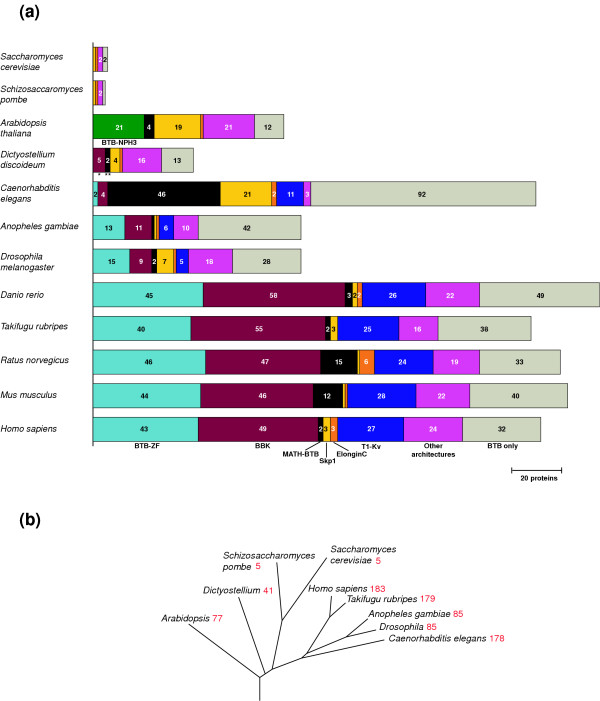
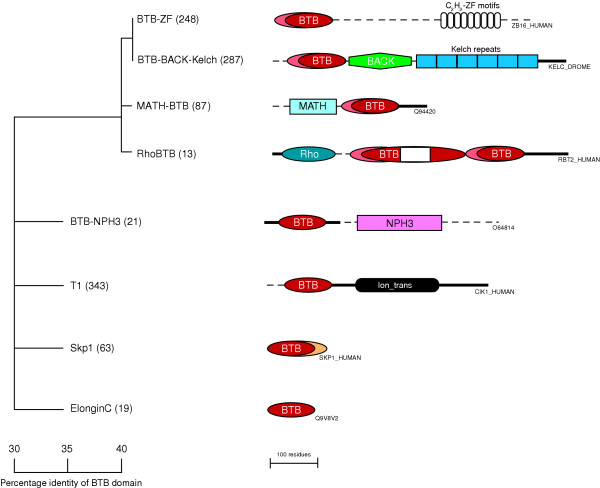
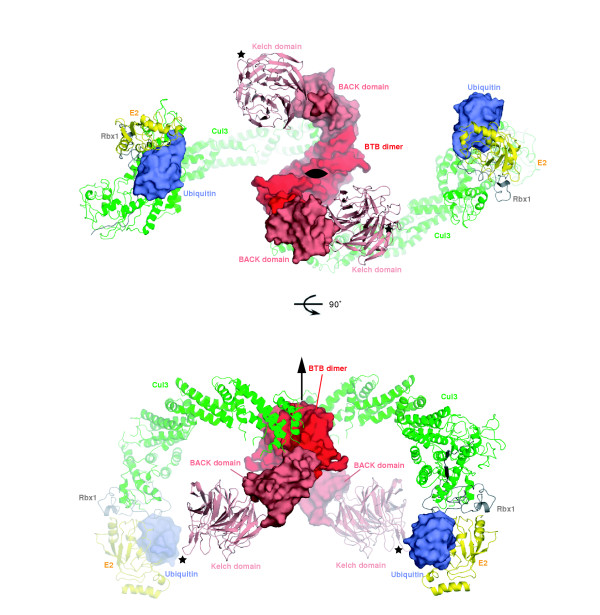
Background: The BTB domain (also known as the POZ domain) is a versatile protein-protein interaction motif that participates in a wide range of cellular functions, including transcriptional regulation, cytoskeleton dynamics, ion channel assembly and gating, and targeting proteins for ubiquitination. Several BTB domain structures have been experimentally determined, revealing a highly conserved core structure. Results: We surveyed the protein architecture, genomic distribution and sequence conservation of BTB domain proteins in 17 fully sequenced eukaryotes. The BTB domain is typically found as a single copy in proteins that contain only one or two other types of domain, and this defines the BTB-zinc finger (BTB-ZF), BTB-BACK-kelch (BBK), voltage-gated potassium channel T1 (T1-Kv), MATH-BTB, BTB-NPH3 and BTB-BACK-PHR (BBP) families of proteins, among others. In contrast, the Skp1 and ElonginC proteins consist almost exclusively of the core BTB fold. There are numerous lineage-specific expansions of BTB proteins, as seen by the relatively large number of BTB-ZF and BBK proteins in vertebrates, MATH-BTB proteins in Caenorhabditis elegans , and BTB-NPH3 proteins in Arabidopsis thaliana . Using the structural homology between Skp1 and the PLZF BTB homodimer, we present a model of a BTB-Cul3 SCF-like E3 ubiquitin ligase complex that shows that the BTB dimer or the T1 tetramer is compatible in this complex. Conclusion: Despite widely divergent sequences, the BTB fold is structurally well conserved. The fold has adapted to several different modes of self-association and interactions with non-BTB proteins.
Overview
The claims and statistics of this paper haven’t been checked yet.
Free: it reads the open-access text and checks the first 5 claims that cite a source we can check. Create a free account to check every claim.
Integrity signals
Registry
Cites
Statistics
Figures
Verification
Claims the paper makes
The claims and statistics of this paper haven’t been checked yet.
Free: it reads the open-access text and checks the first 5 claims that cite a source we can check. Create a free account to check every claim.
Self-check
Percentages, sums and reported differences re-computed from the paper’s own numbers.
The self-check needs the paper’s full text.
Citations
Cites
Gapped BLAST and PSI-BLAST: a new generation of protein database search programs
Altschul, S. (1997) · Nucleic Acids Research · doi:10.1093/nar/25.17.3389 · Cited by 73,302
Berman, H. M. (2000) · Nucleic Acids Research · doi:10.1093/nar/28.1.235 · Cited by 40,196
PHYLIP-Phylogeny inference package (Version 3.2)
Felsenstein, J. (1989) · Cladistics · Cited by 18,906
The PyMOL Molecular Graphics System
DeLano, W. L. (2002) · Medical Entomology and Zoology · Cited by 18,147
The Pfam Protein Families Database
Bateman, A. (2002) · Nucleic Acids Research · doi:10.1093/nar/30.1.276 · Cited by 14,000
SWISS‐MODEL and the Swiss‐Pdb Viewer: An environment for comparative protein modeling
Guex, N., & Peitsch, M. C. (1997) · ELECTROPHORESIS · doi:10.1002/elps.1150181505 · Cited by 11,241
MEGA2: molecular evolutionary genetics analysis software
Kumar, S., Tamura, K., Jakobsen, I. B., & Nei, M. (2001) · Bioinformatics · doi:10.1093/bioinformatics/17.12.1244 · Cited by 6,097
Multiple sequence alignment with the Clustal series of programs
Chenna, R. (2003) · Nucleic Acids Research · doi:10.1093/nar/gkg500 · Cited by 4,875
The PSIPRED protein structure prediction server
McGuffin, L. J., Bryson, K., & Jones, D. T. (2000) · Bioinformatics · doi:10.1093/bioinformatics/16.4.404 · Cited by 3,838
Murzin, A. G., Brenner, S. E., Hubbard, T., & Chothia, C. (1995) · Journal of Molecular Biology · doi:10.1016/s0022-2836(05)80134-2 · Cited by 3,225
Research works printed but not linked: 2
- Swofford D PAUP 1998 Sunderland, MA: Sinauer Associates
- Felsenstein J PHYLIP (Phylogeny Inference Package) version 36 2004 Department of Genome Sciences, University of Washington, Seattle USA
Cited by
Items 601–696 of 696
Translation-driven temporal control for intertwined protein assemblyPreprint
Till, K., Šunderlíková, V., Tippmann, F., Jevtić, P., Bertolini, M., Fenzl, K., Schmitt, J. L., Katranidis, A., Bukau, B., Kramer, G., et al. (2025) · bioRxiv (Cold Spring Harbor Laboratory) · doi:10.1101/2025.08.25.672138 · Cited by 1
Characterization of the BTB/POZ protein ZBTB4 as a transcriptional regulator of cyclin D1
Doherty, P. W. (2012) · MacSphere (McMaster University) · doi:10.71548/15918 · Cited by 1
Molecular mechanism of the anti-inflammatory effect of fenofibrate
Ford, K. A. (2010) · University of Minnesota Digital Conservancy (University of Minnesota)
McKinnon, C. M., & Mellor, H. (2009) · Springer eBooks · doi:10.1007/978-1-4419-1111-7_7
“The Y284D mutation has been predicted to disrupt the proper folding of the BTBa domain and hence block dimerisation (Stogios et al. 2005).”
BackgroundIdentificación y análisis funcional de nuevos oncogenes amplificados en cáncer de pulmón
Castillo, S. D. (2011) · Dipòsit Digital de la Universitat de Barcelona (Universitat de Barcelona) · Cited by 1
Bury, F. J., & Bellefroid, E. (2006) · Dépôt institutionnel de l'Université libre de Bruxelles (Université Libre de Bruxelles)
Regulation of protein phosphatase 2A by proteasomal degradation
Oberg, E. A. (2012) · doi:10.17077/etd.i2uanvgl
Molecular mechanisms of choroid fissure closure and ventral retina formation in the zebrafish eye
Lee, J. (2010) · Texas ScholarWorks (Texas Digital Library)
Studies on the mechanism of homolog pairing in Drosophila male meiosis
Tsai, J.-H. (2011)
Rochon, A. (2012) · Brock University Digital Repository (Brock University) · Cited by 1
Estudos funcionais e estruturais das septinas humanas 6, 8 e 10
de Souza, T. D. A. C. B. (2010) · doi:10.47749/t/unicamp.2010.768848
Unraveling new roles and substrates for protein kinase CK2 in arabidopsis thaliana
Armengot, L. (2014) · TDX (Tesis Doctorals en Xarxa)
Zhang, H. (2014) · Springer eBooks · doi:10.1007/978-3-642-27841-9_7191-1
Centromeric Instability in ICF Syndrome
Weemaes, C. M. R., & van der Maarel, S. M. (2014) · Elsevier eBooks · doi:10.1016/b978-0-12-405546-9.00019-4
Clinical Phenotype and Genetics of Restless Legs Syndrome
Schulte, E. C., & Winkelmann, J. (2014) · Elsevier eBooks · doi:10.1016/b978-0-12-405195-9.00076-7
Cullin-RING ligases in regulation
Xiong, X., & Zhao, Y. (2016)
Dissecting the Genetic Basis of Parkinson Disease, Dystonia and Chorea
Mencacci, N. (2016) · UCL Discovery (University College London)
Identifying novel genes involved in amino acid sensing
Dayhoff-Brannigan, M. (2014)
Axon Death Pathways Converge on Axed to Promote Axon Disassembly
Burdett, T. C. (2017) · The Journal of the American Medical Association (JAMA) Network (American Medical Association) · doi:10.13028/m2m89w
“The following ABs were used for colocalization with AxedeGFP::FLAG: 1st ABs: Cy5 conjugated goat anti-HRP (Jackson ImmunoResearch Laboratories, 1:500), mouse anti-Bruchpilot (nc82, Developmental Studies Hybridoma Bank, 1:20), and rabbit anti-GAT ((Stork et al., 2014),1:3,000).”
MethodRegulation of Rb function by FBI-1 through repression of Rb gene transcription
유정윤 (2006) · YUHSpace (Yonsei University Medical Library)
Schormair, B. (2010) · mediaTUM (Technical University of Munich)
Genetics of Restless Legs Syndrome (RLS)
Schulte, E. C., & Winkelmann, J. (2015) · Springer eBooks · doi:10.1007/978-3-319-17223-1_15
Crystal structure of BTB-domain of CP190 from D.melanogaster at high resolution
Boyko, K. M., Nikolaeva, A. Y., Bonchuk, A. N., Качалова, Г. С., Georgiev, P. G., & Popov, V. O. (2017) · Worldwide Protein Data Bank · doi:10.2210/pdb6er1/pdb
Boyko, K. M., Nikolaeva, A. Y., Качалова, Г. С., Bonchuk, A. N., Дороватовский, П. В., & Popov, V. O. (2017) · Crystallography Reports · doi:10.1134/s1063774517060062
Chen, J., Xing, C., Wang, H., Zhang, Z., Yu, D., Li, J., Li, H., Li, J., & Cai, Y. (2018) · bioRxiv (Cold Spring Harbor Laboratory) · doi:10.1101/350223
“Most members of the family, as transcription factors, bind to specific DNA sequences and regulate the transcriptional activity of target genes(Stogios et al. 2005; Sasai et al. 2005).”
BackgroundEfecto de la dexametasona sobre el mecanismo inflamatorio que subyace en el asma
Marcos-Vadillo, E. (2016) · Gredos (University of Salamanca) · doi:10.14201/gredos.132831 · Cited by 1
“Se trata de una proteína con dedos de Zn inducida por el factor neurotrófico derivado de células gliales (GDNF, glial cell-line-derived neurotrophic factor), con capacidad para unión a ADN, y con actividad represora transcripcional (268) a través de dominios BTB/POZ (269).”
BackgroundInsights into BTB-Cul3 Ubiquitin Ligases from the Structures of SPOP-Substrate Complexes
Zhuang, M. (2009) · doi:10.21007/etd.cghs.2009.0386
“The human genome encodes more than 180 proteins that contain recognizable BTB domains [107].”
BackgroundStructure and Function of Multimeric BTB Proteins and Cullin3 Substrate Adaptors
Ji, X. (2017) · TSpace (University of Toronto)
Kostyuchenko, M. V., Melnikova, L. S., Georgiev, P. G., & Golovnin, A. K. (2019) · Доклады Академии наук · doi:10.31857/s0869-56524862247-254
Osadchiy, I. S., Fedorova, T. N., Georgiev, P. G., & Maksimenko, O. G. (2019) · Vavilov Journal of Genetics and Breeding · doi:10.18699/vj19.479
DmBLM’s Functions in DNA Repair and Recombination
Andersen, S. L. (2010) · Carolina Digital Repository (University of North Carolina at Chapel Hill) · doi:10.17615/13f6-j003
Mechanisms of photoreceptor mediated responses in photomorphogenesis and phototropism
Willenburg, K. T. (2018) · MOspace Institutional Repository (University of Missouri) · doi:10.32469/10355/68952
Mechanisms of the phototropic pathway
Morrow, J. (2018) · MOspace Institutional Repository (University of Missouri) · doi:10.32469/10355/69866 · Cited by 1
Transcription factor ZBTB20: What expression is telling us of its cellular function?
Stoyanov, D. S., & Tonchev, A. B. (2020) · Biomedical Reviews · doi:10.14748/bmr.v31.7700
Uncovering the role of host Cullin 3 during Plasmodium berghei liver stage infection
Cristo, G. S. P. (2014) · Portuguese National Funding Agency for Science, Research and Technology (RCAAP Project by FCT)
Ovarian/Primary Peritoneal Carcinoma
Davidson, B. (2011) · Springer eBooks · doi:10.1007/978-0-85729-697-9_9 · Cited by 2
Mechanisms of Substrate Recognition by the Cul3-based E3 Ligase
Rebola, K. G. D. O. (2021) · PDXScholar (Portland State University) · doi:10.15760/etd.7721
Leslie, M. E., Lewis, M. W., & Liljegren, S. J. (2017) · Wiley eBooks · doi:10.1002/9781119312994.apr0258
Davidson, B. (2018) · Springer eBooks · doi:10.1007/978-3-319-76478-8_9
A Tale of Two-Hybrids: Investigating the Interactomes of Cullin-Associated Proteins
Reitter, E. (2022) · PDXScholar (Portland State University) · doi:10.15760/etd.7790
Tumor Suppressor Gene SPOP in Prostate Cancer: A Review of Research Progress
马, 俊. (2022) · Advances in Clinical Medicine · doi:10.12677/acm.2022.124410
Cloning and Characterization of NPR1 Gene from Arabidopsis thaliana ecotype Col-0
Kalbande, B. B., & Patil, A. S. (2016) · International Journal of Current Research in Biosciences and Plant Biology · doi:10.20546/ijcrbp.2016.302.003
Boyko, K. M., Nikolaeva, A. Y., Качалова, Г. С., Bonchuk, A. N., & Popov, V. O. (2017) · Crystallography Reports · doi:10.1134/s1063774517060050
Faculty Opinions recommendation of The role of BTBD9 in striatum and restless legs syndrome.
Franken, P. (2020) · Faculty Opinions – Post-Publication Peer Review of the Biomedical Literature · doi:10.3410/f.736493320.793572510
Zhang, H. (2016) · Springer eBooks · doi:10.1007/978-3-662-46875-3_7191
Kwitek, A. E., & Ma, J. M. (2012) · Faculty Opinions – Post-Publication Peer Review of the Biomedical Literature · doi:10.3410/f.13570962.14974056
Rapé, M. (2009) · Faculty Opinions – Post-Publication Peer Review of the Biomedical Literature · doi:10.3410/f.1166991.629102
Morin, P. J., & Yan, B. (2010) · Faculty Opinions – Post-Publication Peer Review of the Biomedical Literature · doi:10.3410/f.3334971.3023070
Faculty Opinions recommendation of ZBTB1 is a determinant of lymphoid development.
Bhandoola, A. (2012) · Faculty Opinions – Post-Publication Peer Review of the Biomedical Literature · doi:10.3410/f.13946956.15438061
Wang, W.-Z., Liang, L., Dai, Z.-L., Zuo, P., Yu, S., Lv, Y., Ding, D., Chen, H.-Y., Jin, Y., Mao, Y., et al. (2023) · bioRxiv · doi:10.1101/2023.10.07.561329
“The human KLHL (1-42) sequences were aligned using Jalview56 and Clustal software57.”
MethodSleep regulation and host genetics
Odriozola, A., González, A., Álvarez‐Herms, J., & Corbi, F. (2024) · Advances in genetics · doi:10.1016/bs.adgen.2024.02.002
Restless Leg Syndrome Through the Magnifying Glass of Genetics
Ferini‐Strambi, L., Combi, R., & Maria, S. (2024) · Springer eBooks · doi:10.1007/978-3-031-62723-1_13 · Cited by 1
CRISPR screens reveal ZBTB17/MIZ1 as a peroxisome regulatorPreprint
Liu, H., Chen, X., Wang, H., Zhuang, G., Zhu, Z., & Zhuang, M. (2024) · bioRxiv (Cold Spring Harbor Laboratory) · doi:10.1101/2024.07.25.605214
Yang, Y., Zhang, S., Xu, L., Pan, Y., Xuan, Y., Kai, Y., & Chen, X. (2024) · FEBS Journal · doi:10.1111/febs.17286
“In most cases, the BTB domain acts as a protein – protein interaction module capable of both self-association and interaction with non-BTB proteins [27 – 29], while the tandem zinc finger domain recognizes DNA sequence specifically [30,31].”
Melnikova, L. S., Молодина, В. В., Georgiev, P. G., & Golovnin, A. K. (2024) · Доклады Российской академии наук Науки о жизни · doi:10.31857/s2686738924040101
The Noncanonical RAS/MAPK Pathway and the RASopathies
Mo, S., & Castel, P. (2024) · Springer eBooks · doi:10.1007/978-3-031-62945-7_19
Naa10 regulates hippocampal neurite outgrowth via Btbd3 N-α-acetylation-mediated actin dynamicsPreprint
Chou, C.-T., Kang, M.-L., Lee, C.-C., Hsu, P., & Juan, L. (2024) · eLife · doi:10.7554/elife.103127
Naa10 regulates hippocampal neurite outgrowth via Btbd3 N-α-acetylation-mediated actin dynamicsPreprint
Chou, C.-T., Kang, M.-L., Lee, C.-C., Hsu, P., & Juan, L. (2024) · eLife · doi:10.7554/elife.103127.1 · Cited by 2
Ruthes, A. C., Tiralongo, E., & Dahlin, P. (2025) · Pest Management Science · doi:10.1002/ps.8850
“95 In C. elegans , BTB/POZ proteins regulate developmental pathways, such as molting.”
Zhu, R., Yang, F., & Xu, T. (2025) · Journal of Asia-Pacific Entomology · doi:10.1016/j.aspen.2025.102434
Heterozygous Kctd5 knockout mice exhibit abnormal lipid metabolism
Ling, Q., Cao, M., Zhang, H.-A., Li, X., Wang, W., Wang, Z., Sun, Q., Liang, Z., Huang, W., Wang, M., et al. (2025) · The International Journal of Biochemistry & Cell Biology · doi:10.1016/j.biocel.2025.106851
Miškec, K., Jagić, M., Markulin, L., & Leljak-Levanić, D. (2025) · Applied Biosciences · doi:10.3390/applbiosci4040055
“In this complex, the BACK domain plays a role in orienting targeted substrates [12,13].”
Functional roles of arabidopsis elongin A and C in UV stress tolerance and development
Alrayes, L., Bell, A., Stout, J., & Schroeder, D. (2025) · Plant Stress · doi:10.1016/j.stress.2025.101180
Decoding the impact of nsSNP variants on BCL6 function through integrated computational analysis
Mubarak, S. M. H., Dehdezi, P. A., Razavinia, A., Khalesi, B., Hashemi, Z. S., Jahangiri, A., Rahbar, M. R., Mahboobi, M., & Khalili, S. (2026) · Current Research in Structural Biology · doi:10.1016/j.crstbi.2026.100180
“These regions attract the negatively charged corepressor residues (Stogios et al., 2005).”
Zhang, Y., Xie, J., Dai, K., Yu, Y.-C., & Wu, L. (2026) · Plants · doi:10.3390/plants15071059
“Characterized by a conserved ~120-amino-acid BTB/POZ domain, these proteins often harbor additional C-or N-terminal domains—such as MATH, ANK, or TAZ—that confer functional specificity through diverse protein–protein interactions [10,11].”
Louis-Dit-Picard, H. (2014) · theses.fr (ABES) · doi:10.70675/9b66ff50z3a3az4193z8886z1dd7173c0f8f
Molecular characterization of the F-box protein FBW2 in the RNA silencing in Arabidopsis thaliana
Hacquard, T. (2018) · theses.fr (ABES) · doi:10.70675/e1a4d881z75a0z41b9zae1az6b86987b6d29
Morel, A. (2018) · theses.fr (ABES) · doi:10.70675/f1a2cb30z7394z4f2bza09az082417394e1c · Cited by 1
Identification of factors essential for polyploid cell proliferation
Budzyk, M. (2023) · theses.fr (ABES) · doi:10.70675/35d8ab5bzad1dz45f2z9551z84b76ffea238
Transcriptional control of brain sex differentiation in Diptera
Brovkina, M. V., & Clowney, E. J. (2026) · Current Opinion in Neurobiology · doi:10.1016/j.conb.2026.103199
Moghadam, H. K., Yoshida, G., Fannemel, B., Houston, R. D., & Thorland, I. (2026) · Aquaculture · doi:10.1016/j.aquaculture.2026.744087
A ZBTB26 –Integrator Axis Mediates Targeted Transcriptional Activation
Yu, D., Chen, G., Lin, F., Cheng, X., Qiao, Z., Zhu, P., & Hu, S.-B. (2026) · The FASEB Journal · doi:10.1096/fj.202504190r
Balasco, N., Esposito, L., Micco, S. D., & Vitagliano, L. (2026) · International Journal of Molecular Sciences · doi:10.3390/ijms27135745
“The BTB (Broad-Complex, Tramtrack, and Bric-a-brac also denoted as POZ-Pox virus and Zinc finger—or T1), initially identified in fruit flies [60], is a widespread protein domain [61,62] that generally participates in oligomerization and protein–protein interactions.”
Kim, T.-Y., Park, J.-H., Jung, Y. W., Lee, J., & Kim, J. (2026) · Medicina · doi:10.3390/medicina62071244
“ZBTB transcription factors, such as BCL6 and PLZF, are canonical master regulators of cellular differentiation, proliferation, and apoptosis [29,53].”
Shi, J., He, C., Wang, F., Ye, G., Yang, Y., Song, Q., Ye, X., & Fang, Q. (2026) · BMC Genomics · doi:10.1186/s12864-026-13171-2
Krishnappa, G., Aouti, S., Sreedevi, S., Sridhar, A., Murugesan, K., Srinivasan, R., Gothe, S., Kumar, S., Gokulakrishnan, K., Bharath, M. M. S., et al. (2026) · Applied Biochemistry and Biotechnology · doi:10.1007/s12010-026-05821-8
“Keap1 comprises an N-terminal Bric-à-Brac (BTB) domain, an intervening region (IVR) or BACK domain, and a C-terminal Kelch repeat domain (KDC) [ 10 ]; BTB, which contains the redox-sensing Cys151, dimerizes and binds to Cullin3 (Cul3) [ 11–13 ], while KDC binds to Nrf2 (a CNC-bZIP transcription…”
Protein–Protein Interactions: Emerging Drug Targets
Silverman, R. B., Xue, F., & Juncosa, J. I. (2026) · Elsevier eBooks · doi:10.1016/b978-0-443-15862-9.00010-2
McKinnon, C. M., & Mellor, H. (2010) · Explore Bristol Research
Yang, Y., Wang, P., Wang, H. W., Xie, Z., Meng, T., Ma, M., Suo, X., Liang, G., Guo, Q., & Dang, J. (2026) · Plant Science · doi:10.1016/j.plantsci.2026.113353
RNA polymerase II removal: transcription quality control and gene regulation
Haworth, B., Abyaneh, P., & Vidaković, A. T. (2026) · Transcription · doi:10.1080/21541264.2026.2698182
“BTB domain proteins function as adaptors for Cullin 3 (CUL3) – based E3 ubiquitin ligases, guiding them to their substrates (see also Box 2: Cullin RING ubiquitin ligases) [118,119].”
Xu, F., Zhao, S., Jiang, Y., Li, X., Wang, W., Zhou, Y., Wang, Y., Zhu, P., Shao, Y., Qiao, G., et al. (2026) · Cellular and Molecular Immunology · doi:10.1038/s41423-026-01464-1
“BTB proteins participate in numerous biological processes, such as transcriptional regulation [24, 25], chromatin remodeling [26 – 29], cytoskeletal organization [30, 31], ion channel assembly and gating [32, 33], and ubiquitin-mediated protein degradation [34 – 37].”
OsBTBZ1 Regulates Nitrate Transport in Arabidopsis thaliana via NRT2.1 Modulation Under Salt Stress
Soulard, L., Khunpolwattana, N., Punchkhon, C., Saputro, T. B., Comai, L., Buaboocha, T., & Chadchawan, S. (2026) · International Journal of Molecular Sciences · doi:10.3390/ijms27188180
“Structurally, this domain typically consists of approximately 116 amino acid residues arranged into five α -helices, three β -sheets, and characteristic N-and C-terminal extension regions [20,21].”
Kim, J. H., Cho, A., Noh, Y. S., & Jang, C. S. (2026) · Environmental and Experimental Botany · doi:10.1016/j.envexpbot.2026.106455
Shahzad, Z., Bala, N., Ilyas, A., Kazory, A., Chandrasekar, I., & Alli, A. A. (2026) · FASEB BioAdvances · doi:10.1096/fba.2026-00209
Jian, X., Dong, L., Zhang, X., Sangra, A., Chen, Z., Liu, J., Song, Y., Fan, G., Le, X., Feng, T., et al. (2026) · Proceedings of the National Academy of Sciences · doi:10.1073/pnas.2602491123
BindingDB (2025) · UC San Diego · doi:10.7270/q29028gr
BindingDB Entry 50018504: Targeting MYC: From understanding its biology to drug discovery.
BindingDB (2024) · UC San Diego · doi:10.7270/q2qz2g61
Metadata
- Authors
- Stogios, P. J., Downs, G. S., Jauhal, J. J., Nandra, S. K., & Privé, G. G.
- Affiliations
- University of Toronto (CA)
- Seneca Polytechnic (CA)
- Corresponding author
- Privé, Gilbert G
- Venue
- Genome Biology
- Published
- 2005-09-15
- Volume
- 6
- Issue
- 10
- Pages
- R82-R82
- ISSN
- 1465-6906 (ISSN-L)
- 1474-760X
- PMC
- PMC1257465
- OpenAlex
- W2159956236
- Semantic Scholar
- d0aaf7b57ff43dccf08b41041b255c60e14bf72d
- Cited by
- 694
- References
- 131
- Citations by year
- 2026: 21 · 2025: 31 · 2024: 48 · 2023: 24 · 2022: 45 · 2021: 27 · 2020: 37 · 2019: 48 · 2018: 37 · 2017: 25 · 2016: 39 · 2015: 25 · 2014: 35 · 2013: 37 · 2012: 42
- FWCI
- 9.82
- Type
- journal article
- Language
- en
- Open access
- gold
- doi.org
- Licence
- cc-by
- creativecommons.org/licenses/by/2.0/ (tdm)
- creativecommons.org/licenses/by/2.0/ (vor)
- Locations
- Genome biology (publishedVersion, cc-by)
- Europe PMC (PubMed Central) (publishedVersion)
- PubMed Central (publishedVersion)
- PubMed (publishedVersion)
- TSpace (University of Toronto) (submittedVersion)
- Topics
- Life Sciences › Biochemistry, Genetics and Molecular Biology › Molecular Biology › Ubiquitin and proteasome pathways
- Life Sciences › Biochemistry, Genetics and Molecular Biology › Molecular Biology › Protein Structure and Dynamics
- Life Sciences › Biochemistry, Genetics and Molecular Biology › Molecular Biology › Genomics and Chromatin Dynamics
- Keywords
- BTB domain, POZ domain, protein-protein interaction motifs, Skp1, SCF ubiquitin ligase, protein domain architecture, sequence conservation, structural conservation
- MeSH terms
- Amino Acid Sequence, Animals, DNA-Binding Proteins, Models, Molecular, Molecular Sequence Data, Phylogeny, Protein Binding, Zinc Fingers, Genome, Sequence Analysis, DNA, Protein Structure, Tertiary, Protein Folding, Sequence Analysis, Protein
About these checks
Registry, retraction, Cites and statistics results are computed, not judged, with one exception: a printed reference that no index lists is read once by a model before it counts as a citation error. Claims are extracted by a model and kept only when their quote appears verbatim in the text; each cited source is then checked, with a model’s help, for whether it says what the claim relies on. Those verdicts can be wrong — read the claim’s quote and the cited source before relying on one.
Statistics and arithmetic are recomputed, not judged.
Confidence bands are shown only for fields calibrated on our annotated test set. None is calibrated yet, so no band is shown.
What counts as a claim ›How we measure confidence ›How we check this ›
Are you an author, or do you see a problem with this page? Request a review
Data sources
Bibliographic data: Semantic Scholar, OpenAlex, Crossref.
Contains information from the Semantic Scholar Academic Graph Datasets, made available under the ODC Attribution License (ODC-BY 1.0).
Semantic Scholar’s data is described in: Kinney, R., et al. (2023). The Semantic Scholar Open Data Platform. arXiv:2301.10140.
