

Ancient genomic architecture for mammalian olfactory receptor clusters
Open accessThe DOI matches its Crossref record; 55 of the 55 references it cites were found in a registry or an index.
Abstract
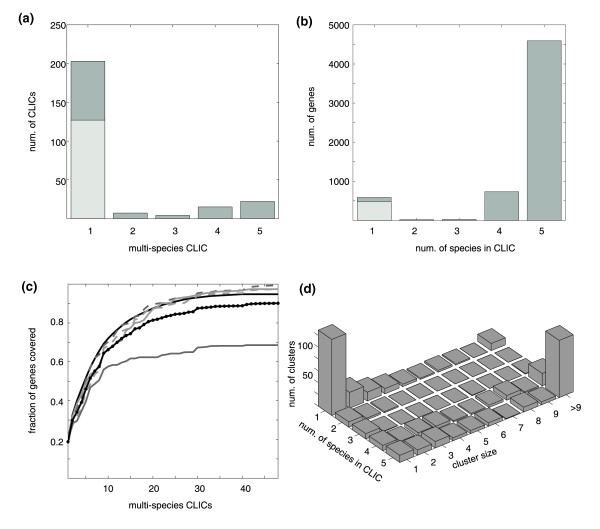
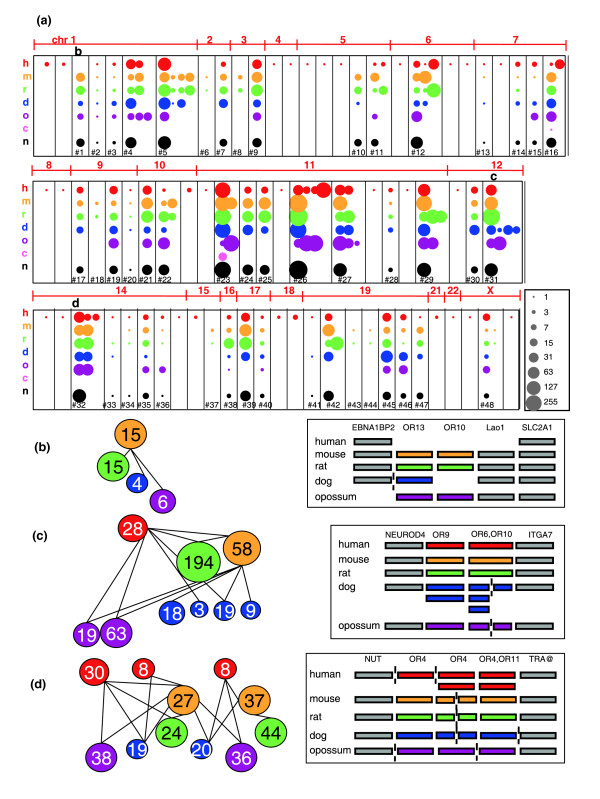
Background: Mammalian olfactory receptor (OR) genes reside in numerous genomic clusters of up to several dozen genes. Whole-genome sequence alignment nets of five mammals allow their comprehensive comparison, aimed at reconstructing the ancestral olfactory subgenome. Results: We developed a new and general tool for genome-wide definition of genomic gene clusters conserved in multiple species. Syntenic orthologs, defined as gene pairs showing conservation of both genomic location and coding sequence, were subjected to a graph theory algorithm for discovering CLICs (clusters in conservation). When applied to ORs in five mammals, including the marsupial opossum, more than 90% of the OR genes were found within a framework of 48 multi-species CLICs, invoking a general conservation of gene order and composition. A detailed analysis of individual CLICs revealed multiple differences among species, interpretable through species-specific genomic rearrangements and reflecting complex mammalian evolutionary dynamics. One significant instance involves CLIC #1, which lacks a human member, implying the human-specific deletion of an OR cluster, whose mouse counterpart has been tentatively associated with isovaleric acid odorant detection. Conclusion: The identified multi-species CLICs demonstrate that most of the mammalian OR clusters have a common ancestry, preceding the split between marsupials and placental mammals. However, only two of these CLICs were capable of incorporating chicken OR genes, parsimoniously implying that all other CLICs emerged subsequent to the avian-mammalian divergence.
Overview
The claims and statistics of this paper haven’t been checked yet.
Free: it reads the open-access text and checks the first 5 claims that cite a source we can check. Create a free account to check every claim.
Integrity signals
Registry
Cites
Statistics
Figures
Verification
Claims the paper makes
The claims and statistics of this paper haven’t been checked yet.
Free: it reads the open-access text and checks the first 5 claims that cite a source we can check. Create a free account to check every claim.
Claims other papers make about this one
Each is checked against this paper’s own text: does it say what the citing paper says it does?
The check wasn’t confident either way, so it gives no verdict — never disputed.
In the citing paper
“The platypus odorant receptor gene repertoire is roughly one-half as large as those in other mammals 37 .”
From Genome analysis of the platypus reveals unique signatures of evolution (2008) · cites this paper as [37]
Experimental — accuracy not yet measured
Self-check
Percentages, sums and reported differences re-computed from the paper’s own numbers.
The self-check needs the paper’s full text.
Citations
Cites
Basic local alignment search tool
Altschul, S. F., Gish, W., Miller, W., Myers, E. W., & Lipman, D. J. (1990) · Journal of Molecular Biology · doi:10.1006/jmbi.1990.9999 · Cited by 98,669 · cited 1×
“The first TBLASTN search [51] was performed using the following 24 OR sequences: cOR4Z2, cOR9S6, MOR177-3, MOR220-1, MOR248-10, MOR263-4, MOR264-6, and an additional 17 consensus sequences representing the 17 human OR families.”
MethodThompson, J. (1997) · Nucleic Acids Research · doi:10.1093/nar/25.24.4876 · Cited by 38,993 · cited 1×
“Protein sequences were aligned with Clustalx [59].”
MEGA3: Integrated software for Molecular Evolutionary Genetics Analysis and sequence alignment
Kumar, S. (2004) · Briefings in Bioinformatics · doi:10.1093/bib/5.2.150 · Cited by 11,756 · cited 1×
“1 [58] using ME algorithm, and Poisson correction for distance calculation.”
Method<tt>BLAT</tt> —The <tt>BLAST</tt> -Like Alignment Tool
Kent, W. J. (2002) · Genome Research · doi:10.1101/gr.229202 · Cited by 8,480 · cited 5×
“A BLAT search [50] was performed using all 499 opossum ORs that were found to represent true OR sequences after translation into proteins.”
BackgroundMethodInfluentialOrthoMCL: Identification of Ortholog Groups for Eukaryotic Genomes
Li, L., Stoeckert, C. J., & Roos, D. S. (2003) · Genome Research · doi:10.1101/gr.1224503 · Cited by 5,707 · cited 1×
“Alternative algorithms for large-scale orthology identification, such as COG [29], INPARANOID [30], and OrthoMCL [31], entailed complex many-to-many orthology relationships within a group of proteins but also relied solely on mutual coding sequence similarity.”
MethodA novel multigene family may encode odorant receptors: A molecular basis for odor recognition
Buck, L., & Axel, R. (1991) · Cell · doi:10.1016/0092-8674(91)90418-x · Cited by 4,987 · cited 1×
“Background Olfactory receptor (OR) genes constitute the largest superfamily in the vertebrate genome, with several hundred genes per species [1-3].”
BackgroundThe COG database: a tool for genome-scale analysis of protein functions and evolution
Tatusov, R. L. (2000) · Nucleic Acids Research · doi:10.1093/nar/28.1.33 · Cited by 4,520 · cited 1×
“Alternative algorithms for large-scale orthology identification, such as COG [29], INPARANOID [30], and OrthoMCL [31], entailed complex many-to-many orthology relationships within a group of proteins but also relied solely on mutual coding sequence similarity.”
MethodInternational Chicken Genome Sequencing Consortium (2004) · Nature · doi:10.1038/nature03154 · Cited by 2,750
The UCSC Table Browser data retrieval tool
Karolchik, D. (2004) · Nucleic Acids Research · doi:10.1093/nar/gkh103 · Cited by 2,316 · cited 1×
“We found that 91% of the entire opossum genome is included in human-opossum alignment chains larger than 100 kb [22].”
BackgroundGenome sequence of the Brown Norway rat yields insights into mammalian evolution
Rat Genome Sequencing Project Consortium, DNA sequencing: Baylor College of Medicine, Gibbs, R. A., Weinstock, G. M., Metzker, M. L., Muzny, D. M., Sodergren, E. J., Scherer, S., Scott, G., Steffen, D., et al. (2004) · Nature · doi:10.1038/nature02426 · Cited by 2,164
[22] Using CLUSTAL for multiple sequence alignments
Higgins, D. G., Thompson, J. D., & Gibson, T. J. (1996) · Methods in Enzymology · doi:10.1016/s0076-6879(96)66024-8 · Cited by 1,571 · cited 1×
“These were then translated into proteins and aligned, by CLUSTAL [52], to a multiple alignment of human and mouse ORs [53].”
MethodConcerted and Birth-and-Death Evolution of Multigene Families
Nei, M., & Rooney, A. P. (2005) · Annual Review of Genetics · doi:10.1146/annurev.genet.39.073003.112240 · Cited by 1,298 · cited 1×
“The ongoing process of 'birth and death' of genes leads to large fluctuations in the number of functional receptors [37].”
BackgroundAutomatic clustering of orthologs and in-paralogs from pairwise species comparisons
Remm, M., Storm, C. E. V., & Sonnhammer, E. L. L. (2001) · Journal of Molecular Biology · doi:10.1006/jmbi.2000.5197 · Cited by 1,174 · cited 1×
“Alternative algorithms for large-scale orthology identification, such as COG [29], INPARANOID [30], and OrthoMCL [31], entailed complex many-to-many orthology relationships within a group of proteins but also relied solely on mutual coding sequence similarity.”
MethodGPCRdb: an information system for G protein-coupled receptors
Isberg, V., Mordalski, S., Munk, C., Rataj, K., Harpsøe, K., Hauser, A. S., Vroling, B., Bojarski, A. J., Vriend, G., & Gloriam, D. E. (2016) · Nucleic Acids Research · doi:10.1093/nar/gkv1178 · Cited by 1,072
The olfactory receptor gene superfamily of the mouse
Zhang, X., & Firestein, S. (2002) · Nature Neuroscience · doi:10.1038/nn800 · Cited by 902 · cited 4×
“This human-specific deletion of an OR cluster is intriguing because in mouse the relevant OR cluster on chromosome 4 was tentatively associated with the capacity to smell isovaleric acid [17,18], an odorant that many (but not all) humans can detect [19].”
BackgroundMethodInfluentialEvolution's cauldron: Duplication, deletion, and rearrangement in the mouse and human genomes
Kent, W. J., Baertsch, R., Hinrichs, A., Miller, W., & Haussler, D. (2003) · Proceedings of the National Academy of Sciences · doi:10.1073/pnas.1932072100 · Cited by 850 · cited 2×
“A highly relevant endeavor is the recent establishment of a comprehensive network of whole-genome pairwise alignment chains, bridging between local sequence similarity and global synteny mapping, thus providing a better resolution for genome-wide comparisons [12].”
BackgroundThe Complete Human Olfactory Subgenome
Glusman, G., Yanai, I., Rubin, I., & Lancet, D. (2001) · Genome Research · doi:10.1101/gr.171001 · Cited by 700 · cited 6×
“This was achieved using previous computational methodologies, as described previously [3,13].”
BackgroundMethodInfluentialSelf-citationInterchromosomal Interactions and Olfactory Receptor Choice
Lomvardas, S., Barnea, G., Pisapia, D. J., Mendelsohn, M., Kirkland, J., & Axel, R. (2006) · Cell · doi:10.1016/j.cell.2006.06.035 · Cited by 633
Negative Feedback Regulation Ensures the One Receptor-One Olfactory Neuron Rule in Mouse
Serizawa, S., Miyamichi, K., Nakatani, H., Suzuki, M., Saito, M., Yoshihara, Y., & Sakano, H. (2003) · Science · doi:10.1126/science.1089122 · Cited by 548 · cited 1×
“This conserved feature implies biologic importance, potentially related to a common regulatory mechanism of gene expression control [42-45].”
BackgroundEvolutionary dynamics of olfactory receptor genes in fishes and tetrapods
Niimura, Y., & Nei, M. (2005) · Proceedings of the National Academy of Sciences · doi:10.1073/pnas.0501922102 · Cited by 346 · cited 7×
“This result, which is in agreement with previously published work [7], may indicate that a rich OR repertoire existed before the amphibian-reptilian split, providing further support to the chicken OR loss scenario.”
BackgroundMethodResultInfluentialGPCRDB: an information system for G protein-coupled receptors
Horn, F. (1998) · Nucleic Acids Research · doi:10.1093/nar/26.1.275 · Cited by 333
Different evolutionary processes shaped the mouse and human olfactory receptor gene families
Young, J. M. (2002) · Human Molecular Genetics · doi:10.1093/hmg/11.5.535 · Cited by 312 · cited 4×
“This is in accordance with previous results [10,16].”
BackgroundResultInfluentialEvolution of olfactory receptor genes in the human genome
Niimura, Y., & Nei, M. (2003) · Proceedings of the National Academy of Sciences · doi:10.1073/pnas.1635157100 · Cited by 291 · cited 1×
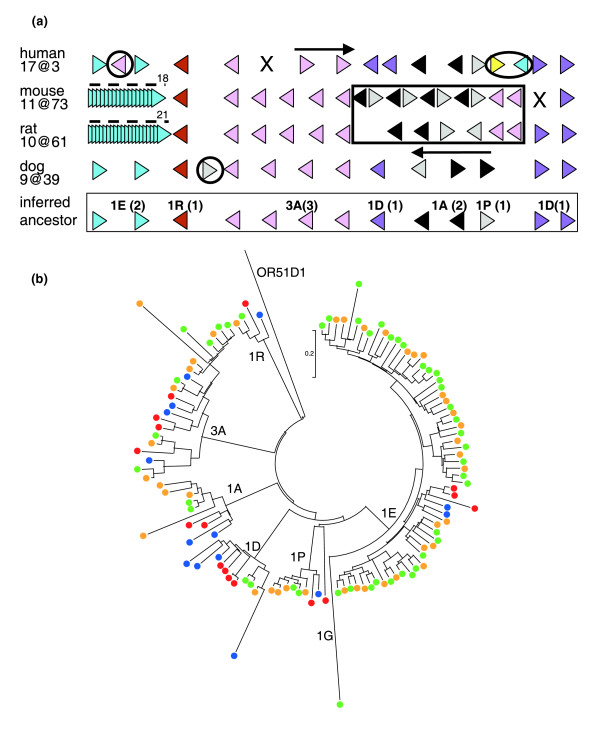
“Chromosomal translocation was suggested to be a possible mechanism for fragmentation of a single genomic cluster into smaller clusters, whose ORs are from a common phylogenetic subfamily [21].”
BackgroundHardison, R. C., Roskin, K. M., Yang, S., Diekhans, M., Kent, W. J., Weber, R., Elnitski, L., Li, J., O'Connor, M., Kolbe, D., et al. (2003) · Genome Research · doi:10.1101/gr.844103 · Cited by 282 · cited 1×
“It is noteworthy that shared clustering appears despite the diversity of repeat elements in different mammalian genomes [47,48].”
BackgroundRouquier, S., Blancher, A., & Giorgi, D. (2000) · Proceedings of the National Academy of Sciences · doi:10.1073/pnas.040580197 · Cited by 254 · cited 1×
“As the diversity of the OR repertoire may serve as an indication for functional olfactory acuity of an organism [4,38,39], comparing variability at the cluster level (for instance, rearrangements within clusters and loss or gain of complete clusters) would help to discern potential functional differences among species.”
BackgroundChowdhary, B. P., Raudsepp, T., Frönicke, L., & Scherthan, H. (1998) · Genome Research · doi:10.1101/gr.8.6.577 · Cited by 235 · cited 1×
“This is consistent with the notion that the two clusters were originally on the same ancestral chromosome, as is indeed the case for human chromosomes 14 and 15 [20].”
The sense of smell: genomics of vertebrate odorant receptors
Young, J. M. (2002) · Human Molecular Genetics · doi:10.1093/hmg/11.10.1153 · Cited by 208 · cited 1×
“Mammalian OR genes reside in about 50 genomic clusters of one to several dozen genes, which are dispersed among many chromosomes [4,5].”
BackgroundSystematic identification of functional orthologs based on protein network comparison
Bandyopadhyay, S., Sharan, R., & Ideker, T. (2006) · Genome Research · doi:10.1101/gr.4526006 · Cited by 189 · cited 1×
“Enrichment by gene-related structural or functional data has proven effective in orthology determination [32,33], but it is impractical in the case of the OR genes because of the paucity of relevant information.”
BackgroundPersico, M., Ceol, A. G. M., Gavrila, C., Hoffmann, R., Florio, A., & Cesareni, G. (2005) · BMC Bioinformatics · doi:10.1186/1471-2105-6-s4-s21 · Cited by 170 · cited 1×
“Enrichment by gene-related structural or functional data has proven effective in orthology determination [32,33], but it is impractical in the case of the OR genes because of the paucity of relevant information.”
BackgroundGaillard, I., Rouquier, S., & Giorgi, D. (2004) · Cellular and Molecular Life Sciences (CMLS) · doi:10.1007/s00018-003-3273-7 · Cited by 163
Prediction of the odorant binding site of olfactory receptor proteins by human–mouse comparisons
Man, O., Gilad, Y., & Lancet, D. (2004) · Protein Science · doi:10.1110/ps.03296404 · Cited by 158 · cited 1×
“These were then translated into proteins and aligned, by CLUSTAL [52], to a multiple alignment of human and mouse ORs [53].”
MethodSelf-citationThe dog and rat olfactory receptor repertoires
Quignon, P., Giraud, M., Rimbault, M., Lavigne, P., Tacher, S., Morin, E., Retout, E., Valin, A.-S., Lindblad-Toh, K., Nicolas, J., et al. (2005) · Genome Biology · doi:10.1186/gb-2005-6-10-r83 · Cited by 155 · cited 3×
“It has also been observed that the number clusters is surprisingly similar among mammals, despite considerable variation in the total repertoire size [4].”
BackgroundComparison of the canine and human olfactory receptor gene repertoires
Quignon, P., Kirkness, E. F., Cadieu, É., Touleimat, N., Guyon, R., Renier, C. M., Hitte, C., André, C., Fraser, C. M., & Galibert, F. (2003) · Genome biology · doi:10.1186/gb-2003-4-12-r80 · Cited by 144 · cited 2×
“Similarly, the combination of synteny data and sequence similarity has been used to map between the majority of human and dog clusters, indicating their common origin [11].”
BackgroundComparative evolutionary analysis of olfactory receptor gene clusters between humans and mice
Niimura, Y., & Nei, M. (2005) · Gene · doi:10.1016/j.gene.2004.09.025 · Cited by 142 · cited 2×
“Large-scale comparisons have mapped most pairwise relations among human and mouse clusters based on sequence similarity between individual genes [9].”
BackgroundA comparison of the human and chimpanzee olfactory receptor gene repertoires
Gilad, Y., Man, O., & Glusman, G. (2005) · Genome Research · doi:10.1101/gr.2846405 · Cited by 139 · cited 1×
“[4,8,10,28].”
Bulger, M., von Doorninck, J. H., Saitoh, N., Telling, A., Farrell, C., Bender, M. A., Felsenfeld, G., Axel, R., & Groudine, M. (1999) · Proceedings of the National Academy of Sciences · doi:10.1073/pnas.96.9.5129 · Cited by 138 · cited 1×
“This chain also contained the syntenic β-globin cluster, with four chicken β-globins as compared with five human genes [24,25].”
BackgroundThe canine olfactory subgenome
Olender, T., Fuchs, T., Linhart, C., Shamir, R., Adams, M. D., Kalush, F., Khen, M., & Lancet, D. (2003) · Genomics · doi:10.1016/j.ygeno.2003.08.009 · Cited by 137 · cited 2×
“Our previously reported canine OR repertoire [14] was a result of combining directed DNA sequencing of the beagle genome and data mining of Celera's 1× poodle genome, and it contained 997 ORs sequences without genomic location.”
BackgroundSelf-citationSharon, D., Glusman, G., Pilpel, Y., Khen, M., Grützner, F., Haaf, T., & Lancet, D. (1999) · Genomics · doi:10.1006/geno.1999.5900 · Cited by 128 · cited 1×
“As the diversity of the OR repertoire may serve as an indication for functional olfactory acuity of an organism [4,38,39], comparing variability at the cluster level (for instance, rearrangements within clusters and loss or gain of complete clusters) would help to discern potential functional differences among species.”
BackgroundSelf-citationSequence, Structure, and Evolution of a Complete Human Olfactory Receptor Gene Cluster
Glusman, G., Sosinsky, A., Ben‐Asher, E., Avidan, N., Sonkin, D., Bahar, A. Y., Rosenthal, A., Clifton, S. W., Roe, B. A., Ferraz, C., et al. (2000) · Genomics · doi:10.1006/geno.1999.6030 · Cited by 105
Self-citationGenomic analysis of orthologous mouse and human olfactory receptor loci
Lane, R. P., Cutforth, T., Young, J., Athanasiou, M., Friedman, C., Rowen, L., Evans, G., Axel, R., Hood, L., & Trask, B. J. (2001) · Proceedings of the National Academy of Sciences · doi:10.1073/pnas.131215398 · Cited by 98 · cited 1×
“Although the number of clusters is similar among species, the typical cluster size varies significantly because of extensive lineage-specific evolutionary events (for example, inter- and intra-chromosomal gene duplications and genomic deletions) [3,6-8].”
BackgroundEvolutionary changes of the number of olfactory receptor genes in the human and mouse lineages
Niimura, Y., & Nei, M. (2005) · Gene · doi:10.1016/j.gene.2004.09.027 · Cited by 91 · cited 2×
“Although the number of clusters is similar among species, the typical cluster size varies significantly because of extensive lineage-specific evolutionary events (for example, inter- and intra-chromosomal gene duplications and genomic deletions) [3,6-8].”
BackgroundPatterns of Insertions and Their Covariation With Substitutions in the Rat, Mouse, and Human Genomes
Yang, S., Smit, A. F., Schwartz, S., Chiaromonte, F., Roskin, K. M., Haussler, D., Miller, W., & Hardison, R. C. (2004) · Genome Research · doi:10.1101/gr.1984404 · Cited by 84 · cited 1×
“It is noteworthy that shared clustering appears despite the diversity of repeat elements in different mammalian genomes [47,48].”
BackgroundThe olfactory receptor universe--from whole genome analysis to structure and evolution.
Olender, T., Feldmesser, E., Atarot, T., Eisenstein, M., & Lancet, D. (2004) · PubMed · Cited by 70
Self-citationOdorant receptor gene regulation: implications from genomic organization
Kratz, E., Dugas, J. C., & Ngai, J. (2002) · Trends in Genetics · doi:10.1016/s0168-9525(01)02579-3 · Cited by 65 · cited 1×
“This conserved feature implies biologic importance, potentially related to a common regulatory mechanism of gene expression control [42-45].”
BackgroundThe genetic basis for specific anosmia to isovaleric acid in the mouse
Griff, I. C., & Reed, R. R. (1995) · Cell · doi:10.1016/0092-8674(95)90118-3 · Cited by 64 · cited 2×
“This human-specific deletion of an OR cluster is intriguing because in mouse the relevant OR cluster on chromosome 4 was tentatively associated with the capacity to smell isovaleric acid [17,18], an odorant that many (but not all) humans can detect [19].”
BackgroundComplex Evolution of 7E Olfactory Receptor Genes in Segmental Duplications
Newman, T. L., & Trask, B. J. (2003) · Genome Research · doi:10.1101/gr.769003 · Cited by 62 · cited 2×
“Subfamily OR7E (86 genes), representing a primate-specific expansion [41], were eliminated from the analysis.”
BackgroundMefford, H. C., Linardopoulou, E., Coil, D., van den Engh, G., & Trask, B. (2001) · Human Molecular Genetics · doi:10.1093/hmg/10.21.2363 · Cited by 56 · cited 1×
“Cases of lineage-specific clusters have previously been described for the human repertoire [40,41].”
BackgroundPrimary sequence, evolution, and repetitive elements of the Gallusgallus (chicken) β -globin cluster
Reitman, M. L., Grasso, J. A., Blumenthal, R., & Lewit, P. (1993) · Genomics · doi:10.1016/s0888-7543(05)80364-7 · Cited by 46 · cited 1×
“This chain also contained the syntenic β-globin cluster, with four chicken β-globins as compared with five human genes [24,25].”
BackgroundAmadou, C., Younger, R. M., Sims, S., Matthews, L. H., Rogers, J., Kumánovics, A., Ziegler, A., Beck, S., & Fischer Lindahl, K. (2003) · Human Molecular Genetics · doi:10.1093/hmg/ddg317 · Cited by 39 · cited 1×
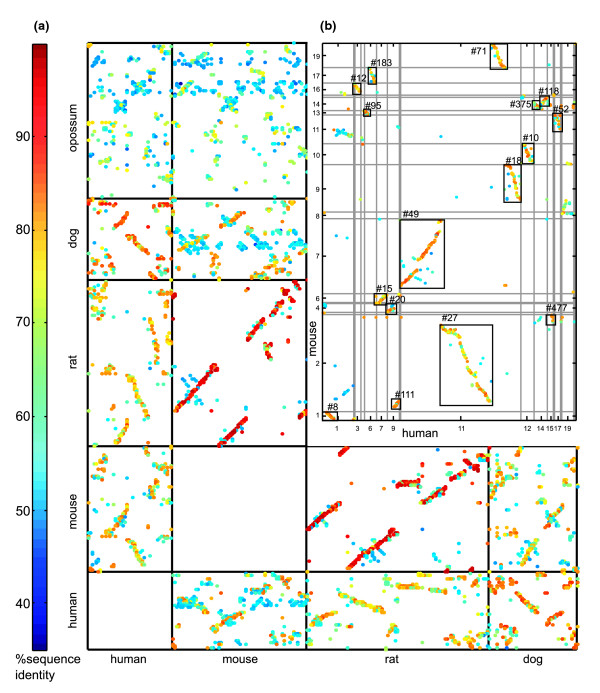
“Chains #95 and #183 represent disrupted synteny, because the alignment of a succession of ORs from human chromosome 6 is split between mouse chromosomes 13 and 17 (as described by Amadou and coworkers [26]).”
BackgroundMouse–Human Orthology Relationships in an Olfactory Receptor Gene Cluster
Lapidot, M., Pilpel, Y., Gilad, Y., Falcovitz, A., Sharon, D., Haaf, T., & Lancet, D. (2001) · Genomics · doi:10.1006/geno.2000.6431 · Cited by 38 · cited 1×
“The human and mouse orthologous clusters were studied and compared previously [27], and a complex orthology relationship among the genes was described.”
BackgroundSelf-citationA platypus’ eye view of the mammalian genome
Grützner, F., & Graves, J. A. M. (2004) · Current Opinion in Genetics & Development · doi:10.1016/j.gde.2004.09.006 · Cited by 37 · cited 1×
“Finding out which of these alternative scenarios is correct could be aided by an outgroup genome such as that of the monotreme platypus Ornithorhynchus anatinus [36].”
BackgroundSequence Analyses of the Olfactory Receptor Gene Cluster mOR37 on Mouse Chromosome 4
Hoppe, R., Weimer, M. S., Beck, A., Breer, H., & Strotmann, J. M. (2000) · Genomics · doi:10.1006/geno.2000.6205 · Cited by 33
Evolution of the “OR37” Subfamily of Olfactory Receptors: A Cross-Species Comparison
Hoppe, R., Lambert, T. D., Samollow, P. B., Breer, H., & Strotmann, J. M. (2006) · Journal of Molecular Evolution · doi:10.1007/s00239-005-0093-4 · Cited by 24 · cited 1×
“Common ancestry of similar clusters has previously been inferred only with regard to pairs of species human versus mouse [9,10] or human versus dog [11] - or to specific clusters [34, 35 ].”
BackgroundCarver, E. A., Issel‐Tarver, L., Rine, J., Olsen, A. S., & Stubbs, L. J. (1998) · Mammalian Genome · doi:10.1007/s003359900768 · Cited by 19
Conservation anchors in the vertebrate genome.
Aloni, R., & Lancet, D. (2005) · Genome biology · doi:10.1186/gb-2005-6-7-115 · Cited by 7 · cited 1×
“The framework of CLICs provides a natural set of orthologous sequences for the identification of ANCORs (ancestral noncoding conserved regions [49]) within an individual OR cluster.”
BackgroundSelf-citation
Research works printed but not linked: 1
- Amoore JE Steinle S A graphic history of specific anosmia. Chem Senses 1991 3 331 351
Cited by
Genome analysis of the platypus reveals unique signatures of evolution
paper, A. L. O. A. A. T. A. A. A. T. E. O. T. (2008) · Nature · doi:10.1038/nature06936 · Cited by 719
Niimura, Y., Matsui, A., & Touhara, K. (2014) · Genome Research · doi:10.1101/gr.169532.113 · Cited by 368
“Humans and mice have similar numbers of OR gene clusters, although the mouse OR gene repertoire is much larger than the human repertoire (Niimura and Nei 2005; Aloni et al. 2006).”
BackgroundExtensive Gains and Losses of Olfactory Receptor Genes in Mammalian Evolution
Niimura, Y., & Nei, M. (2007) · PLoS ONE · doi:10.1371/journal.pone.0000708 · Cited by 341
“[15] identified 1,518 OR genes from opossums, which is similar to our result, but they did not mention the fraction of pseudogenes.”
ResultTherapeutic potential of ectopic olfactory and taste receptors
Lee, S.-J., Depoortere, I., & Hatt, H. (2019) · Nature Reviews Drug Discovery · doi:10.1038/s41573-018-0002-3 · Cited by 279
Niimura, Y., Matsui, A., & Touhara, K. (2015) · PubMed Central · Cited by 235
Metadata
- Authors
- Aloni, R., Olender, T., & Lancet, D.
- Affiliations
- Crown Human Genome Center (IL)
- Corresponding author
- Lancet, Doron
- Venue
- Genome Biology
- Published
- 2006-10-01
- Volume
- 7
- Issue
- 10
- Pages
- R88-R88
- ISSN
- 1465-6906 (ISSN-L)
- 1474-760X
- PMC
- PMC1794568
- OpenAlex
- W2123047097
- Cited by
- 56
- References
- 55
- Citations by year
- 2026: 1 · 2025: 1 · 2024: 1 · 2023: 1 · 2022: 1 · 2021: 1 · 2020: 5 · 2018: 4 · 2017: 1 · 2016: 1 · 2015: 1 · 2014: 2 · 2013: 3 · 2012: 3
- FWCI
- 3.18
- Type
- journal article
- Language
- en
- Open access
- gold
- doi.org
- Licence
- cc-by
- creativecommons.org/licenses/by/2.0/ (tdm)
- creativecommons.org/licenses/by/2.0/ (vor)
- Locations
- Genome biology (publishedVersion, cc-by)
- PubMed Central (publishedVersion, cc-by)
- PubMed (publishedVersion)
- Funders
- National Institutes of Health
- Topics
- Life Sciences › Neuroscience › Sensory Systems › Olfactory and Sensory Function Studies
- Life Sciences › Biochemistry, Genetics and Molecular Biology › Genetics › Chromosomal and Genetic Variations
- Life Sciences › Biochemistry, Genetics and Molecular Biology › Molecular Biology › Genomics and Phylogenetic Studies
- Keywords
- olfactory receptor genes, ancestral genome reconstruction, gene order conservation, genome rearrangement
- MeSH terms
- Animals, Chickens, Dogs, Mammals, Opossums, Phylogeny, Genome, Conserved Sequence, Receptors, Odorant, Evolution, Molecular
About these checks
Registry, retraction, Cites and statistics results are computed, not judged, with one exception: a printed reference that no index lists is read once by a model before it counts as a citation error. Claims are extracted by a model and kept only when their quote appears verbatim in the text; each cited source is then checked, with a model’s help, for whether it says what the claim relies on. Those verdicts can be wrong — read the claim’s quote and the cited source before relying on one.
Statistics and arithmetic are recomputed, not judged.
Confidence bands are shown only for fields calibrated on our annotated test set. None is calibrated yet, so no band is shown.
What counts as a claim ›How we measure confidence ›How we check this ›
Are you an author, or do you see a problem with this page? Request a review
Data sources
Bibliographic data: Semantic Scholar, OpenAlex, Crossref.
Contains information from the Semantic Scholar Academic Graph Datasets, made available under the ODC Attribution License (ODC-BY 1.0).
Semantic Scholar’s data is described in: Kinney, R., et al. (2023). The Semantic Scholar Open Data Platform. arXiv:2301.10140.
