

Quantifying similarity between motifs
Open accessThe DOI matches its Crossref record; 25 of the 25 references it cites were found in a registry or an index.
Abstract
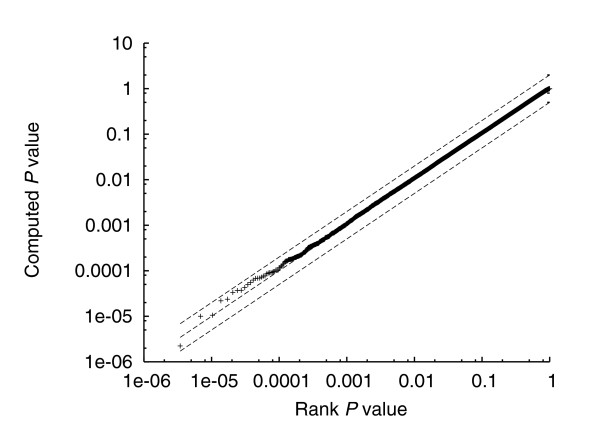
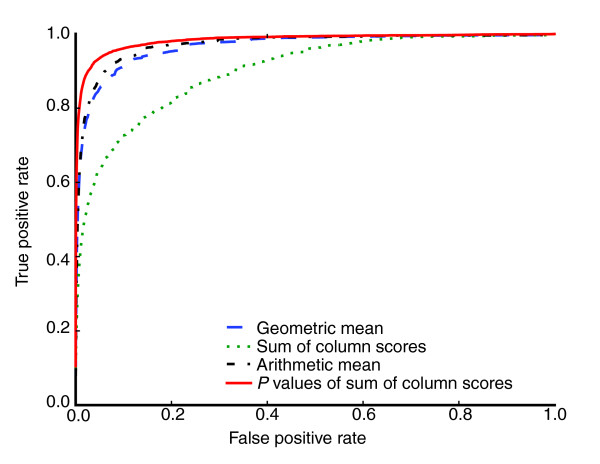
A common question within the context of de novo motif discovery is whether a newly discovered, putative motif resembles any previously discovered motif in an existing database. To answer this question, we define a statistical measure of motif-motif similarity, and we describe an algorithm, called Tomtom, for searching a database of motifs with a given query motif. Experimental simulations demonstrate the accuracy of Tomtom's E values and its effectiveness in finding similar motifs.
Overview
The claims and statistics of this paper haven’t been checked yet.
Free: it reads the open-access text and checks the first 5 claims that cite a source we can check. Create a free account to check every claim.
Integrity signals
Registry
Cites
Statistics
Figures
Verification
Claims the paper makes
The claims and statistics of this paper haven’t been checked yet.
Free: it reads the open-access text and checks the first 5 claims that cite a source we can check. Create a free account to check every claim.
Claims other papers make about this one
Each is checked against this paper’s own text: does it say what the citing paper says it does?
The cited source says what the claim attributes to it.
In the citing paper
“with four examples shown in Fig. 3B, the first two having a significant match in PlantTFDB (20) [with q-value <0.05 in Tomtom (38)].”
From DNA language models are powerful predictors of genome-wide variant effects (2023) · cites this paper as [38]
The check wasn’t confident either way, so it gives no verdict — never disputed.
In the citing paper
“The shared STAT3 bound regions were annotated with the nearest gene by 'annotatePeaks' from HOMER v4.10 (Gupta et al., 2007), yielding 475 unique genes.”
From CDK8 fine-tunes IL-6 transcriptional activities by limiting STAT3 resident time at the gene loci (2020) · cites this paper as Gupta et al., 2007
Experimental — accuracy not yet measured
Self-check
Percentages, sums and reported differences re-computed from the paper’s own numbers.
The self-check needs the paper’s full text.
Citations
Cites
The meaning and use of the area under a receiver operating characteristic (ROC) curve.
Hanley, J. A., & McNeil, B. J. (1982) · Radiology · doi:10.1148/radiology.143.1.7063747 · Cited by 21,856 · cited 1×
“From this ranked list, we compute a receiver operating characteristic (ROC) curve [23], which plots the percentage of positive pairs as a function of the percentage of negative pairs as we traverse the ranked list.”
WebLogo: A Sequence Logo Generator: Figure 1
Crooks, G. E., Hon, G., Chandonia, J.-M., & Brenner, S. E. (2004) · Genome Research · doi:10.1101/gr.849004 · Cited by 12,386
Fitting a mixture model by expectation maximization to discover motifs in biopolymers.
Bailey, T. L., & Elkan, C. (1994) · PubMed · Cited by 5,806
Self-citationJASPAR: an open-access database for eukaryotic transcription factor binding profiles
Sandelin, A. (2004) · Nucleic Acids Research · doi:10.1093/nar/gkh012 · Cited by 1,790
Regulation of Inducible and Tissue-Specific Gene Expression
Maniatis, T., Goodbourn, S., & Fischer, J. A. (1987) · Science · doi:10.1126/science.3296191 · Cited by 1,554 · cited 1×
“For example, the regulation of transcription requires sequence-specific binding of transcription factors to certain cis-acting motifs, which typically are located upstream of transcriptional start sites [1].”
Assembly of Cell Regulatory Systems Through Protein Interaction Domains
Pawson, T., & Nash, P. (2003) · Science · doi:10.1126/science.1083653 · Cited by 1,422
Assessing computational tools for the discovery of transcription factor binding sites
Tompa, M., Li, N., Bailey, T. L., Church, G. M., De Moor, B., Eskin, E., Favorov, A. V., Frith, M. C., Fu, Y., Kent, W. J., et al. (2005) · Nature Biotechnology · doi:10.1038/nbt1053 · Cited by 1,268 · cited 1×
“A wide variety of statistical methods have been developed to identify sequence motifs in an unsupervised manner from collections of functionally related sequences [3].”
Self-citationTRANSFAC: an integrated system for gene expression regulation
Wingender, E. (2000) · Nucleic Acids Research · doi:10.1093/nar/28.1.316 · Cited by 1,239 · cited 3×
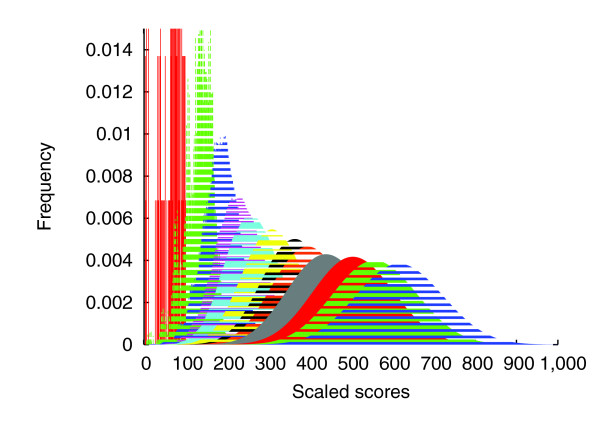
“The figure shows a set of PDFs for a particular query motif of length 12, computed relative to the TRANSFAC database.”
InfluentialA Survey of Exact Inference for Contingency Tables
Agresti, A. (1992) · Statistical Science · doi:10.1214/ss/1177011454 · Cited by 1,097
Hughes, J. D., Estep, P. W., Tavazoie, S., & Church, G. M. (2000) · Journal of Molecular Biology · doi:10.1006/jmbi.2000.3519 · Cited by 1,010
Proceedings: Second international conference on intelligent systems for molecular biology
Altman, R. A., Brutlag, D. L., Karp, P. D., Lathrop, R. H., & Searls, D. B. (1994) · OSTI OAI (U.S. Department of Energy Office of Scientific and Technical Information) · Cited by 420
Protein Family Classification Based on Searching a Database of Blocks
Henikoff, S., & Henikoff, J. G. (1994) · Genomics · doi:10.1006/geno.1994.1018 · Cited by 363 · cited 1×
“In addition, databases such as JASPAR [4], TRANSFAC [5], and BLOCKS [6] can be used to scan a sequence of interest for known DNA or protein motifs.”
Thijs, G., Marchal, K., Lescot, M., Rombauts, S., De Moor, B., Rouzé, P., & Moreau, Y. (2002) · Journal of Computational Biology · doi:10.1089/10665270252935566 · Cited by 342 · cited 2×
“Kullback-Leibler divergence The KLD has been used by several research groups to quantify similarity between motifs [11-13].”
Tatusov, R. L., Altschul, S. F., & Koonin, E. V. (1994) · Proceedings of the National Academy of Sciences · doi:10.1073/pnas.91.25.12091 · Cited by 286 · cited 1×
“Using a dynamic programming algorithm inspired by earlier work on searching a sequence database with a motif [16-18], we estimate the null distribution of the sum of scores for any range of contiguous columns in the query motif.”
Combining phylogenetic data with co-regulated genes to identify regulatory motifs
Wang, T., & Stormo, G. D. (2003) · Bioinformatics · doi:10.1093/bioinformatics/btg329 · Cited by 272 · cited 3×
“Previous methods begin by defining a score between two motif columns, and then they combine these scores either by summing (as we do) [ 7-9 ,14] or by taking the mean [11-13] or geometric mean [10] of the column scores.”
InfluentialPietrokovski, S. (1996) · Nucleic Acids Research · doi:10.1093/nar/24.19.3836 · Cited by 224 · cited 4×
“Pearson correlation coefficient The PCC was first introduced for computing motif-motif similarity by Pietrokovski [7].”
InfluentialMehta, C. R., & Patel, N. R. (1986) · ACM Transactions on Mathematical Software · doi:10.1145/6497.214326 · Cited by 203 · cited 1×
“This P value is computed using the algorithm described by Mehta and Patel [ 25 ].”
Methods and Statistics for Combining Motif Match Scores
BAILEY, T. L., & GRIBSKOV, M. (1998) · Journal of Computational Biology · doi:10.1089/cmb.1998.5.211 · Cited by 202 · cited 1×
“Using a dynamic programming algorithm inspired by earlier work on searching a sequence database with a motif [16-18], we estimate the null distribution of the sum of scores for any range of contiguous columns in the query motif.”
Self-citationSandelin, A., & Wasserman, W. W. (2004) · Journal of Molecular Biology · doi:10.1016/j.jmb.2004.02.048 · Cited by 178 · cited 5×
“Sandelin and Wasserman [15] introduced their own motif column comparison function for the construction of familial binding profiles.”
Influentialmeta-MEME: Motif-based hidden Markov models of protein families
Grundy, W. N., Bailey, T. L., Elkan, C. P., & Baker, M. E. (1997) · Bioinformatics · doi:10.1093/bioinformatics/13.4.397 · Cited by 178 · cited 2×
“Both Tomtom and MEME are currently available as part of the MEME Suite of motif analysis tools [19, 20 ], and a Tomtom website is under development.”
Self-citationComputational detection of cis -regulatory modules
Aerts, S., Van Loo, P., Thijs, G., Moreau, Y., & De Moor, B. (2003) · Bioinformatics · doi:10.1093/bioinformatics/btg1052 · Cited by 126 · cited 2×
“Kullback-Leibler divergence The KLD has been used by several research groups to quantify similarity between motifs [11-13].”
Similarity of position frequency matrices for transcription factor binding sites
Schones, D. E., Sumazin, P., & Zhang, M. Q. (2004) · Bioinformatics · doi:10.1093/bioinformatics/bth480 · Cited by 121 · cited 12×
“Pearson χ2 test The Pearson χ2 test was introduced by Schones and coworkers [10] for comparing motifs.”
InfluentialLocal feature frequency profile: A method to measure structural similarity in proteins
Choi, I., Kwon, J., & Kim, S. (2004) · Proceedings of the National Academy of Sciences · doi:10.1073/pnas.0308656100 · Cited by 91 · cited 3×
“Previous methods begin by defining a score between two motif columns, and then they combine these scores either by summing (as we do) [7-9,14] or by taking the mean [11-13] or geometric mean [10] of the column scores.”
T-Reg Comparator: an analysis tool for the comparison of position weight matrices
Roepcke, S., Grossmann, S., Rahmann, S., & Vingron, M. (2005) · Nucleic Acids Research · doi:10.1093/nar/gki590 · Cited by 54 · cited 2×
“Kullback-Leibler divergence The KLD has been used by several research groups to quantify similarity between motifs [11-13].”
Staden: Searching for Motifs in Nucleic Acid Sequences
Staden, R. (1994) · Computer Analysis of Sequence Data · doi:10.1385/0-89603-276-0:93 · Cited by 9
Cited by
MEME SUITE: tools for motif discovery and searching
Bailey, T. L., Boden, M., Buske, F. A., Frith, M., Grant, C. E., Clementi, L., Ren, J., Li, W. W., & Noble, W. S. (2009) · Nucleic Acids Research · doi:10.1093/nar/gkp335 · Cited by 10,648
“TOMTOM (4) quantifies the similarity between two motifs, and can be used to search a database of known motifs for matches to motifs found by MEME.”
BackgroundMethodSelf-citationBailey, T. L., Johnson, J., Grant, C. E., & Noble, W. S. (2015) · Nucleic Acids Research · doi:10.1093/nar/gkv416 · Cited by 5,269
“The web-based version of the MEME Suite includes 13 tools (1,2,3,4,5,6,7,8,9,10,11,12,13) for performing motif discovery, motif enrichment analysis, motif scanning and motif–motif comparisons (Figure 1).”
MethodSelf-citationMEME-ChIP: motif analysis of large DNA datasets
Machanick, P., & Bailey, T. L. (2011) · Bioinformatics · doi:10.1093/bioinformatics/btr189 · Cited by 1,806
“Received on January 23, 2011; revised on March 18, 2011; accepted on April 6, 2011”
Self-citationA scalable SCENIC workflow for single-cell gene regulatory network analysis
Van de Sande, B., Flerin, C., Davie, K., De Waegeneer, M., Hulselmans, G., Aibar, S., Seurinck, R., Saelens, W., Cannoodt, R., Rouchon, Q., et al. (2020) · Nature Protocols · doi:10.1038/s41596-020-0336-2 · Cited by 1,494
Effective gene expression prediction from sequence by integrating long-range interactions
Avsec, Ž., Agarwal, V., Visentin, D., Ledsam, J. R., Grabska-Barwinska, A., Taylor, K. R., Assael, Y., Jumper, J., Kohli, P., & Kelley, D. R. (2021) · Nature Methods · doi:10.1038/s41592-021-01252-x · Cited by 1,827
Metadata
- Authors
- Gupta, S., Stamatoyannopoulos, J. A., Bailey, T. L., & Noble, W. S.
- Affiliations
- University of Washington (US)
- The University of Queensland (AU)
- Corresponding author
- Noble, William Stafford
- Venue
- Genome Biology
- Published
- 2007-02-26
- Volume
- 8
- Issue
- 2
- Pages
- R24-R24
- ISSN
- 1465-6906 (ISSN-L)
- 1474-760X
- PMC
- PMC1852410
- OpenAlex
- W2103777723
- Cited by
- 2,058
- References
- 25
- Citations by year
- 2026: 153 · 2025: 185 · 2024: 199 · 2023: 152 · 2022: 185 · 2021: 202 · 2020: 150 · 2019: 129 · 2018: 111 · 2017: 98 · 2016: 91 · 2015: 81 · 2014: 94 · 2013: 74 · 2012: 62
- FWCI
- 6.22
- Type
- journal article
- Language
- en
- Open access
- gold
- doi.org
- Licence
- cc-by
- creativecommons.org/licenses/by/2.0/ (tdm)
- creativecommons.org/licenses/by/2.0/ (vor)
- Locations
- Genome biology (publishedVersion, cc-by)
- PubMed Central (publishedVersion, cc-by)
- PubMed (publishedVersion)
- Topics
- Life Sciences › Biochemistry, Genetics and Molecular Biology › Molecular Biology › Genomics and Chromatin Dynamics
- Life Sciences › Biochemistry, Genetics and Molecular Biology › Molecular Biology › Genomics and Phylogenetic Studies
- Physical Sciences › Mathematics › Theoretical Computer Science › Algorithms and Data Compression
- Keywords
- motif similarity, de novo motif discovery, TomTom, statistical significance, E-value, sequence motifs
- MeSH terms
- Algorithms, Software, Sequence Homology, Computational Biology, Amino Acid Motifs, Databases, Genetic
About these checks
Registry, retraction, Cites and statistics results are computed, not judged, with one exception: a printed reference that no index lists is read once by a model before it counts as a citation error. Claims are extracted by a model and kept only when their quote appears verbatim in the text; each cited source is then checked, with a model’s help, for whether it says what the claim relies on. Those verdicts can be wrong — read the claim’s quote and the cited source before relying on one.
Statistics and arithmetic are recomputed, not judged.
Confidence bands are shown only for fields calibrated on our annotated test set. None is calibrated yet, so no band is shown.
What counts as a claim ›How we measure confidence ›How we check this ›
Are you an author, or do you see a problem with this page? Request a review
Data sources
Bibliographic data: Semantic Scholar, OpenAlex, Crossref.
Contains information from the Semantic Scholar Academic Graph Datasets, made available under the ODC Attribution License (ODC-BY 1.0).
Semantic Scholar’s data is described in: Kinney, R., et al. (2023). The Semantic Scholar Open Data Platform. arXiv:2301.10140.
