

The DOI matches its Crossref record; 70 of the 70 references it cites were found in a registry or an index.
Many LINE1 elements contribute to the transcriptome of human somatic cells
Open accessAbstract
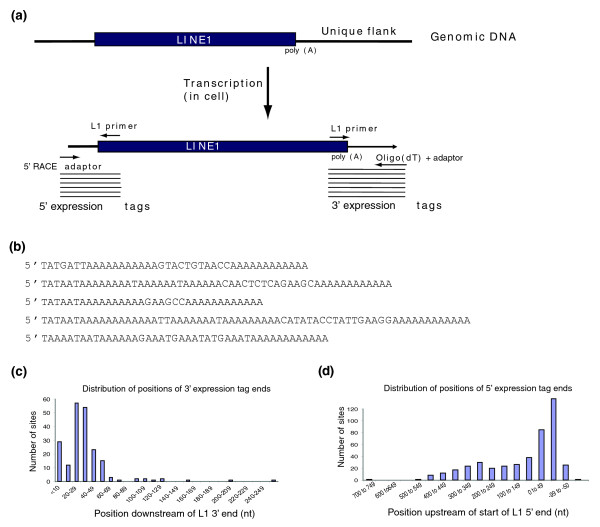
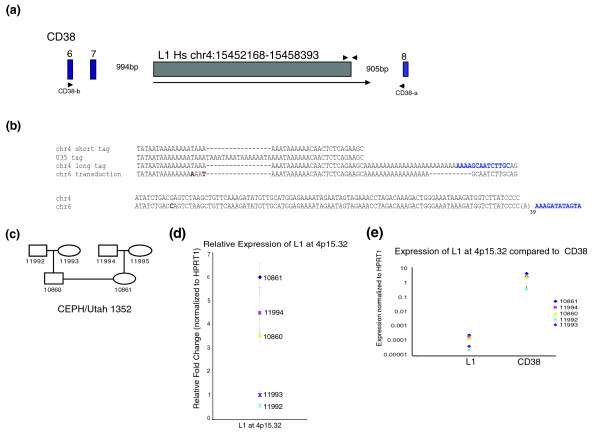
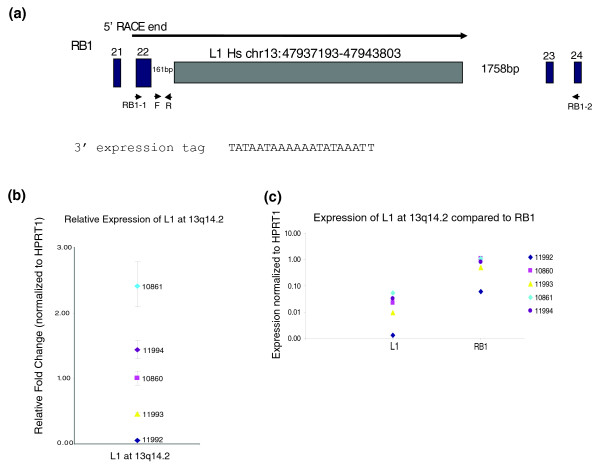
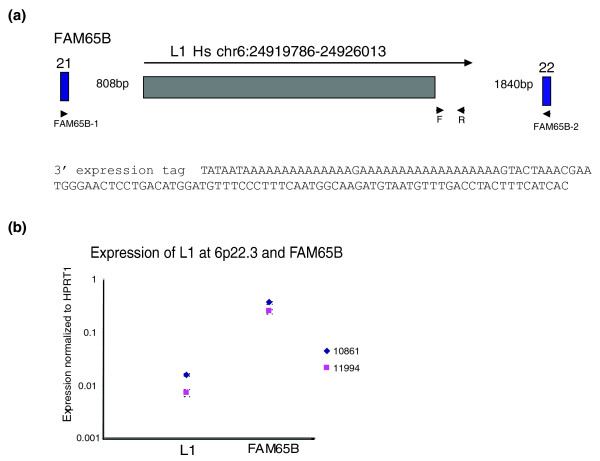
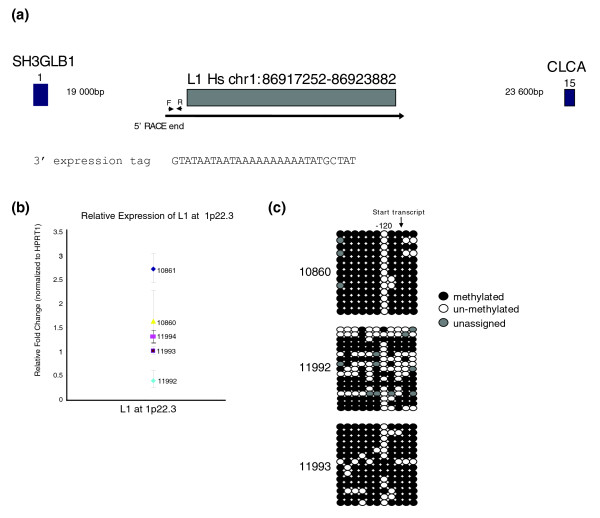
BACKGROUND: While LINE1 (L1) retroelements comprise nearly 20% of the human genome, the majority are thought to have been rendered transcriptionally inactive, due to either mutation or epigenetic suppression. How many L1 elements 'escape' these forms of repression and contribute to the transcriptome of human somatic cells? We have cloned out expressed sequence tags corresponding to the 5' and 3' flanks of L1 elements in order to characterize the population of elements that are being actively transcribed. We also examined expression of a select number of elements in different individuals. RESULTS: We isolated expressed sequence tags from human lymphoblastoid cell lines corresponding to 692 distinct L1 element sites, including 410 full-length elements. Four of the expression tagged sites corresponding to full-length elements from the human specific L1Hs subfamily were examined in European-American individuals and found to be differentially expressed in different family members. CONCLUSIONS: A large number of different L1 element sites are expressed in human somatic tissues, and this expression varies among different individuals. Paradoxically, few elements were tagged at high frequency, indicating that the majority of expressed L1s are transcribed at low levels. Based on our preliminary expression studies of a limited number of elements in a single family, we predict a significant degree of inter-individual transcript-level polymorphism in this class of sequence.
Overview
The claims and statistics of this paper haven’t been checked yet.
Run the check — free, no account needed. It reads the open-access text and checks the sources it cites.
Integrity signals
Registry
Cites
Statistics
Figures
Verification
Claims the paper makes
The claims and statistics of this paper haven’t been checked yet.
Run the check — free, no account needed. It reads the open-access text and checks the sources it cites.
Claims other papers make about this one
Each is checked against this paper’s own text: does it say what the citing paper says it does?
The source backs part of the claim, not all of it — or backs it for a different population, condition or comparison.
In the citing paper
“The initiation of L1 transcription is known to be imprecise, with the majority of start sites occurring +/−50 bp of the consensus start site, and a subset as far down as +180 bp68.”
From L1 drives IFN in senescent cells and promotes age-associated inflammation (2019) · cites this paper as [68]
Experimental — accuracy not yet measured
Self-check
Percentages, sums and reported differences re-computed from the paper’s own numbers.
The self-check needs the paper’s full text.
Citations
Cites
Initial sequencing and analysis of the human genome
International Human Genome Sequencing Consortium, Whitehead Institute for Biomedical Research, C. F. G. R., Lander, E. S., Linton, L. M., Birren, B., Nusbaum, C., Zody, M. C., Baldwin, J., Devon, K., Dewar, K., et al. (2001) · Nature · doi:10.1038/35057062 · Cited by 24,216
Primer3 on the WWW for General Users and for Biologist Programmers
Rozen, S., & Skaletsky, H. (2003) · Humana Press eBooks · doi:10.1385/1-59259-192-2:365 · Cited by 15,068
The Human Genome Browser at UCSC
Kent, W. J., Sugnet, C. W., Furey, T. S., Roskin, K. M., Pringle, T. H., Zahler, A. M., & Haussler, A. D. (2002) · Genome Research · doi:10.1101/gr.229102 · Cited by 10,400
<tt>BLAT</tt> —The <tt>BLAST</tt> -Like Alignment Tool
Kent, W. J. (2002) · Genome Research · doi:10.1101/gr.229202 · Cited by 8,480
The UCSC Genome Browser Database
Karolchik, D. (2003) · Nucleic Acids Research · doi:10.1093/nar/gkg129 · Cited by 1,890
dbEST — database for “expressed sequence tags”
Boguski, M. S., Lowe, T. M., & Tolstoshev, C. M. (1993) · Nature Genetics · doi:10.1038/ng0893-332 · Cited by 1,340
Luan, D. D., Korman, M. H., Jakubczak, J. L., & Eickbush, T. H. (1993) · Cell · doi:10.1016/0092-8674(93)90078-5 · Cited by 1,173
Human L1 retrotransposon encodes a conserved endonuclease required for retrotransposition
Feng, Q., Moran, J. V., Kazazian, H. H., & Boeke, J. D. (1996) · Cell · doi:10.1016/s0092-8674(00)81997-2 · Cited by 1,139
Self-citationHot L1s account for the bulk of retrotransposition in the human population
Brouha, B., Schustak, J., Badge, R. M., Lutz-Prigge, S., Farley, A. H., Moran, J. V., & Kazazian, H. H. (2003) · Proceedings of the National Academy of Sciences · doi:10.1073/pnas.0831042100 · Cited by 1,073
Self-citationLINE-mediated retrotransposition of marked Alu sequences
Dewannieux, M., Esnault, C., & Heidmann, T. (2003) · Nature Genetics · doi:10.1038/ng1223 · Cited by 1,026
High frequency retrotransposition in cultured mammalian cells
Moran, J. V., Holmes, S. E., Naas, T. P., DeBerardinis, R. J., Boeke, J. D., & Kazazian, H. H. (1996) · Cell · doi:10.1016/s0092-8674(00)81998-4 · Cited by 1,022
Self-citationSomatic mosaicism in neuronal precursor cells mediated by L1 retrotransposition
Muotri, A. R., Chu, V. T., Marchetto, M. C. N., Deng, W., Moran, J. V., & Gage, F. H. (2005) · Nature · doi:10.1038/nature03663 · Cited by 942
Human LINE retrotransposons generate processed pseudogenes
Esnault, C., Maestre, J., & Heidmann, T. (2000) · Nature Genetics · doi:10.1038/74184 · Cited by 835
The regulated retrotransposon transcriptome of mammalian cells
Faulkner, G. J., Kimura, Y., Daub, C. O., Wani, S., Plessy, C., Irvine, K. M., Schroder, K., Cloonan, N., Steptoe, A. L., Lassmann, T., et al. (2009) · Nature Genetics · doi:10.1038/ng.368 · Cited by 819
L1 retrotransposition in human neural progenitor cells
Coufal, N. G., Garcia-Perez, J. L., Peng, G. E., Yeo, G. W., Mu, Y., Lovci, M. T., Morell, M., O’Shea, K. S., Moran, J. V., & Gage, F. H. (2009) · Nature · doi:10.1038/nature08248 · Cited by 814
Biology of Mammalian L1 Retrotransposons
Ostertag, E. M., & Kazazian, H. H. (2001) · Annual Review of Genetics · doi:10.1146/annurev.genet.35.102401.091032 · Cited by 782
Self-citationReverse Transcriptase Encoded by a Human Transposable Element
Mathias, S. L., Scott, A. F., Kazazian, H. H., Boeke, J. D., & Gabriel, A. (1991) · Science · doi:10.1126/science.1722352 · Cited by 774
Self-citationTranscriptional activation of retrotransposons alters the expression of adjacent genes in wheat
Kashkush, K., Feldman, M., & Levy, A. A. (2002) · Nature Genetics · doi:10.1038/ng1063 · Cited by 713
Exon Shuffling by L1 Retrotransposition
Moran, J. V., DeBerardinis, R. J., & Kazazian, H. H. (1999) · Science · doi:10.1126/science.283.5407.1530 · Cited by 635
Self-citationThe UCSC Genome Browser Database: 2008 update
Karolchik, D., Kuhn, R. M., Baertsch, R., Barber, G. P., Clawson, H., Diekhans, M., Giardine, B. M., Harte, R., Hinrichs, A. S., Hsu, F., et al. (2007) · Nucleic Acids Research · doi:10.1093/nar/gkm966 · Cited by 525
Human L1 element target‐primed reverse transcription in vitro
Cost, G. J., Feng, Q., Jacquier, A., & Boeke, J. D. (2002) · The EMBO Journal · doi:10.1093/emboj/cdf592 · Cited by 519
Identification, Characterization, and Cell Specificity of a Human LINE-1 Promoter
Swergold, G. D. (1990) · Molecular and Cellular Biology · doi:10.1128/mcb.10.12.6718 · Cited by 450
Antisense Promoter of Human L1 Retrotransposon Drives Transcription of Adjacent Cellular Genes
Speek, M. (2001) · Molecular and Cellular Biology · doi:10.1128/mcb.21.6.1973-1985.2001 · Cited by 443
Expressed Sequence Tags: Medium-Throughput Protocols
Whitton, C., Daub, J., Thompson, M., & Blaxter, M. (2004) · Humana Press eBooks · doi:10.1385/1-59259-793-9:075 · Cited by 386
Khan, H., Smit, A. F. A., & Boissinot, S. (2005) · Genome Research · doi:10.1101/gr.4001406 · Cited by 369
Nucleic Acid Chaperone Activity of the ORF1 Protein from the Mouse LINE-1 Retrotransposon
Martin, S. L., & Bushman, F. D. (2001) · Molecular and Cellular Biology · doi:10.1128/mcb.21.2.467-475.2001 · Cited by 368
L1 retrotransposition occurs mainly in embryogenesis and creates somatic mosaicismPreprint
Kano, H., Godoy, I., Courtney, C., Vetter, M. R., Gerton, G. L., Ostertag, E. M., & Kazazian, H. H. (2009) · Genes & Development · doi:10.1101/gad.1803909 · Cited by 368
Self-citationJackson, D. G., & Bell, J. I. (1990) · The Journal of Immunology · doi:10.4049/jimmunol.144.7.2811 · Cited by 343 · cited 1×
“differentiation 38) is a cell-surface glycoprotein involved in lymphocyte cell adhesion and signaling [52].”
BackgroundMammalian non-LTR retrotransposons: For better or worse, in sickness and in healthPreprint
Belancio, V. P., Hedges, D. J., & Deininger, P. L. (2008) · Genome Research · doi:10.1101/gr.5558208 · Cited by 317
Comparative performance of species richness estimation methods
Walther, B. A., & Morand, S. (1998) · Parasitology · doi:10.1017/s0031182097002230 · Cited by 298
Goodier, J. L., Zhang, L., Vetter, M. R., & Kazazian, H. H. (2007) · Molecular and Cellular Biology · doi:10.1128/mcb.00332-07 · Cited by 292
Self-citationFrequent Human Genomic DNA Transduction Driven by LINE-1 RetrotranspositionPreprint
Pickeral, O. K., Makałowski, W., Boguski, M. S., & Boeke, J. D. (2000) · Genome Research · doi:10.1101/gr.10.4.411 · Cited by 279
Transduction of 3'-flanking sequences is common in L1 retrotransposition
Goodier, J. L. (2000) · Human Molecular Genetics · doi:10.1093/hmg/9.4.653 · Cited by 276
Holmes, S. E., Dombroski, B. A., Krebs, C. M., Boehm, C. D., & Kazazian, H. H. (1994) · Nature Genetics · doi:10.1038/ng0694-143 · Cited by 237
Self-citationMany Human Genes Are Transcribed from the Antisense Promoter of L1 Retrotransposon
Nigumann, P., Redik, K., Mätlik, K., & Speek, M. (2002) · Genomics · doi:10.1006/geno.2002.6758 · Cited by 229
LINE-1 RNA splicing and influences on mammalian gene expression
Belancio, V. P. (2006) · Nucleic Acids Research · doi:10.1093/nar/gkl027 · Cited by 225
Identification of critical CpG sites for repression of L1 transcription by DNA methylation
Hata, K., & Sakaki, Y. (1997) · Gene · doi:10.1016/s0378-1119(96)00856-6 · Cited by 213
dbRIP: A highly integrated database of retrotransposon insertion polymorphisms in humans
Wang, J., Song, L., Grover, D., Azrak, S., Batzer, M. A., & Liang, P. (2006) · Human Mutation · doi:10.1002/humu.20307 · Cited by 206
A YY1-binding site is required for accurate human LINE-1 transcription initiation
Athanikar, J. N. (2004) · Nucleic Acids Research · doi:10.1093/nar/gkh698 · Cited by 200
Defining the beginning and end of KpnI family segments.
Grimaldi, G., Skowroński, J., & Singer, M. (1984) · The EMBO Journal · doi:10.1002/j.1460-2075.1984.tb02042.x · Cited by 196
Yu, F. (2001) · Nucleic Acids Research · doi:10.1093/nar/29.21.4493 · Cited by 195
Cell Type-specific Expression of LINE-1 Open Reading Frames 1 and 2 in Fetal and Adult Human Tissues
Ergün, S., Buschmann, C., Heukeshoven, J., Dammann, K., Schnieders, F., Lauke, H., Chalajour, F., Kilic, N., Strätling, W. H., & Schumann, G. G. (2004) · Journal of Biological Chemistry · doi:10.1074/jbc.m312985200 · Cited by 175
The retinoblastoma tumor-suppressor gene, the exception that proves the rule
Goodrich, D. W. (2006) · Oncogene · doi:10.1038/sj.onc.1209616 · Cited by 170
Natural Genetic Variation Caused by Transposable Elements in Humans
Bennett, E. A., Coleman, L. E., Tsui, C. W., Pittard, W. S., & Devine, S. E. (2004) · Genetics · doi:10.1534/genetics.104.031757 · Cited by 168
An important role for RUNX3 in human L1 transcription and retrotransposition
Yang, N. (2003) · Nucleic Acids Research · doi:10.1093/nar/gkg663 · Cited by 167
Chüeh, A. C., Northrop, E. L., Brettingham‐Moore, K. H., Choo, K. H. A., & Wong, L. H. (2009) · PLoS Genetics · doi:10.1371/journal.pgen.1000354 · Cited by 165
Members of the SRY family regulate the human LINE retrotransposons
Tchénio, T. (2000) · Nucleic Acids Research · doi:10.1093/nar/28.2.411 · Cited by 162
A Comprehensive Analysis of Recently Integrated Human Ta L1 Elements
Myers, J. S., Vincent, B. J., Udall, H., Watkins, W. S., Morrish, T. A., Kilroy, G. E., Swergold, G. D., Henke, J., Henke, L., Moran, J. V., et al. (2002) · The American Journal of Human Genetics · doi:10.1086/341718 · Cited by 158
Becker, K. G., Swergold, G. D., Ozato, K., & Thayer, R. E. (1993) · Human Molecular Genetics · doi:10.1093/hmg/2.10.1697 · Cited by 146
Trelogan, S., & Martin, S. L. (1995) · Proceedings of the National Academy of Sciences · doi:10.1073/pnas.92.5.1520 · Cited by 144
Gene-breaking: A new paradigm for human retrotransposon-mediated gene evolutionPreprint
Wheelan, S. J., Aizawa, Y., Han, J. S., & Boeke, J. D. (2005) · Genome Research · doi:10.1101/gr.3688905 · Cited by 129
Genomic Characterization of Recent Human LINE-1 Insertions: Evidence Supporting Random InsertionPreprint
Ovchinnikov, I. V., Troxel, A. B., & Swergold, G. D. (2001) · Genome Research · doi:10.1101/gr.194701 · Cited by 125
Evidence consistent with human L1 retrotransposition in maternal meiosis I
Brouha, B., Meischl, C., Ostertag, E., de Boer, M., Zhang, Y., Neijens, H., Roos, D., & Kazazian, H. H. (2002) · The American Journal of Human Genetics · doi:10.1086/341722 · Cited by 122
Self-citationLavie, L., Maldener, E., Brouha, B., Meese, E. U., & Mayer, J. M. (2004) · Genome Research · doi:10.1101/gr.2745804 · Cited by 113
The Insertional History of an Active Family of L1 Retrotransposons in HumansPreprint
Boissinot, S., Entezam, A., Young, L., Munson, P. J., & Furano, A. V. (2004) · Genome Research · doi:10.1101/gr.2326704 · Cited by 111
LINE-1 methylation patterns of different loci in normal and cancerous cells
Phokaew, C., Kowudtitham, S., Subbalekha, K., Shuangshoti, S., & Mutirangura, A. (2008) · Nucleic Acids Research · doi:10.1093/nar/gkn571 · Cited by 109
Human cis natural antisense transcripts initiated by transposable elements
Conley, A. B., Miller, W. J., & Jordan, I. K. (2008) · Trends in Genetics · doi:10.1016/j.tig.2007.11.008 · Cited by 108
A potential role for the nucleolus in L1 retrotransposition
Goodier, J. L. (2004) · Human Molecular Genetics · doi:10.1093/hmg/ddh118 · Cited by 106
Epigenetic control of mammalian LINE-1 retrotransposon by retinoblastoma proteins
Montoya-Durango, D. E., Liu, Y., Teneng, I., Kalbfleisch, T., Lacy, M. E., Steffen, M. C., & Ramos, K. S. (2009) · Mutation research. Fundamental and molecular mechanisms of mutagenesis · doi:10.1016/j.mrfmmm.2009.02.011 · Cited by 104
Seleme, M. D. C., Vetter, M. R., Cordaux, R., Bastone, L. A., Batzer, M. A., & Kazazian, H. H. (2006) · Proceedings of the National Academy of Sciences · doi:10.1073/pnas.0601324103 · Cited by 104
Self-citationUndermethylation of specific LINE-1 sequences in human cells producing a LINE-1 -encoded protein
Thayer, R. E., Singer, M., & Fanning, T. G. (1993) · Gene · doi:10.1016/0378-1119(93)90651-i · Cited by 100
Hansen, R. S. (2003) · Human Molecular Genetics · doi:10.1093/hmg/ddg268 · Cited by 91
The impact of multiple splice sites in human L1 elements
Belancio, V. P., Roy‐Engel, A. M., & Deininger, P. L. (2008) · Gene · doi:10.1016/j.gene.2007.12.022 · Cited by 89
Retrotransposon RNA expression and evidence for retrotransposition events in human oocytes
Georgiou, I. A., Noutsopoulos, D., Dimitriadou, E., Markopoulos, G. S., Apergi, A., Lazaros, L. A., Vaxevanoglou, T., Pantos, K., Syrrou, M., & Tzavaras, T. (2009) · Human Molecular Genetics · doi:10.1093/hmg/ddp022 · Cited by 77
Indexing Strategies for Rapid Searches of Short Words in Genome Sequences
Iseli, C., Ambrosini, G., Bücher, P., & Jongeneel, C. V. (2007) · PLoS ONE · doi:10.1371/journal.pone.0000579 · Cited by 76
Allelic Heterogeneity in LINE-1 Retrotransposition Activity
Lutz, S., Vincent, B. J., Kazazian, H. H., Batzer, M. A., & Moran, J. V. (2003) · The American Journal of Human Genetics · doi:10.1086/379744 · Cited by 63
Self-citationIdentifying related L1 retrotransposons by analyzing 3' transduced sequences
Szak, S. T., Pickeral, O. K., Landsman, D., & Boeke, J. D. (2003) · Genome biology · doi:10.1186/gb-2003-4-5-r30 · Cited by 43
Requirements for polyadenylation at the 3′ end of LINE-1 elements
Belancio, V. P., Whelton, M., & Deininger, P. L. (2006) · Gene · doi:10.1016/j.gene.2006.07.029 · Cited by 31
PL48: a novel gene associated with cytotrophoblast and lineage-specific HL-60 cell differentiation
Dakour, J., Li, H., & Morrish, D. W. (1997) · Gene · doi:10.1016/s0378-1119(96)00587-2 · Cited by 26
Mourier, T., & Willerslev, E. (2008) · PLoS ONE · doi:10.1371/journal.pone.0003760 · Cited by 11
Cited by
Sorted by citations
L1 drives IFN in senescent cells and promotes age-associated inflammation
De Cecco, M., Ito, T., Petrashen, A. P., Elias, A. E., Skvir, N. J., Criscione, S. W., Caligiana, A., Brocculi, G., Adney, E. M., Boeke, J. D., et al. (2019) · Nature · doi:10.1038/s41586-018-0784-9 · Cited by 1,255
The Landscape of long noncoding RNA classification
Laurent, G. S., Wahlestedt, C., & Kapranov, P. (2015) · Trends in Genetics · doi:10.1016/j.tig.2015.03.007 · Cited by 1,211
Roles for retrotransposon insertions in human disease
Hancks, D. C., & Kazazian, H. H. (2016) · Mobile DNA · doi:10.1186/s13100-016-0065-9 · Cited by 670
Self-citationMeasuring and interpreting transposable element expression
Lanciano, S., & Cristofari, G. (2020) · Nature Reviews Genetics · doi:10.1038/s41576-020-0251-y · Cited by 415
Burns, K. H., & Boeke, J. D. (2012) · Cell · doi:10.1016/j.cell.2012.04.019 · Cited by 302
Metadata
- Authors
- Rangwala, S. H., Zhang, L., & Kazazian, H. H.
- Affiliations
- University of Pennsylvania (US)
- Corresponding author
- Kazazian, Haig H
- Venue
- Genome Biology
- Published
- 2009-09-22
- Volume
- 10
- Issue
- 9
- Pages
- R100-R100
- ISSN
- 1465-6906 (ISSN-L)
- 1474-760X
- PMC
- PMC2768975
- OpenAlex
- W2107950128
- Cited by
- 102
- References
- 70
- Citations by year
- 2026: 4 · 2025: 6 · 2024: 7 · 2023: 3 · 2022: 6 · 2021: 6 · 2020: 5 · 2019: 8 · 2018: 1 · 2017: 4 · 2016: 9 · 2015: 2 · 2014: 6 · 2013: 9 · 2012: 10
- FWCI
- 10.52
- Type
- journal article
- Language
- en
- Open access
- gold
- doi.org
- Locations
- Genome biology (publishedVersion, cc-by)
- PubMed Central (publishedVersion, cc-by)
- PubMed (publishedVersion)
- Funders
- University of Pennsylvania
- National Institutes of Health
- Topics
- Life Sciences › Biochemistry, Genetics and Molecular Biology › Genetics › Chromosomal and Genetic Variations
- Life Sciences › Biochemistry, Genetics and Molecular Biology › Genetics › Genomic variations and chromosomal abnormalities
- Life Sciences › Biochemistry, Genetics and Molecular Biology › Molecular Biology › Genomics and Chromatin Dynamics
- Keywords
- somatic cells, expressed sequence tags, lymphoblastoid cell lines, epigenetic silencing, human genome
- MeSH terms
- Binding Sites, Cell Line, Chromosomes, Human, Pair 1, Chromosomes, Human, Pair 13, Chromosomes, Human, Pair 4, Chromosomes, Human, Pair 6, Gene Expression Regulation, Humans, Lymphocytes, Transcription, Genetic, Genome, Human, Sequence Analysis, DNA, DNA, Complementary, Long Interspersed Nucleotide Elements, Reverse Transcriptase Polymerase Chain Reaction, Expressed Sequence Tags, Gene Expression Profiling
About these checks
Registry, retraction, Cites and statistics results are computed, not judged, with one exception: a printed reference that no index lists is read once by a model before it counts as a citation error. Claims are extracted by a model and kept only when their quote appears verbatim in the text; each cited source is then checked, with a model’s help, for whether it says what the claim relies on. Those verdicts can be wrong — read the claim’s quote and the cited source before relying on one.
Statistics and arithmetic are recomputed, not judged.
Confidence bands are shown only for fields calibrated on our annotated test set. None is calibrated yet, so no band is shown.
What counts as a claim ›How we measure confidence ›How we check this ›
Are you an author, or do you see a problem with this page? Request a review
