

The DOI matches its Crossref record; 75 of the 76 references it cites were found in a registry or an index.
Systematic analysis of genome-wide fitness data in yeast reveals novel gene function and drug action
Open accessAbstract
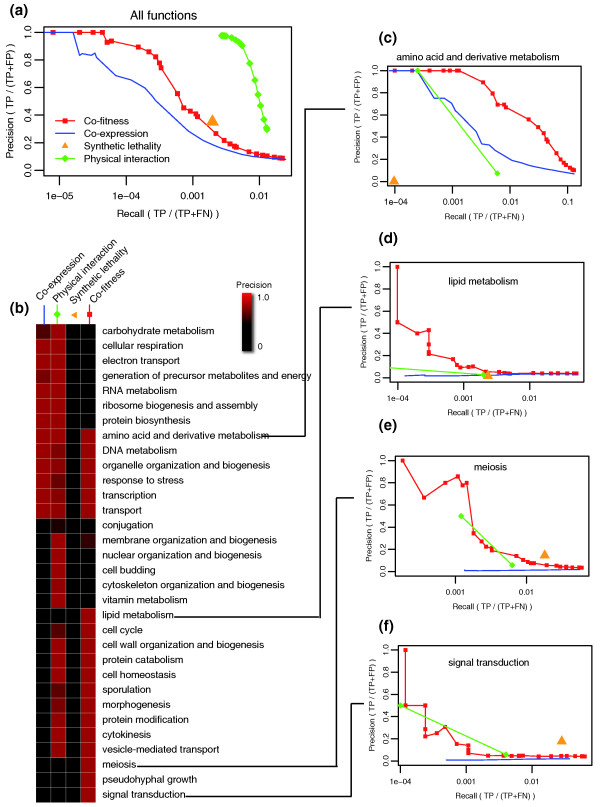
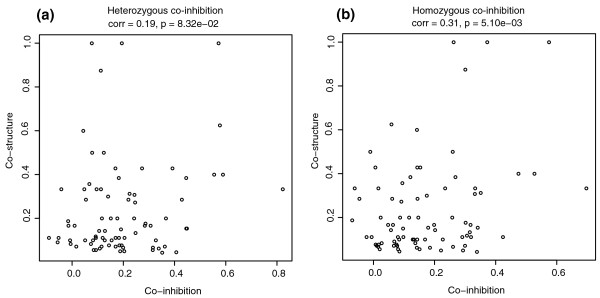
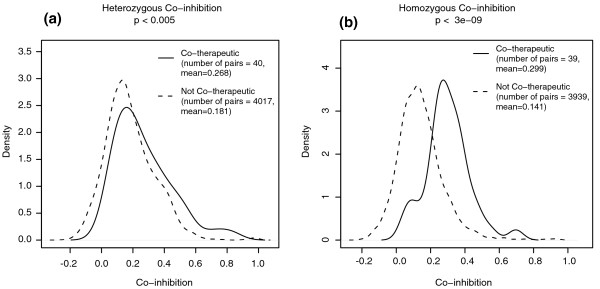
We systematically analyzed the relationships between gene fitness profiles (co-fitness) and drug inhibition profiles (co-inhibition) from several hundred chemogenomic screens in yeast. Co-fitness predicted gene functions distinct from those derived from other assays and identified conditionally dependent protein complexes. Co-inhibitory compounds were weakly correlated by structure and therapeutic class. We developed an algorithm predicting protein targets of chemical compounds and verified its accuracy with experimental testing. Fitness data provide a novel, systems-level perspective on the cell.
Overview
The claims and statistics of this paper haven’t been checked yet.
Run the check — free, no account needed. It reads the open-access text and checks the sources it cites.
Integrity signals
Registry
Cites
Statistics
Figures
Verification
Claims the paper makes
The claims and statistics of this paper haven’t been checked yet.
Run the check — free, no account needed. It reads the open-access text and checks the sources it cites.
Claims other papers make about this one
Each is checked against this paper’s own text: does it say what the citing paper says it does?
In the citing paper
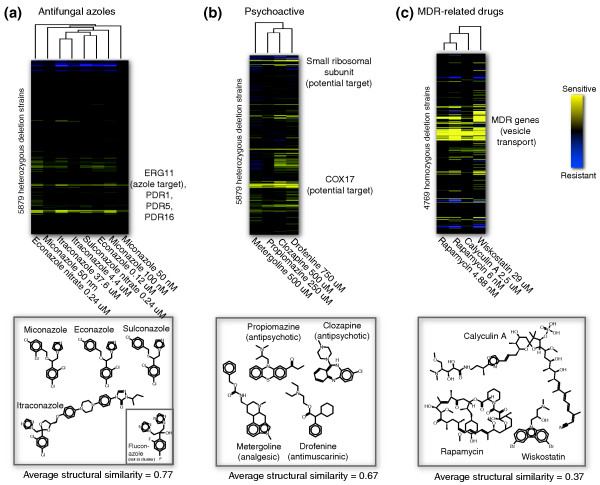
“For example, following this approach, the molecular target of psychoactive drugs, such as drofenine, clozapine, propiomazine, and metergoline, were suggested to be small ribosomal subunit and cytochrome c oxidase (COX17), the terminal component of the mitochondrial respiratory chain [17].”
From Antimicrobial Properties of Antidepressants and Antipsychotics—Possibilities and Implications (2021) · cites this paper as [17]
In the citing paper
“Hillenmeyer et al. reported that, in the same microbe, the small ribosomal subunit and cytochrome c oxidase are the targets of psychoactive drugs [17].”
From Antimicrobial Properties of Antidepressants and Antipsychotics—Possibilities and Implications (2021) · cites this paper as [17]
Self-check
Percentages, sums and reported differences re-computed from the paper’s own numbers.
The self-check needs the paper’s full text.
Citations
Cites
Data mining: concepts and techniques
Sharma, R., Shah, K., Shirahatti, Y., Patel, S., Sharma, R., Shah, K., Patel, S., Sharma, R., & Han, J. (2012) · Choice Reviews Online · doi:10.5860/choice.49-3305 · Cited by 28,665
Sherman, F., Fink, G. R., & Hicks, J. B. (1979) · Cold Spring Harbor Laboratory eBooks · Cited by 7,430
Lamb, J., Crawford, E. D., Peck, D., Modell, J. W., Blat, I. C., Wrobel, M. J., Lerner, J., Brunet, J.-P., Subramanian, A., Ross, K. N., et al. (2006) · Science · doi:10.1126/science.1132939 · Cited by 5,257 · cited 1×
“For example, one such approach [17] looks for similarities in gene expression profiles in response to the drug; whereas another [18] looks for similarities in side effects.”
BackgroundGenomic Expression Programs in the Response of Yeast Cells to Environmental Changes
Gasch, A. P., Spellman, P. T., Kao, C. M., Carmel-Harel, O., Eisen, M. B., Storz, G., Botstein, D., & Brown, P. O. (2000) · Molecular Biology of the Cell · doi:10.1091/mbc.11.12.4241 · Cited by 4,815 · cited 1×
“Functional prediction performance was compared using several types of functional yeast assays: co-fitness; a unified protein-protein interaction network [25] derived from two large-scale affinity precipitation studies [26,27]; synthetic lethality [28]; and co-expression over three microarray gene expression studies [2…”
MethodSpellman, P. T., Sherlock, G. J., Zhang, M. Q., Iyer, V. R., Anders, K. R., Eisen, M. B., Brown, P. O., Botstein, D., & Futcher, B. (1998) · Molecular Biology of the Cell · doi:10.1091/mbc.9.12.3273 · Cited by 4,724 · cited 1×
“Functional prediction performance was compared using several types of functional yeast assays: co-fitness; a unified protein-protein interaction network [25] derived from two large-scale affinity precipitation studies [26,27]; synthetic lethality [28]; and co-expression over three microarray gene expression studies […”
MethodFunctional profiling of the Saccharomyces cerevisiae genome
Giaever, G., Chu, A. M., Ni, L., Connelly, C., Riles, L., Véronneau, S., Dow, S., Lucau-Danila, A., Anderson, K., André, B., et al. (2002) · Nature · doi:10.1038/nature00935 · Cited by 4,316 · cited 1×
“Phenotype in rich medium (one feature) In the absence of drug, if the homozygous deletion strain gi initially showed no phenotype relative to wild type [9,78], the target cannot be identified by the heterozygous deletion assay as this assay is dependent on diminished 'functional dosage' of the drug target based on gro…”
BackgroundSelf-citationData Mining: Concepts and Techniques
Thamaraiselvi, G., & Kaliammal, A. (2014) · Journal of Information and Knowledge · Cited by 4,088
Functional Characterization of the S. cerevisiae Genome by Gene Deletion and Parallel Analysis
Winzeler, E. A., Shoemaker, D. D., Astromoff, A., Liang, H., Anderson, K., Andre, B., Bangham, R., Benito, R., Boeke, J. D., Bussey, H., et al. (1999) · Science · doi:10.1126/science.285.5429.901 · Cited by 3,953 · cited 3×
“coli and used to transform the BY4743 wild-type strain (MATa/α his3Δ 1/ his3Δ 1 leu2Δ 0/leu2Δ 0 lys2Δ 0/LYS2 MET15/met15Δ 0 ura3Δ 0/ura3Δ 0) lacking the KanMX-marker [71].”
BackgroundInfluentialSelf-citationGlobal landscape of protein complexes in the yeast Saccharomyces cerevisiae
Krogan, N. J., Cagney, G., Yu, H., Zhong, G., Guo, X., Ignatchenko, A., Li, J., Pu, S., Datta, N., Tikuisis, A., et al. (2006) · Nature · doi:10.1038/nature04670 · Cited by 2,969 · cited 1×
“Functional prediction performance was compared using several types of functional yeast assays: co-fitness; a unified protein-protein interaction network [25] derived from two large-scale affinity precipitation studies [26,27]; synthetic lethality [28]; and co-expression over three microarray gene expression studies [2…”
Method(2004) · Choice Reviews Online · doi:10.5860/choice.42-1645 · Cited by 2,928
Cited by
Sorted by citations
Items 101–110 of 110
Link between lipid remodeling and ESCRT-III function in multivesicular body formationPreprint
Kölling, R. (2023) · bioRxiv (Cold Spring Harbor Laboratory) · doi:10.1101/2023.10.10.561655
“To identify proteins that are functionally related to Vps55/Vps68 we consulted the "Yeast Fitness Database" (Hillenmeyer et al., 2010).”
MethodBarazandeh, M., Kriti, D., Nislow, C., & Giaever, G. N. (2022) · Figshare · doi:10.6084/m9.figshare.19350018
Self-citationBarazandeh, M., Kriti, D., Nislow, C., & Giaever, G. N. (2022) · Figshare · doi:10.6084/m9.figshare.19350012
Self-citationBarazandeh, M., Kriti, D., Nislow, C., & Giaever, G. N. (2022) · Figshare · doi:10.6084/m9.figshare.19350015
Self-citationBarazandeh, M., Kriti, D., Nislow, C., & Giaever, G. N. (2022) · Figshare · doi:10.6084/m9.figshare.19350021
Self-citationExpanding the phenotypic and chemical space in Escherichia coli
Dominguez, C. L. H. (2016) · doi:10.70675/0f9658a3ze0f1z4b9bzbc80zdf911d328d1c
Psychotropic Drugs: A Promising Non‐Antibiotic Agent to Combat Multi‐Drug‐Resistant Microorganisms
Singh, I. P., Singh, H., Sharma, D., Keshri, A., Gaurav, N., Dhakad, M. S., & Beg, M. M. A. (2026) · Drug Development Research · doi:10.1002/ddr.70380
“Studies have also demonstrated that psychotropic drugs target COX17 (cytochrome oxidase) and the small‐ribosomal subunit (Hillenmeyer et al. 2010).”
Yeast Chemical Genetics For Identifying Regulators of Late Secretory Traffic Pathways
Zhang, L. (2011) · KU ScholarWorks (The University of Kansas)
Metadata
- Authors
- Hillenmeyer, M. E., Ericson, E., Davis, R. W., Nislow, C., Koller, D., & Giaever, G.
- Affiliations
- Stanford University (US)
- University of Toronto (CA)
- Corresponding author
- Koller, Daphne
- Giaever, Guri
- Venue
- Genome Biology
- Published
- 2010-03-12
- Volume
- 11
- Issue
- 3
- Pages
- R30-R30
- ISSN
- 1465-6906 (ISSN-L)
- 1474-760X
- PMC
- PMC2864570
- OpenAlex
- W2121907028
- Cited by
- 112
- References
- 76
- Citations by year
- 2026: 2 · 2025: 1 · 2024: 4 · 2023: 3 · 2022: 9 · 2021: 4 · 2020: 5 · 2019: 3 · 2018: 5 · 2017: 1 · 2016: 8 · 2015: 10 · 2014: 11 · 2013: 13 · 2012: 17
- FWCI
- 5.87
- Type
- journal article
- Language
- en
- Open access
- gold
- doi.org
- Locations
- Genome biology (publishedVersion, cc-by)
- PubMed Central (publishedVersion, cc-by)
- PubMed (publishedVersion)
- TSpace (University of Toronto) (submittedVersion)
- Funders
- National Science Foundation (0345474)
- University of Toronto
- Canadian Institutes of Health Research (81340, (MO)P-81340, 84305)
- National Human Genome Research Institute
- Topics
- Life Sciences › Biochemistry, Genetics and Molecular Biology › Molecular Biology › Fungal and yeast genetics research
- Life Sciences › Pharmacology, Toxicology and Pharmaceutics › Drug Discovery › Computational Drug Discovery Methods
- Life Sciences › Biochemistry, Genetics and Molecular Biology › Molecular Biology › Bioinformatics and Genomic Networks
- Keywords
- gene fitness, drug inhibition, CO inhibition, Saccharomyces cerevisiae, gene function prediction, drug target prediction
- MeSH terms
- Copper Transport Proteins, Algorithms, Clozapine, Genes, Fungal, Membrane Proteins, Saccharomyces cerevisiae, Structure-Activity Relationship, Nocodazole, Drug Delivery Systems, Genome, Fungal, Gene Deletion, Molecular Chaperones, Genomics, Drug Resistance, Fungal, Cation Transport Proteins, Saccharomyces cerevisiae Proteins, Systems Biology, Genetic Fitness
About these checks
Registry, retraction, Cites and statistics results are computed, not judged, with one exception: a printed reference that no index lists is read once by a model before it counts as a citation error. Claims are extracted by a model and kept only when their quote appears verbatim in the text; each cited source is then checked, with a model’s help, for whether it says what the claim relies on. Those verdicts can be wrong — read the claim’s quote and the cited source before relying on one.
Statistics and arithmetic are recomputed, not judged.
Confidence bands are shown only for fields calibrated on our annotated test set. None is calibrated yet, so no band is shown.
What counts as a claim ›How we measure confidence ›How we check this ›
Are you an author, or do you see a problem with this page? Request a review
