

Analyzing and minimizing PCR amplification bias in Illumina sequencing libraries
Open accessThe DOI matches its Crossref record; 22 of the 22 references it cites were found in a registry or an index.
Abstract
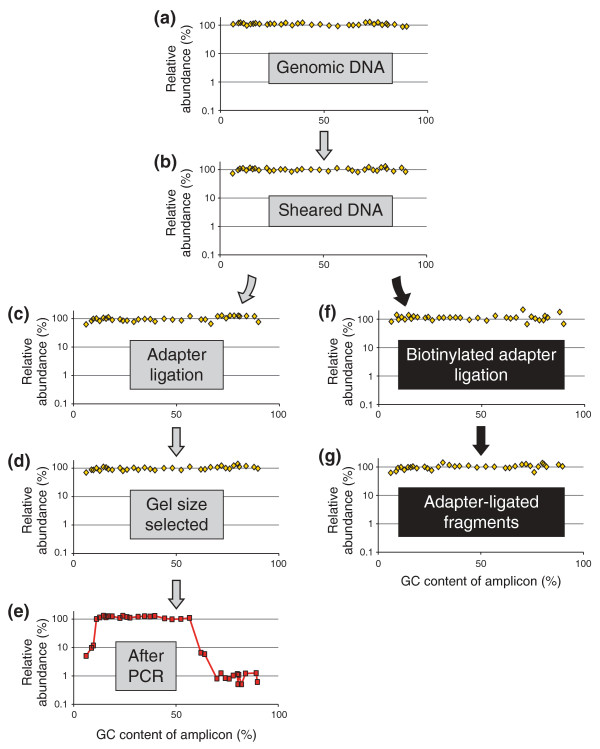
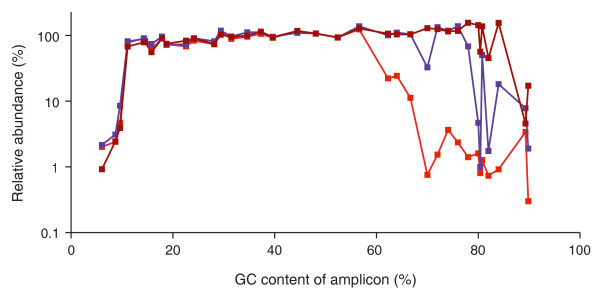
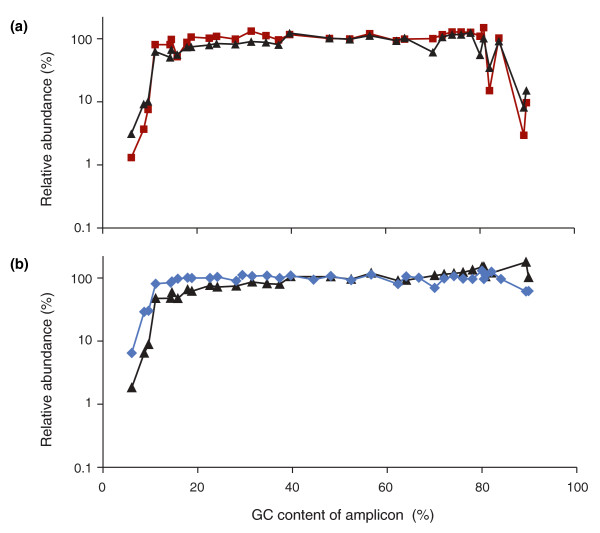
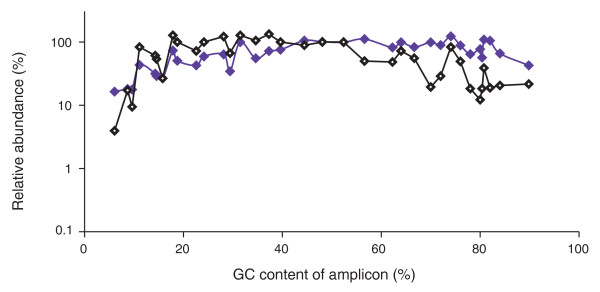
Despite the ever-increasing output of Illumina sequencing data, loci with extreme base compositions are often under-represented or absent. To evaluate sources of base-composition bias, we traced genomic sequences ranging from 6% to 90% GC through the process by quantitative PCR. We identified PCR during library preparation as a principal source of bias and optimized the conditions. Our improved protocol significantly reduces amplification bias and minimizes the previously severe effects of PCR instrument and temperature ramp rate.
Overview
The claims and statistics of this paper haven’t been checked yet.
Free: it reads the open-access text and checks the first 5 claims that cite a source we can check. Create a free account to check every claim.
Integrity signals
Registry
Cites
Statistics
Figures
Verification
Claims the paper makes
The claims and statistics of this paper haven’t been checked yet.
Free: it reads the open-access text and checks the first 5 claims that cite a source we can check. Create a free account to check every claim.
Claims other papers make about this one
Each is checked against this paper’s own text: does it say what the citing paper says it does?
The source backs part of the claim, not all of it — or backs it for a different population, condition or comparison.
In the citing paper
“This RT bias can also affect the observed GC content (Supplementary Figs. 7–11) and base-frequency data11,33, 34”
From Multi-platform assessment of transcriptome profiling using RNA-seq in the ABRF next-generation sequencing study (2014) · cites this paper as [34]
Experimental — accuracy not yet measuredThe cited source says what the claim attributes to it.
In the citing paper
“A GC content bias is often observed in high-throughput sequencing data, with fragments of certain GC content under-represented, and can be partially attributed to PCR amplification during library preparation20.”
From Modeling of RNA-seq fragment sequence bias reduces systematic errors in transcript abundance estimation (2016) · cites this paper as [20]
The cited source says what the claim attributes to it.
In the citing paper
“GC content of individual sequences were previously found to affect PCR amplification efficiency in biological DNA15–17.”
From Quantifying Molecular Bias in DNA Data Storage (2019) · cites this paper as [17]
The cited source says what the claim attributes to it.
In the citing paper
“Although previous studies observed PCR bias in genomic biological sample amplification15–17, it remained unclear whether such bias is significant in DNA data storage.”
From Quantifying Molecular Bias in DNA Data Storage (2019) · cites this paper as [17]
Self-check
Percentages, sums and reported differences re-computed from the paper’s own numbers.
The self-check needs the paper’s full text.
Citations
Cites
Fast and accurate short read alignment with Burrows-Wheeler transform
Li, H., & Durbin, R. (2009) · Bioinformatics · doi:10.1093/bioinformatics/btp324 · Cited by 58,607
Genome sequencing in microfabricated high-density picolitre reactors
Margulies, M., Egholm, M., Altman, W. E., Attiya, S., Bader, J. S., Bemben, L. A., Berka, J., Braverman, M. S., Chen, Y.-J., Chen, Z., et al. (2005) · Nature · doi:10.1038/nature03959 · Cited by 7,693
Genome sequence of the human malaria parasite Plasmodium falciparum
Gardner, M. J., Hall, N., Fung, E., White, O., Berriman, M., Hyman, R. W., Carlton, J. M., Pain, A., Nelson, K. E., Bowman, S., et al. (2002) · Nature · doi:10.1038/nature01097 · Cited by 4,407
Real-Time DNA Sequencing from Single Polymerase Molecules
Eid, J., Fehr, A., Gray, J., Luong, K., Lyle, J., Otto, G., Peluso, P., Rank, D., Baybayan, P., Bettman, B., et al. (2009) · Science · doi:10.1126/science.1162986 · Cited by 3,732
Accurate whole human genome sequencing using reversible terminator chemistry
Bentley, D. R., Balasubramanian, S., Swerdlow, H. P., Smith, G. P., Milton, J., Brown, C. G., Hall, K. P., Evers, D. J., Barnes, C. L., Bignell, H. R., et al. (2008) · Nature · doi:10.1038/nature07517 · Cited by 3,684
Self-citationGenome sequence, comparative analysis and haplotype structure of the domestic dog
members, B. S. P., Lindblad-Toh, K., Wade, C. M., Mikkelsen, T. S., Karlsson, E. K., Jaffe, D. B., Kamal, M., Clamp, M., Chang, J. L., Kulbokas, E. J., et al. (2005) · Nature · doi:10.1038/nature04338 · Cited by 2,568 · cited 1×
“Cloning bias hindered efforts to sequence the AT-rich genomes of Dictyostelium [12] and Plasmodium [13] and excluded the GC-rich first exons of about 10% of protein-coding genes in the dog (K Lindblad-Toh, personal communication) from an otherwise high-quality reference genome assembly [14].”
BackgroundSelf-citationThe genome of the social amoeba Dictyostelium discoideum
Eichinger, L., Pachebat, J. A., Glöckner, G., Rajandream, M.-A., Sucgang, R., Berriman, M., Song, J., Olsen, R., Szafranski, K., Xu, Q., et al. (2005) · Nature · doi:10.1038/nature03481 · Cited by 1,351 · cited 2×
“Cloning bias hindered efforts to sequence the AT-rich genomes of Dictyostelium [12] and Plasmodium [13] and excluded the GC-rich first exons of about 10% of protein-coding genes in the dog (K Lindblad-Toh, personal communication) from an otherwise high-quality reference genome assembly [14].”
BackgroundHuman Genome Sequencing Using Unchained Base Reads on Self-Assembling DNA Nanoarrays
Drmanac, R., Sparks, A. B., Callow, M. J., Halpern, A. L., Burns, N. L., Kermani, B. G., Carnevali, P., Nazarenko, I., Nilsen, G. B., Yeung, G., et al. (2010) · Science · doi:10.1126/science.1181498 · Cited by 1,212 · cited 1×
“New genome sequencing technologies [1-3,15-17] no longer rely on cloning in a microbial host.”
BackgroundSubstantial biases in ultra-short read data sets from high-throughput DNA sequencing
Dohm, J. C., Lottaz, C., Borodina, T., & Himmelbauer, H. (2008) · Nucleic Acids Research · doi:10.1093/nar/gkn425 · Cited by 1,088 · cited 1×
“The Illumina sequencing platform [1], like other massively parallel sequencing platforms [2,3], continues to produce ever-increasing amounts of data, yet suffers from under-representation and reduced quality at loci with extreme base compositions that are recalcitrant to the technology [1,4-6].”
MethodA large genome center's improvements to the Illumina sequencing system
Quail, M. A., Kozarewa, I., Smith, F., Scally, A., Stephens, P. J., Durbin, R., Swerdlow, H., & Turner, D. J. (2008) · Nature Methods · doi:10.1038/nmeth.1270 · Cited by 727
Cited by
Items 101–200 of 1,000
Current challenges in de novo plant genome sequencing and assembly
Schatz, M. C., Witkowski, J., & McCombie, W. R. (2012) · Genome Biology · doi:10.1186/gb-2012-13-4-243 · Cited by 185
“The sequencing itself needs to be improved to reduce the biases from GC composition, chimeric reads and mates, and other effects so that the coverage along the genome will be uniform and complete [39].”
BackgroundParveen, I., Gafner, S., Techen, N., Murch, S., & Khan, I. (2016) · Planta Medica · doi:10.1055/s-0042-111208 · Cited by 185
Performance comparison of four exome capture systems for deep sequencing
Chilamakuri, C. S., Lorenz, S., Madoui, M.-A., Vodák, D., Sun, J., Hovig, E., Myklebost, O., & Meza-Zepeda, L. A. (2014) · BMC Genomics · doi:10.1186/1471-2164-15-449 · Cited by 185
“There are two primary explanations for this bias: 1) a polymerase chain reaction (PCR) amplification bias, where high or low GC content reduces the efficiency of PCR amplification [18]; and 2) a reduced efficiency of capture probe hybridization to sequences with high or low GC content [19].”
BackgroundBratcher, H. B., Corton, C., Jolley, K. A., Parkhill, J., & Maiden, M. C. (2014) · BMC Genomics · doi:10.1186/1471-2164-15-1138 · Cited by 184
“It has been shown that optimized or PCR-free protocols reduce GC bias affects [32-35] and if these genomes were rese-quenced using a PCR-free approach it is possible the over-all genome coverage would increase.”
MethodValidation of a Next-Generation Sequencing Assay for Clinical Molecular Oncology
Cottrell, C. E., Al-Kateb, H., Bredemeyer, A. J., Duncavage, E. J., Spencer, D. H., Abel, H. J., Lockwood, C. M., Hagemann, I. S., O’Guin, S. M., Burcea, L. C., et al. (2014) · The Journal of Molecular Diagnostics · doi:10.1016/j.jmoldx.2013.10.002 · Cited by 184
“The level 2 metric is a measure of which exons failed to achieve 50 unique coverage at 95% of exonic positions; this is frequently the first exon of genes, which are often GCrich and therefore difficult to amplify by PCR and/or to capture by fluid-phase targeted hybrid capture.(51) Of the 14 exons that failed this lev…”
BackgroundKerick, M., Isau, M., Timmermann, B., Sültmann, H., Herwig, R., Krobitsch, S., Schaefer, G., Verdorfer, I., Bartsch, G., Klocker, H., et al. (2011) · BMC Medical Genomics · doi:10.1186/1755-8794-4-68 · Cited by 181
“It is known that FFPE tissues are prone to spontaneous deamination of guanine and cytosine during the tissue preservation process and/or during storage and that the Illumina sequencing technology is biased for underrepresentation and reduced quality at loci with extreme base compositions [32].”
BackgroundAncient DNA studies: new perspectives on old samples
Rizzi, E., Lari, M., Gigli, E., De Bellis, G., & Caramelli, D. (2012) · Genetics Selection Evolution · doi:10.1186/1297-9686-44-21 · Cited by 180
“probes, named “baits” that are subsequently captured by streptavidin-coated beads [125].”
BackgroundBroadbent, K. M., Broadbent, J. C., Ribacke, U., Wirth, D., Rinn, J. L., & Sabeti, P. C. (2015) · BMC Genomics · doi:10.1186/s12864-015-1603-4 · Cited by 179
“In terms of experimental optimization, we tested numerous variables and pursued technical developments shown to reduce sequence-based bias in DNA sequencing libraries and to improve strand-specificity in RNA sequencing libraries [59–65].”
MethodChen, X., Bracht, J. R., Goldman, A. D., Dolzhenko, E., Clay, D. M., Swart, E. C., Perlman, D. H., Doak, T. G., Stuart, A., Amemiya, C. T., et al. (2014) · Cell · doi:10.1016/j.cell.2014.07.034 · Cited by 178
Peona, V., Blom, M. P. K., Xu, L., Burri, R., Sullivan, S. T., Bunikis, I., Liachko, I., Haryoko, T., Jønsson, K. A., Zhou, Q., et al. (2020) · Molecular Ecology Resources · doi:10.1111/1755-0998.13252 · Cited by 178
GC bias affects genomic and metagenomic reconstructions, underrepresenting GC-poor organisms
Browne, P. D., Nielsen, T. K., Kot, W., Aggerholm, A., Gilbert, M. T. P., Puetz, L., Rasmussen, M., Zervas, A., & Hansen, L. H. (2020) · GigaScience · doi:10.1093/gigascience/giaa008 · Cited by 178
“Owing to the fact that PCR is commonly cited as a major contributor to GC bias [13], it is often recommended to reduce the number of PCR cycles (or to eliminate PCR altogether) as far as sample biomass and other experimental constrains allow [25].”
InfluentialIorizzo, M., Senalik, D. A., Szklarczyk, M., Grzebelus, D., Spooner, D. M., & Simon, P. W. (2012) · BMC Plant Biology · doi:10.1186/1471-2229-12-61 · Cited by 177
Elimination of PCR duplicates in RNA-seq and small RNA-seq using unique molecular identifiers
Fu, Y., Wu, P.-H., Beane, T., Zamore, P. D., & Weng, Z. (2018) · BMC Genomics · doi:10.1186/s12864-018-4933-1 · Cited by 176
“proceeds [39], biased amplification of sequences with different GC content [40], or chimeric PCR products due”
BackgroundDetecting and correcting systematic variation in large-scale RNA sequencing data
Li, S., Łabaj, P. P., Zumbo, P., Sykacek, P., Shi, W., Shi, L., Phan, J., Wu, P.-Y., Wang, M., Wang, C., et al. (2014) · Nature Biotechnology · doi:10.1038/nbt.3000 · Cited by 175
Evolution of the bamboos (Bambusoideae; Poaceae): a full plastome phylogenomic analysis
Wysocki, W. P., Clark, L. G., Attigala, L., Ruiz-Sanchez, E., & Duvall, M. R. (2015) · BMC Evolutionary Biology · doi:10.1186/s12862-015-0321-5 · Cited by 175
“One possible explanation could be that the base composition in the mitochondrial inserts is less AT rich than in the rest of the plastome (55% compared to 61%) as the PCR step during Illumina library preparation has been shown to introduce base composition bias in fragments [44].”
BackgroundBista, I., Carvalho, G. R., Tang, M., Walsh, K. A., Zhou, X. Y., Hajibabaei, M., Shokralla, S., Seymour, M., Bradley, D. T. C., Liu, S., et al. (2018) · Molecular Ecology Resources · doi:10.1111/1755-0998.12888 · Cited by 175
Naught all zeros in sequence count data are the same
Silverman, J. D., Roche, K., Mukherjee, S., & David, L. A. (2020) · Computational and Structural Biotechnology Journal · doi:10.1016/j.csbj.2020.09.014 · Cited by 174
Why Assembling Plant Genome Sequences Is So Challenging
Claros, M. G., Bautista, R., Guerrero-Fernández, D., Benzerki, H., Seoane, P., & Fernández‐Pozo, N. (2012) · Biology · doi:10.3390/biology1020439 · Cited by 171
Romiguier, J., Ranwez, V., Delsuc, F., Galtier, N., & Douzery, E. J. P. (2013) · Molecular Biology and Evolution · doi:10.1093/molbev/mst116 · Cited by 170
“Indeed, GC-content biases of standard and high-throughput sequencing are well documented in the literature, even though extreme AT-rich and GC-rich genes both seem to be affected by the phenomenon (Aird et al. 2011; Benjamini and Speed 2012; Dabney and Meyer 2012).”
BackgroundMethodUser guide for mapping-by-sequencing in Arabidopsis
James, G. V., Patel, V., Nordström, K. J. V., Klasen, J. R., Salomé, P. A., Weigel, D., & Schneeberger, K. (2013) · Genome biology · doi:10.1186/gb-2013-14-6-r61 · Cited by 170
Rampelotto, P. H., Ferreira, A. D. S., Barboza, A. D. M., & Roesch, L. F. W. (2013) · Microbial Ecology · doi:10.1007/s00248-013-0235-y · Cited by 169
Comparison of Hi-C results using in-solution versus in-nucleus ligation
Nagano, T., Várnai, C., Schoenfelder, S., Javierre, B.-M., Wingett, S. W., & Fraser, P. (2015) · Genome Biology · doi:10.1186/s13059-015-0753-7 · Cited by 166
“Since the GC content bias is mainly created during library amplification PCR [23], this bias would be expected using both methods.”
MethodInfluentialComparison of DNA Quantification Methods for Next Generation Sequencing
Robin, J. D., Ludlow, A. T., LaRanger, R., Wright, W. E., & Shay, J. W. (2016) · Scientific Reports · doi:10.1038/srep24067 · Cited by 166
Jiang, F., Ren, J., Chen, F., Zhou, Y., Xie, J., Dan, S., Su, Y., Xie, J., Yin, B., Su, W., et al. (2012) · BMC Medical Genomics · doi:10.1186/1755-8794-5-57 · Cited by 164
A Review of the Role of the Gut Microbiome in Personalized Sports Nutrition
Hughes, R. (2020) · Frontiers in Nutrition · doi:10.3389/fnut.2019.00191 · Cited by 163
Galtier, N., Roux, C., Rousselle, M., Romiguier, J., Figuet, E., Glémin, S., Bierne, N., & Duret, L. (2018) · Molecular Biology and Evolution · doi:10.1093/molbev/msy015 · Cited by 162
“This could be problematic in practice because DNA or cDNA libraries generated for high throughput sequencing are known to be biased with respect to sequence base composition (Dohm et al. 2008; Aird et al. 2011).”
BackgroundA Guide to Carrying Out a Phylogenomic Target Sequence Capture Project
Andermann, T., Jiménez, M. F. T., Matos‐Maraví, P. F., Batista, R., Blanco‐Pastor, J. L., Gustafsson, A. L. S., Kistler, L., Liberal, I. M., Oxelman, B., Bacon, C. D., et al. (2020) · Frontiers in Genetics · doi:10.3389/fgene.2019.01407 · Cited by 160
Wang, X., Wang, H., Sun, V., Tuan, H.-F., Keser, V., Wang, K., Ren, H., Lopez, I., Zaneveld, J. E., Siddiqui, S., et al. (2013) · Journal of Medical Genetics · doi:10.1136/jmedgenet-2013-101558 · Cited by 159
Microbial phylogenetic profiling with the Pacific Biosciences sequencing platform
Fichot, E. B., & Norman, R. S. (2013) · Microbiome · doi:10.1186/2049-2618-1-10 · Cited by 159
Detecting false-positive signals in exome sequencing
Fuentes Fajardo, K. V., Adams, D., Program, N. C. S., Mason, C. E., Sincan, M., Tifft, C., Toro, C., Boerkoel, C. F., Gahl, W., & Markello, T. (2012) · Human Mutation · doi:10.1002/humu.22033 · Cited by 159
“Errors can arise from biases in the library construction [Aird et al., 2011; Bentley et al., 2008; Koboldt et al., 2010; Teer et al., 2010], errant polymerase reactions [Aird et al., 2011], difficulty making genotype calls at the end of short reads, loss of synchrony among DNA sequencing reactions…”
BackgroundNext Generation Sequencing Methods for Diagnosis of Epilepsy Syndromes
Dunn, P. J., Albury, C. L., Maksemous, N., Benton, M. C., Sutherland, H. G. E., Smith, R. A., Haupt, L. M., & Griffiths, L. R. (2018) · Frontiers in Genetics · doi:10.3389/fgene.2018.00020 · Cited by 159
Metagenomic analysis of anammox communities in three different microbial aggregates
Guo, J., Peng, Y., Fan, L., Zhang, L., Ni, B., Kartal, B., Feng, X., Jetten, M. S. M., & Yuan, Z. (2016) · Environmental Microbiology · doi:10.1111/1462-2920.13132 · Cited by 159
“However, most of these methods are gene amplification-based that may cause technical biases (Aird et al., 2011; Ye et al., 2012) and thus provide a skewed community structure or even fail to detect certain anammox groups (Han et al.”
BackgroundIVT-seq reveals extreme bias in RNA sequencing
Lahens, N. F., Kavakli, I. H., Zhang, R., Hayer, K., Black, M. B., Dueck, H., Pizarro, A., Kim, J., Irizarry, R., Thomas, R. S., et al. (2014) · Genome Biology · doi:10.1186/gb-2014-15-6-r86 · Cited by 158
“Previous efforts at understanding bias identified several contributing sources, including GC-content and PCR enrichment [8,9], priming of reverse transcription by random hexamers [10], read errors introduced during the sequencing-by-synthesis reaction [11], and bias introduced by various methods of rRNA subtraction [7…”
BackgroundDSBCapture: in situ capture and sequencing of DNA breaks
Lensing, S. V., Marsico, G., Hänsel-Hertsch, R., Lam, E. Y., Tannahill, D., & Balasubramanian, S. (2016) · Nature Methods · doi:10.1038/nmeth.3960 · Cited by 158
Genetic Variation in Human DNA Replication Timing
Koren, A., Handsaker, R. E., Kamitaki, N., Karlić, R., Ghosh, S., Polak, P., Eggan, K., & McCarroll, S. A. (2014) · Cell · doi:10.1016/j.cell.2014.10.025 · Cited by 157
Active promoters give rise to false positive ‘Phantom Peaks’ in ChIP-seq experiments
Jain, D., Baldi, S., Zabel, A., Straub, T., & Becker, P. B. (2015) · Nucleic Acids Research · doi:10.1093/nar/gkv637 · Cited by 156
From next-generation resequencing reads to a high-quality variant data set
Pfeifer, S. P. (2016) · Heredity · doi:10.1038/hdy.2016.102 · Cited by 155
Oikonomopoulos, S., Wang, Y. C., Djambazian, H., Badescu, D., & Ragoussis, J. (2016) · Scientific Reports · doi:10.1038/srep31602 · Cited by 153
Spencer, D. H., Abel, H., Lockwood, C. M., Payton, J. E., Szankasi, P., Kelley, T. W., Kulkarni, S., Pfeifer, J. D., & Duncavage, E. J. (2012) · Journal of Molecular Diagnostics · doi:10.1016/j.jmoldx.2012.08.001 · Cited by 152
Cancer Diagnosis Using a Liquid Biopsy: Challenges and Expectations
Castro-Giner, F., Gkountela, S., Donato, C., Alborelli, I., Quagliata, L., Ng, C. K. Y., Piscuoglio, S., & Aceto, N. (2018) · Diagnostics · doi:10.3390/diagnostics8020031 · Cited by 153
Ivanov, I. P., Shin, B., Loughran, G., Tzani, I., Young-Baird, S. K., Cao, C., Atkins, J. F., & Dever, T. E. (2018) · Molecular Cell · doi:10.1016/j.molcel.2018.03.015 · Cited by 151
Sato, M. P., Ogura, Y., Nakamura, K., Nishida, R., Gotoh, Y., Hayashi, M., Hisatsune, J., Sugai, M., Takehiko, I., & Hayashi, T. (2019) · DNA Research · doi:10.1093/dnares/dsz017 · Cited by 151
Species-resolved sequencing of low-biomass or degraded microbiomes using 2bRAD-M
Sun, Z., Huang, S. W., Zhu, P., Lam, T., Zhao, H., Lv, J., Zhang, R., Zhou, L., Niu, Q., Wang, X., et al. (2022) · Genome biology · doi:10.1186/s13059-021-02576-9 · Cited by 150
Mavromatis, K., Land, M. L., Brettin, T. S., Quest, D. J., Copeland, A., Clum, A., Goodwin, L., Woyke, T., Lapidus, A., Klenk, H. P., et al. (2012) · PLoS ONE · doi:10.1371/journal.pone.0048837 · Cited by 150
Construction of a map-based reference genome sequence for barley, Hordeum vulgare L.
Beier, S., Himmelbach, A., Colmsee, C., Zhang, X.-Q., Barrero, R. A., Zhang, Q., Li, L., Bayer, M., Bolser, D., Taudien, S., et al. (2017) · Scientific Data · doi:10.1038/sdata.2017.44 · Cited by 150
de Muinck, E. J., Trosvik, P., Gilfillan, G. D., Hov, J. R., & Sundaram, A. Y. M. (2017) · Microbiome · doi:10.1186/s40168-017-0279-1 · Cited by 150
Bias in RNA‐seq Library Preparation: Current Challenges and Solutions
Shi, H., Zhou, Y., Jia, E., Pan, M., Bai, Y., & Ge, Q. (2021) · BioMed Research International · doi:10.1155/2021/6647597 · Cited by 150
Intrinsic challenges in ancient microbiome reconstruction using 16S rRNA gene amplification
Ziesemer, K. A., Mann, A. E., Sankaranarayanan, K., Schroeder, H., Ozga, A. T., Brandt, B. W., Zaura, E., Waters-Rist, A., Hoogland, M., Salazar-García, D. C., et al. (2015) · Scientific Reports · doi:10.1038/srep16498 · Cited by 148
Lamble, S., Batty, E., Attar, M., Buck, D., Bowden, R., Lunter, G., Crook, D., El-Fahmawi, B., & Piazza, P. (2013) · BMC Biotechnology · doi:10.1186/1472-6750-13-104 · Cited by 148
Campoli, C., Pankin, A., Drosse, B., Casao, C. M., Davis, S. J., & von Korff, M. (2013) · New Phytologist · doi:10.1111/nph.12346 · Cited by 148
Tourlousse, D. M., Narita, K., Miura, T., Sakamoto, M., Ohashi, A., Shiina, K., Matsuda, M., Miura, D., Shimamura, M., Ohyama, Y., et al. (2021) · Microbiome · doi:10.1186/s40168-021-01048-3 · Cited by 147
Whole-transcriptome RNAseq analysis from minute amount of total RNA
Tariq, M. A., Kim, H. J., Jejelowo, O., & Pourmand, N. (2011) · Nucleic Acids Research · doi:10.1093/nar/gkr547 · Cited by 146
Accurate expression quantification from nanopore direct RNA sequencing with NanoCount
Gleeson, J., Léger, A., Prawer, Y. D. J., Lane, T. A., Harrison, P. J., Haerty, W., & Clark, M. B. (2021) · Nucleic Acids Research · doi:10.1093/nar/gkab1129 · Cited by 146
Parras-Moltó, M., Rodríguez-Galet, A., Suárez-Rodríguez, P., & López-Bueno, A. (2018) · Microbiome · doi:10.1186/s40168-018-0507-3 · Cited by 145
Xi, R., Lee, S., Xia, Y., Kim, T.-M., & Park, P. J. (2016) · Nucleic Acids Research · doi:10.1093/nar/gkw491 · Cited by 144
Estimate of the Spontaneous Mutation Rate in Chlamydomonas reinhardtii
Ness, R. W., Morgan, A. D., Colegrave, N., & Keightley, P. D. (2012) · Genetics · doi:10.1534/genetics.112.145078 · Cited by 144
Bias in Whole Genome Amplification: Causes and Considerations
Sabina, J., & Leamon, J. H. (2015) · Methods in molecular biology · doi:10.1007/978-1-4939-2990-0_2 · Cited by 143
Wu, L. R., Chen, S. X., Wu, Y., Patel, A. A., & Zhang, D. Y. (2017) · Nature Biomedical Engineering · doi:10.1038/s41551-017-0126-5 · Cited by 143
Ancient Whole Genome Enrichment Using Baits Built from Modern DNA
Enk, J. M., Devault, A. M., Kuch, M., Murgha, Y. E., Rouillard, J.-M., & Poinar, H. N. (2014) · Molecular Biology and Evolution · doi:10.1093/molbev/msu074 · Cited by 141
Model-driven generation of artificial yeast promoters
Kotopka, B. J., & Smolke, C. D. (2020) · Nature Communications · doi:10.1038/s41467-020-15977-4 · Cited by 141
Metagenomics Using Next-Generation Sequencing
Bragg, L. M., & Tyson, G. W. (2014) · Methods in molecular biology · doi:10.1007/978-1-62703-712-9_15 · Cited by 139
Li, J. H., Mazur, C. A., Berisa, T., & Pickrell, J. K. (2021) · Genome Research · doi:10.1101/gr.266486.120 · Cited by 138
Detecting Expansions of Tandem Repeats in Cohorts Sequenced with Short-Read Sequencing Data
Tankard, R. M., Bennett, M. F., Degorski, P., Delatycki, M. B., Lockhart, P. J., & Bahlo, M. (2018) · The American Journal of Human Genetics · doi:10.1016/j.ajhg.2018.10.015 · Cited by 137
Zemb, O., Achard, C. S., Hamelin, J., de Almeida, M., Gabinaud, B., Cauquil, L., Verschuren, L., & Godon, J. (2020) · MicrobiologyOpen · doi:10.1002/mbo3.977 · Cited by 136
Ivarsson, Y., Arnold, R., McLaughlin, M., Nim, S., Joshi, R., Ray, D., Liu, B., Teyra, J., Pawson, T., Moffat, J., et al. (2014) · Proceedings of the National Academy of Sciences · doi:10.1073/pnas.1312296111 · Cited by 135
“The PicoGreen dye was diluted 1:400 in TE buffer and mixed with 1 μ L of dsDNA standard or PCR product in a low-fluorescence 96-well plate (Bio-Rad).”
BackgroundInfluentialCleavage of rRNA ensures translational cessation in sperm at fertilization
Johnson, G. D., Sendler, E. D., Lalancette, C., Hauser, R. B., Diamond, M. P., & Krawetz, S. A. (2011) · Molecular Human Reproduction · doi:10.1093/molehr/gar054 · Cited by 135
Bowers, R. M., Clum, A., Tice, H., Lim, J., Singh, K., Ciobanu, D., Ngan, C. Y., Cheng, J.-F., Tringe, S. G., & Woyke, T. (2015) · BMC Genomics · doi:10.1186/s12864-015-2063-6 · Cited by 134
A computational pipeline for comparative ChIP-seq analyses
Bardet, A. F., He, Q., Zeitlinger, J., & Stark, A. (2011) · Nature Protocols · doi:10.1038/nprot.2011.420 · Cited by 134
O’Donnell, S. T., Ross, R. P., & Stanton, C. (2020) · Frontiers in Microbiology · doi:10.3389/fmicb.2019.03084 · Cited by 130
Estimating abundances of retroviral insertion sites from DNA fragment length data
Berry, C. C., Gillet, N. A., Melamed, A., Gormley, N., Bangham, C. R. M., & Bushman, F. D. (2012) · Bioinformatics · doi:10.1093/bioinformatics/bts004 · Cited by 130
Exploring the gonad transcriptome of two extreme male pigs with RNA-seq
Esteve‐Codina, A., Kofler, R., Palmieri, N., Bussotti, G., Notredame, C., & Pérez-Enciso, M. (2011) · BMC Genomics · doi:10.1186/1471-2164-12-552 · Cited by 131
Guo, J., Ni, B., Han, X., Chen, X., Bond, P. L., Peng, Y., & Yuan, Z. (2017) · Enzyme and Microbial Technology · doi:10.1016/j.enzmictec.2017.03.009 · Cited by 131
Admixture and recombination among Toxoplasma gondii lineages explain global genome diversity
Minot, S. S., Melo, M. B., Li, F., Lu, D. Y., Niedelman, W., Levine, S. S., & Saeij, J. P. J. (2012) · Proceedings of the National Academy of Sciences · doi:10.1073/pnas.1117047109 · Cited by 130
Glenn, T. C., Nilsen, R. A., Kieran, T. J., Sanders, J. G., Bayona-Vásquez, N. J., Finger, J. W., Pierson, T. W., Bentley, K. E., Hoffberg, S. L., Louha, S., et al. (2016) · bioRxiv (Cold Spring Harbor Laboratory) · doi:10.1101/049114 · Cited by 129
Choi, Y., Ryu, T., Lee, A. C., Choi, H., Lee, H., Park, J., Song, S.-H., Kim, S., Kim, H., Park, W., et al. (2019) · Scientific Reports · doi:10.1038/s41598-019-43105-w · Cited by 128
Ness, R. W., Morgan, A. D., Vasanthakrishnan, R. B., Colegrave, N., & Keightley, P. D. (2015) · Genome Research · doi:10.1101/gr.191494.115 · Cited by 128
Next-Generation Environmental Diversity Surveys of Foraminifera: Preparing the Future
Pawlowski, J. W., Lejzerowicz, F., & Esling, P. (2014) · Biological Bulletin · doi:10.1086/bblv227n2p93 · Cited by 128
Evolutionary Insights into RNA trans-Splicing in Vertebrates
Lei, Q., Li, C., Zuo, Z., Huang, C., Cheng, H., & Zhou, R. (2016) · Genome Biology and Evolution · doi:10.1093/gbe/evw025 · Cited by 127
Chen, S., Lau, T. K., Zhang, C., Xu, C., Xu, Z., Hu, P., Xu, J., Huang, H., Pan, L., Jiang, F., et al. (2013) · Prenatal Diagnosis · doi:10.1002/pd.4110 · Cited by 127
Individual genome assembly from complex community short-read metagenomic datasets
Luo, C., Tsementzi, D., Kyrpides, N. C., & Konstantinidis, K. T. (2012) · The ISME Journal · doi:10.1038/ismej.2011.147 · Cited by 127
Motalebipour, E. Z., Kafkas, S., Khodaeiaminjan, M., Çoban, N., & Gözel, H. (2016) · BMC Genomics · doi:10.1186/s12864-016-3359-x · Cited by 127
Marine, R. L., Polson, S. W., Ravel, J., Hatfull, G. F., Russell, D. A., Sullivan, M. B., Syed, F., Dumas, M., & Wommack, K. E. (2011) · Applied and Environmental Microbiology · doi:10.1128/aem.05610-11 · Cited by 126
Issues and Prospects of microRNA-Based Biomarkers in Blood and Other Body Fluids
Chevillet, J., Lee, I., Briggs, H., He, Y., & Wang, K. (2014) · Molecules · doi:10.3390/molecules19056080 · Cited by 126
Mohamed, A. R., Ochsenkühn, M. A., Kazlak, A. M., Moustafa, A., & Amin, S. A. (2023) · FEMS Microbiology Reviews · doi:10.1093/femsre/fuad005 · Cited by 126
Sequencing platform and library preparation choices impact viral metagenomes
Solonenko, S. A., Ignacio‐Espinoza, J. C., Alberti, A., Cruaud, C., Hallam, S., Konstantinidis, K., Tyson, G. W., Wincker, P., & Sullivan, M. B. (2013) · BMC Genomics · doi:10.1186/1471-2164-14-320 · Cited by 126
Orenstein, Y., & Shamir, R. (2014) · Nucleic Acids Research · doi:10.1093/nar/gku117 · Cited by 125
Zhou, L., Ng, H. K., Drautz‐Moses, D. I., Schuster, S. C., Beck, S., Kim, C., Chambers, J. C., & Loh, M. C. S. (2019) · Scientific Reports · doi:10.1038/s41598-019-46875-5 · Cited by 123
Sources and Functions of Extracellular Small RNAs in Human Circulation
Fritz, J. V., Heintz-Buschart, A., Ghosal, A., Wampach, L., Etheridge, A., Galas, D., & Wilmes, P. (2016) · Annual Review of Nutrition · doi:10.1146/annurev-nutr-071715-050711 · Cited by 121
Wei, K. H.-C., Grenier, J. K., Barbash, D. A., & Clark, A. G. (2014) · Proceedings of the National Academy of Sciences · doi:10.1073/pnas.1421951112 · Cited by 120
Exploring the accuracy of amplicon‐based internal transcribed spacer markers for a fungal community
Li, S., Deng, Y., Wang, Z., Zhang, Z., Kong, X., Zhou, W., Yi, Y., & Qu, Y. (2019) · Molecular Ecology Resources · doi:10.1111/1755-0998.13097 · Cited by 119
Quantifying Molecular Bias in DNA Data Storage
Chen, Y.-J., Takahashi, C. N., Organick, L., Stewart, K., Ang, S. D., Weiss, P., Peck, B., Seelig, G., Ceze, L., & Strauss, K. (2019) · doi:10.1101/566554 · Cited by 116
2.7 million samples genotyped for HLA by next generation sequencing: lessons learned
Schöfl, G., Lang, K., Quenzel, P., Böhme, I., Sauter, J., Hofmann, J. A., Pingel, J., Schmidt, A. H., & Lange, V. (2017) · BMC Genomics · doi:10.1186/s12864-017-3575-z · Cited by 116
Macas, J., Kejnovský, E., Neumann, P., Novák, P., Koblížková, A., & Vyskot, B. (2011) · PLoS ONE · doi:10.1371/journal.pone.0027335 · Cited by 116
Coverage Bias and Sensitivity of Variant Calling for Four Whole-genome Sequencing Technologies
Rieber, N., Zapatka, M., Lasitschka, B., Jones, D., Northcott, P. A., Hutter, B., Jäger, N., Kool, M., Taylor, M. D., Lichter, P., et al. (2013) · PLoS ONE · doi:10.1371/journal.pone.0066621 · Cited by 114
Normalization, bias correction, and peak calling for ChIP-seq
Diaz, A., Park, K., Lim, D. A., & Song, J. S. (2012) · Statistical Applications in Genetics and Molecular Biology · doi:10.1515/1544-6115.1750 · Cited by 114
Bustin, S., & Nolan, T. (2017) · European Journal of Clinical Investigation · doi:10.1111/eci.12801 · Cited by 113
Differences in microRNA detection levels are technology and sequence dependent
Leshkowitz, D., Horn-Saban, S., Parmet, Y., & Feldmesser, E. (2013) · RNA · doi:10.1261/rna.036475.112 · Cited by 112
Zhu, L., Zhong, J., Jia, X., Liu, G., Kang, Y., Dong, M., Zhang, X., Li, Q., Yue, L., Li, C., et al. (2015) · Nucleic Acids Research · doi:10.1093/nar/gkv1498 · Cited by 113
Transcriptomic responses to environmental change in fishes: Insights from RNA sequencing
Oomen, R. A., & Hutchings, J. A. (2017) · FACETS · doi:10.1139/facets-2017-0015 · Cited by 111
Liu, B., Morrison, C. D., Johnson, C. S., Trump, D. L., Qin, M., Conroy, J., Wang, J., & Liu, S. (2013) · Oncotarget · doi:10.18632/oncotarget.1537 · Cited by 110
Metadata
- Authors
- Aird, D., Ross, M. G., Chen, W.-S., Danielsson, M., Fennell, T., Russ, C., Jaffe, D. B., Nusbaum, C., & Gnirke, A.
- Affiliations
- Broad Institute (US)
- Corresponding author
- Gnirke, Andreas
- Venue
- Genome Biology
- Published
- 2011-02-21
- Volume
- 12
- Issue
- 2
- Pages
- R18-R18
- ISSN
- 1465-6906 (ISSN-L)
- 1474-760X
- PMC
- PMC3188800
- OpenAlex
- W2160444236
- Cited by
- 1,174
- References
- 22
- Citations by year
- 2026: 56 · 2025: 70 · 2024: 55 · 2023: 51 · 2022: 69 · 2021: 110 · 2020: 88 · 2019: 81 · 2018: 89 · 2017: 82 · 2016: 81 · 2015: 82 · 2014: 103 · 2013: 73 · 2012: 51
- FWCI
- 33.42
- Type
- journal article
- Language
- en
- Open access
- gold
- doi.org
- Licence
- cc-by
- creativecommons.org/licenses/by/2.0/ (tdm)
- creativecommons.org/licenses/by/2.0/ (vor)
- Locations
- Genome biology (publishedVersion, cc-by)
- Europe PMC (PubMed Central) (publishedVersion, cc-by)
- PubMed Central (publishedVersion, cc-by)
- PubMed (publishedVersion)
- Funders
- Broad Institute
- U.S. Public Health Service (HHSN27220090018C)
- National Human Genome Research Institute (U54HG003067, HG03067, HG03067-05, R01HG003474)
- National Institute of Allergy and Infectious Diseases
- Topics
- Life Sciences › Biochemistry, Genetics and Molecular Biology › Molecular Biology › Genomics and Phylogenetic Studies
- Life Sciences › Biochemistry, Genetics and Molecular Biology › Molecular Biology › Molecular Biology Techniques and Applications
- Life Sciences › Biochemistry, Genetics and Molecular Biology › Molecular Biology › DNA and Nucleic Acid Chemistry
- Keywords
- PCR bias, base composition bias, GC content, library preparation, real-time PCR, temperature ramp rate, bias mitigation
- MeSH terms
- Base Composition, Escherichia coli, Humans, Nucleic Acid Denaturation, Plasmodium falciparum, Temperature, Genomic Library, Genome, Human, Artifacts, Sequence Analysis, DNA, Genomics, Genetic Loci, Real-Time Polymerase Chain Reaction
About these checks
Registry, retraction, Cites and statistics results are computed, not judged, with one exception: a printed reference that no index lists is read once by a model before it counts as a citation error. Claims are extracted by a model and kept only when their quote appears verbatim in the text; each cited source is then checked, with a model’s help, for whether it says what the claim relies on. Those verdicts can be wrong — read the claim’s quote and the cited source before relying on one.
Statistics and arithmetic are recomputed, not judged.
Confidence bands are shown only for fields calibrated on our annotated test set. None is calibrated yet, so no band is shown.
What counts as a claim ›How we measure confidence ›How we check this ›
Are you an author, or do you see a problem with this page? Request a review
Data sources
Bibliographic data: Semantic Scholar, OpenAlex, Crossref.
Contains information from the Semantic Scholar Academic Graph Datasets, made available under the ODC Attribution License (ODC-BY 1.0).
Semantic Scholar’s data is described in: Kinney, R., et al. (2023). The Semantic Scholar Open Data Platform. arXiv:2301.10140.
