

Transcriptome analysis of human tissues and cell lines reveals one dominant transcript per gene
Open accessThe DOI matches its Crossref record; 60 of the 62 references it cites were found in a registry or an index.
Abstract
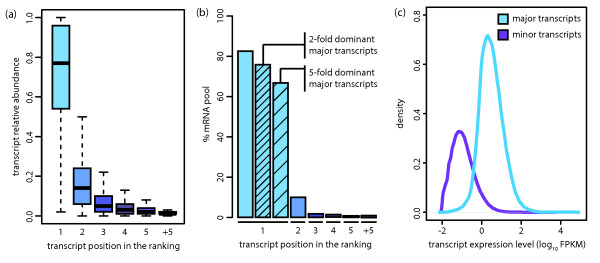
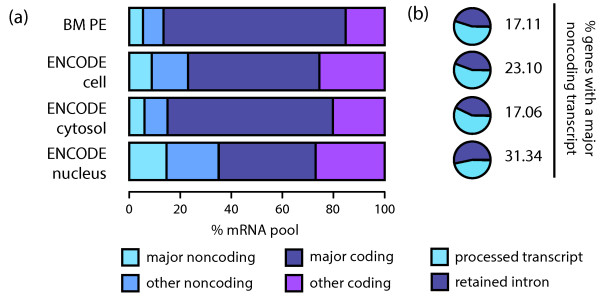
Background: RNA sequencing has opened new avenues for the study of transcriptome composition. Significant evidence has accumulated showing that the human transcriptome contains in excess of a hundred thousand different transcripts. However, it is still not clear to what extent this diversity prevails when considering the relative abundances of different transcripts from the same gene. Results: Here we show that, in a given condition, most protein coding genes have one major transcript expressed at significantly higher level than others, that in human tissues the major transcripts contribute almost 85 percent to the total mRNA from protein coding loci, and that often the same major transcript is expressed in many tissues. We detect a high degree of overlap between the set of major transcripts and a recently published set of alternatively spliced transcripts that are predicted to be translated utilizing proteomic data. Thus, we hypothesize that although some minor transcripts may play a functional role, the major ones are likely to be the main contributors to the proteome. However, we still detect a non-negligible fraction of protein coding genes for which the major transcript does not code a protein. Conclusions: Overall, our findings suggest that the transcriptome from protein coding loci is dominated by one transcript per gene and that not all the transcripts that contribute to transcriptome diversity are equally likely to contribute to protein diversity. This observation can help to prioritize candidate targets in proteomics research and to predict the functional impact of the detected changes in variation studies.
Overview
The claims and statistics of this paper haven’t been checked yet.
Free: it reads the open-access text and checks the first 5 claims that cite a source we can check. Create a free account to check every claim.
Integrity signals
Registry
Cites
Statistics
Figures
Verification
Claims the paper makes
The claims and statistics of this paper haven’t been checked yet.
Free: it reads the open-access text and checks the first 5 claims that cite a source we can check. Create a free account to check every claim.
Claims other papers make about this one
Each is checked against this paper’s own text: does it say what the citing paper says it does?
The cited source says what the claim attributes to it.
In the citing paper
“More specifically, for genes with multiple isoforms, many are expressed at an extremely low level in comparison to the most abundant isoforms (Gonzàlez-Porta et al., 2013) (Figure 3A).”
From Impact of Alternative Splicing on the Human Proteome (2017) · cites this paper as Gonzàlez-Porta et al., 2013
The cited source says what the claim attributes to it.
In the citing paper
“A recent result that has a potentially significant impact on interpretation of proteomic data is the finding that most genes, in a given cell-type, likely express only a single ‘dominant’ transcript70,71.”
From Decoding neuroproteomics: integrating the genome, translatome and functional anatomy (2014) · cites this paper as [70]
In the citing paper
“The relevance of gene-level analyses is also supported by recent surveys of transcription, which have shown that each gene tends to have a dominant isoform that accounts for far more of the total expression for that gene than any of the remaining isoforms [46,47].”
From voom: precision weights unlock linear model analysis tools for RNA-seq read counts (2014) · cites this paper as [47]
Self-check
Percentages, sums and reported differences re-computed from the paper’s own numbers.
The self-check needs the paper’s full text.
Citations
Cites
Controlling the False Discovery Rate: A Practical and Powerful Approach to Multiple Testing
Benjamini, Y., & Hochberg, Y. (1995) · Journal of the Royal Statistical Society Series B: Statistical Methodology · doi:10.1111/j.2517-6161.1995.tb02031.x · Cited by 109,482 · cited 1×
“05 (Benjamini and Hochberg correction [57]) was used as a threshold for the identification of significant GO terms.”
MethodSystematic and integrative analysis of large gene lists using DAVID bioinformatics resources
Huang, D. W., Sherman, B. T., & Lempicki, R. A. (2009) · Nature Protocols · doi:10.1038/nprot.2008.211 · Cited by 35,890 · cited 1×
“GO analyses were performed with the DAVID software [55, 56].”
MethodUltrafast and memory-efficient alignment of short DNA sequences to the human genome.
Langmead, B., Trapnell, C., Pop, M., & Salzberg, S. L. (2009) · Genome Biology · doi:10.1186/gb-2009-10-3-r25 · Cited by 21,849
An integrated encyclopedia of DNA elements in the human genome
The ENCODE Project Consortium (2012) · Nature · doi:10.1038/nature11247 · Cited by 18,072
Trapnell, C., Williams, B. A., Pertea, G., Mortazavi, A., Kwan, G., van Baren, M. J., Salzberg, S. L., Wold, B. J., & Pachter, L. (2010) · Nature Biotechnology · doi:10.1038/nbt.1621 · Cited by 15,556
Huang, D. W., Sherman, B. T., & Lempicki, R. A. (2009) · Nucleic Acids Research · doi:10.1093/nar/gkn923 · Cited by 14,108 · cited 1×
“GO analyses were performed with the DAVID software [55, 56].”
MethodMapping and quantifying mammalian transcriptomes by RNA-Seq
Mortazavi, A., Williams, B. A., McCue, K., Schaeffer, L., & Wold, B. (2008) · Nature Methods · doi:10.1038/nmeth.1226 · Cited by 13,696 · cited 1×
“Recently, applications of high throughput sequencing to RNA, known as RNA-seq [2], have opened new avenues for the study of transcriptome composition [3].”
BackgroundRNA-Seq: a revolutionary tool for transcriptomics
Wang, Z., Gerstein, M., & Snyder, M. (2009) · Nature Reviews Genetics · doi:10.1038/nrg2484 · Cited by 13,174 · cited 12×
“Most protein coding genes express one dominant transcript First, examining only the tissue data, and similarly to previous RNA-seq-based transcriptome studies, we detect more than one transcript for approximately 85% of the studied genes (83.70% to 89.95%, SD = 1.84, Additional File 2 - Table S1) and a total of 105,45…”
BackgroundInfluentialTopHat: discovering splice junctions with RNA-Seq
Trapnell, C., Pachter, L., & Salzberg, S. L. (2009) · Bioinformatics · doi:10.1093/bioinformatics/btp120 · Cited by 11,617
Landscape of transcription in human cells
Djebali, S., Davis, C. A., Merkel, A., Dobin, A., Lassmann, T., Mortazavi, A., Tanzer, A., Lagarde, J., Lin, W., Schlesinger, F., et al. (2012) · Nature · doi:10.1038/nature11233 · Cited by 5,187 · cited 2×
“[13], but in most cases the major transcripts are dominating the transcriptome.”
BackgroundSelf-citation
Research works printed but not linked: 1
- Taneri B Snyder B Gaasterland T Distribution of alternatively spliced transcript isoforms within human and mouse transcriptomes. J OMICS Res 2011 14 1 5
Cited by
Items 101–200 of 265
Saengboonmee, C., Phoomak, C., Supabphol, S., Covington, K. R., Hampton, O. A., Wongkham, C., Gibbs, R. A., Umezawa, K., Seubwai, W., Gingras, M., et al. (2020) · Life Sciences · doi:10.1016/j.lfs.2020.118548 · Cited by 29
“Genes with FPKM equal or lower than 2 were filtered out in all samples [33] to ascertain that only translated genes were selected.”
BackgroundGenome‐wide characterization of differential transcript usage in Arabidopsis thaliana
Vaneechoutte, D., Estrada, A. D., Lin, Y., Loraine, A. E., & Vandepoele, K. (2017) · The Plant Journal · doi:10.1111/tpj.13746 · Cited by 46
“Human protein-coding genes often have an isoform expressed at a significantly higher level than others, and it is therefore referred to as dominant (Trapnell et al., 2010; Gonzalez-Porta et al., 2013).”
BackgroundCarlyle, B. C., Kitchen, R. R., Zhang, J., Wilson, R. S., Lam, T. T., Rozowsky, J. S., Williams, K. R., Šestan, N., Gerstein, M., & Nairn, A. C. (2018) · Journal of Proteome Research · doi:10.1021/acs.jproteome.8b00310 · Cited by 27
Tiberi, S., & Robinson, M. D. (2020) · Genome biology · doi:10.1186/s13059-020-01967-8 · Cited by 34
APPRIS principal isoforms and MANE Select transcripts define reference splice variants
Pozo, F., Rodríguez, J. M., Gómez, L. M., Vázquez, J., & Tress, M. L. (2022) · Bioinformatics · doi:10.1093/bioinformatics/btac473 · Cited by 25
Random genetic drift sets an upper limit on mRNA splicing accuracy in metazoans
Bénitière, F., Necşulea, A., & Duret, L. (2024) · eLife · doi:10.7554/elife.93629 · Cited by 42
Will, T., & Helms, V. (2015) · Bioinformatics · doi:10.1093/bioinformatics/btv620 · Cited by 27
Integrated Transcriptomic and Proteomic Analysis of Primary Human Umbilical Vein Endothelial Cells
Madugundu, A. K., Na, C. H., Nirujogi, R. S., Renuse, S., Kim, K. P., Burns, K. H., Wilks, C., Langmead, B., Ellis, S., Collado‐Torres, L., et al. (2019) · PROTEOMICS · doi:10.1002/pmic.201800315 · Cited by 25
The effects of alternative splicing on miRNA binding sites in bladder cancer
Han, S., Kim, D., Shivakumar, M., Lee, Y.-J., Garg, T. K., Miller, J. E., Kim, J. H., Kim, D., & Lee, Y. (2018) · PLoS ONE · doi:10.1371/journal.pone.0190708 · Cited by 26
Stochastic principles governing alternative splicing of RNA
Hu, J., Boritz, E., Wylie, W., & Douek, D. C. (2017) · PLoS Computational Biology · doi:10.1371/journal.pcbi.1005761 · Cited by 20
Ma, J., Wang, J., Ghoraie, L. S., Men, X., Chen, R., & Dai, P. (2019) · Genomics · doi:10.1016/j.ygeno.2019.04.017 · Cited by 22
Hao, W., Yang, Z., Sun, Y., Li, J., Zhang, D., Liu, D., & Yang, X. (2022) · Biomolecules · doi:10.3390/biom12020154 · Cited by 36
“It was shown that about two-thirds of AS events are tissue-specific in humans [13], and the major isoform varies according to tissue and cell lines [17], indicating the importance of AS in tissue differentiation.”
BackgroundBai, Y., Wang, M., Zhao, J., Bai, H., Zhang, X., Wang, J., Ke, Q., Qu, A., Pu, F., Zheng, W., et al. (2022) · BMC Genomics · doi:10.1186/s12864-022-08431-w · Cited by 24
“Studies have shown that transcriptome is dominated by one transcript per protein-coding gene, which hinted that not all the transcripts contributing to transcriptome diversity are equally likely to contribute to protein diversity [19].”
BackgroundA Kuhnian revolution in molecular biology: Most genes in complex organisms express regulatory RNAs
Mattick, J. S. (2023) · BioEssays · doi:10.1002/bies.202300080 · Cited by 27
“[114] Some lncRNAs encode peptides[54,115] and many human protein-coding genes express a non-coding isoform as their major product.[116]”
BackgroundRomero, M. R., Pérez‐Figueroa, A., Carrera, M., Swanson, W. J., Skibinski, D. O. F., & Diz, Á. P. (2018) · Journal of Proteomics · doi:10.1016/j.jprot.2018.08.020 · Cited by 24
“are translated into proteins [76], and it may be that a single transcript is dominant in terms of protein expression [77].”
BackgroundLiu, T., & Lin, K. (2015) · Molecular BioSystems · doi:10.1039/c5mb00132c · Cited by 20
Pfau, T., Pacheco, M. P., & Sauter, T. (2015) · Briefings in Bioinformatics · doi:10.1093/bib/bbv100 · Cited by 27
“Furthermore, switch-like effects, where variants lose their dominant position in favour of other variants, were observed for hundreds of genes during differentiation [68, 69], demonstrating the plasticity of a tightly regulated process.”
BackgroundiGEMS: an integrated model for identification of alternative exon usage events
Sood, S., Szkop, K. J., Nakhuda, A., Gallagher, I. J., Murie, C., Brogan, R. J., Kaprio, J. A., Kainulainen, H., Atherton, P. J., Kujala, U. M., et al. (2016) · Nucleic Acids Research · doi:10.1093/nar/gkw263 · Cited by 21
“detected earlier in the RTqPCR assay), consistent with the view that it is the dominant RNA variant (58).”
BackgroundAtkinson, R., Γεωργίου, Μ., Yang, C., Szymańska, K., Lahat, A., Vasconcelos, E. J. R., Ji, Y., Molina, M. M., Collin, J., Queen, R. A., et al. (2024) · Nature Communications · doi:10.1038/s41467-024-47253-0 · Cited by 23
“The functional consequences of alternative splicing on protein expression and isoform diversity remain unclear, with older studies identifying a single major isoform for most genes with little variation due to alternative splicing 40 – 42 .”
Alternative splicing shapes transcriptome but not proteome diversity in Physcomitrella patens
Fesenko, I. A., Khazigaleeva, R., Kirov, I. V., Kniazev, A., Glushenko, O. E., Babalyan, K., Arapidi, G. P., Shashkova, T., Butenko, I., Zgoda, V. G., et al. (2017) · Scientific Reports · doi:10.1038/s41598-017-02970-z · Cited by 22
Identifying Multi-Omics Causers and Causal Pathways for Complex Traits
Qin, H., Niu, T., & Zhao, J. (2019) · Frontiers in Genetics · doi:10.3389/fgene.2019.00110 · Cited by 23
“Emerging evidence shows that many regulatory mechanisms occur after mRNAs are made, and proteins exhibit a larger dynamic range of concentrations than do transcripts (Jacobs et al., 2005; Vogel et al., 2010; Gonzàlez-Porta et al., 2013; Schwanhäusser et al., 2013).”
BackgroundEreful, N. C., Liu, L.-Y. D., Tsai, E., Kao, S., Dixit, S., Mauleon, R., Malabanan, K., Thomson, M. J., Laurena, A. C., Lee, D., et al. (2016) · Rice · doi:10.1186/s12284-016-0123-4 · Cited by 18
“This is consistent with a recent finding (Gonzàlez-Porta et al. 2013), in which most proteincoding genes in humans have one major transcript expressed at significantly higher level than others.”
BackgroundResultKrsticevic, F., Arce, D. P., Ezpeleta, J., & Tapia, E. (2016) · G3 Genes Genomes Genetics · doi:10.1534/g3.116.032045 · Cited by 21
Recent advances in neuroepigenetic editing
Xu, S., & Heller, E. A. (2019) · Current Opinion in Neurobiology · doi:10.1016/j.conb.2019.03.010 · Cited by 17
Network-based method for drug target discovery at the isoform level
Ma, J., Wang, J., Ghoraie, L. S., Men, X., Liu, L., & Dai, P. (2019) · Scientific Reports · doi:10.1038/s41598-019-50224-x · Cited by 17
Wang, Z., Tian, W., Wang, D., Guo, Y., Cheng, Z., Zhang, Y., Li, X., Zhi, Y., Li, D., Li, Z., et al. (2023) · Genetics Selection Evolution · doi:10.1186/s12711-023-00849-4 · Cited by 19
“Following Gonzalez-Porta [38], the isoform with a log2 fold change > 1 and a q -value 0.05 relative to any other transcript for a given multi-isoform gene, was assigned as the most dominant isoform.”
BackgroundInfluentialProteomic Validation of Transcript Isoforms, Including Those Assembled from RNA-Seq Data
Tay, A. P., Pang, C. N. I., Twine, N. A., Hart‐Smith, G., Harkness, L., Kassem, M. S., & Wilkins, M. R. (2015) · Journal of Proteome Research · doi:10.1021/pr5011394 · Cited by 17
Donaldson, M. E., Davy, C. M., Vanderwolf, K. J., Willis, C. K. R., Saville, B. J., & Kyle, C. J. (2018) · Mycologia · doi:10.1080/00275514.2018.1438223 · Cited by 16
“…by P. destructans with a conservative threshold of FPKM >1, similar to cutoffs used in other RNA-seq experiments (Ramsköld et al. 2009; Brooks et al. 2011; Hebenstreit et al. 2011; Vogel and Marcotte 2012; Fagerberg et al. 2013; Gonzàlez-Porta et al. 2013; Chettoor et al. 2014; Sun et al. 2014).”
MethodOlney, K. C., Nyer, D. B., Vargas, D. A., Sayres, M. A. W., & Haynes, K. A. (2018) · BMC Systems Biology · doi:10.1186/s12918-018-0608-4 · Cited by 17
Precompetitive activity to address the biological data needs of drug discovery
Sidders, B. S., Brockel, C., Gutteridge, A., Harland, L., Jansen, P. G., McEwen, R. K., Michalovich, D., Seidel, H., Weiss, B., Williams–Jones, B., et al. (2014) · Nature Reviews Drug Discovery · doi:10.1038/nrd4230 · Cited by 14
Proteodynamics and aging of eukaryotic cells
Witkowski, J. M., Bryl, E., & Fülöp, T. (2021) · Mechanisms of Ageing and Development · doi:10.1016/j.mad.2021.111430 · Cited by 14
Tailored chromatin modulation to promote tissue regeneration
Martínez‐Redondo, P., & Belmonte, J. C. I. (2019) · Seminars in Cell and Developmental Biology · doi:10.1016/j.semcdb.2019.04.015 · Cited by 16
Fast and accurate differential transcript usage by testing equivalence class counts
Cmero, M., Davidson, N., & Oshlack, A. (2019) · F1000Research · doi:10.12688/f1000research.18276.2 · Cited by 16
Ait-Hamlat, A., Zea, D. J., Labeeuw, A., Polit, L., Richard, H., & Laine, É. (2020) · Journal of Molecular Biology · doi:10.1016/j.jmb.2020.01.032 · Cited by 16
Enhancers are genes that express organizational RNAs
Mattick, J. S. (2023) · Frontiers in RNA Research · doi:10.3389/frnar.2023.1194526 · Cited by 10
“Both protein-coding genes and enhancers express long multi-exonic RNAs (Wu et al., 2014; Arner et al., 2015; Kim et al., 2015; Gil and Ulitsky, 2018; Carullo et al., 2020; Sartorelli and Lauberth, 2020), and may not be mutually exclusive, noting the complexity and interleaved nature of mammalian transcription and the…”
BackgroundInfluentialDigital Inventory of Arabidopsis Transcripts Revealed by 61 RNA Sequencing Samples
Sun, X., Yang, Q., Deng, Z., & Ye, X. (2014) · PLANT PHYSIOLOGY · doi:10.1104/pp.114.241604 · Cited by 13
“The Sequence Read Archive from the National Center for Biotechnology Information was searched with two keywords, “Arabidopsis” and “RNA-seq,” on July 1, 2013.”
BackgroundMethodResultInfluentialSudarkina, O. Y., Filippenkov, I. B., Brodsky, I. B., Limborska, S. A., & Dergunova, L. V. (2015) · Molecular and Cellular Biochemistry · doi:10.1007/s11010-015-2427-x · Cited by 14
“Similar to most human protein-coding genes, the main transcript that includes exons 1–11 dominates in different tissues among multiple alternative SGMS1 transcripts [18, 30].”
BackgroundThe emerging roles of long non-coding RNAs in the nervous system
Altaf, S., Cummins, M. J., Ittner, L. M., & Mattick, J. S. (2025) · Nature reviews. Neuroscience · doi:10.1038/s41583-025-00960-z · Cited by 19
Abdel-Salam, E. M., Faisal, M., Alatar, A. A., Qahtan, A. A., & Alam, P. (2020) · Journal of Biotechnology · doi:10.1016/j.jbiotec.2020.11.020 · Cited by 13
SRTdb: an omnibus for human tissue and cancer-specific RNA transcripts
Shi, Q., Liu, T., Hu, W., Chen, Z., He, X., & Li, S. (2022) · Biomarker Research · doi:10.1186/s40364-022-00377-1 · Cited by 20
“For a long time, one genomic location of a particular gene has been deemed to transcribed one single or major RNA transcript [17].”
BackgroundGonzàlez-Porta, M., & Brāzma, A. (2014) · bioRxiv (Cold Spring Harbor Laboratory) · doi:10.1101/005967 · Cited by 14
“On the other hand, we recently found that gene expression is often dominated by one single transcript in protein coding genes (Gonzàlez-Porta et al., 2013), and introduced the concept of switch event to refer to those cases where, for a given gene, the identity of the most abundant transcript changes across conditions.”
BackgroundSelf-citationLiu, J., Chen, S., Liu, M., Chen, Y., Fan, W., Lee, S., Xiao, H., Kudrna, D., Li, Z., Chen, X., et al. (2022) · International Journal of Molecular Sciences · doi:10.3390/ijms23137371 · Cited by 11
“Furthermore, studies on human cell lines revealed that about three-quarters of protein-coding genes could express two or more dominant isoforms with distinct AS events [23], and the relative abundance of transcripts may vary tremendously under different conditions in Arabidopsis thaliana [24].”
BackgroundISOGO: Functional annotation of protein-coding splice variants
Ferrer-Bonsoms, J. A., Cassol, I., Fernández-Acín, P., Castilla, C., Carazo, F., & Rubio, Á. (2020) · Scientific Reports · doi:10.1038/s41598-020-57974-z · Cited by 12
A comparison of alternative mRNA splicing in the CD4 and CD8 T cell lineages
Liu, X., Andrews, M. V., Skinner, J. P. J., Johanson, T. M., & Chong, M. M. W. (2021) · Molecular Immunology · doi:10.1016/j.molimm.2021.02.009 · Cited by 10
Comparative Transcriptome Analysis Reveals Substantial Tissue Specificity in Human Aortic Valve
Wang, J., Wāng, Y., Gu, W., Ni, B., Sun, H., Yu, T., Gu, W., Chen, L., & Shao, Y. (2016) · Evolutionary Bioinformatics · doi:10.4137/ebo.s37594 · Cited by 13
Lee, V. V., Judd, L. M., Jex, A. R., Holt, K. E., Tonkin, C. J., & Ralph, S. A. (2020) · bioRxiv (Cold Spring Harbor Laboratory) · doi:10.1101/2020.02.16.946699 · Cited by 11
Assessing conservation of alternative splicing with evolutionary splicing graphs
Zea, D. J., Laskina, S., Baudin, A., Richard, H., & Laine, É. (2021) · Genome Research · doi:10.1101/gr.274696.120 · Cited by 17
Crowl, S., Coleman, M. B., Chaphiv, A., Jordan, B. T., & Naegle, K. M. (2025) · Cell Systems · doi:10.1016/j.cels.2025.101318 · Cited by 10
Spliceosomal factor mutations and mis-splicing in MDS
Hershberger, C. E., Daniels, N. J., & Padgett, R. A. (2020) · Best Practice & Research Clinical Haematology · doi:10.1016/j.beha.2020.101199 · Cited by 11
“Over half of AS events differ between tissues and the dominant isoform is tissue specific for 35% of genes [18, 19].”
BackgroundSingle sample sequencing (S3EQ) of epigenome and transcriptome in nucleus accumbens
Xu, S., & Heller, E. A. (2018) · Journal of Neuroscience Methods · doi:10.1016/j.jneumeth.2018.07.006 · Cited by 11
Arora, D., Park, J., Lim, D., Choi, B., Cho, I., Srikanth, K., Kim, J., & Park, W. (2021) · BMC Genomics · doi:10.1186/s12864-021-08123-x · Cited by 11
“The enhanced characteristics displayed by the mixed breed involve the expression of genes and different biological pathways in different tissues that play important roles in maintaining the harmony of the cells and the development of tissue from single cells [7, 8].”
BackgroundTong, Y., Huang, H., & Wang, Y. (2021) · Sustainability · doi:10.3390/su13052826 · Cited by 10
“The gene expression profiles were calculated by FPKM value and the default empirical abundance threshold of 1 FPKM was used to evaluate whether a gene was positively expressed or not [46,47].”
MethodIdentifying and characterising key alternative splicing events in Drosophila development
Lees, J., Ranea, J. A. G., & Orengo, C. A. (2015) · BMC Genomics · doi:10.1186/s12864-015-1674-2 · Cited by 12
“The other minor transcripts from a gene are generally expressed at much lower levels and restricted to fewer cell types [12].”
BackgroundAberrant expression of alternative isoforms of transcription factors in hepatocellular carcinoma
Кривцова, О. М., Makarova, A. S., & Lazarevich, N. L. (2018) · World Journal of Hepatology · doi:10.4254/wjh.v10.i10.645 · Cited by 10
Lozada-Chávez, I., Stadler, P. F., & Prohaska, S. J. (2018) · bioRxiv (Cold Spring Harbor Laboratory) · doi:10.1101/283549 · Cited by 11
“Also, transcriptome anal- 975 yses from diverse tissues and cell lines reveal that most genes ex- 976 press one and the same dominant transcript in multiple tissues 977 in human [143], mouse [144] and fly [145] (but see [146, 147]).”
BackgroundWenzel, T. J., & Mousseau, D. D. (2024) · Frontiers in Cellular Neuroscience · doi:10.3389/fncel.2024.1383688 · Cited by 11
Bayesian estimation of differential transcript usage from RNA-seq data
Papastamoulis, P., & Rattray, M. (2017) · Statistical Applications in Genetics and Molecular Biology · doi:10.1515/sagmb-2017-0005 · Cited by 10
“Therefore, under our Bayesian framework, we also propose the use of transformations of the raw posterior probabilities and filtering the output based on the notion of trust regions which are motivated from realistic scenarios of gene regulation [Gonzàlez-Porta et al., 2013].”
BackgroundMethodInfluentialNetwork-based approach to identify principal isoforms among four cancer types
Ma, J., Wang, J., Ghoraie, L. S., Men, X., Haibe‐Kains, B., & Dai, P. (2019) · Molecular Omics · doi:10.1039/c8mo00234g · Cited by 7
Probing Isoform Switching Events in Various Cancer Types: Lessons From Pan-Cancer Studies
Karakulak, T., Moch, H., von Mering, C., & Kahraman, A. (2021) · Frontiers in Molecular Biosciences · doi:10.3389/fmolb.2021.726902 · Cited by 11
Liu, Q., Cantu, J. C., Zhu, J., Liebler, D. C., Marnett, L. J., & Zhang, B. (2013) · Molecular BioSystems · doi:10.1039/c3mb70114j · Cited by 11
Will, T., & Helms, V. (2017) · BMC Systems Biology · doi:10.1186/s12918-017-0400-x · Cited by 11
“Despite of this missing information, regulation of gene expression is generally considered to be the main determinant of cellular specificity [75, 76] whereas splicing is more relevant between individuals [77].”
BackgroundTalavera-López, C. N., Bediako, Y., Lin, J., Valletta, J. J., Recker, M., & Langhorne, J. (2019) · Scientific Reports · doi:10.1038/s41598-019-52388-y · Cited by 10
Bogias, K. J., Pederson, S., Leemaqz, S., Smith, M., McAninch, D., Jankovic‐Karasoulos, T., McCullough, D., Wan, Q., Bianco‐Miotto, T., Breen, J., et al. (2022) · International Journal of Molecular Sciences · doi:10.3390/ijms23094506 · Cited by 9
“It is becoming increasingly apparent that the expression of the majority of all genes is driven by expression of the dominant transcript [41] and so a greater overlap between DGE and DTE genes represented in Figure 2 would have been expected.”
BackgroundLong Non-Coding RNAs and Metabolic Rewiring in Pancreatic Cancer
Dalmasso, B., & Ghiorzo, P. (2023) · Cancers · doi:10.3390/cancers15133486 · Cited by 9
Preferential Amplification of Pathogenic Sequences
Ge, F., Parker, J., Choi, S. C., Layer, M. R., Ross, K., Jilly, B., & Chen, J. (2015) · Scientific Reports · doi:10.1038/srep11047 · Cited by 8
Sá, A. C. C., Webb, A., Gong, Y., McDonough, C. W., Datta, S., Langaee, T. Y., Turner, S. T., Beitelshees, A. L., Chapman, A. B., Boerwinkle, E., et al. (2017) · Scientific Reports · doi:10.1038/s41598-017-16343-z · Cited by 8
Obstacles to Studying Alternative Splicing Using scRNA-seqPreprint
Ferguson-Smith, A., Westoby, J., Artemov, P., & Hemberg, M. (2019) · bioRxiv (Cold Spring Harbor Laboratory) · doi:10.17863/cam.44833 · Cited by 9
Surana, P., Dutta, P., & Davuluri, R. V. (2024) · Bioinformatics · doi:10.1093/bioinformatics/btae475 · Cited by 7
Dominant transcript expression profiles of human protein-coding genes interrogated with GTEx dataset
Tung, K.-F., Pan, C., & Lin, W. (2022) · Scientific Reports · doi:10.1038/s41598-022-10619-9 · Cited by 11
“Our previous findings demonstrated that the dominant transcripts of protein-coding genes were the top-ranked transcripts and often represented the major expression transcripts for most protein-coding genes 17,34 .”
BackgroundQuantitative Analysis of Isoform Switching in Cancer
Dolgalev, G. V., & Poverennaya, E. V. (2023) · International Journal of Molecular Sciences · doi:10.3390/ijms241210065 · Cited by 7
“However, such changes quite often depend on the actual switching of the order of prevalence between the major and the minor transcript [34].”
BackgroundFast and accurate differential transcript usage by testing equivalence class counts
Cmero, M., Davidson, N., & Oshlack, A. (2019) · F1000Research · doi:10.12688/f1000research.18276.1 · Cited by 7
Jafar, Z., Tariq, S., Sadiq, I., Nawaz, T., & Akhtar, M. N. (2019) · G3 Genes Genomes Genetics · doi:10.1534/g3.119.400196 · Cited by 8
Zenere, A., Rundquist, O., Gustafsson, M., & Altafini, C. (2022) · iScience · doi:10.1016/j.isci.2022.104048 · Cited by 6
Mehta, P., Chattopadhyay, P., Ravi, V., Tarai, B., Budhiraja, S., & Pandey, R. (2023) · Microbiology Spectrum · doi:10.1128/spectrum.01351-23 · Cited by 6
Illuminating the Transcriptome through the Genome
Elliott, D. J. (2014) · Genes · doi:10.3390/genes5010235 · Cited by 8
“Usually one or two major mRNA isoforms predominate in a given cell line so many cell types will just express one major mRNA isoform [60,65,66].”
BackgroundGenome-Wide Analysis of Actively Translated Open Reading Frames Using RiboTaper/ORFquant
Harnett, D., Meerdink, E., Calviello, L., Sydow, D., & Ohler, U. (2021) · Methods in molecular biology · doi:10.1007/978-1-0716-1150-0_16 · Cited by 7
The Distribution of Ferritins in Marine Copepods
Roncalli, V., Uttieri, M., & Carotenuto, Y. (2023) · Journal of Marine Science and Engineering · doi:10.3390/jmse11061187 · Cited by 7
Brinegar, A. E., Xia, Z., Loehr, J. A., Li, W., Rodney, G. G., & Cooper, T. A. (2017) · bioRxiv (Cold Spring Harbor Laboratory) · doi:10.1101/124230 · Cited by 7
“extent to which this huge diversity is regulated to provide a functional outcome (16-18).”
BackgroundThe landscape of differential splicing and transcript alternations in severe COVID ‐19 infection
Mukherjee, S. B., Mukherjee, S., Detroja, R., & Frenkel‐Morgenstern, M. (2023) · FEBS Journal · doi:10.1111/febs.16723 · Cited by 6
Beiki, H., Murdoch, B. M., Park, C. A., Kern, C., Konetchy, D. E., Becker, G. M., Rincón, G., Jiang, H., Zhou, H., Thorne, J. W., et al. (2024) · GigaScience · doi:10.1093/gigascience/giae019 · Cited by 9
Bénitière, F., Duret, L., & Necşulea, A. (2024) · NAR Genomics and Bioinformatics · doi:10.1093/nargab/lqae064 · Cited by 4
Karakulak, T., Zajac, N., Bolck, H. A., Bratus-Neuenschwander, A., Zhang, Q., Qi, W., Basu, D., Oltra, T. C., Rehrauer, H., von Mering, C., et al. (2025) · Genome Research · doi:10.1101/gr.279345.124 · Cited by 9
“These dominant transcripts can be tissue-specific (Gonzàlez-Porta et al. 2013; Ezkurdia et al. 2015; Tung et al. 2022).”
Alternative Splicing and CaV ‐Associated Channelopathies
Munyao, W., Rahman, M. M., Sabzanov, S., Chu, E. H., Wang, R., Wang, Z., Yu, Y., & Ruggiu, M. (2025) · Wiley Interdisciplinary Reviews - RNA · doi:10.1002/wrna.70016 · Cited by 4
Integration of epigenetic, transcriptomic and proteomic data
Zenere, A. (2023) · Linköping studies in science and technology. Dissertations · doi:10.3384/9789180750691 · Cited by 5
Comprehensive circular RNA profiling in various sheep tissues
Bakhtiarizade, M. R., Heidari, M., & Ghanatghestani, A. H. M. (2024) · Scientific Reports · doi:10.1038/s41598-024-76940-7 · Cited by 4
“It has been established that most mRNAs have one major isoform expressed at a significantly higher level than other isoforms 41 .”
BackgroundDifferential mRNA Alternative Splicing
Lahat, A., & Grellscheid, S. N. (2016) · Springer eBooks · doi:10.1007/978-3-319-31350-4_5 · Cited by 5
Muniz, M. M. M., Fonseca, L. F. S., Silva, D. B. D. S., Magalhães, A. F. B., Ferro, J. A., Chardulo, L. A. L., Baldi, F. S., Cánovas, Á., & de Albuquerque, L. G. (2022) · Functional & Integrative Genomics · doi:10.1007/s10142-022-00844-w · Cited by 5
IS-PRM-Based Peptide Targeting Informed by Long-Read Sequencing for Alternative Proteome Detection
Korchak, J. A., Jeffery, E. D., Bandyopadhyay, S., Jordan, B. T., Lehe, M. D., Watts, E. F., Fenix, A. M., Wilhelm, M., & Sheynkman, G. (2024) · Journal of the American Society for Mass Spectrometry · doi:10.1021/jasms.4c00119 · Cited by 6
UnSplicer: mapping spliced RNA-seq reads in compact genomes and filtering noisy splicing
Burns, P. D., Li, Y., Ma, J., & Borodovsky, M. Y. (2013) · Nucleic Acids Research · doi:10.1093/nar/gkt1141 · Cited by 4
“Nonetheless, other observations show that the majority of functional transcripts are translated into proteins (21), as well as that there is one dominant functional transcript per gene for the majority of genes (22).”
BackgroundQuantification of translation uncovers the functions of the alternative transcriptomePreprint
Calviello, L., Hirsekorn, A., & Ohler, U. (2019) · bioRxiv (Cold Spring Harbor Laboratory) · doi:10.1101/608794 · Cited by 4
SaTAnn quantifies translation on the functionally heterogeneous transcriptomePreprint
Calviello, L., Hirsekorn, A., & Ohler, U. (2019) · MDC Repository (Max-Delbrueck-Center for Molecular Medicine) · Cited by 4
Functional genomics of cattle through integration of multi-omics dataPreprint
Beiki, H., Murdoch, B. M., Park, C. A., Kern, C., Konetchy, D. E., Becker, G. M., Rincón, G., Jiang, H., Zhou, H., Thorne, J. W., et al. (2022) · bioRxiv (Cold Spring Harbor Laboratory) · doi:10.1101/2022.10.05.510963 · Cited by 4
“More than 20% of human protein-coding genes have been reported to transcribe non-coding isoforms, often generated by alternative splicing (Gonzàlez-Porta et al. 2013) and recurrently expressed across tissues and cell lines (Nam et al. 2016).”
BackgroundGenerative modeling for RNA splicing prediction and designPreprint
Wu, D., Maus, N., Jha, A., Yang, K., Wales-McGrath, B. D., Jewell, S., Tangiyan, A., Choi, P. S., Gardner, J. R., & Barash, Y. (2025) · eLife · doi:10.7554/elife.106043.2 · Cited by 4
Non-coding RNA: Long Non-coding RNA (lncRNA)
Saw, P. E., & Song, E. (2025) · Springer eBooks · doi:10.1007/978-981-96-3041-7_5 · Cited by 6
Optimizing Single-Cell Long-Read Sequencing for Enhanced Isoform Detection in Pancreatic Islets
Hansen, M. S., Hill, C. J., Sussel, L., & Wells, K. L. (2026) · Diabetes · doi:10.2337/db25-0424 · Cited by 5
CLN3 transcript complexity revealed by long-read RNA sequencing analysis
Zhang, H.-Y., Minnis, C. J., Gustavsson, E. K., Ryten, M., & Mole, S. (2024) · BMC Medical Genomics · doi:10.1186/s12920-024-02017-z · Cited by 5
“Interestingly, unlike previous research showing that dominant transcripts of protein-coding genes account for around 80% of transcription of the locus [44], there is no dominant transcript detected for CLN3 .”
BackgroundInfluentialGenerative modeling for RNA splicing prediction and design
Wu, D., Maus, N., Jha, A., Yang, K., Wales-McGrath, B. D., Jewell, S., Tangiyan, A., Choi, P. S., Gardner, J. R., & Barash, Y. (2026) · eLife · doi:10.7554/elife.106043.3 · Cited by 3
Distefano, R., Ilieva, M. S., Madsen, J. H., & Uchida, S. (2023) · Computation · doi:10.3390/computation11060105 · Cited by 3
Zhuhong, H., Zhenyu, B., Xiangyuan, C., Xu, T., & Song, L. (2018) · Cancer Genetics · doi:10.1016/j.cancergen.2018.11.004 · Cited by 3
Kahraman, A., Karakulak, T., Szklarczyk, D., & von Mering, C. (2019) · bioRxiv (Cold Spring Harbor Laboratory) · doi:10.1101/742379 · Cited by 3
“In most of the cases, the Most Dominant Transcript (MDT) of a gene is shared between different tissue types (Ezkurdia et al., 2015; Gonzàlez-Porta et al., 2013).”
Background
Metadata
- Authors
- Gonzàlez-Porta, M., Frankish, A., Rung, J., Harrow, J., & Brazma, A.
- Affiliations
- European Bioinformatics Institute (GB)
- Wellcome Sanger Institute (GB)
- Venue
- Genome Biology
- Published
- 2013-07-01
- Volume
- 14
- Issue
- 7
- Pages
- R70-R70
- ISSN
- 1465-6906 (ISSN-L)
- 1474-760X
- PMC
- PMC4053754
- OpenAlex
- W2104224685
- Semantic Scholar
- 6d476ca3e8d742ef0e02bbec3c980662abc61fef
- Cited by
- 266
- References
- 62
- Citations by year
- 2026: 9 · 2025: 16 · 2024: 21 · 2023: 20 · 2022: 18 · 2021: 15 · 2020: 26 · 2019: 26 · 2018: 21 · 2017: 23 · 2016: 22 · 2015: 26 · 2014: 19 · 2013: 4
- FWCI
- 10.74
- Type
- journal article
- Language
- en
- Open access
- gold
- doi.org
- Licence
- cc-by
- creativecommons.org/licenses/by/2.0/ (tdm)
- creativecommons.org/licenses/by/2.0/ (vor)
- Locations
- Genome biology (publishedVersion, cc-by)
- Europe PMC (PubMed Central) (publishedVersion, cc-by)
- PubMed Central (publishedVersion, cc-by)
- PubMed (publishedVersion)
- Funders
- Wellcome Trust (098051)
- European Commission (261123, 241669)
- National Institutes of Health (5u54hg004555-04)
- National Human Genome Research Institute (U54-HG004555, 5U54HG004555, U41HG007234)
- FP7 Health
- Topics
- Life Sciences › Biochemistry, Genetics and Molecular Biology › Molecular Biology › RNA Research and Splicing
- Life Sciences › Biochemistry, Genetics and Molecular Biology › Molecular Biology › Genomics and Phylogenetic Studies
- Life Sciences › Biochemistry, Genetics and Molecular Biology › Molecular Biology › Single-cell and spatial transcriptomics
- Keywords
- transcriptome, mRNA levels, alternative splicing, protein-coding genes, human tissue, cell lines, proteome, transcriptome diversity
- MeSH terms
- Cell Line, Gene Expression Regulation, Genes, Humans, Organ Specificity, RNA, Messenger, Open Reading Frames, Gene Expression Profiling, RNA, Untranslated
About these checks
Registry, retraction, Cites and statistics results are computed, not judged, with one exception: a printed reference that no index lists is read once by a model before it counts as a citation error. Claims are extracted by a model and kept only when their quote appears verbatim in the text; each cited source is then checked, with a model’s help, for whether it says what the claim relies on. Those verdicts can be wrong — read the claim’s quote and the cited source before relying on one.
Statistics and arithmetic are recomputed, not judged.
Confidence bands are shown only for fields calibrated on our annotated test set. None is calibrated yet, so no band is shown.
What counts as a claim ›How we measure confidence ›How we check this ›
Are you an author, or do you see a problem with this page? Request a review
Data sources
Bibliographic data: Semantic Scholar, OpenAlex, Crossref.
Contains information from the Semantic Scholar Academic Graph Datasets, made available under the ODC Attribution License (ODC-BY 1.0).
Semantic Scholar’s data is described in: Kinney, R., et al. (2023). The Semantic Scholar Open Data Platform. arXiv:2301.10140.
