

Transcriptome analysis of human tissues and cell lines reveals one dominant transcript per gene
Open accessThe DOI matches its Crossref record; 60 of the 62 references it cites were found in a registry or an index.
Abstract
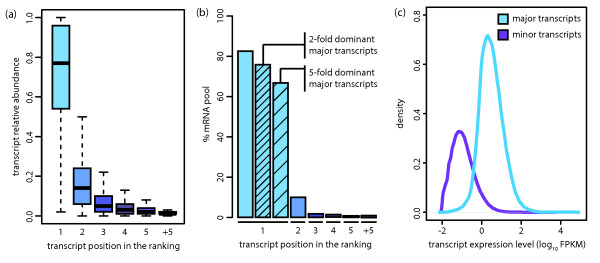
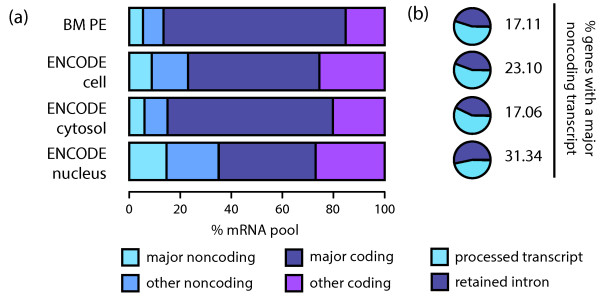
Background: RNA sequencing has opened new avenues for the study of transcriptome composition. Significant evidence has accumulated showing that the human transcriptome contains in excess of a hundred thousand different transcripts. However, it is still not clear to what extent this diversity prevails when considering the relative abundances of different transcripts from the same gene. Results: Here we show that, in a given condition, most protein coding genes have one major transcript expressed at significantly higher level than others, that in human tissues the major transcripts contribute almost 85 percent to the total mRNA from protein coding loci, and that often the same major transcript is expressed in many tissues. We detect a high degree of overlap between the set of major transcripts and a recently published set of alternatively spliced transcripts that are predicted to be translated utilizing proteomic data. Thus, we hypothesize that although some minor transcripts may play a functional role, the major ones are likely to be the main contributors to the proteome. However, we still detect a non-negligible fraction of protein coding genes for which the major transcript does not code a protein. Conclusions: Overall, our findings suggest that the transcriptome from protein coding loci is dominated by one transcript per gene and that not all the transcripts that contribute to transcriptome diversity are equally likely to contribute to protein diversity. This observation can help to prioritize candidate targets in proteomics research and to predict the functional impact of the detected changes in variation studies.
Overview
The claims and statistics of this paper haven’t been checked yet.
Free: it reads the open-access text and checks the first 5 claims that cite a source we can check. Create a free account to check every claim.
Integrity signals
Registry
Cites
Statistics
Figures
Verification
Claims the paper makes
The claims and statistics of this paper haven’t been checked yet.
Free: it reads the open-access text and checks the first 5 claims that cite a source we can check. Create a free account to check every claim.
Claims other papers make about this one
Each is checked against this paper’s own text: does it say what the citing paper says it does?
The cited source says what the claim attributes to it.
In the citing paper
“More specifically, for genes with multiple isoforms, many are expressed at an extremely low level in comparison to the most abundant isoforms (Gonzàlez-Porta et al., 2013) (Figure 3A).”
From Impact of Alternative Splicing on the Human Proteome (2017) · cites this paper as Gonzàlez-Porta et al., 2013
The cited source says what the claim attributes to it.
In the citing paper
“A recent result that has a potentially significant impact on interpretation of proteomic data is the finding that most genes, in a given cell-type, likely express only a single ‘dominant’ transcript70,71.”
From Decoding neuroproteomics: integrating the genome, translatome and functional anatomy (2014) · cites this paper as [70]
In the citing paper
“The relevance of gene-level analyses is also supported by recent surveys of transcription, which have shown that each gene tends to have a dominant isoform that accounts for far more of the total expression for that gene than any of the remaining isoforms [46,47].”
From voom: precision weights unlock linear model analysis tools for RNA-seq read counts (2014) · cites this paper as [47]
Self-check
Percentages, sums and reported differences re-computed from the paper’s own numbers.
The self-check needs the paper’s full text.
Citations
Cites
Controlling the False Discovery Rate: A Practical and Powerful Approach to Multiple Testing
Benjamini, Y., & Hochberg, Y. (1995) · Journal of the Royal Statistical Society Series B: Statistical Methodology · doi:10.1111/j.2517-6161.1995.tb02031.x · Cited by 109,482 · cited 1×
“05 (Benjamini and Hochberg correction [57]) was used as a threshold for the identification of significant GO terms.”
MethodSystematic and integrative analysis of large gene lists using DAVID bioinformatics resources
Huang, D. W., Sherman, B. T., & Lempicki, R. A. (2009) · Nature Protocols · doi:10.1038/nprot.2008.211 · Cited by 35,890 · cited 1×
“GO analyses were performed with the DAVID software [55, 56].”
MethodUltrafast and memory-efficient alignment of short DNA sequences to the human genome.
Langmead, B., Trapnell, C., Pop, M., & Salzberg, S. L. (2009) · Genome Biology · doi:10.1186/gb-2009-10-3-r25 · Cited by 21,849
An integrated encyclopedia of DNA elements in the human genome
The ENCODE Project Consortium (2012) · Nature · doi:10.1038/nature11247 · Cited by 18,072
Trapnell, C., Williams, B. A., Pertea, G., Mortazavi, A., Kwan, G., van Baren, M. J., Salzberg, S. L., Wold, B. J., & Pachter, L. (2010) · Nature Biotechnology · doi:10.1038/nbt.1621 · Cited by 15,556
Huang, D. W., Sherman, B. T., & Lempicki, R. A. (2009) · Nucleic Acids Research · doi:10.1093/nar/gkn923 · Cited by 14,108 · cited 1×
“GO analyses were performed with the DAVID software [55, 56].”
MethodMapping and quantifying mammalian transcriptomes by RNA-Seq
Mortazavi, A., Williams, B. A., McCue, K., Schaeffer, L., & Wold, B. (2008) · Nature Methods · doi:10.1038/nmeth.1226 · Cited by 13,696 · cited 1×
“Recently, applications of high throughput sequencing to RNA, known as RNA-seq [2], have opened new avenues for the study of transcriptome composition [3].”
BackgroundRNA-Seq: a revolutionary tool for transcriptomics
Wang, Z., Gerstein, M., & Snyder, M. (2009) · Nature Reviews Genetics · doi:10.1038/nrg2484 · Cited by 13,174 · cited 12×
“Most protein coding genes express one dominant transcript First, examining only the tissue data, and similarly to previous RNA-seq-based transcriptome studies, we detect more than one transcript for approximately 85% of the studied genes (83.70% to 89.95%, SD = 1.84, Additional File 2 - Table S1) and a total of 105,45…”
BackgroundInfluentialTopHat: discovering splice junctions with RNA-Seq
Trapnell, C., Pachter, L., & Salzberg, S. L. (2009) · Bioinformatics · doi:10.1093/bioinformatics/btp120 · Cited by 11,617
Landscape of transcription in human cells
Djebali, S., Davis, C. A., Merkel, A., Dobin, A., Lassmann, T., Mortazavi, A., Tanzer, A., Lagarde, J., Lin, W., Schlesinger, F., et al. (2012) · Nature · doi:10.1038/nature11233 · Cited by 5,187 · cited 2×
“[13], but in most cases the major transcripts are dominating the transcriptome.”
BackgroundSelf-citation
Research works printed but not linked: 1
- Taneri B Snyder B Gaasterland T Distribution of alternatively spliced transcript isoforms within human and mouse transcriptomes. J OMICS Res 2011 14 1 5
Cited by
Tissue-based map of the human proteome
Uhlén, M., Fagerberg, L., Hallström, B. M., Lindskog, C., Oksvold, P., Mardinoglu, A., Sivertsson, Å., Kampf, C., Sjöstedt, E., Asplund, A., et al. (2015) · Science · doi:10.1126/science.1260419 · Cited by 15,286
“In most cases, one of the isoforms dominates across all tissues, which is also consistent with earlier studies (34).”
Resultvoom: precision weights unlock linear model analysis tools for RNA-seq read counts
Law, C. W., Chen, Y., Shi, W., & Smyth, G. K. (2014) · Genome Biology · doi:10.1186/gb-2014-15-2-r29 · Cited by 6,155
“The relevance of gene-level analyses is also supported by recent surveys of transcription have shown that each gene tends to have a dominant isoform that accounts for far more of the total expression for that gene that do any of the remaining isoforms [46, 47].”
BackgroundDifferential analyses for RNA-seq: transcript-level estimates improve gene-level inferences
Soneson, C., Love, M. I., & Robinson, M. D. (2015) · F1000Research · doi:10.12688/f1000research.7563.1 · Cited by 3,929
Long non-coding RNAs: definitions, functions, challenges and recommendations
Mattick, J. S., Amaral, P. P., Carninci, P., Carpenter, S., Chang, H. Y., Chen, L.-L., Chen, R., Dean, C., Dinger, M. E., Fitzgerald, K. A., et al. (2023) · Nature Reviews Molecular Cell Biology · doi:10.1038/s41580-022-00566-8 · Cited by 2,356
The human transcriptome across tissues and individuals
Melé, M., Ferreira, P. G., Reverter, F., DeLuca, D. S., Monlong, J., Sammeth, M., Young, T. R., Goldmann, J. M., Pervouchine, D. D., Sullivan, T. J., et al. (2015) · Science · doi:10.1126/science.aaa0355 · Cited by 1,304
A deep proteome and transcriptome abundance atlas of 29 healthy human tissues
Wang, D., Eraslan, B., Wieland, T., Hallström, B., Hopf, T., Zolg, D. P., Zecha, J., Asplund, A., Li, L., Meng, C., et al. (2019) · Molecular Systems Biology · doi:10.15252/msb.20188503 · Cited by 750
Nanopore native RNA sequencing of a human poly(A) transcriptome
Workman, R. E., Tang, A. D., Tang, P. S., Jain, M., Tyson, J. R., Razaghi, R., Zuzarte, P. C., Gilpatrick, T., Payne, A., Quick, J., et al. (2019) · Nature Methods · doi:10.1038/s41592-019-0617-2 · Cited by 725
Deep learning sequence-based ab initio prediction of variant effects on expression and disease risk
Zhou, J., Theesfeld, C. L., Yao, K., Chen, K. M., Wong, A. K., & Troyanskaya, O. G. (2018) · Nature Genetics · doi:10.1038/s41588-018-0160-6 · Cited by 559
The rules and impact of nonsense-mediated mRNA decay in human cancers
Lindeboom, R. G. H., Supek, F., & Lehner, B. (2016) · Nature Genetics · doi:10.1038/ng.3664 · Cited by 545
Petryszak, R., Keays, M., Tang, Y. A., Fonseca, N. A., Barrera, E., Burdett, T., Füllgrabe, A., Fuentes, A. M.-P., Jupp, S., Koskinen, S., et al. (2016) · Nucleic Acids Research · doi:10.1093/nar/gkv1045 · Cited by 530
“We have currently suspended reporting baseline expression for splice variants for several reasons––first, uncertainty about the reliability of the methods currently available (29), second, careful research has shown that for most genes in most conditions there is one dominant isoform expressed (20), and finally becaus…”
BackgroundAberrant RNA splicing in cancer; expression changes and driver mutations of splicing factor genes
Sveen, A., Kilpinen, S., Ruusulehto, A., Lothe, R. A., & Skotheim, R. I. (2016) · Oncogene · doi:10.1038/onc.2015.318 · Cited by 470
Expression Atlas: gene and protein expression across multiple studies and organisms
Papatheodorou, I., Fonseca, N. A., Keays, M., Tang, Y. A., Barrera, E., Bazant, W., Burke, M., Füllgrabe, A., Fuentes, A. M.-P., George, N., et al. (2018) · Nucleic Acids Research · doi:10.1093/nar/gkx1158 · Cited by 418
“We will be adjusting our analysis pipelines and web interfaces to process alternative transcript quantifications and visualize dominant transcripts for each gene (29).”
MethodAlternative mRNA transcription, processing, and translation: insights from RNA sequencing
de Klerk, E., & ‘t Hoen, P. A. C. (2015) · Trends in Genetics · doi:10.1016/j.tig.2015.01.001 · Cited by 350
Alternative Splicing May Not Be the Key to Proteome Complexity
Tress, M. L., Abascal, F., & Valencia, A. (2017) · Trends in Biochemical Sciences · doi:10.1016/j.tibs.2016.08.008 · Cited by 339
“‘Dominant’ RNA-seq transcripts are those that are expressed at least fivefold more than other transcripts across all tissues or cell lines [38].”
BackgroundResultInfluentialThe impact of nonsense-mediated mRNA decay on genetic disease, gene editing and cancer immunotherapy
Lindeboom, R. G. H., Vermeulen, M., Lehner, B., & Supek, F. (2019) · Nature Genetics · doi:10.1038/s41588-019-0517-5 · Cited by 327
Li, S., Yamada, M., Han, X., Ohler, U., & Benfey, P. N. (2016) · Developmental Cell · doi:10.1016/j.devcel.2016.10.012 · Cited by 311
The effects of death and post-mortem cold ischemia on human tissue transcriptomes
Ferreira, P. G., Muñoz-Aguirre, M., Reverter, F., Sá Godinho, C. P., Sousa, A., Amadoz, A., Sodaei, R., Hidalgo, M. R., Pervouchine, D., Carbonell-Caballero, J., et al. (2018) · Nature Communications · doi:10.1038/s41467-017-02772-x · Cited by 309
Reyes, A., & Huber, W. (2018) · Nucleic Acids Research · doi:10.1093/nar/gkx1165 · Cited by 290
“Transcriptome-wide studies have shown that most genes express one major isoform at high levels in a given cell type, whereas the remaining (‘minor’) isoforms are expressed at lower levels (9,59).”
BackgroundExpanded Expression Landscape and Prioritization of Circular RNAs in Mammals
Ji, P., Wu, W., Chen, S., Zheng, Y., Zhou, L., Zhang, J., Cheng, H., Yan, J., Zhang, S., Yang, P., et al. (2019) · Cell Reports · doi:10.1016/j.celrep.2019.02.078 · Cited by 260
Vitulo, N., Forcato, C., Carpinelli, E. C., Telatin, A., Campagna, D., D'Angelo, M., Zimbello, R., Corso, M., Vannozzi, A., Bonghi, C., et al. (2014) · BMC Plant Biology · doi:10.1186/1471-2229-14-99 · Cited by 251
“Similar studies have been recently reported also for human where a survey on 16 different tissues revealed that 35% of the genes tend to express the same major isoform [21].”
BackgroundResultTian, L., Jabbari, J. S., Thijssen, R., Gouil, Q., Amarasinghe, S. L., Voogd, O., Kariyawasam, H., Du, M. R. M., Schuster, J., Wang, C., et al. (2021) · Genome Biology · doi:10.1186/s13059-021-02525-6 · Cited by 217
“2F), consistent with previous results [21].”
Sterne-Weiler, T., Weatheritt, R. J., Best, A. J., Ha, K. C. H., & Blencowe, B. J. (2018) · Molecular Cell · doi:10.1016/j.molcel.2018.08.018 · Cited by 213
“These results contrast with previous proposals that the vast majority of mammalian genes express a single major splice variant (Gonzàlez-Porta et al., 2013; Tress et al., 2017), and instead are consistent with data indicating that a substantial fraction of genes express multiple major isoforms either within or between…”
ResultThe Dimensions, Dynamics, and Relevance of the Mammalian Noncoding Transcriptome
Deveson, I. W., Hardwick, S. A., Mercer, T. R., & Mattick, J. S. (2017) · Trends in Genetics · doi:10.1016/j.tig.2017.04.004 · Cited by 210
“Most genes express a dominant spliced isoform that accounts for 80% of transcription in an individual tissue, and multiple minor alternative isoforms [30,73].”
BackgroundContext-aware transcript quantification from long-read RNA-seq data with Bambu
Chen, Y., Sim, A., Wan, Y. K., Yeo, K., Lee, J. J. X., Ling, M. H., Love, M. I., & Göke, J. (2023) · Nature Methods · doi:10.1038/s41592-023-01908-w · Cited by 191
Variation in genomic landscape of clear cell renal cell carcinoma across Europe
Scelo, G., Riazalhosseini, Y., Greger, L., Letourneau, L., Gonzàlez-Porta, M., Wozniak, M. B., Bourgey, M., Harnden, P., Egevad, L., Jackson, S. M., et al. (2014) · Nature Communications · doi:10.1038/ncomms6135 · Cited by 193
Self-citationImpact of Alternative Splicing on the Human Proteome
Liu, Y., Gonzàlez-Porta, M., Santos, S., Brazma, A., Marioni, J. C., Aebersold, R., Venkitaraman, A. R., & Wickramasinghe, V. O. (2017) · Cell Reports · doi:10.1016/j.celrep.2017.07.025 · Cited by 190
Self-citationTranscriptome and translatome co-evolution in mammals
Wang, Z.-Y., Leushkin, E., Liechti, A., Ovchinnikova, S., Mößinger, K., Brüning, T., Rummel, C., Grützner, F., Cardoso-Moreira, M., Janich, P., et al. (2020) · Nature · doi:10.1038/s41586-020-2899-z · Cited by 185
Creating reference gene annotation for the mouse C57BL6/J genome assembly
Mudge, J. M., & Harrow, J. (2015) · Mammalian Genome · doi:10.1007/s00335-015-9583-x · Cited by 177
Self-citationThe status of the human gene catalogue
Amaral, P., Carbonell-Sala, S., De La Vega, F. M., Faial, T., Frankish, A., Gingeras, T., Guigo, R., Harrow, J. L., Hatzigeorgiou, A. G., Johnson, R., et al. (2023) · Nature · doi:10.1038/s41586-023-06490-x · Cited by 172
Self-citationUniversal Alternative Splicing of Noncoding Exons
Deveson, I. W., Brunck, M. E. G., Blackburn, J., Tseng, E., Hon, T., Clark, T. A., Clark, M. B., Crawford, J., Dinger, M. E., Nielsen, L. K., et al. (2018) · Cell Systems · doi:10.1016/j.cels.2017.12.005 · Cited by 167
Soneson, C., Matthes, K. L., Nowicka, M., Law, C. W., & Robinson, M. D. (2016) · Genome Biology · doi:10.1186/s13059-015-0862-3 · Cited by 140
“This type of switch event was studied in detail in a previous publication [32] where it was shown that many genes underwent this type of modification between conditions.”
BackgroundVan den Berge, K., Soneson, C., Robinson, M. D., & Clement, L. (2017) · Genome Biology · doi:10.1186/s13059-017-1277-0 · Cited by 126
“The literature concerning alternative splicing has often focussed on isoform dominance, where it is hypothesised that many genes have dominant isoforms and a major mechanism of DTU would be a switch of dominance between two transcripts [28].”
BackgroundThe state of play in higher eukaryote gene annotation
Mudge, J. M., & Harrow, J. (2016) · Nature Reviews Genetics · doi:10.1038/nrg.2016.119 · Cited by 194
Self-citationMost Highly Expressed Protein-Coding Genes Have a Single Dominant Isoform
Ezkurdia, I., Rodriguez, J. M., Carrillo-de Santa Pau, E., Vázquez, J., Valencia, A., & Tress, M. L. (2015) · Journal of Proteome Research · doi:10.1021/pr501286b · Cited by 123
RNA splicing analysis using heterogeneous and large RNA-seq datasets
Vaquero-Garcia, J., Aicher, J. K., Jewell, S., Gazzara, M. R., Radens, C. M., Jha, A., Green, C. J., Norton, S., Lahens, N. F., Grant, G. R., et al. (2023) · Nature Communications · doi:10.1038/s41467-023-36585-y · Cited by 141
“Previous studies showed that the majority of humangenes are alternatively spliced with over a third of them shown to change their major isoform across 16 human tissues 1 .”
BackgroundIncredible RNA: Dual Functions of Coding and Noncoding
Nam, J., Choi, S.-W., & Yu, B. (2016) · Molecules and Cells · doi:10.14348/molcells.2016.0039 · Cited by 123
“64% of protein-coding genes in primary tissues express the major isoform that lacks an annotated CDS in GENCODE (Gonzalez-Porta et al., 2013).”
BackgroundInfluentialMoulos, P., & Hatzis, P. (2014) · Nucleic Acids Research · doi:10.1093/nar/gku1273 · Cited by 120
“This is partly justified by a recent publication (30) where the authors analyzed transcript expression across several human tissues and cell lines and concluded that there is one dominant transcript per gene.”
Alasoo, K., Martinez, F. O., Hale, C., Gordon, S., Powrie, F., Dougan, G., Mukhopadhyay, S., & Gaffney, D. J. (2015) · Scientific Reports · doi:10.1038/srep12524 · Cited by 102
Zhang, H., Dou, S., He, F., Luo, J., Wei, L., & Lu, J. (2018) · PLOS Biology · doi:10.1371/journal.pbio.2003903 · Cited by 93
Most Alternative Isoforms Are Not Functionally Important
Tress, M. L., Abascal, F., & Valencia, A. (2017) · Trends in Biochemical Sciences · doi:10.1016/j.tibs.2017.04.002 · Cited by 94
“By way of contrast, where RNA level studies do find dominant transcripts [4], the overlap with the main proteomics isoform is remarkably low [3].”
BackgroundNon-coding transcript variants of protein-coding genes – what are they good for?
Dhamija, S., & Menon, M. B. (2018) · RNA Biology · doi:10.1080/15476286.2018.1511675 · Cited by 115
An atlas of mouse CD4+ T cell transcriptomes
Stubbington, M. J., Mahata, B., Svensson, V., Deonarine, A., Nissen, J. K., Betz, A. G., & Teichmann, S. A. (2015) · Biology Direct · doi:10.1186/s13062-015-0045-x · Cited by 90
“The major mRNA transcript from a gene can vary between cell types without there being overall differential expression of the gene [51].”
BackgroundMethodResultInfluentialAn analysis of tissue-specific alternative splicing at the protein level
Rodríguez, J. M., Pozo, F., Domenico, T. D., Vázquez, J., & Tress, M. L. (2020) · PLoS Computational Biology · doi:10.1371/journal.pcbi.1008287 · Cited by 100
Eksi, R., Li, H.-D., Menon, R., Wen, Y., Omenn, G. S., Kretzler, M., & Guan, Y. (2013) · PLoS Computational Biology · doi:10.1371/journal.pcbi.1003314 · Cited by 92
“Recent studies found that the same principal isoform is often present in different tissues [72–75].”
BackgroundBrinegar, A. E., Xia, Z., Loehr, J. A., Li, W., Rodney, G. G., & Cooper, T. A. (2017) · eLife · doi:10.7554/elife.27192 · Cited by 84
Wan, Q., & Su, J. (2015) · Scientific Reports · doi:10.1038/srep12946 · Cited by 81
Single Molecule Fluorescence Approaches Shed Light on Intracellular RNAs
Pitchiaya, S., Heinicke, L. A., Custer, T. C., & Walter, N. G. (2014) · Chemical Reviews · doi:10.1021/cr400496q · Cited by 88
APPRIS: selecting functionally important isoforms
Rodriguez, J. M., Pozo, F., Cerdán-Vélez, D., Di Domenico, T., Vázquez, J., & Tress, M. L. (2022) · Nucleic Acids Research · doi:10.1093/nar/gkab1058 · Cited by 75
“Although methods based on RNAseq information have been trialled (26,27), they do not function well (19), and have not been scaled up.”
RNA splicing programs define tissue compartments and cell types at single-cell resolution
Olivieri, J. E., Dehghannasiri, R., Wang, P. L., Jang, S., de Morree, A., Tan, S. Y., Ming, J., Ruohao Wu, A., Tabula Sapiens Consortium, Quake, S. R., et al. (2021) · eLife · doi:10.7554/elife.70692 · Cited by 73
Sethi, I., Romano, R., Gluck, C. B., Smalley, K., Vojtěšek, B., Buck, M. J., & Sinha, S. (2015) · BMC Genomics · doi:10.1186/s12864-015-1793-9 · Cited by 85
“gene and often that same transcript is expressed across many cell-types [52].”
BackgroundSalovska, B., Zhu, H., Gandhi, T., Frank, M., Li, W., Rosenberger, G., Wu, C., Germain, P., Zhou, H., Hodny, Z., et al. (2020) · Molecular Systems Biology · doi:10.15252/msb.20199170 · Cited by 71
“…transcripts are less likely to manifest on protein level (Fig EV1A; Liu et al, 2017b), and that most protein coding genes have one major transcript expressed at significantly higher levels than the others (Gonzalez-Porta et al, 2013; Abascal et al, 2015; Blencowe, 2017; Tress et al, 2017a).”
Backgroundde la Fuente, L., Arzalluz-Luque, Á., Tardáguila, M., del Risco, H., Martí, C., Tarazona, S., Salguero, P., Scott, R., Lerma-Aguilera, A., Alastrue‐Agudo, A., et al. (2020) · Genome biology · doi:10.1186/s13059-020-02028-w · Cited by 81
Quantification of translation uncovers the functions of the alternative transcriptome
Calviello, L., Hirsekorn, A., & Ohler, U. (2020) · Nature Structural & Molecular Biology · doi:10.1038/s41594-020-0450-4 · Cited by 80
Decoding neuroproteomics: integrating the genome, translatome and functional anatomy
Kitchen, R. R., Rozowsky, J. S., Gerstein, M. B., & Nairn, A. C. (2014) · Nature Neuroscience · doi:10.1038/nn.3829 · Cited by 63
Functional transcriptomics in the post-ENCODE era
Mudge, J. M., Frankish, A., & Harrow, J. (2013) · Genome Research · doi:10.1101/gr.161315.113 · Cited by 68
Self-citationUncovering the impacts of alternative splicing on the proteome with current omics techniques
Reixachs‐Solé, M., & Eyras, E. (2022) · WIREs RNA · doi:10.1002/wrna.1707 · Cited by 63
“However, this definition clashes with evidence indicating that the most expressed transcript isoform from a gene may vary between tissues and disease conditions (Gonzàlez-Porta et al., 2013; Sebestyén et al., 2015).”
BackgroundIsoform Age - Splice Isoform Profiling Using Long-Read Technologies
Paoli‐Iseppi, R. D., Gleeson, J., & Clark, M. B. (2021) · Frontiers in Molecular Biosciences · doi:10.3389/fmolb.2021.711733 · Cited by 73
“There is considerable debate over functional roles for alternative transcripts, with some studies reporting a single major isoform for most genes and little evidence for protein variants due to alternative splicing (Djebali et al., 2012; Gonzàlez-Porta et al., 2013; Tress et al., 2017).”
BackgroundInFusion: Advancing Discovery of Fusion Genes and Chimeric Transcripts from Deep RNA-Sequencing Data
Okonechnikov, K., Imai‐Matsushima, A., Paul, L., Seitz, A., Meyer, T. F., & García-Alcalde, F. (2016) · PLoS ONE · doi:10.1371/journal.pone.0167417 · Cited by 73
IDP-denovo: de novo transcriptome assembly and isoform annotation by hybrid sequencing
Fu, S., Ma, Y., Yao, H., Xu, Z., Chen, S., Song, J., & Au, K. F. (2018) · Bioinformatics · doi:10.1093/bioinformatics/bty098 · Cited by 60
Tissue-Specific Evolution of Protein Coding Genes in Human and Mouse
Kryuchkova-Mostacci, N., & Robinson‐Rechavi, M. (2015) · PLoS ONE · doi:10.1371/journal.pone.0131673 · Cited by 71
“But this might not be the transcript most expressed and used in all tissues (Gonzalez-Porta et al. 2013).”
BackgroundObstacles to detecting isoforms using full-length scRNA-seq data
Westoby, J., Artemov, P., Hemberg, M., & Ferguson‐Smith, A. C. (2020) · Genome biology · doi:10.1186/s13059-020-01981-w · Cited by 59
Reixachs‐Solé, M., Ruiz‐Orera, J., Albà, M. M., & Eyras, E. (2020) · Nature Communications · doi:10.1038/s41467-020-15634-w · Cited by 60
From the Human Genome to the Human Proteome
Muñoz, J., & Heck, A. J. R. (2014) · Angewandte Chemie International Edition · doi:10.1002/anie.201406545 · Cited by 54
Assessing the functional relevance of splice isoforms
Pozo, F., Martinez-Gomez, L., Walsh, T. A., Rodriguez, J. M., Di Domenico, T., Abascal, F., Vazquez, J., & Tress, M. L. (2021) · NAR Genomics and Bioinformatics · doi:10.1093/nargab/lqab044 · Cited by 49
“The general consensus here is that many protein-coding genes have a single main protein isoform (15,40,41), though different approaches have been taken to predict this main isoform.”
BackgroundThe prognostic potential of alternative transcript isoforms across human tumors
Trincado, J. L., Sebestyén, E., Pagés, A., & Eyras, E. (2016) · Genome Medicine · doi:10.1186/s13073-016-0339-3 · Cited by 63
“On the other hand, gene expression summarizes the output of RNA transcripts from a gene locus, which is mostly explained by one transcript isoform [10].”
BackgroundNatural antisense transcripts as versatile regulators of gene expression
Werner, A., Kanhere, A., Wahlestedt, C., & Mattick, J. S. (2024) · Nature Reviews Genetics · doi:10.1038/s41576-024-00723-z · Cited by 81
Genome annotation: from human genetics to biodiversity genomics
Guigó, R. (2023) · Cell Genomics · doi:10.1016/j.xgen.2023.100375 · Cited by 49
“Moreover, within protein-coding genes, often the same isoform is the most highly expressed across multiple biological conditions.(88,89) Thus, GENCODE v.”
BackgroundBi, Y., Meyer, A., Downs, G. S., Shi, X., El‐Kereamy, A., LUKENS, L. N., & Rothstein, S. J. (2014) · BMC Genomics · doi:10.1186/1471-2164-15-77 · Cited by 52
“More genes were expressed under N limitation than under sufficient N, with a 4-8% higher number if the FPKM cutoff is greater than 1, and with a 9-26% higher number if FPKM cutoff is greater than 5 (Table 1).”
BackgroundInfluentialGenome annotation for clinical genomic diagnostics: strengths and weaknesses
Steward, C. A., Parker, A. P. J., Minassian, B. A., Sisodiya, S. M., Frankish, A., & Harrow, J. (2017) · Genome Medicine · doi:10.1186/s13073-017-0441-1 · Cited by 56
“Although there can be an abundant transcript that is expressed in a particular cell, the same transcript might not dominate elsewhere, and, even if a dominant transcript is identified, the transcript might not be functional [39].”
BackgroundSelf-citationWidespread exon skipping triggers degradation by nuclear RNA surveillance in fission yeast
Bitton, D. A., Atkinson, S. R., Rallis, C., Smith, G. C., Ellis, D., Jeffares, D. C., Chen, Y. Y. C., Małecki, M., Codlin, S., Lubas, M., et al. (2015) · Genome Research · doi:10.1101/gr.185371.114 · Cited by 57
“dominant transcript that contributes to the proteome in multiple tissues (Gonzàlez-Porta et al. 2013).”
BackgroundTop-ranked expressed gene transcripts of human protein-coding genes investigated with GTEx dataset
Tung, K.-F., Pan, C., Chen, C.-H., & Lin, W. (2020) · Scientific Reports · doi:10.1038/s41598-020-73081-5 · Cited by 59
Lee, V. V., Judd, L. M., Jex, A. R., Holt, K. E., Tonkin, C. J., & Ralph, S. A. (2021) · mSystems · doi:10.1128/msystems.01081-20 · Cited by 50
“expected given the propensity for a dominant canonical transcript (55).”
BackgroundYao, Q.-Y., Xia, E., Liu, F., & Gao, L. (2014) · Gene · doi:10.1016/j.gene.2014.12.005 · Cited by 47
Identification and characterization of the GhHsp20 gene family in Gossypium hirsutum
Ma, W., Zhao, T., Li, J., Liu, B., Fang, L., Hu, Y., & Zhang, T. (2016) · Scientific Reports · doi:10.1038/srep32517 · Cited by 52
ISOexpresso: a web-based platform for isoform-level expression analysis in human cancer
Yang, I. S., Son, H., Kim, S., & Kim, S. (2016) · BMC Genomics · doi:10.1186/s12864-016-2852-6 · Cited by 44
“…reported as a gene for which non-canonical isoform (ENST00000361309; uc003dwt.1) is predominantly and recurrently expressed in 16 tissues (adipose, adrenal, brain, breast, colon, heart, kidney, liver, lung, lymph node, ovary, prostate, skeletal muscle, testes, thyroid, and white blood cells) [30].”
BackgroundBao, J., Tang, C., Yuan, S., Porse, B. T., & Yan, W. (2014) · Development · doi:10.1242/dev.115642 · Cited by 53
“…E V E LO P M E N T (cut-off: FPKM ≥1) and absent in WT testes (cut-off: FPKM 0.3) and compared their features with those displaying the highest expression levels (FPKM) in WT testes, since the predominant isoforms are the main contributors to the proteome (Gonzàlez-Porta et al., 2013) (Fig.”
BackgroundInfluentialAnnalora, A. J., Marcus, C. B., & Iversen, P. L. (2017) · Drug Metabolism and Disposition · doi:10.1124/dmd.116.073254 · Cited by 50
“Although computational studies indicate that 85% of all human mRNA comes from a single major transcript (Gonzàlez-Porta et al., 2013), the P450 superfamily of genes is highly diverse at the genomic level, making it uniquely sensitive to alternate splicing events that alter the biologic output of both genetic and epige…”
BackgroundSun, H., Hao, P., Ma, Q., Zhang, M., Qin, Y., Wei, H., Su, J., Wang, H., Gu, L., Wang, N., et al. (2018) · BMC Genomics · doi:10.1186/s12864-018-5047-5 · Cited by 56
Ma, J., Wang, J., Ghoraie, L. S., Men, X., Haibe‐Kains, B., & Dai, P. (2019) · Frontiers in Pharmacology · doi:10.3389/fphar.2019.00109 · Cited by 58
Kahraman, A., Karakulak, T., Szklarczyk, D., & von Mering, C. (2020) · Scientific Reports · doi:10.1038/s41598-020-71221-5 · Cited by 44
RNA regulatory mechanisms controlling TGF-β signaling and EMT in cancer
Bracken, C. P., Goodall, G. J., & Gregory, P. A. (2024) · Seminars in Cancer Biology · doi:10.1016/j.semcancer.2024.06.001 · Cited by 46
Li, H., Menon, R., Omenn, G. S., & Guan, Y. (2014) · PROTEOMICS · doi:10.1002/pmic.201400170 · Cited by 38
Comparative epigenomics reveals evolution of duplicated genes in potato and tomato
Wang, L., Xie, J., Hu, J., Lan, B., You, C., Li, F., Wang, Z., & Wang, H. (2017) · The Plant Journal · doi:10.1111/tpj.13790 · Cited by 43
Quantitative principles of cis-translational control by general mRNA sequence features in eukaryotes
(2019) · doi:10.1186/s13059-019-1761-9 · Cited by 39
Identification of Differentially Expressed Splice Variants by the Proteogenomic Pipeline Splicify
Komor, M. A., Pham, T. V., Hiemstra, A. C., Piersma, S. R., Bolijn, A. S., Schelfhorst, T., Diemen, P. M. D., Tijssen, M., Sebra, R., Ashby, M., et al. (2017) · Molecular & Cellular Proteomics · doi:10.1074/mcp.tir117.000056 · Cited by 42
“The aberrant isoforms are often lower expressed than canonical proteins, which further complicates differential isoform expression analysis on protein level (5, 51).”
Donaldson, M. E., Ostrowski, L., Goulet, K. M., & Saville, B. J. (2017) · BMC Genomics · doi:10.1186/s12864-017-3720-8 · Cited by 40
Sulakhe, D., D’Souza, M., Wang, S., Balasubramanian, S., Athri, P., Xie, B., Canzar, S., Agam, G., Gilliam, T. C., & Maltsev, N. (2019) · Briefings in Bioinformatics · doi:10.1093/bib/bby047 · Cited by 37
“Such definition was based on the observation that in human and mouse most genes express one primary transcript [84, 89, 90].”
BackgroundGenome-wide identification and characterization of HSP70 gene family in four species of cotton
Rehman, A., Atif, R. M., Qayyum, A., Du, X., Hinze, L. L., & Azhar, M. T. (2020) · Genomics · doi:10.1016/j.ygeno.2020.07.039 · Cited by 37
Yao, Q.-Y., Huang, H., Tong, Y., Xia, E., & Gao, L. (2016) · Frontiers in Plant Science · doi:10.3389/fpls.2016.00163 · Cited by 39
Analysis of Stop-Gain and Frameshift Variants in Human Innate Immunity Genes
Rausell, A., Mohammadi, P., McLaren, P. J., Bartha, I., Xénarios, I., Fellay, J., & Telenti, A. (2014) · PLoS Computational Biology · doi:10.1371/journal.pcbi.1003757 · Cited by 38
“As an alternative definition of principal isoform, we identified the transcript with a recurrent highest expression level across tissues as provided by [25].”
BackgroundResultRe-evaluating the impact of alternative RNA splicing on proteomic diversity
Manuel, J. M., Guilloy, N., Khatir, I., Roucou, X., & Laurent, B. (2023) · Frontiers in Genetics · doi:10.3389/fgene.2023.1089053 · Cited by 36
Viloria, K., & Hill, N. J. (2016) · BioMolecular Concepts · doi:10.1515/bmc-2016-0004 · Cited by 36
The annotation of GBA1 has been concealed by its protein-coding pseudogene GBAP1
Gustavsson, E. K., Sethi, S., Gao, Y., Brenton, J. W., García-Ruiz, S., Zhang, D., Garza, R., Reynolds, R. H., Evans, J. R., Chen, Z., et al. (2024) · Science Advances · doi:10.1126/sciadv.adk1296 · Cited by 30
“Our long-read RNA-seq analysis of the parent gene GBA1 and its pseudogene GBAP1 demonstrated notable diversity in transcription and showed that, contrary to expectation ( 40 , 41 ), no single transcript dominated expression of either gene in human brain.”
FRAMA: from RNA-seq data to annotated mRNA assemblies
Bens, M., Sahm, A., Groth, M., Jahn, N., Morhart, M., Holtze, S., Hildebrandt, T. B., Platzer, M., & Szafranski, K. (2016) · BMC Genomics · doi:10.1186/s12864-015-2349-8 · Cited by 36
“It is noteworthy that, for protein-coding genes, even the most highly expressed transcript is not necessarily protein-coding [15].”
BackgroundPrognostic value and potential function of splicing events in prostate adenocarcinoma
Huang, Z., He, R., & Mo, Z. (2018) · International Journal of Oncology · doi:10.3892/ijo.2018.4563 · Cited by 32
“transcripts of genes generated by AS (47-50).”
The Protein‐Coding Human Genome: Annotating High‐Hanging Fruits
Hatje, K., Mühlhausen, S., Simm, D., & Kollmar, M. (2019) · BioEssays · doi:10.1002/bies.201900066 · Cited by 34
Context-Dependent Regulation of Gene Expression by Non-Canonical Small RNAs
Plawgo, K., & Raczyńska, K. D. (2022) · Non-Coding RNA · doi:10.3390/ncrna8030029 · Cited by 37
Wang, N., Xia, E., & Gao, L. (2015) · Plant Gene · doi:10.1016/j.plgene.2015.11.003 · Cited by 29
The nexus of long noncoding RNAs, splicing factors, alternative splicing and their modulations
Malakar, P., Shukla, S. K., Mondal, M., Kar, R. K., & Siddiqui, J. A. (2023) · RNA Biology · doi:10.1080/15476286.2023.2286099 · Cited by 33
“Protein coding loci also express lncRNA through alternative splicing [86,87], and surprisingly the major transcript produced by 12% of human protein-coding loci is non-coding [88].”
Exploration of alternative splicing events in ten different grapevine cultivars
Potenza, E., Racchi, M. L., Sterck, L., Coller, E., Asquini, E., Tosatto, S. C. E., Velasco, R., de Peer, Y. V., & Cestaro, A. (2015) · BMC Genomics · doi:10.1186/s12864-015-1922-5 · Cited by 32
“In humans, nearly all multi-exonic genes have an AS event, although most protein coding genes seem to have one major transcript expressed at a significantly higher level than others [11, 19, 20].”
Background
Metadata
- Authors
- Gonzàlez-Porta, M., Frankish, A., Rung, J., Harrow, J., & Brazma, A.
- Affiliations
- European Bioinformatics Institute (GB)
- Wellcome Sanger Institute (GB)
- Venue
- Genome Biology
- Published
- 2013-07-01
- Volume
- 14
- Issue
- 7
- Pages
- R70-R70
- ISSN
- 1465-6906 (ISSN-L)
- 1474-760X
- PMC
- PMC4053754
- OpenAlex
- W2104224685
- Cited by
- 266
- References
- 62
- Citations by year
- 2026: 9 · 2025: 16 · 2024: 21 · 2023: 20 · 2022: 18 · 2021: 15 · 2020: 26 · 2019: 26 · 2018: 21 · 2017: 23 · 2016: 22 · 2015: 26 · 2014: 19 · 2013: 4
- FWCI
- 10.74
- Type
- journal article
- Language
- en
- Open access
- gold
- doi.org
- Licence
- cc-by
- creativecommons.org/licenses/by/2.0/ (tdm)
- creativecommons.org/licenses/by/2.0/ (vor)
- Locations
- Genome biology (publishedVersion, cc-by)
- Europe PMC (PubMed Central) (publishedVersion, cc-by)
- PubMed Central (publishedVersion, cc-by)
- PubMed (publishedVersion)
- Funders
- Wellcome Trust (098051)
- European Commission (261123, 241669)
- National Institutes of Health (5u54hg004555-04)
- National Human Genome Research Institute (U54-HG004555, 5U54HG004555, U41HG007234)
- FP7 Health
- Topics
- Life Sciences › Biochemistry, Genetics and Molecular Biology › Molecular Biology › RNA Research and Splicing
- Life Sciences › Biochemistry, Genetics and Molecular Biology › Molecular Biology › Genomics and Phylogenetic Studies
- Life Sciences › Biochemistry, Genetics and Molecular Biology › Molecular Biology › Single-cell and spatial transcriptomics
- Keywords
- transcriptome, mRNA levels, alternative splicing, protein-coding genes, human tissue, cell lines, proteome, transcriptome diversity
- MeSH terms
- Cell Line, Gene Expression Regulation, Genes, Humans, Organ Specificity, RNA, Messenger, Open Reading Frames, Gene Expression Profiling, RNA, Untranslated
About these checks
Registry, retraction, Cites and statistics results are computed, not judged, with one exception: a printed reference that no index lists is read once by a model before it counts as a citation error. Claims are extracted by a model and kept only when their quote appears verbatim in the text; each cited source is then checked, with a model’s help, for whether it says what the claim relies on. Those verdicts can be wrong — read the claim’s quote and the cited source before relying on one.
Statistics and arithmetic are recomputed, not judged.
Confidence bands are shown only for fields calibrated on our annotated test set. None is calibrated yet, so no band is shown.
What counts as a claim ›How we measure confidence ›How we check this ›
Are you an author, or do you see a problem with this page? Request a review
Data sources
Bibliographic data: Semantic Scholar, OpenAlex, Crossref.
Contains information from the Semantic Scholar Academic Graph Datasets, made available under the ODC Attribution License (ODC-BY 1.0).
Semantic Scholar’s data is described in: Kinney, R., et al. (2023). The Semantic Scholar Open Data Platform. arXiv:2301.10140.
