

Transcriptome analysis of human tissues and cell lines reveals one dominant transcript per gene
Open accessThe DOI matches its Crossref record; 60 of the 62 references it cites were found in a registry or an index.
Abstract
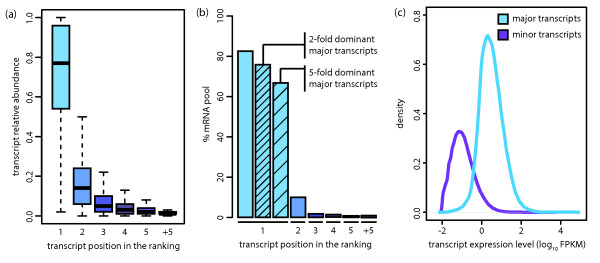
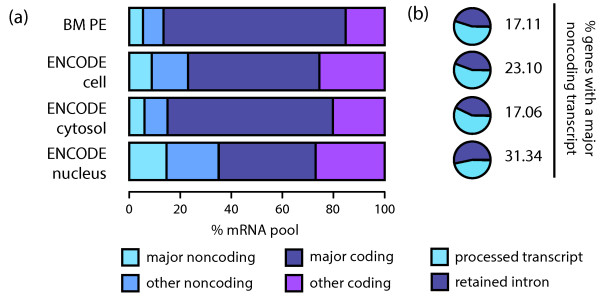
Background: RNA sequencing has opened new avenues for the study of transcriptome composition. Significant evidence has accumulated showing that the human transcriptome contains in excess of a hundred thousand different transcripts. However, it is still not clear to what extent this diversity prevails when considering the relative abundances of different transcripts from the same gene. Results: Here we show that, in a given condition, most protein coding genes have one major transcript expressed at significantly higher level than others, that in human tissues the major transcripts contribute almost 85 percent to the total mRNA from protein coding loci, and that often the same major transcript is expressed in many tissues. We detect a high degree of overlap between the set of major transcripts and a recently published set of alternatively spliced transcripts that are predicted to be translated utilizing proteomic data. Thus, we hypothesize that although some minor transcripts may play a functional role, the major ones are likely to be the main contributors to the proteome. However, we still detect a non-negligible fraction of protein coding genes for which the major transcript does not code a protein. Conclusions: Overall, our findings suggest that the transcriptome from protein coding loci is dominated by one transcript per gene and that not all the transcripts that contribute to transcriptome diversity are equally likely to contribute to protein diversity. This observation can help to prioritize candidate targets in proteomics research and to predict the functional impact of the detected changes in variation studies.
Overview
The claims and statistics of this paper haven’t been checked yet.
Free: it reads the open-access text and checks the first 5 claims that cite a source we can check. Create a free account to check every claim.
Integrity signals
Registry
Cites
Statistics
Figures
Verification
Claims the paper makes
The claims and statistics of this paper haven’t been checked yet.
Free: it reads the open-access text and checks the first 5 claims that cite a source we can check. Create a free account to check every claim.
Claims other papers make about this one
Each is checked against this paper’s own text: does it say what the citing paper says it does?
The cited source says what the claim attributes to it.
In the citing paper
“More specifically, for genes with multiple isoforms, many are expressed at an extremely low level in comparison to the most abundant isoforms (Gonzàlez-Porta et al., 2013) (Figure 3A).”
From Impact of Alternative Splicing on the Human Proteome (2017) · cites this paper as Gonzàlez-Porta et al., 2013
The cited source says what the claim attributes to it.
In the citing paper
“A recent result that has a potentially significant impact on interpretation of proteomic data is the finding that most genes, in a given cell-type, likely express only a single ‘dominant’ transcript70,71.”
From Decoding neuroproteomics: integrating the genome, translatome and functional anatomy (2014) · cites this paper as [70]
In the citing paper
“The relevance of gene-level analyses is also supported by recent surveys of transcription, which have shown that each gene tends to have a dominant isoform that accounts for far more of the total expression for that gene than any of the remaining isoforms [46,47].”
From voom: precision weights unlock linear model analysis tools for RNA-seq read counts (2014) · cites this paper as [47]
Self-check
Percentages, sums and reported differences re-computed from the paper’s own numbers.
The self-check needs the paper’s full text.
Citations
Cites
Controlling the False Discovery Rate: A Practical and Powerful Approach to Multiple Testing
Benjamini, Y., & Hochberg, Y. (1995) · Journal of the Royal Statistical Society Series B: Statistical Methodology · doi:10.1111/j.2517-6161.1995.tb02031.x · Cited by 109,482 · cited 1×
“05 (Benjamini and Hochberg correction [57]) was used as a threshold for the identification of significant GO terms.”
MethodSystematic and integrative analysis of large gene lists using DAVID bioinformatics resources
Huang, D. W., Sherman, B. T., & Lempicki, R. A. (2009) · Nature Protocols · doi:10.1038/nprot.2008.211 · Cited by 35,890 · cited 1×
“GO analyses were performed with the DAVID software [55, 56].”
MethodUltrafast and memory-efficient alignment of short DNA sequences to the human genome.
Langmead, B., Trapnell, C., Pop, M., & Salzberg, S. L. (2009) · Genome Biology · doi:10.1186/gb-2009-10-3-r25 · Cited by 21,849
An integrated encyclopedia of DNA elements in the human genome
The ENCODE Project Consortium (2012) · Nature · doi:10.1038/nature11247 · Cited by 18,072
Trapnell, C., Williams, B. A., Pertea, G., Mortazavi, A., Kwan, G., van Baren, M. J., Salzberg, S. L., Wold, B. J., & Pachter, L. (2010) · Nature Biotechnology · doi:10.1038/nbt.1621 · Cited by 15,556
Huang, D. W., Sherman, B. T., & Lempicki, R. A. (2009) · Nucleic Acids Research · doi:10.1093/nar/gkn923 · Cited by 14,108 · cited 1×
“GO analyses were performed with the DAVID software [55, 56].”
MethodMapping and quantifying mammalian transcriptomes by RNA-Seq
Mortazavi, A., Williams, B. A., McCue, K., Schaeffer, L., & Wold, B. (2008) · Nature Methods · doi:10.1038/nmeth.1226 · Cited by 13,696 · cited 1×
“Recently, applications of high throughput sequencing to RNA, known as RNA-seq [2], have opened new avenues for the study of transcriptome composition [3].”
BackgroundRNA-Seq: a revolutionary tool for transcriptomics
Wang, Z., Gerstein, M., & Snyder, M. (2009) · Nature Reviews Genetics · doi:10.1038/nrg2484 · Cited by 13,174 · cited 12×
“Most protein coding genes express one dominant transcript First, examining only the tissue data, and similarly to previous RNA-seq-based transcriptome studies, we detect more than one transcript for approximately 85% of the studied genes (83.70% to 89.95%, SD = 1.84, Additional File 2 - Table S1) and a total of 105,45…”
BackgroundInfluentialTopHat: discovering splice junctions with RNA-Seq
Trapnell, C., Pachter, L., & Salzberg, S. L. (2009) · Bioinformatics · doi:10.1093/bioinformatics/btp120 · Cited by 11,617
Landscape of transcription in human cells
Djebali, S., Davis, C. A., Merkel, A., Dobin, A., Lassmann, T., Mortazavi, A., Tanzer, A., Lagarde, J., Lin, W., Schlesinger, F., et al. (2012) · Nature · doi:10.1038/nature11233 · Cited by 5,187 · cited 2×
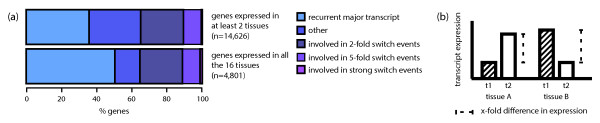
“[13], but in most cases the major transcripts are dominating the transcriptome.”
BackgroundSelf-citationAlternative isoform regulation in human tissue transcriptomes
Wang, E. T., Sandberg, R., Luo, S., Khrebtukova, I., Zhang, L., Mayr, C., Kingsmore, S. F., Schroth, G. P., & Burge, C. B. (2008) · Nature · doi:10.1038/nature07509 · Cited by 5,181
GENCODE: The reference human genome annotation for The ENCODE Project
Harrow, J., Frankish, A., Gonzalez, J. M., Tapanari, E., Diekhans, M., Kokocinski, F., Aken, B. L., Barrell, D., Zadissa, A., Searle, S., et al. (2012) · Genome Research · doi:10.1101/gr.135350.111 · Cited by 4,585
Self-citationInsights into the regulation of protein abundance from proteomic and transcriptomic analyses
Vogel, C., & Marcotte, E. M. (2012) · Nature Reviews Genetics · doi:10.1038/nrg3185 · Cited by 4,195 · cited 2×
“There have been several studies addressing the relationship between protein and transcript levels, which in general point at a modest, but not insignificant correlation [17, 21, 41, 42].”
BackgroundmRNA-Seq whole-transcriptome analysis of a single cell
Tang, F., Barbacioru, C., Wang, Y., Nordman, E., Lee, C., Xu, N., Wang, X., Bodeau, J., Tuch, B. B., Siddiqui, A., et al. (2009) · Nature Methods · doi:10.1038/nmeth.1315 · Cited by 3,969 · cited 1×
“Significant evidence has accumulated showing that approximately 95% of multiexon genes have more than one alternative splice-form expressed (for example, [4,7-9]) and that transcript expression is regulated [10,11].”
BackgroundPan, Q., Shai, O., Lee, L. J., Frey, B. J., & Blencowe, B. J. (2008) · Nature Genetics · doi:10.1038/ng.259 · Cited by 3,951 · cited 1×
“[4], [7][8, 9] and that transcript expression is regulated [10, 11].”
BackgroundExpansion of the eukaryotic proteome by alternative splicing
Nilsen, T. W., & Graveley, B. R. (2010) · Nature · doi:10.1038/nature08909 · Cited by 2,197 · cited 3×
“However, it is also possible that some of those minor transcripts are simply the result from noisy splicing [22,45,48].”
BackgroundResultDetecting differential usage of exons from RNA-seq data
Anders, S., Reyes, A., & Huber, W. (2012) · Genome Research · doi:10.1101/gr.133744.111 · Cited by 1,545 · cited 1×
“5 [53]) and converted read counts to FPKM values with”
BackgroundFunction of alternative splicing
Stamm, S., Ben-Ari, S., Rafalska, I., Tang, Y., Zhang, Z., Toiber, D., Thanaraj, T. A., & Soreq, H. (2005) · Gene · doi:10.1016/j.gene.2004.10.022 · Cited by 1,377 · cited 1×
“On the other hand, alternative splicing not only has an impact on the proteome repertoire [44-46], but also at the transcriptome level, cooperating in the control of expression levels [20,32,47] and contributing to spatial expression patterns through transcript localisation [46].”
BackgroundAnalysis and design of RNA sequencing experiments for identifying isoform regulation
Katz, Y., Wang, E. T., Airoldi, E. M., & Burge, C. B. (2010) · Nature Methods · doi:10.1038/nmeth.1528 · Cited by 1,353 · cited 2×
“We perform the analyses using three different computational methods [4-6], and additionally, where sufficient coverage exists, we assess the alternative transcript abundances directly from the reads spanning unique exon junctions.”
MethodReorganizing the protein space at the Universal Protein Resource (UniProt)
The UniProt Consortium (2012) · Nucleic Acids Research · doi:10.1093/nar/gkr981 · Cited by 1,220
Lewis, B. P., Green, R. E., & Brenner, S. E. (2003) · Proceedings of the National Academy of Sciences · doi:10.1073/pnas.0136770100 · Cited by 1,067 · cited 2×
“On the other hand, alternative splicing not only has an impact on the proteome repertoire [44–46], but also at the transcriptome level, cooperating in the control of expression levels [20, 32, 47] and contributing to spatial expression patterns through transcript localisation [46].”
BackgroundA transposase strategy for creating libraries of circularly permuted proteins
Mehta, M. M., Liu, S., & Silberg, J. J. (2012) · Nucleic Acids Research · doi:10.1093/nar/gks060 · Cited by 1,042
Flicek, P., Amode, M. R., Barrell, D., Beal, K., Brent, S., Carvalho-Silva, D., Clapham, P., Coates, G., Fairley, S., Fitzgerald, S., et al. (2012) · Nucleic Acids Research · doi:10.1093/nar/gkr991 · Cited by 823
Self-citationAn Abundance of Ubiquitously Expressed Genes Revealed by Tissue Transcriptome Sequence Data
Ramsköld, D., Wang, E. T., Burge, C. B., & Sandberg, R. (2009) · PLoS Computational Biology · doi:10.1371/journal.pcbi.1000598 · Cited by 820 · cited 2×
“This threshold has been suggested as the minimum expression required for protein detection [21–23] and is different from lower thresholds that have been suggested to address transcript detectability [54].”
BackgroundMethodRNA processing and its regulation: global insights into biological networks
Licatalosi, D. D., & Darnell, R. B. (2010) · Nature Reviews Genetics · doi:10.1038/nrg2673 · Cited by 763 · cited 1×
“Science 2012, [24]), where splicing is thought to control the interactions of the protein products [25,26].”
BackgroundThe European nucleotide archive
Leinonen, R., Akhtar, R., Birney, E., Bower, L., Cerdeno-Tarraga, A., Cheng, Y., Cleland, I., Faruque, N., Goodgame, N., Gibson, R., et al. (2011) · Nucleic Acids Research · doi:10.1093/nar/gkq967 · Cited by 690 · cited 2×
“Leinonen R, Akhtar R, Birney E, Bower L, Cerdeno-Tárraga A, Cheng Y, Cleland I, Faruque N, Goodgame N, Gibson R, Hoad G, Jang M, Pakseresht N, Plaister S, Radhakrishnan R, Reddy K, Sobhany S, Ten Hoopen P, Vaughan R, Zalunin V, Cochrane G: The European Nucleotide Archive.”
MethodA quantitative atlas of polyadenylation in five mammals
Derti, A., Garrett-Engele, P., MacIsaac, K. D., Stevens, R. C., Sriram, S., Chen, R., Rohl, C. A., Johnson, J. M., & Babak, T. (2012) · Genome Research · doi:10.1101/gr.132563.111 · Cited by 654
Tissue-specific alternative splicing remodels protein-protein interaction networks
Ellis, J. D., Barrios-Rodiles, M., Çolak, R., Irimia, M., Kim, T., Calarco, J. A., Wang, X., Pan, Q., O'Hanlon, D., Kim, P. M., et al. (2012) · Molecular Cell · doi:10.1016/j.molcel.2012.05.037 · Cited by 431 · cited 1×
“Science 2012, [24]), where splicing is thought to control the interactions of the protein products [25,26].”
BackgroundBuljan, M., Chalancon, G., Eustermann, S., Wagner, G. P., Fuxreiter, M., Bateman, A., & Babu, M. M. (2012) · Molecular Cell · doi:10.1016/j.molcel.2012.05.039 · Cited by 396 · cited 1×
“Changes in alternative splicing across conditions have been widely reported, with many studies focusing on the differences across tissues [7, 8, 20, Merkin et al Science 2012], where splicing is thought to control the interactions of the protein products [25, 26].”
BackgroundDefining the transcriptome and proteome in three functionally different human cell lines
Lundberg, E., Fagerberg, L., Klevebring, D., Matic, I., Geiger, T., Cox, J., Älgenäs, C., Lundeberg, J., Mann, M., & Uhlen, M. (2010) · Molecular Systems Biology · doi:10.1038/msb.2010.106 · Cited by 373 · cited 2×
“There have been several studies addressing the relationship between protein and transcript levels, which in general point at a modest, but not insignificant correlation [17,21,41,42].”
BackgroundGenetic basis of proteome variation in yeast
Foss, E. J., Radulovic, D., Shaffer, S. A., Ruderfer, D. M., Bedalov, A., Goodlett, D. R., & Kruglyak, L. (2007) · Nature Genetics · doi:10.1038/ng.2007.22 · Cited by 358 · cited 1×
“There have been several studies addressing the relationship between protein and transcript levels, which in general point at a modest, but not insignificant correlation [17,21,41,42].”
BackgroundA global map of human gene expression
Lukk, M., Kapushesky, M., Nikkilä, J., Parkinson, H., Goncalves, A., Huber, W., Ukkonen, E., & Brazma, A. (2010) · Nature Biotechnology · doi:10.1038/nbt0410-322 · Cited by 350 · cited 1×
“In addition, given the notable differences in gene expression between primary tissues and cell lines [11, 14], transcriptome analysis in cell lines can be extended to primary tissues only to some extent.”
BackgroundNoisy Splicing Drives mRNA Isoform Diversity in Human Cells
Pickrell, J. K., Pai, A. A., Gilad, Y., & Pritchard, J. K. (2010) · PLoS Genetics · doi:10.1371/journal.pgen.1001236 · Cited by 311 · cited 1×
“However, it is also possible that some of those minor transcripts are simply the result from noisy splicing [22,45,48].”
BackgroundComputational Detection and Location of Transcription Start Sites in Mammalian Genomic DNA
Down, T. A., & Hubbard, T. J. P. (2002) · Genome Research · doi:10.1101/gr.216102 · Cited by 295
Estimating accuracy of RNA-Seq and microarrays with proteomics
Fu, X., Fu, N., Guo, S., Yan, Z., Xu, Y., Hu, H., Menzel, C., Chen, W., Li, Y., Zeng, R., et al. (2009) · BMC Genomics · doi:10.1186/1471-2164-10-161 · Cited by 291 · cited 1×
“There have been several studies addressing the relationship between protein and transcript levels, which in general point at a modest, but not insignificant correlation [17,21,41,42].”
BackgroundRNA sequencing reveals two major classes of gene expression levels in metazoan cells
Hebenstreit, D., Fang, M., Gu, M., Charoensawan, V., van Oudenaarden, A., & Teichmann, S. A. (2011) · Molecular Systems Biology · doi:10.1038/msb.2011.28 · Cited by 289
Yap, K., Lim, Z. Q., Khandelia, P., Friedman, B., & Makeyev, E. V. (2012) · Genes & Development · doi:10.1101/gad.188037.112 · Cited by 286
Modelling and simulating generic RNA-Seq experiments with the flux simulator
Griebel, T., Zacher, B., Ribeca, P., Raineri, E., Lacroix, V., Guigó, R., & Sammeth, M. (2012) · Nucleic Acids Research · doi:10.1093/nar/gks666 · Cited by 281 · cited 2×
“We also use simulated data [16] to confirm that the methods can reliably distinguish between two hypothetical alternative scenarios - one dominant transcript per gene vs.”
MethodHaplotype and isoform specific expression estimation using multi-mapping RNA-seq reads
Turro, E., Su, S.-Y., Gonçalves, Â., Coin, L. J., Richardson, S., & Lewin, A. (2011) · Genome Biology · doi:10.1186/gb-2011-12-2-r13 · Cited by 264
The Coupling of Alternative Splicing and Nonsense-Mediated mRNA Decay
Lareau, L. F., Brooks, A. N., Soergel, D. A. W., Meng, Q., & Brenner, S. E. (2007) · Advances in Experimental Medicine and Biology · doi:10.1007/978-0-387-77374-2_12 · Cited by 252 · cited 2×
“have a biological function, since some may still be translated into proteins [19] or have a regulatory function as mRNAs [20].”
BackgroundAPPRIS: annotation of principal and alternative splice isoforms
Rodriguez, J. M., Maietta, P., Ezkurdia, I., Pietrelli, A., Wesselink, J.-J., Lopez, G., Valencia, A., & Tress, M. L. (2013) · Nucleic Acids Research · doi:10.1093/nar/gks1058 · Cited by 232
The implications of alternative splicing in the ENCODE protein complement
Tress, M. L., Martelli, P. L., Frankish, A., Reeves, G. A., Wesselink, J. J., Yeats, C., Ólason, P. Ĺ., Albrecht, M., Hegyi, H., Giorgetti, A., et al. (2007) · Proceedings of the National Academy of Sciences · doi:10.1073/pnas.0700800104 · Cited by 222
Self-citationAn unappreciated role for RNA surveillance
Hillman, R. T., Green, R. E., & Brenner, S. E. (2004) · Genome Biology · doi:10.1186/gb-2004-5-2-r8 · Cited by 193 · cited 1×
“We also observe that retained introns are preferentially located towards the transcriptional end of transcripts, which has been previously linked to nonsense mediated decay [31], a control mechanism that leads to the degradation of unspliced transcripts when they are transported to the cytosol [32,33].”
BackgroundIntrons within Ribosomal Protein Genes Regulate the Production and Function of Yeast Ribosomes
Parenteau, J., Durand, M., Morin, G., Gagnon, J., Lucier, J., Wellinger, R. J., Chabot, B., & Elela, S. A. (2011) · Cell · doi:10.1016/j.cell.2011.08.044 · Cited by 173 · cited 1×
“Finally, we also detected that those genes are associated to ribosomal components, which is consistent with previous findings indicating that introns regulate the expression of ribosomal proteins in yeast [40].”
ResultGlobal regulation of alternative splicing during myogenic differentiation
Bland, C. S., Wang, E. T., Vu, A., David, M. P., Castle, J. C., Johnson, J. M., Burge, C. B., & Cooper, T. A. (2010) · Nucleic Acids Research · doi:10.1093/nar/gkq614 · Cited by 153 · cited 1×
“[4], [7][8, 9] and that transcript expression is regulated [10, 11].”
BackgroundAn intron with a constitutive transport element is retained in a Tap messenger RNA
Li, Y., Bor, Y.-C., Misawa, Y., Xue, Y., Rekosh, D. M., & Hammarskjöld, M. (2006) · Nature · doi:10.1038/nature05107 · Cited by 151 · cited 1×
“Nevertheless, several cases of functionally relevant retained introns have been described, either as a mechanism to target mRNA molecules (for example, [34,35], produce alternate protein products [36] or regulate expression levels [37-39].”
BackgroundBuckley, P. T., Lee, M. T., Sul, J.-Y., Miyashiro, K. Y., Bell, T. J., Fisher, S. A., Kim, J., & Eberwine, J. (2011) · Neuron · doi:10.1016/j.neuron.2011.02.028 · Cited by 140 · cited 1×
“[34, 35], produce alternate protein products [36] or regulate expression levels [37–39].”
BackgroundCell‐to‐cell variability of alternative RNA splicing
Waks, Z., Klein, A. M., & Silver, P. A. (2011) · Molecular Systems Biology · doi:10.1038/msb.2011.32 · Cited by 106 · cited 2×
“[4], [7][8, 9] and that transcript expression is regulated [10, 11].”
BackgroundZhao, Q., Caballero, O. L., Davis, I. D., Jonasch, E., Tamboli, P., Yung, W. K. A., Weinstein, J. N., Strausberg, R. L., & Yao, J. (2013) · Clinical Cancer Research · doi:10.1158/1078-0432.ccr-12-3708 · Cited by 89 · cited 1×
“At the same time, identification of changes in the major transcript across conditions can lead to relevant clinical findings (for example, [18]) and may also be used to predict the functional impact of the detected changes in variation studies.”
BackgroundEzkurdia, I., del Pozo, A., Frankish, A., Rodriguez, J. M., Harrow, J., Ashman, K., Valencia, A., & Tress, M. L. (2012) · Molecular Biology and Evolution · doi:10.1093/molbev/mss100 · Cited by 89 · cited 1×
“have a biological function, since some may still be translated into proteins [19] or have a regulatory function as mRNAs [20].”
BackgroundSelf-citationQuality control of messenger ribonucleoprotein particles in the nucleus and at the pore
Sommer, P., & Nehrbass, U. (2005) · Current Opinion in Cell Biology · doi:10.1016/j.ceb.2005.04.007 · Cited by 66 · cited 1×
“Evidence exists suggesting that unspliced or incompletely spliced mRNAs are confined to the nucleus [29,30]; therefore we hypothesize that our observation could reflect incomplete splicing, as suggested by the higher expression levels of introns in nucleus.”
BackgroundBell, T. J., Miyashiro, K. Y., Sul, J.-Y., McCullough, R., Buckley, P. T., Jochems, J., Meaney, D. F., Haydon, P., Cantor, C., Parsons, T. D., et al. (2008) · Proceedings of the National Academy of Sciences · doi:10.1073/pnas.0711796105 · Cited by 63 · cited 1×
“Nevertheless, several cases of functionally relevant retained introns have been described, either as a mechanism to target mRNA molecules (for example, [34,35], produce alternate protein products [36] or regulate expression levels [37-39].”
BackgroundEstimation of alternative splicing variability in human populations
Gonzàlez-Porta, M., Calvo, M., Sammeth, M., & Guigó, R. (2012) · Genome Research · doi:10.1101/gr.121947.111 · Cited by 58 · cited 1×
“Variability in splicing relative abundances across tissues was measured using the method introduced by [58].”
MethodSelf-citationNegative Control Contributes to an Extensive Program of Meiotic Splicing in Fission Yeast
Averbeck, N., Sunder, S., Sample, N., Wise, J. A., & Leatherwood, J. (2005) · Molecular Cell · doi:10.1016/j.molcel.2005.04.007 · Cited by 55
Fagerberg, L., Oksvold, P., Skogs, M., Älgenäs, C., Lundberg, E., Pontén, F., Sivertsson, Å., Odeberg, J., Klevebring, D., Kampf, C., et al. (2013) · Journal of Proteome Research · doi:10.1021/pr300924j · Cited by 50
Developmental regulation of a proinsulin messenger RNA generated by intron retention
Mansilla, A., López‐Sánchez, C., de la Rosa, E. J., García‐Martínez, V., Martínez-Salas, E., de Pablo, F., & Hernández‐Sánchez, C. (2005) · EMBO Reports · doi:10.1038/sj.embor.7400539 · Cited by 50 · cited 1×
“Nevertheless, several cases of functionally relevant retained introns have been described, either as a mechanism to target mRNA molecules (for example, [34,35], produce alternate protein products [36] or regulate expression levels [37-39].”
BackgroundProofreading and spellchecking: A two-tier strategy for pre-mRNA splicing quality control
Egecioglu, D. E., & Chanfreau, G. (2011) · RNA · doi:10.1261/rna.2454711 · Cited by 49 · cited 1×
“Evidence exists suggesting that unspliced or incompletely spliced mRNAs are confined to the nucleus [29,30]; therefore we hypothesize that our observation could reflect incomplete splicing, as suggested by the higher expression levels of introns in nucleus.”
BackgroundComputational analysis of splicing errors and mutations in human transcripts
Kurmangaliyev, Y. Z., & Gelfand, M. S. (2008) · BMC Genomics · doi:10.1186/1471-2164-9-13 · Cited by 44 · cited 1×
“We also observe that retained introns are preferentially located towards the transcriptional end of transcripts, which has been previously linked to nonsense mediated decay [31], a control mechanism that leads to the degradation of unspliced transcripts when they are transported to the cytosol [32, 33].”
BackgroundPadhi, B. K., & Pelletier, G. (2012) · Toxicology Letters · doi:10.1016/j.toxlet.2012.07.011 · Cited by 21 · cited 1×
“analysis and has been highlighted recently in the literature [15].”
BackgroundThe adaptive significance of unproductive alternative splicing in primates
Skandalis, A., Frampton, M. B., Seger, J., & Richards, M. H. (2010) · RNA · doi:10.1261/rna.2127910 · Cited by 20 · cited 1×
“On the other hand, alternative splicing not only has an impact on the proteome repertoire [44-46], but also at the transcriptome level, cooperating in the control of expression levels [20,32,47] and contributing to spatial expression patterns through transcript localisation [46].”
Background
Research works printed but not linked: 1
- Taneri B Snyder B Gaasterland T Distribution of alternatively spliced transcript isoforms within human and mouse transcriptomes. J OMICS Res 2011 14 1 5
Cited by
Tissue-based map of the human proteome
Uhlén, M., Fagerberg, L., Hallström, B. M., Lindskog, C., Oksvold, P., Mardinoglu, A., Sivertsson, Å., Kampf, C., Sjöstedt, E., Asplund, A., et al. (2015) · Science · doi:10.1126/science.1260419 · Cited by 15,286
“In most cases, one of the isoforms dominates across all tissues, which is also consistent with earlier studies (34).”
Resultvoom: precision weights unlock linear model analysis tools for RNA-seq read counts
Law, C. W., Chen, Y., Shi, W., & Smyth, G. K. (2014) · Genome Biology · doi:10.1186/gb-2014-15-2-r29 · Cited by 6,155
“The relevance of gene-level analyses is also supported by recent surveys of transcription have shown that each gene tends to have a dominant isoform that accounts for far more of the total expression for that gene that do any of the remaining isoforms [46, 47].”
BackgroundDifferential analyses for RNA-seq: transcript-level estimates improve gene-level inferences
Soneson, C., Love, M. I., & Robinson, M. D. (2015) · F1000Research · doi:10.12688/f1000research.7563.1 · Cited by 3,929
Long non-coding RNAs: definitions, functions, challenges and recommendations
Mattick, J. S., Amaral, P. P., Carninci, P., Carpenter, S., Chang, H. Y., Chen, L.-L., Chen, R., Dean, C., Dinger, M. E., Fitzgerald, K. A., et al. (2023) · Nature Reviews Molecular Cell Biology · doi:10.1038/s41580-022-00566-8 · Cited by 2,356
The human transcriptome across tissues and individuals
Melé, M., Ferreira, P. G., Reverter, F., DeLuca, D. S., Monlong, J., Sammeth, M., Young, T. R., Goldmann, J. M., Pervouchine, D. D., Sullivan, T. J., et al. (2015) · Science · doi:10.1126/science.aaa0355 · Cited by 1,304
Metadata
- Authors
- Gonzàlez-Porta, M., Frankish, A., Rung, J., Harrow, J., & Brazma, A.
- Affiliations
- European Bioinformatics Institute (GB)
- Wellcome Sanger Institute (GB)
- Venue
- Genome Biology
- Published
- 2013-07-01
- Volume
- 14
- Issue
- 7
- Pages
- R70-R70
- ISSN
- 1465-6906 (ISSN-L)
- 1474-760X
- PMC
- PMC4053754
- OpenAlex
- W2104224685
- Cited by
- 266
- References
- 62
- Citations by year
- 2026: 9 · 2025: 16 · 2024: 21 · 2023: 20 · 2022: 18 · 2021: 15 · 2020: 26 · 2019: 26 · 2018: 21 · 2017: 23 · 2016: 22 · 2015: 26 · 2014: 19 · 2013: 4
- FWCI
- 10.74
- Type
- journal article
- Language
- en
- Open access
- gold
- doi.org
- Licence
- cc-by
- creativecommons.org/licenses/by/2.0/ (tdm)
- creativecommons.org/licenses/by/2.0/ (vor)
- Locations
- Genome biology (publishedVersion, cc-by)
- Europe PMC (PubMed Central) (publishedVersion, cc-by)
- PubMed Central (publishedVersion, cc-by)
- PubMed (publishedVersion)
- Funders
- Wellcome Trust (098051)
- European Commission (261123, 241669)
- National Institutes of Health (5u54hg004555-04)
- National Human Genome Research Institute (U54-HG004555, 5U54HG004555, U41HG007234)
- FP7 Health
- Topics
- Life Sciences › Biochemistry, Genetics and Molecular Biology › Molecular Biology › RNA Research and Splicing
- Life Sciences › Biochemistry, Genetics and Molecular Biology › Molecular Biology › Genomics and Phylogenetic Studies
- Life Sciences › Biochemistry, Genetics and Molecular Biology › Molecular Biology › Single-cell and spatial transcriptomics
- Keywords
- transcriptome, mRNA levels, alternative splicing, protein-coding genes, human tissue, cell lines, proteome, transcriptome diversity
- MeSH terms
- Cell Line, Gene Expression Regulation, Genes, Humans, Organ Specificity, RNA, Messenger, Open Reading Frames, Gene Expression Profiling, RNA, Untranslated
About these checks
Registry, retraction, Cites and statistics results are computed, not judged, with one exception: a printed reference that no index lists is read once by a model before it counts as a citation error. Claims are extracted by a model and kept only when their quote appears verbatim in the text; each cited source is then checked, with a model’s help, for whether it says what the claim relies on. Those verdicts can be wrong — read the claim’s quote and the cited source before relying on one.
Statistics and arithmetic are recomputed, not judged.
Confidence bands are shown only for fields calibrated on our annotated test set. None is calibrated yet, so no band is shown.
What counts as a claim ›How we measure confidence ›How we check this ›
Are you an author, or do you see a problem with this page? Request a review
Data sources
Bibliographic data: Semantic Scholar, OpenAlex, Crossref.
Contains information from the Semantic Scholar Academic Graph Datasets, made available under the ODC Attribution License (ODC-BY 1.0).
Semantic Scholar’s data is described in: Kinney, R., et al. (2023). The Semantic Scholar Open Data Platform. arXiv:2301.10140.
