

DNA methylome profiling of human tissues identifies global and tissue-specific methylation patterns
Open accessThe DOI matches its Crossref record; 30 of the 30 references it cites were found in a registry or an index.
Abstract
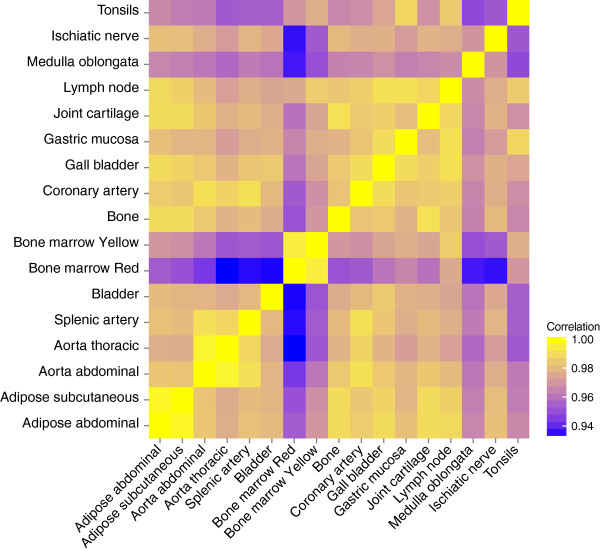
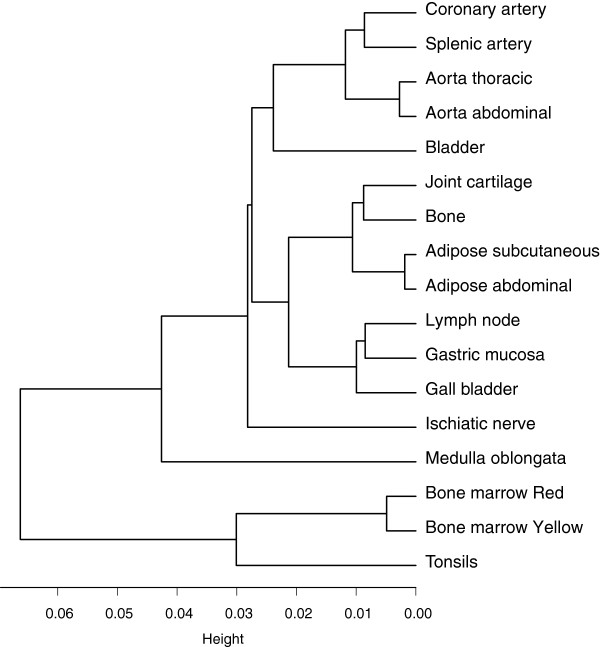
Background: DNA epigenetic modifications, such as methylation, are important regulators of tissue differentiation, contributing to processes of both development and cancer. Profiling the tissue-specific DNA methylome patterns will provide novel insights into normal and pathogenic mechanisms, as well as help in future epigenetic therapies. In this study, 17 somatic tissues from four autopsied humans were subjected to functional genome analysis using the Illumina Infinium HumanMethylation450 BeadChip, covering 486 428 CpG sites. Results: Only 2% of the CpGs analyzed are hypermethylated in all 17 tissue specimens; these permanently methylated CpG sites are located predominantly in gene-body regions. In contrast, 15% of the CpGs are hypomethylated in all specimens and are primarily located in regions proximal to transcription start sites. A vast number of tissue-specific differentially methylated regions are identified and considered likely mediators of tissue-specific gene regulatory mechanisms since the hypomethylated regions are closely related to known functions of the corresponding tissue. Finally, a clear inverse correlation is observed between promoter methylation within CpG islands and gene expression data obtained from publicly available databases. Conclusions: This genome-wide methylation profiling study identified tissue-specific differentially methylated regions in 17 human somatic tissues. Many of the genes corresponding to these differentially methylated regions contribute to tissue-specific functions. Future studies may use these data as a reference to identify markers of perturbed differentiation and disease-related pathogenic mechanisms.
Overview
The claims and statistics of this paper haven’t been checked yet.
Free: it reads the open-access text and checks the first 5 claims that cite a source we can check. Create a free account to check every claim.
Integrity signals
Registry
Cites
Statistics
Figures
Verification
Claims the paper makes
The claims and statistics of this paper haven’t been checked yet.
Free: it reads the open-access text and checks the first 5 claims that cite a source we can check. Create a free account to check every claim.
Claims other papers make about this one
Each is checked against this paper’s own text: does it say what the citing paper says it does?
The cited source says what the claim attributes to it.
In the citing paper
“Significant variability in methylation patterns between cord blood and placental and saliva samples suggests tissue-specific epigenetic patterns, 79 which may lead to differing functional consequences.80”
From Impact of Tobacco Smoke and Nicotine Exposure on Lung Development (2016) · cites this paper as [80]
Self-check
Percentages, sums and reported differences re-computed from the paper’s own numbers.
The self-check needs the paper’s full text.
Citations
Cites
R: A Language and Environment for Statistical Computing
R Core Team (2025) · doi:10.32614/r.manuals · Cited by 352,181
Gene Expression Omnibus: NCBI gene expression and hybridization array data repository
Edgar, R. (2002) · Nucleic Acids Research · doi:10.1093/nar/30.1.207 · Cited by 13,288 · cited 5×
“The data used in this study has been deposited in NCBI’s Gene Expression Omnibus repository and are accessible through GEO Series, accession number GSE50192.”
MethodInfluentialExploration, normalization, and summaries of high density oligonucleotide array probe level data
Irizarry, R. A. (2003) · Biostatistics · doi:10.1093/biostatistics/4.2.249 · Cited by 10,603 · cited 1×
“Gene expression data were normalized and preprocessed according to the robust multiarray average algorithm [29].”
MethodDAVID: Database for Annotation, Visualization, and Integrated Discovery
Dennis, G., Sherman, B. T., Hosack, D. A., Yang, J., Gao, W., Lane, H. C., & Lempicki, R. A. (2003) · Genome Biology · doi:10.1186/gb-2003-4-5-p3 · Cited by 9,327 · cited 5×
“The Database for Annotation, Visualization and Integrated Discovery (DAVID).”
MethodInfluentialDNA methylation patterns and epigenetic memory
Bird, A. (2002) · Genes & Development · doi:10.1101/gad.947102 · Cited by 7,124
CpG-rich islands and the function of DNA methylation
Bird, A. P. (1986) · Nature · doi:10.1038/321209a0 · Cited by 3,777 · cited 1×
“Background DNA methylation is the most extensively studied epigenetic modification of mammalian DNA [1].”
BackgroundMethPrimer: designing primers for methylation PCRs
Li, L.-C., & Dahiya, R. (2002) · Bioinformatics · doi:10.1093/bioinformatics/18.11.1427 · Cited by 2,729 · cited 2×
“Li LC, Dahiya R: MethPrimer: designing primers for methylation PCRs. Bioinformatics 2002, 18:1427–1431.”
MethodConserved role of intragenic DNA methylation in regulating alternative promoters
Maunakea, A. K., Nagarajan, R. P., Bilenky, M., Ballinger, T. J., D’Souza, C., Fouse, S. D., Johnson, B. E., Hong, C., Nielsen, C., Zhao, Y., et al. (2010) · Nature · doi:10.1038/nature09165 · Cited by 1,743 · cited 1×
“The fact that over a half of tDMRs were located in gene bodies and not in promoter areas is intriguing because methylation within a gene body may indicate the presence of alternative promoters [20].”
BackgroundHigh density DNA methylation array with single CpG site resolution
Bibikova, M., Barnes, B., Tsan, C., Ho, V., Klotzle, B., Le, J. M., Delano, D., Zhang, L., Schroth, G. P., Gunderson, K. L., et al. (2011) · Genomics · doi:10.1016/j.ygeno.2011.07.007 · Cited by 1,727 · cited 2×
“more than 485,000 methylation sites, covering 99% of RefSeq genes with an average of 17 CpGs per gene distributed across the promoter, 5′-UTR, first exon, gene body, and 3′-UTR regions [14].”
BackgroundMethodDNA methylation profiling of human chromosomes 6, 20 and 22
Eckhardt, F., Lewin, J., Cortese, R., Rakyan, V. K., Attwood, J., Burger, M., Burton, J., Cox, T. V., Davies, R., Down, T. A., et al. (2006) · Nature Genetics · doi:10.1038/ng1909 · Cited by 1,348
Research works printed but not linked: 1
- The Database for Annotation, Visualization and Integrated Discovery (DAVID) [ http://david.abcc.ncifcrf.gov/] 12734009
Cited by
Items 201–300 of 476
Ferreira, R. S., de Assis, R. I. F., Feltran, G. D. S., Palma, I. C. D. R., Françoso, B. G., Zambuzzi, W. F., Andia, D. C., & da Silva, R. A. (2021) · Journal of Periodontology · doi:10.1002/jper.21-0218 · Cited by 18
Wang, Q., Jia, P., Cheng, F., & Zhao, Z. (2014) · Genes Chromosomes and Cancer · doi:10.1002/gcc.22224 · Cited by 18
“The threshold 20.5 is indicated by a previous study (Lokk et al., 2014).”
InfluentialLi, Z., Li, J., Li, Y., Liu, N., Liu, F., Ren, J., Yun, K., Yan, J., & Zhang, G. (2021) · International Journal of Legal Medicine · doi:10.1007/s00414-021-02552-9 · Cited by 17
Marttila, S., Tamminen, H., Rajić, S., Mishra, P. P., Lehtimäki, T. J., Raitakari, O. T., Kähönen, M. A. P., Kananen, L., Jylhävä, J., Hägg, S., et al. (2022) · Epigenomics · doi:10.2217/epi-2022-0228 · Cited by 17
Genome-wide DNA methylation analysis of the porcine hypothalamus-pituitary-ovary axis
Yuan, X., Zhang, Z., Li, B., Gao, N., Zhang, H., Sangild, P. T., & Li, J. (2017) · Scientific Reports · doi:10.1038/s41598-017-04603-x · Cited by 17
“These observations indicate that CGIs and upstream regions are protected from methylation changes, which are consistent with previous studies of different human tissues 11, 22 .”
BackgroundMethodResultDerakhshan, M., Kessler, N. J., Ishida, M., Demetriou, C., Brucato, N., Moore, G. E., Fall, C. H. D., Chandak, G. R., Ricaut, F., Prentice, A. M., et al. (2022) · Nucleic Acids Research · doi:10.1093/nar/gkac503 · Cited by 17
Agba, O. B., Lausser, L. M., Huse, K., Bergmeier, C., Jahn, N., Groth, M., Bens, M., Sahm, A., Gall, M., Witte, O. W., et al. (2017) · Physiological Genomics · doi:10.1152/physiolgenomics.00009.2017 · Cited by 20
“Moreover, locus-, tissue-, and sexspecific methylation of genes is known to affect gene transcription (34, 36, 43).”
BackgroundSaare, M., Krigul, K. L., Laisk, T., Ponandai‐Srinivasan, S., Rahmioğlu, N., Kumar, P. G. L., Zondervan, K. T., Salumets, A., & Peters, M. (2018) · Biology of Reproduction · doi:10.1093/biolre/ioy067 · Cited by 19
Self-citationGlucose-induced, duration-dependent genome-wide DNA methylation changes in human endothelial cells
Aref‐Eshghi, E., Biswas, S., Chen, C., Sadiković, B., & Chakrabarti, S. (2020) · American Journal of Physiology-Cell Physiology · doi:10.1152/ajpcell.00011.2020 · Cited by 17
DNA methylation-based forensic age estimation in human bonePreprint
Gopalan, S., Gaige, J., & Henn, B. M. (2019) · bioRxiv (Cold Spring Harbor Laboratory) · doi:10.1101/801647 · Cited by 21
A New Era for Epigenetic Epidemiology
Gunasekara, C., & Waterland, R. A. (2019) · Epigenomics · doi:10.2217/epi-2019-0282 · Cited by 17
Epigenetics in Fish Nutritional Programming
Skjærven, K. H., Adam, A., Saito, T., Waagbø, R., & Espe, M. (2023) · Wiley eBooks · doi:10.1002/9781119821946.ch10 · Cited by 19
DNA methylation in necrotizing enterocolitis
Frazer, L. C., Yamaguchi, Y., Singh, D. K., Akopyants, N. S., & Good, M. L. (2024) · Expert Reviews in Molecular Medicine · doi:10.1017/erm.2024.16 · Cited by 16
“DNA methylation patterns represent a promising target for new biomarker development for NEC, given the high level of DNA stability and literature showing that DNA methylation patterns are specific to their cell and tissue of origin (Refs 83, 84, 85).”
The heritability and patterns of DNA methylation in normal human colorectum
Rowlatt, A., Hernandez-Suarez, G. A., Sanabria‐Salas, M. C., Serrano, M. L., Rawlik, K., Hernández‐Illán, E., Alenda, C., Castillejo, A., Soto, J. L., Haley, C., et al. (2016) · Human Molecular Genetics · doi:10.1093/hmg/ddw072 · Cited by 17
Intra- and inter-individual differences in human sperm DNA methylation
Dere, E., Huse, S. M., Hwang, K., Sigman, M., & Boekelheide, K. (2016) · Andrology · doi:10.1111/andr.12170 · Cited by 17
Yang, X., Shao, X., Gao, L., & Zhang, S. (2016) · Briefings in Functional Genomics · doi:10.1093/bfgp/elw013 · Cited by 19
Epigenetic mechanisms in Tendon Ageing
Riasat, K., Bardell, D., Goljanek‐Whysall, K., Clegg, P., & Peffers, M. J. (2020) · British Medical Bulletin · doi:10.1093/bmb/ldaa023 · Cited by 18
“There is some conservation of methylation deposition, with 2% hypermethylated sites in 17 human tissues, 15% hypomethylated sites located proximal to transcription start sites.(58) These tissue specific methylation patterns could explain characteristic cellular phenotypes, and their relationship to cellular function,…”
BackgroundDisagreement between two common biomarkers of global DNA methylation
Knothe, C., Shiratori, H., Resch, E., Ultsch, A., Geißlinger, G., Doehring, A., & Lötsch, J. (2016) · Clinical Epigenetics · doi:10.1186/s13148-016-0227-0 · Cited by 15
“This agrees with independent evidence of tissue-specific differential DNA methylation among 17 human somatic tissues [87].”
BackgroundBoyne, D. J., King, W. D., Brenner, D. R., McIntyre, J. B., Courneya, K. S., & Friedenreich, C. M. (2018) · PLoS ONE · doi:10.1371/journal.pone.0198641 · Cited by 15
OXTR DNA methylation moderates the developmental calibration of neural reward sensitivity
Gonzalez, M. Z., Wroblewski, K. L., Allen, J. P., Coan, J. A., & Connelly, J. J. (2020) · Developmental Psychobiology · doi:10.1002/dev.22026 · Cited by 15
“A limitation of DNA methylation, however, is that it is often tissue specific (Lokk et al., 2014) and access to human brain tissue is severely limited.”
BackgroundMethylAction: detecting differentially methylated regions that distinguish biological subtypes
Bhasin, J., Hu, B., & Ting, A. H. (2015) · Nucleic Acids Research · doi:10.1093/nar/gkv1461 · Cited by 20
“Differential DNA methylation distinguishes a broad range of biological subtypes including stages of mammalian embryonic development (1), eusocial insect behavioral types (2), immune cell activation and memory (3,4), human tissue types (5), ages of human blood and brain tissue (6,7) and regions of the human brain (8).”
BackgroundScreening of Crucial Differentially-Methylated/Expressed Genes for Alzheimer’s Disease
Qiu, H., & Weng, Q. (2022) · American Journal of Alzheimer s Disease & Other Dementias® · doi:10.1177/15333175221116220 · Cited by 15
Dermawan, J. K. T. K., Malik, F. A., Gross, J. M., Baraban, E. G., Pratilas, C. A., Mneimneh, W. S., Trucco, M. M., Sun, W., Barr, F. G., Costa, F. D., et al. (2024) · Modern Pathology · doi:10.1016/j.modpat.2024.100594 · Cited by 14
Cost-effective solutions for high-throughput enzymatic DNA methylation sequencing
Longtin, A., Watowich, M. M., Sadoughi, B., Petersen, R. M., Brosnan, S. F., Buetow, K. H., Cai, Q., Gurven, M., Higham, J. P., Highland, H. M., et al. (2025) · PLoS Genetics · doi:10.1371/journal.pgen.1011667 · Cited by 15
“Because DNA methylation moderates gene expression throughout the life course, it is critical for processes such as development [2–4], cell programming [5], tissue specificity [6], aging [7–11], and disease progression [12–14].”
Zhang, Y., Bewerunge‐Hudler, M., Schick, M., Burwinkel, B., Herpel, E., Hoffmeister, M., & Brenner, H. (2020) · Molecular Oncology · doi:10.1002/1878-0261.12738 · Cited by 14
DNA Methylation-Based Classification of Small B-Cell Lymphomas
Xia, D., Leon, A. J., Yan, J., Silva, A., Bakhtiari, M., Tremblay‐LeMay, R., Selvarajah, S., Sabatini, P. J. B., Diamandis, P., Pugh, T. J., et al. (2021) · Journal of Molecular Diagnostics · doi:10.1016/j.jmoldx.2021.09.002 · Cited by 14
Genome-wide DNA methylation profile of prepubertal porcine testis
Chen, X., Shen, L., Gui, L.-X., Yang, F. W., Li, J., Cao, S., Zuo, Z., Ma, X., Deng, J., Ren, Z., et al. (2017) · Reproduction Fertility and Development · doi:10.1071/rd17067 · Cited by 14
The Future of Forensic Biology
Rana, A. K. (2018) · Journal of Biomedicine · doi:10.7150/jbm.22760 · Cited by 14
“DNA methylation particularly 5mC (5-methylcytosine) methylation at the CpG sites, the major epigenetic and chemical change in the DNA [41] which without altering the DNA sequence leads to phenotypic variation among the various tissues, monozygotic twins or among humans has provided a new vista to distinguish cell type…”
BackgroundSalehzadeh, S. A., Mohammadian, A., & Salimi, F. (2019) · Asian Journal of Psychiatry · doi:10.1016/j.ajp.2019.101884 · Cited by 14
Lin, Y., Kranzler, H. R., Farrer, L. A., Xu, H., Henderson, D. C., & Zhang, H. (2020) · The Pharmacogenomics Journal · doi:10.1038/s41397-020-0158-1 · Cited by 15
Antunes, J., Gauthier, Q. T., Aguiar‐Pulido, V., Duncan, G., & McCord, B. R. (2021) · Electrophoresis · doi:10.1002/elps.202000217 · Cited by 14
Lokk, K., Modhukur, V., Rajashekar, B., Märtens, K., Mägi, R., Kolde, R., Koltšina, M., Nilsson, T., Vilo, J., Salumets, A., et al. (2016) · Genome biology · doi:10.1186/s13059-016-1091-0 · Cited by 14
Self-citationCommon epigenetic variation in a European population of mentally healthy young adults
Milnik, A., Vogler, C., Demougin, P., Egli, T., Freytag, V., Hartmann, F., Heck, A., Peter, F., Spalek, K., Steták, A., et al. (2016) · Journal of Psychiatric Research · doi:10.1016/j.jpsychires.2016.08.012 · Cited by 13
“This is an open access article complexity of the methylation signal, which displays variability related to such factors as the specifics of the population being studied, cell type, as well as temporal dynamics Davies et al., 2012; Horvath et al., 2012; Lokk et al., 2014; Pidsley et al., 2014.”
BackgroundEndo, K., Kito, N., Fukushima, Y., Weng, H., & Iwai, N. (2014) · Biomedical Research · doi:10.2220/biomedres.35.207 · Cited by 13
Early post-conception maternal cortisol, children’s HPAA activity and DNA methylation profiles
Barha, C. K., Salvante, K. G., Jones, M. J., Farré, P., Blais, J., Kobor, M. S., Zeng, L., Emberly, E. G., & Nepomnaschy, P. A. (2018) · Journal of Developmental Origins of Health and Disease · doi:10.1017/s2040174418000880 · Cited by 13
Pattar, S., Aleinati, M., Iqbal, F., Madhu, A., Blais, S., Wang, X., Dallaire, F., Wang, Y., Isaac, D., Fine, N. M., et al. (2021) · Clinical Transplantation · doi:10.1111/ctr.14295 · Cited by 13
Li, M., Sun, X., Yao, H., Chen, W., Zhang, F., Gao, S., Zou, X., Chen, J., Qiu, S., Wei, H., et al. (2021) · Toxicology and Applied Pharmacology · doi:10.1016/j.taap.2021.115657 · Cited by 13
DNA Methylation Levels of the ELMO Gene Promoter CpG Islands in Human Glioblastomas
Michaelsen, S. R., Aslan, D., Urup, T. H., Poulsen, H. S., Grønbæk, K., Broholm, H., & Kristensen, L. S. (2018) · International Journal of Molecular Sciences · doi:10.3390/ijms19030679 · Cited by 13
“2%) in all 17 different human tissues, including medulla oblongata and ischiatic nerve, as analyzed by Lokk nd co-workers [36].”
MethodYu, D., Zhang, J., Gao, N., Huo, Y., Li, W., Wang, T., Zhang, X., Simayijiang, H., & Yan, J. (2023) · International Journal of Legal Medicine · doi:10.1007/s00414-023-03051-9 · Cited by 12
“These new techniques mainly rely on biological macromolecules, such as messenger RNA (mRNA) [10, 11], microRNA (miRNA) [12], and epigenetic markers (DNA methylation levels) [13, 14] to detect the type of body fluids.”
BackgroundEpigenetics of cell fate reprogramming and its implications for neurological disorders modelling
Grzybek, M., Golonko, A., Walczak, M., & Lisowski, P. (2016) · Neurobiology of Disease · doi:10.1016/j.nbd.2016.11.007 · Cited by 14
Eaves, L. A., Enggasser, A. E., Camerota, M., Gogcu, S., Gower, W. A., Hartwell, H. J., Jackson, W., Jensen, E. T., Joseph, R. M., Marsit, C. J., et al. (2022) · Pediatric Research · doi:10.1038/s41390-022-02150-4 · Cited by 13
“Tissue-specific methylation is not necessarily surprising, as CpG methylation is a mechanism of regulating gene expression that results in tissue-specific structure and function.(35) However, the lack of any overlap of differentially methylated CpGs between the placenta and neonatal blood was unexpected.”
BackgroundΠαναγοπούλου, Μ., Lambropoulou, M., Balgkouranidou, I., Nena, E., Karaglani, M., Nicolaidou, C., Asimaki, A., Konstantinidis, T. G., Constantinidis, T. C., Kolios, G. C., et al. (2017) · Tumor Biology · doi:10.1177/1010428317697557 · Cited by 12
Skjærven, K. H., Adam, A., Saito, T., Waagbø, R., & Espe, M. (2022) · Elsevier eBooks · doi:10.1016/b978-0-12-822273-7.00006-9 · Cited by 12
Evolution of genome-wide methylation profiling technologies
Montaño, C., & Timp, W. (2025) · Genome Research · doi:10.1101/gr.278407.123 · Cited by 13
“The most significant methylation differences often occur between distinct tissues within an individual (Rakyan et al. 2008; Lokk et al. 2014; Loyfer et al. 2023).”
Lukacova, E., Burjanivová, T., Podlesniy, P., Grendár, M., Turyova, E., Kašubová, I., Laca, Ľ., Mikolajčík, P., Kúdelová, E., Vaňochová, A., et al. (2023) · Frontiers in Oncology · doi:10.3389/fonc.2023.1205791 · Cited by 12
“As methylation is highly tissue specific (52), it can be used to classify tumor subtypes, such as adrenocortical carcinoma (53), hepatocellular carcinoma (54), and A B”
BackgroundDash, M., Mahajan, B., Shah, S., Dar, G. M., Sahu, P., Sharma, A. K., Nimisha, & Saluja, S. S. (2024) · Clinical Epigenetics · doi:10.1186/s13148-024-01755-2 · Cited by 11
“Moreover, gene body methylation is often conserved across different cell types, contributing to tissue specificity [49].”
BackgroundEpigenetics and Phenotypic Plasticity in Animals
Vogt, G. (2022) · Springer eBooks · doi:10.1007/978-3-031-13771-6_3 · Cited by 14
Dapas, M., Thompson, E. E., Wentworth-Sheilds, W., Clay, S. M., Visness, C. M., Calatroni, A., Sordillo, J. E., Gold, D. R., Wood, R. A., Makhija, M., et al. (2023) · PLoS Genetics · doi:10.1371/journal.pgen.1010594 · Cited by 12
Udomsinprasert, W., Sakuntasri, W., Jittikoon, J., Chaikledkaew, U., Honsawek, S., Chantratita, W., Wattanapokayakit, S., & Mahasirimongkol, S. (2021) · Emerging Microbes & Infections · doi:10.1080/22221751.2021.1976079 · Cited by 11
Khouly, I., López, S. P., Díaz‐Prado, S., Ferrantino, L., Kalm, J., Larsson, L., & Asa’ad, F. (2022) · International Journal of Environmental Research and Public Health · doi:10.3390/ijerph19021020 · Cited by 11
“It is important to highlight that DNA methylation is highly cell- and tissuetype-specific [31–35], which reflects tissue-specific functions [36].”
BackgroundStaunstrup, N. H., Starnawska, A., Nyegaard, M., Nielsen, A. L., Børglum, A. D., & Mors, O. N. (2017) · Epigenomes · doi:10.3390/epigenomes1030014 · Cited by 11
“Tissue-specific DNA methylation is known to be enriched in gene bodies, and especially at intragenic CGI shores [31,55,76].”
BackgroundDNA methylation may affect beef tenderness through signal transduction in Bos indicus
de Souza, M. M., Niciura, S. C. M., Rocha, M. I. P., Pan, Z., Zhou, H., Bruscadin, J. J., Diniz, W. J. S., Afonso, J., de Oliveira, P. S. N., Mourão, G. B., et al. (2022) · Epigenetics & Chromatin · doi:10.1186/s13072-022-00449-4 · Cited by 12
“In general, there is an inverse correlation between DNA methylation (DNAm) and gene expression level [17].”
BackgroundMukhopadhyay, S., Ghosh, S., Das, D., Arun, P., Roy, B., Biswas, N. K., Maitra, A., & Majumder, P. P. (2020) · BMC Cancer · doi:10.1186/s12885-020-07709-0 · Cited by 10
Distinctive cell‐free DNA methylation characterizes presymptomatic genetic frontotemporal dementia
Giannini, L. A. A., Boers, R., van der Ende, E. L., Poos, J. M., Jiskoot, L. C., Boers, J., van IJcken, W. F. J., Dopper, E. G. P., Pijnenburg, Y. A. L., Seelaar, H., et al. (2024) · Annals of Clinical and Translational Neurology · doi:10.1002/acn3.51997 · Cited by 11
Patel, D., McElroy, J., Weng, D. Y., Kamel, S., Reisinger, S. A., Freudenheim, J. L., Wewers, M. D., Shields, P. G., & Song, M. (2024) · Scientific Reports · doi:10.1038/s41598-024-65027-y · Cited by 10
“For methylation data, raw data (idat files) were normalized by Subset-quantile Within Array Normalization (SWAN) 34,35 , and β-values were converted to M-values to control for heteroscedasticity by logit-transformation 36,37 .”
BackgroundMethodData-driven selection and parameter estimation for DNA methylation mathematical models
Larson, K. A., Zagkos, L., Auley, M. T. M., Roberts, J. A., Kavallaris, N. I., & Anastasios Matzavinos, A. (2019) · Journal of Theoretical Biology · doi:10.1016/j.jtbi.2019.01.012 · Cited by 10
Jeltsch, A., Broche, J., & Bashtrykov, P. (2019) · Genes · doi:10.3390/genes10050388 · Cited by 10
DNA Methylation as a Biomarker for Body Fluid Identification
Gomaa, R., Salehi, J., & Behl, S. (2017) · Arab Journal of Forensic Sciences and Forensic Medicine · doi:10.26735/16586794.2017.001 · Cited by 11
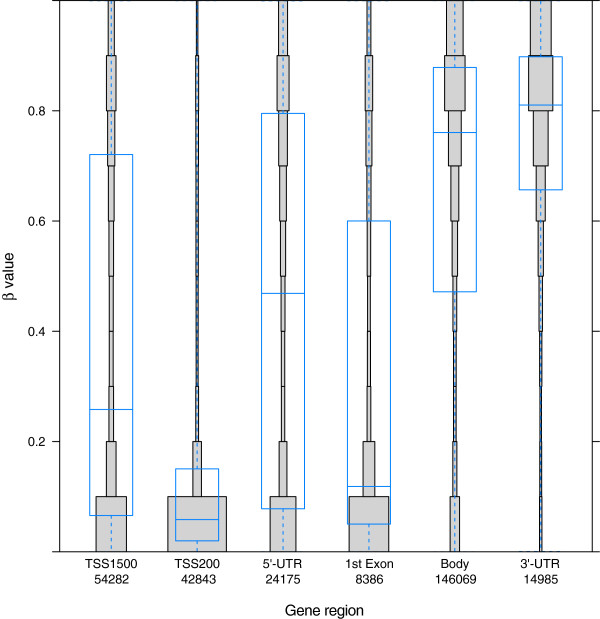
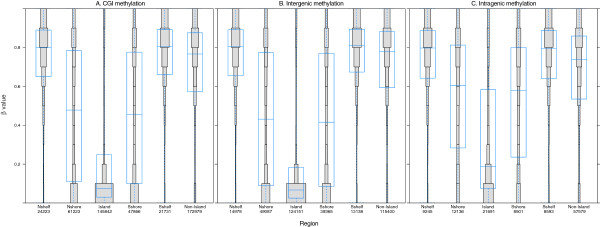
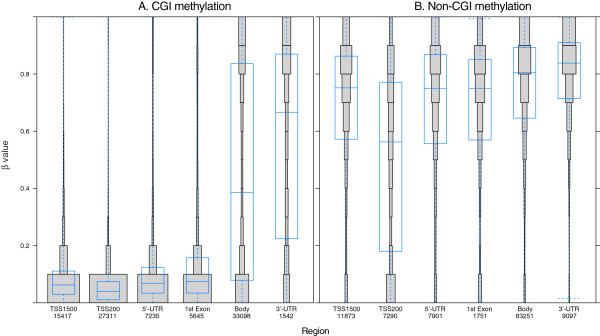
“(A-B) The numbers on the x-axis correspond to total number of CpGs in each gene region; also the x-axis shows different genomic regions, and the y-axis shows the beta values [10].”
BackgroundInfluentialThe genetic architecture of molecular traits
Claringbould, A., de Klein, N., & Franke, L. (2017) · Current Opinion in Systems Biology · doi:10.1016/j.coisb.2017.01.002 · Cited by 10
Liu, L., Zeng, P., Yang, S., & Yuan, Z. (2020) · Oncology Letters · doi:10.3892/ol.2020.11564 · Cited by 10
Wang, Y., Liu, L., Li, M., Lin, L., Su, P., Tang, H., Fan, X., & Li, X. (2020) · BMC Genomics · doi:10.1186/s12864-020-07174-w · Cited by 10
Epigenetic mechanisms of liver tumor resistance to immunotherapy
Sanceau, J., & Gougèlet, A. (2021) · World Journal of Hepatology · doi:10.4254/wjh.v13.i9.979 · Cited by 10
DNA methylation and prediction of biological age
Chen, Y., Cheng, X., & Ji, S. (2026) · Frontiers in Molecular Biosciences · doi:10.3389/fmolb.2025.1734464 · Cited by 13
“Similarly, tissue-specific methylation signatures mean that clocks trained on blood samples may not reliably reflect biological aging in other organs such as the brain, liver, or muscle (Lokk et al., 2014).”
Sparse multi-view matrix factorization: a multivariate approach to multiple tissue comparisons
Wang, Z., Yuan, W., & Montana, G. (2015) · Bioinformatics · doi:10.1093/bioinformatics/btv344 · Cited by 11
“As a mediator of gene regulatory mechanisms, DNA methylation is crucial to genomic functions such as transcription, chromosomal stability, imprinting, and Xchromosome inactivation (Lokk et al., 2014), which consequently influence an individual’s tissue development (Ziller et al.”
BackgroundRecent Landscape of Deep Learning Intervention and Consecutive Clustering on Biomedical Diagnosis
Mukherji, A., Mondal, A., Banerjee, R., & Mallik, S. (2022) · Artificial Intelligence and Applications · doi:10.47852/bonviewaia2202480 · Cited by 9
Generative Models Utilizing Padding Can Efficiently Integrate and Generate Multi-Omics Data
Lee, H., Hong, S.-H., Kim, G.-H., You, H. J., Lee, E., Jeong, J.-H., Ahn, J., & Kim, J. H. (2024) · AI · doi:10.3390/ai5030078 · Cited by 10
Advancements in Forensic DNA Analysis: Challenges and Future Directions in Molecular Biology
Abebe, B., Mitiku, T., & Birhane, N. (2024) · Biomedical Sciences · doi:10.11648/j.bs.20241003.11 · Cited by 10
“These sites are referred to as differentially methylated sites (DMS) and tissue-specific differentially methylated regions (tDMRs) respectively [67, 68]. tDMRs are primarily located at the edges of CpG islands, and they have lower CpG and G/C content compared to the surrounding regions.”
Accurate identification of primary site in tumors of unknown origin (TUO) using DNA methylation
Duckett, D., Vormittag-Nocito, E. R., Jamshidi, P., SUKHANOVA, M. J., Parker, S. L., Brat, D. J., Jennings, L. J., & Santana‐Santos, L. (2025) · npj Precision Oncology · doi:10.1038/s41698-025-00805-z · Cited by 9
Marthong, L., Ghosh, S., Palodhi, A., Imran, M., Shunyu, N. B., Maitra, A., & Ghosh, S. (2020) · Frontiers in Genetics · doi:10.3389/fgene.2020.00986 · Cited by 9
Investigating Different DNA Methylation Patterns at the Resolution of Methylation Haplotypes
Peng, X., Li, Y., Kong, X., Zhu, X., & Ding, X. (2021) · Frontiers in Genetics · doi:10.3389/fgene.2021.697279 · Cited by 9
“Then DMRs are identified by comparing the methylation of regions among different samples (Su et al., 2012; Lokk et al., 2014; Liu et al., 2015; Jühling et al., 2016; Gomez et al., 2019).”
BackgroundKader, F., Ghai, M., & Zhou, M. M. (2020) · Forensic Science International · doi:10.1016/j.forsciint.2020.110372 · Cited by 9
Is Any Cardiovascular Disease-Specific DNA Methylation Biomarker Within Reach?
de la Rocha, C., Zaina, S., & Lund, G. (2020) · Current Atherosclerosis Reports · doi:10.1007/s11883-020-00875-3 · Cited by 9
Andrews, J. L., Zalesky, A., Nair, S. S., Sullivan, R. P., Green, M. J., Pantelis, C., Newell, K. A., & Fernandez, F. (2023) · International Journal of Molecular Sciences · doi:10.3390/ijms242115624 · Cited by 9
Bae, D. H., Kim, H., Yoon, B.-H., Park, J., Kim, S., Kim, S., Kim, S., Lee, S.-I., Song, K., & Kim, Y. Y. (2021) · Oncology Reports · doi:10.3892/or.2021.7993 · Cited by 9
Methylation quantitative trait loci are largely consistent across disease states in Crohn’s disease
Venkateswaran, S., Somineni, R. P., Kilaru, V., Katrinli, Ş., Prince, J., Okou, D. T., Hyams, J. S., Denson, L. A., Kellermayer, R., Gibson, G. C., et al. (2022) · G3 Genes Genomes Genetics · doi:10.1093/g3journal/jkac041 · Cited by 9
“Recent studies have identified different sets of differential DNAm patterns in various tissue types [21, 22], and previous epigenomic and transcriptomic studies in IBD suggest that disease-relevant tissue samples are needed to develop precise biomarkers for the disease subtypes [5, 23-25].”
BackgroundContemporary Advances in Sports Science
Taïar, R. (2021) · IntechOpen eBooks · doi:10.5772/intechopen.93203 · Cited by 8
Zhu, Y., Lussier, A. A., Smith, A. D. A. C., Simpkin, A. J., Suderman, M. J., Walton, E., Relton, C. L., & Dunn, E. C. (2021) · Psychoneuroendocrinology · doi:10.1016/j.psyneuen.2022.105854 · Cited by 8
Trangle, S. S., Rosenberg, T., Parnas, H., Levy, G., Bar, E., Marco, A., & Barak, B. (2022) · Molecular Psychiatry · doi:10.1038/s41380-022-01921-z · Cited by 8
Fortes, M. F., Kuasne, H., Marchi, F. A., de Miranda, P. M., Rogatto, S. R., & Achatz, M. I. (2015) · Brazilian Journal of Medical and Biological Research · doi:10.1590/1414-431x20154026 · Cited by 8
“Methylation profiles may differ in various tissues within a single individual (39).”
BackgroundEpigenetic-Based Therapy—A Prospective Chance for Medulloblastoma Patients’ Recovery
Strejczek, A., Woszczyk, D., Urbaniak, H., Różańska, M., Robak, M., Matuszewska, Z., & Barciszewska, A. (2021) · International Journal of Molecular Sciences · doi:10.3390/ijms22094925 · Cited by 8
“proteins, which require Fe(II) and ketoglutarate as cofactors [84,85].”
BackgroundRecent regulatory changes shaped human facial and vocal anatomyPreprint
Gokhman, D., Agranat-Tamir, L., Housman, G., Nissim‐Rafinia, M., Nieves-Colón, M. A., Gu, H., Ferrando-Bernal, M., Gelabert, P., Lipende, I. F., Quillen, E. E., et al. (2017) · MPG.PuRe (Max Planck Society) · Cited by 9
Jittikoon, J., Saengsiwaritt, W., Chanhom, N., Chaikledkaew, U., Wattanapokayakit, S., Mahasirimongkol, S., & Udomsinprasert, W. (2025) · Scientific Reports · doi:10.1038/s41598-025-95050-6 · Cited by 7
“However, it has been noted that there was a correlation between methylation levels of a specific tissue and peripheral blood 35 .”
Woltering, N., Albers, A., Müther, M., Stummer, W., Paulus, W., Hasselblatt, M., Holling, M., & Thomas, C. (2022) · Brain Pathology · doi:10.1111/bpa.13083 · Cited by 7
“Of note, the majority of variable methylation sites between the two clusters overlap with open sea CpG sites which mainly map to intergenic regions that are typically associated with methylation differences among tissues of origin [32].”
BackgroundJąkalski, M., Bruhn‐Olszewska, B., Rychlicka-Buniowska, E., Davies, H., Sarkisyan, D., Siedlar, M., Baran, J., Węglarczyk, K., Jaszczyński, J., Ryś, J., et al. (2025) · Cellular and Molecular Life Sciences · doi:10.1007/s00018-025-05618-8 · Cited by 7
DNA Methylation Profile of Psoriatic Skins from Different Body Locations
Wu, M., Li, X., Zhang, C., Zhang, C., Qian, D., Ma, J., Cai, M., Tang, L., Cheng, H., Shen, C., et al. (2019) · Epigenomics · doi:10.2217/epi-2018-0225 · Cited by 7
Flatin, B. T. B., Vedeld, H. M., Pinto, R., Langerud, J., Lind, G. E., Lothe, R. A., Sveen, A., & Jeanmougin, M. (2020) · International Journal of Cancer · doi:10.1002/ijc.33425 · Cited by 7
“been shown to be highly cell type-specific, and differences in celltype composition among samples may contribute to intratumor heterogeneity on a per-marker basis.(24) In addition, variation caused by technical factors is also expected as previously demonstrated by our group.”
BackgroundWang, F., Hu, D., Lou, X., Wang, Y., Wang, L., Zhang, T., Yan, Z., Meng, N., & Zou, Y. (2023) · Gene · doi:10.1016/j.gene.2023.148109 · Cited by 6
DNA methylation stability in cardiac tissues kept at different temperatures and time intervals
Poggiali, B., Dupont, M. E., Jacobsen, S. B., Smerup, M., Christiansen, S. N. N., Tfelt‐Hansen, J., Vidaki, A., Morling, N., & Andersen, J. D. (2024) · Scientific Reports · doi:10.1038/s41598-024-76027-3 · Cited by 6
Ho, P. J., Khng, A. J., Tan, B. K. T., Lim, G. H., Tan, S.-M., Tan, V. K. M., Tan, R. S. Y. C., Lim, E. H., Iau, P. C. T., Chew, Y. J., et al. (2023) · Breast Cancer Research · doi:10.1186/s13058-023-01730-4 · Cited by 5
Mixed Patterns of Intergenerational DNA Methylation Inheritance in Acropora
Peterson, C. R., Scott, C. B., Ghaffari, R., Dixon, G., & Matz, M. V. (2024) · Molecular Biology and Evolution · doi:10.1093/molbev/msae008 · Cited by 5
“DNA methylation has been identified as a driver of cell differentiation and tissue-specificity (Lokk et al. 2014; Blake et al. 2020); during development, it can have particularly potent effects, such as regulating eye loss in blind populations of the cave fish Astyanix mexicanus (Gore et al. 2018).”
Thong, L. Y., McRae, A. F., Sirota, M., Giudice, L. C., Montgomery, G. W., & Mortlock, S. (2025) · International Journal of Molecular Sciences · doi:10.3390/ijms26083760 · Cited by 5
“…are needed to assess the utility of DNAm biomarkers for early diagnosis, given several known challenges such as tissue-specific DNAm patterns [60], the sensitivity of DNAm signals to external confounding environmental as well as technical factors, and the dynamic change in DNAm signals…”
A Review on the Role of DNA Methylation in Aortic Disease Associated With Marfan Syndrome
Zhang, W. Z., Wu, C., & Lai, H. (2025) · Cardiology Research · doi:10.14740/cr2033 · Cited by 5
“In the human genome, while CpG sites predominantly cluster in promoter regions, 40-50% are located within gene bodies, where methylation is more prevalent [59, 60].”
Genetic/epigenetic DNA markers for linking suspects and tissues in complex crime scenes
Mizrachi, R., Neiman, D., Rosenski, J., Loyfer, N., Share, D., Adjedj, C., Gläser, B., Shpitzen, M., Dor, Y., Shemer, R., et al. (2025) · Briefings in Bioinformatics · doi:10.1093/bib/bbaf395 · Cited by 5
Grafenhorst, E., Calina, T. G., & Dragomir, M. P. (2025) · Epigenomics · doi:10.1080/17501911.2025.2554571 · Cited by 5
“DNA methylation patterns are highly tissue-specific [6,7]) and therefore have the potential to determine tissue of origin, improve diagnosis and subclassification of PDAC, and offer new insights into disease progression.”
Methylation Profiles in Bone and Soft Tissue Tumors: Do They Help Classify the Unclassifiable?
Dermawan, J. K. T. K. (2025) · Modern Pathology · doi:10.1016/j.modpat.2025.100910 · Cited by 5
Integration of epigenetics into ecotoxicology: insights and fundamental research needs
Pinto, A., Asselman, J., Pereira, P., & Pereira, J. L. (2025) · Biological reviews/Biological reviews of the Cambridge Philosophical Society · doi:10.1111/brv.70105 · Cited by 6
Can DNA Methylation Profiling Classify Histologic Subtypes and Grades in Soft Tissue Sarcoma?
Kim, H., Joo, M. W., Yoon, J.-H., Park, H. S., Kim, J. H., Lee, J. H., Kim, S. H., Lee, S. K., Chung, Y., & Cho, Y. J. (2024) · Clinical Orthopaedics and Related Research · doi:10.1097/corr.0000000000003041 · Cited by 5
The core regulatory network in human cells
Kim, M.-S., Kim, D., Kang, N. S., & Kim, J. (2017) · Biochemical and Biophysical Research Communications · doi:10.1016/j.bbrc.2017.01.122 · Cited by 5
Farris, M., Texter, P. A., Mora, A. A., Wiles, M. V., Garrigle, E. F. M., Klaus, S. A., & Rosfjord, K. M. (2020) · BMC Genomics · doi:10.1186/s12864-020-07233-2 · Cited by 5
Lee, Y.-X., Su, P., Do, A. Q., Tzeng, C., Hu, Y.-M., Chen, C., Chen, C.-W., Liao, C.-C., Chen, L., Weng, Y., et al. (2023) · International Journal of Molecular Sciences · doi:10.3390/ijms24021726 · Cited by 5
“DNA methylation is an epigenetic modification that is achieved by the addition of a methyl group (-CH3) to the fifth carbon of the cytosine ring [20,21].”
Background
Metadata
- Authors
- Lokk, K., Modhukur, V., Rajashekar, B., Märtens, K., Mägi, R., Kolde, R., Koltšina, M., Nilsson, T. K., Vilo, J., Salumets, A., & Tõnisson, N.
- Affiliations
- Tartu University Hospital (EE)
- University of Tartu (EE)
- Umeå University (SE)
- Competence Centre on Health Technologies (Estonia) (EE)
- Corresponding author
- Salumets, Andres
- Tõnisson, Neeme
- ORCID
- Venue
- Genome Biology
- Published
- 2014-04-01
- Volume
- 15
- Issue
- 4
- Pages
- 224-224
- ISSN
- 1465-6906 (ISSN-L)
- 1474-760X
- PMC
- PMC4053947
- OpenAlex
- W2153250619
- Semantic Scholar
- da111e0d9ebf75483eec28e84f1b302f793083e5
- Cited by
- 444
- References
- 30
- Citations by year
- 2026: 21 · 2025: 27 · 2024: 55 · 2023: 29 · 2022: 39 · 2021: 40 · 2020: 45 · 2019: 41 · 2018: 31 · 2017: 37 · 2016: 35 · 2015: 31 · 2014: 13
- FWCI
- 15.84
- Type
- journal article
- Language
- en
- Update notices
- correction (2016-11-01)
- Open access
- gold
- doi.org
- Licence
- cc-by
- creativecommons.org/licenses/by/2.0/ (tdm)
- creativecommons.org/licenses/by/2.0/ (vor)
- Locations
- Genome biology (publishedVersion, cc-by)
- Europe PMC (PubMed Central) (publishedVersion, cc-by)
- PubMed Central (publishedVersion, cc-by)
- PubMed (publishedVersion)
- DiVA at Umeå University (Umeå University) (submittedVersion, other-oa)
- Funders
- European Commission (306031, 313010, 278913)
- Eesti Teadusagentuur (IUT20-60)
- Ettevõtluse Arendamise Sihtasutus (EU324509, EU30020)
- Tartu Ülikool (SP1GVARENG, EU30020)
- European Regional Development Fund (EU30020, EU-FP7)
- Eurostars
- Topics
- Life Sciences › Biochemistry, Genetics and Molecular Biology › Molecular Biology › Epigenetics and DNA Methylation
- Life Sciences › Biochemistry, Genetics and Molecular Biology › Molecular Biology › Genomics and Chromatin Dynamics
- Life Sciences › Biochemistry, Genetics and Molecular Biology › Genetics › Genetic Syndromes and Imprinting
- Keywords
- DNA methylation, tissue-specific methylation, differentially methylated regions, CpG hypermethylation, CpG hypomethylation, promoter methylation, CpG islands, gene expression, gene expression regulation, histogenesis, epigenetics
- MeSH terms
- Humans, Organ Specificity, Genome, Human, CpG Islands, DNA Methylation, Transcriptome
About these checks
Registry, retraction, Cites and statistics results are computed, not judged, with one exception: a printed reference that no index lists is read once by a model before it counts as a citation error. Claims are extracted by a model and kept only when their quote appears verbatim in the text; each cited source is then checked, with a model’s help, for whether it says what the claim relies on. Those verdicts can be wrong — read the claim’s quote and the cited source before relying on one.
Statistics and arithmetic are recomputed, not judged.
Confidence bands are shown only for fields calibrated on our annotated test set. None is calibrated yet, so no band is shown.
What counts as a claim ›How we measure confidence ›How we check this ›
Are you an author, or do you see a problem with this page? Request a review
Data sources
Bibliographic data: Semantic Scholar, OpenAlex, Crossref.
Contains information from the Semantic Scholar Academic Graph Datasets, made available under the ODC Attribution License (ODC-BY 1.0).
Semantic Scholar’s data is described in: Kinney, R., et al. (2023). The Semantic Scholar Open Data Platform. arXiv:2301.10140.
