

Chronic cocaine-regulated epigenomic changes in mouse nucleus accumbens
Open accessThe DOI matches its Crossref record; 80 of the 80 references it cites were found in a registry or an index.
Abstract
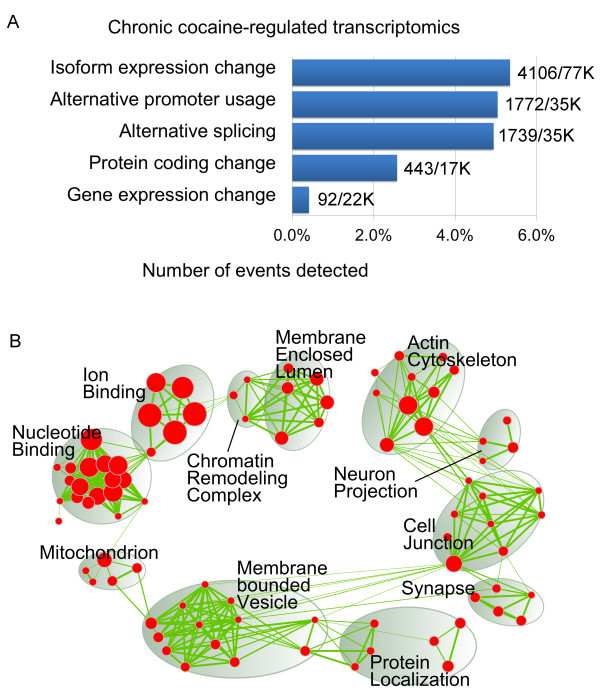
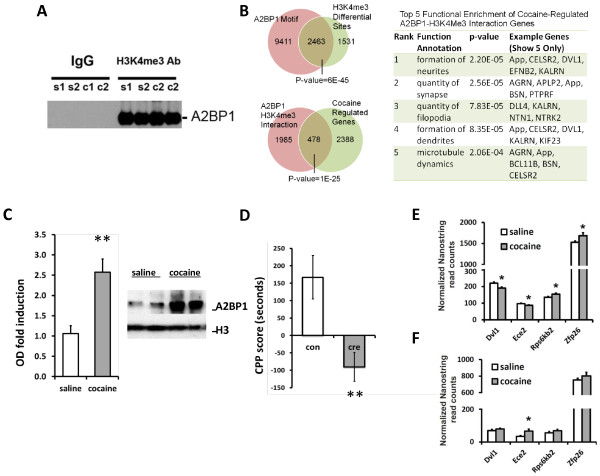
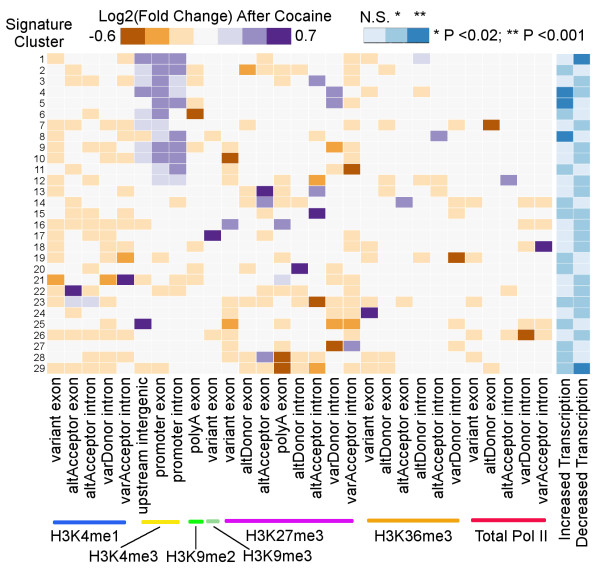
Background: Increasing evidence supports a role for altered gene expression in mediating the lasting effects of cocaine on the brain, and recent work has demonstrated the involvement of chromatin modifications in these alterations. However, all such studies to date have been restricted by their reliance on microarray technologies that have intrinsic limitations. Results: We use next generation sequencing methods, RNA-seq and ChIP-seq for RNA polymerase II and several histone methylation marks, to obtain a more complete view of cocaine-induced changes in gene expression and associated adaptations in numerous modes of chromatin regulation in the mouse nucleus accumbens, a key brain reward region. We demonstrate an unexpectedly large number of pre-mRNA splicing alterations in response to repeated cocaine treatment. In addition, we identify combinations of chromatin changes, or signatures, that correlate with cocaine-dependent regulation of gene expression, including those involving pre-mRNA alternative splicing. Through bioinformatic prediction and biological validation, we identify one particular splicing factor, A2BP1(Rbfox1/Fox-1), which is enriched at genes that display certain chromatin signatures and contributes to drug-induced behavioral abnormalities. Together, this delineation of the cocaine-induced epigenome in the nucleus accumbens reveals several novel modes of regulation by which cocaine alters the brain. Conclusions: We establish combinatorial chromatin and transcriptional profiles in mouse nucleus accumbens after repeated cocaine treatment. These results serve as an important resource for the field and provide a template for the analysis of other systems to reveal new transcriptional and epigenetic mechanisms of neuronal regulation.
Overview
The claims and statistics of this paper haven’t been checked yet.
Free: it reads the open-access text and checks the first 5 claims that cite a source we can check. Create a free account to check every claim.
Integrity signals
Registry
Cites
Statistics
Figures
Verification
Claims the paper makes
The claims and statistics of this paper haven’t been checked yet.
Free: it reads the open-access text and checks the first 5 claims that cite a source we can check. Create a free account to check every claim.
Claims other papers make about this one
Each is checked against this paper’s own text: does it say what the citing paper says it does?
The source backs part of the claim, not all of it — or backs it for a different population, condition or comparison.
In the citing paper
“Next-generation sequencing methods have shown that repeated cocaine exposure leads to histone modifications that act in a combinational fashion to create chromatin signatures that strikingly alter pre-mRNA splicing, an effect that is necessary for the expression of cocaine-induced conditioned place preference.143”
From Neurobiology of addiction: a neurocircuitry analysis (2016) · cites this paper as [143]
Experimental — accuracy not yet measured
Self-check
Percentages, sums and reported differences re-computed from the paper’s own numbers.
The self-check needs the paper’s full text.
Citations
Cites
Controlling the False Discovery Rate: A Practical and Powerful Approach to Multiple Testing
Benjamini, Y., & Hochberg, Y. (1995) · Journal of the Royal Statistical Society Series B: Statistical Methodology · doi:10.1111/j.2517-6161.1995.tb02031.x · Cited by 109,482
Systematic and integrative analysis of large gene lists using DAVID bioinformatics resources
Huang, D. W., Sherman, B. T., & Lempicki, R. A. (2009) · Nature Protocols · doi:10.1038/nprot.2008.211 · Cited by 35,890
Model-based Analysis of ChIP-Seq (MACS)
Zhang, Y., Liu, T., Meyer, C. A., Eeckhoute, J., Johnson, D. S., Bernstein, B. E., Nusbaum, C., Myers, R. M., Brown, M., Li, W., et al. (2008) · Genome Biology · doi:10.1186/gb-2008-9-9-r137 · Cited by 18,386
Self-citationAn integrated encyclopedia of DNA elements in the human genome
The ENCODE Project Consortium (2012) · Nature · doi:10.1038/nature11247 · Cited by 18,072 · cited 1×
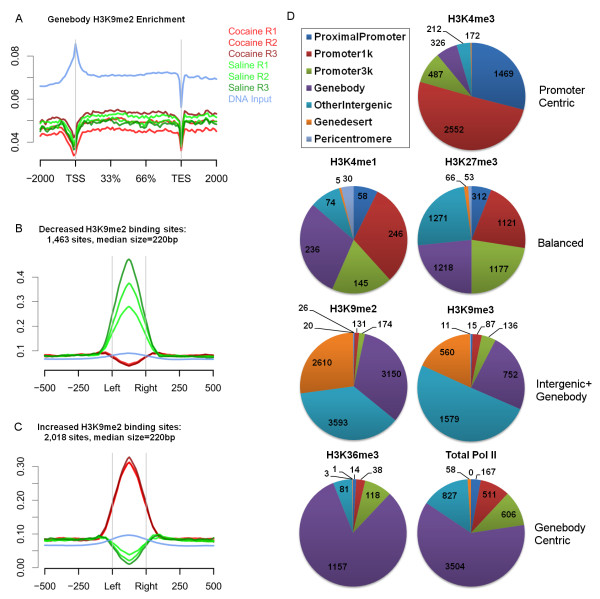
“These histone modifications were selected to cover enhancer (H3K4me1), promoter (H3K4me3, H3K27me3), gene body (H3K36me3), and intergenic (H3K9me2, H3K9me3) regions [20,21].”
BackgroundTrapnell, C., Williams, B. A., Pertea, G., Mortazavi, A., Kwan, G., van Baren, M. J., Salzberg, S. L., Wold, B. J., & Pachter, L. (2010) · Nature Biotechnology · doi:10.1038/nbt.1621 · Cited by 15,556
Huang, D. W., Sherman, B. T., & Lempicki, R. A. (2009) · Nucleic Acids Research · doi:10.1093/nar/gkn923 · Cited by 14,108
RNA-Seq: a revolutionary tool for transcriptomics
Wang, Z., Gerstein, M., & Snyder, M. (2009) · Nature Reviews Genetics · doi:10.1038/nrg2484 · Cited by 13,174 · cited 2×
“Third, genome-wide characterizations of gene expression in brain have to date relied mainly on microarrays, as opposed to RNA-seq, which provides unprecedented advantages such as more precise measurement of levels of transcripts and their splicing isoforms [16].”
BackgroundTrapnell, C., Roberts, A., Goff, L., Pertea, G., Kim, D., Kelley, D. R., Pimentel, H., Salzberg, S. L., Rinn, J. L., & Pachter, L. (2012) · Nature Protocols · doi:10.1038/nprot.2012.016 · Cited by 12,116
TopHat: discovering splice junctions with RNA-Seq
Trapnell, C., Pachter, L., & Salzberg, S. L. (2009) · Bioinformatics · doi:10.1093/bioinformatics/btp120 · Cited by 11,617
MEME SUITE: tools for motif discovery and searching
Bailey, T. L., Boden, M., Buske, F. A., Frith, M., Grant, C. E., Clementi, L., Ren, J., Li, W. W., & Noble, W. S. (2009) · Nucleic Acids Research · doi:10.1093/nar/gkp335 · Cited by 10,648 · cited 3×
“The motifs found by MEME [42] were first combined using the Bayesian motif clustering [79] method and then matched with known motifs.”
Method
Cited by
Neurobiology of addiction: a neurocircuitry analysis
Koob, G. F., & Volkow, N. D. (2016) · The Lancet Psychiatry · doi:10.1016/s2215-0366(16)00104-8 · Cited by 3,698
Synaptic, transcriptional and chromatin genes disrupted in autism
Study, T. D., De Rubeis, S., Autism, H. M. C. F., UK10K Consortium, The Autism Sequencing Consortium, He, X., Goldberg, A. P., Poultney, C. S., Samocha, K., Ercument Cicek, A., et al. (2014) · Nature · doi:10.1038/nature13772 · Cited by 2,746
“The list of genes that are targets of both RBFOX1 and H3K4me3 was extracted from Feng et al, Table S9(30) (a total of 478 genes). Human orthologues of mouse synaptosome (152) and PSD (1080) genes were extracted from the Genes2Cognition database (http://www.”
Hodes, G. E., Pfau, M. L., Purushothaman, I., Ahn, H. F., Golden, S. A., Christoffel, D. J., Magida, J., Brancato, A., Takahashi, A., Flanigan, M. E., et al. (2015) · The Journal of Neuroscience · doi:10.1523/jneurosci.1392-15.2015 · Cited by 395
“Library construction was performed following a previously published protocol (Feng et al., 2014).”
MethodSelf-citationThe Molecular Basis of Drug Addiction: Linking Epigenetic to Synaptic and Circuit Mechanisms
Nestler, E. J., & Lüscher, C. (2019) · Neuron · doi:10.1016/j.neuron.2019.01.016 · Cited by 334
Self-citationβ-catenin mediates stress resilience through Dicer1/microRNA regulation
Dias, C., Feng, J., Sun, H., Shao, N. Y., Mazei-Robison, M. S., Damez-Werno, D., Scobie, K., Bagot, R., LaBonté, B., Ribeiro, E., et al. (2014) · Nature · doi:10.1038/nature13976 · Cited by 240
Self-citationLocus-specific epigenetic remodeling controls addiction- and depression-related behaviors
Heller, E. A., Cates, H. M., Peña, C. J., Sun, H., Shao, N., Feng, J., Golden, S. A., Herman, J. P., Walsh, J. J., Mazei-Robison, M., et al. (2014) · Nature Neuroscience · doi:10.1038/nn.3871 · Cited by 227
Self-citationEpigenetic Mechanisms of Opioid Addiction
Browne, C. J., Godino, A., Salery, M., & Nestler, E. J. (2020) · Biological Psychiatry · doi:10.1016/j.biopsych.2019.06.027 · Cited by 223
Self-citationA genomic perspective on HLA evolution
Meyer, D., C. Aguiar, V. R., Bitarello, B. D., C. Brandt, D. Y., & Nunes, K. (2018) · Immunogenetics · doi:10.1007/s00251-017-1017-3 · Cited by 185
A dopamine-induced gene expression signature regulates neuronal function and cocaine response
Savell, K. E., Tuscher, J. J., Zipperly, M. E., Duke, C. G., Phillips, R. A., Bauman, A. J., Thukral, S., Sultan, F. A., Goska, N. A., Ianov, L., et al. (2020) · Science Advances · doi:10.1126/sciadv.aba4221 · Cited by 180
“Following normalization, and before dimensionality reduction, all GEM wells were integrated with FindIntegrationAnchors() and IntegrateData(), using 17 principal components (PCs) for the adult dataset and 10 PCs for the culture dataset.”
BackgroundMethodInfluentialRole of Tet1 and 5-hydroxymethylcytosine in cocaine action
Feng, J., Shao, N., Szulwach, K. E., Vialou, V., Huynh, J., Zhong, C., Le, T., Ferguson, D., Cahill, M. E., Li, Y., et al. (2015) · Nature Neuroscience · doi:10.1038/nn.3976 · Cited by 177
Self-citationCocaine Self-administration Alters Transcriptome-wide Responses in the Brain’s Reward Circuitry
Walker, D. M., Cates, H. M., Loh, Y.-H. E., Purushothaman, I., Ramakrishnan, A., Cahill, K. M., Lardner, C. K., Godino, A., Kronman, H. G., Rabkin, J., et al. (2018) · Biological Psychiatry · doi:10.1016/j.biopsych.2018.04.009 · Cited by 176
Self-citationEpigenetic Signaling in Psychiatric Disorders
Peña, C. J., Bagot, R. C., Labonté, B., & Nestler, E. J. (2014) · Journal of Molecular Biology · doi:10.1016/j.jmb.2014.03.016 · Cited by 163
Self-citationHamilton, P. J., & Nestler, E. J. (2019) · Current Opinion in Neurobiology · doi:10.1016/j.conb.2019.05.005 · Cited by 137
Self-citationThind, A. S., Monga, I., Thakur, P. K., Kumari, P., Dindhoria, K., Krzak, M., Ranson, M., & Ashford, B. (2021) · Briefings in Bioinformatics · doi:10.1093/bib/bbab259 · Cited by 129
Opposing Role for Egr3 in Nucleus Accumbens Cell Subtypes in Cocaine Action
Chandra, R., Francis, T. C., Konkalmatt, P., Amgalan, A., Gancarz, A. M., Dietz, D. M., & Lobo, M. K. (2015) · The Journal of Neuroscience · doi:10.1523/jneurosci.0548-15.2015 · Cited by 128
SIRT1-FOXO3a Regulate Cocaine Actions in the Nucleus Accumbens
Ferguson, D., Shao, N., Heller, E., Feng, J., Neve, R., Kim, H.-D., Call, T., Magazu, S., Shen, L., & Nestler, E. J. (2015) · The Journal of Neuroscience · doi:10.1523/jneurosci.4012-14.2015 · Cited by 111
Self-citationHeller, E. A., Hamilton, P. J., Burek, D. D., Lombroso, S. I., Peña, C. J., Neve, R. L., & Nestler, E. J. (2016) · The Journal of Neuroscience · doi:10.1523/jneurosci.0013-16.2016 · Cited by 109
“Unlike traditional overexpression or knock-out approaches, our targeted approach generates smaller changes in expression that more closely replicate gene regulation observed in vivo (Renthal et al., 2009; Feng et al., 2014).”
BackgroundSelf-citationChandra, R., Engeln, M., Schiefer, C., Patton, M. H., Martin, J. A., Werner, C. T., Riggs, L. M., Francis, T. C., McGlincy, M., Evans, B., et al. (2017) · Neuron · doi:10.1016/j.neuron.2017.11.037 · Cited by 114
Analytical tools and current challenges in the modern era of neuroepigenomics
Maze, I., Shen, L., Zhang, B., Garcia, B. A., Shao, N., Mitchell, A., Sun, H., Akbarian, S., Allis, C. D., & Nestler, E. J. (2014) · Nature Neuroscience · doi:10.1038/nn.3816 · Cited by 100
Self-citationRegulation of chromatin states by drugs of abuse
Walker, D. M., Cates, H. M., Heller, E. A., & Nestler, E. J. (2015) · Current Opinion in Neurobiology · doi:10.1016/j.conb.2014.11.002 · Cited by 100
Self-citationHistone Methylation by the Kleefstra Syndrome Protein EHMT1 Mediates Homeostatic Synaptic Scaling
Benevento, M., Iacono, G., Selten, M. M., Ba, W., Oudakker, A. R., Frega, M., Keller, J., Mancini, R., Lewerissa, E., Kleefstra, T., et al. (2016) · Neuron · doi:10.1016/j.neuron.2016.06.003 · Cited by 111
Neuroepigenetics and addiction
(2018) · Handbook of Clinical Neurology · doi:10.1016/b978-0-444-64076-5.00048-x · Cited by 95
Self-citationAgirre, E., Oldfield, A., Bellora, N., Segelle, A., & Luco, R. F. (2021) · Nature Communications · doi:10.1038/s41467-021-20979-x · Cited by 96
Key transcription factors mediating cocaine-induced plasticity in the nucleus accumbens
Teague, C. D., & Nestler, E. J. (2021) · Molecular Psychiatry · doi:10.1038/s41380-021-01163-5 · Cited by 85
Self-citationEnvironmental, genetic and epigenetic contributions to cocaine addiction
Pierce, R. C., Fant, B., Swinford-Jackson, S. E., Heller, E. A., Berrettini, W. H., & Wimmer, M. E. (2018) · Neuropsychopharmacology · doi:10.1038/s41386-018-0008-x · Cited by 97
RNA‐binding proteins, neural development and the addictions
Bryant, C. D., & Yazdani, N. (2016) · Genes, Brain and Behavior · doi:10.1111/gbb.12273 · Cited by 81
Cahill, M. E., Bagot, R. C., Gancarz, A. M., Walker, D. M., Sun, H., Wang, Z.-J., Heller, E. A., Feng, J., Kennedy, P. J., Koo, J. W., et al. (2016) · Neuron · doi:10.1016/j.neuron.2016.01.031 · Cited by 80
Self-citationCadet, J. L., Brannock, C., Krasnova, I. N., Jayanthi, S., Ladenheim, B., McCoy, M. T., Walther, D. M., Godino, A., Pirooznia, M., & Lee, R. S. (2016) · Molecular Psychiatry · doi:10.1038/mp.2016.48 · Cited by 86
Cadet, J. L., Brannock, C., Jayanthi, S., & Krasnova, I. N. (2014) · Molecular Neurobiology · doi:10.1007/s12035-014-8776-8 · Cited by 82
Differential peak calling of ChIP-seq signals with replicates with THOR
Allhoff, M., Seré, K., F. Pires, J., Zenke, M., & G. Costa, I. (2016) · Nucleic Acids Research · doi:10.1093/nar/gkw680 · Cited by 73
Histone arginine methylation in cocaine action in the nucleus accumbens
Damez-Werno, D. M., Sun, H., Scobie, K. N., Shao, N., Rabkin, J., Dias, C., Calipari, E. S., Maze, I., Pena, C. J., Walker, D. M., et al. (2016) · Proceedings of the National Academy of Sciences · doi:10.1073/pnas.1605045113 · Cited by 70
Self-citationChromatin-mediated alternative splicing regulates cocaine-reward behavior
Xu, S.-J., Lombroso, S. I., Fischer, D. K., Carpenter, M. D., Marchione, D. M., Hamilton, P. J., Lim, C. J., Neve, R. L., Garcia, B. A., Wimmer, M. E., et al. (2021) · Neuron · doi:10.1016/j.neuron.2021.08.008 · Cited by 69
GAVIN: Gene-Aware Variant INterpretation for medical sequencing
van der Velde, K. J., de Boer, E. N., van Diemen, C. C., Sikkema-Raddatz, B., Abbott, K. M., Knopperts, A., Franke, L., Sijmons, R. H., de Koning, T. J., Wijmenga, C., et al. (2017) · Genome Biology · doi:10.1186/s13059-016-1141-7 · Cited by 64
Angelini, C., & Costa, V. (2014) · Frontiers in Cell and Developmental Biology · doi:10.3389/fcell.2014.00051 · Cited by 63
Engmann, O., Labonté, B., Mitchell, A., Bashtrykov, P., Calipari, E. S., Rosenbluh, C., Loh, Y. E., Walker, D. M., Burek, D., Hamilton, P. J., et al. (2017) · Biological Psychiatry · doi:10.1016/j.biopsych.2017.04.013 · Cited by 63
Self-citationMews, P., Cunningham, A. M., Scarpa, J. R., Ramakrishnan, A., Hicks, E. M., Bolnick, S., Garamszegi, S. P., Shen, L., Mash, D. C., & Nestler, E. J. (2023) · Science Advances · doi:10.1126/sciadv.add8946 · Cited by 52
Self-citationLutz, P.-É., Chay, M.-A., Pacis, A., Chen, G. G., Aouabed, Z., Maffioletti, E., Théroux, J., Grenier, J., Yang, J., Aguirre, M., et al. (2021) · Nature Communications · doi:10.1038/s41467-021-21365-3 · Cited by 61
Tet1 in Nucleus Accumbens Opposes Depression- and Anxiety-Like Behaviors
Feng, J., Pena, C. J., Purushothaman, I., Engmann, O., Walker, D., Brown, A. N., Issler, O., Doyle, M., Harrigan, E., Mouzon, E., et al. (2017) · Neuropsychopharmacology · doi:10.1038/npp.2017.6 · Cited by 58
Self-citationBioinformatics Tools for Genome-Wide Epigenetic Research
Angarica, V. E., & del Sol, A. (2017) · Advances in experimental medicine and biology · doi:10.1007/978-3-319-53889-1_25 · Cited by 64
Browne, C. J., Futamura, R., Minier-Toribio, A. M., Hicks, E. M., Ramakrishnan, A., Martínez-Rivera, F. J., Estill, M. S., Godino, A., Parise, E. M., Torres‐Berrío, A., et al. (2023) · Science Advances · doi:10.1126/sciadv.adg8558 · Cited by 52
Self-citationmRNA changes in nucleus accumbens related to methamphetamine addiction in mice
Zhu, L., Li, J., Dong, N., Guan, F., Liu, Y., Ma, D., Goh, E. L. K., & Chen, T. (2016) · Scientific Reports · doi:10.1038/srep36993 · Cited by 51
Zhong, X., Drgonová, J., Li, C., & Uhl, G. R. (2015) · Annals of the New York Academy of Sciences · doi:10.1111/nyas.12776 · Cited by 61
DNA Methylation Dynamics and Cocaine in the Brain: Progress and Prospects
Vaillancourt, K., Ernst, C., Mash, D. C., & Turecki, G. (2017) · Genes · doi:10.3390/genes8050138 · Cited by 53
Scherma, M., Qvist, J. S., Asok, A., Huang, S.-S. C., Masia, P., Deidda, M., Wei, Y. B., Soni, R. K., Fratta, W., Fadda, P., et al. (2020) · Proceedings of the National Academy of Sciences · doi:10.1073/pnas.1920866117 · Cited by 47
Engel, G. L., Marella, S., Kaun, K. R., Wu, J. M., Adhikari, P., Kong, E. C., & Wolf, F. W. (2016) · Journal of Neuroscience · doi:10.1523/jneurosci.0499-16.2016 · Cited by 46
From Circuits to Chromatin: The Emerging Role of Epigenetics in Mental Health
Mews, P., Calipari, E. S., Day, J. J., Lobo, M. K., Bredy, T. W., & Abel, T. G. (2021) · Journal of Neuroscience · doi:10.1523/jneurosci.1649-20.2020 · Cited by 45
Mechanisms of Neuronal Alternative Splicing and Strategies for Therapeutic Interventions
Soto, E. J. L., Gandal, M. J., Gonatopoulos-Pournatzis, T., Heller, E. A., Luo, D., & Zheng, S. (2019) · Journal of Neuroscience · doi:10.1523/jneurosci.1149-19.2019 · Cited by 47
Persaud, N. S., & Cates, H. M. (2023) · eneuro · doi:10.1523/eneuro.0109-21.2021 · Cited by 41
Reshetnikov, V. V., Kisaretova, P. E., Ershov, N., Merkulova, T. I., & Bondar, N. P. (2020) · Progress in Neuro-Psychopharmacology and Biological Psychiatry · doi:10.1016/j.pnpbp.2020.110068 · Cited by 50
Fox, M. E., Wulff, A. B., Franco, D., Choi, E. Y., Calarco, C. A., Engeln, M., Turner, M. D., Chandra, R., Rhodes, V. M., Thompson, S. M., et al. (2022) · Biological Psychiatry · doi:10.1016/j.biopsych.2022.08.023 · Cited by 45
Sun, H., Martin, J. A., Werner, C. T., Wang, Z.-J., Damez-Werno, D. M., Scobie, K. N., Shao, N.-Y., Dias, C., Rabkin, J., Koo, J. W., et al. (2016) · The Journal of Neuroscience · doi:10.1523/jneurosci.3254-15.2016 · Cited by 40
Self-citationCates, H. M., Heller, E. A., Lardner, C. K., Purushothaman, I., Peña, C. J., Walker, D. M., Cahill, M. E., Neve, R. L., Shen, L., Bagot, R. C., et al. (2017) · Biological Psychiatry · doi:10.1016/j.biopsych.2017.11.027 · Cited by 40
Self-citationYeh, S.-Y., Estill, M. S., Lardner, C. K., Browne, C. J., Minier-Toribio, A. M., Futamura, R., Beach, K., McManus, C. A., Xu, S., Zhang, S., et al. (2022) · Biological Psychiatry · doi:10.1016/j.biopsych.2022.12.021 · Cited by 42
Self-citationNeuroepigenetics and addictive behaviors: Where do we stand?
Nogueira, D. D. S., Mérienne, K., & Befort, K. (2018) · Neuroscience & Biobehavioral Reviews · doi:10.1016/j.neubiorev.2018.08.018 · Cited by 45
Epigenetic Priming in Drug Addiction
Mews, P., Walker, D. M., & Nestler, E. J. (2018) · Cold Spring Harbor Symposia on Quantitative Biology · doi:10.1101/sqb.2018.83.037663 · Cited by 39
Self-citationCocaine self-administration induces sex-dependent protein expression in the nucleus accumbens
López, A. J., Johnson, A. R., Euston, T. J., Wilson, R. S., Nolan, S. O., Brady, L. J., Thibeault, K. C., Kelly, S. J., Kondev, V., Melugin, P. R., et al. (2021) · Communications Biology · doi:10.1038/s42003-021-02358-w · Cited by 35
Chandra, R., Engeln, M., Francis, T. C., Konkalmatt, P., Patel, D., & Lobo, M. K. (2017) · Biological Psychiatry · doi:10.1016/j.biopsych.2016.10.024 · Cited by 35
Integrative Analysis of Sex-Specific microRNA Networks Following Stress in Mouse Nucleus Accumbens
Pfau, M. L., Purushothaman, I., Feng, J., Golden, S. A., Aleyasin, H., Lorsch, Z. S., Cates, H. M., Flanigan, M. E., Menard, C., Heshmati, M., et al. (2016) · Frontiers in Molecular Neuroscience · doi:10.3389/fnmol.2016.00144 · Cited by 35
Self-citationWildenberg, G. A., Sorokina, A. M., Koranda, J. L., Monical, A., Heer, C., Sheffield, M. E., Zhuang, X., McGehee, D., & Kasthuri, N. (2021) · eLife · doi:10.7554/elife.71981 · Cited by 40
The Role of Cell Adhesion Molecule Genes Regulating Neuroplasticity in Addiction
Muskiewicz, D. E., Uhl, G. R., & Hall, F. S. (2018) · Neural Plasticity · doi:10.1155/2018/9803764 · Cited by 34
Hu, Q., Kim, E. J., Feng, J., Grant, G. R., & Heller, E. A. (2017) · PLoS Computational Biology · doi:10.1371/journal.pcbi.1005602 · Cited by 35
Self-citationNätt, D., Barchiesi, R., Murad, J., Feng, J., Nestler, E. J., Champagne, F. A., & Thorsell, A. (2017) · Scientific Reports · doi:10.1038/s41598-017-10803-2 · Cited by 40
Self-citationRole of Long Noncoding RNA Gas5 in Cocaine Action
Xu, H., Brown, A. N., Waddell, N. J., Liu, X., Kaplan, G. J., Chitaman, J. M., Stockman, V., Hedinger, R. L., Adams, R., Abreu, K., et al. (2020) · Biological Psychiatry · doi:10.1016/j.biopsych.2020.05.004 · Cited by 35
Self-citationAgrawal, P., Chung, P., Heberlein, U., & Kent, C. F. (2019) · BMC Biology · doi:10.1186/s12915-019-0646-4 · Cited by 38
Vallender, E. J., Goswami, D. B., Shinday, N. M., Westmoreland, S. V., Yao, W., & Rowlett, J. K. (2017) · Drug and Alcohol Dependence · doi:10.1016/j.drugalcdep.2017.01.030 · Cited by 33
Wenderski, W., & Maze, I. S. (2016) · BioEssays · doi:10.1002/bies.201500171 · Cited by 36
Self-citationVaillancourt, K., Yang, J., Chen, G. G., Yerko, V., Théroux, J., Aouabed, Z., López, A. J., Thibeault, K. C., Calipari, E. S., Labonté, B., et al. (2020) · Molecular Psychiatry · doi:10.1038/s41380-020-00909-x · Cited by 32
Self-citationCocaine-induced neuron subtype mitochondrial dynamics through Egr3 transcriptional regulation
Cole, S. L., Chandra, R., Harris, M., Patel, I., Wang, T., Kim, H.-J., Jensen, L., Russo, S. J., Turecki, G., Gancarz, A. M., et al. (2021) · Molecular Brain · doi:10.1186/s13041-021-00800-y · Cited by 29
Lardner, C. K., van der Zee, Y. Y., Estill, M. S., Kronman, H. G., Salery, M., Cunningham, A. M., Godino, A., Parise, E. M., Kim, J. H., Neve, R. L., et al. (2021) · Biological Psychiatry · doi:10.1016/j.biopsych.2021.06.017 · Cited by 29
Self-citationEpigenetic Effects of Addictive Drugs in the Nucleus Accumbens
Anderson, E. M., & Taniguchi, M. (2022) · Frontiers in Molecular Neuroscience · doi:10.3389/fnmol.2022.828055 · Cited by 30
Future perspectives of emerging novel drug targets and immunotherapies to control drug addiction
Malik, J. A., & Agrewala, J. N. (2023) · International Immunopharmacology · doi:10.1016/j.intimp.2023.110210 · Cited by 28
Mallick, R., & Duttaroy, A. K. (2023) · Neurochemistry International · doi:10.1016/j.neuint.2023.105627 · Cited by 28
New Hope: The Emerging Role of 5-Hydroxymethylcytosine in Mental Health and Disease
Madrid, A., Papale, L. A., & Alisch, R. S. (2016) · Epigenomics · doi:10.2217/epi-2016-0020 · Cited by 26
Genome-wide DNA methylation differences in nucleus accumbens of smokers vs. nonsmokers
Markunas, C. A., Semick, S. A., Quach, B. C., Tao, R., Deep‐Soboslay, A., Carnes, M. U., Bierut, L. J., Hyde, T. M., Kleinman, J. E., Johnson, E. O., et al. (2020) · Neuropsychopharmacology · doi:10.1038/s41386-020-0782-0 · Cited by 27
Cell type–specific epigenetic priming of gene expression in nucleus accumbens by cocaine
Mews, P., van der Zee, Y. Y., Kronman, H. G., Gurung, A., Ramakrishnan, A., Browne, C. J., Futamura, R., Estill, M., Ryan, M., Reyes, A. A., et al. (2024) · Science Advances · doi:10.1126/sciadv.ado3514 · Cited by 28
Self-citationLi, M., Xu, P., Xu, Y., Teng, H., Tian, W., Du, Q., & Zhao, M. (2017) · Frontiers in Pharmacology · doi:10.3389/fphar.2017.00142 · Cited by 28
Histone modifications in cocaine, methamphetamine and opioids
Cheng, J., He, Z., Chen, Q., Jiang, L., Peng, Y., Zhang, J., Yan, X., Yan, J., & Niu, S. (2023) · Heliyon · doi:10.1016/j.heliyon.2023.e16407 · Cited by 27
Consequences of early life stress on genomic landscape of H3K4me3 in prefrontal cortex of adult mice
Ershov, N., Bondar, N. P., Lepeshko, A. A., Reshetnikov, V. V., Ryabushkina, J., & Merkulova, T. I. (2018) · BMC Genomics · doi:10.1186/s12864-018-4479-2 · Cited by 26
Wildenberg, G. A., Sorokina, A., Koranda, J. L., Monical, A., Heer, C. M., Sheffield, M. E. J., Zhuang, X., McGehee, D. S., & Kasthuri, B. (2021) · University of Chicago · doi:10.6082/232sj-vk702 · Cited by 27
López, A. J., Hemstedt, T. J., Jia, Y., Hwang, P. H., Campbell, R. R., Kwapis, J. L., White, A. O., Chitnis, O., Scarfone, V. M., Matheos, D. P., et al. (2019) · Neuropharmacology · doi:10.1016/j.neuropharm.2019.04.016 · Cited by 27
Genome-Wide Meta-Analyses of FTND and TTFC Phenotypes
Chen, J., Loukola, A., Gillespie, N. A., Peterson, R. E., Jia, P., Riley, B. P., MAES, H. H. M., Dick, D. M., Kendler, K. S., Damaj, M. I., et al. (2019) · Nicotine & Tobacco Research · doi:10.1093/ntr/ntz099 · Cited by 25
Multiplexed Detection of Epigenetic Markers Using Quantum Dot (QD)-Encoded Hydrogel Microparticles
Yeom, S. Y., Son, C., Kim, B. S., Tag, S. H., Nam, E., Shin, H., Ys, K., Gang, H., Lee, H. J., Choi, J., et al. (2016) · Analytical Chemistry · doi:10.1021/acs.analchem.5b04190 · Cited by 25
Wimmer, M. E., Fant, B., Swinford-Jackson, S. E., Testino, A., Nest, D. S. V., Abel, T. G., & Pierce, R. C. (2019) · Journal of Neuroscience · doi:10.1523/jneurosci.0015-19.2019 · Cited by 25
McCann, K. E., Sinkiewicz, D. M., Rosenhauer, A. M., Beach, L. Q., & Huhman, K. L. (2018) · Molecular Neurobiology · doi:10.1007/s12035-018-1339-7 · Cited by 25
Sex-Specific Gene Expression in the Mouse Nucleus Accumbens Before and After Cocaine Exposure
LaRese, T. P., Rheaume, B. A., Abraham, R., Eipper, B. A., & Mains, R. E. (2019) · Journal of the Endocrine Society · doi:10.1210/js.2018-00313 · Cited by 22
Vaillancourt, K., Chen, G. G., Fiori, L. M., Maussion, G., Yerko, V., Théroux, J., Ernst, C., Labonté, B., Calipari, E. S., Nestler, E. J., et al. (2021) · iScience · doi:10.1016/j.isci.2021.103169 · Cited by 21
Self-citationFosbInduction in Nucleus Accumbens by Cocaine Is Regulated by E2F3a
Cates, H. M., Lardner, C. K., Bagot, R. C., Neve, R. L., & Nestler, E. J. (2019) · eNeuro · doi:10.1523/eneuro.0325-18.2019 · Cited by 22
Self-citationGenomics and epigenomics of addiction
Maldonado, R. J., Calvé, P., García‐Blanco, A., Domingo‐Rodriguez, L., Senabre, E., & Martín‐García, E. (2021) · American Journal of Medical Genetics Part B Neuropsychiatric Genetics · doi:10.1002/ajmg.b.32843 · Cited by 29
Li, J., Poursat, M.-A., Drubay, D., Motz, A., Saci, Z., Morillon, A., Michiels, S., & Gautheret, D. (2015) · PLoS Computational Biology · doi:10.1371/journal.pcbi.1004583 · Cited by 21
Spirometra erinaceieuropaei in a wildcat (Felis silvestris) in Iran
Badri, M., Eslahi, A. V., Majidiani, H., & Pirestani, M. (2017) · Veterinary Parasitology Regional Studies and Reports · doi:10.1016/j.vprsr.2017.08.004 · Cited by 19
Castino, M. R., Baker‐Andresen, D., Ratnu, V. S., Shevchenko, G., Morris, K. V., Bredy, T. W., Youngson, N. A., & Clemens, K. J. (2017) · Genes Brain & Behavior · doi:10.1111/gbb.12421 · Cited by 22
Yaw, A. M., Prosser, R. A., Jones, P. C., Garcia, B. J., Jacobson, D., & Glass, J. D. (2019) · Behavioural Brain Research · doi:10.1016/j.bbr.2019.02.043 · Cited by 19
Falconnier, C., Caparros-Roissard, A., Decraene, C., & Lutz, P.-É. (2023) · Molecular Psychiatry · doi:10.1038/s41380-023-02238-1 · Cited by 21
Developmental and Regulatory Functions of Na+ Channel Non–pore-forming β Subunits
Winters, J. J., & Isom, L. L. (2016) · Current topics in membranes · doi:10.1016/bs.ctm.2016.07.003 · Cited by 20
Ju, J. H., Shenoy, S. A., Crystal, R. G., & Mezey, J. G. (2017) · PLoS Computational Biology · doi:10.1371/journal.pcbi.1005537 · Cited by 27
Sobriety and Satiety: Is NAD+ the Answer?
Braidy, N., Villalva, M. D., & van Eeden, S. (2020) · Antioxidants · doi:10.3390/antiox9050425 · Cited by 18
Blum, K., Gold, M. S., Cadet, J. L., Baron, D. A., Bowirrat, A., Thanos, P. K., Brewer, R., Badgaiyan, R. D., & Gondré‐Lewis, M. C. (2021) · Current Psychopharmacologye · doi:10.2174/2211556009666210108112737 · Cited by 18
Phillips, R. A., Wan, E., Tuscher, J. J., Reid, D., Drake, O. R., Ianov, L., & Day, J. J. (2023) · eLife · doi:10.7554/elife.89993 · Cited by 18
Cocaine regulation of Nr4a1 chromatin bivalency and mRNA in male and female mice
Fischer, D. K., Krick, K. S., Han, C., Woolf, M. T., & Heller, E. A. (2022) · Scientific Reports · doi:10.1038/s41598-022-19908-9 · Cited by 14
Epigenetic Modulation of Opioid Receptors by Drugs of Abuse
Reid, K. Z., Lemezis, B. M., Hou, T.-C. J., & Chen, R. (2022) · International Journal of Molecular Sciences · doi:10.3390/ijms231911804 · Cited by 18
Metadata
- Authors
- Feng, J., Wilkinson, M., Liu, X., Purushothaman, I., Ferguson, D., Vialou, V., Maze, I., Shao, N., Kennedy, P., Koo, J., Dias, C., Laitman, B., Stockman, V., LaPlant, Q., Cahill, M. E., Nestler, E. J., & Shen, L.
- Affiliations
- Icahn School of Medicine at Mount Sinai (US)
- Corresponding author
- Nestler, Eric J
- Shen, Li
- ORCID
- Venue
- Genome Biology
- Published
- 2014-04-22
- Volume
- 15
- Issue
- 4
- Pages
- R65-R65
- ISSN
- 1465-6906 (ISSN-L)
- 1474-760X
- PMC
- PMC4073058
- OpenAlex
- W2100226042
- Semantic Scholar
- a3c0adc638e832200e3927f11575e844a73a45c1
- Cited by
- 198
- References
- 80
- Citations by year
- 2026: 7 · 2025: 15 · 2024: 17 · 2023: 19 · 2022: 12 · 2021: 25 · 2020: 9 · 2019: 17 · 2018: 13 · 2017: 23 · 2016: 22 · 2015: 10 · 2014: 9
- FWCI
- 8.74
- Type
- journal article
- Language
- en
- Update notices
- erratum (2015-10-14)
- Open access
- gold
- doi.org
- Licence
- cc-by
- creativecommons.org/licenses/by/2.0/ (tdm)
- creativecommons.org/licenses/by/2.0/ (vor)
- Locations
- Genome biology (publishedVersion, cc-by)
- PubMed Central (publishedVersion, cc-by)
- PubMed (publishedVersion)
- Funders
- National Institute of Mental Health (R00MH094405)
- National Institute on Drug Abuse (DA 008227, P01DA008227)
- Topics
- Life Sciences › Biochemistry, Genetics and Molecular Biology › Molecular Biology › Genomics and Chromatin Dynamics
- Life Sciences › Neuroscience › Cellular and Molecular Neuroscience › Neurotransmitter Receptor Influence on Behavior
- Life Sciences › Biochemistry, Genetics and Molecular Biology › Molecular Biology › Epigenetics and DNA Methylation
- Keywords
- cocaine, nucleus accumbens, epigenetics, chromatin modification, histone methylation, RNA polymerase II, pre-mRNA splicing, alternative splicing, A2BP1, RBFOX1, drug addiction, gene expression regulation, chromatin signatures
- MeSH terms
- RNA Splicing Factors, Animals, Cocaine, Histones, Male, Mice, Inbred C57BL, Nucleus Accumbens, RNA, Messenger, RNA-Binding Proteins, Alternative Splicing, Cocaine-Related Disorders, Chromatin Assembly and Disassembly, Epigenesis, Genetic, Mice
About these checks
Registry, retraction, Cites and statistics results are computed, not judged, with one exception: a printed reference that no index lists is read once by a model before it counts as a citation error. Claims are extracted by a model and kept only when their quote appears verbatim in the text; each cited source is then checked, with a model’s help, for whether it says what the claim relies on. Those verdicts can be wrong — read the claim’s quote and the cited source before relying on one.
Statistics and arithmetic are recomputed, not judged.
Confidence bands are shown only for fields calibrated on our annotated test set. None is calibrated yet, so no band is shown.
What counts as a claim ›How we measure confidence ›How we check this ›
Are you an author, or do you see a problem with this page? Request a review
Data sources
Bibliographic data: Semantic Scholar, OpenAlex, Crossref.
Contains information from the Semantic Scholar Academic Graph Datasets, made available under the ODC Attribution License (ODC-BY 1.0).
Semantic Scholar’s data is described in: Kinney, R., et al. (2023). The Semantic Scholar Open Data Platform. arXiv:2301.10140.
