

Chronic cocaine-regulated epigenomic changes in mouse nucleus accumbens
Open accessThe DOI matches its Crossref record; 80 of the 80 references it cites were found in a registry or an index.
Abstract
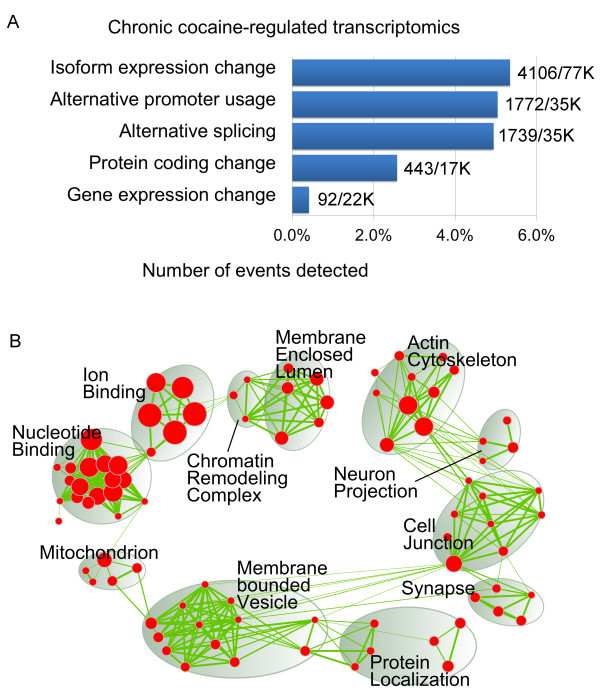
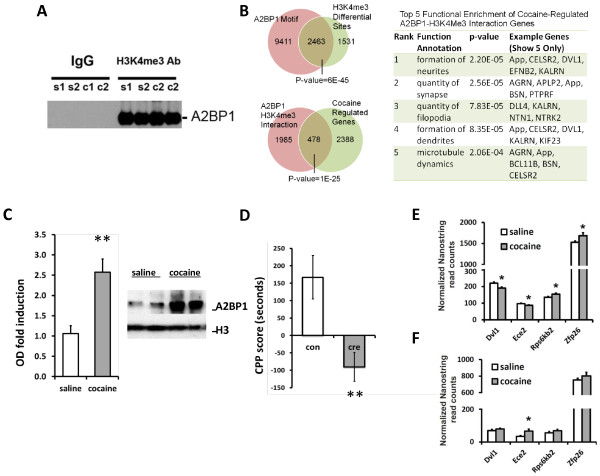
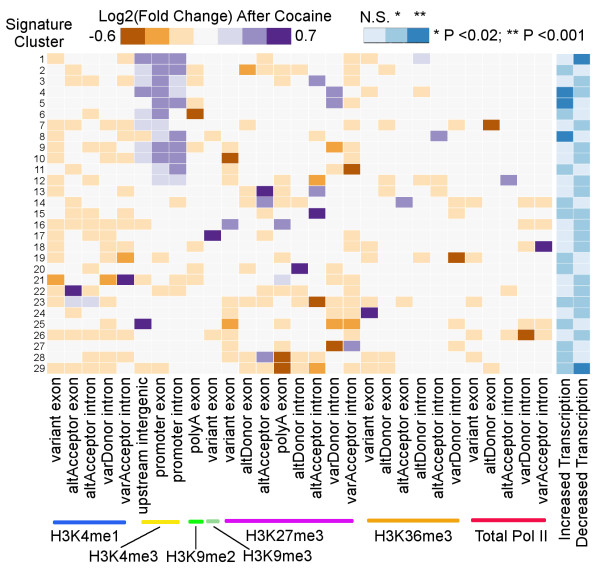
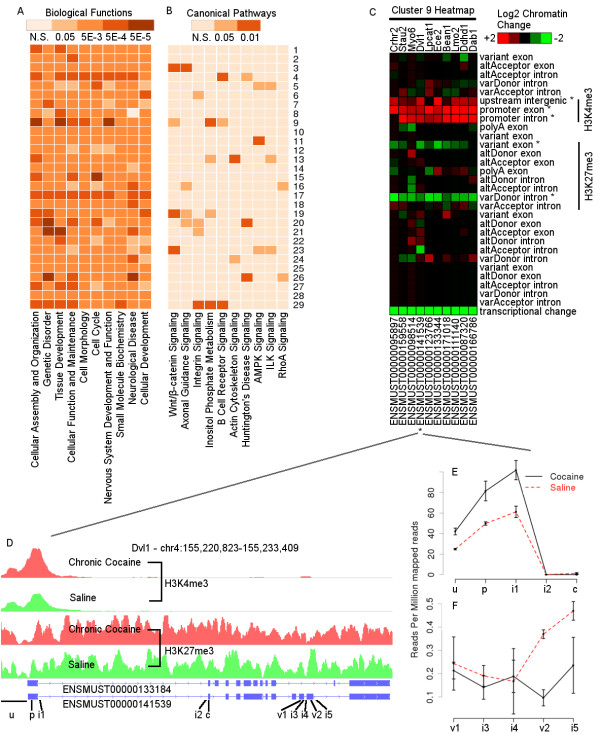
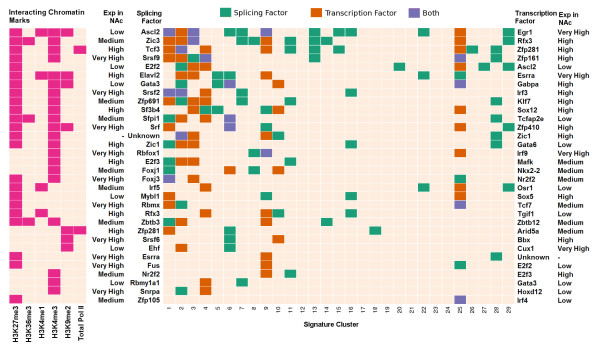
Background: Increasing evidence supports a role for altered gene expression in mediating the lasting effects of cocaine on the brain, and recent work has demonstrated the involvement of chromatin modifications in these alterations. However, all such studies to date have been restricted by their reliance on microarray technologies that have intrinsic limitations. Results: We use next generation sequencing methods, RNA-seq and ChIP-seq for RNA polymerase II and several histone methylation marks, to obtain a more complete view of cocaine-induced changes in gene expression and associated adaptations in numerous modes of chromatin regulation in the mouse nucleus accumbens, a key brain reward region. We demonstrate an unexpectedly large number of pre-mRNA splicing alterations in response to repeated cocaine treatment. In addition, we identify combinations of chromatin changes, or signatures, that correlate with cocaine-dependent regulation of gene expression, including those involving pre-mRNA alternative splicing. Through bioinformatic prediction and biological validation, we identify one particular splicing factor, A2BP1(Rbfox1/Fox-1), which is enriched at genes that display certain chromatin signatures and contributes to drug-induced behavioral abnormalities. Together, this delineation of the cocaine-induced epigenome in the nucleus accumbens reveals several novel modes of regulation by which cocaine alters the brain. Conclusions: We establish combinatorial chromatin and transcriptional profiles in mouse nucleus accumbens after repeated cocaine treatment. These results serve as an important resource for the field and provide a template for the analysis of other systems to reveal new transcriptional and epigenetic mechanisms of neuronal regulation.
Overview
The claims and statistics of this paper haven’t been checked yet.
Free: it reads the open-access text and checks the first 5 claims that cite a source we can check. Create a free account to check every claim.
Integrity signals
Registry
Cites
Statistics
Figures
Verification
Claims the paper makes
The claims and statistics of this paper haven’t been checked yet.
Free: it reads the open-access text and checks the first 5 claims that cite a source we can check. Create a free account to check every claim.
Claims other papers make about this one
Each is checked against this paper’s own text: does it say what the citing paper says it does?
The source backs part of the claim, not all of it — or backs it for a different population, condition or comparison.
In the citing paper
“Next-generation sequencing methods have shown that repeated cocaine exposure leads to histone modifications that act in a combinational fashion to create chromatin signatures that strikingly alter pre-mRNA splicing, an effect that is necessary for the expression of cocaine-induced conditioned place preference.143”
From Neurobiology of addiction: a neurocircuitry analysis (2016) · cites this paper as [143]
Experimental — accuracy not yet measured
Self-check
Percentages, sums and reported differences re-computed from the paper’s own numbers.
The self-check needs the paper’s full text.
Citations
Cites
Controlling the False Discovery Rate: A Practical and Powerful Approach to Multiple Testing
Benjamini, Y., & Hochberg, Y. (1995) · Journal of the Royal Statistical Society Series B: Statistical Methodology · doi:10.1111/j.2517-6161.1995.tb02031.x · Cited by 109,482
Systematic and integrative analysis of large gene lists using DAVID bioinformatics resources
Huang, D. W., Sherman, B. T., & Lempicki, R. A. (2009) · Nature Protocols · doi:10.1038/nprot.2008.211 · Cited by 35,890
Model-based Analysis of ChIP-Seq (MACS)
Zhang, Y., Liu, T., Meyer, C. A., Eeckhoute, J., Johnson, D. S., Bernstein, B. E., Nusbaum, C., Myers, R. M., Brown, M., Li, W., et al. (2008) · Genome Biology · doi:10.1186/gb-2008-9-9-r137 · Cited by 18,386
Self-citationAn integrated encyclopedia of DNA elements in the human genome
The ENCODE Project Consortium (2012) · Nature · doi:10.1038/nature11247 · Cited by 18,072 · cited 1×
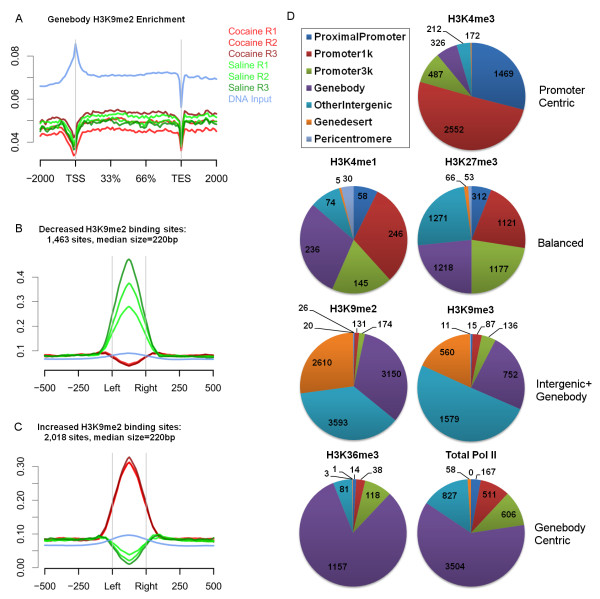
“These histone modifications were selected to cover enhancer (H3K4me1), promoter (H3K4me3, H3K27me3), gene body (H3K36me3), and intergenic (H3K9me2, H3K9me3) regions [20,21].”
BackgroundTrapnell, C., Williams, B. A., Pertea, G., Mortazavi, A., Kwan, G., van Baren, M. J., Salzberg, S. L., Wold, B. J., & Pachter, L. (2010) · Nature Biotechnology · doi:10.1038/nbt.1621 · Cited by 15,556
Huang, D. W., Sherman, B. T., & Lempicki, R. A. (2009) · Nucleic Acids Research · doi:10.1093/nar/gkn923 · Cited by 14,108
RNA-Seq: a revolutionary tool for transcriptomics
Wang, Z., Gerstein, M., & Snyder, M. (2009) · Nature Reviews Genetics · doi:10.1038/nrg2484 · Cited by 13,174 · cited 2×
“Third, genome-wide characterizations of gene expression in brain have to date relied mainly on microarrays, as opposed to RNA-seq, which provides unprecedented advantages such as more precise measurement of levels of transcripts and their splicing isoforms [16].”
BackgroundTrapnell, C., Roberts, A., Goff, L., Pertea, G., Kim, D., Kelley, D. R., Pimentel, H., Salzberg, S. L., Rinn, J. L., & Pachter, L. (2012) · Nature Protocols · doi:10.1038/nprot.2012.016 · Cited by 12,116
TopHat: discovering splice junctions with RNA-Seq
Trapnell, C., Pachter, L., & Salzberg, S. L. (2009) · Bioinformatics · doi:10.1093/bioinformatics/btp120 · Cited by 11,617
MEME SUITE: tools for motif discovery and searching
Bailey, T. L., Boden, M., Buske, F. A., Frith, M., Grant, C. E., Clementi, L., Ren, J., Li, W. W., & Noble, W. S. (2009) · Nucleic Acids Research · doi:10.1093/nar/gkp335 · Cited by 10,648 · cited 3×
“The motifs found by MEME [42] were first combined using the Bayesian motif clustering [79] method and then matched with known motifs.”
Method
Cited by
Items 101–197 of 197
Wang, T., Santos, J. H., Feng, J., Fargo, D. C., Shen, L., Riadi, G., Keeley, E., Rosh, Z. S., Nestler, E. J., & Woychik, R. P. (2016) · PLoS ONE · doi:10.1371/journal.pone.0159028 · Cited by 16
Self-citationThe Epigenetic Mechanisms of Amphetamine
Mccowan, T. J., Dhasarathy, A., & Carvelli, L. (2015) · Journal of Addiction & Prevention · doi:10.13188/2330-2178.s100001 · Cited by 18
Cell-type specific profiling of histone post-translational modifications in the adult mouse striatum
Carpenter, M. D., Fischer, D. K., Zhang, S., Bond, A. M., Czarnecki, K. S., Woolf, M. T., Song, H., & Heller, E. A. (2022) · Nature Communications · doi:10.1038/s41467-022-35384-1 · Cited by 14
Epigenetic pharmacotherapy for substance use disorder
Sartor, G. C. (2019) · Biochemical Pharmacology · doi:10.1016/j.bcp.2019.07.012 · Cited by 15
Regulation of BAZ1A and nucleosome positioning in the nucleus accumbens in response to cocaine
Sun, H., Damez-Werno, D. M., Scobie, K. N., Shao, N., Dias, C., Rabkin, J., Wright, K. N., Mouzon, E., Kabbaj, M., Neve, R. L., et al. (2017) · Neuroscience · doi:10.1016/j.neuroscience.2017.04.007 · Cited by 14
Self-citationDecoding the transcriptional programs activated by psychotropic drugs in the brain
Zygmunt, M., Piechota, M., Parkitna, J. M. R., & Korostyński, M. (2018) · Genes Brain & Behavior · doi:10.1111/gbb.12511 · Cited by 13
A novel role for E2F3b in regulating cocaine action in the prefrontal cortex
Cates, H. M., Bagot, R. C., Heller, E. A., Purushothaman, I., Lardner, C. K., Walker, D. M., Peña, C. J., Neve, R. L., Shen, L., & Nestler, E. J. (2018) · Neuropsychopharmacology · doi:10.1038/s41386-018-0296-1 · Cited by 12
Self-citationLoop Interrupted: Dysfunctional Chromatin Relations in Neurological Diseases
Behrends, M., & Engmann, O. (2021) · Frontiers in Genetics · doi:10.3389/fgene.2021.732033 · Cited by 14
Chang, X., Sun, Y., Muhai, J., Li, Y., Chen, Y., Lü, L., Chang, S., & Shi, J. (2022) · Addiction · doi:10.1111/add.15908 · Cited by 13
Activity-Dependent Epigenetic Remodeling in Cocaine Use Disorder
López, A. J., Siciliano, C. A., & Calipari, E. S. (2019) · Handbook of experimental pharmacology · doi:10.1007/164_2019_257 · Cited by 13
Dunbar, E. K., Greer, P. J., Saloman, J. L., Albers, K. M., Yadav, D. K., & Whitcomb, D. C. (2024) · Journal of Pain · doi:10.1016/j.jpain.2024.104754 · Cited by 12
Regulation of globin expression in Antarctic fish under thermal and hypoxic stress
Giordano, D., Corti, P., Coppola, D., Altomonte, G., Xue, J., Russo, R., di Prisco, G., & Verde, C. (2020) · Marine Genomics · doi:10.1016/j.margen.2020.100831 · Cited by 14
OnTarget: in silico design of MiniPromoters for targeted delivery of expression
Fornés, O., Av‐Shalom, T. V., Korecki, A. J., Farkas, R. A., Arenillas, D. J., Mathelier, A., Simpson, E. M., & Wasserman, W. W. (2023) · Nucleic Acids Research · doi:10.1093/nar/gkad375 · Cited by 12
Inducible CRISPR Epigenome Systems Mimic Cocaine Induced Bidirectional Regulation of Nab2 and Egr3
Choi, E. Y., Franco, D., Stapf, C. A., Gordin, M., Chow, A., Cover, K. K., Chandra, R., & Lobo, M. K. (2023) · Journal of Neuroscience · doi:10.1523/jneurosci.1802-22.2022 · Cited by 11
Single sample sequencing (S3EQ) of epigenome and transcriptome in nucleus accumbens
Xu, S., & Heller, E. A. (2018) · Journal of Neuroscience Methods · doi:10.1016/j.jneumeth.2018.07.006 · Cited by 11
It is not just about transcription: involvement of brain RNA splicing in substance use disorders
de Carvalho, L. M., & Lasek, A. W. (2024) · Journal of Neural Transmission · doi:10.1007/s00702-024-02740-y · Cited by 12
Alternative splicing in addiction
Bhatnagar, A., & Heller, E. A. (2025) · Current Opinion in Genetics & Development · doi:10.1016/j.gde.2025.102340 · Cited by 11
Regulation of alternative gene transcription in the striatum in response to antidepressant drugs
Piechota, M., Gołda, S., Ficek, J., Jantas, D., Przewłocki, R., & Korostyński, M. (2015) · Neuropharmacology · doi:10.1016/j.neuropharm.2015.08.006 · Cited by 9
Morphological Plasticity in the Striatum Associated With Dopamine Dysfunction
Moratalla, R., Solís, Ó., & Suárez, L. M. (2016) · Handbook of behavioral neuroscience · doi:10.1016/b978-0-12-802206-1.00037-4 · Cited by 9
Ke, T., Poquette, K. E., Gazze, S. L. A., & Carvelli, L. (2024) · International Journal of Molecular Sciences · doi:10.3390/ijms25084219 · Cited by 7
Drug Addiction and Histone Code Alterations
Kim, H.-D., Call, T., Magazu, S., & Ferguson, D. (2017) · Advances in experimental medicine and biology · doi:10.1007/978-3-319-53889-1_7 · Cited by 10
Self-citationNeurobiological mechanisms underlying psychostimulant use
Campbell, R. R., & Lobo, M. K. (2023) · Current Opinion in Neurobiology · doi:10.1016/j.conb.2023.102786 · Cited by 9
Cocaine alters Homer1 natural antisense transcript in the nucleus accumbens
Sartor, G. C., Powell, S. K., Velmeshev, D., Lin, D. Y., Magistri, M., Wiedner, H. J., Malvezzi, A. M., Andrade, N. S., Faghihi, M. A., & Wahlestedt, C. (2017) · Molecular and Cellular Neuroscience · doi:10.1016/j.mcn.2017.10.003 · Cited by 9
LaRese, T. P., Yan, Y., Eipper, B. A., & Mains, R. E. (2017) · BMC Neuroscience · doi:10.1186/s12868-017-0363-2 · Cited by 9
Emerson, S. D., Chevée, M., Mews, P., & Calipari, E. S. (2023) · Molecular and Cellular Neuroscience · doi:10.1016/j.mcn.2023.103823 · Cited by 8
Integrative Functional Genomics for Systems Genetics in GeneWeaver.org
Bubier, J. A., Langston, M. A., Baker, E. J., & Chesler, E. J. (2016) · Methods in molecular biology · doi:10.1007/978-1-4939-6427-7_6 · Cited by 7
Zinc oxide nanoparticles damage the prefrontal lobe in mouse: Behavioral impacts and key mechanisms
Zhang, D., Wang, Z., Deng, H., Yi, S., Li, T., Kang, X., Li, J., Li, C., Wang, T., Xiang, B., et al. (2024) · Toxicology Letters · doi:10.1016/j.toxlet.2024.05.009 · Cited by 6
Wani, S. N., Grewal, A. K., Khan, H., & Singh, T. G. (2024) · Psychopharmacology · doi:10.1007/s00213-024-06684-9 · Cited by 8
Epigenetic Effects of Psychoactive Drugs
Ahmed, R., Blum, K., & Thanos, P. K. (2023) · Current Pharmaceutical Design · doi:10.2174/1381612829666230706143026 · Cited by 6
Rudibaugh, T. P., Tam, R. W., Estridge, R. C., Stuppy, S. R., & Keung, A. J. (2024) · Organoids · doi:10.3390/organoids3020009 · Cited by 5
Role of Mitochondria on the Neurological Effects of Cocaine
Pereira, S. P., & Cunha‐Oliveira, T. (2017) · Elsevier eBooks · doi:10.1016/b978-0-12-803750-8.00021-x · Cited by 8
Molecular and genetic mechanisms of plasticity in addiction
Brida, K. L., & Day, J. J. (2025) · Current Opinion in Neurobiology · doi:10.1016/j.conb.2025.103032 · Cited by 6
Brain mitochondria as key drivers of cognition and behaviour
Sandi, C., Lobo, M. K., Hollis, F., Hirabayashi, Y., de Juan‐Sanz, J., & Bolaños, J. P. (2026) · Nature reviews. Neuroscience · doi:10.1038/s41583-026-01061-1 · Cited by 9
Cocaine-induced gene regulation in D1 and D2 neuronal ensembles of the nucleus accumbens
Mews, P., Mason, A. V., Kirchner, E. G., Estill, M. S., & Nestler, E. J. (2025) · Communications Biology · doi:10.1038/s42003-025-08327-x · Cited by 7
Self-citationKe, T., Ambigapathy, G., Ton, T., Dhasarathy, A., & Carvelli, L. (2023) · International Journal of Molecular Sciences · doi:10.3390/ijms241713092 · Cited by 4
Epigenetic Insights into Substance Use Disorder and Associated Psychiatric Conditions
Ngo, A. L., Ahmad, C. M., Alkhansari, N. G., Nguyen, L., & Zhang, H. (2025) · Complex Psychiatry · doi:10.1159/000544912 · Cited by 8
Mews, P., Mason, A. V., Kirchner, E. G., Estill, M. S., & Nestler, E. J. (2024) · bioRxiv (Cold Spring Harbor Laboratory) · doi:10.1101/2024.06.19.599762 · Cited by 4
Self-citationDopamine Transporter Knockout Rats Display Epigenetic Alterations in Response to Cocaine Exposure
Vilca, S. J., Wahlestedt, C., Izenwasser, S., Gainetdinov, R. R., & Pardo, M. (2023) · Biomolecules · doi:10.3390/biom13071107 · Cited by 3
Gomes, A. D. M., Petkau, T. L., Korecki, A. J., Fornés, O., Galván, A., Lu, G., Hill, A. M., Lam, S. L., Yao, A., Farkas, R. A., et al. (2024) · Scientific Reports · doi:10.1038/s41598-024-79004-y · Cited by 5
Sahebi, K., Arianejad, M., Azadi, S., Hosseinpour-Soleimani, F., Kazemi, R., Tajbakhsh, A., & Negahdaripour, M. (2025) · European Journal of Pharmacology · doi:10.1016/j.ejphar.2025.177630 · Cited by 3
Ambigapathy, G., Mccowan, T. J., & Carvelli, L. (2024) · Journal of Neurochemistry · doi:10.1111/jnc.16166 · Cited by 3
Long read, isoform aware sequencing of mouse nucleus accumbens after chronic cocaine treatment
Estill, M. S., Ribeiro, E., Francoeur, N. J., Smith, M. L., Sebra, R., Yeh, S.-Y., Cunningham, A. M., Nestler, E. J., & Shen, L. (2021) · Scientific Reports · doi:10.1038/s41598-021-86068-7 · Cited by 3
Self-citationThree-dimensional chromosome architecture and drug addiction
Chitaman, J. M., Fraser, P., & Feng, J. (2019) · Current Opinion in Neurobiology · doi:10.1016/j.conb.2019.05.009 · Cited by 3
Self-citationA single dose of cocaine rewires the 3D genome structure of midbrain dopamine neuronsPreprint
Szabó, D., Franke, V., Bianco, S., Batiuk, M. Y., Paul, E. J., Kukalev, A., Pfisterer, U., Irastorza-Azcárate, I., Chiariello, A. M., Demharter, S., et al. (2024) · bioRxiv (Cold Spring Harbor Laboratory) · doi:10.1101/2024.05.10.593308 · Cited by 3
Epigenetic editing of Cartpt promotes acquisition and extinction of cocaine memoryPreprint
Winter, J. J., Hooks, M., Krick, K. S., Goldhamer, A., DiTullio, R. W., Czarnecki, K. S., Ekobeni, C.-E., Han, C., Rodríguez-Acevedo, K. L., Hughes, B. W., et al. (2025) · bioRxiv (Cold Spring Harbor Laboratory) · doi:10.1101/2025.11.20.689329 · Cited by 4
Self-citationAddictive drug abuse and depression-a focus on epigenetics
Zhang, W., Xu, M., Wang, C., Liang, H., Zhu, X., Pan, Y., & Guo, F. (2026) · Communications Biology · doi:10.1038/s42003-026-09705-9 · Cited by 3
Aytaç, H. M., Pehlıvan, S., Kurnaz, S., Pehlıvan, M., & Aydın, P. Ç. (2021) · Psychiatry and Clinical Psychopharmacology · doi:10.5152/pcp.2021.21526 · Cited by 2
Li, Y., Xu, H., Chitaman, J. M., & Feng, J. (2022) · Genes · doi:10.3390/genes13020306 · Cited by 2
Self-citationFilošević, A., Matić, I. S., Martinović, L. S., & Pavlić, S. D. (2024) · Future Pharmacology · doi:10.3390/futurepharmacol4010009 · Cited by 3
Role of Cyfip2 in Binge Eating
Feng, J. (2017) · Biological Psychiatry · doi:10.1016/j.biopsych.2017.03.008 · Cited by 2
Self-citationFox, M. E., Wulff, A. B., Franco, D., Choi, E. Y., Calarco, C. A., Engeln, M., Turner, M. D., Chandra, R., Rhodes, V. M., Thompson, S. M., et al. (2022) · bioRxiv (Cold Spring Harbor Laboratory) · doi:10.1101/2022.05.15.491856 · Cited by 2
Phillips, R. A., Wan, E., Tuscher, J. J., Reid, D., Drake, O. R., Ianov, L., & Day, J. J. (2023) · bioRxiv (Cold Spring Harbor Laboratory) · doi:10.1101/2023.06.02.543489 · Cited by 2
Hsiao, Y., Fonseca, M. A., Tiemroth, A. S., Vasquez, E. J., & Gomez, A. M. (2025) · bioRxiv (Cold Spring Harbor Laboratory) · doi:10.1101/2025.01.16.633439 · Cited by 7
Sex-divergent brain epigenetic reprogramming by chronic opioidsPreprint
Falconnier, C., Caparros-Roissard, A., Slavík, H., Gaikwad, M., Mathis, V., Diringer, M., Decraene, C., Megat, S., Ozkan, S., Yassine, M., et al. (2025) · bioRxiv (Cold Spring Harbor Laboratory) · doi:10.1101/2025.10.27.684830 · Cited by 2
Decoding Encoded Cravings: Epigenetic Drivers of Addiction
Hediyal, T. A., Shukri, O., Stone, E., Foroughi, A., Samikkannu, T., & Pendyala, G. (2025) · Brain Sciences · doi:10.3390/brainsci15090927 · Cited by 3
CUT&RUN as a Powerful Tool for Chromatin Profiling: A Focus on Neuropsychiatric Disorders
Holt, L. M., Chen, E. P., Hughes, B. W., & Nestler, E. J. (2025) · Biological Psychiatry · doi:10.1016/j.biopsych.2025.08.012 · Cited by 1
Self-citationOrr, E., Yi, J., & Baldridge, D. (2025) · Brain Research · doi:10.1016/j.brainres.2025.150048 · Cited by 1
Epigenetics and drug addiction: translational aspects
Feng, J. (2016) · Elsevier eBooks · doi:10.1016/b978-0-12-800226-1.00017-4 · Cited by 1
Self-citationGene splicing SETs the scene for cocaine addiction
Bali, P., & Kenny, P. J. (2021) · Neuron · doi:10.1016/j.neuron.2021.08.033 · Cited by 1
Epigenetics and substance use disorders: translational aspects
Silva, G. M., & Hamilton, P. J. (2024) · Elsevier eBooks · doi:10.1016/b978-0-443-18516-8.00008-9 · Cited by 1
Epigenetic Priming of Activity-Dependent Transcription in Drug Addiction
Hughes, B. W., & Nestler, E. J. (2024) · Springer eBooks · doi:10.1007/978-3-031-68550-7_13 · Cited by 1
Self-citationLoh, Y. E., Feng, J., Nestler, E. J., & Shen, L. (2017) · BIO-PROTOCOL · doi:10.21769/bioprotoc.2123 · Cited by 1
Self-citationEpigenomic Studies of Substance Use
Lax, E., Szyf, M., & Yadid, G. (2022) · Springer eBooks · doi:10.1007/978-3-030-95350-8_8 · Cited by 2
Pan, C., Qi, X., Cheng, S., Chen, Y., Li, C., Zhang, H., Zhang, J., Zhang, Z., Yang, X., Meng, P., et al. (2022) · International Journal of Mental Health and Addiction · doi:10.1007/s11469-022-00876-0 · Cited by 1
Erratum to: Chronic cocaine-regulated epigenomic changes in mouse nucleus accumbens
Feng, J., Wilkinson, M. B., Liu, X., Purushothaman, I., Ferguson, D., Vialou, V., Maze, I. S., Shao, N., Kennedy, P., Koo, J., et al. (2015) · Genome biology · doi:10.1186/s13059-015-0789-8 · Cited by 1
Self-citationChromatin-mediated alternative splicing regulates cocaine reward behaviorPreprint
Xu, S., Lombroso, S. I., Carpenter, M. D., Marchione, D. M., Hamilton, P. J., Lim, C. J., Neve, R. L., & Heller, E. A. (2019) · bioRxiv (Cold Spring Harbor Laboratory) · doi:10.1101/798009 · Cited by 1
Phillips, R. A., Wan, E., Tuscher, J. J., Reid, D., Drake, O. R., Ianov, L., & Day, J. J. (2023) · eLife · doi:10.7554/elife.89993.2 · Cited by 1
Martínez-Rivera, F. J., Yim, Y. Y., Godino, A., Minier-Toribio, A. M., Tofani, S., Holt, L. M., Torres‐Berrío, A., Futamura, R., Browne, C. J., Markovic, T., et al. (2024) · bioRxiv (Cold Spring Harbor Laboratory) · doi:10.1101/2024.07.08.602609 · Cited by 1
Self-citationLocus-specific epigenetic remodeling controls addiction- and depression-related behaviors
Sun, H., Shao, N., Feng, J., Mazei‐Robison, M. S., Ferguson, D., Knight, S. W., Nievera, C. J., Han, M., Shen, L., Haggarty, S. J., et al. (2014) · DSpace@MIT (Massachusetts Institute of Technology)
Self-citationNeuroepigenomics and Human Disease
Greally, J. M., & Nestler, E. J. (2016) · Elsevier eBooks · doi:10.1016/b978-0-12-800105-9.00005-6
Self-citationAny Way You Splice It: New Molecular Mechanisms of Cocaine-Induced Alternative Gene Expression
Penrod, R. D., Anderson, E. M., & Cowan, C. W. (2018) · Biological Psychiatry · doi:10.1016/j.biopsych.2018.06.004 · Cited by 1
A Systems Biology Approach to Decipher Genetic Variants in a Canine Model of Sudden Cardiac Death
Vescio, M., Crotti, L., Schwartz, P. J., & Pattini, L. (2019) · World Congress on Medical Physics and Biomedical Engineering, September 7 - 12, 2009, Munich, Germany · doi:10.1007/978-3-030-31635-8_63
Retraction Note to: Mutation pattern is an influential factor on functional mutation rates in cancer
Du, C., Wu, X., & Li, J. (2017) · Cancer Cell International · doi:10.1186/s12935-017-0436-4
Cocaine causes rapid remodeling of mesoaccumbens dopaminergic axons, synapses, and mitochondriaPreprint
Wildenberg, G. A., Sorokina, A., Koranda, J. L., Monical, A., Heer, C. M., Sheffield, M. E. J., Zhuang, X., McGehee, D. S., & Kasthuri, N. (2021) · Research Square · doi:10.21203/rs.3.rs-136861/v1
Auvinet, J., Dettaï, A., Coriton, O., Ozouf‐Costaz, C., & Higuet, D. (2021) · Wiley eBooks · doi:10.1002/9781119476870.ch10
Epigenetic mechanisms of drug addiction vulnerability
Milian, A. A., Bendersky, C. J., & Walker, D. M. (2021) · Elsevier eBooks · doi:10.1016/b978-0-12-823577-5.00008-8 · Cited by 1
Transcription and Epigenetic Regulation
Merchant, J. L. (2018) · Elsevier eBooks · doi:10.1016/b978-0-12-809954-4.00001-3
Phillips, R. A., Wan, E., Tuscher, J. J., Reid, D., Ianov, L., & Day, J. J. (2023) · eLife · doi:10.7554/elife.89993.1
Liu, S. X., Muelken, P., Maxim, Z. L., Ramakrishnan, A., Estill, M. S., LeSage, M. G., Smethells, J. R., Shen, L., Tran, P. V., Harris, A. C., et al. (2024) · bioRxiv (Cold Spring Harbor Laboratory) · doi:10.1101/2024.02.29.582799
Self-citationYotova, A. Y. (2024) · Publication Server of Goethe University Frankfurt am Main (Goethe University Frankfurt) · doi:10.21248/gups.85791 · Cited by 2
Editorial: Molecular mechanisms in psychiatry 2023: addictive disorders
Fernández-López, L., Almela, P., Romero, M. F., & Navarro‐Zaragoza, J. (2025) · Frontiers in Psychiatry · doi:10.3389/fpsyt.2025.1568150
Jia, Y., Yang, C. C., Lauterborn, J. C., Gall, C. M., Wood, M. A., & LYNCH, G. S. (2025) · bioRxiv (Cold Spring Harbor Laboratory) · doi:10.1101/2025.03.20.644247 · Cited by 1
Cole, S. L., Chandra, R., Harris, M., Patel, I., Wang, T., Kim, H., Jensen, L., Russo, S. J., Turecki, G., Gancarz, A. M., et al. (2021) · Figshare · doi:10.6084/m9.figshare.14880435
Cole, S. L., Chandra, R., Harris, M., Patel, I., Wang, T., Kim, H., Jensen, L., Russo, S. J., Turecki, G., Gancarz, A. M., et al. (2021) · Figshare · doi:10.6084/m9.figshare.14880432
Cole, S. L., Chandra, R., Harris, M., Patel, I., Wang, T., Kim, H., Jensen, L., Russo, S. J., Turecki, G., Gancarz, A. M., et al. (2021) · Figshare · doi:10.6084/m9.figshare.14880426
Cole, S. L., Chandra, R., Harris, M., Patel, I., Wang, T., Kim, H., Jensen, L., Russo, S. J., Turecki, G., Gancarz, A. M., et al. (2021) · Figshare · doi:10.6084/m9.figshare.14880429
Epigenetic Signatures of Social Defeat Stress Varying Duration
Bondar, N., Reshetnikov, V. V., Ritter, P., Ershov, N., Zhukova, N., Kolmykov, S., & Merkulova, T. (2025) · International Journal of Molecular Sciences · doi:10.3390/ijms27010018 · Cited by 1
Nogueira, D. D. S. (2019) · theses.fr (ABES) · doi:10.70675/d429d5dbz5001z4e60z9622z4f636e667f17
Sex differences in functional genomic mechanisms of opioid action
Falconnier, C. (2023) · theses.fr (ABES) · doi:10.70675/3a582f0az7be5z4cefzb85fz594ba4d910cd
Martínez-Rivera, F. J., Yim, Y. Y., Holt, L. M., Godino, A., Minier-Toribio, A. M., Tofani, S., Torres‐Berrío, A., Estill, M. S., Futamura, R., Browne, C. J., et al. (2026) · Molecular Psychiatry · doi:10.1038/s41380-026-03805-y · Cited by 1
Self-citationSystème de récompense, sommeil et rythmes circadiens
Mauries, S., & Geoffroy, P. A. (2025) · Elsevier eBooks · doi:10.1016/b978-2-294-78711-9.00009-8
Mesolimbic and mesocortical pathways differentially support fentanyl-context associations
Montemarano, A., Sohail, H., Murdaugh, L. B., Derr, K., Alkhaleel, F. A., Fox, L. D., Pandey, S., & Fox, M. E. (2026) · Psychopharmacology · doi:10.1007/s00213-026-07151-3 · Cited by 1
Epigenetic control of transposable elements in brain and brain disorders
Smith, C. A., & Hamilton, P. J. (2026) · Epigenetics · doi:10.1080/15592294.2026.2732514
Paiva-da-Rocha, E., Carvalho, F. D., Silva, J. P., & Carmo, H. (2026) · Archives of Toxicology · doi:10.1007/s00204-026-04601-x
Leonard, A. K., Windisch, K. A., Krick, K. S., Hooks, M., Zhang, S., Blendy, J. A., & Heller, E. A. (2026) · Frontiers in Behavioral Neuroscience · doi:10.3389/fnbeh.2026.1984313
Metadata
- Authors
- Feng, J., Wilkinson, M., Liu, X., Purushothaman, I., Ferguson, D., Vialou, V., Maze, I., Shao, N., Kennedy, P., Koo, J., Dias, C., Laitman, B., Stockman, V., LaPlant, Q., Cahill, M. E., Nestler, E. J., & Shen, L.
- Affiliations
- Icahn School of Medicine at Mount Sinai (US)
- Corresponding author
- Nestler, Eric J
- Shen, Li
- ORCID
- Venue
- Genome Biology
- Published
- 2014-04-22
- Volume
- 15
- Issue
- 4
- Pages
- R65-R65
- ISSN
- 1465-6906 (ISSN-L)
- 1474-760X
- PMC
- PMC4073058
- OpenAlex
- W2100226042
- Semantic Scholar
- a3c0adc638e832200e3927f11575e844a73a45c1
- Cited by
- 198
- References
- 80
- Citations by year
- 2026: 7 · 2025: 15 · 2024: 17 · 2023: 19 · 2022: 12 · 2021: 25 · 2020: 9 · 2019: 17 · 2018: 13 · 2017: 23 · 2016: 22 · 2015: 10 · 2014: 9
- FWCI
- 8.74
- Type
- journal article
- Language
- en
- Update notices
- erratum (2015-10-14)
- Open access
- gold
- doi.org
- Licence
- cc-by
- creativecommons.org/licenses/by/2.0/ (tdm)
- creativecommons.org/licenses/by/2.0/ (vor)
- Locations
- Genome biology (publishedVersion, cc-by)
- PubMed Central (publishedVersion, cc-by)
- PubMed (publishedVersion)
- Funders
- National Institute of Mental Health (R00MH094405)
- National Institute on Drug Abuse (DA 008227, P01DA008227)
- Topics
- Life Sciences › Biochemistry, Genetics and Molecular Biology › Molecular Biology › Genomics and Chromatin Dynamics
- Life Sciences › Neuroscience › Cellular and Molecular Neuroscience › Neurotransmitter Receptor Influence on Behavior
- Life Sciences › Biochemistry, Genetics and Molecular Biology › Molecular Biology › Epigenetics and DNA Methylation
- Keywords
- cocaine, nucleus accumbens, epigenetics, chromatin modification, histone methylation, RNA polymerase II, pre-mRNA splicing, alternative splicing, A2BP1, RBFOX1, drug addiction, gene expression regulation, chromatin signatures
- MeSH terms
- RNA Splicing Factors, Animals, Cocaine, Histones, Male, Mice, Inbred C57BL, Nucleus Accumbens, RNA, Messenger, RNA-Binding Proteins, Alternative Splicing, Cocaine-Related Disorders, Chromatin Assembly and Disassembly, Epigenesis, Genetic, Mice
About these checks
Registry, retraction, Cites and statistics results are computed, not judged, with one exception: a printed reference that no index lists is read once by a model before it counts as a citation error. Claims are extracted by a model and kept only when their quote appears verbatim in the text; each cited source is then checked, with a model’s help, for whether it says what the claim relies on. Those verdicts can be wrong — read the claim’s quote and the cited source before relying on one.
Statistics and arithmetic are recomputed, not judged.
Confidence bands are shown only for fields calibrated on our annotated test set. None is calibrated yet, so no band is shown.
What counts as a claim ›How we measure confidence ›How we check this ›
Are you an author, or do you see a problem with this page? Request a review
Data sources
Bibliographic data: Semantic Scholar, OpenAlex, Crossref.
Contains information from the Semantic Scholar Academic Graph Datasets, made available under the ODC Attribution License (ODC-BY 1.0).
Semantic Scholar’s data is described in: Kinney, R., et al. (2023). The Semantic Scholar Open Data Platform. arXiv:2301.10140.
