

IVT-seq reveals extreme bias in RNA sequencing
Open accessPublished version of a preprint
The DOI matches its Crossref record; 26 of the 26 references it cites were found in a registry or an index.
Abstract
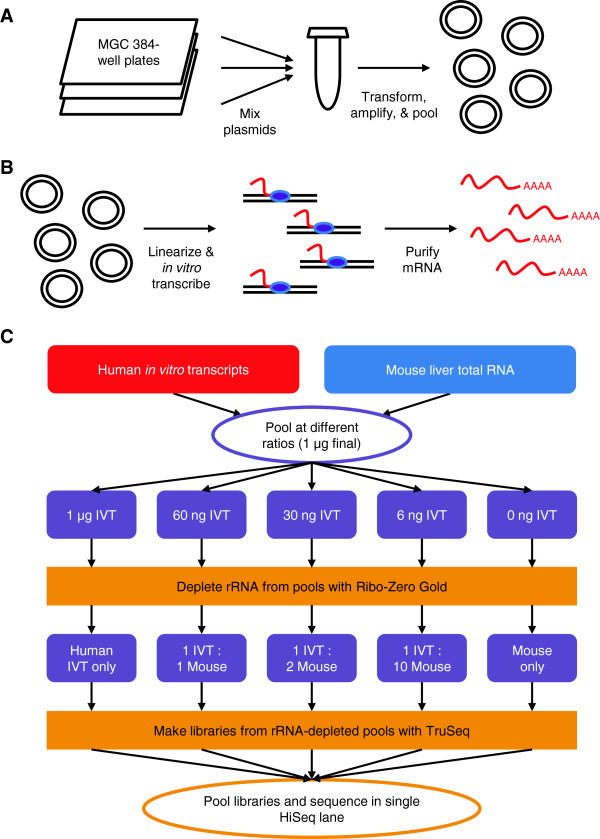
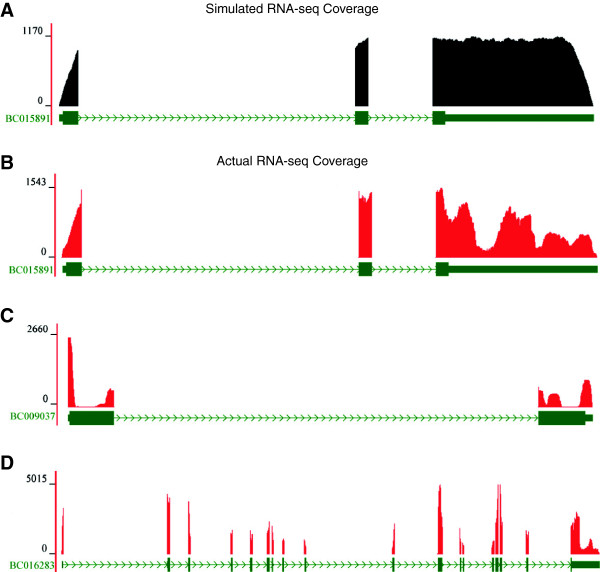
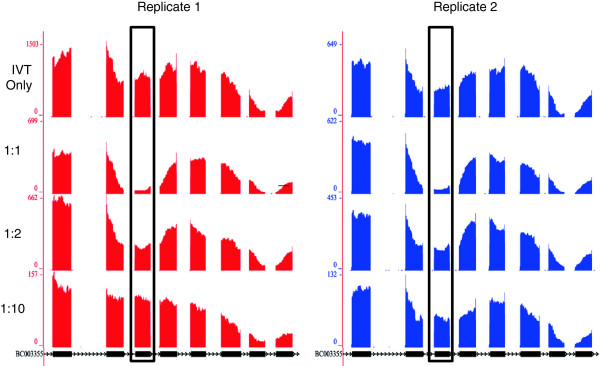
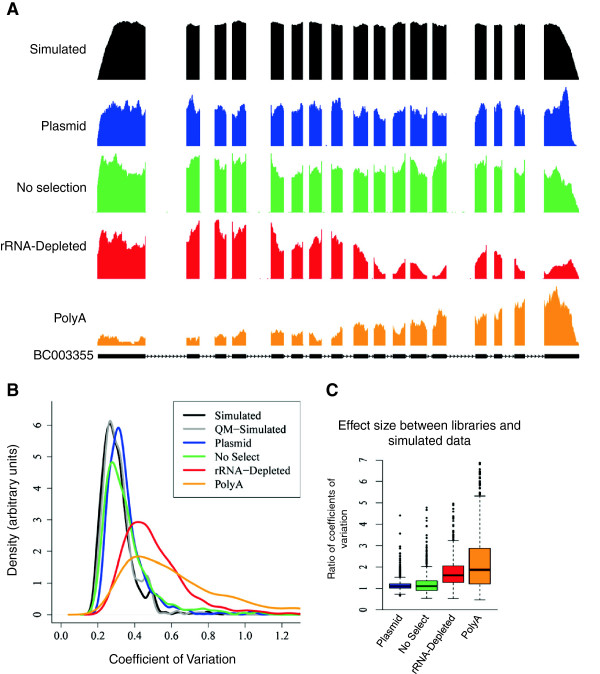
Background: RNA-seq is a powerful technique for identifying and quantifying transcription and splicing events, both known and novel. However, given its recent development and the proliferation of library construction methods, understanding the bias it introduces is incomplete but critical to realizing its value. Results: We present a method, in vitro transcription sequencing (IVT-seq), for identifying and assessing the technical biases in RNA-seq library generation and sequencing at scale. We created a pool of over 1,000 in vitro transcribed RNAs from a full-length human cDNA library and sequenced them with polyA and total RNA-seq, the most common protocols. Because each cDNA is full length, and we show in vitro transcription is incredibly processive, each base in each transcript should be equivalently represented. However, with common RNA-seq applications and platforms, we find 50% of transcripts have more than two-fold and 10% have more than 10-fold differences in within-transcript sequence coverage. We also find greater than 6% of transcripts have regions of dramatically unpredictable sequencing coverage between samples, confounding accurate determination of their expression. We use a combination of experimental and computational approaches to show rRNA depletion is responsible for the most significant variability in coverage, and several sequence determinants also strongly influence representation. Conclusions: These results show the utility of IVT-seq for promoting better understanding of bias introduced by RNA-seq. We find rRNA depletion is responsible for substantial, unappreciated biases in coverage introduced during library preparation. These biases suggest exon-level expression analysis may be inadvisable, and we recommend caution when interpreting RNA-seq results.
Overview
The claims and statistics of this paper haven’t been checked yet.
Free: it reads the open-access text and checks the first 5 claims that cite a source we can check. Create a free account to check every claim.
Integrity signals
Registry
Cites
Statistics
Figures
Verification
Claims the paper makes
The claims and statistics of this paper haven’t been checked yet.
Free: it reads the open-access text and checks the first 5 claims that cite a source we can check. Create a free account to check every claim.
Claims other papers make about this one
Each is checked against this paper’s own text: does it say what the citing paper says it does?
In the citing paper
“Even so, it is common to observe extreme variability in the coverage of RNA-seq fragments along transcripts that is purely technical and sample-specific17 and not explained by current bias models, which confounds current methods designed to identify and quantify transcripts18”
From Modeling of RNA-seq fragment sequence bias reduces systematic errors in transcript abundance estimation (2016) · cites this paper as [17]
Self-check
Percentages, sums and reported differences re-computed from the paper’s own numbers.
The self-check needs the paper’s full text.
Citations
Cites
Basic local alignment search tool
Altschul, S. F., Gish, W., Miller, W., Myers, E. W., & Lipman, D. J. (1990) · Journal of Molecular Biology · doi:10.1006/jmbi.1990.9999 · Cited by 98,669 · cited 2×
“1) rRNA using NCBI BLAST [26] and the e-score for the best alignment was saved.”
MethodBEDTools: a flexible suite of utilities for comparing genomic features
Quinlan, A. R., & Hall, I. M. (2010) · Bioinformatics · doi:10.1093/bioinformatics/btq033 · Cited by 27,437
Trapnell, C., Williams, B. A., Pertea, G., Mortazavi, A., Kwan, G., van Baren, M. J., Salzberg, S. L., Wold, B. J., & Pachter, L. (2010) · Nature Biotechnology · doi:10.1038/nbt.1621 · Cited by 15,556
RNA-Seq: a revolutionary tool for transcriptomics
Wang, Z., Gerstein, M., & Snyder, M. (2009) · Nature Reviews Genetics · doi:10.1038/nrg2484 · Cited by 13,174 · cited 7×
“Following a DNase I treatment to remove the DNA template and RNA purification, a pool of 1062 different human RNAs derived from fully sequenced plasmids was produced.”
MethodInfluentialMEME SUITE: tools for motif discovery and searching
Bailey, T. L., Boden, M., Buske, F. A., Frith, M., Grant, C. E., Clementi, L., Ren, J., Li, W. W., & Noble, W. S. (2009) · Nucleic Acids Research · doi:10.1093/nar/gkp335 · Cited by 10,648 · cited 1×
“To address the possibility that mouse RNAs may interact with homologous human RNAs and interfere with them in trans, we assayed the sequences surrounding these regions using the MEME Suite [18], but we found no sequence motifs these regions have in common.”
MethodThe UCSC Genome Browser database: update 2011
Fujita, P. A., Rhead, B., Zweig, A. S., Hinrichs, A. S., Karolchik, D., Cline, M. S., Goldman, M., Barber, G. P., Clawson, H., Coelho, A., et al. (2011) · Nucleic Acids Research · doi:10.1093/nar/gkq963 · Cited by 1,811
Analyzing and minimizing PCR amplification bias in Illumina sequencing libraries
Aird, D., Ross, M. G., Chen, W.-S., Danielsson, M., Fennell, T., Russ, C., Jaffe, D. B., Nusbaum, C., & Gnirke, A. (2011) · Genome Biology · doi:10.1186/gb-2011-12-2-r18 · Cited by 1,174 · cited 1×
“Previous efforts at understanding bias identified several contributing sources, including GC-content and PCR enrichment [8,9], priming of reverse transcription by random hexamers [10], read errors introduced during the sequencing-by-synthesis reaction [11], and bias introduced by various methods of rRNA subtraction [7…”
BackgroundSubstantial biases in ultra-short read data sets from high-throughput DNA sequencing
Dohm, J. C., Lottaz, C., Borodina, T., & Himmelbauer, H. (2008) · Nucleic Acids Research · doi:10.1093/nar/gkn425 · Cited by 1,088
Summarizing and correcting the GC content bias in high-throughput sequencing
Benjamini, Y., & Speed, T. P. (2012) · Nucleic Acids Research · doi:10.1093/nar/gks001 · Cited by 913 · cited 1×
“Previous efforts at understanding bias identified several contributing sources, including GC-content and PCR enrichment [8,9], priming of reverse transcription by random hexamers [10], read errors introduced during the sequencing-by-synthesis reaction [11], and bias introduced by various methods of rRNA subtraction [7…”
BackgroundComprehensive comparative analysis of strand-specific RNA sequencing methods
Levin, J. Z., Yassour, M., Adiconis, X., Nusbaum, C., Thompson, D. A., Friedman, N., Gnirke, A., & Regev, A. (2010) · Nature Methods · doi:10.1038/nmeth.1491 · Cited by 753 · cited 1×
“isolation, size selection, fragmentation, conversion to cDNA, amplification and, finally, sequencing [4-7].”
Method
Cited by
Items 101–158 of 158
Waters, M. R., Inkman, M. J., Jayachandran, K., Kowalchuk, R. O., Robinson, C. G., Schwarz, J. K., Swamidass, S. J., Griffith, O. L., Szymanski, J. J., & Zhang, J. (2024) · Patterns · doi:10.1016/j.patter.2023.100910 · Cited by 12
“12,13,24,25 Additionally, computational analysis workflows have differing strengths and biases in quantification of RNA-seq gene counts.”
BackgroundRNA-sequencing in ophthalmology research: considerations for experimental design and analysis
Owen, N., & Moosajee, M. (2019) · Therapeutic Advances in Ophthalmology · doi:10.1177/2515841419835460 · Cited by 12
Incomplete removal of ribosomal RNA can affect chromatin RNA-seq data analysis
Tellier, M., & Murphy, S. (2020) · Transcription · doi:10.1080/21541264.2020.1794491 · Cited by 9
Detection Theory in Identification of RNA-DNA Sequence Differences Using RNA-Sequencing
Toung, J. M., Lahens, N. F., Hogenesch, J. B., & Grant, G. R. (2014) · PLoS ONE · doi:10.1371/journal.pone.0112040 · Cited by 9
Self-citationCovering all your bases: incorporating intron signal from RNA-seq dataPreprint
Lee, S., Zhang, A. Y., Su, S., Ng, A. P., Holik, A. Z., Asselin-Labat, M.-L., Ritchie, M. E., & Law, C. W. (2018) · bioRxiv (Cold Spring Harbor Laboratory) · doi:10.1101/352823 · Cited by 9
Exon-Skipping–Based Subtyping of Colorectal Cancers
Ambeskovic, A., McCall, M. N., Woodsmith, J., Juhl, H. H., & Land, H. (2024) · Gastroenterology · doi:10.1053/j.gastro.2024.08.016 · Cited by 8
TARDIS, a targeted RNA directional sequencing method for rare RNA discovery
Portal, M. M., Pavet, V., Erb, C., & Gronemeyer, H. (2015) · Nature Protocols · doi:10.1038/nprot.2015.120 · Cited by 7
Beyond library size: a field guide to NGS normalizationPreprint
Aleksic, J., Carl, S. H., & Frye, M. (2014) · bioRxiv (Cold Spring Harbor Laboratory) · doi:10.1101/006403 · Cited by 10
“Uneven transcript sequencing coverage is also a major issue, which can be unpredictable and vary significantly within and between samples, confounding analysis [18].”
BackgroundCAMPAREE: a robust and configurable RNA expression simulator
Lahens, N. F., Brooks, T. G., Sarantopoulou, D., Nayak, S., Lawrence, C., Mrčela, A., Srinivasan, A., Schug, J., Hogenesch, J. B., Barash, Y., et al. (2021) · BMC Genomics · doi:10.1186/s12864-021-07934-2 · Cited by 6
Self-citationScreening the Molecular Framework Underlying Local Dendritic mRNA Translation
Namjoshi, S. V., & Raab‐Graham, K. F. (2017) · Frontiers in Molecular Neuroscience · doi:10.3389/fnmol.2017.00045 · Cited by 8
“There are two major strategies to approach this issue and recent work suggests that both methods introduce biases in sequence coverage (Lahens et al., 2014).”
MethodKnight, V. B., & Serrano, E. E. (2018) · BMC Bioinformatics · doi:10.1186/s12859-018-2382-0 · Cited by 8
Mohora, I., Patiño‐Guillén, G., Neis, K., Valero, J., Keyser, U. F., & Bošković, F. (2025) · Nano Letters · doi:10.1021/acs.nanolett.5c02391 · Cited by 5
Yanagi: Fast and interpretable segment-based alternative splicing and gene expression analysis
Gunady, M. K., Mount, S. M., & Bravo, H. C. (2019) · BMC Bioinformatics · doi:10.1186/s12859-019-2947-6 · Cited by 10
“Previous work showed that RNA-seq data suffers from coverage bias that needs to be modeled into methods that estimate transcript abundances [30, 31].”
BackgroundSherwood, T. A., Rodgers, M. L., Tarnecki, A. M., & Wetzel, D. L. (2021) · Ecotoxicology and Environmental Safety · doi:10.1016/j.ecoenv.2021.112098 · Cited by 5
A computational model for bacteriophage ϕX174 gene expression
Hill, A. M., Ingle, T. A., & Wilke, C. O. (2024) · PLoS ONE · doi:10.1371/journal.pone.0313039 · Cited by 4
“RNA-seq data can suffer from various biases [19, 20], though in direct comparisons to qPCR measurements the observed differences tend to be small [21].”
Next-Generation Sequencing and Genomic Data Analysis
Kumar, V., Gangani, S., Shukla, R., Prajapati, S. K., Shekhar, H., & Shukla, V. (2024) · Springer eBooks · doi:10.1007/978-981-97-7123-3_3 · Cited by 5
Chen, Y., He, Q., Ye, Q., Li, J., Li, C., & Yang, S. (2026) · Trends in biotechnology · doi:10.1016/j.tibtech.2025.11.017 · Cited by 4
Complexity of Mammalian Transcriptome Analyzed by RNA Deep Sequencing
Schein, A., & Carninci, P. (2015) · Springer eBooks · doi:10.1007/978-4-431-55576-6_1 · Cited by 2
Transcriptomic Dose–Response Analysis for Mode of Action and Risk Assessment
Thomas, R. S., & Waters, M. D. (2016) · Royal Society of Chemistry eBooks · doi:10.1039/9781782624059-00154 · Cited by 3
Self-citationRNA Sequencing Analysis of Neural Cell Lines: Impact of Normalization and Technical Replication
Knight, V. B., & Serrano, E. E. (2017) · Lecture notes in computer science · doi:10.1007/978-3-319-56154-7_41 · Cited by 2
Aird, T. P., Farquharson, A. J., Drew, J. E., & Carson, B. P. (2021) · Experimental Physiology · doi:10.1113/ep089557 · Cited by 2
“…sensitivity for quantification of global gene expression profiles, these approaches are not without their limitations in coverage of the whole transcriptome and remain costly and time consuming, which are significant limiting factors (Lahens et al., 2014; Sena et al., 2018; Wang et al., 2009).”
BackgroundSequence homology in circular RNA detection
Sayed, M., Hwang, J. Y., & Park, J. W. (2018) · ACM Conference on Research in Adaptive and Convergent Systems (RACS) · doi:10.1145/3264746.3264796 · Cited by 1
“This introduces potential problems because RNA-seq read coverage is not uniformly distributed [17].”
BackgroundTranscriptomics in oilseed breeding: A genomic approach to crop enhancement
Gawande, N. D., Kaushal, C., & Sankaranarayanan, S. K. R. S. (2026) · Elsevier eBooks · doi:10.1016/b978-0-443-36457-0.00006-7 · Cited by 1
Régnier, K., Beaupre, L. P. R., Coccimiglio, I. F., McColl, T. J., Clarke, D. C., & Gurd, B. J. (2026) · Genes · doi:10.3390/genes17010110 · Cited by 1
“Coverage bias can arise from differences in transcript size, guanine–cytosine content, sequence complexity, and secondary structure [73,74].”
Comprehensive assessment of transcriptome assembly quality using CATS
Bodulić, K., & Vlahoviček, K. (2026) · Nature Communications · doi:10.1038/s41467-026-72171-8 · Cited by 1
“In contrast, TransRate computes a chimerism score based on the uniform coverage assumption 14 , which is unrealistic due to fragmentation and GC content biases 19 – 21 .”
Appulingam, Y., Jammal, J., Ali, A., Topp, S., Phatnani, H. P., Kwan, J., Sareen, D., Broach, J. R., Simmons, Z., Arcila-Londono, X., et al. (2026) · Scientific Reports · doi:10.1038/s41598-026-69619-8 · Cited by 2
Gene Expression Analysis: Applications
Savas, P. S., Teo, Z. L., & Loi, S. (2016) · Springer eBooks · doi:10.1007/978-1-4939-6643-1_7 · Cited by 2
Yongkang, L., Guomin, H., Liang, L., Meixiao, Z., Yong, L., Guangsen, C., Lu, L., & Liu, Y. (2021) · International Journal of Pathology and Clinical Research · doi:10.23937/2469-5807/1510117 · Cited by 1
Gunady, M. K., Mount, S. M., & Bravo, H. C. (2018) · bioRxiv (Cold Spring Harbor Laboratory) · doi:10.1101/364281 · Cited by 1
“Previous work showed that RNA-seq data suffers from coverage bias that needs to be modeled into methods that estimate transcript abundances [30, 31].”
BackgroundSources of non-uniform coverage in short-read RNA-Seq dataPreprint
Brooks, T. G., Lahens, N. F., Mrčela, A., Yang, J. S., Purohit, S., Naik, A. S., Ricciotti, E., Sengupta, S., Choi, P. S., & Grant, G. R. (2025) · bioRxiv (Cold Spring Harbor Laboratory) · doi:10.1101/2025.01.30.634337 · Cited by 1
Self-citationData- and knowledge-based modeling of gene regulatory networks: an update
Linde, J., Schulze, S., Henkel, S. G., & Guthke, R. (2015) · EXCLI journal · doi:10.17179/excli2015-168 · Cited by 73
“Furthermore, Lahens et al. (2014) concluded that rRNA depletion introduces a bias in coverage.”
BackgroundHigh-throughput RNA sequencing: a step forward in transcriptome analysis
Okonechnikov, K. (2016) · Universitätsbibliothek der FU Berlin Hochschulschriftenstelle u. Dokumentenserver · doi:10.17169/refubium-13309 · Cited by 1
Techniques and Approaches to Genetic Analyses in Nephrological Disorders
Willig, L. K. (2015) · Journal of Pediatric Genetics · doi:10.1055/s-0035-1557108
The Contribution of Retrotransposons to the Transcriptomes of Murine Somatic Cells
Gardner, J. (2017) · Apollo (University of Cambridge) · doi:10.17863/cam.41133
Transcriptomics: Next Generation Transcriptome
Johnson, N. V., & Wang, Z. (2017) · Wiley eBooks · doi:10.1002/9780470921920.edm149
Circular RNA detection and effect of sequence homology
Sayed, M., Hwang, J. Y., & Park, J. W. (2022) · ACM SIGAPP Applied Computing Review · doi:10.1145/3530043.3530046
“This introduces potential problems because RNA-seq read coverage is not uniformly distributed [18].”
BackgroundIntra-Exon Motif Correlations as a Proxy Measure for Mean Per-Tile Sequence Quality Data in RNA-Seq
Alnasir, J. J., & Shanahan, H. P. (2023) · Journal of Computational Biology · doi:10.1089/cmb.2021.0476
Transcriptome profiling research in urothelial cell carcinoma
Ahmad, U., Ibrahim, B., Mohammed, M., Aldoghachi, A. F., Usman, M., Yakubu, A. H., Tanko, A. S., Bobbo, K. A., Garkuwa, U. A., Faggo, A. A., et al. (2023) · Applied Research · doi:10.1002/appl.202300002
“Despite the merits of the RNA-Seq, some limitations especially associated with the library preparation protocols can cause biases and overvaluation of results.(27,135) Because sequencing is sensitive to the quantity of transcripts, this can make abundant mRNAs to be overly”
BackgroundRigor and reproducibility of RNA sequencing analyses
Buschmann, D., Driedonks, T. A. P., Huang, Y., Tosar, J. P., Turchinovich, A. A., & Witwer, K. W. (2024) · Elsevier eBooks · doi:10.1016/b978-0-12-817218-6.00009-7
Bodulić, K., & Vlahoviček, K. (2025) · bioRxiv (Cold Spring Harbor Laboratory) · doi:10.1101/2025.07.22.666112
“In contrast, TransRate computes a chimerism score based on the uniform coverage assumption (14), which is unrealistic due to fragmentation and GC content biases (19-269 21).”
Additional file 6 of CAMPAREE: a robust and configurable RNA expression simulator
Lahens, N. F., Brooks, T. G., Sarantopoulou, D., Nayak, S., Lawrence, C., Mrčela, A., Srinivasan, A., Schug, J., Hogenesch, J. B., Barash, Y., et al. (2021) · Figshare · doi:10.6084/m9.figshare.16681706
Self-citationAdditional file 7 of CAMPAREE: a robust and configurable RNA expression simulator
Lahens, N. F., Brooks, T. G., Sarantopoulou, D., Nayak, S., Lawrence, C., Mrčela, A., Srinivasan, A., Schug, J., Hogenesch, J. B., Barash, Y., et al. (2021) · Figshare · doi:10.6084/m9.figshare.16681709
Self-citationAdditional file 1 of CAMPAREE: a robust and configurable RNA expression simulator
Lahens, N. F., Brooks, T. G., Sarantopoulou, D., Nayak, S., Lawrence, C., Mrčela, A., Srinivasan, A., Schug, J., Hogenesch, J. B., Barash, Y., et al. (2021) · Figshare · doi:10.6084/m9.figshare.16681691
Self-citationAdditional file 1 of Comparative evaluation of full-length isoform quantification from RNA-Seq
Sarantopoulou, D., Brooks, T. G., Nayak, S., Mrčela, A., Lahens, N. F., & Grant, G. R. (2021) · Figshare · doi:10.6084/m9.figshare.14676979
Self-citationAdditional file 5 of CAMPAREE: a robust and configurable RNA expression simulator
Lahens, N. F., Brooks, T. G., Sarantopoulou, D., Nayak, S., Lawrence, C., Mrčela, A., Srinivasan, A., Schug, J., Hogenesch, J. B., Barash, Y., et al. (2021) · Figshare · doi:10.6084/m9.figshare.16681703
Self-citationAdditional file 3 of CAMPAREE: a robust and configurable RNA expression simulator
Lahens, N. F., Brooks, T. G., Sarantopoulou, D., Nayak, S., Lawrence, C., Mrčela, A., Srinivasan, A., Schug, J., Hogenesch, J. B., Barash, Y., et al. (2021) · Figshare · doi:10.6084/m9.figshare.16681697
Self-citationAdditional file 4 of CAMPAREE: a robust and configurable RNA expression simulator
Lahens, N. F., Brooks, T. G., Sarantopoulou, D., Nayak, S., Lawrence, C., Mrčela, A., Srinivasan, A., Schug, J., Hogenesch, J. B., Barash, Y., et al. (2021) · Figshare · doi:10.6084/m9.figshare.16681700
Self-citationAdditional file 2 of CAMPAREE: a robust and configurable RNA expression simulator
Lahens, N. F., Brooks, T. G., Sarantopoulou, D., Nayak, S., Lawrence, C., Mrčela, A., Srinivasan, A., Schug, J., Hogenesch, J. B., Barash, Y., et al. (2021) · Figshare · doi:10.6084/m9.figshare.16681694
Self-citationCogne, Y. (2019) · theses.fr (ABES) · doi:10.70675/7f709739z9922z41f7z9144zdf4e76b0462b · Cited by 2
Contribution des éléments transposable au changement d’hôte des espèces de Drosophila cactophiles
de Oliveira, D. S. (2024) · theses.fr (ABES) · doi:10.70675/22c4a674zaa1dz4928z9e57z9b8a41571358
Brooks, T. G., Lahens, N. F., Mrčela, A., Yang, J. S., Purohit, S., Naik, A. S., Ricciotti, E., Sengupta, S., Choi, P. S., & Grant, G. R. (2026) · RNA · doi:10.1261/rna.080852.125 · Cited by 1
Self-citationA hybrid transcriptome assembly reveals coding and noncoding landscapes in Drosophila hemocytes
Lee, K.-T., Cho, B., Lee, D., Yoon, S., Do, H., Han, J., Na, H. K., Yoon, S., Shin, M., Shim, J., et al. (2026) · Genetics · doi:10.1093/genetics/iyag208
“1d) (Lahens et al. 2014).”
Noh, S., Stephenson, C. J., Capodanno, B. J., Larson, E. R., Queller, D. C., Strassmann, J. E., & DiSalvo, S. (2026) · ISME Host Microbe · doi:10.1093/ismehm/aazag007
Calla, B., Yeats, M. S., & Johnson, K. M. (2026) · SSRN Electronic Journal · doi:10.2139/ssrn.7387970
Hu, R., Chen, W., Ding, Z., Zheng, L., (4829), Y. L., Wang, C., Ai, G., Fang, C., He, S., & Yang, L. (2026) · Aquatic Diversity and Ecology · doi:10.1016/j.ade.2026.100024
Dual promoter architecture of NFE2L2 underlies isoform-specific translational control of NRF2
Sznarkowska, A., Urban‐Wójciuk, Z., Dziadosz, A., Cieśla, M., Mikac, S., Wakimian, K., Szabelska‐Beręsewicz, A., Chruściel, E., Papak, I., Marek-Trzonkowska, N. M., et al. (2026) · Redox Biology · doi:10.1016/j.redox.2026.104405 · Cited by 1
“However, the P2-derived exon 1 ′ (Ex1 ’ ) consists exclusively of a long 5 ′ untranslated region (5 ′ UTR), a transcript feature that is often represented by lower read coverage in RNA-sequencing (RNA-seq) datasets [36,37].”
Alternative splicing use ratio is not conserved between human and mouse immune cellsPreprint
Ner‐Gaon, H., Nudelman, N., & Shay, T. (2026) · bioRxiv (Cold Spring Harbor Laboratory) · doi:10.64898/2026.10.12.758440
Metadata
- Authors
- Lahens, N. F., Kavakli, I. H., Zhang, R., Hayer, K., Black, M. B., Dueck, H., Pizarro, A., Kim, J., Irizarry, R., Thomas, R. S., Grant, G. R., & Hogenesch, J. B.
- Affiliations
- University of Pennsylvania (US)
- The Hamner Institutes for Health Sciences (US)
- Amazon (United States) (US)
- Johns Hopkins University (US)
- Corresponding author
- Hogenesch, John B
- ORCID
- Venue
- Genome Biology
- Published
- 2014-06-30
- Volume
- 15
- Issue
- 6
- Pages
- R86-R86
- ISSN
- 1465-6906 (ISSN-L)
- 1474-760X
- PMC
- PMC4197826
- OpenAlex
- W2098809361
- Cited by
- 158
- References
- 26
- Citations by year
- 2026: 13 · 2025: 6 · 2024: 10 · 2023: 6 · 2022: 4 · 2021: 21 · 2020: 9 · 2019: 13 · 2018: 13 · 2017: 20 · 2016: 13 · 2015: 25 · 2014: 5
- FWCI
- 8.60
- Type
- journal article
- Language
- en
- Open access
- gold
- doi.org
- Licence
- cc-by
- creativecommons.org/licenses/by/2.0/ (tdm)
- creativecommons.org/licenses/by/2.0/ (vor)
- Locations
- Genome biology (publishedVersion, cc-by)
- bioRxiv (Cold Spring Harbor Laboratory) (acceptedVersion, cc-by)
- Europe PMC (PubMed Central) (publishedVersion, cc-by)
- PubMed Central (publishedVersion, cc-by)
- PubMed (publishedVersion)
- Digital Collections portal (Koç University) (submittedVersion)
- Funders
- Pennsylvania Department of Health
- University of Pennsylvania (P30DK19525, UL1-TR-000003)
- Institute for Translational Medicine and Therapeutics (UL1TR000003)
- National Institutes of Health (5-R01-, 12-DARPA-1068, UL1TR000003)
- Defense Advanced Research Projects Agency
- Perelman School of Medicine, University of Pennsylvania (UL1TR000003)
- National Heart, Lung, and Blood Institute (R01HL097800)
- National Human Genome Research Institute (T32HG000046)
- National Institute of Diabetes and Digestive and Kidney Diseases (P30 DK 19525, P30DK019525)
- National Institute of Neurological Disorders and Stroke (R01NS054794, 2-R01-NS054794-06)
- National Center for Research Resources
- National Center for Advancing Translational Sciences
- Topics
- Life Sciences › Biochemistry, Genetics and Molecular Biology › Molecular Biology › Genomics and Phylogenetic Studies
- Life Sciences › Biochemistry, Genetics and Molecular Biology › Molecular Biology › Single-cell and spatial transcriptomics
- Life Sciences › Biochemistry, Genetics and Molecular Biology › Molecular Biology › Gene expression and cancer classification
- Keywords
- technical bias, rRNA depletion, RNA-seq library preparation
- MeSH terms
- Animals, Base Composition, Base Sequence, Humans, Male, Mice, Inbred C57BL, RNA, Ribosomal, Sequence Homology, Nucleic Acid, Transcription, Genetic, Gene Library, Artifacts, Sequence Analysis, RNA, In Vitro Techniques
About these checks
Registry, retraction, Cites and statistics results are computed, not judged, with one exception: a printed reference that no index lists is read once by a model before it counts as a citation error. Claims are extracted by a model and kept only when their quote appears verbatim in the text; each cited source is then checked, with a model’s help, for whether it says what the claim relies on. Those verdicts can be wrong — read the claim’s quote and the cited source before relying on one.
Statistics and arithmetic are recomputed, not judged.
Confidence bands are shown only for fields calibrated on our annotated test set. None is calibrated yet, so no band is shown.
What counts as a claim ›How we measure confidence ›How we check this ›
Are you an author, or do you see a problem with this page? Request a review
Data sources
Bibliographic data: Semantic Scholar, OpenAlex, Crossref.
Contains information from the Semantic Scholar Academic Graph Datasets, made available under the ODC Attribution License (ODC-BY 1.0).
Semantic Scholar’s data is described in: Kinney, R., et al. (2023). The Semantic Scholar Open Data Platform. arXiv:2301.10140.
