

IVT-seq reveals extreme bias in RNA sequencing
Open accessPublished version of a preprint
The DOI matches its Crossref record; 26 of the 26 references it cites were found in a registry or an index.
Abstract
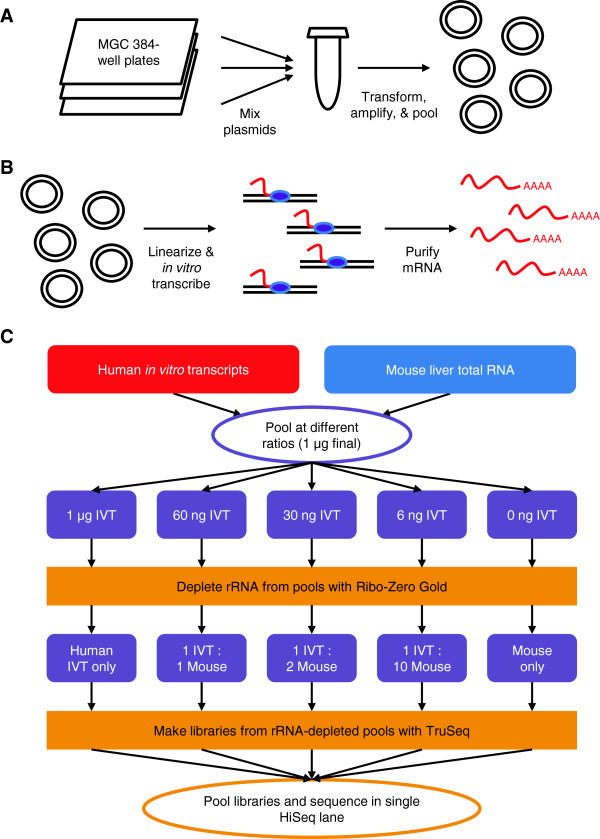
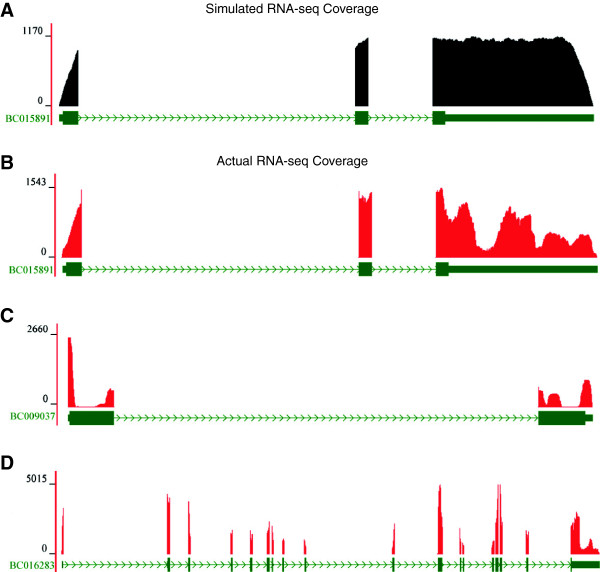
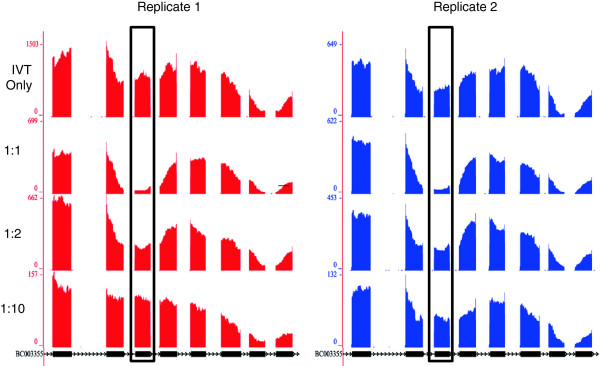
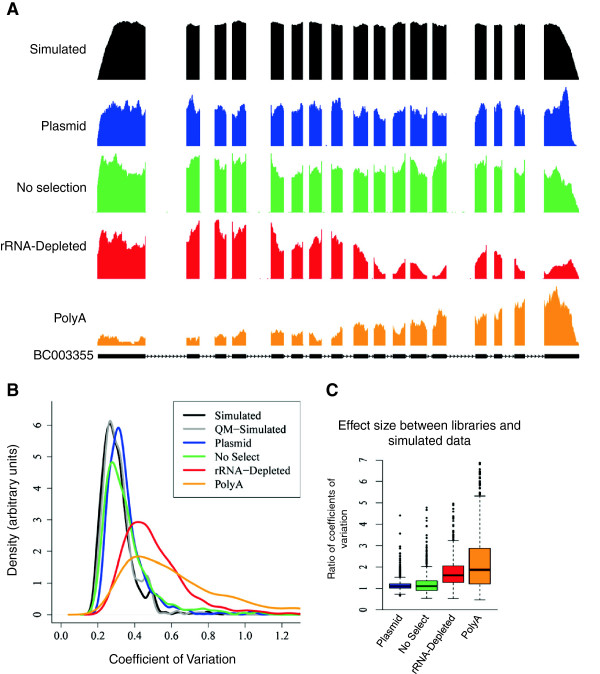
Background: RNA-seq is a powerful technique for identifying and quantifying transcription and splicing events, both known and novel. However, given its recent development and the proliferation of library construction methods, understanding the bias it introduces is incomplete but critical to realizing its value. Results: We present a method, in vitro transcription sequencing (IVT-seq), for identifying and assessing the technical biases in RNA-seq library generation and sequencing at scale. We created a pool of over 1,000 in vitro transcribed RNAs from a full-length human cDNA library and sequenced them with polyA and total RNA-seq, the most common protocols. Because each cDNA is full length, and we show in vitro transcription is incredibly processive, each base in each transcript should be equivalently represented. However, with common RNA-seq applications and platforms, we find 50% of transcripts have more than two-fold and 10% have more than 10-fold differences in within-transcript sequence coverage. We also find greater than 6% of transcripts have regions of dramatically unpredictable sequencing coverage between samples, confounding accurate determination of their expression. We use a combination of experimental and computational approaches to show rRNA depletion is responsible for the most significant variability in coverage, and several sequence determinants also strongly influence representation. Conclusions: These results show the utility of IVT-seq for promoting better understanding of bias introduced by RNA-seq. We find rRNA depletion is responsible for substantial, unappreciated biases in coverage introduced during library preparation. These biases suggest exon-level expression analysis may be inadvisable, and we recommend caution when interpreting RNA-seq results.
Overview
The claims and statistics of this paper haven’t been checked yet.
Free: it reads the open-access text and checks the first 5 claims that cite a source we can check. Create a free account to check every claim.
Integrity signals
Registry
Cites
Statistics
Figures
Verification
Claims the paper makes
The claims and statistics of this paper haven’t been checked yet.
Free: it reads the open-access text and checks the first 5 claims that cite a source we can check. Create a free account to check every claim.
Claims other papers make about this one
Each is checked against this paper’s own text: does it say what the citing paper says it does?
In the citing paper
“Even so, it is common to observe extreme variability in the coverage of RNA-seq fragments along transcripts that is purely technical and sample-specific17 and not explained by current bias models, which confounds current methods designed to identify and quantify transcripts18”
From Modeling of RNA-seq fragment sequence bias reduces systematic errors in transcript abundance estimation (2016) · cites this paper as [17]
Self-check
Percentages, sums and reported differences re-computed from the paper’s own numbers.
The self-check needs the paper’s full text.
Citations
Cites
Basic local alignment search tool
Altschul, S. F., Gish, W., Miller, W., Myers, E. W., & Lipman, D. J. (1990) · Journal of Molecular Biology · doi:10.1006/jmbi.1990.9999 · Cited by 98,669 · cited 2×
“1) rRNA using NCBI BLAST [26] and the e-score for the best alignment was saved.”
MethodBEDTools: a flexible suite of utilities for comparing genomic features
Quinlan, A. R., & Hall, I. M. (2010) · Bioinformatics · doi:10.1093/bioinformatics/btq033 · Cited by 27,437
Trapnell, C., Williams, B. A., Pertea, G., Mortazavi, A., Kwan, G., van Baren, M. J., Salzberg, S. L., Wold, B. J., & Pachter, L. (2010) · Nature Biotechnology · doi:10.1038/nbt.1621 · Cited by 15,556
RNA-Seq: a revolutionary tool for transcriptomics
Wang, Z., Gerstein, M., & Snyder, M. (2009) · Nature Reviews Genetics · doi:10.1038/nrg2484 · Cited by 13,174 · cited 7×
“Following a DNase I treatment to remove the DNA template and RNA purification, a pool of 1062 different human RNAs derived from fully sequenced plasmids was produced.”
MethodInfluentialMEME SUITE: tools for motif discovery and searching
Bailey, T. L., Boden, M., Buske, F. A., Frith, M., Grant, C. E., Clementi, L., Ren, J., Li, W. W., & Noble, W. S. (2009) · Nucleic Acids Research · doi:10.1093/nar/gkp335 · Cited by 10,648 · cited 1×
“To address the possibility that mouse RNAs may interact with homologous human RNAs and interfere with them in trans, we assayed the sequences surrounding these regions using the MEME Suite [18], but we found no sequence motifs these regions have in common.”
MethodThe UCSC Genome Browser database: update 2011
Fujita, P. A., Rhead, B., Zweig, A. S., Hinrichs, A. S., Karolchik, D., Cline, M. S., Goldman, M., Barber, G. P., Clawson, H., Coelho, A., et al. (2011) · Nucleic Acids Research · doi:10.1093/nar/gkq963 · Cited by 1,811
Analyzing and minimizing PCR amplification bias in Illumina sequencing libraries
Aird, D., Ross, M. G., Chen, W.-S., Danielsson, M., Fennell, T., Russ, C., Jaffe, D. B., Nusbaum, C., & Gnirke, A. (2011) · Genome Biology · doi:10.1186/gb-2011-12-2-r18 · Cited by 1,174 · cited 1×
“Previous efforts at understanding bias identified several contributing sources, including GC-content and PCR enrichment [8,9], priming of reverse transcription by random hexamers [10], read errors introduced during the sequencing-by-synthesis reaction [11], and bias introduced by various methods of rRNA subtraction [7…”
BackgroundSubstantial biases in ultra-short read data sets from high-throughput DNA sequencing
Dohm, J. C., Lottaz, C., Borodina, T., & Himmelbauer, H. (2008) · Nucleic Acids Research · doi:10.1093/nar/gkn425 · Cited by 1,088
Summarizing and correcting the GC content bias in high-throughput sequencing
Benjamini, Y., & Speed, T. P. (2012) · Nucleic Acids Research · doi:10.1093/nar/gks001 · Cited by 913 · cited 1×
“Previous efforts at understanding bias identified several contributing sources, including GC-content and PCR enrichment [8,9], priming of reverse transcription by random hexamers [10], read errors introduced during the sequencing-by-synthesis reaction [11], and bias introduced by various methods of rRNA subtraction [7…”
BackgroundComprehensive comparative analysis of strand-specific RNA sequencing methods
Levin, J. Z., Yassour, M., Adiconis, X., Nusbaum, C., Thompson, D. A., Friedman, N., Gnirke, A., & Regev, A. (2010) · Nature Methods · doi:10.1038/nmeth.1491 · Cited by 753 · cited 1×
“isolation, size selection, fragmentation, conversion to cDNA, amplification and, finally, sequencing [4-7].”
Method
Cited by
Lowe, R., Shirley, N., Bleackley, M., Dolan, S., & Shafee, T. (2017) · PLOS Computational Biology · doi:10.1371/journal.pcbi.1005457 · Cited by 1,176
“depletion of off-target transcripts [62].”
Detecting circular RNAs: bioinformatic and experimental challenges
Szabo, L., & Salzman, J. (2016) · Nature Reviews Genetics · doi:10.1038/nrg.2016.114 · Cited by 683
“In addition to reducing the sample size compared with linear isoforms, relying on junctional reads is problematic because read density in any fixed window can have significant biases that are not yet understood 51 .”
BackgroundMissing data and technical variability in single-cell RNA-sequencing experiments
Hicks, S. C., Townes, F. W., Teng, M., & Irizarry, R. A. (2018) · Biostatistics · doi:10.1093/biostatistics/kxx053 · Cited by 635
Self-citationSzabo, L., Morey, R., Palpant, N. J., Wang, P. L., Afari, N., Jiang, C., Parast, M. M., Murry, C. E., Laurent, L. C., & Salzman, J. (2015) · Genome Biology · doi:10.1186/s13059-015-0690-5 · Cited by 607
“However, the EN-CODE data do not have as much temporal sampling as our data; for most organs, there are only two developmental time points, collected between 2 and 10 weeks apart (Additional file 18); hence, z scores cannot be used to evaluate temporal induction.”
BackgroundMethodDetecting actively translated open reading frames in ribosome profiling data
Calviello, L., Mukherjee, N., Wyler, E., Zauber, H., Hirsekorn, A., Selbach, M., Landthaler, M., Obermayer, B., & Ohler, U. (2016) · Nature Methods · doi:10.1038/nmeth.3688 · Cited by 418
“However, sequencing protocols are affected by different sources of variability that cause a nonuniform distribution of reads 21 .”
BackgroundPolyester : simulating RNA-seq datasets with differential transcript expression
Frazee, A. C., Jaffe, A. E., Langmead, B., & Leek, J. T. (2015) · Bioinformatics · doi:10.1093/bioinformatics/btv272 · Cited by 313
Quantitative profiling of pseudouridylation dynamics in native RNAs with nanopore sequencing
Begik, O., Lucas, M. C., Pryszcz, L. P., Ramirez, J. M., Medina, R., Milenkovic, I., Cruciani, S., Liu, H., Vieira, H. G. S., Sas-Chen, A., et al. (2021) · Nature Biotechnology · doi:10.1038/s41587-021-00915-6 · Cited by 312
The impact of amplification on differential expression analyses by RNA-seq
Parekh, S., Ziegenhain, C., Vieth, B., Enard, W., & Hellmann, I. (2016) · Scientific Reports · doi:10.1038/srep25533 · Cited by 254
Identifying cell populations with scRNASeq
Andrews, T. S., & Hemberg, M. (2018) · Molecular Aspects of Medicine · doi:10.1016/j.mam.2017.07.002 · Cited by 248
“Non-uniform coverage is also evident in bulk RNASeq (Lahens et al., 2014).”
BackgroundMulti-omics integration in the age of million single-cell data
Miao, Z., Humphreys, B. D., McMahon, A. P., & Kim, J. (2021) · Nature Reviews Nephrology · doi:10.1038/s41581-021-00463-x · Cited by 246
Self-citationDepledge, D. P., Srinivas, K. P., Sadaoka, T., Bready, D., Mori, Y., Placantonakis, D. G., Mohr, I., & Wilson, A. C. (2019) · Nature Communications · doi:10.1038/s41467-019-08734-9 · Cited by 222
Esposito, R., Bosch, N., Lanzós, A., Polidori, T., Pulido-Quetglas, C., & Johnson, R. (2019) · Cancer Cell · doi:10.1016/j.ccell.2019.01.019 · Cited by 219
Love, M. I., Hogenesch, J. B., & Irizarry, R. A. (2016) · Nature Biotechnology · doi:10.1038/nbt.3682 · Cited by 186
Self-citationErrors in RNA-Seq quantification affect genes of relevance to human disease
Robert, C., & Watson, M. (2015) · Genome Biology · doi:10.1186/s13059-015-0734-x · Cited by 160
“At the heart of RNA-Seq is an assumption that the method produces reliable measurements of gene expression, and a recent paper has suggested that this may not be the case [8].”
Methods, Tools and Current Perspectives in Proteogenomics
Ruggles, K. V., Krug, K., Wang, X., Clauser, K. R., Wang, J., Payne, S. H., Fenyö, D., Zhang, B., & Mani, D. R. (2017) · Molecular & Cellular Proteomics · doi:10.1074/mcp.mr117.000024 · Cited by 148
Spliced synthetic genes as internal controls in RNA sequencing experiments
Hardwick, S. A., Chen, W. Y., Wong, T., Deveson, I. W., Blackburn, J., Andersen, S. B., Nielsen, L. K., Mattick, J. S., & Mercer, T. R. (2016) · Nature Methods · doi:10.1038/nmeth.3958 · Cited by 160
Kim, E., & Hart, T. (2021) · Genome Medicine · doi:10.1186/s13073-020-00809-3 · Cited by 169
Microarray experiments and factors which affect their reliability
Jaksik, R., Iwanaszko, M., Rzeszowska‐Wolny, J., & Kimmel, M. (2015) · Biology Direct · doi:10.1186/s13062-015-0077-2 · Cited by 174
“…are becoming less popular due to the decreasing costs of the RNA-seq methods [100], although one has to remember that some of the steps used in the microarray procedure, with their drawbacks and limitations, are also utilized in other techniques including the RNA-seq approaches [101 – 103].”
MethodCo-translational assembly of proteasome subunits in NOT1-containing assemblysomes
Panasenko, O. O., Somasekharan, S. P., Villányi, Z., Zagatti, M., Bezrukov, F., Rashpa, R., Cornut, J., Iqbal, J., Longis, M., Carl, S. H., et al. (2019) · Nature Structural & Molecular Biology · doi:10.1038/s41594-018-0179-5 · Cited by 145
Most Highly Expressed Protein-Coding Genes Have a Single Dominant Isoform
Ezkurdia, I., Rodriguez, J. M., Carrillo-de Santa Pau, E., Vázquez, J., Valencia, A., & Tress, M. L. (2015) · Journal of Proteome Research · doi:10.1021/pr501286b · Cited by 123
Targeted m6A Reader Proteins To Study Epitranscriptomic Regulation of Single RNAs
Rauch, S., He, C., & Dickinson, B. C. (2018) · Journal of the American Chemical Society · doi:10.1021/jacs.8b05012 · Cited by 122
Multi-perspective quality control of Illumina RNA sequencing data analysis
Sheng, Q., Vickers, K. C., Zhao, S., Wang, J., Samuels, D. C., Koues, O. I., Shyr, Y., & Guo, Y. P. (2016) · Briefings in Functional Genomics · doi:10.1093/bfgp/elw035 · Cited by 157
Quantitative bacterial transcriptomics with RNA-seq
Creecy, J. P., & Conway, T. (2014) · Current Opinion in Microbiology · doi:10.1016/j.mib.2014.11.011 · Cited by 120
“The RNA samples were not depleted for rRNA prior to sequencing, which tends to eliminate some experimental biases [8].”
Computational methods for RNA modification detection from nanopore direct RNA sequencing data
Furlan, M., Delgado-Tejedor, A., Mulroney, L., Pelizzola, M., Novoa, E. M., & Leonardi, T. (2021) · RNA Biology · doi:10.1080/15476286.2021.1978215 · Cited by 120
“…rates [31], iii) are inconsistent when using distinct antibodies [32], iv) do not provide isoform-specific information, v) often lack single nucleotide resolution [4,5,19] and vi) require multiple ligation steps and extensive PCR amplification, introducing strong biases in the data [23,33,34].”
BackgroundMethodologies for Transcript Profiling Using Long-Read Technologies
Oikonomopoulos, S., Bayega, A., Fahiminiya, S., Djambazian, H. H. V., Bérubé, P., & Ragoussis, J. (2020) · Frontiers in Genetics · doi:10.3389/fgene.2020.00606 · Cited by 137
“at the bottom has been proposed to alleviate this problem and offer a complete saturation of the SMRT cell (Larkin et al., 2017).”
BackgroundMethodAprianto, R., Slager, J., Holsappel, S., & Veening, J. (2018) · Nucleic Acids Research · doi:10.1093/nar/gky750 · Cited by 125
“While rRNA depletion allows for a higher coverage of mRNA sequence reads, it also introduces bias to sequenced libraries, partially due to depletion of sequences similar to rRNA (69).”
BackgroundMolecular quantitative trait loci
Aguet, F., Alasoo, K., Li, Y. I., Battle, A., Im, H. K., Montgomery, S. B., & Lappalainen, T. (2023) · Nature Reviews Methods Primers · doi:10.1038/s43586-022-00188-6 · Cited by 98
Hayer, K. E., Pizarro, A., Lahens, N. F., Hogenesch, J. B., & Grant, G. R. (2015) · Bioinformatics · doi:10.1093/bioinformatics/btv488 · Cited by 93
“However, they relied on early generation public data using single end 36 base reads.”
BackgroundSelf-citationNazarov, P. V., Muller, A., Kaoma, T., Nicot, N., Máximo, C., Birembaut, P. L., Tran, N. L., Dittmar, G., & Vallar, L. (2017) · BMC Genomics · doi:10.1186/s12864-017-3819-y · Cited by 100
“It was found that polyA selection leads to a 3′end bias in the distribution of reads [5, 8, 9].”
BackgroundResultInfluentialAbascal, F., Ezkurdia, I., Rodriguez-Rivas, J., Rodriguez, J. M., del Pozo, A., Vázquez, J., Valencia, A., & Tress, M. L. (2015) · PLOS Computational Biology · doi:10.1371/journal.pcbi.1004325 · Cited by 87
“Here the authors did not use discriminating peptides, but instead chose to infer the expression of different isoforms based on peptide abundances in an analogous way to the protocols used for transcript level estimation in RNAseq studies [16,17].”
MethodA catalogue of novel bovine long noncoding RNA across 18 tissues
Koufariotis, L. T., Chen, Y. P., Chamberlain, A. J., Jagt, C. V., & Hayes, B. J. (2015) · PLoS ONE · doi:10.1371/journal.pone.0141225 · Cited by 98
“Moreover, polyA(+) captured RNA can contain degraded RNA products [50] and this can be seen as bias in transcript coverage towards the 3’ end of genes [51].”
BackgroundWan, Q., & Su, J. (2015) · Scientific Reports · doi:10.1038/srep12946 · Cited by 81
Potential Diagnostic Power of Blood Circular RNA Expression in Active Pulmonary Tuberculosis
Qian, Z., Liu, H., Li, M., Shi, J., Li, N., Zhang, Y., Zhang, X., Lv, J., Xie, X., Bai, Y., et al. (2017) · EBioMedicine · doi:10.1016/j.ebiom.2017.12.007 · Cited by 83
“To verify that the above findings were not caused by potential technical bias introduced by RNA-seq procedures (Lahens et al., 2014; Zheng et al., 2011), we further performed circRNA microarray analysis of the same PBMC RNA samples treated by RNase R (Jeck et al., 2013).”
MethodHigh Throughput Sequencing for the Detection and Characterization of RNA Viruses
Fitzpatrick, A., Rupnik, A., O’Shea, H., Crispie, F., Keaveney, S., & Cotter, P. D. (2021) · Frontiers in Microbiology · doi:10.3389/fmicb.2021.621719 · Cited by 84
IsoSCM: improved and alternative 3′ UTR annotation using multiple change-point inference
Shenker, S., Miura, P., Sanfilippo, P., & Lai, E. C. (2014) · RNA · doi:10.1261/rna.046037.114 · Cited by 70
“Nonuniform read coverage arising from sequence specific (Hansen et al. 2010; Lahens et al. 2014) as well as positional biases (Bohnert and Rätsch 2010), and uncertain allocation of multimapping reads (Mortazavi et al. 2008) can cause artificial local gaps in RNA-seq coverage, making it difficult to…”
Exploring the epitranscriptome by native RNA sequencing
Begik, O., Mattick, J. S., & Novoa, E. M. (2022) · RNA · doi:10.1261/rna.079404.122 · Cited by 70
“…modifications (Aw et al. 2021), as well as to predict RNA modifications in individual reads (Begik et al. 2021; Acera Mateos et al. 2022), providing a resolution of the epitranscriptome at an unprecedented level, which had not been obtained using short-read sequencing data (Leger et al. 2021).”
BackgroundMethodInfluentialMorgil, H., Tardu, M., Cevahir, G., & Kavaklı, İ. H. (2019) · Functional & Integrative Genomics · doi:10.1007/s10142-019-00675-2 · Cited by 83
Seasonal and diel patterns of abundance and activity of viruses in the Red Sea
Hevroni, G., Flores‐Uribe, J., Béjà, O., & Philosof, A. (2020) · Proceedings of the National Academy of Sciences · doi:10.1073/pnas.2010783117 · Cited by 72
“None of the samples were amplified prior to sequencing-library preparation, nor were rRNA depletion protocols applied in order to avoid possible bias resulting from these steps (70) and loss of considerable amount of RNA during the rRNA depletion process.”
Transcriptome Analysis in Domesticated Species: Challenges and Strategies
Hekman, J. P., Johnson, J. L., & Kukekova, A. V. (2015) · Bioinformatics and Biology Insights · doi:10.4137/bbi.s29334 · Cited by 67
Bischler, T., Tan, H. S., Nieselt, K., & Sharma, C. M. (2015) · Methods · doi:10.1016/j.ymeth.2015.06.012 · Cited by 66
Tissue-Specific Evolution of Protein Coding Genes in Human and Mouse
Kryuchkova-Mostacci, N., & Robinson‐Rechavi, M. (2015) · PLoS ONE · doi:10.1371/journal.pone.0131673 · Cited by 71
“We repeated calculations with the most expressed transcript (S1 File), but results were unchanged; we show these results only in supplementary materials, as the estimation of transcript-level expression does not yet appear to be very reliable [72,73].”
ResultBurger, B. T., Imam, S., Scarborough, M., Noguera, D. R., & Donohue, T. J. (2017) · mSystems · doi:10.1128/msystems.00015-17 · Cited by 57
“Furthermore, by using the number of unique insertions, instead of the total number of sequence reads per gene, TSAS bypasses artifacts associated with preparation of NGS libraries that can artificially inflate the frequency of DNA sequence reads at some insertion sites (23–25).”
BackgroundMissing Data and Technical Variability in Single-Cell RNA-Sequencing Experiments
Hicks, S. C., Townes, F. W., Teng, M., & Irizarry, R. A. (2015) · doi:10.1101/025528 · Cited by 625
Self-citationComparative evaluation of full-length isoform quantification from RNA-Seq
Sarantopoulou, D., Brooks, T. G., Nayak, S., Mrčela, A., Lahens, N. F., & Grant, G. R. (2021) · BMC Bioinformatics · doi:10.1186/s12859-021-04198-1 · Cited by 59
Self-citationCovering all your bases: incorporating intron signal from RNA-seq data
Lee, S. A., Zhang, A. Y., Su, S., Ng, A. P., Holik, A. Z., Asselin-Labat, M.-L., Ritchie, M. E., & Law, C. W. (2020) · NAR Genomics and Bioinformatics · doi:10.1093/nargab/lqaa073 · Cited by 52
Utilizing de Bruijn graph of metagenome assembly for metatranscriptome analysis
Ye, Y., & Tang, H. (2015) · Bioinformatics · doi:10.1093/bioinformatics/btv510 · Cited by 56
“If we considered only the “good” transcripts by excluding the transcripts that cannot be aligned well to the reference genomes (which are likely misassembles, or assemblies from contaminated sequences or other artifacts commonly found in RNA-seq experiments (Lahens et al., 2014)), the difference in the total lengths o…”
BackgroundNarayanasamy, S., Muller, E. E. L., Sheik, A., & Wilmes, P. (2015) · Microbial Biotechnology · doi:10.1111/1751-7915.12255 · Cited by 60
“Furthermore, RNAseq technologies are subject to biases stemming from the extensive, yet compulsory pre-processing steps (Lahens et al., 2014) , thereby affecting the resulting metatranscriptomic data.”
BackgroundSherrill-Mix, S. A., Ocwieja, K. E., & Bushman, F. D. (2015) · Retrovirology · doi:10.1186/s12977-015-0205-1 · Cited by 54
“This could be due to the poly-A capture step of the protocol where any break in the RNA would result in loss of distal 5′ sequences [93].”
BackgroundDetecting the epitranscriptome
Sarkar, A., Gasperi, W., Begley, U., Nevins, S., Huber, S. M., Dedon, P. C., & Begley, T. J. (2021) · Wiley Interdisciplinary Reviews - RNA · doi:10.1002/wrna.1663 · Cited by 54
Salazar-Jaramillo, L., Jalvingh, K., de Haan, A., Kraaijeveld, K., Buermans, H. P. J., & Wertheim, B. (2017) · BMC Genomics · doi:10.1186/s12864-017-3697-3 · Cited by 53
“One difficulty of RNA-seq is to understand whether anomalies in coverage are biological or are due to technical artifacts arising from library preparation [23].”
BackgroundSIRVs: Spike-In RNA Variants as External Isoform Controls in RNA-SequencingPreprint
Paul, L., Kubala, P., Horner, G., Ante, M., Holländer, I., Seitz, A., & Reda, T. (2016) · bioRxiv (Cold Spring Harbor Laboratory) · doi:10.1101/080747 · Cited by 53
“…7 genes enable accurate target-performance evaluations of gene expression analysis methods, which is not possible e.g., by analyzing larger but only loosely defined pools of in vitro transcripts (Lahens et al. 2014), or limited sets addressing special problems like fusion genes (Tembe et al. 2014).”
BackgroundAntwi, E., Haanstra, J. R., Ramasamy, G., Jensen, B. C., Droll, D., Rojas, F., Minia, I., Terrão, M. C., Mercé, C., Matthews, K. R., et al. (2016) · BMC Genomics · doi:10.1186/s12864-016-2624-3 · Cited by 45
Sarayloo, E., Tardu, M., Unlu, Y. S., Simsek, S., Cevahir, G., Erkey, C., & Kavaklı, İ. H. (2017) · Algal Research · doi:10.1016/j.algal.2017.11.009 · Cited by 47
RNA Modifications in Pathogenic Bacteria: Impact on Host Adaptation and Virulence
Antoine, L., Bahena-Ceron, R., Bunwaree, H. D., Gobry, M. V., Loegler, V., Romby, P., & Marzi, S. (2021) · Genes · doi:10.3390/genes12081125 · Cited by 52
“NGS-based methods are often not quantitative, have high false-positive rates [46], and require multiple ligation steps and extensive polymerase chain reaction amplification during the library preparation, introducing undesired biases in the sequencing data [47].”
BackgroundHighly Continuous Genome Assembly of Eurasian Perch (Perca fluviatilis) Using Linked-Read Sequencing
Ozerov, M. Y., Ahmad, F., Gross, R., Pukk, L., Kahar, S., Kisand, V., & Vasemägi, A. (2018) · G3 Genes Genomes Genetics · doi:10.1534/g3.118.200768 · Cited by 49
Raman, A. T., Pohodich, A. E., Wan, Y., Yalamanchili, H. K., Lowry, W. E., Zoghbi, H. Y., & Liu, Z. (2018) · Nature Communications · doi:10.1038/s41467-018-05627-1 · Cited by 43
Liu, R., & Dickerson, J. A. (2017) · PLoS Computational Biology · doi:10.1371/journal.pcbi.1005851 · Cited by 43
ChimeraTE: a pipeline to detect chimeric transcripts derived from genes and transposable elements
de Oliveira, D. S., Fablet, M., Larue, A. E. A., Vallier, A., Carareto, C. M. A., Rebollo, R., & Vieira, C. P. (2023) · Nucleic Acids Research · doi:10.1093/nar/gkad671 · Cited by 40
“, reverse transcription, second-strand synthesis, PCR amplification) (82), or even during transcriptome assembly, with loss of information regarding isoform diversity, especially for those with lowexpression and repetitive regions (83), which might be the case of many chimeric transcripts.”
BackgroundMalik, A., Domankevich, V., Han, L., Xiaodong, F., Korol, A., Avivi, A., & Shams, I. (2016) · Scientific Reports · doi:10.1038/srep38624 · Cited by 39
Yang, X., Wang, D., & Hong, J. (2022) · Bioresource Technology · doi:10.1016/j.biortech.2022.128080 · Cited by 34
Birrer, S. C., Dafforn, K. A., Sun, M. Y., Williams, R. B. H., Potts, J., Scanes, P., Kelaher, B. P., Simpson, S. L., Kjelleberg, S. J., Swarup, S., et al. (2018) · Environmental Microbiology · doi:10.1111/1462-2920.14470 · Cited by 43
Farris, S., Wang, Y., Ward, J. M., & Dudek, S. M. (2017) · Frontiers in Molecular Neuroscience · doi:10.3389/fnmol.2017.00185 · Cited by 36
“5.0-p1; Liao et al., 2014) given GENCODE (M9) gene models.”
BackgroundInfluentialRapid, Unbiased PRRSV Strain Detection Using MinION Direct RNA Sequencing and Bioinformatics Tools
Tan, S., Dvorak, C. M. T., & Murtaugh, M. P. (2019) · Viruses · doi:10.3390/v11121132 · Cited by 39
Durán, R. C., Wei, H., & Wu, J. (2024) · BMC Genomics · doi:10.1186/s12864-024-10364-5 · Cited by 43
“This extensive amplification (either PCR or IVT) leads to additional technical variability, given that some genes may experience preferential amplification [51–53].”
BackgroundCapturing the ‘ome’: the expanding molecular toolbox for RNA and DNA library construction
Boone, M., Koker, A. D., & Callewaert, N. (2018) · Nucleic Acids Research · doi:10.1093/nar/gky167 · Cited by 38
“Active ribodepletion using these methods can also affect sequencing coverage, especially of those genes with stretches sharing similarity with rRNA sequences (18,26).”
BackgroundMethodTranscriptomics for Clinical and Experimental Biology Research: Hang on a Seq
Stokes, T., Cen, H. H., Kapranov, P., Gallagher, I. J., Pitsillides, A. A., Volmar, C., Kraus, W. E., Johnson, J. D., Phillips, S. M., Wahlestedt, C., et al. (2023) · Advanced Genetics · doi:10.1002/ggn2.202200024 · Cited by 32
Charting the epitranscriptomic landscape across RNA biotypes using native RNA nanopore sequencing
Diensthuber, G., & Novoa, E. M. (2025) · Molecular Cell · doi:10.1016/j.molcel.2024.12.014 · Cited by 34
Hockenberry, A. J., Pah, A. R., Jewett, M. C., & Amaral, L. A. N. (2017) · Open Biology · doi:10.1098/rsob.160239 · Cited by 29
On the design and prospects of direct RNA sequencing
Marinov, G. K. (2017) · Briefings in Functional Genomics · doi:10.1093/bfgp/elw043 · Cited by 31
Saville, L., Wu, L. M., Habtewold, J. Z., Cheng, Y., Gollen, B., Mitchell, L. R., Stuart-Edwards, M., Haight, T., Mohajerani, M. H., & Zovoilis, A. (2024) · Genome biology · doi:10.1186/s13059-024-03375-8 · Cited by 31
“In particular, the need to fragment longer RNA polynucleotides and reverse transcribe the RNA and PCR amplify the cDNA before sequencing makes identification of RNA modifications [12], and variations in RNA structure and RNA splicing [13, 14] challenging [15, 16, 17].”
BackgroundClinical potential of oligonucleotide-based therapeutics in the respiratory system
Moschos, S. A., Usher, L., & Lindsay, M. A. (2016) · Pharmacology & Therapeutics · doi:10.1016/j.pharmthera.2016.10.009 · Cited by 29
“deep sequencing may severely skew observations (Lahens et al., 2014).”
Terminal exon characterization with TECtool reveals an abundance of cell-specific isoforms
Gruber, A. J., Gypas, F., Riba, A., Schmidt, R., & Zavolan, M. (2018) · Nature Methods · doi:10.1038/s41592-018-0114-z · Cited by 25
Ryūtō: network-flow based transcriptome reconstruction
Gatter, T., & Stadler, P. F. (2019) · BMC Bioinformatics · doi:10.1186/s12859-019-2786-5 · Cited by 38
Viral genome sequencing methods: benefits and pitfalls of current approaches
Jansz, N., & Faulkner, G. J. (2024) · Biochemical Society Transactions · doi:10.1042/bst20231322 · Cited by 31
Circular RNAs: a new class of biomarkers as a rising interest in laboratory medicine
Franz, A., Rabien, A., Stephan, C., Ralla, B., Fuchs, S., Jung, K., & Fendler, A. (2018) · Clinical Chemistry and Laboratory Medicine (CCLM) · doi:10.1515/cclm-2018-0231 · Cited by 25
“Lahens and colleagues [45] highlighted extensive biases in exon-level expression analysis.”
BackgroundCORNAS: coverage-dependent RNA-Seq analysis of gene expression data without biological replicates
Low, J. Z.-B., Khang, T. F., & Tammi, M. T. (2017) · BMC Bioinformatics · doi:10.1186/s12859-017-1974-4 · Cited by 26
“Compounding the problem are biases inherent in technical RNA-Seq library preparation and sequencing [18], problems that are only recently receiving serious attention [19].”
BackgroundIdentification of long non-coding RNA in the horse transcriptome
Scott, E., Mansour, T. A., Bellone, R. R., Brown, C. T., Mienaltowski, M. J., Penedo, M. C. T., Ross, P. J., Valberg, S. J., Murray, J. D., & Finno, C. J. (2017) · BMC Genomics · doi:10.1186/s12864-017-3884-2 · Cited by 21
“Similar reasoning can also be applied to the skin and retina, as they are composed of single-end reads, which are known to show much more frequent instances of computationally detected read duplicates [34].”
BackgroundAn optimized protocol for generation and analysis of Ion Proton sequencing reads for RNA-Seq
Yuan, Y., Xu, H., & Leung, R. K. (2016) · BMC Genomics · doi:10.1186/s12864-016-2745-8 · Cited by 22
“Although the influence of library construction methods and sequencing platforms was investigated extensively [12, 13, 45, 48], there has been no dedicated study for Ion Proton RNA-Seq analysis.”
BackgroundGådin, J. R., Hooft, F. M. V., Eriksson, P. O., & Folkersen, L. (2015) · BMC Bioinformatics · doi:10.1186/s12859-015-0620-2 · Cited by 17
Transcription profiling of butanol producer Clostridium beijerinckii NRRL B-598 using RNA-Seq
Sedlář, K., Koščová, P., Vasylkivska, M., Branská, B., Kolek, J., Kupkova, K., Patáková, P., & Provazník, I. (2018) · BMC Genomics · doi:10.1186/s12864-018-4805-8 · Cited by 22
“Although high sequencing depth and rRNA depletion brought a noise to RNA-Seq [18], in our case, this bias was caused by duplicated genes rather than being a sequencing issue [19].”
BackgroundPerspectives on Circular RNAs as Prostate Cancer Biomarkers
Fang, J., Qi, J., Dong, X., & Luo, J. (2020) · Frontiers in Cell and Developmental Biology · doi:10.3389/fcell.2020.594992 · Cited by 17
“Through constructing plasmid vectors and genomic editing of the ZNF609 gene, Flag-tagged peptide encoded by circ-ZNF609 was confirmed by immunoblotting and Mass Spectrometry (Legnini et al., 2017).”
BackgroundMethodHeydari, R., Karimi, P., & Meyfour, A. (2024) · Biomedicine & Pharmacotherapy · doi:10.1016/j.biopha.2024.116868 · Cited by 19
Simultaneous RNA purification and size selection using on-chip isotachophoresis with an ionic spacer
Han, C. M., Catoe, D., Munro, S. A., Khnouf, R., Snyder, M. P., Santiago, J. G., Salit, M., & Cenik, C. (2019) · Lab on a Chip · doi:10.1039/c9lc00311h · Cited by 16
Novel long non-coding RNAs of relevance for ulcerative colitis pathogenesis
Ray, M. K., Fenton, C. G., & Paulssen, R. H. (2022) · Non-coding RNA Research · doi:10.1016/j.ncrna.2022.02.001 · Cited by 17
“Recent RNAseq studies have shown differences in intra-exonal coverage, which could have aroused from naturally occurring splice variants sharing part of an exon or could have been due to technical errors in library construction or sequencing [38].”
BackgroundOzerov, M. Y., Flajšhans, M., Noreikienė, K., Vasemägi, A., & Gross, R. (2020) · G3 Genes Genomes Genetics · doi:10.1534/g3.120.401711 · Cited by 17
A CRISPR/Cas9-based enhancement of high-throughput single-cell transcriptomics
Pandey, A. C., Bezney, J., DeAscanis, D., Kirsch, E., Ahmed, F., Crinklaw, A., Choudhary, K. S., Mandala, T., Deason, J., Hamidi, J., et al. (2025) · Nature Communications · doi:10.1038/s41467-025-59880-2 · Cited by 19
Banos, G., Clark, E. L., Bush, S. J., Dutta, P., Bramis, G., Arsenos, G. I., Hume, D. A., & Psifidi, A. (2019) · PLoS ONE · doi:10.1371/journal.pone.0214346 · Cited by 17
“To reduce batch effects when combining data from different sources, particularly those employing different RNA selection methods [26], expression was quantified using a set of transcripts constituting a standardised transcriptomic space, as described in [27] and [28].”
MethodCLASS: Accurate and Efficient Splice Variant Annotation from RNA-seq ReadsPreprint
Song, L., Sabunciyan, S., & Florea, L. (2014) · bioRxiv (Cold Spring Harbor Laboratory) · doi:10.1101/011718 · Cited by 14
Sugarcane Giant Borer Transcriptome Analysis and Identification of Genes Related to Digestion
Fonseca, F., Firmino, A. A. P., Macedo, L. L. P., Coelho, R. R., Antonino, J. D., Silva‐Junior, O. B., Togawa, R. C., Pappas, G. J., Jr., de Góis, L. A. B., Silva, M. C. M., et al. (2015) · PLoS ONE · doi:10.1371/journal.pone.0118231 · Cited by 16
“This approach rely largely in the processivity analysis for RNA-Seq coverage data described by Lahens and coworkers (2014) [68].”
MethodEnhanced detection of RNA modifications in Escherichia coli utilizing direct RNA sequencing
Guo, Z., Shao, Y., Tan, L., Lu, B., Deng, X., Chen, S., & Li, R. (2025) · Cell Reports Methods · doi:10.1016/j.crmeth.2025.101168 · Cited by 11
Using mixtures of biological samples as process controls for RNA-sequencing experiments
Parsons, J., Munro, S. A., Pine, P. S., McDaniel, J., Mehaffey, M. G., & Salit, M. (2015) · BMC Genomics · doi:10.1186/s12864-015-1912-7 · Cited by 11
“Deep sequencing of cellular RNA can generate vast quantities of gene expression information, yet measurement biases have been identified at nearly every step of the library preparation process [1-4].”
BackgroundTU-Tagging: A Method for Identifying Layer-Enriched Neuronal Genes in Developing Mouse Visual Cortex
Tomorsky, J., DeBlander, L., Kentros, C. G., Doe, C. Q., & Niell, C. M. (2017) · eNeuro · doi:10.1523/eneuro.0181-17.2017 · Cited by 12
“Bias can be introduced at various stages in sample preparation: early, due to transcript to transcript variability in the efficiency of thiol-labeling and conjugation to HDPD biotin, and later, during cDNA synthesis of poly-A selected RNAs and Nextera library preparation (Cui et al., 2010; Head et al., 2014; Lahens et…”
BackgroundBarnes, S. N., Masonbrink, R. E., Maier, T. R., Seetharam, A. S., Sindhu, A., Severin, A. J., & Baum, T. J. (2019) · Scientific Reports · doi:10.1038/s41598-018-37857-0 · Cited by 12
Metatranscriptomic dynamics after Verticillium dahliae infection and root damage in Olea europaea
Martí, J. M., Arias‐Giraldo, L. F., Díaz-Villanueva, W., Arnau, V., Rodríguez-Franco, A., & Peña-Garay, C. (2020) · BMC Plant Biology · doi:10.1186/s12870-019-2185-0 · Cited by 13
Nanopore direct RNA sequencing and the epitranscriptome: Advances in mapping native RNA landscapes
Zhang, T., Li, J., Tang, C., Wu, Y., Wu, H., Xi-Tong, Z., Luo, Z., Qin, H., Ding, L., Zeng, Y., et al. (2026) · iMeta · doi:10.1002/imt2.70136 · Cited by 26
Cogne, Y., Gouveia, D., Chaumot, A., Esposti, D. D., Geffard, O., Pible, O., Almunia, C., & Armengaud, J. (2020) · PROTEOMICS · doi:10.1002/pmic.201900261 · Cited by 13
RNA Transcript Assembly Using Inexact Flows
Williams, L., Reynolds, G., & Mumey, B. (2019) · IEEE International Conference on Bioinformatics and Biomedicine (BIBM) · doi:10.1109/bibm47256.2019.8983180 · Cited by 19
“Prior to splice graph construction, these sources include sampling, library preparation, base-calling, read preprocessing and spliced read alignment [5], [8], [16], [17], [23], [32].”
BackgroundStrategies and technologies for exploring long noncoding RNAs in heart failure
Zhang, Z., Wan, J., Liu, X., & Zhang, W. (2020) · Biomedicine & Pharmacotherapy · doi:10.1016/j.biopha.2020.110572 · Cited by 12
Can all heritable biology really be reduced to a single dimension?
Babbitt, G. A., Coppola, E. E., Alawad, M. A., & Hudson, A. O. (2015) · Gene · doi:10.1016/j.gene.2015.12.043 · Cited by 10
Liehrmann, A., Delannoy, É., Launay‐Avon, A., Gilbault, E., Loudet, O., Castandet, B., & Rigaill, G. J. (2023) · NAR Genomics and Bioinformatics · doi:10.1093/nargab/lqad098 · Cited by 16
“%) nt long.”
Metadata
- Authors
- Lahens, N. F., Kavakli, I. H., Zhang, R., Hayer, K., Black, M. B., Dueck, H., Pizarro, A., Kim, J., Irizarry, R., Thomas, R. S., Grant, G. R., & Hogenesch, J. B.
- Affiliations
- University of Pennsylvania (US)
- The Hamner Institutes for Health Sciences (US)
- Amazon (United States) (US)
- Johns Hopkins University (US)
- Corresponding author
- Hogenesch, John B
- ORCID
- Venue
- Genome Biology
- Published
- 2014-06-30
- Volume
- 15
- Issue
- 6
- Pages
- R86-R86
- ISSN
- 1465-6906 (ISSN-L)
- 1474-760X
- PMC
- PMC4197826
- OpenAlex
- W2098809361
- Cited by
- 158
- References
- 26
- Citations by year
- 2026: 13 · 2025: 6 · 2024: 10 · 2023: 6 · 2022: 4 · 2021: 21 · 2020: 9 · 2019: 13 · 2018: 13 · 2017: 20 · 2016: 13 · 2015: 25 · 2014: 5
- FWCI
- 8.60
- Type
- journal article
- Language
- en
- Open access
- gold
- doi.org
- Licence
- cc-by
- creativecommons.org/licenses/by/2.0/ (tdm)
- creativecommons.org/licenses/by/2.0/ (vor)
- Locations
- Genome biology (publishedVersion, cc-by)
- bioRxiv (Cold Spring Harbor Laboratory) (acceptedVersion, cc-by)
- Europe PMC (PubMed Central) (publishedVersion, cc-by)
- PubMed Central (publishedVersion, cc-by)
- PubMed (publishedVersion)
- Digital Collections portal (Koç University) (submittedVersion)
- Funders
- Pennsylvania Department of Health
- University of Pennsylvania (P30DK19525, UL1-TR-000003)
- Institute for Translational Medicine and Therapeutics (UL1TR000003)
- National Institutes of Health (5-R01-, 12-DARPA-1068, UL1TR000003)
- Defense Advanced Research Projects Agency
- Perelman School of Medicine, University of Pennsylvania (UL1TR000003)
- National Heart, Lung, and Blood Institute (R01HL097800)
- National Human Genome Research Institute (T32HG000046)
- National Institute of Diabetes and Digestive and Kidney Diseases (P30 DK 19525, P30DK019525)
- National Institute of Neurological Disorders and Stroke (R01NS054794, 2-R01-NS054794-06)
- National Center for Research Resources
- National Center for Advancing Translational Sciences
- Topics
- Life Sciences › Biochemistry, Genetics and Molecular Biology › Molecular Biology › Genomics and Phylogenetic Studies
- Life Sciences › Biochemistry, Genetics and Molecular Biology › Molecular Biology › Single-cell and spatial transcriptomics
- Life Sciences › Biochemistry, Genetics and Molecular Biology › Molecular Biology › Gene expression and cancer classification
- Keywords
- technical bias, rRNA depletion, RNA-seq library preparation
- MeSH terms
- Animals, Base Composition, Base Sequence, Humans, Male, Mice, Inbred C57BL, RNA, Ribosomal, Sequence Homology, Nucleic Acid, Transcription, Genetic, Gene Library, Artifacts, Sequence Analysis, RNA, In Vitro Techniques
About these checks
Registry, retraction, Cites and statistics results are computed, not judged, with one exception: a printed reference that no index lists is read once by a model before it counts as a citation error. Claims are extracted by a model and kept only when their quote appears verbatim in the text; each cited source is then checked, with a model’s help, for whether it says what the claim relies on. Those verdicts can be wrong — read the claim’s quote and the cited source before relying on one.
Statistics and arithmetic are recomputed, not judged.
Confidence bands are shown only for fields calibrated on our annotated test set. None is calibrated yet, so no band is shown.
What counts as a claim ›How we measure confidence ›How we check this ›
Are you an author, or do you see a problem with this page? Request a review
Data sources
Bibliographic data: Semantic Scholar, OpenAlex, Crossref.
Contains information from the Semantic Scholar Academic Graph Datasets, made available under the ODC Attribution License (ODC-BY 1.0).
Semantic Scholar’s data is described in: Kinney, R., et al. (2023). The Semantic Scholar Open Data Platform. arXiv:2301.10140.
